
PODCAST · arts
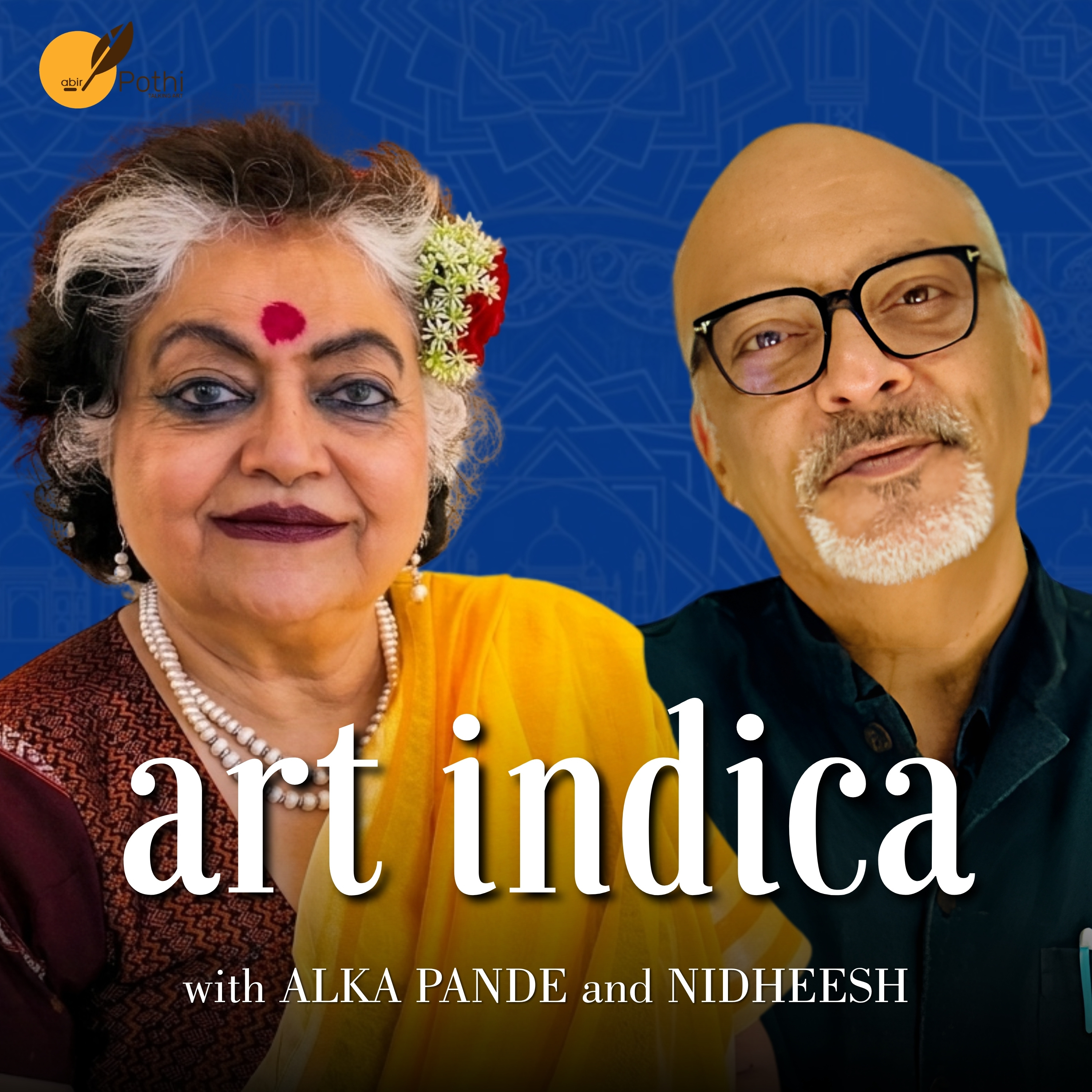
Art Indica with Alka Pande and Nidheesh
by Abir Pothi
Art Indica brings you intimate, insightful conversations between Dr. Alka Pande, revered art historian and curator with over three decades of scholarship, and Nidheesh, founder of Abir Pothi, India's only daily digital art newspaper. Together, they explore the rich art and visual culture of the Indian subcontinent with depth, curiosity, and genuine love for the subject.Season 1: 500 Years of Mughal Arts takes you on a journey through half a millennium of artistic brilliance. You'll discover the stories behind Mughal architecture, miniature painting, and the inner workings of the empire.
-
15
Divine Lovers: Radha, Krishna & the Erotic Imagination | Art Indica with Alka Pande | Ep.14
Episode 14 | Season 2 | Indian Art & EroticaIn this episode of Art Indica, Dr. Alka Pande and Nidheesh explore the divine love story of Radha and Krishna, one of Indian art's most pervasive and inspirational themes. From Jayadeva's 12th-century Gita Govinda to Kangra and Kishangarh miniature paintings, discover how this sacred romance shaped Indian aesthetics across poetry, dance, music, and visual arts.What You'll Learn:The evolution of Radha from early texts to Jayadeva's Gita GovindaKrishna as the complete avatar (Solah Kalas) vs. Ram's Maryada PurushottamThe symbolism of Jeevatma-Paramatma through Radha Krishna's divine loveShringar Rasa: Why it's called the "Rasaraj" (King of Rasas)The Navarasas: Nine emotions of Indian aesthetics explainedAshta Nayika: Eight emotional states of the heroine in Indian artHow Gita Govinda inspired Kangra, Kishangarh, Mewar, and Pahari miniature paintingsRadha Krishna themes in Kathak, Odissi, Bharatanatyam, and Hindustani classical musicVisual motifs: moonlit terraces, monsoon clouds, flowering bowers, the absent fluteAbout the Podcast:Art Indica is Abir Pothi's flagship podcast exploring Indian art, architecture, design, and visual culture. Season 2 focuses on Indian Art & Erotica, examining how desire, beauty, and spirituality intersect in India's creative traditions.
-
14
The Phallus in Indian Art & Symbolism | Dr. Alka Pande on Shiva Linga, Tantra & Erotica | Ep. 13
In this episode of Art Indica (Season 2, Episode 13), we delve into one of the most potent and often misunderstood symbols in human culture: the phallus.Joining Nidheesh Tyagi is renowned art historian and curator Dr. Alka Pande, editor and contributor to the book Pha(bu)llus: A Cultural History which explores phallic imagery across India and the world.In This Episode, We Discuss:The Shiva Linga as both sacred emblem and phallic symbol in Hindu worshipThe concept of Urdhvalingam (erect phallus) in Ardhanarishvara sculpture and its link to celibacy and Urdhva Retas (seminal retention)Phallus in Indus Valley civilisation, prehistoric fertility rites, and pan-Asian temple iconographyThe Yoni-Patta as the feminine counterpart and why the yoni remains underrepresented in temple art compared to the LingaGlobal parallels: phallic amulets in Thailand, African steles, Maori carvings, and European folklore (including witches, cats, and stolen penises)The tension between spirituality, sexuality, patriarchy, and power in the cultural imagination of the phallusDr. Pande unpacks how the phallus functions as a marker of Shiva's dual identity as Adiyogi (primordial ascetic) and Adibhogi (supreme enjoyer), and why this symbol continues to fascinate, discomfort, and inspire across millennia.Perfect for students of art history, religious studies, cultural journalism, and anyone curious about the intersections of erotica, spirituality, and visual culture in India and beyond.📖 Featured Book: Pha(bu)llus: A Cultural History– edited by Dr. Alka Pande🎧 Podcast: Abir Pothi's Art Indica
-
13
She Takes Her Pleasure: Women, Desire & the Kama Sutra | Art Indica Episode 12
Who gets to speak about desire in the Kama Sutra? For centuries, the conversation has centred on men. In Episode 12 of Art Indica, Dr Alka Pande shifts the focus to women, drawing on her books A New Age Kama Sutra for Women and Naika and Kama: She Takes Her Pleasure.This episode explores how women appear in Indian erotic art, literature and visual culture—from the Ashta Nayikas of poetry to the Padmini, Shankhini, Hastini and Chitrini classifications in the Kama Shastra. Dr Pande examines sculptures from Khajuraho and Hampi, Nathdwara and Jaipur miniatures, and other works where women are not passive subjects but active participants in pleasure.Key themes include:Writing the Kama Sutra from a woman’s point of viewParvati as a model of feminine agency and desireThe Ashta Nayikas and the different emotional states of the heroineBody types and classifications of women in erotic textsVisual representations where women lead, pleasure themselves, or engage in same-sex intimacyThe difference between public patriarchy and private power dynamicsMale gaze vs female gaze in Indian erotic artWhat the Kama Sutra can mean for a modern woman in 2026Rather than treating the Kama Sutra only as a manual of positions, this conversation reframes it as a text about emotion, aesthetics, identity and agency. Dr Pande argues that reading these traditions today can serve as a kind of “wellness” practice, helping women understand their feelings, sexuality, and relationships within a deeper historical and cultural context.This episode is part of Season 2 of Art Indica, a podcast by Abir Pothi on Indian art, culture, architecture and visual history.Listen to Art Indica on YouTube, Spotify and Apple Podcasts.Content note: This episode discusses historical representations of sexuality, erotic art, female desire and gender in an art-historical and cultural context.
-
12
From Kama Sutra to Khajuraho: How Desire Became Art in India | Art Indica Episode 11
How did the Kama Sutra move from an oral tradition and Sanskrit text into poetry, temple sculpture, miniature painting and private pleasure albums?In Episode 11 of Art Indica, Dr. Alka Pande and Nidheesh explore the visualisation of the Kama Sutra and the evolution of erotic art in India. The conversation examines how Vatsyayana’s treatise became the foundation of the broader Kama Shastra tradition, inspiring artistic expressions across literature, mythology, architecture and painting.The episode looks at:The transformation of oral knowledge into text and visual culture.The relationship between the Kama Sutra, Sanskrit poetry, Shringara Rasa and Indian aesthetics.Amrapali and the cultural role of the Nagarvadhu or courtesan.How courtesans served as educators, cultural custodians and influential social figures.The emergence of erotic representations in Indian temples from around the 10th and 11th centuries.Maithuna and Mithuna imagery in temple sculpture.The erotic sculptures of Khajuraho, Konark and other Indian temple traditions.The influence of Tantric thought and Yogini traditions on representations of sexuality.Royal patronage, private pleasure albums and the role of artists, artisans and models.The legend of Hemavati and Chandravarman associated with the creation of Khajuraho.The relationship between divine love, earthly desire, masculinity and power.Rather than treating the Kama Sutra as merely a manual of sexual positions, this episode examines it as part of a larger Indian history of pleasure, desire, beauty and cultural expression. From Sanskrit literature to temple architecture, erotic art becomes a way to understand the social, spiritual and aesthetic worlds of pre-modern India.The Kama Sutra has influenced Indian artistic traditions and continues to be discussed through temple sculpture, miniature painting and illustrated texts. Its connection with Khajuraho and other erotic art traditions has also shaped modern interpretations of Indian visual culture.wikipedia+2This episode is part of Season 2 of Art Indica, a podcast by Abir Pothi exploring Indian art, history, architecture, culture and visual traditions.
-
11
Kama Sutra’s Global Journey: From Vatsyayana to Victorian Obscenity & Modern Misreadings | Art Indica Ep 10
This episode of Art Indica with Dr. Alka Pande and Nidheesh traces the extraordinary journey of the Kama Sutra from ancient India to the modern world. Starting with Vatsyayana’s 3rd–5th century treatise and moving to Richard Francis Burton’s 1883 English translation, published via the clandestine Kama Shastra Society to dodge Victorian obscenity laws, we explore how the text was exoticised, commodified, and misunderstood across cultures.Dr. Pande unpacks:How Victorian prudery reshaped global perceptions of the Kama Sutra and Indian sexualityThe difference between erotica and pornography, especially in Indian miniature painting and temple sculptureWhy Indian erotic art (Khajuraho, Konark, miniature traditions) celebrates sensuality and agency rather than mere titillationHow legal frameworks, censorship and colonial morality continue to affect how Indians see their own erotic heritage todayThe role of education and knowledge in reclaiming the Kama Sutra as a sophisticated cultural, aesthetic and philosophical textIf you’re interested in Indian art history, sexuality studies, decolonial perspectives, or the global cultural afterlife of the Kama Sutra, this episode offers a layered, critical look at how a single text travelled, transformed and was misread over centuries.Subscribe to Abir Pothi for more deep-dive conversations on art, design, architecture and cultural history.ResourcesShringara: The Many Faces of Indian Beautyby Alka PandeIndian Eroticaby Alka Pande, Lance Dane (Photographer)The Nayika and Kama: She Takes Her Pleasureby Alka PandeRead more about Alka Pande and Art Indica podcast: https://www.abirpothi.com/dr-alka-pande-mapping-indias-visual-and-cultural-imagination/
-
10
Kama Sutra Revisited: Vatsyayana, Desire & Urban Life in Ancient India | Art Indica S2E9
In this episode of Art Indica, Dr. Alka Pande and Nidheesh dive into the misunderstood legacy of the Kama Sutra—beyond sex, beyond scandal.Discover how Vatsyayana compiled centuries of Indic wisdom to create a guide for the Nagaraka, the cultured urban man of pre-modern India. This episode explores the balance of Dharma, Artha, Kama, and Moksha, the role of women and courtesans, the aesthetics of desire, and how erotic art shaped Indian visual culture.Perfect for listeners interested in Indian art history, philosophy, cultural narratives, and the intersection of spirituality and sensuality.Hosted on Abir Pothi : India’s daily digital newspaper on art, design, and architecture.ResourcesKamasutra: The Quest For Love by Alka Pande
-
9
Is India the Vishwaguru of Erotica ? | Indian Erotic Art with Alka Pande & Nidheesh
In Episode 8 of Art Indica Season 2, we explore Indian erotic art through the cultural, philosophical, and artistic worlds of Kama Sutra, Khajuraho, Konark, and the broader visual traditions of India. In conversation with Dr. Alka Pande and Abir Pothi founder Nidheesh Tyagi, this episode traces how desire, love, rasa, and spirituality intersect in Indian art, architecture, literature, and temple sculpture.Presented by Abir PothiFrom the four purusharthas — Dharma, Artha, Kama, and Moksha — to the sculptural imagination of temple makers, the discussion examines how eroticism was once an integral part of Indian knowledge systems and aesthetic traditions. The episode also reflects on changing social attitudes, colonial-era taboos, modern discomfort, and how Indian erotic art continues to be viewed at home and abroad.We also discuss Khajuraho, Konark, the Shilpa Shastras, temple iconography, the feminine form in sculpture, and why desire, pleasure, and artistic expression remain central to understanding Indian culture. A provocative and thought-provoking conversation on the history, philosophy, and afterlife of erotica in Indian art.
-
8
Mughal Legacy in Pakistan | Lahore's Art, Architecture & Cultural Heritage
For centuries, Lahore stood alongside Delhi and Agra as one of the most important cities of the Mughal Empire. In this special bonus episode of Art Indica, Dr. Alka Pande and Nidheesh explore the rich artistic and cultural legacy of the Mughals in present-day Pakistan.Discover how Lahore became a center of Mughal architecture, miniature paintings, illuminated manuscripts, gardens, textiles, jewellery, calligraphy, blue pottery, and craftsmanship. The conversation also examines the influence of Noor Jahan, the Lahore atelier, Multan's famous blue pottery, Mughal aesthetics, and the challenges of preserving this shared South Asian heritage.Whether you're interested in Indian history, Pakistan's cultural heritage, Mughal architecture, Islamic art, art history, museums, or historical conservation, this episode offers fascinating insights into one of the world's greatest artistic civilizations.
-
7
Art Indica Ep 6: Mughal Heritage in Ruins — Forgotten Havelis, Conservation Crisis & Living Cultural Legacy
In Episode 6 of Art Indica, we explore the fragile afterlife of Mughal heritage in India through the haunting case of Zeenat Mahal Haveli in Old Delhi — now a girls' school, but once the residence of the youngest wife of the last Mughal emperor.In conversation with Dr. Alka Pande and Nidheesh, we unpack why historic structures fall into disuse and decay despite their immense cultural value. From the failures of urban planning and gaps in heritage policy to the role of ASI, private partnerships like the Aga Khan Trust, and the urgent need for public awareness, this episode examines the systemic challenges facing India's built heritage.We also reflect on the paradox of Mughal aesthetics thriving in fashion, design, and cuisine while physical monuments deteriorate — and confront tough questions about restitution, colonial documentation, and whether India is truly equipped to preserve reclaimed artifacts.At the same time, the episode highlights hope through craft revival movements, cultural institutions, and emerging public engagement. A critical conversation on memory, identity, and the future of India's cultural landscape.Listen to the full Art Indica series on Spotify to explore the visual and cultural histories that shape contemporary India.
-
6
The Afterlife of Mughal Beauty: Motifs, Textiles, and the Taj Mahal | Art Indica Ep 5
In this episode of Art Indica, Dr. Alka Pande and Nidheesh explore how Mughal aesthetics continue to live on long after the empire itself. Framed as the “afterlife of beauty,” the conversation traces the journey of Mughal design—from pietra dura in the Taj Mahal to floral motifs, paisley forms, carpets, and brocades that remain embedded in contemporary culture.The episode highlights how Mughal art emerged through a confluence of Persian, Central Asian, and Indian traditions, and how these forms moved from royal ateliers into everyday life—shaping textiles, fashion, interiors, and visual language across centuries.It also reflects on questions of memory, identity, and whether such deeply embedded cultural legacies can ever be erased.Part of the 500 Years of Mughal Arts. Season 1 of Art Indica
-
5
Mughal Art Across Worlds: From Persia to Europe | Dr. Alka Pande | Art Indica Ep 4
In Episode 4 of Art Indica, Dr. Alka Pande and Nidheesh trace the evolving journey of Mughal art and aesthetics across centuries—beginning with its Persian influences and moving through its encounters with European and British visual cultures.This episode reflects on how Mughal art was never static, but shaped by exchange, adaptation, and shifting political contexts. From miniature painting traditions to architectural forms, the conversation highlights how these layered histories continue to inform contemporary visual culture in South Asia and beyond.Part of the 500 Years of Mughal Art s series, this episode sets the stage for deeper discussions on legacy, continuity, and reinterpretation in the episodes ahead.
-
4
Mughal Public Spaces — Gardens, Agra & Delhi | Art Indica with Alka Pande & Nidheesh
Do you want to learn more about some of the greatest visual stories ever told? Join Dr. Alka Pande and Nidheesh in Episode 3 of Art Indica, as they dive into the world of Mughal public spaces: gardens, cities, bazaars, and monuments that still shape how we move, gather, and experience space in India today.In this 40-minute conversation, they explore:How Babur hated Delhi’s dust and heat, and began recreating the garden paradise of Farghana in IndiaThe Charbagh (four-part) garden: geometry, water channels, fountains (favvara), fruit trees, roses, jasmine, and the idea of paradise on earthMughal transformation of cities: from Agra to Delhi, Fatehpur Sikri, Shahjahanabad, and the seven cities of DelhiThe Red Fort, Jama Masjid, and Chandni Chowk as emblems of authority, religion, and tradeThe legacy of Karwan Sarais along the Great Grand Trunk Road – the old-time dhabas where travelers rested, gossips were exchanged, and power was negotiatedWhere were women in Mughal public spaces? The zanana, petticoat government, and strong women like Nur Jahan, Mumtaz Mahal, and Roshanara BegumHow the Mughals brought the forest into the city, created convivial public spaces, and built a syncretic, diplomatic urban culture using local materials and Persian ideasThis is not your typical art history podcast: Art Indica educates and entertains, unpacking the world of Mughal aesthetics, urban planning, and the emperors, ateliers, and artisans that built them.Season One: 500 Years of Mughal ArtsAn initiative of Abir Pothi – India’s only daily digital newspaper on art, design, and architecture.🔔 Follow Art Indica for more episodes on Mughal painting, architecture, craft, and legacy.🎧 Listen wherever you get your podcasts: Spotify, Apple Podcasts, YouTube, and more.
-
3
Gods, Kings and Unexpected Patronage: Mughal Art and Cultural Syncretism
This episode of Art Indica explores the layered world of Mughal art through conversation with Dr. Alka Pande and Nidheesh. We unpack how patronage shaped artistic production, how Hindu themes entered Mughal courts, and how projects like the Razmnama reveal art as a tool of statecraft.
-
2
Art Indica with Alka Pande and Nidheesh | Empire of Senses: Ep 1 | 500 years of Mughal arts
What does it mean to experience empire through the senses?In Episode 1 of Art Indica, hosts Alka Pande and Nidheesh Tyagi begin a journey through 500 Years of Mughal Arts. Titled Empire of the Senses, this episode explores how Mughal visual culture engaged sight, texture, material, and ornament as forms of power, identity, and aesthetic experience.Dr. Alka Pande and Nidheesh Tyagi discuss the major art, architecture, and visual culture that defined five centuries of Mughal rule, from imperial ateliers and miniature painting to forts, palaces, gardens, calligraphy, and courtly material culture. They trace the Mughal legacy from Babur's nostalgia for Samarkand to Shah Jahan's Taj Mahal, examining how the Mughals made India their home and created a syncretic Ganga-Jamuni culture that continues to shape North India today.The conversation covers the luxury of Mughal thought and action, the evolution of painting from Persian to distinctly Mughal styles, the grandeur of Fatehpur Sikri and the Red Fort, the refinement of pietra dura and calligraphy, the introduction of Urdu, the patronage of music and the lasting impact of Mughal aesthetics on Indian art and design. Featuring discussion of key works like the painting of Jahangir weighing Prince Khurram (Shah Jahan) in gold, the episode sets the stage for a season that rethinks the Mughal world not only as a political empire, but as a rich cultural and aesthetic landscape.Presented by Abir Pothi.In this episode:The five senses and Mughal luxuryBabur, Humayun, Akbar, Jahangir, Shah Jahan, Aurangzeb, Bahadur Shah ZafarMiniature painting, ateliers, and portraitureForts, palaces, gardens, and charbagh landscapesPietra dura, calligraphy, and material cultureSyncretic culture and Ganga-Jamuni tehzeebMughal influence on Indian art, architecture, and design todayListen to new episodes every week on Art Indica.
-
1
Trailer of Art Indica with Alka Pande & Nidheesh | Abir Pothi
Do you want to learn more about some of the greatest visual stories ever told? Join Dr. Alka Pande and Nidheesh, co-hosts of Art Indica, as they delve into the world of Mughal art, architecture, and design in the first season.Each episode, they look at a different facet of Mughal visual culture like paintings, gardens, stones, manuscripts, and objects, bringing the historical context behind these famous works to life. This is not your typical art history podcast: Art Indica educates and entertains, unpacking the world of Mughal aesthetics and the emperors, ateliers, and artisans that built them.Season One: 500 Years of Mughal Arts. Presented by Abir Pothi, India’s only daily digital newspaper on art, design, and architecture.Join us every week, wherever you get your podcasts.
We're indexing this podcast's transcripts for the first time — this can take a minute or two. We'll show results as soon as they're ready.
No matches for "" in this podcast's transcripts.
No topics indexed yet for this podcast.
Loading reviews...
ABOUT THIS SHOW
Art Indica brings you intimate, insightful conversations between Dr. Alka Pande, revered art historian and curator with over three decades of scholarship, and Nidheesh, founder of Abir Pothi, India's only daily digital art newspaper. Together, they explore the rich art and visual culture of the Indian subcontinent with depth, curiosity, and genuine love for the subject.Season 1: 500 Years of Mughal Arts takes you on a journey through half a millennium of artistic brilliance. You'll discover the stories behind Mughal architecture, miniature painting, and the inner workings of the empire.
HOSTED BY
Abir Pothi
Loading similar podcasts...
Frequently Asked Questions
How many episodes does Art Indica with Alka Pande and Nidheesh have?
Art Indica with Alka Pande and Nidheesh currently has 15 episodes available on PodParley. New episodes are automatically indexed when they're published to the podcast feed.
What is Art Indica with Alka Pande and Nidheesh about?
Art Indica brings you intimate, insightful conversations between Dr. Alka Pande, revered art historian and curator with over three decades of scholarship, and Nidheesh, founder of Abir Pothi, India's only daily digital art newspaper. Together, they explore the rich art and visual culture of the...
How often does Art Indica with Alka Pande and Nidheesh release new episodes?
Art Indica with Alka Pande and Nidheesh has 15 episodes. Check the episode list to see recent publication dates and frequency.
Where can I listen to Art Indica with Alka Pande and Nidheesh?
You can listen to Art Indica with Alka Pande and Nidheesh on PodParley by clicking any episode. We provide an embedded audio player for direct listening, and you can also subscribe via your preferred podcast app using the RSS feed.
Who hosts Art Indica with Alka Pande and Nidheesh?
Art Indica with Alka Pande and Nidheesh is created and hosted by Abir Pothi.
URL copied to clipboard!