
PODCAST · business
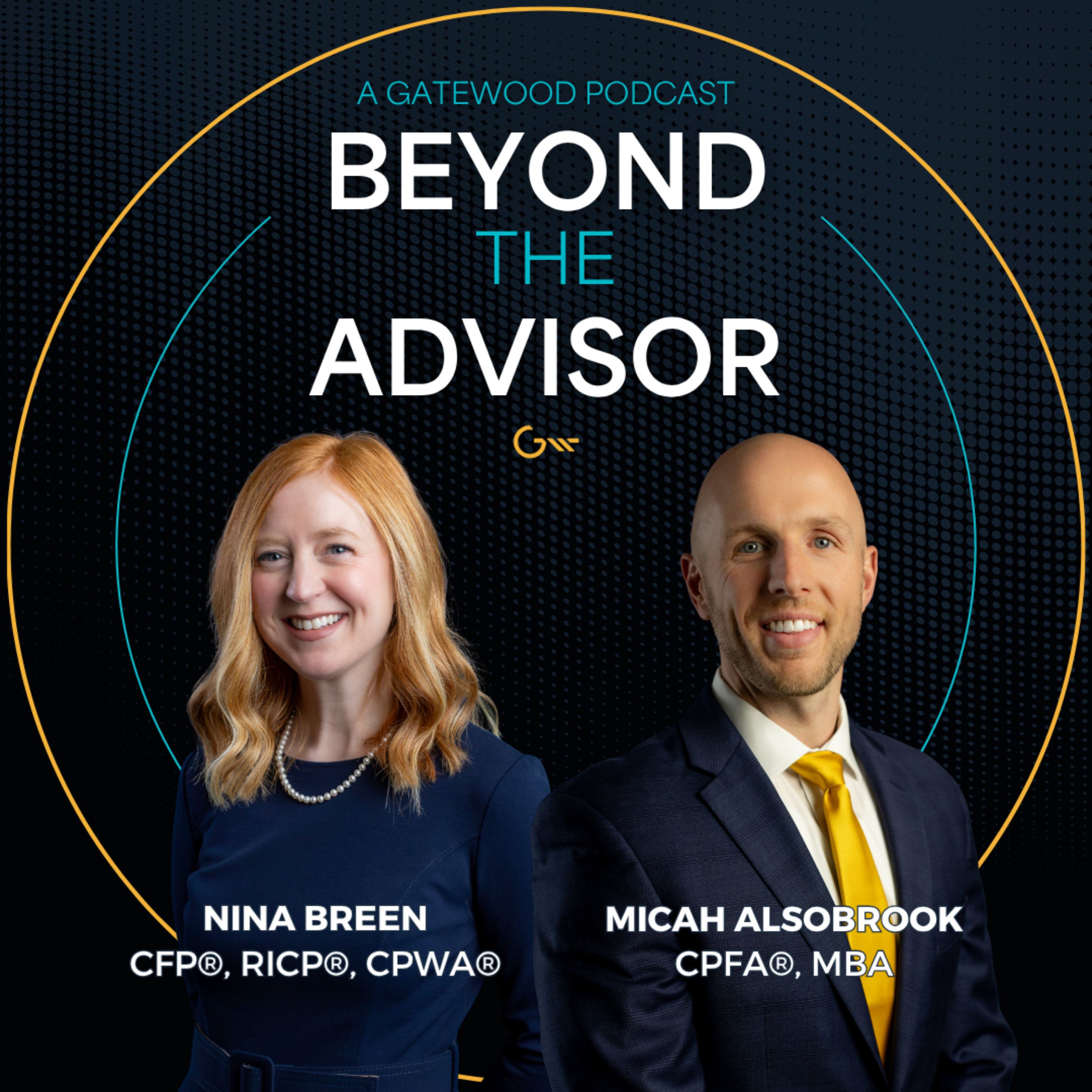
Beyond the Advisor Podcast
by Gatewood Wealth Solutions
Besides a financial advisor, who else should be on your wealth-building team? At Gatewood, we explore how different areas of expertise come together to strengthen your financial plan. In this series, our team answers key financial questions and shows how professionals work together to support your goals. We believe in our Firm to Family™ approach—delivering holistic solutions so you don’t have to be the expert, just have the right experts by your side. Learn more: https://www.gatewoodwealth.com/firm-to-family
-
3
What Makes a Great Financial Advisor? The Skill Most Never Learn
📖 Get The Listening Advisor by John Gatewood: geni.us/thelisteningadvisorIn this month's episode of Beyond the Advisor, Nina Breen, CFP®, RICP®, CPWA®, Senior Wealth Planner, sits down with John Gatewood, CFP®, CLU®, Founder and Director of Advisor Development, to talk about his new book, The Listening Advisor, and why the skill that determines whether a client relationship works has almost nothing to do with financial knowledge.John spent 45 years in the business and wrote the book to solve a problem he sees across the industry, and one he owns internally as Director of Advisor Development: advisors are trained on what to know, not on how to communicate. He and Nina walk through what listening actually looks like in a client meeting, why emotions rather than information drive financial decisions, and how Gatewood's Firm-to-Family® team structure is built around the way real families make choices about money.Key Topics Include:Why the industry has a training gap, not a knowledge gapEmotions drive financial decisions — and why information alone doesn't move peopleThe unasked question and how it pulls a client out of the conversationWhat AI can and can't replace in an advisor relationshipHow the firm-to-family client care team is structured across generationsAdvice for advisors early in their careers
-
2
Did Your S Corp Switch Just Shrink Your Retirement?
In this month's episode of Beyond the Advisor, Nina Breen, CFP®, RICP®, CPWA®, Senior Wealth Planner, and Micah Alsobrook, CPFA®, MBA, Retirement Plan Advisor, walk through a hypothetical case study of two 50/50 business owners who switched their LLC to an S corp — and the retirement plan consequences that decision created. Micah breaks down how the payroll tax savings work, why a lower W-2 salary can quietly reduce what an owner is allowed to contribute to a SEP IRA, and how a 401(k) can change the math entirely. Nina and Micah run the numbers side by side across three scenarios, then cover the admin costs, cash flow requirements, and S corp restrictions that belong in the conversation before anyone makes the move.Key Topics Include:How S corp structure creates payroll tax savings versus an LLC or partnershipWhy a lower reasonable W-2 salary can reduce SEP IRA contribution capacitySEP IRA versus solo 401(k) versus traditional 401(k) — limits, deferrals, and flexibilitySetting a reasonable salary that balances tax savings with retirement savingsThe admin side: payroll vendors, filings, record keepers, TPAs, and advisor costsRunning a side-by-side analysis before making a structural changeHypothetical case study: three scenarios comparedWhen an S corp does not make sense — windfall years and unstable cash flowS corp restrictions: shareholder limits, one class of stock, and pro-rata distributionsWhy the decision requires a team: financial advisor, CPA, and attorney
-
1
You Got a Lump Sum of Cash… Should You Invest It All Right Now?
In this month's episode of Beyond the Advisor, Nina Breen, CFP®, RICP®, CPWA®, Senior Wealth Planner, and Micah Alsobrook, CPFA®, MBA, Retirement Plan Consultant, walk through one of the most common — and emotionally loaded — questions in financial planning: when you receive a large sum of money, do you invest it all at once, or spread it out over time?Using a hypothetical client scenario — a married couple in their early 50s who received a $1 million inheritance and are hesitant to invest — Nina and Micah break down the research on lump sum vs. dollar cost averaging, explain the account types available for a windfall (and the ones that won't work the way you'd expect), and walk through what really happens when you invest and the market drops shortly after.Key Topics Include:Lump sum investing vs. dollar cost averaging — what the research actually saysHow your timeline to retirement changes the strategyWhy you can't just drop an inheritance into your 401(k)What to do with money you might need in the next few yearsHow to protect yourself from being forced to sell at the wrong timeThe behavioral side of investing — and why working with an advisor you trust matters
-
0
Should You Sell Investments to Buy a House... or Borrow Instead?
In this month's episode of Beyond the Advisor, Nina Breen, CFP®, RICP®, CPWA®, Senior Wealth Planner, and Micah Alsobrook, CPFA®, MBA, Retirement Plan Advisor, walk through a hypothetical client case that comes up all the time: a married couple in their mid-40s with a $4.2 million net worth who've found their next home and need $500,000 for the down payment. The question on the table — should they sell investments to fund it, or borrow instead?Nina and Micah break down the real options on the board: selling from a taxable brokerage account, using a home equity line of credit (HELOC), or opening a securities-backed line of credit (SBLOC). Along the way they unpack the tax impact of selling, the difference between qualified and non-qualified accounts, how much you can actually borrow against a portfolio, and the risks to watch for — then model how each path could play out over a lifetime inside a financial plan.Key Topics Include:- Selling investments vs. borrowing to fund a large purchase- How capital gains taxes hit a taxable brokerage account sale- Qualified vs. non-qualified (taxable) accounts — and why it matters here- How a securities-backed line of credit (SBLOC) actually works- SBLOC vs. HELOC: comparing borrowing power and risk- Advance rates — how much of your portfolio you can borrow against- The long-term cost of selling: compounding and opportunity cost- SBLOC pitfalls: margin calls and market volatility- Setting up a line of credit proactively as a liquidity backstop
-
-1
Timing, Tax Strategies & Missed Opportunities for Business Owners
In this month's episode of Beyond the Advisor, Nina Breen, CFP®, RICP®, CPWA®, Senior Wealth Planner, and Micah Alsobrook, CPFA®, MBA, Retirement Plan Advisor, continue their fishbowl-style Q&A with a deep dive into the timing, tax strategies, and missed opportunities that quietly shape outcomes for business owners and executives. From estate planning and step-up in basis to 401(k) plan design, business exit timing, donor-advised funds, and weathering market volatility—this episode unpacks the costly decisions that get delayed and the planning moves that change the trajectory.Key Topics Include:Why estate planning is the most delayed financial decision—and the basics every adult needsA real client story on step-up in basis and concentrated employer stockWhen a will isn't enough: the case for a revocable trustSigns a 401(k) was designed to check a box vs. built strategicallyNew comparability profit-sharing as a way to max out owner contributionsDonor-advised funds as a tax play in big-income years (like the year you sell your business)How far in advance to plan a business exit (hint: 5–10 years)Vesting schedules as a key employee retention toolWhat NOT to do when markets get volatile (fear selling, loans, distributions)Fortress Gatewood: the cash + fixed income buffer strategyA real COVID retiree story on confidence in the plan, not the marketTarget date funds and the "evidence-based" investment lineup
-
-2
The Hidden Connection Between Business Decisions and Personal Wealth
In the first episode of Beyond the Advisor, Nina Breen, CFP®, RICP®, CPWA®, and Micah Alsobrook, CPFA®, MBA, unpack the planning and retirement questions that successful families and business owners often overlook.They discuss cash reserve strategy, retirement plan timing, how concentrated business wealth can create blind spots, and why coordination between advisors, CPAs, and attorneys is so important. They also walk through Roth conversions, SIMPLE and SEP plans, safe harbor 401(k)s, and real-world examples of tax-sensitive planning decisions that can go wrong when timing is missed.Key Topics Include:Cash reserve targets for households, retirees, and business ownersWhy starting a retirement plan earlier can matter more than people thinkConcentration risk for business ownersHow SIMPLE IRAs and SEP IRAs compare with 401(k)sWhy financial, legal, and tax professionals need to coordinateRoth conversions explained in plain EnglishTax timing mistakes that can affect retirement plan contributions
We're indexing this podcast's transcripts for the first time — this can take a minute or two. We'll show results as soon as they're ready.
No matches for "" in this podcast's transcripts.
No topics indexed yet for this podcast.
Loading reviews...
ABOUT THIS SHOW
Besides a financial advisor, who else should be on your wealth-building team? At Gatewood, we explore how different areas of expertise come together to strengthen your financial plan. In this series, our team answers key financial questions and shows how professionals work together to support your goals. We believe in our Firm to Family™ approach—delivering holistic solutions so you don’t have to be the expert, just have the right experts by your side. Learn more: https://www.gatewoodwealth.com/firm-to-family
HOSTED BY
Gatewood Wealth Solutions
Loading similar podcasts...
Frequently Asked Questions
How many episodes does Beyond the Advisor Podcast have?
Beyond the Advisor Podcast currently has 6 episodes available on PodParley. New episodes are automatically indexed when they're published to the podcast feed.
What is Beyond the Advisor Podcast about?
Besides a financial advisor, who else should be on your wealth-building team? At Gatewood, we explore how different areas of expertise come together to strengthen your financial plan. In this series, our team answers key financial questions and shows how professionals work together to support your...
How often does Beyond the Advisor Podcast release new episodes?
Beyond the Advisor Podcast has 6 episodes. Check the episode list to see recent publication dates and frequency.
Where can I listen to Beyond the Advisor Podcast?
You can listen to Beyond the Advisor Podcast on PodParley by clicking any episode. We provide an embedded audio player for direct listening, and you can also subscribe via your preferred podcast app using the RSS feed.
Who hosts Beyond the Advisor Podcast?
Beyond the Advisor Podcast is created and hosted by Gatewood Wealth Solutions.
URL copied to clipboard!