
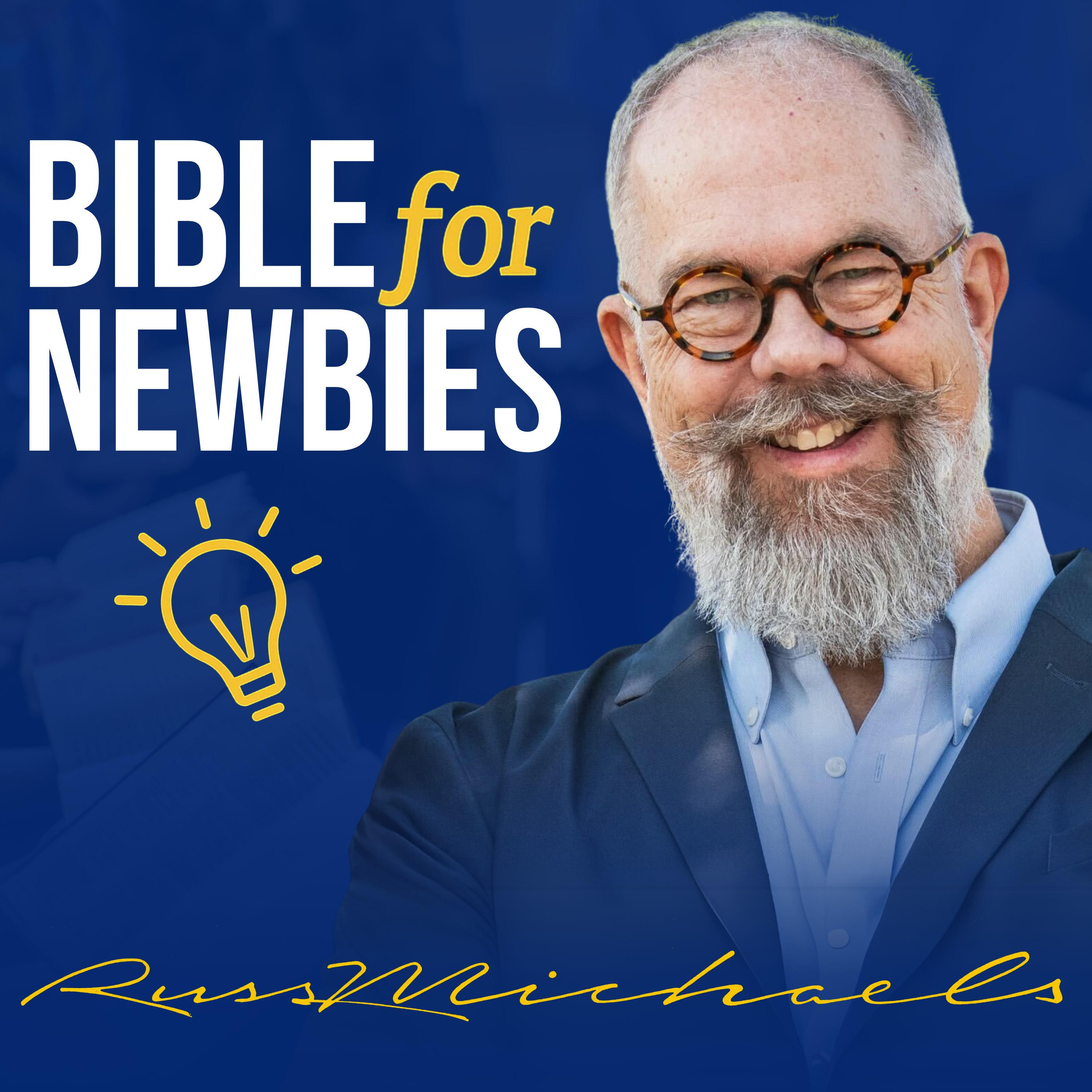
PODCAST · religion
Bible for Newbies
by Russ Michaels
This podcast is for you if you're new to reading the Bible or if you've been reading for a while and you want to go deeper. The goal is to help untangle the confusing stuff so your Bible reading feels rewarding and life-giving, not frustrating or overwhelming. One of Jesus' disciples, Peter, wrote that the scriptures are like light shining in a dark place. Reading the Bible is like flipping your headlights to high beam when you're driving on a dark country road. Suddenly, things get clearer, you can see the road ahead and avoid the ditches. So come take a ride with me and let's turn on the light.
-
113
In the Beginning (Part 10): Through the Flood (Genesis 8:1–22)
In this episode, we explore the hopeful and renewing story of Noah's flood in Genesis 8, focusing on God's faithfulness during times of waiting, chaos, and renewal. Whether you're in a season of silence, patience, or transition, this message offers encouragement and insight on God's ongoing rescue and new beginnings.Inside the episode:The significance of "God remembered Noah" as a sign of covenant faithfulnessHow the receding floodwaters symbolize renewal and creation's re-startThe Hebrew meaning of "remes" (small animals that scurry along the ground) and its connection to God's creationThe parallels between Genesis chapter 1 and 8, emphasizing re-creation after chaosThe importance of waiting patiently and recognizing signs of life (like the olive leaf)How to interpret waiting periods in our own lives, stages of God's rescueNoah’s symbolic release of the raven and dove as signs of hope and progressThe significance of Noah’s first act of worship after leaving the arkUnderstanding flooding and chaos as part of the human condition, and the ultimate rescue in JesusApplying the story: trusting God's timing, avoiding rushing ahead, and holding onto hope
-
112
An Angel, a Bicycle, and a Mother’s Day Conversation
In this episode, Russ shares a heartfelt story about an angelic encounter from his childhood that left a lasting impression on his understanding of honoring parents—especially relevant on Mother's Day. Discover the profound impact that living with respect and obedience can have on your life and relationships.In this episode:Russ recounts a meaningful childhood experience involving an angel's messageThe biblical basis for honoring parents from the Ten Commandments and New TestamentThe personal impact of honoring parents on mental, spiritual, and relational well-beingTips for reconciliation and showing respect to imperfect or ungodly parentsEmphasizing that honoring parents is a choice that invites blessing and abundance
-
111
In the Beginning (Part 9): When the Flood Waters Rise (Genesis 7:1–8:1)
In this episode, Russ Michaels explores the sobering story of Noah’s flood found in Genesis 7-8. He answers tough questions about whether the flood really happened and why God would bring such destructive judgment — all while emphasizing God's mercy, preservation, and active remembrance amidst chaos.Inside the episode:The historicity of Noah’s flood: global vs regional perspectivesAncient flood stories and their significanceThe purpose of God's judgment: removing corruption and preserving righteousnessWhat it means that God “remembered” NoahPractical lessons on trusting God's judgment and preservation during chaosHow to reflect on personal destructive traits and God's grace to changeThe significance of trusting God's active role in chaos through Psalm 46Resources & Links:Psalm 46 — A beautiful psalm encouraging trust in God during chaosBible for NewbiesConnect with Russ Michaels:Instagram: @russmichaels
-
110
You Don’t Have to Feel Happy to Have Joy
In this episode, Russ Michaels explores the difference between happiness and joy, emphasizing that true joy stems from our relationship with God, not our circumstances. He shares personal insights, biblical stories, and practical tips to help listeners discover joy even amid life's challenges.Inside the episode:Distinction between happiness and joy, happiness depends on external circumstances, joy is rooted in the LordThe biblical foundation of joy, from Nehemiah 8 and Habakkuk to Paul’s teachingsJoy as a command from God, not just a feeling, and how to respond by staying connected to the Holy SpiritHow biblical figures like Jen Schmautz embraced joy amidst sufferingPractical steps to cultivate joy: speaking to your soul, redirecting focus through worship, and trusting God's presenceResources & Links:Psalms 42 and 43Philippians 4:4Nehemiah 8Habakkuk 3:17-19James 1:2-4
-
109
In the Beginning (Part 8): A Promise Before the Storm (Genesis 6:9–22)
Join us as we explore the remarkable story of Noah's Ark, a story of faith that persisted despite uncertainty and ridicule. Discover how God's promises of rescue can inspire us through chaos and challenges in our own lives.Inside the episode:The significance of Noah's faith and obedience in building the Ark despite years of silence and doubtUnderstanding God's judgment as an act of love aimed at setting things rightThe concept of covenant: God's promise of rescue before judgment arrivesVisualizing the Ark's size and logistical challenges to appreciate the scale of God's rescue planPractical lessons on perseverance and trusting God's timing in difficult seasons
-
108
In the Beginning (Part 7): When Boundaries Were Broken (Genesis 6:1–8)
Discover the fascinating and complex story of Genesis chapter six, exploring the cosmic rebellion of angels, the creation of the Nephilim, and God's deep grief over a world gone awry. Join us as we unpack these mysterious biblical events and their relevance today.In the episode:Why species of birds breed within their own kind and how boundaries protect diversityThe biblical concept of "sons of God" as spiritual beings, angels, and their role in rebellionHow angels crossed divine boundaries, mating with humans, and producing the NephilimThe significance of the Nephilim as giants and symbols of chaos and violenceGod's profound grief over humanity's corruption and His commitment to rescue through NoahThe overarching biblical theme of God's rescue plan, pointing forward to JesusPractical takeaways: sin's growth from small to destructive and God's deep compassion despite judgment
-
107
Grace and Faith: How They Work Together
In this episode, Russ Michaels explores the interconnectedness of grace and faith, clarifying common misconceptions and providing practical insights on how these foundational Christian concepts influence everyday living and salvation. Whether you're a long-time believer or new to faith, this discussion offers valuable perspective on responding to God's grace.Inside the episode:The true meaning of grace as God's empowering presence, not just forgivenessHow grace initiates and faith responds—clarifying their dynamic relationshipThe biblical foundation: Ephesians 2, verse 8, and God's self-description in Exodus 34Examples of grace and faith in action through salvation and water baptismPractical application: living generously and trusting God's provision over fearHow faith is responding to God's spoken word, not wishful thinking or projectionThe role of Jesus as the full expression of grace and truth, and the abundance of grace in himEncouragement to step into God's flow of grace by listening and responding in daily life
-
106
In the Beginning (Part 6): The Man Who Didn’t Die (Genesis 5:1–32)
In this episode, we delve into Genesis chapter 5, exploring the long genealogy from Adam to Noah, and uncover a powerful lesson from Enoch’s story—how walking faithfully with God can break the cycle of death and decay. Join us as we connect ancient scriptures to personal faith and everyday life.Inside the episode:The pattern of longevity and mortality in Genesis 5 and its symbolic significanceThe story of Enoch as the only person to bypass death by walking faithfully with GodThe meaning of "walking with God" through trust, obedience, and relationshipHow Hebrews 11 affirms Enoch’s faith and its implications for todayThe literary and historical significance of the Book of First Enoch in Jewish traditionJesus’ death and resurrection as the ultimate break in the death patternPractical ways to emulate Enoch by walking with God dailyRecommended biblical passages for deeper reflection: Genesis 3 and Galatians 5
-
105
In the Beginning (Bonus): Did Adam and Eve Have Belly Buttons?
Ever wondered whether Adam and Eve had belly buttons? While it might sound like a humorous question, it opens up deeper discussions about how God created the world. This episode explores the theological implications of creation with maturity and what it reveals about God's nature.Inside the episode:The Bible’s lack of explicit mention about Adam and Eve's belly buttonsInferences about creation based on Genesis 1 and 2The concept of created maturity: plants, humans, and universeThe idea of God creating a fully functioning world instantlyThe theological significance of creation with age—appearance of ageDifferent perspectives on whether Adam and Eve had belly buttonsHow this question reflects God's power to create complete and ready-for-life worldsWhat this reveals about God's nature as a God of immediacy and divine sovereignty
-
104
In the Beginning (Part 5): Sin Escalates (Genesis 4:1–26)
Have you ever wondered how small actions can snowball into major consequences? In this episode, we explore Genesis chapter 4 to understand how sin escalates from jealousy to violence, and what God's mercy reveals about His character.Inside the episode:The progression of sin from jealousy to murder and cultural violenceThe significance of Abel's faith and bringing the best to GodGod's warning to Cain: sin crouching at the door and the importance of obedienceThe meaning of the mark on Cain: protection versus punishmentHow sin spreads through generations, exemplified by LamechThe importance of early awareness and listening to God's voiceRecognizing ripple effects of our actions and choosing God's way over escalationPractical steps: catching sin early, listening to God's warnings, understanding ripple effects, and choosing mercy
-
103
In the Beginning (Part 4): Did God Really Say? (Genesis 3:1–24)
In this episode, Russ Michaels explores the story of Adam and Eve in Genesis chapter 3 to uncover the core issue of trust and how it impacts our relationship with God. He emphasizes that even in the midst of brokenness, God's pursuit and provision for our redemption are constant.Inside the episode:The importance of trust in our relationship with God and othersHow doubt and questioning (did God really say?) introduce temptationThe three categories of temptation: desires of the flesh, desire of the eyes, pride of lifeThe significance of our choices and the immediate feelings of shame and hidingGod’s response: moving toward us and providing covering through sacrificeThe promise of a future rescuer hinted at in Genesis and fulfilled in JesusReframing God's judgment as setting things right and beginning of rescuePersonal application: trusting God again when brokenness occurs
-
102
In the Beginning (Part 3): Designed for Relationship (Genesis 2:4–25)
Join me in this special 101st episode as he takes you from a high-level overview of Genesis to an intimate look at what it means to be truly human, designed for relationship with God and others. Discover how these ancient truths still shape our lives today.Inside the episode:The two different creation accounts in Genesis and their significanceThe meaning of God's breath and the spirit of life in usWhy it is not good for man to be alone and the importance of relationshipsThe deeper covenant significance behind becoming "one flesh" in marriagePractical ways to stay connected with God and community dailyThe role of marriage and singleness in God's designAn invitation to meditate on Psalm 139 for deeper intimacy with God
-
101
Holy Week (Part 2): The Resurrection Story (Matthew 28; Luke 24; John 20; 1 Corinthians 15)
Join me as I walk through a detailed harmonization of the resurrection stories from Matthew, Mark, Luke, and John. This episode aims to deepen your understanding of Jesus' miraculous rise, inspiring faith and joy during Easter.Inside the episode:The sequence of events leading to Jesus' resurrection from all four gospelsThe angel's message at the tomb and the apostles' reactionsJesus' appearances after rising, including interactions with Mary Magdalene, the disciples, and ThomasThe biblical significance of the resurrection as the foundation of Christian faithHow eyewitness accounts confirm the reality of Jesus' resurrectionScriptural references from Matthew 28, John 20, Luke 24, and 1 Corinthians 15Timestamps
-
100
Holy Week (Part 1): The Sin Bearer (Isaiah 53)
This Holy Week episode honors the significance of Jesus' suffering, death, and resurrection. Hosted by Russ Michaels, it offers reflections, Scripture insights, and a focus on Old Testament prophecies fulfilled in Christ to deepen your contemplation and worship during this sacred time.Inside the episode:Overview of Holy Week and its significance in Christian faith, highlighting Palm Sunday to Easter Sunday.Scripture focus: 1 Corinthians 15, emphasizing the core elements of the gospel: Jesus' death, burial, and resurrection.The importance of Old Testament prophecy, particularly Isaiah chapter 53, predicting Jesus' suffering and sacrifice.An exploration of Isaiah 53, with detailed reading from the Passion Translation (TPT), illustrating Jesus as the suffering servant who bore our sins.Reflection on specific verses: Jesus' rejection, suffering, substitutionary death, and the fulfillment of God's justice and mercy.The prophetic prediction of Jesus' burial in a rich man's tomb despite being innocent, and the subsequent victory through resurrection.The significance of Jesus carrying away our sins and offering healing, righteousness, and wholeness.Personal prayer and acknowledgment of Jesus as the sin bearer, emphasizing awe and worship.
-
99
In the Beginning Part 2: Made in His Image (Genesis 1:26–2:3)
In this episode, we explore the profound insights from Genesis about what it means to be human and why rest is embedded in God's design for our lives. We delve into the significance of being made in God's image and how that shapes our worth, purpose, and rhythm of life.Inside the episode:The creation of humans in God's image and its implications for human value and purposeThe concept of the Trinity hinted at in Genesis and its relevanceWhat it means to reflect God's image, representation and authorityHow being created in God's image grants inherent dignity regardless of circumstancesThe significance of God's rest on the seventh day as a model for human rhythmThe biblical understanding that rest is a vital part of life, not a rewardPractical insights on implementing intentional rest and Sabbath in daily lifeExploring common misconceptions about the image of God, appearance vs. representationThe connection between rhythm, order, and avoiding chaos in life
-
98
In the Beginning Part 1: Order Out of Chaos (Genesis 1:1-25)
Welcome to this episode where we explore the profound message behind the creation story in Genesis 1. We’ll uncover how God's deliberate design transforms chaos into beautiful, ordered life, and how this ancient narrative speaks to our modern struggles with uncertainty and chaos.Main Topics:The structured rhythm of Genesis 1 and its poetic designThe Hebrew concept of Tohu Wabohu and God's presence in chaosThe pattern of forming and filling in creation daysThe theological meaning: God brings order with purpose and intentionPractical application: God’s ongoing role in bringing order to our chaos
-
97
What We Learned from the Underground Church in China
Discover the powerful stories and insights from a trip to China's underground house churches, highlighting the resilience, faith, and sacrifices of Chinese Christians operating under intense persecution. Cameron Robinson shares firsthand experiences, including meeting top church leaders and the importance of Bibles in a restricted environment.In this episode:Cameron shares his firsthand experience crossing into mainland China and meeting underground church leadersInsights into the illegal status of house churches and their resilienceThe importance of memorizing Scripture for believers with limited access to BiblesStories of miraculous conversions and village-wide church growth in hostile environmentsReflection on how this trip changed the hosts' perspectives on faith, courage, and the global churchPractical ways listeners can support underground believers through programs like GatekeepersEncouragement to be bold in sharing faith in everyday life
-
96
The Bible in China: Eugene Bach on Smuggling, Printing, and Revival
Discover the astonishing history of Bible translation, smuggling, and underground printing in China as Eugene Bach reveals stories of faith, perseverance, and divine intervention. This episode highlights the resilience of underground church movements and the innovative ways Bibles reach persecuted believers in some of the world's most restrictive nations.In this episode:The history and significance of William Tyndale's translation work, marking 500 years of the English Bible.The origin of the Back to Jerusalem vision and its impact on Chinese missionaries.The story of Jean Bessant and the earliest Chinese Bible translations.Heroic tales of Bible smuggling in the 1980s and the daring operations of Brother David.The shift from smuggling to domestic Chinese Bible printing and distribution challenges.The rise of Christianity in China from persecution to a billion-plus believers.The role of innovative cyber tools and apps in distributing God's Word covertly in North Korea and Iran.Insights into how the Chinese church is not only receiving but also sending missionaries to unreached nations.The significance of prayer, partnership, and the "Gatekeepers" program for global Bible access.Eugene’s upcoming message on the ground realities in Iran and the importance of faith-driven perseverance.
-
95
It’s Never Too Late to Start Again: A Bible Reading Reset
Feeling discouraged about falling behind on your Bible reading goals? In this episode, Russ Michaels encourages us to embrace progress over perfection and reminds us that starting anew is always possible, no matter where you are. Discover practical tips and inspiring insights to keep your spiritual growth on track.Inside the episode:The importance of progress, not perfection, in spiritual disciplinesHow Psalm 1 illustrates steady growth and stabilityThe analogy of trees growing over time through consistent wateringGrace as God's empowering presence to help start againPractical strategies for integrating Bible reading into busy livesThe significance of scripture as the belt of truth that stabilizes lifeEmbracing the idea that “no guilt, just love” from GodThe value of small, regular exposure to God's WordEncouragement to reset and read scripture today, even if briefly
-
94
Kris’s Story: From “Don’t Read the Bible” to “I Love the Bible”
In this heartfelt episode of Bible for Newbies, Russ welcomes his wife, Kris, as she shares her inspiring journey from seeing the Bible as a sacred object to actively engaging with it daily. Her story highlights the transformative power of understanding and applying God's Word in everyday life.We discuss:How Kris was raised in a church that didn't emphasize personal Bible readingThe significance of her first Bible and her feelings towards it as a childHer curiosity-driven approach to digging deeper into Scripture despite limiting environmentsThe role of discipleship and small group experiences in her spiritual growthHer practical routines for Bible reading in a busy careerFavorite biblical passages and life verses that have shaped her faithThe importance of trusting God's plans and the faith stories that reinforced her trustEncouragement for new believers to stay faithful and persevere in their Bible journey
-
93
Why Did People Live 900 Years in Genesis?
Explore the intriguing long lifespans of early biblical figures in Genesis and discover what they reveal about God's character, His original design, mercy, judgment, and ultimately, His plan of rescue through Jesus.Inside the episode:The significance of extraordinarily long lifespans in Genesis: history or symbolism?How Genesis portrays these long ages as part of real human history rooted in God's creation.Three major theories explaining the decline of lifespan after the flood:Closer proximity to God's original creation before the floodLifespan limits as an act of mercy to prevent wickednessEnvironmental and genetic shifts after the floodThe flood as a pivotal moment shifting human history and lifespan decline.The importance of walking with God over lifespan extension, highlighted through Enoch’s story.How God's rescue and relationship with humanity are central, culminating in Jesus Christ.
-
92
The God Who Sees Me — and Sees Ahead
In this episode, we explore the powerful names of God revealed in the life of Abraham. These names not only deepen our understanding of God's character but also provide practical anchors for trusting Him in our own wilderness moments.Inside the episode:How God's names unveil His nature and trustworthinessThe significance of El Elion, El Roy, El Shaddai, El Olam, and Yahweh-YirehAbraham’s journey of faith reflected through these divine namesLessons on trusting God during delays and challengesThe importance of rootedness and obedience in walking with GodPersonal reflections on living open-handed and trusting in God's promises
-
91
When You Can’t See the Ground: Learning to Trust God
In this heartfelt episode, Russ Michaels shares insights on trusting God through personal experiences and biblical lessons. Discover how trusting God's character, strength, and timing can transform your faith journey, especially during challenging seasons.Inside the episode:The importance of Sabbath rest and intentional time with God during vacationsInsights from Abraham’s life about trusting God in big and small waysThe gym analogy illustrating trust in God versus human relianceHow God's goodness, strength, and timing shape our faithPersonal story of trusting God after a car accident during vacationBiblical references: Hebrews 11:1, Psalm 34:8, 2 Corinthians 12:9, Proverbs 3:5-6The significance of trusting God’s timing despite delays, like Abraham’s 14-year waitPreview of the next episode: exploring the names of God from Abraham’s story
-
90
Love in the Bible (Ep. 9): From Chemistry to Covenant
Discover a profound and practical approach to love rooted in choice and action, not just feelings. In this episode, we explore how biblical love transforms our understanding of intimacy, friendship, and commitment, encouraging us to love intentionally based on what benefits others.Inside the episode:How 1980s movies shaped our misconceptions of love as chemistry, intensity, and anxietyThe biblical definition of love: choosing to do what benefits others (1 Corinthians 13)Love as an action, not a sentiment — the importance of intentionalityThe role of knowledge, understanding, and behavior in sustaining loveThe four types of love (agape, storge, phileo, eros) and how agape guides them all healthilyLove as a decision, rooted in God’s covenantal love, providing security and freedom to love othersPractical applications in marriage, friendship, and parenting, love as a purposeful actThe significance of responding to love because we have first been loved by GodA call to read and reflect on 1 Corinthians 13 to reshape your love map
-
89
Love in the Bible (Ep. 8): Eros — Sex, Desire, and God’s Design
Explore the biblical perspective on eros—romantic attraction and desire—clarifying how it is a gift from God when shepherded by love and covenant. This episode dives into the nature of desire, how it can become distorted, and why understanding God's design is crucial for healthy relationships.Inside the episode:The biblical view of desire and eros as a gift from GodThe distinction between eros and sexual appetiteHow eros is meant to be shepherded by agape loveThe order of covenant before sexual intimacy in ScriptureThe neurological, emotional, and spiritual bonds of sex within covenantThe dangers of pornography, hookup culture, and sexual confusionThe importance of shepherding desire rather than suppressing or indulgingPractical ways to honor desire in singleness and marriageThe role of covenant and safety in healthy intimacyHow cultural distortions damage eros and how to restore it
-
88
Love in the Bible (Ep. 7): Phileo - Friendship That Forms You
Discover why friendship is essential for spiritual growth and how to cultivate deep, purposeful relationships that mirror biblical love. Join us as we unpack the biblical concept of phileo, its role in discipleship, and how to build friendships rooted in shared mission and agape love.Inside the episode:The significance of deep friendships and their biblical foundationThe Greek words for love: agape, storge, and phileoHow friendship reflects God's love and contributes to spiritual developmentThe distinction between eros (romantic love) and phileo (friendship love)Friendship as a shared pursuit and common missionJesus' model of friendship in John 15 and what it means for usThe importance of accountability, honesty, and ordered love in friendshipsHow to initiate and nurture meaningful friendships with intentionality
-
87
Love in the Bible (Ep. 6): Storge - When Affection Gets Funky
In this episode of Bible for Newbies, we explore the nuanced concept of Storge, often overlooked yet incredibly prevalent in our closest relationships. Discover how this form of love, rooted in familiarity and routine, can be both a blessing and a challenge—and learn how to order it with Agape, the love that chooses the good of others.Inside the episode:The definition of Storge and its manifestations in everyday lifeThe difference between affection (Storge) and love ordered by AgapeCommon myths about family love—"because we love each other, it should be easy"How Storge can turn toxic when left unexamined and unguided by AgapeBiblical insights on Storge, including Romans 12:10 and the story of RuthPractical ways to intentionally foster healthy, Agape-guided family relationshipsThe importance of honoring and making deliberate choices in familiar relationshipsTough love: confronting destructive patterns out of genuine love and careReflection questions for assessing how love is expressed in your relationships
-
86
Love in the Bible (Ep. 5): Agape — Love in Action
In this episode, we explore the profound meaning of agape love—God's unconditional love shown through actions, and how it can transform our relationships and daily lives. Whether you’re new to faith or looking to deepen your understanding, this discussion offers practical insights into living out love that moves first.Inside the episode:The biblical concept of agape love as selfless and action-orientedThe Greek origins of different kinds of love and how agape uniquely redefines themHow God’s love demonstrated through Jesus exemplifies agape in actionPractical ways to embody agape love in everyday life, from serving unnoticed volunteers to maintaining healthy relationshipsThe significance of love being driven by actions rather than emotionsA challenge to read and memorize 1 John chapter 4 to anchor love in truth and action
-
85
Love in the Bible (Ep. 4): Jesus-Shaped Love
Discover how Jesus models a love that transcends feelings and is rooted in deliberate action. This episode explores the true nature of love as an intentional choice, not just an emotion, learning from Jesus’s example to transform our relationships.Inside the episode:The difference between emotional love and Jesus-shaped loveJesus’s act of washing disciples' feet as a model of humility and servanthoodLove as an intentional decision rather than a fleeting feelingThe importance of knowing others to love them effectivelyPractical ways to emulate Jesus’s love through small acts of serviceHow love remains steadfast even when feelings fadeThe significance of agape love and self-forgetfulnessApplying Jesus’s love to modern relationships and challengesTimestamps: 00:44 - Defining true love beyond warm feelings01:14 - Jesus takes the posture of a servant01:55 - How relationships often deteriorate over small irritations02:24 - Culture’s view of love as a feeling or benefit02:52 - Why love based on feelings is fragile03:21 - Jesus's example of unconditional love03:48 - The significance of Jesus washing disciples’ feet04:16 - The cultural meaning of foot-washing and humility06:10 - Love as purposeful and inclusive, not selective07:07 - Servanthood driven by love, not worthiness08:05 - A real-life example of Jesus-shaped love through sacrifice08:46 - Jesus's instructions: do as I have done09:15 - Loving through practical, small acts of service10:14 - Dr. Paul Olson’s definition: love that benefits others11:13 - Jesus’s mission to serve, not be served (Mark 10:45)12:12 - Knowing others to do what truly benefits them12:38 - Tough love and painful but beneficial actions13:26 - Shifting from romantic to Jesus-shaped love in marriage14:03 - The reality of fluctuating emotions and lasting love14:58 - Loving as Jesus loved—setting an example for daily life15:28 - Jesus’s ultimate sacrifice and laying down one’s life15:54 - Love as a decision, not an emotion16:39 - Serve with no expectation, in secret if possible17:09 - Transform your relationships through deliberate love17:32 - Love is revealed by what you choose to do, not how you feel
-
84
Psalm 34 for Fear and Anxiety
Discover how David’s personal experience of fear and humiliation in Psalm 34 offers us encouragement and hope today. This episode explores the context behind the Psalm, the significance of God's rescue in our lives, and practical faith reminders to face uncertainty with confidence.Inside the episode:The background of Psalm 34 and David’s harrowing escape from King Achish (1 Samuel 21)How David’s act of pretense reveals God's methods of rescue in weaknessThe significance of trusting God in times of fear and anxietyBiblical promises of God's presence and protection for the brokenheartedPractical applications to turn to God in moments of distressThe importance of seeking peace, fleeing evil, and trusting God's justiceHow God's ears are open to those who call on Him and how He rescues His peopleReflection on God's unwavering support for the righteous during troubleEncouragement for listeners to look to the Lord as their refuge and salvation
-
83
Love in the Bible (Ep. 3): Hesed - Love That Refuses to Quit
In this episode of "Bible for Newbies," Russ Michaels explores the concept of "hesed," a Hebrew word often translated as steadfast love, unfailing love, or loving kindness. He delves into the Old Testament, particularly the story of Hosea, to illustrate God's covenant love and redemption. Through personal anecdotes and biblical narratives, Russ emphasizes that hesed is a love that remains loyal and patient, even in the face of betrayal and brokenness. The episode encourages listeners to reflect on God's enduring love and how it can transform their own relationships.Inside the episode:Love is a choice, not just a feeling.Hesed is a Hebrew word for steadfast love.God's love is loyal and covenantal.Hosea's story illustrates God's redemption.Redemption involves paying a price for freedom.Hesed love remains patient and enduring.Love and relationship are distinct concepts.God's love doesn't deny pain but stays present.Hesed is about resisting bitterness and revenge.God's love is a model for our relationships.
-
82
Love in the Bible (Ep. 2): Fill Your Love Tank
In this episode of "Bible for Newbies," Russ Michaels explores the concept of love as a choice and emphasizes that God is the ultimate source of love. Drawing from personal experiences and biblical teachings, he discusses how many people live with "$5 in their love tank," relying on limited resources instead of God's abundant love. Russ shares insights from C.S. Lewis and Dr. Paul Olson, highlighting the importance of learning and experiencing God's love to truly fill one's "love tank." The episode encourages listeners to engage in spiritual practices to experience God's love and offers a challenge to read and personalize Psalm 103.Inside the episode:Love is a choice, God is the supply.Fill your love tank with God's love.God's love is the ultimate source.Experience God's love through practice.Read Psalm 103 for divine love.Natural loves need divine support.God loved us first.Love beyond human relationships.
-
81
Love in the Bible (Ep. 1): Love Isn’t What You Think It Is
In this episode of Bible for Newbies, Russ Michaels explores the true meaning of love as defined by the Bible, challenging cultural perceptions of love as mere romance or chemistry. He shares personal anecdotes and insights from C.C.S. Lewis's "The Four Loves," emphasizing that love is a choice rooted in God's nature, not just a feeling. The episode encourages listeners to redefine love based on biblical principles and to practice self-forgetfulness in relationships.Inside the episode:Love isn't what you think it is.The Bible defines love, not culture.Love is a choice, not just a feeling.Romance and infatuation are real but not complete.Biblical love is rooted in God's nature.Self-forgetfulness is key in love.Love is patient and kind, not boastful.Love never gives up or loses faith.C.S. Lewis's 'The Four Loves' offers insights.Love is proven by choices, not words.
-
80
When God Speaks Through Scripture: A Real-Life Story
In this episode of Bible for Newbies, Russ Michaels shares a personal experience of finding peace and spiritual guidance through his devotional, Daily Light. He emphasizes the power of scripture in overcoming spiritual struggles and encourages listeners to turn to the Bible for comfort and direction.Inside the episode:God showed up for me in a profound way.Keep coming back to the Bible with expectation.Daily Light is a special devotional for me.Bible verses arranged topically appeal to me.I read until something grabs me.I was wrestling with spiritual struggles.Isaiah 26:3 speaks of perfect peace.Shalom, shalom means wholeness and peace.God is the source of my peace.The Bible contains the words of life.
-
79
Scripture Songs: Memorize the Bible by Singing It
In this episode of Bible for Newbies, Russ Michaels explores the power of singing scripture as a method for memorization and spiritual growth. Drawing from personal experiences and biblical references, he emphasizes how music can embed scripture into our hearts and minds, making it a lasting part of our spiritual journey.Inside the episode:Singing scripture can help embed it into your heart.Music bypasses mental defenses, reaching the core of who you are.The Bible includes songs, indicating music's role in discipleship.Singing scripture is like training for a spiritual marathon.Colossians 3 encourages singing psalms and hymns with gratitude.Ephesians 5 highlights community singing for spiritual growth.Scripture songs can become the soundtrack of your life.Old and new scripture songs offer timeless spiritual insights.Creating playlists of scripture songs aids memorization.Sharing scripture songs can spread spiritual encouragement.
-
78
Scripture Memorization: Why It Matters (and How to Do It)
In this episode of Bible for Newbies, Russ Michaels explores the significance of scripture memorization, emphasizing its role in spiritual formation and resilience. He shares personal stories and biblical examples to illustrate how memorizing scripture can strengthen one's inner life, equip individuals to resist temptation, and renew the mind. The episode also includes practical tips for memorizing Bible verses effectively.Inside the episode:Memorizing scripture is not about impressing God but strengthening oneself.Scripture memorization helps in spiritual formation and becoming a mature disciple.Having scripture memorized equips you to handle life's crises with strength.Memorizing Bible verses can renew your mind and reshape your instincts.Russ shares personal stories of how Bible memorization shaped his life.The episode emphasizes the importance of internalizing scripture for spiritual growth.Practical tips for memorizing scripture include choosing relevant verses and repetition.
-
77
Isaiah 63–66 — Resisting Rescue: Why Isaiah Ends with a Warning
In this final episode of the Isaiah series on Bible for Newbies, Russ Michaels reflects on the profound messages of the last chapters of Isaiah. He emphasizes the importance of understanding God's judgment not as revenge but as a means of setting things right. The episode explores themes of rescue, redemption, and the consequences of resisting God's call. Russ shares personal anecdotes to illustrate the urgency of cutting sin out of one's life and embracing God's rescue mission. The episode concludes with an invitation to listeners to embrace the life God offers and a preview of new directions for future episodes.Inside the episode:The Book of Isaiah ends with a warning, emphasizing the consequences of resisting God's rescue.God's judgment is about setting things right, not revenge.Isaiah 63 depicts God as a warrior, highlighting the seriousness of judgment.Isaiah 64 includes a plea for God's mercy and recognition of human imperfection.Isaiah 65 presents a vision of new heavens and a new earth, echoing Revelation.Isaiah 66 emphasizes humility and the gathering of nations to witness God's glory.Personal anecdotes illustrate the importance of cutting sin out of one's life.Jesus' teachings in Mark 9 are connected to Isaiah's warnings about sin.The episode invites listeners to embrace God's rescue and the life He offers.Future episodes will explore new directions, continuing the journey of faith.
-
76
Isaiah 57–62: The God Who Steps In
In this episode of Bible for Newbies, Russ Michaels delves into Isaiah chapters 57 through 62, exploring the theme of God's unwavering commitment to rescue His people. Despite human failure and sin, God steps in as the ultimate rescuer, a theme that resonates throughout these chapters. Russ shares personal insights and encourages listeners to read these chapters slowly and in different translations to fully grasp the depth of God's intervention and love.Inside the episode:God's people couldn't rescue themselves, so Yahweh stepped in.Isaiah 57-62 is about God's faithfulness, not human failure.Sin creates a barrier, but God is committed to rescuing.Context is crucial in understanding scripture.Different translations can offer new insights.God's hand is not too short to save.Sin distorts our perception, not God's presence.God intervenes when humans fail.Isaiah 59 shows God running towards sinners, not away.The rescuer didn't just promise to come, He showed up.
-
75
Bible Reading Plans for the New Year (Without the Guilt)
In this episode of Bible for Newbies, Russ Michaels discusses the importance of choosing a Bible reading plan that fits your life and the posture you bring to Bible reading. He reminisces about New Year's Eve 1999 and the Y2K scare, drawing parallels to the expectations we have for Bible reading plans. Russ highlights three trusted platforms for Bible reading plans: YouVersion, Bible Gateway, and the Bible Project, each offering unique features and plans. He emphasizes that Bible reading is about encountering God, not just absorbing information, and encourages listeners to approach it with grace and consistency rather than guilt.Inside the episode:The Bible Project offers guided journeys through the Bible.Bible reading is about encountering God, not just information.Consistency in Bible reading is more important than perfection.Grace, not guilt, should motivate spiritual practices.Transformation through Bible reading happens over time.
-
74
Healing in the Bible: A Scripture Reading for the Sick and Weary
In this episode of Bible for Newbies, Russ Michaels shares encouraging Bible verses about healing, inspired by personal experiences and the current flu season. He explores healing scriptures from the Old Testament, the Gospels, and the Epistles, emphasizing Jesus' compassion and the power of faith. The episode includes personal anecdotes and reflections on the nature of healing, concluding with a prayer for listeners.Inside the episode:Healing is a central theme in the Bible, offering comfort and hope.Jesus' compassion is evident in his healing ministry.Faith plays a crucial role in experiencing healing.Healing is not a formula but a manifestation of Jesus' compassion.The Bible provides numerous examples of miraculous healings.Personal stories can enhance the understanding of biblical teachings.The power of the Holy Spirit is essential for healing.Healing can occur in various ways, as shown in the scriptures.Miracles and healing continue to happen today.Prayer is a powerful tool for invoking healing.
-
73
The Christmas Story
In this special Christmas episode of Bible for Newbies, Russ Michaels reads the Christmas story from the Gospels of Matthew, Luke, and John. The episode is designed for personal enjoyment or sharing with family and friends during the Christmas season. It includes the annunciation to Mary, the birth of Jesus, the visit of the shepherds, and the journey of the wise men, concluding with a verse from John about God's love for the world.Inside the episode:Today's episode is a simple reading of the Christmas story.Designed for personal enjoyment or sharing with family.The angel Gabriel visits Mary with a message from God.Mary will conceive and bear a son named Jesus.Joseph and Mary travel to Bethlehem for the census.Jesus is born and laid in a manger.Shepherds receive the good news from an angel.Wise men follow a star to find and worship Jesus.God's love is shown through the gift of His son.
-
72
When God Pitched His Tent: Christmas from John 1
In this episode of Bible for Newbies, Russ Michaels explores the unique perspective of the Christmas story as told in the Gospel of John. Unlike the traditional narratives from Matthew and Luke, John offers a theological insight into the origins of Jesus, emphasizing His divine nature and presence among us. Russ delves into the concept of 'tabernacling' and how it reflects God's closeness and accessibility, drawing parallels with the Old Testament tabernacle. The episode encourages listeners to recognize God's presence in their everyday lives, especially during the Christmas season.Inside the Episode:John's Gospel offers a unique Christmas story.The concept of 'tabernacling' signifies God's closeness.Jesus is portrayed as the Word made flesh.Theological insights into Jesus' divine nature.God's presence is accessible and close.The Old Testament tabernacle parallels Jesus' presence.Christmas is about recognizing God's presence.God moves into our ordinary lives.The episode encourages spiritual reflection.Listeners are invited to see God in everyday life.
-
71
Isaiah 54-56: Restoration After Redemption
In this episode of Bible for Newbies, Russ Michaels explores the themes of forgiveness and restoration in Isaiah chapters 54, 55, and 56. He discusses the transition from the suffering servant in Isaiah 53 to the life of restoration and relationship with God. Through personal anecdotes and scriptural insights, Russ emphasizes the abundance of God's mercy and the invitation to live in the goodness of a forgiving God.Inside the episode:Forgiveness is a powerful tool in relationships.Isaiah 53 marks a turning point in prophecy, predicting Jesus' ministry.Isaiah 54-56 focus on life after redemption and restoration.God's mercy is abundant and freely given.Restoration begins with belonging, not self-effort.Isaiah 55 invites us to stop chasing substitutes and come to God.Repentance is turning towards God, not just remorse.God's thoughts on mercy exceed human understanding.Restoration expands God's family to all peoples.The invitation to God's mercy is open to everyone.
-
70
What’s Ahead on Bible for Newbies and a Word from Psalm 1
In this episode, Pastor Russ Michaels shares reflections from his recent mission trip to China with Back to Jerusalem, offering a firsthand look at the realities Christians face when access to Bibles and Bible study resources is restricted. He discusses the spiritual resilience of believers and the unique challenges of living out faith under limitation.Pastor Russ also gives a preview of what’s coming up on the Bible for Newbies podcast, including the continuation of the Isaiah series, stories and insights from his time in China, and special holiday episodes for Christmas and the New Year. The episode concludes with a reflection on Psalm 1, highlighting the power of meditating on God’s Word and living rooted in scripture.
-
69
A Bible Reading Strategy That Actually Works — with Lukas Graf
In this episode of Bible for Newbies, Russ Michaels welcomes Lukas Graf, a pastor and worship leader, to discuss his unique Bible reading strategy. Lukas shares his journey from a non-traditional Christian upbringing to becoming a worship pastor at Connect Church. He explains his approach to reading the Bible, starting with the New Testament and then exploring the Old Testament using the Bible Project. Lukas highlights the challenges and insights gained from this method, emphasizing the importance of patience and understanding the Bible as a unified story leading to Jesus. Inside the episode:The Bible Project is a key resource for understanding the Old Testament.The conversation highlights the accessibility of Bible resources today.The Bible is presented as a unified story leading to Jesus.The YouVersion app is recommended for accessing Bible reading plans.Lukas's favorite parts of the Old Testament include Psalms, Proverbs, and Isaiah.The discussion underscores the historical context of the Bible.
-
68
The Bible’s Timeline: A Simple Guide for Newbies
In this episode of Bible for Newbies, Russ Michaels provides a comprehensive timeline of Bible history, breaking it down into nine acts from Genesis to Revelation. He offers a big picture overview to help newcomers understand the context of different Bible parts, emphasizing the importance of understanding the historical timeline. Each act is anchored with a key Bible verse, illustrating God's continuous pursuit and rescue plan for humanity.Inside the episode:Understanding the Bible's timeline helps in grasping its context.Genesis to Revelation is divided into nine acts.Act One covers creation to Abraham, highlighting the spread of sin.Act Two focuses on Abraham to Joseph, introducing God's rescue plan.Moses and the Exodus form Act Three, showcasing God's deliverance.Act Four details Israel's journey from tribes to a kingdom.The exile and return are central to Act Five, emphasizing restoration.Act Six, the silent years, set the stage for Jesus's arrival.Jesus's life and mission are the focus of Act Seven.The Church and New Covenant are explored in Act Eight.
-
67
Don’t Grab a Torch: Trusting God in the Dark
In this episode of Bible for Newbies, Russ Michaels explores the theme of navigating life's dark seasons through faith, focusing on Isaiah 50:10-11. He discusses the importance of trusting in God's light rather than relying on our own understanding, using biblical examples like Abraham and Sarah, and personal anecdotes to illustrate the message. The episode emphasizes patience, submission, and the power of faith in overcoming uncertainty and confusion.Inside the episode:Trust in God's light, not your own.Darkness can occur even to the faithful.Faith isn't the absence of darkness.Don't light your own torch; trust in God.Biblical examples illustrate the consequences of self-reliance.Patience and submission are key in dark times.Jesus is the light of the world.God's timing is perfect, even when unclear.Personal stories highlight the power of faith.Isaiah warns against self-reliance.
-
66
Isaiah 49–53: The Servant Who Saves
In this episode of "Bible for Newbies," Russ Michaels explores the profound chapters of Isaiah 49-53, known as the "Suffering Servant" section. He discusses the significance of these prophecies in understanding Jesus's mission, suffering, and resurrection, highlighting four key invitations from the servant: to see God's heart, trust in the dark, lift up your eyes, and come to be healed. The episode connects these ancient texts with the New Testament and their relevance to our lives today.Inside the episode:The servant in Isaiah represents both Israel and a single anointed figure.Isaiah 49-53 is crucial for understanding Jesus's mission.The servant brings salvation to Israel and the nations.Jesus and New Testament authors quote these chapters.The prophecies were written 700 years before Jesus.Four invitations: see God's heart, trust in the dark, lift up your eyes, come and be healed.God's love is stronger than a mother's love for her child.Darkness doesn't mean distance from God.Trusting God in the dark is a call to faith.The servant's suffering is a prophecy of Jesus's sacrifice.
-
65
Giving Thanks for God’s Faithful Love (Psalm 136)
In this episode of Bible for Newbies, Russ Michaels reflects on the significance of Thanksgiving, both as a holiday and a spiritual practice. He shares personal memories of Thanksgiving with his family, emphasizing the power of gratitude and its biblical roots. Russ discusses Psalm 136, explaining how thanksgiving and praise are integral to worship and connecting with God. He encourages listeners to adopt a heart of thankfulness, highlighting that God's presence resides within us, making us temples of the Holy Spirit.Inside the episode:Psalm 136 emphasizes God's faithful love enduring forever.Thankfulness is the starting point of approaching God.We are temples of the Holy Spirit, with God's presence in us.Thankfulness opens the door to worship, praise deepens it.Prayer should start with thanksgiving, not requests.Thankfulness journals can enhance spiritual practice.Thanksgiving shifts focus from problems to God's character.Praise is acknowledging God's greatness and power.
-
64
Thankfulness Opens the Door (Psalm 100)
In this episode of Bible for Newbies, Russ Michaels reflects on the significance of Thanksgiving, both as a holiday and a spiritual practice. He shares personal memories of Thanksgiving with his family, emphasizing the power of gratitude and its biblical roots. Russ discusses Psalm 100, explaining how thanksgiving and praise are integral to worship and connecting with God. He encourages listeners to adopt a heart of thankfulness, highlighting that God's presence resides within us, making us temples of the Holy Spirit.Inside the episode:Psalm 100 emphasizes entering God's presence with thanksgiving.Thankfulness is the starting point of approaching God.We are temples of the Holy Spirit, with God's presence in us.Thankfulness opens the door to worship, praise deepens it.Prayer should start with thanksgiving, not requests.Thankfulness journals can enhance spiritual practice.Thanksgiving shifts focus from problems to God's character.Praise is acknowledging God's greatness and power.
No matches for "" in this podcast's transcripts.
No topics indexed yet for this podcast.
Loading reviews...
ABOUT THIS SHOW
This podcast is for you if you're new to reading the Bible or if you've been reading for a while and you want to go deeper. The goal is to help untangle the confusing stuff so your Bible reading feels rewarding and life-giving, not frustrating or overwhelming. One of Jesus' disciples, Peter, wrote that the scriptures are like light shining in a dark place. Reading the Bible is like flipping your headlights to high beam when you're driving on a dark country road. Suddenly, things get clearer, you can see the road ahead and avoid the ditches. So come take a ride with me and let's turn on the light.
HOSTED BY
Russ Michaels
CATEGORIES
Loading similar podcasts...
URL copied to clipboard!