
PODCAST · religion
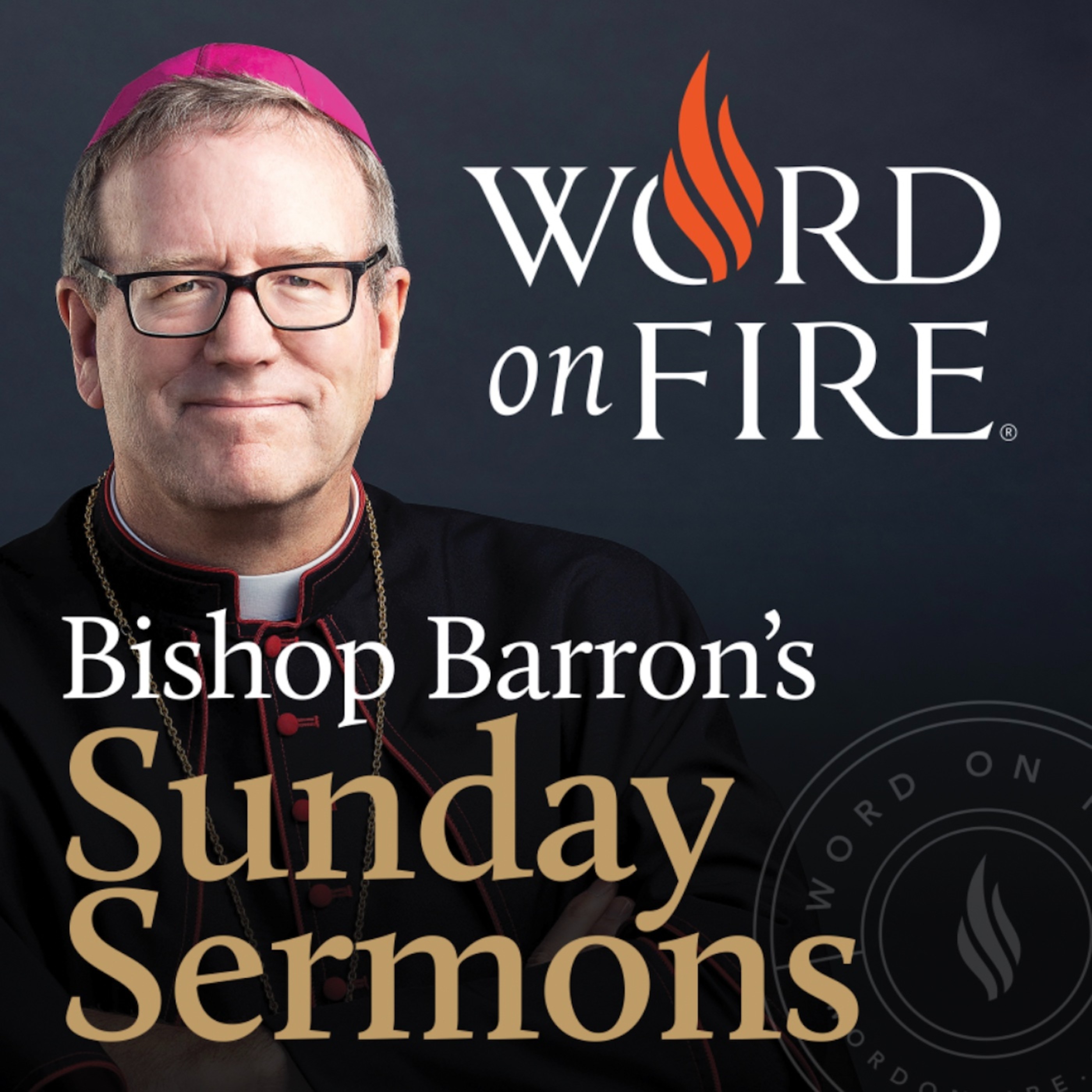
Bishop Barron’s Sunday Sermons - Catholic Preaching and Homilies
by Bishop Robert Barron
Weekly homilies from Bishop Robert Barron, produced by Word on Fire Catholic Ministries.
-
999
You Belong to the Lord
Friends, our Gospel for this Twenty-fourth Sunday in Ordinary Time is the familiar story of Peter asking the Lord how many times he should forgive his brother: “As many as seven times?” Jesus responds, “Not seven times but seventy-seven times.” I want to get at this passage by looking at the second reading, taken from the Letter of Saint Paul to the Romans, which sheds distinctive light on it. When we are clear about our mission—when we know that we belong to the Lord—we can let go of resentments and harms done to us, and get on with the business of our lives!
-
998
Will the Good of the Other
Friends, for the wokeist philosophy that dominates today, empathy—feeling the feelings of the other and not harming those feelings—is treated as a supreme value. But while empathy is perfectly good and decent, the Bible teaches that love, not empathy, is the supreme value. And love does not mean, primarily, feeling the feelings of the other or not hurting those feelings; it means willing the good of the other—and that can be, as Dostoevsky said, “a harsh and dreadful thing.”
-
997
A Living Sacrifice
Friends, for this Twenty-second Sunday in Ordinary Time, I want to begin with our very brief second reading from Paul to the Romans. It opens, “I urge you, brothers and sisters, by the mercies of God, to offer your bodies as a living sacrifice.” Here we see Christ’s cross and resurrection—the supreme sacrifice fulfilling all the offerings of the temple—extended to all the baptized. The Church is now the place where divinity and humanity are reconciled.
-
996
The Church Prevails
Friends, for this Twenty-first Sunday in Ordinary Time, the Church brings us once again, with Jesus and the disciples, to Caesarea Philippi, and to a famous question: “Who do you say that I am?” The main characters in this endlessly fascinating scene are Jesus and Peter, and whenever the focus is on Peter, we’re talking about ecclesiology, the study of the Church. So we learn something very important here about both Jesus and the Church, and it has to do with the Rock upon which the former builds the latter.
-
995
How Not to Read the Story of the Syrophoenician Woman
Friends, for this Twentieth Sunday in Ordinary Time, we hear the story of the Syrophoenician woman. Jesus famously puts off this woman—first by ignoring her, then by dismissing her, and finally by insulting her—and she offers one of the most famous comebacks in literary history. A common reading of this story is that Jesus is cranky from a tough day of ministry, and a plucky woman from Syrophoenicia straightens him out. But this turns Jesus into a sinner—and the whole structure of Christianity falls apart. The Church Fathers had a much better, more convincing, and spiritually more helpful interpretation.
-
994
A Tiny Whispering Voice
Friends, in my evangelical work online, I often encounter people who are skeptical of religion and dismissive of its claims. I usually ask them: How do we explain the intelligibility of the world or our ability to understand it? How about objective values and our ability to recognize them? Our first reading from 1 Kings reflects, I think, a great breakthrough in Western consciousness about how we’re able to identify right and wrong—just as we’re able to identify patterns in the physical world.
-
993
The Heart of Christianity
Friends, on this Eighteenth Sunday in Ordinary Time, I want to focus on the Second Reading from Saint Paul’s Letter to the Romans. The eighth chapter of Romans represents the culmination of an argument Paul’s been making, and the reading for today is the rhetorical high point of that conclusion. This is the first great theologian of the Church naming what is essential to Christianity—so we have to pay attention!
-
992
What Life Is All About
Friends, we come to the Seventeenth Sunday in Ordinary Time, and we’re going to finish our reading of the thirteenth chapter of Matthew's Gospel, which deals with the parables. Jesus’s parables cut to the heart of the matter and convey the truth of the kingdom, and the two we hear today—the parable of the hidden treasure and the parable of the pearl—are really good examples. Both are about the summum bonum, the highest good, and therefore about what’s most fundamental in the spiritual life. Indeed, this is life itself; this is what it’s all about!
-
991
All Things Work Together for Good
Friends, we continue this weekend reading from the thirteenth chapter of Matthew's Gospel, which is dedicated to the parables of Jesus. Today I want to focus on the thought-provoking and theologically rich parable of the wheat and the weeds. A man sows good seed on his field, and while he’s asleep, an enemy sows weeds among the wheat. But the man resists the impulse to pull them up, as it might uproot the wheat too: “Let them grow together until harvest.” This parable is getting at something very deep, and it has to do with the presence of evil in our world—and why God permits it.
-
990
Let the Word of God Take Root in You
Friends, on this Fifteenth Sunday in Ordinary Time, we continue our reading of the Gospel of Matthew. In chapter 13, Jesus gives a series of seven very memorable parables, the first four having to do with the growth of the kingdom of God. The first of these, which we’re reading from today, is the parable of the sower. What do we hear? That it’s never a question of God being reticent or holding back his grace. The problem comes from our side: We block the Word of God, setting up obstacles to it that prevent it from taking root. There’s the drama, if you want, of the spiritual life.
-
989
Your King Shall Come to You
Friends, on this Fourteenth Sunday of Ordinary Time, our first reading is from the prophet Zechariah, who is a very important figure for the Lord Jesus. The prophet predicts the arrival of a king, meek and riding on a donkey—a king who will “proclaim peace to the nations” and extend his dominion “to the ends of the earth.” This strange text from the ancient world has been fulfilled in our hearing and in our sight.
-
988
Be Attached to God Alone
Friends, we’re reading this week again from the tenth chapter of Matthew’s Gospel, and Christ’s teaching here is—as always—astonishing: “Whoever loves father or mother more than me is not worthy of me,” Jesus says to his apostles, “and whoever loves son or daughter more than me is not worthy of me.” There are points of overlap with Jesus’s teachings in all the great religions of the world—but there’s nothing like this.
-
987
Fear No One
Friends, Jesus cannot be reduced to just one ethical teacher among many. But this doesn’t mean that his teaching isn’t important or astonishing—because it is! And I want to focus this week, and next, on our Gospel readings from the tenth chapter of Matthew. As Jesus sends his disciples on mission, he gives them, and us, a wonderful instruction in the spiritual life. What we hear, as I say, is astonishing—and if you allow it to sink in, it will change your life.
-
986
Jesus Sees Something in You
Friends, on this Eleventh Sunday in Ordinary Time, the Gospel is about Jesus sending the Twelve on a mission. Whenever we hear about the Twelve, it’s the Church in seminal form. And here’s what I want to focus on: Whom does Jesus call to be his apostles? Not the best and brightest people of his time but fairly ordinary and even compromised characters. Yet Jesus sees something in every one of them—some gift, virtue, or capacity needed in the life of the Church.
-
985
From the Exodus to the Eucharist
Friends, we’ve come to the great Solemnity of Corpus Christi—a celebration of the Body and Blood of Christ in the Eucharist. Our first reading mentions the “manna” that fed the Israelites in the desert—a mysterious bread from heaven described in the book of Exodus. This is then correlated to the Eucharist, the bread from heaven that Jesus gives us, in our Gospel from the sixth chapter of John. I want to explore four dimensions of this relationship between manna and the Eucharist.
-
984
The Father, the Son, and the Holy Spirit
Friends, we’ve come to Trinity Sunday, one of my favorite Sundays of the year. The Trinity is not just a little puzzle for theologians; it’s the heart of the matter, in many ways. Indeed, it’s central to the way we pray: Whenever we make the sign of the cross, we’re invoking the Trinity. It matters that we come to understand this doctrine more plainly, so that we might understand the meaning of our redemption.
-
983
Tongues of Fire
Friends, we’ve come to the great Solemnity of Pentecost, which is, along with Christmas and Easter, one of the most important feasts of the Christian year. It is the celebration par excellence of the Holy Spirit. It is also the birthday of the Church—and we are meant to see ourselves in the readings for today.
-
982
What Is the Spirit Calling You to Do?
Friends, today is the great Solemnity of the Ascension of the Lord, which is situated between Easter and Pentecost. The Ascension is when Jesus definitively moves into the higher dimension of heaven. And while we no longer have experiences like the disciples had of the risen Lord, we experience him through his Holy Spirit, who equips us to continue Christ’s work in the world.
-
981
Five Signs of the Holy Spirit
Friends, we come to the Sixth Sunday of Easter, which means we’re coming to the end of the Easter season—and coming toward the Solemnity of Pentecost. After Christmas and Easter, this great feast of the Holy Spirit is the most important of the Church year. And in our three readings for today, we see five signs—in the Church broadly speaking and in your own life—that the Spirit is present and moving.
-
980
The Dwelling Place of God
Friends, on this Fifth Sunday of Easter, there’s a somewhat hidden theme that runs like a golden thread through the readings, and that theme is the temple. To understand the New Testament texts, we have to see the importance of the Jerusalem temple for ancient Israelites. It was the focal point of Jewish life—the political, cultural, and of course religious center of the country. It was seen, in almost a literal sense, as the dwelling place of God on earth.
-
979
The Seven Gifts of the Holy Spirit
Friends, our first reading for this Second Sunday of Advent, taken from Isaiah 11, describes the Messiah’s arrival: He “shall sprout from the stump of Jesse,” and “the spirit of the LORD shall rest upon him.” The Messiah, we hear, will come bearing seven gifts of the Holy Spirit, gifts that come to full expression in him. The Advent season is a time of longing for these gifts—watching, waiting, and praying for them.
-
978
The Natural Law
Friends, in our first reading from the book of Deuteronomy this week, Moses says to the people, “For this command that I enjoin on you today is not too mysterious and remote for you. . . . No, it is something very near to you, already in your mouths and in your hearts; you have only to carry it out.” This is a master text for what we call in the Catholic tradition “the natural law.” It means that there is within us a kind of deep moral intuition by which we know the right thing to do; there are intuitions of value that give us a sense of meaning, purpose, and direction in life.
-
977
Seated at the Right Hand of the Father
Friends, getting the Ascension of the Lord right is very important for understanding many aspects of the Church’s life. So I want to dwell on that a little bit with you today, and I want to do so under two headings: the first I’m going to call more political, and the second more liturgical. They are both hinted at in the great statement in the Creed that we recite week after week: “He ascended into heaven and is seated at the right hand of the Father.”
-
976
Really, Truly, and Substantially Present
Friends, we continue reading from the sixth chapter of John, this pivotal section of the New Testament where John lays out his Eucharistic theology. And we come today to the rhetorical high point of this discourse, where things really come to a head. It is the ground of the doctrine of the Real Presence: Jesus is not simply symbolically present in the Eucharist; he’s really, truly, and substantially present under the signs of bread and wine.
-
975
How to Evangelize
Friends, in this Sunday's readings, St. Paul highlights the significance of evangelization. The Church, by its very nature, evangelizes, going out to the ends of the world with its good news. And woe to us if we fail to do this! Paul urges us to organize our lives around mission, and to even move out of our comfort zones to do so.
-
974
What Makes a Family Holy?
The Bible is not particularly sentimental about families. What makes a family holy, as far as the biblical writers are concerned, is its willingness to surrender to the purpose of God. We see this in a number of key figures, including Joseph, Anna, and Simeon.
-
973
Building a House
The dramatic readings for this fourth Sunday of Advent place us right in the heart of a central mystery in the Bible: the mystery of God’s providence. God cares for his world, but often in a way that is confounding to us, because God plays a subtle and long game. God is a God who makes promises, and he is faithful to them. But they often don't arrive just as we’d expect—which is why we have to wait.
-
972
Clear a Path
In our magnificent first reading from the prophet Isaiah, which is echoed in the words of John the Baptist in today’s Gospel, a voice cries out: “Every valley shall be filled in, every mountain and hill shall be made low.” Advent is a great time for us to clear the ground, to make level the path, so as to facilitate what God, with all his heart, wants to do.
-
971
Three Tasks of the Church
All throughout the Easter season, we will read at Mass from the wonderful Acts of the Apostles, St. Luke’s description of the adventures, challenges, and achievements of the early Christian community. His purpose is to show what “Apostles,” people sent by the risen Jesus, were doing. This is why it is so important that we, their distant spiritual descendants, should pay close attention. Our passage for today is from the second chapter of Luke’s work. We hear this pithy account: “They devoted themselves to the teaching of the apostles and to the communal life, to the breaking of bread and to the prayers.” I have written before of Joseph Ratzinger’s characterization of the three basic tasks of the Church, and they are on evidence here.
-
970
Vitae Spiritualis Ianua
The first sacrament one can receive in the Church, Baptism, defines our relationship with Christ. In it, we are reborn as part of his Mystical Body and gifted with the grace of God’s love. Baptism lays the foundation for every other sacrament we are to receive and inextricably links us with the Trinity.
-
969
The Love of Predilection
In Luke’s Gospel we read the story of Jesus and Zacchaeus. Zacchaeus, as chief tax collector, was considered a very bad man in first-century Israel, but Christ greets him with love. It is the love of God that causes everything to be, and comes before everything we do. God does not love us because we do good; we do good because God loves us.
-
968
The Narrow Gate
The topic of the Gospel for today—the question of how many will be saved—stirs up such passionate feelings in people, and there is such enormous disagreement about it. Luke tells us that Jesus is making his way to Jerusalem and someone asks, “Lord, will only a few people be saved?” And the answer comes back, “Strive to enter through the narrow gate.” But before we extrapolate from this exchange and consider the issue very generally, I would like to examine the historical setting of the conversation, which sheds a lot of light on what is really at stake.
-
967
Fate of the Prophet
Our readings for today develop a theme that is uncomfortable. Authentically religious people, authentically spiritual people, will almost always be opposed. The logic behind this is simple and unanswerable: we live in a world gone wrong, a world turned upside down; therefore, when someone comes speaking the truth to us, we will think that they are crazy and dangerous. Jesus’ word is meant to burn things up, to reduce things to cinders, to clear things out. A get-along attitude is never what Jesus is calling for. I know that we are uneasy with this idea, but the Bible isn’t. To love is to will the good of the other. Therefore, to love necessarily involves passionate opposition to what works evil in the other. Love destroys the false forms of order and community in order for the true community to emerge.
-
966
Abba Father, Bring us Jesus
The Our Father, the Lord’s Prayer, is a request for Christ. As we examine this most famous prayer line by line, we see it's all about Jesus. That He might come and have communion with us is precisely what we hope for when we cry out to "our Abba who art in heaven."
-
965
Martha, Mary, and the Attitude of Discipleship
Although the little story of Martha and Mary has been interpreted throughout the centuries as a parable dealing with the “active” and “contemplative” approach to the spiritual life, it can be read as Christ's invitation to all people to partake in his inner circle of discipleship. Christ overturned the social conventions of his time by summoning all people to discipleship. Thus, we must remove all barriers to discipleship for all people.
-
964
HEARING THE VOICE OF GOD
During the twentieth century, moral relativism was in vogue in elite cultural circles, but now it is the dominant moral outlook of the broader culture. Against this, C.S. Lewis argued for “the universality and inescapability of the moral law.” Although there are subtle moral differences between cultures, if we look close enough, we can discern fundamental moral agreements. The Catholic tradition says that this moral bedrock is a reflection of the Eternal Law in the mind of God. It is the voice of God within us. Listen to that voice.
-
963
Boasting in the Cross
St. Paul tells us in our second reading that he boasts in the cross of Jesus. To any of his hearers in the first century this would have sounded like madness. Paul can boast in this shameful thing precisely because God has raised Jesus from death and thereby placed the world-the realm of hatred, violence, and division-under judgment. Now we must have the courage to leave the world and enter into the new creation which is the body of Christ.
-
962
Walking Truly and Completely with Him
In the Gospel for this Sunday, Jesus clarifies that all worldly goods find their value in relation to Him. If we believe Jesus is the only Son of God, we must place our grudges, personal desires, and even our most sacred worldly obligations aside in order to walk truly and completely with Him.
-
961
Corpus Christi
The Church comes from the Eucharist for it is the sacrifice that makes saints. The Eucharist is essentially the fullest act of gratitude prefigured in Melchizedek finding its fulfillment in the sacrifice of Christ. Every Mass is a participation in and celebration of this sacrifice, but the feast of Corpus Christi is a time to be especially aware of the gift of the Eucharist.
-
960
Begotten Not Made
Today the Church celebrates the Solemnity of the Most Holy Trinity. The Nicene Creed articulates the mystery of the Trinity with the wonderful phrase "begotten not made," meaning that the Son is not a creature but rather shares in the selfsame nature as the Father. The Holy Spirit is then the life-giving love breathed out between the Father and the Son.
-
959
The Holy Spirit and Mission
Today we celebrate the great feast of Pentecost, one of the truly great moments in the life of the Church. The Holy Spirit comes to give many spiritual gifts, which prepare us to enter into relationship with Christ and embark on mission.
-
958
The Ascension of Jesus
Too often we read the Ascension as the moment when Jesus “went away,” when he left us on our own and went off to heaven, where we hope some day to join him. But the Ascension is not Jesus going away; it is Jesus assuming his position as leader of the Church’s life.
-
957
Three Easter Lessons
The resurrection of Jesus from the dead is the foundation of the entire Christian faith. If Jesus didn’t rise from the dead, we should all go home and forget about it. As St. Paul himself puts it: “If Jesus is not raised from the dead, our preaching is in vain and we are the most pitiable of men.” But Jesus was, in fact, raised from the dead. And his resurrection shows that Christ can gather back to the Father everyone whom he has embraced through his suffering love.
-
956
The Master Has Need of You
In our Gospel reading for the Palm Sunday procession, Jesus sends his disciples into Jerusalem to prepare for his triumphal entry. They are told to untether a donkey, and if there is any protest from the owner, they are to say simply, “The Master has need of it.” Strictly speaking, God has need of nothing, since he is the unconditioned act of existence. God doesn’t need our praise or our good works or anything. But this phrase signals the wonderful truth that God allows us to cooperate with his grace so that we can participate in the work that he wants to do. He gives us what Aquinas called “the dignity of causality.” We are privileged to be instruments in his hands.
-
955
Misery and Mercy
In this week's Gospel, we hear the story of the woman caught in adultery, a tale that has beguiled Christians and non-Christians for two millennia. The story displays our constant temptation to use knowledge of God’s law to hurt others, not to liberate them. We gossip, we scapegoat, we blame—and we convince ourselves that we’re just following the divine law in pointing out other people’s problems. But then enters Jesus, who affirms that the law's primary purpose is to make us humble, to draw us to higher attainment. Without denigrating the law in the least, Jesus reaches out in mercy in order to brings sinners back to life.
-
954
-
953
The Glorified Body
The readings for this second Sunday of Lent awaken a sense of wonder, of a world beyond ours, a mystical consciousness. In the first reading with Abraham and in the Gospel account of the Transfiguration, we encounter mountains, darkness, voices, and dazzling light, all of which signal the breakthrough of a higher world.
-
952
Three Questions from the Desert
Lent is a time of paring down—a time spent in the desert, if you will—as exemplified by Jesus’ forty days of fasting in these arid, barren lands. He was tempted three times by Satan, and rejected each attempt, giving glory to God at every turn. This is the lesson for us: that we make God the center of our lives and not test him. We are here to do his will, which is clarified through our own Lenten sacrifices.
-
951
Following the Star
Our modern culture suggests a tension between spirituality and religion. But the Magi in today’s Gospel demonstrate that when spirituality is lifted up by revelation—when the Magi are told by the religious leaders where the Messiah is to be born—we find the object of our spiritual longing.
-
950
Hannah, Her Son, and the Holy Family
Lots of people today will tell you what makes a family well-adjusted, functional, and peaceful. But in this week’s readings for the Feast of the Holy Family, which center on two exemplary women, Hannah and Mary, the Church wants to tell us what makes a family holy.
We're indexing this podcast's transcripts for the first time — this can take a minute or two. We'll show results as soon as they're ready.
No matches for "" in this podcast's transcripts.
No topics indexed yet for this podcast.
Loading reviews...
ABOUT THIS SHOW
Weekly homilies from Bishop Robert Barron, produced by Word on Fire Catholic Ministries.
HOSTED BY
Bishop Robert Barron
CATEGORIES
Loading similar podcasts...
Frequently Asked Questions
How many episodes does Bishop Barron’s Sunday Sermons - Catholic Preaching and Homilies have?
Bishop Barron’s Sunday Sermons - Catholic Preaching and Homilies currently has 50 episodes available on PodParley. New episodes are automatically indexed when they're published to the podcast feed.
What is Bishop Barron’s Sunday Sermons - Catholic Preaching and Homilies about?
Weekly homilies from Bishop Robert Barron, produced by Word on Fire Catholic Ministries.
How often does Bishop Barron’s Sunday Sermons - Catholic Preaching and Homilies release new episodes?
Bishop Barron’s Sunday Sermons - Catholic Preaching and Homilies has 50 episodes. Check the episode list to see recent publication dates and frequency.
Where can I listen to Bishop Barron’s Sunday Sermons - Catholic Preaching and Homilies?
You can listen to Bishop Barron’s Sunday Sermons - Catholic Preaching and Homilies on PodParley by clicking any episode. We provide an embedded audio player for direct listening, and you can also subscribe via your preferred podcast app using the RSS feed.
Who hosts Bishop Barron’s Sunday Sermons - Catholic Preaching and Homilies?
Bishop Barron’s Sunday Sermons - Catholic Preaching and Homilies is created and hosted by Bishop Robert Barron.
URL copied to clipboard!