
PODCAST · arts
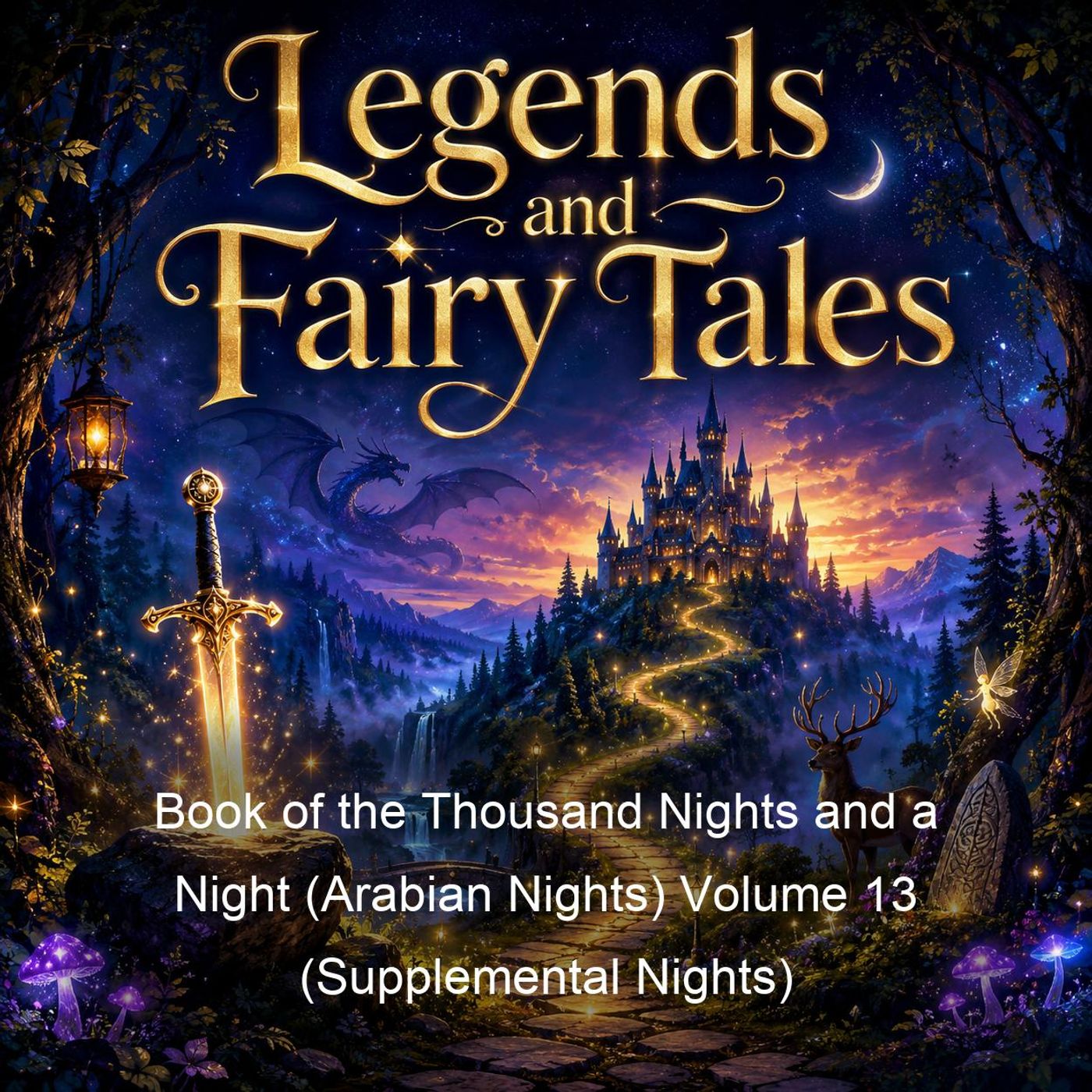
Book of the Thousand Nights and a Night (Arabian Nights) Volume 13 (Supplemental Nights)
by Anonymous
This is a collection of stories collected over thousands of years by various authors, translators, and scholars. They are an amalgam of mythology and folk tales from the Indian sub-continent, Persia, and Arabia. No original manuscript has ever been found for the collection, but several versions date the collection's genesis to somewhere between AD 800 and 900. The stories are wound together under the device of a long series of cliff-hangers told by Shahrazad to her husband to prevent him from executing her. In translating the Nights, R. F. Burton attempted to invent an English equivalent of medieval Arabic. In doing so, he drew upon Chaucerian English, Elizabethan English, and the 1653 English translation by Sir Thomas Urquhart of the first three books of Rabelais's Gargantua and Pantagruel (1532-1546). - Summary by Thomas A. Copeland based on Wikipedia article
-
2
Folk-Lore and Legends Scandinavian-Charles John Tibbits
This is a collection of stories collected over thousands of years by various authors, translators, and scholars. They are an amalgam of mythology and folk tales from the Indian sub-continent, Persia, and Arabia. No original manuscript has ever been found for the collection, but several versions date the collection's genesis to somewhere between AD 800 and 900. The stories are wound together under the device of a long series of cliff-hangers told by Shahrazad to her husband to prevent him from executing her. In translating the Nights, R. F. Burton attempted to invent an English equivalent of medieval Arabic. In doing so, he drew upon Chaucerian English, Elizabethan English, and the 1653 English translation by Sir Thomas Urquhart of the first three books of Rabelais's Gargantua and Pantagruel (1532-1546). - Summary by Thomas A. Copeland based on Wikipedia article
-
1
Three Little Trippertrots How They Ran Away And How They Got Back Again-Howard R. Garis
This is a collection of stories collected over thousands of years by various authors, translators, and scholars. They are an amalgam of mythology and folk tales from the Indian sub-continent, Persia, and Arabia. No original manuscript has ever been found for the collection, but several versions date the collection's genesis to somewhere between AD 800 and 900. The stories are wound together under the device of a long series of cliff-hangers told by Shahrazad to her husband to prevent him from executing her. In translating the Nights, R. F. Burton attempted to invent an English equivalent of medieval Arabic. In doing so, he drew upon Chaucerian English, Elizabethan English, and the 1653 English translation by Sir Thomas Urquhart of the first three books of Rabelais's Gargantua and Pantagruel (1532-1546). - Summary by Thomas A. Copeland based on Wikipedia article
-
0
Rubáiyát of Omar Khayyám (Fitzgerald version)-Omar Khayyám
This is a collection of stories collected over thousands of years by various authors, translators, and scholars. They are an amalgam of mythology and folk tales from the Indian sub-continent, Persia, and Arabia. No original manuscript has ever been found for the collection, but several versions date the collection's genesis to somewhere between AD 800 and 900. The stories are wound together under the device of a long series of cliff-hangers told by Shahrazad to her husband to prevent him from executing her. In translating the Nights, R. F. Burton attempted to invent an English equivalent of medieval Arabic. In doing so, he drew upon Chaucerian English, Elizabethan English, and the 1653 English translation by Sir Thomas Urquhart of the first three books of Rabelais's Gargantua and Pantagruel (1532-1546). - Summary by Thomas A. Copeland based on Wikipedia article
-
-1
Journey of Alvar Núñez Cabeza de Vaca-Alvar Núñez Cabeza de Vaca
This is a collection of stories collected over thousands of years by various authors, translators, and scholars. They are an amalgam of mythology and folk tales from the Indian sub-continent, Persia, and Arabia. No original manuscript has ever been found for the collection, but several versions date the collection's genesis to somewhere between AD 800 and 900. The stories are wound together under the device of a long series of cliff-hangers told by Shahrazad to her husband to prevent him from executing her. In translating the Nights, R. F. Burton attempted to invent an English equivalent of medieval Arabic. In doing so, he drew upon Chaucerian English, Elizabethan English, and the 1653 English translation by Sir Thomas Urquhart of the first three books of Rabelais's Gargantua and Pantagruel (1532-1546). - Summary by Thomas A. Copeland based on Wikipedia article
-
-2
Burston Rebellion-Thomas George Higdon
This is a collection of stories collected over thousands of years by various authors, translators, and scholars. They are an amalgam of mythology and folk tales from the Indian sub-continent, Persia, and Arabia. No original manuscript has ever been found for the collection, but several versions date the collection's genesis to somewhere between AD 800 and 900. The stories are wound together under the device of a long series of cliff-hangers told by Shahrazad to her husband to prevent him from executing her. In translating the Nights, R. F. Burton attempted to invent an English equivalent of medieval Arabic. In doing so, he drew upon Chaucerian English, Elizabethan English, and the 1653 English translation by Sir Thomas Urquhart of the first three books of Rabelais's Gargantua and Pantagruel (1532-1546). - Summary by Thomas A. Copeland based on Wikipedia article
-
-3
Tales of 1928 A Selection of Folktales, Fables, and Legends from Books Published in 1928-Various
"Tales of 1928" is a captivating collection that brings together a selection of folktales, fables, and legends drawn from various books published in that year. This anthology offers listeners a glimpse into the rich tapestry of storytelling that has shaped cultures and traditions over time. The themes of morality, adventure, and the human experience found within these tales resonate just as powerfully today as they did nearly a century ago, reminding us of our shared heritage and the timeless nature of these narratives. Engaging with these stories allows us to reflect on the values and lessons that continue to be relevant in our modern lives, making this collection a treasure worth experiencing.
-
-4
Book of the Thousand Nights and a Night Arabian Nights Volume 13 Supplemental Nights - Anonymous - Part 2
This is a collection of stories collected over thousands of years by various authors, translators, and scholars. They are an amalgam of mythology and folk tales from the Indian sub-continent, Persia, and Arabia. No original manuscript has ever been found for the collection, but several versions date the collection's genesis to somewhere between AD 800 and 900. The stories are wound together under the device of a long series of cliff-hangers told by Shahrazad to her husband to prevent him from executing her. In translating the Nights, R. F. Burton attempted to invent an English equivalent of medieval Arabic. In doing so, he drew upon Chaucerian English, Elizabethan English, and the 1653 English translation by Sir Thomas Urquhart of the first three books of Rabelais's Gargantua and Pantagruel (1532-1546). - Summary by Thomas A. Copeland based on Wikipedia article
-
-5
Book of the Thousand Nights and a Night Arabian Nights Volume 13 Supplemental Nights - Anonymous - Part 1
This is a collection of stories collected over thousands of years by various authors, translators, and scholars. They are an amalgam of mythology and folk tales from the Indian sub-continent, Persia, and Arabia. No original manuscript has ever been found for the collection, but several versions date the collection's genesis to somewhere between AD 800 and 900. The stories are wound together under the device of a long series of cliff-hangers told by Shahrazad to her husband to prevent him from executing her. In translating the Nights, R. F. Burton attempted to invent an English equivalent of medieval Arabic. In doing so, he drew upon Chaucerian English, Elizabethan English, and the 1653 English translation by Sir Thomas Urquhart of the first three books of Rabelais's Gargantua and Pantagruel (1532-1546). - Summary by Thomas A. Copeland based on Wikipedia article
We're indexing this podcast's transcripts for the first time — this can take a minute or two. We'll show results as soon as they're ready.
No matches for "" in this podcast's transcripts.
No topics indexed yet for this podcast.
Loading reviews...
ABOUT THIS SHOW
This is a collection of stories collected over thousands of years by various authors, translators, and scholars. They are an amalgam of mythology and folk tales from the Indian sub-continent, Persia, and Arabia. No original manuscript has ever been found for the collection, but several versions date the collection's genesis to somewhere between AD 800 and 900. The stories are wound together under the device of a long series of cliff-hangers told by Shahrazad to her husband to prevent him from executing her. In translating the Nights, R. F. Burton attempted to invent an English equivalent of medieval Arabic. In doing so, he drew upon Chaucerian English, Elizabethan English, and the 1653 English translation by Sir Thomas Urquhart of the first three books of Rabelais's Gargantua and Pantagruel (1532-1546). - Summary by Thomas A. Copeland based on Wikipedia article
HOSTED BY
Anonymous
Loading similar podcasts...
Frequently Asked Questions
How many episodes does Book of the Thousand Nights and a Night (Arabian Nights) Volume 13 (Supplemental Nights) have?
Book of the Thousand Nights and a Night (Arabian Nights) Volume 13 (Supplemental Nights) currently has 8 episodes available on PodParley. New episodes are automatically indexed when they're published to the podcast feed.
What is Book of the Thousand Nights and a Night (Arabian Nights) Volume 13 (Supplemental Nights) about?
This is a collection of stories collected over thousands of years by various authors, translators, and scholars. They are an amalgam of mythology and folk tales from the Indian sub-continent, Persia, and Arabia. No original manuscript has ever been found for the collection, but several versions...
How often does Book of the Thousand Nights and a Night (Arabian Nights) Volume 13 (Supplemental Nights) release new episodes?
Book of the Thousand Nights and a Night (Arabian Nights) Volume 13 (Supplemental Nights) has 8 episodes. Check the episode list to see recent publication dates and frequency.
Where can I listen to Book of the Thousand Nights and a Night (Arabian Nights) Volume 13 (Supplemental Nights)?
You can listen to Book of the Thousand Nights and a Night (Arabian Nights) Volume 13 (Supplemental Nights) on PodParley by clicking any episode. We provide an embedded audio player for direct listening, and you can also subscribe via your preferred podcast app using the RSS feed.
Who hosts Book of the Thousand Nights and a Night (Arabian Nights) Volume 13 (Supplemental Nights)?
Book of the Thousand Nights and a Night (Arabian Nights) Volume 13 (Supplemental Nights) is created and hosted by Anonymous.
URL copied to clipboard!