
PODCAST · education
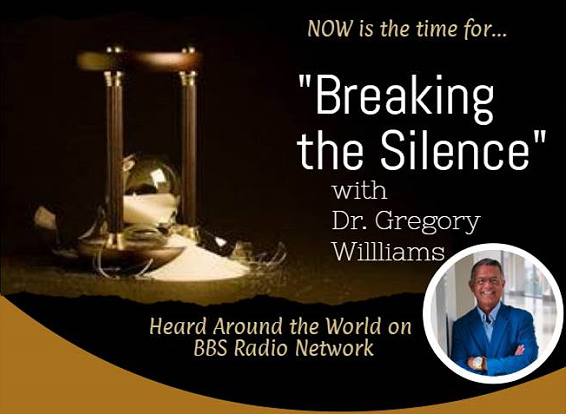
Breaking the Silence with Dr. Gregory Williams
by BBS Radio, BBS Network Inc.
“Breaking the Silence with Dr. Gregory Williams”Now is the time for you to step out of your own personal darkness and break the silence that has been hidden and closed up inside of you.“Breaking the Silence with Dr. Gregory Williams” radio program will offer the listeners a Road Map to Hope each and every week with keys to discover within yourself that ray of light to make your day better and brighter. Dr. Williams will not only discuss his own personal journey of overcoming the darkness of years of horrific sexual child abuse in the hands of his father and his father’s friends, but Dr. Williams will also feature special guests that have their own personal stories of overcoming obstacles in their lives and becoming victors instead of victims.“Breaking the Silence” will also feature information from the professional and medical field that will dive into the important research involving Adverse Childhood Experiences (ACEs) and how to build Resiliency in yourself and in your childr
-
20
Breaking the Silence, September 6, 2026
Breaking the Silence with Dr. Gregory Williams Suicide Awareness, Emotional Darkness, and the Courage to Ask for Help with Anthony Gurley Dr. Gregory Williams battles a technical meltdown to welcome author Anthony Gurley, whose memoir Deadly Dilemma traces a childhood abandonment, a lifelong fear of asking for help, and the suicidal thoughts he carried quietly into old age. Technical Difficulties and a Live Broadcast Dr. Gregory Williams opens the program from his home studio in Houston, apologizing upfront for technical problems that have knocked out video and left the broadcast running as audio only. He notes that an unrelated program has mistakenly appeared on the station's Facebook feed and clarifies that he has no connection to its content. Williams tells listeners the show is beginning its seventh year on BBS Radio and Television, reachable by phone at 888-627-6008 or by text, and promises the episode will reach podcast platforms later in the week even if the live stream falters. He stays calm about the glitches, saying live radio simply comes with unpredictable nights, and mentions hopes that the station will soon be available on Roku. He describes the sun setting behind the Texas Medical Center outside his window, using the fading light to introduce the evening's theme of emotional darkness before his guest joins the conversation. Understanding Emotional Darkness Before introducing his guest, Williams spends several minutes describing the varieties of darkness people experience, from a room with the lights turned off to caves like Carlsbad Cavern where no light reaches at all, and finally an emotional darkness that can hide behind a smiling face at work or church. He lists grief, rejection, disappointment, loneliness, trauma, betrayal, fear, anxiety, shame and exhaustion as doorways into that darkness, and offers a rule he asks listeners to write down: a person cannot always keep darkness from entering, but can keep it from becoming where they live. He then walks through the first steps for staying out of emotional darkness, comparing a low-fuel warning light on his dashboard that morning to the internal warning signs of sadness, anger and anxiety, and cautioning that, unlike a car's light, these signals rarely start flashing before real danger arrives, so paying attention early matters. Dont Believe the Darkness, Ask for Help Williams adds two more principles before bringing on his guest: darkness has a voice that insists a person is alone, unloved and a failure, and that voice should never be trusted to make permanent conclusions from a temporary state. He warns that isolation is one of the fastest routes into emotional darkness and urges listeners to say the three words many people, especially men, resist: I need help. Using the image of two people carrying a heavy table instead of one, he argues that burdens do not get lighter alone, only more bearable when shared with a trusted friend, pastor or counselor. He then introduces Anthony Gurley, author of Deadly Dilemma: Suicide, Faith, and the Search for Identity and Purpose, describing him, in the words of his own publicity materials, as an ordinary person rather than a celebrity or athlete, someone whose book grew out of enduring failure, self-esteem struggles and disappointment rather than fame. A Fathers Departure and a Lesson in Silence Gurley explains that the book began as a private project meant only to introduce himself fully to his children and grandchildren, until a friend who edits professionally urged him to publish it for strangers who might recognize themselves in it, imagining a plumber in Dubuque who has never found the courage to face his own story. He recounts coming home from being cut from his school basketball team at age eleven to find his father walking out the door with a suitcase, an image tied to two remembered phrases: being told to stay out of the way because he could not see through muddy water, and being warned, don't ask me for a damn thing. Gurley says he spent his career at a small college for thirty years never once asking for a raise, a promotion or help, a pattern he now traces directly back to that day, and he credits his wife of fifty-four years, whom he proposed to after four months, as something close to providence. Friends, Choices, and Consequences After the commercial break, the conversation turns to a mantra Gurley developed for the college students he mentored for decades: friends, choices, consequences. He tells Williams to choose friends carefully and cultivate a small trusted circle, to make choices wisely while accepting that even wise choices sometimes go wrong, and to embrace consequences graciously since a person controls the first two but not the third. Williams connects this to his own grandfather's warning about running with dogs and catching fleas. Gurley describes founding a mentoring program called Motivation Ministry that paired Christian student athletes and artists with adult mentors after he retired from thirty years in financial aid, and recalls repeatedly pointing students toward Philippians 4:8, urging them to post the verse where they would see it each morning as a quiet influence on daily decisions. He admits he never had many close friends himself, something he now regrets, tracing it back to the same childhood instinct to stay out of the way and avoid being noticed. Suicide Awareness and the Courage to Ask for Help With September marking Suicide Awareness Month, Williams asks Gurley directly about the suicidal thoughts he describes in the book's unsent letter. Gurley says the thought has flitted through his mind throughout adulthood without ever becoming an attempt, and he now believes far more people share that experience than he once imagined. He describes a recurring image from the book, a snow globe admired from outside but never entered, and asks listeners whether there is a similar adventure they have envied but lacked courage to try. He recalls a high school coach telling him, at a ninetieth birthday party two Saturdays earlier, that asking for help is not weakness but strength, a reframing Gurley says he had never considered. Williams closes by naming the book, Deadly Dilemma: Suicide, Faith, and the Search for Identity and Purpose, pointing listeners to Gurley's website for crisis resources, and repeating the program's closing promise that no matter how dark life gets, there is always hope.
-
19
Breaking the Silence, August 30, 2026
Breaking The Silence with Dr Gregory Williams Anniversary Special Seven Years of Breaking Silence: A Roadmap from Survival to Hope Summary Seven Years on the Air Dr. Gregory Williams marks the program's seventh anniversary after a scheduled guest is hospitalized and the planned suicide-awareness discussion is postponed. He reflects on entering the eighth year of broadcasting, thanks the BBS Radio TV team and the audience, and describes the show's expansion from audio-only programming to video and broad platform distribution. He also celebrates listeners in Australia and invites callers and viewers to share their favorite episodes. Memorable Guests and a Listening Platform The host recalls conversations with Dr. Bruce Perry, Lisa Jakub, Micah and Diana LeCert, the actor who played Little Ricky, Chief Matt, and other guests. He also names several people he still hopes to interview. These memories reinforce his goal of maintaining a noncritical, believing, and accepting environment where survivors and guests can tell their stories without fear of dismissal. Reading from Shattered by the Darkness Williams reads from Chapter Eight of Shattered by the Darkness, describing the period after he first refused further abuse by his father. Although the physical abuse stopped, he recalls insomnia, isolation, emotional neglect, a continuing desire for paternal affirmation, and the fear that nobody would believe him. He compares the aftermath of sexual abuse to a glass heart shattered by a sledgehammer and explains that recovery began one small piece at a time. Recognize, Find Safety, and Regulate The first three steps in the host's recovery road map are recognizing and naming what happened, determining whether the survivor is currently safe, and regulating the body's response before trying to solve larger problems. Williams discusses identifying triggers, unhealthy behaviors, intimidation, and perceived threats. He recommends breathing, tapping, walking, rest, and the five-four-three-two-one sensory exercise as ways to redirect attention and lower acute anxiety. Reach Out, Process, and Rebuild The next steps are reaching out to trusted people, processing the experience at a manageable pace, and rebuilding what trauma took away. Williams urges survivors to develop a support system, reject self-blame, examine their triggers and losses, and restore routines, confidence, goals, decision-making, and personal control. He distinguishes healthy boundaries, which protect a person, from walls, which keep everyone out. Growing from Survival Toward Hope The final step is growth: moving from merely surviving toward living with strength, purpose, and a renewed sense of personal worth. Williams introduces the SAFE reminder - stop, assess, find support, and engage the next step - while distinguishing stress, anxiety, trauma, and abuse. He closes by emphasizing journaling, Christian faith, service to others, and the message he has repeated throughout the program's history: there is always hope.
-
18
Breaking The Silence, August 16, 2026
This week's guest is Chief Matt Antkowiak. Chief Matt is the Co-Founder of Team Unconquerable and the Invictus Foundation. U.S. Army veteran, firefighter, career law enforcement leader. He is the author of, "Unconquerable." From Pain to Purpose: Faith, Trauma, Training, and the Courage to Speak Faith at the Center of Recovery The episode begins with Dr. Gregory Williams celebrating nearly seven years on the air and introducing a returning guest he addresses as Chief Matt. Rather than following a prepared interview sheet, Williams chooses objects around his room to spark conversation, beginning with a cross. Matt describes his Christian faith as the central organizing force in his life and explains that he views his recovery from childhood abuse through the lens of Jesus, free will, redemption, and purpose. He says he spent years angry with God but eventually came to believe that his pain could be transformed into a platform for helping others. Turning Pain Into Purpose Matt recounts how disclosing his own abuse has encouraged other survivors to speak. He describes an 18-year-old former martial arts student who told him that hearing Matt share his story gave him the courage to disclose his own sexual abuse publicly. That encounter becomes a vivid example of what Matt calls the transformation of pain into purpose, purpose into platform, and platform into legacy. He credits Williams as a mentor who has encouraged him spiritually and professionally while he develops his own survivor-advocacy work and forthcoming memoir. Breathing, Truth, and Crisis Training Using an oxygen bottle as the next conversational prompt, Williams asks how Matt handles anxiety, physiological stress, and dangerous situations. Matt describes breathing as his first response and says he follows it by asking himself what is actually true in the immediate moment rather than what fear is telling him. Drawing on military, firefighting, law-enforcement, SWAT, and martial arts experience, he argues that people do not “rise to the occasion” in crisis but fall back on their training. He emphasizes repeated preparation, mindset, and the idea that courage requires fear rather than the absence of it. Forgiveness, Justice, and Difficult Encounters The conversation moves into forgiveness and evangelism when Williams asks what Matt would say to a condemned man he once pursued as a police officer. Matt says he would speak to him about Jesus and pray for his soul, and he describes wanting a similar face-to-face encounter with the man who abused him. He says he wants his abuser to see that he is no longer broken and that he also wants to speak to him about Christ. For Matt, forgiveness does not erase justice or minimize harm; instead, he frames it as a way to refuse continued emotional poisoning while still recognizing accountability. Writing Trauma Into Order A Bible and journal become the next prompts, leading to an extended discussion of writing as a tool for trauma recovery. Matt says journaling and writing his book help him bring “order to disorder” by placing painful memories into words that he can revisit and understand. Williams describes giving trauma survivors a writing exercise focused on sensory details such as colors, fabrics, smells, sounds, time of day, and surroundings. Both men say that putting memories into language can uncover details, clarify patterns, and provide a way to process experiences that had remained buried or disconnected for years. Therapy, Communication, and Hope The final portion of the episode centers on counseling, honest communication, and ending the stigma around therapy. Matt says therapy has helped him understand anger, shutdown responses, family relationships, abuse-related guilt, and the difference between responsibility and blame. He describes deliberately seeking a male Christian therapist with experience in PTSD and sexual trauma and encourages other survivors to enter therapy and tell the truth about what they are experiencing. Williams closes by urging listeners to write, talk to someone, lean into faith, and remember that even in the darkest moments there is still hope. SEO Keywords / Key Phrases faith-based trauma healing, child sexual abuse recovery, survivor advocacy, Christian counseling, PTSD therapy, journaling for trauma, forgiveness after abuse, crisis mindset training, trauma survivor testimony, purpose after pain
-
17
Breaking the Silence, August 9, 2026
Breaking The Silence with Dr Gregory Williams ASL Picture Books and the Power of Accessible Communication Dr. Gregory Williams hosts Breaking the Silence with guest Kathleen Marcath for a heartfelt conversation about American Sign Language, deaf and hard-of-hearing children, inclusive picture books, My Monster Truck Goes Everywhere With Me, ASL classifiers, deaf representation, brain benefits, classroom learning, family communication, and the hope that sign language can become more visible, normal, and accessible for everyone. This week's guest is Kathleen Marcath. She is an award-winning author and Amazon best-seller who is celebrated for her engaging children's book. "My Monster Truck Goes Everywhere with Me" This book teaches children 32 signs in American Sign Language. Guest Spotlight: Kathleen Marcath This episode of Breaking the Silence, hosted by Dr. Gregory Williams and dated August 9, 2026, features guest Kathleen Marcath is the author of My Monster Truck Goes Everywhere With Me and related ASL learning resources. Dr. Gregory Williams Opens With Gratitude, Housekeeping, and Hope Dr. Gregory Williams opens from Houston, Texas, welcoming listeners, noting the approaching back-to-school season, and sharing updates about his own writing projects. He mentions the upcoming seventh anniversary of Breaking the Silence, gives call-in and text information, praises the BBS Radio team, and introduces the evening’s guest as a subject he has never quite had on the show before. His personal connection is immediate: he recalls having deaf family members, watching relatives communicate through sign language, and wishing he had learned more himself. Kathleen Marcath’s Path Into American Sign Language Kathleen explains that her interest in sign language began at a retreat where a group learned to sign the song “Our God Is an Awesome God.” That experience stayed with her, eventually leading her to study sign language at Madonna University. While taking a class that required her to choose and sign a picture book, she looked for children’s books that naturally included signing children but could not find what she wanted. Years later, after working in schools and spending time with her grandson, she entered a writing contest and realized her story could become the kind of ASL picture book she had once searched for. Why Representation and Natural ASL Learning Matter The conversation highlights the importance of representing deaf and hard-of-hearing children in books and classrooms. Kathleen says American Sign Language is a full language, even though it is not spoken, and describes how children become excited when they learn it. She shares a classroom story about a child she calls Jonathan, who began to smile and participate more after using sign language activities to tell simple stories. Dr. Williams connects this to his own awe at watching deaf relatives communicate, emphasizing how powerful and overlooked this form of communication can be. My Monster Truck Goes Everywhere With Me and the 32 Signs Kathleen describes My Monster Truck Goes Everywhere With Me as a fun, natural way to introduce ASL. Each page includes at least one sign, and the book teaches 32 signs. To support readers, the back of the book includes QR codes linking to videos with deaf storytellers signing the story and teaching the signs with variations. Dr. Williams praises the book’s layout, illustrations, and accessibility, noting that even someone unfamiliar with ASL can begin to understand what is being shown. Kathleen explains that babies can learn sign language from birth and emphasizes that it is not “baby sign language,” but sign language that babies learn. Deaf Illustration, Purple Monster Trucks, and ASL Classifiers Kathleen explains that it was important to her to work with a deaf illustrator, and she found Isaac Ling in Singapore, who created the storyboard and drawings, while Perdi Mira handled the coloring. Dr. Williams praises the book’s bright color and asks about the purple monster truck, which Kathleen says emerged after the original red did not feel right. The discussion also explores ASL classifiers, especially the vehicle classifier used for the monster truck. Kathleen explains that after a signer identifies an object, a classifier can represent it throughout the story, making it a powerful storytelling tool. Activity Books, Schools, Seniors, and Untapped ASL Potential Kathleen discusses the companion coloring and activity book, which includes 77 pages of coloring, math, writing, clocks, handshapes, and activities meant to work for younger children as well as first-, second-, and third-grade students. Dr. Williams asks why ASL is not taught more widely in schools, and Kathleen points to deaf history, oralism, signing debates, teacher preparation, and the need for even small daily exposure when deaf children are present. She describes ASL as an untapped resource with unlimited potential, useful not only for children but also for seniors, couples, underwater communication, space, baseball signs, and everyday across-the-room communication. Website Resources, Freebies, and the Call for Broader Awareness Kathleen directs listeners to ASLPictureBooks.com, where people can find her books, blog, favorite-book resources, free charts, coloring pages, and information about classifiers, signer space, and sign selection. Dr. Williams repeatedly frames the book as a valuable gift for children, grandchildren, families, and anyone who wants a gentle introduction to ASL. Kathleen also mentions other authors and books connected with deaf representation, including stories about deaf and deaf-blind children and families learning to communicate. Together, they present ASL as not only practical, but normal, fun, brain-engaging, and deeply human. Closing Encouragement: Hope, Resilience, and Never Giving Up After saying goodbye to Kathleen, Dr. Williams closes with a message for children and families heading into the school year. He reminds listeners that no matter what they are facing, there is always a better day and always hope. Using the image of the sun setting behind him over the Texas Medical Center, he says that no matter how dark things get outside or inside, the sun will rise again tomorrow. He encourages children and adults to hold on, stay resilient, discover the resilience already inside them, and return next week for Chief Matt’s appearance.
-
16
Breaking the Silence, August 2, 2026
Breaking The Silence with Dr Gregory Williams Unconquerable: One Trusted Adult Can Change Everything Dr. Gregory Williams welcomes Chief Matt Antkowiak for a powerful conversation about child-abuse prevention, grooming awareness, survivor shame, institutional accountability, school safety, and the urgent need for trusted adults who are willing to listen, believe, and act. This week's guest is Chief Matt Antkowiak. Chief Matt is the Co-Founder of Team Unconquerable and the Invictus Foundation. U.S. Army veteran, firefighter, career law enforcement leader. He is the author of, "Unconquerable." Guest Spotlight: Chief Matt Antkowiak Chief Matt Antkowiak is the guest on this episode of Breaking the Silence and is introduced as the author of Unconquerable, as well as a police chief, investigator, U.S. Army veteran, firefighter, and child-protection advocate. Drawing from both professional experience and his own survivor story, Matt speaks with unusual directness about childhood sexual abuse, grooming, law enforcement, school accountability, faith, therapy, and the mission of helping other survivors — especially men — understand that the shame belongs to the abuser, not the abused. Dr. Gregory Williams Opens With Urgency and Purpose Dr. Gregory Williams opens the episode from Houston, explaining that he has just returned from church and vacation Bible school but is setting aside his planned notes to give Chief Matt Antkowiak the full hour. He frames the conversation as immediate and practical, stressing that the issues being discussed are not distant or outdated but could be happening in communities right now. Gregory urges listeners not to “hit the snooze button” emotionally or intellectually, warning that ignoring abuse, grooming, and trafficking can allow harm to continue. He also gives listeners ways to participate live through Facebook, phone, and text. Introducing Unconquerable and Matt’s Mission The conversation turns to Matt’s forthcoming book, Unconquerable, which Gregory shows on screen and describes as a book expected to make a lasting impact. Matt discusses the legal-review process, planned author copies, a hoped-for launch around September 1st, and a future companion workbook titled around “12 conversations” parents need to have with their children. Gregory reads from the book’s back-cover description, identifying Matt as a co-founder of Team Unconquerable and the Invictus Foundation, and as someone dedicated to protecting the vulnerable, exposing darkness, and building protectors. Matt also describes his daily educational posts about grooming, education spaces, trafficking, and child-protection awareness. Survivor Shame, Silence, and the Call to Be Heard Matt explains that Unconquerable is rooted not only in his career but also in his own childhood sexual and physical abuse. He speaks directly to survivors, especially men, saying there is no shame or guilt in having been sexually abused and that the abuser owns that burden. Matt says he carried shame in silence for 40 years, and only later began connecting how much of his life, behavior, law-enforcement mission, and trauma response were tied to what happened to him. He describes moments by a pool that became turning points, including a childhood promise to protect another boy and a later realization after a tornado in Oklahoma City that led him toward law enforcement. Faith, Therapy, Writing, and Healing Through the Story Matt describes how therapy, journaling, and writing helped him begin to understand the connections between abuse, first-responder trauma, sex-crimes investigations, and his faith. He says the title Unconquerable ultimately points to Jesus, not to himself, because he sees Christ as the unconquerable one who helped him survive and heal. He explains that sharing his story has no personal upside in terms of comfort or ease, but that he wrote the book so other men would not feel alone or ashamed. The discussion also touches on emotional vulnerability, crying, therapy, spiritual groaning, and the hope that the book will help readers face trauma with honesty instead of silence. Grooming, Trusted Adults, and Predator Propaganda A central theme of the episode is Matt’s explanation of grooming and the importance of “one trusted adult.” He says a trusted adult is not a superhero but someone willing to listen, see, and act. Matt emphasizes that if a child discloses abuse, adults should believe the child because there is no advantage for a child in making that kind of disclosure. He distinguishes surprises from secrets, saying surprises have expiration dates but secrets do not, and warns that predators often build trust first by becoming beloved, dependable, and valued in the community. He calls this “predator propaganda,” explaining that respected roles such as teacher, coach, pastor, police officer, or firefighter can be used to shield abusers from suspicion. Institutional Accountability and School Safety Matt and Gregory then focus heavily on schools, child protection, and institutional responsibility. Matt argues that abuse can happen in districts of every size and says parents must learn what questions to ask, what policies to demand, and what red flags to watch. He recommends asking whether educators are allowed to be one-on-one with students behind closed doors and strongly opposes private one-on-one electronic communication between staff and students through social media, gaming platforms, messaging apps, or even unexpected channels such as Spotify. He also discusses allegations and investigations involving school districts, Title IX, Texas education oversight, the Texas educator inspector general, and his belief that institutions must place children above reputation, convenience, and self-protection. Acting on Intuition and Refusing to Hit Snooze In the closing portion, Gregory and Matt urge parents, educators, churches, and communities to act when something feels wrong. Matt explains that adults should ask children better questions, create safety through belief and nonjudgment, and never dismiss intuition when behavior feels off. He says he would rather investigate gray-area concerns early than wait until abuse occurs, and Gregory closes by reinforcing that hope remains possible no matter how long someone has carried trauma. The episode ends with information about Matt’s website and resources, an invitation to continue the interview series in two weeks, and Gregory’s reminder that a troubling feeling may be a “divine alarm” calling someone to protect a child.
-
15
Breaking the Silence, July 26, 2026
Breaking The Silence with Dr Gregory Williams Fault Lines, Family Trauma, and the Courage to Still Stand Dr. Gregory Williams speaks with author Tim Smith about childhood kidnapping, neglect, shame, therapy, memory, identity, and how telling the truth can turn trauma into hope, healing, and personal power. This week's guest is Tim Smith. Tim grew up in the rural South in an environment shaped by addiction, instability and neglect--experiences that would later form the emotional backbone of his writing. His book, "Faultline" was released recently. Guest Spotlight: Tim Smith Tim Smith is the author of Fault Line: Still Standing, a memoir rooted in his childhood experiences of family instability, neglect, trauma, and the long process of naming what happened to him. In this episode, he discusses being taken from his father by his mother at age six, the emotional “fault line” that shaped his life, the role of therapy in recovering memory and meaning, and the hard-won belief that a person’s past can shape them without defining them. Opening From Houston With a Message About Trauma and Truth In this episode of Breaking the Silence, Dr. Gregory Williams opens from Houston, Texas, reflecting on birthdays, memories, and how significant moments can bring both good and painful emotions to the surface. Before introducing his guest, he continues a series of practical reflections on healing from abuse and trauma. His first point is to tell yourself the truth: admit what happened, acknowledge that it was not your fault, and stop hiding the reality of the pain. He also reminds listeners that trauma may affect behavior, triggers, and responses, but it is not the whole of a person’s identity. Separating Identity From Experience Dr. Williams emphasizes that what happened to someone is not the same as who they are. He tells listeners that abuse, domestic violence, neglect, human trafficking, and other traumatic experiences may shape a person’s reactions, but they do not define the person’s worth or future. He uses his own life as an example, saying that aspects of how he showers, dresses, and responds to certain situations were shaped by childhood abuse, yet those experiences are not his identity. He frames this as a key part of healing: replacing “what’s wrong with me?” with “what happened to me, and what support do I need?” Breaking the Silence Safely Another key lesson Dr. Williams shares is the importance of breaking silence carefully and safely. He encourages survivors to find someone trustworthy before sharing painful truths, whether that person is a spouse, counselor, pastor, teacher, friend, or another safe support. He recommends journaling as a first step, then sharing only a small portion when the time feels right. For Dr. Williams, secrets can become a prison, but safe disclosure can bring relief, healing, and resilience when the listener believes the survivor and does not push them away. Tim Smith and the Fault Line of His Life After apologizing for a scheduling mistake the previous week, Dr. Williams welcomes Tim Smith, author of Fault Line: Still Standing. Tim explains that the story had been inside him for years, but therapy helped him realize that what he had treated as mere facts were actually emotionally loaded experiences. The central “fault line” of his life, he says, was when his mother took him from his father at age six. He had not originally used the word “kidnapping” for the experience until his husband, who has a background in social work, pointed out that being taken against his will and hidden from his father for a year fit that description. Memory, Music, and the Body’s Record of Trauma Tim describes how therapy reopened memories he had not revisited for decades, almost like a dam breaking. As he began writing, sensory details returned through images, sounds, smells, songs, and scenes from childhood. He explains that, as a photographer and visual person, the pictures in his mind contain “all of the data”: emotion, sound, smell, and memory. One song, Meat Loaf’s “Two Out of Three Ain’t Bad,” instantly pulls him back to a specific childhood scene. The conversation shows how trauma is stored not only as narrative memory, but also through the body, the senses, and emotional association. Kidnapping, Silence, and Dissociation Tim recounts the morning his mother took him, describing how she woke him, had him kiss his father goodbye, and led him toward a car driven by his soon-to-be stepfather. He remembers becoming immediately frightened, crying in the back seat, and later being threatened that he would be left on the side of the interstate if he did not stop. Afterward, he lived in trailer parks and became nonverbal at home for about a year, using silence as the only weapon available to him as a small child. He also describes staring out windows and mentally leaving situations he could not control, a pattern of dissociation that continued as a survival tool. Shame, Neglect, and Reclaiming Worth The middle section of the interview explores Tim’s childhood neglect, poverty, and shame. He remembers not being fed breakfast, being placed on free breakfast and lunch programs, and being mocked at home for his body and perceived effeminacy. He says that abuse, neglect, and homophobic shaming made him fearful and ashamed for decades. Later in life, even while working in private equity in Beverly Hills, he still had to challenge the internal belief that he was somehow less than everyone else. Through therapy, reflection, and the writing of his memoir, Tim came to see that the darkness of his past was not who he was. Therapy, Meaning, and the Ingredients of Peace Tim and Dr. Williams discuss therapy, trust, medication, shutdown, suicidal despair, and the search for meaning after Tim’s mother died, September 11 happened, and he lost his job in quick succession. Tim says writing the book became therapeutic, though it also brought intense PTSD moments and painful memories. When Dr. Williams asks him to imagine cooking up “peace” on a Waffle House grill, Tim names ingredients such as believing in yourself, knowing who you are, stability, routine, love, a safe relationship, dogs, and the feeling of taking a nap on a rainy Sunday afternoon. His definition of peace is simple, embodied, safe, and deeply earned. Taking Back Power and Choosing Hope Near the end, Dr. Williams asks Tim what he would say to listeners who have carried trauma for decades. Tim tells them to be brave, to understand that healing may require burning like a phoenix, and to remember that pain may be part of them but does not control them. He urges people to take back power from the false narratives in their heads, from abusive or neglectful parental voices, and from a past that is not their identity. The episode closes with Dr. Williams recommending Fault Line: Still Standing, sharing Tim’s website faultlinememoir.com and Instagram Tim.Smith.writes, and reminding listeners that there is always hope, no matter what happened to them.
-
14
Breaking the Silence, July 12, 2026
Breaking The Silence with Dr Gregory Williams Breaking Shame and Building a Mission of Healing Guests, Diana and Micah LaCerte, Owners of HitchFit and Co-Authors of The Breaker This week's guests are back by popular demand. Micah and Diana will be discussing not only their book: "The Breaker." but the movement that this couple and their message is starting across the country. Do not miss this inspirational program! Don't forget to check out the guest's book, "The Breaker: How Men Can Overcome Shame and Live in True Freedom" Find it at all major book retailers and Amazon: https://www.amazon.com/exec/obidos/ASIN/1637634889?tag=simonsayscom Check out The Breaker Below: https://thebreakermission.com/ The Hidden Weight Survivors Carry Dr. Gregory Williams opens the program by introducing a new multiweek discussion focused especially on men who have survived childhood sexual abuse, while noting that the principles also apply to women. He describes how survivors may appear successful, strong, disciplined, professionally accomplished, or outwardly composed while privately carrying shame, fear, anger, confusion, nightmares, relationship difficulties, and the belief that something inside them has been permanently damaged. Williams shares that he remained silent about his own abuse for thirty-seven years and explains how fear of disbelief, judgment, and altered relationships can prevent disclosure. He emphasizes that the abuse was not the survivor’s fault and does not define identity. He explains that once healing begins, the wound can become a scar that no longer defines the survivor and may instead be used to encourage and empower others facing similar pain. The Breaker Becomes a Platform for Vulnerability Williams welcomes Micah and Diana LaCerte, co-authors of The Breaker, and presents the book as a resource for trauma disclosure, courage, healing, faith, and personal transformation. Micah explains that since the book’s release, he and Diana have heard from many people who felt safe enough to reveal deeply personal experiences after encountering their story. He describes the work as both a blessing and a source of heartbreak because every testimony carries pain, yet he believes vulnerability can help others find courage and begin healing. Diana adds that the book has created opportunities to hold difficult stories with compassion while helping people move toward the identity they believe God intended for them rather than remaining defined by trauma. Both describe the work as ministry rather than promotion. Carrying Other People’s Stories Without Being Consumed Williams asks how the couple emotionally handles the painful accounts people bring to them. Diana says their relationship with Jesus has become essential because they need the capacity to listen while also surrendering burdens that are not theirs to carry permanently. She describes beginning her mornings in prayer and asking for the words and strength needed to sustain weary people. She says their background in fitness has also helped them understand the importance of physically and emotionally processing difficult experiences rather than allowing those burdens to remain stored within them. Some stories stay with her and bring genuine grief, but she also feels gratitude when survivors or spouses explain that the book gave them courage to disclose abuse, offer support, or enter a healing process. Success Measured by Individual Breakthroughs The guests explain that traditional bestseller rankings were never their primary goal. Diana says they measure success through individual stories of breakthrough, disclosure, and healing, believing that each person reached confirms the book is fulfilling its intended purpose. Micah adds that although they are normally highly competitive and accustomed to pursuing championships, visible accomplishments, and measurable success, they felt led not to treat the book as another contest. Their hope is that The Breaker will remain useful ten, twenty, or thirty years from now and continue helping people long after the initial release period. Williams agrees that trauma-related books often gain influence slowly through trust, testimony, sustained ministry, and repeated personal recommendation. From Shame to a Voice for Other Survivors When Williams asks what “the breaker” means, Micah explains that the most painful and shame-filled part of his life has become the subject he now most wants to discuss. He recalls how difficult it was to disclose the abuse even to close family members and contrasts that with the freedom he now experiences speaking openly. Diana observes that the hesitation and shame that remained even a year earlier are no longer controlling him. Micah says that when he shares his experience, strangers frequently respond with stories involving themselves, a child, a parent, or another loved one. He describes healing as a difficult process requiring courage, time, persistence, and the willingness to keep moving after setbacks. Once survivors reach greater freedom, he believes their lived understanding can become a powerful source of hope for those still trapped in secrecy. Forgiveness as a Process, Not Permission A major part of the conversation focuses on forgiveness. Micah says his most difficult forgiveness was not directed only toward the abuser, but also toward the people who should have protected him and did not. He describes a seven-year healing process in which he addressed major and smaller traumas before becoming capable of authentic forgiveness. Micah recounts a spiritual turning point during a walk, when reflecting on Jesus’s words of forgiveness helped him begin releasing the anger he still held toward the abuser and those who failed to protect him. Diana stresses that forgiveness does not mean saying the abuse was acceptable, restoring access to the offender, or abandoning necessary boundaries. Williams agrees from his own experience, explaining that although he worked toward forgiveness, he never allowed his children to be alone with his father. The Breaker Mission and Restoring Men, Families, and Faith Micah describes The Breaker Mission as an evolving ministry that he expects to work alongside other aligned organizations rather than compete with them. Its developing focus includes protecting children, helping men heal, strengthening families, and guiding survivors toward a renewed relationship with Christ, especially when church-related wounds have complicated faith. He says he feels called to be a strong male voice for men who have not yet found their own voice and believes healing fathers can positively affect wives, children, and entire households. He also discusses speaking to young people in a juvenile detention center and observing that none reported having a father consistently present in the home. The closing highlights Soul Fit TV, the couple’s upcoming fifteenth anniversary, Williams’s hope for future events and collaborations, and his blessing over their marriage, ministry, and expanding impact.
-
13
Breaking the Silence, June 14, 2026
Breaking The Silence with Dr Gregory Williams Scars, Service, and Built-to-Lead Resilience: Turning Struggle Into Strength Guest, Keith Grounsell, a 28-year law enforcement veteran, two-time Chief of Police, former DEA Special Agent, international police advisor, entrepreneur, speaker, and multi-book author Back by popular demand, this week's guest will be Keith Grounsell. Keith is a veteran law enforcement leader with nearly 30 years at the city, county, federal and international levels. A former deep undercover narcotics officer and 2-time Chief of Police. He is the author of more than 12 books. You can find all of Keith's book at his author page on Amazon: https://www.amazon.com/stores/Keith-P.-Grounsell/author/B08J456MMW?ref=sr_ntt_srch_lnk_1&qid=1773710088&sr=1-1&shoppingPortalEnabled=true A Night of Hope After Hurt In this episode of Breaking the Silence, host Dr. Gregory Williams opens from his home near the Texas Medical Center in Houston, welcoming listeners to a Sunday evening conversation about trauma, healing, and perseverance. He reminds the audience that the show’s purpose is to give people something useful they can carry into the week, whether for themselves or someone they care about. He also notes that the program is approaching seven years on the air, making the episode part of a long-running effort to help people break the silence around personal pain. The Value That Trauma Cannot Destroy Before introducing his guest, Dr. Williams offers two illustrations about value after damage. First, he uses a $100 bill to show that even when something is crumpled, stepped on, or dirtied, its value remains unchanged. Then he tells the story of a broken antique vase repaired with gold, making the cracks visible but even more beautiful and valuable. He applies both images to survivors of sexual abuse, domestic violence, trafficking, emotional abuse, verbal abuse, and other forms of trauma, emphasizing that their worth has not been diminished by what was done to them. Scars as Testimonies of Healing Dr. Williams connects the broken-vase image to spiritual healing, saying God does not pretend that wounds never happened but instead binds broken pieces together in a way that turns scars into testimonies. He cites Psalm 147:3, which says God heals the brokenhearted and binds up their wounds. His message is that survivors may still carry visible cracks, but those scars can become signs of victory rather than defeat. He also acknowledges his own ongoing healing process, describing progress as sometimes taking two steps forward and one step back. Keith Grounsell Returns by Popular Demand Dr. Williams welcomes Keith Grounsell, a veteran law enforcement leader, former deep undercover narcotics officer, two-time police chief, international law enforcement professional, and author of more than a dozen books. Dr. Williams says Keith is returning for a third appearance by popular demand and highlights both his leadership experience and writing career. Keith responds to the opening message by saying that struggles and scars have made him stronger, more empathetic, and more committed to helping others. Failure, Work Ethic, and the Drive to Help Others Keith explains that his own life has included failures, struggles, and setbacks, but he does not allow those failures to define him. Instead, he says the way a person rebounds from failure is what reveals their character, especially in leadership. He also discusses being diagnosed with a learning disability early in life and how that challenge forced him to work harder, memorize more intentionally, and develop a strong work ethic. Keith says that what first seemed like a handicap later became fuel for his drive, education, writing, and leadership. Teen Takeovers, Social Media, and Personal Responsibility Dr. Williams asks Keith about recent incidents involving large groups of youth taking over public areas, including one in downtown Houston. Keith frames these “teen takeovers” as criminal activity tied to declining personal responsibility, social media influence, weak accountability, and breakdowns in family structure. He argues that parents and caregivers must be held responsible when minors participate in destructive behavior, while adults involved should face serious consequences. He also points to the role of viral attention, influencer culture, and online reward systems that encourage shocking or chaotic behavior. Leadership, Iran, and Peace Through Strength Dr. Williams also asks Keith to comment on breaking news about a reported peace agreement involving Iran. Keith says effective leadership requires conviction, courage, and the ability to ignore constant criticism. He praises Donald Trump’s approach as “peace through strength,” saying Trump showed restraint while still demonstrating power. Keith argues that the prevention of a broader regional war and the limiting of Iran’s nuclear ambitions required unusually difficult negotiation and strong leadership, though he notes the agreement still needed to be signed. Writing, Discipline, and the System Behind Many Books After the break, the conversation shifts to Keith’s writing process. Keith explains that he now devotes around sixty hours a week to writing and has developed a system that allows him to complete books efficiently. Instead of trying to perfect each chapter immediately, he focuses on getting the story down first, often using dictation in Microsoft Word and then editing afterward. He also discusses the value of self-publishing, retaining creative rights, and transforming his books into scenario-driven online leadership courses through the Institute of Global Integrity and Leadership. Books on Policing, Leadership, and Character Keith describes several upcoming or recent books, including a leadership book on community policing, a book for frontline law enforcement supervisors, and a book about field training officers. He also discusses his children’s books in the Kids’ Character and Confidence series, which he created to help families have deeper conversations about values, boundaries, kindness, and personal growth. One book focuses on inappropriate touching and the importance of children being able to say no when something feels wrong. Keith also shares plans for a future book inspired by his adopted son, who was born drug-addicted and later faced developmental challenges. Built to Lead and the Daily Standard of Discipline Dr. Williams closes the interview by focusing on Keith’s book Built to Lead, especially the chapter “Discipline Is the Leader’s Daily Standard.” Keith says discipline begins with self-discipline, because people are always watching how leaders live. He describes daily routines involving health, exercise, focus, goal-setting, and protecting one’s most productive time of day. Dr. Williams and Keith discuss the importance of knowing one’s peak mental hours, reducing distractions, and using that time for the most important work. The episode closes with Dr. Williams reminding listeners that storms eventually pass, hope remains, and no one should ever say they are worthless.
-
12
Breaking the Silence, May 17, 2026
Breaking The Silence with Dr Gregory Williams Staying Calm in Crisis: Faith, Discernment, and a Family’s Emergency with Baby Baron Guests, Blake and Veronika Bristow Joined by this week's special guests: Blake and Veronika Bristow Blake and Veronika will be sharing their personal story that happened to them and their son, Barron just a week or so ago. You will NOT want to miss this very special interview and hear how Hope, Faith and Prayer latterly saves lives. Opening the Conversation on Calm Under Pressure In this episode of Breaking the Silence, Dr. Gregory Williams opens from Houston, Texas, and introduces the evening as a powerful, fresh story involving personal friends from his church community. He explains that the episode will focus on how people respond when something frightening and unexpected happens, especially in moments they cannot control. Before bringing on his guests, Dr. Williams frames the discussion around stress, family emergencies, and the importance of remaining calm enough to think clearly. He cites Proverbs 14:29 and describes calmness not as weakness, but as “wisdom under pressure.” Introducing Blake, Veronica, and Their Family Dr. Williams welcomes Blake and Veronica Bristow, who join the program with their baby son, Baron. They introduce themselves as a family from Pearland, Texas, with Blake working as an elevator mechanic and Veronica as a hairdresser, stay-at-home mother, and full-time mom. They also share that they have four children, including their older children and baby Baron, and that they are members of Faith. Dr. Williams explains that the story centers on Baron and on a frightening medical emergency that had happened only days earlier. Veronica’s Motherly Discernment Veronica explains that the emergency began on a Thursday, when one of their children, Freddie, was preparing for his final school band concert. Baron had been teething and fussy, so Veronica decided not to attend the concert and instead stayed home with him. She noticed that Baron was acting unusually still and cuddly, which stood out because he normally did not lay his head on her that way. Then, after a small movement and a comment from her mother that he was staring straight at her, Veronica turned him over and saw that he looked catatonic, unresponsive, and unlike himself. She immediately sensed something was wrong and believed he was having a seizure. Blake’s Response and the Drive to Emergency Care Blake recalls that he had just come home from work and heard Veronica say Baron’s name in a tone that was different from normal. As a husband and father, he recognized the desperation in her voice and immediately responded. Veronica did not want him to stop and analyze the situation because she feared he might freeze or collapse emotionally, so she urged him to start the car and get them moving. The drive to emergency care was intense, with construction, traffic, lights, and hazards in the way, but Blake drove quickly and decisively while Veronica held Baron in the back seat. They describe reaching the emergency room in roughly half the normal time, with no one waiting when they arrived. Prayer, Surrender, and Peace in the Emergency Room Once medical staff began treating Baron, the situation shifted from panic into prayer. Blake describes falling to his knees beside the bed, holding Baron, and surrendering the child to God. He says he prayed for God’s will and stood on the promises of Scripture, especially the belief that God is faithful and present in crisis. Veronica says she expected Blake to fall apart, but instead saw a calm and spiritual steadiness in him that deeply affected her. She describes the peace they experienced as the “peace that surpasses all understanding,” saying that even though they were worried, they knew Baron was in the right place and surrounded by prayer from family, church members, and friends. Trusting God Through the Crisis By the end of the episode, Blake and Veronica reflect on what the experience taught them. Veronica emphasizes the importance of listening to discernment, even when the signal seems small, and jokingly adds that wives should let their husbands drive in emergencies. Blake focuses on God’s faithfulness, saying that God is always present, keeps His promises, and wants people to turn back to Him. Dr. Williams closes by calling the interview one of his favorites because of the family’s honesty, faith, and the clear way the story points back to trusting Jesus. He encourages listeners to lean into God, no matter what crisis they may face.
-
11
Breaking the Silence, April 19, 2026
Breaking The Silence with Dr Gregory Williams Navigating Youth Safety and Human Trafficking in the Digital Age Guest, Heidi Chance, Author of the book "Talk to Them: Navigating Difficult Conversations with Youth in the Digital Age." This Week's Guest will be Heidi Chance. Heidi is the author of the book: "Talk to Them: Navigating Difficult Conversations with Youth in the Digital Age." She has over 27 years of distinguished law enforcement experience and is recognized as one of the nation's leading subject matter experts in sex trafficking, undercover operations and online safety. This episode of Breaking the Silence features host Dr. Gregory Williams and guest Detective Heidi Chance, a 27-year law enforcement veteran and expert in sex trafficking. The discussion centers on the urgent need for personal boundaries and the evolving dangers of the "digital white van"—the smartphone—which has become the primary tool for child exploitation. The Philosophy of Personal Boundaries Dr. Gregory Williams opens the program by defining boundaries as "guardrails" designed to protect individuals from falling into "deep ditches" or off "cliffs" in their personal lives. He emphasizes that boundaries are not about being standoffish but are essential for safety and minimizing emotional damage. He identifies several critical areas for boundary-setting, including Time (learning to say "no" to protect family time), Emotional (avoiding the "vicarious trauma" of taking on others' pain), and Mental (shutting the door on negative, intrusive thoughts). He notes that for those who have experienced trauma, the goal is often a "manageable life" rather than a return to a perceived "normal." The Digital "White Van" and Online Exploitation Detective Heidi Chance introduces the concept of the "digital white van," explaining that the traditional stranger-danger threat has moved from the street into the child's bedroom via the smartphone. Statistics show a 93% increase in online child exploitation since the COVID-19 pandemic began. Predators are increasingly bypassing traffickers to message children directly on platforms like Instagram and Facebook. Detective Chance warns that grooming is alarmingly fast; in undercover operations, she has seen the transition from an initial greeting to a request for a physical meeting happen in as little as 23 minutes. Law Enforcement Challenges and High-Risk Events The conversation highlights a significant gap in proactive law enforcement. In large cities like Phoenix, only a handful of detectives are dedicated to undercover sex trafficking work, leaving many departments purely reactive. This vulnerability is exacerbated during major events like the Super Bowl or the World Cup, which attract traffickers who follow the "client" base. Detective Chance stresses that because police are overwhelmed, parents must take the lead in educating their children and monitoring their digital footprints. Strategies for Parental Intervention Detective Chance provides practical advice for parents, including the use of specialized devices like Bark or Gabb phones that have built-in safety filters. She emphasizes that parents should never allow phones in bedrooms at night and should lead by example. When discussing difficult topics, she recommends "rapport building" and "verbal judo" rather than immediate confrontation, which can cause a child to shut down. If a child is caught in a "sextortion" or compromising photo situation, parents are urged to stay calm, capture evidence with a separate device, and contact professionals immediately rather than engaging the predator themselves. The digital landscape has fundamentally changed the nature of child safety, requiring parents to move beyond the "white van" warnings of the past. By establishing firm personal boundaries and actively monitoring digital interactions, families can create a safer environment against the rising tide of online exploitation. As Dr. Williams notes, as long as there is "air in your lungs," there is hope for healing and protection.
-
10
Breaking the Silence, April 12, 2026
Breaking The Silence with Dr Gregory Williams Guest, Lena Fein, Retired Engineer, Philanthropist and Author of "Shattering the Mirror: A Memoir" This Week's Guest will be Lena Fein. Lena is the author of "Shattering the Mirror," This book is her memoir about her quest to confront her life and see through the distortions of her traumatic past. Her story is a testament that healing is possible at any age and that wholeness is priceless. To Find out more about tonight's guest and their work, visit at their website: https://shatteringthemirror.com/ Don't Forget to check out our guest 's book: "Shattering the Mirror: A Memoir" at Amazon.com: https://www.amazon.com/dp/B0FDX5R89C?ref=cm_sw_r_ffobk_cso_cp_apin_dp_C0PQCTNZ5B3YSCHX19FY&social_share=cm_sw_r_ffobk_cso_cp_apin_dp_C0PQCTNZ5B3YSCHX19FY&bestFormat=true This episode of Breaking the Silence follows a profound conversation between Dr. Gregory Williams and author Lena Fein regarding the long-term impact of childhood abuse. They explore the psychological mechanisms of shame and guilt, the journey of "breaking the silence" after decades of suppression, and the transformative power of living an authentic life regardless of age. The "Terrible Twins": Navigating Guilt and Shame Dr. Gregory Williams introduces the concept of "The Terrible Twins"—guilt and shame—which often take up permanent residence in the minds of trauma survivors. These emotions can lead a person to feel unworthy or "dirty," even when the events were not their fault. The host emphasizes that while these feelings are natural responses to trauma, they do not define a person's value. To combat this, survivors must acknowledge their feelings without self-judgment and challenge irrational beliefs that stem from decades-old events. Shattering the Mirror: A Memoir Guest Lena Fein, author of Shattering the Mirror, discusses how her mother’s death at age 51 served as a catalyst for her own healing journey from childhood trauma. She recounts a pivotal childhood moment where her mother publicly shamed her for keeping a diary, which led Lena to "shut down" her emotional voice for years to focus on a successful but compartmentalized career in engineering. Fein also reveals a traumatic physical accident at age two-and-a-half where her nose was severed by a glass window. This event created a lifelong subconscious pattern of "rushing" to outrun danger and a struggle with shallow breathing. It wasn't until a corrective surgery in her late 60s that she experienced a "freeway of air," allowing her to finally feel grounded and present. Breaking the Generational Cycle of Silence The dialogue highlights the specific challenges of the post-World War II generation, where domestic abuse was often shrouded in secrecy ("what happens in this house stays in this house"). Fein notes that her mother, likely a victim of her own era's trauma and mental illness, projected her insecurities onto her daughters through relentless shaming. Healing required Fein and her sisters to "compare notes" after their mother's death, realizing the abuse was a reflection of their mother's illness rather than their own "badness." The core message of the discussion is that it is "never too late" to heal. Whether at 62 or 68, the transition from a "shattered mirror" of distorted self-perception to a life of 100% authenticity is possible. By facing trauma head-on and releasing the "junk" of the past, individuals can transform their scars into a source of power and purpose.
-
9
Breaking the Silence, April 5, 2026
Breaking The Silence with Dr Gregory Williams Guest, Opal Singleton, President and CEO of Million Kids and Author of "Digital Warfare: Our Kids on the Frontline" This Week's Guest will be Opal Singleton. Opal is the President and CEO of Million Kids, an organization dedicated to keeping kids safe from predators. She is one of the leading voices for combating human trafficking and digital exploitation of children. To Find out more about tonights guest and their work, vist at their website: https://millionkids.org/ Don't Forget to check out our guest Opal Singleton's book: "Digital Warfare: Our Kids on the Frontline" at Amazon.com: https://www.amazon.com/s?i=stripbooks&rh=p_27%3AOpal%2BSingleton&s=relevancerank&text=Opal+Singleton In this episode of Breaking the Silence, Dr. Gregory Williams hosts Opal Singleton, CEO of Million Kids and author of Digital Warfare, to discuss the invisible threats facing children online. The conversation highlights the shift from physical "mall-based" grooming to global digital exploitation, emphasizing the urgent need for parental "guardrails" in an era of AI and 5G connectivity. The Shift to Global Digital Exploitation The world changed dramatically with the advent of 5G and high-speed internet, connecting children to a global network of over 5.5 billion people. Predators no longer need to be physically present; they can operate from "scam farms" in countries like Nigeria, Pakistan, or Myanmar, reaching directly into a child's bedroom through games like Roblox or platforms like Discord. This connectivity has birthed a new era of "financial sextortion," where organized crime syndicates use AI and deepfakes to blackmail teenagers. Even high-achieving "superstar" children are vulnerable because their public successes provide predators with the information needed to build a convincing profile. Establishing Emotional and Digital Guardrails Dr. Williams emphasizes the concept of "guardrails"—boundaries designed for safety rather than restriction. For parents, this means moving beyond "thou shalt not" and becoming a "protector" rather than just a "best friend." Singleton suggests that the first generation of digitally native children must be trained as "internet leaders" rather than just users. This involves teaching "digital dignity" and "digital empathy," helping children understand that their online reputation is permanent and that what they do behind a screen has real-world moral consequences. The Crisis of Sextortion and AI The conversation delves into the horrific reality of pedophile rings, some of which have over 1.6 million paid subscribers sharing photos. Once a photo is sent, it can be duplicated and altered by AI, making it nearly impossible to fully "delete" from the internet. Singleton warns that "damaged goods" is a lie used by cartels to drive victims toward self-harm or suicide. Instead, families must foster an environment where a child feels safe coming forward after making a mistake, knowing that their dignity will be protected while they seek help from authorities. The digital world is no longer a separate reality; it is a "front line" where children are being targeted by global cartels and predators. By establishing firm guardrails, fostering open communication, and educating themselves on the tactics of digital warfare, parents can protect their children's dignity and safety in an increasingly complex connected age.
-
8
Breaking the Silence, March 22, 2026
Breaking The Silence with Dr Gregory Williams Guest, Sula Lael, Survivor's Pastor, Author of 6 books and an Abolitionist This Week's Guest will be Sula Lael. Sula is the Survivor's Pastor, an author of 6 books, an abolitionist, and has het own podcast: Take Flight. She is a survivor of sex trafficking. She has experience profound healing and freedom through Jesus Christ and dedicates her life to helping others. You can find all of Sula Lael's books on her Amazon Author page: https://www.amazon.com/stores/Sula-Lael/author/B00MIHL0NY?ref=ap_rdr&shoppingPortalEnabled=true In this episode of Breaking the Silence, host Dr. Gregory Williams and guest Sula Lael discuss the harrowing realities of child abuse and sex trafficking. They explore the path to recovery through the "Three A’s" framework and the transformative power of faith, specifically focusing on the often-overlooked area of Satanic Ritual Abuse (SRA) and the establishment of specialized spiritual communities for survivors. The Framework of Healing and Personal Testimony Dr. Gregory Williams opens the session by sharing his personal struggle with ALS and his history as a survivor of familial trafficking. He emphasizes that healing is rarely linear, often involving "three steps forward and two steps back." Central to his recovery is a three-part psychological framework: Acknowledging the event to break the silence, Accepting that the trauma does not define one’s identity, and Announcing the truth to reclaim stolen power. He argues against the term "voiceless," asserting that survivors have voices that simply require amplification and active listening from organizations that should ideally be led by those with lived experience. Unveiling the Reality of Occult Trafficking Guest Sula Lael, a pastor and author, provides a rare look into the world of Satanic Ritual Abuse (SRA) and occult trafficking. She recounts being exploited by an occult group starting at 18 months old, a trauma so severe it led to the development of Dissociative Identity Disorder (DID) as a survival mechanism. Lael explains that this specific type of trafficking is often less about financial gain and more about spiritual influence and power. She notes a growing global awareness of these "secret" elite organizations, suggesting that society is finally ready to confront these darker layers of exploitation that have historically been suppressed. The Ministry of Restoration and "Survivor-Led" Support Lael has transitioned from victim to "Survivor's Pastor," founding the first-ever online survivor-led church. Her approach shifts from merely informing people about trafficking to "equipping" them with biblical strategies for healing. She describes the "Survivor Church" as a community where complex trauma is met with specialized spiritual care, including live prayer sessions, Bible studies, and faith-based courses designed to mend "fractured" souls. Both Williams and Lael conclude that while triggers and "warfare" may persist, true freedom is found in a relationship with Jesus Christ, who provides the "core power" necessary to overcome a history of horror. The dialogue between Dr. Williams and Sula Lael serves as a powerful testament that no trauma is too deep for restoration. By moving from silence to announcement and from information to equipment, survivors can transition from merely surviving to thriving. As Dr. Williams notes, as long as there is breath, there is always hope.
-
7
Breaking the Silence, March 15, 2026
Breaking The Silence with Dr Gregory Williams Integrity, Impact, and the Fight Against Human Trafficking Guest, Keith Grounsell, a 28-year law enforcement veteran, two-time Chief of Police, former DEA Special Agent, international police advisor, entrepreneur, speaker, and multi-book author This Week's Guest will be Keith Grounsell. Keith is a veteran law enforcement leader with nearly 30 years of experience at the city, county, federal and international levels. A former deep undercover narcotics officer and 2-time Chief of Police. He is the author of more than 12 books. You can find all of Keith's book at his author page on Amazon: https://www.amazon.com/stores/Keith-P.-Grounsell/author/B08J456MMW?ref=sr_ntt_srch_lnk_1&qid=1773710088&sr=1-1&shoppingPortalEnabled=true On this episode of Breaking the Silence, host, Dr. Gregory Williams interview former DEA special agent and author Keith Groundsel to discuss the harrowing global epidemic of human trafficking and the necessity of principled leadership. The conversation explores the transition from making an income to making an impact, while exposing the ruthless mechanics of cartels and organ harvesting. Groundsel emphasizes that education and unwavering integrity are the primary tools for protecting the next generation and restoring law and order. The Philosophy of Personal Impact Dr. Williams, reflecting on his own battle with Lou Gehrig’s disease, posits that the value of a life is measured by its impact on others rather than financial success. He argues that even small, consistent acts of presence and encouragement—such as a security guard’s daily greeting—can provide the foundational support necessary for a trauma survivor to reclaim their life. This "steady flow of encouragement" is presented as a vital deterrent to the isolation that often precedes exploitation. Exposing the Human Trafficking Industry The discussion shifts to the "mission-driven" work of Groundsel, particularly his observations in post-earthquake Haiti where over half a million children became vulnerable to traffickers. He reveals the horrifying reality of organ harvesting, where victims are "disposed of like a crop" once they are no longer useful for labor or sexual exploitation. Groundsel notes that human trafficking has evolved into a $170 billion annual industry, often intertwined with narco-terrorism and elite circles that seek to normalize predatory behavior. Leadership Under Fire and Political Integrity Groundsel shares his experiences as a two-time Chief of Police, highlighting the friction between effective law enforcement and political optics. He describes being terminated for "making a town look like it had a trafficking problem" after successful undercover stings that snared prominent citizens. He maintains that 95% of all crimes are linked to drugs and trafficking, and that true leadership requires a foundation of integrity that refuses to turn a blind eye to corruption, regardless of the personal or political cost. Safeguarding the Next Generation To combat these threats, Groundsel has authored several books, including the Character and Confidence series for children and Shattered Chains for adults. He advocates for "proactive parenting," which involves being a constant, visible presence in a child's life and establishing "no-questions-asked" safety protocols for teenagers. He concludes that while technology and cartels have changed the landscape of crime, the fundamental solution remains rooted in accountability, border security, and the courage to stand for the truth. The dialogue serves as a sobering reminder that while evil exists in the form of ruthless cartels and systemic corruption, it can be countered through individual integrity and collective vigilance. By prioritizing impact over income and education over ignorance, communities can begin to "break the silence" and protect the most vulnerable members of society.
-
6
Breaking the Silence, March 8, 2026
Breaking The Silence with Dr Gregory Williams Establishing Guardrails, Personal Boundaries and Digital Safety for Youth Joined later in the episode by guest, Heidi Chance, author of the book "Talk to Them: Navigating Difficult Conversations with Youth in the Digital Age." This Week's Guest will be Heidi Chance. Heidi is the author of the book "Talk to Them: Navigating Difficult Conversations with Youth in the Digital Age." She has over 27 years of distinguished law enforcement experience and is recognized as once of the nation's leading subject matter experts in sex trafficking, undercover operations and online safety. In this episode of Breaking the Silence, Dr. Gregory Williams explores the vital role of personal boundaries as "guardrails" for mental and spiritual health. The program also features veteran detective Heidi Chance, who provides expert insights on protecting children from digital predators and the rising threat of sextortion. The Philosophy of Personal Guardrails Dr. Williams introduces the concept of boundaries through the metaphor of "guardrails" on a highway. Just as physical guardrails prevent vehicles from plunging into deep ditches or hitting trees, personal boundaries serve to protect one’s mental stability and "personal space" from being violated by others. He emphasizes that a lack of boundaries often invites a lack of respect, and that establishing these limits is a form of vital self-care rather than an act of selfishness. Assertiveness and the "Cattle Guard" Response To maintain these boundaries, Dr. Williams suggests being proactive rather than reactive. He compares the necessary level of assertiveness to an "electric fence" or "cattle guard"—it must have enough "voltage" or clarity to get the other person’s attention and stop the intrusive behavior immediately. This includes stating expectations for the future to ensure the behavior does not repeat. He notes that the only people who typically get upset when you set boundaries are those who benefited from you having none. Protecting Children in the Digital Age Guest Heidi Chance, a law enforcement veteran with over 27 years of experience, discusses the evolving dangers children face online. Unlike the "stranger danger" of the past involving physical threats, modern predators use gaming platforms and social media apps like Snapchat to bypass parental supervision. She highlights "sextortion" as a growing epidemic, particularly targeting young boys, where predators solicit nude photos and then extort money under the threat of public exposure. Parenting and Proactive Conversations The discussion concludes with the necessity of "self-policing" for children. Chance argues that parents must have difficult conversations about digital safety as early as age 7 or 8, rather than waiting until the teenage years. By establishing personal boundaries and understanding that nothing posted online ever truly disappears, children can recognize "grooming" behaviors—such as requests for personal information or moving conversations to private apps—and report them to their parents immediately. Setting boundaries is not just a defensive measure but an essential practice for maintaining personal integrity and ensuring the safety of the next generation. Whether it is defining one's own "guardrails" or teaching a child to "self-police" their digital interactions, clear communication and proactive education remain the most effective tools against the chaos of modern life.
-
5
Breaking the Silence, February 22, 2026
Breaking The Silence with Dr Gregory Williams Guest, Colleen Rouse, Founder of Thrive Today, Board member of Street Grace and Author of "Resilience it's Time to Get Up" This Week's Guest will be Colleen Rouse. Colleen is the Founder of Thrive Today, which champions women to thrive by merging Scripture and influence. Colleen speaks globally on Biblical truths pertaining to leadership and healthy mindset development. She is Pastor along with her husband, Dennis of Victory Church. To learn more, visit Street Grace's Website: https://www.streetgrace.org/ You can also find plenty of free resources and tools to get equipped to protect your children and youth from sexual exploitation, at Street Grace's resources page: https://www.streetgrace.org/resources If you are being exploited or know someone who is, please save the number below and call. Street Grace Hotline: 1-833-FREE 2 BE (1-833-373-3223) National Hotline: 1(888) 373-7888
-
4
Breaking the Silence, February 15, 2026
Breaking The Silence with Dr Gregory Williams Guest, Brooke Ruffin, Vice President and Executive Director of GA at Steet Grace This Week's Guest will be Brooke Ruffin. Brook is the Vice President and Executive Director of GA at Steet Grace. A survivor of childhood sexual abuse herself. She is dedicated to removing the stigma and educating children on how they can protect themselves from exploitation. To learn more, visit Street Grace's Website: https://www.streetgrace.org/ You can also find plenty of free resources and tools to get equipped to protect your children and youth from sexual exploitation, at Street Grace's resources page: https://www.streetgrace.org/resources If you are being exploited or know someone who is, please save the number below and call. Street Grace Hotline: 1-833-FREE 2 BE (1-833-373-3223) National Hotline: 1(888) 373-7888
-
3
Breaking The Silence, February 8, 2026
Breaking The Silence with Dr Gregory Williams Guest, AnnMarie Hayden. AnneMarie is a survivor-leader, faith-rooted advocate and founder of Fireborne. She is a survivor of childhood abuse, familial trafficking, exploitation and domestic violence. Her life reflects the redemptive power of Christ meeting her in trauma and calling her forward into healing, purpose and mission. You will not want to miss this program!
-
2
Breaking the Silence, February 1, 2026
Breaking The Silence with Dr Gregory Williams Turning Trauma into Power with Lurata Lyon, Co-Author of a new book titled The Strength of Resilience In this episode of Breaking the Silence, Dr. Gregory Williams interviews Lurata Lyon, author of Unbroken: Surviving Human Trafficking. The conversation explores Lurata’s harrowing survival of kidnapping and organ harvesting gangs, her journey of self-healing through writing and fitness, and the profound realization that resilience is not just about bouncing back, but about choosing love over bitterness. Detailed Summary The Philosophy of Brokenness and Resilience Dr. Williams opens with a medical analogy regarding broken bones, noting that during the healing process, a callous forms that temporarily makes the broken site stronger than it was before. This sets the stage for a discussion on trauma. Lurata reflects that despite the horrors she endured, she would not change her past because it forged her current identity. She emphasizes that healing requires a conscious choice to reject the path of self-destruction and instead embrace love, stating she has become "walking love" to ensure the cycle of hate stops with her. Writing as a Mechanism for Healing Lurata shares the origin story of her book, Unbroken. Inspired by the character Carrie Bradshaw in Sex and the City, she began typing her traumatic memories on a laptop simply to mimic the character's routine of "closing the day." This exercise unexpectedly acted as therapy; by externalizing her memories onto a screen, she gained a new perspective—viewing her life as a reader rather than a victim. This process significantly reduced her nightmares and eventually formed the skeleton of her published memoir. Reality of Human Trafficking Lurata details her specific traumatic experiences, including being kidnapped by an organ harvesting gang in Kosovo and later held in solitary confinement for six months by soldiers in Serbia. She describes human trafficking as a "pandemic" and the biggest business in the world, surpassing the drug trade. The conversation touches on modern recruitment tactics, such as bribing parents in war zones (like Ukraine) or luring people with false promises of work, only to strip them of their passports and force them into begging, prostitution, or organ harvesting. Regaining Trust and Taming the "Monster" Recovery for Lurata involved relearning how to trust, starting with her uncle and eventually moving into the fitness industry. She became a successful personal trainer in London by focusing on making clients "feel good" rather than just losing weight. A significant part of her mental recovery was "taming the monster"—the internal rage and defensive aggression she developed to survive. Through mentorship and self-forgiveness, she learned to control her reactions to daily stressors, using breathwork to prevent small problems from triggering survival-mode panic. Future Endeavors Lurata is currently co-authoring a new book titled The Strength of Resilience with an athlete named Fatima, expected to launch in mid-2024. She is also expanding her work into the digital space with online courses on public speaking and mental fitness, and has established a mental health retreat in Marbella, Spain, focusing on hiking, breathwork, and healing. Trauma does not have to define one's future. As Lurata Lyon demonstrates, even the darkest experiences—such as human trafficking and captivity—can be transformed into a source of immense power and purpose. By choosing forgiveness, controlling one's internal narrative, and breaking the silence, victims can transition from surviving to thriving.
-
1
Breaking the Silence, January 25, 2026
Breaking The Silence with Dr Gregory Williams Guest, Diana Chaloux-LaCerte, Co-founder of HitchFit and SoulFit, a Biblical, Trauma-informed transformation coach and Author of "The Breaker: How Men Can Overcome Shame and Live in True Freedom" This week's Special Guest is Diana Chaloux-LaCerte. Diana is a Biblical, trauma-informed transformation coach, world-champion fitness athlete, CTN television host of SoulFIT TV and co-author of The Breaker with her husband, Micah. Don't forget to check out the guest's upcoming book, "The Breaker: How Men Can Overcome Shame and Live in True Freedom" Check out The Breaker Below: THE BREAKER MISSION Description of "The Breaker: How Men Can Overcome Shame and Live in True Freedom" from Amazon: The Breaker: How Men Can Overcome Shame and Live in True Freedom If shame, trauma, or silence have kept you stuck, The Breaker is your roadmap to freedom, healing, and a life of purpose. The Breaker is not your average self-help book for abuse survivors. The goal isn’t just to help you tolerate pain, it’s to show you a path that leads to true freedom from the wounds of your past. This is the raw and powerful true story of Micah LaCerte—a world champion athlete, fitness icon, and transformation coach who has helped thousands of men break free from strongholds. Micah appeared to have it all but was silently battling deep wounds from his past. Behind the success was a history of abuse, trauma, shame, and invisible battles. This book is about confronting the pain and abuse you’ve buried—the shame, the silence, the wounds you never asked for—and choosing to turn them into purpose. It’s about no longer being defined by what happened to you and finally becoming who you were always meant to be. What was meant to destroy you will become the very thing that drives your purpose.
-
0
Breaking the Silence, January 18, 2026
Breaking The Silence with Dr Gregory Williams Guest, Micah LaCerte, co-founder of Hitch Fit and SoulFit and Co-Author of "The Breaker: How Men Can Overcome Shame and Live in True Freedom" This week's Special Guest is Micah LaCerte. Micha is the co-founder of Hitch Fit and SoulFit Retreats alongside his wife, Diana, co-host of SoulFit TV on CTN, and the founder of The Breaker Mission and author of "The Breaker". You will not want to miss this important and inspiring program! Don't forget to check out the guest's book, "The Breaker: How Men Can Overcome Shame and Live in True Freedom" Check out The Breaker Below: THE BREAKER MISSION Description of "The Breaker: How Men Can Overcome Shame and Live in True Freedom" from Amazon: The Breaker: How Men Can Overcome Shame and Live in True Freedom If shame, trauma, or silence have kept you stuck, The Breaker is your roadmap to freedom, healing, and a life of purpose. The Breaker is not your average self-help book for abuse survivors. The goal isn’t just to help you tolerate pain, it’s to show you a path that leads to true freedom from the wounds of your past. This is the raw and powerful true story of Micah LaCerte—a world champion athlete, fitness icon, and transformation coach who has helped thousands of men break free from strongholds. Micah appeared to have it all but was silently battling deep wounds from his past. Behind the success was a history of abuse, trauma, shame, and invisible battles. This book is about confronting the pain and abuse you’ve buried—the shame, the silence, the wounds you never asked for—and choosing to turn them into purpose. It’s about no longer being defined by what happened to you and finally becoming who you were always meant to be. What was meant to destroy you will become the very thing that drives your purpose.
-
-1
Breaking the Silence, December 28, 2025
Breaking The Silence with Dr Gregory Williams A New Year Special
-
-2
Breaking the Silence, December 21, 2025
Breaking The Silence with Dr Gregory Williams A Merry Christmas Special, The Sunday Night Before Christmas Topic: What this Season is All About!
-
-3
Breaking the Silence, December 14, 2025
Breaking The Silence with Dr Gregory Williams Host Dr. Gregory Williams shares Tools for navigating the emotional challenges associated with the holiday season and personal reflections and practical tips on managing stress and anxiety during the holidays Join us for a more personal and insightful program
-
-4
Breaking the Silence, November 30, 2025
Breaking The Silence with Dr Gregory Williams Guests, Dr Bob and Tammy Cranston - Authors of "The Blank Journal" This week's Special Guests are back by popular demand for another edition of "Breaking the Silence." Dr. Bob and Tammy Cranston are each authors of several books, but recently authored "The Bank Journal" together. This book will bring inspiration to everyone on how to overcome grief, set new life goals, and find hope again in their lives. This edition will focus on holiday grief. Don't forget to check out the guest's book, "The Blank Journal" Description of the Blank Journal from Amazon: "The Blank Journal is the story of two grieving individuals who met through divine intervention, married, and joined in a quest to live a purposeful life. An account of adventures, obstacles, lessons learned, and so much more are recorded in a previous blank journal while Bob and Tammy fulfilled their goal to ride their tandem bicycle in all."
-
-5
Breaking the Silence, November 23, 2025
Breaking The Silence with Dr Gregory Williams Host, Dr. Gregory Williams talks about everything he is thankful for in his life as well strategies for handling holiday stress
-
-6
Breaking the Silence, November 9, 2025
Breaking The Silence with Dr Gregory Williams Guest, Rusty Austin - Former Reality TV Producer and Author of "An Awesome Bird: The Pelican" This week's Special Guest will be Rusty Austin. After over 35 years as a successful TV producer of hit shows including: Hell's Kitchen, Survivor, COPS, Big Brother and many more, Rust turns his attention on children's books. His latest book "An Awesome Bird, The Pelican" is out now! This will be a very interesting look at a successful TV Producer that has now turned his focus on educating and entertaining the world. Don't forget to check out the guest's book, "An Awesome Bird: The Pelican"
-
-7
Breaking the Silence, November 3, 2025
Breaking The Silence with Dr Gregory Williams Guests, Dr Bob and Tammy Cranston - Authors of "The Blank Journal" This week's Special Guests will be Dr. Bob and Tammy Cranston. They are each authors of several books, but recently authored "the Blank Journal" together. This book will bring inspiration to everyone on how to overcome grief, set new life goals, and find hope again in their lives. Don't forget to check out the guests book, "The Blank Journal" Description of the Blank Journal from Amazon: "The Blank Journal is the story of two grieving individuals who met through divine intervention, married, and joined in a quest to live a purposeful life. An account of adventures, obstacles, lessons learned, and so much more are recorded in a previous blank journal while Bob and Tammy fulfilled their goal to ride their tandem bicycle in all."
We're indexing this podcast's transcripts for the first time — this can take a minute or two. We'll show results as soon as they're ready.
No matches for "" in this podcast's transcripts.
No topics indexed yet for this podcast.
Loading reviews...
ABOUT THIS SHOW
“Breaking the Silence with Dr. Gregory Williams”Now is the time for you to step out of your own personal darkness and break the silence that has been hidden and closed up inside of you.“Breaking the Silence with Dr. Gregory Williams” radio program will offer the listeners a Road Map to Hope each and every week with keys to discover within yourself that ray of light to make your day better and brighter. Dr. Williams will not only discuss his own personal journey of overcoming the darkness of years of horrific sexual child abuse in the hands of his father and his father’s friends, but Dr. Williams will also feature special guests that have their own personal stories of overcoming obstacles in their lives and becoming victors instead of victims.“Breaking the Silence” will also feature information from the professional and medical field that will dive into the important research involving Adverse Childhood Experiences (ACEs) and how to build Resiliency in yourself and in your childr
HOSTED BY
BBS Radio, BBS Network Inc.
Loading similar podcasts...
Frequently Asked Questions
How many episodes does Breaking the Silence with Dr. Gregory Williams have?
Breaking the Silence with Dr. Gregory Williams currently has 28 episodes available on PodParley. New episodes are automatically indexed when they're published to the podcast feed.
What is Breaking the Silence with Dr. Gregory Williams about?
“Breaking the Silence with Dr. Gregory Williams”Now is the time for you to step out of your own personal darkness and break the silence that has been hidden and closed up inside of you.“Breaking the Silence with Dr. Gregory Williams” radio program will offer the listeners a Road Map to Hope each...
How often does Breaking the Silence with Dr. Gregory Williams release new episodes?
Breaking the Silence with Dr. Gregory Williams has 28 episodes. Check the episode list to see recent publication dates and frequency.
Where can I listen to Breaking the Silence with Dr. Gregory Williams?
You can listen to Breaking the Silence with Dr. Gregory Williams on PodParley by clicking any episode. We provide an embedded audio player for direct listening, and you can also subscribe via your preferred podcast app using the RSS feed.
Who hosts Breaking the Silence with Dr. Gregory Williams?
Breaking the Silence with Dr. Gregory Williams is created and hosted by BBS Radio, BBS Network Inc..
URL copied to clipboard!