
PODCAST · business
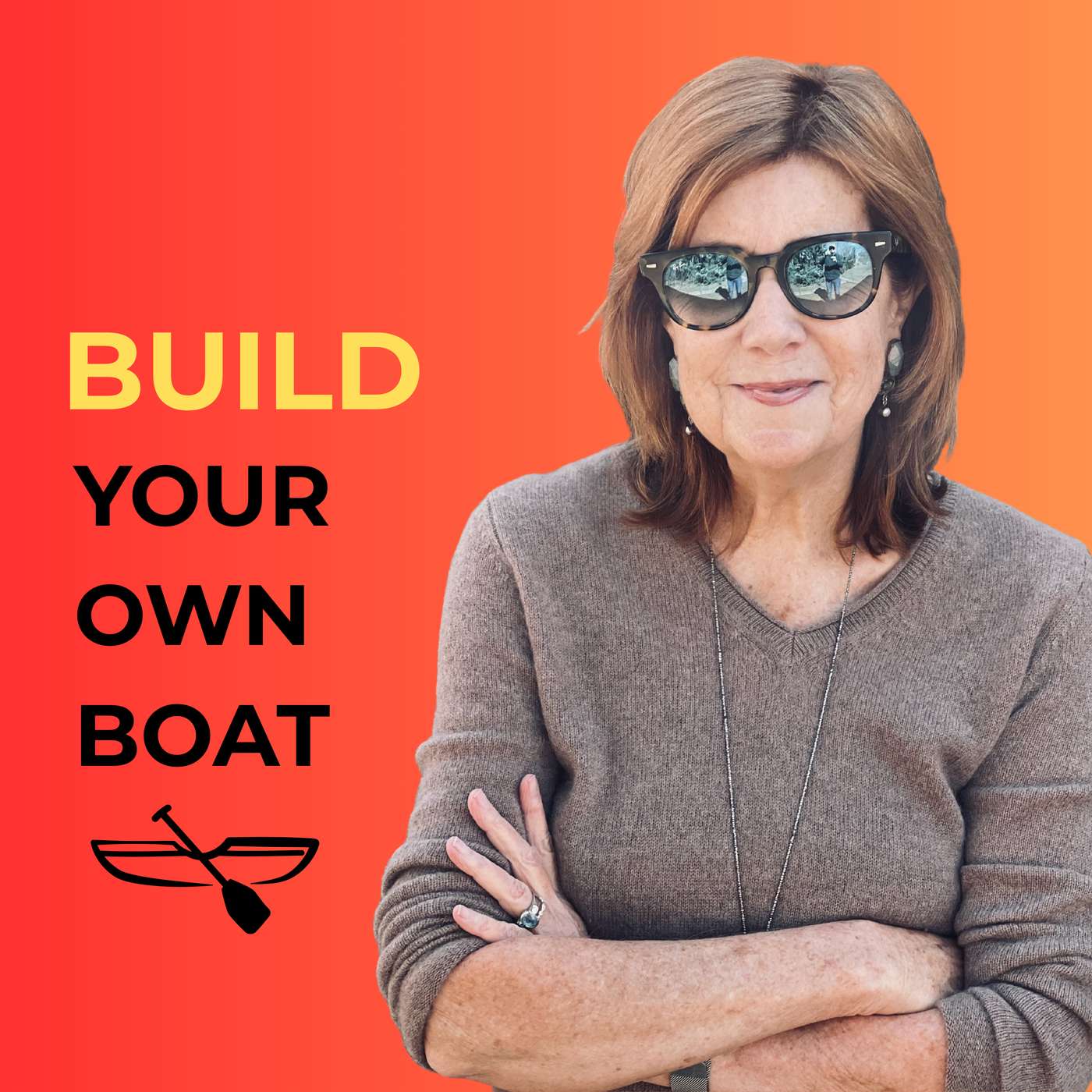
Build Your Own Boat
by Janine Vanderburg
An entrepreneurship podcast for women in midlife and beyond.What if the most powerful thing you could do right now — for your finances, your freedom, and your future — was to stop waiting for someone else to hand you an opportunity and start building your own?Build Your Own Boat is the podcast for women in midlife and beyond who are done playing by rules that were never written with them in mind. Hosted by award-winning 3x entrepreneur Janine Vanderburg, each episode features real conversations with women in midlife and beyond who made the bold decision to bet on themselves — launching businesses and creative ventures, building wealth, and rewriting what entrepreneurship looks like in the second half of life.This isn't a podcast about hustle culture or overnight success stories. It's a roadmap — built from lived experience, hard-won wisdom, and the kind of honest conversation you rarely hear anywhere else. Guests include founders, consultants, creatives, coaches, media makers, an
-
11
How to Start a Nonprofit Consulting Business After 50: Ashley Kasprzak on Building Partners for Purpose
Episode SummaryWondering whether decades of nonprofit experience can become a business you own? This episode answers that directly. After 25-plus years leading healthcare philanthropy, arts, and community development organizations, Ashley Kasprzak launched her own nonprofit fundraising consulting practice, AK Consulting / Partners for Purpose, in late 2023 — and this conversation walks through exactly how she did it.Host Janine Vanderburg and Ashley cover the practical mechanics most people skip: finding a first client through old professional relationships, setting up an S-Corp and payroll through QuickBooks, projecting cash flow, handling late-paying clients, and getting free bookkeeping through a Small Business Development Center partnership. They also talk honestly about self-doubt, the temptation to go back to a "real job," running a solo business through a health crisis with no paid leave, and why AI cannot replace an expert who knows what documents a nonprofit is missing. Ashley also shares Purpose Framework, the SaaS product she is building with her son to help nonprofits store policies and follow best practices.Key TakeawaysYour first client often comes from your existing network, not marketing. Ashley announced her new practice on Facebook and a former client from 15 years earlier reached out to become her first customer — a reminder that relationships built over a career are a founder's most reliable pipeline.Set up the "boring" financial infrastructure early. Ashley recommends forming an S-Corp, putting yourself on payroll through QuickBooks, projecting cash flow weekly, and budgeting for estimated taxes so a year-end tax bill never catches you off guard.AI cannot replace expert judgment in nonprofit fundraising. Ask AI to build a fund development handbook and it may return 3 of the 20 policies a nonprofit actually needs (gift acceptance, in-kind donation, term limits, and more). Expertise is knowing what is missing — "you don't know what you don't know."Self-doubt is recurring, not a one-time hurdle. Even 2.5 years in, life events — an injury, surgery, a family death, no PTO — brought the "maybe get a job" voices back. The fix is time, support people, and evidence of client wins, not pretending doubt disappears.Strong policies protect organizations and create real business value. Ashley's Purpose Framework SaaS lets nonprofits store policy documents, track version history, and support succession planning — turning "boring" governance into a safeguard against risks like founder embezzlement.About the Guest: Ashley KasprzakAshley Kasprzak is a nonprofit leader, fundraiser, Certified Grant Professional (GPC), trainer, and facilitator with more than 25 years of experience across healthcare philanthropy, the arts, and community development. She created the Longs Peak Hospital Foundation at UCHealth from the ground up and has helped raise more than $30 million for nonprofit organizations over her career. In late 2023 she founded AK Consulting, LLC (doing business as Partners for Purpose), where she supports a wide client base — mental health, Meals on Wheels, paleontology, pollinator conservation, family resource centers, and more — with resource development, board governance, strategic planning, grant writing, and capital campaigns. She also teaches at the college level and is building Purpose Framework, a nonprofit policy SaaS platform, with her son Brody. Ashley holds a background in art history, which shapes her distinctive approach to the field.Frequently Asked QuestionsHow do you get your first client when starting a consulting business?Often through your existing network rather than cold marketing. Ashley announced her new practice on social media, and a client she had worked with 15 years earlier reached out to hire her first. Long-standing professional relationships tend to become a founder's most dependable source of early work.Can AI replace a nonprofit fundraising consultant?No. AI can draft a few standard policies but typically returns only a fraction of what a nonprofit actually needs — and it doesn't know what it's missing. An experienced consultant knows the full set of governance, fundraising, and risk-management policies required and can guide the board discussion that must accompany them.What legal and financial setup do you need for a solo consulting practice?Ashley recommends establishing an S-Corp, putting yourself on payroll (she uses QuickBooks), planning ahead for estimated taxes, and reviewing your balance sheet and cash flow projections regularly — at least weekly — so tax bills and slow periods don't surprise you.How do you handle self-doubt as an entrepreneur in midlife?Treat it as recurring rather than a single obstacle. Ashley leans on supportive people (her sister, her husband), inspiring reading and music, and concrete evidence of client wins to work through low periods, especially when they coincide with personal hardship.Where can you get affordable help with bookkeeping when starting out?Look to your local Small Business Development Center (SBDC). Through the SBDC, Ashley connected with a community college accounting class that maintains her books for free while students gain real practice — a resource many new founders overlook.Is the nonprofit sector in danger right now?Ashley wouldn't call it "in jeopardy," but says traditional funding models are being questioned as foundations face far more proposals than they can review. She encourages relationship mapping with funders and building earned-income streams through social enterprise for more unrestricted, controllable revenue.Resource StackPartners for Purpose / AK Consulting — Ashley's nonprofit consulting practiceAbout Ashley Kasprzak — full professional backgroundGrant Professionals Certification Institute (GPC) — the credential Ashley holdsColorado SBDC serving Larimer County — free business advising and student-run bookkeepingQuickBooks Online — invoicing, payroll, and financial tracking tool referencedDare to Lead by Brené Brown — author Ashley cites for building confidence Where to Find Ashley KasprzakWebsite: partnerforpurpose.comLinkedIn: Ashley KasprzakBusiness: AK Consulting, LLC (Partners for Purpose)Contact: via the contact form at partnerforpurpose.comAbout Build Your Own BoatBuild Your Own Boat is a podcast series hosted by Janine Vanderburg — award-winning three-time entrepreneur and anti-ageism advocate — featuring women who have launched new entrepreneurial ventures in midlife and beyond. The series is part of a larger storytelling project that includes a Substack publication and a forthcoming book, all built around one goal: changing the narrat...
-
10
Margit Novack on Spotting a Demographic Trend, Scaling a First-of-Its-Kind Business, and Letting Go
Episode SummaryMargit Novack left a 20-year career in healthcare and hospital administration and, when most people look for the next job doing what they already know, she did something completely different. She started a business helping older adults downsize and relocate — a service so new in 1996 that business advisors told her not to bother printing business cards because no one would pay for it. They were wrong.This episode is a practical roadmap for anyone considering entrepreneurship in midlife. Margit explains how she spotted a demographic trend and "skated to where the puck was going," why she built her business around benefits instead of features, how she discovered her real customers were senior living communities and realtors (B2B) rather than the older adults she was helping, and how she scaled by training teams who trained the next generation of leaders. She also founded the professional association that gave the senior move management industry its standards and certifications. Finally, she opens up about something rarely discussed on entrepreneurial podcasts: what it actually feels like to sell the business you built with your whole heart.Key TakeawaysSkate to where the puck is going. Margit chose to serve older adults because demographic trends supported it — not because of a pre-existing passion. Building on top of a real, growing trend means you are not "rowing upriver."The people who need your service and the people who can afford it are not always the same. Margit's insight was to sell to senior living communities and realtors (B2B) who could reliably reach and afford customers, rather than trying to market directly to the general public.Sell benefits, not features. Margit stopped describing what she did (packing, sorting, unpacking) and started describing outcomes for each audience: "I'll help you draw traffic, maintain engagement, close sales, and get people in the door faster."Take the training wheels off. Scaling required empowering employees before they felt ready, letting them risk mistakes, and building a culture where team leaders identified and groomed the next team leaders — top to bottom.Plan B and Plan C are often the best plans, because they're the ones that actually happen. Whether reframing a client's problem or abandoning a service idea that didn't pan out, Margit treated flexibility and honest pivoting as core entrepreneurial skills.About the Guest: Margit NovackMargit Novack (her first name rhymes with target) is widely recognized as the founder of the senior move management industry. After two decades in healthcare and hospital administration — including managing the Scheie Eye Institute and the Department of Surgery at the University of Pennsylvania — she launched Moving Solutions in 1996 to help older adults downsize and relocate with dignity, care, and thoughtful logistics.In 1999, Moving Solutions was named Business of the Year by the American Society on Aging, drawing national coverage in The New York Times, The Washington Post, and Time. In 2002, Margit convened companies from across the country to found the National Association of Senior Move Managers (now the National Association of Senior & Specialty Move Managers, NASMM), serving as its founding president for six years and creating many of its training and certification programs.She sold Moving Solutions in 2018. During the early months of the COVID-19 pandemic she wrote Squint: Re-visioning the Second Half of Life, a collection of stories and essays drawn from her career and personal life. Today she writes, speaks, and mentors entrepreneurs.Frequently Asked QuestionsWhat is senior move management?Senior move management is a service that helps older adults and their families through the entire downsizing and relocation process — sorting belongings, deciding what fits, packing with careful labeling, hiring and coordinating movers, and unpacking so the person can settle in the same day. It focuses on emotional support and creating a livable new home, not just moving boxes.What was Margit’s role in building the senior move management industry?Margit Novack founded Moving Solutions in 1996 in suburban Philadelphia, making her the recognized pioneer of the senior move management industry. Only a handful of similar businesses existed anywhere in the country at the time.How do you start a business in midlife?Margit's advice: look at demographic trends and pick a market that is growing; figure out who needs your service and who can afford it (they may differ); sell the benefits you deliver rather than your features; find B2B and co-marketing partners who already reach your ideal customer; and be willing to pivot when an idea doesn't work.Why did Margit Novack tell entrepreneurs to read Michael Gerber's The E-Myth?Because being passionate about a task is different from running a business built around it. If the business grows, you will spend your time managing rather than doing the work you love — and you need to be comfortable with that shift before you scale.What is Margit Novack's book Squint about?Squint is a collection of stories and essays reflecting on the second half of life. Many are personal, but each connects to a larger, shared human experience — including lessons Margit learned from her clients, such as the value of Plan B and Plan C.Resource StackNational Association of Senior & Specialty Move Managers (NASMM)The E-Myth by Michael Gerber —the book Margit recommends for anyone starting a business.Squint: Re-visioning the Second Half of Life by Margit Novack Small Business Development Center (SBDC) — the mentoring and business-plan resources Margit used when starting out.Where to Find Margit NovackWebsite: margitnovack.comEmail: [email protected]: SquintAbout Build Your Own BoatBuild Your Own Boat is a podcast series hosted by Janine Vanderburg — award-winning three-time entrepreneur and anti-ageism advocate — featuring women who have launched new entrepreneurial ventures in midlife and beyond. The series is part of a larger storytelling project that includes a Substack publication and a forthcoming book, all built around one goal: changing the narrative about who entrepreneurs are and making women in midlife and beyond visible as builders of wealth, freedom, and possibility.
-
9
Why Female Founders Are a Better Investment — Rebecca Reynolds Moore on Building a Portfolio Career After 50
Episode SummaryMany women reach midlife with deep professional experience but freeze when it comes to pricing their work, asking for investment, or managing their own money. This episode solves that problem by showing exactly how one woman turned a lifetime of pivots into a thriving "fleet" of income streams — and what she teaches other women to do the same.Rebecca Reynolds Moore left the museum world, earned an MBA, built and sold-then-wound-down a dot-com startup (museumshop.com), took a ten-year pause to raise her daughters, and founded In a Nutshell Consulting at age 52. Today she coaches early-stage founders, invests as an angel through Boston's TBD Angels, and serves as a limited partner in venture funds. In this conversation with host Janine Vanderburg, Rebecca explains why female founders deliver stronger, more capital-efficient returns, why refusing pro bono work is a business necessity, how to price your services without shame, and the concrete first step any woman can take to build financial agency — no matter how late she thinks she's starting.Key TakeawaysFemale founders are a better investment because they generate stronger returns and greater capital efficiency. Studies (including Boston Consulting Group research) show women-led companies are often more profitable per dollar invested, largely because women tend to make conservative projections and run leaner operations.Stop doing pro bono work — paying clients have skin in the game. When founders invest their own money in coaching, they signal they are serious, coachable, and committed. Free work devalues hard-won experience and attracts clients who won't follow through.Price from confidence, not desperation. Whether you're selling a service or raising capital, the outcome depends on genuine excitement about your offer and finding the right-fit client or investor — not asking from a place of need.Build a "fleet," not a single boat. A portfolio career (coaching + angel investing + LP roles) lets you diversify income, spread risk, and stay intellectually engaged. In investing specifically, a portfolio of companies is far safer than betting on one.Take the shame out of learning about money, then start. Financial literacy wasn't built for or taught to many women, especially those now in their 60s. The first step is understanding your net worth and cash flow, then surrounding yourself with encouraging people and low-cost learning communities.About Rebecca Reynolds MooreRebecca Reynolds Moore is the founder of In a Nutshell Consulting, an angel investor, and a limited partner in venture funds. She began her career in the museum world — earning a degree in art history and landing a dream role at the Smithsonian's Museum of American Art — before pursuing an MBA to gain a seat at the table where decisions and funding were made. In the late 1990s she founded museumshop.com, growing it from an idea to 30 employees, 4,000 products, and 70 museum partners worldwide, including the Met, the Prado, and the Louvre, and raising roughly $10 million in the process. After the business wound down in the wake of 9/11, she spent a decade raising her three daughters before re-entering the startup world and launching her own consulting practice at age 52. Today she advises mostly early-stage, mid-career founders — helping them get investor-ready or bootstrap to profitability — and invests alongside fellow founders through Boston's TBD Angels.Resource StackIn a Nutshell Consulting — Rebecca's coaching and advisory firm: inanutshellconsulting.comTBD Angels — the Boston-based angel investment group Rebecca invests through: tbdangels.comThe Soul of Money by Lynne Twist — the book Rebecca references on abundance and circulating (vs. hoarding) wealth.Boston Consulting Group — "Why Women-Owned Startups Are a Better Bet" — research on the profitability and capital efficiency of female founders: bcg.comFrequently Asked QuestionsAre women-founded startups a good investment?Yes. Research, including studies from Boston Consulting Group, shows women-founded companies tend to be more profitable and more capital-efficient than male-founded ones, often delivering higher returns per dollar invested. Women still receive far less funding, largely due to bias in a venture industry historically run by men who tend to fund people who look like them.Should a new coach or consultant do free work to build a track record?No. Refusing pro bono work is a deliberate business strategy. Paying clients have "skin in the game," which means they believe in what they're building, take the engagement seriously, and are more coachable. Free work undervalues your experience and often attracts clients who won't follow your advice.How do you price your services with confidence?Define a clear offer, know it works for the right clients, and present your rate without apology. If a prospect isn't a fit, move on. Rebecca hired her own coaches to get comfortable naming her numbers and uses short discovery calls to gauge fit before committing.Is it too late to start a business in midlife?No. Rebecca founded her current company at 52 after a decade away from startups. Reinvention is possible at any stage — the keys are surrounding yourself with supportive people, finding a good coach, and being willing to test the waters and learn as you go.What is the first step to building financial agency as a woman?Take the shame out of not knowing — it isn't your fault, since financial education historically wasn't built for women. Then get your personal finances in order: understand your net worth, track where your money flows, make sure it's earning rather than sitting idle, and join a free or low-cost group to keep learning.What is a portfolio career or "fleet"?It's building multiple complementary income streams rather than one job or one business. Rebecca combines founder coaching, angel investing, and limited-partner roles in venture funds — diversifying her income, managing risk, and keeping her work varied and engaging.Where to Find Rebecca Reynolds MooreWebsite: inanutshellconsulting.comLinkedIn: Rebecca Reynolds MooreInstagram: @inanutshellceoAbout Build Your Own BoatBuild Your Own Boat is a podcast series hosted by Janine Vanderburg — award-winning three-time entrepreneur and anti-ageism advocate — featuring women who have launched new entrepreneurial ventures in midlife and beyond. The series is part of a larger storytelling project that includes a Substack publication and a forthcoming book, all built around one goal: changing the narrative about who entrepreneurs are and making women in midlife and beyond visible as bu...
-
8
Why—and How—a Geoscientist Left Big Energy for Aging, featuring Karen Brown
Episode SummaryKaren Brown spent years at the top of the oil and gas industry — the first female geoscientist at Boone Pickens' Mesa Petroleum, then CEO of a major nonprofit. So why did she walk away from the money, the titles, and the respect to build a career in aging and age tech? This episode answers that question directly: after nearly a decade caregiving for her parents and in-laws, Karen saw a market that had almost no money, few skilled people, and enormous unmet need — and she decided that was exactly where she belonged.Host Janine Vanderburg talks with Karen about the moment the pivot became clear, the internal script that told her she was "too old" at 58, how she rewrote it, and what more than a decade of angel investing in nearly four dozen age-tech startups taught her. They also dig into why investors underfund women founders, how to market to older adults without pity, and how Karen now helps employers retain and hire experienced talent over 50. It's a roadmap for any woman weighing a midlife leap into work that matters more than it pays — at first.Key TakeawaysA career pivot can be a leap of clarity, not just a leap of faith. Karen didn't jump blindly; she volunteered first to test whether the aging space fit her goals before committing, then built her venture one deliberate step at a time.The "I'm too old at 58" belief is an outdated script, not a fact. Based on 1935 Social Security-era life expectancy, that script ignores that today's women often have two to four more decades of life — and multiple next chapters — ahead of them.Age tech grows on a marathon timeline, not overnight. After 13+ years and close to four dozen investments (with four exits), Karen's takeaway is that startups need years to find the right ecosystem, product, and go-to-market approach.Women founders face a documented credibility gap in the investment room. Karen witnessed capable women dismissed on sight; she found female founders in caregiving startups often brought higher EQ and stronger whole-family solutions, yet still struggled to get funded.Employers keep older workers for concrete business reasons, not charity. Organizations retain experienced talent because of tight labor pools, deep institutional knowledge, and traits like patience and thorough problem-solving — especially in manufacturing, financial planning, insurance, and nursing triage.About the Guest: Karen BrownKaren Brown began her career as a geoscientist with a finance mind, serving as the first female geoscientist at Boone Pickens' Mesa Petroleum before leading Energy Outreach Colorado as CEO. After nearly a decade as a family caregiver, she left the energy world at 58 to devote herself to the aging space — "for far less money and far less respect," as she puts it. Today she runs iAging and works with employers across the country to rethink how they hire, retain, and support workers over 50, including through age-friendly workplace initiatives. She is also an active angel investor who has backed close to four dozen age-tech startups over more than a decade. Karen is a leading voice in reframing aging around agency, independence, and possibility rather than pity.Resource StackiAging — Karen Brown's consultancy helping employers hire and retain experienced talent over 50 (reach Karen via LinkedIn; new website launching September 15).Modern Elder Academy (Chip Conley) — Source of the "scripts" framing Karen uses to describe outdated beliefs about aging.Nymbl — Balance-focused age-tech solution Karen references as an example of a single-solution product (verify current product/site).Boone Pickens / Mesa Petroleum — Background on the energy company and founder where Karen began her career.Employee Resource Groups (ERGs) — overview — Explanation of the employee support groups Karen helps employers build around caregiving and aging.Frequently Asked QuestionsAm I too old at 50 or beyond to start a new business or career?No. Karen Brown made her leap from energy into aging at 58 and calls the "I'm too old" belief an outdated script rooted in 1935-era life expectancy. Statistically, the average woman today has two to four more decades ahead — meaning several potential next chapters. Her advice: take one step toward the next one, and you can always adjust course after a year or two.How do you make a major career pivot without financial disaster?Karen reduced her risk by experimenting before committing — volunteering with aging organizations to confirm the fit — and by leaning on a period of added household flexibility while she built her new venture. She frames a pivot as a series of small, deliberate steps rather than one dramatic leap, giving yourself a runway of a couple of years to test and adjust.Why do investors fund fewer women founders?Karen attributes it to ingrained "scripts" and bias. She personally witnessed a capable mid-career woman written off in the pitch room before she'd finished presenting — a perception of "less credibility" she says you could feel in the room. In her experience, women founders in caregiving startups often brought higher emotional intelligence and more complete, family-centered solutions, yet still faced a steep funding gap.What makes an age-tech startup worth investing in?Karen gravitates to companies solving real problems she or her family have faced, led by founders (often women) with high EQ who involve the whole family. She warns that single-solution products — like balance-only tools — hit a ceiling, because older adults in more advanced care stages need an interconnected ecosystem of solutions rather than one-off apps.Which industries are most open to hiring workers over 50?In Karen's work, manufacturing, financial planning, insurance, and nursing triage tend to value experienced talent most. These fields often struggle to attract younger workers and specifically prize the patience, thoroughness, and institutional knowledge that older employees bring to complex, information-gathering work.Do I need a website before launching my business?No. Karen was still building her first website more than a decade into her aging work. Janine notes she interviewed another guest who ran a successful communications business for two years before building a site. A website is not a prerequisite for starting a venture.Where to Find Karen BrownLinkedIn: Karen Brown — Karen's primary contact channel; her email is listed on her profile.Website: Launching around September 15 (link to be added once live).Connect through Janine: Janine is happy to introduce listeners to Karen directly.About Build Your Own BoatBuild Your Own Boat is a podcast series hosted by Janine Vanderburg — award-winning three-time entrepreneur and anti-ageism advocate — featuring women who have launched new entrepreneurial ventures in midlife and beyond. The series is part of a larger storytelling project that ...
-
7
How Do You Turn Relational Courage Into an Unfair Advantage? Hatton Littman on Redesigning Your Career After 50
Episode SummaryThis episode answers a question many accomplished women ask at midlife: how do you leave a stable, high-impact career and build a consulting business that actually fits the life you want? Hatton Littman, founder of Surf HL, left a 25-year career in education, government, and nonprofit leadership to launch her own leadership development and strategic communications firm in Montana — and six years later, she's grown revenue tenfold, learned to price on value instead of guilt, and deliberately engineered a lower-revenue year to protect her health and freedom. She names "relational courage" as her unfair advantage: the willingness to have hard conversations, fire a client when the outcomes aren't there, and tell the truth even when it costs her short-term comfort. This episode gives a practical, numbers-based roadmap for women considering entrepreneurship after 50 — covering pricing psychology, energy management as an introvert-leaning extrovert, and how to spot paradigm-shift opportunities using tools like AI.Key TakeawaysRelational courage is a defensible business asset. Hatton Littman defines it as the willingness to name hard truths, have uncomfortable conversations, and act on them — including firing a client mid-contract when she couldn't deliver the promised outcome, because protecting her integrity mattered more than the revenue.A lower-revenue year can still be a successful year. At age 50, Hatton deliberately planned to reduce her workload; gross revenue fell 43%, but net profit margin only dropped 25%, and she used the freed-up time for travel and rest — proof that revenue targets and life goals need to be integrated, not separated.Value-based pricing beats hourly billing for long-term growth. Instead of pricing by time spent, Hatton tracks client outcomes annually (e.g., helping win $32.2 million in public school funding) and uses those documented results to justify raising her rates and quiet the internal voice that resists charging more.Energy management matters as much as skill. As Hatton has aged, her introversion has strengthened even though extroverted facilitation work is her biggest revenue driver; she's now shifting toward roughly 30% "desk work" — deep analysis and one-on-one projects — and using AI as an executive-assistant tool for synthesizing qualitative data, rather than replacing the relational work only a human can do.Paradigm shifts create opportunity, not just disruption. Drawing on her philosophy of science background (Thomas Kuhn's theory of scientific revolutions), Hatton argues that periods of chaos and uncertainty — like today's AI-driven shift — open new markets for people who can build relational trust on teams and help organizations navigate change together.Guest Bio: About Hatton LittmanHatton Littman is the founder of Surf HL, a Montana-based consulting firm specializing in leadership development, expert facilitation, and strategic communications. She works with nonprofits, school districts, government agencies, and businesses navigating complex change and teams that need to collaborate under pressure. Before launching Surf HL, Hatton spent more than 25 years in education, government, and nonprofit leadership — including nearly a decade as director of technology and communications for Missoula County Public Schools, where she helped pass $158 million in public funding bonds and built a 21-mile fiber network that reshaped the city's infrastructure. She holds a degree in philosophy, with a focus on philosophy of science, and is a graduate of the Leadership Montana program. Now in her sixth year running Surf HL, Hatton has grown her business tenfold, contributed to the forthcoming book Compass and Chaos, and is developing a new body of work on building and honoring personal power inside organizations.Episode OverviewJanine Vanderburg sits down with longtime friend and former colleague Hatton Littman to trace her path from a decades-long career in public education and government to founding her own leadership consulting firm, Surf HL, in the middle of the 2020 pandemic. They dig into the exact moment Hatton knew it was time to leave her director-level role, the trusted circle of women (and her husband) who helped her make the leap, and the "anchor client" strategy that turned a side hustle into a real business. The conversation moves into pricing — including why so many women avoid talking about money and how Hatton learned to argue back against her own rate-increase anxiety using documented client outcomes. Later, they explore Hatton's decision to deliberately shrink her revenue at age 50 to protect her time and energy, her discovery that her introversion has intensified with age even though extroverted facilitation is her top revenue source, and how she's using AI as a thinking partner for qualitative analysis rather than a replacement for relational work. The episode closes with a discussion of paradigm shifts — grounded in Hatton's philosophy of science background — and where she sees the biggest opportunities opening for new entrepreneurs right now.FAQWhat is "relational courage" and why does Hatton Littman call it an unfair advantage?Relational courage is the willingness to have honest, sometimes difficult conversations in professional relationships — stating your needs clearly, naming conflict directly, and delivering hard truths to clients or teams even when it's uncomfortable. Hatton considers it her unfair advantage because it's a human skill that can't be replicated by AI or easily copied by competitors, and it directly built her credibility with long-term clients.Why did Hatton Littman plan for a lower-revenue year in her business?At age 50, Hatton deliberately reduced her workload to about 75% of full capacity to prioritize travel, rest, and professional development instead of chasing maximum revenue growth. Her gross revenue dropped 43%, but her net profit margin only fell 25%, showing that a strategic pullback doesn't have to mean financial failure — and the following year she rebounded with a tenfold increase in contract opportunities compared to her first year in business.How does value-based pricing work for consultants and solopreneurs?Value-based pricing means setting fees based on the outcomes and impact delivered to the client rather than hours worked. Hatton tracks measurable results for every client engagement — such as helping secure $32.2 million in public school funding — and uses that documented evidence both to justify rate increases and to overcome her own internal resistance to charging more.How can entrepreneurs use AI without losing the human relational element of their work?Hatton uses AI as an "executive assistant" for tasks like summarizing large bodies of qualitative interview data or generating professional-looking charts quickly — freeing up her energy for the in-person facilitation and conflict-navigation work that AI cannot replicate. She positions relational courage and live human trust-building as the differentiators AI can't replace.What opportunities does Hatton Littman see opening up during the current AI-driven paradigm shift?Drawing on her philosophy of science background, Hatton points to growing demand for people who can help teams navigate uncertainty with trust, work addressing cultural and civic polarization, and innovation at the intersection of AI efficiency and human connection. She also recommends following futurist Amy We...
-
6
How Do You Build a Writing and Speaking Career in Midlife? Maria Leonard Olsen on Side Gigs, a Shocking DNA Discovery, and 50 After 50
Episode SummaryAttorney and author Maria Leonard Olsen shows how women can build a fulfilling second career — as a writer, speaker, and podcaster — without giving up the financial security of their primary profession. After becoming a lawyer to please her immigrant mother, Olsen used the "side boat" of writing during a career break to eventually publish eight books, deliver two TEDx talks, host the podcast Becoming Your Best Version, and appear on CBS Sunday Morning, all while continuing to practice law full-time. The episode also covers a life-altering twist: a consumer DNA test revealed that the man who raised her was not her biological father, a discovery that became the subject of her upcoming book, Before and After the DNA Test. Listeners get a real, step-by-step roadmap — writing articles to build credibility, applying repeatedly for TEDx talks, posting daily on social media, and learning to say no — for turning a side project into a legacy-building second act.Key TakeawaysYou don't have to quit your day job to build something new. Olsen kept her law practice as a financial safety net while building her writing, speaking, and podcasting career on the side — proving a "side boat" and a primary career can coexist.Credibility is built in layers: articles first, then books, then stages. Olsen advises aspiring authors to write articles and build a "clip file" before pitching a book, because publishers and speaking bureaus want proof that others have already paid for your work.Consistent, low-effort visibility compounds over time. Daily posting on LinkedIn (which cross-posts to Facebook, X, and Threads) built the following and credibility that eventually led to a CBS Sunday Morning feature — after a producer found her simply by searching "bucket lists."Misattributed parentage from consumer DNA tests is more common than people think. Olsen's own 23andMe result revealed her father was not her biological parent, a discovery so disruptive that she spent a year researching it, wrote a book about it, and now warns others about the emotional and legal consequences of home DNA testing.Saying no to others is often saying yes to yourself. Escaping a lifelong pattern of people-pleasing — by asking "Do I really want to do this, or am I just trying to please someone?" — freed Olsen to focus her time on what actually aligns with her goals.Guest Bio: Who Is Maria Leonard Olsen?Maria Leonard Olsen is a practicing attorney in Washington, D.C., an author of eight books, and a two-time TEDx speaker. Her most popular book, 50 After 50: Reframing the Next Chapter of Your Life, chronicles the 50 new things she tried during her 50th year following divorce, sobriety, and becoming an empty nester — and became the basis for her TEDx talk, "Turning Life's Challenges Into a Force for Good." A graduate of Boston College and the University of Virginia School of Law, Olsen served in the Clinton administration's Justice Department before building a career in civil litigation. She hosts the award-winning podcast Becoming Your Best Version, where she has interviewed more than 300 guests about personal growth and reinvention. Her story has been featured on CBS Sunday Morning, and she writes for outlets including AARP's The Ethel. Her forthcoming book, Before and After the DNA Test, explores the emotional and legal fallout of misattributed parentage — a subject she researched after a consumer DNA test revealed her own father was not her biological parent.Frequently Asked QuestionsHow can I start a side career while keeping my full-time job?Start small and build proof of your work over time. Maria Leonard Olsen recommends writing articles first to build a "clip file," then using that credibility to pursue books, speaking engagements, and other opportunities — all while your primary job continues to provide financial stability.How do you get a TEDx talk?Getting a TEDx talk typically requires persistence and a track record. Olsen submitted twelve applications before she was accepted, and recommends building a platform and publication history first, since TEDx organizers vet speakers and often require coaching before the event.What are the risks of taking a consumer DNA test like 23andMe?Consumer DNA tests can reveal misattributed parentage, meaning the person who raised you is not your biological parent — a discovery Olsen experienced firsthand. She warns that these tests, often marketed as fun holiday gifts, can uncover unexpected family secrets with significant emotional and legal consequences, which is why she wrote Before and After the DNA Test.How do you stop being a people pleaser?Olsen suggests pausing before saying yes to any request and asking two questions: "Am I doing this because I want to, or just to please someone?" and "Does this bring me closer to who I want to be?" If the answer is no, she recommends politely declining without over-explaining, recognizing that saying no to others is often saying yes to yourself.Can you make money from writing books, speaking, and podcasting?It's possible, but Olsen describes it as slow going unless you're a skilled marketer. Speaking engagements at corporations can be lucrative, while books tend to build credibility and open other opportunities rather than generate direct income. She recommends keeping a primary source of income while building a following through consistent content and public speaking.Resource Stack50 After 50: Reframing the Next Chapter of Your Life by Maria Leonard Olsen Maria Leonard Olsen's official website (books, TEDx talks, speaking inquiries) — marialeonardolsen.comTEDx Talk: "Turning Life's Challenges Into a Force for Good" — available via her websiteBecoming Your Best Version podcast — Apple Podcasts | Spotify23andMe DNA testing service (referenced in the discussion of misattributed parentage) — 23andme.comWhere to Find Maria Leonard OlsenWebsite: marialeonardolsen.comInstagram: @fiftyafter50Facebook: @FiftyAfter50Podcast, Becoming Your Best Version: Apple Podcasts | SpotifyBook: 50 After 50: Reframing the Next Chapter of Your Life — available on AmazonForthcoming book: Before and After the DNA Test — available for pre-order via her websiteAbout Build Your Own BoatBuild Your Own Boat is a podcast series hosted by Janine Vanderburg — award-winning three-time entrepreneur and anti-ageism advocate — featuring women who have launched new entrepreneurial ventures in midlife and beyond. The series is part of a larger storytelling project that includes a Substack publication and a forthcoming book, all built ar...
-
5
How Rachel Cohen Built Aging Dynamics: Turning 30 Years of Social Work and Urban Planning Into a Midlife Consulting Business
EPISODE SUMMARYRachel Cohen spent nearly three decades working across urban planning, social work, public health, and nonprofit housing before launching Aging Dynamics, her own age-friendly community consulting firm, in her 40s. In this episode, she explains how a career built on curiosity and cross-sector fluency became her competitive advantage — and how she overcame the guilt many women feel around charging for their expertise.Cohen and host Janine Vanderburg dig into the real, unglamorous mechanics of starting a solo consulting practice: landing a first client through a single genuine conversation at a conference, surviving a "no new socks" first year, and learning to price based on value instead of hours worked. They also talk candidly about facing ageism from both directions — being dismissed as "too young" early in her career and "too old" once she started her own business — and what it took to build a firm that has now marked its 10th anniversary while staying true to its social-impact mission.KEY TAKEAWAYSCross-sector experience is an advantage, not a liability. Rachel Cohen's fluency across social work, urban planning, public health, and housing lets her translate between industries that normally stay siloed — a skill she describes as her "unfair advantage."New clients often come from relationship-building, not selling. Cohen landed her first Aging Dynamics contract after several honest conversations with an executive director she met at a one-day conference, not from a sales pitch.Undercharging early on creates resentment and erodes your value. Cohen learned to check in with herself — "Would I feel cheated at this rate?" — before pricing every project, and now prices based on the value she delivers rather than hours worked.Temporary or part-time gigs can convert into long-term contracts. Cohen turned a short-term public health role into a client relationship that has lasted more than ten years by proposing the shift directly to leadership.Ageism shows up on both ends of a career. Many women are dismissed as "too young" to be credible in their twenties and then labeled "too old" once they start a business in midlife, with little room in between.About Rachel CohenRachel Cohen is the founder of Aging Dynamics, a consultancy focused on age-friendly, age-inclusive community planning, now celebrating its 10th anniversary. Before starting her own firm, she built a career that spanned environmental and urban planning, social work, and gerontology, working with organizations including the National Wildlife Federation in Detroit, an affordable housing developer in Philadelphia, an area agency on aging, and a national consulting practice serving retirement communities, assisted living providers, and nursing homes. Through Aging Dynamics, Cohen leads strategic planning, community engagement, and facilitation work that helps cities, counties, and organizations build more age-friendly communities, including current age-friendly action planning in Englewood, Colorado, and implementation work in Eagle County, Colorado. She is also a vocal advocate against ageism and is launching a new podcast focused on the stories behind age-friendly community change.FREQUENTLY ASKED QUESTIONSHow do you start a consulting business in midlife?Rachel Cohen's approach was to identify the specific, recognizable services within her broader expertise — in her case, strategic planning, community engagement, and facilitation — rather than trying to sell her entire cross-sector skill set at once. She built her first client relationships by showing up consistently in spaces where her ideal clients already were, having genuine conversations instead of sales pitches, and converting a part-time or temporary role into a long-term contract once trust was established.How should I price my consulting services?Cohen recommends anchoring pricing to the value delivered rather than the number of hours worked, and checking in honestly with yourself about whether a rate would leave you feeling valued or resentful. She also stresses researching what peers in your market charge, being willing to say no to underpriced work, and recognizing that consistently underpricing your expertise hurts not just you, but the broader community of women entrepreneurs by normalizing free or discounted labor.What is Aging Dynamics?Aging Dynamics is a consulting firm founded by Rachel Cohen that helps communities, housing providers, healthcare organizations, and local governments become more age-friendly and age-inclusive. The firm's work includes strategic planning, community engagement, facilitation, and cross-sector collaboration building, drawing on Cohen's background in urban planning, social work, and gerontology.What is an "unfair advantage" in business?Borrowed from the lean startup movement, an "unfair advantage" refers to a combination of experience, insight, and connections that is difficult for competitors to replicate or purchase. For Rachel Cohen, her unfair advantage is her ability to move fluently across sectors like housing, healthcare, public health, and aging services, translating between them so that cross-sector projects actually get implemented rather than stalling at the planning stage.How do you get your first consulting client?Cohen's first Aging Dynamics client came from attending a one-day conference, identifying an organization she wanted to work with in advance, and starting an honest conversation rather than a pitch. It took four or five follow-up conversations before a small first contract emerged. Additional early clients came through board service and word-of-mouth referrals from people who had seen her work firsthand.RESOURCE STACKAging Dynamics — Rachel Cohen's age-friendly community consulting firmNational Wildlife Federation — where Cohen served as an early urban community organizer in DetroitAmerican Society on Aging — national conference where Cohen has spoken on age-friendly workRachel Cohen on LinkedIn — for updates on Aging Dynamics and age-friendly planning workWHERE TO FIND RACHEL COHENWebsite: aging-dynamics.comLinkedIn: linkedin.com/in/rachel-cohenNewsletter: Sign up via the Aging Dynamics website for ongoing updates on age-friendly community workABOUT BUILD YOUR OWN BOATBuild Your Own Boat is a podcast series hosted by Janine Vanderburg — award-winning three-time entrepreneur and anti-ageism advocate — featuring women who have launched new entrepreneurial ventures in midlife and beyond. The series is part of a larger storytelling project that includes a Substack publication and a forthcoming book, all built around one goal: changing the narrative about who entrepreneurs are and making women in midlife and beyond visible as builders of wealth, freedom, and possibility.
-
4
What's Your "Unfair Advantage"? Jennifer Stapleton on Turning 20 Years of Nonprofit Connections Into Fire and Bliss
Episode SummaryJennifer Stapleton left a senior communications executive role at a national nonprofit at 46 to launch Fire and Bliss, a consulting firm that now helps foundations and well-funded nonprofits with crisis communications and fundraising strategy. This episode answers a question every experienced professional should ask before going out on their own: what is your "unfair advantage" — the accumulation of experience, insight, and connections that no one else can easily copy, replicate, or purchase on the open market? Stapleton explains how two decades of nonprofit and philanthropic relationships became the foundation of her business, why she launched without a website, why deliberation without action never produces clarity, and how she navigated the "messy middle" between early friend-referred clients and a sustainable, sellable business. She also shares candid numbers on pricing mistakes, losing money in year one, and why women should charge at least twice what they think they should charge.Guest BioJennifer Stapleton is the founder of Fire and Bliss, a communications and fundraising strategy consultancy serving foundations and well-funded nonprofits. Before starting her business, she spent nearly two decades in nonprofit and philanthropic communications, holding senior executive roles at organizations including Pew, Freedom House, and Bread for the World. After reaching the top of the traditional nonprofit communications ladder and finding it unfulfilling, she left her executive role in the wake of January 6th and the pandemic, relocated from Washington, D.C. to Colorado, and built Fire and Bliss from a mountain-cabin meditation session into a six-year-old firm specializing in crisis communications planning and fundraising consulting for the nonprofit sector.Key TakeawaysYour unfair advantage is the experience, insight, and connections no one else can easily copy, replicate, or buy. Stapleton didn't set out to build Fire and Bliss around her network — but roughly 90% of her business over six years has come from friends or friends of friends built during two decades in nonprofit and philanthropic communications.You don't need a website, brand, or logo to start a consulting business — you need a name, a clear offer, and a list of people to tell. Stapleton launched Fire and Bliss on word-of-mouth alone and didn't build a website until roughly 18 months in.Deliberation doesn't create clarity — action does. Borrowing a metaphor from business mentor Chuck Blakeman, Stapleton compares starting a business to sailing without a map: you move, hit obstacles, adjust course, and that's how clarity is built, not by planning from the shore.Price at least double what you're thinking, and expect trial and error. Stapleton lost money in year one, broke even in year two, and didn't feel financially solid until year three; she now recommends a project-based (not hourly) pricing model for clarity with clients.There is no "messy middle" shortcut — you have to learn business development. After the early wave of friend-referred clients dries up, sustainable growth requires deliberately investing in yourself through cohorts, mentors, and peer business communities rather than working in isolation.FAQWhat is an "unfair advantage" in business?An unfair advantage is the combination of experience, insight, and connections a person accumulates over their career that no one else can easily copy, replicate, or purchase on the open market. It's not a negative or anti-competitive concept — it's the unique foundation someone already has for starting a business, often without realizing it. Jennifer Stapleton's unfair advantage was two decades of relationships built across nonprofit and philanthropic communications, which became the primary source of clients for Fire and Bliss.Do I need a website to start a consulting business?No. Jennifer Stapleton launched Fire and Bliss using only email and word-of-mouth outreach to her existing professional network, and didn't build a website until about a year and a half after starting the business. A website, logo, and brand are refinements that can come later — what you need first is a clear offer and people to tell about it.How much should I charge when starting a consulting business?Stapleton recommends charging at least twice what you initially think you should charge. She underpriced her services in year one, lost money, and had to revise her pricing strategy multiple times before settling on project-based pricing, which gives both the consultant and client clarity on deliverables instead of debating hourly rates.What is the "messy middle" in starting a consulting business?The messy middle is the stage after the early rush of clients from friends and existing contacts dries up, but before a consultant has developed real business development skills. Many new consultants get through their first one to two years easily on referrals, then stall because they don't yet know how to generate new business systematically.Is it risky to leave a stable job to start a business in midlife?Stapleton argues that in-house jobs offer a false sense of security — salaries, benefits, and titles can disappear overnight through layoffs, grant cuts, or reorganizations. Starting a consulting business does require learning new skills, but it isn't inherently less secure than staying employed.Resource StackFire and Bliss (Jennifer Stapleton's communications and fundraising consultancy): fireandbliss.comChuck Blakeman — business mentor whose "boat without a map" philosophy (action drives clarity, not deliberation) is referenced in the episodeKami Gildner — business network/cohort connection referenced as a source of peer learning and community for entrepreneursFire and Bliss free advice newsletter — sign up via the "Free Advice" button at the bottom of fireandbliss.comBuild Your Own Boat Substack — full written profile of Jennifer Stapleton's story, part of the broader Build Your Own Boat storytelling projectWhere to Find Jennifer StapletonWebsite: fireandbliss.comLinkedIn: https://www.linkedin.com/in/jenniferbcstapleton/Free Advice newsletter: Sign up at the bottom of fireandbliss.comAbout Build Your Own Boat Build Your Own Boat is a podcast series hosted by Janine Vanderburg — award-winning three-time entrepreneur and anti-ageism advocate — featuring women who have launched new entrepreneurial ventures in midlife and beyond. The series is part of a larger storytelling project that includes a Substack publication and a forthcoming book, all built around one goal: changing the narrative about who entrepreneurs are and making women in midlife and beyond visible as builders of wealth, freedom, and possibility.
-
3
How Do You Fund a Business After 50 Without Venture Capital? AnnMaria De Mars on Bootstrapping 7 Generation Games
Episode SummaryMost women over 50 who want to start a business don't have angel investors lining up — and AnnMaria De Mars, founder of 7 Generation Games, didn't either. In this episode of Build Your Own Boat, De Mars explains exactly how she funded her math-and-culture-based educational game company without a single six-figure investor check: SBIR federal research grants, three Kickstarter campaigns, two seed rounds through startup accelerators, crowd equity raises, and dozens of friends who each invested $5,000 to $20,000. A world judo champion turned statistician, professor, and programmer, De Mars founded 7 Generation Games at 57 and shows why perseverance, deep community relationships, and a willingness to "do hard things" — lessons she learned competing internationally in judo — are the real predictors of entrepreneurial success in midlife, not access to venture capital.Guest BioAnnMaria De Mars is a technology executive, statistician, author, and the first American to win a gold medal at the World Judo Championships (1984, -56kg). She holds a Ph.D. from the University of California, Riverside, and has built a career spanning industrial engineering, university statistics teaching, and software development. She has founded four companies, including Spirit Lake Consulting and The Julia Group, and is the co-founder and president of 7 Generation Games, an educational technology company she launched at age 57 that builds cross-curricular math games rooted in Latino, Indigenous, and U.S. history storylines. Her latest venture, 7 Gen Blocks, is a no-code educational game builder — "WordPress for educational games" — that lets anyone build a custom learning game without programming knowledge. De Mars has been named one of Forbes' 40 Women to Watch Over 40, is an AARP Purpose Prize Fellow, and was the first woman to serve as president of a national judo organization. She is also known as the mother of Olympic judo bronze medalist and former UFC champion Ronda Rousey, and of sports journalist María Burns Ortiz, who co-founded 7 Generation Games alongside her.Key TakeawaysNon-dilutive funding, like SBIR grants, is often the best money a startup can get. Unlike venture capital, small business innovation research grants don't require giving up equity, yet many founders overlook them because they don't carry the same prestige as a seed round.Perseverance built through years of high-stakes competition transfers directly to entrepreneurship. De Mars credits 14 years of international judo competition with teaching her that success takes years, not months, and that setbacks along the way are normal, not signs of failure.Starting a company as a side hustle while keeping a paying job reduces risk during the leanest years. De Mars recommends bootstrapping, working without pay when needed, and scaling back lifestyle costs rather than waiting for outside investment to arrive.Older founders have a funding advantage most people overlook: a wider network of financially stable friends. Instead of waiting for one investor to write a six-figure check, De Mars raised her first seed round from a large group of friends who each contributed $5,000–$20,000.Relationships built over decades — not just age itself — open doors in education and rural communities. In many Indigenous communities in particular, De Mars found that gray hair signals authority and trustworthiness rather than irrelevance, and long-standing local relationships made it possible to get schools to test her products.Owning your own code, rather than building on top of a third-party AI platform, protects a startup from unpredictable price hikes. 7 Generation Games uses AI tools like Gemini and Adobe Firefly to assist with content creation but keeps its core game-building technology proprietary so pricing and product control stay in-house.Episode NotesAnnMaria De Mars has lived what looks on paper like five separate careers — industrial engineer, world champion judoka, math professor, statistician, and software developer — but she describes them all as variations on the same skill set: math, probability, and programming. The exception, she says with a laugh, is judo, though even there she approached competition by studying probability and looking for underused strategies rather than "the prettiest" way to win.She and Janine dig into what 14 years of elite judo competition — in a sport where, as De Mars puts it, "people can legally knock you down, choke you unconscious, and break your arm" — taught her about building a business later in life. The biggest lesson: perseverance. Success isn't a straight line, and the willingness to "do hard things" repeatedly, for a long time, is what actually separates successful founders from everyone else.De Mars founded 7 Generation Games at 57, growing it out of Spirit Lake Consulting, a firm she co-founded on the Spirit Lake Nation in North Dakota. The company makes math-teaching games woven into Latino, Indigenous, and U.S. history storylines, aimed at helping students — particularly those in grades three through eight — avoid falling behind in math before they even realize it's closing doors to careers like engineering, architecture, or medicine.The conversation turns candid around funding. De Mars walks through every method she used to finance the company since traditional investors weren't interested in an idea "scratched on a napkin" from a founder who, in her words, doesn't "look like Mark Zuckerberg." That included multiple SBIR (Small Business Innovation Research) grant phases, three Kickstarter campaigns, two accelerator-based seed rounds (through an ed-tech accelerator in Salt Lake City and Start-Up Chile), crowd equity raises, and — critically — a large group of friends who each invested smaller amounts. She makes the case that being older is actually a fundraising advantage: by your 50s, you likely know people in stable careers who can afford to invest a few thousand dollars, even if no one is writing six-figure checks.De Mars also traces 7 Generation Games' customer pivots: from selling directly to parents, to school and district bulk sales, to its current model of custom game development for tribal nations, nonprofits, and federal agencies, and now to 7 Gen Blocks — a no-code platform anyone can use to build their own educational game, similar to building a blog on WordPress.The episode closes on two important threads: how age and long-standing community relationships have functioned as an asset rather than a liability in her work with Indigenous communities and rural schools, and why — despite building an "AI-integrated" product — De Mars and her team ultimately chose to own their proprietary code rather than build their platform on top of a third-party AI service, after watching what happens to businesses that lose control when a platform they depend on changes its pricing or rules.She closes with direct advice for the woman in her 50s who is done with the corporate job search and considering starting something of her own: build it on the side while you still have income, get comfortable operating on much less money than you think you need, and delay hiring until it's genuinely painful not to.FAQHow did AnnMaria De Mars fund 7 Generation Games without venture capital?She combined multiple funding sources: several rounds of federal SBIR (Small Business Innovation Research) grants, three Kickstarter crowdfundi...
-
2
How Do You Build Multiple Businesses in Midlife? Nancy Shenker's Portfolio Career Playbook
Episode SummaryNancy Shenker left a 20-year corporate marketing career at Citibank and MasterCard at age 48 and, over the next two decades, built not one but a fleet of ventures — a marketing consultancy called The OnSwitch, fractional CMO work, a serialized Substack memoir, and an AI-focused newsletter. In this episode, she explains how women over 50 can price their expertise with confidence, land their first clients by mining relationships they already have, and use AI as a daily thinking partner without losing their own voice. She also tackles the harder conversations: ageism and sexism inside LinkedIn's algorithm, "mean girl" dynamics in women's professional spaces, and why "enough" money — not venture-scale growth — is often the smarter financial goal for entrepreneurs starting later in life.Key TakeawaysYour existing network is your first client pipeline. Nancy landed her first major retainer client not through cold outreach, but by reconnecting over lunch with someone from her corporate past and simply asking what they were working on — no pitch required.Price according to value, not insecurity. Nancy doubled her hourly rate at age 70 and recommends role-playing pricing conversations out loud until stating your rate feels natural, comparing it to what accountants or lawyers charge.Hire for your weaknesses, not your comfort. One of Nancy's biggest early regrets was not hiring for operations and finance sooner; she warns against hiring people you simply enjoy hanging out with over people who complement your actual skill gaps."Enough" is a legitimate financial goal. Rather than chasing venture-scale growth, Nancy built a detailed budget separating "nice to have" from "need to have," and checks in quarterly with a financial advisor to fund a lifestyle — not a valuation.AI works best as a structured daily collaborator. Nancy uses an AI tool (which she nicknamed "Beulah") alongside analog systems — a paper notebook divided into self-care, passions, and money projects — to get her work done most mornings by noon.About the Guest: Nancy ShenkerNancy Shenker spent the first half of her career in corporate marketing at Citibank and MasterCard, where she worked on the rollout of the Priceless campaign, before moving into the events and exhibitions world at Reed Exhibitions (where Comic-Con emerged). At 48, she left corporate life to found her own marketing consultancy, The OnSwitch, which she has run for more than two decades under the tagline "bright and timeless."Today Nancy operates a portfolio of ventures rather than a single business: she consults through The OnSwitch, takes on fractional CMO engagements, writes a serialized memoir and self-help graphic novel on Substack, publishes a newsletter called Bodies and Bots, builds no-code apps, and is launching a new business with a 39-year-old business partner. She rebranded her personal identity as "Nancy AF" (nancyaf.com) at 70. Nancy was an early AI adopter, publishing a book on artificial intelligence back in 2017, and she recently founded a women's community called The Break Room, built around the principle of “being real and kind."FAQHow do I find my first clients when starting a consulting business?Start by reconnecting with people from your previous career — not to pitch them, but to catch up and genuinely ask what they're working on. Nancy Shenker landed her first significant retainer client this way: a former colleague she met for lunch ended up asking her to help write a strategic plan, with no sales pitch involved.How should I price my services as a new entrepreneur, especially as a woman?Set your rate based on the value you provide, not your comfort level saying it out loud. Practice stating your hourly rate in the mirror or with a friend until it feels natural, and be ready to respond calmly when a prospect says it's too much — offer to scale back scope rather than dropping your price.When should I hire help in my business versus doing everything myself?Be honest about which tasks you're genuinely bad at — for Nancy Shenker, that was operations and finance — and hire for those gaps early, even before you hire for roles that feel more comfortable or fun. Avoid hiring people simply because you like them personally; prioritize complementary skills over personal chemistry.Do I need to aim for venture-scale growth to be a successful entrepreneur in midlife?No. Many entrepreneurs, especially those starting later in life, are well served by defining "enough" — a number that covers their desired lifestyle and supplements retirement income — rather than chasing rapid scaling or a big exit. Building a detailed personal budget and separating "nice to have" from "need to have" expenses helps clarify that number.How can older entrepreneurs use AI effectively in their business?Treat AI as a daily thinking partner for structuring your workload — for example, asking it to help organize multiple projects into a clear framework — while still using analog tools like notebooks or index cards to track priorities and boundaries. Time-blocking and setting hard stops each day helps prevent AI-assisted work from expanding indefinitely.Has ageism affected visibility for older entrepreneurs on platforms like LinkedIn?Yes. Nancy Shenker has observed through her own analytics that posts referencing her age or more provocative imagery consistently outperform posts she considers more substantive, reflecting a broader cultural bias toward youth. She addresses this by leaning into humor and authenticity rather than avoiding the topic.Resource StackThe OnSwitch — Nancy Shenker's marketing consultancy: https://www.theonswitch.comNancyAF — Nancy Shenker's personal brand site and home for her memoir updates: https://www.nancyaf.comYour Nerve — Nancy Shenker's serialized memoir/self-help graphic novel on Substack The Break Room — Nancy Shenker's women's community, built around the principle of "be real and kind"Build Your Own Boat podcast, hosted by Janine VanderburgWhere to Find Nancy ShenkerWebsite (The OnSwitch): https://www.theonswitch.comPersonal brand website (Nancy AF): https://www.nancyaf.comSubstack memoir, Your Nerve: available via nancyaf.comFacebook: Nancy A. Shenker / Nancy AF pageAbout Build Your Own BoatBuild Your Own Boat is a podcast series hosted by Janine Vanderburg — award-winning three-time entrepreneur and anti-ageism advocate — featuring women who have launched new entrepreneurial ventures in midlife and beyond. The series is part of a larger storytelling project that includes a Substack publication and a forthcoming book, all built around one goal: changing the narrative about who entrepreneurs are and making women in midlife and beyond visible as builders of wealth, freedom, and possibility.
-
1
Leaving Chiropractic for Health Coaching in Midlife: Dr. Sam Graber on Rebuilding Your Identity and Your Business
Episode SummaryDr. Sam Graber spent decades as a practicing chiropractor before walking away from disease-focused medicine to build a health and life coaching business from scratch. In this episode of Build Your Own Boat, she explains how burnout, an undiagnosed perimenopause transition, and a growing frustration with insurance-driven "disease management" pushed her to close her practice and start over — without a business plan, a mentor, or a clear name for what she was building. Sam shares the real, unpolished mechanics of that first year: undercharging for her services, encountering predatory business coaches, and slowly discovering that self-knowledge — not a perfect strategy — is the real foundation of a sustainable second-act business. She also unpacks why she now treats the body itself as business infrastructure, explaining how sleep, nutrition, and hormone health directly determine an entrepreneur's capacity to build and sustain a new venture.About the Guest: Dr. Sam GraberDr. Sam Graber spent decades practicing as a chiropractor before leaving the field to build a career in holistic health and life coaching. Frustrated by a conventional medical model built around diagnosis codes and disease management rather than prevention, she closed her brick-and-mortar practice and reinvented herself as a health strategist — helping clients bridge the gap between their doctors and their own bodies. Today, through her "Strong Over Skinny" philosophy, Dr. Sam works primarily with women navigating perimenopause and menopause, coaching them toward stronger bodies, sharper minds, and metabolically sound lifestyles instead of restriction-based diet culture. She offers one-on-one coaching and a membership community, writes regularly on Substack, and also serves as Board Chair of The Starr Institute, a nonprofit dedicated to youth development.Key TakeawaysCareer transitions in midlife are identity transitions, not just business decisions. Leaving a licensed, credentialed profession like chiropractic care means rebuilding not only your income model but also how you introduce yourself to the world.Undercharging is one of the most common first-year mistakes for new coaches and consultants. Without a clear sense of the time, expertise, and transformation being delivered, many women entrepreneurs price their services far below their actual value.Not all business coaches are a good fit — vet them like you would a business partner. Red flags include coaches who ask for large financial commitments without first asking questions about your goals, background, or readiness.Self-knowledge is a prerequisite for sustainable entrepreneurship. Understanding what specifically energizes versus depletes you prevents you from unconsciously rebuilding the same "box" you just left, under a different name.Physical health is business infrastructure, not a personal indulgence. Sleep, nutrition, and hormone balance directly affect an entrepreneur's energy, decision-making, and capacity to sustain a new venture — especially during perimenopause and menopause.FAQHow do you know when it's time to leave a long-term career and start a business?According to Dr. Sam Graber, the signal is often less about a single dramatic event and more about cumulative burnout — a growing sense that the structure of your current work (such as insurance billing requirements in healthcare) no longer aligns with why you entered the field in the first place. She describes reaching a point where the day-to-day demands were "sucking the life and the light" out of her, which became the real catalyst for change.What should you look for when hiring a business coach during a career transition?Look for a coach who asks detailed questions about your background, goals, and readiness before asking for a financial commitment — especially at four- or five-figure price points. Dr. Sam Graber warns that coaches who skip this discovery process, or who treat all clients the same regardless of experience level, are a red flag, particularly for licensed professionals moving from a regulated field into entrepreneurship.Why do many new entrepreneurs undercharge for their services?Many first-time entrepreneurs, especially women, undercharge because they underestimate the time, expertise, and value of what they're delivering, and because of broader cultural conditioning that discourages women from focusing on money. Dr. Sam Graber says she "didn't know what it would even cost" to deliver her services in year one, a common gap for people transitioning from an employed or credentialed role into independent coaching or consulting.How does perimenopause and menopause affect entrepreneurship?Hormonal transitions can affect energy, sleep, mood, and metabolic health — all of which directly impact an entrepreneur's capacity to build and sustain a new business. Dr. Sam Graber notes that many women misattribute these shifts purely to sex hormones, when lifestyle factors like sleep, movement, and nutrition are equally responsible for how the body copes with midlife transitions.What does it mean to treat your body as "business infrastructure"?It means treating sleep, nutrition, movement, and hormone health as non-negotiable business inputs rather than optional self-care. Dr. Sam Graber argues that hustle-culture advice to sacrifice health for the business is backwards — depletion eventually leads to a health or mental health crisis that undermines the very business someone is trying to build.Resource StackDr. Sam Graber — Substack, "Strong Over Skinny": https://drsamroxo.substack.comDr. Sam Graber — official website: https://drsamgraber.comDr. Sam Graber — LinkedIn: https://www.linkedin.com/in/drsamgraberThe Starr Institute (youth development nonprofit): https://www.thestarrinstitute.orgBuild Your Own Boat — Substack: https://buildyourownboat.substack.comWhere to Find Dr. Sam GraberSubstack ("Strong Over Skinny"): https://drsamroxo.substack.comWebsite: https://drsamgraber.comLinkedIn: https://www.linkedin.com/in/drsamgraberThe Starr Institute: https://www.thestarrinstitute.orgAbout Build Your Own BoatBuild Your Own Boat is a podcast series hosted by Janine Vanderburg — award-winning three-time entrepreneur and anti-ageism advocate and keynote speaker— featuring women who have launched new entrepreneurial ventures in midlife and beyond. The series is part of a larger storytelling project that includes a Substack publication and a forthcoming book, all built around one goal: changing the narrative about who entrepreneurs are and making women in midlife and beyond visible as builders of wealth, freedom, and possibility.
-
0
What Happens When Caregiving Interrupts Your Midlife Business? A Conversation with Wendy Green
Episode SummaryWhat happens to your business when an aging parent moves in and needs your care? Wendy Green, founder of Hey Boomer and host of the Boomer Banter Podcast, faced exactly this — and instead of powering through, she made a deliberate choice to scale back her podcast and refocus her energy on the work that gives her the most fulfillment for the least burnout. In this episode of Build Your Own Boat, Wendy shares how she built a "fleet" of ventures — coaching, a podcast, a Substack newsletter, group coaching, travel experiences, and in-person classes at continuing care communities — and how she used a simple return-on-investment framework (time, energy, fulfillment, not just money) to decide what to keep, pause, or let go when caregiving for her 96-year-old mother became her new full-time responsibility. This conversation is a candid, practical roadmap for the millions of women who are simultaneously entrepreneurs and family caregivers — a reality the entrepreneurship world rarely discusses honestly.Key TakeawaysCaregiving is a business risk that deserves real planning, not silent sacrifice. According to AARP, the majority of family caregivers are women, many in the same 50+ age range building or running businesses — making caregiving a mainstream entrepreneurial challenge, not an edge case.You don't need every credential before you start. Wendy earned a coaching certification and change leadership credentials, but she stresses that certifications gave her confidence, not permission — waiting for "one more course" is often just delay disguised as preparation.Evaluate ventures using time and fulfillment, not just income. When caregiving demands increased, Wendy assessed each business activity by asking what it gave her versus what it cost her in time and energy, then cut the parts (like heavy podcast promotion) that drained her most for the least return.Solopreneurship is lonely — collaboration fixes it. Wendy co-founded the Age-Wise Collective, a peer-support network of 12+ women podcasters over 50 who cross-promote, share resources, and problem-solve together instead of competing.Reinvention isn't always about starting over — sometimes it's rediscovery. Wendy is shifting her focus from building new things to rediscovering past skills and interests, describing her next phase as "rediscover and redefine" rather than reinvent.Protecting your mindset matters as much as protecting your schedule. While caregiving for a mother who says "96 is enough," Wendy holds onto her own age-positive beliefs by journaling daily, noticing small wins, and staying connected to people and work that make her feel useful.About This EpisodeIn this episode of Build Your Own Boat, host Janine Vanderburg talks with Wendy Green, a certified professional coach and founder of Hey Boomer, about the entrepreneurial journey most business podcasts skip: what happens when you have to recalibrate your growing venture because a parent needs your care. Wendy walks through her path from a computer science career and corporate training roles into coaching, podcasting, and teaching — and then candidly describes putting her podcast on hiatus to prioritize caregiving for her 96-year-old mother, while still finding ways to stay financially and personally engaged through in-person classes and writing. The conversation covers building multiple income streams ("a fleet of boats"), avoiding the trap of over-preparing before launching a venture, using a peer support network to combat entrepreneurial loneliness, and a practical, three-part framework for deciding what stays and what goes when life happens.About the Guest: Wendy GreenWendy Green is a certified professional coach, speaker, and founder of Hey Boomer, a platform dedicated to helping adults navigate the second half of life with purpose and confidence. She hosts the Boomer Banter Podcast, a long-running show (270+ episodes) that has become a go-to resource for people exploring aging, transition, and reinvention after 50. Wendy holds change leadership credentials from Georgetown University and a professional coaching certification, which she draws on in her one-on-one coaching practice, her monthly Banter Circle group coaching community, and in-person classes she now teaches at continuing care communities near her home in Greenville, South Carolina. She also writes Thriving Through Time, a Substack newsletter exploring caregiving, personal growth, and life balance, and co-founded the Age-Wise Collective, a peer network of women podcasters over 50. Wendy is currently caregiving for her 96-year-old mother while continuing to coach, teach, and write — a real-time example of the recalibration she now speaks openly about.Frequently Asked QuestionsHow do you balance running a business with caregiving for an aging parent?Wendy Green recommends evaluating every business activity by what it gives you versus what it costs you in time and energy, then scaling back or pausing the highest-effort, lowest-fulfillment activities — such as heavy social media promotion — while keeping the work that sustains you financially and emotionally, like teaching or writing.Why is caregiving considered a business risk for entrepreneurs?Caregiving is rarely discussed as a business risk, but according to AARP data, most family caregivers are women, many of whom are also building or running businesses. Sudden caregiving responsibilities can interrupt income, client work, and growth plans, making it a real and common risk rather than a rare exception.What is the Age-Wise Collective?The Age-Wise Collective is a peer support network of women podcasters over 50, co-founded by Wendy Green, who cross-promote each other's shows, share resources like SEO help, and collaborate instead of competing.Do you need certifications before starting a coaching or podcasting business?No. Wendy Green says her coaching certification and Georgetown change leadership credentials gave her confidence, not permission, to start. She encourages people not to delay launching a venture while chasing "one more" credential.Resource StackWebsite: heyboomer.bizBoomer Banter Podcast: heyboomer.biz/podcastBoomer Banter on Apple Podcasts: podcasts.apple.com/us/podcast/boomer-banter-real-talk-about-aging-wellBoomer Banter on Spotify: open.spotify.com/show/14Spxcu2u6Tw4fhw7j0YbqThriving Through Time (Wendy's Substack): wendy421.substack.comAARP research on family caregiving statistics: aarp.orgWhere to Find Wendy GreenWebsite: heyboomer.bizEmail: [email protected] (Thriving Through Time): wendy421.substack.comBoomer Banter Podcast: heyboomer.biz/podcastLinkedIn: linkedin.com/in/wendy-green-heyboomerpodcastAbout Bu...
-
-1
How Do You Turn a 20-Year-Old Business Idea Into a Movement for Girls? Featuring Jacqui Fishman of This Girl Can! Change the World
Episode SummaryJacqui Fishman spent decades as a creative marketing strategist before reviving a shelved apparel line into This Girl Can! Change the World, a mission-driven brand and media property that tells girls, out loud and on purpose, that they have the power to change the world. In this episode of Build Your Own Boat, Fishman explains how a Harvard graduate degree in children's media, a portfolio of designs that sat untouched for over twenty years, and the arrival of the COVID-19 pandemic combined to push her to relaunch the brand — starting with "This Girl Can Vote" merchandise timed to the 100th anniversary of the 19th Amendment. She shares how she beta-tested designs before investing heavily, how she prices products to stay accessible while still funding donations to organizations supporting girls' education and rights, why Facebook shut down her political-themed ad campaign, and how mission-driven partnerships — not paid ads — became her most effective growth strategy. The conversation offers a real-world roadmap for any woman considering reviving a dormant idea into a full-fledged, purpose-driven venture in midlife.Key TakeawaysDormant ideas can be revived successfully. Fishman's apparel concept sat "on a shelf" for more than 20 years before she relaunched it — proof that an idea's timing, not its age, determines its viability.Beta testing before scaling reduces risk. Fishman printed short test runs and shared them within her own network before investing in full production, a low-cost way to validate demand.Pricing should balance accessibility and mission. Fishman intentionally prices products (avoiding, for example, $40 t-shirts) so they remain affordable to families while still generating a donation stream for girls' education and rights organizations worldwide.Paid social ads are not the only — or even the best — growth path. After Facebook flagged and shut down her "This Girl Can Vote" ad as political content, Fishman pivoted to organic content and strategic partnerships with mission-aligned organizations, which became her strongest channel for growth.Confidence erosion in girls begins around ages 10–12. Fishman calls this "the confidence cliff" — the point where girls who were previously loud, curious, and fearless begin to internalize doubt driven by media portrayals and social pressure, which is why early intervention through stories and role models matters.About This EpisodeJanine Vanderburg sits down with Jacqui Fishman, founder of This Girl Can! Change the World, to explore how a creative marketing career, a Harvard graduate degree in children's media, and a decades-old shelved product line converged into a mission-driven brand built to help girls find their voice and claim their power. Fishman traces the connection between children's media representation and how girls come to believe what kind of life they're "allowed" to have, discusses the impact of screens and AI-generated content ("AI slop") on young children, and describes how the character Jane — a sassy, messy-haired stick figure representing every girl — became the face of a growing portfolio of apparel, storybooks, and planned animated media. The conversation also digs into the practical entrepreneurial lessons Fishman learned relaunching a brand in a completely different retail and social media landscape than the one she originally built it in decades earlier.Guest BioJacqui Fishman is a creative marketing strategist and serial entrepreneur who has spent her career helping startups, nonprofits, and children's media brands find their voice and bring their ideas to life. She holds a graduate degree from Harvard focused on children's media, studying how the content children see and hear shapes who they believe they're allowed to become. Fishman previously built and successfully sold a sports-focused apparel line into national retail, and has produced children's television series and books. In 2020, she revived a decades-old apparel concept into This Girl Can! Change the World, a mission-driven brand and media property designed to help every girl believe in her own power — now expanding into a planned book series and animated media featuring the brand's central character, Jane. Fishman also serves on the advisory board of The Legacy Project, an organization focused on intergenerational work.Frequently Asked QuestionsWhat is This Girl Can! Change the World?This Girl Can! Change the World is a mission-driven brand founded by Jacqui Fishman that uses apparel, storytelling, and planned animated media to tell girls, from the earliest age, that they have the power to change the world. The brand includes related lines like "This Girl Can Vote" and "This Girl Will Vote," and donates proceeds to organizations supporting girls' education, health, and rights worldwide.Why did Jacqui Fishman revive a 20-year-old business idea?Fishman had a portfolio of apparel designs that sat untouched for more than two decades. The 100th anniversary of the 19th Amendment, combined with the extra bandwidth created by the COVID-19 pandemic, gave her the timing and motivation to relaunch the concept, starting with commemorative "This Girl Can Vote" merchandise.What is the "confidence cliff" Jacqui Fishman describes?The confidence cliff refers to the point, typically around ages 10 to 12, when girls who were previously outspoken and fearless begin to lose confidence and develop self-doubt, often driven by media portrayals, social media influencer culture, and pressure around body image and perfectionism.Why did Facebook shut down Jacqui Fishman's ad campaign?Facebook flagged and shut down Fishman's paid ad campaign for "This Girl Can Vote" merchandise, categorizing a commemorative design honoring the 19th Amendment as political content. This forced her to abandon paid social ads and pivot toward organic content and mission-driven partnerships instead.How can women test a business idea before investing heavily?Fishman recommends printing or producing a small test run of a product and sharing it within your own network first to gauge reaction before committing significant money to full production — a low-risk way to validate whether an idea resonates before scaling.Is it too late to revive an old business idea in midlife?According to Fishman and podcast host Janine Vanderburg, it's never too late — dreams don't have an expiration date. Fishman's own experience relaunching a shelved apparel concept more than 20 years later, in a completely different retail and media landscape, demonstrates that timing and renewed purpose can make an old idea newly relevant.Resource StackThis Girl Can! Change the World — official siteThe Legacy Project, Inc. — intergenerational advocacy organization where Jacqui Fishman serves on the advisory boardSesame Workshop / Sesame Street — referenced as a benchmark for using media to help children learn and build resilience19th Amendment (National Archives) — the historical anniversary that inspired the "This Girl Can Vote" relaunchWhere to Find Jacqui FishmanWebsites:
-
-2
How Do You Build a Financial Plan for Midlife Entrepreneurship? Cindy Morris on The Benson Agency and Women Who Changed the World
Episode SummaryHow do you build a strategic financial plan for entrepreneurship after 40 — one that includes retirement savings, catch-up contributions, and a paid-off house? This episode answers that question through the lived experience of Cindy Morris, founder of The Benson Agency and Women Who Changed the World. Cindy walks through the difference between building a business out of necessity versus building one on purpose, why she interviewed 60–70 women before designing a four-year financial and career plan for herself, and how she budgets, saves, and recovers from a slow revenue year without losing momentum. She also shares why she deliberately practices failure — through an art class and a personal trainer — to build resilience as an entrepreneur, and why publicly and vulnerably sharing her journey on Substack matters to other women considering the leap into midlife entrepreneurship.Key TakeawaysA "necessity boat" and a "purpose boat" require different planning. Cindy built The Benson Agency out of financial necessity after leaving a 24/7 travel-industry career to raise her children; she is building Women Who Changed the World on purpose, with a defined four-year timeline and financial targets.Catch-up contributions matter for women who stepped out of the workforce. Cindy exceeds the minimum 401(k) contribution because years spent prioritizing family reduced her retirement savings window — a strategy she recommends to any woman planning a midlife financial catch-up.A four-year plan reduces the fear of a big transition. Rather than waiting until a deadline to plan, Cindy started building her financial and career runway four years in advance, using a detailed spreadsheet to track exactly how much she needs to save each month.Practicing failure builds entrepreneurial resilience. Cindy intentionally enrolled in an art class and hired a personal trainer — activities she is bad at — specifically to get comfortable with discomfort and failure before applying that resilience to her business.Asking "bigger" people for help rarely gets a "no." Cindy interviewed dozens of women she admired to build her plan and says not one of them declined to help — a reminder that reaching out to mentors and leaders is more accessible than most people assume.Guest BioCindy Morris is a nonprofit strategist, capacity-building expert, entrepreneur, and mother of two. She is the founder of The Benson Agency, a national consulting firm that provides behind-the-scenes operational and strategic support to nonprofit organizations, and the founder of Women Who Change the World, an emerging venture that teaches women to build strategic plans for their own lives and careers. Cindy previously served as Chief Advancement Officer at the American Society on Aging, where she worked for three and a half years after the COVID-19 pandemic temporarily closed her consulting practice. Earlier in her career, she held roles with major hospitality brands including Hilton, InterContinental, Four Seasons, American Express Vacations, and Aeroméxico. Cindy writes candidly about money, planning, and vulnerability on her Substack, Women Who Changed the World.Frequently Asked QuestionsHow do you create a financial plan for starting a business in midlife?Start by identifying a clear savings target and timeline — for example, a minimum retirement balance and a target date, such as having a home paid off or a set amount saved by a specific age. Build a month-by-month savings tracker, budget for a realistic average rate of return (Cindy uses 6%), and set aside extra income in the months it's available to cover leaner months ahead.How do you make up for lost retirement savings after stepping out of the workforce?Women who take time out of the workforce to raise children or care for family members often need to contribute above the minimum 401(k) or retirement contribution once they return to earning, since early-career years typically generate lower income and less time to compound savings. Setting a specific savings percentage above the standard minimum, and tracking it monthly, helps close that gap over time.How do you find new consulting clients when relaunching a business?Reach out directly to your existing professional network and say explicitly that you are available for work. Referrals from people who trust you — even those who have never worked with you directly — can lead to strong anchor clients. Securing even one solid anchor client can be enough to sustain a relaunch in its first year.How do you build resilience as an entrepreneur?Deliberately practicing activities you are not naturally good at — such as an art class or physical training — can build comfort with failure in a lower-stakes setting, which translates into greater resilience when facing setbacks in business, such as a slow revenue year.What is the difference between starting a business out of necessity versus starting one on purpose?A necessity-driven business is typically launched quickly in response to an immediate need, such as income loss or a life transition, with growth taking a back seat to other priorities. A purpose-driven business is built with a defined plan, timeline, and specific goals from the outset, allowing for more intentional growth and investment.Resource StackThe Benson Agency — thebensonagency.comAmerican Society on Aging — asaging.orgWomen Who Change the World Substack (Cindy Morris's writing on money, planning, and vulnerability)Where to Find Cindy MorrisWebsite (The Benson Agency): thebensonagency.comSubstack: Women Who Change the WorldLinkedIn: Cindy Morris — connect directly for questions or to talk through your own plansAbout Build Your Own BoatBuild Your Own Boat is a podcast series hosted by Janine Vanderburg — award-winning three-time entrepreneur and anti-ageism advocate — featuring women who have launched new entrepreneurial ventures in midlife and beyond. The series is part of a larger storytelling project that includes a Substack publication and a forthcoming book, all built around one goal: changing the narrative about who entrepreneurs are and making women in midlife and beyond visible as builders of wealth, freedom, and possibility.
-
-3
How Do You Turn Perfectionism Into a Leadership Superpower After a Midlife Layoff? Kristen Harris on Building Her Own Boat
Episode SummaryAfter more than two decades leading global technology teams at Oracle and serving as VP of Services at an AI-driven consulting firm, Kristen Harris was laid off at 55 — a moment that felt devastating even though she already knew the role wasn't right for her. In this episode, Harris explains why perfectionism isn't a flaw to "recover from" but a trait that high achievers can sharpen into a strategic advantage, and how surviving breast cancer while working full-time reshaped her relationship to risk, corporate health benefits, and what she was willing to sacrifice for stability. She shares the exact framework she now teaches leaders — from millennial managers to midlife career-changers — for identifying their "unfair advantage," building an informal personal board of directors, and taking the leap into entrepreneurship without having to build the perfect business before selling it.Key TakeawaysPerfectionism is not a pathology to fix — it's a leadership trait to refine. Research cited in the episode shows that roughly 85% of high achievers identify with some form of perfectionism, and Harris argues that trying to "recover" from it ignores a trait that, when understood, becomes a competitive edge.A layoff can feel devastating even when you already wanted to leave, because the loss of control — not the job itself — is often what's hardest to process.Health insurance fear keeps many capable women in jobs they've outgrown. Harris encourages women to research their real options (health exchanges, brokers, expert conversations) before assuming corporate benefits are their only path to coverage.Solopreneurs need a personal "board of directors." Instead of one formal mentor, Harris recommends building a network of trusted advisors — family, former colleagues, coaches, and even strangers met through networking — to replace the built-in support of a corporate team.You don't have to build the perfect product before selling it. Harris applies an agile, iterative approach to entrepreneurship: test an idea, sell it, and refine it based on real client needs rather than waiting for it to be flawless.About Kristen HarrisKristen Harris spent more than 20 years leading global technology and consulting teams, including roles as a director at Oracle — where her team delivered web platforms across nine languages for the entire company — and VP of Service Delivery at a software engineering and consulting firm, where she managed project delivery, resourcing, profitability, and quality at the leadership table. At 55, following a corporate layoff, she launched Kristen Harris Coaching, where she works with leaders and teams on leadership development, resilience, and what she calls "the perfectionist edge" — helping high-achieving, perfectionist-minded professionals turn that trait into a strength rather than something to apologize for. Harris is also a breast cancer survivor who continued working through treatment, an experience that reshaped her views on risk, stability, and building professional presence. She now serves as a cancer mentor through Imerman Angels, a Chicago-based nonprofit that connects cancer patients and caregivers with survivor mentors for one-on-one peer support.Episode HighlightsWhat it actually looks like to operate as a "critical cog" inside large tech and consulting organizationsThe pivot moment — six months before her layoff — when Harris realized her new role wasn't the right fitHow a breast cancer diagnosis changed her calculus around corporate stability, health insurance, and riskIdentifying your "unfair advantage" as a midlife entrepreneurWhy niching too narrowly can limit your audience — and what "anyone hungry to lead" really meansThe reality of feeling out of place at founder meetups full of 30-somethings, and what to do about itBuilding a personal board of directors instead of a formal mentor or corporate teamThe difference between adaptive and maladaptive perfectionism, and the "Parisian perfectionist" archetypeAn agile, iterative approach to building and selling a coaching businessPractical advice for the woman who is afraid to make the leap: check your dream, check your resilience, then goFrequently Asked QuestionsIs perfectionism a bad trait for leaders?Not according to Kristen Harris. She argues perfectionism only becomes a problem when it's unexamined. Roughly 85% of high achievers identify with some form of perfectionism, and rather than treating it as something to "recover from," Harris teaches leaders to identify their specific perfectionist type and channel it into strengths like precision, resilience, and high standards.Why do women stay in corporate jobs they've outgrown?Health insurance and financial stability are among the biggest reasons women delay leaving corporate roles to start a business. Harris recommends treating this as a knowledge gap rather than a fixed barrier — talking to insurance brokers, researching healthcare exchanges, and understanding real options before assuming a corporate job is the only path to coverage.How do solo entrepreneurs replace the support of a corporate team?Harris recommends building an informal "personal board of directors" made up of trusted advisors, former colleagues, coaches, family members, and even new connections made through networking. The goal is to avoid isolation and get honest, varied perspectives rather than relying only on close friends who tend to agree with everything you say.What is a "Parisian perfectionist"?It's one of several perfectionist types described by psychologist Katherine Morgan Schafler in her book The Perfectionist's Guide to Losing Control. A Parisian perfectionist appears polished and put-together on the outside while struggling internally — for Harris, this showed up as difficulty delegating and giving others growth opportunities because everything felt like it had to be done a certain way.How do you know if you're ready to leave a corporate career and start a business?Harris suggests starting with the dream itself — can you clearly picture what you want and yourself doing it? From there, assess your financial and relational stability, and your resilience to handle early rejection. If your foundation is solid and you can bounce back from setbacks, that's a strong signal you're ready to take the leap.Resource StackKristen Harris Coaching — Kristen Harris's coaching websiteThe Perfectionist's Guide to Losing Control by Katherine Morgan Schafler — referenced framework for perfectionist typesImerman Angels — Chicago-based nonprofit connecting cancer patients, survivors, and caregivers with one-on-one mentorsCliftonStrengths (StrengthsFinder) — referenced assessment tool for identifying individual strengths, including "individualization"Lean Business Model Canvas — referenced framework for the "unfair advantage" concept discussed in the episodeWhere to Find Kristen HarrisWebsite: kristenharriscoaching.comLinkedIn: Kristen J. Harris(search "Kristen J Harris" on LinkedIn)Instagram: Kristen Harris Coaching
-
-4
How Do Family Caregivers Build the Business That They Need? Anne Patton on Founding A Better Life and Our Back Office Colorado
Episode SummaryWhen the school and disability-services systems couldn't give her son Chris — now 42 and living with autism — the life he deserved, Anne Patton built the infrastructure herself. In 2013 she founded A Better Life, a state-approved Program Approved Service Agency (PASA) that lets her bill Medicaid directly for Chris's residential, community, and employment supports, cutting out the 30–50% overhead that traditional agencies charge. Years later, realizing she wasn't the only aging mother running one of these agencies solo, she co-founded Our Back Office Colorado, a shared-infrastructure organization giving families of adults with disabilities peer support, succession planning, and collective bargaining power. This episode is a practical roadmap for any caregiver who has quietly been running a "business" — budgets, staff, compliance, hiring and firing — without ever calling it entrepreneurship.Key TakeawaysA Program Approved Service Agency (PASA) lets family caregivers become direct Medicaid providers — after background checks and state approval through Colorado's Department of Public Health and Environment, families can bill Medicaid directly for a disabled family member's care, avoiding the 30–50% cut that large agencies take.Caregivers of adults with disabilities are, in practice, running small businesses — payroll, hiring and firing staff, compliance, billing, and navigating shifting regulations (including COVID-era changes) — even when no one, including themselves, ever labels it "entrepreneurship."Shared infrastructure solves the aging-caregiver crisis — Our Back Office Colorado gives families of adults with disabilities pooled resources (succession planning, peer coaching, potential shared payroll/billing services) so aging parents aren't solely responsible for what happens to their adult children when they're no longer able to provide care.Succession planning is the missing piece for most caregiving families — most families never document a plan for their child's care because they're too consumed by day-to-day caregiving; existing resources tell families what to plan but rarely coach them through making it actionable.Lived experience is an "unfair advantage," not a liability — the most successful founders in this space, including Anne, solved a problem they personally experienced rather than one they observed from the outside, echoing broader research on what drives entrepreneurial success.About This EpisodeAnne Patton didn't set out to start a business — she set out to build a good life for her son. In this episode of Build Your Own Boat, Anne shares how advocating for Chris through Denver Public Schools, working in disability advocacy at Family Voices Colorado, and a frightening safety incident with a hired caregiver led her to found A Better Life, a Medicaid-funded service agency giving her — and Chris — direct control over his care team. She and host Janine Vanderburg trace the evolution from that first agency to Our Back Office Colorado, the shared-support organization Anne co-founded with other aging caregivers who were facing the same operational and succession-planning burnout. The conversation is a candid look at what it really takes to build a "business" out of necessity, love, and years of navigating bureaucracy — and why that makes Anne, and every caregiver like her, an entrepreneur in every sense of the word.About Anne PattonAnne Patton is the founder of A Better Life, a Colorado Program Approved Service Agency (PASA) providing residential, community, and employment services for her son Chris, who is 42 and lives with autism. A former banker turned disability advocate, Anne previously worked in finance and care coordination for Family Voices Colorado and the Chanda Plan Foundation, and has been active with the Arc of Denver and Advocacy Denver. Drawing on more than 40 years of lived experience navigating special education, Medicaid waivers, and home- and community-based services, Anne co-founded Our Back Office Colorado to give aging family caregivers of adults with disabilities shared infrastructure, peer support, succession planning, and a collective voice for policy change. Frequently Asked QuestionsWhat is a Program Approved Service Agency (PASA) in Colorado?A PASA is a Medicaid-approved provider designation that allows an individual or organization — including a family member — to bill Medicaid directly for a disabled person's residential, community, or employment support services, after passing background checks and compliance approval from the Colorado Department of Public Health and Environment.How can a family caregiver get Medicaid funding to support an adult child with a disability?Families can access Medicaid Home and Community-Based Services (HCBS) waivers once their family member turns 18, based on qualifying disability and support needs. Becoming an approved provider, such as through a PASA, allows the family to control hiring, scheduling, and care decisions directly rather than working through a third-party agency.What is Our Back Office Colorado?Our Back Office Colorado is an organization co-founded by Anne Patton and other family caregivers that provides shared infrastructure, peer support, and resources — including monthly coffee talks and future plans for shared payroll and billing support — for aging families supporting adult children with disabilities.How do I start a service agency to support a family member with a disability?Start by learning your state's Medicaid rules and provider requirements, connect with existing advocacy and parent networks (such as Family Voices or JFK Partners in Colorado), and be prepared for background checks, compliance training, and ongoing regulatory changes. Anne Patton recommends staying curious, talking to as many people as possible, and recognizing your lived experience as an advantage most professionals don't have.Why do aging caregivers need succession planning for their adult children with disabilities?Many aging caregivers have no formal plan in place for what happens to their child's care and housing when they're no longer able to provide it themselves, largely because day-to-day caregiving leaves little time for planning. Organizations like Our Back Office Colorado aim to coach families through building an actionable succession plan, not just outlining what one should contain.Resource StackOur Back Office Colorado — shared infrastructure and peer support for aging family caregiversFamily Voices Colorado — health navigation and advocacy for kids with special health care needsChanda Center for Health — integrative therapies for people with physical and other disabilitiesJFK Partners (University of Colorado) — early intervention and developmental disability training/servicesColorado Department of Public Health and Environment — state agency overseeing Medicaid provider approval and complianceColorado Medicaid Home and Community-Based Services (HCBS) Waivers — federal/s...
-
-5
How Did a Tenant's Meth Contamination Turn a Banker Into an Entrepreneur and Public Policy Advocate? Kathi McCarty of Meth Toxins Awareness Alliance
Episode SummaryWhen a tenant secretly manufactured methamphetamine inside Kathi McCarty's Colorado log cabin, she discovered that meth contamination in rental and residential properties is far more common than most homeowners, real estate agents, or insurance companies acknowledge — and that almost no legal or financial protections exist for victims. In this episode of Build Your Own Boat, McCarty, a 30-year veteran of residential real estate lending and retail banking, explains how that crisis became the foundation for her second-act business, the Meth Toxins Awareness Alliance. She walks through what she found on her own property, why standard remediation and insurance failed her, how she helped pass Colorado legislation (SB23-148) creating a public meth-contamination property database, and how she is now building a preventative product — a meth toxin smart alarm — plus a digital education course for real estate professionals, landlords, and homeowners. Her story is a candid, practical roadmap for any woman over 50 building an advocacy-driven business around a problem most people don't yet know they have.Key TakeawaysMeth contamination is far more common than the real estate industry acknowledges. After 30+ years in residential lending and retail banking, Kathi McCarty had never once heard meth contamination discussed as a real estate risk — until it happened to her own rental property.Standard remediation doesn't work for every property type. Because McCarty's home was a log cabin without interior drywall, the usual "gut it to the studs" remediation process wasn't possible, and the only approved alternative (chemical encapsulation) lacked long-term safety data.Property and tenant insurance policies typically exclude meth contamination and criminal-action damage, leaving homeowners financially exposed with no way to purchase additional coverage — a critical gap most owners don't discover until it's too late.Grassroots advocacy can change state law. McCarty testified before the Colorado General Assembly and partnered with then-State Senator Lisa Cutter to pass SB23-148, which created a public state database of meth-affected properties (in effect since August 2023).Building a market for prevention requires patience and reframing. Because meth toxin exposure is an invisible, unfamiliar risk, McCarty has had to position her work as a broader health, safety, and financial-legacy issue — not just a niche real estate concern — to get buyers, landlords, and professionals to pay attention.Bootstrapped, mission-driven entrepreneurs still need firm contracts. McCarty's biggest operational lesson: get commitments and payment terms in writing early, and don't be afraid to hold clients and collaborators to deadlines, even in "do-good" business relationships built on trust.Episode OverviewKathi McCarty spent more than three decades in residential real estate lending and retail banking across Southern California and Colorado. After a serious health event in 2016 led her to rent out her restored 1956 log cabin home, a tenant she had carefully vetted turned the property into a methamphetamine manufacturing site — contaminating it to nearly 240 times Colorado's legal limit.What followed was a crash course in an issue McCarty says the real estate industry almost never talks about: the legal, financial, and health fallout of meth contamination. She interviewed a dozen meth-testing and remediation companies, learned that her cabin's construction made standard remediation impossible, and ultimately had to sell the contaminated property rather than risk an unproven encapsulation process.That experience launched two parallel paths. First, advocacy: McCarty began offering continuing-education sessions for real estate professionals, eventually testifying before the Colorado legislature and helping pass SB23-148, a law requiring the state to maintain a public database of meth-affected properties. Second, entrepreneurship: she founded the Meth Toxins Awareness Alliance, now representing a tamper-resistant meth toxin smart alarm and developing a digital course to bring prevention education directly to landlords, investors, and homeowners — not just licensed real estate professionals.Throughout the conversation, McCarty and host Janine Vanderburg dig into the practical realities of building a mission-driven business: creating demand for a preventative product people don't know they need, navigating insurance and legal gaps, and learning to enforce contracts and payment terms without losing the trust-based relationships that make advocacy work possible.About Kathi McCartyKathi McCarty is the founder of the Meth Toxins Awareness Alliance, an educator, speaker, and citizen advocate working to close the awareness gap around methamphetamine contamination in residential and commercial properties. Before launching her advocacy work, McCarty built a 30-plus-year career in residential real estate lending and retail banking across Southern California and Colorado, including executive-level management of a joint venture between a RE/MAX franchise and Wells Fargo Home Mortgage. After her own rental property was contaminated by a tenant manufacturing methamphetamine, McCarty became a leading voice on meth toxin prevention — testifying before the Colorado General Assembly, helping pass SB23-148 (which created the state's public meth-affected property database), and developing continuing-education courses for Colorado's Division of Real Estate. She has delivered her CE course more than 50 times to real estate professionals and now represents a tamper-resistant meth toxin smart alarm while building a digital course to bring prevention education to landlords, investors, and homeowners nationwide.Frequently Asked QuestionsWhat is meth contamination and why is it a real estate concern?Meth contamination occurs when a property's surfaces absorb residue from methamphetamine use or manufacturing. It poses serious health risks to future occupants, is typically excluded from property and tenant insurance policies, and — in states like Colorado — carries legal disclosure requirements for sellers.Is meth contamination only caused by manufacturing (a "meth lab")?No. According to Kathi McCarty, roughly 99% of contaminated properties are affected by meth smoking rather than manufacturing, though most people associate contamination only with labs. McCarty is advocating for Colorado's legal definition to be updated to reflect this reality.Does homeowner's or renter's insurance cover meth contamination damage?Generally, no. Standard property and tenant insurance policies exclude contaminant damage, and many also exclude damage caused by criminal action — meaning even a tenant's own insurance policy may be voided if contamination resulted from illegal drug activity.What does Colorado's meth property disclosure law require?Colorado's SB23-148, which took effect in August 2023, requires the state health department to maintain a public database of properties that have tested positive for meth contamination. Properties remain listed for five years after remediation, even if they've been cleaned to the state safety standard.Can a meth-contaminated property be fully remediated and safely resold?It depends on construction type. Properties with standard drywall can often be gutted and rebuilt to meet state remediatio...
-
-6
How One Ad Executive Built a Business Around the Customers Everyone Else Was Ignoring — With Susan Colby of Grace Creative
Episode SummaryMost advertising agencies chase the youngest consumers in the room. Susan Colby built a thriving creative agency by doing the exact opposite. This episode of Build Your Own Boat explores how Susan — a veteran of iconic agencies including Chiat\Day and BBDO — left the traditional ad world, raised her children, and returned in her late 40s with a radical idea: that women over 50 are the most powerful, most overlooked, and most underserved consumer demographic in America.Susan founded Grace Creative LA, a boutique agency specializing in marketing to women 50+, at a time when the industry was still chasing millennials. She shares how she turned deep personal experience, hard data, and a strong creative network into a growing business — winning major clients like Golden Door Spa and Seabourn Cruise Line — and why she believes marketing to the longevity economy isn't just the right thing to do. It's the smartest business move a brand can make.Key TakeawaysWomen over 50 control enormous spending power — they make more than 85% of household buying decisions, hold an estimated $19 trillion in assets, and account for roughly 70% of consumer spending, yet receive less than 10% of advertising budgets. The gap is a massive business opportunity.Lived experience is a competitive advantage, not a liability. Susan's team members are often part of the very demographic they market to — which means they understand the audience from the inside out, not from a research deck. That authenticity is what Grace Creative calls its "unfair advantage.""Middle essence" reframes midlife as a launch point, not a wind-down. Inspired by the research of Barbara Waxman, Grace Creative uses the concept of middle essence — the idea that women in their 50s are going through a powerful identity shift and emerging with more clarity, confidence, and resources than ever before — to create campaigns that actually resonate.Getting your first clients is messy, and that's okay. Susan's breakthrough client, Golden Door Spa, came through a connection made by her husband — a reminder that real-world entrepreneurship is built on networks, relationships, and saying yes to the room you're already in.Building a multi-generational team matters. Grace Creative intentionally hires across generations. Diverse age perspectives make the work stronger, reduce blind spots, and model the very inclusion the agency champions for its clients.About Susan ColbySusan Colby is the founder of Grace Creative LA, a boutique advertising and marketing agency based in Los Angeles that specializes in reaching women over 50. Susan spent the early years of her career at some of the most respected agencies in the country, including Chiat\Day, BBDO, and RPA, working on major brands including Apple Computer. After stepping away to raise her children and doing marketing work for independent schools, she returned to the industry in her late 40s — and rather than quietly fit back in, she saw a gap that no one else was addressing.She launched Grace Creative around a single, data-backed insight: that women over 50 are the most economically powerful consumer demographic in America, and they were almost entirely invisible in mainstream advertising. Since then, Grace Creative has worked with clients including Golden Door Spa — producing a campaign with legendary photographer Annie Leibovitz — and Seabourn, the ultra-luxury cruise line, winning a competitive pitch against ten other agencies. Susan is also an age activist, a champion of multi-generational workplaces, and the co-creator of Girls Gone 50, a social media community on Instagram and Facebook built to authentically connect with and celebrate women in the 50+ demographic.Frequently Asked QuestionsWhy are women over 50 such a valuable consumer demographic?Women over 50 make more than 85% of household purchasing decisions and collectively hold an estimated $19 trillion in assets. According to AARP economists, the economic output of Americans aged 50 and older would rank as the third-largest economy in the world, behind only the U.S. overall and China. Despite this, advertising budgets directed at this group remain disproportionately small — often under 10% of total spend — making it one of the most underleveraged opportunities in marketing today.What is middlescence and why does it matter in marketing?Middlecence is a concept — associated with researcher and author Barbara Waxman — that reframes the years around and after 50 as a period of identity renewal rather than decline. Women at this stage are often becoming empty nesters, navigating career transitions, and stepping into a new sense of freedom and purpose. Grace Creative uses this insight to develop campaigns that feel authentic to where women actually are in their lives, rather than defaulting to anti-aging narratives or generic "active senior" tropes.How did Susan Colby start Grace Creative?Susan built Grace Creative gradually — tapping her existing network of creative, account, and business professionals from her advertising career, building a focused website, and honing a clear mission. Her first major client, Golden Door Spa, came through a warm connection. From there, she competed — and won — on the strength of her positioning and creative insight, including a competitive pitch against ten agencies for the Seabourn account, which she has held for nearly five years.Is ageism in advertising getting better?According to Susan, yes — slowly. Beauty and fashion brands, including Estée Lauder and L'Oréal, have been early adopters in speaking to the 50+ audience. More brands are now reviewing their consumer data and recognizing that their highest-spending, most loyal customers are in this demographic. However, Susan notes that true progress means moving beyond tokenism — one gray-haired model in a campaign — toward authentic representation that reflects the full range of experiences women have at this life stage.What advice does Susan have for women over 50 considering entrepreneurship?Susan puts it directly: ageism in the workplace often forces the issue — if you want to keep working and contributing, building your own boat may be the most viable path forward. But the upside is that you also get to build the kind of business you actually want. For Grace Creative, that meant building a culture grounded in resilience, grace, and genuine respect — qualities that Susan felt were undervalued in the agencies she had worked for earlier in her career.Resource StackGrace Creative LA — Full-service boutique agency specializing in the 50+ demographic: gracecreativela.comGirls Gone 50 — Instagram and Facebook community celebrating and connecting women 50+: https://www.girlsgone50.com/Barbara Waxman — Researcher, author, and speaker on the concept of middle essence and the power of life's second half: barbarawaxman.comStanford Center on Longevity — Research institution focused on the science of longer lives and the longevity economy: longevity.stanford.eduAARP Longevity Economy Research — Data and research on the economic power of Americans 50+:
-
-7
How Do You Build a Business Around Your Values — and Actually Live Them? | Angelle Fouther of Kindred Communications
Episode SummaryWhat does it look like to launch a strategic communications firm in the middle of a global pandemic — and build it entirely around a commitment to equity and social justice? Angelle Fouther did exactly that when she co-founded Kindred Communications in 2020 with her daughter, Darren. In this episode of Build Your Own Boat, Angelle shares the real story behind the leap: the years of frustration working inside nonprofit hierarchies, the pandemic that stranded her daughter in Africa, the first client call that changed everything, and the day she handed back a significant retainer because her dignity was worth more than the paycheck. Six years in, Kindred is thriving — working exclusively with organizations committed to equity and social justice — even as the political climate makes that work harder than ever. This is an honest, grounded conversation about what it actually means to build a business that reflects who you are, not just what you can sell.Key TakeawaysValues alignment is a business strategy, not just a tagline. Kindred Communications works exclusively with organizations committed to equity and social justice — and Angelle has returned client money when that alignment broke down. Choosing your clients carefully protects your business, your reputation, and your wellbeing.Your professional network is one of your most powerful startup assets. Decades of relationship-building in Denver's nonprofit sector — especially through her years at the Denver Foundation — directly generated Kindred's earliest and most enduring client partnerships.Intergenerational teams produce better work. Angelle and Daryn's mother-daughter partnership is a living case study: Angelle brings decades of strategic context and community relationships; Daryn brings fresh design sensibility and fluency with what resonates now. Each makes the other's work stronger.The freedom to pursue your beliefs without red tape is a legitimate and powerful reason to start a business. Financial freedom matters, but for Angelle, the deeper motivation was the ability to follow her convictions without navigating organizational hierarchy or having her ideas extracted and reassigned.Taking the leap changes how you feel, not just what you do. Angelle sat on the desire to run her own business for decades. Her advice: "Jump, and the parachute appears." Living on purpose — even through the uncertain and difficult stretches — is worth more than the comfort of a predictable paycheck.About Angelle FoutherAngelle Fouther is the co-founder and principal of Kindred Communications, a Denver-based strategic communications firm that works exclusively with organizations committed to equity and social justice. With more than two decades of experience in marketing, storytelling, and strategic communications — including leadership roles at Denver Botanic Gardens and the Denver Foundation — Angelle brings deep community roots and a sharp eye for authentic narrative to every client engagement. In 2020, she launched Kindred alongside her daughter Daryn, a designer and communications strategist, building a fully remote, intergenerational partnership that has operated seamlessly across continents. Kindred's current work includes communications and impact storytelling for the Colorado Health Foundation's annual symposium and impact investment portfolio, and ongoing partnership with Justice for Black Coloradans. Angelle is also a recent member of the Denver Metro Chamber of Commerce's Women's Chamber.Frequently Asked QuestionsHow did Angelle Fouther start Kindred Communications?Angelle filed Kindred Communications with the Colorado Secretary of State in December 2019, then nearly abandoned the idea when a nonprofit job opened up. The COVID-19 pandemic — and her daughter Daryn being stranded in Africa with no way home for 16 months — pushed her to commit. When Janine Vanderburg called looking for communications support, Angelle brought Daryn in, and they operated as a cross-continental team from the start. Angelle ran Kindred alongside full-time employment until September 2022, when she made the full leap into entrepreneurship.What does Kindred Communications do?Kindred Communications is a strategic communications firm specializing in storytelling, brand development, messaging strategy, and communications planning for nonprofits, foundations, and mission-driven organizations committed to equity, inclusion, and social justice. Services range from full brand identity and website development to long-term embedded communications partnerships.How do Angelle and her daughter Daryn work together as business partners?Angelle handles strategy, business development, and messaging; Daryn leads design, technology, and visual communications. They share equal pay and operate as true collaborators — not boss and employee. Disagreements are resolved through what they call "collaborative honesty": neither gives empty praise, and both are willing to defer when the other's idea is stronger. Angelle describes it as a practice in real equity, even at a two-person scale.How is Kindred navigating the current rollback of DEI and equity language?Angelle is clear-eyed about the political moment: funders are pulling back, clients are being pressured to sanitize language, and the environment is genuinely difficult. Kindred has worked with some clients on strategic language shifts when survival — and continued service to vulnerable populations — requires it. But Angelle draws a firm line: she will not work with organizations whose core commitment to equity has actually changed, only those that are navigating external pressure while holding to their values internally.What advice does Angelle Fouther give to women thinking about starting a business in midlife?"Take the leap." Angelle spent decades wanting to run her own business and kept returning to the safety of a paycheck. Her experience is that clarity of purpose, aligned clients, and unexpected opportunities tend to appear after you commit — not before. She describes entrepreneurship not as guaranteed financial success, but as the freedom to live and work in alignment with your own convictions: "Every day that we do this, I feel like I'm living in courage."Why does Angelle say experience is an edge for midlife entrepreneurs?The professional relationships Angelle built over two decades — particularly through the Denver Foundation, which sits at the hub of Colorado's nonprofit ecosystem — became direct sources of client work when Kindred launched. She also points to the strategic value of institutional memory: knowing what has been tried before, what the landscape looked like a decade ago, and which relationships have been built on real trust, not just proximity.Resource StackKindred Communications — kindredcommunications.netColorado Health Foundation — coloradohealth.orgColorado Health Symposium — coloradohealthsymposium.orgJustice for Black Coloradans / Colorado Black Equity Study — justiceforblackcoloradans.comPlanned Parenthood of the Rocky Mountains —
-
-8
How Chelle Johnson Went From Corporate Burnout to Building a Fleet: Fractional Talent, Executive Coaching, and Entrepreneurship After 50
Episode SummaryAfter two decades as a talent acquisition executive at Fortune 500 companies, Chelle Johnson found herself successful on paper — and spiritually depleted in practice. In 2019, she made the leap: she launched Best You Talent Advisors, a fractional talent advisory firm, and never looked back. This episode is a masterclass in what it actually takes to build a sustainable business in midlife — the real financial timeline, the client development grind, the pivots, and the mental fitness work that makes it all possible.Chelle doesn't sugarcoat the first three years — including the year she earned a third of her corporate salary, deferred her mortgage, and still kept going. She walks us through how she built a referral-driven consulting practice, grew Colorado Career Connectors to serve over 6,000 job seekers, and evolved her offerings to focus on what she calls holistic talent operations and executive coaching — grounded in a framework of head, heart, soul, strategy, and wisdom.If you're a woman over 50 wondering whether your experience is enough to build something of your own, Chelle Johnson's answer — backed by a fleet she built herself — is an unequivocal yes.Key TakeawaysThe first three years are the real test. Chelle made a third of her corporate salary in year one and didn't hit her stride until year three — when confidence, testimonials, and a clearer niche all came together at once. Expecting overnight success is the fastest way to quit too soon.Fractional consulting is a powerful entry point for midlife entrepreneurs. "Fractional" means providing Fortune 500-level expertise to companies on a part-time, contract basis — typically 10–15 hours per week per client. It lets you generate real revenue while maintaining flexibility, and Chelle's clients have saved hundreds of thousands of dollars in fees as a direct result.Business development is the skill most people skip — and the one that matters most. Chelle credits 100% of her early clients to networking, trust, and consistent follow-up. She notes that it now takes approximately 13 touch points to convert a prospect, and she built her pipeline through speaking engagements, LinkedIn, a social media strategy, a newsletter, and warm introductions.Narrowing your focus is not giving up — it's how you grow. Chelle started with a wide range of offerings and deliberately pulled back to two core services: fractional talent operations and executive coaching. Simplifying her message made her easier to refer, easier to hire, and more profitable.Mental fitness is not a soft add-on — it's a business strategy. Chelle integrates Positive Intelligence and neuroscience-based tools into her coaching practice because she's seen firsthand how internalized ageism, self-doubt, and negative inner critics derail talented people. Getting clients mentally fit is part of getting them placed — or launched.About Chelle JohnsonChelle Johnson is the founder and CEO of Best You Talent Advisors, a fractional talent advisory and executive coaching firm based in Denver, Colorado. A first-generation college student who double-majored in Spanish and organizational development, Chelle went on to earn an MBA from one of the country's top international business schools, live and work in Japan and Latin America, and build a 20-year corporate career in talent acquisition at major companies including Sonora Quest Laboratories.In 2019, after reaching the top of her field and feeling her soul being crushed, she left corporate life to build her own. Best You Talent Advisors brings Fortune 50-level HR expertise to growing companies on a fractional basis, and her coaching practice — grounded in a framework she calls Career DNA (head, heart, soul, strategy, and wisdom) — helps executives and professionals at career crossroads find clarity, build mental fitness, and move forward with intention.Chelle also founded Colorado Career Connectors (now Best You Career Connectors), a community that has helped more than 6,000 people navigate career transitions. She has served as a trusted advisor for Vistage, the nation's leading CEO peer advisory organization, and was named an exclusive Forbes recruiter for Colorado. She speaks Spanish and Japanese and once led a group of women on a transformational walk of El Camino de Santiago through Spain and Portugal.Frequently Asked QuestionsWhat is fractional talent acquisition and how does it work?Fractional talent acquisition means hiring an experienced HR or recruiting professional to work with your company on a part-time, contracted basis — typically 10 to 15 hours per week — rather than bringing on a full-time employee. Companies get Fortune 500-level expertise at a fraction of the cost. Chelle Johnson's fractional clients have saved over $400,000 in recruitment fees with a single project management firm and more than $50,000 in three months with a women's healthcare company.How long does it realistically take to replace your corporate income when you start your own business?Chelle Johnson's experience is consistent with what many first-time entrepreneurs report: year one brought in about a third of her previous corporate salary; year two she paid off a deferred mortgage and took a tax loan; year three was when she hit her stride. The turning point came from a combination of growing confidence, client testimonials, a clearer niche, and the post-COVID surge in demand for fractional recruiting. She advises that having a financial cushion, a supportive partner, and a business coach can make the difference between making it through the lean years and giving up.How do you find clients as a new consultant or coach?Chelle's entire early client base came from her existing professional network — people who already knew, liked, and trusted her. She supplemented that with a deliberate social media strategy (including hiring a social media manager), consistent speaking at chambers of commerce and women's organizations, a weekly newsletter, and rigorous follow-up. She notes that it now takes approximately 13 touch points to convert a prospect and emphasizes that the willingness to follow up repeatedly — without apology — is one of the most underleveraged skills among women entrepreneurs.Is ageism in the job market real, and what can people over 50 do about it?Yes, ageism is real and well-documented. Chelle, who works primarily with clients aged 45 and older, notes that 25% of workers over 60 may never return to a traditional corporate environment. Her approach focuses on what she calls a "brand MRI" — helping clients audit how they're signaling to the market, identify their "name gravity" (who thinks of them first for a specific problem), and fast-track interviews through warm introductions to hiring leaders in her network. Of five recent clients who just landed new roles, four were over 50 — all with increases in pay.What is Positive Intelligence and how does it help job seekers and entrepreneurs?Positive Intelligence (PQ) is a neuroscience-based mental fitness program developed by Shirzad Chamine. It helps people identify and weaken their internal "saboteurs" — the self-critical, self-limiting mental patterns (like the inner critic or imposter) that undermine performance and wellbeing. Chelle uses it with both job-seeking clients and entrepreneurs to build the mental resilience needed to push through rejection, self-d...
-
-9
How a 30-Year Executive Assistant Built a Multiple Six-Figure Business by Betting on Herself — Featuring Bonnie Schutz
Episode SummaryFor women who have spent decades being indispensable — and invisible — this episode is the roadmap you didn't know you needed. Bonnie Schutz spent nearly 30 years as an elite executive assistant, mastering the art of making everyone else's vision run flawlessly. Then, after one too many layoffs and a workplace incident that became her tipping point, she gave her boss a month's notice and walked out the door — not into retirement, but into entrepreneurship.Today, Bonnie is the founder and CEO of Tandem Resource Solutions, a Colorado-based remote support pro and administrative recruiting firm that has grown into a multiple six-figure business. She's also the host of the podcast Delegate to Elevate and is building a third venture — a curated directory of pre-vetted professional service providers. In this conversation, Bonnie breaks down exactly how she turned 30 years of "non-revenue-generating" administrative expertise into a thriving business, why LinkedIn became her most powerful growth tool, and what she wishes every woman sitting on the sidelines knew about her own potential.Key TakeawaysTransferable skills are your most undervalued asset. The organizational, gatekeeping, and relationship-management skills that define elite administrative work translate directly into entrepreneurial success — the same skills that were overlooked in corporate become the foundation of a business.A side hustle is the lowest-risk on-ramp to entrepreneurship. Bonnie launched her recruiting side hustle while still employed, building a client base and cash flow before making the leap full-time. Having even a few clients in place dramatically reduces the financial fear of leaving a steady paycheck.LinkedIn is a legitimate business-building engine — if you use it consistently. Bonnie built her business almost entirely on referrals generated through a well-maintained LinkedIn presence and an intentional strategy of reconnecting with former colleagues and executives.Investing in yourself and your community is non-negotiable. Joining organizations like Second Act Women and the Dames — even when money was tight — gave Bonnie the peer network, accountability, and power partnerships that accelerated her growth.Age and experience are competitive advantages in entrepreneurship. While ageism was a constant in corporate life, Bonnie found that being older as an entrepreneur signals depth of experience — clients hire her because of what her years represent, not in spite of it.About Bonnie SchutzBonnie Schutz is the founder and CEO of Tandem Resource Solutions, a Colorado-based remote support pro agency and administrative recruiting firm. With nearly 30 years of experience as an executive assistant supporting C-suite leaders across industries including healthcare, software development, and nonprofit, Bonnie brings a rare combination of operational expertise and entrepreneurial drive to everything she builds.She launched her business as a side hustle while still in corporate, grew it to multiple six figures through referrals and strategic networking, and now leads a team of contractors who provide remote administrative support to entrepreneurs and growing businesses. Bonnie is also the host of Delegate to Elevate, a podcast that helps entrepreneurs learn to hand off what they shouldn't be doing so they can focus on what only they can do. She has just launched a curated directory of pre-vetted professional service providers — her third venture and the next vessel in her fleet. Bonnie serves on the advisory council of Second Act Women and is based in Denver, Colorado.Frequently Asked QuestionsHow did Bonnie Schutz start her business with no entrepreneurial background?Bonnie started by recruiting on the side while still employed, mentored by a colleague who taught her the basics of the field. When she discovered the virtual assistant model through a Craigslist job listing, she recognized that she had essentially been doing that work for decades — she just hadn't called it that. She reframed her existing skills, landed her first client, and then found that former EA colleagues were eager to work for her, giving her a ready-made team.What is a remote support pro agency and how is it different from a traditional VA service?Bonnie deliberately moved away from the term "virtual assistant" because she found it undersold the sophistication of the work. A remote support pro agency like Tandem Resource Solutions places experienced administrative professionals — people with real corporate backgrounds — with entrepreneurs and executives who need high-level operational support. The work goes well beyond basic task completion; it includes calendar management, executive-level coordination, recruiting, and business operations support.How did Bonnie overcome imposter syndrome as a new entrepreneur?Bonnie describes her turning point as being invited to speak on a panel by a respected CEO who viewed her as an expert. Getting on that stage — and discovering she loved it — gave her tangible proof that others saw her the way she was learning to see herself. She also credits community: surrounding herself with other women entrepreneurs who were further along in their journeys helped normalize what she was building.What role did networking play in growing Tandem Resource Solutions to multiple six figures?Networking was the single most important growth driver for Bonnie's business. She built her client base almost entirely through referrals, maintained an active LinkedIn presence, and strategically joined organizations like Second Act Women and the Dames, where she could connect with women entrepreneurs at every stage of growth. She also reconnected with former executive colleagues through LinkedIn, asking for advice and using those conversations to re-establish her credibility in a new context.Is entrepreneurship a viable path for women in midlife who are worried about ageism?Bonnie experienced significant ageism in corporate environments, where she was passed over because employers assumed she'd retire in a few years. In entrepreneurship, she found the opposite: clients and collaborators see her years of experience as a credential, not a liability. She is an example of a pattern that appears consistently across the Build Your Own Boat series — that midlife is not a barrier to entrepreneurship, it is a qualification.What is the Delegate to Elevate podcast about?Delegate to Elevate is hosted by Bonnie Schutz and is built around the principle that entrepreneurs don't have to do everything themselves — and that learning to hand off the right things is what creates the freedom and growth they started their businesses to achieve. Episodes feature conversations with entrepreneurs, consultants, coaches, and service providers, and are designed to give listeners both practical strategies and community connection.Resource StackTandem Resource Solutions — Bonnie's remote support pro and administrative recruiting agency: tandemresourcesolutions.comDelegate to Elevate Podcast — Available on all major podcast platforms: delegatetoelevate.comSecond Act Women
-
-10
How a Decades-Long Media Career Became a Launchpad for Entrepreneurship — Featuring Ramona Schindelheim
Episode SummaryThis episode is for every woman who has spent decades building an impressive career and wonders whether that experience can fuel something entirely her own. Ramona Schindelheim — award-winning journalist, Emmy and Peabody winner, and former editor-in-chief of Working Nation — answers that question with a resounding yes. In this conversation, Ramona and host Janine Vanderburg trace the arc from Ramona's early radio days in Chicago to her work at CNBC, NBC News, and the Wall Street Journal, and ultimately to her decision to build KAMIRA Productions, her independent media consulting company, along with a thriving newsletter and a passion-project podcast. Ramona shares the practical realities of entrepreneurship at midlife — from hiring an accountant on day one, to paying yourself a real paycheck, to choosing clients based on values alignment rather than just revenue. She also opens up about the mentors who shaped her, the role of network and courage in finding new opportunities, and why telling stories about workers and the future of work has become the driving mission of her next chapter. Key TakeawaysYour career skills are your business assets. Ramona's storytelling, producing, and organizational skills — built over decades in major newsrooms — became the direct foundation of her consulting practice. Identifying your core, transferable skills is the essential first step before launching any entrepreneurial venture.Pay yourself a real paycheck from day one. Ramona and her husband-CFO partner learned early that taking a salary from their business isn't optional — it builds Social Security credits, creates financial discipline, and treats the business as a real enterprise, not a hobby.Values alignment is a non-negotiable client filter. After one early experience with a client whose worldview didn't match her own, Ramona made a firm rule: she only works with organizations and people she genuinely believes in. Authentic alignment produces better work and protects your reputation.Don't be afraid to ask — no just means no from one person. Whether it was cold-calling a radio station in Chicago, reaching out to big names for projects, or asking a contact to make an introduction, Ramona's career has been built on a willingness to ask. This is especially critical when launching a business in midlife.Freedom to pursue passion projects is one of the greatest rewards of midlife entrepreneurship. Ramona's Birds and Nerds podcast — which connects surprising topics like AI, DNA privacy, and expat living to the world of birds — is proof that building your own boat also means making room for the work that purely delights you. About Ramona SchindelheimRamona Schindelheim is an Emmy, Peabody, and DuPont Award-winning journalist with a career spanning radio, television, and digital media. She began her career in Chicago at WBBM Radio before moving to Los Angeles, where she spent three years as a sitcom writer before returning to news as a television producer. She later served as a producer at WNBC, executive producer at CNBC (where she transformed Power Lunch into a flagship program), business editor at ABC News, and a digital storytelling leader at the Wall Street Journal. Most recently, she spent eight years as editor-in-chief of WorkingNation, a nonprofit media organization dedicated to telling stories about the changing workforce and the future of work. Today, Ramona is the co-founder of KAMIRA Productions, an independent media consulting company, where she helps organizations, nonprofits, and philanthropies tell their stories with clarity and purpose. She is a LinkedIn Top Voice on the future of work, publishes the newsletter The Future of Work(ers), and is the creator and host of Birds & Nerds, a podcast exploring unexpected connections between the world of birds and a wide range of timely topics. Ramona is based in Los Angeles. Frequently Asked QuestionsHow did Ramona Schindelheim start her own business after a corporate media career?Ramona began building what she calls her "dinghy" — a consulting practice — during gaps between full-time positions throughout her career. Her first consulting client came through a connection with Martha Stewart, whom she knew from her CNBC days. By the time WorkingNation closed, she had a decade of experience running KAMIRA Productions alongside her full-time role. The transition to full-time entrepreneurship was less a leap and more a deliberate expansion of something already in motion.What is KAMIRA Productions and what kind of clients does Ramona work with?KAMIRA Productions is an independent media consulting company co-founded by Ramona Schindelheim and her husband. Ramona focuses on helping companies, nonprofits, and philanthropies — particularly those working in workforce development, the future of work, and career pathways — tell their stories more effectively. She moderates panels, creates video content, and helps organizations identify and communicate their impact. Ramona is selective: she only takes on clients whose mission and values genuinely align with her own people-centered approach to workforce storytelling.What is The Future of Work(ers) newsletter and who is it for?The Future of Work(ers) is Ramona's monthly newsletter, available on LinkedIn, focused on the changing nature of work and the people navigating that change. It includes video interviews, analysis, and storytelling covering topics such as mid-career transitions, older workers, apprenticeships, retraining, rural workforce challenges, and the impact of AI on jobs. It is aimed at anyone who cares about workforce equity, career development, and the human side of economic change.What is the Birds & Nerds podcast?Birds & Nerds is Ramona's passion-project podcast, launched in September 2024. Each episode starts with a timely topic — AI, DNA privacy, expat living, mental health, sustainable business — and finds an unexpected connection to the world of birds. Ramona is not an ornithologist; she is a lifelong bird lover who uses the format to explore serious subjects with curiosity and delight. The podcast has been featured at South by Southwest, where Ramona interviewed the CEO of Audubon.What practical advice does Ramona give to women considering entrepreneurship in midlife?Ramona advises women to start by auditing their skills honestly — not just the work they've done, but the organizational, communication, and relational skills that support everything else. From there, look at your existing network and identify who might make a meaningful introduction. Hire an accountant early, especially one familiar with your industry. Pay yourself a real salary from the start. Choose clients based on values alignment, not just revenue. And above all — don't be afraid to hear no. As Ramona puts it, "No just means no from one person."Resource StackKAMIRA Productions — Ramona's media consulting company: ramonaschindelheim.comBirds and Nerds Podcast: birdsandnerdspodcast.comWorking Nation — Workforce storytelling nonprofit (archive donated to Jobs for the Future): workingnation.comJobs for the Future (JFF) — Nonprofit driving transformation in education and ...
-
-11
How Melissa Davey Became an Award-Winning Documentary Filmmaker at 65 — and Why She Refuses to Be Invisible
Episode SummaryWhat happens when a 65-year-old corporate executive decides that her biggest career is still ahead of her — in a field she has never worked in? This episode answers exactly that question. Melissa Davey spent decades leading nonprofit disability advocacy and then building a national disability services program for a Fortune-level company. At 65, she walked away from a successful C-suite career to become a documentary filmmaker — with zero filmmaking experience.Her debut film, Beyond 60, earned six awards, screened at eight film festivals across the US and Canada, and is now streaming on Apple TV and other major platforms. Her second film, Climbing into Life, tells the story of the oldest woman to climb El Capitan in Yosemite — and won 11 festival awards. A third film, commissioned by the Women's Center of Montgomery County on the issue of domestic violence, is now in post-production. Melissa's story is a masterclass in late-career reinvention, trusting your instincts, building the right team, and refusing to let age define what is possible.Key TakeawaysReinvention at 65 is not starting over — it is redirecting. Melissa drew on 40 years of team-building, storytelling, and leadership to succeed in a brand-new field. The skills transferred; only the industry changed.Serendipity favors the prepared. A chance drive past a M. Night Shyamalan film set — and a charity auction that landed her a day on set with him — became the spark that launched her entire second act. But she was already making lists of what she wanted to do next. She was ready.Self-funding gives you creative control. Melissa funded both of her first two films herself, using savings she had deliberately set aside. It meant total creative control and the freedom to move fast — without waiting years for grants or investors.Your network knows more than you think. Every key connection in Melissa's filmmaking journey — her production company, her crew, her subjects — came through people she already knew or people one degree away. She didn't need a Hollywood contact list. She needed to ask.The antidote to ageism is visibility. Melissa's films exist specifically to counter the idea that women become invisible after 60. Both Beyond 60 and Climbing into Life are, at their core, anti-ageism films — proof that women in their 60s, 70s, and beyond are doing extraordinary things the world simply isn't paying attention to.About Melissa DaveyMelissa Davey is an award-winning independent documentary filmmaker based in Chester County, Pennsylvania. She spent more than four decades in the nonprofit and corporate sectors, most recently as a C-suite executive building a national disability services program before retiring at 65 — and promptly launching an entirely new career. Her debut documentary, Beyond 60, profiles nine women between the ages of 60 and 90 who are living boldly and refusing to disappear. It earned six awards and screened at eight film festivals before landing on Apple TV and other streaming platforms. Her second film, Climbing into Life, follows Dierdre Wolownick — the oldest woman to summit El Capitan in Yosemite, and mother of legendary climber Alex Honnold — as she discovers athleticism for the first time in her 60s. That film earned 11 festival awards. Melissa is currently completing a third film, commissioned by the Women's Center of Montgomery County, on the organization's 50-year history of domestic violence prevention and community partnership. She is living proof that the most meaningful chapter of a career can begin at 65.Frequently Asked QuestionsCan you really become a documentary filmmaker with no experience?Yes — and Melissa Davey is the proof. She had never made a film before she decided at 65 that she wanted to. Her approach was practical: she identified what she didn't know, reached out through her existing network, and found a production company willing to partner with her. She brought the vision, the subject matter expertise, and the leadership. They brought the cameras and the technical crew. Within three years, her first film was screening at festivals across North America.How do you fund an independent documentary film?For her first two films, Melissa self-funded using savings she had built over her corporate career. She made a deliberate decision not to wait for grants or outside investors — both because she wanted creative control and because she had a sense of urgency about moving quickly. She notes that funding for women-led entrepreneurial ventures is historically limited, and funding for older women entrepreneurs even more so. For her third film, she was commissioned and the commissioning organization covered all crew costs.What streaming platforms is Beyond 60 available on?Beyond 60 is currently streaming on Apple TV and several other major streaming platforms. Distribution was handled through a distributor who placed the film on six to seven platforms for a 13-year licensing period.How did Melissa Davey find the women in her films?For Beyond 60, Melissa spoke with more than 80 women over the course of a year — cold calling, reaching out through friends, and asking her network who they knew with a remarkable story between the ages of 60 and 90. She narrowed the field to nine subjects, choosing women whose stories she personally connected with and who reflected the diversity and visibility she wanted to put on screen. Every single woman she asked said yes without hesitation.What advice does Melissa Davey have for women considering a midlife career change?Start talking. Melissa's most direct advice is to reach out to your existing circle — friends, former colleagues, acquaintances — and have honest conversations about what you're considering. You will be surprised who is thinking the same thing, or who knows someone who has done it. Surround yourself with people who support your vision. When you hit a naysayer (and you will), move on. Don't let one discouraging voice end the conversation.What is Climbing into Life about?Climbing into Life is a feature documentary about Dierdre Wolownick, who became the oldest woman to climb El Capitan in Yosemite at age 66. She was not an athlete for most of her life — she was a college professor, author, musician, and artist. She is also the mother of Alex Honnold, star of the Oscar-winning film Free Solo. The documentary traces her transformation and serves as a companion story to Melissa's own reinvention — both women were learning entirely new skills at roughly the same time in their lives.Resource StackMelissa Davey's official website: melissaDavey.comBeyond 60 on Apple TV: Available on Apple TV and other major streaming platforms — search "Beyond 60 documentary"Women's Center of Montgomery County (Pennsylvania): Domestic violence prevention, court advocacy, hospital partnerships, and school programs — www.WomensCenterMC.orgFree Solo (2018 Oscar-winning documentary): Features Alex Honnold, son of Climbing into Life subject Dierdre Wolownick — available on Disney+, Apple TV, and other platformsCharity Buzz: The platform where Melissa won her ...
-
-12
The Dream She Carried for 50 Years: Stella Fosse on Writing, Self-Publishing, and Claiming Your Creative Life After 60
Episode SummaryWhat happens when a woman who spent 30 years writing 32-volume FDA regulatory submissions finally sits down to write the books she's dreamed of since she was seven? She builds her own publishing company, launches a collective to help other women authors over 50 find their readers, and writes unapologetically vibrant older women into the center of every story.In this episode of Build Your Own Boat, host Janine Vanderburg talks with Stella Fosse — biotech regulatory writer turned independent author and publisher — about reclaiming a lifelong creative dream in her 60s, founding Baubo Books, and co-founding Crone Authors Together. Stella unpacks what it really takes to self-publish successfully, how to silence (or at least negotiate with) your inner critic, and why the mainstream publishing industry is missing a massive market hiding in plain sight: women over 50 who read voraciously and whose stories deserve to be told.Key TakeawaysYour prior career is your edge, not your obstacle. Thirty years of technical writing gave Stella discipline and endurance — the key was unlearning the rigidity and rediscovering play. That transition from "writing you have to do" to "writing you want to do" requires deliberate, playful practice.Independent publishing gives authors 85% of revenue vs. approximately 15% in traditional royalties — and with tools like print-on-demand and modern distribution channels, it is more accessible and financially rewarding than ever before.The mainstream publishing industry has overlooked women 50+ as both readers and protagonists — even though older women are among the largest buyers of romance novels and hold significant purchasing power in the longevity economy.Collective action fills the gaps that algorithms and ageist markets leave behind. Crone Authors Together, hosted by the Grandmother Collective, is building a peer-driven playbook for reaching readers that traditional publishing has ignored.You are right on time. Whether you have always known what you wanted to create or are just beginning to explore, the post-midlife chapter is not too late — it may be exactly when you were always meant to begin.About Stella FosseStella Fosse spent three decades as a biotech regulatory writer, crafting FDA submissions for international health authorities — including one that ran to 32 volumes. She always knew she wanted to write books. She just had to wait until life made room.In her 60s, Stella launched Baubo Books, her own independent publishing imprint, and has since published six books — including Aphrodite's Pen: The Power of Writing Erotica After Midlife (North Atlantic Books) and the essay collection Rock On: Power, Sex and Money After 60. She writes fiction and nonfiction that places older women at the center as powerful, funny, sexual, and fully alive human beings — a direct challenge to the publishing industry's long-standing erasure of women over 50.Stella also co-founded Crone Authors Together, a collective hosted by the Grandmother Collective, where women authors over 50 pool knowledge, support each other's work, and build new strategies for reaching the readers the mainstream market has missed.Her forthcoming books include Vivienne, The Swordswoman (the next installment in her benign vampires-of-a-certain-age series, out at Halloween) and Your First Book at Any Age (releasing end of year), a comprehensive guide to writing, publishing, and marketing your first book at any stage of life.Frequently Asked QuestionsIs it too late to start writing and publishing books after 60?Absolutely not — and Stella Fosse is living proof. She published her first book under her own imprint in her 60s, after a full career in biotech and decades of raising four children. She argues that older writers bring a richness of life experience, hard-won discipline, and creative freedom that younger writers are still working toward. As she says directly: "You're right on time."Why should women over 50 consider independent (indie) publishing over traditional publishing?Traditional publishing typically pays authors around 15% in royalties and provides marketing attention for only a limited window after launch. Independent publishing allows authors to keep approximately 85% of their revenues, maintain full editorial control, and market their work on their own timeline. With today's print-on-demand technology and modern distribution channels, self-publishing is more accessible and financially rewarding than at any previous point in history.What is Crone Authors Together and how can I join?Crone Authors Together is a collective of women authors over 50, co-founded by Stella Fosse and hosted by the Grandmother Collective. It brings together women writers to share marketing strategies, support each other's launches, cross-promote through guest blogs and podcast appearances, and build community around the shared challenge of reaching an underserved readership. You can find information and a sign-up link at www.StellaFosse.com or through the Grandmother Collective website.How do you overcome the inner critic when starting a creative project later in life?Stella recommends negotiating with your inner critic rather than trying to silence her entirely. Give her a specific, useful job — like proofreading — and ask her to hold off during the generative, playful stages of first-draft writing. She also points to Writing Open the Mind by Andy Couturier as a practical resource for exercises that reconnect writers with a sense of creative play, which she identifies as the essential skill to reclaim when transitioning from technical or corporate writing to personal creative work.How do you find your creative rhythm as an older writer?There is no single right answer, and Stella's experience underscores that. She is a binge writer who works best blocking out full days at a time to stay immersed in a manuscript — a rhythm she discovered only after leaving corporate life. Other writers thrive with daily morning pages or short sprints. The key, she says, is the freedom that comes with age: you finally get to define what rhythm actually works for you, not the one corporate life or caregiving imposed.What kinds of books does Baubo Books publish?Baubo Books is Stella Fosse's independent imprint, publishing fiction and nonfiction that centers older women as vibrant, complex, and fully realized protagonists. Titles include romance, vampire fiction with older heroines, erotica for women in midlife and beyond, and essay collections on topics including health, sexuality, legacy, and body image. The imprint is named after Baubo, a figure from Greek mythology — an older woman whose irreverent humor broke Demeter's grief and brought spring back to the world.Resource StackStella Fosse's website: www.StellaFosse.comCrone Authors Together (via Grandmother Collective): www.StellaFosse.com (link on homepage)Baubo Books (Stella's independent publishing imprint): www.StellaFosse.comAphrodite's Pen: ...
-
-13
How Do You Build a Business That Fights Ageism — and Actually Makes Money? With Jan Golden of Age Friendly Vibes
Episode SummaryMost birthday cards treat getting older like a punchline. Jan Golden decided to change that. In this episode of Build Your Own Boat, host Janine Vanderburg talks with Jan Golden, founder of Age Friendly Vibes — a greeting card company built on a radical premise: that birthdays deserve celebration, not self-deprecation. Jan launched the business in her 50s, after a career in web development and graphic design, and after a personal encounter with Ashton Applewhite's landmark book This Chair Rocks awakened her to the real harm of ageist messaging. What followed was five years of building a product-based business from scratch — navigating trade shows, wholesale margins, licensing deals gone wrong, and the slow, steady work of winning over an industry that was profiting from the very problem she was trying to solve. This episode is a masterclass in mission-driven entrepreneurship: how to enter a new industry strategically, build community instead of going it alone, protect your brand when everyone has an opinion, and think carefully about what a meaningful exit actually looks like in midlife.Key TakeawaysStarting on Etsy is a legitimate proof-of-concept strategy. Jan launched her first cards on Etsy with no guarantee anyone outside her family would buy them. When a stranger made a purchase, she knew she had something real. Low-barrier platforms allow entrepreneurs to test ideas before committing to full production and distribution.Volunteering inside your target industry is one of the smartest free investments you can make. Rather than showing up cold to her first trade show, Jan joined the Greeting Card Association, volunteered on committees, and built relationships with fellow first-time exhibitors. Those relationships — a small group that still meets monthly five years later — replaced the need for expensive masterminds or courses.Revenue and profit are not the same thing in a product-based business. Selling $40,000–$50,000 in cards sounds impressive until you factor in wholesale discounts (often 50% off retail), trade show costs of $5,000–$10,000 per event, inventory development, and product expansion costs. Understanding your actual margin — not your top-line sales — is essential from day one.Protecting your brand identity is not stubbornness — it's strategy. Jan has consistently held her brand's visual identity (off-white cards, red and teal palette, word-based design) and content boundaries (no profanity, always age-positive) against persistent pressure to change. That consistency is a primary reason her brand is recognizable and her customers are loyal.Licensing deals that sound too good to be true usually are. Jan signed a licensing agreement that looked like a milestone — a larger company wanted to distribute her designs. In practice, they couldn't replicate her quality or tell her story, and the royalties were a fraction of what she earned selling directly. She eventually exited the deal at emotional and legal cost. The lesson: do the due diligence and talk to people who've been through the same deal structure before you sign.For midlife entrepreneurs, income diversification is not a weakness — it's wisdom. Jan maintained part-time work in her previous career throughout much of her entrepreneurial journey. That income buffer removed the pressure to force profitability too fast and allowed her to make better decisions for the long-term health of her business.About Jan GoldenJan Golden is the founder of Age Friendly Vibes, a greeting card and gift product company dedicated to replacing ageist birthday messaging with age-positive, uplifting alternatives. A self-described pro-age advocate, Jan spent her earlier career as a web developer and graphic designer — skills that proved essential when she launched her first entrepreneurial venture (an iPhone tips and training blog) and then pivoted to greeting cards. She launched Age Friendly Vibes during COVID, after noticing that the top-selling "funny" birthday cards were saturated with ageist imagery and messaging. Drawing on her graphic design background and her training in reframing aging through the Changing the Narrative initiative, she began designing cards that, in her words, say "damn, you're hot" instead of "damn, you're old." Now five years in, Age Friendly Vibes cards are sold through independent retailers, Barnes & Noble, Paper Source, and on Etsy, with a growing line that includes stickers, buttons, Jotter pens, and tote bags.Frequently Asked QuestionsHow did Jan Golden start Age Friendly Vibes?Jan launched Age Friendly Vibes during COVID after noticing that the best-selling "funny" birthday cards were overwhelmingly ageist — featuring caricatures of older adults and degrading messages about aging. Using her graphic design background and her experience with the Changing the Narrative anti-ageism initiative, she began designing cards that reframed aging as something to celebrate. She listed her first 10–12 designs on Etsy and grew from there into wholesale retail, trade shows, and a full product line.What makes Age Friendly Vibes different from other greeting card companies?Age Friendly Vibes is specifically designed to counter ageist birthday messaging. Every card in the line is age-positive, uplifting, and rooted in a clear brand identity: off-white cards, a red and teal palette, word-based humor, and no profanity. The brand is built on the belief that you can be clever and funny about aging without being mean — and that people deserve to feel celebrated, not diminished, on their birthdays.How do you make money selling greeting cards?Greeting cards have thinner margins than most people expect. Cards typically retail for $5–$6, and wholesale pricing to retailers is often 50% of retail — or less for large chains. That means the path to profitability requires repeat wholesale customers, multiple SKUs, and careful management of trade show and production costs. Jan's advice: understand your margin on every product before you scale it, and prioritize building repeat buyers over chasing new ones.What is the Ikigai framework and how does it apply to entrepreneurship?Ikigai is a Japanese philosophy that helps identify purpose at the intersection of four elements: what you love, what you're good at, what the world needs, and what people will pay for. Jan references it as a framework she now uses to evaluate business ideas — particularly the question of whether an idea solves a real problem, not just something the founder finds personally interesting. It's especially relevant for midlife entrepreneurs who are building around meaning, not just income.What should a woman over 50 know before starting a product-based business?Three things stand out from Jan's experience: First, start small and test your proof of concept before investing heavily in inventory or infrastructure. Second, find your community — other people on the same path at the same time are more valuable than expensive courses or masterminds. Third, keep another income source in place for longer than you think you'll need it. Building brand recognition and repeat customers takes time, and financial pressure forces bad decisions.What does an exit strategy look like for a midlife entrepreneur?For Jan, the exit isn't about selling the company to the highest bidder — it's about legacy and leverag...
-
-14
How Art Can Fight Ageism: Meg LaPorte on Nonprofit Entrepreneurship, Intergenerational Partnership, and Creative Activism
Episode SummaryCan art change how society sees older adults? Meg LaPorte, co-founder of Art Against Ageism, built a nonprofit that uses public art, interactive installations, and creative activism to combat damaging stereotypes about aging — and she launched it in her 50s, during a global pandemic. In this episode of Build Your Own Boat, Meg shares how nearly three decades in aging services journalism and communications gave her the expertise, network, and insight to spot a gap no one else was filling. She and co-founder Jordan Evans — her former student, 30 years her junior — are living proof of the very thing their organization advocates: that intergenerational connection is one of the most powerful forces for dismantling ageism. This episode is essential listening for any mission-driven woman who has wondered whether her experience is enough to build something new — and whether it's too late to start.Key TakeawaysNonprofits are entrepreneurial ventures. Starting and sustaining a mission-driven organization requires every bit of the creativity, risk tolerance, and resourcefulness that for-profit entrepreneurship demands — sometimes more.Your career history is your unfair advantage. Meg's 26 years in aging services journalism, communications, and marketing meant she could launch Art Against Ageism without hiring outside help — and she understood the landscape in ways no newcomer could replicate.The right co-founder can get you off the dock. Meg is candid that she might not have launched without Jordan Evans beside her. Finding a partner who believes in the mission — regardless of age — can be the difference between an idea and an organization.Intergenerational partnership is both strategy and proof of concept. Meg and Jordan are 30 years apart in age. Their collaboration doesn't just model what they advocate — it actively strengthens their work.Older entrepreneurs have a statistical edge. Research shows that entrepreneurs over 50 are significantly more successful than their younger counterparts. Experience, pattern recognition, and deep networks are real competitive advantages — not consolation prizes.About Meg LaPorteMeg LaPorte is the co-founder and president of Art Against Ageism, a nonprofit that uses art and creative activism to challenge harmful stereotypes about older adults and advance positive age beliefs. With nearly 26 years in the aging services field, Meg spent nine years as managing editor of Provider Magazine, one of the leading publications covering long-term and post-acute care. She holds a master's degree in aging services, has taught undergraduate courses on art and ageism, and has worked with organizations including the Greenhouse Project. In 2021, she and co-founder Jordan Evans launched Art Against Ageism, which has since produced large-scale public art installations, the Aging is Living interactive tree project, the Own Your Age photo booth, and a widely shared social media campaign called "Rewrite the Ageist Headline." Meg brings rare depth of expertise — and hard-won resilience — to the intersection of aging, art, and advocacy.Frequently Asked QuestionsWhat is Art Against Ageism and what does it do?Art Against Ageism is a nonprofit organization that uses public art, interactive installations, and creative activism to challenge damaging stereotypes about older adults. Its projects have included large-scale wheat-pasted portrait installations on nursing home exteriors, the Aging is Living interactive tree installation, the Own Your Age photo booth, and the viral "Rewrite the Ageist Headline" social media campaign. The organization brings art into aging services communities and public spaces to spark conversation, shift perceptions, and make the humanity of older adults visible.How did Art Against Ageism get started?Co-founder Meg LaPorte developed the concept while teaching an undergraduate course on art and ageism in 2018. Her former student Jordan Evans became her co-founder, and the two formally launched Art Against Ageism in 2021, partly in response to the ageism laid bare during the COVID-19 pandemic — including a social media hashtag referencing the deaths of older adults as a desirable outcome.Is starting a nonprofit really entrepreneurship?Yes. Building a nonprofit from scratch requires identifying a market gap, developing a unique value proposition, securing funding, managing operations, building partnerships, and marketing a mission to multiple audiences simultaneously. Meg LaPorte's story is a clear example of nonprofit founding as a fully entrepreneurial act — one that draws on every professional skill she developed over nearly three decades.Are older entrepreneurs really more successful than younger ones?Research supports it. Studies have found that entrepreneurs over 50 — and particularly those over 55 — have significantly higher success rates than younger founders. The reasons include deeper domain expertise, broader professional networks, stronger pattern recognition, and better judgment about risk. Meg LaPorte and host Janine Vanderburg both cite this research as a direct antidote to internalized ageism about "starting too late."How does Art Against Ageism fund its work?Art Against Ageism is funded through a combination of grants (both restricted and unrestricted), individual donations, and earned revenue — primarily through its Own Your Age photo booth, which organizations hire for events and conferences. Meg actively pursues new grant opportunities and is exploring additional earned revenue streams to sustain the organization's growth.What is the "Own Your Age" photo booth?The Own Your Age photo booth is an interactive art installation that Art Against Ageism brings to conferences, events, and aging services communities. It invites participants to creatively "own" their ages — reframing aging as something to claim proudly rather than conceal — while generating conversation and community around positive age beliefs.Resource StackArt Against Ageism — Meg LaPorte and Jordan Evans's nonprofit; home of the Aging is Living Tree, Own Your Age photo booth, mural projects, and more.The Inside Out Project — JR's global participatory art project that inspired Art Against Ageism's large-scale portrait installations.Humans of New York — Brandon Stanton's photo-storytelling project that inspired Meg's Age in America blog.The Greenhouse Project — Pioneer in person-centered, small-home nursing care; Meg worked here prior to launching Art Against Ageism.Eden Alternative — Founded by Dr. Bill Thomas; a culture-change movement in elder care.Ashton Applewhite — This Chair Rocks — Anti-ageism author and activist whose work informed Art Against Ageism's curriculum.AMDA – The Society for Post-Acute and Long-Term Care Medicine — Where Meg first fell in love with aging services.LeadingAge — National association of nonprofit aging services providers; hosted the 10-tree Aging ...
-
-15
How One Robin Salls Built a Magazine — and a Movement — for Women Embracing Midlife on Their Own Terms
Episode SummaryRobin Salls didn't wait for the media to notice women in midlife. When she looked around and couldn't find a single magazine that reflected her experience — embracing her silver hair, redefining beauty, and stepping into a new chapter with confidence — she built one herself. In six weeks. During a pandemic. With no publishing experience.In this episode of Build Your Own Boat, Robin shares how she launched Tangled Silver Magazine in January 2021 from her home in Johnston, Colorado, after announcing it publicly on social media before she had a single piece of infrastructure in place. What started as a love letter to women embracing their natural silver hair quickly grew into something far larger: a community, a movement, and an annual gathering called the Silverhood Experience — bringing women together from across North America and beyond to celebrate midlife on their own terms.Key TakeawaysStart before you're ready. Robin announced Tangled Silver Magazine publicly on December 9, 2020 — before she had a team, a plan, or a publishing infrastructure — giving herself six weeks to make it real. The public commitment forced the action.The experience is your edge. Robin had no magazine publishing background, but she knew what resonated with readers, understood the gap in the market, and trusted her instincts. Prior entrepreneurial experience in radio sales, insurance, and event planning all contributed to her ability to build something new.A hair journey can become a movement. What began as spotlighting women going gray evolved into a full platform challenging outdated narratives about women in midlife — covering entrepreneurship, beauty on your own terms, health, and life reinvention after 45.Mission and money can coexist — but mission comes first. Robin has walked away from advertisers unwilling to align with her values around aging and women's autonomy, choosing integrity over revenue in service of her audience's trust.Community is the product. Tangled Silver's real value isn't just the magazine — it's the relationships formed among readers, the annual Silverhood Experience event, and a growing network of women who are done letting outdated norms define them.About Robin SallsRobin Salls is a serial entrepreneur, publisher, and community builder based in Johnston, Colorado. She launched Tangled Silver Magazine in January 2021 after identifying a striking gap in media: there was virtually no publication celebrating women who were embracing their natural silver hair and stepping boldly into midlife. What began as a quarterly digital magazine grew into a full ecosystem — including print editions, digital subscriptions, a vibrant social media community, and the annual Silverhood Experience, a multi-day immersive gathering for women at the intersection of midlife, beauty, business, and personal reinvention.Robin has been a natural silver herself since 2018, and her personal journey from decades of hair coloring to fully embracing her gray is woven into the DNA of everything she has built. She is a passionate advocate for women defining beauty and aging on their own terms — and a vocal critic of the "anti-aging" messaging that dominates the beauty industry. Through Tangled Silver, she has created a space where women over 45 are not just visible, but celebrated.Frequently Asked QuestionsWhat is Tangled Silver Magazine?Tangled Silver Magazine is a digital and print publication founded in 2021 by Robin Salls, focused on women in midlife and beyond who are embracing their natural silver hair and redefining what it means to age beautifully. The magazine features personal stories, hair care guidance, beauty advice tailored to midlife women, and coverage of entrepreneurship and life reinvention. It has grown from a passion project into a community with readers across the United States, Canada, the UK, Italy, and beyond.How did Robin Salls start a magazine with no publishing experience?Robin leveraged years of entrepreneurial experience across multiple industries — including radio sales, insurance, and wine event production — and combined that with a deep knowledge of what resonates with readers as a lifelong magazine enthusiast. She started by publicly committing to a launch date on social media, then worked backward to make it happen. She secured ISSN numbers, registered with the Library of Congress, identified her first cover subject, and built the first issue in six weeks. Her approach: start before you're ready, then figure it out as you go.What is the Silverhood Experience?The Silverhood Experience is an annual multi-day event hosted by Tangled Silver Magazine that brings women together to celebrate midlife in all its dimensions — beauty, health, entrepreneurship, and personal growth. Past events have been held in Estes Park, Colorado. The 2025 event takes place September 17–19 at the Magnolia Hotel in Denver, Colorado — one of the few women-owned hotels in the state. The event features speakers, workshops, and a "play day" designed to build sisterhood and send attendees home with actionable insights.How does Tangled Silver Magazine make money?Tangled Silver generates revenue through a combination of digital and print subscriptions, advertising partnerships with mission-aligned brands, and ticket sales from the annual Silverhood Experience event. Robin has consciously chosen to walk away from advertisers whose messaging conflicts with her values — specifically those promoting anti-aging narratives — prioritizing her audience's trust and the magazine's mission over short-term revenue.What advice does Robin Salls have for women in midlife who want to start a business?Robin's core advice: find someone already doing something similar and ask to connect over coffee. Hearing real stories from real entrepreneurs helps dissolve the fear that keeps so many women stuck. She also recommends building a support system that includes people who are not emotionally invested in the outcome — those who can give honest, experience-based guidance. And above all: don't wait for permission. Give it to yourself.Is ageism real in the business world for women over 50?Yes — and Robin speaks to it directly. She has encountered advertisers who overlook midlife women consumers despite their significant spending power, and she observes that the assumption of irrelevance is baked into many industries. Her response: own your wisdom, lead with your skills, and recognize that every year of experience is an asset, not a liability. The way to change the narrative is to show up fully, confidently, and refuse to hide.Resource StackTangled Silver Magazine — tangledsilvermagazine.comThe Silverhood Experience 2025 (September 17–19, Magnolia Hotel, Denver, CO) — tangledsilvermagazine.com"Your Roots Are Showing" — film by Elise Harris exploring women's journeys with natural hair and aging: search for screenings and watch parties at yourrootsareshowing.comBuild Your Own Boat Substack — Full written profile of Robin Salls and other women entrepreneurs in midlife:
-
-16
How Do You Turn a Passion Project Into a Business After 50? Sky Bergman Did It With a Film, an Airbnb, and Zero Regrets
Episode SummaryThis episode answers a question many women over 50 are quietly asking: is it too late to build something new? Sky Bergman — award-winning photographer, former tenured professor at Cal Poly, and founder of Sky Bergman Productions — walked away from a secure academic career in midlife to become a full-time independent filmmaker. Her debut documentary, Lives Well Lived, began as a personal search for positive role models of aging and grew into a theatrical release, a book, a community screening movement, and an intergenerational education program now used at universities across the country.In this conversation, Sky and host Janine Vanderburg dig into the real mechanics of that transition: how Sky funded her film by renting rooms on Airbnb when grants didn't come through, why she stopped doing free screenings, what it actually takes to build a network from scratch in a field you've never worked in, and why she believes the only thing you'll regret is not trying. Three new films are in production. The boat is very much still being built.What You'll Hear in This EpisodeHow Sky started making Lives Well Lived at 4 a.m. while still serving as department chair at Cal Poly — and what finally pushed her to leaveWhy she describes herself as an "accidental entrepreneur" — and what her undergraduate business degree taught her anywayThe Airbnb funding strategy that replaced two years of failed grant applicationsHer community screening model: how organizations pay for screenings so the audience attends for freeHow she built a network of filmmaker peers starting from zero — including cold emails, LinkedIn outreach, and a backyard potluck that now draws 75 to 80 women every monthWhat she told the University of North Carolina at Wilmington when they couldn't afford her fee (and why it took six years to get there in person)A preview of three films currently in production: The Mochi Movie (featuring George Takei), The Primetime Band, and The JollytologistHer unscripted advice to any woman in her 50s, 60s, or 70s sitting on an idea she can't stop thinking aboutKey TakeawaysYou don't need a traditional investor to fund a creative project. When grant funding for Lives Well Lived stalled, Sky rented out spare rooms in her home on Airbnb — and turned every guest into a member of her early fan base by telling them exactly where their money was going.Asking for help is a sign of strength, not weakness. Sky learned filmmaking from Apple Store employees, cold-emailed strangers whose work she admired, and built a network of filmmaker peers she still relies on today for pricing, distribution, and strategy."Exposure" is not a business model. Sky stopped doing free screenings after realizing that work offered for free is rarely valued. Her answer to "but you're trying to change the world" — charging for her time doesn't make the work less necessary; it makes it sustainable.Weak ties open doors your closest friends can't. Sky landed an interview with George Takei for her film The Mochi Movie by emailing her network and asking if anyone knew him. Two people did. It took two years of respectful persistence — and it worked.The biggest risk is not taking one. Sky credits a woman she interviewed for Lives Well Lived, who said at 50 she could either stay in a rut or jump off the cliff. That voice still guides her decisions today.FAQSHow did Sky Bergman fund her documentary Lives Well Lived?Sky was unable to secure grant funding for the film, so she rented out spare rooms in her home through Airbnb. Every guest was told their money was going toward the film. When Lives Well Lived entered film festivals, those same guests became her earliest and most enthusiastic supporters. It is one of the most practical examples of creative bootstrapping in this series.How can a woman over 50 start a business if she has no experience in that field?Sky Bergman's answer is direct: ask for help, and don't wait until you feel ready. She learned filmmaking from Apple Store employees, cold-emailed filmmakers whose work she respected, and built a peer network she still consults today. Her consistent message is that people want to help when you have a genuine idea — but you have to be willing to ask.What is Sky Bergman's approach to pricing her speaking and screening work?Sky does not do free screenings or speaking engagements unless an organization genuinely has no budget — in which case she helps them find a sponsor. Her reasoning: five years of her life went into making Lives Well Lived, and every event involves hours of coordination beyond the event itself. She pays the people who work for her, which means she cannot work for free either.What is the Lives Well Lived community screening program?Organizations — universities, nonprofits, senior centers, libraries — license a screening of the film. The screening is free for community members to attend; the hosting organization covers the cost or finds a sponsor. Sky often participates in a Q&A following the screening. The model has taken the film to communities across the United States.What films is Sky Bergman currently working on?Sky has three films in production as of this episode. The Mochi Movie explores the Japanese American experience through the tradition of mochi-making and features an interview with George Takei. The Primetime Band follows a community band of musicians in their 70s, 80s, and 90s who reconnect with instruments they set aside decades ago. The Jollytologist profiles author Allen Klein and his work on using humor to navigate difficult times. All three are expected to air on PBS, tentatively in 2027.How does Sky Bergman build her professional network?Sky emails and messages people directly — even cold — when she admires their work. She is specific, personal, and brief. She also hosts a monthly women's potluck dinner at her home in San Luis Obispo that draws 75 to 80 women from across her community. Her philosophy: you never know who someone else might know, and connection is something we all crave.Where to Find Sky BergmanWebsite: skybergmanproductions.comLinkedIn: linkedin.com/in/skybergmanInstagram: @skybergmanproductionsAbout Build Your Own BoatBuild Your Own Boat is a podcast series hosted by Janine Vanderburg — award-winning three-time entrepreneur and anti-ageism advocate — featuring women who have launched new entrepreneurial ventures in midlife and beyond. The series is part of a larger storytelling project that includes a Substack publication and a forthcoming book, all built around one goal: changing the narrative about who entrepreneurs are and making women in midlife and beyond visible as builders of wealth, freedom, and possibility.
-
-17
She Built Scaffolding, Not a Safety Net: How Alrie McNiff Daniels Left a Health Foundation to Launch a Consulting Practice at Midlife
Episode SummaryWhat does it look like when a seasoned communications professional leaves a respected philanthropic institution in her early 60s—not because she was pushed out, but because she did the math and decided she had something better to build?In this episode of Build Your Own Boat, host Janine Vanderburg talks with Alrie McNiff Daniels, a reframing-aging consultant and communications strategist who spent nearly a decade leading communications for the Point32 Health Foundation (formerly Tufts Health Plan Foundation) before launching her own practice in September 2024.Alrie's story is a clear-eyed roadmap for women in midlife who are weighing whether to leave institutional roles and build something of their own. It covers what actually triggered her decision, how she structured her launch to reduce risk, how she got her first clients, and why she's built a thriving practice without a content strategy, a LinkedIn thought-leadership campaign, or a single cold pitch.What You'll Hear in This EpisodeThe moment that changed everything. A friend's offhand remark—"I had one big job left in me"—sent Alrie into a week of quiet reckoning. She shares exactly what she concluded and why it pointed her toward entrepreneurship rather than another institutional role.What it means to do "the community's work." Alrie spent years amplifying the stories of community organizations rather than talking about her own institution. She explains how that orientation shaped her skills—and why it made leaving harder than it might have been otherwise."I don't think there's a market for that." Someone Alrie respected said this to her face. She shares why she didn't take the bait, drawing on what she'd watched happen to the narratives around smoking and marriage equality over her career.The scaffolding strategy. Rather than leaping without a net, Alrie thought through two complementary income streams before leaving—one in the reframing-aging space, one in corporate citizenship and employee engagement—and explains exactly how she thought about that combination.How she got her first clients without selling. Alrie made a handwritten list of two or three dozen people she'd worked with and started scheduling coffees to say thank you. Several of them immediately asked what she was charging and when they could book her.Referral-only business development. No content machine. No LinkedIn posting cadence. No cold outreach. Alrie explains what she does instead—and why it works for the kind of practice she wanted to build.How to price yourself when you come from mission-driven work. Alrie shares the three sources she used to figure out her rates, including a peer network of foundation communications consultants who were open and generous with real numbers.Experience vs. expertise. Alrie has trained governors and keynoted conferences on reframing aging—and she still refuses to call herself an expert. She explains the distinction, and why it matters for the quality of the work.Caregiving years count. One of Alrie's most direct pieces of advice: if you've stepped out of the paid workforce to provide care, you haven't lost years—you've gained skills in project management, healthcare navigation, recruiting, and more. "You probably have twice as many years as you think."The five things she'd tell any woman considering this. Know your strengths. Know what you're not good at. Be honest about your tolerance for income variability. Know your value and stop apologizing for it. Anchor everything in your core values.About Alrie McNiff DanielsAlrie McNiff Daniels is a communications strategist and reframing-aging consultant based in Massachusetts. She spent nearly a decade as Director of Communications at the Point32 Health Foundation (formerly Tufts Health Plan Foundation), where she led external communications, storytelling, and the foundation's reframing-aging initiatives. She was part of the inaugural cohort of the Frameworks Institute's Reframing Aging Training of Trainers program in 2017. Since launching her consulting practice in September 2024, she has led workshops across Massachusetts for nonprofits, aging services organizations, municipal agencies, and academic programs, and serves as an executive advisor at the Boston College Center for Corporate Citizenship.Connect With AlrieLinkedIn: https://www.linkedin.com/in/alriemcniffdaniels/About Build Your Own BoatBuild Your Own Boat is a podcast series hosted by Janine Vanderburg — award-winning three-time entrepreneur and anti-ageism advocate — featuring women who have launched new entrepreneurial ventures in midlife and beyond. The series is part of a larger storytelling project that includes a Substack publication and a forthcoming book, all built around one goal: changing the narrative about who entrepreneurs are and making women in midlife and beyond visible as builders of wealth, freedom, and possibility.
-
-18
How Do You Fight Age Bias at Work? Sheila Callaham Built a Global Nonprofit to Answer That Question
Episode SummaryAge discrimination in hiring is not a fringe issue—it is a structural one, and Sheila Callaham has the three-year job search spreadsheet to prove it. After a 15-year corporate communications career spanning the US, Europe, and the Middle East, Callaham returned to the workforce and received zero offers over three years—despite applying at every level, spending thousands on coaching, and doing everything "right." When she looked up who got the jobs instead, she found people who couldn't be 30 years old sitting in executive roles. That moment of clarity became the foundation for the Age Equity Alliance, a global nonprofit dedicated to eliminating age bias across all ages and life stages in the workplace. In this episode, Callaham and host Janine Vanderburg break down how she turned long-term unemployment into 200-plus Forbes articles, a knowledge partnership with AARP and the OECD, and a thriving organization she now runs from Portugal—on her own terms.Key TakeawaysAge discrimination in hiring is measurable and systemic. After three years and zero job offers, Callaham tracked down the people who were hired into roles she applied for. They were not just younger—they were decades younger. The pattern was impossible to explain away.Writing about a problem and solving a problem are not the same thing. Callaham's Forbes column gave her a platform, but she knew from her change-management background that real organizational change only happens from the inside. That insight is what drove her to build Age Equity Alliance.The first client comes to you—if you build visible credibility first. Callaham did not chase her first paid employer. By year two, she was already an AARP knowledge partner on a global initiative in partnership with the OECD and the World Health Organization. The credibility came first; the client followed.Making bold asks is a learnable skill, not a personality trait. Callaham cold-pitched Ashton Applewhite on Twitter and asked AARP for a formal knowledge partnership when the organization was barely a year old. Both said yes. Her framing: the worst outcome is a 50/50 coin flip.Women over 50 already have what they need. The gap is not competence—it is belief. Callaham's message to women sitting on decades of expertise: stop waiting for someone to discover your talent and build your own boat.FAQsWhat is the Age Equity Alliance?The Age Equity Alliance is a US-based global nonprofit, headquartered in Austin, Texas, dedicated to eliminating age bias and stereotyping in the workplace—across all ages and life stages. It works directly with employers to identify how age bias shows up in hiring, development, retention, and promotion decisions, and helps organizations commit to measurable change. It operates largely as a volunteer organization and has its strongest market traction in Europe.What is the Mobley v. Workday lawsuit and why does it matter for age discrimination?Mobley v. Workday is an active federal discrimination case in Northern California alleging that Workday's hiring algorithms disproportionately screened out applicants based on race, disability, and age. For age discrimination specifically, the case tests whether AI-driven screening tools violate the Age Discrimination in Employment Act (ADEA). Workday's attempts to have the case dismissed—including arguments that the software, not the employer, made hiring decisions, and that applicants are not covered under the ADEA—have so far been rejected by the court. A ruling in favor of the plaintiffs could create employer accountability for algorithmic age bias at a scale not seen before.How do women over 50 successfully transition from corporate careers to entrepreneurship?According to Callaham, the skills that matter most—team building, change management, stakeholder communication, and the ability to hold a vision under pressure—are exactly what experienced corporate professionals have already developed. The practical gap is operational: learning to do everything yourself, stretch a budget, and ship work that is useful rather than waiting for it to be perfect. The psychological gap is belief. The strategic gap is visibility: building credibility publicly before the first client appears, rather than chasing clients before you have proof of value.What does "building your own boat" mean for women in midlife?It means recognizing that if the job market, workplace, or industry you built your career inside is no longer working for you, the answer is not to apply harder—it is to build something of your own. The expertise, relationships, and perspective you have accumulated are the raw material. The boat is what you build with them.How do you price services for a nonprofit or social enterprise?Callaham's framework: build visible credibility and expertise first (through free training, speaking, writing, and partnerships), so that clients come to you already convinced of your value. Once you are in a negotiating position, name your price with confidence—there is no universal rate, and one determines one's own value. Speaking without a fee is only worth it when there is a clear, specific return: access, credibility, partnerships, or market exposure.About Sheila CallahamSheila Callaham is a globally recognized expert on age equity in the workplace, a Forbes contributor, and the co-founder of the Age Equity Alliance—a nonprofit dedicated to eliminating age bias and stereotyping for workers of all ages and life stages. She brings to that work a career that spans civil service with the US Department of the Army, corporate communications for a global pharmaceutical company, defense contracting, and extensive work across the US, Europe, and the Middle East.After 15 years in corporate—12 of them leading inclusion and diversity initiatives—Callaham stepped away to focus on her family. When she tried to return to the workforce years later, she encountered the very bias she had once helped organizations address. Three years and zero job offers later, she channeled her experience and her frustration into a cold pitch to Forbes. A month later, she had a column. She has been writing about age equity, multigenerational workplaces, and the business case for age inclusion ever since—publishing more than 200 articles to date.In 2019, she co-founded the Age Equity Alliance, launching it in January 2020 under the mentorship of anti-ageism activist Ashton Applewhite. The organization has since grown into a knowledge partner with AARP and the OECD's Living, Learning & Earning Longer initiative, and has its strongest market traction in Europe, where Callaham now lives, splitting time between Portugal and France.She is a sought-after speaker, a researcher, and a fierce advocate for the idea that experience is an asset—not a liability.Connect with Sheila Callaham🌐 Website: ageequityalliance.org💼 LinkedIn: linkedin.com/in/sheilacallaham📰 Forbes: forbes.com/sites/sheilacallaham📺 YouTube: youtube.com/@AgeEquityAllianceAbout Build Your Own BoatBuild Your Own Boat is a podcast serie...
-
-19
How Do You Start a Business After 50 When No One Will Hire You? Barbara Brooks Did It — and Built a Community of 24,000
SummaryBarbara Brooks, founder of Second Act Women and pro-age keynote speaker, sent out 100 resumes in 2018 as an award-winning marketing director — and received zero job offers. Instead of waiting for a door to open, she built her own. This episode of Build Your Own Boat answers a question thousands of women over 50 are asking right now: Can I really start a business at this stage of life, and what does it actually take? Barbara's answer is a clear yes — grounded in seven-plus years of real-world experience building a 24,000-member women's community from scratch, surviving a pandemic, navigating caregiver burnout, and restructuring her entire revenue model in midlife.This is not an inspiration story with the hard parts edited out. It is a practical, honest account of what solo entrepreneurship over 50 actually costs, what nearly ended the company, and what Barbara would do differently if she started today.Key TakeawaysAgeism in hiring is a data problem, not a personal one. Barbara sent 100 resumes, received five interviews, got ghosted on several, and received zero offers — despite being an award-winning marketing director. The experience that gets women pushed out of corporate America is precisely the edge they need to build their own companies.Building a community business around a stigmatized identity is a long game. Second Act Women sold only 25 of 250 tickets to its first event in 2019 because women weren't yet ready to publicly own their age. By 2023, those same women were standing up and shouting their age with pride. Cultural change takes time — and repetition.Solo aging and solo entrepreneurship carry real, unspoken financial costs. As a solo ager — single, child-free, with no second income in the household — Barbara carries 100% of her financial risk. The entrepreneurship stories that skip over this detail are doing women a disservice.Caregiving and entrepreneurship collide more often than anyone talks about. When Barbara's mother had a stroke in 2023, she was already running on burnout. She considered shutting the company down entirely. Understanding that caregiving and business-building can overlap — and planning for it — is essential, not optional.You cannot scale a company you haven't built a revenue strategy for. Barbara spent years making other women visible while her own financial foundation stayed shaky. Her turning point was deciding to stop being the janitor and the admin and start being the CEO — with quarterly revenue goals, weekly sales focus, and structured time-blocking.Episode FAQWhat is Second Act Women and who is it for?Second Act Women is a community of 24,000 women and allies focused on midlife reinvention, entrepreneurship, career transition, and owning your age. It was founded by Barbara Brooks in 2018–2019 for women over 40, 50, and 60 who are navigating what comes next — whether that means starting a business, changing careers, or simply finding a community of people who understand where they are in life.How did Barbara Brooks start a business after being rejected from 100 jobs?After sending out 100 resumes and receiving zero job offers despite decades of experience as an award-winning marketing director, Barbara took an idea she'd been holding on the shelf and started building it. She brought women into rooms to brainstorm, kept hearing the same unmet need, and eventually landed on the name Second Act Women during a Monday night breakthrough moment in December 2018.What does it mean to be a solo ager running a business?A solo ager is someone navigating midlife — and entrepreneurship — without a partner, second income, or built-in support system at home. For Barbara, that means every business expense, every late-night pitch deck, every moment of doubt, and every financial risk lands entirely on her. It is more expensive, more isolating, and more exhausting than most entrepreneurship narratives acknowledge.How do you balance caregiving with running a business?Barbara became a caregiver after her mother suffered a stroke on March 16, 2023. She describes living in a state of anticipatory grief — never knowing what the next phone call will bring. Her advice: get legal and financial documents in order for aging family members before a crisis hits, talk openly about the emotional and financial toll caregiving takes on business owners, and treat self-care as a structural business necessity, not a luxury.What is "return on experience" and why does it matter to corporations?Return on experience is Barbara Brooks' framework for communicating the business value of hiring workers over 50. Her argument to corporations: age-diverse, five-generation workplaces see measurable gains in productivity, creativity, and innovation. With one in three Americans now over 50, companies that dismiss experienced workers are making a provably bad business decision.What should a woman over 50 do before launching a business?Barbara's concrete starting framework: identify the specific problem only you can solve, write a one-page business plan, define your target audience, build your key messaging and elevator pitch, set a revenue goal and break it down by quarter and month, and get visible — especially on LinkedIn. The most important move, she says, is getting it out of your head and onto paper.About the GuestBarbara Brooks is the founder of Second Act Women, a 24,000-member community for women navigating midlife reinvention, and a keynote speaker whose signature message — Age Is an Advantage — challenges corporations to recognize the measurable business value of age-inclusive, five-generation workplaces. A three-time entrepreneur with a background in marketing, PR, and media sales, Barbara has been a leading pro-age voice since 2018. She was named one of the Top 25 Women in Business by the Colorado Women's Chamber of Commerce in 2023 and is a 2026 Denver Business Journal Women in Business honoree.Find Barbara BrooksSpeaking, keynotes & media inquiries: BarbaraBrooks.comSecond Act Women community: SecondActWomen.comLinkedIn: linkedin.com/in/barbaralbrooksAbout Build Your Own BoatBuild Your Own Boat is a podcast series hosted by Janine Vanderburg — award-winning three-time entrepreneur and anti-ageism advocate — featuring women who have launched new entrepreneurial ventures in midlife and beyond. The series is part of a larger storytelling project that includes a Substack publication and a forthcoming book, all built around one goal: changing the narrative about who entrepreneurs are and making women in midlife and beyond visible as builders of wealth, freedom, and possibility. Subscribe to the Substack newsletter here.
-
-20
Can You Start a Business After 50? Ande Lyons Has Done It—More Than Once
Episode SummaryThis episode answers a question millions of women in midlife are quietly asking: is it too late to start something new? The short answer, backed by decades of lived experience, is no—and Ande Lyons is the proof.Ande Lyons, 69, is a serial entrepreneur who has launched and closed multiple businesses across completely different industries—from dot-com venture capital and a nationally distributed food brand to a desire-and-intimacy platform, a startup mentoring practice, and now a pro-aging podcast and thriving podcaster community. She has raised angel funding, survived a lightning strike that burned her manufacturing facility to the ground, been "shamed out" of a business by her peers, and come back every single time.In this conversation, Ande and host Janine Vanderburg unpack the real story behind building a business at any age—the failures no one posts about, the internalized ageism that sneaks in around age 50, and the practical, MBA-tested framework Ande uses to test ideas before betting everything on them. If you have ever talked yourself out of starting something because you thought you were too old, this episode is your reframe.Key TakeawaysFailure is part of the business-building curriculum. Ande's position is that you always win when you launch a business, even when it closes—because the skills, self-knowledge, and market insight you gain directly fund your next venture. Most successful businesses are not the founder's first.Ageism in entrepreneurship is learned, not innate. The belief that entrepreneurship belongs to the young is absorbed slowly over decades through media, pop culture, and even well-meaning people who stop asking "what do you want?" and start asking "when are you retiring?" Recognizing it as indoctrination is the first step to dismantling it.Launching a podcast is one of the fastest ways to become an expert in a new industry. Ande has used this strategy repeatedly: enter a new space, interview the established experts, ask every question you have, and let the content build your credibility while you learn.Build in public before you build in full. Ande's New England Podcasters Group started as a single monthly in-person event to test whether people would show up. Only after proving consistent attendance did she introduce a paid membership—and the founding member price of $100/year for life made it an easy yes.Midlife is not the end of ambition; it is the beginning of clarity. At 50+, you finally know who you are, what you will and will not tolerate, and what genuinely lights you up. That self-knowledge is a competitive advantage that no 28-year-old founder can buy.Frequently Asked QuestionsIs it too late to start a business after 50?No. Ande Lyons has launched businesses in her 30s, 40s, 50s, and 60s—and she argues that midlife may actually be the best time to start. By 50, most women have decades of domain expertise, a strong professional network, clearer personal values, and a much sharper sense of what problem they actually want to solve. The belief that entrepreneurship belongs to young people is a culturally absorbed assumption, not a fact.What is the biggest mistake new entrepreneurs make with marketing?According to Ande, the most common and costly mistake is treating marketing as a creative exercise—clever copy, eye-catching graphics, and social media posts—rather than a data discipline. Marketing is fundamentally a numbers game. Understanding your target market, your customer acquisition cost (CAC), your lifetime customer value (LTV), and your break-even point matters far more than any single viral post.How do you test a business idea before going all in?Ande's method is to start small and build in public. For her New England Podcasters Group, she ran a free monthly in-person event for nearly a year before introducing any paid tier. When she saw consistent attendance and growing demand, she introduced a founding membership at a price that made the decision easy. Proof of concept before capital commitment is the through line across all of her ventures.How do you transition from one professional identity to a new one?Deliberately, and with a bridge. When Ande moved from startup mentor to pro-aging advocate, she did not just rebrand overnight. She ran a 30-episode podcast season called Your Ink Story—interviews about people's tattoos—as a "palate cleanser" that kept her publishing, kept her audience engaged, and gave her time to develop the new platform without a jarring public pivot.What should women in midlife do first if they want to start a business?Ande recommends starting with deep self-inquiry before strategy. Her go-to resource is Don't Retire, Rewire by Jerry Sedler, which offers structured questions to help you identify what genuinely lights you up. From there, the practical steps follow: identify the problem you want to solve, confirm that people will pay for the solution, and launch before you feel ready—because the real learning starts the moment you open for business.What is the New England Podcasters Group and the Podgarden?The New England Podcasters Group is a community Ande founded in May 2024 for independent podcasters across New England (Connecticut, Rhode Island, Massachusetts, New Hampshire, Vermont, and Maine). It meets monthly at a TV and podcast studio in Westford, MA. The Podgarden is the group's owned online community platform, launched in June 2025, which extended membership to podcasters worldwide. Its goal is to solve the isolation that independent creators often experience by building genuine, ongoing connection—both in person and online.Find Ande LyonsWebsite: https://www.dontbecagedbyyourage.com/LinkedIn: https://www.linkedin.com/in/andelyons/About Ande LyonsAnde Lyons is a five-time business founder, startup champion, and the host and producer of the Don't Be Caged By Your Age podcast — a pro-aging show dedicated to dissolving the internalized beliefs that tell us our best years are behind us.Over a career spanning more than three decades, Ande has built businesses across wildly different industries: from co-founding CollegeBroadcast.com (one of the first streaming entertainment platforms for college campuses, backed by $8M in venture capital) to scaling Goddess Granola into a nationally distributed women-owned brand, to mentoring hundreds of early-stage startup founders across the Boston ecosystem. She has raised angel funding, judged and co-produced pitch events, and served as a mentor in accelerator programs throughout Massachusetts.In 2024, she founded the New England Podcasters Group, a thriving in-person and online community for independent podcasters across New England and beyond — built on her conviction that the antidote to creator isolation is genuine human connection. The community's online home, the Podgarden, launched in 2025 and now includes members from around the world.Ande is an energetic connector who has spent years bridging the gap between the energy of young founders and the hard-won wisdom of older entrepreneurs. Her core belief is simple and a little radical: innovation is ageless, the Third Act can be the most creatively fertile period of a life, and the only thing standing between most people and their next great venture is the story they've been told — and started telling themselves — ...
-
-21
From Fortune 500 to Founder: How Colleen Paulson Built Ageless Careers—and Why Women Over 50 Are the Most Underestimated Entrepreneurs in America
What happens when a top-performing Fortune 500 engineer decides the system isn't worth fighting anymore—and builds something better on her own terms?In this episode of Build Your Own Boat, host Janine Vanderburg sits down with Colleen Paulson, founder of Ageless Careers and one of LinkedIn's most trusted voices on age discrimination in the workplace. Colleen holds an engineering degree and an MBA, built her career at Procter & Gamble and FedEx, and walked away from it all after being told she could come back to work full time—or not at all. No job share. No flexibility. No exceptions.That was 2006. Since then, she has built a thriving practice helping professionals over 50 fight age bias, rewrite their stories, and land roles that actually value what they bring. She has worked with more than a thousand executives, grown a LinkedIn following approaching 100,000, and rebuilt her entire business—twice—on her own terms.This conversation covers all of it: the corporate ultimatum that made her decision easy, the single cold email that launched her business, what age discrimination actually looks like up close, and what she would tell any woman sitting at a kitchen table wondering if she has what it takes to start something new.She does. Here's the proof.What You'll Learn in This EpisodeWhy flexibility—not ambition—was the breaking point that pushed a Fortune 500 top performer out the doorHow one cold email to a Yahoo Finance columnist became the foundation of a 20-year businessWhat age bias really looks like when experienced professionals walk through the door of a hiring processWhy "staying in corporate" is no longer the safe choice—and what the data says about who is actually at riskThe LinkedIn strategy that rebuilt Colleen's business after COVID and now drives more than 80% of her clientsWhy women over 50 are uniquely positioned to build businesses—and what most of them are still getting wrongHow to find the "through line" in a nonlinear career and use it as your greatest competitive assetThe one thing Colleen wishes she had done 10 years earlier (and why it's not too late for you to do it now)Where to find Colleen Paulson🌐 Website: agelesscareers.com💼 LinkedIn: linkedin.com/in/colleenpaulson
-
-22
How Do Women Over 50 Stop Starting Over? Donna Cravotta on Tried & New, Intentional Visibility, and Building From What You Already Have
What if the thing holding accomplished women back isn't a lack of skills or experience — but the pressure to start from scratch every time they want something new?In this episode of Build Your Own Boat, host Janine Vanderburg talks with Donna Cravotta — founder of Cravotta Media Group, creator of the Intentional Visibility Project on Substack, and host of the Real 50 Over 50, a weekly livestream series now in its third year featuring nearly 200 women redefining leadership and visibility after 50.Donna's path includes 25 years in law firms, a first business launched at 42 as a virtual assistant (before that was a real category), and a deliberate pause at 58 to ask — for the first time — what she actually wanted. What emerged from that pause is her methodology: Tried & New, a framework that helps accomplished women stop starting over and start building from what they already have.This conversation covers all of it: the career pivot that started at a diner at nine o'clock at night, the hand cream client who generated $100,000 in sales in eight months with no budget, what 200 interviews with women over 50 actually revealed (hint: it wasn't "reinvention"), and the wisdom bomb every woman sitting on the edge of something new needs to hear.Where to find Donna CravottaSubstack — Intentional Visibility Project: @DonnaCravottaLinkedIn: Donna CravottaWebsite: Cravotta Media Group
-
-23
From Amazon Alexa to AI Entrepreneur: Polly Allen on Burnout, Building a Business, and Creating Security on Your Own Terms
What does it actually take for a woman to walk away from a high-level corporate job—one with status, a good salary, and a brand name on the resume—and build something entirely her own?In this episode of Build Your Own Boat, host Janine Vanderburg talks with Polly Allen, former Principal Project Manager on Amazon Alexa AI and founder of two ventures: AI Career Boost, a program helping professionals become AI-fluent leaders, and Escape Velocity AI Studio, which helps business owners and aspiring entrepreneurs build their first AI-powered revenue stream.Polly's story is a real account of burnout so severe she took six months of medical leave, the financial math she ran before quitting, the loneliness of launching a webinar with no proof points, and the accidental Calendly moment that generated 130 customer conversations in three weeks.Questions This Episode AnswersHow do you know when burnout has crossed a line you can't come back from?What financial runway do you actually need before leaving a corporate job?How do you sell something before you've finished building it?Why do women consistently underprice their services, and how do you break that habit?Can you build an AI-powered product or business without a technical background?What does "action comes before clarity" mean in practice—and how do you apply it when you're scared?How do women use their corporate experience as a competitive advantage when starting a new business?Is it too late to build something with AI if you haven't started yet?Key Insights from This EpisodeCorporate environments were not designed for women. Polly is direct about this: the systems that rewarded the people around her were built for people whose domestic lives were managed by someone else. Understanding this brings the clarity that opens the door to building differently.The risk of entrepreneurship is smaller than you've been told. Before Polly left Amazon, she calculated her runway, then asked herself a harder question: When's the last time I really tried to figure something out and failed for six months in a row? The answer reframed everything.Sell first, build second. The biggest mistake new entrepreneurs make is building a complete product before testing whether anyone wants it. Polly's first 16 clients came from a program that wasn't finished yet.Pricing is a mindset problem, not a math problem. Polly's 10x game: before setting a price, ask whether the offer is worth ten times what you're charging. If you can own that story and believe it, you're no longer underselling. Charge for outcomes, not hours.You will have to do it afraid. Before her first public webinar, Polly nearly cancelled. She didn't. Her word for that moment: you're going to have to do it afraid.AI has lowered the barrier to building a product dramatically. Tools like Lovable now allow non-technical founders to describe what they want in plain English and have a working product in an afternoon. The hard part is no longer building. It's knowing what to build and for whom.Where to find Polly Allen🔗 LinkedIn: Polly M. Allen💻 AI Career Boost: aicareerboost.com🚀 Escape Velocity AI Studio: escapevelocityai.studio
-
-24
From Nonprofit CEO to Cookie Entrepreneur: How Liddy Romero Built a $250K Business in Midlife After Divorce
What does it actually look like to walk away from a celebrated career — with nothing in your pocket — and build something new? Liddy Romero did exactly that.For sixteen years, Liddy ran Work-Life Partnership, a nationally recognized Colorado nonprofit social enterprise she founded that helped over 200,000 frontline workers navigate real crises — housing instability, domestic violence, childcare emergencies — in partnership with companies like Starbucks and The Gap. She raised millions of dollars, won national awards, and helped take the program from a single-county Colorado initiative to a model replicated across the country.Then, in 2024, she walked away. No severance. No profit sharing. Zero.What came next is a story about transferable skills, strategic risk, cultural pride, and what happens when a CEO-level brain gets pointed at a four-generation family recipe that had never left South Texas.Today Liddy runs Romero Cookies — a handmade, elevated Mexican heritage cookie business built around the pan de polvo (Mexican wedding cookie) her family made in their Rio Grande Valley bakery for forty years. In her first full year of business, she hit $250,000 in sales.What You'll Learn in This EpisodeHow to fund a product business with no revenue — Liddy used her knowledge of community development financial institutions to land a $150,000 small business loan before she'd sold a single cookieWhy nonprofit skills transfer directly to for-profit entrepreneurship — from closing corporate contracts to building financial models, nothing she learned was wastedHow to test a product idea before you know how to make it — Liddy ran Meta ads before she had a recipeThe mindset shift from social impact to personal wealth building — and why it matters for women who have spent careers fundraising for othersHow to say no to bad opportunities — even when cash flow is tight and the offer is sitting right in front of youWhat corporate gifting looks like as a business model — and why it beats the consumer packaged goods margin game for a bootstrapped brandWhere to find Liddy Romero and Romero Cookies🌐 Website: romerocookies.com📸 Instagram: @RomeroCookies💼 LinkedIn: Liddy Romero on LinkedIn🛍️ Shop: romerocookies.com (corporate gifting inquiries go directly to Liddy via the contact form)🏪 In-store: Coming soon to Tony's Market, Colorado
-
-25
From Corporate Layoff to Coaching Empire: How Kami Guildner Built a Business Around Helping Women Entrepreneurs Find Their Voice
Kami Guildner spent nearly two decades building a career in oil and gas, rising to VP of Marketing and Branding before a 2008 layoff changed everything. What followed was 17 months of uncertainty, an epiphany in a barn with her horse, and the launch of a coaching practice she has now run for 17 years. Today, Kami works with high-achieving women entrepreneurs through her Movement Maker Mastermind, her annual Extraordinary Women Ignite conference, and her award-winning podcast Extraordinary Women Radio — all in service of a singular vision: to help 1 million women raise their voices, their visibility, and their revenue. In this episode, she shares what actually works when you're building a business from scratch after a corporate career, why focus is the most underrated business strategy, and what she's learned from nearly two decades of coaching women who are done waiting for permission.Where to Find Kami GuildnerWebsite: kamiguildner.comPodcast: Extraordinary Women Radio (available on all major podcast platforms)Conference: Extraordinary Women IgniteLinkedIn: linkedin.com/in/kamiguildnerInstagram: @kamiguildnerFree monthly trainings: Sign up at kamiguildner.com
-
-26
Trailer
Build Your Own Boat, an entrepreneurship podcast for women in midlife and beyond will drop on June 4. The podcast will feature stories, lessons learned, and actionable advice from women who have started new entrepreneurial ventures in midlife and beyond.
We're indexing this podcast's transcripts for the first time — this can take a minute or two. We'll show results as soon as they're ready.
No matches for "" in this podcast's transcripts.
No topics indexed yet for this podcast.
Loading reviews...
ABOUT THIS SHOW
An entrepreneurship podcast for women in midlife and beyond.What if the most powerful thing you could do right now — for your finances, your freedom, and your future — was to stop waiting for someone else to hand you an opportunity and start building your own?Build Your Own Boat is the podcast for women in midlife and beyond who are done playing by rules that were never written with them in mind. Hosted by award-winning 3x entrepreneur Janine Vanderburg, each episode features real conversations with women in midlife and beyond who made the bold decision to bet on themselves — launching businesses and creative ventures, building wealth, and rewriting what entrepreneurship looks like in the second half of life.This isn't a podcast about hustle culture or overnight success stories. It's a roadmap — built from lived experience, hard-won wisdom, and the kind of honest conversation you rarely hear anywhere else. Guests include founders, consultants, creatives, coaches, media makers, an
HOSTED BY
Janine Vanderburg
CATEGORIES
Loading similar podcasts...
Frequently Asked Questions
How many episodes does Build Your Own Boat have?
Build Your Own Boat currently has 38 episodes available on PodParley. New episodes are automatically indexed when they're published to the podcast feed.
What is Build Your Own Boat about?
An entrepreneurship podcast for women in midlife and beyond.What if the most powerful thing you could do right now — for your finances, your freedom, and your future — was to stop waiting for someone else to hand you an opportunity and start building your own?Build Your Own Boat is the podcast for...
How often does Build Your Own Boat release new episodes?
Build Your Own Boat has 38 episodes. Check the episode list to see recent publication dates and frequency.
Where can I listen to Build Your Own Boat?
You can listen to Build Your Own Boat on PodParley by clicking any episode. We provide an embedded audio player for direct listening, and you can also subscribe via your preferred podcast app using the RSS feed.
Who hosts Build Your Own Boat?
Build Your Own Boat is created and hosted by Janine Vanderburg.
URL copied to clipboard!