
PODCAST · tv
Cinema Callback
by Cinema Callback
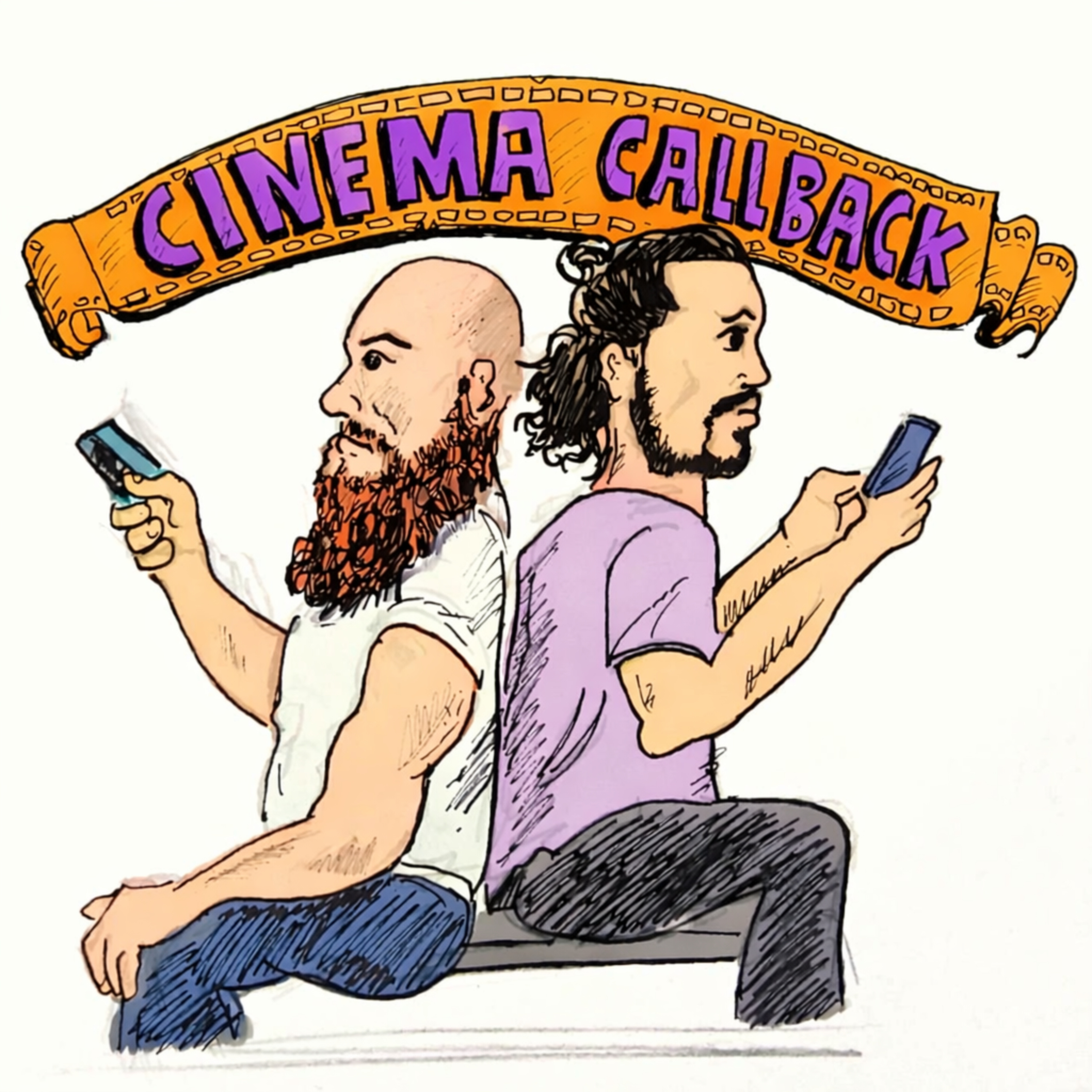
Cinema Callback — the film podcast made entirely through WhatsApp voice notesCinema Callback is a voicemail-based film podcast hosted by Andy and Michael, two lifelong movie lovers from Ireland . Each week they exchange voice messages dissecting cult classics, hidden gems, and new releases. From horror to noir, indie to blockbusters, it’s an honest, playful take on cinema’s best. New episodes weekly.
Episodes
-
Train Dreams (2025)
In this episode of Cinema Callback, Andy and Michael take a deep dive into Clint Bentley’s Netflix film Train Dreams (2025), starring Joel Edgerton. Through the show’s signature voice note conversation format, the hosts exchange contrasting reactions to a beautifully photographed, deeply...
-
The Baltimorons (2025)
In this episode of Cinema Callback, Andy and Michael take a deep dive into Jay Duplass’s The Baltimorons, an unconventional indie holiday romance co-written by Duplass and Michael Strassner, and starring Strassner alongside Liz Larsen. Through the show’s signature voice note conversation format,...
-
Gate of Flesh (1964) - The Criterion Series
As part of Cinema Callback’s Criterion Collection series, Andy and Michael take a deep dive into Seijun Suzuki’s Gate of Flesh (1964), a bleak but surprisingly energetic portrait of sex workers attempting to survive among the ruins of postwar Tokyo. Through the show’s signature voice note...
-
Pickpocket (1959) - The Criterion Series
As part of Cinema Callback’s Criterion Collection series, Andy and Michael take a deep dive into Robert Bresson’s Pickpocket (1959), a stark, stripped back portrait of crime, isolation, and a young man who seems almost completely checked out from the world around him. Through the show’s signature...
-
Love Jones (1997) - The Criterion Series
As part of Cinema Callback’s Criterion Collection series, Andy and Michael take a deep dive into Theodore Witcher’s 1997 cult classic Love Jones, a soulful romantic drama powered by the sizzling energy and chemistry between Larenz Tate and Nia Long. Through the show’s signature voice note...
-
Ashes and Diamonds (1958) - The Criterion Series
As part of Cinema Callback’s Criterion Collection series, Andy and Michael take a deep dive into Andrzej Wajda’s Ashes and Diamonds (1958), one of the defining films of postwar Polish cinema. Through the show’s signature voice note conversation format, the hosts explore a film whose personal…
more -
Picnic at Hanging Rock (1975) - The Criterion Series
Spoiler Warning: This episode contains full spoilers for Picnic at Hanging Rock. Criterion Week continues on Cinema Callback as Andy and Michael take a deep dive into Peter Weir’s 1975 cult classic Picnic at Hanging Rock, revisiting a film once dismissed as a boring teenage memory and discovering...
-
Tampopo (1985) - The Criterion Series
Cinema Callback kicks off Criterion Week with Andy and Michael taking a deep dive into Juzo Itami’s Tampopo (1985), the joyous and wonderfully eccentric Japanese classic that transforms the conventions of the American Western into a story about the pursuit of the perfect bowl of ramen. Through…
more -
Full Alert (1997)
In this episode of Cinema Callback, Andy and Michael take a deep dive into Ringo Lam’s Full Alert (1997), a forgotten gem of Hong Kong crime cinema that offers a grounded, hardboiled alternative to the more heightened action films of its era. Through the show’s signature voice note conversation...
-
The Phantom of the Opera (1925)
In this special Spooktober finale of Cinema Callback, Andy and Michael take a deep dive into The Phantom of the Opera (1925), the legendary silent horror film starring Lon Chaney in one of cinema's most iconic performances. Through the show's signature voice note conversation format, the hosts…
more -
In a Violent Nature (2024)
In this episode of Cinema Callback, Andy and Michael take a deep dive into In a Violent Nature (2024), Chris Nash's striking feature debut that reimagines the slasher film by placing the audience alongside the killer rather than his victims. Through the show's signature voice note conversation...
-
Audition (1999)
Support Cinema Callback on Patreon for bonus content, exclusive extras, and help us continue making in-depth film discussions through our unique voice note format. Patreon: https://www.patreon.com/c/CinemaCallback In this episode of Cinema Callback, Andy and Michael revisit Audition (1999)…
more -
The Odyssey (2026)
Warning: This episode contains major spoilers for The Odyssey. In this episode of Cinema Callback, Andy and Michael discuss Christopher Nolan's The Odyssey, a sweeping reimagining of Homer's epic that blends mythological spectacle with psychological drama. Through the show's signature voice note...
-
Longlegs (2024)
In this episode of Cinema Callback, Andy and Michael dive deep into the 2024 horror sensation Longlegs, discussing whether Osgood Perkins’ latest nightmare is a genuine modern classic or a case of “all style, no substance.” Through the show’s signature voice note format, the conversation unfolds…
more -
Suspiria (1977)
In this episode of Cinema Callback, Andy and Michael discuss Suspiria (1977), Dario Argento's visually astonishing horror masterpiece that rejects conventional storytelling in favour of pure atmosphere, emotion, and sensory experience. Through the show's signature voice note conversation format,...
-
The Blob (1988)
In this episode of Cinema Callback, Andy and Michael discuss The Blob (1988), Chuck Russell's gloriously gruesome remake that transformed a 1950s sci-fi B movie into one of the defining horror films of the practical effects era. Through the show's signature voice note conversation format, the…
more -
A Month in the Country (1987) — A Father’s Day Special
For this special Father’s Day episode of Cinema Callback, Andy is joined by his dad, Jim , to discuss Jim’s favourite film, A Month in the Country (1987). Using the show’s signature voice note format, father and son reflect on a film that means a great deal to one of them and is being experienced...
-
One Battle After Another (2025)
In this episode of Cinema Callback, Andy and Michael dive headfirst into Paul Thomas Anderson’s latest cinematic whirlwind, One Battle After Another. Told through the show’s signature voice note format, the conversation unfolds organically over time, with the hosts responding to each other’s…
more -
Smile 2 (2024)
In this episode of Cinema Callback, Andy and Michael discuss Smile 2 (2024), Parker Finn’s ambitious follow up to the surprise horror hit, expanding the franchise’s central curse into the world of celebrity, performance, and public scrutiny. Through the show’s voice note conversation format, the...
-
Soft & Quiet (2022)
In this episode of Cinema Callback, Andy and Michael discuss Soft & Quiet (2022), Beth de Araújo’s tense and deeply unsettling thriller that follows a group of women over the course of a single afternoon as casual prejudice spirals into something far darker. Through the show’s voice note...
-
Together (2025)
In this episode of Cinema Callback, Andy and Michael discuss Together (2025), a relationship horror film that turns emotional closeness into something increasingly physical, disturbing, and inescapable. Through the show’s voice note conversation format, the hosts talk about the film’s blend of…
more -
Weapons (2025)
In this episode of Cinema Callback, Andy and Michael discuss Weapons (2025), the mysterious and deeply unsettling horror film that transforms a single unexplained event into a wider portrait of paranoia, grief, and social collapse. Through the show’s voice note conversation format, the hosts talk...
-
Hiroshima, Mon Amour (1959)
In this episode of Cinema Callback, Andy and Michael discuss Hiroshima, Mon Amour (1959), Alain Resnais’s landmark exploration of memory, grief, and intimacy in the shadow of historical catastrophe. Through the show’s voice note conversation format, the hosts talk about the film’s fragmented...
-
The Novelist's Film (2022)
In this episode of Cinema Callback, Andy and Michael discuss The Novelist’s Film (2022), Hong Sang-soo’s quietly reflective drama about artistic frustration, creative renewal, and the fragile connections between people who make art. Through the show’s voice note conversation format, the hosts…
more -
Bob le Flambeur (1956)
In this episode of Cinema Callback, Andy and Michael discuss Bob le Flambeur (1956), Jean-Pierre Melville’s quietly influential crime film that blends American noir cool with a distinctly French sense of looseness and chance. Through the show’s voice note conversation format, the hosts talk about...
-
High and Low (1963) & Highest 2 Lowest (2025)
In this episode of Cinema Callback, Andy and Michael discuss High and Low (1963) and Spike Lee’s Highest 2 Lowest (2025, exploring how the same core premise can be reinterpreted across time, culture, and filmmaking style. Through the show’s voice note conversation format, the hosts talk about…
more -
Strange Darling (2023)
In this episode of Cinema Callback, Andy and Michael discuss Strange Darling (2023), a sharply constructed thriller that plays with perspective, chronology, and audience expectation to constantly shift the ground beneath its story. Through the show’s voice note conversation format, the hosts talk...
-
After Hours (1985)
In this episode of Cinema Callback, Andy and Michael discuss After Hours (1985), Martin Scorsese’s darkly comic odyssey through nocturnal New York, where a simple late night outing spirals into a surreal chain of misfortune and escalating paranoia. Through the show’s voice note conversation…
more -
🎬 Coming Soon on Cinema Callback
Here’s what’s next on the podcast… We’re heading from 90s indie relationship chaos to one of Scorsese’s wildest nights, a modern thriller full of surprises, and a special double-feature exploring how one story can evolve across filmmakers and generations. Upcoming episodes: • The Daytrippers…
more -
Acasă My Home (2020)
In this episode of Cinema Callback, Andy and Michael dive into Acasă My Home (2020), Radu Ciorniciuc’s intimate documentary that follows the real-life Enache family as they are uprooted from their decades-long life on the edge of the Văcărești Delta, a wild, semi-urban wetland on the outskirts of...
-
Compartment No. 6 (2021)
In this episode of Cinema Callback, Andy and Michael discuss Compartment No. 6 (2021), Juho Kuosmanen’s intimate road film set almost entirely aboard a long train journey across Russia. What begins as an uncomfortable shared space between two mismatched strangers gradually becomes a quiet...
-
River's Edge (1986)
In this episode of Cinema Callback, Andy and Michael discuss River’s Edge (1986), Tim Hunter’s haunting portrait of teenage detachment set against a shocking act of violence that barely seems to disturb the world around it. Inspired by true events, the film follows a group of suburban teenagers...
-
Materialists (2025)
In this episode of Cinema Callback, Andy and Michael discuss Materialists (2025), the sharply observed romantic drama that examines modern relationships through the language of status, value, and personal ambition. Set within the world of professional matchmaking, the film explores how love…
more -
March lineup for Cinema Callback
The March lineup for Cinema Callback is officially here, and we’re covering everything from high-stakes romance to gritty cult classics. 🍿🎬This month, we’re diving deep into: ✨ Materialists – A star-studded look at modern romance featuring Pedro Pascal, Dakota Johnson, and Chris Evans. 🌲…
more -
Terrestrial Verses (2023)
In this episode of Cinema Callback, Andy and Michael discuss Terrestrial Verses (2023), the formally daring Iranian film that presents a series of encounters between ordinary citizens and unseen authorities, revealing how power operates through routine interactions rather than overt force.…
more -
Miracle Mile (1988)
In this episode of Cinema Callback, Andy and Michael discuss Miracle Mile (1988), Steve De Jarnatt’s strange, urgent blend of romantic drama and apocalyptic thriller set over the course of one increasingly frantic night in Los Angeles. Through the show’s voice note conversation format, the hosts...
-
Anniversary (2025) — with Special Voice Notes from Screenwriter Lori Rosene-Gambino
In this episode of Cinema Callback, Andy and Michael discuss Anniversary (2025) directed by Jan Komasa, a tightly controlled psychological drama that begins in recognisable domestic territory before quietly shifting into something far more disquieting. What initially feels like a familiar life...
-
Triangle (2009)
In this episode of Cinema Callback, Andy and Michael discuss Triangle (2009), Christopher Smith’s mind bending psychological thriller that begins as a simple sailing trip and spirals into a labyrinth of repetition, dread, and existential punishment. Through the show’s voice note conversation...
-
Possum (2018)
In this episode of Cinema Callback, Andy and Michael discuss Possum (2018), Matthew Holness’s deeply unsettling debut feature that strips horror back to mood, repetition, and psychological decay. Set in a bleak, unnamed England, the film follows a man returning to his childhood home, carrying…
more -
Trust (1990)
In this episode of Cinema Callback, Andy and Michael discuss Trust (1990), Hal Hartley’s breakthrough indie film that blends romance, comedy, and philosophical inquiry with a distinctly deadpan tone. Centered on the unlikely connection between Maria and Matthew, the film reframes young love as an...
-
The Panic in Needle Park (1971)
In this episode of Cinema Callback, Andy and Michael discuss The Panic in Needle Park (1971), Jerry Schatzberg’s raw, unsentimental portrait of addiction and dependency in early-70s New York, starring Al Pacino and Kitty Winn. Through the show’s voice note conversation format, the hosts talk…
more -
Scarecrow (1973)
In this episode of Cinema Callback, Andy and Michael discuss Scarecrow (1973), Jerry Schatzberg’s tender, wandering road movie starring Al Pacino and Gene Hackman as two drifters moving across America with little more than dreams and unresolved pasts. Through the show’s voice-note conversation...
-
Film Club Watch-Along: Scarecrow (1973), The Panic in Needle Park (1971), Trust (1990), Possum (2018)
This is a quick film-club preview of the next four Cinema Callback episodes. We’ll be covering Scarecrow (1973), The Panic in Needle Park (1971), Trust (1990), and Possum (2018). , so if you want to watch along, now’s the time — and then check out the episodes when they drop. Scarecrow…
more -
The Firm (1993)
In this episode of Cinema Callback, Andy and Michael discuss The Firm (1993), Sydney Pollack’s slick legal thriller starring Tom Cruise at the peak of his early-90s stardom. What begins as a glossy story of professional success slowly reveals itself as a paranoid nightmare about power, control…
more -
28 Years Later (2025)
In this episode of Cinema Callback, Andy and Michael discuss 28 Years Later, the long-gestating return to Danny Boyle’s infected Britain and what it means to revisit a world that once defined post-millennium horror. Through the show’s voice-note conversation format, the hosts talk about how the...
-
That They May Face the Rising Sun (2023)
In this episode of Cinema Callback, Andy and Michael discuss That They May Face the Rising Sun (2023), the quietly powerful Irish film adapted from John McGahern’s novel. Set in rural Ireland, the film observes everyday life, community bonds, and the passing of time with a patient, unshowy eye....
-
Faraway, So Close! (1993)
In this episode of Cinema Callback, Andy and Michael turn their attention to Faraway, So Close! (1993), Wim Wenders’ follow-up to Wings of Desire. Continuing the story of angels observing human life in Berlin, the film shifts tone, scale, and ambition — raising questions about freedom…
more -
Warfare (2025)
In this episode of Cinema Callback, Andy and Michael dive into Warfare (2025), Alex Garland’s tense, grounded drama built around real-world military events and the political fallout surrounding them. We look at how Garland handles the material, the performances that carry the film, and the film’s...
-
The Remarkable Life of Ibelin (2024)
Andy and Michael swap voice notes as they explore The Remarkable Life of Ibelin (2024), the moving documentary about Norwegian gamer Mats Steen — known online as “Ibelin”. Stricken by Duchenne muscular dystrophy and confined to a wheelchair, Mats found escape, purpose and connection within the...
-
Mission: Impossible 2 (2000)
Michael and Andy are back in each other’s voice notes — but this week they’re dodging slow-motion doves, leather jackets, and John Woo explosions as they dive into Mission: Impossible 2 (2000). In this episode, the lads break down that wild tonal shift, the stunt-heavy insanity, the operatic...
We're indexing this podcast's transcripts for the first time — this can take a minute or two. We'll show results as soon as they're ready.
No matches for "" in this podcast's transcripts.
No topics indexed yet for this podcast.
Loading reviews...
ABOUT THIS SHOW
Cinema Callback — the film podcast made entirely through WhatsApp voice notesCinema Callback is a voicemail-based film podcast hosted by Andy and Michael, two lifelong movie lovers from Ireland . Each week they exchange voice messages dissecting cult classics, hidden gems, and new releases. From horror to noir, indie to blockbusters, it’s an honest, playful take on cinema’s best. New episodes weekly.
HOSTED BY
Cinema Callback
Loading similar podcasts...
Frequently Asked Questions
How many episodes does Cinema Callback have?
Cinema Callback currently has 124 episodes available on PodParley. New episodes are automatically indexed when they're published to the podcast feed.
What is Cinema Callback about?
Cinema Callback — the film podcast made entirely through WhatsApp voice notesCinema Callback is a voicemail-based film podcast hosted by Andy and Michael, two lifelong movie lovers from Ireland . Each week they exchange voice messages dissecting cult classics, hidden gems, and new releases. From...
How often does Cinema Callback release new episodes?
Cinema Callback publishes regularly with 124 episodes available. Check the episode list for the typical release schedule.
Where can I listen to Cinema Callback?
You can listen to Cinema Callback on PodParley by clicking any episode. We provide an embedded audio player for direct listening, and you can also subscribe via your preferred podcast app using the RSS feed.
Who hosts Cinema Callback?
Cinema Callback is created and hosted by Cinema Callback.
URL copied to clipboard!