
PODCAST · education
Classical Mythology
by Dr Rhiannon Evans
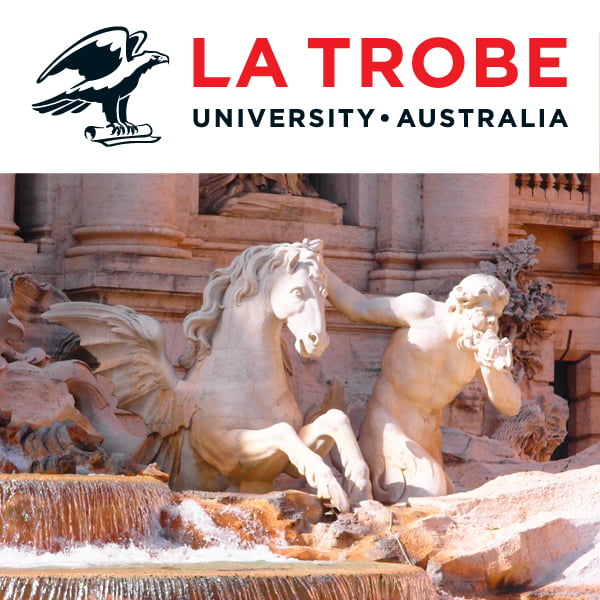
In this subject we explore Greek and Roman mythology, with particular reference to some core narratives and themes. Greek mythology is very focused around hero myths, and this is a central aspect of our study. Heroes studied in the subject include Heracles, Jason, Perseus, Bellerophon and Odysseus. We also examine some key thematic elements of Classical mythology- the figure of the monster, the sexual conduct of gods and mortals, conception and birth, fire, images of the underworld and life after death. The adaption of Greek myth in Italy (Entruscan and Roman) to meet the needs of different cultures will be explored. Sources dealt with in the subject include epic poetry, drama, painted vases, tomb paintings, and architectural remains. We conclude the subject with some modern cinematic adaptations of mythic themes from the ancient world.
Episodes
-
Myth in Film
Classical myth and film have a long history of being intertwined, as myth was made into film from the days of silent movies, and ancient texts themselves often use what we might see as ‘cinematic’ techniques when framing a scene. This lecture explores how Greek and Roman myths have appeared on...
-
Greek Myth at Rome: Power
Ovid’s Metamorphoses was written during the Augustan period, and it is clear that its author was often out of tune with the political regime. This lecture explores the different ways in which the poem transforms Greek mythology to explore issues such as power, justice and censorship. Ovid’s gods...
-
Greek Myth at Rome: Metamorphosis
Ovid’s Metamorphoses is one of the most significant ancient texts for the study of Greek mythology, but we should remember that this is a Roman work, which absorbs influences from the whole of the Mediterranean world. This lecture looks at the poem’s cosmogony in book and compares it to the...
-
Roman Identity II: Heroines
Although Ancient Rome was clearly a patriarchal society (literally so, as the father had supreme power in the Roman household), Roman myth also features many prominent women, from the Sabine wives who intervene to end a war, to individualised women (both heroines and demonised women) who show us...
-
Roman Identity I: Heroes
Rome’s mythic history is littered with heroes who exemplify positive and negative ways of behaving. Livy in particular is fond of using mythic figures as exempla in his historical work, but we see it elsewhere too, for example in poetry and in public monuments. This lecture explores the qualities...
-
Rome II: Asylum: Romulus and Remus
Romulus was revered as the founding hero of Rome, later made a god, but his myth is not without ambiguity. A significant element of the city foundation story is the murder of his brother Remus, and the most common version of this myth is that Romulus himself was responsible. This lecture explores...
-
Rome I: Foundation
Rome was famously founded by Romulus in 753 BCE, but that’s not the end of the story, for the Romans also traced their ancestry back to Aeneas, a survivor of the Trojan War. In this lecture and the next, we explore what these two lineages offer Rome and how Rome’s first emperor, Augustus, claimed...
-
Thebes II: Destruction
Incest, fratricide and patricideare central to the Theban myths explored in Athenian tragedy, particularly Sophocles’ Oedipus the King. Written during a plague at Athens, the play opens with plague at Thebes, which as Oedipus discovers, has been caused by his own unwitting murder of his father,...
-
Thebes I: Foundation
Thebes, in central Greece, had its own distinctive foundation myths, which combined divine origin, autochthony and immigrant stories. There are several myths of foundation: the walls were built by sons of Zeus, while the territory was laid out by Cadmus, a refugee fromAsia Minor, who peoples…
more -
Founding Athens II: Ion and Origin Myths in Tragedy
Mythological stories dramatized in Athenian tragedy provide us with a good opportunity to explore how myth is used in aparticular political and social context. Dramatists choose specific mythological episodes, which make it possible to reflect on Athenian society and to question the validity of…
more -
Founding Athens I: Creating History
Origins of cities and peoples are an important component of Greek mythology, and were central to ancient Greeks’ conception of their own identity. The most famous Greek origin myth is that of the Athenians, who, unlike most other Greeks, thought of their ancestors as strongly connected to and…
more -
Essay Writing for Myth
This lecture shows students which pitfalls should be avoided when writing an essay, and gives the basics on how to research, plan and structure an essay, as well as detailed information on how to quote, paraphrase and reference primary and secondary authors, and how to attribute their words and...
-
Theories of Mythology, Part II
How can we explain where myths come from and what they mean? This lecture looks at the various ways that scholars have attempted to analyse and interpret classical myths. Through ritual theory to Freud and Jung’s psycholanalytical theories, and the Structuralism of Lévi-Strauss to ideological...
-
Murder and Retribution: the House of Atreus
Cannibalism, murder and revenge are at the heart of the complex of myths surrounding the House of Atreus, a family cursed to exact violence on one another from generation to generation. This lecture investigates the way that the murder of Agamemnon is treated in both Homer’s Odyssey and…
more -
Trojan War and Nostos: The Quest of Odysseus
The Greek heroes of the Trojan war often have difficult journeys and disastrous homecomings. This lecture looks at the nostos or homecoming tale of Odysseus in Homer's Odyssey. It examines the consequences of upholding, subverting and transgressing civilised values in the epic, and the way this...
-
Heroes in the Underworld
A trip to the home of the dead is a specific kind of ‘quest narrative’ carried out by Greek mythology’s greatest heroes, as a rite of passage and a demonstration of a great hero’s power. To journey to the underworld and return is the most extreme inversion of mortality which a hero can achieve…
more -
Heroes and Quests
Heroes go beyond the realms of ordinary mortals, and a significant element in the heroic narrative is a quest – for a precious or supernatural object, a person or for knowledge. One of the most famous quest narratives is that of Jason and the Argonauts and their quest to retrieve the Golden…
more -
Heroes and Monsters
In Greek myth heroes do not always fight for the greater good – instead many strive for personal glory and some are downright anti-social. This lecture discusses the patterns of heroic behaviour found in myths by looking at heroes such as Herakles, Odysseus and Jason. It demonstrates what they…
more -
Golden Age and the Five Races
The Golden Age and subsequent decline through inferior 'races' is an important element of Greek myth from our earliest mythological texts, and reflects a distancing between gods and humans. The utopian aspects of the Golden Age include a simple but entirely carefree existence, with no work…
more -
Olympians in Art
A vast array of mythological narrative is found on Greek vases, temples and in free-standing sculpture. These visual representations of Greek myths are as malleable as narratives found in written texts, and sometimes give us information on mythological variations which are not found in other…
more -
Olympians in Art (handout)
A vast array of mythological narrative is found on Greek vases, temples and in free-standing sculpture. These visual representations of Greek myths are as malleable as narratives found in written texts, and sometimes give us information on mythological variations which are not found in other…
more -
Female Olympians
The two generations of female Olympians include various figures who represent aspects of ancient Greek female experience: Artemis, associated with young women; Hera with marriage; Demeter with marriage; and Aphrodite with illicit sexuality. This lecture further explores the variant versions of...
-
Male Gods
This lecture explores male gods of Greek mythology and their various spheres of influence: Zeus, the chief god, associated with mountains and the sky, and known for his prolific sexual conquests, along with his brothers, who control the earth and the underworld. The youthful, second generation of...
-
Cosmogony
The creation of the universe and the gods is the subject of one of our earliest works of Western literature, Hesiod's short epic poem, the Theogony. This pre-scientific account of how the cosmos came into being describes creation as a series of births, as both natural features and successive...
-
Theories of Mythology, Part I
What do we mean when we use the terms 'myth' and 'mythology'? This lecture introduces the concept of myth and shows how it is defined by its relationship to the oral tradition, as opposed to written text, despite the fact that many of the mythic narratives from Ancient Greece and Rome have come...
We're indexing this podcast's transcripts for the first time — this can take a minute or two. We'll show results as soon as they're ready.
No matches for "" in this podcast's transcripts.
No topics indexed yet for this podcast.
Loading reviews...
ABOUT THIS SHOW
In this subject we explore Greek and Roman mythology, with particular reference to some core narratives and themes. Greek mythology is very focused around hero myths, and this is a central aspect of our study. Heroes studied in the subject include Heracles, Jason, Perseus, Bellerophon and Odysseus. We also examine some key thematic elements of Classical mythology- the figure of the monster, the sexual conduct of gods and mortals, conception and birth, fire, images of the underworld and life after death. The adaption of Greek myth in Italy (Entruscan and Roman) to meet the needs of different cultures will be explored. Sources dealt with in the subject include epic poetry, drama, painted vases, tomb paintings, and architectural remains. We conclude the subject with some modern cinematic adaptations of mythic themes from the ancient world.
HOSTED BY
Dr Rhiannon Evans
CATEGORIES
Loading similar podcasts...
Frequently Asked Questions
How many episodes does Classical Mythology have?
Classical Mythology currently has 47 episodes available on PodParley. New episodes are automatically indexed when they're published to the podcast feed.
What is Classical Mythology about?
In this subject we explore Greek and Roman mythology, with particular reference to some core narratives and themes. Greek mythology is very focused around hero myths, and this is a central aspect of our study. Heroes studied in the subject include Heracles, Jason, Perseus, Bellerophon and Odysseus....
How often does Classical Mythology release new episodes?
Classical Mythology has 47 episodes. Check the episode list to see recent publication dates and frequency.
Where can I listen to Classical Mythology?
You can listen to Classical Mythology on PodParley by clicking any episode. We provide an embedded audio player for direct listening, and you can also subscribe via your preferred podcast app using the RSS feed.
Who hosts Classical Mythology?
Classical Mythology is created and hosted by Dr Rhiannon Evans.
URL copied to clipboard!