
PODCAST · education
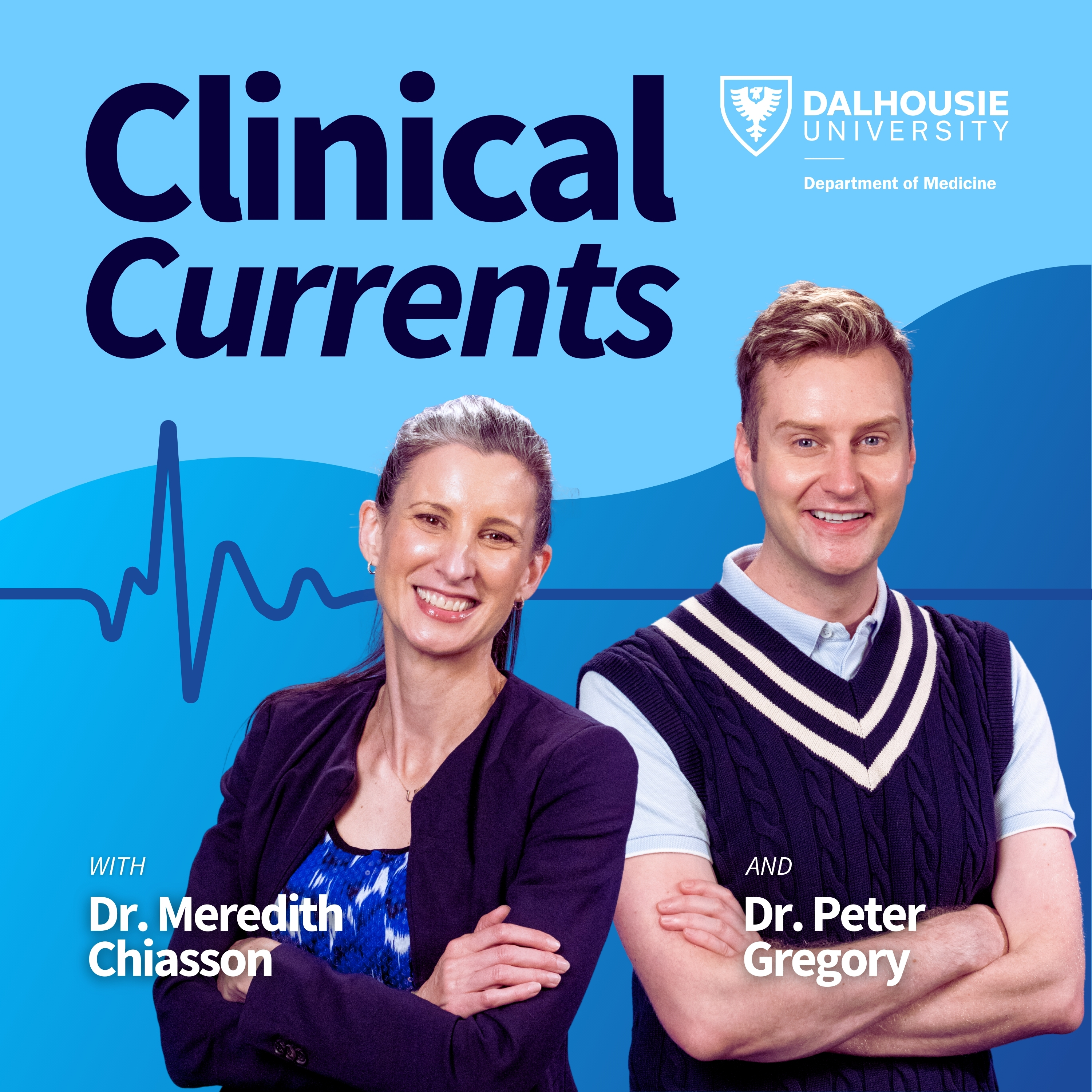
Clinical Currents
by Dr. Meredith Chiasson and Dr. Peter Gregory
Clinical Currents is a professional development podcast from the Dalhousie Department of Medicine, created for internal medicine physicians of all subspecialties across the Maritimes.Through interviews, case-based conversations, and storytelling, hosts Dr. Meredith Chiasson and Dr. Peter Gregory explore the latest research, educational practices, clinical insights, and quality initiatives shaping internal medicine in our region and beyond.Each episode offers practical knowledge and inspiration for physicians across specialties, and may be claimed for 0.5 hours of Section 2 credit through the Royal College's Maintenance of Certification (MOC) program.While publicly accessible, this podcast is intended for medical professionals only and should not be taken as personal medical advice. If you're not a healthcare provider, please consult your own physician for questions about your health. Content reflects Canadian practice unless otherwise noted.About the Dalhousie Department of Medicin
-
10
EP-08 Understanding Frailty: Assessment, Goals of Care, and the PATH Program
In this episode, hosts Drs. Peter Gregory and Meredith Chiasson sit down with Dr. Alethea Lacas – geriatrician, family physician, and member of the Division of Geriatrics at Dalhousie University and Nova Scotia Health – about frailty, the Clinical Frailty Scale (CFS), and the Palliative and Therapeutic Harmonization (PATH) Program. Dr. Lacas explains how frailty differs from simply appearing frail, why understanding a patient's baseline function is essential, and how the Clinical Frailty Scale can help clinicians make more informed decisions about prognosis, treatment, and goals of care. She also explores the concept of the frailty cycle, discusses practical strategies for minimizing frailty progression during hospital admissions, and highlights the importance of integrating frailty-informed thinking into everyday clinical practice. Importantly, the conversation also examines the PATH Program, including when referrals may be appropriate, how comprehensive frailty assessments can support shared decision-making, and why understanding "what matters most" to patients is central to delivering person-centred care. Listeners of this episode will gain insights into: How to accurately assess frailty using the Clinical Frailty Scale Why baseline function and collateral history are critical when evaluating frailty The relationship between frailty, prognosis, and goals-of-care conversations Practical strategies to reduce frailty progression during hospitalization Appropriate referrals to the PATH Program and how it supports decision-making The 5Ms framework for caring for older adults: Multi-complexity, Medications, Mobility, Mind, and Matters Most Timestamps 04:36 – Understanding frailty and the Clinical Frailty Scale 11:14 – Frailty and goals-of-care conversations 11:37 – The frailty cycle explained 21:33 – Introduction to the PATH Program 29:49 – The 5Ms framework 30:09 – "What Matters Most" in clinical decision-making 37:23 – Measuring success in frailty-informed care 40:00 – Key takeaways Resources mentioned in this episode: • Canadian Geriatrics Society 5Ms Poster and Clinical Resources: The Canadian Geriatrics Society - Geriatric 5Ms • Clinical Frailty Scale (Dalhousie University / Dr. Kenneth Rockwood): Clinical Frailty Scale - Geriatric Medicine Research - Dalhousie University • PATH (Palliative and Therapeutic Harmonization) Program information: Palliative & Therapeutic Harmonization Clinic (PATH clinic) | Nova Scotia Health Clinical Currents is produced by the Dalhousie Department of Medicine for internal medicine physicians across the Maritimes. This podcast is for professional education only and should not be taken as personal medical advice. Content reflects Canadian practice unless otherwise noted.
-
9
EP-07 Supporting Patients through MAiD: The Internist's Role
In this episode, hosts Dr. Meredith Chiasson and Dr. Peter Gregory speak with Dr. Gordon Gubitz – neurologist, professor of medicine at Dalhousie University, and clinical lead for the Nova Scotia MAiD program – about medical assistance in dying (MAiD) and the role internists can play in supporting patients through these complex and deeply personal conversations. Dr. Gubitz explains the eligibility criteria and assessment process for MAiD in Canada, addresses common misconceptions, and discusses how conversations about MAiD fit into broader goals-of-care and end-of-life discussions. He also explores the role of internists in initiating conversations, supporting patients and families, participating in assessments, and navigating referral pathways and available resources. Looking ahead, Dr. Gubitz outlines emerging legislative developments, including MAiD for mental illness as a sole underlying condition and the evolving discussion around advance requests. Listeners of this episode will gain insights into: Common misconceptions about MAiD eligibility and process How to approach conversations about MAiD within goals-of-care discussions The role internists can play in supporting patients considering MAiD Referral pathways and educational resources available in Nova Scotia Emerging legislative and ethical developments in MAiD practice Resources mentioned in this episode: Nova Scotia Health MAiD resource page: Medical Assistance in Dying (MAID) | Nova Scotia Health Canadian Association of MAiD Assessors and Providers (CAMAP) educational modules: CMC 3.0 Home - CAMAP | ACEPA Mental health support for physicians involved in MAiD care: Professional Support Program Grief and bereavement support resources for families and clinicians: Life Changes | Nova Scotia Health CAMAP clinician forums and peer support: Join CAMAP - CAMAP | ACEPA Hospice bereavement support resources: Grief Support Groups in Nova Scotia | Hospice Halifax Nova Scotia MAiD referral pathway and contact information: To make a referral, clinicians are encouraged to contact the Nova Scotia Health MAiD Access and Resource Team. Information can be found under "Contact" at Medical Assistance in Dying (MAID) | Nova Scotia Health. Nova Scotia Health patient and family guide: https://www.nshealth.ca/sites/default/files/documents/2229-2024.03.13.pdf Clinical Currents is produced by the Dalhousie Department of Medicine for internal medicine physicians across the Maritimes. This podcast is for professional education only and should not be taken as personal medical advice. Content reflects Canadian practice unless otherwise noted.
-
8
EP-06 Acute Kidney Injury – Practical Questions for Internists with Dr. Amanda Vinson
In this episode, Dr. Meredith Chiasson and Dr. Peter Gregory speak with Dr. Amanda Vinson – nephrologist and kidney transplant clinician-researcher with Nova Scotia Health and associate professor of medicine at Dalhousie University – about practical approaches to managing acute kidney injury (AKI). Dr. Vinson shares how the approach to AKI has evolved, with a growing emphasis on early recognition, careful monitoring, and thoughtful follow-up. She outlines what to prioritize in the first 24 hours, when AKI should prompt further investigation or consultation, and how to navigate common challenges like fluid management and medication decisions. The episode also highlights the importance of follow-up care, emphasizing that even mild or resolved AKI carries long-term risk and requires ongoing monitoring. Listeners of this episode will gain insights into: · Key priorities in the first 24 hours of AKI management · When AKI is not following the expected course – and what to do next · Practical approaches to fluid management in complex patients · How to manage common medications in both acute and outpatient settings · Why AKI should be treated as a long-term risk factor Clinical Currents is produced by the Dalhousie Department of Medicine for internal medicine physicians across the Maritimes. This podcast is for professional education only and should not be taken as personal medical advice. Content reflects Canadian practice unless otherwise noted.
-
7
EP-05 Bone Health & Osteoporosis: Guidance for Everyday Practice
When should you screen for osteoporosis – and what should you do when you find it? In this episode, hosts Dr. Meredith Chiasson and Dr. Peter Gregory speak with Dr. Vicki Munro, endocrinologist with Nova Scotia Health and assistant professor of medicine at Dalhousie University, about practical approaches to identifying patients at risk for fragility fractures and managing osteoporosis in everyday clinical care. Dr. Munro explains how clinicians can recognize at-risk patients, when bone density testing is most helpful, and how to interpret risk factors such as glucocorticoid exposure, family history, and comorbid disease. She also reviews current treatment strategies, including when to consider bisphosphonates, anabolic therapies, and referral to specialty care. Listeners will gain insights into: Key clinical clues that should prompt osteoporosis screening Risk factors that may warrant earlier testing than age-based screening alone Lifestyle and prevention strategies to support bone health When to initiate pharmacologic therapy – and when to consider specialist referral Show notes (timestamps): 08:10 – Morin, Suzanne N., Sidney Feldman, Larry Funnell, et al. "Clinical Practice Guideline for Management of Osteoporosis and Fracture Prevention in Canada: 2023 Update." Canadian Medical Association Journal 195, no. 39 (2023): E1333–48. https://doi.org/10.1503/cmaj.221647. 14:15 – Khan, Aliya A., Hajar Abu Alrob, Dalal S. Ali, Karel Dandurand, Wendy Wolfman, and Michel Fortier. "Guideline No. 422g: Menopause and Osteoporosis." Journal of Obstetrics and Gynaecology Canada44, no. 5 (2022): 527-536.e5. https://doi.org/10.1016/j.jogc.2021.09.013. 18:25 – Humphrey, Mary Beth, Linda Russell, Maria I. Danila, Howard A. Fink, Gordon Guyatt, Michael Cannon, Liron Caplan, et al. "2022 American College of Rheumatology Guideline for the Prevention and Treatment of Glucocorticoid‐Induced Osteoporosis." Arthritis Care & Research 75, no. 12 (December 2023): 2405–19 Clinical Currents is produced by the Dalhousie Department of Medicine for internal medicine physicians across the Maritimes. This podcast is for professional education only and should not be taken as personal medical advice. Content reflects Canadian practice unless otherwise noted.
-
6
EP-04 AI in Clinical Practice: What Internists Need to Know
Artificial intelligence is increasingly part of clinical workflows – from documentation to clinic preparation – but how can internists use it safely and effectively? In this episode, hosts Dr. Meredith Chiasson and Dr. Peter Gregory speak with Dr. Islam Eissa, general internist at Nova Scotia Health, assistant professor at Dalhousie University, and experienced AI practitioner, about the realities of AI use in internal medicine. Dr. Eissa discusses how AI tools can support note generation, clinic efficiency, and medical education, while also highlighting the ongoing need for physician oversight, patient privacy protections, and transparency. Listeners will gain insights into: · Where AI can reduce administrative burden · Common risks, including hallucinations and over-reliance · Ethical considerations around privacy and consent · Practical ways to integrate AI into daily practice Show notes (timestamps): · 00:07 – Artificial Intelligence Glossary: Learn AI Vocabulary · 19:37 – OntarioMD AI Scribe Evaluation (Executive Summary | Full Report PDF) · 22:30 – CMPA - AI Scribes: Answers to frequently asked questions · 23:52 – Royal College of Physicians and Surgeons Canada's position on AI Reminder: Use AI tools in accordance with institutional policy and patient privacy requirements. Clinical Currents is produced by the Dalhousie Department of Medicine for internal medicine physicians across the Maritimes. This podcast is for professional education only and should not be taken as personal medical advice. Content reflects Canadian practice unless otherwise noted.
-
5
EP-03 Thrombosis in Practice: Referral Decisions, Treatment Failures, and Common Dilemmas
Thrombosis is a frequent – and often complex – part of internal medicine practice. In this episode of Clinical Currents, hosts Drs. Meredith Chiasson and Peter Gregory are joined by hematologists Drs. Erica Kelly and Amye Harrigan for a practical discussion on managing thrombosis in everyday clinical care. The conversation focuses on real-world decision-making – from referral thresholds and initial workup to managing patients with recurrent thrombosis while on anticoagulation – highlighting when hematology input is most helpful and how to avoid unnecessary testing. Listeners will gain insights into: When to refer patients with venous or arterial thrombosis Helpful baseline investigations before referral A structured approach to suspected anticoagulation failure Key factors influencing anticoagulant choice and dosing When thrombophilia testing and cancer screening are appropriate Produced by the Dalhousie Department of Medicine for internal medicine physicians across the Maritimes. This podcast is for professional education only and should not be taken as personal medical advice. Content reflects Canadian practice unless otherwise noted.
-
4
EP-02 Embracing the Grey: Dr. Allen Tran on General Internal Medicine
General internal medicine is often described as the glue of the healthcare system – managing complexity, navigating uncertainty, and supporting patients across specialties. In this episode of Clinical Currents, Dr. Meredith Chiasson and Dr. Peter Gregory interview Dr. Allen Tran, general internist, educator, and program director for Dalhousie's GIM subspecialty training program. Dr. Tran reflects on the rewards and challenges of the specialty, the breadth of practice – from thrombosis care to obstetric medicine – and the future of GIM in Canada. He also shares advice for trainees and insights into the collaborative culture of the division at Dalhousie. Listeners will gain insights into: The variety and scope of a career in general internal medicine How GIM physicians manage multimorbidity and "the grey zones" of care The role of mentorship, teaching, and leadership in shaping the specialty What the next decade may hold for general internal medicine in Canada Produced by the Dalhousie Department of Medicine for internal medicine physicians across the Maritimes. This podcast is for professional education only and should not be taken as personal medical advice. Content reflects Canadian practice unless otherwise noted.
-
3
EP-01 Teaching Pearls in Medical Education: Insights from Dr. Trudy Taylor
What makes great teaching memorable? In this debut episode of Clinical Currents, hosts Dr. Meredith Chiasson and Dr. Peter Gregory sit down with Dr. Trudy Taylor, Division Head of Rheumatology at Dalhousie, President of the Canadian Rheumatology Association, and a respected leader in medical education. Together, they explore the "teaching pearls" that transform everyday clinical encounters into powerful learning moments. Listeners will gain insights into: · Imparting meaningful teaching pearls in busy settings without losing time · Tailoring teaching to learners at different levels · Involving patients in teaching moments to benefit both learners and care · The role of mentors and role models in shaping careers in medicine Produced by the Dalhousie Department of Medicine for internal medicine physicians across the Maritimes. This podcast is for professional education only and should not be taken as personal medical advice. Content reflects Canadian practice unless otherwise noted.
-
2
EP-00 Welcome to Clinical Currents!
Welcome to Clinical Currents, a professional development podcast from the Dalhousie Department of Medicine for internal medicine physicians of all subspecialties across the Maritimes. In this pilot episode, hosts Dr. Meredith Chiasson and Dr. Peter Gregory introduce themselves, explain the purpose of the podcast, and share what listeners can expect in future episodes. They also reflect on their own backgrounds, interests, and perspectives – helping you get to know the voices behind the mic. Episodes will be released monthly, covering timely topics in internal medicine through interviews and conversations with subject-matter experts. By tuning in, you can claim each episode for 0.5 hours of Section 2 credit through the Royal College's Maintenance of Certification (MOC) program. Produced by the Dalhousie Department of Medicine for internal medicine physicians across the Maritimes. This podcast is for professional education only and should not be taken as personal medical advice. Content reflects Canadian practice unless otherwise noted.
We're indexing this podcast's transcripts for the first time — this can take a minute or two. We'll show results as soon as they're ready.
No matches for "" in this podcast's transcripts.
No topics indexed yet for this podcast.
Loading reviews...
ABOUT THIS SHOW
Clinical Currents is a professional development podcast from the Dalhousie Department of Medicine, created for internal medicine physicians of all subspecialties across the Maritimes.Through interviews, case-based conversations, and storytelling, hosts Dr. Meredith Chiasson and Dr. Peter Gregory explore the latest research, educational practices, clinical insights, and quality initiatives shaping internal medicine in our region and beyond.Each episode offers practical knowledge and inspiration for physicians across specialties, and may be claimed for 0.5 hours of Section 2 credit through the Royal College's Maintenance of Certification (MOC) program.While publicly accessible, this podcast is intended for medical professionals only and should not be taken as personal medical advice. If you're not a healthcare provider, please consult your own physician for questions about your health. Content reflects Canadian practice unless otherwise noted.About the Dalhousie Department of Medicin
HOSTED BY
Dr. Meredith Chiasson and Dr. Peter Gregory
CATEGORIES
Loading similar podcasts...
Frequently Asked Questions
How many episodes does Clinical Currents have?
Clinical Currents currently has 9 episodes available on PodParley. New episodes are automatically indexed when they're published to the podcast feed.
What is Clinical Currents about?
Clinical Currents is a professional development podcast from the Dalhousie Department of Medicine, created for internal medicine physicians of all subspecialties across the Maritimes.Through interviews, case-based conversations, and storytelling, hosts Dr. Meredith Chiasson and Dr. Peter Gregory...
How often does Clinical Currents release new episodes?
Clinical Currents has 9 episodes. Check the episode list to see recent publication dates and frequency.
Where can I listen to Clinical Currents?
You can listen to Clinical Currents on PodParley by clicking any episode. We provide an embedded audio player for direct listening, and you can also subscribe via your preferred podcast app using the RSS feed.
Who hosts Clinical Currents?
Clinical Currents is created and hosted by Dr. Meredith Chiasson and Dr. Peter Gregory.
URL copied to clipboard!