
PODCAST · society
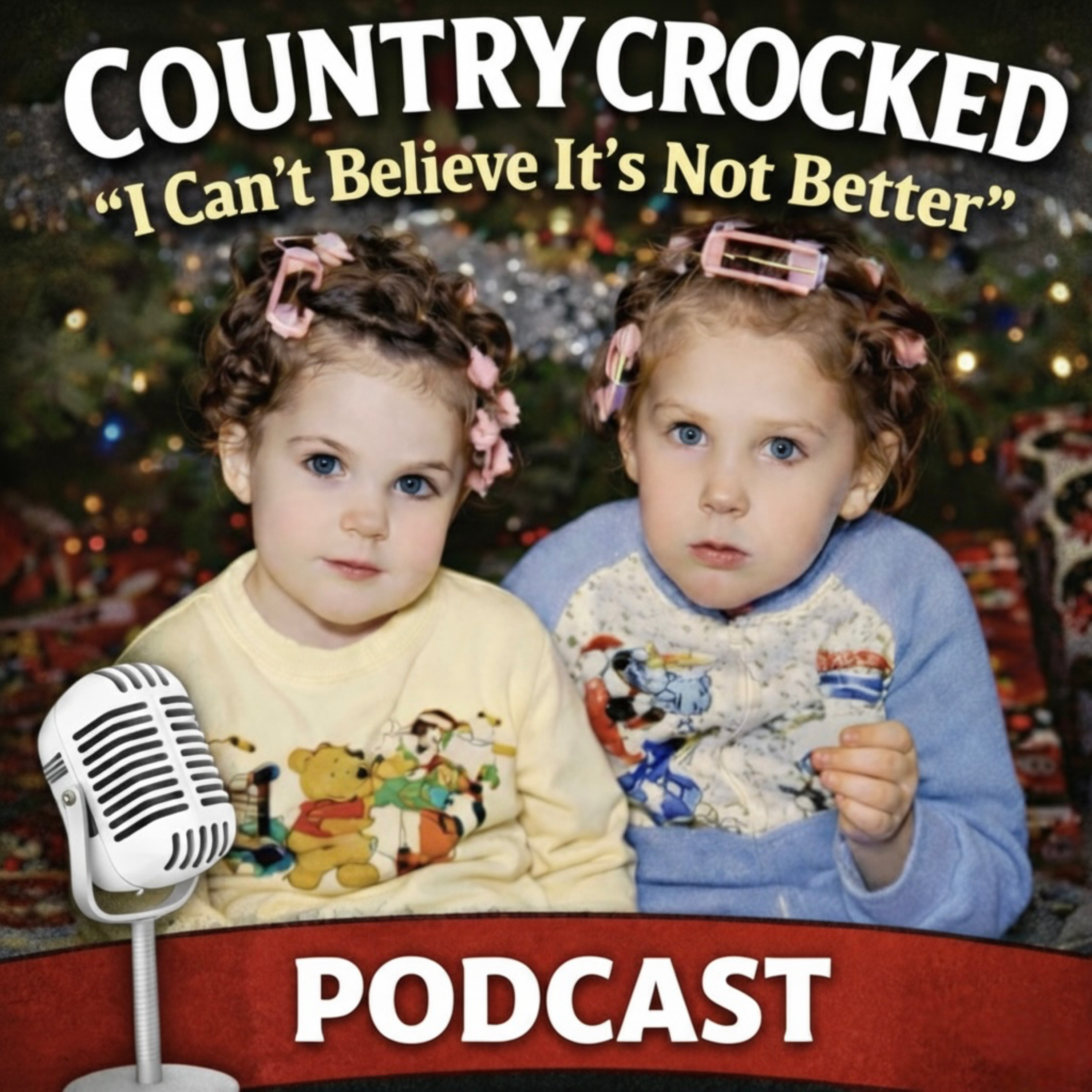
Country Crocked: I Can't Believe It's Not Better Podcast
by Cousins Unfiltered
Honest conversations about trauma, memory, family systems, and the stories we inherit. This podcast centers lived experience rather than expert commentary and explores what happens when silence breaks, memory is fragmented, and truth doesn’t follow a neat recovery arc.
-
15
We Said What We Said.
This season, we stopped pretending.We said the things that weren't supposed to be said.We named what was never named.And we stopped over-explaining it to make other people comfortable.This is what comes next.Boundaries.Loss.Clarity.Because when you stop performing, you find out who was there for you—and who was there for what you gave.People who leave when you set boundaries aren't interested in protecting you—they're interested in pulling from you.We said what we said.The line holds.
-
14
Get to the Point
We say we "over-explain" like it's a flaw.Like we just talk too much.Like we don't know how to be concise.But what if that didn't start as a personality trait?What if it started as a strategy—to be understood before being misunderstood, to stay out of trouble, or to feel safe?In this episode, we get into where that comes from, what it costs, and why some people require a whole explanation...while others don't.Because at some point, it stops being about communication—and starts being about who you're talking to.Content warning: This episode discusses trauma, including abuse and exploitation, and how those experiences shape communication patterns and feelings of safety.
-
13
The Cost of Breaking Silence
Neala's story doesn't start with a single moment—it's shaped by a pattern.Growing up, the lines that should have been clear weren't. What was normal, what was safe, what was okay to question—none of it was defined. And when something finally was said out loud, it didn't lead to clarity or protection. It just...stayed unresolved.In this episode, we look at what that kind of environment can do to you over time. How you learn to second-guess yourself. How silence—especially from the people who are supposed to step in—can be just as defining as anything that was said or done to you.We also talk about what it takes to start untangling that as an adult. The moments that force a re-evaluation, the weight of realizing it wasn't what you thought it was, and the complexity of holding that truth while still moving forward.This conversation includes themes of childhood sexual abuse and may be difficult for some listeners to hear.This is Neala's story.
-
12
I Love You, Man
Not all green flags feel obvious—especially if you were raised thinking love was supposed to be confusing.In this episode, we break down the moments that should've stood out but didn't...because we didn't have the context yet. The steady people. The quiet safety. The interactions that didn't require performance.We talk about what it looks like to revisit your own story with new awareness—and how recognizing healthy patterns can feel just as unfamiliar as the unhealthy ones once did.If you've ever second-guessed something good because it didn't feel intense...this one's for you.
-
11
headspace.
headspace.This episode is intentionally unstructured.We hit record because we needed a break—from the heaviness, from the digging, from trying to make everything make sense. What you're hearing is what that actually sounds like in real time.We talk about what happens in the body when things get stirred up, how we've been navigating it, and why stepping back isn't avoidance—it's part of the work.If you need to pause while listening, do it. We did!
-
10
re: victimization
People love to imagine victimization like it happens in dark alleys—like trauma survivors are just walking smack dab into the thick of it.But that's not how it works.In "re: victimization," we discuss why survivors of childhood trauma sometimes encounter similar harm later in life and why that pattern has nothing to do with being weak, careless, or "asking for it."Predators don't start with crimes. They start with tests—small boundary violations to see who has been conditioned not to push back.We discuss nervous system conditioning, red flags, military sexual trauma, and the difficult process of learning to trust your instincts again.Content note: This episode contains discussion of childhood SA, trauma, and military sexual assault.
-
9
Spiritual Gaslighting
In this episode, Angela and Kendra unpack spiritual gaslighting—the ways faith and scripture can be used to silence survivors and avoid accountability. What happens when religion becomes a tool for control instead of compassion? Through personal stories and honest conversation, they explore how shame, victim-blaming, and "forgive and forget" culture can keep painful truths buried. This episode examines what it means to challenge those narratives and reclaim your voice.Content advisory: childhood SA, domestic violence, emotional abuse, spiritual trauma
-
8
Domestic Demolition!
Your 30s had a way of collecting what your 20s buried.In this episode, we talk about the decade where everything we thought was stable started to fracture. Kendra was navigating a cancer diagnosis and confronting her relationship with alcohol. Angela was confronting a career launch, identity collapse, and the unraveling of a marriage.We unpack what it looks like to parent in reaction to your own childhood, why overcorrection can backfire, and how living without a blueprint for healthy authority eventually catches up to you.Content advisory: This conversation includes discussion of childhood SA, addiction, cancer, panic attacks, and marital breakdown.If you or someone you love is struggling with substance use, the SAMHSA National Helpline is free and confidential at 1-800-662-4357 (1-800-662-HELP) in the US, or you can visit findtreatment.gov for support.*updated audio file
-
7
Our Roaring Twenties
We step back into our 20s—the years that looked full, busy, and even happy from the outside, but we were quietly carrying things we hadn't been able to name or face yet.We talk about why trauma often goes dormant during the season of building lives and homes—not gone, just buried under survival and responsibility. We also explore what happens when life finally slows down and the past starts resurfacing, along with the coping patterns we didn't recognize at the time like perfectionism, validation-seeking, and people-pleasing.If you've ever wondered why everything seemed "fine" in your twenties—until it suddenly wasn't—this conversation is for you.Content note: This episode includes discussion of childhood trauma and abuse. Please listen with care.
-
6
#triggered
This episode is deeply personal.We're talking about trauma triggers—not from a textbook, but from lived experience. What happens in the body when you're triggered. Why certain smells, tones of voice, or seemingly innocuous moments can pull you straight back into the past. And what it's like trying to function in the present while your nervous system is reacting to something that happened decades ago.We share our own triggers—from elevators to relationships to everyday interactions—and how we're learning to recognize them, regulate through them, and communicate them to the people we love.Healing isn't linear. It isn't clean. And it doesn't mean that triggers disappear.It means we learn how to survive them.Content Note: This episode discusses trauma, childhood SA, domestic violence, and PTSD responses. Listener discretion is advised.
-
5
What Sharp Teeth You Have
Wolves don't walk into the sheep pen looking like wolves. They come in wearing a costume, mirroring the group, earning trust, and slowly testing boundaries until no one notices the teeth. We talk about how abuse thrives in family systems built on insecurity, scapegoating, denial, and silence—and why the adults who should be protecting their kids often become Little Red Riding Hood without even realizing it.Trigger warning: childhood SA, domestic violence, emotional abuse, and addiction
-
4
Where Shame Lives
Shame isn't something you develop. It's placed—inside families, institutions, and silence.We examine how shame is installed, who it protects, and how it keeps abuse hidden by transferring blame from the person who caused harm to the person who survived it.
-
3
Why Are These Children Silent?
Children are rarely silent because nothing happened. They are silent because speaking feels unsafe, pointless, or dangerous. In this episode, we explore why children minimize harm, compare their pain to others, and normalize what shouldn't happen—not as denial, but as survival. Understanding silence is often the first step toward breaking it.Trigger warning: childhood SA, domestic and emotional violence, and addiction.
-
2
The Signs Were Different
Cousins Angela and Kendra talk about growing up in the same family but expressing pain in very different ways. One went quiet, and one acted out. Both were misunderstood.Trigger warning: childhood SA, domestic violence, emotional abuse.
-
1
Finding Our Voices
For forty years, Kendra and Angela carried their memories alone. In Finding Our Voices, they begin sharing their unique recollections and struggles from a childhood shaped by trauma, opening a conversation about survival, resilience, and reclaiming their story. Trigger warning: sexual abuse, emotional abuse, domestic violence.
We're indexing this podcast's transcripts for the first time — this can take a minute or two. We'll show results as soon as they're ready.
No matches for "" in this podcast's transcripts.
No topics indexed yet for this podcast.
Loading reviews...
ABOUT THIS SHOW
Honest conversations about trauma, memory, family systems, and the stories we inherit. This podcast centers lived experience rather than expert commentary and explores what happens when silence breaks, memory is fragmented, and truth doesn’t follow a neat recovery arc.
HOSTED BY
Cousins Unfiltered
Loading similar podcasts...
Frequently Asked Questions
How many episodes does Country Crocked: I Can't Believe It's Not Better Podcast have?
Country Crocked: I Can't Believe It's Not Better Podcast currently has 15 episodes available on PodParley. New episodes are automatically indexed when they're published to the podcast feed.
What is Country Crocked: I Can't Believe It's Not Better Podcast about?
Honest conversations about trauma, memory, family systems, and the stories we inherit. This podcast centers lived experience rather than expert commentary and explores what happens when silence breaks, memory is fragmented, and truth doesn’t follow a neat recovery arc.
How often does Country Crocked: I Can't Believe It's Not Better Podcast release new episodes?
Country Crocked: I Can't Believe It's Not Better Podcast has 15 episodes. Check the episode list to see recent publication dates and frequency.
Where can I listen to Country Crocked: I Can't Believe It's Not Better Podcast?
You can listen to Country Crocked: I Can't Believe It's Not Better Podcast on PodParley by clicking any episode. We provide an embedded audio player for direct listening, and you can also subscribe via your preferred podcast app using the RSS feed.
Who hosts Country Crocked: I Can't Believe It's Not Better Podcast?
Country Crocked: I Can't Believe It's Not Better Podcast is created and hosted by Cousins Unfiltered.
URL copied to clipboard!