
PODCAST · news
Coverage of the Haiti Earthquake (The Takeaway)
by GBH, PRX, WNYC Studios
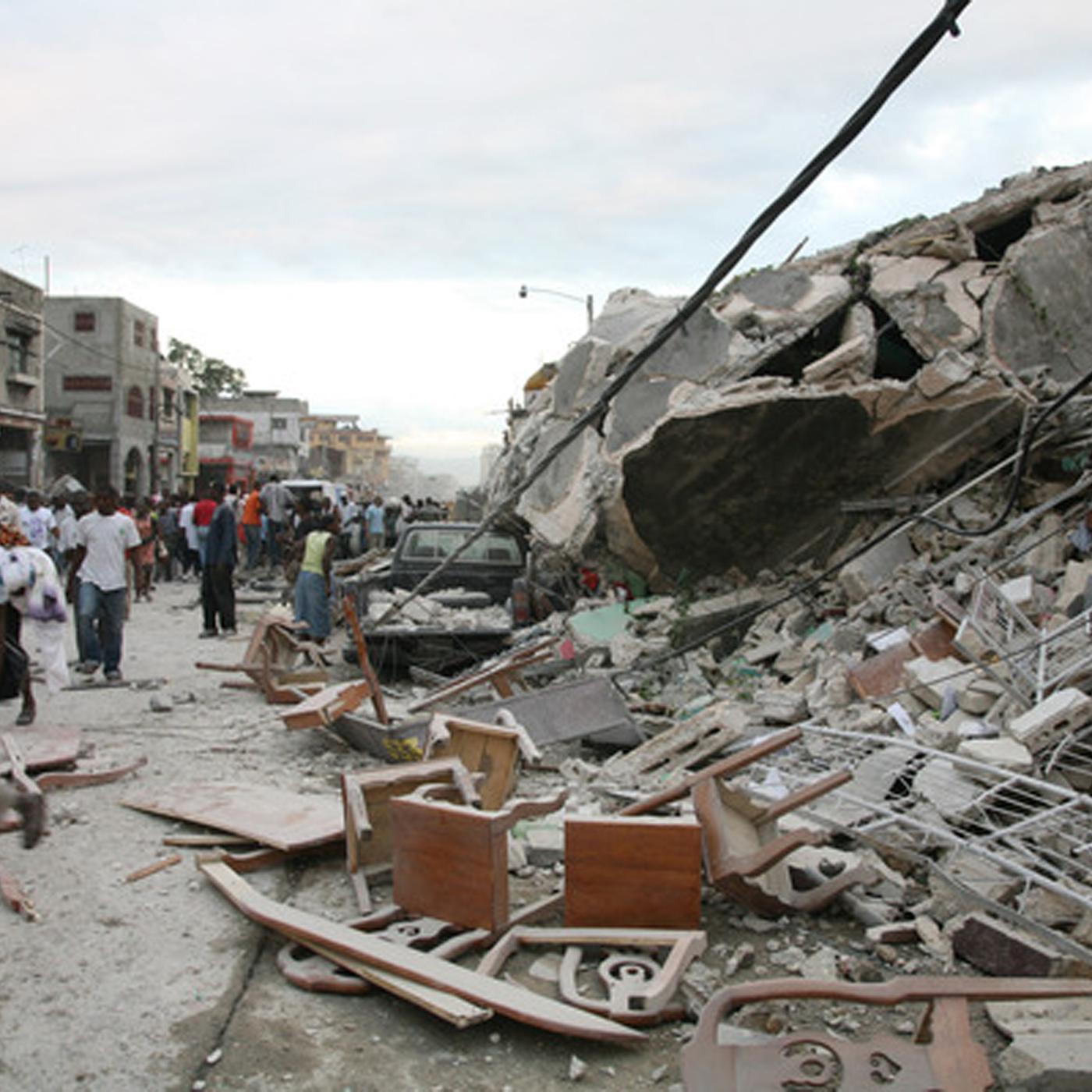
The 7.0 earthquake was the worst Haiti had seen in over 200 years. The International Red Cross estimates that 45,000-50,000 perished and about three million are in need of help. It was already the most impoverished country in the western hemisphere and nobody yet knows the full extent of the devastation.On The Takeaway, we’ve been following the relief effort, getting updates on the ground, and checking in with the Haitian community in the United States. You can see a list of aid organizations and how to help out here.
-
36
Solutions for Haiti: Are International Aid Agencies Hiring Enough Haitian Nationals?
All this week on The Takeaway, we've been asking listeners to weigh in on what Haiti needs from the international community in order to move on from the devastating earthquake that struck two months ago. A few listeners homed in on one particular issue: jobs. Haiti's unemployment rate hovers between 60 and 80 percent. One area where jobs are available is the relief and aid sector. But most aid groups are international - and they have a tendency to hire workers from all over the world, not just Haiti. Should aid groups hire more Haitian staff? We speak to Franoshka Telemarqe, a Haitian woman who landed a job with Oxfam two weeks ago. And Melody Munz, Environmental Coordinator with the International Rescue Committee in Haiti, who gives us some insight into the challenges - and opportunities - of hiring local staff.
-
35
Miami Schools Struggle With Aftereffects of Haiti's Earthquake
With 21,000 Haitian American students, Miami-Dade schools have struggled with the aftermath of Haiti's earthquake perhaps more than any other school system in the United States. Miami has also seen an influx of Haitian students who have fled their home country and enrolled in school in Miami, often without transcripts or past grades. We speak with Miami-Dade superintendent Alberto Carvalho and with Delphine Gervais, a counselor at Miami Edison Senior High School.
-
34
Haitians Find Help Through the Airwaves
Radio has always been an important part of Haitian society. And since the earthquake, it has played an even more critical role, serving as the primary mode of transmitting information about aid. We talk with Michael Deibert, a freelance journalist who recently returned from Haiti and spent time with local radio hosts there. We also speak to Emilio San Pedro, an editor for Connexion Haiti, a new lifeline BBC program broadcast on six stations throughout Haiti. Read Michael Deibert's article in Slate, "Haiti After The Earthquake."
-
33
Aid Group Steps in to Find Families of Haitian 'Orphans'
A group of ten American Baptists accused of kidnapping 33 Haitian children, who the group members said were orphans, has raised complicated questions about the intersection of good intentions and misguided actions. One thing is certain: not all of the 33 children were orphans. In fact, the majority of the children do have families. The group that was asked to look after the children following their ordeal is SOS Children's Villages. Heather Paul is the CEO of SOS Children's Villages — U.S.A. She gives us the latest news on how the children are doing and share's her group's perspective on what the American Baptists did.
-
32
Haitian Patients Flood Miami Hospitals
Haitian airlifts have resumed, but they're still flying almost exclusively to Florida – and to Miami's overburdened hospitals. According to Florida Governor Charlie Crist, the state has taken more than 500 injured evacuees from the Haiti earthquake since it struck three weeks ago. Doctors there says 150 of those have gone to two hospitals in Miami. Dr. Mark McKenney has seen the Haitian airlifts from both sides. At tent hospitals near the Port-au-Prince airport, he saw firsthand the urgent need to get patients to better medical facilities. And back in Miami, he's seen a large percentage – too large, he says – of those patients come for urgent and costly care. McKenney is Medical Director at Ryder Trauma Center in Miami, and Chief of Surgery at University of Miami Hospital. We also speak to Dr. Eneida Roldan, president and CEO of Jackson Health System – the only public health care system in Miami. She speaks to the big picture of what airlifted patients are costing the strapped medical system and the political struggle she faces to fund their care.
-
31
Rebuilding Haiti: Mangos, Tourism and Garment Factories
The massive earthquake that struck Haiti nearly three weeks ago has left development economists and international aid workers scrambling for the best way to rebuild the country. Some want the United States to take the lead in a Marshall Plan-type recovery program, while others advocate leaving Haiti alone as much as possible. We find out how Haiti might best rebuild — and how the international community can help. Paul Collier is a professor of economics and director of the Center for the Study of African Economies at Oxford University and the author of "The Bottom Billion: Why the Poorest Countries Are Failing and What Can Be Done About It." He was a special adviser on Haiti to the United Nations secretary general in 2009.
-
30
The Toll of the Haiti Earthquake on the Dominican Republic
Yesterday, we talked about the anticipated influx of Haitian immigrants to Florida in the upcoming weeks. Today, we look at a place where Haitians are already seeking refuge: across the border in the Dominican Republic. Before the earthquake, up to a million Haitians were already living in the neighboring nation – many of them undocumented. Now thousands more are expected to cross into the Dominican Republic in the coming months. First, we get an update live from Port-au-Prince from the BBC's Karen Allen. Then Jorge Pineda founder and editor of DominicanToday.com tells us about Haitian-Dominican relations, pre- and post-earthquake.
-
29
Haitians Seeking Refuge in the US Spark Debate on Immigration
More than two weeks after the earthquake struck in Haiti, destroying homes and tearing apart families, Haitians are scrambling to find new places to live. It is expected that many may seek refuge in Miami, a city which already has a large Haitian immigrant population. We talk with Jay Newton-Small, Washington correspondent for Time Magazine who reported about the expected emigration patterns from Haiti. We also speak with Joshua Johnson, a reporter and host for WLRN-Miami Herald News, about how Miami is responding to what may be an influx of Haitian immigrants in the upcoming weeks.
-
28
Wyclef Jean on What Haiti Needs Right Now
Singer Wyclef Jean has raised some two million dollars since the Haiti earthquake struck two weeks ago through his charity, Yele Haiti. We ask him what the country needs most right now.
-
27
Are Photographs From Haiti Too Graphic?
The tragedy in Haiti has been captured in powerful photographs that reveal the extent of the human suffering in that country. But are the images too graphic? At what point do photographs become exploitative and blur the the lines of ethical photojournalism? We talk with Paul Taggart, a photojournalist whose photos from Haiti we've posted on our website. We also speak with Kenneth Irby, who leads the visual journalism group at the Poynter Institute, who gives his take on the images coming out of Haiti.
-
26
As Rescue Efforts in Haiti Wind Down, the Rebuilding Challenge Just Begins
It's been almost two weeks since the 7.0 earthquake struck Haiti and the government has formally called an end to the search and rescue efforts. The focus of relief will soon shift from treating the wounded survivors to embarking on the long slog of rebuilding a collapsed city. We get an update on the overall situation there and then we examine how other cities dealt with reconstruction challenges after a disaster like this. Ed Pilkington is the New York correspondent for The Guardian. He just returned from a week in Haiti. Lawrence Vale is a professor of Urban Design and Planning at MIT and the co-author of "The Resilient City: How Modern Cities Recover from Disaster."
-
25
Joint Chiefs Chair Adm. Mike Mullen On Haiti Relief
We continue our conversation with Admiral Mike Mullen, chairman of the Joint Chiefs of Staff. John Hockenberry sat down with Mullen at the Pentagon on Wednesday for a wide-ranging conversation, the first part of which aired yesterday. In part two of our interview, we talk about Haiti and the role the U.S. military is playing in the relief effort.
-
24
Quake Claims Lives of 3 Leaders in Haiti's Women's Movement
Three leaders of Haiti’s women's movement were killed in the January 12 earthquake. All three had been part of important advocacy work of great benefit to women and girls in Haiti. We speak with Carolle Charles, a friend and colleague of the women, about what those deaths mean for the future of women's rights and activism in Haiti. The women who died were long-time friends and colleagues of Carolle Charles. Myriam Merlet was an especially close friend and was a guest at Charles’ home in December 2009. Charles says she is still drinking the coffee that Merlet brought to her home in NY as a gift; she has known her since 1976. Charles met Merlet when they were both studying for their Masters’ degrees in Montreal, Canada. Magalie Marcelin last visited Charles in New York in September. Charles says that Myriam Merlet and Anne Marie Coriolan were at home when the earthquake struck, and died there.
-
23
How Best to Help Haiti's Orphaned Children
The number of orphans in Haiti is expected to double after last week's earthquake; there's rising debate over the best way to help these children. Many are trying to find these children new homes with adoptive parents outside of Haiti. Not everyone agrees with this approach: Sarah Smith, director of Children's Programs at the International Rescue Committee, believes that it is too soon to start removing children from their home country and culture. We also check in with Pooja Bhatia, currently reporting for the Wall Street Journal in Port-au-Prince.
-
22
Talking to Haiti with BBC's World Have Your Say
The BBC’s World Have Your Say has been speaking with ordinary people in Haiti about the disastrous earthquake that took place one week ago. Host Ros Atkins has been speaking to ordinary Haitians all week and has just returned from a trip to Florida, where he hosted three shows among the Haitian-American community. He joins us this morning to share some of the responses World Have Your Say has been receiving from Haiti and all over the world.
-
21
Haiti's Musical Traditions, Past and Present
Haiti’s music reflects the country’s diverse heritage and responds to its current struggles. We speak this morning with Elizabeth McAlister, religion professor at Wesleyan University in Connecticut and author of “Rara! Vodou, Power, and Performance in Haiti and Its Diaspora.” She also has produced two albums of Haitian music: "Rhythms of Rapture: Sacred Musics of Haitian Vodou" and "Angels in the Mirror: Voodoo Music of Haiti." We also hear from Marlin Mayala (AKA Mr. Reo), a New York-based rapper and musician with deep roots in Haitian music. His grandfather and his father played in internationally touring acts from the country. Below, a video of Haitian and creole hip-hop artists assembled by Madman JP after the 2008 flood in Haiti:
-
20
HHS Secretary Kathleen Sebelius on Haiti Relief Effort
Health and Human Services Secretary Kathleen Sebelius is the White House cabinet member who would be in charge of administering any new health care system in the United States. But right now her department is focused on the relief effort in Haiti, with more than 250 of her department's personnel providing medical care to survivors in the quake-ravaged country. We find out how more on how her department is trying to get aid to to the earthquake-ravaged country. We'll also ask her about the prospects of the plan to reform health care.
-
19
Haiti Relief Efforts One Week After The Quake
It's been one week since the 7.0 earthquake struck Haiti, destroying much of the capital, Port-au-Prince and, according to some estimates, killing as many as 100,000 people. That death toll is so high, in part, because it has proven so difficult to bring aid to those in need. We speak with Gillian Dunn, director of of emergency response for the International Rescue Committee, and with Caryl Stern, CEO and President of the U.S. Fund for UNICEF.
-
18
Help in Haiti was Do It Yourself
As relief efforts continue in Haiti, we're hearing more and more first-person accounts of what happened on the ground during and just after the quake, and how little help there was in the aftermath. In the face of little help from the authorities or other facilities in the area after the quake, many people in Port-au-Prince resolved to do it themselves. After the quake partially collapsed the house they were staying in, Jean Yvon Kernizan and Selena Rhine and their families went into the surrounding area to pull people out of the rubble. Soon, their house became an impromptu medical center, where a few hundred injured sought help. Kernizan and Rhine administered medical attention with no training and little more than some water, Q-tips, and a bottle of hydrogen peroxide. Hear an extended after-air interview with Kernizan and Rhine, as they spoke with producer Adam Hirsch about the political situation in Haiti and the sometimes contentious relationship between the United Nations and regular Haitians.
-
17
Doctors Without Borders: Inflatable Field Hospital on the way
Yesterday we talked about some technological innovations that can help in emergency situations. Doctors Without Borders is bringing its own innovations to Haiti right now: Like the inflatable field hospital that is expected to arrive in the country today. We hear how the organization is treating the survivors of the Haiti earthquake with Sophie Delauney, executive director of Doctors Without Borders in the United States.
-
16
US Navy Brings Relief to Haiti
The first U.S. Navy ship arrived in Haiti yesterday morning. A large aircraft carrier is set to arrive off the coast today, with 19 helicopters and relief supplies. We speak to Rear Adm. Victor Guillory, who is responsible for the U.S. naval operations in Haiti. "The issues will be resolved over the next day, now that we have more helicopters in theater, and the coordination is getting better, communication is being improved with the various agencies in Haiti, and I believe we will see relief in those areas shortly." --Rear Adm. Victor Guillory
-
15
Grim Scene on the Ground in Haiti
The first U.S. Navy ship arrived in Haiti yesterday morning. A large aircraft carrier is set to arrive off the coast today, with 14 helicopters and relief supplies. But right now, the situationon the ground is grim. We hear from Christina Boyle a reporter for The Daily News who landed in Port-au-Prince last night. We also talk to Takeaway contributor Femi Oke, who spent the evening with Haitian immigrants in Flatbush, Brooklyn.
-
14
Haiti Aftermath: The Situation on the Ground
Four days after the Haiti earthquake, most people are still not seeing the relief they need. Ansel Hertz, a freelance journalist in Port-au-Prince, gives us a sense of the situation on the ground this morning. He tells us about the weakened infrastructure, the fears residents have about buildings collapsing and the tension on the streets.
-
13
Relief Efforts in Haiti: Progress and Obstacles
Yesterday, The Haitian Red Cross released its first estimate of the death toll after Tuesday's earthquake. It said between 45,000 and 50,000 people might have died. As the body count rises, relief efforts are intensifying. President Obama promised $100 million and more than 5,000 soldiers and marines, but the aid workers are facing many obstacles reaching the victims. While most of the relief is still on its way, some aid workers were already in the country before the quake. One of them is Chloe Gans-Rugebregt, a health delegate to the Haiti delegation of The American Red Cross. For the stateside perspective on relief work, we're joined by Adrian Kerrigan, who is organizing medical relief from New York as president of the Catholic Medical Mission Board. “I have a friend who's not working for the Red Cross, who's working for another humanitarian organisation, who had five people die in her arms yesterday." --Chloe Gans-Rugebregt
-
12
On the Ground in Haiti With WLRN
News outlets in Miami are playing a special role in covering the Haiti earthquake, both in Haiti and in South Florida, where a large Haitian community resides. We speak with Joshua Johnson, a reporter and host for WLRN Miami Herald News. He has a special airing this morning called “Disaster in Haiti” that documents both events in Haiti and Miami's Haitian community in the aftermath of the devastating earthquake.
-
11
Haitians in the US Struggle to Reach Loved Ones in Haiti
Hundreds of thousands of Haitians in the U.S. are still unable to reach their relatives. Phone lines in Haiti are still down and the Internet connection has been unreliable. We talk with Bazelais Jean-Baptiste, a Haitain living in Brooklyn, Reverend Daniel Ulysee whose Brooklyn congregants are from Haiti, and Ruth Morris, a producer for WLRN Miami who has been speaking with the Haitian community in South Florida about the difficulties of tracking down their loved ones.
-
10
Updates as Thousands Continue Trying to Reach Loved Ones in Haiti
Yesterday on the Takeaway, we united by phone Mallery Thurlow, in Michigan, with her boyfriend France Neptune, an aid worker in Haiti. As details of the destruction continue to emerge, we look at ways Haitians are persevering through the tragedy. We speak with, Ansel Herz, a freelance journalist in Port-au-Prince, Haiti, and Ferentz LaFargue, a professor at the New School, about the spirit of Haitians to cope with grief. We also speak to Millery Polyne, a professor of American Studies at New York University.
-
9
Rebuilding Haiti
With so much of Haiti destroyed in Tuesday’s earthquake, much will need to be rebuilt — with very limited resources. Cameron Sinclair, executive director of Architecture for Humanity, is well-versed in the challenges ahead. Sinclaire's organization, which regularly works in disaster-afflicted areas, has people on the ground in Haiti now, assessing the damage and determining what local materials can be used to rebuild Port-au-Prince and the surrounding areas. He talks with us about what’s ahead and the challenges they face.
-
8
Trying to Bring Relief to Haiti
Death, destruction and desperation are the only things we're seeing in the pictures and footage coming back from Haiti. More than 100,000 people are feared dead by officials from the 7.0 earthquake that shook the country on Tuesday. Now comes the hard part: bringing relief to a place with a ravaged infrastructure. We speak with Lucie Tondreau, a Haitian community advocate in Miami who is heading to Haiti with a relief team made up of medical response workers from Miami-Dade County. Jeffrey Jordan is the senior vice-president for Catholic Medical Mission Board, who has years of experience working with relief efforts in Haiti. He talks about the challenges to expect.
-
7
The International Relief Effort in Haiti
The international NGO community is gearing up for a massive relief effort after the Haitian earthquake. We check in with Elizabeth Furst Frank, the Senior Vice President of Global Programs for AmeriCares, on the international NGO community's response to the earthquake in Haiti, and how people can donate to maximize the effectiveness of the relief effort.
-
6
Haiti's Ambassador to the US Reports on His Country's Earthquake
Haiti's ambassador to the U.S. details what his country needs after yesterday's earthquake. Raymond Joseph, Haiti's ambassador to the U.S., offers updates on the condition of the Port-Au-Prince airport and prospects for aide to those in need, and details what his country needs in the aftermath of yesterday's 7.0 earthquake.
-
5
Scrambling to Help the Victims in Haiti
In the aftermath of the earthquake's devastation, residents in Port-Au-Prince had to scramble to help their injured neighbors. Without the help of international aid, they had to make do with basic first aid tools, like alcohol and gauze. We speak to independent writer Pooja Bhatia via Skype from her house in Port-Au-Prince and she tells us about the extent of the devastation. Pooja has been sending updates on Twitter since the earthquake struck.
-
4
A Heartwrenching Update from Haiti
This morning we spoke to France Neptune, who drives a car for the Haiti Foundation Against Poverty in Port-au-Prince. We also spoke to his girlfriend Mallery Thurlow who works in Grand Rapids, Mich. as the founder and director of Haiti Against Poverty. Mallory had not heard France's voice since the earthquake. They exchanged what were some heartwrenching updates on the air.
-
3
Twitter Offers First Glimpses Into Haiti Quake
If brevity is the soul of wit, then Twitter is today's Shakespeare. As it has with other tragedies, the popular website played an invaluable role in getting the news of Haiti's earthquake out to the world. Once again, Twitter proves invaluable in times of trouble. In the midst of the worst earthquake to hit Haiti in 200 years, aide workers, journalists and others caught in the chaos offered the first glimpses into the event with "tweets" that said more than news anchors could say in an hour of recaps.
-
2
New York Haitians Respond to Quake
Tuesday night, New York Haitians gathered to exchange news, share information and watch TV together as they tried anxiously to get more news from home. We hear from Takeaway Correspondent, Femi Oke who spoke with Haitians who had gathered at the popular Brasserie Creole Haitian Restaurant in New York City to try to piece together the news from home country.
-
1
Earthquake Ravages Haiti
A powerful earthquake tore through Haiti Tuesday night, leaving devastation in its wake. The dead and injured lay in the streets even as strong aftershocks continued in what was the biggest quake to hit Haiti in more than 200 years. A 7.0 earthquake struck Haiti's capital yesterday, the most powerful quake to hit Haiti in more than 200 years. Tens of thousands of people have lost their homes, countless have perished, and many of the normally flimsy and dangerous buildings in Haiti lay in ruins. For the latest on the story, we talk with Jacqueline Charles, a reporter with the Miami Herald, Laurent Dubois, a professor at Duke University, and Franz Neptune, who drives a car for the Haiti Foundation Against Poverty in Port-au-Prince, about the devastation and what this means for the Caribbean nation.
We're indexing this podcast's transcripts for the first time — this can take a minute or two. We'll show results as soon as they're ready.
No matches for "" in this podcast's transcripts.
No topics indexed yet for this podcast.
Loading reviews...
ABOUT THIS SHOW
The 7.0 earthquake was the worst Haiti had seen in over 200 years. The International Red Cross estimates that 45,000-50,000 perished and about three million are in need of help. It was already the most impoverished country in the western hemisphere and nobody yet knows the full extent of the devastation.On The Takeaway, we’ve been following the relief effort, getting updates on the ground, and checking in with the Haitian community in the United States. You can see a list of aid organizations and how to help out here.
HOSTED BY
GBH, PRX, WNYC Studios
CATEGORIES
Loading similar podcasts...
Frequently Asked Questions
How many episodes does Coverage of the Haiti Earthquake (The Takeaway) have?
Coverage of the Haiti Earthquake (The Takeaway) currently has 36 episodes available on PodParley. New episodes are automatically indexed when they're published to the podcast feed.
What is Coverage of the Haiti Earthquake (The Takeaway) about?
The 7.0 earthquake was the worst Haiti had seen in over 200 years. The International Red Cross estimates that 45,000-50,000 perished and about three million are in need of help. It was already the most impoverished country in the western hemisphere and nobody yet knows the full extent of the...
How often does Coverage of the Haiti Earthquake (The Takeaway) release new episodes?
Coverage of the Haiti Earthquake (The Takeaway) has 36 episodes. Check the episode list to see recent publication dates and frequency.
Where can I listen to Coverage of the Haiti Earthquake (The Takeaway)?
You can listen to Coverage of the Haiti Earthquake (The Takeaway) on PodParley by clicking any episode. We provide an embedded audio player for direct listening, and you can also subscribe via your preferred podcast app using the RSS feed.
Who hosts Coverage of the Haiti Earthquake (The Takeaway)?
Coverage of the Haiti Earthquake (The Takeaway) is created and hosted by GBH, PRX, WNYC Studios.
URL copied to clipboard!