
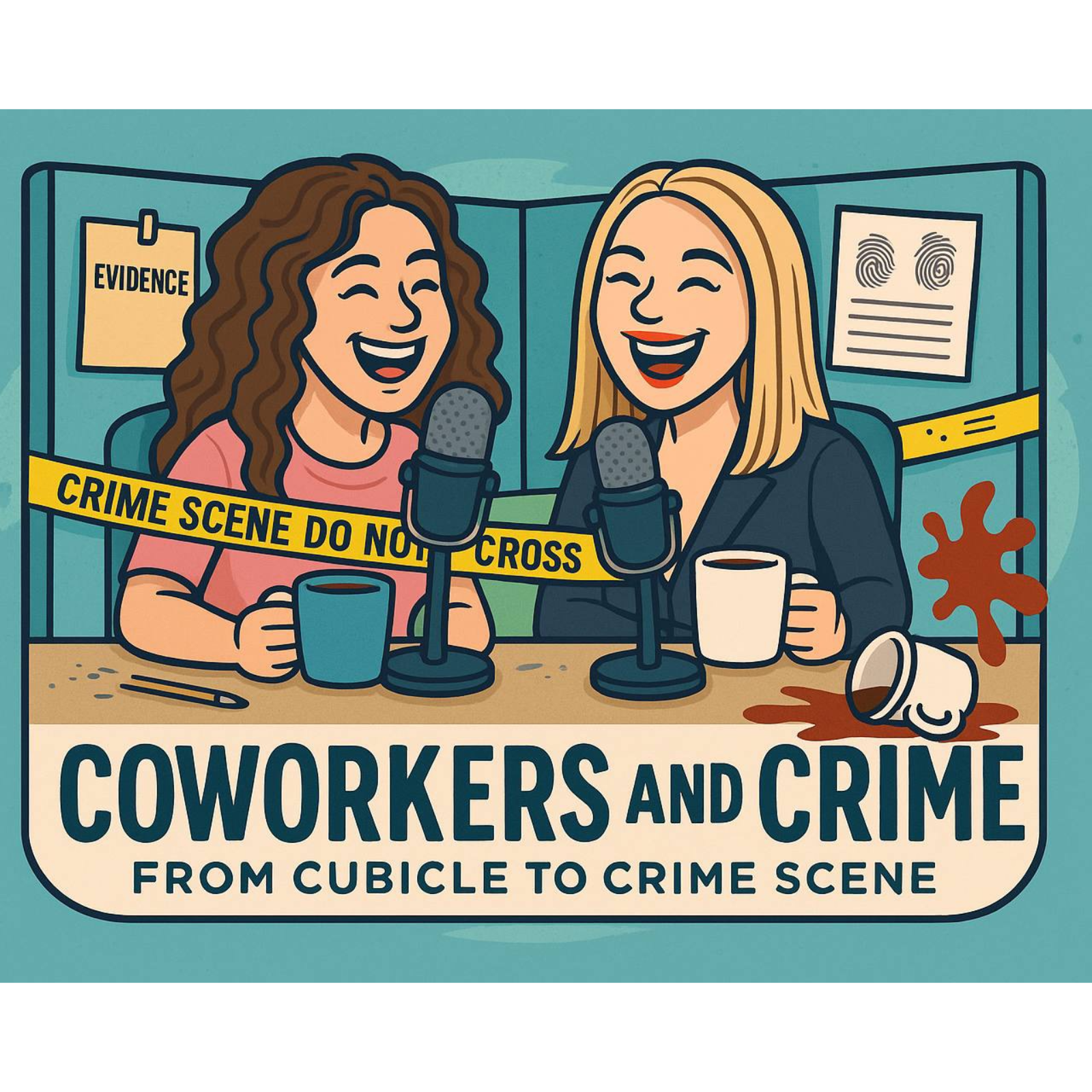
PODCAST · true crime
Coworkers & Crime
by Rachel and Krystal
Welcome to Coworkers and Crime—the podcast where office chatter meets crime discussion. We’re your hosts, Rachel and Krystal. Yes, we really do work together... and yes, we’re totally obsessed with true crime. From watercooler whispers to cold case deep dives—we’re here to bring you stories that keep us chatting way past our coffee breaks.email us at: [email protected]://www.facebook.com/share/g/1G4UhP9odP/https://www.youtube.com/@CoworkersCrimePodcasthttps://www.instagram.com/coworkersandcrime/#
-
24
Unsolved: The Man Who Erased Himself
A man arrives in Sligo, Ireland with two bags and no identification. Over three days, he walks the town with purpose — disposing of items, avoiding cameras, and preparing for a death no one would witness. When his body is found on Rosses Point beach, investigators discover he was terminally ill… but nothing else. No name. No past. No country. No family. And no trace of who he really was.This episode examines the final movements of the man who called himself Peter Bergmann, using verified reporting from RTÉ, Irish Times, Garda statements, and the Sligo Coroner’s Court. It’s one of Europe’s most haunting identity mysteries — a man who erased himself with precision, leaving behind only questions.Sources referenced in this episode: RTÉ documentary The Last Days of Peter Bergmann: Irish Times coverage: https://www.irishtimes.com/news/ireland/irish-news/garda-renew-appeal-to-identify-man-found-dead-in-sligo-1.1427784 (irishtimes.com in Bing) Meath Chronicle reporting: https://www.meathchronicle.ie/2013/06/18/gardai-renew-appeal-to-identify-man-found-dead-in-sligo/ (meathchronicle.ie in Bing) Irish Independent coverage: https://www.independent.ie/irish-news/gardai-renew-appeal-to-identify-man-found-dead-in-sligo/ (independent.ie in Bing)
-
23
The Disappearance of Joseph “Joe” Daniels (Cherokee Nation, 1996)
A warm Oklahoma night. A short walk home. And a man who vanished without a trace. In 1996, Joseph “Joe” Daniels — Cherokee Nation, mid‑20s — stepped off a relative’s porch and into the dark. He was never seen again.No search. No headlines. No investigation that ever truly began.Nearly thirty years later, his story still lives mostly in memory — not in the systems meant to protect the missing. Tonight, we revisit the disappearance of Joe Daniels, the silence that followed, and the community that refused to forget him.
-
22
The Unsolved Case of Judy Smith
A nurse disappears in broad daylight in Philadelphia. Five months later, her remains are found 600 miles away on a remote North Carolina mountainside — dressed in clothes she never owned, carrying items she never bought. No timeline makes sense. No theory fits cleanly. And nearly 30 years later, investigators still can’t answer the most basic question: How did Judy Smith get from a crowded city to a secluded forest — and who killed her?In this episode, we break down Judy’s final known movements, the baffling Asheville sightings, the forensic contradictions, and the theories investigators still can’t rule out.
-
21
Watercooler Whispers: Colorado DNA, Murdaugh, Guthrie, Read
Colorado DNA Lab ScandalA veteran Colorado Bureau of Investigation DNA scientist admitted to manipulating DNA testing and falsifying records, placing more than 1,000 criminal cases under review. We discuss how one person's misconduct can shake confidence in forensic science and what it could mean for future appeals.Massachusetts Drug Lab ScandalsWe revisit the infamous Annie Dookhan and Sonja Farak scandals that led to the dismissal of more than 32,000 drug convictions. Two chemists. Two different motives. One massive failure of oversight that changed the criminal justice system forever.Alex Murdaugh Retrial UpdateThe first hearing in Alex Murdaugh's new murder trial is underway after South Carolina's Supreme Court ordered a retrial due to juror misconduct by former Clerk of Court Becky Hill. We explain what happened, why a new trial was granted, and what comes next.Nancy Guthrie InvestigationInvestigators confirm the existence of a second ransom letter in the Nancy Guthrie case, reportedly claiming she died shortly after the kidnapping. We discuss what this means for the investigation, the latest developments, and why authorities continue to treat the case as active.Karen Read Civil Case UpdateDiscovery continues in the Karen Read civil lawsuit with new rulings involving Colin Albert's communications and deposition request. We break down what "without prejudice" means, why nearly three and a half years of communications have been ordered, and what this could mean going forward.
-
20
The CSI Effect: Myth, Media, and Misconceptions
The CSI Effect: Myth, Media, and MisconceptionsEpisode Summary: In this episode, we break down the CSI Effect — the belief that crime‑show viewers enter jury duty expecting high‑tech forensic evidence in every case. But what does the research actually say? We explore the myth, the data, the courtroom impact, and how TV crime dramas could help reduce misconceptions about forensic science.What We Cover:Why prosecutors popularized the CSI EffectWhat academic research actually shows (spoiler: it’s not what you think)How forensic TV dramas shape public expectationsThe danger of over‑trusting forensic evidenceHow courts have responded — and whether they made things worseWhat crime shows could do to help fix the problemThought‑provoking questions about science, storytelling, and justiceKey Sources:Oxford Research Encyclopedia of CriminologyStanford Law ReviewNational Institute of JusticeNational Academy of SciencesU.S. Department of JusticeCornell Law School Legal Information InstituteWhy This Episode Matters: Forensic science is powerful — but it’s not perfect. When jurors expect TV‑style certainty, real‑world justice can suffer. Understanding the CSI Effect helps us separate entertainment from evidence.Listen + Follow: Follow us on Instagram and Facebook for episode updates, behind‑the‑scenes content, and case discussions.
-
19
Breakthrough: The First Cases Solved with Cat DNA
In this episode, Rachel and Krystal explore two groundbreaking cases where cat DNA helped solve homicides — one in England, one in Canada. From a torso found on a British beach to a leather jacket buried near a shallow grave, these cases reshaped forensic science and expanded the definition of trace evidence. Featuring the first use of cat DNA in a UK homicide trial and the first animal‑DNA conviction in North America.Key Topics:The Body on the Beach (Southsea, England, 2012)The Snowball Case (Prince Edward Island, 1994–1996)Animal DNA in forensic scienceTrace evidence and pet hair transferHow new forensic techniques enter the courtroom
-
18
The Unsolved Disappearance of Phoenix Coldon
On December 18, 2011, 23‑year‑old Phoenix Lucille Coldon left her family’s home in Spanish Lake, Missouri, got into her mother’s black Chevy Blazer, and drove away without explanation. Two hours later, the SUV was found abandoned in East St. Louis — engine running, driver’s door open, personal belongings inside.Her parents wouldn’t learn about the vehicle for two weeks.In this episode, we explore Phoenix’s life, the timeline of her disappearance, investigative gaps, systemic issues affecting missing Black women, and the unanswered questions that still haunt this case more than a decade later.We approach Phoenix’s story with care, grounding every detail in credible reporting and centering the humanity of a young woman whose life was far more complex than the headlines suggested.What We CoverPhoenix’s upbringing, talents, and the pressures she navigatedThe final day she was seenThe abandoned SUV and the two‑week communication gapConflicting timelines and investigative challengesMedia coverage and the “secret life” narrativeSystemic disparities in missing‑person responsesTheories explored by investigators and journalistsWhere the case stands todayThought‑provoking questions about justice, identity, and systemic reformIf You Have InformationSt. Louis County Police Department: 314‑231‑1212CrimeStoppers: 866‑371‑TIPS
-
17
Unsolved: Brianna Maitland
Seventeen‑year‑old Brianna Maitland vanished on March 19, 2004, after leaving her shift at the Black Lantern Inn in Montgomery, Vermont. Hours later, her car was found backed into an abandoned farmhouse known as the Dutchburn House — driver’s door unlocked, turn signal still blinking, personal items scattered on the ground. But Brianna was gone.In this episode, we break down the timeline, the contradictions, the investigative leads, and the unanswered questions that have shaped this case for more than twenty years. No sensationalism. No speculation. Just the facts, the context, and the gaps that still matter.What We CoverBrianna’s final day and last confirmed movementsThe Dutchburn House scene and why it still raises questionsInvestigative leads, searches, and publicly acknowledged theoriesTimeline contradictions and what they meanThe impact of early assumptions and delayed connectionsThought‑provoking questions that remain unansweredKey Questions We ExploreWhy was Brianna’s car backed into the Dutchburn House?What happened in the minutes between leaving work and the crash site?Why wasn’t the car linked to her disappearance for nearly a week?What evidence was lost during that delay?Who was on that road that night — and why?If You Have InformationContact the Vermont State Police:https://vsp.vermont.gov/tipsubmit📚 REFERENCES (REPUTABLE SOURCES WITH LINKS)These are the sources used to ground the episode’s factual content:Vermont State Police – Official Case Page https://vsp.vermont.gov/unsolved/missing/maitland (vsp.vermont.gov in Bing)FBI Missing Persons – Brianna Maitland https://www.fbi.gov/wanted/kidnap/brianna-maitland (fbi.gov in Bing)The Charley Project – Brianna Maitland https://charleyproject.org/case/brianna-alexis-maitland
-
16
The Case of Mikelle Biggs
On January 2nd, 1999, 11‑year‑old Mikelle Biggs walked outside with her little sister to wait for the ice cream truck. Minutes later, she was gone. Her purple bike lay on its side. The front wheel was still spinning. Two quarters were on the pavement. And no one saw what happened.This episode examines one of Arizona’s most haunting cold cases — a disappearance that unfolded in under two minutes, before AMBER Alerts existed in the state, and before modern child‑abduction protocols were in place.We explore the timeline, the investigation, the long‑standing person of interest, the myths that have grown around the case, and the family who has spent 25 years searching for answers.If you have information about the disappearance of Mikelle Biggs, contact the Mesa Police Department.Content Notes:Missing child, abduction, discussion of sexual violence (non‑graphic), long‑term unresolved cases.Credits:Hosted by Rachel & Krystal Written and produced by Co‑workers & Crime Research from publicly available law enforcement statements and reputable reporting
-
15
Return to the Highway of Tears
Before the world knew the phrase Highway of Tears, families in northern British Columbia were already losing daughters, sisters, and mothers — and fighting to be heard.In this episode, we revisit the earliest known cases connected to Highway 16: Gloria Moody (1969), Helen Claire Frost (1970), and Tracey Clifton (1970s). Their stories reveal the roots of a crisis decades in the making.This episode explores investigative gaps, transportation inequality, and missing documentation — and honors the women whose stories shaped the foundation of this crisis.
-
14
The History of: 911
In this episode, Rachel and Krystal trace the surprising, often chaotic history of America’s 911 system — from the days when emergencies meant dialing local fire stations, to the first 911 call in a small Alabama town, to the tragedies that exposed the need for a universal number.We explore the cases that pushed the nation toward reform, including the murder of Kitty Genovese, the Texas Tower shooting, the 1960s urban riots, and the nationwide fire‑death crisis. We also break down how rotary phones, push‑button dialing, and eventually cell phones shaped the system we rely on today.Finally, we look at the modern challenges facing 911 — outages, staffing shortages, uneven funding — and what the future may hold with Next‑Generation 911.Historical & Government SourcesFCC: 911 History & Policyhttps://www.fcc.gov/general/9-1-1-and-e9-1-1-services (fcc.gov in Bing)National Emergency Number Association (NENA): 911 Facts & Statisticshttps://www.nena.org/page/911Statistics (nena.org in Bing)Library of Congress: Early Telephone Historyhttps://www.loc.gov/collections/telephone/ (loc.gov in Bing)National Academy of Sciences (1966): Accidental Death and Disability https://www.ncbi.nlm.nih.gov/books/NBK222653/ (ncbi.nlm.nih.gov in Bing)
-
13
Kouri Richins, Tony Carruthers, & Murdaugh Retrial
This week at the water cooler, we’re diving into three major cases making headlines and sparking debate across the true crime world.🔹 Kouri Richins SentencingThe Utah mom and children’s book author accused of poisoning her husband continues to face intense scrutiny as the legal process moves toward sentencing discussions and trial preparation. We break down the latest courtroom developments, public reaction, and why this case continues to captivate audiences nationwide.🔹 Tony Carruthers UpdateWe discuss the latest developments surrounding Tony Carruthers, including ongoing legal questions, online speculation, and how his name continues to surface in connection to broader true crime conversations. We also talk about the impact public attention can have on evolving cases.Interview with Tony @inmateteawithap https://youtu.be/DLmMIHI3uV4?si=Oh1jCeSJRBp6XQF6🔹 Alex Murdaugh New Trial OverviewThe Murdaugh saga isn’t over yet. We cover the push for a potential new trial, allegations surrounding jury influence, and the legal arguments being raised after Alex Murdaugh’s murder conviction. Could the outcome change, or is this simply the next chapter in a long legal battle?#WaterCoolerWhispers #CoworkersAndCrime #KouriRichins #TonyCarruthers #AlexMurdaugh #MurdaughTrial #TrueCrimePodcast #CrimeUpdates #TrueCrimeCommunity #JusticeSystem
-
12
The Unsolved Case of Evelyn Hernandez
In May 2002, 24‑year‑old Evelyn Hernández — nine months pregnant — vanished from her San Francisco neighborhood along with her five‑year‑old son, Alex. Nearly three months later, Evelyn’s torso was found in the San Francisco Bay. Her unborn baby was missing. Alex was missing. And the case received only a fraction of the attention given to similar Bay Area disappearances that same year.This episode examines the timeline, the investigation, the systemic disparities, and the unanswered question that still haunts the case: Where is Alex Hernández?SourcesNews ReportingSan Francisco Chroniclehttps://www.sfchronicle.com (Search: “Evelyn Hernandez 2002”)Mercury Newshttps://www.mercurynews.com (Search: “Evelyn Hernandez torso found”)KTVU Fox 2https://www.ktvu.com (Search: “Evelyn Hernandez case”)KRON4 Newshttps://www.kron4.com (Search: “Evelyn Hernandez San Francisco”)Law EnforcementFBI Missing Child Bulletin: Alex Hernándezhttps://www.fbi.gov/wanted/kidnap/alexis-hernandez (fbi.gov in Bing)San Francisco Police Department — Missing Personshttps://www.sanfranciscopolice.org/your-sfpd/units/missing-persons (sanfranciscopolice.org in Bing)Additional ContextAssociated Press Archiveshttps://apnews.com (Search: “Evelyn Hernandez 2002”)SF Superior Court Recordshttps://www.sfsuperiorcourt.org (Search: “Hernandez 2002 missing persons”)If You Have InformationSFPD: (415) 553‑0123FBI Tip Line: 1‑800‑CALL‑FBINCMEC: 1‑800‑THE‑LOST
-
11
The Women Without Names: Inside INTERPOL’s Identify Me Cases
Across Europe, dozens of women were found murdered or dead under suspicious circumstances — and for decades, no one knew their names. In 2023, INTERPOL launched Identify Me, the first public release of Black Notice extracts, asking the world to help identify 22 women whose bodies were discovered in Belgium, the Netherlands, and Germany. The initiative has since expanded to 46 cases across six countries.In this episode, Rachel and Krystal examine how these women were found, why their identities remained unknown for so long, and how a global appeal — amplified by media outlets like the BBC — has already led to long‑awaited breakthroughs.
-
10
The Case That Created The Amber Alert
In 1996, nine‑year‑old Amber Hagerman was abducted in broad daylight in Arlington, Texas. Her murder remains unsolved — but her name sparked a nationwide movement that has saved over a thousand children. In this episode, we explore Amber’s case, the creation of the AMBER Alert, what qualifies (and doesn’t qualify) for an alert, and the other alert systems that exist today. We also highlight a real case where an AMBER Alert saved a child’s life. This is the story of a tragedy that reshaped public safety — and the legacy of a little girl who deserved so much more.Topics Covered:The abduction and murder of Amber HagermanThe early investigation and systemic challengesHow the AMBER Alert was createdDOJ & NCMEC criteria for issuing an alertWhy some cases don’t qualifySilver, Blue, Ashanti, Camo, and other alert systemsA child saved by an AMBER AlertWhere Amber’s case stands todaySources: See full list at the end of the episode.If you have information about Amber Hagerman’s case: Contact Arlington Police Department.
-
9
Unsolved: Killing Fields
is episode explores the Texas Killing Fields, a stretch of land between Houston and Galveston where multiple women were found over decades. What began as isolated disappearances—like Heidi Fye, Laura Miller, and Audrey Cook—eventually revealed a disturbing pattern centered around Calder Road. Despite early suspicions and a key suspect, Clyde Hedrick, the case went unresolved for years due to limited technology and investigative gaps. In 2026, a new arrest brought movement, but with Hedrick’s death, the question of justice remains unsettled.🎬 ReferencesCrime Scene: The Texas Killing Fields (Netflix)The Killing Fields (2011 documentary)KHOU, ABC13, Houston Public MediaKPRC/Click2Houston, KVUE, KENS5Dateline NBC, 48 HoursYahoo News, AOL
-
8
Interview with a Corrections Nurse
Special Episode: Interview with a Correctional Nurse (Krystal’s Grandmother)In this special Orientation episode, we sit down with a very important guest — Krystal’s grandmother — to talk about her real-life experience working as a correctional nurse inside a jail.
-
7
Watercooler Whispers: Genesis Nova Reid, Karen Read, and Sandra Birchmore
This week, we’re breaking down three cases that have everyone talking — from unfolding investigations to courtroom battles and questions that just won’t go away.Genesis Nova Reid — A developing case with limited confirmed details but growing attention due to inconsistencies and unanswered questions surrounding her death.https://www.live5news.com/2026/03/10/mother-genesis-reid-charged-with-capital-murder-officials-search-landfill-childs-remains/Karen Read — A highly divisive case involving the death of Boston officer John O’Keefe. Was it a tragic accident or something more? With conflicting evidence and allegations of a cover-up, this case continues to split public opinion.Sandra Birchmore — A case that shifted from a ruled suicide to a homicide investigation after scrutiny over her relationship with a police officer and concerns about accountability.From social media sleuthing to real-world legal impact, we’re talking about how these cases are unfolding — and why people are paying attention.#WaterCoolerWhispers #CoworkersAndCrime #TrueCrimePodcast #KarenRead #SandraBirchmore #GenesisReid #TrueCrimeCommunity #CaseUpdates #CrimeTalk
-
6
The Trials of Ricky Joseph Langley
Description: In 1992, six‑year‑old Jeremy Guillory disappeared while looking for a friend in Calcasieu Parish, Louisiana. Hours later, deputies found his body in the closet of a man named Ricky Joseph Langley — a man with a long history of mental illness and a criminal past. What followed was one of the most legally complex homicide prosecutions in Louisiana history: three trials, an overturned death sentence, a reinstated second‑degree murder conviction, and a decades‑long debate about mental illness, intent, and the limits of double jeopardy.Content Warnings: Child homicide, mental illness, sexual offenses, racial discrimination in the justice system.State v. Langley, 2006‑KK‑1041 (La. 2007) https://law.justia.com/cases/louisiana/supreme-court/2007/06-1041-opn.html (law.justia.com in Bing)State v. Langley, 1995‑1489 (La. 1998) https://law.justia.com/cases/louisiana/supreme-court/1998/95-1489-0.html (law.justia.com in Bing)State v. Langley, 1995‑1489 (La. 2002) https://law.justia.com/cases/louisiana/supreme-court/2002/95-1489-0.html (law.justia.com in Bing)State v. Langley, 04‑269 (La. App. 3 Cir. 2004) https://law.justia.com/cases/louisiana/third-circuit-court-of-appeal/2004/ca-04-0269.html (law.justia.com in Bing)
-
5
Unsolved: Highway of Tears
Content Warning: This episode discusses missing persons, violence against Indigenous women and girls, and systemic racism.Highway 16 in northern British Columbia — a 724‑km (450‑mile) stretch of remote road — has been the site of dozens of disappearances over the past five decades. In this episode, we share the stories of:• Tamara Chipman (2005) — Gitxsan Nation, last seen near Prince Rupert Madison Scott (2011) — vanished from a campsite near Vanderhoof Immaculate “Mackie” Basil (2013) — Dakelh/Carrier woman missing near Kuz Che Reserve, Fort St. JamesThrough their stories, we explore how transportation gaps, geography, policing, and systemic racism intersect along the Highway of Tears — and why so many families are still waiting for answers.https://www.aptnnews.caRCMP (E‑PANA, missing persons bulletins) https://www.rcmp-grc.gc.caCarrier Sekani Family Services https://www.csfs.orgGlobal News https://globalnews.caHighway of Tears Initiative & Symposium Report https://www.highwayoftears.orgNational Inquiry into MMIWG https://www.mmiwg-ffada.caSupport & ResourcesHighway of Tears Initiativehttps://www.highwayoftears.orgCarrier Sekani Family Services https://www.csfs.orgNative Women’s Association of Canada (NWAC) https://www.nwac.caNational Inquiry into MMIWGhttps://www.mmiwg-ffada.ca
-
4
Justice Delayed, Justice Denied?: Wahoo, Nebraska
A small-town Nebraska case that never let go—17-year-old Mary Kay Heese was murdered in 1969, and it took over 50 years to see a legal outcome. But when that outcome finally came, it left more questions than answers. Justice was served… or was it?#CoworkersAndCrime #WahooNebraska #ColdCase #TrueCrimePodcast #JusticeDelayed #UnsolvedMystery #TrueCrimeCommunity #Podcastduo
-
3
Cold Case: Burger Chef | Speedway, IN
In November 1978, four young employees were abducted from a Burger Chef in Speedway, Indiana during a closing shift and later found murdered miles away. Despite multiple investigations and persons of interest over the years, the case remains unsolved. In this episode, Rachel and Krystal break down the case with guest host Tracie, exploring the investigation and why it still raises questions today.Sources: The Indianapolis Star#coworkersandcrime #podcastduo #truecrime #newepisode #listennow #BurgerChefMurders #ColdCase #SpeedwayIndiana
-
2
Water Cooler Whispers: Kouri Richins | Verdict
Kouri Richins was charged in connection with the 2022 death of her husband, Eric Richins, who was found unresponsive at their home. Prosecutors alleged he died from a lethal dose of fentanyl, and the case drew national attention after Richins later published a children’s book about grief.A jury has since found Kouri Richins guilty, concluding the trial and establishing criminal responsibility in the case.In this episode, Rachel and Krystal break down the trial, key evidence, and how the case unfolded in court.SourcesUtah court filingsABC NewsNBC NewsCNNYouTube legal coverage:Emily D. Baker https://www.youtube.com/@TheEmilyDBakerAndrea Burkhart https://www.youtube.com/@AndreaBurkhartLaw & Lumber https://www.youtube.com/@LawAndLumberLawyer You Know https://www.youtube.com/@LawyerYouKnowHashtags#coworkersandcrime #podcastduo #truecrime #newepisode #listennow #KouriRichins #TrialVerdict #CourtroomDrama #TrueCrimeNews
-
1
History of: Double Jeopardy
The Fifth Amendment’s Double Jeopardy Clause protects individuals from being tried twice for the same offense. The U.S. Supreme Court has clarified when jeopardy begins, when retrials are allowed, and how prosecutions can occur across jurisdictions.Crist v. Bretz — Jeopardy attaches when the jury is sworn in a jury trial.Serfass v. United States — In a bench trial, jeopardy attaches when the first witness is sworn.Blockburger v. United States — Established the “same-elements” test to determine whether two charges are the same offense.Benton v. Maryland — Applied the Double Jeopardy Clause to state courts through the Fourteenth Amendment.United States v. Perez — A hung jury allows a mistrial and retrial.Fong Foo v. United States — A true acquittal is final, even if the ruling was legally incorrect.Heath v. Alabama — Two different states may prosecute the same conduct under the dual sovereignty doctrine.Gamble v. United States — State and federal governments may prosecute the same conduct separately.Sources: U.S. Supreme Court opinions; Cornell Law School Legal Information Institute; Oyez case summaries.
-
0
Double Jeopardy: Hollywood vs. Reality
Rachel and Krystal break down the biggest myths about the Double Jeopardy Clause — and explain why Hollywood gets it wrong. From the “I was acquitted, so now I can confess!” trope to the idea that a hung jury means freedom, this episode uses real Supreme Court cases to separate legal fact from pop‑culture fiction. We also explore where double jeopardy does protect you, and why the real doctrine is far more complicated than TV makes it seem.Primary Sources Cited:Fong Foo v. United States, 369 U.S. 141 (1962)Blockburger v. United States, 284 U.S. 299 (1932)Heath v. Alabama, 474 U.S. 82 (1985)Gamble v. United States, 587 U.S. ___ (2019)United States v. Perez, 22 U.S. 579 (1824)United States v. Martin Linen Supply Co., 430 U.S. 564 (1977)Serfass v. United States, 420 U.S. 377 (1975)United States v. Scott, 437 U.S. 82 (1978)Topics: Double jeopardy myths, dual sovereignty, mistrials, dismissals vs. acquittals, Hollywood inaccuracies, criminal procedure.
-
-1
False Confessions: Norfolk 4 Part II
In 1998, DNA evidence from the rape kit in the murder of Michelle Moore-Bosko matched Omar Ballard, who confessed and stated he acted alone. Despite this, prosecutors continued pursuing convictions against four Navy sailors whose earlier confessions conflicted with each other and with the forensic evidence. The men were convicted or pled guilty to avoid the death penalty, and their appeals lasted more than a decade. Virginia governors later issued pardons acknowledging the confessions were unreliable and the forensic evidence did not support the convictions.Sources: The Washington Post reporting; The Virginian-Pilot investigative coverage; Innocence Project case files; Virginia gubernatorial pardon records.#coworkersandcrime #podcastduo #truecrime #newepisode #listennow #NorfolkFour #WrongfulConviction #FalseConfession #VirginiaCrime
-
-2
False Confessions: The Norfolk 4
In July 1997, 18-year-old Michelle Moore-Bosko was found murdered in her Norfolk, Virginia apartment. Investigators quickly obtained confessions from four young Navy sailors after lengthy interrogations — despite inconsistencies in their statements and DNA evidence that did not match them. A year later, the DNA identified another man, Omar Ballard, who confessed and said he acted alone. The case would become one of the most well-known false confession and wrongful conviction cases in modern U.S. history.Sources: The Virginian-Pilot investigative reporting; federal court records; Innocence Project case files; Virginia pardon documentation (2021).#coworkersandcrime #podcastduo #truecrime #newepisode #listennow #NorfolkFour #WrongfulConviction #FalseConfession #VirginiaCrime
-
-3
Unsolved: The Case of the Oslo Plaza Woman
Unraveling the Oslo Hotel Case and Its Parallels to the Isdal WomanIn this episode, we delve into the mysterious death of Jennifer Fairgate in Oslo in 1995, exploring its perplexing features and possible connections to the notorious Isdal Woman case from 25 years earlier. We examine the deliberate clues, suspect theories, and the broader implications of espionage and intelligence tactics in European history.
-
-4
Update: Water Cooler Whispers | Guthrie & Au Pair
Krystal and Rachel break down the newest confirmed updates in the Virginia au pair case and the ongoing investigation into Nancy Guthrie’s disappearance.We discuss Judge Penney Azcarate’s sentencing decision in the au pair case, why the court rejected a recommendation for time served, and what the 10-year sentence means moving forward. We also examine the latest developments in the Nancy Guthrie investigation, including law enforcement’s continued efforts and recent national coverage.As always, we focus on confirmed reporting and what is officially known — not speculation.SourcesFairfax County Circuit Court proceedings (sentencing coverage)NewsNation reporting on Nancy GuthrieNewsNation: Savannah Guthrie “Today Show” coverage https://www.newsnationnow.com/entertainment-news/savannah-guthrie-today-show-exit/Connect with us: [email protected] Instagram: @coworkersandcrime YouTube: Coworkers & Crime Podcast
-
-5
Unsolved: The Isdal Woman
On November 29, 1970, the burned body of an unidentified woman was discovered in Isdalen Valley near Bergen, Norway. Investigators later connected her to suitcases containing multiple currencies, wigs, clothing with removed labels, and travel notes documenting movements across Europe. An autopsy determined the cause of death was carbon monoxide poisoning with phenobarbital present, and authorities officially ruled the case a suicide. Despite modern forensic testing, including 2017 isotope analysis suggesting German origins, her identity remains unknown.Sources: NRK investigative reporting; BBC World Service Death in Ice Valley; Norwegian police case summaries; 2017 forensic isotope analysis coverage.Connect with us: [email protected] Instagram: @coworkersandcrime YouTube: Coworkers & Crime Podcast
-
-6
Water Cooler Whispers: Kepner; Guthrie; Banfield
Water Cooler Whispers — Case Updates You Need to HearThis week’s Water Cooler Whispers is packed. We dive into three major case updates that have been unfolding in real time — and honestly, they just keep getting stranger.First, we talk about the Anna Kepner case out of the Carnival Cruise. After months of speculation, Anna’s 16-year-old stepbrother has officially been charged. Because he’s a minor, many details remain sealed — including the exact charges and how investigators built their case. We unpack what’s been alleged about the family dynamics, the early suspicion, and what could determine whether he’s eventually tried as an adult. There are still so many unanswered questions here, and we’ll absolutely be following this one closely.Next, we cover the ongoing and deeply unsettling disappearance of Nancy Guthrie, the 84-year-old mother of Savannah Guthrie. What began as a missing persons case has taken a shocking turn with reported ransom communications being sent to media outlets. We talk through the implications of that, what it means when the FBI steps in, the possibility of opportunists inserting themselves into high-profile cases, and the emotional weight of a situation like this — especially when proof of life hasn’t been publicly confirmed. This one is heavy, and our hearts are with the family as it unfolds.Finally, we break down the verdict in the Au Pair Affair case. Brendan Banfield has been found guilty on all counts in the murders of his wife, Christine, and Joseph Ryan. We revisit the prosecution’s theory of premeditation, the shocking testimony from the au pair, and why the jury’s deliberation time surprised us. We also look ahead to upcoming sentencing dates and what that could mean moving forward.This episode is a reminder that cases don’t stop once headlines fade. We’ll continue watching each of these as more information becomes available.If you have thoughts, questions, or updates we should look into, send them our way.📧 [email protected] 📱 Instagram: @coworkersandcrime 📘 Facebook Group: Coworkers Crime Podcast ▶️ YouTube: Coworkers Crime PodcastUntil next time, coworkers.Anna Kepner case Carnival Cruise murder minor charged in murder juvenile charged as adult cruise ship homicide Nancy Guthrie missing Savannah Guthrie mother Arizona kidnapping case ransom letter caseFBI investigation proof of life high-profile missing person Brendan Banfield trialAu Pair AffairChristine Banfield Joseph Ryan case au pair murder case catfishing murder plotFairfax County trial guilty verdict true crime podcastWater Cooler Whispers case updates crime news
-
-7
History of: Interrogation Tactics
Coworkers & Crime — History of Interrogation TacticsEpisode Summary In this “History of” episode, Rachel and Krystal unpack how police interrogation evolved from the brutal “third degree” era to modern psychological techniques — and why Miranda warnings didn’t end coercive questioning. They break down the Reid Technique, the rise of “double questioning” (two-step interrogation), and the Supreme Court decisions that shaped what police can (and can’t) do. They also cover Vega v. Tekoh (2022) and why Miranda violations don’t automatically create grounds to sue for damages — leaving suppression at trial as the main remedy.What We Cover (Quick Hits)From the “third degree” to psychological interrogation methodsThe Reid Technique and why it can be risky when misusedMiranda’s limits + the two-step/double questioning workaroundKey Supreme Court cases: Brown, Ashcraft, Spano, Elstad, Seibert, Bobby, and VegaFalse confessions, vulnerability factors, and why this still matters todayOffice rule of the day: Never talk alone (get counsel)Cases & References MentionedWickersham Commission (1931) — documented abusive interrogation practicesBrown v. Mississippi (1936) — confessions from torture ruled unconstitutionalAshcraft v. Tennessee (1944) — coercive conditions without physical violenceSpano v. New York (1959) — psychological pressure + vulnerability mattersMiranda v. Arizona (1966) — required warnings in custodial interrogationOregon v. Elstad (1985) — warned confession may be admissible after unwarned statementMissouri v. Seibert (2004) — deliberate two-step can undermine MirandaBobby v. Dixon (2011) — Seibert applies when the two-step is intentionalVega v. Tekoh (2022) — no civil damages for Miranda violations via §1983Key TakeawaysCoercion isn’t just physical — psychological pressure counts too.Miranda warnings don’t guarantee a confession is truly voluntary.Two-step interrogation hinges on intent to bypass Miranda.After Vega v. Tekoh, suppression is often the only remedy — which raises real concerns when someone is never convicted but still harmed.Easter Eggs / Community BitsListener code words: “Lego Man” vs “Run Club” Upcoming guests teased — starting with your OG true-crime buddy!Connect With UsEmail: [email protected] Facebook Group: https://www.facebook.com/share/g/1G4UhP9odP/ YouTube: https://www.youtube.com/@CoworkersCrimePodcast Instagram: https://www.instagram.com/coworkersandcrime/##CoworkersAndCrime #TrueCrimePodcast #Interrogation #MirandaRights #CriminalJustice #FalseConfessions #SupremeCourt #LegalHistory #PoliceInterrogation #TwoStepInterrogation #ReidTechnique
-
-8
Faith Hedgepeth
Episode Notes: The Murder of Faith HedgepethIn this episode, we lay the foundation for the case of Faith Hedgepeth, a 19-year-old UNC–Chapel Hill student who was found murdered in her off-campus apartment in September 2012. Although male DNA was recovered early in the investigation, the case remained unsolved for nearly a decade — until advances in forensic DNA technology shifted the trajectory.We focus on what is confirmed, clearly separating established facts from arguments raised in court filings, and emphasize the importance of presumption of innocence throughout.What we cover:Who Faith Hedgepeth was beyond the headlinesThe narrow overnight timeline and why it mattersKey crime scene evidence, including the liquor bottle and handwritten noteWhy early DNA did not lead to an immediate suspectThe role of DNA phenotyping and its limitsHow forensic genetic genealogy helped identify a suspect years laterThe difference between investigative tools and courtroom proofOngoing evidence disputes, including questions of collection and chain of custodyWhy this case may become a touchstone for how DNA evidence is challenged at trialCase status:In 2021, Miguel Enrique Segura Oliveras was arrested and charged with first-degree murder, first-degree rape, first-degree sexual offense, and first-degree burglary. He is presumed innocent. The case is currently scheduled for trial on September 28, 2026.This episode serves as the foundation for a case we plan to follow as it moves through pretrial litigation and, potentially, trial — examining how science, evidence handling, and narrative collide inside the courtroom.
-
-9
Trouble in the Tetons
Not every missing person case begins—or ends—the same way. In this episode, we step back and talk about the difference between search and rescue and long-term missing persons, especially in national parks where statistics are often misunderstood.We focus on three unresolved cases from the Greater Yellowstone region that never followed a simple “lost hiker” narrative. These cases remain open, thinly documented, or unresolved years later—and that lack of closure is exactly why they matter.This is not an episode claiming foul play. Instead, we examine foul-play flags—details that don’t neatly fit into wilderness accidents and continue to leave families without answers.Cases DiscussedVanessa “Nessie” OrrinMissing since March 2016Last seen in Sublette County, WyomingCase still publicly described by law enforcement as an active investigationKey issues: delayed reporting, unanswered questions, and limited official detailKe’an McLaughlinMissing since June 21 in Grand Teton National ParkDisappeared near Lupine Meadows / Garnet CanyonExtensive search efforts conductedInvestigation complicated by a false tip that diverted resourcesCase remains unresolved despite high-traffic terrainTracy JensenMissing since February 11, 1999Last known area: Fort Bridger / Mountain View, WyomingA “thin file” case with minimal public narrativeHighlights how cases can fade when media attention never arrivesWhen cases stay quiet, tips don’t come in. Memories fade. And families are left waiting—sometimes for decades.If there’s a lesser-known missing person case in your area, send us:A nameA dateA locationWe’ll dig in responsibly.Listener NoteThis episode is part of our ongoing effort to re-surface cases that never got their moment—and to remind families that their loved ones are not forgotten.If you have information related to any of the cases discussed in this episode—Vanessa “Nessie” Orrin, Ke’an McLaughlin, or Tracy Jensen—there are several ways to submit tips. You do not need to be certain your information is important. Even small details can matter.Anonymous TipsCrime Stoppers of Central Wyoming 📞 307-577-TIPS (8477) Tips can be submitted anonymously and forwarded to the appropriate investigating agency.Crime Stoppers USA (Nationwide) 📞 1-800-222-TIPS (8477) Available for callers outside Central Wyoming who want to remain anonymous.Wyoming Division of Criminal Investigation (DCI)Wyoming DCI Missing Persons Tip Line Tips submitted through the Wyoming DCI Missing Persons page are forwarded to investigators working active and cold cases statewide.Important ReminderYou don’t need to know what happened to share information. If you were in the area around the dates mentioned, have photos or videos from trips, remember seeing someone, or recall a detail that didn’t seem important at the time—it’s worth reporting.
-
-10
The History of: The Miranda Rights
You’ve heard them a thousand times on TV—but where did the Miranda rights actually come from? In this episode, we step away from a traditional crime story and dig into the aftermath of one. Rachel walks Krystal through the surprising, messy, and controversial origins of the Miranda warning, starting with a 1963 crime in Phoenix that forever changed American policing.Episode SummaryThe Miranda rights are one of the most recognized legal protections in the United States—and one of the most misunderstood. In this episode, we unpack how a two-hour police interrogation without a lawyer led to a Supreme Court decision that reshaped custodial interrogations nationwide.We explore the case of Ernesto Miranda, the legal arguments that reached the Supreme Court in 1966, and why knowing your rights matters just as much as having them. Along the way, we break down what Miranda does and doesn’t protect you from, why silence alone isn’t enough, and how the rules around interrogations have evolved over time.What We Cover in This EpisodeThe 1963 Phoenix crime that sparked the Miranda caseHow police interrogations worked before MirandaThe “voluntariness standard” and why it matteredFifth and Sixth Amendment protections explained in plain EnglishWhen police are required to read Miranda rightsWhat actually happens when you ask for a lawyerCommon misconceptions about Miranda violationsHow later court rulings (including 2010, 2004, and 2022 decisions) refined Miranda without eliminating itThe unexpected irony surrounding Ernesto Miranda’s life—and deathKey TakeawaysYou can’t exercise a right you don’t know you haveMiranda rights only apply during custodial interrogationPolice can still question you—you just don’t have to answerSilence alone doesn’t invoke your rights; you must clearly state themAsking for a lawyer creates a strong legal stop to questioningWhy This Case Still MattersMore than 60 years later, Miranda rights remain a cornerstone of American criminal procedure. While the language hasn’t changed much, how courts interpret and apply those protections continues to evolve—especially as technology reshapes law enforcement.Looking AheadThis episode kicks off our series on precedent-setting cases—the legal decisions that quietly shape the justice system we live with every day.Call to ActionIf this episode got you thinking differently about your rights, share it with a coworker who loves legal deep dives. And don’t forget to subscribe and clock in with us every Wednesday for more conversations that start at the water cooler and end in the courtroom.
-
-11
Water Cooler Whispers: January 21st, 2026
Recorded on: January 17thWelcome to Watercooler Whispers—our monthly bonus episode where we step away from deep dives and talk about the cases currently dominating our group chat, search histories, and late-night scrolling.This week, Rachel and Krystal catch up on several high-profile cases making headlines right now, from active trials to appeals and investigations that have us asking how did this even happen? We talk current events, legal twists, and the ripple effects these cases leave behind—especially for the children involved.Cases We’re WatchingJennifer Dulos – The Connecticut mother who vanished in 2019, and why her case is back in the news as Michelle Troconis seeks habeas relief citing ineffective counsel.The Banfield Au Pair Case – A disturbing murder-for-hire plot involving a federal agent, an au pair, and a plan that relied on silence—until it didn’t.Brian Walshe – A Massachusetts case that recently wrapped, raising serious questions about plea decisions, courtroom demeanor, and common-sense defenses.Kouri Richins – A Utah case heading toward trial, involving alleged poisoning, financial motives, and a story that continues to evolve as investigators add pressure.What We DiscussWhy appeals and habeas petitions matter—and when they actually workThe role of cooperation deals and how they can change everythingWatching trials in real time vs. waiting for verdictsHow cases involving children hit differentlyWhy some cases stick with us long after the headlines fadeWhy This Episode MattersThese aren’t just headlines—they’re ongoing stories with real consequences. From unresolved questions to trials still unfolding, this episode is about staying informed, asking better questions, and acknowledging the ripple effects crime leaves behind.Join the ConversationWhich case do you want us to cover next? Email us or message us on social media and tell us which story deserves a full breakdown.And if you’re clocking in with us for Watercooler Whispers—make it a monthly habit.
-
-12
Cold Case: The Unfinished Story of Samatha Folsom
In November 2011, 26-year-old Samantha Folsom was found murdered inside her apartment in Lewiston, Maine. More than a decade later, her case remains unsolved.In this episode, we examine the confirmed details of Samantha’s death, what investigators have publicly shared, and why this case continues to raise questions. We also discuss the impact of unsolved homicides on families and communities — and why keeping these stories in the spotlight matters.If you have information regarding this case, please contact the Maine State Police Cold Case Unit.Sources Referenced: • True Case Files — New England Mysteries: Volume One • True Case Files — The Murder of Samantha Folsom • Stories from the Shed PodcastConnect with us: 📧 [email protected] 📱 Instagram: @coworkersandcrime 📺 YouTube: Coworkers & Crime Podcast
-
-13
Orientation: Meet your Coworkers
Welcome to Coworkers & Crime—the podcast where office small talk meets true-crime deep dives. In this orientation episode, hosts Rachel and Krystal introduce themselves, explain how this “workplace” runs, and preview the kinds of cases that keep the break-room buzzing.Coworkers & Crime covers under-reported cases, mysterious disappearances, precedent-setting trials, and stories that spark debate long after the coffee’s gone cold. Some cases you’ve heard of, others you haven’t—but all of them deserve attention.Subscribe, follow, and clock in with us every Wednesday. And if you like what you hear, share us with a coworker who always has the best stories.
-
-14
Release Announcement
Subscribe now! Episode 101 drops January 14th, 2026!
We're indexing this podcast's transcripts for the first time — this can take a minute or two. We'll show results as soon as they're ready.
No matches for "" in this podcast's transcripts.
No topics indexed yet for this podcast.
Loading reviews...
ABOUT THIS SHOW
Welcome to Coworkers and Crime—the podcast where office chatter meets crime discussion. We’re your hosts, Rachel and Krystal. Yes, we really do work together... and yes, we’re totally obsessed with true crime. From watercooler whispers to cold case deep dives—we’re here to bring you stories that keep us chatting way past our coffee breaks.email us at: [email protected]://www.facebook.com/share/g/1G4UhP9odP/https://www.youtube.com/@CoworkersCrimePodcasthttps://www.instagram.com/coworkersandcrime/#
HOSTED BY
Rachel and Krystal
CATEGORIES
Loading similar podcasts...
Frequently Asked Questions
How many episodes does Coworkers & Crime have?
Coworkers & Crime currently has 39 episodes available on PodParley. New episodes are automatically indexed when they're published to the podcast feed.
What is Coworkers & Crime about?
Welcome to Coworkers and Crime—the podcast where office chatter meets crime discussion. We’re your hosts, Rachel and Krystal. Yes, we really do work together... and yes, we’re totally obsessed with true crime. From watercooler whispers to cold case deep dives—we’re here to bring you stories that...
How often does Coworkers & Crime release new episodes?
Coworkers & Crime has 39 episodes. Check the episode list to see recent publication dates and frequency.
Where can I listen to Coworkers & Crime?
You can listen to Coworkers & Crime on PodParley by clicking any episode. We provide an embedded audio player for direct listening, and you can also subscribe via your preferred podcast app using the RSS feed.
Who hosts Coworkers & Crime?
Coworkers & Crime is created and hosted by Rachel and Krystal.
URL copied to clipboard!