
PODCAST · society
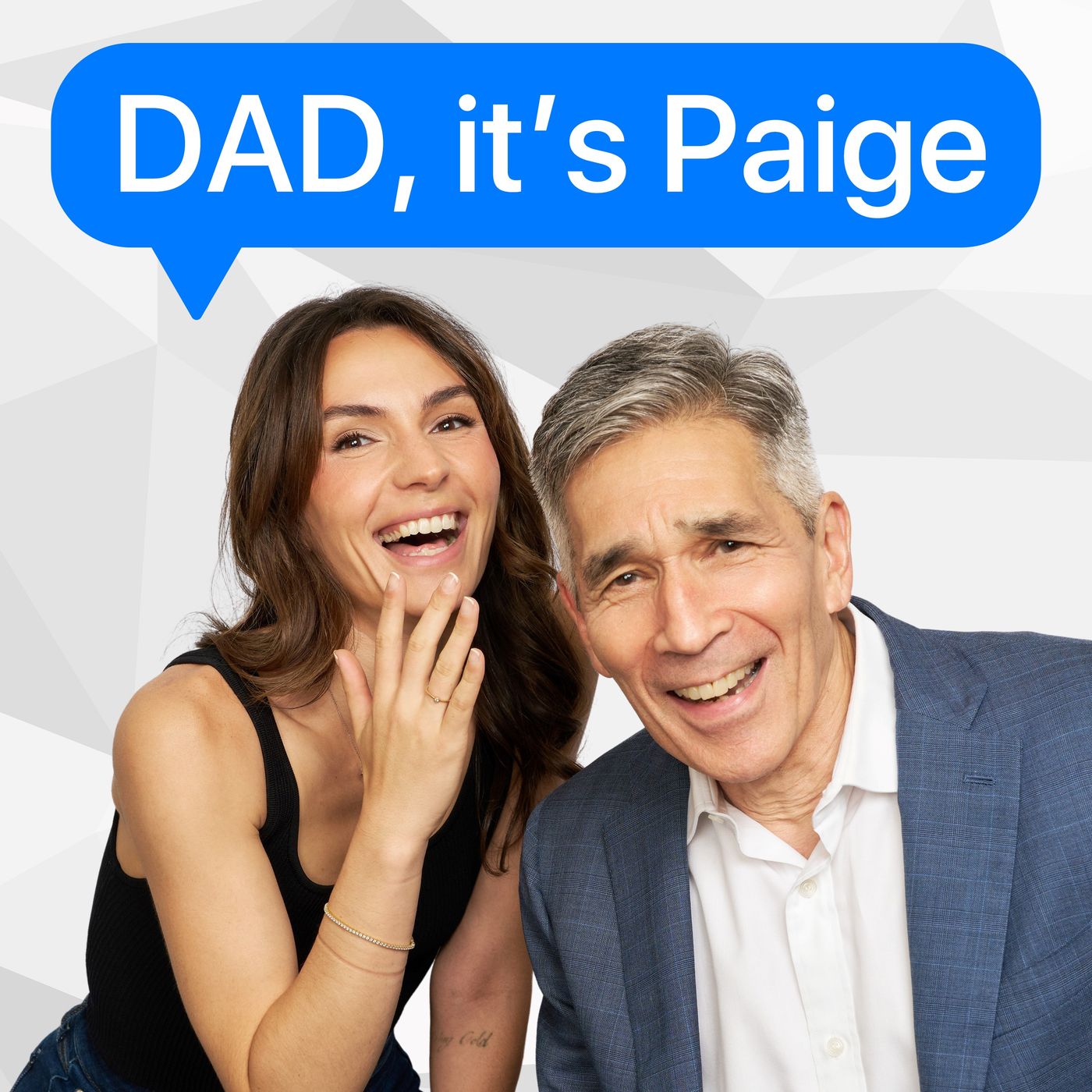
Dad, it's Paige
by Paige and David Biderman
Dad, it's Paige is a podcast where generational boundaries are crossed, assumptions are challenged, and the conversations we often avoid take center stage. Hosted by David - a seasoned class action litigator and proud Boomer - and his daughter, Paige - a behavioral scientist and part-time relief worker from the Zoomer generation - this podcast is the next evolution of the acclaimed Zoomers 2 Boomers series.
-
39
Ella Overbye: Dad, it's Paige...we really need to talk about kids having a heart crushing love affair with their teacher
Fast rising international star, Ella Overbye joins us to talk about the movie Dreams [can we add links to the movie and trilogy], a critically acclaimed Norwegian movie in the Love-Sex-DreamsTrilogy. Dreams is a coming of age story about 17-year old Johannes’s [Ella’s character] massive crush on her female French teacher. The movie explores a young girl’s first love, sexuality, and self-discovery, as well as the support she receives from her parents as she works through this emotional quandary. The film made history by becoming the first Norwegian film to win the prestigious Golden Bear at the Berlin Film Festival. Ella discusses her journey into acting, which began at age 14, her breakout roles, and the emotional process of portraying a young girl consumed by first love. She explains the uniquely Norwegian word forgap, which describes an intense infatuation that can completely take over your life. Ella and Paige swap stories about their own unforgettable crushes and the outrageous things they did in the name of love. Funny, candid, and refreshingly down-to-earth, Ella shares the unforgettable moment she learned Dreams had won the Golden Bear, reflects on how Norway's film industry differs from Hollywood, and explains how she balances school with an increasingly busy acting career. She also previews her upcoming series Escaping Bolivia, a harrowing thriller inspired by true events, along with the physical and emotional transformation the role demanded.Episode HighlightsHow Ella got started in acting at age five and landed her first major film role at twelveThe creative process behind Dreams and portraying first love from a young girl’s perspectiveWorking with director Dag Johan Haugerud across multiple projectsWhat it felt like to learn Dreams won the Golden Bear at the Berlin Film FestivalDifferences between Norwegian film culture and Hollywood celebrity culturePreparing for emotionally demanding roles while balancing school and personal lifeBehind the scenes of Escaping Bolivia and transforming for a true-crime inspired seriesConnect with Ella Overbye:Ella’s InstagramIMDbConnect With David and Paige:Dad It's Paige Website
-
38
Dei Lynam: Dad, it's Paige...we really need to talk about female sportscasters
Paige and David dad sit down with Dei Lynam, a Philadelphia sports broadcasting legend with a career that spans decades of NBA coverage, radio hosting, and groundbreaking moments for women in sports media. The daughter of former NBA coach Jim Lynam, Dei grew up courtside, literally,and turned that early exposure into an impressive career as a producer, anchor, and reporter for networks like Comcast SportsNet and NBA Entertainment. From covering Allen Iverson’s prime years to creating Emmy-winning content, Dei has seen it all.Dei joins Paige and her dad to talk about her path from holding microphones in Trail Blazers huddles at 15 to becoming one of the most respected voices in Philadelphia sports. The trio dives into the evolution of sports broadcasting, the impact of social media on journalism, and what it takes to stay relevant in an ever-changing industry. Dei also shares candid reflections on growing up in a basketball family, navigating a male-dominated field, and her experiences with legends like Kobe Bryant and Yao Ming.Episode Highlights:Growing up in a basketball family: How her father Jim Lynam’s coaching career shaped her love of sports.Breaking barriers: Dei’s journey as one of the few women in sports broadcasting in the ’80s and ’90s.Covering NBA icons: Personal stories about Kobe Bryant, Allen Iverson, and Charles Barkley.Behind the scenes at NBA Entertainment: Creating the “I Love This Game” campaign and earning an Emmy.Philly fandom: What makes Philadelphia sports culture so passionate and sometimes brutal.The rise of women’s basketball: Caitlin Clark, Paige Bueckers, and the WNBA’s surge in popularity.Gambling and the game: Dei’s take on how betting has changed the landscape of professional sports.Staying relevant: How she adapted from TV to radio to social media, and what young broadcasters need to know.Her advice to aspiring journalists: Be prepared, be versatile, and most importantly listen.Listen to this episode of Zoomers 2 Boomers for a thoughtful and entertaining conversation that bridges generations and perspectives through the lens of sports, culture, and connection.Connect With Paige & David Bitterman:David’s LinkedInPaige’s LinkedInListen To Zoomers 2 Boomers: Listen on AppleListen on SpotifyConnect With Dei Lynam:Dei’s LinkedInDei’s X AccountDei’s Instagram
-
37
Brandon Bush: Dad, it's Paige...we really need to talk about life on the road with a rock band
In this intergenerational conversation, Grammy-nominated musician and composer Brandon Bush joins the show to reflect on his dynamic, genre-spanning music career. From touring globally with Train and Sugarland to scoring theater and podcasts, Brandon shares how a childhood performance before Dolly Parton sparked a lifelong pursuit of musical storytelling and artistic success. The episode explores how music creation, performance, and production have evolved, while also diving into the emotional and technical craft behind live shows, session recording, and musical theater.Brandon also offers a behind the scenes story of the production of a chart-topping woman country artist—whose discretion and humility are a contrast with her musical “girls rule” story narrative, the unique creative synergy he shares with his brother Kristian Bush, and how field recording in nature transformed his relationship with sound. Grounded, generous, and deeply insightful, Brandon speaks candidly about staying creative, protecting well-being, and building a meaningful artistic life.Key Highlights from the EpisodeFrom Suzuki to Stadiums: Brandon recalls his earliest musical memory—sharing a stage with Dolly Parton at just 4 years old—and how it shaped his lifelong path in music.How He Joined Train: A chance studio connection led to a last-minute call-up that became a years-long touring and recording gig with Train.Session Life Explained: Brandon demystifies the role of session musicians, producers, and the behind-the-scenes process of recording hit songs—down to how long a track actually takes to capture.Scoring Nature: Grief led Brandon to explore field recording and composing from natural soundscapes, culminating in his meditative project Sitka.From Fog Machines to Footlights: His transition into musical theater unlocked a new creative layer, where subtle emotional cues replaced bombastic stage effects.The Rise to Stardom, how one of his unpaid interns became a chart-topping artist—and why emotional intelligence played a key role.Working with Family: Brandon opens up about his creative relationship with his brother Kristian Bush, the push-pull of sibling collaboration, and how they divide dreaming and doing.Connect With Paige & David Biderman:David’s LinkedInPaige’s LinkedInListen To Zoomers 2 Boomers: Listen on AppleListen on Spotify
-
36
Kevin Ali: Dad, it's Paige...we really need to talk about making it big without a big label
This week on Zoomers 2 Boomers, Paige and her dad welcome Kevin Ali, an independent rap artist from South Central Los Angeles whose music blends Caribbean roots, West Coast influences, and the lyrical traditions of hip hop’s legends. Inspired by artists like Nas, Kendrick Lamar, J. Cole, and Tupac, Kevin has spent years sharpening his freestyle skills, producing beats, and building his catalog while holding fast to integrity in an industry often driven by trends and quick hits.The conversation dives deep into Kevin’s journey — from learning to freestyle in high school and teaching himself Method Man’s flow, to crafting songs centered on self-worth and storytelling. Along the way, Kevin shares candid thoughts on the state of modern rap, the pressures of social media, and why developing authentic artistry matters more than chasing virality.You’ll also hear Kevin’s perspective on ghostwriting, beat-making, and what it takes to build a supportive creative community. His upcoming project Poetic Chaos promises to channel the raw honesty, lyrical sharpness, and self-reflection that define his style.This Week on Zoomers 2 Boomers:Kevin’s journey from reggae-infused childhood in South Central to finding his voice in hip hopLearning to freestyle using Method Man as a model — and the grind that made it stickWhy Nas tops his list of lyrical inspirations, and the jazz lineage behind his soundThe central theme of self-worth in Kevin’s music, and how he hopes listeners see their own valueHip hop vs. rap today — where mainstream culture drifts, and what’s been lost in the shiftHonest takes on ghostwriting, Drake vs. Kendrick, and the culture of “hit chasing”The creative process behind beat-making, from live instrumentation to FL Studio samplingHow streaming, TikTok trends, and algorithm shifts are shaping (and straining) the industryPoetic Chaos — Kevin’s new project that tackles jealousy, integrity, and the fight to stay authenticConnect With Paige & David Bitterman:David’s LinkedInPaige’s LinkedInListen To Zoomers 2 Boomers: Listen on AppleListen on Spotify
-
35
David Schactman: Dad, it's Paige...we really need to talk about where organs actually come from
This week on Zoomers 2 Boomers, Paige and her dad sit down with David Shactman, a Harvard-trained healthcare policy expert, longtime Brandeis University faculty member, and now a novelist. Over the course of his career, David studied the U.S. healthcare system from the inside — shaping policy, testifying before Congress, and co-authoring the book The Power, Politics, and Universal Health Care.Today, he’s turned his attention to fiction, using storytelling to shed light on the hidden realities of privilege, systemic injustice, and the gray zones of medicine. His debut novel, Mortal Choice, is a gripping thriller that weaves together healthcare, morality, and suspense — offering a new way to explore topics he spent decades analyzing through data.In this episode, David shares his winding path from business and real estate to Harvard’s Kennedy School and into the world of health policy, before reinventing himself as a novelist. The conversation covers the dark realities of the black market for kidneys, the moral questions surrounding organ sales, and the challenges of writing healthcare issues into compelling fiction. You’ll also hear David’s reflections on generational responsibility, the state of healthcare today, and why he believes the next generation has the chance to fix what his didn’t.This Week on Zoomers 2 Boomers:David’s journey from Brookline, MA to Harvard and Brandeis UniversityCalling a strike at Columbia Business School during the Vietnam War eraHow a career in real estate led to policy work at the Kennedy SchoolInside stories of U.S. healthcare reform and the near-pass of Nixon’s planThe billion-dollar black market for kidneys and its global impactThe plot and moral dilemmas at the heart of Mortal ChoiceThe challenges and lessons of shifting from nonfiction to fiction writingWhy David believes Boomers failed — and his hope that Zoomers can do betterConnect With David Shactman:WebsiteBooksFacebookInstagram LinkedInBluesky Connect With Paige & David BittermanDavid’s LinkedInPaige’s LinkedInZoomers 2 Boomers PodcastListen on AppleListen on Spotify
-
34
Henry Alonso Myer: Dad, it's Paige...we really need to talk about how to run a TV show with a huge fan base
In this conversation, Paige and David engage with Henry Alonso Myers, television writer, producer, and current executive producer and showrunner of Star Trek: Strange New Worlds.Myers shares his journey from growing up between Spain and upstate New York to studying film, breaking into the industry, and eventually becoming a leading voice in contemporary television. He reflects on his career path from staff writer to executive producer, the evolution of television across decades, and how science fiction can be a vehicle for telling stories about humanity, hope, and moral complexity.The discussion dives deep into Myers’ creative process, the challenges and joys of running a show like Star Trek, and how generational shifts in entertainment consumption shape storytelling today.Episode Takeaways:Henry Alonso Myers’ unique upbringing in Spain and Ithaca shaped his love for storytelling and film.Early access to community TV and cinema sparked his interest in writing and producing.His career path moved from independent film in New York to script reading in Hollywood before breaking into television.Insights into the progression from staff writer to executive producer across series like Charmed, Ugly Betty, Chuck, Covert Affairs, and The Magicians.How Star Trek: Strange New Worlds approaches each episode like a standalone “movie of the week.”The role of showrunners in balancing writing, production, and creative vision.Why Myers considers himself a “professional viewer” when evaluating scripts, actors, and edits.The importance of hopeful storytelling in science fiction and the conscious ethos of Star Trek.How television has transformed from the TiVo era to streaming, and where he sees it going next.Myers’ personal philosophy: creative joy comes from the work itself, not external validation.Connect With Henry Alonso MyersIMDb ProfileStar Trek: Strange New WorldsConnect With Paige & David BittermanDavid’s LinkedInPaige’s LinkedInZoomers 2 Boomers Podcast:Listen on AppleListen on Spotify
-
33
Amy Alcott: Dad, it's Paige...we really need to talk about practicing golf with cans of Campbell's soup
In this conversation, Paige and David sit down with Amy Alcott, a World Golf Hall of Fame member and one of the most accomplished players in LPGA history. Born in Kansas City and raised in Santa Monica, Amy's 35-year professional career yielded 29 LPGA Tour victories, including 5 major championships. Known for her creative shot-making and "go for the pin" style of play, Amy pioneered the iconic tradition of winners jumping into "Poppie's Pond" at the Kraft Nabisco Championship (now the Chevron Championship) and has since transitioned into golf course design, working with renowned architect Gil Hans on projects including the course for the 2016 Olympics in Rio de Janeiro.Amy shares her journey from a golf-obsessed child hitting balls into soup cans in her front yard to becoming one of the sport's greatest players. She discusses her early development under coach Walter Keller, her competitive mindset, the challenges women faced in a male-dominated sport, and her philosophy on handling pressure and maintaining consistency. Amy also reflects on her post-touring career in golf course design, her coaching experience at Harvard-Westlake School, and the evolution of women's golf from her pioneering days to the global phenomenon it has become today.Episode Takeaways:Amy began playing golf at age 7 after watching golf shows on TV, despite no one in her family playing the sport.Her father cut down a golf club with black duct tape for her first practice club, and she turned her front yard into the "Alcott Golf and Country Club" with soup cans as targets.She was coached primarily by Walter Keller, who taught her indoors hitting into a net in front of a mirror without video equipment.Amy won the U.S. Girls' Junior Championship and California State Championship before turning professional immediately after high school.She initiated the iconic tradition of jumping into the lake (now known as "Poppie's Pond") after winning the Kraft Nabisco Championship in 1988.Her "go for the pin" playing style and willingness to be herself in a traditionally conservative sport helped change women's golf.Amy emphasizes that consistency, not just winning, defines greatness in golf: "Consistency is greatness. Winning is just a byproduct."She discusses the challenges women faced in golf's male-dominated culture and the progress made in women's sports.After her touring career, Amy transitioned to golf course design, including working on the course for the 2016 Olympics in Rio.She advises new golfers to start with used clubs, find a teacher they connect with, and focus on fundamentals rather than expensive equipment.Connect With Amy Alcott:Amy's World Golf Hall of Fame Profile Connect With David and Paige:David’s LinkedinPaige’s LinkedInFollow Zoomers 2 Boomers Podcast:Listen on AppleListen on Spotify
-
32
Anne Buckle: Dad, it's Paige...we really need to talk about the music writing scene in Nashville
From Harvard to Nashville: The Musical Journey of Anne BuckleIn this conversation, Paige and David sit down with Anne Buckle, a Nashville-based singer-songwriter and multi-instrumentalist whose music blends Appalachian roots with indie Americana. A Harvard graduate with a master’s in arts and education, Anne’s path has been anything but conventional—spanning diplomacy, education policy, and ultimately, a thriving career in music.Anne shares her journey from classical violinist to Americana artist, the influence of her Appalachian roots, and how she transitioned from government work to a life of songwriting and performance. She also discusses the evolution of country music, the shift towards independent artists, and the importance of persistence in the music industry.Episode Takeaways:Anne Buckle’s Appalachian heritage and family ties to the Carter Family influenced her musical style.She began as a classically trained violinist before expanding to multiple instruments.Her early career included work in education policy and diplomacy, including the creation of Tennessee Promise.The turning point in her career came while working in Paris, realizing she wanted to be a creator, not just a facilitator of culture.The transition from classical music to Nashville’s improvisational style required a complete shift in approach.Anne toured with The Chicks and has collaborated with artists like David Archuleta.She emphasizes the increasing role of independent artists in the music industry and the decline of reliance on major labels.The importance of persistence in the music business—Anne aims for 100 rejections a year as a mindset shift to keep going.The challenges women face in country music and her efforts to champion female artists.Connect With Anne Buckle:Annes WebsiteAnnes YouTubeAnnes MusicAnne InstagramConnect With David and Paige:David’s LinkedinPaige’s LinkedInFollow Zoomers 2 Boomers Podcast:Listen on AppleListen on Spotify
-
31
Gordon Weiss: Dad, it's Paige...we really need to talk about reporting on the world's most dangerous conflicts
In this conversation, David engages with Gordon Weiss, co-founder of Planet Humana, discussing his “boots on the ground” humanitarian work where his team works on the front lines of the Ukraine conflict to provide medical assistance and training. Gordon describes the challenges of providing direct aid in conflict zones, the importance of understanding local needs, and the remarkable stories of volunteers who have given up careers to assist in the effort. He poignantly describes the impact of targeted philanthropy in addressing urgent needs in war-torn areas.
-
30
Dr. AD Carson: Dad, it's Paige...we really need to talk about using rap music to get a Ph.D
In this enlightening conversation, Dr. Carson discusses his journey from Decatur, Illinois—the "soybean capital of the world"—to becoming a pioneering figure in academia specializing in Rap MusicMinor chan. He delves into how his upbringing and passion for hip hop shaped his innovative approach to education. The episode explores the cultural significance of hip hop, its integration into academic settings, and the transformative power it holds for students and communities alike.Connect With David Biderman:David’s LinkedInConnect with Paige Biderman:Paige’s LinkedInConnect with Dr. A.D. Carson:Dr. Carson's WebsiteDr Carson's MusicZoomers 2 Boomers Website:https://zoomer2boomer.com/
-
29
Dan Drago: Dad, it's Paige...we really need to talk about the Philly music scene
In this episode, we sit down with Dan Drago. Dan produces 25 O’ Clock, a Philadelphia music podcast, and is a former touring musician. With over 20 years in the Philadelphia music community, Dan has a wealth of experience and stories to share.You’ll learn about Dan's journey as a musician, and the evolution of his podcast. We discuss his experiences growing up in Western New York, his move to Philadelphia, and his thoughts on the changes in the music industry over the years. Additionally, we also touch on his favorite music venues, the impact of streaming on artists, and the sense of community within the Philadelphia music scene.“Philadelphia is incredibly underrated when it comes to music. We have everything from punk to jazz to country. There’s a whole scene here that’s just as vibrant and influential as bigger cities, but it often flies under the radar.” - Dan DragoEpisode Highlights:Dan’s background in music and how he got started.Insights into the Philadelphia music scene and its unique community spirit.The evolution of Dan's podcast and how he stays connected with the music community.Challenges and joys of touring as a musician.Thoughts on the current state of the music industry and streaming.Dan's favorite music venues and memorable concert experiences.The underrated status of Philadelphia as a vibrant and influential music city.Dan’s broad palette and taste for different artists, from rock to hip hop to country.The dynamic between bands and solo musicians in today's music industry.Connect With David Biderman:David’s LinkedInConnect with Paige Biderman:Paige’s LinkedInConnect with Dan Drago:25 O’Clock Podcast25 O’Clock WebsiteZoomers 2 Boomers:https://zoomer2boomer.com/
-
28
Lydia Bula: Dad, it's Paige...we really need to talk about the most beautiful place you've ever painted
Lydia Bulas is the president of Lydia Bulas & Associates, a firm she has led since 2002, conducting independent reviews of anti-money laundering functions for banks and money services businesses. Her career highlights include playing a crucial role in the investigation that led to the arrest of Pablo Escobar's right-hand man and the first indictment of the Great American Bank of Dade County. Lydia has also received several accolades for her contributions, including a Drug Enforcement Award and two South Florida Impact Awards. She is a graduate of the University of Miami with a BBA in accounting and is a certified anti-money laundering specialist. On this episode of Zoomers 2 Boomers we discuss the fascinating career of criminal investigator Lydia Bulas. We discuss her background growing up in Cuba and fleeing to Miami as a child and how that led her to pursue a law enforcement career with the IRS. Lydia shares some of her most challenging cases over 15 years, including stopping drug-running operations for Pablo Escobar's cartel through an undercover sting. She also gives insights into her experiences with interrogations and going undercover herself to help take down high-level cartel members. “I saw so many drug addicts in hospitals dying, and I didn't want that for my daughter, so I made an effort to do whatever I could to stop it.” - Lydia Bulas This week on Zoomers 2 BoomersWhat made Lydia decide to pursue a career in law enforcementHow the drug trade is different today than it was in the 1980sWhether Miami is still ground zero for money launderingSome of the most challenging cases that Lydia worked on and how she and her colleagues helped damage Pablo Escobar’s operationsLydia’s experience acting as an undercover agent, along with other female agents, and how they infiltrated the money laundering gangs How agents hone their interrogation skillsLydia’s role in the operation against Luis Javier Castano-Ochoa, a lawyer and politician believed to be the Medellin cartel’s frontmanWhat kind of tactics Lydia used to follow suspects without being detectedHow much evidence they needed to collect before making an arrest, and some examples of when Lydia was able to do that How Lydia’s job impacted on her personal life and her relationships with her familyWhy Lydia would recommend that young people go into law enforcementConnect with Lydia Bulas:Lydia Bulas on LinkedIn The three women who brought down the Medellín cartel Connect with Disarming Data: Paige Biderman on LinkedIn David Biderman on LinkedIn
-
27
Dr. Liesel Sharabi: Dad, it's Paige...we really need to talk about why everyone lies in their dating profile
Dating apps create more romantic relationships than any other activity. They are also the source of immense data on users’ preferences for a romantic partner, and their algorithms are trained to measure and maximize the use of this data. Liesel Sharabi has made a career studying dating apps and their underlying technology. She joins us for a fascinating conversation about how these apps work, how to maximize your own use of these apps, and the effect of these apps on long term romantic happiness. Dr. Liesel Sharabi is an associate professor in the Hugh Downs School of Human Communication and Director of the Relationships and Technology Lab at Arizona State University. Her research explores how communication technologies are used for mate selection and relationship initiation. Liesel’s work has appeared in various edited volumes and peer-reviewed journals, as well as in media outlets such as The Wall Street Journal, Bloomberg, The Boston Globe, Time Magazine, WIRED, and the BBC. She is the recipient of the 2022 Early Career Award from the Interpersonal Communication Division of the National Communication Association.“I'm a little skeptical whether any algorithm would be able to predict compatibility between people who haven't actually had a chance to interact.” - Dr. Liesel SharabiThis week on Disarming Data:Why Liesel found online dating fascinating due to its potential to help people make better choices in relationships.The differences between online and in-person dating, including intentionality in the matchmaking processHow the algorithm used by dating apps is based on both profile information and swiping behaviorWhy online dating marriages have lower quality and satisfaction compared to in-person marriagesWhy younger people are using dating apps more, with a shift from desktop to mobileHow online dating apps are intentionally designed to be fun and engaging, making it difficult to distinguish between genuine profiles and catfishingResearch shows that minor deception is common in online dating, with people misrepresenting themselves to appear attractive and attractive partnersSome of the negative aspects of online dating, including deception, harassment, and scamsLiesel shares insights on online dating, including the potential for rigid preferences and the impact of a larger pool of potential partners on commitmentHow AI will revolutionize dating apps, potentially altering user experienceThe potential benefits of VR dating include more organic conversations and access to profiles during datesPotential negative effects of technology on relationships, including the potential for missed connections and the importance of creating a safe environment for people to initiate relationships Connect with Dr. Liesel Sharabi:Liesel Sharabi's WebsiteLiesel Sharabi at ASU Connect with Disarming Data:Paige Biderman on LinkedIn David Biderman on LinkedInDisarming Data Is Produced By The Podcast Haven
-
26
Anthony Feinstein: Dad, it's Paige...we really need to talk about the mental toll of covering a war
Dr. Anthony Feinstein, a professor of Psychiatry at the University of Toronto, studies journalists in wartime and conflict situations. He has authored four award winning books on journalists under conflict, including Moral Courage: 19 Profiles of Investigative Journalists [link] and Shooting War, has published a series of important studies exploring the psychological effects of conflict on journalists, covering the Balkans, Iraq, Mexico, Syria, Kenya, Iran, Afghanistan, the refugee crisis in Europe, and the aftermath of the 9/11 attack on New York City. His books have served as the basis of the documentary Journalists under Fire [link] He currently consults for a number of news organizations, including the Globe and Mail, CNN, and the New York Times.Anthony joins us on the podcast today to discuss his research program investigating journalists' emotional responses to conflict in various parts of the world, focusing on how they manage stress and trauma. He shares more about some of the case studies in his book and how he connected with journalists worldwide to learn more about their response to trauma. Anthony also shares more about an ongoing project of his which helps journalists in big news organizations access basic mental health training to support their colleagues. “Journalists who are going to the world's worst places in terms of danger are doing it voluntarily year after year, and their cumulative exposure to trauma is remarkable.” - Dr. Anthony Feinstein This week on Disarming Data: Why frontline journalists, including those from major news networks like BBC, CNN, and NBC, experience high rates of post-traumatic stress disorder (PTSD) similar to combat veteransThe challenges of providing therapy to journalists in distress due to their scattered location and lack of access to local healthcare providersWhy journalists who cover dangerous conflicts and crises have a unique biological makeup that allows them to sustain their careers over timeThe fascinating story about identical twins, one of whom is a journalist and the other not, highlights the potential biological factors that influence a person's willingness to take risks in dangerous situationsAnthony’s education sessions on trauma and mental health to foreign correspondents for the New York Times and other news organizations who are going out to war zonesHow Anthony’s research has contributed to a growing literature on the psychological challenges faced by journalists, leading to increased awareness and supportStories of the moral courage of 19 journalists from around the world who have faced persecution and danger for their work, including one who had to leave Russia and another who lived with armed protection for a decadeMore about the documentaries based on Anthony’s work, including ‘Journalists Under Fire’ Anthony’s work that supports journalists in Afghanistan to help one another using a buddy system and basic mental health training. Connect with Dr. Anthony Feinstein:Dr. Anthony Feinstein on Wikipedia Dr. Anthony Feinstein at Sunnybrook Research Institute Dr. Anthony Fenstein on LinkedIn Connect with Disarming Data: Paige Biderman on LinkedIn David Biderman on LinkedIn
-
25
Dimitri Xygalatas: Dad, it's Paige...we really need to talk about why humans participate in painful rituals
We’re excited to have trailblazing anthropologist, Dimitris Xygalatas, author of the highly acclaimed book Ritual: How Seemingly Senseless Acts Make Life Worth Living, tell us how his study of high-intensity rituals like coronations, firewalking, and terrifying rites of passage are just some examples of multiple universal expressions that link us together. He describes how apparently pointless ceremonies pervade every documented society, from handshakes to hexes, fraternity and sorority hazings to parades, share an underlying logic central to our experience. He helps you, our listeners, identify and appreciate the importance of the everyday ceremonies for understanding and guiding our lives.
-
24
Houston Bernard: Dad, it's Paige...we really need to talk about what it takes to make it in country music today
We love country music and have one of the best of the bunch here. Houston Bernard is a popular and prolific independent country music artist with blasting rockabilly vocals and unbelievable songs. Houston, who tours nationwide, is an Army Veteran. His country roots run deep with a family tree that includes songwriters, touring musicians, and an outlaw gunfighter nicknamed “Bitter Creek.”. Houston has released a series of singles, EPs and albums. In 2013, he released his debut self-titled EP and followed up with his first full-length album, Knockin’ Boots, in 2015. In 2018, he released his second EP, Lucky Man, followed by Freedom, in 2020, which continued to raise Houston’s profile as a diverse country music singer and songwriter.His latest Album is Ditch this Town, CLICK HERE FOR ALBUM, which reflects years of work and demonstrates Houston’s passion for independence and authenticity. Check out this moving video, NEW VIDEO "In My Blood", featuring a song Houston shares with us on the Podcast Houston is with us today to share his journey in country music, from starting with a classic sound to experimenting with different styles and eventually finding his own voice. He discusses some of the challenges of writing country music and how he seeks to improve storytelling by collaborating with other writers. Houston also digs into the importance of painting a picture with lyrics, using sensory details to transport the listener to the scene and creating an emotional reaction. ‘My ideas became better with different writers, and the stories were better.”’ - Houston Bernard Episode Highlights:Houston shares his journey of improving his craft, including why he’s taking a growth mindset approach Houston shares a personal story about his great great grandfather's involvement in the Wild Bunch gang and the Eagles song "Desperado" being inspired by him Why Houston often feel like a "Desperado" in the music industry, looking for connection with others who understand his creative goals and struggles We dig into the cultural differences between cities and states and the impact on the music industry and artists' experiences while touringHow Houston feeds off the energy of the audience during live performances and the importance of connecting with the audience through the musicWhy Houston writes emotional songs as a form of therapy to get things out and healHouston reflects on his journey of finding his voice in music and why he started playing country music after feeling unfulfilled with other genres Connect with Houston Bernard:https://houstonbernard.com/home Connect with Disarming Data:Paige Biderman on LinkedInDavid Biderman on LinkedIn
-
23
Jamais Cascio: Dad, it's Paige...we really need to talk about what the world looks like in 2050
Foreign Policy magazine Top 100 Global Thinker, Jamais Cascio, joins us to describe how we have transformed from the Defense Departments VUCA world(volatility, uncertainty, complexity, and ambiguity) to his concept of a BANI world (Brittle, Anxious, Non-linear and Incomprehensible). He created the "BANI" model for working with chaotic futures, a concept now widely used around the world. James has appeared in multiple television and film documentaries and serves as a Distinguished Fellow at the Institute for the Future. In early 2009, he released his book, Hacking the Earth: Understanding the Consequences of Geoengineering. Jamais is with Paige and me today to discuss how we can transcend the limits of short-term thinking and see future possibilities. We dig into where the VUCA Framework came and why we’ve moved from VUCA to the BANI model for working with chaotic futures. Jamais also shares why he decided to investigate the carbon footprint of a cheeseburger and what he discovered, and he give a nod to Bart Simpson. ‘"Many eyes make all problems simpler.” - Jamais Cascio This week on Disarming Data:Jamais discusses the lag in climate change and why there is a 5-25-year delay between carbon emissions and temperature changes, even after stopping emissionsThe origins of the term "VUCA" and how it was used to describe the changing global landscape in the late 1980s, including the fall of the Berlin Wall and the rise of the internetWhy we’ve moved from VUCA to the BANI model for working with chaotic futuresWhy organizations with established earthquake protocols fared better in the pandemic than those withoutWhy it’s so important to be prepared for and flexible with dramatic changesHow improvisational training and intuition help people make better decisions when it comes to complex and rapidly changing situationsWhy Jamais advocates for a ‘many eyes’ approach to problem-solvingWhy the pace of technological innovation in addressing climate change, particularly in the context of geoengineering is so slowGeoengineering's potential impact on global rainfall patternsWhy people need to get more adaptable in their response to technological changes Connect with Jamais Cascio:IFTF WebsiteJamais Cascio on LinkedInConnect with Disarming Data:Paige Biderman on LinkedIn David Biderman on LinkedIn
-
22
Mark Nicholls: Dad, it's Paige...we really need to talk about what AI means for your entire career
Mark Nicholls is the Chief Executive Officer at Information Professionals Group. In this role, he specializes in crafting strategic plans for clients, showcasing his leadership and expertise in the field of strategic planning. Mark is also a Director and previous Deputy Chair of the Australian Information Industry Association, the peak industry body for the digital technology sector in Australia. His experience spans public, commercial & and not-for-profit sectors, and he passionately believes in the immense benefits digital technology brings to organizations, communities, and nations. Mark joins us on the show to share some of the lessons learned during his 30-year experience[--eliminate in tech]. He discusses why modern organizations face, management, and governance challenges with their planning, data and information systems and how we can overcome them. Additionally, Mark also shares why he believes you can’t be a good business person without having a good sense of strategic planning. ‘Executives need to be learning continuously.”’ - Mark Nicholls This week on Disarming Data:We discuss how strategy consultants work with various organizations, including government, utilities, and healthcare, to develop customized plans for achieving business outcomes through technologyWhy a future vision is important for strategy development, but must be practical and meaningful to be effectiveThe importance of defining business outcomes to measure the success of a project or initiativeWhy it’s critical to focus on key metrics that drive success for an organization rather than measuring everythingThe challenge of managing multiple layers of technology in large organizationsMark shares his experience of working with Queensland House in 2020 on a system for tracking and managing communicable diseases, with a focus on privacy and security controlsMark acknowledges the importance of continuous learning for executives, particularly in a rapidly changing business environmentWhy technology and business are inseparable in today's world.Mark’s thoughts on the potential of AI to empower individuals and increase productivity despite implementation challenges.Connect with Mark Nicholls:Mark Nichols on LinkedInConnect with Disarming Data:Paige Biderman on LinkedIn David Biderman on LinkedIn
-
21
Joel Robinson: Dad, it's Paige...we really need to talk about the true history of the Osage Nation
Joel Robinson is a citizen of the Osage Nation who currently lives in Louisville, Kentucky. He has a Bachelor's from Eastern Kentucky University in Recreational Park Administration and a Master's from Northwestern State University in Parks and Recreation Management. He currently works as an Evening and Weekend Studies Coordinator at a trade school in Kentucky while pursuing freelance writing projects. Joel joins us on the show to share more about his article Killers of the Flower Moon is not the movie an Osage would have made. You should still see it, why he wrote it, how it went viral and the reaction since then. We discuss Scorsese’s recent film Killers of the Flower Moon, why it is great but isn’t telling the story from the point of the Osage Nation, and the effect of the Reign of Terror on the Osage Nation. He also shares his personal history as a member of the Osage Nation, tells the story of his family, and talks about problems confronting the Native American Nations. It would take an Osage to tell the story from the Osage perspective.”’ - Joel Robinson This week on Disarming Data: Joel Robinson discusses his perspective on a viral film article with Paige and her dadWhen and why membership to the Osage nation changedThe history of the Osage Nation and how discovering oil changed their way of lifeWhy the previous chief wanted to create an orthography for the Osage language so that it could be written downJoel’s knowledge and family experience of the Reign of TerrorWhy Joel believes that the film The Killers of the Flower Moon depicted the story from the perspective of the people committing the crimesJoel’s thoughts on how effective the FBI was in solving the crimesHow the Osage rights to the oil rights currently worksHow Joel is currently exploring his Osage heritage and connecting with the former Chief of the Osage NationHow Native American Nation issues are viewed today and why they’re not as widely reported as other populationsResources Mentioned:Killers of the Flower Moon is not the movie an Osage would have made. You should still see it.Osage Ceremonial Dance I'n-lon-schka by Alice Ann CallahanA Pipe for February: A Novel by Charles H. Red CornKillers of the Flower Moon: Oil, Money, Murder and the Birth of the FBI by David GrannProject 562: Changing the Way We See Native America by Makita WilburConnect with Disarming Data: David Biderman on LinkedInProduced By The Podcast Haven
-
20
Jay Knowles: Dad, it's Paige...we really need to talk about the one song that changed your life forever
Jay Knowles was born in Texas, raised in Tennessee, and educated in Connecticut. Over the last 20 years, his songs have been recorded by classic singers like George Strait, Alan Jackson, and Harry Connick, Jr., as well as today's hottest Country stars like Luke Bryan, Blake Shelton, Lainey Wilson, and Raffi. Jay's professional honors include Number One songs on multiple charts, a BMI Million Air Award, and a Grammy nomination for Country Song of the Year. We’re excited to welcome Jay to the podcast to share more about the details about his songwriting career, the moments in musical history that have influenced him, and where he sees future trends in country music leading. He discusses the evolution of music in Nashville, particularly the blending of country, Southern rock, and Americana genres, and reflects on the current lack of representation in country music. Jay also discusses the Whalefarm project he co-founded, which is a network of unrecorded songs for music industry professionals to discover. “The way you learn how to write songs is by writing songs." - Jay Knowles "To me, all good songs are story songs." - Jay Knowles "You don't have to be country to like country music. It's really about whether your heart is connected to it." - Jay Knowles This week on Disarming Data: Jay Knowles shares his background in country music and politics in NashvilleThe very first song Jay wrote with his dad when he was five years oldWhere Jay starts from when he’s writing a new songThe importance of having a thread of relatability running through a songHow country music has evolved with artists like Taylor Swift and Emmylou Harris pushing boundaries and blurring genresThe lack of storytelling in modern songs and why country music is an exception with its ability to tell a story within three minutesWhy it’s important not to overthink the creative process but allow the song to unfold naturallyThe concept of Whalefarm, a platform for songwriters to share and collaborate on songs, and why he wanted to create a space for lost or overlooked songs to be heardChallenges of getting old songs heard and recorded, particularly for independent songwriters and artistsConnect with Jay Knowles:Jay Knowles' WebsiteWhalefarmConnect with Disarming Data:David Biderman on LinkedInProduced and Edited By The PodcastHaven
-
19
Dr. Jada Watson: Dad, it's Paige...we really need to talk about why women aren't played on country radio
Dr. Jada Watson holds a Ph.D. in Musicology from Université Laval and a Master of Information Studies from the University of Ottawa. In 2020, she was awarded the Faculty of Arts Distinguished Teaching Award for Part-time Professors. She is the author of Whose Country Music? Genre, Identity, and Belonging in Twenty-First Century Country Music, a collection of essays forthcoming with Cambridge University Press. Since 2019, she has been the Digital Humanities Coordinator at the University of Ottawa, including the Digital Humanities Summer - the only bilingual digital humanities institute in Canada. In May 2022, she received the CSDH/SCHN Outstanding Early Career Award, for her research and contributions to the digital humanities in Canada. This week on the show, we’re talking with Jada about equity in country music radio. She tells us how she’s systematically measured country playlists and shown how BIPOC artists, women, and others are underrepresented. She tells how she is using her data to promote equality and diversity in country. We also don’t like some of the dark underbelly of country music, and thank Jada for her unbelievable work. Also, and as importantly, Jada tells us why—despite having a PhD in classical composers—she still loves country. Come listen. “Marketing labels are keeping the industry segregated." - Jada Watson "Songs by women actually get tossed out of the playlists at a far greater rate than songs by men." - Jada Watson "There is a limit to what a woman can achieve in Country music." - Jada Watson This week on Disarming Data: How Jada first become interested in studying musicologyThe interview by a prominent radio consultant who said that radio stations should improve their station ratings by playing songs by women at only 13 to 15% that prompted Jada to study the data behind the Billboard Hot Country Songs ChartWhat kind of radio Jada tracks, how she accesses the data, and why it’s importantHow the industry caps the achievements of female country artists, even singers like Taylor SwiftWhy country music concerts aren’t always safe spaces for white, cis-gendered individuals and what we can do about thatWhy politics has such a tight relationship with the country music industryJada’s take on Jason Aldean’s pro-Trump stance and the public response to his song Try That in a Small TownThe racial inequity within the country format radio and why it’s so strange given that country music is so sonically diverseLil Nas X and the story of Old Town Road - why Nashville didn’t accept the song or the artistThe Chicks' experience with sharing their political leanings and why they haven’t been played on country format radio airplay since 2003Connect with Jada Watson:Jada Watson on Instagram Connect with Disarming Data:David Biderman on LinkedIn
-
18
Leonor Tomero: Dad, it's Paige...we really need to talk about what NATO is really doing right now
Commissioner of the Congressional Commission on the Strategic Posture of the United States, Leonor was appointed by House Armed Services Committee Chairman Adam Smith to examine the long-term strategic posture of the United States, including a threat assessment, detailed review of nuclear weapons policy and strategy, and recommendations as the most appropriate strategic posture and strategy moving forward. Leonor Tomero previously served as the Deputy Assistant Secretary of Defense for Nuclear and Missile Defense Policy in the Office of the Secretary of Defense, supporting the Under Secretary of Defense for Policy and the Assistant Secretary of Defense for Strategy, Plans, and Capabilities by developing strategies, informing policies, and conducting oversight of nuclear deterrence policy, arms control, and missile defense policy.We welcome Leonor to the podcast this week to discuss why nuclear deterrence is still stuck in 20th-century architecture and thinking and some of the ways we could leverage artificial intelligence to improve it. We dig into what’s happening now regarding potential nuclear threats, and Leonor shares why China is currently the pacing threat. Leonor also discusses the impact of the war on Ukraine on strategic stability and why the U.S. dialogue with Russia was initially suspended. “The only current surviving nuclear arms control treaty is going to is going to expire in 2026. And we're not negotiating any new agreement." - Leonor Tomero "Compared to Russia and Chin, U.S. culture, entrepreneurship, creativity, and imagination, really is our unique advantage in terms of innovation." - Leonor Tomero "It's not about adding more nuclear weapons. It's about enhancing deterrence much earlier in the conflict, enhancing resilience, and making our platforms a lot more survivable." - Leonor Tomero This week on Disarming Data: Leonor’s professional journey and why she’s now focusing on how innovation should be applied to deterrenceNew concepts for strengthening deterrenceThe huge impact on Russia of the war on Ukraine beyond government-imposed sanctionsWhat the Department of Defence is looking at for missile tracking and missile warningThe potential impact of attacks on satellites and other assets in spaceThe importance of using new innovative technology in defenseWhy the US administration has said that China is the pacing threat right nowWhy mutually assured destruction (MAD) is still a key tenant of preventing nuclear warWhy a current area of concern is how to prevent Russia from using small tactical nuclear weaponsHow governments and organizations control the information in the public domain, particularly technological advances that would impact defenseConnect with Leonor Tomero:Leonor Tomero on LinkedInConnect with Disarming Data:David Biderman on LinkedIn
-
17
Melissa Fortunato: Dad, it's Paige...we really need to talk about how to talk someone out of a crisis
Melissa Fortunato, Founder and Chief Negotiation Officer (CNO) of Alchemy-Team, tells us about her 23-year FBI career as a Crisis Negotiator and Undercover Agent. Melissa is a graduate of Quantico’s famed negotiation training program and tells us how active listening and well-designed questions brought her remarkable success in resolving hostage for ransom, political kidnappings, and off-kilter abductions. On the show this week, she tells Paige and David how a “romantic” trip to Thailand led to a fake wedding and the chauffeur-driven apprehension of a large band of international arms dealers.Melissa also dives into some of the benefits of being a woman in crisis negotiation and how her background in psychology helps her de-escalate high-stakes risks. Melissa remains committed to empowering others through transformative negotiation training in her current role.“Humanness shows up in the strangest situations." - Melissa Fortunato"Crime is as old as time. We're always chasing; they're always evolving." - Melissa Fortunato"You can't meet anger with anger. It gets you nowhere." - Melissa FortunatoThis week on Disarming Data:How Melissa moved from being a counselor to becoming an FBI AgentMelissa shares all about her fake wedding on a yacht and how it led to the apprehension of a large group of criminalsThe duel-edged sword of building connections and a rapport with people they end up arrestingThe difference between crisis response and hostage negotiations on an emotional levelThe kidnap for ransom case of a U.S. citizen in Afghanistan involving the Taliban that Melissa was involved inMelissa gives the real story of whether or not people should pay a ransom if someone or something is takenThe importance of reaching out for help if you’re a victim of ransomware or tech crimeThe transition from undercover to hostage negotiator and why she stopped doing undercover work to focus on hostage negotiationsMelissa’s new company Alchemy Team and her role as a negotiation consultant for businessesMelissa shares her book recommendations for people who want to improve their negotiation skillsConnect with Melissa Fortunato:Melissa Fortunato on LinkedInConnect with Disarming Data:David Biderman on LinkedIn
-
16
Rich LaTulip: Dad, it's Paige...we really need to talk about cybersecurity threats
This week on Disarming Data, we’re speaking with former Secret Service Agent Rich Latulip, who shares his unique experience in understanding cybersecurity threats from the inside as an undercover agent tasked with building relationships with known cyberterrorists. He tells us about staying at Thai beach resorts with cyber criminals so he can meet them in person—not on-line. He discusses the underground world of buying and selling credit card data and the challenges of conducting business as an undercover agent working with international law enforcement agencies.Rich also shares some of the obstacles undercover agents have to overcome and how they maintain trust with their targets while gathering important information. Rich has some amazing stories and please have a listen.Computer crimes are financial crimes.” - Rich LaTulip“I found myself in the Secret Service because I always had an interest in serving my country and protecting people.” - Rich LaTulip“Our goal was moving the digital world into the real world.” - Rich LaTulipThis Week on Disarming Data:Why Rich decided to join the Secret Service and what agents really do when they’re undercoverHow Rich’s unique experience in law enforcement and cybersecurity help him in his current role at Resolve SystemsSome of the key online threats that businesses need to protect themselves from in 2023Skills that helped Rich move up in his career in federal law enforcement and cybersecurityRich shares his story of living and pursuing cyber criminals in EstoniaDifficulties in building trust with cyber criminals online, the importance of creating rapport, and how that helps security forces bring them to justiceThe underground world of skimming, buying, and selling credit card data, and the challenges of identifying and apprehending individuals involvedHow the bureaucracy involved in pursuing people engaged in illegal activities in non-extraditable countries makes it difficult for law enforcement agencies to bring criminals to justiceRich’s interest in computer forensics and ways investigators can improve the quality of digital evidence reportsConnect with Richard LaTulip: Richard LaTulip on LinkedInResolve SystemsConnect with Decrypted Unscripted:Perkins Coie LLPDavid Biderman on LinkedInAndrew Pak on LinkedIn
-
15
Dr. Sarah Nutter: Dad, it's Paige...we really need to talk about why diets rarely improve self-worth
Dr. Sarah Nutter is a weight stigma researcher and an influential voice in the body positivity movement. With personal experience battling weight stigma and body dissatisfaction, Sarah has dedicated her career to understanding and combating the harmful effects of diet culture. Her groundbreaking work at the University of Victoria has shed light on the detrimental impact of media messages, societal beauty ideals, and weight loss efforts on individuals' mental and physical well-being. Sarah advocates for challenging societal norms, promoting positive body image, and redefining health beyond weight. Her expertise and innovative approaches continue to inspire and empower individuals to embrace self-love, reject harmful beauty standards, and cultivate a healthier relationship with their bodies. This week on Disarming Data, Sarah dives into the impact of beauty and body ideal messages on body image and emphasizes the importance of valuing qualities beyond appearance and finding comfort in our bodies. She discusses the harmful effects of social media and TV shows like “The Biggest Loser” and their contribution to the development of eating disorders. Sarah also raises concerns about the improper use of weight loss drugs and the potential risks they pose to people’s long-term physical and mental health. “I'm interested in better understanding the influence of weight stigma on healthcare and the attitudes of healthcare professionals." - Dr. Sarah Nutter "A cultural obsession with weight has been long-standing and has also grown over time." - Dr. Sarah Nutter "95% of people who lose weight via diet and exercise behaviors will gain that weight back in three to five years, and often they'll gain more weight back than they lost...sometimes we're actually really having a negative effect on our physiology." - Dr. Sarah Nutter This week on Disarming Data:Sarah discusses the long-standing struggle of researchers to address the influence of weight loss messages on individuals' perception of themselvesUnderstanding social media algorithms and why we should be more selective about the accounts we follow, and unfollowing those that promote weight stigmatizationHow we can be discerning consumers of media, and the importance of questioning the influences we look up toHow we can stop obsessing about how our bodies look to others and learn to value other qualities we love about ourselvesWays we can find comfort, strength, and capability in their bodies.Sarah shares the need for intentional efforts to counteract the influence of culture on body image, particularly the cultural obsession with weight and thinness as a beauty ideal and marker of success.Sarah shares her research on how watching "The Biggest Loser" TV show contributes to unrealistic and unsafe weight loss effortsWhether what we see in the media contributes to the development of eating disorders and unhealthy body relationshipsHow Sarah moved past a cycle of weight loss and gain, and how she managed to take the decision to reject dieting and learn to love herselfThe importance of allowing children to develop their own sense of hunger and fullness cues and fostering positive relationships with their bodies and foodWhy using weight loss drugs can be a long-term risk to your physical and mental healthHow we can stop using weight as an indicator of health and the problem of relying too heavily on BMI to assess healthinessConnect with Dr. Sarah Nutter:Dr. SarahConnect with Disarming Data: David Biderman on LinkedIn
-
14
Jeremy Edge: Dad, it's Paige...we really need to talk about how the internet hooks us on gambling
In this episode, addiction counselor Jeremy joins us to discuss the distinction between recreational gambling and addiction. Jeremy shares stories from his clients and offers insights into identifying gambling addiction behaviors and setting boundaries. He explores software solutions for managing gambling website usage and discusses why people gamble, from boredom to financial need. We delve into the rapid ascent of online gambling websites and the increase and gambling behaviors generally.Jeremy is a licensed professional counselor with over seven years of experience working with adults, teens, and children in various settings, including ADAPT of Missouri, Every Child’s Hope, and in private practice. After personally experiencing the negative effects of Gaming Disorder, Jeremy devoted his work to helping those recover from problematic and disordered screen use. He is passionate about helping teenagers and adults obtain a more balanced relationship with screens. He does not advocate total abstention but instead provides counseling on responsible screen use. He helps strengthen family relationships and gives parents insights to address unhealthy screen use. He gives people practical tools to help with their specific need of escaping problematic screen use. Jeremy provides a safe space for those struggling with problematic screen use to find ways to meet their goals. Outside of problematic screen use, Jeremy works well with anyone struggling with depression, anxiety, relationship challenges, and stress. If you want to improve your mental health, call Jeremy.Screen use is like candy. Candy is delicious, and it provides a lot of energy. But if it’s our only food source, we will have problems. It’s the same with video games." - Jeremy Edge"We can't completely get rid of technology use, but how we're able to modify it or be able to interact with it healthily is impactful." - Jeremy Edge "Any kiddo can open up a loot box, but loot boxes are gambling." - Jeremy Edge This week on Disarming Data:How to identify the line between recreational gambling and addictionSoftware you can use to manage your use of gambling websitesWhy people gamble — from boredom to financial needHow to make changes in your life that replace the feeling you get from gamblingWhy it can be helpful to join a support group when recovering from addictionHow loot boxes in video games are exposing children in the U.S to the adrenaline rush of gamblingHow online gambling websites work to attract people to spend time on the platformsHow Jeremy helps teens and families impacted by online gaming addictionRed flags that gaming is a problemWhether Jeremy believes that the Metaverse will be the future of gamingResources: Counter Strike video gameConnect with Jeremy Edge:Escapingthe.comJeremy Edge on LinkedInConnect with Disarming Data:David Biderman on LinkedIn
-
13
Amy Nobile: Dad, it's Paige...we really need to talk about how to date in the modern era
Amy Nobile is a renowned coach, author, and entrepreneur who revolutionized the world of online dating through her coaching business, Love Amy. She provides personalized guidance and practical strategies for achieving success in the digital dating world. Her transformative coaching programs have touched countless lives, helping people find romantic fulfillment. We’re so excited to have Amy on the show to delve into the intriguing world of online dating in a conversation with hosts of vastly different generations. In this episode, we enjoy Amy’s very practical advice, explore the pitfalls of online dating, and discover why Amy once juggled five to six dates a day when she found herself newly single. With a keen understanding of the dating landscape, Amy reveals such details as what photographs work best (guys—avoid photos showing you triumphantly holding a dead deep sea fish), what to do if the real date has no resemblance to the photo (scram), and how men continually exaggerate their height (and why height doesn’t matter). She emphasizes the importance of approaching online dating with a mindset of abundance. From her recommendation of 45-minute screener dates to crafting your own first date roadmap, she gives listeners ideas for how to see if you’re in alignment with your date during those first few meetings. “That same amazing person you’re going to meet in real life is also on dating apps - you’re just not going to recognize them." - Amy Nobile "You can only meet someone as deeply as you’ve met yourself." - Amy Nobile "It only takes one. Even when you're really frustrated, try to remain positive because your person is right around the corner." - Amy Nobile This week on Disarming Data: Some of the past stories we carry with us from our past dating lifeWhy online dating is often a terrible shop windowWhy Amy was organizing five to six dates in a day when she was newly singleThe typical male/female mix of Amy’s clients and why the men typically focus on understanding the algorithms on the dating appsWhy you need to come from a place of ‘yes’ when you’re dating onlineMost significant mistakes men and women make when posting their pictures on a dating appWhy you’re not trying to appeal to the masses, you’re trying to attract that one special personAmy’s key tips for success with online datingWhy Amy recommends 45-minute screener dates to start off withThe first date roadmap and how to figure yours outAre you a terrible person if you ghost people on a dating app?Amy’s favorite conversation-starter questions for datesConnect with Amy Nobile: Love, Amy WebsiteIt Only Takes One Amy’s PodcastAmy Nobile's BooksConnect with Disarming Data: David Biderman on LinkedIn
-
12
Elizabeth Keating: Dad, it's Paige...we really need to talk about the weirdest cultural traditions we take for granted
Worn out by endless Zoom conference calls? In this episode, we are thrilled to have Professor Elizabeth Keating, an anthropologist at the University of Texas at Austin, talk to us about what we are missing by working remotely. Elizabeth has studied the social impacts of remote communication long before the pandemic forced us into remote work—a practice that seems here to stay. She explains how we are missing out on important social cues, such as body language, gestures, or peripheral hallway communications, that are essential for robust communication. Elizabeth’s article on the subject is fascinating. https://www.americanscientist.org/article/why-do-virtual-meetings-feel-so-weird. Elizabeth also tells us about how we can understand our families through the lens of an anthropologist—and learn things we never would have known. https://www.amazon.com/Essential-Questions-Interview-Uncover-Generations/dp/0593420926 “When you're facing a bunch of people on the screen, you can't focus your attention on everybody at once in the same way that you can in a face-to-face interaction" - Elizabeth Keating "One of the things that is disrupting about virtual conversations is you don't know what people are looking at." - Elizabeth Keating "We're missing those glorious moments of really connecting with people and having that exhilaration of collaboration and cooperation." - Elizabeth Keating This week on Disarming Data:How Elizabeth got interested in the social impacts of technologyWhy interacting online via meeting apps can feel so strangeWhat lower body cues are, how subtle they can be, and why they can be tricky to recognize when video chattingUnderstanding the social cues for beginning and finishing up a meetingWhether we would communicate better with one another if we were all back in the office talking to each other in personWhy joint attention is the fundamental architecture for human interaction and how we learn it as babiesWhether there are new cues people are picking up because we’re spending so much in online meetingsElizabeth shares why being on-site helps with peripheral participation in mentorship opportunitiesHow AI technology is changing how we measure academic learningThe importance of putting technological advances in a cultural contextMore about Elizabeth’s recent book The Essential Questions: Interview Your Family to Uncover Stories and Bridge Generations and how it helps people connectConnect with Elizabeth Keating:Elizabeth Keating's WebsiteElizabeth Keating on LinkedInElizabeth Keating on FacebookElizabeth Keating on TwitterElizabeth Keating on InstagramConnect with Disarming Data:David Biderman on LinkedIn
-
11
Raj Sahlorta: Dad, it's Paige...we really need to talk about education access
Raj Salhotra is the Co-founder and Executive Director at Momentum Education. After graduating from Rice University, he joined Teach for America and was placed at YES Prep Southwest, where he taught Pre-Calculus and AP Statistics. While at YES Prep, he co-founded One Jump, an educational technology non-profit that connects high school students to enrichment opportunities. After YES Prep, he attended Harvard Law School, where he focused on researching public policy issues and representing tenants being evicted from their homes. During law school, he started Students With Ambition Go (SWAG) To College, a mentorship non-profit that provides underserved high school and college students mentors to help them get to and through college. Raj has recently launched Momentum Education, combining One Jump and SWAG To College to serve under-resourced high school and college students. This week on Disarming Data, we’re diving into how Momentum Education helps students by offering them the opportunity to effectively prepare for education beyond high school and preparing them for the workforce. Raj gives us a glimpse of his day-to-day life at Momentum Education and shares what the team does in more detail. We also discuss the impact of volunteers on the program and why so many people are so eager to give their time to help students achieve their career aspirations. “Our mentors themselves are first-generation students, so they totally can relate and resonate with the students" - Raj Salhotra "We want to connect with 1000 students in Houston." - Raj Salhotra "Politics isn’t the only way to have a positive impact." - Raj Salhotra This week on Disarming Data: How Momentum Education helps students and where students first get a taste of what the program offersWhy they decided to use virtual mentoring, and how they ensure that underprivileged students have access to the appropriate technologyThe current educational controversy in HoustonWhy Raj isn’t a fan of the school voucher systemWhy Raj decided to pursue education over a career in law after attending Harvard Law SchoolWhy Raj’s experience at law school was helpful in setting up his non-profit organizationRaj shares a day in his life at Momentum Education, including coaching his team, fundraising, and visiting their school partnersWhy Raj decided to run for office and what he learned from the experienceThe vast network of volunteers that support students with their college applications and provide further career guidanceThe three books have been most influential on Raj’s processMomentum Education:WebsiteConnect with Raj Salhotra: Raj Salhotra on LinkedInRaj Salhotra on TwitterRaj Salhotra’s Rice University interviewRaj Salhotra’s YouTube interview Connect with Disarming Data: David Biderman on LinkedIn Disarming Data Is Co-Produced By The Podcast Haven:The Podcast Haven
-
10
Emma Todd: Dad, it's Paige...we really need to talk about what blockchain actually is
Emma Todd: CEO of MMH Blockchain Group | The Impact of Blockchain on Data Security Emma Todd is the CEO of MMH Blockchain Group, a company that provides data systems consulting, communications, and events for technology organizations. She is a board member of the Canadian Blockchain Consortium, Canada's largest blockchain association, and the Chair of the CBCS FinTech committee. Emma is also the Chair of the Advisory Council for Girls in Tech and a past chairwoman and executive board member of Blockchain for Impact. She has worked with the United Nations and has spoken alongside notable figures such as Al Gore and Edward Snowden at the UN and other venues. In this episode of Disarming Data, we discuss data security, human rights, and civil rights. Emma shares her extensive experience in the blockchain industry and her work with the United Nations and provides insight into how technology can be used to protect human rights and promote data security. We dive into the details of the intersection of these topics and what we can do to ensure that we use data ethically and responsibly.“Quick buck and long game do not go hand in hand!" - Emma Todd "The goal is to be able to use Bitcoin to buy anything and everything." - Emma Todd "If you're chasing the money, you're going to end up losing more." - Emma Todd This week on Disarming Data: ● The definition of blockchain and its potential applications in the data security field● How blockchain technology can be used to promote human rights and protect vulnerable populations● Emma shares her experience working with the United Nations and how we can use data to promote positive change● We discuss the challenges of ensuring that data is used ethically and responsibly● The role of technology in promoting civil rights and combating discrimination● How to make money with blockchain and why it takes time and research● Some of the challenges of balancing data security with privacy concerns● How governments and international organizations can promote ethical data use● What we can currently use Bitcoin to buy and how Emma sees its benefits evolving● Emma’s thoughts on the future of blockchain and its potential impact on data security Connect with Emma Todd:● MMH Technology Group ● Emma Todd on LinkedIn Connect with Disarming Data:● David Biderman on LinkedIn
-
9
Dr. Abbie Marano: Dad, it's Paige...we really need to talk about what your body language says about you
Dr. Abbie Maroño is both a scientist and a practitioner in the field of human behavior, bringing a unique level of experience and scientific validation to her work. Abbie is now the Director of Education at Social-engineer, LLC, as well as the Director of the International Organization for Reconstruction (IOR). Abbie specializes in nonverbal communication, trust, and the psychological mechanisms underpinning human decision-making. She is an active member of several internationally recognized research groups and was awarded reviewer of the year in 2020, from select journals, for her significant contribution to the academic community. We’re excited to have Dr. Abbie on the show this week to help us understand the importance of non-verbal communication in everyday life. She steps us through how to leverage nonverbal communication and shares some examples of academic literature that shows how an awareness of our own nonverbal behavior and that of our family, friends, and colleagues can impact how we communicate. “We make our first judgments on people based on nonverbal communication. It's what we've evolved to do. It was our first language.” - Dr. Abbie Maroño “It's not that you can detect if someone's lying —it's that you can detect a leakage of the true emotion.” - Dr. Abbie Maroño “You can use mimicry as a tool to influence cooperation.” - Dr. Abbie Maroño This week on Disarming Data: ● Why nonverbal communication is so important● The signals we look for to determine a person’s trustworthiness and how we can build trust with others● How Dr. Abbie became so fascinated by nonverbal cues and why she was keen to pursue a doctorate in the field ● We discuss the differences between lower and upper body language and why what your lower body does can make you more approachable ● How long it takes to change your natural non-verbals to project certain qualities ● What microexpressions are and how they could help you decode someone’s genuine emotions ● Some of the nonverbal signals that show that someone is distressed ● Whether it’s possible to influence people using body language ● The fundamental, biological, and psychological elements of social engineering ● How Dr. Abbie’s company social engineers organizations’ staff to help them mitigate the risks of having their data stolen Connect with Dr. Abbie Maroño:● Abbie Maroño's Website● Dr. Abbie Maroño on LinkedInConnect with Disarming Data:● David Biderman on LinkedIn
-
8
Gavin Kaysen: Dad, it's Paige...we really need to talk about what it actually takes to run a restaurant
Gavin Kaysen is an award-winning chef and advocate for the culinary profession. He is the founder of Soigné Hospitality Group, a nationally recognized restaurant group, including Spoon and Stable. He is also the co-founder of Heart of the House Foundation, to support his team and community, and a founding member of the Mentor BKB Foundation, which supports young chefs.. His restaurant hosts a Synergy Series where he invites a visiting chef to sit down for a meaningful dialogue about their life and career. He is the proud recipient of two James Beard Awards: Rising Star Chef of the Year in 2008 and Best Chef: Midwest in 2018In this podcast, Gavin tells us how he turned the Covid crisis into an opportunity to teach great, classic recipes to hundreds of online followers and to support his trusted purveyors, ultimately leading to his new cookbook, At Home. He tells us his story from working at a Subway shop in Minneapolis to becoming the head coordinator for Daniel Boulud, one of the world’s most legendary chefs. He also describes the importance of creating a relationship with your customers by understanding what genuine hospitality, not transactional hospitality really means. He discusses his collaboration with Four Seasons, catering great pre-and post-game meals for the Minnesota Vikings, his new Mediterranean-inspired restaurant Mara and why it’s so close to his heart. Gavin also tells us about his new book, how it brought people together during the pandemic, and how it evolved into his new cookbook. “The pure intention of going out to eat is to find restoration through that experience.” - Gavin Kaysen “We have to meet the opportunity with preparedness.” - Gavin Kaysen “If you create delicious food and you give genuine hospitality, people will show up, and they will show up and show up and show up.” - Gavin Kaysen This week on Disarming Data: ● How Gavin got started in the culinary profession● How a restaurant creates a memory for visitors that allows them to feel nostalgia the next time they come back● The importance of looking after your team and making them feel cared for● Why Gavin believes he is a natural-born leader and what he has done to grow and improve his leadership skills● The many mentors that Gavin has had the opportunity to learn from over the years● One of Gavin’s failures that ultimately led him to him co-creating The Mentor Foundation● Why he decided to open his restaurant, Spoon and Stable, in Minneapolis● How Gavin moved forward through the COVID-19 pandemic by journaling● How the Synergy Series at Spoon and Stable works and what’s next for the restaurant● What Gavin does to decompress and relaxListen To Disarming Datahttps://availableon.com/disarmingdataDavid Bidermanhttps://www.linkedin.com/in/david-t-biderman-3337b45/ Connect with Gavin Kaysenhttps://gavinkaysen.com/gavinkaysen.com/cookbook - Order Today!
-
7
Joe Saboe: Dad, it's Paige...we really need to talk about the Afghanistan withdrawal
Joe Saboe, retired Army vet, was at home in the US when--out of the blue--he got a plea to help Afghans who supported our troops escape Kabul. He had little time. This was early August , 2021, just weeks before the door was to shut. Amazingly, from thousands of miles away, he organized Team America Relief, a network of veterans and civilians who remotely provided crowdsourcing software, logistical support, and constant communications to help Afghan allies safely make it to Kabul airport , pass through gates packed with a human wave clamoring to be let in, and fly to safety. Joe’s “Digital Dunkirk” allowed thousands of Afghans escape the Taliban. We’re honored to have Joe share the details of how he quickly enlisted a team of committed vets and civilians to orchestrate a crowdsourced evacuation . He tells us how he instantly shifted from Soccer Dad to a Remote Commander and leveraged the network he built during his time as a US Army Officer. Joe also lets us in on how they managed the project using several well-known tech platforms and why they were so essential to the rescue effort. This is a moving and incredible story. If you can listen to this Podcast with a dry eye, you are stronger than we.“We were crowdsourcing information from people in crisis, and then crowd sharing that information back with other people in crisis.” - Joe Saboe“There were a lot of Sophie's Choice moments in this for us — you got to remember the overwhelming majority of the people we're talking about are children.” - Joe Saboe“We had prearranged covert linkups with various military units, US special forces, US Marines, and intelligence agencies to go out and grab people once they identified the correct ones.” - Joe SaboeThis week on Disarming Data:- Joe’s family background and the events that led to him becoming an infantry officer in 2007What Joe did when he left the military and what attracted him to teaching and coaching soccer- How Joe leveraged his personal network to communicate with those trapped in Afghanistan after the Taliban retook the country- How they built a team of volunteers and some of the roles they play- How they got the right people through the right gates during the human stampede at Kabul airport- Some of the unique signals individuals used to identify themselves to US Marines in Afghanistan- The tech they use at Team America to communicate with Afghan refugees and manage the huge evacuation project- Why Joe needed to take a step back from the project- How refugees prove that staying in Afghanistan would be life-threatening for them and their families- Why the government wasn’t able to extract all eligible peopleListen To Disarming Datahttps://availableon.com/disarmingdataDavid Bidermanhttps://www.linkedin.com/in/david-t-biderman-3337b45/Digital Dunkirkhttps://www.nytimes.com/2021/08/28/us/help-afghanistan.html
-
6
Yuliana Shemotovets: Dad, it's Paige...we really need to talk about what's really happening in Eastern Europe
Yuliana Shemetovets is the official spokesperson for the Cyber Partisans, the clandestine network of technologists and ethical hackers who are doing their utmost to prevent repression in Belarus and thwart the Russian Invasion of Ukraine. This group of ethical hackers has recovered copies of every passport in Belarus and posted those of the leaders of the repressive regime of Alexander Lukashenko. They also hacked into and disabled the rail line that served as the main connection for the transport of arms from Russia to Ukraine. Yuliana and her colleagues are extremely committed and brave, operating in a world where dissenters can be harshly punished. Please listen to her description of the extraordinary bravery and inventiveness of the Cyber Partisans, and their courageous efforts to promote freedom in a very scary environment.Juliana is also a professional SaaS application coordinator and data analyst with extensive experience in cybersecurity, platform building, database coordination, consulting, and research. She is tech-savvy, perpetually curious, adaptable to different working styles, mindsets, and personalities--and a hero to many.Yuliana joins David and Paige on the podcast to share what is currently happening in Belarus and how events there are linked to the war in Ukraine. She explains how Ukraine’s defeat would strengthen the Belarusian regime and why she became the spokesperson for the Cyber Partisans.Yuliana further shares the importance of what the Cyber Partisans are doing in disrupting essential infrastructure in Belarus, thwarting the Russian invasion of Ukraine, how she sees the conflict progressing, and why she is so passionate about spreading the message about what is happening in her country in the West.“Belarus and Ukraine have the same common enemy — it's Putin’s Kremlin regime, the imperialistic regime of Russia.” - Yuliana Shemetovets“If Ukraine is taken over by Russia, we don't stand a chance.” - Yuliana Shemetovets“People are just too afraid, and it's understandable because the repression doesn't stop.” - Yuliana ShemetovetsThis week on Disarming Data:●How Yuliana became a spokesperson for the Cyber Partisans●How Yuliana communicates securely with the Cyber Partisans in Belarus and Ukraine●Why people's phones are randomly searched and how they combat this●Russia’s response to the attacks on the railway systems●How the Belarusian public have responded to Cyber Partisan action●Why President Lukashenka himself believes that cyber-attacks are just as dangerous as nuclear weapons●How the hackers prevent KGB agents from infiltrating the cyber partisan group●Why Belarus considers itself a European country●What happened in Belarus in 2020 that precipitated significant change●Whether Yuliana believes that Lukashenka will send the Belarusian army to fight in UkraineListen To Disarming Datahttps://availableon.com/disarmingdataDavid Bidermanhttps://www.linkedin.com/in/david-t-biderman-3337b45/Cyber Partisanshttps://en.wikipedia.org/wiki/Cyber_PartisansYuliana Shemetovetshttps://www.linkedin.com/in/yuliana-shemetovets/
-
5
Lisa Lind Dunbar: Dad, it's Paige...we really need to talk about creating equitable spaces in the restaurant industry
Lisa Lind Dunbar spent 14 years working in Danish restaurants and has worked in some of the world's top-rated restaurants in Copenhagen. She began posting on social media about the darker side of these top-rated restaurants and has written articles and appeared on TV discussing the darker side of fine dining in Copenhagen. She is committed to creating equitable spaces within the restaurant industry, dismantling the status quo of top-down dominance of working conditions, for real, systemic change, and for workers to be afforded the rights they have been owed for too long. Lisa Lind Dunbar is on the show with David and Paige this week to discuss what’s happening in the restaurant industry right now and her experience of the industry from within. She shares why she took to posting on Instagram to draw back the curtain on what happens to hospitality employees behind the scenes. Lisa also discusses the misogyny that is prevalent in the restaurant industry, which contributed to her decision not to return to the sector.“Wage theft, discrimination, and exploitation are a regular thing to a degree that is almost unfathomable.” - Lisa Lind Dunbar“There's a line of people just applying to work for free because that is how the industry sadly works.” - Lisa Lind Dunbar“Macho culture exists in the restaurant industry; it’s a sort of deeply practiced patriarchal way of going about things.” - Lisa Lind DunbarThis week on Disarming Data:●Some background on the restaurant industry in Copenhagen, Denmark, and its rapid growth over the last 20 years●Events leading up to Lisa’s decision to post on Instagram about her experience of working in the hospitality sector●Why Lisa was so surprised to get so many direct responses to her social media posts about working in restaurants ●Why Lisa believes that it’s so critical to reveal the issues of unpaid labor in restaurants, how it works, and how common it is●What happened after Lisa contacted Atlas magazine and how that led to her taking part in a debate on national television●How Lisa put together a plan B for her life and career and what she hopes to do in the future●The misogyny inherent in the restaurant industry●The patriarchal oppression of women in the industry●How Lisa’s complex PTSD is still triggered by what she experienced in the restaurant industry●Whether the pandemic forced restaurants to shift their mindset on how they treat staff●Lisa’s thoughts on how to prioritize the health and well-being of workersListen To Disarming Data•https://availableon.com/disarmingdataConnect with Lisa Lind Dunbar:● https://lisalinddunbar.com/Connect with Disarming Data:●David Biderman on LinkedIn - https://www.linkedin.com/in/david-t-biderman-3337b45/●https://www.disarmingdata.com/●Paige Biderman on LinkedIn - https://www.linkedin.com/in/paige-biderman-07a56a225/Disarming Data Is Produced By The Podcast Havenhttps://thepodcasthaven.com
-
4
Ed Bice: Dad, it's Paige...we really need to talk about who is winning the fight against misinformation
Ed Bice is the CEO of Meedan, a social tech NGO focused on increasing the online exchange of media, dialogue, and educational materials between Arabic and English speakers. At the confluence of social networking, social translation, and open innovation, Meedan has forwarded ideas and projects with the singular focus of promoting more diverse networks for knowledge, data, and idea exchange between Arabic and English speakers on the Internet. Ed has been an invited speaker at the 2010 Harvard Advance Leadership Initiative, the 2009 UN Internet Governance Forum, and many other ICT4D events. Ed is a member of the Partners for a New Beginning (PNB) group, a member of the Qatar Foundation International Educational Technology Working Group, and is a Co-Chair of the United Palestinian Partnership (UPP). This week on Disarming Data, Ed Bice joins David and Paige Biderman to share his experience of being arrested at a protest against the Iraq War and how a subsequent email recounting his tale changed his life trajectory. We discuss Meedan’s approach to using a hybrid network of machines and people to generate translations and why it’s critical to layer human knowledge of context on top of machine translation. Ed also shares Meedan’s role in the COVID-19 Vaccine Media Hub and the importance of providing context explainers and fact-checkers to the media.“The lower the language barrier, the better for societies and conflict.” - Ed Bice“It feels like the hyperlink that was supposed to lead us down the path of collaboration and knowledge creation and progress has been hijacked.” - Ed Bice“There's always going to be a need for humans to bring context and meaning to machine interpretations.” - Ed BiceThis week on Disarming Data:●How Ed became interested in the field of technology●Why there are a lot of mistranslations from Arabic to English, and how we can mitigate the problem●What Ed did to try to address the Palestinian-Israeli conflict under the Obama administration and his opinions on the limitations of those actions ●How the upcoming Brazilian election is being handled in terms of the distribution of misinformation●Why fake news and misinformation is such a continued problem●Ed’s opinions on fact-checking on social media platforms in the Philippines and other countries●How the pandemic shifted so many things about the internet and how we use it in terms of public health, and why it’s such a high-impact place to address misinformation and information integrity●Whether Ed feels that educators are taking media literacy in schools more seriously and why he thinks the teaching needs to evolveConnect with Ed Brice:● Ed Brice on LinkedIn - https://www.linkedin.com/in/edbice/●Meedan - https://meedan.com/Connect with Disarming Data:●David Biderman on LinkedIn - https://www.linkedin.com/in/david-t-biderman-3337b45/●Disarming Data Website - https://www.disarmingdata.com/
-
3
Adrianus Warmenhoven: Dad, it's Paige...we really need to talk about how hackers trick people into giving away their passwords
Adrianus Warmenhoven, Defensive Strategist at Nord Security, has been involved in pioneering endeavors in IT since the early 1990s. He collaborated in setting up anti-cybercrime branch organization for ISPs and was CTO for one of the first free ISPs in the Netherlands. Adrianus has done security reviews and advises international organizations on how to deal with active threats and extortion. He is now active as a security evangelist and develops academic classes in hacking.Disarming Data is hosted by father-daughter team David and Paige Bitterman, and on the inaugural show, they welcome Adrianus Warmenhoven, Defensive Strategist at Nord Security, to discuss the importance of digital hygiene. They dive into maintaining your privacy online and how to avoid your devices and social media apps being hacked by being careful with your personal information. Adrianus also examines the concept of privacy, how to keep control of your data and why it’s vital to be intentional about the information you share. “Risk acceptance is basically the key to the whole of the cybersecurity.” - Adrianus Warmenhoven“Cybercrime is humans versus humans, even though it doesn't feel like it.” - Adrianus Warmenhoven“Teach kids to remove their passwords, change their passwords, clean up their laptops in the same way we teach them to brush their teeth — schools are really failing there.” - Adrianus WarmenhovenThis week on Disarming Data:●When did the rise of hackers start?●Why being a hacker isn’t synonymous with being a criminal●How hacking by nation-states is different in cybersecurity terms, and we have now entered the state of permanent cyber warfare with the war in Ukraine●Whether the principle of ‘Mutually Assured Destruction’ also exists in cyberwarfare●Why it’s critical to use a password manager, two-factor authentication, and not reusing passwords to avoid hackers guessing your password ●How hackers are using malware to compromise user’s devices●Why using a password phrase is a smart move●How do you know if you’re downloading a bad app?●Adrianus’ experience of bringing a commercial internet connection to Tanzania●The importance of teaching digital hygiene●What Adrianus sees as the future of online privacy and securityConnect with Adrianus Warmenhoven:● Adrianus Warmenhoven on LinkedInConnect with Disarming Data:●David Biderman on LinkedIn●David Biderman Partner of Perkins Coie
-
2
Welcome To Disarming Data!
Interviews with digital sector experts, covering data and privacy. In this podcast, your hosts David and Paige Biderman are coming at you from two generational viewpoints. Paige's is the millennial point of view, and David's is the boomer point of view. Tune in to hear these two different perspectives on the stories, challenges, and accomplishments of their digital sector guests.
We're indexing this podcast's transcripts for the first time — this can take a minute or two. We'll show results as soon as they're ready.
No matches for "" in this podcast's transcripts.
No topics indexed yet for this podcast.
Loading reviews...
ABOUT THIS SHOW
Dad, it's Paige is a podcast where generational boundaries are crossed, assumptions are challenged, and the conversations we often avoid take center stage. Hosted by David - a seasoned class action litigator and proud Boomer - and his daughter, Paige - a behavioral scientist and part-time relief worker from the Zoomer generation - this podcast is the next evolution of the acclaimed Zoomers 2 Boomers series.
HOSTED BY
Paige and David Biderman
Loading similar podcasts...
Frequently Asked Questions
How many episodes does Dad, it's Paige have?
Dad, it's Paige currently has 38 episodes available on PodParley. New episodes are automatically indexed when they're published to the podcast feed.
What is Dad, it's Paige about?
Dad, it's Paige is a podcast where generational boundaries are crossed, assumptions are challenged, and the conversations we often avoid take center stage. Hosted by David - a seasoned class action litigator and proud Boomer - and his daughter, Paige - a behavioral scientist and part-time relief...
How often does Dad, it's Paige release new episodes?
Dad, it's Paige has 38 episodes. Check the episode list to see recent publication dates and frequency.
Where can I listen to Dad, it's Paige?
You can listen to Dad, it's Paige on PodParley by clicking any episode. We provide an embedded audio player for direct listening, and you can also subscribe via your preferred podcast app using the RSS feed.
Who hosts Dad, it's Paige?
Dad, it's Paige is created and hosted by Paige and David Biderman.
URL copied to clipboard!