
PODCAST · technology
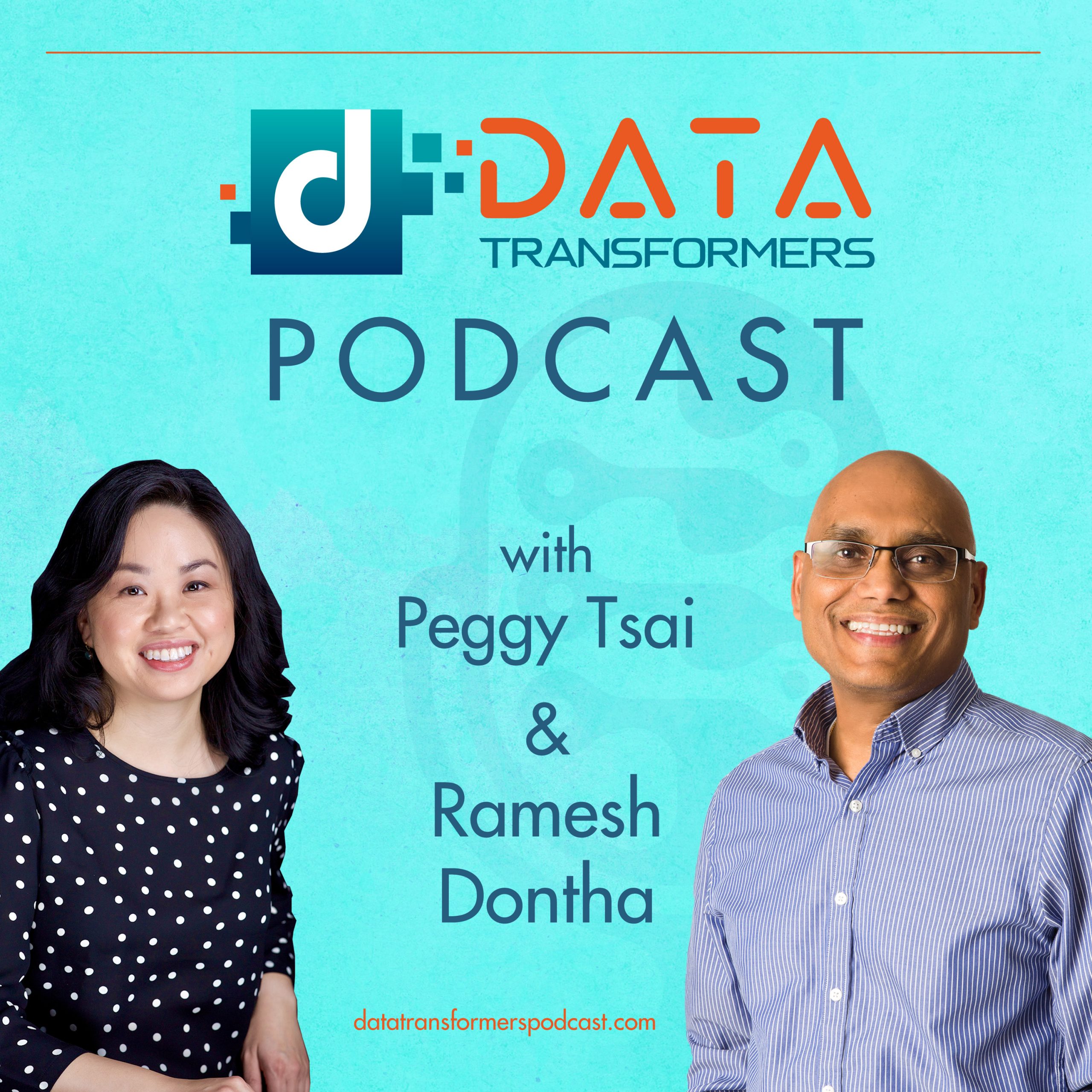
Data Transformers Podcast
by Data Transformers Podcast
The primary goal of Data Transformers podcast is to accelerate digital transformation by bridging the gap between business goals and technology initiatives using Data as glue. Visit https://datatransformerspodcast.com for more details.With the rapid advancement of technologies such as AI, ML, IOT, Cloud computing et al and the explosion of data that these technologies rely on, it is absolutely important to manage the data in intelligent and efficient ways. We’d like to enable that by interviewing the transformers in the industry who are leading the way in digital transformation. We also would like to bring our perspectives, latest trends and most valuable resources to you so you could be a data transformer in your organization.
-
50
Data Analytics & Decision Making – Amaresh Tripathy
Amaresh Tripathi, Senior VP of Genpact manages about 10,000+ data scientists, data engineers, and technologists. H preaches ‘Making Tech work for business’ with Data & Analytics. Amaresh talked about making the workforce ‘bilingual’ i.e. business and technology. As a student of decision making, Amaresh believes that Analytics will be the front and center of all decisions going forward. Amaresh is also an adjunct professor at UNC Charlotte and chair of board for data science. With a passion for teaching and learning, Amaresh focuses on making technology real for employees as well as clients.
-
49
Inclusive Excellence for a Technology driven business – Dean Ian Williamson
Businesses need leaders who are skilled not just in business but entrepreneurial and technology areas with a bent to bring economic as well as social well being. That is the mission of Dean Ian Williamson of Paul Merage School of Business at University of California at Irvine. Dean Williamson is passionate about building talent pipelines that are not just confined to organizations but that extend beyond into the community. With a bent on fostering inclusive excellence, Dean Williamson wants to ensure that minorities of all races, color, and ethinic groups are reached out and also are provided with an environment to thrive at school and beyond.
-
48
Continuous Data Quality Monitoring with Gangesh Ganesan
Is continuous data quality monitoring a myth? Not so fast. That is according to Ganesh Gangesan, Founder & CEO of PeerNova. Traditional data quality monitoring requires data to be in a repository and data quality platforms apply certain business rules to measure the data quality. And the exceptions are referred back to the data sources/owners to fix the exceptions. PeerNova’s Cuneiform solution, with its origins in data security & networking, applies a no-code approach to solving the measurement and monitoring problem. Additionally, Gangesh talked to us about measuring the business impact of the exceptions that are identified. With a technologist background, Gangesh got an opportunity to switch to the business side when the company he was working for decided to spinoff a division. After a couple of iterations, Gangesh sold his previous company to Qualcomm. And the he embarked on the data quality journey with special focus on financial institutions.
-
47
The Future of Women in AI is bright according to The Data Leader of The year, Adita Karkera
Even though women are 47% of the workforce, less than 28% of them are in tech and even less in senior data roles. Adita Karkera, CDO advisor and the data leader of the year with WIT, explains why there is that gap. With broad experience in state government and federal governments with data management, Adita discussed the nuances of leveraging data to impact public policy. With respect to AI, Adita believes that there is a tremendous opportunity to educate the professionals as well as the general public on AI and the benefits associated with AI. Adita also talked to us about her evolution from a small city in Allahabad, India to a data leader in the US.
-
46
Five Types of Thinking for High Performing Data Scientists
Artificial Intelligence is all the rage currently. But there was a time when AI has gone through ‘AI Winter’ when there was not much interest in AI. Dr. Anand Rao has gone through those AI Winters. To avoid AI winter, we need to be cognizant of AI risks. Should be balance between AI innovation and risks. Should not reduce customer risk. In thos episode, Anand talks about five types of thinking that data scientists should focus on to be high performing data scientists. As the Global head of AI at PWC, Anand knows a lot about the customer uptake of AI and (un)surprisingly only 20% of the companies are actually deploying AI. Listen to the episode to find out which functions are adopting AI the most.
-
45
Data Analytics By Design with Dr. Kirk Borne
Managing data at the speed of business versus managing business at the speed of data. Data moves the fastest so business should be moving at the speed of data. Analytics is the main beneficiary of this data. Dr. Kirk Borne has always been a scientist with jobs in data science, Astrophysics, and data analytics. After a very successful stint with NASA, George Mason University, and Booz Allen, Kirk started a new chapter with a startup that matches job seekers with companies using ML algorithms to match. This fascinating episode traverses his journey across these organizations and functions.
-
44
Building a 24 hour Data Science Community with Danielle Oberdier of Dikayo Data
Data Science community should be a representative community to drive meaningful impact according to Danielle Oberdier of Dikayo Data. She is facilitating that with a 24 hour data science community and DataFemme podcast and twitter communities.
-
43
Cybersecurity and AI working together to make systems safe with Dr. Madiha Jafri
Artificial Intelligence and Cybersecurity are large and complex domains each by themselves. When you combine both of them, it could be overwhelming. Dr. Madiha Jafri, Associate Fellow at Lockheed Martin for AI & Cybersecurity navigates these domains to make systems safer. In this episode. Dr. Jafri articulates how AI can help speed up cybersecurity threat detection. She also talked about her journey starting from cryptography to nanotechnology to AI. The discussed addressed challenges such as data engineering, relevance of Ops, and navigating the plethora of technologies to find that needle in a stack.
-
42
To improve data quality, start at the source – Jacklyn Osborne
Very often, organizations focus a lot on data cleansing after the data has been captured. But any incremental effort spent on focusing on data quality at the source will reap long term benefits. In this episode, Jacklyn Osborne, Data Quality Control executive at Bank of America, talks about the importance of data education to frontline employees so they can also be stakeholders of data quality. Jacklyn talked about the role of CDO, skills necessary for CDO, and how CDO can be empowered by where they sit in an organization. With deep expertise in the financial industry, Jacklyn talked about data monetization and treating data as an asset in financial industries.
-
41
Data Ops should be part of everyone on the Data team – Christopher Bergh
Data Ops is about working with everyone who deals with Data to deploy data related projects together. It is not just one person’s job. Christopher Bergh, CEO of Data Kitchen has embarked on Data Ops journey much earlier than the industry was asking for it. Nowadays, everybody including Gartner is talking about Ops, Data Ops, Dev Ops, ML Ops, X-ops etc. But Ops should not be a single person’s job. It should be 10% of every team member’s job to think about Operations. Just like Deming prescribed in a manufacturing process, it should be part of the system and framework.
-
40
Combining the passions of Data and Teaching with Laura Ellis
Laura Ellis, IBM Cloud systems Architect, always wanted to be a teacher. A recognition here and an award there in Computer Science got Laura interested in computer science and later a job with IBM. Laura combined her passion for teaching with DB2 and toured the world training others in DB2. As the business intelligence started picking up in 2013, Laura completed a part time MS in Predictive analytics and switched in data science. Laura realized that the organization needed people with other skills in data engineering, data wrangling etc and adapted. Laura started Little Miss Data as a personal project to combine data science with her personal passions such as Peloton R and teaching kids about data science. Laura believes that the future trend is about data security and ethics.
-
39
Overview of 2021 MIT Sloan CIO Symposium with Allan Tate
2021 The Big Reset - Digital Enterprises shift into High Gear. Much of the workforce has been forced into the digital space, a major shift, and leadership must adapt. The pandemic proved how vital a CIO is to an organization as they deploy technology to benefit employees and end users. More and more CIOs are becoming accountable for the digital performance of enterprises around the world.
-
38
Data Diva talks data privacy – Conversation with Debbie Reynolds
Data privacy has come up on the trending topics recently because of Whatsapp policy changes by Facebook and news about Clubhouse app’s request for contacts list on the device. Debbie Reynolds explained the intricacies of data privacy, consent, and convenience. Debbie’s contention is that privacy can be used as a business advantage to acquire more customers. Debbie also talked about privacy risk index that she has come up with in association with Privacy & Cookies based in London. This episode ended with Debbie’s anecdotal story about her nick name Data Diva.
-
37
Iceberg strategy for Chief Digital/Data Officers
Nowadays, there are a lot of expectations of Chief Data Officers for both short term and long term. One way to manage the expectations is to have a two-track strategy. CDOs need to have a list of items that are of value to business stakeholders in the short term and also have a long term roadmap. Krishna Cheriath, CDO of Zoetis, the largest animal health company in the world, has been experimenting with Iceberg strategy with great results. Krishna is an advocate of every employee being a digital citizen with a certain expectations of them and also with a need to be more aware.
-
36
The pillars of a successful data strategy – Jennifer Agnes
Data strategy can’t live by itself. It needs to be driven by a business strategy. A six pillar approach to data strategy will stand the test of time. 1) Understanding and creating the vision (2) people and culture (3) Operating model (4) Data platforms, tech and architecture (5) Data excellence (6) . Jennifer Agnes, who was implementing data strategy within the corporations, is now helping companies as a consultant. For any work, an assessment is the first step. The gaps from the assessment will direct the next steps.
-
35
Storytelling ABOUT the data is as important as storytelling WITH the data
The concepts behind master data have been around for a very, very long time. Which means the businesses won’t function well without implementing master data. Scott Taylor, the Data Whisperer, believes that it is more productive to talk to management about data than the processes behind it. The business side is more interested in the WHY side of data. Why are you telling me about this? Why are we funding this? What does it matter to me? So there is always that gap between requirements/implementation versus strategy/rationale. Storytelling is very hot right now. But most of the storytelling is focused on data analytics, visualization, charts etc. But not many are focusing on storytelling of the data management itself. Telling stories of the data is as important as telling stories with data. Data management is about determining the truth. So instead of saying garbage in garbage out, be strategic about the gaps in that truth.
-
34
Security, Privacy, Integrity, Transparency for AI Systems – Pamela Gupta
As AI and its subset Machine Learning systems continue to increase in breadth and depth around us from systems being used in courts around the country to assist in determining length of incarceration to connected systems to home based devices such as Alexa, Siri and Google home - one glaring gap and risk is that of security in the development of these systems. Traditional security SDLC is not going to be sufficient to identify security, privacy vulnerabilities in these systems. Artificial Intelligence systems require a different approach that includes the traditional security methods such as access control etc but more, a lot more - Pamela is proposing a model that aims to build 4 critical components as a part of the build process. Security, Privacy, Integrity and Transparency so we can ensure we have secure, resilient systems with outcomes that we can trust.
-
33
Ethical considerations for companies in implementing AI
Artificial Intelligence deployments are at an early stage almost akin to E-Commerce deployments were 15 years ago. The terminology is still being understood and normalized. Fion Lee Madan of Fairly AI goes over the need for fairness for AI based on her observations in personal life. Similar to DevOps for e-commerce, there is need for ML ops and model ops for AI as well. Unfortunately, business decision makers focus on ROI first with governance second. Regulation can help balance the equation.
-
32
Aligning data processes, management & tools in a CDO role
Business Intelligence has evolved significantly over the years. In Gen 1, BI was predominantly owned by IT. In Gen 2, starting in 2000 or so, business users have gotten involved with self-service analytics. Going forward in 3rd gen, the focus will be on controlling and managing the backend of data management & governance and liberating the front-end of analytics & visualization with democratization of data. Joe DoeSantos, CDO of Qlik, has seen this evolution with multiple companies. Given that data scientists and other analysts will be needing raw data as opposed to processed data, the job of a CDO should be to catalog raw data at speed and allow analysts and data scientists to analyze as quickly as possible. To enable this, AI models can be used to enable a fast data cataloging at speed. With self-service analytics, there will be more and more need to manage & govern AI models along with data to ensure that the outcomes are ethical.
-
31
Focus on business use cases first – Greg Coquillo
With so much hype about machine learning, people think every problem needs to be solved and can be solved with ML. In this episode, Greg Coquillo goes over the importance of separating use cases where ML can be beneficial and use cases where just a rule-based approach might work. Greg talked about re-learning statistics, probability, and data science to apply strategically in his job. Greg is taking his team to using ML where it makes sense such as classification so ML can do lot more and lot faster than humans. The episode also covered the importance of transparency in AI/ML and how documentation is key to driving that transparency.
-
30
Impact of COVID-19 on digital transformation of education and health
COVID-19 has accelerated digital information by multiple years in many industries and especially in education and health. UC Irvine Vice-Chancellor Tom Andriola was in the middle of it all. Within 6 months of accepting and defining the first ever Vice Chancellor & Chief Digital Officer of UC Irvine, Tom was thrust into shaping predictive analytics for identifying most likely patients for intensive care based on multiple sets of data and identifying patients who can be treated from home. Similarly, Tom’s team had to help educators who haven’t advanced much on remote learning to ensure that all the students are on par. Going forward, Tom is focusing on ensuring hybrid instruction is part of UCI’s DNA going forward. The episode discussed innovation and the strategic and tactical nature of innovation in great detail. Based on Phillips Health experience, Tom came to a conclusion that Data is a strategy and not just an asset and not just a facilitator and started using his experience at UCI. Given that data is interdisciplinary by nature, UCI team has started investing in Collaboratories where teams from multiple disciplines from UCI and the industry have come together to solve bigger problems.
-
29
Navigating a CDO role across geographies, organizations and cultures
Althea Davis served as a Chief Data Officer (CDO) across at least 5 different organizations and multiple cultures. After shuttling between Canada and the United States, Althea studied in Germany on a Fulbright scholarship. From there, she settled down in the Netherlands for 30 years or so climbing up the ranks to become a CDO at multiple organizations. Interestingly, Althea served the CDO role not as an employee but as an external consultant. The episode covers Althea’s opinions on the role of CDO and her experience across multiple geographies and cultures.
-
28
Data monetization starts with focus on Customer engagement & Customer Journey
The key focus of data and analytics should be about data monetization. And Data monetization starts with the understanding of data usage and people who value data. Given that business drivers like inventory reduction and predictive maintenance improvement are key business metrics, data scientists and data engineers should start understanding the business drivers that attach value to data. Bill Schmarzo believes that customer engagement and operational improvement are teh key drivers for monetizing data. Bill also believes that employee learning and adaptation should also be key objectives of technology initiatives such as AI & ML. According to Bill, Data Monetization Officer role is more important than a Chief Data Officer role and the role should be cross functional directly under CEO/COO.
-
27
Collaboration and Data competency are key for Data Analytics Success
Data analytics projects, as opposed to ERP or CRM projects, lack clear requirements. As the business owners are ultimately accountable for the outcomes of data analytics projects, they’ll be skeptical and possibly intimidated by the technologies used in analytics such as machine learning etc. The way to address this is with a collaborative platform that has workflows where multiple technology and business stakeholders can participate from the get go. The collaborative workflow based approach can also be used as a training and documentation platform for upskilling/reskilling employees as well as addressing regulatory/compliance requirements. The collaborative transparent workflow approach will also make the entire process more transparent with explainability built in.
-
26
A blueprint for data strategy driven by business strategy
Business executives using data to drive decisions has only gone from 10% to 13% over a period of 20 years. The reason for such a small shift is that the key business people are still not brought up to speed on how focusing on data could improve EBITDA and other business metrics significantly. One of the ways that can be done is by creating a role of a data economist whose job is to create an economic model of a data initiative. Keyur Desai, former CDO of Ameritrade, became a CDO when the job was ill defined and focused more on the data governance aspects. In more recent times, the role of CDO has expanded and included even data science functions. Keyur’s prescription for a successful data strategy is to identify key business drivers and align data strategy to the business strategy that delivers those metrics.
-
25
Using Data Analytics for human capital management and career management
Human capital management is not just about helping companies find the people with right talent at the right time. By using data analytics, companies can learn about patterns, trends, and predict labor spend. Salema Rice works as Chief Data & Analytics officer for Geometric Results Inc (GRI), one of the largest contingency talent providers, uses data extensively to be a strategic partner to the companies they work with. As a prior Chief Data Officer in many industries, Salema talked about the evolving role of a CDO over the years. It used to be just about data governance in the early 2000s. Now it is about all aspects of data even extending to data science and business intelligence. The discussion also focused on the impact of COVID pandemic on the recruiting process, placing contingency workforce, and training them.
-
24
Helping Businesses Responsibly Implement AI
Businesses need to evaluate AI strategy as a key element of corporate strategy and not as a separate strategy. Example, if diversity and inclusion is a core strategy, those values should be part of AI strategy too. Cortnie Abercrombie, CEO & Founder of AI Truth, worked with many businesses as part of IBM’s Digital Transformation team. Cortnie advocates that businesses need to start with a goal. Is this a goal we need to pursue AI for this goal? Could we pull the use case in a way that does more good? Example: Targeting heavy smoking people for additional sales? She also warns businesses that AI models are not just set and forgotten. They need to properly document so they can be explained and maintained.
-
23
How To Measure, Manage, and Monetize Information As An Asset
It has become a cliche to say data is an asset. If an organization is not making an attempt to measure, manage, and monetize, information can’t be an asset. Doug Laney is one of the foremost thought leaders who has been espousing Infonomics and the need for organizations to monetize their data. Doug was also the leader who came up with 3 Vs to describe Big Data and the one who came up with 4 types of analytics namely Descriptive, Diagnostic, Predictive, and Prescriptive. Doug’s assertion is that leading organizations focus on reaping the benefits by implementing the last 3 types of analytics. To enable any type of analytics though, leaders in organizations have to ensure that data literacy and data culture are pervasive.
-
22
Defensive Versus Offensive Data Strategies
Data is never perfect. The key question for data practitioners should be ‘Is it good enough’ for the problem to be addressed’? Each analytics situation requires its own strategy with respect to the quality of data being fed and the time/cost it requires to incrementally improve the quality. Wendy Zhang had multiple hats at different companies as a data governance lead and data analytics lead. Wendy had the luxury of building a data governance team from scratch at Wells Fargo and now works with a consulting organization helping with data governance and analytics strategies. Wendy also believes that organizations may need defensive or offensive strategies depending on their situation. If a financial organization needs to comply with regulatory mandates, a defensive strategy may be best. On the other hand, a mature data-capable organization will be best served with offensive strategies.
-
21
Can Video Artificial Intelligence help with use cases like Elderly care and Child care?
Video AI is evolving and evolving rapidly in many segments such as healthcare for diagnostic purposes, MarTech for analyzing videos for brand recognition and Ad placement for example. Video AI usage in elderly care and child care are ripe for huge benefits as they require significant human participation. Video AI can address both costs as well as skill shortage in those areas. Personalization and analyzing consumer behavior are segments evolving for video AI usage. Still barriers exist in compute performance for modelling 3D world, real-time computing and inferencing, and barriers in power consumption especially in edge AI where there is limited power. While dealing with AI ethics, it is very important to separate privacy related issues from bias related issues. Bias is inherently in human beings and not in technology. So technology should be used to de-bias decisions.
-
20
Is Video Artificial Intelligence Ready for Prime Time?
Video AI is a growing market with lots of innovation. The Video AI market encompasses Video surveillance, Automatic/self-drive vehicles, content moderation in video, automatic video editing. Convolution Neural Networks is the backbone of Video AI in many applications and the challenge lies in training the data as well as abstracting the outcomes for better outpost. The field is still emerging and the technology is still evolving in many of these areas. As an example, even though Youtube would like to have a general understanding of the video so they know when to insert relevant ads, the technology to do that is just emerging. Dale Hitt, who worked at many startups as well as large companies, goes over his experience with innovation at small and large companies.
-
19
How to address the blind spots of data scientists
A good data scientist is not only good at coding, tweaking models but is also good at assessing the outputs of the models in the context of business decisions. As data scientists spend upto 80% of their time data munging, they will be better off spending some quality upfront time with the business leaders asking questions about the customer journey and how the data is collected along the way. Even though the data scientists are not expected to be business domain experts, they should think of their output in the context of business outcomes and communicate their results in business terms. The episode also emphasizes the need for all types and sizes of companies to get acquainted with analytics or fall behind.
-
18
Data Science teams need people with multiple skill sets
Data science career path doesn’t have to be purely technical. A data science team needs multiple skill sets. In this episode, Phil Bangayan, Principal Data Scientist at Teradata, talks about his career path from an electrical engineering background to MBA to Finance to Marketing and Data science. Phil talks about the need for the data science team to be able to communicate the outcomes of models in an understandable manner with CXOs. Phil also talks about the need for data science teams to have people with multiple skill sets.
-
17
What Does It Take To Be A Data Scientist?
How does one get to be a Vice President of AI at a global semiconductor leader? What professional journey can take from a Ph. D. to that influential role? Patrick takes the audience on a journey from upbringing in Germany, Malaysia, Philippines to education in the UK to an initial job at Los Alamos lab to the CEO of a startup to VP at Samsung. Later on Patrick talks about the skills and experience needed to be a data scientist and the emphasis on communication and business acumen to be a successful data scientist. The episode also discusses where leaders can learn from and what they should be doing continuously.
-
16
Developing Practical AI Applications – Patrick Bangert
The episode focuses on developing practical applications using AI. Patrick Bangert, as the head of AI Engg and AI services at Samsung SDS, is in charge of including AI in almost all Samsung applications that are deployed on Samsung phones. If anyone is interested in learning the various phases of developing AI applications, this is the episode. Patrick discusses the various phases such as developing models, training the models, and deploying the models. The episode also goes over the proper characteristics of data for developing good ethical and explainable AI applications.
-
15
Good Artificial Intelligence Governance is Good Business
AI governance is about AI being explainable, transparent, and ethical. However, those three words mean different things to different organizations or functions within organizations, which results in slightly different definitions or descriptions of what AI governance is. David Van Bruwaene goes over his own professional journey which started with an undergrad degree in Philosophy. As he was traversing between philosophy and logic in his academia, David realized that data science and AI are emerging fields. After his education, David realized that there is very little focus on ethics and AI governance and started exploring that area. One thing led to another and quickly David was heading up an AI startup. After he sold the initial startup, David started an AI company focusing on ethical AI and AI governance.
-
14
What is Responsible AI and Ethical AI?
Can Artificial Intelligence help society as much as it helps business? Is this the golden age for AI but only for certain sections of the society and not for all? We need to establish ethical standards in dealing with artificial intelligence - and to answer the question: What still makes us as human beings unique? Mankind is still decades away from self-learning machines that are as intelligent as humans. But already today, chatbots, robots, digital assistants and other artificially intelligent entities exist that can emulate certain human abilities. Scientists and AI experts agree that we are in a race against time: we need to establish ethical guidelines before technology catches up with us. How dangerous could artificial intelligence turn out to be, and how do we develop ethical AI? Artificial Intelligence (AI) technology poses serious ethical risks to individuals and society. David Van Bruwaene explains how we can deal with these risks more effectively if we approach them using tools from applied philosophy.
-
13
Collaboration is key to formulate and implement Data strategy
A data strategy and data policies resulting from the strategy should be a collaborative approach. Diane explains the process in which London Stock Exchange Group (LESG) went through the survey process to collaborate with stakeholders to get their feedback and in the process elevate the level of data literacy. The episode also covers how Diane started as a data modeler but took advantage of the opportunities thrown at her and worked hard to become a CDO. With respect to trends, Diane emphasized the need to take advantage of latest tooling to improve visualization in analytics. Finally, Diane discussed her perspectives on being a woman in technology field and her advice to others.
-
12
From a Data Modeler To Chief Data Officer
This episode with Diane Schmidt is an inspiring story of how to grow in a data career. Diane started her journey as a data modeler and gradually grew to become the chief data officer of London Stock Exchange. Diane is a student of Data and the episode covers all aspects of data analytics, data governance, and data strategy.
-
11
From Liberal Arts to Data and Analytics strategy advisor
The episode covers the professional journey of Jill Dyche from a liberal arts background to data strategy consulting founder to being an author of 4 books on data and analytics. The theme of her work as well as the books has been to extract the business value of data and technology. Jill has been able to combine both her passions of shelter dogs and analytics and apply analytics to deriving insights to increasing the adoption of shelter dogs.
-
10
The value of Strategy and Data Culture in organizations with Jill Dyche
Data mature companies tie their corporate objectives to data and analytics initiatives. It is no longer sufficient to focus on revenues and costs but leaders are looking at enhancing brand value with analytics. Given the higher purpose of data and analytics, strategy and data culture are critical in organizations. With the advent of AI, organizations need to reinvest in data and skillsets to forge ahead.
-
9
Three Most Important Legs of Information Management
The episode starts with a focus on the 3 legs of information management which are data quality, data sensitivity, and master data management. Later, the discussion focuses on advice to aspiring data management and data governance professionals about most resourceful web sites, conferences and certifications. The episode concludes with a discussion on data governance best practices which start by identifying top 10 reports.
-
8
Data Governance with a focus on Data monetization with Kevin Ladwig
Organizations used to ask what and how when it came to data governance and now they have progressed to asking why. To a large extent this is driven by an intent to monetize data. Gradually we are also seeing data monetization officers in organizations. In order to be really successful with data governance, organizations need to look at capabilities from tops down and also assess current state from bottom up.
-
7
SMARTER framework to drive decisions using data
Data is meant to drive decisions. So start replacing the word data with decisions. For example, Chief Decision Officer instead of Chief Data Officer. Lori Silverman has summarized her years of experience into a framework called SMARTER to enable executives to focus on decisions using data. The framework will add analytical thinking to strategic thinking. All of this is only possible by increasing data literacy and data culture in organizations.
-
6
Data to Insights & Decisions to Actions with Lori Silverman
The primary focus of a business driven organization should be to derive actionable insights based on data. So the focus should not be on data but on what insights help make decisions that they can implement. The episode discussion focuses on the challenges that CEOs are faced with respect to making decisions (right or wrong) and acting on the decisions made. Data should be secondary thought compared to the business decisions and the inputs to make those decisions.
-
5
Data Strategy for FinTech use cases such as Fraud Detection
Artificial Intelligence and Machine Learning (AIML) has been extremely beneficial for some use cases such as fraud detection in FinTech sector. AIML enabled companies to do real-time fraud detection from what used to be a batch-oriented fraud detection. But to be able to do that, companies need to have an enterprise wide data platform. Additionally, organizations need to think through the entire process of AIML instrumentation to adopt to changing use cases and not just data and models. Lastly, COVID focused businesses to compress technology adoption to a few months and this has been good for businesses.
-
4
Artificial Intelligence & Machine Learning in Financial Sector – Shailendra Malik
Financial institutions have been both leaders and laggards in adopting Artificial Intelligence and Machine Learning. Shailendra Malik is the Tech delivery lead for DBS bank’s internal audit, a major financial institution in Asia based in SIngapore. Shaliendra walks us through the areas where banks are leading and also lagging in adopting modern technologies. Additionally, Shailendra talks about his pwn journey that took him across many countries and many domains. Lastly, he talked about a professional blogging platform that he was able to successfully build on the side.
-
3
AI requires interdisciplinary teams, Quality Data & Explainability
Artificial Intelligence and Machine Learning projects require interdisciplinary skills in devops, SW engineering in addition to hard core data science coding skills. Additionally, lot of rigor needs to be put into cleaning up the data that is fed into the models. On an interesting note, AI models can also be used for improving data quality as well. Lastly, Explainability of models and data is becoming important and as such explainability needs to be baked in.
-
2
A fascinating journey as the head of Artificial Intelligence with Fiona Browne
Fiona Browne is the head of Artificial Intelligence at Datactics. Her journey from an all-female school into computer science, a Ph. D. in BioInformatics, lecturer, and corporate experience in software engineering / development prepared her for her current position. The rigor/discipline in Ph.D., experience of dealing with large and incomplete datasets both in protein development Ph.D. projects and later in virtual telescopy was ideal for data science. As head of AI at Datactics, Fiona focuses on financial/banking/government sectors in dealing with data profiling/matching and self-service analytics.
-
1
How to build and scale a data advisory business with Jay Zaidi
Key topics covered in this episode are (1) how to build and scale a data advisory business (2) Key influences for data management & data strategy (3) Key trends in the data management area. The episode goes into significant details on the external and internal drivers for data governance.
We're indexing this podcast's transcripts for the first time — this can take a minute or two. We'll show results as soon as they're ready.
No matches for "" in this podcast's transcripts.
No topics indexed yet for this podcast.
Loading reviews...
ABOUT THIS SHOW
The primary goal of Data Transformers podcast is to accelerate digital transformation by bridging the gap between business goals and technology initiatives using Data as glue. Visit https://datatransformerspodcast.com for more details.With the rapid advancement of technologies such as AI, ML, IOT, Cloud computing et al and the explosion of data that these technologies rely on, it is absolutely important to manage the data in intelligent and efficient ways. We’d like to enable that by interviewing the transformers in the industry who are leading the way in digital transformation. We also would like to bring our perspectives, latest trends and most valuable resources to you so you could be a data transformer in your organization.
HOSTED BY
Data Transformers Podcast
CATEGORIES
Loading similar podcasts...
Frequently Asked Questions
How many episodes does Data Transformers Podcast have?
Data Transformers Podcast currently has 50 episodes available on PodParley. New episodes are automatically indexed when they're published to the podcast feed.
What is Data Transformers Podcast about?
The primary goal of Data Transformers podcast is to accelerate digital transformation by bridging the gap between business goals and technology initiatives using Data as glue. Visit https://datatransformerspodcast.com for more details.With the rapid advancement of technologies such as AI, ML, IOT,...
How often does Data Transformers Podcast release new episodes?
Data Transformers Podcast has 50 episodes. Check the episode list to see recent publication dates and frequency.
Where can I listen to Data Transformers Podcast?
You can listen to Data Transformers Podcast on PodParley by clicking any episode. We provide an embedded audio player for direct listening, and you can also subscribe via your preferred podcast app using the RSS feed.
Who hosts Data Transformers Podcast?
Data Transformers Podcast is created and hosted by Data Transformers Podcast.
URL copied to clipboard!