
PODCAST · education
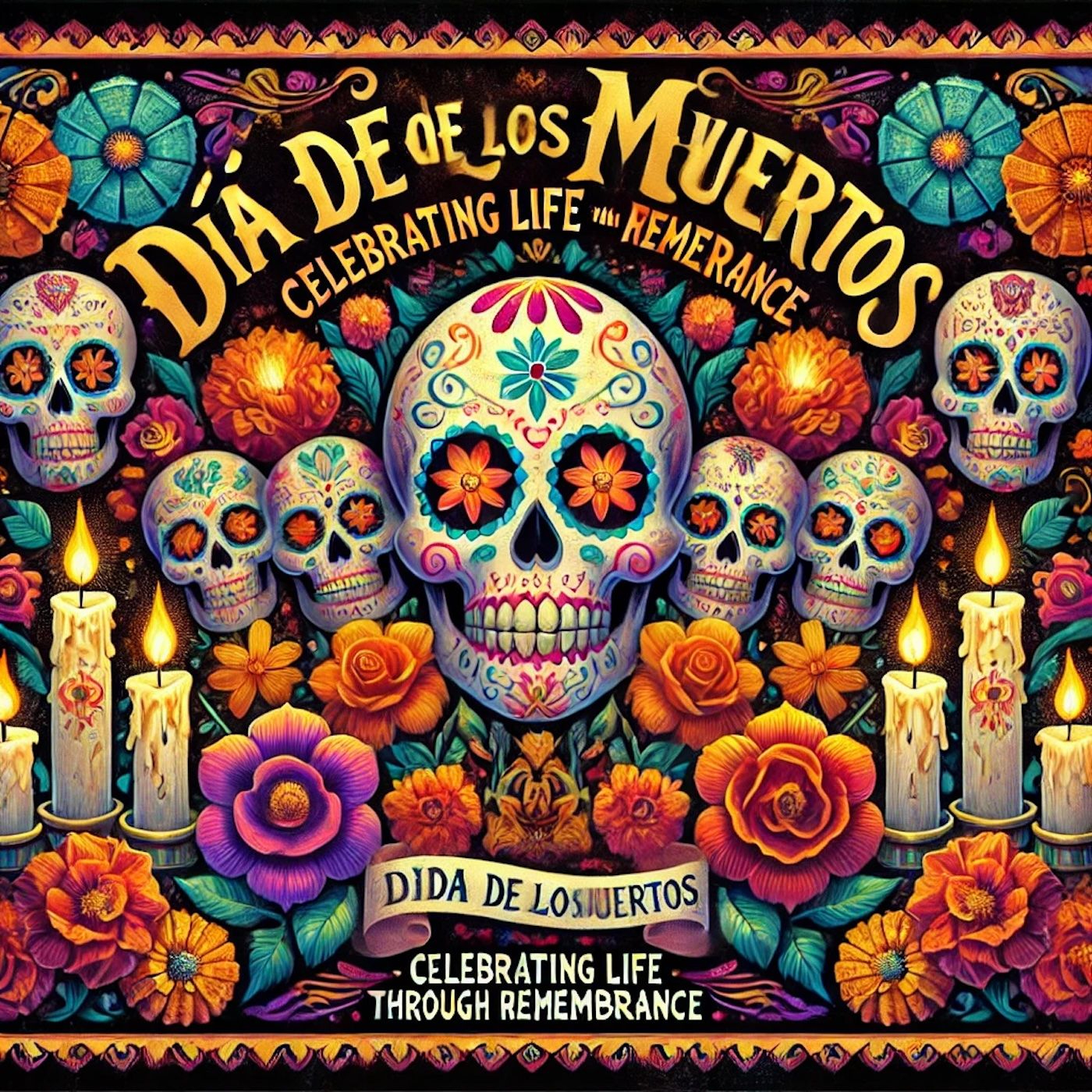
Día de los Muertos: Celebrating Life Through Remembrance
by Inception Point Ai
Día de los Muertos: Celebrating Life Through Remembrance Part 1: Origins, Evolution, and Sacred Traditions In the crisp autumn air of late October, the streets of Mexico begin their transformation. Marigold petals carpet cobblestone paths, their distinctive fragrance mingling with copal incense and fresh bread. Market stalls overflow with sugar skulls, their crystalline surfaces glinting in the sunlight. Día de los Muertos, or Day of the Dead, stands as Mexico's most profound celebration – a time when the veil between worlds grows thin, and the dead return to dance among the living. This isn't merely a holiday; it's a cultural masterpiece that transforms the universal experience of loss into a celebration of enduring love and remembrance. The Ancient Roots of Remembrance To understand Día de los Muertos is to journey back through millennia of Mesoamerican civilization. Long before European contact, the indigenous peoples of Mexico maintained sophisticated beliefs about death and the af
-
2
Pt. 2 Traditions and regional expressions
Building upon the profound traditions and regional expressions of Día de los Muertos, the celebration is not just a colorful event but a window into a philosophy of life, death, and the spiritual connection between past and present. In recent years, Día de los Muertos has become more than a festival—it is evolving into a social and cultural movement that connects communities, fosters social justice, and raises awareness about environmental and global issues. This follow-up article explores how Día de los Muertos is transcending its roots, influencing global communities, and acting as a platform for education, cultural preservation, and activism. Part 1: Día de los Muertos and Social Justice Movements The spiritual and familial elements of Día de los Muertos naturally extend to themes of social justice and remembrance. The tradition of honoring the dead is particularly poignant in regions or among groups affected by violence, social inequality, and injustice. In Mexico, Día de los Muertos has become a way to honor victims of violence, especially in regions affected by conflicts related to organized crime or social upheaval. Families and communities dedicate ofrendas to loved ones lost to such violence, turning the celebration into a powerful act of resilience and collective mourning. Ofrendas for Victims of Social Injustice In recent years, activists and families have set up public ofrendas dedicated to individuals who lost their lives to violence, discrimination, and systemic injustice. These ofrendas not only honor the deceased but also raise awareness about the struggles faced by marginalized communities. In Mexico, ofrendas for journalists who have lost their lives reporting on dangerous stories, indigenous activists defending land rights, and migrants who died in pursuit of a better life serve as poignant reminders of the need for change. Outside of Mexico, Día de los Muertos has inspired similar acts of remembrance. In the United States, particularly in California and Texas, communities have begun creating ofrendas for victims of police violence and those who died while attempting to cross the U.S.-Mexico border. These symbolic spaces foster solidarity and encourage broader conversations on issues like immigration, human rights, and racial justice, linking the holiday's spiritual themes to contemporary issues. The Day of the Dead Parade as a Platform for Change In Mexico City, the Day of the Dead parade has become a vibrant and high-profile event, showcasing not only traditional themes but also calls for social justice. In recent parades, massive skulls and skeletons have been adorned with symbols and signs protesting environmental destruction, advocating for women's rights, or denouncing corruption. Art installations and performances during the parade often carry powerful messages, blending aesthetics with activism. By weaving these messages into the celebration, Día de los Muertos becomes a vehicle for expressing the need for societal transformation. Part 2: Cultural Preservation in the Face of Globalization As Día de los Muertos spreads worldwide, the cultural preservation of its core values becomes a delicate balance. While the global appeal of Día de los Muertos strengthens its visibility, it also brings challenges associated with cultural appropriation and the dilution of its deeper meanings. Protecting the Integrity of Día de los Muertos Symbols Catrina face paint, sugar skull motifs, and marigold flowers have become popular globally, particularly during Halloween. However, these elements are often commercialized in ways that strip them of their significance. Cultural organizations in Mexico and abroad have started educational campaigns to clarify the meaning behind these symbols, encouraging people to approach Día de los Muertos with respect and understanding rather than as a trend. In response to concerns of appropriation, some communities have launched initiatives aimed at educating people on the holiday’s roots. Museums and cultural centers worldwide are hosting workshops that explain the spiritual significance of the ofrenda, the symbolism of the marigold, and the story behind La Catrina. This emphasis on cultural preservation not only protects Día de los Muertos from becoming overly commercialized but also encourages deeper intercultural understanding. Virtual Spaces and Digital Ofrendas as Tools for Education With the rise of digital ofrendas and online celebrations, Día de los Muertos has found new spaces for expression. Digital altars and online workshops have made the tradition accessible to people who may not have been exposed to it otherwise, while also allowing families separated by borders to come together in shared remembrance. Social media campaigns by cultural organizations offer information on the history of Día de los Muertos, its symbolism, and respectful ways to participate, ensuring that the essence of the celebration endures in the digital realm. These virtual platforms allow Mexican communities and cultural organizations to reach a broader audience, helping non-Mexican participants learn about Día de los Muertos’ importance, not just as a holiday, but as a cultural and spiritual heritage. Part 3: Día de los Muertos and Environmental Awareness Día de los Muertos has always held a deep connection to nature, symbolized by the use of marigolds, incense, and traditional foods. In recent years, environmental issues have prompted many people to consider more sustainable ways to celebrate the holiday. Communities are increasingly aware of the environmental impact of certain materials and are adapting their traditions to reduce waste and promote ecological consciousness. Sustainable Celebrations: Redefining Traditional Practices Traditionally, Día de los Muertos decorations include papel picado (cut paper banners), real candles, and imported marigolds. As environmental awareness grows, some families and organizations have begun using LED candles, biodegradable papel picado, and locally sourced or planted marigolds instead of imported varieties. This shift not only preserves the aesthetic of the celebration but also aligns with modern values of sustainability and environmental stewardship. In addition to adapting decorations, some communities have chosen to incorporate environmental themes into their ofrendas. Altars dedicated to environmental activists, indigenous land protectors, and endangered species highlight the urgent need to respect and protect nature. This evolution in Día de los Muertos traditions underscores the holiday's adaptability, demonstrating that it can retain its core meaning while evolving to reflect contemporary concerns. The Role of Monarch Butterflies as Symbols of Resilience The monarch butterfly migration, which brings millions of butterflies to Mexico each fall, has long been associated with Día de los Muertos. Indigenous groups interpret the arrival of the monarchs as the return of ancestral souls. However, climate change and habitat destruction have put the monarch population at risk, making their symbolic role even more poignant. Environmental groups have used Día de los Muertos celebrations to educate the public about the plight of the monarchs, incorporating butterfly imagery in parades, altars, and public displays. This convergence of ecological awareness with cultural symbolism highlights Día de los Muertos as a celebration deeply rooted in the cycles of nature. Part 4: Global Impact and Cultural Exchange As Día de los Muertos expands internationally, its impact on global culture has sparked both appreciation and adaptation. Non-Mexican communities have embraced the holiday for its beauty, symbolism, and emphasis on remembrance, and while this global spread carries the risk of commercialization, it also offers opportunities for meaningful cultural exchange. Día de los Muertos in the United States: Building Bridges and Honoring Heritage In cities like Los Angeles, San Francisco, and Austin, Día de los Muertos celebrations have taken on new forms that honor Mexican and Mexican-American identities while inviting people of other backgrounds to participate. The event provides a space for Mexican-Americans to celebrate their heritage openly, building a sense of community and belonging. Some U.S. festivals combine Día de los Muertos traditions with local customs, creating a fusion that respects the original celebration while making it accessible to a broader audience. Through these festivals, Día de los Muertos fosters intercultural dialogue and allows people to reflect on their own traditions of remembrance. It also serves as a reminder of the contributions of Mexican culture to the United States, deepening understanding and reducing stereotypes by emphasizing shared human experiences of love, loss, and memory. Addressing Cultural Appropriation with Education and Inclusivity To prevent Día de los Muertos from becoming a mere aesthetic trend, cultural organizations and educators emphasize the importance of understanding the holiday’s true significance. Campaigns that discourage the sale of mass-produced Día de los Muertos-themed merchandise and encourage cultural sensitivity are helping to address issues of appropriation. By promoting inclusivity and education, these initiatives invite people to engage with Día de los Muertos in ways that honor its origins. The celebration’s essence lies in its respect for the dead and the life-affirming power of memory. In encouraging respectful participation, Día de los Muertos continues to be a bridge for global connections, grounded in empathy and understanding. Part 5: The Future of Día de los Muertos – Preservation Through Adaptation The strength of Día de los Muertos lies in its adaptability. As it moves forward into new cultural and social contexts, it continues to hold on to its essential spirit—a celebration of life, death, and the interconnectedness of all things. The holiday’s ability to embrace change while prThis content was created in partnership and with the help of Artificial Intelligence AIThis episode includes AI-generated content.
-
1
Part 1- Origins, Evolution, and Sacred Traditions
Día de los Muertos: Celebrating Life Through Remembrance Part 1: Origins, Evolution, and Sacred Traditions In the crisp autumn air of late October, the streets of Mexico begin their transformation. Marigold petals carpet cobblestone paths, their distinctive fragrance mingling with copal incense and fresh bread. Market stalls overflow with sugar skulls, their crystalline surfaces glinting in the sunlight. Día de los Muertos, or Day of the Dead, stands as Mexico's most profound celebration – a time when the veil between worlds grows thin, and the dead return to dance among the living. This isn't merely a holiday; it's a cultural masterpiece that transforms the universal experience of loss into a celebration of enduring love and remembrance. The Ancient Roots of Remembrance To understand Día de los Muertos is to journey back through millennia of Mesoamerican civilization. Long before European contact, the indigenous peoples of Mexico maintained sophisticated beliefs about death and the afterlife. The Aztec empire, centered in present-day Mexico City, celebrated Mictēcacihuātl, the powerful female deity who ruled the underworld alongside her husband Mictlāntēcutli. Their festival, originally held during the ninth month of the Aztec calendar, lasted a full thirty days – a time when the boundaries between the world of the living and the realm of the dead dissolved. The Aztec worldview saw death not as an ending but as a profound transformation. They believed that the soul's journey after death was complex and challenging, requiring four years to traverse nine distinct levels before reaching Mictlan, the final resting place. Each level presented unique trials: crossing a deep river aided by a Xoloitzcuintle dog, navigating between clashing mountains, crossing deserts and frozen wastelands, and facing fierce winds sharp enough to slice flesh. The living provided their deceased with food, water, and tools to aid them on this arduous spiritual passage. This sophisticated understanding of death and the afterlife wasn't unique to the Aztecs. The Maya civilization, with its complex calendar system and astronomical knowledge, developed elaborate rituals honoring the dead. They believed deceased ancestors could intercede with the gods on behalf of their living descendants, creating a continuous chain of mutual obligation and care between the realms of life and death. In Maya households, the bones of ancestors were kept close, often buried beneath the family home's floor, maintaining an intimate connection between the living and the dead. The Purépecha people of Michoacán contributed their own distinct traditions to what would become Día de los Muertos. Their night vigils, illuminated by thousands of candles on Lake Pátzcuaro's shores, created a bridge of light between the worlds of the living and the dead. The Totonac civilization of the Gulf Coast region developed the intricate symbolism of skulls as representations of both death and rebirth, a motif that would become central to modern celebrations. Colonial Transformation and Syncretic Evolution When Spanish conquistadors arrived in the 16th century, they encountered these deeply rooted death traditions with a mixture of fascination and horror. The Catholic Church's initial attempts to suppress indigenous practices proved futile – these beliefs were too fundamental to the region's cultural identity to be eliminated. Instead, a remarkable process of cultural synthesis began. The Church strategically moved indigenous death celebrations to coincide with the Catholic observances of All Saints' Day and All Souls' Day, creating a unique fusion of pre-Hispanic and Christian traditions. This synthesis produced unexpected cultural flowering. Indigenous symbols found new expression within Catholic frameworks, while European traditions were transformed by local interpretation. The result was neither purely indigenous nor strictly Catholic, but something entirely new – a celebration that honored both ancestral traditions and new religious understanding. This process continues today, as each generation adds its own interpretation to the celebration's rich tapestry. Regional Expressions of Remembrance Modern Día de los Muertos celebrations reflect Mexico's incredible cultural diversity. In the Yucatán Peninsula, where Maya influence remains strong, the celebration is known as Hanal Pixán ("Food for the Souls"). Here, families prepare mucbipollo, a massive tamale cooked underground in earthen ovens. The preparation begins days in advance, with women gathering to grind corn and prepare special black recado (spice paste) that gives the dish its distinctive color and flavor. The use of black ingredients – including black corn and charred chilies – connects modern celebration to ancient Maya understanding of the underworld's colors. In Oaxaca, where pre-Hispanic traditions remain particularly vital, the celebration transforms entire communities. The creation of sand tapestries (tapetes de arena) involves entire families working together to create massive, intricate designs using colored sand. These ephemeral artworks often incorporate both traditional symbols and contemporary imagery, reflecting the celebration's living nature. The comparsas (street processions) feature dancers wearing hand-carved wooden masks representing death in various guises – some fearsome, others comical, but all acknowledging death as an integral part of life. Día de los Muertos: A Celebration in Modern Times Part 2: Contemporary Practice, Global Impact, and Living Tradition The mountains of Michoacán present yet another face of the celebration. Here, on the island of Janitzio in Lake Pátzcuaro, fishermen in wooden canoes perform the "Dance of the Fish" using glowing nets, creating a mysterious display of lights on the dark water. This spectacle coincides with the return of monarch butterflies to the region – a natural phenomenon that many indigenous groups interpreted as the return of ancestral souls, adding another layer of meaning to the celebration. In Mexico City, ancient traditions merge with contemporary urban culture to create massive public celebrations. The Zócalo, once the ceremonial center of the Aztec empire, now hosts monumental installations combining traditional ofrendas with cutting-edge art. The city's famous Day of the Dead parade, though originally created for a James Bond film, has been embraced by locals and transformed into an authentic expression of modern Mexican identity. The Sacred Art of the Ofrenda At the heart of every Día de los Muertos celebration lies the ofrenda – an altar that serves as both art installation and sacred space. Creating an ofrenda is a profound act of love and remembrance that engages all the senses. The process begins with choosing the space, traditionally arranged in levels representing the journey between earth and heaven. Each element carries deep symbolic significance while serving practical purposes in welcoming returning souls. Water, placed in clean vessels, refreshes spirits after their long journey. Candles, traditionally white for purity, illuminate the path between worlds. Copal incense, used in religious ceremonies since pre-Hispanic times, purifies the space and carries prayers heavenward. Salt, arranged in a cross pattern, purifies and protects. These four elements – water, fire, air, and earth – create a balanced sacred space. The iconic cempasúchil (marigold) flowers serve multiple purposes. Their vibrant orange color and distinctive scent are believed to guide spirits home, while their scattered petals create paths leading to the altar. Some families arrange the petals in elaborate patterns, creating temporary works of art that echo pre-Hispanic traditions of ritual offerings. Photographs of the deceased occupy the ofrenda's highest level, surrounded by their favorite earthly pleasures. A bottle of tequila for an uncle who enjoyed his spirits, reading glasses for a grandmother who loved books, special tools for a father who worked with his hands – these personal items transform the altar from a generic display into an intimate portrait of loved ones. The Profound Role of Food and Feast Food plays a central role in Día de los Muertos, serving both as offering and communion. Pan de muerto, perhaps the celebration's most recognized food, varies by region. In Mexico City, it's typically round with bone-shaped decorations, while Oaxacan versions might be decorated with faces or animals. The bread's preparation involves complex rituals – many bakers observe special prayers or maintain absolute silence while shaping the dough. Traditional beverages carry their own significance. Atole, a warm drink thickened with masa (corn dough), represents the essential sustenance of corn that has supported Mexican civilization for millennia. Champurrado adds chocolate to atole, incorporating another sacred pre-Hispanic ingredient. Pulque, a fermented agave drink, connects modern celebration to ancient ritual intoxicants used to facilitate communion with the spirit world. The preparation of mole, a complex sauce combining dozens of ingredients, becomes a meditation on life's complexity. Different regions have developed their own distinctive versions – Oaxaca's seven moles, Puebla's mole poblano, San Pedro Atocpan's mole almendrado. Each ingredient adds its own note to the symphony of flavors, just as each remembered soul adds its own story to the celebration. Contemporary Adaptations and Global Influence Modern families have found creative ways to maintain tradition while adapting to contemporary life. Digital ofrendas allow families separated by migration to create shared spaces of remembrance. Social media platforms become galleries showcasing altars and celebrations worldwide, while video calls connect family members across continents during the celebration. Environmental consciousness has influenced modern observances. Sustainable alternatives to traditional materiaThis content was created in partnership and with the help of Artificial Intelligence AIThis episode includes AI-generated content.
We're indexing this podcast's transcripts for the first time — this can take a minute or two. We'll show results as soon as they're ready.
No matches for "" in this podcast's transcripts.
No topics indexed yet for this podcast.
Loading reviews...
ABOUT THIS SHOW
Día de los Muertos: Celebrating Life Through Remembrance Part 1: Origins, Evolution, and Sacred Traditions In the crisp autumn air of late October, the streets of Mexico begin their transformation. Marigold petals carpet cobblestone paths, their distinctive fragrance mingling with copal incense and fresh bread. Market stalls overflow with sugar skulls, their crystalline surfaces glinting in the sunlight. Día de los Muertos, or Day of the Dead, stands as Mexico's most profound celebration – a time when the veil between worlds grows thin, and the dead return to dance among the living. This isn't merely a holiday; it's a cultural masterpiece that transforms the universal experience of loss into a celebration of enduring love and remembrance. The Ancient Roots of Remembrance To understand Día de los Muertos is to journey back through millennia of Mesoamerican civilization. Long before European contact, the indigenous peoples of Mexico maintained sophisticated beliefs about death and the af
HOSTED BY
Inception Point Ai
Loading similar podcasts...
Frequently Asked Questions
How many episodes does Día de los Muertos: Celebrating Life Through Remembrance have?
Día de los Muertos: Celebrating Life Through Remembrance currently has 2 episodes available on PodParley. New episodes are automatically indexed when they're published to the podcast feed.
What is Día de los Muertos: Celebrating Life Through Remembrance about?
Día de los Muertos: Celebrating Life Through Remembrance Part 1: Origins, Evolution, and Sacred Traditions In the crisp autumn air of late October, the streets of Mexico begin their transformation. Marigold petals carpet cobblestone paths, their distinctive fragrance mingling with copal incense and...
How often does Día de los Muertos: Celebrating Life Through Remembrance release new episodes?
Día de los Muertos: Celebrating Life Through Remembrance has 2 episodes. Check the episode list to see recent publication dates and frequency.
Where can I listen to Día de los Muertos: Celebrating Life Through Remembrance?
You can listen to Día de los Muertos: Celebrating Life Through Remembrance on PodParley by clicking any episode. We provide an embedded audio player for direct listening, and you can also subscribe via your preferred podcast app using the RSS feed.
Who hosts Día de los Muertos: Celebrating Life Through Remembrance?
Día de los Muertos: Celebrating Life Through Remembrance is created and hosted by Inception Point Ai.
URL copied to clipboard!