
PODCAST · arts
Discover Arad: a Hidden Gem of Central Europe
by Gabriel Roman, Puskel Péter, Ujj János, Király András, Lehoczky Attila, Muntean Tibor, Matekovits M
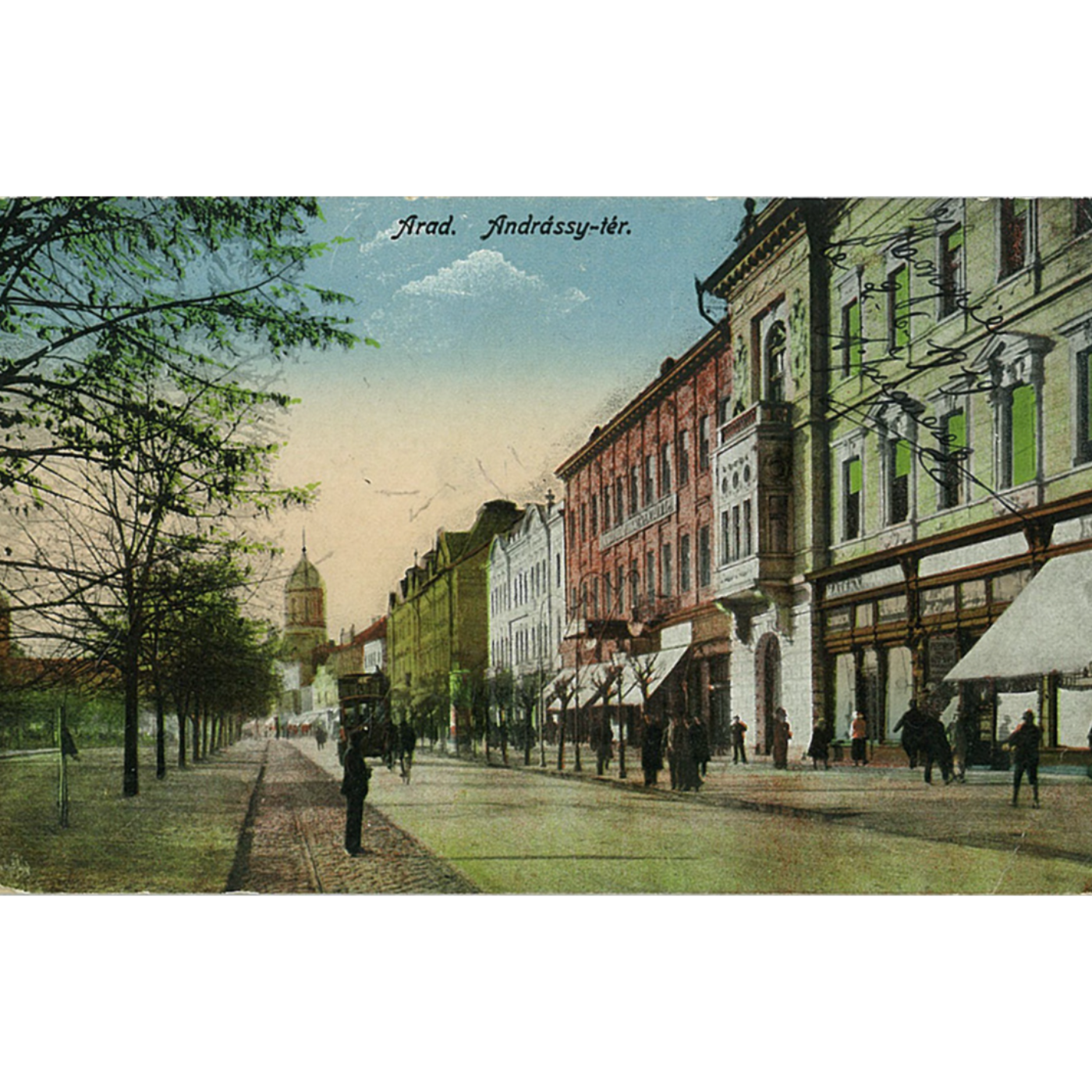
Step into the heart of Central Europe and uncover the untold stories of Arad, Western Romania — a city brimming with history, culture, and charm. Our “Arad – A City Through Time” podcast series invites you to explore the fascinating evolution of this remarkable city. Through captivating episodes, we reveal the city's historical milestones, incredible success stories, and legendary figures who shaped Arad during its golden era. From its architectural gems to the bold individuals who left their mark, you’ll be taken on a journey that brings the past to life in the most engaging way. A must-listen for curious minds: Whether you’re a student eager to dive into history, a tourist searching for hidden gems, or a history enthusiast exploring new perspectives, academic research, educational projects, or cultural tourism development, our podcasts are a treasure trove of knowledge — all for free. With each episode, you’ll discover fascinating facts,
Episodes
-
Arad's Revolution: The End of State Socialism
This chapter written by Lehoczky Attila, from the book "In the Labyrinth of Hope" translated into English by Gabriel Roman, offers an overview of the 1989 Romanian Revolution in the city of Arad, focusing on the period from December 20 to December 25. The author highlights that the revolutionary...
-
Post-War Hungarian Press in Arad: Jövő and Vörös Lobogó
This chapter from the book „In the Labyrinth of Hope” written by Puskel Péter, translated into English by Gabriel Roman details the tumultuous development of the press in Arad, Romania, following the end of World War II. It focuses heavily on the establishment and evolution of Hungarian-language...
-
Communist Consolidation and Arad Administration (1944-1958)
The provided chapter in the book „In the labyrinth of hope” written by Király András and translated into English by Gabriel Roman, offers a detailed historical account of the city of Arad, Romania, focusing on the period of transition following World War II and the subsequent establishment of the...
-
Arad: Social Life and Sports Under Communism
The provided chapters written by Puskel Péter and Matekovits Mihály in the book „In the Labyrinth of Hope”, translated into English by Gabriel Roman, offer an extensive overview of social life and sports in Arad, Romania, from the post-World War II era through the end of the communist regime in...
-
Churches in Communist Romania After 1948
This text written by Ujj János and translated into English by Gabriel Roman, offers an extensive overview of the severe persecution and marginalization of religious denominations in Romania following the communist takeover after 1948. It details how the new regime abolished previous religious…
more -
Socialist Realism as an Artistic Style
This text written by Ujj János and translated into English by Gabriel Roman offers an extensive overview of Socialist Realism as an artistic style, characterizing it as the dominant cultural force in Central and Eastern Europe during the communist era. The sources explain that this movement was…
more -
Culture Under Communism in Arad After 1948
The source, "Culture after 1948" compiled by Ujj János and translated into English by Gabriel Roman, details the systematic imposition of Bolshevik doctrine on Romanian society following World War II, focusing heavily on the suppression and control of cultural life in the western region of Arad.…
more -
Everyday Life and Prices Under Socialism in Arad
The provided text written by Muntean Tibor and translated into English by Gabriel Roman offers an extensive overview of everyday life and economic conditions in Romania under socialism, particularly focusing on the city and county of Arad. It contrasts the idealized family life and craftsmanship…
more -
The Minority Press and Publicists of Arad
The provided excerpts, taken from works by Puskel Péter, translated into English by Gabriel Roman, offer a comprehensive historical overview of the Hungarian minority press and literary life in Arad, Romania, primarily focusing on the turbulent interwar period following the Treaty of Trianon.…
more -
Arad: Hungarian Survival in Southern Transylvania, 1940–1944
The provided text, an excerpt from Lehoczky Attila's chapter on "Survival in the Reality of Southern Transylvania 1940–1944" in the book "The name stays Arad!" translated into English by Gabriel Roman, focuses on the complex political and social situation in Romania, particularly the city of…
more -
Arad Society Between World Wars
The provided text, an excerpt from "Arad Social life, entertainment, leisure in the interwar period" by Puskel Péter, translated into English by Gabriel Roman, analyzes the profound disruption of social life in Arad following World War I and the Treaty of Trianon. The initial "paralysis" of…
more -
Thirty Years of Hungarian Theater in Arad (1918-1948)
The provided excerpts, taken from "30 years of theater in Arad" by Ujj János, translated into English by Gabriel Roman, chronicle the challenging history of Hungarian minority theater in Transylvania and specifically Arad between the world wars and into the early communist era. The text details…
more -
Arad Churches Between 1919 and 1948
This text written by Ujj János, translated into English by Gabriel Roman (chapter in the book "The name stays Arad!") provides a historical overview of the diverse religious landscape in the Arad region, primarily focusing on the period between World War I (1919) and the rise of Communism (1948),...
-
Arad's Minorities, Economy and Life in the Interwar period
The provided text, an excerpt from "Living in minority," written by Muntean Tibor, translated into English by Gabriel Roman (chapter in the book "The name stays Arad!") offers a critical examination of the economic and social conditions in the city of Arad and the annexed territories of...
-
Life and Labor in Communist Arad
This chapter named "Communism in Arad" written by Muntean Tibor and translated by Gabriel Roman from the book entitled "In the Labyrinth of Hope", explores the socio-economic and cultural landscape of Arad, Romania, under communist rule. It discusses demographic shifts, particularly the impact of...
-
Eastern Europe's Post-War Communist Transformation
This chapter written by Lehoczky Attila and translated by Gabriel Roman from the book nemad "In the Labyrinth of Hope" provides a detailed historical overview of Central Europe and Romania between 1944 and 1949, focusing on the post-World War II transformation of power. It examines the division…
more -
The region and the city of Arad during the change of sovereignty: A Turbulent Transition (1918-1919)
This academic text written by Lehoczky Attila, in English by Gabriel Roman (chapter in the book named “The name remains Arad!) chronicles the significant political and social transformations experienced by the Arad region following World War I. It details Hungary's internal struggles, including…
more -
Arad: Life in the Collapsing Austro-Hungarian Monarchy
This chapter written by Király András; in English by Gabriel Roman from the book entitled "The name remains Arad! " offers a detailed historical account of Central Europe, specifically focusing on the city of Arad during the final years of World War I and its immediate aftermath. The text traces...
-
It is not enough to know our history, we must also make it known to those around us, especially to fellow citizens of other nationalities
Nu este suficient să ne cunoaștem istoria, trebuie să o facem cunoscută și celor din jur, în special concetățenilor de altă naționalitate – susține Gabriel Roman, care de opt ani traduce în limba română și engleză publicații de istorie locală apărute în limba maghiară legate de Arad și le publică...
-
Salacz Gyula: Reformist Mayor of Arad
This micro-monograph translated into English by Gabriel Roman explores the impact of Salacz Gyula, Arad's longest-serving mayor from 1875 to 1901, on the modernization and development of the city, highlighting his commitment to prioritizing the community's interests. It discusses the challenges…
more -
Arad Neolog Synagogue Small Guide
These texts provide information about the Neolog Synagogue in Arad, outlining its history, architecture, and practical details for visitors. They detail its construction period (1828-1834), the initial challenges faced due to local authorities, and its eventual completion under imperial…
more -
SAVA ARSIĆ: Mayor of Arad and Preparandia Founder
This biographical sketch translated in English by Gabriel Roman focuses on Sava Arsić, a prominent figure in Arad during the late 18th and early 19th centuries. It highlights his early life as the son of craftsmen who gained knowledge through observation and self-education. The text details his...
-
Religious and Historical Paintings of Arad Museum
These sources translated into English by Gabriel Roman discuss two significant artworks housed in the Art Gallery of the Cultural Palace in Arad, Romania. One document focuses on Árpád Feszty's monumental triptych, "The Burial of Christ," detailing its creation, exhibition history, period of...
-
Budapest Diet Prominent Member Biographies (members of the Romanian National Party and the Workers' Party)
This collection of excerpts translated into English by Gabriel Roman provides short biographical information on several prominent members of the Budapest Diet (the Hungarian Parliament) around the year 1910. It includes details about their political affiliations, the constituencies they...
-
First Railways in Transylvania: Arad, Alba Iulia, Simeria, Petroșani
This historical document translated in English by Gabriel Roman provides a detailed account of the construction and operation of the first railway lines in Transylvania, focusing primarily on the main line from Arad to Alba Iulia and the secondary line connecting Simeria to Petroșani. It…
more -
Timisoara and Arad at the End of the 19th Century
This academic text translated into English by Gabriel Roman; "TIMIȘOARA AND ARAD AT THE END OF THE 19TH CENTURY," draws upon a study by Bogoly József Ágoston to examine urban life and development in Timișoara and Arad around 1890. It centers on analyses of articles from the literary journal…
more -
The metamorphosis of Arad during the interwar period
These document drafted by Károly Sándor offer an insightful look into the city of Arad during the interwar period, detailing its social, cultural, and economic stagnation despite a smooth transition to Romanian administration. The sources highlight Arad's diverse population and its historical…
more -
Arad: from Settlement to Royal Free City. Historical Evolution & Urban Development —a tale of resilience, transformation, and enduring legacy on the Mureș River.
This episode based on a chapter written by Király András and translated by Gabriel Roman describes the history of the city of Arad, tracing its origins back to the medieval settlement of Orod. It discusses Orod's development around a fortress and ecclesiastical center, its mention in royal...
-
Urban Transformation & Economic Evolution of Arad City: Economy and Life in Austro-Hungarian Times: from industrial boom to modern transformation
This episode based on chapters written by Puskel Péter and Muntean Tibor and translated by Gabriel Roman provides an in-depth look at the economic development and modernization of the city of Arad during the Austro-Hungarian Monarchy. It details the evolution of public works, such as the...
-
Arad’s Educational Legacy: Education and School Network History - Schools that shaped a city’s future
This episode based on an extensive text written by Muntean Tibor and translated by Gabriel Roman examines the development of the educational system in Arad, Austro-Hungary, during the era of dualism (late 19th and early 20th centuries). It details the government's increasing investment in...
-
Arad Medical: Healthcare, Charities and Philanthropy in a modernizing city
Back into the 18th and 19th-century Arad, where civic leaders, doctors, and philanthropists laid the foundations of a modern public health system. Explore how their vision shaped a thriving, socially responsible city ahead of its time. This episode based on a chapter written by Lehoczky Attila…
more -
Arad Central Railway Station – Historic Transport Hub
This document compiled by Gabriel Roman provides a detailed history of the Arad Central Railway Station, highlighting its significance as a major transportation hub within the pan-European corridor IV. It traces the station's development through multiple iterations, beginning in 1858, and details...
-
Boros Béni and the Arad-Cenad United Railways – Rail Heritage of Arad
This document recorded by Puskel Péter and translated in English by Gabriel Roman explores the significant role of Boros Béni in the development of railways and water management in the Arad region and Central Europe during the 19th century. It details his pioneering work in constructing vicinal...
-
Architectural Elegance: Arad Administrative Palace and Arad City Hall. A Neo-Renaissance Landmark
Located in the heart of Revolution Square, the Arad Administrative Palace, also known as Arad City Hall, stands as a testament to Flemish neo-Renaissance architecture. This iconic 19th-century municipal building is not only a functioning seat of local government but also a key landmark in Arad,...
-
Arad city and county administration and development, 1834-1919
This document compiled by Ujj János and translated by Gabriel Roman chronicles the administration and development of Arad City and Arad County in the Austro-Hungarian period, particularly focusing on the late 19th and early 20th centuries. It details the organizational structure of both the city...
-
Arad Social Life: Late 19th - Early 20th Century
Dive into the vibrant social scene of Arad during the Belle Époque—an era of civic pride, charitable societies, cultural events, and growing public engagement that shaped the city's modern identity. This historical account recorded by Puskel Péter, translated in English by Gabriel Roman details…
more -
Arad Press Life: 19th-20th Century Development
In the 1800s, Arad was a publishing powerhouse! Discover how newspapers in Hungarian, German, and Romanian shaped public life and chronicled the city's rapid development. This historical account compiled by Lehoczky Attila and translated in English by Gabriel Roman focuses on the development of...
-
Arad Theatrical Life: A History of the City's Stages
This research document compiled by Ujj János and translated in English by Gabriel Roman details the history of theatrical life in Arad, Romania, beginning with the first professional performances by a German troupe in 1787. It traces the development of theatrical venues, including the Hirschl...
-
Arad Civil Associations and Organizations
This document compiled by Ujj János and translated by Gabriel Roman describes the development of civil organizations and associations in Arad during the 19th and early 20th centuries, a period marked by significant urbanization and social change. It details the founding of key institutions,...
-
Religious History of Arad Churches (19th-20th Century)
These chapters compiled by Ujj János and translated into English by Gabriel Roman offer insights into the religious and civil life of Arad during the late 19th and early 20th centuries, illustrating the city's growth and modernization. The document details the organization and development of...
-
History of Arad Fortress Franciscan Church
This collection of excerpts, primarily from a study titled "HISTORY OF THE FRANCISCAN CHURCH IN ARAD FORTRESS" compiled by Puskel Péter and translated in English by Gabriel Roman, provides an overview of the Franciscan Order's history and activities in the Banat region and Arad, particularly...
-
A History of the Arad Cultural Palace. Arad Philharmonic, Arad Museum Complex and Arad City Library
This excerpt from "A History of the Arad Cultural Palace" offers a detailed account of the institution's creation and early years, from 1913 to 1948. It discusses the centenary anniversary of the Palace, highlighting the personalities and significant events in its history. The text emphasizes the...
-
The Magic of Early Film in Arad, rediscovering Early Arad Cinema and the neighborhood of Bohus Palace
This source provides a detailed look into the history of early cinema in Arad, focusing on the Appolo movie theater and its importance as a pioneering venue for silent films and later, sound films. It highlights the impact of visiting film stars like Valdemar Psylander and Hungarian actor Jávor...
-
Arad's Bohus Palace - a marvel of art nouveau architecture
This monograph discusses the Bohus Palace in Arad, highlighting its significance as an iconic Art Nouveau building and its role as a central hub for economic, social, and cultural life in the early 20th century. The text explores the history of the Bohus family, their influence in the region, and...
-
Arad Architecture: Titans and Their Legacy. Crafting a City's Soul
Puskel Péter's account, translated by Gabriel Roman, explores the significant architects who shaped the city of Arad. The text highlights individuals like Szántay Lajos and Milan Tabaković, detailing their notable creations such as the Cultural Palace and the “St. Anthony” Catholic Cathedral,...
-
Arad's hidden history: the red lantern district: brothels and entertainment
This episode recounts the history of Arad's former entertainment district, focusing on its brothels, inns, and social dynamics over the past century, including details about their operation, regulations, and eventual closure under communism. The source article from www.arad.zone offers a vivid...
-
The Green Arrow: Arad-Podgoria Railway Story
This document presents a detailed history of the Arad-Podgoria Railway, also known as the "Green Arrow," a significant transportation link in the Arad region of Romania. It traces the railway's evolution from a proposed concept to its construction, electrification, and eventual decline,...
-
Arad's Marta Automobile Factory: A Pioneering History
This document, recorded by Puskel Peter and translated by Gabriel Roman, chronicles the pioneering era of the automobile industry in Arad, focusing on the MARTA (Magyar Automobil Részvény Társaság Arad) Automobile Factory. The narrative details the factory's founding in 1908, its connection to...
-
The Neuman Family of Arad: Industrial Legacy and Philanthropy
This historical account chronicles the Neuman family, prominent industrialists who significantly shaped the economic, social, and cultural landscape of Arad, Romania, from the mid-19th century into the 20th. Beginning with their establishment of a distillery that grew into a major industrial...
We're indexing this podcast's transcripts for the first time — this can take a minute or two. We'll show results as soon as they're ready.
No matches for "" in this podcast's transcripts.
No topics indexed yet for this podcast.
Loading reviews...
ABOUT THIS SHOW
Step into the heart of Central Europe and uncover the untold stories of Arad, Western Romania — a city brimming with history, culture, and charm. Our “Arad – A City Through Time” podcast series invites you to explore the fascinating evolution of this remarkable city.
Through captivating episodes, we reveal the city's historical milestones, incredible success stories, and legendary figures who shaped Arad during its golden era. From its architectural gems to the bold individuals who left their mark, you’ll be taken on a journey that brings the past to life in the most engaging way.
A must-listen for curious minds:
Whether you’re a student eager to dive into history, a tourist searching for hidden gems, or a history enthusiast exploring new perspectives, academic research, educational projects, or cultural tourism development, our podcasts are a treasure trove of knowledge — all for free. With each episode, you’ll discover fascinating facts,
HOSTED BY
Gabriel Roman, Puskel Péter, Ujj János, Király András, Lehoczky Attila, Muntean Tibor, Matekovits M
Loading similar podcasts...
Frequently Asked Questions
How many episodes does Discover Arad: a Hidden Gem of Central Europe have?
Discover Arad: a Hidden Gem of Central Europe currently has 49 episodes available on PodParley. New episodes are automatically indexed when they're published to the podcast feed.
What is Discover Arad: a Hidden Gem of Central Europe about?
Step into the heart of Central Europe and uncover the untold stories of Arad, Western Romania — a city brimming with history, culture, and charm. Our “Arad – A City Through Time” podcast series invites you to explore the fascinating evolution of this remarkable city. Through captivating episodes,...
How often does Discover Arad: a Hidden Gem of Central Europe release new episodes?
Discover Arad: a Hidden Gem of Central Europe has 49 episodes. Check the episode list to see recent publication dates and frequency.
Where can I listen to Discover Arad: a Hidden Gem of Central Europe?
You can listen to Discover Arad: a Hidden Gem of Central Europe on PodParley by clicking any episode. We provide an embedded audio player for direct listening, and you can also subscribe via your preferred podcast app using the RSS feed.
Who hosts Discover Arad: a Hidden Gem of Central Europe?
Discover Arad: a Hidden Gem of Central Europe is created and hosted by Gabriel Roman, Puskel Péter, Ujj János, Király András, Lehoczky Attila, Muntean Tibor, Matekovits M.
URL copied to clipboard!