
PODCAST · education
DRC: Past. Present. Future? (Forced Migration Review 36)
by Oxford University
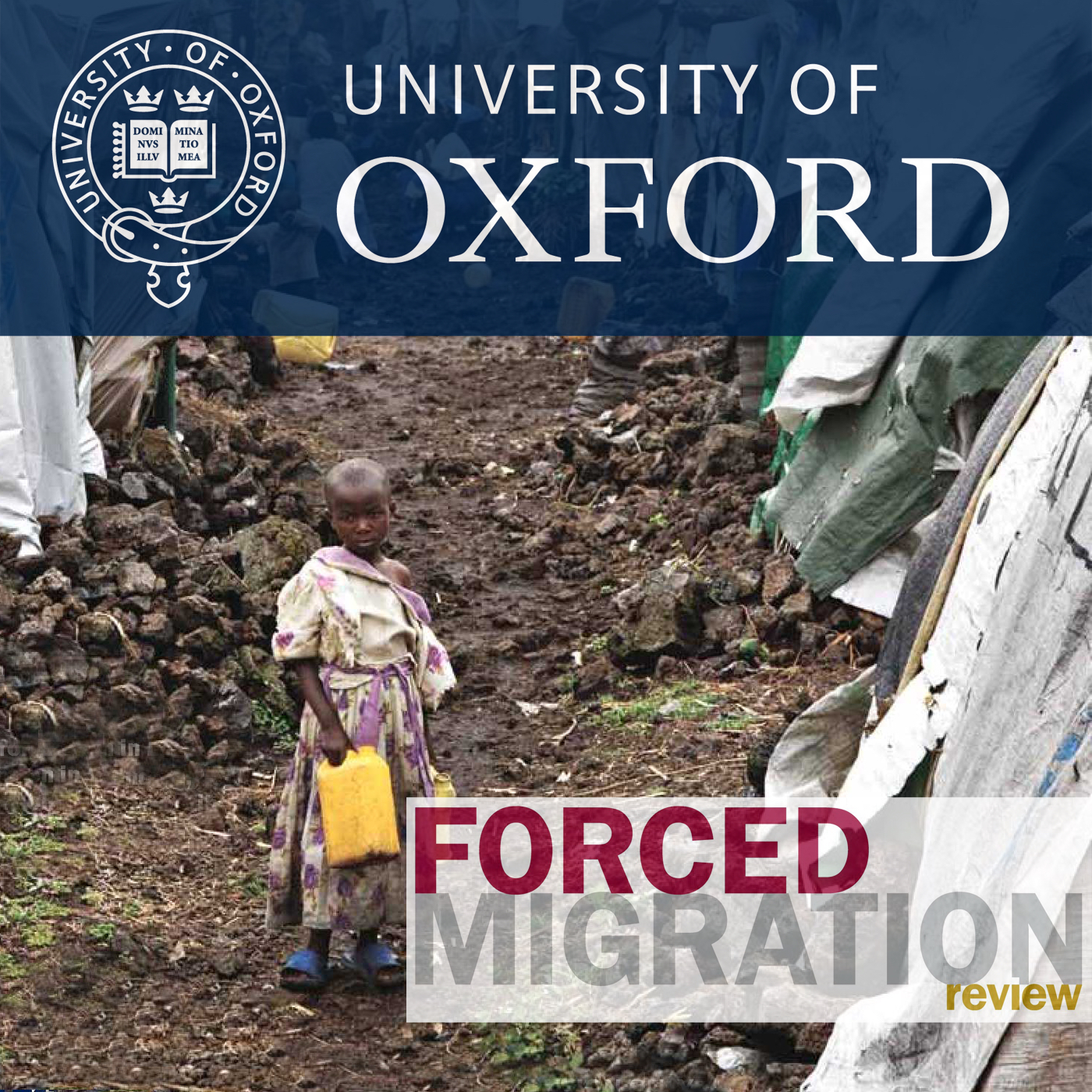
The Democratic Republic of Congo is unfortunately synonymous with its dreadful past and its terrible present, despite its beauty, complex history and unachieved potential. Locked not only into its own internal troubles but also into those of the Great Lakes region, it has provided more than enough material on forced migration, violence and political quagmires for the latest issue of FMR.While the articles contained in this issue of FMR make grim reading, they also offer glimmers of hope for better outcomes, at least potentially, alongside analysis of how and why these things have been happening. Authors come from Congolese civil society, UN agencies and NGOs, Congolese and donor governments, and international research – and include articles by the former UN Relief Coordinator John Holmes and the former Humanitarian Coordinator in DRC Ross Mountain. This issue also contains a further seven articles on other forced migration-related subjects.See more at: http://www.fmreview.org/DRCongo
Episodes
-
FMR 36 The road from Kabul
New UNHCR research investigates the motivations for and challenges associated with the migration of young Afghans to Europe.
-
FMR 36 The pervertibility of refugee status
The desire to categorise all those seeking refuge throws up continuing challenges to traditions of hospitality and to the realisation of migrants' rights.
-
FMR 36 Safe and suitable return for women fleeing conflict in Liberia
When women migrants return, they can face daunting challenges to re-integration but can also contribute to development and transforming societies.
-
FMR 36 The displaced also protest
Displaced people in Colombia are resorting to mass demonstrations to persuade their government to assume its responsibilities towards them.
-
FMR 36 Rumour versus information
Central to Iraqi refugees' efforts to resolve the question of their immediate future is their access to good information about resettlement and return.
-
FMR 36 What hope for IDPs in a new Sudan?
The most probable outcome of the 2011 referendum is that Southern Sudan secedes from the North, breaking Sudan into two independent nation states.
-
FMR 36 Of tripartites, peace and returns
After international agreements covering the return of refugees to Equateur and North Kivu, the challenge is to create local structures that can make the agreements work.
-
FMR 36 Refugee return and root causes of conflict
Since independence, violent conflicts in eastern DRC have been linked to access to land, affirmation of ethnic identities and competition for political control.
-
FMR 36 Training trainers in reproductive health
The cascade training model has brought clinical training closer to the areas in DRC most in need of skilled staff to serve conflict-affected women experiencing complications in pregnancy and childbirth.
-
FMR 36 ICRC: careful analysis is the key
In the Democratic Republic of Congo, the International Committee of the Red Cross (ICRC) combines its protection and assistance activities and focuses on 'priority zones' where armed actors are present.
-
FMR 36 Innovation in cash-voucher programming
Cash vouchers offer flexibility, enabling payment for school fees as well as for basic necessities. They also empower people who, in displacement, have been deprived of choice.
-
FMR 36 The Data Centre for IDPs in North Kivu
Effective provision of aid and protection for those displaced in eastern DRC requires reliable data which the new Data Centre in North Kivu is helping to provide.
-
FMR 36 Civil society and the displaced persons of Bandundu
Local organisations in Bandundu province located in western DRC are struggling to meet the needs of displaced persons in the absence of government or international assistance.
-
FMR 36 DRC: a donor perspective
Donor engagement in DRC is more important than ever but donors need to reassess their strategies.
-
FMR 36 Too big to fail
The UN integrated mission in DRC and the piloting of humanitarian reform there have been necessarily innovative in a challenging context.
-
FMR 36 Press-ganged children
Addressing the fate of children who are recruited into armed conflicts is not as simple as demanding their exclusion from those conflicts.
-
FMR 36 Evictions from DRC's protected areas
There is an increasing number of people who are being evicted from DRC's 'protected areas' both by the government and by international conservation organisations.
-
FMR 36 Not going home: displaced youth after war
In preparing for a post conflict DRC, we should be more aware of young people's aspirations, the opportunities open to them, and the challenges they face in building a decent life.
-
FMR 36 Land, IDPs and mediation
Unmanaged resettlement of IDPs in eastern DRC might threaten an already fragile security situation.
-
FMR 36 Land and property disputes impeding return and reintegration
A survey conducted by UNHCR in 2009 in IDP camps in North Kivu shows that access to land is the second factor after security which prevents people from returning to their zone of origin.
-
FMR 36 Preventing sexual violence
While there has been more focus on assistance to survivors of sexual violence after they have been attacked, not enough resources or political attention are devoted to preventing these acts of violence from occurring in the first place.
-
FMR 36 Protection from sexual violence in DRC
While service provision for survivors of sexual violence is the top priority, protection for women and girls can also be improved in DRC.
-
FMR 36 Beyond the silence: sexual violence in eastern DRC
The sexual violence laws introduced in DRC in 2006 have had only limited impact. A much louder condemnation of rape and a far more proactive approach to prevention are urgently needed.
-
FMR 36 Displacement trends in DRC
Internal displacement has plagued the Democratic Republic of Congo (DRC) for nearly 20 years. This article provides an overview of the scale and causes of displacement.
-
FMR 36 The role of governance and research
Forced migration is not new to DRC but its extent and its consequences are still shocking. Good governance and research must play a stronger role if life is to improve for the citizens of DRC.
-
FMR 36 The dynamics of instability in eastern DRC
The conflict in eastern Congo has been the most deadly one since the second World War, and its social consequences have been disastrous. Solutions to the conflict must look to the long term.
-
FMR 36 A scandal that needs to end
While the crisis in the Kivus has been a focus of action and advocacy by the international community for decades, further conflicts have been proliferating in all four corners of the Democratic Republic of Congo (DRC).
We're indexing this podcast's transcripts for the first time — this can take a minute or two. We'll show results as soon as they're ready.
No matches for "" in this podcast's transcripts.
No topics indexed yet for this podcast.
Loading reviews...
ABOUT THIS SHOW
The Democratic Republic of Congo is unfortunately synonymous with its dreadful past and its terrible present, despite its beauty, complex history and unachieved potential. Locked not only into its own internal troubles but also into those of the Great Lakes region, it has provided more than enough material on forced migration, violence and political quagmires for the latest issue of FMR.While the articles contained in this issue of FMR make grim reading, they also offer glimmers of hope for better outcomes, at least potentially, alongside analysis of how and why these things have been happening. Authors come from Congolese civil society, UN agencies and NGOs, Congolese and donor governments, and international research – and include articles by the former UN Relief Coordinator John Holmes and the former Humanitarian Coordinator in DRC Ross Mountain. This issue also contains a further seven articles on other forced migration-related subjects.See more at: http://www.fmreview.org/DRCongo
HOSTED BY
Oxford University
CATEGORIES
Loading similar podcasts...
Frequently Asked Questions
How many episodes does DRC: Past. Present. Future? (Forced Migration Review 36) have?
DRC: Past. Present. Future? (Forced Migration Review 36) currently has 30 episodes available on PodParley. New episodes are automatically indexed when they're published to the podcast feed.
What is DRC: Past. Present. Future? (Forced Migration Review 36) about?
The Democratic Republic of Congo is unfortunately synonymous with its dreadful past and its terrible present, despite its beauty, complex history and unachieved potential. Locked not only into its own internal troubles but also into those of the Great Lakes region, it has provided more than enough...
How often does DRC: Past. Present. Future? (Forced Migration Review 36) release new episodes?
DRC: Past. Present. Future? (Forced Migration Review 36) has 30 episodes. Check the episode list to see recent publication dates and frequency.
Where can I listen to DRC: Past. Present. Future? (Forced Migration Review 36)?
You can listen to DRC: Past. Present. Future? (Forced Migration Review 36) on PodParley by clicking any episode. We provide an embedded audio player for direct listening, and you can also subscribe via your preferred podcast app using the RSS feed.
Who hosts DRC: Past. Present. Future? (Forced Migration Review 36)?
DRC: Past. Present. Future? (Forced Migration Review 36) is created and hosted by Oxford University.
URL copied to clipboard!