
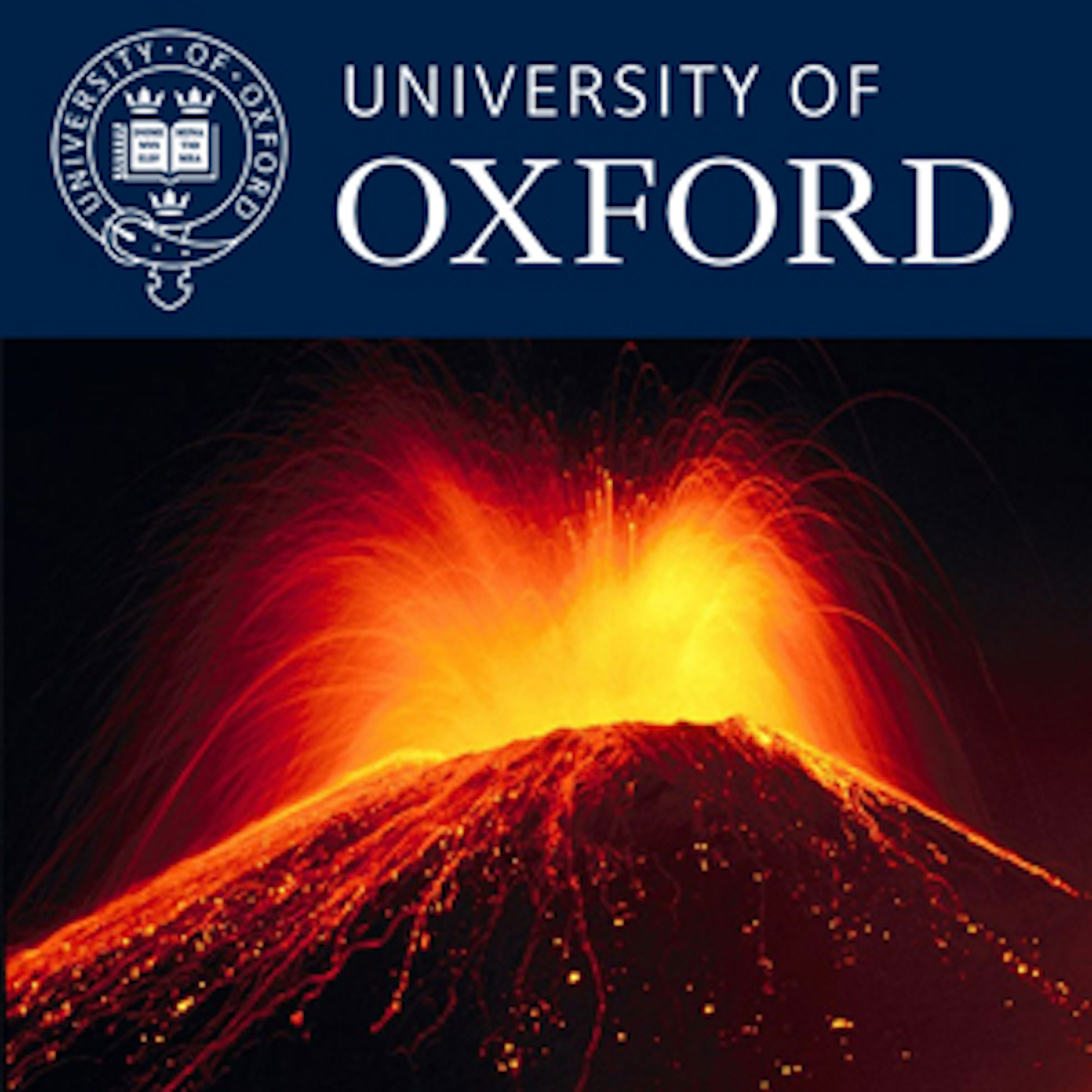
PODCAST · education
Earth Sciences
by Oxford University
Podcasts from the department of Earth Sciences.
Episodes
-
Curiosity’s Search for Ancient Habitable Environments at Gale Crater, Mars
4th Annual Lobanov-Rostovsky Lecture in Planetary Geology delivered by Professor John Grotzinger, Caltech, USA The Mars Science Laboratory rover, Curiosity, touched down on the surface of Mars on August 5, 2012. Curiosity was built to search and explore for habitable environments and has a…
more -
The Formation of Terrestrial Planets - the 2nd Lobanov-Rostovsky Lecture in Planetary Geology
Prof Alessandro Morbidelli of the Observatoire de la Cote d'Azur in Nice gives the 2nd Lobanov-Rostovsky Lecture in Planetary Geology. He talks about the formation of planets in the universe. Morbidelli uses numerical modelling and geochemical and cosmochemical analyses to explain planetary...
-
Building Earth-like Planets: from gas and dust to ocean worlds.
The first Lobanov-Rostovsky Lecture in Planetary Geology delivered by Professor Linda T. Elkins-Tanton.
-
The Chelyabinsk Meteor
In this talk Dr Ken Amor talks about the Chelyabinsk meteor, which entered Earths atmosphere over Russia on the 15th of February 2013.
-
Large Meteorite Impacts on Earth
Ken Amor looks at the science of large meteorite impacts on Earth.
-
Ironing The Ocean - exploring the ocean iron and carbon cycles aboard the RRS discovery in the south atlantic
Gideon Henderson, Professor of Earth Sciences and fellow of University College, gives a talk on his research on iron content in the atlantic ocean and its necessity for life in the ocean.
-
Rocking the Cradle...6,000 Years of Geological Impact in Greece
From the 2010 Alumni Weekend. Phillip England talks about the history of Greece through its many earthquakes and seismic activity over the last 6000 years and shows how these events shaped the ancient world's history.
-
The Tipping Point: Climate Change
Professor Gideon Henderson and Dr Ros Rickaby from the Department of Earth Sciences talk about some of the key issues surrounding climate change today.
-
Reflections on the environment and science at Oxford
Prof Alex Halliday discusses the role of isotope geoscience in understanding present day environmental issues. He also reflects on studying science at Oxford. Geoscience and the environment. Studying science at Oxford.
-
An introduction to Geoscience
Using Isotope geochemistry to understand the origins of planets and the present day natural behaviour of the Earth. Isotope geochemistry - utilising mass spectrometry to measure small natural variations in atomic abundance.
We're indexing this podcast's transcripts for the first time — this can take a minute or two. We'll show results as soon as they're ready.
No matches for "" in this podcast's transcripts.
No topics indexed yet for this podcast.
Loading reviews...
ABOUT THIS SHOW
Podcasts from the department of Earth Sciences.
HOSTED BY
Oxford University
CATEGORIES
Loading similar podcasts...
Frequently Asked Questions
How many episodes does Earth Sciences have?
Earth Sciences currently has 10 episodes available on PodParley. New episodes are automatically indexed when they're published to the podcast feed.
What is Earth Sciences about?
Podcasts from the department of Earth Sciences.
How often does Earth Sciences release new episodes?
Earth Sciences has 10 episodes. Check the episode list to see recent publication dates and frequency.
Where can I listen to Earth Sciences?
You can listen to Earth Sciences on PodParley by clicking any episode. We provide an embedded audio player for direct listening, and you can also subscribe via your preferred podcast app using the RSS feed.
Who hosts Earth Sciences?
Earth Sciences is created and hosted by Oxford University.
URL copied to clipboard!