
PODCAST · news
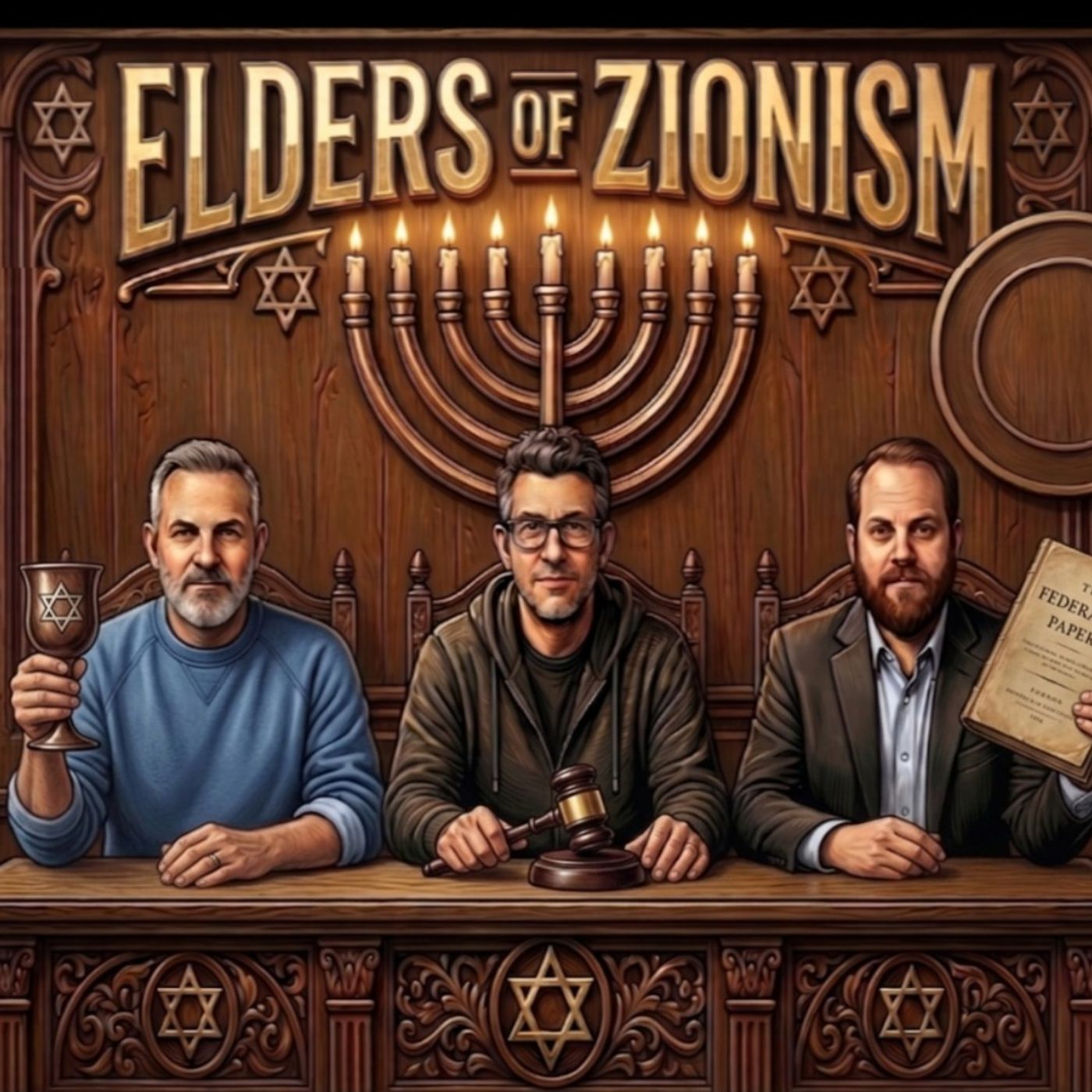
Elders of Zionism
by Judah Friedman, Guy Goldstein, Golan Ramraz
Elders of Zionism - hosted by writer Judah Friedman, political strategist Guy Goldstein and Hollywood producer Golan Ramraz - is a podcast of three Jews taking back the name. At a time when Zionism has become a dirty word, we're asking why. Because the ideas under attack didn't start in Washington, Philadelphia or with the Magna Carta. They started at Sinai. Each week, we explore the connections between Zionism, Americanism and the broader Judeo-Christian tradition in an unapologetic conversation about civilization, sovereignty and the future of the West.
-
33
Protocol 34: Saudi Arabia Has An Army That Won't Fight And Vance Is Out Of Tucker Lifelines
We unpack Saudi Arabia’s struggle against the Houthis, their expanding grip on Red Sea shipping, their Iranian backing and the sprawling black-market networks that keep terrorist money flowing beyond the reach of sanctions (01:58). We hammer Jared Kushner for publicly portraying the Doha strike as leverage used to pressure Israel, questioning both his characterization of the attack and the timing of his comments (08:40). We torch Tucker Carlson for backing Abdul El-Sayed and ask how many more opportunities JD Vance and the Republican movement need before finally jumping off the Tucker train (13:51). We examine the online right beginning to fracture as conspiracy influencers turn on one another and some former extremists reconsider narratives about Jews and Israel (18:46). We blast Mamdani and AOC for laughing during the reading of names at the 9/11 memorial and debate what that moment revealed about political power, memory and basic respect (24:49). We dismantle NAZA, its anonymous sources, AI-generated faces and voices and its claim that Israel used artificial intelligence to facilitate genocide, explaining what collateral-damage estimates actually mean under the laws of war and why the film’s own premise undercuts its argument (27:39). We condemn Venice for rewarding the film and trace the festival’s uncomfortable historical relationship with fascist propaganda (37:36). Finally, we celebrate Pink and Robert Kraft for using their leverage - with celebrity and with stadium owners, respectively - to help force Macklemore off Ed Sheeran’s tour and argue that fighting antisemitism requires going on offense rather than endlessly playing defense (55:05).
-
32
Protocol 33: REMEMBERING 9/11 ISN'T COMFORTABLE & IT'S NOT MEANT TO BE
We dissect a Haaretz report claiming Netanyahu was warned by the UAE before October 7, the evidence undermining it, the rush by his political opponents to embrace it and the danger of anonymous sourcing becoming a vehicle for propaganda (01:27). We assess Iran’s escalating provocations, its collapsing economy and the possibility that a desperate regime actually wants an American attack to rally its population and manipulate Western opinion (11:08). We condemn European and Canadian moves to sanction Israel and applaud Israel finally answering hostility with consequences, from expelling diplomats to potentially withholding intelligence (15:22). We expose how boycotts supposedly designed to help Palestinians instead destroy Palestinian jobs and examine the Palestinian Authority’s continuing pay-to-slay program (19:49). We celebrate the deeper bond between America and Israel, rooted not merely in strategic interests but in a shared belief in liberty and the biblical foundations of Western freedom (25:17). We mourn how badly America has preserved the memory and lessons of 9/11 and how quickly unity against jihad gave way to excuses, historical amnesia and fear of confronting Islamic ideology (32:07). We argue that the deeper problem is not ignorance but maleducation, with young people deliberately taught a distorted history that leaves them unable to recognize threats their parents understood (39:25). We prescribe the only lasting response: teach the real history, fight for honest curricula, engage locally and make sure our children understand what happened on 9/11 and why it still matters (40:55). Finally, we remember the terror of being unable to reach family on 9/11 and October 7 and resolve to pass those memories forward so future generations are better prepared to fight the battles history keeps returning to them (43:51).
-
31
Protocol 32: Movements Fall To The People They Let Inside
Karis Reyes returns to Elders of Zionism (00:41) Six million is the number everyone knows. Sixty-seven is not, and a hundred and seventeen is not, and that's exactly the point Guy Goldstein makes on this episode of Elders of Zionism when he walks through the pogroms at Hebron and Kishinev that most people, including most Jews, have never been taught (28:00-30:48). Judah opens with something the show rarely admits on air: the three hosts don't come from the same place, religiously or politically, and neither do most of their guests (03:49-04:44). Karis lays out her own path first, Bay Area secular household, two grandparent Holocaust survivors, a father obsessed enough with the history to fill the home with documentaries (06:06), and a political conversion that started quietly around 9/11 and didn't fully surface until she was voted Republican co-chair of her high school mock senate without meaning to be one (09:42-12:31). Guy's version is heavier. His grandparents fought in the Warsaw Ghetto Resistance, and he grew up understanding the Holocaust the way American film taught it, Jews as scenery and Schindler as the hero (13:39). That framing becomes the engine of the episode. Judah cites Bush 41's collapse to eleven percent of the Jewish vote after telling Israel to stand down in the Gulf War (17:59); Karis makes the case that one in three Jews on earth were wiped out and the Germans documented it too meticulously for denial to hold (19:38-21:47); and Guy extends the argument backward into a century of pogroms nobody remembers and forward into the Farhud, the massacre that ended twenty-five hundred years of Jewish life in Baghdad in one week (30:xx). Karis connects that history directly to modern Jewish political liberalism, arguing the instinct to assimilate and soften Jewish identity was a survival response to exactly this pattern (31:26), and Guy closes the historical arc with a hard argument about why AI models keep producing antisemitic output, two thousand years of Shylock and Fagin don't get erased by a system prompt (33:14-35:31). From there the show turns present-tense. Guy argues Charlie Kirk's death removed the one gatekeeper holding the Groyper faction out of the mainstream right, and traces a straight line from that vacuum to Tucker Carlson's interview with Fuentes weeks later (38:24-45:53), while Karis complicates the story by insisting the rot was already spreading before Kirk died. Karis closes with a quiet trip bringing health-freedom leaders to Israel, careful to clarify it was not an official MAHA operation (46:42), a long Pop Tarts tangent involving Marco Rubio's wife that derails the panel for several minutes (47:13-49:44), and a final message about turning toward family and community when the political fight gets too heavy to hold alone (51:55-53:39). Find Karis at X @ReaKaris.
-
30
Protocol 32: 15 MILLION JEWS WITH, 15 MILLION OPINIONS, POPTARTS AND SPECIAL GUEST KARYS RHEA
Karis Reyes returns to Elders of Zionism (00:41) Six million is the number everyone knows. Sixty-seven is not, and a hundred and seventeen is not, and that's exactly the point Guy Goldstein makes on this episode of Elders of Zionism when he walks through the pogroms at Hebron and Kishinev that most people, including most Jews, have never been taught (28:00-30:48). Judah opens with something the show rarely admits on air: the three hosts don't come from the same place, religiously or politically, and neither do most of their guests (03:49-04:44). Karis lays out her own path first, Bay Area secular household, two grandparent Holocaust survivors, a father obsessed enough with the history to fill the home with documentaries (06:06), and a political conversion that started quietly around 9/11 and didn't fully surface until she was voted Republican co-chair of her high school mock senate without meaning to be one (09:42-12:31). Guy's version is heavier. His grandparents fought in the Warsaw Ghetto Resistance, and he grew up understanding the Holocaust the way American film taught it, Jews as scenery and Schindler as the hero (13:39). That framing becomes the engine of the episode. Judah cites Bush 41's collapse to eleven percent of the Jewish vote after telling Israel to stand down in the Gulf War (17:59); Karis makes the case that one in three Jews on earth were wiped out and the Germans documented it too meticulously for denial to hold (19:38-21:47); and Guy extends the argument backward into a century of pogroms nobody remembers and forward into the Farhud, the massacre that ended twenty-five hundred years of Jewish life in Baghdad in one week (30:xx). Karis connects that history directly to modern Jewish political liberalism, arguing the instinct to assimilate and soften Jewish identity was a survival response to exactly this pattern (31:26), and Guy closes the historical arc with a hard argument about why AI models keep producing antisemitic output, two thousand years of Shylock and Fagin don't get erased by a system prompt (33:14-35:31). From there the show turns present-tense. Guy argues Charlie Kirk's death removed the one gatekeeper holding the Groyper faction out of the mainstream right, and traces a straight line from that vacuum to Tucker Carlson's interview with Fuentes weeks later (38:24-45:53), while Karis complicates the story by insisting the rot was already spreading before Kirk died. Karis closes with a quiet trip bringing health-freedom leaders to Israel, careful to clarify it was not an official MAHA operation (46:42), a long Pop Tarts tangent involving Marco Rubio's wife that derails the panel for several minutes (47:13-49:44), and a final message about turning toward family and community when the political fight gets too heavy to hold alone (51:55-53:39). Find Karis at X @ReaKaris.
-
29
Protocol 31: JD Finally Defends Wife. Dodges Tucker. Jew Do the Math.
Judah Friedman and Guy Goldstein open Protocol 31 breaking down the pressure campaign on Iran (0:54), where Trump's insistence that the midterms aren't driving his Iran timeline collides with growing signs the regime is cracking under economic strangulation, from IRGC loyalists getting attacked in the streets to a ramming incident at a pro-regime protest, with Guy pointing to pipeline projects slated for 2027 that could permanently kill Iran's Hormuz leverage. The guys pivot hard into Michigan Attorney General Dana Nessel's comments (9:50), where Judah and Guy tear apart her framing that Jews should sacrifice their safety for "the rest of humanity," calling it suicidal empathy taken to its logical, grotesque endpoint and a total inversion of the core Jewish choice between life and death. From there it's straight into JD Vance's closed-door RJC meeting (15:10), where Guy walks through how badly Vance botched the definition of blood libel in front of the most prominent Jewish Republicans in the country (fact-check: verify the specific quotes attributed to Vance and confirm the Haaretz piece and its exact framing before publishing), and why his continued refusal to distance himself from Tucker Carlson looks even worse next to Abdullah El-Sayed distancing himself from Hassan Piker within 24 hours. The conversation widens into the Vance-versus-Rubio question for 2028 (24:31) and what that primary actually decides about the GOP's direction, before Judah and Guy dig into the generational rot in economic messaging (27:57), contrasting old-school economists and philosophers with a new generation raised on catastrophizing and imported Marxist framing, and Guy makes the case that materially things are better while structurally, young people are genuinely getting squeezed out of the ladder their parents climbed. Guy also lays out why he's grown more optimistic about how Trump is managing the Iran conflict without letting it blow up the oil markets (38:29). The back half covers a coalition of Christian lawmakers pushing for a legal immigration pathway for Jewish Canadians fleeing rising antisemitism (42:49, fact-check: confirm the coalition's name, scope, and current legislative status), a gutting personal story about a Jewish friend in the UK getting screamed at on the street just for being visibly Jewish, and Guy's sobering history lesson on how fast Jewish populations disappeared from Morocco and Iraq within a single generation (44:32, fact-check: verify the population figures cited for Moroccan and Iraqi Jewry). They close on the shifting polling in the Israeli elections and why nobody trusts a poll that swings ten seats in four days (49:54), plus a hard, no-apologies case for voter ID and election integrity (53:09). Sunday's episode brings Karis Reyes back to the show.
-
28
Protocol 30: Infidel Awareness Month With Guest Richard Landes
Historian Richard Landes joins Judah and Guy for a conversation that reframes the last twenty five years of Western weakness in the face of jihad (00:13). Landes, a medievalist turned scholar of millennial movements, lays out the caliphater ideology driving the push to convert Dar al Harb into Dar al Islam, and the two hosts dig into why messaging on the right has failed to keep pace (02:39). The conversation turns to Islamophobia as a manufactured term built to shield the religion most in need of scrutiny from any scrutiny at all, and to the insecurity underneath religious supremacism (04:57). Landes explains the origin of his term Pollywood and the case for reforming legacy media rather than chasing social media (07:19), then traces how NGOs, academia, and journalism all drifted from their founding purpose into activist narrative work (09:47). The group ranks the failures of American, European, and Israeli media against each other before landing on the Gaza starvation narrative as what Landes calls a postmodern blood libel, built on staged footage while Gazans were documented eating in restaurants (12:10 to 16:56). Landes breaks down the four image sets driving Gaza coverage, genocide, starvation, camps, and ethnic cleansing, and shows how deliberately they mirror Holocaust imagery, then walks through how the word genocide has been captured almost entirely for one side of the story (16:56 to 18:14). The show covers media guidance quietly rewriting the language of 9/11 ahead of its 25th anniversary, softening hijackers where terrorists once stood (20:33), and names CARE and elements of academia as the machinery laundering jihadi propaganda into democratic language (22:59). Landes lays out Infidel Awareness Month in full, from the meaning of kafir to the fifty year horizon running through 2076, including plans to mark September 17th with George Bush's Islamic Center speech and an essay contest imagining the speech he should have given instead (25:22 to 34:37). The back half turns personal and historical, contrasting Israel's institutionalized memorial culture with America's fading memory of 9/11 (39:09), unpacking why infidel was chosen as a unifying term across faiths (41:29), previewing plans to profile former radicals like Ateret Schmuel of Indigenous Bridges (46:09), and closing on Landes's account of the Overton window inversion since 2000, where liberal became a synonym for excusing jihadi terror and centrist warnings about political Islam became far right (55:15). Judah and Guy close out on the Jewish tradition of disagreement without division, and Landes's warning about the danger of assuming political opponents act from malevolence rather than honest disagreement (57:31 to 59:58).
-
27
Protocol 29: Can Bessent Best The Hawala Network
We revisit Mike Rogers’ uphill Michigan Senate fight and argue that candidates need a recognizable political identity and messages that actually speak to voters rather than merely attacking opponents’ labels (03:24). We dissect El-Sayed’s Jesse Watters interview, Hasan Piker’s extremism and the dishonest attempt to equate Sharia with Catholic canon law while recasting Jesus as a socialist (16:31). We praise Scott Bessent’s economic assault on Iran while questioning whether sanctions can overcome lifelines from China, other authoritarian states and the Hawala network (25:15). We confront America’s dangerous dependence on Chinese manufacturing, rare earths and supply chains and debate whether secondary sanctions can force countries to choose between Iran and the American economy (27:46). We demand 10-, 20- and 50-year American strategies that survive election cycles, rebuild domestic industry and create durable national targets independent of partisan ideology (33:11). We condemn JD Vance's failure to defend his wife, Usha, from El-Sayed’s attacks and argue that the silence reveals something deeper about character, masculinity and political courage (36:38). We applaud Tim Scott for warning that the DSA is attacking American culture and reject the fear of accusations of racism when legitimate security concerns demand candor (43:24). We expose how Hawala, GoFundMe, PayPal, Stripe, charities and NGOs can keep money flowing to Iran, Hamas and other terrorist networks despite formal sanctions (45:35). We balance skepticism about Operation Economic Outcast with hope that Trump and Bessent can genuinely isolate Iran and cripple the regime (50:26). We warn that America’s fear of confronting Islamist extremism risks repeating Britain’s catastrophic failures and urge the silent majority to speak (52:07). We mourn Dolly Parton as a uniquely American icon whose talent, decency, faith, generosity and moral clarity embodied values increasingly absent from celebrity culture (53:39). Finally, we celebrate Brandon Flowers’ Thrasher as a stirring tribute to America and the West (56:54).
-
26
Protocol 28: El-Sayed is a Doctor. So were Mengele, al-Assad, Fauci and Doom
We dissect Abdul El-Sayed’s embrace of Sharia, the difference between private religious observance and coercive religious government and the disturbing history of educated professionals embracing radicalism (01:03). We warn that Michigan’s Senate race exposes the GOP’s chronic failure to recruit compelling candidates while El-Sayed packages Islamist politics inside a progressive platform tailor-made for the left (07:41). We contrast AIPAC’s record with CAIR’s documented history, its connection to the Holy Land Foundation case and its financial support for El-Sayed (16:34). We sound the alarm over America’s dangerously vulnerable infrastructure as cyberwarfare moves from Stuxnet and attacks on Ukraine and Israel to Iran attacking Britain’s power system (23:04). We blast Tom Barrack for calling the Golan Heights occupied despite explicit US policy recognizing Israeli sovereignty there and examine the competing Rubio, Vance and transactional factions shaping Trump’s foreign policy (31:07). We defend Jared Kushner’s record and the Abraham Accords while separating his approach from Witkoff and Barrack (36:33). We condemn Hasan Piker’s poisonous influence on millions of young followers and the left’s decision to elevate rather than marginalize him (38:47). We argue that fears about America’s deterioration aren’t hyperbole when institutional erosion, political radicalization and antisemitism are accelerating before our eyes (45:02). We confront the perennial question of why Jews still vote Democrat, and debate what Jewish identity actually means. (46:12). Finally, we urge Jews who prioritize progressive politics over their own people to recognize that antisemites will never care which kind of Jew they are, and to wake up and fight back (47:24).
-
25
Protocol 27: Marco Rubio, Pop-Tarts & The New Ottoman Empire
We expose the Israeli media’s dramatic leftward bias, the collapse of public trust and the global market rewarding anti-Israel narratives (00:22). We ridicule Tucker Carlson’s claim about Israeli schools avoiding plus signs and the broader appetite for anti-Jewish nonsense dressed up as skepticism (05:12). We highlight the media blackout around a Muslim vandalizing a Jaffa church and the obvious double standard when Jews are involved (06:43). We condemn the horseshoe politics uniting the far right and far left, where vibes, loyalty and cancellation replace evidence and principle (07:47). We blast Tom Barrack for attacking Israel over its strike on a Syrian military base, question his judgment and trace his extensive financial history with Qatar (12:12). We defend Israel’s doctrine of preventing hostile military buildups on its borders and explain how its actions in Syria strengthened America’s negotiating position (15:05). We lament Trump taking his foot off the gas in Iran, arguing that stopping halfway created the worst of both worlds – the costs of intervention without victory and a more dangerous regional order (22:39). We celebrate Marco Rubio’s wonderfully human Pop-Tart moment and explore why ordinary glimpses of politicians and Jewish life can create more powerful soft power than endless victimhood (33:20). We praise Rubio’s ICC sanctions, his foreign-policy effectiveness and Scott Bessent’s financial muscle behind American pressure campaigns (40:02). Finally, Judah pitches direct WhatsApp channels for administration officials to bypass media filters, arm creators with shareable information and take political messaging directly to audiences (45:40).
-
24
Protocol 26: Mecca Accords - Saudi, Pakistan & Turkey Get Rich, Everyone Else Gets The Shaft
Sent from my We revisit why the left keeps overplaying its hand while conservatives keep failing to capitalize on the opportunity, and ask whether modern politics has become less left versus right than competing speeds toward the same destination (00:45). We dissect J.D. Vance’s economic populism, his resurfaced argument against the dollar’s reserve-currency status and the crucial difference between a strong dollar and American financial centrality (07:43). We question how a politician raised in the age of YouTube, X and bite-sized media can be so consistently bad at messaging. (17:37). We hammer Trump’s celebration of the new Mecca defense pact between Saudi Arabia, Turkey and Pakistan, arguing that it represents a dangerous reversal of the Abraham Accords’ entire organizing principle (21:22). We trace the regional fallout through Lebanon, Hezbollah, Iran and renewed instability in Gaza and Judea and Samaria (27:10). We crunch the surprisingly small payroll required to keep Iran’s IRGC functioning and explain why Tehran’s deeper vulnerability may be water, food and collapsing infrastructure rather than cash (29:59). We warn that Iran’s deterioration could eventually unleash a refugee crisis dwarfing Syria’s impact on Europe (35:21). We unpack the reality of “settler violence,” exposing inflated statistics, self-defense recast as aggression and even Jewish prayer on the Temple Mount counted among incidents (36:20). We challenge the loaded political meaning of the word “settler” itself and examine how American citizenship in Palestinian villages can be weaponized to trigger US diplomatic pressure (40:55). We fault Israel for failing to fight the propaganda filling the vacuum left by its disastrous messaging (46:22). Finally, we argue that complicated stories cannot be understood through five-minute cable-news segments designed to produce clips instead of knowledge (50:19).
-
23
Protocol 25: The Last Ones To Find Out About Jewish Conspiracies Are Jews
We expose why Jews are somehow always the last people to hear about the latest Jewish conspiracy, from Khazarians and Ashkenazi mafias to the ever-expanding Epstein class (00:43). We marvel at Tucker Carlson’s accelerating descent into conspiratorial madness and his remarkable ability to make everything eventually lead back to Israel or the Jews (05:14). We hammer JD Vance for publicly announcing that low oil prices matter more than stopping a nuclear Iran, effectively handing Tehran America’s negotiating vulnerability on a silver platter (07:37). We unpack the global oil market, American production, alternative suppliers and why $88 Brent crude suggests the world is already mitigating Iran’s disruption of Hormuz (12:42). We ask what thirty years of green-energy investment accomplished if a major oil shock can still terrify Western economies (20:01). We argue America should stop subsidizing everyone else while Americans pay the bill, including considering a temporary gas-tax holiday (20:34). We compare American and European gas prices and discover Americans complaining at $4 a gallon have no idea how good they have it (21:49). We question why anyone still asks Ben Shapiro for election predictions after a decidedly shaky record and argue that brilliant debaters often confuse "this argument is insane" with "voters won’t vote for it" (22:58). We debate whether Rubio or Vance can inherit MAGA and why old electoral rules may tell us almost nothing about 2028 (28:41). We examine whether America will reject Trumpism or simply want a new face after Trump and why understanding conditions on the ground matters more than historical analogies (32:35). We diagnose the left’s habit of getting too comfortable, pushing too far and turning potentially popular causes into political liabilities through ideological overreach (36:21). We trace that same inability to read the room from progressive cultural politics to anti-Israel radicalism, Hasan Piker and the WNBA (43:58). We ask whether our own algorithms have fooled us about who is actually winning the conservative-media war between Ben Shapiro and Tucker Carlson (48:16). We remind everyone that most Americans are not chronically online, making mainstream messaging far more important than whatever outrage is dominating X or YouTube today (53:00). Finally, we determine that we can only judge influence by who can still command serious audiences and interviews rather than who generates the loudest online echo chamber (54:17).
-
22
Protocol 24: Are We Sure We're Using The Right Word For Deal In Terrorist?
We welcome the hate comments that feed the algorithm and marvel at an internet where outrage has become engagement currency (00:28). We question how Israeli intelligence uncovered a credible threat against President Trump while American agencies apparently missed it and condemn the insanity of treating Turkey as a trustworthy mediator (02:22). We roast Tucker Carlson’s ideological whiplash and the strange migration of anti-American voices from the fringe left to the fringe right (04:49). We trace some of today’s political radicalization to COVID isolation and the perfect conditions it created for online indoctrination (09:35). We blast America’s faltering Iran strategy and argue that Tehran is negotiating ruthlessly while Washington increasingly looks like it is pleading (11:05). We warn that American hesitation is creating a global power vacuum now being filled by Turkey, Saudi Arabia, Pakistan and China (13:48). We argue that America once set the world’s rules but strategic uncertainty is allowing rivals to write a new status quo (18:41). We dissect dangerous leaks, General Kane’s reported concerns and the crucial difference between war-gaming vulnerabilities and broadcasting them to the enemy (23:20). We warn that mixed signals from Trump, Vance and the administration have punctured American deterrence and turned threats against Iran into increasingly empty words (30:01). We explain why claims that America is "running out of weapons" obscure the difference between overall firepower and limited stocks of sophisticated precision systems (34:23). We lament how trying to avoid another forever war may have created a worse one while teaching Iran just how much economic leverage it possesses (36:29). We demand answers for how Trump was allowed to fly into Turkey amid a credible security threat and question whether presidential determination overrode prudent protection (40:21). We expose the deeper ideological transformation behind the DSA’s hostility toward Israel and argue that Islamist movements are not merely exploiting Palestine but pursuing a decades-old civilizational project (44:23). We contrast the Zionism of the DSA’s founder with today’s organization, where support for Israel can make membership impossible, as a warning of just how dramatically institutions can change (50:03). And finally, Guy regales of with tales of his nerdy Greek vacation, the ancient ruins he visited and a family history of surviving by pretending to be Greek (52:31).
-
21
Protocol 23: Jews, Zionists, Globalists, Elites, Bankers... and Something Something Burritos?
We sound the alarm over the Democratic Party's continued drift toward its anti-Israel fringe after El-Sayed's Michigan victory (00:37). We dissect the weaponization of AIPAC, antizionism and political dog whistles while arguing that hostility toward Israel has become a socially acceptable stand-in for hostility toward Jews (05:16). We expose how conspiracy theories, scapegoating and recycled antisemitic narratives keep resurfacing across the political spectrum (10:42). We warn that Islamist influence and Muslim Brotherhood-linked politics are no longer fringe concerns but growing forces in American public life (12:02). We criticize both the far left and the woke right for embracing parallel anti-Israel rhetoric under different labels (16:18). We examine the online "burrito wars" over affordability while separating legitimate kitchen-table concerns from blaming Iran and Israel for every economic problem (19:40). We argue that negotiating over the Strait of Hormuz has become a distraction from confronting Iran's nuclear program, ballistic missiles and regional aggression (28:43). We condemn Democrats for skipping a congressional hearing on the Muslim Brotherhood and debate whether political expediency or deeper prejudice explains their alliances (31:59). We explore whether politicians sacrifice principle for power and whether outcomes ultimately matter more than intentions (34:49). We contrast ideological conviction with political opportunism before reflecting on the fragility of political movements and the risks of infiltration (46:21). Finally, we break down Israel's coalition system, explaining why 61 Knesset seats matter more than election-night headlines and why Benjamin Netanyahu may still have a viable path to forming the next government (54:29).
-
20
Protocol 22: Why EL-Sayed? Could The DSA Not Find A Bin Laden to Run Yet?
We welcome activist and entrepreneur Lee Trink and discuss why the endless cycle of daily news had become unsustainable (00:12). We debate whether President Trump's unpredictable approach is strategic poker or dangerous confusion, arguing over deterrence, bluffing, allies and why credibility matters in a prolonged negotiation with Iran (02:13). We examine how Middle Eastern partners pursue their own agendas, distinguish genuine allies from unreliable ones and argue that alliances are only meaningful when countries actually show up (07:19). We question the proposed Gaza Board of Peace, doubt Hamas or regional actors will ever fulfill its conditions and weigh whether the current lull in media attention ultimately benefits or harms Israel (13:36). We criticize inconsistent White House messaging on the Strait of Hormuz, argue that clear communication matters as much as military success and explore why oil prices shape public perception of the conflict (18:29). We warn about Islamist political movements gaining influence in America, debate whether Democrats are overplaying their hand and discuss how overused language has dulled the public's ability to recognize genuine existential threats (29:14). We sound the alarm over mass migration into Spain and Europe, compare it to broader Western challenges and argue that Europe is becoming a cautionary tale for America while lamenting how virtually every global crisis is reflexively blamed on Israel (39:37). Finally, we defend optimism about America's resilience, praising the country's enduring character and encouraging civic engagement over despair (46:49).
-
19
Protocol 21: Why Is America Negotiating With Chat—IRGC
We criticize the White House's messaging strategy during the conflict with Iran and argue that modern wars require a constant public narrative to counter online propaganda and keep Americans informed (02:20). We debate whether social media fragmentation or poor leadership is more responsible for the messaging vacuum and explore how daily briefings, clearer objectives and stronger communication could rebuild public confidence (05:19). We pivot to Anthony Fauci's repeated Fifth Amendment invocations, condemn the global COVID response, call for a full reckoning with the WHO and argue that exposing institutional corruption is essential to preventing future abuses (21:34). We dismiss Hamas' fifteen-point proposal to President Trump as an unserious attempt to secure concessions without meaningful disarmament while criticizing ongoing engagement with terrorist leaders (33:49). We examine reports that the IRGC has leveraged AI tools for influence operations and cyber campaigns and warn that America's adversaries are adapting faster than its own messaging apparatus (36:09). We urge President Trump to reclaim the narrative through disciplined wartime leadership, highlight missed diplomatic and historical photo opportunities and argue that communication must reinforce military success rather than trail behind it (42:26). Finally, we condemn the corrupt Spanish government’s handling of mass migration from Morocco, warning that Europe's immigration policies are accelerating instability and emphasizing that governments must seize the narrative before misinformation and hostile actors do (52:03).
-
18
Protocol 20: Half Measures In Iran Avail Us Nothing
We examine Iran's collapsing economy and argue that the regime's real strength lies not in money but in ideology, corruption and the IRGC's grip on power while explaining why economic warfare succeeds by destroying a regime's ability to sustain itself rather than simply cutting paychecks (00:12). We reject half-measures in war and argue that performative bombing, escalation management and messaging designed for social media only prolong conflicts by preserving enemy leadership instead of breaking its will to fight (12:57). We dismiss hopes for a negotiated settlement with Iran and explain why a hudna is a temporary pause rather than genuine peace (20:11). We warn that missile defense alone cannot deliver victory and that offensive action against launchers, stockpiles and production must remain the priority (23:04). We criticize repeated decisions to halt Israeli operations and contend they transformed a winnable conflict into a prolonged war while debating American dependence, alliance reliability and the strategic consequences of delaying decisive action (29:34). We condemn the lack of media attention on Iranian assassination threats against President Trump and his family, Russia's intelligence support and the broader Russia-China-Iran axis (38:58). We urge far stronger public messaging from the White House throughout wartime (44:04). We debate whether Steve Witkoff and Jared Kushner deserve blame for failed negotiations or were tasked with impossible diplomatic missions (50:30). Finally, we give a preview of the next discussion on Marco Rubio's potential vice presidential running mate (1:00).
-
17
Protocol 19: Mamdani, Lenin And Hitler Walk Into A DSA Meeting
We kick off by arguing that invoking Iraq and the "forever war" narrative to oppose action against Iran is a manipulative distraction that derails moral and strategic decision-making (02:46). We warn that repeated hesitation has squandered multiple opportunities to decisively defeat Iran and only prolongs the conflict while empowering its proxies (04:17). We condemn growing threats against Israeli leaders and their families, connect them to rising radicalization in the West and defend intelligence sharing with Israel while praising the Mossad's indispensable role in protecting democracies (07:49). We expose the IRGC's expanding coordination with the Houthis, urge stronger leadership and lament the West's unwillingness to accept sacrifice for long-term security (12:11). We welcome clarification that any Saudi civilian nuclear program remains tied to normalization with Israel while criticizing poor White House messaging that allows false narratives to spread unchecked (18:15). We compare Mamdani's political rise to the historical conditions that enabled Hitler and extremist movements in general by examining economic dissatisfaction, elite complacency and coordinated activist tactics (24:57). We argue that Russia's support for Iran is being ignored because it disrupts political narratives on both sides while tracing modern revolutionary tactics back to Palestinian movements (31:27). We reject the "forever war" mindset, defend the need to win wars decisively and explain how making intelligence agencies and military action politically toxic weakens the West (38:06). We close by championing the Rubio Doctrine, urging renewed American resolve and sacrifice and reaffirming Zionism, Western values and American strength as essential to defeating the civilizational threats ahead (42:17).
-
16
Protocol 18: Lebanon Submits To The Rubio Doctrine No MOU Needed
We dismantle Zohran Mamdani's victim narrative and argue that his anti-Israel rhetoric fuels the very climate of political violence he now condemns while distinguishing legitimate criticism from death threats (00:12). We expose the Islamist tactic of deflection, victimhood and accusations of Islamophobia or "psy ops" to silence critics and shift attention away from real wrongdoing (05:07). We compare Mamdani's governing style with JD Vance's growing intolerance of dissent and debate whether both reflect a broader top-down political mindset that clashes with America's tradition of resisting tyranny (08:22). We ridicule the idea of Mamdani arresting Netanyahu before praising Marco Rubio's Lebanon strategy as a model for restoring Lebanese sovereignty by replacing Hezbollah with legitimate state authority (13:31). We explain why Rubio's doctrine matters globally, why Lebanon represents proof of concept for confronting Iranian proxies and why trust in Rubio gives regional leaders the confidence to make historic decisions (18:46). We condemn the UN and UNIFIL's failures, argue that sovereignty requires eliminating Hezbollah and outline how the same framework could reshape conflicts far beyond Lebanon (23:01). We warn that discrediting the Mossad weakens the West's ability to stop terrorism before defending Israel's intelligence cooperation as indispensable to global security (32:12). We clarify why Jordan and Kuwait rely on coordinated American missile defenses rather than Iron Dome before revisiting Iran's Pickaxe Mountain, Palmer Luckey's defense innovations and the strategic danger posed by Tehran's missile and nuclear ambitions (38:17). We reject criticism of America's wartime spending by arguing the money strengthens American industry, supports domestic jobs and prevents far greater threats. (42:16). Finally, we question reports that JD Vance sought to block Netanyahu's White House meeting and discussing Trump's declining political standing in Israel (47:51).
-
15
Groypers Go Touch Grass With Special Guest Karys Rhea
We welcome author and commentator Karys Rhea to examine the growing divide between MAGA and the so-called "America First" (aka "America Only") movement, debate the future of Marco Rubio, JD Vance and the Republican coalition and warn that anecdotal narratives are distorting perceptions of the Right's internal battles (00:13). We dissect the collapse of Iran diplomacy, criticize Vance's handling of foreign policy and argue that President Trump wisely avoided owning a deal that quickly unraveled (05:32). We explore the tactics, funding and evolution of the woke right, debate whether figures like Nick Fuentes, Tucker Carlson and fellow travelers represent a sophisticated insurgency and examine how anti-Israel messaging spreads online (12:12). We distinguish totalitarian movements on the far Left and far Right through the horseshoe theory while praising the importance of understanding ideological differences rather than dismissing them (23:31). We lament the Right's cultural failures, discuss conservative aesthetics, messaging, music and filmmaking and argue that Republicans continue to squander opportunities to compete in entertainment and storytelling (27:37). We champion rebuilding real-world communities through concerts, churches, family gatherings and shared experiences while warning that excessive screen time and social media are fueling polarization, isolation and extremism (39:41). Finally, we urge more face-to-face conversations, advocating smartphone-free childhoods, celebrating community over algorithms and highlighting the power of human connection to reduce radicalization and rebuild civil society (49:35).
-
14
For The Tenth Time, No You Can't Fire A VP
We dissect Joe Rogan’s scripted plunge into anti-Israel conspiracy and condemn JD Vance for blaming Israel and critics instead of Iran (00:36). We expose Vance’s Iranian talking points and refusal to own his collapsing MOU (05:55). We contrast Qatar’s vast influence machine with the obsessive scrutiny of Israel and AIPAC (09:07). We warn that Vance’s ignorance of the Ten Commandments, American history and Judeo-Christian values reveals weakness at home and abroad (11:15). We defend Israel as America’s model ally during Operation Epic Fury (14:10). We ridicule Vance’s belief that critics must be paid and dismantle his claim that Israel wants endless war (18:23). We condemn his reckless messaging and predict he may skip 2028, wait out the damage and return lat…
-
13
President Trump Needs A US-Built Fortress, Not A Qatari-Bought Palace
Judah Friedman and Guy Goldstein are back after a short break, and they open by taking apart the language people use to manufacture victimhood, from a congressman's claim of being "detained" in a West Bank military zone to the playbook behind staged sympathy (02:10), with Guy walking through what the term Pallywood actually describes and why coordination with the embassy, not activist groups, is the real story (03:15). From there the conversation moves to the 2028 field and a broader frustration with leaders who talk a good game but fold under pressure on foreign policy (07:22), set against Rubio's ICC sovereignty speech as a model of actual statesmanship (09:20). The heart of the episode is Iran, where Judah and Guy debate whether the moment is a holding pattern or true stalemate (13:04), why the Strait of Hormuz is being terrorized rather than controlled and what that means for the global economy (14:56), and the hard question of what minimum action disables the regime without an American occupation (17:00). They dig into the refueling planes stacked at Ben Gurion as a live illustration of who is actually an ally (18:30), the sensible call to keep the president off Qatar Force One during wartime because countermeasures cannot be retrofitted after the fact (21:29), and the case for redefining the US-Israel relationship away from aid and toward partnership (29:27), grounded in the real history from 1967 and 1973 forward (30:20) and the danger of the MOU dependency Biden was willing to leverage mid-war (32:01). The back half turns personal and civilizational, from the fear of disclosing your politics to the people treating you (37:22) to the antisemitism surfacing in Australian healthcare (38:18) and the sharp contrast of Israeli hospitals where nearly forty percent of staff are Arab and no one thinks twice (40:42). They close on the erosion of impartiality and safety in public life, using Amy Coney Barrett's remarks to ask what it means when judges fear for their families (41:50), why the founders tied judicial independence to freedom from material need (43:39), and finally a tribute to Lindsey Graham, the Kaddish said for him on Israeli primetime television, and the ugliness of those who could not let a man be mourned with dignity (55:44). No spin, no hedging, just two guys telling you what's really going on. Sent from my iPhone
-
12
VP JD's MOU with the IRGC is DOA because they FAFO.
In this hard-hitting episode, Judah Friedman and Guy Goldstein strip away the emotional talking points to look at the history, strategy, and long game behind today's headlines. The conversation kicks off with a look at the systemic differences between how the political Left and Right approach judicial appointments (01:10), leading into a deep dive into the definition of birthright citizenship and the foundational, creedal nature of what it means to be an American (04:30). This prompts a broader comparison to Israel's clear self-definition, the demographic challenges of the multi-generational Palestinian "Right of Return" (06:44), and a sobering warning about how a refusal to define a national identity has historically led to the collapse of major European cities (13:51). Moving back to the home front, the guys analyze the dangerous tactical shift toward militant socialism in cities like New York (28:38) and expose the billionaire infrastructure funding these coordinated anti-Western protests, focusing heavily on the CCP-aligned activities of American passport-holder Neville Roy Singham (18:03). Shifting gears to foreign policy, Judah voices his growing concerns over the current administration's Middle East envoy team—specifically J.D. Vance, Jared Kushner, and Steve Whitkoff—arguing that their pursuit of a Swiss/Qatari MOU is aggressively moving away from the paradigm of the Abraham Accords (31:26). They contrast these "JV business negotiations" with Senator Marco Rubio’s quiet, months-long diplomatic breakthrough that successfully brought Israel and Lebanon to the table, demonstrating what true regional expertise and trustworthiness can achieve (33:06). Finally, as the guys head into the July 4th week, they praise RFK Jr. for injecting rare moral clarity into the cultural discourse (44:05), call for an absolute end to the tribal relitigation of the 2020 election (46:48), and challenge listeners to put down the emotional social media feeds and pick up the Federalist Papers to remember exactly where we came from (56:29).
-
11
Re: Turkey Killing Terrorists Good, Arming Terrorist Bad
We examine America's purple-state reality beyond simplistic red-versus-blue narratives while questioning partisan loyalty over local governance and warning about the long-term consequences of ideological politics (01:16). We criticize tax policies driving wealth and businesses from states like California and New York while debating whether either party is confronting America's looming economic challenges (06:14). We ask whether the political left has its own version of Marco Rubio and conclude that - sadly - no prominent figure is willing to challenge the party's current direction (09:34). We condemn proposals to arm Turkey, argue that Ankara has become a dangerous sponsor of Hamas and the Muslim Brotherhood and question why they should receive advanced American weapons (15:35). We explore how authoritarian powers and Islamist movements cooperate against the West despite competing long-term ambitions and argue that jihadism poses a more immediate ideological threat than socialism alone (20:35). We argue that extremist movements have rebranded through progressive organizations while warning about efforts to build Islamist political influence in places like Texas (27:14). We dismiss Hamas' supposed governmental dissolution as a cosmetic rebrand that leaves its military infrastructure intact and insist disarmament remains the only meaningful benchmark (36:59). We reflect on Israelis' desire for peace with neighbors despite them constantly getting attacked and getting dragged into war after war, and explain why ordinary Israelis dream of visiting Beirut, Tehran and beyond once genuine peace exists (40:50). We debate whether Iran's leadership funeral represented a missed military opportunity against senior regime figures and all the terrorists on the ground (46:21). We close by urging opposition to arming Turkey regardless of politics then lighten the mood with a spirited rant about fireworks, frightened dogs and favorite Fourth of July movies (50:26).
-
10
Debate: Zionism’s Debt To America With Special Guest Yishai Fleisher
We welcome international spokesperson, Rabbi and educator Yishai Fleisher to explore life in Judea, the transformation of the Tomb of the Patriarchs and Matriarchs and why preserving shared biblical heritage matters far beyond politics (00:12). We discuss sovereignty, annexation, the failures of the Palestinian Authority and why Israel should unapologetically protect its historic heartland while challenging accusations of apartheid with real-world comparisons (02:12). We examine why anti-Israel politics have become electorally profitable in America, whether America is losing itself and what biblical values still bind the United States and Israel together (10:07). We wrestle with whether Jews should prepare for a post-American world while arguing that Israel must think like a civilization rather than a client state (11:25). We defend authentic Judaism over watered-down outreach and explain why Christians seek the Bible lived rather than repackaged (22:12). We celebrate the Biblical Highway project and its vision of reconnecting millions with the physical landscape of Scripture (27:40). We argue existing programs should incorporate the Biblical Highway and stronger Zionist experiences, urge Israel to think bigger - militarily economically and culturally - and declare that Israel needs to embracing national confidence instead of a small-country mindset (35:31). We compare Israel's future with America's political trajectory, and debate the need to diversify strategic partnerships and reject dependency on any single empire (46:21). We conclude by reflecting on Jewish resilience, the rebuilding of Jerusalem and why remembering the past is the foundation for building an even stronger future (1:08:06).
-
9
SCOTUS Is Wrong, Being American Means Everything
In this hard-hitting episode, Judah Friedman and Guy Goldstein strip away the emotional talking points to look at the history, strategy, and long game behind today's headlines. The conversation kicks off with a look at the systemic differences between how the political Left and Right approach judicial appointments (01:10), leading into a deep dive into the definition of birthright citizenship and the foundational, creedal nature of what it means to be an American (04:30). This prompts a broader comparison to Israel's clear self-definition, the demographic challenges of the multi-generational Palestinian "Right of Return" (06:44), and a sobering warning about how a refusal to define a national identity has historically led to the collapse of major European cities (13:51). Moving back to the home front, the guys analyze the dangerous tactical shift toward militant socialism in cities like New York (28:38) and expose the billionaire infrastructure funding these coordinated anti-Western protests, focusing heavily on the CCP-aligned activities of American passport-holder Neville Roy Singham (18:03). Shifting gears to foreign policy, Judah voices his growing concerns over the current administration's Middle East envoy team—specifically J.D. Vance, Jared Kushner, and Steve Whitkoff—arguing that their pursuit of a Swiss/Qatari MOU is aggressively moving away from the paradigm of the Abraham Accords (31:26). They contrast these "JV business negotiations" with Senator Marco Rubio’s quiet, months-long diplomatic breakthrough that successfully brought Israel and Lebanon to the table, demonstrating what true regional expertise and trustworthiness can achieve (33:06). Finally, as the guys head into the July 4th week, they praise RFK Jr. for injecting rare moral clarity into the cultural discourse (44:05), call for an absolute end to the tribal relitigation of the 2020 election (46:48), and challenge listeners to put down the emotional social media feeds and pick up the Federalist Papers to remember exactly where we came from (56:29).
-
8
From The Abraham Accords To The Ishmael Accords
The world got flipped on its head again, and a second flip did not set it straight. Judah Friedman and Guy Goldstein open Episode 10 in full bizarro mode, then get to the deal almost nobody is talking about: a historic Lebanon-Israel agreement brokered through Marco Rubio's State Department after months of impossibly delicate work (01:07). They break down Israel's security buffer strategy and why it echoes 1983 (04:01), the three options that arrive at the end of any occupation (06:29), and the line that names the whole episode: the Abraham Accords are quietly mutating into the Ishmael Accords, with Gulf states paying protection money to the very regime they fear (09:58). From there it widens out: the Arab League's long failure and the two pillars the Abraham Accords were actually built on (11:55), why red lines and the strong horse still govern the region (17:17), why performative strikes convince no one anymore (24:40), and the case against handing F-35s to Erdogan's Turkey (30:58). The back half turns homeward to Mamdani's New York and what the socialist slate signals for the rest of the country (37:00), why none of it is organic (43:40), and a goodbye to Keir Starmer with a warning about what replaces him (45:55).
-
7
America Is All About Self-Determination. Self-Determination IS Zionism.
On this episode of Elders of Zionism Golan Ramraz calls in from the jungles of Brazil to rejoin Judah for a full breakdown of the Iran MOU and why almost no one outside the White House seems willing to call it a good deal (00:57). The conversation opens on New York, Dan Goldman, Brad Lander, and Mamdani before turning to a pattern they cannot ignore, pro Israel and Zionist accounts getting frozen and suspended on X for doing nothing more than questioning the deal, traced to a rapid response operation tied to the White House and run by Alec Brucewitz (05:34). That leads into the heart of the episode, the gap between what JD Vance and Marco Rubio are actually saying about Iran (09:00). Judah reads the Posobiec post claiming the two are aligned, then walks through why the quotes prove the opposite, with Rubio's long held position that a bad deal is worse than no deal (13:00). They dig into the unfrozen funds, the Strait of Hormuz fees, the missing ballistic missile and proxy provisions, and a Rubio cleanup tour of Gulf allies that reads like damage control rather than a victory lap (24:00). From there it is the messaging failure, the case that no amount of polling or salesmanship can sell something the room already sees, the Ted Cruz scolding, and Vance's own admission that foreign policy is not his strength (26:18). The back half covers the Vance and Tucker Carlson dynamic and Tucker's exit from the party (33:00), deep skepticism about letting the IAEA and the UN anywhere near Iranian inspections (39:36), and a blunt segment on what real deterrence looks like, with the WWII Japan comparison front and center (46:42). They close on the show's name and the case that Zionism, properly understood, is the right to self determination for everyone, and that America first and Zionism point in the same direction (54:40).
-
6
Is JD Vance Running For President and Chief Or Podcaster and Chief??
Judah Friedman and Guy Goldstein open on the news that Witkoff and Kushner are headed to Switzerland (00:01) and the case that questioning a deal is not the same as giving up on President Trump (02:30). They dig into the new MOU and the Lebanon stipulation buried inside it (03:30), revisit the convenient myth that Israel pushed for the Iraq War when Netanyahu was warning Washington to hit Iran instead (05:12), and survey the wall of contradictory punditry the White House's own messaging failures created (07:30). Guy lays out why an MOU is a non-binding agreement to discuss a future agreement, now sold as a peace plan (09:42), and why tying Lebanon to it legitimizes Iran's axis of resistance as a real army rather than a proxy terror network (11:18). They call out the grifters cheering the deal alongside the woke right, the woke left, and open Islamists (17:58), and break down JD Vance's foreign-policy blind spots and the incendiary comments aimed at American Zionists (20:13). The conversation widens into America First versus Israel First and Netanyahu's record of standing down when Trump asked, from Gaza to Lebanon to the twelve-day war (31:00), the four Israelis killed by Hezbollah after the ceasefire and the silence that met their deaths (35:02), and how Iran has been handed a tool to violate the ceasefire with no accountability (42:06). The back half turns personal and historical: the rising temperature of political violence at home against the promise George Washington made that every person would be safe in these United States (46:20), the whitewashing of Jewish strength from Murder Inc. to Meyer Lansky (51:04), Guy's grandfather fighting back in 1930s Warsaw (52:46), and the argument that the meek inherit the earth only when they have the strength to protect it (57:42). It ends on defiance, and on the idea that the moment Jews and Christians stop apologizing for their strength is the moment everything changes (1:00:37). No spin, no hedging, just honest brokers telling you what's really going on.
-
5
I'd Rather Be A Hawk Than A Dove
Judah Friedman and Guy Goldstein open with an overview of current events (00:00) before digging into the recent terror plots and domestic threats (01:12) and the anti-Israel sentiment fueling them (06:23). From there they break down US-Israel relations and political dynamics (11:40), the power of messaging in politics (13:30), and the state of trust and transparency in government (20:42). The conversation shifts to military preparedness and defense budgets (30:03), the peace plan and its implications (35:20), and the real dynamics of the Iran deal (37:21), including the corruption driving Iran's crisis (40:02) and the suddenness of revolution (43:51). They close on the political ramifications of the Iran deal (47:56), the future of the MAGA movement (53:00), and what it all means for the midterms and political strategy ahead (1:00:03). No spin, no hedging, just two guys telling you what's really going on.
-
4
Vance, Rubio, and the Iran MOU
In this episode, Judah Friedman and Guy Goldstein analyze the complexities of the recent Iran deal, Middle East geopolitics, and the implications for Israel and the US. They explore the strategic, political, and historical context behind current events, emphasizing the importance of transparency and critical analysis.
-
3
Comedy, Timing & Other Strategic Warfare w/ Shawn Eni (@TheMossadIL)
We welcome satirical mastermind Shawn Eni and celebrate how The Mossad IL account turned absurd anti-Israel conspiracy theories into some of the sharpest political comedy online (00:00). We praise the genius of using Tucker Carlson’s own words in a fake Israeli tourism ad to expose how dramatically his views have shifted over time (00:36). We explore why satire works in narrative warfare, how humor bypasses defenses and why laughter often lands harder than facts alone (05:08). We reflect on using comedy, writing, family and community to survive antisemitism, terrorism and the emotional toll of nonstop doomscrolling (10:57). We examine how Jewish humor has historically functioned as a survival mechanism from the Holocaust to October 7 and beyond (12:07). We discuss the explosion of Jewish WhatsApp groups after October 7, the need for community, coordinated messaging and rapid responses to misinformation (22:01). We marvel at the real-world accusations of Israeli spy sharks, dolphins, squirrels and vultures that inspired The Mossad IL’s entire premise (27:03). We laugh at the growing difficulty of distinguishing reality from satire in a world where increasingly bizarre headlines keep proving parody right (31:06). We dissect parody accounts, Rabbi Linda Goldstein’s viral success and the role comedy now plays in exposing hypocrisy and misinformation (33:42). We hear the story of the real Mossad contacting Shawn and approving the account (34:55). We debate controversial humor, the Elon Gold dog-rape joke controversy and why comedy often becomes a pressure valve when reality becomes too dark to process normally (39:46). We mock Reverse Canary Mission, joke about trying to earn a spot on its blacklist and discuss how absurd ideological purity tests have become (45:25). We riff on modern resignation culture and increasingly implausible exit excuses (47:50). We preview Shawn’s other projects, including "Dan in the Yishuv", examine why great satirists remain overlooked by mainstream entertainment and argue that comedians remain essential warriors in the battle of ideas (50:10).
-
2
“The Only Offer To A Jihadi Should Be A Fast Track To Paradise”
We welcome listeners from both our old and new platforms while explaining why we're pushing everyone to migrate and support the new home for the community (00:12). We dissect Iran's increasingly open ownership of Hezbollah, the Houthis and other proxy groups while exposing the media's habit of pretending these organizations operate independently of Tehran (01:35). We explain how proxy warfare evolved after World War II, how Iran weaponized it to avoid accountability and how entire countries like Lebanon, Syria and Iraq have been hollowed out in the process (07:49). We challenge the idea that more time automatically helps the West, arguing that dictatorships think in generations while democracies are trapped in election cycles and short-term politics (10:23). We question whether negotiations can succeed against a regime driven by religious end-times ideology and examine who truly benefits when talks keep getting delayed (13:08). We warn that every additional delay strengthens Iran's position while weakening America, Israel and their allies both militarily and politically (16:06). We reject blind loyalty in politics and defend the idea that supporters can respectfully criticize leaders when they believe mistakes are being made (20:59). We examine how Western diplomatic messaging often translates as weakness in the Middle East and argue that Israel may eventually have to act regardless of allied pressure if it wants to protect its citizens (24:13). We expose how authoritarian movements, terrorist networks, social media platforms and modern algorithms reward outrage, victimhood and propaganda over truth, nuance and accountability (27:17). We challenge the cliché that history is written by the victors and argue that whoever controls academia, institutions and cultural narratives ultimately controls the future (29:12). We condemn media framing that portrays Iranian aggression and Israeli responses as equivalent while erasing context, intent and responsibility (31:36). We scrutinize election integrity, public trust and ballot-counting controversies while arguing that transparency matters more than blind faith in institutions (33:17). We explore why Jewish history produces skepticism toward systems that demand trust without accountability and why verification is essential for any free society (39:39). We contrast Western and Middle Eastern attitudes toward time, sacrifice and martyrdom while explaining why those differences shape today's geopolitical conflicts (42:37). We conclude by arguing that understanding civilizational differences matters more than pretending they do not exist and by defending the ability to disagree without turning politics into a cult (43:59).
-
1
"Zionism Does NOT Need Defending"
We reject the premise that Zionism requires justification, compare it to every other successful national liberation movement and explain why Israel remains uniquely subjected to debates over its right to exist (03:04). We argue that most people demanding a definition of Zionism are not engaged in an honest discussion but are instead looking for ways to turn Jewish identity into something suspect or shameful (04:06). We explore how Jews are increasingly pressured to “turn out their pockets,” perform ideological penance and denounce fellow Jews before being allowed to participate in public discourse (07:11). We discuss why conservatives can disagree with President Trump without immediately treating every policy dispute as a moral apocalypse and contrast that with the grifter culture dominating parts of both the Left and the woke Right (09:28). We examine the influence of figures like Hasan Piker, Tucker Carlson and Megyn Kelly, why audiences continue following commentators who are consistently wrong and how outrage, conspiracy theories and validation culture distort public thinking (10:33). We analyze the online information war surrounding Iran, the Strait of Hormuz and the failure to fully appreciate how algorithms and social media shape modern conflicts (19:25). We debate whether Western diplomatic thinking is fundamentally incompatible with Middle Eastern power politics and why strategic restraint is often interpreted as weakness (23:39). We discuss the collapse of political moderation, the rise of sectarian tribalism and the growing inability of Americans to disagree without treating politics as an existential battle (26:47). We warn that societies become dangerous when polarization replaces dialogue and explore lessons from Lebanon, Iran and Europe about how civilizational decline unfolds in plain sight (32:51). We explain why anti-Zionist Jews are amplified far beyond their actual influence, how ideological grooming works and why tokenization has become a powerful political weapon (40:11). We examine the culture of validation, intimidation and coercion that pressures public figures to adopt approved political positions and contrast it with genuine persuasion and free expression (44:46). We close by reflecting on courage, independence, intellectual honesty and why refusing intimidation remains one of the most important responsibilities of free people today (52:24).
-
0
Fighting For Judeo-Christian Values with Special Guest Yuval David
We welcome Emmy Award-winning journalist, filmmaker and activist Yuval David and explore his journey from LGBT activism to criticizing the excesses and contradictions of modern identity politics (01:14). We examine how social movements become corrupted from within, why performative activism has replaced facts with narratives and why Yuval ultimately left the Democratic Party and progressive movement behind (04:15). We compare the Right's willingness to police its own extremists with the Left's growing tolerance for increasingly radical candidates and activists (06:38). We analyze Yuri Bezmenov's warnings about ideological subversion, the manipulation of social justice language by extremists and the influence of Qatar, social media and AI on modern political discourse (07:41). We debate free speech, algorithmic censorship and the dangers of digital tribalism in an age where propaganda has become cheap, scalable and global (20:10). We discuss why positive identities rooted in values are under attack and why figures like Mark Levin, Ben Shapiro and Donald Trump provoke such fierce opposition (13:23). We explore Yuval's move toward conservatism, the collapse of free speech on the Left and the rise of ideological loyalty tests following October 7 (17:06). We examine victimhood culture, the "Oppression Olympics" and the dangers of defining people by grievance rather than resilience (28:16). We revisit October 7 as both a terrorist attack and a moral test that exposed longstanding antisemitism, institutional failures and the fragility of Western values (32:04). We reject the notion that Jews cause antisemitism and explain why antisemitism constantly reinvents itself while retaining the same underlying conspiratorial logic (35:49). We contrast grievance-based ideologies with the Jewish, Zionist and American traditions of agency, resilience, creativity and building toward a better future (42:10). We reflect on survival versus thriving, the responsibility to fight forward rather than fight back and the growing civilizational struggle between truth and manipulation (45:08). We close by discussing courage, discomfort, public advocacy, the dangers of silence and why history is shaped by those willing to build light rather than surrender to darkness (56:00).
-
-1
“Introducing… the Elders of Zionism”
We launch the podcast by unpacking why the term "Christian Zionist" is a linguistic trap designed to divide allies and reframe support for Israel as something suspect rather than normal (01:39). We examine how anti-Zionism functions as a broader attack on Western values and the Judeo-Christian foundations of civilization (04:24). We criticize the modern media ecosystem for rewarding people who are consistently wrong while imposing virtually no consequences for failed predictions and manufactured narratives (09:49). We torch the culture of unfalsifiable political and ideological movements that endlessly move the goalposts when reality disproves them (10:14). We dissect Maine Senate candidate Graham Platner's Nazi tattoo and explore why open extremism is no longer politically disqualifying in many circles (11:29). We compare Platner's rise to the broader normalization of anti-Jewish rhetoric and identity politics in American public life (16:11). We argue that Israel remains necessary because history repeatedly demonstrates that Jews cannot outsource their survival to others (19:51). We define Zionism as Jewish self-determination, safety and homeland while debating why the concept remains under attack despite Israel's existence (20:35). We trace the evolution of anti-Zionism from a political tool into a modern vehicle for anti-Jewish animus (27:37). We connect October 7 to the growing acceptance of anti-Semitism in politics, culture and public discourse (32:49). We highlight examples ranging from Mamdani's love for Intifada to calls for "castration centers" for Zionists to demonstrate how extremist rhetoric is increasingly rewarded rather than punished (41:33). We warn that the anti-Israel movement is ultimately not about Jews at all but about dismantling the broader Western project and the values that underpin it (46:01). We lament how the word "Nazi" has been diluted through decades of overuse while actual Nazi symbolism and rhetoric become normalized (49:08). We explain the origins of the Protocols of the Elders of Zion and why ancient conspiracy theories continue to shape modern anti-Semitic narratives (54:56). We reject conspiracy theories surrounding October 7 and apply Occam's Razor to expose how simplistic anti-Israel narratives collapse under scrutiny (56:14). We explore how crumbling trust in institutions fuels conspiratorial thinking and creates fertile ground for extremism (59:14). We celebrate Western civilization and defend the principles that made it successful while warning against the growing influence of people with dark motives and persuasive intellects (1:01:26). We close by reflecting on historical examples of anti-Semitism in America and explaining why vigilance, honesty and cultural confidence remain essential today (1:02:54).
We're indexing this podcast's transcripts for the first time — this can take a minute or two. We'll show results as soon as they're ready.
No matches for "" in this podcast's transcripts.
No topics indexed yet for this podcast.
Loading reviews...
ABOUT THIS SHOW
Elders of Zionism - hosted by writer Judah Friedman, political strategist Guy Goldstein and Hollywood producer Golan Ramraz - is a podcast of three Jews taking back the name. At a time when Zionism has become a dirty word, we're asking why. Because the ideas under attack didn't start in Washington, Philadelphia or with the Magna Carta. They started at Sinai. Each week, we explore the connections between Zionism, Americanism and the broader Judeo-Christian tradition in an unapologetic conversation about civilization, sovereignty and the future of the West.
HOSTED BY
Judah Friedman, Guy Goldstein, Golan Ramraz
CATEGORIES
Loading similar podcasts...
Frequently Asked Questions
How many episodes does Elders of Zionism have?
Elders of Zionism currently has 35 episodes available on PodParley. New episodes are automatically indexed when they're published to the podcast feed.
What is Elders of Zionism about?
Elders of Zionism - hosted by writer Judah Friedman, political strategist Guy Goldstein and Hollywood producer Golan Ramraz - is a podcast of three Jews taking back the name. At a time when Zionism has become a dirty word, we're asking why. Because the ideas under attack didn't start in Washington,...
How often does Elders of Zionism release new episodes?
Elders of Zionism has 35 episodes. Check the episode list to see recent publication dates and frequency.
Where can I listen to Elders of Zionism?
You can listen to Elders of Zionism on PodParley by clicking any episode. We provide an embedded audio player for direct listening, and you can also subscribe via your preferred podcast app using the RSS feed.
Who hosts Elders of Zionism?
Elders of Zionism is created and hosted by Judah Friedman, Guy Goldstein, Golan Ramraz.
URL copied to clipboard!