
PODCAST · news
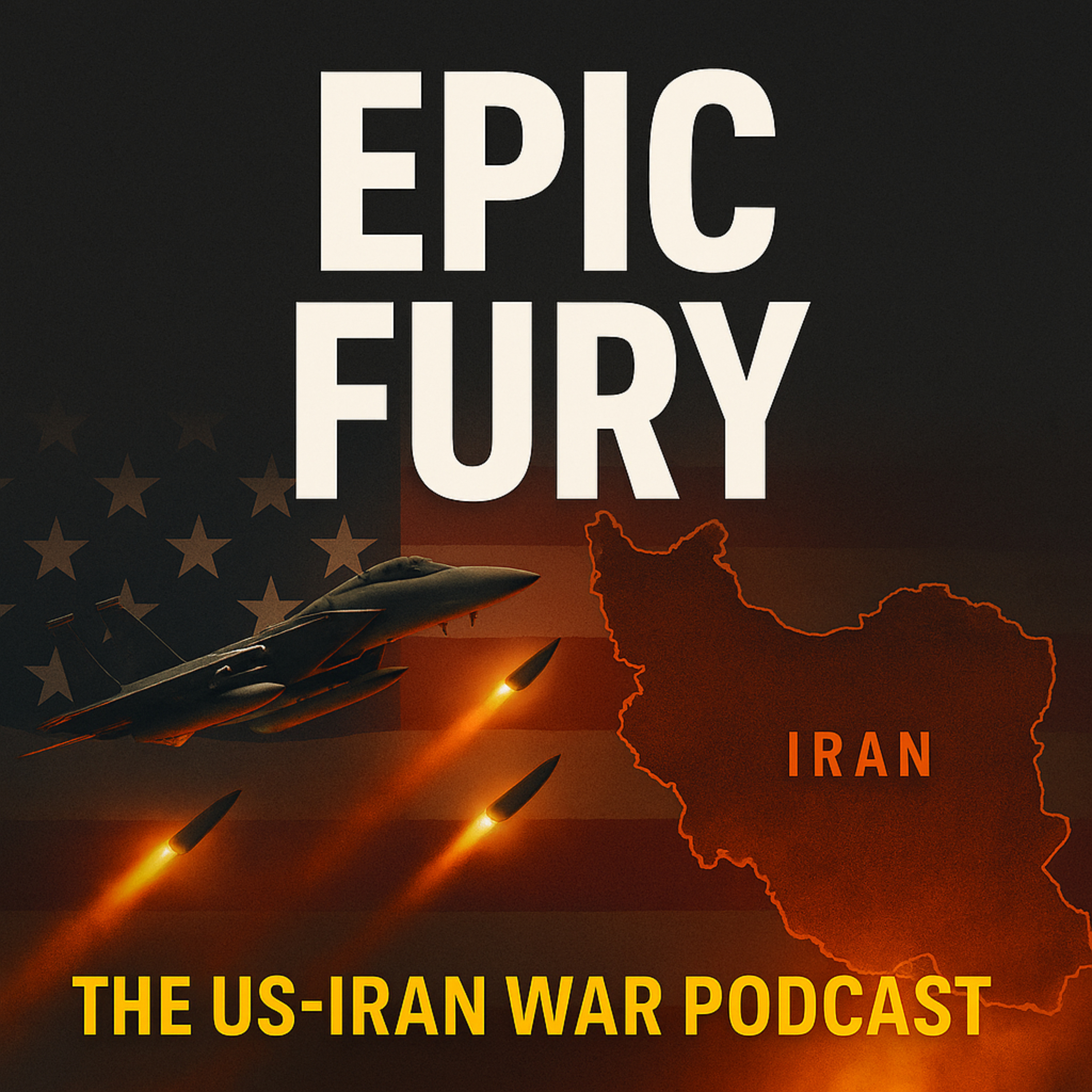
Epic Fury: The US-Iran War Podcast
by The Briefing Network
Epic Fury is a daily news and analysis podcast covering the US–Iran war, global conflict, geopolitics, and financial markets. Each episode breaks down the most important developments from the last twenty-four hours — from military operations and diplomacy to oil prices, stock markets, and global risk. Fast, clear, and high-impact. No filler. Just the facts and what they mean. New episodes daily. Follow now to stay ahead of every major development.
-
79
US Strikes Iran's Larak Island, Tehran Hits Back at Jordan Bases
The United States has struck Iran again after more than a month of relative quiet, targeting Iranian rocket launchers on Larak Island in the Strait of Hormuz. Tehran responded within hours, launching missiles and drones toward US-operated bases in Jordan.In this episode of Epic Fury: The US-Iran War Podcast, we break down the renewed exchange of fire between the United States and Iran, why CENTCOM says it struck Larak Island, Iran’s claimed retaliation against King Hussein Air Base and Al-Azraq Air Base, and whether this marks the beginning of a wider escalation after weeks of relative restraint.We also examine the US naval blockade and mine-clearing operations in the Strait of Hormuz, Operation Economic Outcast and Washington’s expanding sanctions campaign, rising oil prices, Iran’s worsening gasoline shortage, divisions inside Tehran over reopening Hormuz, and the latest US proposal delivered through Pakistan’s military chief, Asim Munir.Plus: Pezeshkian and Putin meet at the Shanghai Cooperation Organization summit, Iraq’s unresolved militia disarmament crisis, stalled Lebanon negotiations, and the growing pressure on Iran’s economy six months into the war.Subscribe to Epic Fury for daily coverage and analysis of the US-Iran war, the Strait of Hormuz crisis, Iran, the Middle East, US military operations, oil markets, sanctions, diplomacy, and the global consequences of the conflict.
-
78
Khamenei’s Warning, Hormuz Stays Closed, Tehran Runs Low on Fuel
Iran’s Supreme Leader Mojtaba Khamenei issues a warning to the Muslim world as Tehran hardens its position on the Strait of Hormuz. Iran says the waterway will remain closed, while a US proposal delivered through Pakistan’s army chief, Field Marshal Asim Munir, still has no formal response from Tehran.Meanwhile, Operation Economic Outcast is beginning to hit Iran’s economy. Long petrol queues are forming across Tehran, gasoline supplies are under growing pressure, the rial has fallen to fresh lows, and Washington is expanding its sanctions campaign.Also in this episode: the battle over militia disarmament in Iraq, Iran’s diplomatic push at the Shanghai Cooperation Organization summit, the latest on Russia, China and Tehran, and what the deepening economic pressure could mean for the next phase of the US-Iran war.Six months into Operation Epic Fury, the conflict is increasingly becoming a war of economic pressure, political leverage and endurance.
-
77
Qatar’s Tehran Talks, Munir’s US Offer to Rezaei
Qatar’s prime minister travels to Tehran for crucial talks with Iran as negotiations over the Strait of Hormuz and a potential shipping corridor gather momentum. At the same time, Pakistan’s army chief Asim Munir delivers a US proposal directly to Iranian security chief Mohsen Rezaei, outlining Washington’s terms for ending the blockade and easing economic pressure on Tehran.In this episode of Epic Fury: The US-Iran War Podcast, we break down Qatar’s Tehran talks, Munir’s US offer to Rezaei, the battle over reopening the Strait of Hormuz, and Treasury Secretary Scott Bessent’s escalating “Economic D-Day” campaign against Iran. We also examine Iran’s collapsing currency, new US sanctions targeting Iranian oil and sanctions evasion, Iraqi militias refusing to disarm, the latest negotiations over Gaza and Lebanon, and President Masoud Pezeshkian’s upcoming meeting with Vladimir Putin.
-
76
Six Months Into War, Iran’s Currency Collapses
Six months into the US-Iran War, Iran’s currency has crashed beyond two million rials to the US dollar as economic pressure, sanctions and the Strait of Hormuz blockade push Tehran deeper into crisis.In this episode of Epic Fury, Qatar’s prime minister makes the first high-level visit to Tehran since the war began, while Pakistan’s army chief reportedly delivers a formal US offer to Iran’s leadership. We examine the uncertain Iran-Oman agreement to reopen the Strait of Hormuz, fresh tanker attacks, Washington’s expanding sanctions campaign, and the growing pressure on Iran’s economy.We also cover the deepening diplomatic push involving Qatar, Pakistan, Oman and Russia, Trump and Netanyahu’s hardline stance on negotiations, tensions in Iraq and Lebanon, Iran’s upcoming talks with Vladimir Putin, and what the next phase of this six-month conflict could look like.Is Iran moving towards a deal — or is the economic crisis, the battle over the Strait of Hormuz and the failure to resolve the war’s biggest disputes pushing the conflict towards another escalation?Epic Fury is your daily briefing on the US-Iran War, Iran sanctions, the Strait of Hormuz, Middle East conflict, US foreign policy, Trump, Netanyahu, oil markets and the diplomacy shaping the next phase of the war.
-
75
Iran-Oman Hormuz Deal Disputed as Tanker Burns Again
Iran and Oman appear to be sending conflicting signals over a proposed Strait of Hormuz shipping deal as a tanker catches fire in the waterway for the second time in days. In this episode of Epic Fury, we examine the disputed Hormuz corridor, renewed attacks on commercial shipping, Trump’s warning that the war could continue, and the growing pressure on Iran as US sanctions hit its economy.We also cover Iran’s collapsing rial, China’s response to Washington’s sanctions campaign, Qatar’s new diplomatic push in Tehran, Iran’s nuclear inspection dispute, Pakistan’s mediation efforts, Iraq’s militia crisis, and the latest developments in Gaza and Lebanon.The US-Iran war may be moving away from the battlefield, but the fight over shipping, sanctions and diplomacy is becoming increasingly dangerous.
-
74
Strait of Hormuz Reopening? Iran and Oman Announce Shipping Corridor
The Strait of Hormuz could be reopening. Iran and Oman have announced a framework for a temporary shipping corridor and joint mine-clearing operation — but the waterway remains contested, commercial shipping is still under threat, and the US says its Navy has already cleared the mines.In this episode of Epic Fury, we break down the latest Strait of Hormuz reopening plan, Iran and Oman's shipping corridor, tanker attacks, mine-clearing efforts and what the developments mean for global oil supplies and international shipping.We also examine US-Iran sanctions, Treasury Secretary Scott Bessent's latest pressure campaign against Tehran, China's response, Pakistan's mediation efforts, questions surrounding Iran's Supreme Leader, the Qatar-Iran pilot dispute, Iraq's militia disarmament deadline, and the latest developments in Lebanon, Gaza and the wider Middle East.
-
73
Bessent Unveils Sanctions on Iran
Treasury Secretary Scott Bessent has unveiled a major new US sanctions package targeting Iran, expanding Washington’s economic pressure campaign against Tehran.In this episode of Epic Fury: The US-Iran War Podcast, we examine Bessent’s “Economic D-Day” announcement, including new sanctions targeting Iran’s oil smuggling, shipping, technology, gold, aviation and digital assets. We break down what Washington actually announced, what was held back, and why the toughest financial measures may still be coming.We also examine Iran’s response, China’s rejection of US pressure, the risk of secondary sanctions against Chinese banks and other trading partners, and what the latest measures could mean for Iran’s economy, oil markets and the wider war.The episode also covers the latest developments around the Strait of Hormuz, Iranian oil exports, shipping risks, Iraq, Lebanon, Gaza, Qatar and the detained Iranian pilots, as well as the diplomatic efforts that could determine what happens next.
-
72
Economic D-Day Bessent’s Iran Sanctions Announcement Looms
Economic D-Day is looming as US Treasury Secretary Scott Bessent prepares to unveil a major new Iran sanctions package — promising the toughest economic pressure Washington has ever imposed on Tehran.Bessent has described the coming Iran sanctions announcement as an “economic D-Day”, with the United States preparing to target the financial networks, banks, companies and oil trade that continue to support Iran. The objective is clear: use economic warfare to force Tehran into submission after months of military pressure failed to produce a decisive end to the US-Iran war.In this episode of Epic Fury: The US-Iran War Podcast, we examine what Bessent’s toughest Iran sanctions could mean for Iran’s economy, Iranian oil exports, international banks and companies doing business with Tehran. We also examine how Iran is preparing to respond, why China is rejecting Washington’s pressure, and whether the UAE and other Gulf states could join the sanctions campaign.The episode also tracks the latest developments around the Strait of Hormuz, global oil prices, Iranian shipping, the UAE, China and the wider economic consequences of the US-Iran conflict.With the war approaching six months, Washington is making a major strategic shift from military force toward financial pressure. The question is whether Bessent’s sanctions can achieve what bombs and blockades have not — forcing Iran toward an end to the war.Epic Fury delivers daily US-Iran war news, Iran war updates, sanctions analysis, geopolitical developments, oil market coverage and the latest developments across the Middle East.Subscribe to follow the US-Iran war as it unfolds.
-
71
US Readies Toughest Iran Sanctions Yet
The US is preparing its toughest Iran sanctions yet as the US-Iran war enters a critical new phase. Treasury Secretary Scott Bessent is set to unveil a sweeping new sanctions package targeting Iran, with Washington promising unprecedented economic pressure on Tehran.But Iran is sending a different signal. President Masoud Pezeshkian says Tehran could bring the Iran war to an end while claiming victory and insisting any settlement must come on Iran's terms. Meanwhile, China rejects US pressure over its continued purchases of Iranian oil.In this Iran war update, we examine the new US sanctions on Iran, China's response, Iran's diplomatic signals, and whether economic warfare can succeed where military strikes have failed.We also break down the latest developments in the Strait of Hormuz, shipping and oil markets, Iran's control over maritime traffic, the growing pressure on Iraq and Iranian-backed militias, and the wider Middle East conflict.This is Episode 177 of Epic Fury: The US-Iran War Podcast — your daily briefing on the Iran war, US military strategy, sanctions, geopolitics, oil markets and the rapidly changing Middle East.
-
70
Iran Blockade Tightens, 68 Ships Redirected as China Faces Oil Pressure
The Iran blockade is tightening as 68 commercial vessels are redirected by US forces, while pressure builds on Tehran’s oil exports and financial system.In this episode of Epic Fury: The US-Iran War Podcast, we examine the latest developments in the US-Iran war, including the growing naval blockade of Iran, the Strait of Hormuz, and Washington’s expanding economic pressure campaign.We cover:• 68 ships redirected under the US naval blockade• Iran’s oil exports and the growing pressure on its economy• China’s role in buying Iranian oil and the pressure building on Beijing• New Hezbollah sanctions and Iran-linked financial networks• The impact of the blockade on global oil markets and shipping• Iran’s conditions for reopening the Strait of Hormuz• Iranian-backed militias and the growing security crisis in Iraq• The latest developments in Lebanon and Gaza• US military deployments and the wider strategic pictureAs the US-Iran conflict moves into a new phase, the battle is increasingly being fought through oil, sanctions, shipping and financial pressure as well as military force.Listen to Epic Fury for daily US-Iran war news, Iran war analysis, Middle East geopolitics, military developments, oil markets and the global impact of the conflict.
-
69
US Unveils Toughest Iran Sanctions Yet, Hezbollah Tied to Tehran as Carrier Relief Arrives
The United States has unveiled plans for its toughest sanctions campaign against Iran yet, with Treasury Secretary Scott Bessent warning that Washington wants to economically isolate Tehran and “collapse this regime.” The new measures are expected to be announced Monday and could target Iranian oil revenues, Chinese refiners, financial networks and countries continuing to trade with Iran.In Episode 175 of Epic Fury, we examine the expanding economic war against Iran, the US designation tying Hezbollah more explicitly to Tehran and the latest developments around the naval blockade of Iran.We also cover the arrival of the USS George Washington to relieve the USS Abraham Lincoln after more than 250 days at sea, the latest US blockade figures, the continuing dispute over the Strait of Hormuz, and the UAE's suspension of trade and financial transactions with Iran following the August 18 missile incident.The episode also examines the collapse of the Islamabad Memorandum of Understanding, Trump's threat against Oman, the September 30 Iraqi militia disarmament deadline, tensions involving Kataib Hezbollah, the unresolved drone attack on Kurdish leader Masrour Barzani's office, and uncertainty surrounding Iran's Supreme Leader Mojtaba Khamenei.Beyond Iran, we examine the fragile Gaza ceasefire, renewed Lebanon tensions, upcoming Rome talks between Israel and Lebanon, and the latest impact of the war on oil prices, stocks and global energy markets.Epic Fury: The US-Iran War Podcast delivers daily news and analysis on the US-Iran conflict, military developments, sanctions, diplomacy, oil markets, the Strait of Hormuz and the wider Middle East.Subscribe for the next episode and follow the latest developments as they unfold.
-
68
UAE Severs Trade With Iran After Missile Alert, Trump Claims Hormuz Is Open as Shipping Stalls
The UAE has severed all trade, commercial exchange and financial ties with Iran following a missile alert that reignited tensions across the Gulf. Iran denies launching the missiles, but the economic rupture threatens one of Tehran’s most important commercial lifelines.Meanwhile, President Trump claims the Strait of Hormuz is open and operating — but shipping data tells a very different story. Vessel crossings remain dramatically below pre-war levels, Iran says the strait is still blocked, and a cargo ship was attacked while attempting to leave the waterway.In this episode of Epic Fury, we examine the UAE-Iran economic break, the growing dispute over the Strait of Hormuz, Trump’s threat against Oman, and reports of an emerging Iran-Oman shipping arrangement. We also cover the collapse of the sixty-day US-Iran negotiating window, Washington’s threatened new economic pressure on Tehran, the unresolved drone attack in Iraqi Kurdistan, Gaza ceasefire talks, Lebanon’s disarmament negotiations, Iraq’s September militia deadline, rising oil prices, depleted US missile interceptor stocks, and the latest US carrier movements.Epic Fury is your daily briefing on the US-Iran war, covering the military, diplomatic, economic and geopolitical developments shaping the conflict.Subscribe on Spotify or Apple Podcasts for daily coverage of Operation Epic Fury, plus exclusive premium episodes exploring the weapons, strategy, history and economics behind the war.
-
67
Iran Accused of Missile Attack on UAE, Dubai Cuts Ties, Trump Ends Talks
Iran is accused of firing two ballistic missiles toward the United Arab Emirates as tensions across the Gulf reach a new level. Iran denies the allegation, but hours later the UAE suspends all trade, commercial exchange and financial transactions with Tehran.Meanwhile, President Donald Trump says there are no talks with Iran and none are scheduled, as the sixty-day diplomatic window expires without a new agreement. Iran signals a shift toward a fully offensive military posture, while the Strait of Hormuz remains heavily restricted and commercial shipping continues to face attacks and disruption.In this episode of Epic Fury, we examine the growing Iran-UAE crisis, the collapse of US-Iran diplomacy, the escalating threat around the Strait of Hormuz, Trump's threat toward Oman, Washington's planned economic pressure campaign, and what the widening conflict means for oil markets and global shipping.We also cover the latest developments in Gaza, Lebanon and Iraq, including the future of US-Iran back-channel contacts, rising tensions involving Iran and Iraqi Kurdistan, and the continuing questions surrounding Iran's leadership.Subscribe to Epic Fury: The US-Iran War Podcast for daily coverage and analysis of the war, Iran, the United States, Israel, the Gulf, the Strait of Hormuz, oil markets and the wider geopolitical fallout.
-
66
MOU Expires, Trump Threatens to Bomb Oman, Iran Goes “Fully Offensive”
The US-Iran sixty-day memorandum has expired with no new peace agreement in place. President Donald Trump is threatening to bomb Oman over its role in negotiations surrounding the Strait of Hormuz, while a senior Iranian official says Tehran is shifting to a “fully offensive” military posture.In this episode of Epic Fury, we examine the collapse of the sixty-day diplomatic window, the growing confrontation over Hormuz, and reports of new back-channel contacts between Washington and Iran. We also track the latest attacks on shipping, including a vessel struck while transiting the strait, as well as the continued US naval blockade.The episode also covers the drone attack on the office of Iraqi Kurdistan Prime Minister Masrour Barzani, Iran's warning that the incident may have been a false-flag operation, and the growing importance of Erbil as a potential channel between Washington and Tehran.We examine Trump's promised “Economic Fury” sanctions, the Pentagon's $22.9 billion Tomahawk missile contract, developments in Gaza and Lebanon, and Iraq's September deadline for armed factions to disarm.Epic Fury: The US-Iran War Podcast delivers a daily briefing on the military, diplomatic and economic developments shaping the conflict and its wider regional consequences.Subscribe to follow the war as it develops.
-
65
US-Iran Sixty-Day Deal Expires, No New Agreement, War Risks Return
The US-Iran sixty-day deal has expired — and no new agreement is in place.In this episode of Epic Fury: The US-Iran War Podcast, we examine what happens after the June agreement's sixty-day negotiating window closes without a lasting settlement. Washington and Tehran remain divided over the future of the Iran nuclear program, sanctions, the Strait of Hormuz and the terms required to formally end the war.We also examine Trump's latest position, Iran's refusal to confirm a return to negotiations, the growing pressure on Tehran, rising oil prices and the wider regional consequences as the diplomatic window closes.The episode also covers:The collapse of the sixty-day negotiating deadlineWhy Washington and Tehran disagree over the status of the warIran's conditions for reopening negotiationsNew US pressure on IranOil markets and the global supply outlookThe latest developments involving Israel, Lebanon and IraqWhat to watch next as the US-Iran conflict enters a new phaseListen to Epic Fury for daily analysis of the US-Iran war, Iran, the Middle East, geopolitics, oil markets, sanctions and the global consequences of the conflict.Subscribe for every new episode.
-
64
Lebanon Violence Surges as Iran Rejects Negotiations and Washington Prepares New Measures
Violence is escalating in southern Lebanon as Israeli strikes kill eleven people, in the deadliest attack since the June ceasefire framework took hold. The strikes threaten to further complicate upcoming negotiations between Israel and Lebanon and raise fresh questions about the stability of the wider regional conflict.Meanwhile, Iran is hardening its position on negotiations with the United States. Foreign Minister Abbas Araghchi says Tehran has not decided to restart talks, while mediators from Qatar and Pakistan continue exchanging messages with Iran. Tehran is also maintaining a separate technical effort with Oman to establish new shipping routes.In Washington, Treasury Secretary Scott Bessent says the administration is preparing unprecedented economic measures against Iran, combining financial pressure with the ongoing blockade. The measures are expected to target Iranian financial assets and further increase pressure on Tehran.The episode also examines the growing dispute over Iran-backed militias in Iraq, continued Houthi attacks around the Red Sea, the latest Gaza diplomacy, mounting pressure on global oil supplies, and what to watch as the conflict enters another critical week.
-
63
Trump Claims Hormuz for US, Iran Pushes Back, Bessent Threatens New Economic War
President Donald Trump says the United States will claim the Strait of Hormuz as American territory after the war with Iran — a remarkable declaration that Tehran has immediately rejected.In this episode of Epic Fury: The US-Iran War Podcast, we examine Trump's latest escalation, Iran's response, and the growing confrontation over who controls the world's most strategically important oil chokepoint.We also cover:Trump's Hormuz declaration and what it could mean for US policy and international maritime law.Iran's rejection of America's claim and Tehran's insistence that the strait remains under Iranian control.Two ADNOC vessels attacked, bringing commercial shipping through Hormuz closer to a standstill.Scott Bessent's new economic offensive, with the Treasury Secretary promising unprecedented measures against Iran.The US naval blockade, which Washington says it can maintain indefinitely.USS Abraham Lincoln's record deployment and the arrival of the USS George Washington.New diplomatic efforts involving Austria, Greece, Oman, Pakistan, Iraq and other countries.Oil prices and the global supply threat, as Brent crude moves back above $88 a barrel.Iraq's September 30 militia deadline and the risk of another confrontation.Gaza's stalled disarmament plan and renewed diplomatic efforts in Israel and Cairo.With the Strait of Hormuz still effectively paralysed, the US blockade continuing and Iran refusing to back down, the central question is becoming increasingly difficult to avoid:Who actually controls Hormuz — and how far is Washington prepared to go to prove it?Subscribe to Epic Fury: The US-Iran War Podcast for daily coverage of the US-Iran war, military developments, diplomacy, oil markets and the global economic consequences of the conflict.This episode is based on reporting and information available as of August 15, 2026.
-
62
US Says Iran Blockade Can Last Indefinitely, Hormuz Tensions Rise, Two Tankers Hit
The US says its naval blockade of Iran can continue indefinitely, as the Strait of Hormuz becomes the central pressure point in the war. Two UAE-linked tankers have been attacked, shipping through Hormuz has collapsed, and Iran is moving to formalise restrictions on vessels linked to the United States and Israel.In this episode of Epic Fury: The US-Iran War Podcast, we examine the escalating battle over the Strait of Hormuz, the US blockade strategy, Iran’s response, and the growing cost to global shipping and energy markets.We cover:• Why the Pentagon says the Iran blockade can continue indefinitely• Trump’s claim that the US has control of the Strait of Hormuz• Iran’s counterclaim and proposed legislation restricting shipping• Two ADNOC tankers attacked in the latest escalation• The collapse in commercial shipping through Hormuz• Oil spills and the growing environmental cost of the conflict• Pressure on the USS Abraham Lincoln and US naval forces• US Patriot and THAAD interceptor stockpiles• The latest fighting in the Red Sea and Iraq• Iran’s demands for reopening the Strait of Hormuz• US inflation, oil prices and Wall Street’s reactionThe central question is becoming harder to ignore: Is the Strait of Hormuz still a temporary bargaining chip — or is the US-Iran blockade becoming a permanent feature of the conflict?This is Epic Fury: The US-Iran War Podcast, your daily briefing on the US-Iran war, the Strait of Hormuz, oil markets, military developments and the geopolitical consequences of the conflict.
-
61
Iran Targets Trump’s Patience, Oil Cushion Drains, Red Sea Shipping Hit
Iran signals it could prolong the US-Iran war and attempt to outlast President Donald Trump, while Washington maintains economic pressure through its naval blockade and sanctions campaign.In this episode of Epic Fury: The US-Iran War Podcast, we examine Iran’s strategy for a potentially prolonged conflict, the growing pressure on Tehran’s economy, and the latest developments around the Strait of Hormuz and Red Sea shipping.We cover General Mohammad Reza Naqdi’s warning that Iran could pursue a war of attrition lasting into the next US presidential term, including his claims about Iran’s missile production and remaining military capacity. We also examine President Trump’s response, Iran’s worsening inflation and the continuing impact of the American blockade on Iranian ports.The global energy picture is becoming increasingly serious. The International Energy Agency warns that global oil inventories are being rapidly depleted, with the disruption around the Strait of Hormuz creating a growing supply deficit. We examine what shrinking oil reserves could mean for crude prices, gasoline prices and the wider global economy.The episode also covers the deadly Houthi attack on the commercial vessel Tihamah in the Bab al-Mandeb Strait, which killed six crew members, as well as the latest incident involving the Vela Nova in the Gulf of Oman.Also covered:• Iran’s wartime military leadership reshuffle• The latest Iran-Oman talks over reopening the Strait of Hormuz• US naval enforcement and commercial shipping disruptions• US inflation, oil prices and the American economy• The Strategic Petroleum Reserve falling below 300 million barrels• The political battle over funding the Iran war• Israel, Gaza and the wider regional conflict• Iran’s executions and domestic repression• What to watch next as the Hormuz crisis developsEpic Fury provides a daily briefing and analysis of the US-Iran war, Iran’s military strategy, President Trump’s decisions, the Strait of Hormuz, global oil markets and the wider Middle East conflict.
-
60
US Hits Iran-Bound Ship as Peace Talks Advance, Trump Demands War Reparations
The US-Iran war enters another critical phase as American forces strike an Iran-bound container ship in the Gulf of Oman while diplomatic efforts through Pakistan point toward a possible peace arrangement.In this episode of Epic Fury: The US-Iran War Podcast, we examine the US naval blockade of Iran, the strike on the Vela Nova, and the growing contradiction between battlefield escalation and diplomatic progress. We also examine President Donald Trump's demand that Iran pay war reparations for Americans killed and wounded in conflicts linked to Tehran, and Iran's response.We cover the latest developments across the Strait of Hormuz, Gulf of Oman and Red Sea, including Houthi attacks on shipping, pressure on Saudi Arabia, Iran's conditions for reopening Hormuz, and the proposed Iran-Oman shipping corridor.We also examine Trump's shift toward economic pressure, falling US Strategic Petroleum Reserve stocks, rising oil prices, inflation risks, Iran's military leadership, developments in Gaza and Syria, and the wider geopolitical consequences of the conflict.Follow Epic Fury for daily analysis of the US-Iran war, military developments, diplomacy, oil markets and the geopolitical forces reshaping the Middle East.
-
59
Trump Demands Iran Pay, Iran Hardens Its Security Command, Oil Jumps
Trump demands Iran pay for the human and economic costs of the war as Tehran carries out a sweeping reshuffle of its military and security leadership.In this episode of Epic Fury: The US-Iran War Podcast, we examine Iran's appointment of new military commanders and the return of veteran IRGC figures to senior positions, including Mohsen Rezaee as secretary of the Supreme National Security Council. The reshuffle points to a harder security posture in Tehran as negotiations with Washington continue.We also examine the latest Strait of Hormuz standoff. Iran says the waterway cannot fully reopen while the US naval blockade remains in place, while Washington is demanding compensation from Tehran. Oil markets reacted immediately, with Brent crude and WTI rising sharply as hopes for a lasting Hormuz agreement weakened.The episode also covers escalating Houthi attacks in Yemen and Saudi Arabia, the growing dispute over the disarmament of Iran-backed militias in Iraq, the widening disagreement between Donald Trump and Benjamin Netanyahu over Gaza, and the unresolved question of Iran's underground Pickaxe Mountain nuclear facility.Today's key developments:• Trump demands compensation from Iran for wartime deaths and damage• Iran reshuffles its military and security command• Strait of Hormuz negotiations remain unresolved• Oil prices jump as traders reassess the risk to Gulf shipping• Houthi attacks and threats against Saudi Arabia escalate• Iraq's deadline for Iran-backed militias to disarm approaches• Trump and Netanyahu remain divided over Gaza• Questions remain over Iran's Pickaxe Mountain nuclear facilityEpic Fury provides a daily briefing on the US-Iran war, Iran, Israel, the Middle East, Strait of Hormuz, oil markets, US military strategy and the geopolitical consequences of the conflict.
-
58
Iran Reshuffles Security Command, Yemen Conflict Escalates, US Strategy Shifts
Iran reshuffles its top security command in a move that signals growing pressure inside Tehran. Yemen’s fragile truce edges toward collapse after a surge in Houthi strikes across the Red Sea coast. And in Washington, the United States shifts strategy — keeping pressure on Iran while stepping back from direct escalation.In Episode 164 of Epic Fury: The US-Iran War Podcast, we break down the most critical developments shaping the conflict right now:• Iran’s leadership shake-up and what it reveals about internal divisions• Yemen’s escalating violence and the risk of a wider regional war• The latest on Hormuz negotiations and global shipping tensions• US military strategy, missile stockpile pressure, and defence production urgency• Saudi alliances, Israel’s posture, and rising geopolitical fault linesFrom Tehran to the Red Sea to Washington, this episode delivers a clear, factual analysis of the forces driving the war forward — and what to watch next.Subscribe for daily updates on the US–Iran war, global geopolitics, military strategy, and energy markets.
-
57
Oman Negotiations Progress, Saudi Security Assessment, US Missile Inventory Tightens
In today’s episode of Epic Fury: The US-Iran War Podcast, Oman-mediated negotiations over the Strait of Hormuz move closer to a potential framework, but key conditions from Iran’s security establishment continue to complicate any full reopening of global shipping lanes.At the same time, Saudi Arabia raises a serious security assessment, warning of possible coordinated attacks involving drones and missiles across multiple fronts — a development that could significantly widen the regional conflict.In Washington, attention turns to the growing strain on US missile stockpiles. New analysis suggests interceptor inventories are tightening after months of sustained operations, raising questions about long-term readiness and the limits of America’s defence industrial base.We also cover:– The latest on Hormuz shipping corridor negotiations– Rising risks across the Gulf and Red Sea– The evolving Iran nuclear picture and Pickaxe Mountain– Regional defence realignments and the new trilateral pact– What falling US missile inventories mean for the wider warIf you want clear, factual, no-noise analysis of the Iran war, this is your daily briefing.
-
56
Hormuz Corridor Agreed Then Hit, US Stockpiles Strained, Trump Eyes Pickaxe Strike
Iran and Oman agree on a new shipping corridor through the Strait of Hormuz — then within hours, explosions hit Qeshm Island and Iran launches strikes in the very waters it just promised to reopen. In Episode 162 of Epic Fury, the gap between diplomacy and reality is on full display.We break down the proposed Hormuz deal, including reports that Iran could gain effective control over transit routes, restrict US and Israeli vessels, and impose financial penalties on “hostile” shipping. But renewed violence has already shaken confidence, sending oil prices higher and raising fresh doubts about whether global energy flows can stabilise.On the battlefield, a major story emerges from Washington. Reports suggest the United States is facing serious munitions strain, with stockpiles of key systems like THAAD interceptors significantly depleted after months of sustained conflict. The White House pushes back hard — but independent analysis points to a deeper industrial challenge: can the US sustain this pace of war?We also examine rising tensions across the region, including expanding Houthi attacks in the Red Sea, militia threats in Iraq, and a growing political divide in Washington over war funding and oversight.And in today’s deep dive: Pickaxe Mountain. A heavily fortified site near Iran’s Natanz nuclear complex that may house advanced enrichment capabilities deep underground. With President Trump openly discussing a potential strike, this location could become the next flashpoint in a war already pushing toward a wider escalation.This episode covers:– The Iran–Oman Hormuz corridor agreement and what it really means– Qeshm Island explosions and renewed maritime risk– US weapons stockpile pressure and defence industrial limits– Oil market reaction and global energy implications– Houthi expansion and regional escalation– The strategic importance of Pickaxe MountainSubscribe to Epic Fury: The US-Iran War Podcast for daily, fact-based analysis of the conflict shaping global markets, military strategy, and geopolitics.
-
55
Saudi Defence Pact Signed, Iran Hormuz Restrictions Advance, US Munitions Questioned
Saudi Arabia, Turkey and Pakistan sign a major new defence pact, Iran advances plans to restrict American and Israeli shipping through the Strait of Hormuz, and fresh questions emerge over whether the United States has enough advanced munitions to sustain a prolonged conflict.In Episode 161 of Epic Fury: The US-Iran War Podcast, we break down the new Saudi-Turkey-Pakistan security alliance, intelligence warnings of coordinated Houthi and Iraqi militia attacks, Iran's proposed Hormuz shipping restrictions, the latest Oman negotiations, Pentagon ammunition concerns, US casualty updates, Israel-Lebanon ceasefire talks, and the geopolitical shifts reshaping the Middle East.Join us for independent daily analysis of the US-Iran war, military strategy, global oil markets, diplomacy, defence policy, and the wider security implications for the Gulf and beyond.Topics covered: Saudi Arabia, Turkey, Pakistan, Iran, Strait of Hormuz, Oman, Donald Trump, Pentagon, THAAD, Patriot missiles, Houthi attacks, Israel, Lebanon, Hezbollah, Gulf security, oil prices, Middle East conflict, geopolitics, military analysis, defence news.
-
54
Pentagon Stockpile Shortfall, Oman Hormuz Deal Nears, Israel Eyes Solo Strike
Pentagon stockpile concerns have taken centre stage as reports reveal growing pressure on America's missile and air defence inventories, while Oman moves closer to brokering a breakthrough agreement to reopen the Strait of Hormuz. At the same time, Israel signals it could act alone if diplomacy fails, raising fresh questions over whether a wider regional escalation can still be avoided.In Episode 160 of Epic Fury: The US-Iran War Podcast, we examine the reported confrontation inside the White House over dwindling munitions, the latest Oman-led negotiations between Iran and the United States, Israel's increasingly independent stance, renewed Houthi attacks on shipping, Lebanon ceasefire talks, and what all of it means for global oil markets, military strategy, and the future of the conflict.If you're following the US-Iran war, the Strait of Hormuz, Middle East geopolitics, oil prices, Pentagon military strategy, Israel, Iran, Oman, Hezbollah, and the latest international security developments, this episode delivers the context behind today's biggest headlines.
-
53
US Missile Defences Depleted, Iran Shipping Talks Progress, Oil Falls
US missile defence stockpiles are running low after months of sustained conflict with Iran, raising new questions about America's military readiness and the future of the war. In Episode 159 of Epic Fury: The US-Iran War Podcast, we examine reports that the US has depleted much of its THAAD and Patriot interceptor inventory, the Pentagon's response, and what shrinking missile reserves could mean for any future escalation.We also cover the latest Iran shipping talks as negotiators work toward a temporary Strait of Hormuz agreement, continued attacks on commercial vessels despite diplomatic progress, falling oil prices, a sharp rally in global stock markets, Congress's battle over war funding, and growing scrutiny over how US military casualties are being counted.If you want clear, in-depth analysis of the US-Iran conflict, the Strait of Hormuz, oil markets, geopolitics, missile defence systems, and the latest developments shaping the Middle East, subscribe to Epic Fury and follow the war day by day.
-
52
Trump Claims Iran Talks, Tehran Says No Deal, Hormuz Traffic Grows
Trump claims negotiations with Iran are underway. Tehran insists there are no talks. In Episode 158 of Epic Fury: The US-Iran War Podcast, we break down the latest developments as diplomatic claims collide with official denials, the Strait of Hormuz sees a gradual increase in shipping traffic, and the risk of renewed escalation remains high.We examine why President Trump says a deal is close while Iran publicly rejects those claims, the Oman-mediated discussions over a temporary Hormuz shipping route, the latest maritime data showing vessels returning to the world's most important oil chokepoint, and how the Houthi blockade is disrupting Red Sea trade. We also cover the Ukraine strike on an Iranian-linked vessel in the Caspian Sea, Tehran's decision to cancel planned retaliation, mounting pressure over the US defense budget, rising fuel prices, and the growing political costs of a war now entering its sixth month.Stay informed with daily analysis of the US-Iran war, the Strait of Hormuz, global oil markets, Middle East geopolitics, Donald Trump, Iran, military strategy, international diplomacy, shipping, and the wider conflict shaping the world economy.
-
51
US Backs Away From Iran Strike, Oil Tumbles, Talks Resume
The United States backs away from what could have been the largest strike of the Iran war as President Trump pauses plans for a major bombing campaign and announces that US-Iran talks are set to resume. But while Washington signals diplomacy, Tehran disputes key parts of the proposed agreement, leaving the future of the Strait of Hormuz and the wider conflict far from certain.In this episode of Epic Fury: The US-Iran War Podcast, we examine why the planned strikes were halted, the latest negotiations over the Strait of Hormuz, Iran's response to Trump's claims, the reaction from Israel, and why oil prices tumbled as markets priced in the possibility of de-escalation. We also cover the continuing US naval blockade, American casualty figures, Iran's worsening economic crisis, congressional opposition to the war, Kataib Hezbollah's looming deadline in Iraq, the unresolved Pickaxe Mountain nuclear site, and the key developments that could determine whether diplomacy holds or the fighting escalates once again.If you're following the US-Iran conflict, Middle East geopolitics, Strait of Hormuz developments, global oil markets, military strategy, and international diplomacy, subscribe to Epic Fury and never miss the latest daily analysis.
-
50
Trump Pauses Iran Strikes, Hormuz Deal Claims, Kuwait Drone Attack
Trump pauses planned US airstrikes on Iran after claiming a breakthrough deal to reopen the Strait of Hormuz—but has the US-Iran war really reached a turning point?In Episode 156 of Epic Fury: The US-Iran War Podcast, we break down President Donald Trump's surprise decision to halt a major US bombing campaign against Iran, despite military plans reportedly being ready for expanded strikes. We examine Trump's claims of a new Hormuz agreement, why Iran has yet to publicly confirm any deal, and what this means for the future of the conflict.We also cover Iran's latest drone attack on Kuwait, the continuing US naval blockade, tensions in the Persian Gulf, CENTCOM operations, the Pickaxe Mountain nuclear facility, Congress's battle over war powers, and the growing risk of renewed escalation if diplomacy fails.This episode also explores the impact on global oil prices, shipping through the Strait of Hormuz, Middle East security, US military strategy, Israel-Iran tensions, and the wider geopolitical consequences for the region.If you're following the latest developments in the US-Iran war, Iran news, Donald Trump, Middle East conflict, Strait of Hormuz, oil prices, global security, geopolitics, and breaking military news, subscribe to Epic Fury for in-depth daily analysis and updates.
-
49
Saudi Red Sea Coalition Announced, Iran Targets Kuwait, Trump Prepares Response
Saudi Arabia unveils a new multinational Red Sea coalition as the US-Iran war enters a dangerous new phase. Iran claims drone strikes against US-operated bases in Kuwait, while President Trump signals another round of military action could begin within days, raising fears of a broader regional conflict.In Episode 155 of Epic Fury: The US-Iran War Podcast, we break down the latest developments across the Middle East, including renewed US strikes on Iran, Tehran's response, the growing security crisis in the Strait of Hormuz and Bab el-Mandeb, and why a second maritime chokepoint could reshape global oil markets and international shipping.We also cover:Saudi Arabia's new Red Sea maritime coalitionIran's claimed attacks on US bases in KuwaitTrump's plans for further strikes on IranRising Brent crude oil prices and the impact on global energy marketsThe latest Pentagon casualty figuresThe strategic importance of Pickaxe Mountain and Iran's nuclear programmeCongressional debate over funding Operation Epic FuryThe latest developments in Gaza and regional diplomacyIf you're looking for daily analysis of the US-Iran war, Iran news, Middle East conflict, oil prices, Strait of Hormuz, Red Sea security, Trump foreign policy, military strategy, and global geopolitics, subscribe to Epic Fury for fact-based coverage every day.
-
48
Egypt Drawn Into Iran War, Saudi Maritime Alliance Announced, China Arms Report
Egypt is now directly caught up in the Iran war. A drone strike at the Port of Damietta has raised fears that the conflict is spreading beyond the Persian Gulf, while Saudi Arabia announces a new 14-nation Maritime Defense Alliance to protect the Strait of Hormuz, Bab el-Mandeb, the Red Sea, and global energy shipping.In this episode of Epic Fury: The US-Iran War Podcast, we break down the biggest developments from the last 24 hours, including renewed regional escalation, the widening geographic footprint of the conflict, and the growing risk to global trade and oil markets.We cover:Egypt's Damietta port drone strike and why it could mark a dangerous new front in the warSaudi Arabia's announcement of a multinational maritime security allianceThe latest US-Iran military escalation following strikes in JordanThe humanitarian impact inside Iran and the latest casualty reportsKuwait's reported strike on a Chinese-owned facilityReuters' report that China may supply Iran with MANPADS air defence systems—and the denials from Beijing and PakistanThe Strait of Hormuz, Bab el-Mandeb, and why these shipping chokepoints remain central to the conflictOil price volatility, Brent crude, and the impact on global energy marketsCongress, the Pentagon, and the latest debate over funding the warIf you want clear, fact-based daily analysis of the US-Iran war, Middle East geopolitics, military strategy, oil markets, the Strait of Hormuz, and global security, subscribe to Epic Fury.
-
47
US Pounds Iran After Jordan Missile Attack, Iraq Erupts, Oil Soars
The US-Iran war has entered a dangerous new phase. After Iran launched ballistic missiles toward a US military base in Jordan, the United States responded with a major wave of airstrikes targeting Islamic Revolutionary Guard Corps facilities across Iran. As the conflict spreads, Iraq has become an increasingly active battleground, with Iran-backed militias vowing retaliation and warning of further attacks across the region.In this episode of Epic Fury: The US-Iran War Podcast, we break down the failed missile attack on American forces, the largest US retaliatory strikes in days, growing instability inside Iraq, and why Saudi Arabia could be drawn deeper into the conflict. We also examine the latest military developments, US sanctions on Iranian oil exports, the political battle in Washington over the war, and the mounting humanitarian toll on both sides.With Brent crude oil surging after renewed fighting and continued disruption in the Strait of Hormuz, we explain what the latest escalation means for global energy markets, international shipping, and the wider Middle East.If you want clear, fact-based daily coverage of the US-Iran conflict, military strategy, geopolitics, and oil markets, subscribe to Epic Fury.In this episode:Iran's missile attack on a US base in JordanMassive US airstrikes against IranIraq becomes the newest major frontIran-backed militias threaten Saudi ArabiaOil prices surge as regional tensions escalateStrait of Hormuz shipping updateLatest US sanctions on Iranian oilCongress debates the expanding warThe human and economic cost of the conflictNew episodes every day covering the US-Iran War, breaking geopolitical developments, military analysis, and the global impact on energy markets.
-
46
Iran Fires on US Base in Jordan, Trump-Netanyahu Meeting, Oil Surges Again
Iran fires ballistic missiles at a US military base in Jordan, shattering hopes that the recent pause in fighting could lead to diplomacy. In Episode 152 of Epic Fury: The US-Iran War Podcast, we break down Iran's first direct attack on American forces since President Trump halted strikes, the secret Trump-Netanyahu meeting at the White House, and why the Middle East conflict may be entering a dangerous new phase.We examine the missile attack on Muwaffaq Salti Air Base in Jordan, CENTCOM's response, Iran's military strategy, and the growing risk of wider regional escalation involving Iraq, Saudi Arabia, the Houthis, and the Strait of Hormuz. We also analyse what was discussed behind closed doors between Donald Trump and Benjamin Netanyahu, the latest intelligence surrounding Iran's Pickaxe Mountain nuclear facility, and whether diplomacy still has a realistic path forward.The episode also explores the economic consequences of the conflict, including oil prices surging after the Jordan attack, Brent crude volatility, global stock market reactions, Iran's worsening energy crisis, the latest developments on the Hormuz shipping dispute, and what Oman's new proposal could mean for global trade and energy security.If you want clear, fact-based daily analysis of the US-Iran war, Middle East geopolitics, oil markets, military strategy, and international diplomacy, subscribe to Epic Fury and never miss an episode.Topics covered:Iran fires missiles at a US base in JordanTrump-Netanyahu White House meetingCENTCOM and US military responseIran nuclear programme and Pickaxe MountainStrait of Hormuz and global shippingOil prices and energy marketsIraq, Saudi Arabia and Houthi developmentsUS-Iran diplomacy and regional securityMiddle East war analysisDaily geopolitical news
-
45
Trump Claims Talks, Iran Denies Negotiations, Hormuz Still Closed
President Trump says the United States is holding "good talks" with Iran. Tehran insists there are no negotiations. Four days have passed without US or Iranian strikes, but is this the beginning of peace—or simply a pause before the next escalation?In this episode of Epic Fury: The US-Iran War Podcast, we examine the growing contradictions at the centre of the conflict, why the Strait of Hormuz remains effectively closed, and how the war is expanding beyond the Gulf despite the lull in direct fighting.We cover:Trump claims US-Iran diplomacy is making progress while Iran denies any talksWhy the four-day pause in strikes may be driven by diplomacy, logistics, or bothThe latest Strait of Hormuz shipping crisis and Iran's continued control over key sea lanesFresh Red Sea attacks on Saudi oil infrastructure and the widening Houthi threatUkraine's strike in the Caspian Sea and the growing Russia-Iran connectionReports that US missile stockpiles are under pressure as the conflict continuesThe Pentagon casualty controversy and questions over changing US military casualty figuresThe latest on Pickaxe Mountain, Iran's underground nuclear complex, and Trump's renewed strike warningsCongress battles over Iran war funding as defence costs continue to climbBrent crude, global markets, and what investors are watching nextFrom the Strait of Hormuz to the Red Sea, from Washington to Tehran, this daily geopolitical briefing explains the military strategy, diplomacy, energy markets, and global security implications shaping the US-Iran war.Subscribe for daily coverage of Operation Epic Fury, including analysis of breaking military developments, US foreign policy, Iran, Israel, oil prices, global shipping, and the wider Middle East conflict.
-
44
US Pauses Iran Strikes, Pentagon Casualty Controversy Grows, Red Sea Shipping Under Threat
US pauses Iran strikes for a second consecutive night as diplomacy gathers pace, but the wider US-Iran war remains dangerously unstable. In Episode 150 of Epic Fury, we examine President Trump's decision to pause airstrikes, growing Iran peace talks, the Pentagon casualty controversy, and why the Red Sea shipping crisis may now pose a greater threat to global energy markets than the Strait of Hormuz.We break down the Pentagon's disputed casualty figures, congressional scrutiny over the Iran war, the latest US military strategy, renewed diplomatic efforts involving Oman, Qatar, China and Pakistan, and the deep divisions inside Iran over negotiations with Washington. We also explain why Houthi attacks on Saudi Arabia have placed the Bab el-Mandeb Strait under pressure, threatening global oil supplies and international shipping despite falling oil prices.If you're following the US-Iran War, Trump, Iran, Middle East conflict, Red Sea crisis, Strait of Hormuz, oil prices, geopolitics, world news, military analysis, and global markets, this daily podcast delivers in-depth reporting and analysis every day.Subscribe for daily coverage of the US-Iran War and unlock premium bonus episodes exploring military strategy, intelligence, geopolitics, global oil markets, and the history shaping today's conflict.
-
43
Trump Pauses Iran Strikes, Ukraine Opens New Front, Caspian War Escalates
Trump pauses US airstrikes on Iran after thirteen consecutive nights of bombing, but is this the beginning of a ceasefire—or just a pause before a wider war?In this episode of Epic Fury: The US-Iran War Podcast, we break down the biggest developments in the US-Iran War, including President Trump's decision to halt strikes, renewed diplomatic talks with Tehran, and Ukraine's surprise attacks in the Caspian Sea, opening a dangerous new front involving Russia and Iran.We examine the latest intelligence on Iran's nuclear programme, growing concerns over US military stockpiles, the reported involvement of Bahrain and Kuwait in strikes against Iran, and why Pickaxe Mountain remains one of the most dangerous flashpoints in the conflict.You'll also hear the latest on oil prices, the Strait of Hormuz, Red Sea shipping, Houthi attacks, US casualty figures, and the political battle in Washington over funding the expanding war.Topics covered:Trump pauses Iran airstrikesUS-Iran peace talks and ceasefire negotiationsUkraine attacks Iran-linked ships in the Caspian SeaIran-Russia military cooperationPickaxe Mountain nuclear facility updateStrait of Hormuz and Red Sea securityHouthi attacks on oil shippingBrent crude oil price analysisUS military casualties and Pentagon updatesCongress debates funding the Iran warGlobal geopolitical and economic analysisEpic Fury is your daily podcast covering the US-Iran War, Iran, the United States, Donald Trump, Israel, Russia, Ukraine, oil markets, military strategy, geopolitics, and breaking international news.
-
42
Trump Backs Away From Massive Iran Strike, Iran Rejects Ceasefire, Oil Breaks $100
President Donald Trump unexpectedly softens his threat of a massive military strike against Iran just one day after warning of the largest US attack of the war. As diplomacy hangs by a thread, Iran rejects a new ceasefire proposal, US-led airstrikes continue for a thirteenth consecutive night, and the conflict pushes global oil prices above $100 per barrel.In this episode of Epic Fury: The US-Iran War Podcast, we break down the latest developments in the US-Iran war, including President Trump's changing strategy, Iran's refusal to accept an Iraqi-backed peace proposal, CENTCOM's latest strikes on Iranian military command centres, and Tehran's expanding retaliation across Jordan, Kuwait and Iraq.We also examine the return of Houthi attacks in the Red Sea, including missile and drone strikes on Saudi oil tankers, the growing threat to the Bab el-Mandeb Strait, and why energy markets fear a disruption to both the Strait of Hormuz and Red Sea shipping routes. Plus, we analyse Brent crude topping $100, the latest US casualty figures, Trump's warning over Iran's frozen assets, the battle in Congress over war funding, Lebanon's diplomatic role, and the renewed focus on Iran's underground nuclear facilities.If you're looking for daily, fact-based coverage of the Iran war, US military operations, Middle East news, oil prices, geopolitics, and global security, subscribe to Epic Fury for in-depth analysis every day.
-
41
US Senate Votes to Continue Iran War, Oil Tops $100, Houthi Attacks Return
The political battle over the Iran war reaches a turning point as the US Senate narrowly votes to keep military operations going, rejecting a War Powers Resolution that would have limited President Trump's authority. We break down what the 47–49 vote means for the future of the conflict, why opposition in Congress is growing, and how Washington's divisions could shape the next phase of the war.On the battlefield, the United States launches a thirteenth consecutive night of airstrikes against Iran while President Trump signals he is moving closer to a major attack on the heavily fortified Pickaxe Mountain nuclear facility. We examine the military strategy, the risks of escalation, and the latest intelligence surrounding Iran's nuclear programme.The conflict expands at sea as Yemen's Houthi movement resumes attacks on commercial shipping, striking Saudi oil tankers in the Red Sea and opening a second maritime front alongside the Strait of Hormuz. With Brent crude climbing above $100 per barrel for the first time in months, we explore the global economic impact, the energy crisis, and why oil markets are reacting so sharply.Also in this episode:• The latest US and Iranian casualty figures and the Pentagon reporting discrepancy• Trump's choice between a proposed ceasefire and a wider regional offensive• CENTCOM's latest strikes across Iran• The National Defense Authorization Act and the growing political divide in Washington• Lebanon, Hezbollah and the latest diplomatic developments• UN warnings as fears of a wider Middle East war continue to growIf you want clear, fact-based daily analysis of the US-Iran conflict, subscribe to Epic Fury: The US-Iran War Podcast.
-
40
Trump Orders Bridge Strikes, Houthi Red Sea Attacks, Iran War Widens
President Trump unveils a dramatic new policy threatening strikes on Iranian bridges and power plants after any attack on shipping in the Strait of Hormuz, while Houthi forces open a second maritime front by attacking Saudi oil tankers in the Red Sea. As the conflict spreads beyond the Gulf, the risk of a wider regional war continues to grow.In this episode of Epic Fury: The US-Iran War Podcast, we examine the latest US airstrikes inside Iran, Tehran's response, the expanding Houthi blockade, attacks on American bases across the Middle East, rising military casualties, and the growing political battle in Washington over the cost of the war. We also cover the latest developments surrounding Pickaxe Mountain, the White House's escalating strategy, soaring oil prices, and the unanswered ceasefire proposal still sitting before Iran.If you want clear, in-depth daily analysis of the US-Iran conflict, military operations, global oil markets, and the geopolitical decisions shaping the Middle East, subscribe to Epic Fury and never miss an episode.Topics covered:Trump orders bridge and power plant strikesIran threatens retaliation across the GulfHouthi attacks on Saudi oil tankersRed Sea and Strait of Hormuz shipping crisisUS airstrikes on IranAmerican troop casualties and war costsPickaxe Mountain nuclear site updateOil prices, inflation and global marketsUS-Iran ceasefire negotiationsMiddle East breaking news and military analysis
-
39
US Strike on Pickaxe Mountain Looms, Hormuz Crisis Deepens, War Cost Hits $37.5 Billion
President Trump signals that a major US strike on Iran's heavily fortified Pickaxe Mountain nuclear site could be imminent, while a new 10-day ceasefire proposal offers a narrow diplomatic path to ending the conflict. As Washington weighs its next move, the Pentagon reveals the war has already cost $37.5 billion, with 17 American service members confirmed dead and hundreds more wounded.In this episode of Epic Fury: The US-Iran War Podcast, we examine Secretary of State Marco Rubio's warning over freedom of navigation in the Strait of Hormuz, the latest US and Iranian strikes across the Gulf, the growing threat to global oil supplies as the Bab el-Mandeb crisis expands, and the mounting pressure on Congress over soaring military spending.We also cover the intelligence behind Pickaxe Mountain, the latest Pentagon casualty figures, the Houthi blockade against Saudi shipping, the fragile ceasefire negotiations involving Qatar, Oman, Egypt and Pakistan, and why the next 24 hours could determine whether diplomacy succeeds or the war enters an even more dangerous phase.Topics covered:Trump's planned strike on Pickaxe MountainHormuz and Bab el-Mandeb shipping crisisPentagon reveals $37.5 billion war costLatest US-Iran military strikesMarco Rubio's Strait of Hormuz warningIran ceasefire proposal explainedRising oil prices and global market impactUS casualty update and Pentagon funding requestLebanon, Hezbollah and regional diplomacySubscribe to Epic Fury for daily coverage of the US-Iran war, military analysis, geopolitical intelligence, and exclusive premium deep-dive episodes.
-
38
Iran Declares Full-Scale War, US Strikes Continue, 10-Day Ceasefire Proposed
Iran has declared the conflict a "full-scale war" as the United States carries out a tenth consecutive night of airstrikes across Iran. At the same time, regional mediators are pushing a new 10-day ceasefire proposal in an attempt to prevent an even wider Middle East war.In Episode 144 of Epic Fury: The US-Iran War Podcast, we break down the latest military, diplomatic and economic developments shaping the conflict.In this episode:Iran declares it is now in a full-scale war with the United StatesUS airstrikes hit nine Iranian cities for a tenth straight nightA proposed 10-day ceasefire aims to reopen the Strait of HormuzPresident Trump weighs diplomacy while reinforcing US military forcesSeventeen US service members confirmed killed since the war beganNew intelligence points to Iran's fortified Pickaxe Mountain nuclear siteYemen's Houthis announce a naval blockade against Saudi ArabiaLebanon's President meets Donald Trump at the White HouseOil prices, global shipping and financial markets react to the latest escalationEpic Fury delivers daily analysis of the US-Iran war, covering military operations, geopolitics, oil markets, diplomacy, sanctions, the Strait of Hormuz, global security and the wider Middle East conflict.
-
37
US Strikes Hit Nuclear Site, 17 US Troops Dead, Oil Surges Above $90
The United States has carried out a ninth consecutive night of airstrikes against Iran, including a strike on the Darkhovin nuclear power plant construction site, as the US-Iran war enters a dangerous new phase. Meanwhile, the American death toll has risen to 17 service members, following fatalities in Jordan and Iraq, marking the deadliest period for US forces in months.In this episode of Epic Fury: The US-Iran War Podcast, we examine why a civilian nuclear project was targeted, the International Atomic Energy Agency's response, Iran's continued missile attacks across the Gulf, and how repeated strikes on Kuwait, Jordan, and Bahrain are widening the regional conflict. We also break down the latest battle for the Strait of Hormuz, why Brent crude oil has surged above $90 a barrel, and what higher energy prices could mean for the global economy.You'll also hear analysis of Congress' growing opposition to the war, concerns over dwindling US munitions stockpiles, the collapse of the Islamabad ceasefire, and what Lebanese President Joseph Aoun's meeting with President Trump could mean for the next stage of the conflict.If you want clear, fact-based coverage of the Iran war, US military operations, Middle East conflict, oil markets, Trump, and the latest geopolitical developments, subscribe to Epic Fury and never miss a daily briefing.
-
36
US Troops Killed in Jordan, Iran Rejects Ceasefire, Trump Expands Airstrikes
Two American service members are confirmed dead after an Iranian missile attack on a US-linked base in Jordan, marking the deadliest escalation since the collapse of the June ceasefire. As the search continues for a missing American soldier, President Trump orders an eighth consecutive night of airstrikes against Iran while Tehran formally suspends its ceasefire commitments.In this episode of Epic Fury, we examine the attack in Jordan, Iran's declaration that the ceasefire is no longer valid, and Supreme Leader Mojtaba Khamenei's warning that President Trump's signature on the peace agreement is "worthless." We also cover the latest strikes across Kuwait, Iraq, Bahrain and the wider Gulf, the growing threat to the Bab el-Mandeb shipping lane, renewed US sanctions on Iranian oil, soaring global oil prices, and the diplomatic efforts struggling to prevent a wider regional war.Stay informed with clear, fact-based analysis of the US-Iran conflict, military operations, geopolitics, oil markets, global security, and the international consequences shaping events every day.Subscribe for daily briefings, and unlock premium bonus episodes exploring the military technology, intelligence operations, historical context, and geopolitical forces driving the conflict.
-
35
US Oil Sanctions Return, Seventh Night of Strikes, Kuwait Water Plant Hit
The United States has fully reinstated sanctions on Iranian oil, ending the brief period of sanctions relief and returning Tehran's energy exports to the shadow market. As the Iran oil ban comes back into force, US forces carry out a seventh consecutive night of airstrikes while tensions continue to escalate across the Middle East.In this episode, we break down the renewed US bombing campaign, the tightening naval blockade around Kharg Island, conflicting reports from the Strait of Hormuz, and the attack on Kuwait's Shuaiba desalination plant—critical infrastructure that supplies most of the country's drinking water. We explain why this strike could mark a significant escalation in the conflict and what it means for regional security.We also cover President Trump's latest warnings over Kharg Island and Iran's underground nuclear facilities, the growing political battle in Washington over funding the war, the latest diplomatic developments, and how renewed sanctions and continued fighting are impacting global oil prices, energy markets, inflation, and international trade.Subscribe to Epic Fury for daily analysis of the Iran war, US foreign policy, military operations, the Strait of Hormuz, global geopolitics, energy security, and the economic consequences of one of the world's most consequential conflicts.
-
34
US Strikes Intensify, Trump Eyes Kharg Island, Iran Oil Ban Begins
A sixth consecutive night of US airstrikes has intensified the Iran war as President Donald Trump signals he could seize Kharg Island, the strategic hub that handles around ninety per cent of Iran's oil exports. At the same time, new US sanctions have taken full effect, effectively ending the legal trade of Iranian crude through American-authorised channels and tightening economic pressure on Tehran.In Episode 140 of Epic Fury: The US-Iran War Podcast, we break down the latest US military operations, the growing threat to the Strait of Hormuz, the significance of Kharg Island, renewed CENTCOM strikes, Iran's response, and why the battle over oil is becoming the defining front of this conflict.We also examine:Six straight nights of US strikes across IranTrump's latest comments on Kharg Island and Iran's energy infrastructureThe beginning of the new Iran oil sanctions regimeCENTCOM's expanding blockade and operations in the Persian GulfThe latest on Pickaxe Mountain and Iran's nuclear programmeOil prices, global markets, and the impact on energy securityPolitical pressure in Washington and the future of the warIf you want clear, factual coverage of the US-Iran war, Iran news, Trump, Kharg Island, Strait of Hormuz, oil markets, Middle East conflict, and global geopolitics, subscribe to Epic Fury so never miss your daily briefing.
-
33
US Disables Oil Tanker as Trump Expands Hormuz Blockade
The battle for the Strait of Hormuz enters a dangerous new phase as the United States disables an oil tanker attempting to reach Iran, sending a clear warning that Washington's renewed blockade will be enforced by force if necessary.In Episode 139 of Epic Fury: The US-Iran War Podcast, we examine the latest US airstrikes on Iran, the collapse in commercial shipping through Hormuz, and why oil prices are climbing again. We also break down President Donald Trump's plans to expand military operations, Iran's refusal to return to negotiations, the release of an American detainee, and the growing divide inside the White House over whether diplomacy or military action can end the conflict.You'll also hear analysis of:• The US strike that disabled the tanker Belma• Why shipping through the Strait of Hormuz has fallen sharply• Trump's expanding blockade strategy and military options• Iran's latest military losses and response• Rising Brent crude and WTI oil prices• The $95 billion US war funding proposal• The death of Senator Lindsey Graham and its impact on Congress• Why global markets remain resilient despite the escalating war• What to watch over the next 24 hoursEpic Fury delivers daily, fact-based coverage of the US-Iran war, Middle East conflict, geopolitics, military strategy, global oil markets, world news, and international security.
-
32
US Restores Iran Blockade as Trump Weighs Ground Forces
The United States restores its naval blockade of Iran after President Donald Trump abandons his controversial Strait of Hormuz toll plan just one day after announcing it. As American airstrikes continue and tensions escalate across the Middle East, Trump refuses to rule out deploying US ground forces inside Iran, raising fresh questions about where the conflict is heading.In Episode 138 of Epic Fury: The US-Iran War Podcast, we break down the return of the Iran naval blockade, renewed CENTCOM strikes, Iran's attacks on US allies including Jordan and Kuwait, and the latest diplomatic deadlock over the Strait of Hormuz. We also examine Trump's warning that bridges and power infrastructure could become future military targets, the looming US sanctions deadline, rising oil prices, market volatility, and what these developments could mean for global security.You'll also hear analysis of:The reinstated US blockade of Iranian portsTrump's reversal on the Hormuz shipping tollWhether a US ground invasion of Iran remains a realistic possibilityIran's latest military response across the GulfBrent crude, global markets, and the economic impact of the conflictThe collapse of ceasefire momentum and stalled back-channel diplomacyWhat to watch over the next 48 hours as the crisis enters another critical phaseIf you want clear, factual reporting on the US-Iran war, the Strait of Hormuz, Middle East geopolitics, global oil markets, and international security, Epic Fury delivers your daily briefing with context that goes beyond the headlines.Follow for daily coverage of the US-Iran War and the global events shaping world politics and financial markets.
-
31
Trump Reimposes Hormuz Blockade as US Airstrikes Expand
President Trump announces a renewed Hormuz blockade as the United States expands its air campaign against Iran, launching a third consecutive night of strikes on missile sites, coastal defences and military infrastructure. At the same time, Washington unveils a controversial new plan to impose a twenty percent cargo toll on shipping through the Strait of Hormuz, raising fresh questions about global trade, oil prices and international law.In Episode 137 of Epic Fury: The US-Iran War Podcast, we examine the latest US airstrikes, Iran's response in the Gulf, attacks on commercial tankers, the approaching sanctions deadline, and the growing risk of a wider regional conflict. We also explain what Trump's Hormuz strategy could mean for global energy markets, inflation, shipping, stock markets, and the future of US-Iran negotiations.If you want clear, fact-based reporting on the Iran war without the noise, this daily podcast delivers the military developments, geopolitical analysis, and economic impact that matter most.Topics covered:• Trump and the renewed Hormuz blockade• US airstrikes on Iran and CENTCOM operations• Strait of Hormuz shipping and oil markets• Iran sanctions and Treasury measures• IRGC military activity and Gulf security• Tanker attacks and maritime trade• US-Iran relations and nuclear diplomacy• Middle East conflict and global geopolitics• Brent crude, inflation and stock markets• Daily Iran war news and analysisSubscribe for daily coverage of the Iran war, US foreign policy, Middle East conflict, global security, oil markets, and the geopolitical events shaping the world.
-
30
Iran and US Trade New Strikes as Hormuz Tensions Rise
The Iran war enters a dangerous new phase as the United States launches fresh airstrikes against Iranian military targets and Tehran responds with attacks across the Gulf. In this episode of Epic Fury, we examine the latest escalation around the Strait of Hormuz, where conflicting claims over shipping security are raising fears for global oil supplies and international trade.We break down the US strikes on more than 140 Iranian targets, Iran's retaliation across Bahrain, Kuwait, Qatar, Jordan and Oman, President Trump's warning that "1,000 missiles" are ready if Iran targets US leadership, and the growing uncertainty surrounding Iran's new Supreme Leader. We also examine the latest diplomacy in Oman, the future of the Islamabad peace framework, renewed threats to commercial shipping, and what rising oil prices could mean for the global economy.If you want clear, factual analysis of the Iran war, US foreign policy, Middle East conflict, Strait of Hormuz, oil markets, geopolitics, military strategy, and breaking international news, Epic Fury delivers your daily briefing.
We're indexing this podcast's transcripts for the first time — this can take a minute or two. We'll show results as soon as they're ready.
No matches for "" in this podcast's transcripts.
No topics indexed yet for this podcast.
Loading reviews...
ABOUT THIS SHOW
Epic Fury is a daily news and analysis podcast covering the US–Iran war, global conflict, geopolitics, and financial markets. Each episode breaks down the most important developments from the last twenty-four hours — from military operations and diplomacy to oil prices, stock markets, and global risk. Fast, clear, and high-impact. No filler. Just the facts and what they mean. New episodes daily. Follow now to stay ahead of every major development.
HOSTED BY
The Briefing Network
Loading similar podcasts...
Frequently Asked Questions
How many episodes does Epic Fury: The US-Iran War Podcast have?
Epic Fury: The US-Iran War Podcast currently has 50 episodes available on PodParley. New episodes are automatically indexed when they're published to the podcast feed.
What is Epic Fury: The US-Iran War Podcast about?
Epic Fury is a daily news and analysis podcast covering the US–Iran war, global conflict, geopolitics, and financial markets. Each episode breaks down the most important developments from the last twenty-four hours — from military operations and diplomacy to oil prices, stock markets, and global...
How often does Epic Fury: The US-Iran War Podcast release new episodes?
Epic Fury: The US-Iran War Podcast has 50 episodes. Check the episode list to see recent publication dates and frequency.
Where can I listen to Epic Fury: The US-Iran War Podcast?
You can listen to Epic Fury: The US-Iran War Podcast on PodParley by clicking any episode. We provide an embedded audio player for direct listening, and you can also subscribe via your preferred podcast app using the RSS feed.
Who hosts Epic Fury: The US-Iran War Podcast?
Epic Fury: The US-Iran War Podcast is created and hosted by The Briefing Network.
URL copied to clipboard!