
PODCAST · history
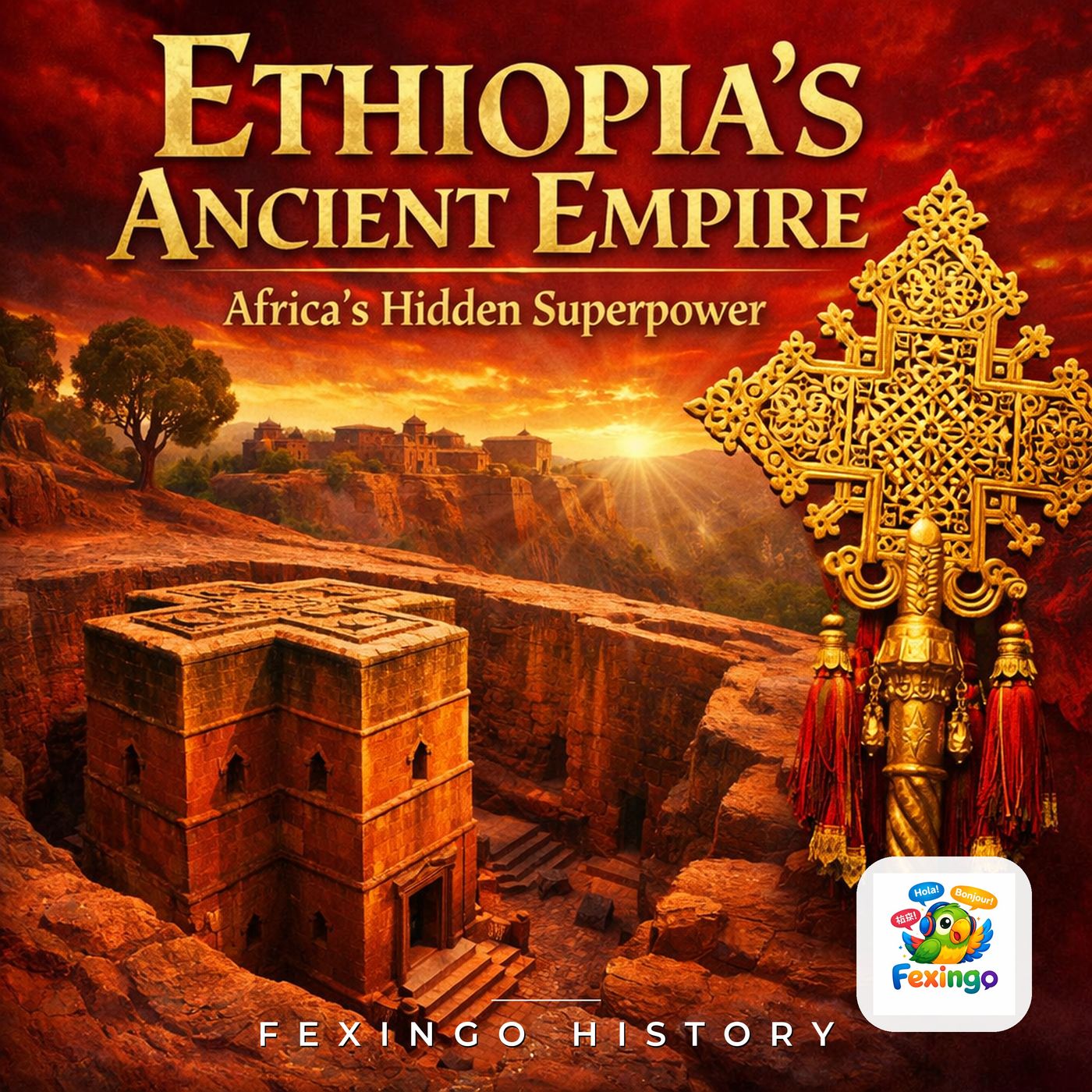
Ethiopia's Ancient Empire: Africa's Hidden Superpower — Fexingo History
by Fexingo
Beneath the scorching highlands of the Horn of Africa lies the legacy of a civilization that rivaled Rome and Persia: the Aksumite Empire. This show, hosted by Lucas and Luna, journeys from the pre-Aksumite kingdom of D'mt to the medieval Zagwe dynasty, uncovering how Ethiopia became a crucible of faith, trade, and power. Explore the stelae of Aksum, the nine saints who brought Christianity, the epic campaigns of Emperor Kaleb against the Himyarite kingdom, and the isolation that forged a unique Christian tradition. Delve into the rock-hewn churches of Lalibela—a 'New Jerusalem' carved from volcanic tufa—and the stories of the Solomonic dynasty that claimed descent from the Queen of Sheba. We examine the Ethiopian Orthodox Tewahedo Church's ancient texts, the legend of the Ark of the Covenant at Axum, and the kingdom's defiance against Islamic expansion. From the Aksumite gold trade to the architectural marvels of Gondar, this podcast unpacks why Ethiopia remained an African superpower
-
35
Queen Eleni: The Diplomat Who Saved Ethiopia
This episode tells the remarkable story of Queen Eleni, a Muslim-born slave who became one of Ethiopia's most powerful and savvy rulers. Widow of Emperor Zara Yaqob and regent during the reign of her step-grandson Baeda Maryam, Eleni ran the empire for decades, forging a groundbreaking alliance with Portugal that brought the first European embassy to the Solomonic court. We explore her political genius, her patronage of religious arts, and her role as a queen mother who outmaneuvered noble rivals. Along the way, we look at the famous letter Eleni sent to the king of Portugal in 1509, which led to the arrival of the Portuguese ambassador Francisco Álvares, whose writings remain a key source on medieval Ethiopia. This is a story of power, faith, and diplomacy at the highest level—and a reminder that Ethiopian history is full of women who shaped empires. #QueenEleni #Eleni #ZaraYaqob #BaedaMaryam #SolomonicDynasty #PortugueseAlliance #FranciscoÁlvares #EthiopianHistory #EthiopianEmpire #QueenMother #History #FexingoHistory #EastAfrica #MedievalAfrica #Diplomacy #WomenInHistory #Ge'ez #Adal Keep every episode free: buymeacoffee.com/fexingo
-
34
Emperor Amda Seyon: Ethiopia's Crusader Against Adal
This episode dives into the reign of Emperor Amda Seyon (1314–1344), one of Ethiopia's most formidable warrior-kings. We explore his campaigns against the Muslim sultanates of Ifat and Adal, which threatened the Christian highlands. Lucas explains the geopolitical landscape of the Horn of Africa in the 14th century, the role of the Kebra Nagast in legitimizing his rule, and the brutal but effective military tactics that earned him the epithet 'Pillar of Zion.' We also touch on his controversial use of forced conversions and the lasting impact on Ethiopian identity. Specific figures include Sabr ad-Din I, the Sultan of Ifat who rebelled, and the Ethiopian general Tsion Amlak. The episode highlights the Battle of Dasse (1320s) and Amda Seyon's expansion into the lowlands. Listeners will learn how this emperor shaped the Solomonic dynasty's myth of divine right and set the stage for centuries of conflict with neighboring Muslim states. #AmdaSeyon #EthiopianEmpire #AdalSultanate #Ifat #KebraNagast #SolomonicDynasty #SabrAdDin #BattleOfDasse #TsionAmlak #14thCentury #HornOfAfrica #Ge'ez #MedievalWarfare #ReligiousConflict #ChristianKingdom #EthiopianHistory #History #FexingoHistory Keep every episode free: buymeacoffee.com/fexingo
-
33
Dawit III and the Gondar Literary Renaissance
Emperor Dawit III, a lesser-known Solomonic ruler of the early 18th century, presided over a golden age of literature and manuscript production in Gondar. This episode explores his patronage of Ge'ez scholarship, the translation of works like the *Miracles of Mary*, and the cultural flourishing that contrasted with the political fragility of his reign. We discuss the role of monastic scriptoria, the influence of foreign missionaries, and how Dawit's legacy shaped Ethiopian Orthodox identity. Along the way, we touch on the Fetha Nagast legal code, the rise of the Oromo, and the emperor's dramatic conflict with his own clergy over the controversial *Kebra Nagast* prophecies. #DawitIII #Gondar #EthiopianLiterature #Ge'ez #MiraclesOfMary #KebraNagast #FethaNagast #SolomonicDynasty #Oromo #18thCentury #Manuscripts #Monasticism #EastAfrica #History #FexingoHistory #Tewahedo #EthiopianHistory #BookCulture Keep every episode free: buymeacoffee.com/fexingo
-
32
Queen of Sheba: Legend, Empire, and the Kebra Nagast
Episode 100 of Fexingo History dives into the legendary Queen of Sheba — her historical roots in the Sabaean kingdom of Yemen, her biblical and Qur'anic appearances, and her transformation into the mother of Ethiopian kings in the 14th-century epic Kebra Nagast. Lucas and Luna explore the archaeological evidence for a real queen in the 10th century BCE, the frankincense trade that made Saba wealthy, and the political motives behind Menelik I's fictional voyage to Jerusalem. They discuss the Masoretic vs. Septuagint versions of her story, the Axumite stelae that hint at early South Arabian influence, and how Emperor Amda Seyon's scribes repurposed the Queen of Sheba to legitimize the Solomonic dynasty. Along the way, they touch on the famous 'Year of the Elephant' in Surah al-Fil, the Axumite conquest of Himyar, and why Ethiopian tradition calls her Makeda. A thoughtful look at how a biblical footnote became the cornerstone of an empire's identity. #QueenOfSheba #KebraNagast #Makeda #Solomon #MenelikI #Axum #Saba #Yemen #Ethiopia #AmdaSeyon #Ge'ez #OldTestament #Quran #Frankincense #Bible #History #FexingoHistory #EastAfrica Keep every episode free: buymeacoffee.com/fexingo
-
31
Lalibela: The Rock-Hewn Jerusalem of Ethiopia
In this episode of Ethiopia's Ancient Empire: Africa's Hidden Superpower, Lucas and Luna explore the miraculous rock-hewn churches of Lalibela, carved from solid volcanic tuff in the 12th and 13th centuries. They dive into the reign of King Lalibela, the visionary Zagwe monarch who sought to create a 'New Jerusalem' after Muslim conquests blocked pilgrimage to the Holy Land. The conversation covers the engineering marvels behind churches like Bet Medhane Alem (the largest monolithic church in the world) and Bet Giyorgis (the iconic cross-shaped church), the role of angels and divine intervention in local tradition, the enduring mystery of how they were built without modern tools, and the symbolic geography that recreates biblical sites. They also touch on the later abandonment of Lalibela during the Adal invasions in the 16th century and its rediscovery by the outside world. Listen to learn how faith, stone, and royal ambition created one of the wonders of Africa. #Lalibela #RockHewnChurches #ZagweDynasty #KingLalibela #EthiopianOrthodox #BetMedhaneAlem #BetGiyorgis #MonolithicArchitecture #NewJerusalem #MedievalEthiopia #UNESCOWorldHeritage #EastAfrica #History #FexingoHistory #ReligiousHistory #ArchitecturalHistory #PresterJohn #HornOfAfrica Keep every episode free: buymeacoffee.com/fexingo
-
30
The Ethiopian Ark: Kebra Nagast and the Lost Tabot
In Episode 92 of Ethiopia's Ancient Empire, Lucas and Luna delve into the Kebra Nagast — the 14th-century epic that claims the Ark of the Covenant rests in Ethiopia. They explore the text's origins under Emperor Amda Seyon, its political purpose in legitimizing the Solomonic dynasty, and the legend of Menelik I stealing the Ark from Jerusalem. The conversation examines the tabot — the replica tablets central to Ethiopian Orthodox liturgy — and the controversial claim that the true Ark lies at the Church of Our Lady Mary of Zion in Aksum. Lucas explains how the Kebra Nagast was used to unify Christian Ethiopia against Muslim encroachment and why the story remains a powerful symbol today. They touch on scholarly debates about the text's composition, its blend of biblical and local traditions, and the enduring mystery of the Ark. This episode offers a nuanced look at how myth and history intertwine in Ethiopia's national identity. #KebraNagast #ArkOfTheCovenant #EthiopianOrthodox #SolomonicDynasty #AmdaSeyon #MenelikI #Tabot #Aksum #ChurchOfOurLadyMaryOfZion #Ge'ez #EthiopianHistory #BiblicalLegend #EastAfrica #MedievalAfrica #History #FexingoHistory #Podcast #AfricanHistory Keep every episode free: buymeacoffee.com/fexingo
-
29
Emperor Tewodros II: Ethiopia's Modernizer Who Defied Britain
Emperor Tewodros II, born Kassa Hailu, rose from a bandit leader to become Ethiopia's emperor in 1855, determined to reunify the fractured Solomonic dynasty and modernize his nation. This episode explores his radical reforms—abolishing regional lords, creating a standing army, and building a modern arsenal at Magdala—that threatened entrenched powers and European interests. His brutal methods and the infamous hostage crisis, including British consul Charles Duncan Cameron and a letter to Queen Victoria, led to the 1868 British Expedition to Abyssinia, a massive military campaign involving 13,000 troops and a 400-kilometer march. The climactic siege of Magdala ended in Tewodros's suicide, but his legacy as a tragic reformer who envisioned a united Ethiopia endures. We examine the contradictions: a visionary who used terror, a Christian king who imprisoned missionaries, and a nationalist who admired European technology. Key figures include Empress Tiruwork Wube, the British envoy Hormuzd Rassam, and General Robert Napier. The episode also touches on Tewodros's correspondence with European powers and the cultural shock of the Magdala treasures, which still spark restitution debates today. #TewodrosII #KassaHailu #Magdala #BritishExpeditionToAbyssinia #EthiopianEmpire #SolomonicDynasty #BattleOfMagdala #HormuzdRassam #RobertNapier #TiruworkWube #CharlesDuncanCameron #19thCenturyHistory #EthiopianHistory #ColonialConflict #Modernization #SiegeOfMagdala #History #FexingoHistory Keep every episode free: buymeacoffee.com/fexingo
-
28
The Ethiopian Orthodox Tewahedo Church: Theology and Identity
In this episode of Ethiopia's Ancient Empire: Africa's Hidden Superpower, Lucas and Luna delve into the Ethiopian Orthodox Tewahedo Church — the theological heart of the empire. They explore unique doctrines like Miaphysitism (or Täwaḥədo), the sacred role of the Ark of the Covenant tradition, the monastic Nine Saints who translated scriptures into Ge'ez, and the church's complex relationship with the Coptic Church of Alexandria. The conversation highlights how faith shaped Ethiopian identity, from the rock-hewn churches of Lalibela to the imperial patronage of emperors like Zara Yaqob. They also discuss the Tewahedo interpretation of Christ's nature, the influence of Judaism via the Kebra Nagast, and the church's resilience through Muslim invasions and European Jesuit missions. This is a deep dive into the theology, politics, and culture that made Ethiopian Christianity distinct from any other. #EthiopianOrthodoxTewahedo #Miaphysitism #Täwaḥədo #NineSaints #Ge'ez #KebraNagast #ArkOfTheCovenant #ZaraYaqob #Lalibela #CopticChurch #EthiopianHistory #Christianity #Africa #AncientEmpire #FexingoHistory #Podcast #History #Religion Keep every episode free: buymeacoffee.com/fexingo
-
27
Emperor Iyasu I: Ethiopia's Reformer and His Tragic End
In this episode, Lucas and Luna explore the reign of Emperor Iyasu I (also known as Iyasu the Great) of Ethiopia, who ruled from 1682 to 1706. Known for his legal reforms, administrative centralization, and military campaigns against the Oromo and in the Horn of Africa, Iyasu I also faced a tragic downfall. The conversation delves into his famous legal code, the Fetha Nagast, his patronage of art and literature in Gondar, and the political intrigue involving his wife, Empress Malakotawit, and his son, Tekle Haymanot. They discuss the legacy of Iyasu I's reforms and how his assassination led to a period of instability. Listeners will learn about specific decrees, the role of the Ethiopian Church, and the cultural flourishing under his rule, with key terms like Gondar, Fetha Nagast, Amharic, and the Solomonic dynasty featured throughout. #IyasuI #EthiopianEmpire #Gondar #FethaNagast #SolomonicDynasty #Oromo #EthiopianOrthodox #Amharic #17thCentury #LegalReform #Malakotawit #TekleHaymanot #EastAfrica #History #FexingoHistory #Podcast #AfricanHistory #EmperorIyasu Keep every episode free: buymeacoffee.com/fexingo
-
26
The Ethiopian Infante Who Died at Alcácer Quibir
In 1578, a young Ethiopian prince—an infante named Thomas—died fighting alongside King Sebastian of Portugal at the Battle of Alcácer Quibir in Morocco. How did a scion of the Solomonic dynasty end up in North Africa, commanding Portuguese troops? This episode follows Thomas's extraordinary journey: sent as a child hostage to Portugal, raised in the court of King Henry, trained as a military commander, and finally dispatched to join Sebastian's doomed crusade. We explore the Portuguese-Ethiopian alliance against the Ottoman-backed Adal Sultanate, the diplomatic missions of Francisco Álvares and João Bermudes, and the tangled web of hopes that sent Thomas to his death on the sands of Ksar El Kebir. Along the way, we uncover the story of Prester John, the mythical Christian king who haunted European imagination, and how Ethiopia's real kings used that legend to their advantage. The episode ends with a reflection on what might have been—if Thomas had survived, could he have brought Portuguese firepower to Ethiopia's war with Adal? And we touch on the modern legacy: the Ethiopian community in Portugal, the descendants of those who never came home. #Ethiopia #Portugal #BattleOfAlcacerQuibir #ThomasOfEthiopia #PresterJohn #SebastianOfPortugal #AdalSultanate #SahleSengel #FranciscoAlvares #JoaoBermudes #KsarElKebir #16thCentury #EthiopianEmpire #OttomanEmpire #HornOfAfrica #History #FexingoHistory #EastAfrica Keep every episode free: buymeacoffee.com/fexingo
-
25
Menelik II: Ethiopia's Unifier Who Defeated Colonial Italy
In 1896, at the Battle of Adwa, Emperor Menelik II led a coalition of Ethiopian armies to a stunning victory over Italian colonial forces, securing Ethiopian sovereignty and shocking Europe. This episode traces Menelik's rise from provincial ruler of Shewa to emperor, his shrewd diplomacy that bought time and modern weapons, and the strategic buildup that made Adwa possible. We explore his internal consolidation—incorporating the newly conquered south and building the new capital Addis Ababa—and the empire's first forays into modernisation: the railway, telegraph, and hospitals. But we also confront the costs: the brutal conquest of the Oromo, Sidama, and Kaffa kingdoms, often downplayed in the national myth. And we follow the aftermath, from the succession crisis after Menelik's final stroke to the rise of Haile Selassie. Names you'll hear: Menelik II, Taytu Betul, Yohannes IV, Pietro Antonelli, Ras Makonnen, Battle of Adwa, Treaty of Wuchale, Italian Eritrea, Oromo conquest, Addis Ababa, Leontiev, Lij Iyasu. #MenelikII #BattleOfAdwa #EthiopianEmpire #ColonialAfrica #TaytuBetul #TreatyOfWuchale #YohannesIV #RasMakonnen #AddisAbaba #Oromo #Sidama #Kaffa #ItalianEritrea #LijIyasu #Shewa #19thCentury #History #FexingoHistory Keep every episode free: buymeacoffee.com/fexingo
-
24
Gondar: Ethiopia's Camelot of Castles in the 17th Century
In the 1630s, Emperor Fasilides turned his back on the old capitals and built a new city from scratch: Gondar. Over the next two centuries, this walled compound of castles, churches, and palaces became the seat of Ethiopian power, a place where architecture fused Aksumite, Indian, and Portuguese influences into something entirely its own. This episode walks through the founding of Gondar, the engineering of its famous Fasil Ghebbi, the royal baths, and the unique role of women like Empress Mentewab who wielded real political influence. We also explore the city's decline during the Zemene Mesafint, the era of the princes, when Gondar's castles stood empty as warlords tore the empire apart. No rehash of Lalibela or Aksum — this is the story of Ethiopia's imperial city of the later Solomonic dynasty. #History #FexingoHistory #Ethiopia #Gondar #Fasilides #FasilGhebbi #Mentewab #SolomonicDynasty #ZemeneMesafint #KebraNägäst #GondarinePeriod #EthiopianArchitecture #JesuitExpulsion #DebreBerhan #AddisAlem #EastAfrica #17thCentury #AfricanHistory Keep every episode free: buymeacoffee.com/fexingo
-
23
Prester John: The Legend That Shaped Ethiopia's Fate
For centuries, Europe believed a mythical Christian king named Prester John ruled a vast realm somewhere beyond the Islamic world. This episode follows how that legend became entwined with Ethiopia's real history, from the first Ethiopian delegation to Portugal in 1306 to the arrival of Portuguese ambassadors and Jesuit missionaries in the 16th century. We explore how the search for Prester John shaped European geopolitics, how King Zara Yaqob actively cultivated the myth to forge alliances, and how it culminated in the Portuguese military expedition that helped Ethiopia survive the wars of Imam Ahmad ibn Ibrahim al-Ghazi. But the legend also brought unintended consequences — Jesuit attempts to convert Ethiopia to Catholicism, the bloody conflicts over religion, and the eventual expulsion of the Jesuits under Emperor Fasilides. Along the way, we meet figures like Pero da Covilhã, Francisco Álvares, and the enigmatic Ethiopian monk known as 'John, Patriarch of the Indians' who visited Europe. This is the story of how a medieval rumor changed the course of an empire. #PresterJohn #PresteJoO #EthiopianHistory #ZaraYaqob #PortugalEthiopia #JesuitsInEthiopia #Fasilides #Galawdewos #PeroDaCovilha #FranciscoAlvares #LebnaDengel #EthiopianOrthodox #CatholicMission #IberianExploration #AgeOfDiscovery #AfroEuropeanContact #History #FexingoHistory #AksumiteEmpire #Lalibela Keep every episode free: buymeacoffee.com/fexingo
-
22
The Ezana Stone: Ethiopia's Rosetta Stone Moment
In this episode, Lucas and Luna explore the Ezana Stone, a fourth-century monument that marks Ethiopia's conversion to Christianity under King Ezana of Aksum. Discover how this trilingual inscription — written in Ge'ez, Sabaean, and Greek — reveals a pivotal moment in ancient history, when a powerful African kingdom embraced a new faith and reshaped its identity. Lucas explains the stone's discovery in the 19th century, its decipherment, and what it tells us about Aksum's relations with Rome and Persia. He also discusses the controversies surrounding Ezana's reign, including the debate over whether he was the first Christian king of Aksum or if his predecessor, Ousanas, also converted. Along the way, they touch on the symbolism of the cross and crescent on Aksumite coins, the role of the young king's tutor Frumentius, and the enduring legacy of the Ethiopian Orthodox Church. This episode delves into a single artifact that changed our understanding of Africa's ancient superpower. #EzanaStone #AksumiteEmpire #KingEzana #GeEz #Sabaean #Greek #ChristianConversion #Frumentius #AksumiteCoins #EthiopianOrthodox #AncientInscriptions #Trilingual #FourthCentury #RedSeaTrade #Epigraphy #History #AfricanHistory #FexingoHistory #Lalibela #ZagweDynasty Keep every episode free: buymeacoffee.com/fexingo
-
21
Dagmawi Mikael: The Rebel Prince of Ethiopia's Dark Age
In the chaos after the Axumite Empire's decline, when Ethiopia fragmented into rival states, a prince named Dagmawi Mikael (also known as Degna Mikael) emerged as a rebel leader and would-be restorer. This episode explores his campaigns in the 9th century CE against the encroaching Beja tribes and the rival kingdom of Damot, his alliance with the powerful monastery of Debre Libanos, and his controversial claim to the Axumite throne. We examine the scanty but telling evidence from Ge'ez manuscripts and oral traditions, and consider how his failed revolt paved the way for the Zagwe dynasty. Lucas and Luna discuss the meaning of kingship in a fractured era, the role of the Church in legitimizing power, and the stark choices facing rulers when an ancient empire crumbles. Dagmawi Mikael remains a shadowy figure, but his story illuminates a dark age that shaped medieval Ethiopia. #DagmawiMikael #DegnaMikael #AxumiteEmpire #EthiopianHistory #BejaTribes #Damot #DebreLibanos #ZagweDynasty #GeEz #9thCentury #DarkAges #MedievalAfrica #EthiopianOrthodox #Rebellion #Kingship #OralTradition #History #FexingoHistory #AksumiteEmpire #Lalibela Keep every episode free: buymeacoffee.com/fexingo
-
20
The Battle of Ansata: Ethiopia's Forgotten Victory Against Colonialism
In this episode of Ethiopia's Ancient Empire, Lucas and Luna explore the Battle of Ansata (1899), a lesser-known but pivotal conflict where Emperor Menelik II's forces decisively defeated a British-led expedition. While the Battle of Adwa is celebrated, Ansata reveals a different side of Ethiopian resistance: against the British Empire rather than the Italians. The episode delves into the motivations behind the British incursion, including disputes over the Ogaden border and the role of Sir Charles Eliot, the British Commissioner for the Somali Coast. Lucas explains how Menelik's general, Ras Makonnen, led a disciplined force armed with modern rifles to crush the British at the Juba River, forcing London to recognize Ethiopian sovereignty in the region. The conversation also touches on the diplomatic aftermath, including the 1902 Anglo-Ethiopian Treaty, and how this victory reinforced Ethiopia's status as the only uncolonized African nation. Listeners will learn about key figures like Emperor Menelik II, Ras Makonnen, Sir Charles Eliot, and the controversial 'Mad Mullah' Mohammed Abdullah Hassan, whose movements intersected with this conflict. #BattleOfAnsata #MenelikII #RasMakonnen #BritishEmpire #Ogaden #JubaRiver #SirCharlesEliot #EthiopianSovereignty #AngloEthiopianTreaty1902 #ColonialResistance #Adwa #EastAfrica #FexingoHistory #EthiopianHistory #ScrambleForAfrica #19thCentury #History #HiddenHistories #AksumiteEmpire #Lalibela Keep every episode free: buymeacoffee.com/fexingo
-
19
Debre Damo: Ethiopia's Island Monastery of Kings
High atop a sheer 3,000-meter cliff in northern Ethiopia sits Debre Damo, a monastery so inaccessible that visitors must be hauled up by rope. Legend says it was founded in the 6th century by Abuna Aregawi, one of the Nine Saints who brought monasticism from Syria. For centuries, it was the place where Aksumite emperors were crowned — and where they retreated to pray before battle. This episode explores the monastery's unique architecture, its role in political legitimacy, and the gripping legend of Emperor Kaleb and his son Gebre Meskel, who built the church in gratitude for divine aid. We also discuss the controversial tradition that bans women and female animals from the site, and the challenge of preserving a living monument that has been continuously inhabited for 1,500 years. #DebreDamo #AbunaAregawi #NineSaints #AksumiteEmpire #EthiopianOrthodox #Monasticism #KalebEllaAsbeha #GebreMeskel #Aksum #Tigray #AncientEthiopia #RockHewnChurches #History #FexingoHistory #EthiopianHistory #MedievalAfrica #SacredArchitecture #Tradition #Lalibela #ZagweDynasty Keep every episode free: buymeacoffee.com/fexingo
-
18
The Ark of the Covenant in Ethiopia: Fact and Faith
Ethiopian tradition holds that the Ark of the Covenant rests in a small chapel in Aksum, guarded by a single monk for life. But how did it get there, and what does history say? In this episode, Lucas and Luna explore the story of the Ark's journey from Jerusalem to Ethiopia, as told in the Kebra Nagast. They trace the legendary visit of the Queen of Sheba to King Solomon, the birth of their son Menelik I, and his daring theft of the Ark. But they also weigh the historical evidence: what do scholars make of the claim? Is the Ark really in Aksum, or is it a powerful symbol of Ethiopian identity? The conversation touches on the Aksumite Church of Our Lady Mary of Zion, the role of the Ark in Ethiopian Orthodox liturgy, and the modern guardians of the Ark. They discuss why the story matters, not as proven fact, but as a living tradition that has shaped Ethiopian culture and faith for centuries. Whether you're a skeptic or a believer, this episode offers a nuanced look at one of history's most enduring legends. #ArkOfTheCovenant #Ethiopia #KebraNagast #QueenOfSheba #MenelikI #Aksum #ChurchOfOurLadyMaryOfZion #Solomon #Jerusalem #Tabot #EthiopianOrthodox #Lalibela #GeEz #Legend #Faith #History #FexingoHistory #EastAfrica #AksumiteEmpire #ZagweDynasty Keep every episode free: buymeacoffee.com/fexingo
-
17
The Queen of Sheba's Ethiopia: Beyond the Legend
In this episode, Lucas and Luna delve into the historical and cultural impact of the Queen of Sheba on Ethiopia, moving beyond the biblical and Kebra Nagast legends. They explore archaeological evidence for the Sabaean presence in Ethiopia, the rise of the D'mt kingdom, and the real trade networks that connected the Red Sea and the Horn of Africa. The conversation covers the temple of Yeha, the Sabaean inscriptions, and the question of whether the Queen of Sheba was a Sabaean ruler or a figure from the Ethiopian highlands. They also discuss how the Solomonic dynasty later used the Sheba legend to legitimize their rule, and what modern scholarship says about the historical basis for the story. #QueenofSheba #KebraNagast #Sabaean #Yeha #DMt #Aksum #EthiopianHistory #AncientEthiopia #OldTestament #Solomonic #RedSeaTrade #Archaeology #EthiopianCross #Legend #BiblicalHistory #EastAfrica #History #FexingoHistory #AksumiteEmpire #Lalibela Keep every episode free: buymeacoffee.com/fexingo
-
16
Ethiopia's Solomonic Restoration: Yekuno Amlak's Hidden Revolution
In the late 13th century, a rebel named Yekuno Amlak overthrew the Zagwe dynasty and claimed descent from King Solomon and the Queen of Sheba. This episode dives into the political intrigue, religious upheaval, and historical mythmaking that surrounded the restoration of Ethiopia's Solomonic line. We explore how a monk named Iyasus Mo'a anointed Yekuno Amlak, how the Ethiopian Orthodox Church legitimized his rule, and why the Kebra Nagast—a text blending biblical legend with nationalist ambition—was composed to cement his dynasty. We also examine the forgotten Agaw people of Lasta, the role of the Amhara elite, and the strategic alliances that shifted power from the Zagwe heartland to Shewa. Amidst the fire and sword, Yekuno Amlak built a new Ethiopia: one that would endure for over 700 years. But was he truly a descendant of Solomon, or the architect of a brilliant political fiction? #YekunoAmlak #SolomonicDynasty #ZagweDynasty #KebraNagast #IyasusMoa #EthiopianHistory #MedievalAfrica #Lasta #Shewa #Amhara #Agaw #TekleHaymanot #EthiopianOrthodox #13thCentury #Monarchy #AncientAfrica #History #FexingoHistory #AksumiteEmpire #Lalibela Keep every episode free: buymeacoffee.com/fexingo
-
15
The Aksumite Stelae: Giants of Ancient Ethiopia
In this episode, Lucas and Luna explore the colossal granite stelae of Aksum, the towering obelisks that marked the tombs of ancient Ethiopian emperors. They discuss how these monoliths were quarried, carved, and erected without modern technology, serving as both funerary monuments and symbols of royal power. The conversation covers the largest standing stela, the Great Stele (33 meters tall), and the fallen Giant Stele (possibly 40 meters), which lies broken on the ground from a catastrophic toppling during or after construction. They touch on the mysterious King Remha, who may have commissioned the Giant Stele, and the later King Ezana, whose stela is the tallest still upright. Lucas explains the architectural features carved into the stone—false doors, windows, and even a representation of a multi-story building—and how these resemble Aksumite palaces. The episode also reveals the riddle of why the stelae were erected in the first place, the challenges of transporting them from quarries miles away, and the cultural connections to the South Arabian obelisks. A fascinating look at the engineering and ritual of a forgotten superpower. #Aksum #Stelae #KingRemha #KingEzana #GreatStele #GiantStele #AncientEngineering #EthiopianHistory #EastAfrica #Archaeology #Monoliths #FuneraryArt #AncientArchitecture #AksumiteCivilization #EthiopianEmpire #Obelisks #History #FexingoHistory #AksumiteEmpire #Lalibela Keep every episode free: buymeacoffee.com/fexingo
-
14
The Aksumite Currency: Coins of an Ancient Superpower
Before Ethiopia's rock-hewn churches and medieval castles, the Kingdom of Aksum minted some of the most remarkable coins of the ancient world. This episode explores how Aksumite gold, silver, and bronze coins — inscribed in Ge'ez and Greek — projected imperial power, facilitated Red Sea trade, and revealed the empire's religious transformation. Lucas and Luna examine the iconography of kings like Endubis, Aphilas, and Ezana, whose coin portraits evolved from crescent-and-disk symbols to the cross after Christianity became the state religion. They discuss the mysterious 'bucranium' motif, the coins' role in dating Aksumite history, and how these tiny artifacts challenge Eurocentric narratives of ancient economic systems. The episode also touches on the recent discovery of Aksumite coins in India and the Arabian Peninsula, proving the empire's reach from the Levant to Sri Lanka. With no written chronicles surviving from Aksum itself, these coins are a primary source for understanding one of Africa's greatest civilizations — its kings, its gods, and its place in the global economy of late antiquity. #Aksum #AksumiteCurrency #AncientCoins #Numismatics #GeEz #Ezana #Endubis #Aphilas #RedSeaTrade #AncientEconomy #Christianity #AfricanHistory #EthiopianHistory #LateAntiquity #Archaeology #History #FexingoHistory #AncientAfrica #AksumiteEmpire #Lalibela Keep every episode free: buymeacoffee.com/fexingo
-
13
Ezana's Predecessors: The Kings Who Built Aksum
Before Ezana made Ethiopia Christian, a series of warrior-kings transformed Aksum from a regional port into an empire spanning the Red Sea. This episode follows the shadowy figures of Zoskales, the first Aksumite king mentioned in classical texts, and Sembrouthes, who called himself 'King of Kings' a century before the title became standard. We explore the enigmatic Monumentum Adulitanum, a throne inscription from an unnamed third-century king recounting campaigns from the Nile to the Arabian coast. Lucas unpacks the Periplus of the Erythraean Sea, a Greek sailor's guide that reveals Aksum's trade in ivory, tortoiseshell, and frankincense. Luna asks how we know these kings existed when so few inscriptions survive, and learns about the enduring mystery of Aksum's earliest rulers—their names, their wars, their alliances with Himyar and Saba. The episode also touches on the controversy around the legendary Nubian king 'Aksum' mentioned in Ethiopian tradition, and whether archaeological evidence supports an earlier kingdom than previously thought. #AksumiteEmpire #Zoskales #Sembrouthes #MonumentumAdulitanum #PeriplusErythraeanSea #AncientEthiopia #RedSeaTrade #Himyar #Saba #Adulis #AksumiteKings #PreChristianAksum #EthiopianHistory #AxumiteInscriptions #FexingoHistory #EastAfrica #AncientTrade #History #Lalibela #EthiopianOrthodox Keep every episode free: buymeacoffee.com/fexingo
-
12
The Aksumite Golden Age: Emperor Kaleb and the Himyarite Crusade
In this episode, Lucas and Luna explore the reign of Emperor Kaleb Ella Asbeha, one of Aksum's greatest warrior-kings. Around 525 CE, Kaleb launched a massive invasion of Himyar (modern-day Yemen) to protect Christians from persecution by the Jewish king Dhu Nuwas. They discuss the strategic importance of the Red Sea trade, the massacre at Najran, Kaleb's alliance with Byzantine emperor Justin I, the amphibious assault across the Bab el-Mandeb, and the aftermath including Ethiopian rule in Yemen. Lucas explains how the Aksumite navy, built upon the port of Adulis, enabled this transcontinental campaign. They also touch on the mysterious end of Kaleb's life—legend says he abdicated and became a monk—and how Aksum's overreach may have contributed to its decline. A conversation about faith, empire, and the high-water mark of Ethiopia's ancient superpower. #Aksum #KalebEllaAsbeha #Himyar #DhuNuwas #Najran #Adulis #RedSea #Byzantine #JustinI #BabElMandeb #Yemen #EthiopianOrthodox #Navy #AncientHistory #EastAfrica #Axum #Persecution #FexingoHistory #AksumiteEmpire #Lalibela Keep every episode free: buymeacoffee.com/fexingo
-
11
The Aksumite Navy: How Ethiopia Ruled the Red Sea
This episode dives into the maritime empire of Aksum, exploring how this African kingdom became a dominant naval power in the Red Sea from the 1st to 7th centuries CE. We discuss Aksum's port of Adulis, its trade networks linking the Roman Empire, India, and Sri Lanka, and the mysterious monument known as the Monumentum Adulitanum. We also cover the clash with Himyar and the Jewish king Dhu Nuwas, which led to the Aksumite invasion of Yemen under Kaleb Ella Asbeha. Finally, we touch on the rise of Islam and how it shifted trade routes, contributing to Aksum's decline. Specific figures include Zoscales, Kaleb, and Dhu Nuwas, along with goods like ivory, frankincense, and gold. #Aksum #RedSea #Adulis #MaritimeHistory #AncientEthiopia #KalebEllaAsbeha #DhuNuwas #Himyar #MonumentumAdulitanum #TradeRoutes #Ivory #Frankincense #CosmasIndicopleustes #Zoscales #PeriplusErythraeanSea #NavalPower #History #FexingoHistory #AksumiteEmpire #Lalibela Keep every episode free: buymeacoffee.com/fexingo
-
10
Zara Yaqob: Ethiopia's Philosopher King and His Enigmatic Reign
This episode delves into the reign of Emperor Zara Yaqob (1434–1468), one of Ethiopia's most remarkable but often overlooked rulers. Lucas and Luna explore his centralization of power, his controversial religious reforms aimed at purifying Ethiopian Orthodox Christianity from 'pagan' and 'Jewish' elements, and his intellectual legacy including the philosophical works 'Mashafa Berhan' (Book of Light) and 'Mashafa Milad' (Book of Nativity). They discuss his brutal suppression of heresies, the role of his daughter (and later empress) Eleni, and the construction of the Debre Berhan church. The conversation also touches on Zara Yaqob's foreign policy, including his relationships with Egypt and the rise of the Ottoman threat. This episode provides a nuanced look at a complex figure who shaped Ethiopia's religious and political landscape for centuries. #ZaraYaqob #EthiopianHistory #MashafaBerhan #DebreBerhan #Eleni #EthiopianOrthodox #15thCentury #Axum #SolomonicDynasty #ReligiousReform #Heresy #PhilosopherKing #GeEz #Tewahedo #OttomanEmpire #EastAfrica #History #FexingoHistory #AksumiteEmpire #Lalibela Keep every episode free: buymeacoffee.com/fexingo
-
9
Menelik II's Secret Weapon: Ethiopia's Diplomatic Victory at Adwa
In this episode, Lucas and Luna explore the diplomatic genius behind Emperor Menelik II's victory at the Battle of Adwa in 1896. While the battle itself is famous, the behind-the-scenes maneuvering—arms deals with European powers, strategic use of the Treaty of Wuchale's mistranslation, and the unity forged among Ethiopia's fractious nobles—is less known. They discuss how Menelik played Italy, France, and Russia against each other, securing modern rifles and artillery that proved decisive. The episode also delves into the role of Empress Taytu Betul in rallying troops and the controversial figure of Ras Mengesha Yohannes, whose defection nearly derailed the campaign. Key locations like Adwa, Addis Ababa, and Shewa feature prominently. The conversation highlights how Ethiopia's ancient sovereignty was preserved not just by courage but by shrewd statecraft. #MenelikII #BattleofAdwa #TaytuBetul #RasMengeshaYohannes #TreatyofWuchale #EthiopianEmpire #ItalianColonialism #19thCentury #AfricanHistory #Diplomacy #Adwa1896 #Shewa #ArmsDeals #EthiopianOrthodox #AntiColonialism #EmpressTaytu #FexingoHistory #History #AksumiteEmpire #Lalibela Keep every episode free: buymeacoffee.com/fexingo
-
8
Menelik II: The Emperor Who Defeated Colonialism at Adwa
In 1896, at the Battle of Adwa, Ethiopian Emperor Menelik II led his army to a stunning victory over Italy, ensuring Ethiopia remained the only African nation never colonized. This episode explores Menelik's rise from a prince imprisoned by Tewodros II to the architect of modern Ethiopia. We cover his shrewd diplomacy, massive arms purchases, the strategic use of European rivalries, and how he outmaneuvered the colonial powers at the Berlin Conference. We also delve into his territorial expansions, his founding of Addis Ababa, and the complex legacy of his reign, including the controversial 1908 succession decree. Key characters include Menelik's wife Empress Taytu Betul, his rival Ras Mengesha Yohannes, and Italian General Oreste Baratieri. The battle itself—40,000 Italians versus 100,000 Ethiopians—and the famous 'swamp trap' at Adwa are described in vivid detail. This is the story of how one man, through vision and grit, preserved Ethiopian sovereignty for generations. #MenelikII #BattleOfAdwa #EthiopianEmpire #ColonialResistance #Italy #AddisAbaba #TaytuBetul #RasMengesha #OresteBaratieri #TreatyOfWuchale #BerlinConference #ScrambleForAfrica #EthiopianOrthodox #19thCentury #AfricanHistory #History #FexingoHistory #Ethiopia #AksumiteEmpire #Lalibela Keep every episode free: buymeacoffee.com/fexingo
-
7
Emperor Tewodros II: Ethiopia's Modernizing Warrior
In this episode, Lucas and Luna explore the dramatic reign of Emperor Tewodros II, a 19th-century ruler who sought to reunite Ethiopia and drag it into the modern world. Born Kassa Hailu, he rose from a bandit to claim the throne, implementing sweeping reforms: a unified central army, a ban on the slave trade, a new tax system, and even a plan to build an Ethiopian navy. But his iron will and abrasive diplomacy led to disaster. When Queen Victoria ignored his letter requesting military assistance, Tewodros imprisoned British envoys and a group of missionaries. This sparked the 1868 British Expedition to Abyssinia, a punitive military campaign led by Sir Robert Napier. Tewodros's fortress at Magdala fell to modern artillery, and he died by his own hand rather than surrender. Yet his legacy endures: he reshaped Ethiopian identity, inspired future reformers, and his story is a cautionary tale of ambition clashing with global politics. The episode covers his early life, the siege of Magdala, the role of foreign missionaries, and the controversial looting of Ethiopian treasures now held in British museums. #TewodrosII #KassaHailu #Magdala #BritishExpeditionToAbyssinia #EthiopianEmpire #19thCenturyAfrica #SiegeOfMagdala #SirRobertNapier #Abyssinia #EthiopianHistory #Modernization #Colonialism #AfricanHistory #EmperorOfEthiopia #LootedArtifacts #EthiopianOrthodox #History #FexingoHistory #AksumiteEmpire #Lalibela Keep every episode free: buymeacoffee.com/fexingo
-
6
Gondar: Ethiopia's Camelot of Castles and Emperors
In this episode, Lucas and Luna explore Gondar, the 17th-century capital of Ethiopia that rose from the ashes of the Solomonic restoration. They discuss Emperor Fasilides, who built the iconic Fasil Ghebbi castle complex, and his successors who expanded it into a royal enclave of palaces, libraries, and lion cages. The conversation covers how Gondar became a center of art, literature, and Orthodox Christianity, featuring the famous Gondarine school of painting and the theological debates at the court of Emperor Iyasu I. They also delve into the political and military strategies that kept Gondar independent from European influence, including the expulsion of Jesuit missionaries and the establishment of a uniquely Ethiopian synthesis of culture. The episode touches on the decline of Gondar in the 18th century due to regional revolts and the rise of warlords, leading to the Zemene Mesafint or 'Era of the Princes.' Throughout, Lucas and Luna highlight the architectural marvels, the fusion of local and foreign influences, and the legacy of Gondar as Ethiopia's imperial heart before the capital moved to Addis Ababa. #Gondar #Fasilides #FasilGhebbi #EthiopianEmpire #ZemeneMesafint #GondarineArt #IyasuI #JesuitExpulsion #SolomonicDynasty #EthiopianOrthodox #17thCentury #AddisAbaba #CastleComplex #LionCages #TheologicalDebate #EthiopianHistory #FexingoHistory #History #AksumiteEmpire #Lalibela Keep every episode free: buymeacoffee.com/fexingo
-
5
Yekuno Amlak: The Coup That Restored Ethiopia's Solomonic Dynasty
In 1270, a little-known rebel named Yekuno Amlak overthrew the Zagwe dynasty and claimed descent from the biblical King Solomon and the Queen of Sheba, launching a new imperial era that would last over 700 years. This episode unpacks the political and religious turmoil that made his coup possible. We explore how the powerful monk Iyasus Mo'a and the church of Tekle Haymanot provided ideological cover for the rebellion, how Yekuno Amlak leveraged the myth of the Ark of the Covenant to legitimize his rule, and what the historical evidence—including the scant contemporary sources—actually tells us about the man behind the legend. We also examine the aftermath: the consolidation of the Solomonic dynasty, the shift of political power from Lasta to Shewa, and the rewriting of Ethiopian history that followed. How did a regional lord from Amhara manage to topple a dynasty that had ruled for over a century? And how much of his 'restoration' story was invented? This is the forgotten pivot point that shaped Ethiopia's identity for centuries to come. #YekunoAmlak #SolomonicDynasty #ZagweDynasty #EthiopianHistory #IyasusMoa #TekleHaymanot #Amhara #Lasta #Shewa #1270 #ArkOfTheCovenant #KebraNagast #EthiopianOrthodox #MedievalAfrica #EastAfrica #Coup #Restoration #FexingoHistory #AksumiteEmpire #Lalibela Keep every episode free: buymeacoffee.com/fexingo
-
4
Dawit II and the Battle of Shimbra Kure: Ethiopia vs. the Adal Sultanate
In 1529, the Ethiopian Empire faced an existential threat from the Adal Sultanate led by Imam Ahmad ibn Ibrahim al-Ghazi, known as Ahmed Gurey or 'the Left-Handed.' This episode follows Emperor Dawit II (Lebna Dengel) as he musters the largest army Ethiopia had ever assembled—reports claim up to 200,000 men—against Ahmed's smaller but fiercely disciplined force armed with muskets from the Ottoman Empire. The dramatic Battle of Shimbra Kure, fought on March 9, 1529, near Lake Zway, saw Ethiopian troops initially push back the Adalites, only to be broken by a sudden flanking maneuver. We explore the weapons, tactics, and leadership on both sides; the role of Ottoman support for Adal; and how this defeat marked the beginning of a devastating sixteen-year war. The episode also touches on the legendary Portuguese assistance that later arrived, including Cristóvão da Gama, and how the conflict reshaped the Horn of Africa. A story of empire, jihad, and resilience—a turning point rarely told in Western history. #Ethiopia #AdalSultanate #BattleOfShimbraKure #AhmedGurey #DawitII #LebnaDenel #OttomanEmpire #PortugueseEmpire #CristVODaGama #HornOfAfrica #16thCentury #Muskets #Jihad #EthiopianEmpire #Lalibela #FexingoHistory #History #EastAfrica #AksumiteEmpire #EthiopianOrthodox Keep every episode free: buymeacoffee.com/fexingo
-
3
The Zagwe Dynasty: Ethiopia's Forgotten Kings
This episode dives into the Zagwe dynasty, a medieval Ethiopian kingdom that ruled from the 10th to 13th centuries, often overshadowed by the Solomonic dynasty. We explore how the Zagwe kings, particularly King Lalibela, commissioned the famous rock-hewn churches, but also their political struggles, the mystery of their origins, and their eventual overthrow. We discuss the Agaw people, the capital at Roha, the legend of King Lalibela's divine inspiration, and the role of Saint Tekle Haymanot. We also examine the dynasty's legacy in Ethiopian history and the controversies surrounding their rule, including the question of whether they were usurpers or legitimate rulers. This episode uncovers a pivotal but often overlooked era in Ethiopia's ancient empire. #Zagwe #Lalibela #EthiopianHistory #RockHewnChurches #Agaw #Roha #TekleHaymanot #SolomonicDynasty #MedievalEthiopia #AfricanHistory #FexingoHistory #LalibelaChurches #ZagweDynasty #EthiopianEmpire #EastAfrica #ChristianKingdoms #AncientHistory #History #AksumiteEmpire #EthiopianOrthodox Keep every episode free: buymeacoffee.com/fexingo
-
2
Queen of Sheba: Fact, Legend, and Ethiopia's Sacred Lineage
In this episode of Ethiopia's Ancient Empire, Lucas and Luna explore the figure of the Queen of Sheba — not the biblical or Islamic legend, but the historical and cultural figure who shaped Ethiopia's Solomonic dynasty. They discuss the Kebra Nagast, the 14th-century text that claims the Queen (Makeda in Ethiopian tradition) visited King Solomon in Jerusalem and bore him a son, Menelik I, who brought the Ark of the Covenant to Axum. Lucas explains the debates among historians: is there any evidence for a Sabaean queen in the 10th century BCE? How did the story serve political purposes for the Solomonic emperors? The conversation touches on the Red Sea trade routes, the Sabaean kingdom in Yemen, and the Aksumite adoption of the legend to legitimize their rule. They also examine the Queen of Sheba's role in Islamic tradition (Bilqis) and how the story compares to other legendary foundation myths. The episode ends with a reflection on how myth and history intertwine in Ethiopia's national identity. #QueenOfSheba #KebraNagast #MenelikI #ArkOfTheCovenant #SolomonicDynasty #Axum #EthiopianHistory #AncientEthiopia #SabaeanKingdom #Makeda #Bilqis #RedSeaTrade #BiblicalHistory #LegendVsHistory #EthiopianOrthodoxy #AfricanHistory #EastAfrica #FexingoHistory #AksumiteEmpire #Lalibela Keep every episode free: buymeacoffee.com/fexingo
-
1
Ezana: The King Who Made Ethiopia Christian
In this episode, Lucas and Luna explore the reign of King Ezana of Aksum, the ruler who transformed Ethiopia into one of the world's earliest Christian kingdoms. They discuss his military campaigns, including the conquest of Kush and the destruction of Meroë, and examine the mystery of his conversion: was it through the influence of the Syrian philosopher Frumentius? The conversation also delves into the Aksumite economy, with its unique currency system featuring silver and gold coins minted with crosses, and the geopolitical shifts that followed the rise of Islam. Lucas explains how Ezana's adoption of Christianity reshaped trade routes and cultural ties, aligning Aksum with the Byzantine Empire and setting a religious trajectory that would last centuries. The episode touches on the legend of the Ark of the Covenant in Aksum and the geopolitical rivalry with Himyar. Authentic names and terms like 'Ezana', 'Frumentius', 'Meroë', 'Kush', 'Aksum', 'Ge'ez', 'Himyar', and 'Byzantine Empire' are woven into the narrative, offering a concrete, vivid portrait of a pivotal figure in African and world history. #Ezana #Aksum #Ethiopia #Christianity #Frumentius #Kush #Mero #AncientAfrica #GeEz #Himyar #Byzantine #Coinage #ArkOfTheCovenant #TradeRoutes #4thCentury #ReligiousHistory #History #FexingoHistory #AksumiteEmpire #Lalibela Keep every episode free: buymeacoffee.com/fexingo
-
0
Lalibela: Rock-Hewn Churches of Ethiopia's Golden Age
In the highlands of Ethiopia, King Lalibela carved eleven monolithic churches out of solid volcanic rock in the 12th century. This episode opens with the legend of his divine vision and pulls back to explore the Aksumite Empire that preceded him—a trade superpower that rivaled Rome and Persia, minted its own gold currency, and adopted Christianity in the 4th century. We trace Ethiopia's ancient roots from the kingdom of D'mt to the Queen of Sheba, through the rise of Aksum under King Ezana, and the construction of the stelae at Axum. Lucas and Luna discuss how Ethiopia's isolation preserved its unique Christian traditions, including the Ark of the Covenant legend at the Church of Our Lady Mary of Zion. This episode sets the stage for future explorations of Ethiopia's medieval emperors, its resistance to colonialism, and its legacy as Africa's hidden superpower. #Lalibela #EthiopianHistory #AksumiteEmpire #KingEzana #RockHewnChurches #QueenOfSheba #ArkOfTheCovenant #ChristianityInAfrica #AncientTradeRoutes #AxumStelae #SolomonicDynasty #EthiopianOrthodoxy #MedievalAfrica #EastAfricanHistory #LalibelaChurches #ChurchOfMaryOfZion #History #FexingoHistory #EthiopianOrthodox #ZagweDynasty Keep every episode free: buymeacoffee.com/fexingo
We're indexing this podcast's transcripts for the first time — this can take a minute or two. We'll show results as soon as they're ready.
No matches for "" in this podcast's transcripts.
No topics indexed yet for this podcast.
Loading reviews...
ABOUT THIS SHOW
Beneath the scorching highlands of the Horn of Africa lies the legacy of a civilization that rivaled Rome and Persia: the Aksumite Empire. This show, hosted by Lucas and Luna, journeys from the pre-Aksumite kingdom of D'mt to the medieval Zagwe dynasty, uncovering how Ethiopia became a crucible of faith, trade, and power. Explore the stelae of Aksum, the nine saints who brought Christianity, the epic campaigns of Emperor Kaleb against the Himyarite kingdom, and the isolation that forged a unique Christian tradition. Delve into the rock-hewn churches of Lalibela—a 'New Jerusalem' carved from volcanic tufa—and the stories of the Solomonic dynasty that claimed descent from the Queen of Sheba. We examine the Ethiopian Orthodox Tewahedo Church's ancient texts, the legend of the Ark of the Covenant at Axum, and the kingdom's defiance against Islamic expansion. From the Aksumite gold trade to the architectural marvels of Gondar, this podcast unpacks why Ethiopia remained an African superpower
HOSTED BY
Fexingo
Loading similar podcasts...
Frequently Asked Questions
How many episodes does Ethiopia's Ancient Empire: Africa's Hidden Superpower — Fexingo History have?
Ethiopia's Ancient Empire: Africa's Hidden Superpower — Fexingo History currently has 36 episodes available on PodParley. New episodes are automatically indexed when they're published to the podcast feed.
What is Ethiopia's Ancient Empire: Africa's Hidden Superpower — Fexingo History about?
Beneath the scorching highlands of the Horn of Africa lies the legacy of a civilization that rivaled Rome and Persia: the Aksumite Empire. This show, hosted by Lucas and Luna, journeys from the pre-Aksumite kingdom of D'mt to the medieval Zagwe dynasty, uncovering how Ethiopia became a crucible of...
How often does Ethiopia's Ancient Empire: Africa's Hidden Superpower — Fexingo History release new episodes?
Ethiopia's Ancient Empire: Africa's Hidden Superpower — Fexingo History has 36 episodes. Check the episode list to see recent publication dates and frequency.
Where can I listen to Ethiopia's Ancient Empire: Africa's Hidden Superpower — Fexingo History?
You can listen to Ethiopia's Ancient Empire: Africa's Hidden Superpower — Fexingo History on PodParley by clicking any episode. We provide an embedded audio player for direct listening, and you can also subscribe via your preferred podcast app using the RSS feed.
Who hosts Ethiopia's Ancient Empire: Africa's Hidden Superpower — Fexingo History?
Ethiopia's Ancient Empire: Africa's Hidden Superpower — Fexingo History is created and hosted by Fexingo.
URL copied to clipboard!