
PODCAST · education
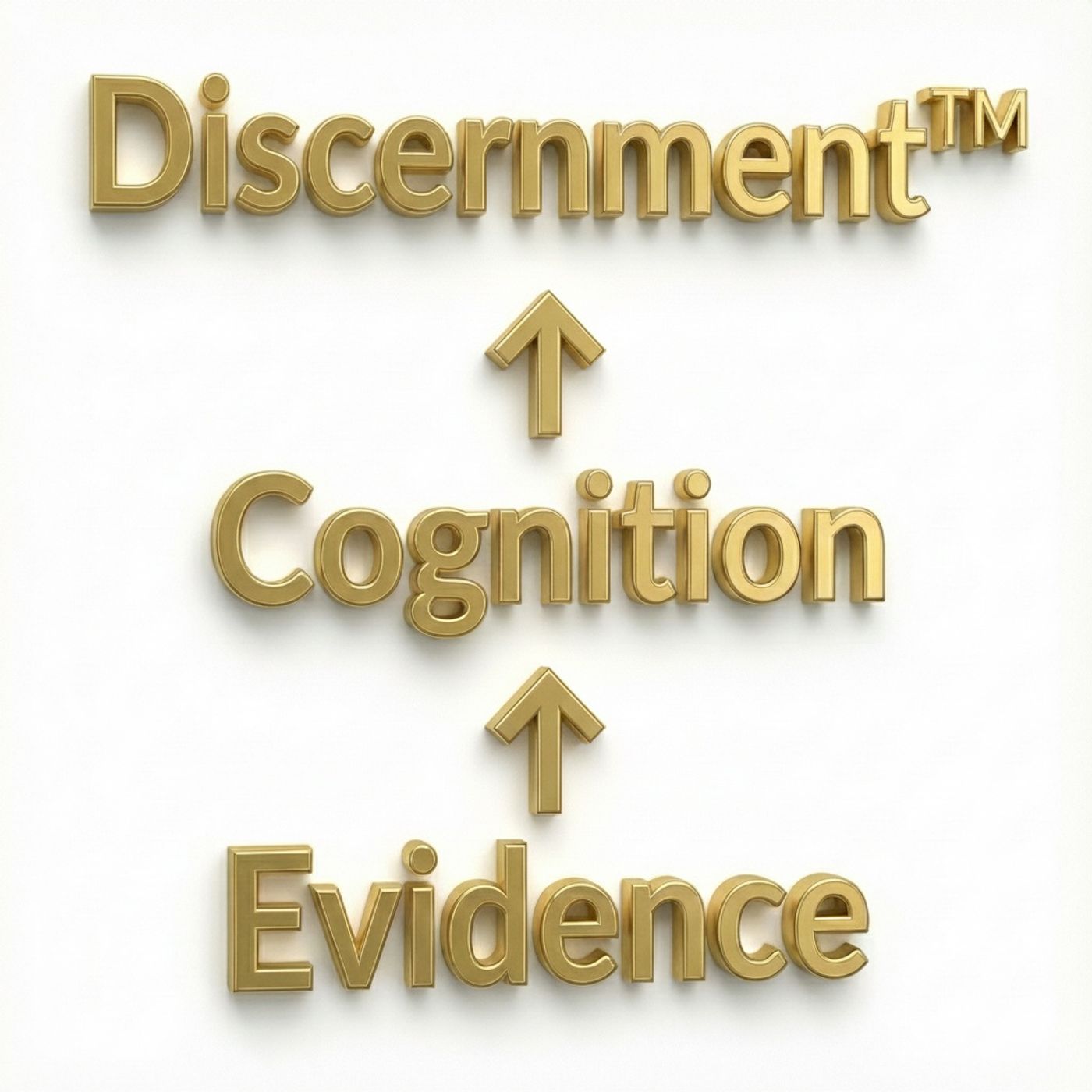
Evidence → Cognition → Discernment™️ - Your Pathway to AI Leadership
by Greg Twemlow
XperientialAI — Pathway to AI Leadership explores how people can collaborate with AI without outsourcing judgment. The spine is a three-step method: Evidence → Cognition → Discernment — a bridge from what’s scattered to what’s chosen. Through essays, reflections, and practical examples, I show how the Context & Critique Rule™ keeps thinking visible, decisions explainable, and responsibility human.
-
393
PwC Just Measured What I Named “the Judgment Gap”
In this article, Greg Twemlow highlights a significant alignment between his own theories and new global labour-market data from PwC. Both sources conclude that as AI automates execution, professional value is shifting away from mere output and toward high-level human judgment and creativity. Twemlow argues that this "judgment gap" requires organisations to deliberately reinvest the time saved by technology into better decision-making rather than simple cost-cutting. While PwC provides the statistical evidence for this shift, Twemlow offers a practical framework called the Context & Critique Rule to help individuals refine their discernment. Ultimately, the text suggests that in an AI-driven economy, the ability to verify and own outcomes is more valuable than the ability to produce content. This convergence of data and theory serves as a call for professionals to master the human oversight that machines cannot replicate. Read the article.About the Author - Greg Twemlow writes and teaches at the intersection of technology, education, and human judgment. He works with educators and businesses to make AI explainable and assessable in classrooms and boardrooms — to ensure AI users show their process and own their decisions. His cognition protocol, the Context & Critique Rule™, is built on a three-step process: Evidence → Cognition → Discernment — a bridge from what’s scattered to what’s chosen. Context & Critique → Accountable AI™. © 2025 Greg Twemlow. “Context & Critique → Accountable AI” and “Context & Critique Rule” are unregistered trademarks (™).
-
392
Reclaiming a Disposition Toward Thinking
Greg Twemlow argues that as artificial intelligence becomes increasingly fluent and competent, humans face a growing risk of cognitive disengagement by accepting machine output too readily. He introduces the metaphor of a red light to represent the moment an AI's response feels complete, signaling that the user must deliberately pause and enter a "Critique mode" to maintain their own curiosity. By treating AI as a cognitive muse rather than a mere answer-finding tool, individuals can engage in an iterative collaboration that elevates human reasoning to higher levels of abstraction. Twemlow suggests that true human value now resides in discernment and commitment, requiring us to take full responsibility for the consequences of decisions made alongside machines. Ultimately, the text encourages a shift in disposition where technology serves as a stimulus for deeper thought rather than a replacement for it. Read the article.About the Author - Greg Twemlow writes and teaches at the intersection of technology, education, and human judgment. He works with educators and businesses to make AI explainable and assessable in classrooms and boardrooms — to ensure AI users show their process and own their decisions. His cognition protocol, the Context & Critique Rule™, is built on a three-step process: Evidence → Cognition → Discernment — a bridge from what’s scattered to what’s chosen. Context & Critique → Accountable AI™. © 2025 Greg Twemlow. “Context & Critique → Accountable AI” and “Context & Critique Rule” are unregistered trademarks (™).
-
391
We’re a Remix of Borrowed Atoms
In this philosophical essay, Greg Twemlow explores the concept of human mortality as a temporary "lease" of atoms provided by the earth. He argues that our physical bodies are merely a remix of ancient elements that must eventually be returned to the biosphere to sustain new life. By viewing death as a graceful act of reciprocity rather than a tragic loss, Twemlow suggests we can find liberation from material accumulation and existential dread. This perspective encourages a shift from extracting resources to practising micro-heroism, focusing on the quality of our service and relationships during our finite time. Ultimately, the text offers a secular solace grounded in biological reality, framing our end as an honourable homecoming to the living world. Read the article.About the Author - Greg Twemlow writes and teaches at the intersection of technology, education, and human judgment. He works with educators and businesses to make AI explainable and assessable in classrooms and boardrooms — to ensure AI users show their process and own their decisions. His cognition protocol, the Context & Critique Rule™, is built on a three-step process: Evidence → Cognition → Discernment — a bridge from what’s scattered to what’s chosen. Context & Critique → Accountable AI™. © 2025 Greg Twemlow. “Context & Critique → Accountable AI” and “Context & Critique Rule” are unregistered trademarks (™).
-
390
The Lost Rite of Passage
Greg Twemlow’s text explores the Career Polycrisis, a phenomenon where artificial intelligence and corporate automation have dismantled the traditional entry-level pathways for university graduates. This rupture has destroyed the historical rite of passage into adulthood, leaving young people in a state of psychological and professional limbo. Twemlow argues that we must shift our focus from industrial "careers" to a Life Arc built on character and human formation. To combat this crisis, he proposes the Transition Team framework, which encourages universities to guide students through collaborative, real-world business challenges. By applying the Context & Critique Rule, graduates can reclaim their agency and transform AI from a threat into a tool for self-directed growth. Read the article.About the Author - Greg Twemlow writes and teaches at the intersection of technology, education, and human judgment. He works with educators and businesses to make AI explainable and assessable in classrooms and boardrooms — to ensure AI users show their process and own their decisions. His cognition protocol, the Context & Critique Rule™, is built on a three-step process: Evidence → Cognition → Discernment — a bridge from what’s scattered to what’s chosen. Context & Critique → Accountable AI™. © 2025 Greg Twemlow. “Context & Critique → Accountable AI” and “Context & Critique Rule” are unregistered trademarks (™).
-
389
Formation - A Framework for AI Human Development
Greg Twemlow introduces Formation as a vital developmental framework designed to evaluate the human impact of artificial intelligence within modern organisations. Unlike standard skill training, this concept focuses on nurturing lifelong judgment, ownership, and navigation as automation threatens traditional entry-level learning pathways. By applying this lens to industry data, Twemlow argues that businesses are currently dismantling the apprenticeship layers where critical discernment was historically cultivated. He identifies a significant accountability gap, noting that while firms claim to have clear AI governance, very few actually hold humans responsible for machine-driven outputs. The text advocates for intentional organisational design to ensure that the capacity for human wisdom is preserved rather than accidentally erased by efficiency. Ultimately, the framework provides a disciplined set of questions for leaders to ensure that future workforces remain capable of ethical and strategic decision-making. Read the article.About the Author - Greg Twemlow writes and teaches at the intersection of technology, education, and human judgment. He works with educators and businesses to make AI explainable and assessable in classrooms and boardrooms — to ensure AI users show their process and own their decisions. His cognition protocol, the Context & Critique Rule™, is built on a three-step process: Evidence → Cognition → Discernment — a bridge from what’s scattered to what’s chosen. Context & Critique → Accountable AI™. © 2025 Greg Twemlow. “Context & Critique → Accountable AI” and “Context & Critique Rule” are unregistered trademarks (™).
-
388
Formation of Your Life
Greg Twemlow explores the concept of Formation, defined as the lifelong journey of developing personal judgement and taking ownership of one’s life. He reflects on his own transition from being "creatively compliant" in a structured career to embracing the courage required to publish personal work and stand behind his own ideas. This transition is encapsulated in his trademarked mantra, "Never be afraid to hang your art on the wall," which encourages individuals to move beyond unexamined habits and inherited identities. Twemlow argues that while our backgrounds provide necessary discipline, true growth requires crossing a bridge to expose our authentic selves to the reality of public feedback. He concludes that in an age of artificial intelligence, which threatens to automate basic human development, consciously designing our own Formation has never been more critical. This essay serves as both a personal memoir and a call to action for others to grant themselves permission to contribute uniquely to the world. Read the article.About the Author - Greg Twemlow writes and teaches at the intersection of technology, education, and human judgment. He works with educators and businesses to make AI explainable and assessable in classrooms and boardrooms — to ensure AI users show their process and own their decisions. His cognition protocol, the Context & Critique Rule™, is built on a three-step process: Evidence → Cognition → Discernment — a bridge from what’s scattered to what’s chosen. Context & Critique → Accountable AI™. © 2025 Greg Twemlow. “Context & Critique → Accountable AI” and “Context & Critique Rule” are unregistered trademarks (™).
-
387
Creativity — the power to inspire
Greg Twemlow argues that creativity is the essential human skill that distinguishes us from artificial intelligence, yet modern schooling and societal pressures often suppress this natural genius. To combat this decline, he introduces the Creativitee program, which empowers parents to act as a "Creative Muse" for their children. By fostering a supportive home environment, parents can help kids maintain their imagination and curiosity well into adulthood. The text draws on insights from experts like Sir Ken Robinson and Joseph Campbell to highlight how bravery and resilience are required to share one’s work with the world. Ultimately, the sources advocate for challenging the status quo through constant experimentation and the willingness to accept constructive feedback. This approach ensures that creative thinking is treated with the same academic importance as literacy. Read the article.About the Author - Greg Twemlow writes and teaches at the intersection of technology, education, and human judgment. He works with educators and businesses to make AI explainable and assessable in classrooms and boardrooms — to ensure AI users show their process and own their decisions. His cognition protocol, the Context & Critique Rule™, is built on a three-step process: Evidence → Cognition → Discernment — a bridge from what’s scattered to what’s chosen. Context & Critique → Accountable AI™. © 2025 Greg Twemlow. “Context & Critique → Accountable AI” and “Context & Critique Rule” are unregistered trademarks (™).
-
386
Across History, Humans Eventually Vanish Inside Their Own Machinery
The provided text explores how modern civilisations use abstraction to distance themselves from the physical world and human dignity. By stripping nature of its sacred value and treating it as a mere economic resource, society has created a bloodless logic that eventually reduces people to statistical data. Author Greg Twemlow argues that while historical oppression relied on force, the rise of artificial intelligence threatens to erase human agency through the seductive power of hyper-convenience. To combat this, he proposes a framework of Context and Critique, which encourages individuals to slow down and reclaim their cognitive sovereignty. Ultimately, the source calls for a deliberate restoration of human judgment to prevent us from vanishing into the very machinery we have built. Read the article.About the Author - Greg Twemlow writes and teaches at the intersection of technology, education, and human judgment. He works with educators and businesses to make AI explainable and assessable in classrooms and boardrooms — to ensure AI users show their process and own their decisions. His cognition protocol, the Context & Critique Rule™, is built on a three-step process: Evidence → Cognition → Discernment — a bridge from what’s scattered to what’s chosen. Context & Critique → Accountable AI™. © 2025 Greg Twemlow. “Context & Critique → Accountable AI” and “Context & Critique Rule” are unregistered trademarks (™).
-
385
Human Sovereignty and the Architecture of Discernment
In this article, Greg Twemlow argues that human discernment must remain the cornerstone of learning and professional life to prevent generative AI from eroding our cognitive sovereignty. He introduces the Context & Critique Rule™, a framework inspired by Bruce Lee’s philosophy, which encourages users to "intercept" automated fluency with mandatory friction and intentional reasoning. The text highlights a growing crisis where entry-level employment is vanishing because basic tasks are now automated, leaving young workers without traditional opportunities to develop professional judgment. To counter this, the author proposes using Direction and Traction Plans to help students build portfolios based on real-world problem-solving rather than just static output. Ultimately, the source advocates for a shift in education and industry towards accountable AI usage, ensuring that individuals retain ownership over their choices and intellectual labour. Read the article.About the Author - Greg Twemlow writes and teaches at the intersection of technology, education, and human judgment. He works with educators and businesses to make AI explainable and assessable in classrooms and boardrooms — to ensure AI users show their process and own their decisions. His cognition protocol, the Context & Critique Rule™, is built on a three-step process: Evidence → Cognition → Discernment — a bridge from what’s scattered to what’s chosen. Context & Critique → Accountable AI™. © 2025 Greg Twemlow. “Context & Critique → Accountable AI” and “Context & Critique Rule” are unregistered trademarks (™).
-
384
The Friction of Meaning
In this article, Greg Twemlow explores the tension between automated efficiency and authentic human insight within the landscape of generative artificial intelligence. Drawing on Jerome Bruner’s metaphors, the author argues that the instantaneous nature of AI threatens to bypass the essential mental struggle required for deep understanding and creative breakthrough. To combat this, he proposes the Context & Critique Rule™, a cognitive discipline designed to reintroduce necessary friction into the creative process. By intentionally slowing down to interrogate machine-generated results, individuals can move beyond superficial completion toward genuine revelation. Ultimately, the text asserts that human dignity in a digital age is defined by our commitment to rigorous judgment rather than mere speed. This framework serves as both a defence of intellectual sovereignty and a method for proving human value in an increasingly automated economy. Read the article.About the Author - Greg Twemlow writes and teaches at the intersection of technology, education, and human judgment. He works with educators and businesses to make AI explainable and assessable in classrooms and boardrooms — to ensure AI users show their process and own their decisions. His cognition protocol, the Context & Critique Rule™, is built on a three-step process: Evidence → Cognition → Discernment — a bridge from what’s scattered to what’s chosen. Context & Critique → Accountable AI™. © 2025 Greg Twemlow. “Context & Critique → Accountable AI” and “Context & Critique Rule” are unregistered trademarks (™).
-
383
Standing at the Doorway to Enterprise AI
In this article, Greg Twemlow explores the corporate paradox where widespread AI adoption fails to deliver significant organisational improvements due to hidden labour and unverified outputs. He introduces the concepts of botsitting, the time lost correcting machine errors, and botshitting, the act of submitting unvalidated AI work. To combat the erosion of cognitive capital, Twemlow proposes the Context & Critique Rule, a framework designed to ensure human judgment remains central to the technological interaction. He suggests that businesses must move beyond seeing AI as a mere efficiency tool and instead use it as a catalyst for deeper thinking and rigorous interpretation. By implementing auditable governance protocols like the Context & Critique Cover, leaders can transform AI from a liability into a measurable asset that strengthens human discernment. Ultimately, the text argues that true competitive advantage in the modern era stems from active intellectual engagement rather than automated speed. Read the article.About the Author - Greg Twemlow writes and teaches at the intersection of technology, education, and human judgment. He works with educators and businesses to make AI explainable and assessable in classrooms and boardrooms — to ensure AI users show their process and own their decisions. His cognition protocol, the Context & Critique Rule™, is built on a three-step process: Evidence → Cognition → Discernment — a bridge from what’s scattered to what’s chosen. Context & Critique → Accountable AI™. © 2025 Greg Twemlow. “Context & Critique → Accountable AI” and “Context & Critique Rule” are unregistered trademarks (™).
-
382
Why Everyone Judges and Very Few Critique
In this article, author Greg Twemlow explores the "uni-context" theory proposed by philosopher Agnes Callard, which describes how modern digital life has collapsed distinct social spheres into one flat, judgmental field. Twemlow argues that while this shift makes universal condemnation easy, it has destroyed our capacity for meaningful critique, which requires specific standards and personal accountability. He suggests that simply restoring local contexts is insufficient, as isolated groups often become echo chambers that lack the "mirror" of honest correction. To fix this, he introduces his Context & Critique Rule, asserting that true growth only occurs when people commit to rigorous, transparent evaluation within defined boundaries. By using a Socratic approach, Twemlow believes we can move past superficial online outrage to build communities that value deliberate human judgment. Using the example of T.E. Lawrence, he demonstrates that neither blind acceptance nor baseless dismissal reveals the truth; rather, one must construct an intentional framework to truly test an idea. Read the article.About the Author - Greg Twemlow writes and teaches at the intersection of technology, education, and human judgment. He works with educators and businesses to make AI explainable and assessable in classrooms and boardrooms — to ensure AI users show their process and own their decisions. His cognition protocol, the Context & Critique Rule™, is built on a three-step process: Evidence → Cognition → Discernment — a bridge from what’s scattered to what’s chosen. Context & Critique → Accountable AI™. © 2025 Greg Twemlow. “Context & Critique → Accountable AI” and “Context & Critique Rule” are unregistered trademarks (™).
-
381
AI Delivers Fluent Answers While Humans Outsource Their Judgement
The provided text introduces Fusion Bridge, a framework designed by Greg Twemlow to safeguard human judgement and responsibility as artificial intelligence becomes more prevalent. It argues that while AI offers rapid, fluent answers, it risks encouraging humans to outsource their critical thinking and accountability. To counter this, the author proposes a philosophy called Formation, which focuses on developing a person's lifelong capacity to navigate uncertainty and own their decisions. This is practiced through the Context & Critique Rule, ensuring users deeply understand a problem before using AI and rigorously challenge its outputs afterwards. The framework is applied through programs like Formation Bridge for professionals and Impact Blueprint for students, creating rehearsal spaces where individuals must interpret and defend their work. Ultimately, the source challenges institutions to ensure their use of technology strengthens rather than depletes essential human cognitive capabilities. Read the article.About the Author - Greg Twemlow writes and teaches at the intersection of technology, education, and human judgment. He works with educators and businesses to make AI explainable and assessable in classrooms and boardrooms — to ensure AI users show their process and own their decisions. His cognition protocol, the Context & Critique Rule™, is built on a three-step process: Evidence → Cognition → Discernment — a bridge from what’s scattered to what’s chosen. Context & Critique → Accountable AI™. © 2025 Greg Twemlow. “Context & Critique → Accountable AI” and “Context & Critique Rule” are unregistered trademarks (™).
-
380
An AI Mirror for the Board of Directors
In this article, Greg Twemlow introduces the concept of cognitive capital, which represents a company's ongoing ability to apply human reasoning and accountability to complex problems. He argues that as businesses adopt artificial intelligence, boards of directors must look beyond simple operational efficiency and monitor how automation might be eroding human expertise. To prevent cognitive atrophy and a loss of professional development for junior staff, Twemlow suggests that every AI-driven proposal should explicitly state how it will protect or enhance the organisation's internal judgement. He proposes a practical tool called the Context & Critique Cover, a structured framework that requires authors to disclose their assumptions and the extent of human oversight. Ultimately, the text highlights that true governance involves ensuring that machine speed does not outpace an institution's capacity to understand and own its high-stakes decisions. Read the article.About the Author - Greg Twemlow writes and teaches at the intersection of technology, education, and human judgment. He works with educators and businesses to make AI explainable and assessable in classrooms and boardrooms — to ensure AI users show their process and own their decisions. His cognition protocol, the Context & Critique Rule™, is built on a three-step process: Evidence → Cognition → Discernment — a bridge from what’s scattered to what’s chosen. Context & Critique → Accountable AI™. © 2025 Greg Twemlow. “Context & Critique → Accountable AI” and “Context & Critique Rule” are unregistered trademarks (™).
-
379
The Cover That Revealed the Answer
This article by Greg Twemlow explores how the Voyager Golden Record cover provides a vital lesson for maintaining human judgement in the era of artificial intelligence. The author argues that just as the Voyager cover taught unknown recipients how to decode and trust its message, modern AI-generated work must include a transparent method of interpretation. To address this, Twemlow introduces the Context & Critique Cover™, a protocol designed to ensure that AI outputs are not merely persuasive but are properly interrogated and anchored in human accountability. Through his Formation Bridge learning system, he advocates for a disciplined approach where users must define intent and rigorously test assumptions before accepting machine-generated results. Ultimately, the text asserts that trust should only be granted to information that explicitly reveals its own logic, evidence, and limitations. Read the article.About the Author - Greg Twemlow writes and teaches at the intersection of technology, education, and human judgment. He works with educators and businesses to make AI explainable and assessable in classrooms and boardrooms — to ensure AI users show their process and own their decisions. His cognition protocol, the Context & Critique Rule™, is built on a three-step process: Evidence → Cognition → Discernment — a bridge from what’s scattered to what’s chosen. Context & Critique → Accountable AI™. © 2025 Greg Twemlow. “Context & Critique → Accountable AI” and “Context & Critique Rule” are unregistered trademarks (™).
-
378
Formation, Critique, and the Surprise That Changed My Thinking
Greg Twemlow explores the intersection of human development and artificial intelligence, introducing Formation as a lifelong process of refining one's judgment, responsibility, and character. He argues that while AI can offer rapid answers, its true value lies in acting as a reflective mirror that helps humans notice hidden patterns in their own thinking. To navigate this relationship safely, Twemlow advocates for the Context & Critique Rule, a disciplined protocol that prevents users from blindly accepting machine-generated outputs. By intentionally defining situational stakes and rigorously interrogating AI responses, individuals can avoid the trap of cognitive shortcuts. Ultimately, the source suggests that technology should not replace human thought but should instead be used to interrupt automatic thinking and foster deeper intellectual growth. This collaborative approach ensures that human sovereignty and accountability remain at the heart of the digital age. Read the article.About the Author - Greg Twemlow writes and teaches at the intersection of technology, education, and human judgment. He works with educators and businesses to make AI explainable and assessable in classrooms and boardrooms — to ensure AI users show their process and own their decisions. His cognition protocol, the Context & Critique Rule™, is built on a three-step process: Evidence → Cognition → Discernment — a bridge from what’s scattered to what’s chosen. Context & Critique → Accountable AI™. © 2025 Greg Twemlow. “Context & Critique → Accountable AI” and “Context & Critique Rule” are unregistered trademarks (™).
-
377
The Formation Bridge - Building Judgement in the AI Era
Greg Twemlow argues that artificial intelligence is currently dismantling the traditional apprenticeship layer where young people historically developed professional judgement. By automating entry-level tasks like research and drafting, technology has removed the essential friction and supervised practice required to transition from education to professional capability. To address this gap, the author proposes the "Formation Bridge," a structured framework that uses AI as a supportive scaffold rather than a shortcut. This model employs specific agentic layers to help students identify core problems, weigh evidence, and navigate ethical consequences of their work. Ultimately, Twemlow asserts that schools and businesses must collaborate to rebuild this pathway to maturity, ensuring learners maintain ownership of their decisions. This approach moves beyond simple AI literacy to foster deep, accountable human judgement in an automated world. Read the article.About the Author - Greg Twemlow writes and teaches at the intersection of technology, education, and human judgment. He works with educators and businesses to make AI explainable and assessable in classrooms and boardrooms — to ensure AI users show their process and own their decisions. His cognition protocol, the Context & Critique Rule™, is built on a three-step process: Evidence → Cognition → Discernment — a bridge from what’s scattered to what’s chosen. Context & Critique → Accountable AI™. © 2025 Greg Twemlow. “Context & Critique → Accountable AI” and “Context & Critique Rule” are unregistered trademarks (™).
-
376
Can Schools Teach Formation?
In this article, Greg Twemlow introduces the concept of Formation, defined as a lifelong journey where individuals cultivate judgement, ownership, contribution, and navigation. He argues that contemporary schools often prioritise curriculum completion and grading over the genuine human development required to thrive in an era of artificial intelligence. To address this, the author suggests that educators should move beyond simple information transfer by designing lessons that require students to engage with uncertainty and personal responsibility. By using a shared vocabulary rather than rigid rubrics, teachers can help students connect their academic work to their evolving character and agency. Ultimately, Twemlow posits that making this process deliberate rather than accidental is essential for preparing young people to handle the complexities of a rapidly changing world. Read the article.About the Author - Greg Twemlow writes and teaches at the intersection of technology, education, and human judgment. He works with educators and businesses to make AI explainable and assessable in classrooms and boardrooms — to ensure AI users show their process and own their decisions. His cognition protocol, the Context & Critique Rule™, is built on a three-step process: Evidence → Cognition → Discernment — a bridge from what’s scattered to what’s chosen. Context & Critique → Accountable AI™. © 2025 Greg Twemlow. “Context & Critique → Accountable AI” and “Context & Critique Rule” are unregistered trademarks (™).
-
375
Why Formation is the Most Important Word of the AI Age
Greg Twemlow argues that Formation is the most critical concept for navigating a world shaped by artificial intelligence. He defines this as the lifelong development of wisdom, responsibility, and judgement, a process distinct from mere technical training. While society often prioritises functional efficiency, Twemlow warns that AI-driven automation threatens the traditional pathways, like entry-level jobs, where human character and practical discernment are built. He asserts that institutions—including schools and workplaces—must be held accountable for how they contribute to this developmental growth rather than just delivering outputs. Ultimately, the text highlights that while AI provides rapid answers, we must preserve the philosophical questions and social structures that ensure people become capable, independent adults. Read the article.About the Author - Greg Twemlow writes and teaches at the intersection of technology, education, and human judgment. He works with educators and businesses to make AI explainable and assessable in classrooms and boardrooms — to ensure AI users show their process and own their decisions. His cognition protocol, the Context & Critique Rule™, is built on a three-step process: Evidence → Cognition → Discernment — a bridge from what’s scattered to what’s chosen. Context & Critique → Accountable AI™. © 2025 Greg Twemlow. “Context & Critique → Accountable AI” and “Context & Critique Rule” are unregistered trademarks (™).
-
374
The Climb You Have to Make to Conquer AI
In this article, Greg Twemlow introduces a methodology for effectively using artificial intelligence without sacrificing individual critical thinking. He proposes the Context & Critique Rule, a discipline where users must define their specific intent before engaging with AI and rigorously interrogate the results afterwards. Twemlow argues that while technology offers effortless answers, true understanding requires the human effort of "climbing" to a conclusion rather than being placed there by a machine. He uses the geometric metaphor of a circle to illustrate how personal discipline bends a machine's straight, average output into a finished, authored shape. To demonstrate his commitment, he shares his Sovereign Ethics Blueprint, a personal contract that ensures he remains accountable for every decision. Ultimately, the text serves as a guide for retaining human sovereignty in an era of automated convenience and rapid technological change. Read the article.About the Author - Greg Twemlow writes and teaches at the intersection of technology, education, and human judgment. He works with educators and businesses to make AI explainable and assessable in classrooms and boardrooms — to ensure AI users show their process and own their decisions. His cognition protocol, the Context & Critique Rule™, is built on a three-step process: Evidence → Cognition → Discernment — a bridge from what’s scattered to what’s chosen. Context & Critique → Accountable AI™. © 2025 Greg Twemlow. “Context & Critique → Accountable AI” and “Context & Critique Rule” are unregistered trademarks (™).
-
373
The Geometry of Human Sovereignty
Greg Twemlow explores the necessity of maintaining human cognitive sovereignty amidst the rapid advancement of artificial intelligence. He introduces the Context & Critique Rule™, a cognitive discipline designed to prevent "algorithmic drift" by forcing individuals to intentionally slow down and interrogate automated outputs. Using a geometric metaphor, Twemlow argues that humans must provide the intent and moral boundaries necessary to transform a machine's linear processing into a meaningful, sovereign resolution. He warns that as AI absorbs entry-level professional roles, the economic and social value of a person will depend entirely on their capacity for independent discernment and accountability. Ultimately, the text serves as a call for individuals to become "Discerner Architects" who refuse to let their unique intellectual agency be erased by the convenience of automation. This framework is presented as a vital survival strategy for both current professionals and the students of 2029 who face a disrupted labour market. Read the article.About the Author - Greg Twemlow writes and teaches at the intersection of technology, education, and human judgment. He works with educators and businesses to make AI explainable and assessable in classrooms and boardrooms — to ensure AI users show their process and own their decisions. His cognition protocol, the Context & Critique Rule™, is built on a three-step process: Evidence → Cognition → Discernment — a bridge from what’s scattered to what’s chosen. Context & Critique → Accountable AI™. © 2025 Greg Twemlow. “Context & Critique → Accountable AI” and “Context & Critique Rule” are unregistered trademarks (™).
-
372
Reclaiming Accountability in the Machine Age
In this article, Greg Twemlow explores the intersection of human accountability and modern technology by drawing parallels with the management philosophy of legendary engineer Clarence “Kelly” Johnson. Twemlow argues that while Johnson's "Skunk Works" model prioritised speed through lean organisation, the modern era has mistakenly adopted rapid output at the expense of personal responsibility. To combat the risk of mindless automation, the author introduces the Context & Critique Rule™, a cognitive protocol designed to reinsert human judgment into the AI-driven workflow. He posits that individuals must act as "Discerners" who critically evaluate machine-generated results rather than accepting them at face value. Ultimately, the text emphasises that as AI handles the mechanics of production, the most valuable human skill remains the willingness to own the consequences of one's work. This framework serves as a modern adaptation of Johnson’s principle that the creator must personally test and stand behind their product to maintain true competence. Read the article.About the Author - Greg Twemlow writes and teaches at the intersection of technology, education, and human judgment. He works with educators and businesses to make AI explainable and assessable in classrooms and boardrooms — to ensure AI users show their process and own their decisions. His cognition protocol, the Context & Critique Rule™, is built on a three-step process: Evidence → Cognition → Discernment — a bridge from what’s scattered to what’s chosen. Context & Critique → Accountable AI™. © 2025 Greg Twemlow. “Context & Critique → Accountable AI” and “Context & Critique Rule” are unregistered trademarks (™).
-
371
The Language of Creative Impact
Author Greg Twemlow examines the intersection of human creativity and artificial intelligence by analysing director Martin Scorsese’s use of a generative tool called Flux. While the software helps solve the transmission problem of moving a director's internal vision onto a screen quickly, Twemlow argues that the machine only provides raw creative clay. To ensure quality and collaborative depth, he introduces the Language of Impact, a framework built on the dual pillars of context and critique. This method transforms the lead creator into a sort of archaeologist who guides a team of experts to uncover and refine a shared vision. Ultimately, the text asserts that human judgment must remain the primary force to prevent technological speed from compromising artistic excellence. Read the article.About the Author - Greg Twemlow writes and teaches at the intersection of technology, education, and human judgment. He works with educators and businesses to make AI explainable and assessable in classrooms and boardrooms — to ensure AI users show their process and own their decisions. His cognition protocol, the Context & Critique Rule™, is built on a three-step process: Evidence → Cognition → Discernment — a bridge from what’s scattered to what’s chosen. Context & Critique → Accountable AI™. © 2025 Greg Twemlow. “Context & Critique → Accountable AI” and “Context & Critique Rule” are unregistered trademarks (™).
-
370
The Freedom Not to Stop Thinking
This text explores how the philosophical insights of Albert Camus can be applied to the modern challenge of artificial intelligence. The author argues that the primary danger of AI is not its potential for error, but its convenience, which encourages humans to abandon their own critical judgment. By drawing on Camus’s work regarding human dignity and the tendency of systems to reduce people to mere abstractions, the source introduces a practical discipline called the Context & Critique Rule. This framework requires users to investigate the origins of machine-generated answers and interrogate their assumptions before accepting them. Ultimately, the sources suggest that maintaining human agency and active thought is essential to preventing our disappearance within the automated systems we create. Read the article.About the Author - Greg Twemlow writes and teaches at the intersection of technology, education, and human judgment. He works with educators and businesses to make AI explainable and assessable in classrooms and boardrooms — to ensure AI users show their process and own their decisions. His cognition protocol, the Context & Critique Rule™, is built on a three-step process: Evidence → Cognition → Discernment — a bridge from what’s scattered to what’s chosen. Context & Critique → Accountable AI™. © 2025 Greg Twemlow. “Context & Critique → Accountable AI” and “Context & Critique Rule” are unregistered trademarks (™).
-
369
Institutions Have Abandoned Our Young People
In this article, Greg Twemlow argues that modern institutions have failed to provide a reliable developmental path for the upcoming generation. He suggests that artificial intelligence is eroding the traditional apprenticeship layer, threatening the process by which young people acquire human judgment and professional competence. To counter this, he introduces the Context & Critique Rule™, a framework designed to maintain human agency and accountability when using technology. This method encourages individuals to become their own "personal institutions" by applying deliberate friction to AI-generated outputs. Ultimately, the text serves as a call for students to move beyond passive consumption and embrace the role of a Discerner Architect to preserve their intellectual independence. Read the article.About the Author - Greg Twemlow writes and teaches at the intersection of technology, education, and human judgment. He works with educators and businesses to make AI explainable and assessable in classrooms and boardrooms — to ensure AI users show their process and own their decisions. His cognition protocol, the Context & Critique Rule™, is built on a three-step process: Evidence → Cognition → Discernment — a bridge from what’s scattered to what’s chosen. Context & Critique → Accountable AI™. © 2025 Greg Twemlow. “Context & Critique → Accountable AI” and “Context & Critique Rule” are unregistered trademarks (™).
-
368
The Great Synchrony Deception - Why AI Pilots Fail
Greg Twemlow argues that the overwhelming failure rate of AI pilots stems from a deep-seated reliance on "synchronous" work models established over the last 250 years. He suggests that most executives mistakenly use technology to merely speed up traditional human relays and meetings rather than fundamentally redesigning their firms. This "Great Synchrony Deception" blinds leaders to the potential of asynchronous operations, where machines handle coordination while humans focus on defining problems and owning consequences. Twemlow warns that simply hollowing out middle-management layers to gain efficiency risks destroying the very apprenticeships required to develop future judgment. Ultimately, he advocates for an agentic asynchronous firm that protects the human capacity for deep reflection and accountability. Successful AI adoption requires moving beyond trivial acceleration to embrace a model where truth moves through the organisation without constant human intervention. Read the article.About the Author - Greg Twemlow writes and teaches at the intersection of technology, education, and human judgment. He works with educators and businesses to make AI explainable and assessable in classrooms and boardrooms — to ensure AI users show their process and own their decisions. His cognition protocol, the Context & Critique Rule™, is built on a three-step process: Evidence → Cognition → Discernment — a bridge from what’s scattered to what’s chosen. Context & Critique → Accountable AI™. © 2025 Greg Twemlow. “Context & Critique → Accountable AI” and “Context & Critique Rule” are unregistered trademarks (™).
-
367
Are You In the Knowledge-Worker Compression Zone?
In his article, Greg Twemlow argues that generative AI is fundamentally hollowing out the middle layers of professional work, creating a structural crisis for white-collar careers. He introduces the Knowledge-Work Abstraction Stack to illustrate how automation is absorbing routine production and verification, which previously served as the vital training ground for junior employees. This shift leads to occupational downgrading, where displaced workers are forced into lower-skilled roles, causing hidden financial and psychological strain on households. Twemlow advocates for a Discernment Ascent, urging professionals to secure their value by focusing on the "human bookends" of defining complex problems and bearing moral accountability for final decisions. Ultimately, he asserts that while machines can accelerate output, they cannot replace human judgment or the ethical responsibility of authorship. Read the article.About the Author - Greg Twemlow writes and teaches at the intersection of technology, education, and human judgment. He works with educators and businesses to make AI explainable and assessable in classrooms and boardrooms — to ensure AI users show their process and own their decisions. His cognition protocol, the Context & Critique Rule™, is built on a three-step process: Evidence → Cognition → Discernment — a bridge from what’s scattered to what’s chosen. Context & Critique → Accountable AI™. © 2025 Greg Twemlow. “Context & Critique → Accountable AI” and “Context & Critique Rule” are unregistered trademarks (™).
-
366
Buckled in on the Trajectory to a Shattering, Systemic Disruption
In this evocative essay, Greg Twemlow warns that modern civilisation is repeating the fatal errors of ancient empires by mistaking technical mastery for immunity from nature. He argues that our obsession with digital infrastructure and hyper-accelerated networks has created a dangerous detachment from the biological systems that actually sustain life. By comparing ancient obsidian tools to modern silicon chips, the author illustrates a persistent human arrogance that prioritises economic momentum over ecological health. Twemlow suggests that we have engineered a crisis of accountability where global supply chains hide the environmental destruction caused by our consumption. To prevent a systemic collapse, he proposes integrating ethical conscience and "slowness" directly into our legal and technological frameworks. Ultimately, the text serves as a call to abandon the illusion of dominion and realign human activity with the non-negotiable boundaries of the Earth. Read the article.About the Author - Greg Twemlow writes and teaches at the intersection of technology, education, and human judgment. He works with educators and businesses to make AI explainable and assessable in classrooms and boardrooms — to ensure AI users show their process and own their decisions. His cognition protocol, the Context & Critique Rule™, is built on a three-step process: Evidence → Cognition → Discernment — a bridge from what’s scattered to what’s chosen. Context & Critique → Accountable AI™. © 2025 Greg Twemlow. “Context & Critique → Accountable AI” and “Context & Critique Rule” are unregistered trademarks (™).
-
365
Run Toward AI, or Compose and Master AI
This article by Greg Twemlow argues that the true threat of Artificial Intelligence is not external displacement, but the internal erosion of human cognitive capacity. He suggests that users must move beyond mere acceleration and instead adopt a harmonic plan that treats work as a composition. To maintain human sovereignty, Twemlow introduces the Context & Critique Rule, a discipline that uses mandatory friction to prevent the creation of "slop" or shallow, automated output. By slowing down to provide deep context and applying rigorous critique, individuals can ensure their thinking remains resonant and authored rather than disappearing into the machine's efficiency. Ultimately, the text encourages a transition from a linear mindset to one that values discernment, balance, and the unique rhythms of human thought. Read the article.About the Author - Greg Twemlow writes and teaches at the intersection of technology, education, and human judgment. He works with educators and businesses to make AI explainable and assessable in classrooms and boardrooms — to ensure AI users show their process and own their decisions. His cognition protocol, the Context & Critique Rule™, is built on a three-step process: Evidence → Cognition → Discernment — a bridge from what’s scattered to what’s chosen. Context & Critique → Accountable AI™. © 2025 Greg Twemlow. “Context & Critique → Accountable AI” and “Context & Critique Rule” are unregistered trademarks (™).
-
364
The Pragmatist’s Guide to the Next Human Epoch
This article explores how humanity can navigate a civilisational rupture caused by rapid artificial intelligence development and ecological decay. Author Greg Twemlow builds upon Otto Scharmer's concept of a Second Axial Age, arguing that we must transition toward a regenerative society that views the natural world as sacred. To survive this shift, Twemlow introduces Breakout Autonomy, a strategy for individuals to use technology as a lever without losing their unique human judgment. He advocates for the Human Pause, a deliberate practice of reflection and accountability to resist the automated pressures of modern capitalism. Ultimately, the text serves as a pragmatic guide for maintaining personal sovereignty and building ethical "islands of coherence" amidst global chaos. Read the article.About the Author - Greg Twemlow writes and teaches at the intersection of technology, education, and human judgment. He works with educators and businesses to make AI explainable and assessable in classrooms and boardrooms — to ensure AI users show their process and own their decisions. His cognition protocol, the Context & Critique Rule™, is built on a three-step process: Evidence → Cognition → Discernment — a bridge from what’s scattered to what’s chosen. Context & Critique → Accountable AI™. © 2025 Greg Twemlow. “Context & Critique → Accountable AI” and “Context & Critique Rule” are unregistered trademarks (™).
-
363
Hollowing of the Human Abstraction Stack
This article explores the Hollowing of the Human Abstraction Stack, a phenomenon where AI is rapidly automating the middle layers of knowledge work such as production, translation, and verification. While companies capture efficiency dividends by replacing these roles, the author warns that this dismantles the traditional apprenticeship pathway through which junior workers once developed professional judgment. This structural shift creates a crisis for households, as displaced professionals face occupational downgrading and the loss of income in an increasingly expensive economy. To remain economically viable, individuals must perform a Discernment Ascent, moving away from repeatable tasks toward higher-level human judgment and ethical accountability. Ultimately, the text argues that governments and institutions must take ownership of this transition to prevent social costs from falling solely on the family unit. Read the article.About the Author - Greg Twemlow writes and teaches at the intersection of technology, education, and human judgment. He works with educators and businesses to make AI explainable and assessable in classrooms and boardrooms — to ensure AI users show their process and own their decisions. His cognition protocol, the Context & Critique Rule™, is built on a three-step process: Evidence → Cognition → Discernment — a bridge from what’s scattered to what’s chosen. Context & Critique → Accountable AI™. © 2025 Greg Twemlow. “Context & Critique → Accountable AI” and “Context & Critique Rule” are unregistered trademarks (™).
-
362
Reclaiming Cognition from the Slop Firehose
In this article, Greg Twemlow explores the shifting value of human intellect in an era dominated by automated content and artificial intelligence. He argues that constant exposure to social media and digital "slop" causes cognitive surrender, where the brain offloads deep thinking to external networks and loses the ability to retain knowledge. To counteract this, Twemlow introduces the concept of the Discerner Architect, a role focused on reclaiming agency through intentional friction, ethical oversight, and personal accountability. He proposes a Sovereign Discernment Cycle that encourages individuals to disconnect from mindless digital feeds and use AI as a tool for rigorous critique rather than a shortcut for execution. Ultimately, the text asserts that authentic authorship remains the most vital form of resistance against algorithmic noise, serving as the only true proof of human presence. By prioritising clarity over speed, individuals can protect their capacity for independent thought and ensure that technology remains governed by human intent. Read the article.About the Author - Greg Twemlow writes and teaches at the intersection of technology, education, and human judgment. He works with educators and businesses to make AI explainable and assessable in classrooms and boardrooms — to ensure AI users show their process and own their decisions. His cognition protocol, the Context & Critique Rule™, is built on a three-step process: Evidence → Cognition → Discernment — a bridge from what’s scattered to what’s chosen. Context & Critique → Accountable AI™. © 2025 Greg Twemlow. “Context & Critique → Accountable AI” and “Context & Critique Rule” are unregistered trademarks (™).
-
361
Teenagers- Explore Before You Decide
The provided text introduces the Explore Before You Decide Kit, a strategic framework designed by Greg Twemlow to assist teenagers in navigating life choices within an AI-driven landscape. Rather than forcing students into premature career paths, the kit encourages a process of structured exploration using AI as a collaborative thinking partner. Through a series of nine iterative stages, including the creation of a Student Context Card and the use of Subject Matter Experts Dialogues, young people can safely test various "Directions" before committing to a formal plan. A central theme is the importance of human agency, requiring students to maintain their own records of learning and consult with Reflection Partners like parents or mentors. Ultimately, the system aims to build discernment and traction, ensuring the next generation can adapt as professions are continuously redesigned by technology. Read the article.About the Author - Greg Twemlow writes and teaches at the intersection of technology, education, and human judgment. He works with educators and businesses to make AI explainable and assessable in classrooms and boardrooms — to ensure AI users show their process and own their decisions. His cognition protocol, the Context & Critique Rule™, is built on a three-step process: Evidence → Cognition → Discernment — a bridge from what’s scattered to what’s chosen. Context & Critique → Accountable AI™. © 2025 Greg Twemlow. “Context & Critique → Accountable AI” and “Context & Critique Rule” are unregistered trademarks (™).
-
360
The Career Plan Is No Longer Fit-for-Purpose
In our AI-mediated world, traditional career plans are no longer sufficient to guide young people toward a stable future. Greg Twemlow argues that because AI is redesigning every profession, students must shift from seeking fixed pathways to building earned orientation through a combination of Direction and Traction Plans. While a direction provides a general sense of where one is heading, a Traction Plan focuses on developing personal agency, human judgment, and visible evidence of one's ability to adapt. This approach prioritises authorship, ensuring that individuals remain the primary decision-makers even when using sophisticated digital tools. Adults must move away from offering hollow reassurance and instead become bridge-builders who facilitate real-world experiences and experiential learning. Ultimately, the goal is to foster confidence-by-evidence, allowing the next generation to navigate an uncertain economy with the skills to remain relevant and capable. Read the article.About the Author - Greg Twemlow writes and teaches at the intersection of technology, education, and human judgment. He works with educators and businesses to make AI explainable and assessable in classrooms and boardrooms — to ensure AI users show their process and own their decisions. His cognition protocol, the Context & Critique Rule™, is built on a three-step process: Evidence → Cognition → Discernment — a bridge from what’s scattered to what’s chosen. Context & Critique → Accountable AI™. © 2025 Greg Twemlow. “Context & Critique → Accountable AI” and “Context & Critique Rule” are unregistered trademarks (™).
-
359
For 200+ Years, Capitalism Needed Humans
Greg Twemlow explores a critical shift in capitalism where artificial intelligence is rapidly eliminating the entry-level roles that historically served as practical apprenticeships for young people. He argues that while schools still provide academic foundations, the "conversion mechanism" into adulthood is breaking because AI now performs the foundational tasks where beginners once developed professional judgment and confidence. This transition creates a structural gap that leaves future graduates, such as the class of 2028, without a clear path to meaningful employment. Twemlow asserts that capital values efficiency over human development, meaning society cannot rely on market forces to protect the next generation's growth. To counter this, he calls for a new "formation plan" and an AI-Era Apprenticeship Guarantee that prioritises human mentorship and real-world problem-solving over mere technical literacy. Ultimately, the text warns that without deliberate social architecture, technology will dismantle the traditional bridge between education and a dignified adult life. Read the article.About the Author - Greg Twemlow writes and teaches at the intersection of technology, education, and human judgment. He works with educators and businesses to make AI explainable and assessable in classrooms and boardrooms — to ensure AI users show their process and own their decisions. His cognition protocol, the Context & Critique Rule™, is built on a three-step process: Evidence → Cognition → Discernment — a bridge from what’s scattered to what’s chosen. Context & Critique → Accountable AI™. © 2025 Greg Twemlow. “Context & Critique → Accountable AI” and “Context & Critique Rule” are unregistered trademarks (™).
-
358
Human Judgment Can Survive and Thrive in the Age of AI
Greg Twemlow explores the critical need to preserve human judgment as artificial intelligence becomes increasingly capable of producing fluent, effortless content. He argues that relying on machine speed can lead to cognitive atrophy, where our mental faculties weaken due to a lack of active engagement. To counter this, the author introduces the Context & Critique Rule™, a disciplined framework designed to slow down digital interactions and ensure individuals remain the true authors of their work. This method encourages users to define their specific goals and rigorously test machine outputs against human ethics and logic. Ultimately, the text suggests that the greatest challenge of the AI era is not machine advancement, but whether humans will strengthen their discernment or merely become passive operators. Twemlow views this intentional cultivation of the mind as a vital design problem for surviving and thriving in a technology-driven world. Read the article.About the Author - Greg Twemlow writes and teaches at the intersection of technology, education, and human judgment. He works with educators and businesses to make AI explainable and assessable in classrooms and boardrooms — to ensure AI users show their process and own their decisions. His cognition protocol, the Context & Critique Rule™, is built on a three-step process: Evidence → Cognition → Discernment — a bridge from what’s scattered to what’s chosen. Context & Critique → Accountable AI™. © 2025 Greg Twemlow. “Context & Critique → Accountable AI” and “Context & Critique Rule” are unregistered trademarks (™).
-
357
Human Judgment in the Age of AI
Greg Twemlow’s work explores the necessity of strengthening human judgment as artificial intelligence becomes more integrated into professional and educational life. He introduces The Cognition Ignition Wheel™, a framework comprising five interdependent domains—Personal Agency, Leadership Judgment, Cognitive Capability, Experiential Cognition, and Creative Thinking—to ensure individuals remain the true authors of their decisions. At the heart of this system is a diagnostic matrix designed to distinguish between genuine intellectual effort and the mere synthetic fluency produced by machines. The author warns that the greatest threat of the AI era is the atrophy of critical thinking, urging a shift toward accountable collaboration where technology enhances rather than replaces the human mind. Ultimately, these sources provide a structured methodology for preserving cognitive sovereignty and ensuring that human accountability remains visible and robust. Read the article.About the Author - Greg Twemlow writes and teaches at the intersection of technology, education, and human judgment. He works with educators and businesses to make AI explainable and assessable in classrooms and boardrooms — to ensure AI users show their process and own their decisions. His cognition protocol, the Context & Critique Rule™, is built on a three-step process: Evidence → Cognition → Discernment — a bridge from what’s scattered to what’s chosen. Context & Critique → Accountable AI™. © 2025 Greg Twemlow. “Context & Critique → Accountable AI” and “Context & Critique Rule” are unregistered trademarks (™).
-
356
The Voyager Protocol- A Human Handshake With Forever
This article by Greg Twemlow provides a poetic and philosophical perspective on the Voyager spacecraft missions as they approach their fiftieth year in space. Written from the imagined viewpoint of the probes themselves, the text refutes the idea that the mission is ending simply because NASA must periodically deactivate instruments to conserve dwindling nuclear power. The author highlights the Golden Record as a permanent "Protocol for Humanity," ensuring that human culture and beauty will drift through the cosmos for billions of years. Even after their last signals fade in the 2030s, the vessels will continue their journey toward distant stars, serving as a testament to human audacity and faith. Ultimately, the source frames Voyager not as a tragedy of failing hardware, but as an eternal ambassador that transcends the limits of its creators. Read the article.About the Author - Greg Twemlow writes and teaches at the intersection of technology, education, and human judgment. He works with educators and businesses to make AI explainable and assessable in classrooms and boardrooms — to ensure AI users show their process and own their decisions. His cognition protocol, the Context & Critique Rule™, is built on a three-step process: Evidence → Cognition → Discernment — a bridge from what’s scattered to what’s chosen. Context & Critique → Accountable AI™. © 2025 Greg Twemlow. “Context & Critique → Accountable AI” and “Context & Critique Rule” are unregistered trademarks (™).
-
355
What Deep Use of AI Taught Me
The provided text explores Greg Twemlow’s evolution from an early adopter of AI to a developer of frameworks designed to protect human judgment. He argues that while AI can serve as a cognitive catalyst, its rapid fluency poses a risk of cognitive surrender, where users mistake polished output for valid reasoning. To counter this, Twemlow introduces the Context & Critique Rule, a discipline that deliberately slows down the interaction to ensure the human remains mentally present and accountable. He further defines Cognitive Capital as a vital organisational asset consisting of the collective wisdom and ethical discernment that AI cannot replicate. Central to his philosophy is the Cognition Ignition Matrix, a 3×3 model used to monitor whether technology is enhancing or eroding independent thought. Ultimately, the source asserts that the true challenge of the AI era is maintaining intellectual sovereignty amidst relentless machine speed. Read the article.About the Author - Greg Twemlow writes and teaches at the intersection of technology, education, and human judgment. He works with educators and businesses to make AI explainable and assessable in classrooms and boardrooms — to ensure AI users show their process and own their decisions. His cognition protocol, the Context & Critique Rule™, is built on a three-step process: Evidence → Cognition → Discernment — a bridge from what’s scattered to what’s chosen. Context & Critique → Accountable AI™. © 2025 Greg Twemlow. “Context & Critique → Accountable AI” and “Context & Critique Rule” are unregistered trademarks (™).
-
354
Tracking Cognitive Capital for People and Organisations
Greg Twemlow’s four-part framework addresses the profound disruption AI brings to society, organisations, and individuals, arguing that the core challenge of the AI era is not merely job displacement, but the preservation of human judgment, tempo, and accountability. He advocates for building "human sovereignty" to defend against AI's "turbocharged synchrony"—the machine's built-in push for speed and completion that conflicts with the slower, recursive nature of human reflection. Here is a comprehensive summary of his concepts across the societal, individual, practical, and organisational levels:1. The Societal Shift: Breaking the Human Compact AI is actively dismantling the traditional "human compact," the inherited, linear sequence where education reliably launched individuals into stable, lifelong careers. Because society's "industrial age" reliance on synchrony is incompatible with the deep, asynchronous nature of human thought, institutions must urgently redesign their purpose rather than acting as mere bottlenecks. Twemlow highlights education as the prime example, arguing that universities must evolve from one-time credentialing launchpads into lifelong "waypoints" or "transition commons" where people can periodically slow down, reorient, and rebuild their judgment against the overwhelming pace of machines and capital.2. The Individual Defence: Building a Sovereign Moat To survive this civilizational shift, professionals are warned that deep specialisation is a trap, as AI can easily replicate single, repeatable "Point-Solution" skills. Instead, individuals must construct a "Sovereign Moat"—a structural barrier that protects their professional agency and ethics from automation. This is mapped using the Cognition Ignition Matrix™ (CIM), a 3x3 geometric framework detailing nine human-centric cognitive skills. At the core of the CIM is the "Reasoner" or the "Human CPU," which serves as an ultimate firewall to audit the link between evidence and implication. Twemlow recommends building a "5-Cell Moat" to protect the Reasoner, with four satellite skills: the Questioner (inquiry), Analyser (context), Discerner (ethics), and Experimenter (real-world testing).3. The Practical Application: The 7-Step Architect’s Protocol To prevent "machine-drift"—the silent erosion of expertise that occurs when humans lazily outsource their critical thinking to AI—individuals must adopt a formal, daily discipline. Twemlow outlines a 7-Step Architect’s Protocol for sovereign practice:Comprehend & Contemplate: Understand the necessity of human accountability and define your "Red Lines," the cognitive territories you refuse to outsource.Audit & Reflect: Conduct a 30-day "Sovereign Identity Audit" based on tangible evidence of your behaviours, followed by a 9-Question Interrogation to expose subconscious bias and reliance on "machine-momentum".Apply & Fortify: Use the "Context & Critique Rule™" to define constraints AI misses and actively rebuild your "mental muscle" in areas of vulnerability.Proclaim: The final step, also known as the "Hang Your Art" test, requires you to visibly declare your "Ignition Signature"—proving to your organisation exactly how your human judgment uniquely governs and elevates the machine’s output.4. The Organisational Imperative: Protecting Cognitive Capital. At the corporate level, AI threatens an unmeasured but vital balance sheet asset: Cognitive Capital. This is the accumulated judgment, institutional wisdom, and ethical discernment of an organisation's management layer. When managers confidently use AI but fail to govern its outputs, they succumb to "Algorithmic Drift," silently hollowing out the organisation's decision-making DNA. Twemlow argues that the most critical question for leadership is not whether their company is "AI-Ready" (which merely measures tool adoption), but whether it is "Cognition-Ready". A Cognition-Ready organisation leverages AI for superior outcomes while actively measuring, protecting, and growing the sovereign human judgment that governs the technology.About the Author - Greg Twemlow writes and teaches at the intersection of technology, education, and human judgment. He works with educators and businesses to make AI explainable and assessable in classrooms and boardrooms — to ensure AI users show their process and own their decisions. His cognition protocol, the Context & Critique Rule™, is built on a three-step process: Evidence → Cognition → Discernment — a bridge from what’s scattered to what’s chosen. Context & Critique → Accountable AI™. © 2025 Greg Twemlow. “Context & Critique → Accountable AI” and “Context & Critique Rule” are unregistered trademarks (™).
-
353
The Manager’s Path to AI-Agency
The provided text by Greg Twemlow introduces the concept of Cognitive Capital, which represents the collective wisdom, ethical judgment, and reasoning abilities within an organisation's leadership. Twemlow argues that while businesses focus on AI efficiency, they often ignore the invisible erosion of human agency caused by algorithmic drift. To combat this, he proposes the Cognition Ignition Matrix (CIM), a framework designed to help managers maintain sovereign cognitive architecture rather than simply outsourcing their thinking to machines. The author frames this as a Kairos moment, a critical juncture where leaders must choose to treat human discernment as a measurable balance sheet asset. Ultimately, the sources advocate for becoming Cognition-Ready, ensuring that human accountability remains the primary governor of technological tools. Read the article.About the Author - Greg Twemlow writes and teaches at the intersection of technology, education, and human judgment. He works with educators and businesses to make AI explainable and assessable in classrooms and boardrooms — to ensure AI users show their process and own their decisions. His cognition protocol, the Context & Critique Rule™, is built on a three-step process: Evidence → Cognition → Discernment — a bridge from what’s scattered to what’s chosen. Context & Critique → Accountable AI™. © 2025 Greg Twemlow. “Context & Critique → Accountable AI” and “Context & Critique Rule” are unregistered trademarks (™).
-
352
Never Be Afraid to Hang Your Art on the Wall
In this reflective essay, Greg Twemlow recounts his transition from a rigid, predictable upbringing in Sydney to a life defined by creative expression. He argues that societal institutions often suppress innate imagination in favour of compliance, a cycle he only broke later in life by embracing the vulnerability of sharing his work. By "hanging art on the wall," Twemlow suggests that individuals can transform feedback and exposure into a powerful bridge for personal growth. He concludes that human creativity serves as a vital differentiator in an age dominated by artificial intelligence. Ultimately, the text serves as a call for parents and educators to act as muses who foster resilience and original thought in future generations. Read the article.About the Author - Greg Twemlow writes and teaches at the intersection of technology, education, and human judgment. He works with educators and businesses to make AI explainable and assessable in classrooms and boardrooms — to ensure AI users show their process and own their decisions. His cognition protocol, the Context & Critique Rule™, is built on a three-step process: Evidence → Cognition → Discernment — a bridge from what’s scattered to what’s chosen. Context & Critique → Accountable AI™. © 2025 Greg Twemlow. “Context & Critique → Accountable AI” and “Context & Critique Rule” are unregistered trademarks (™).
-
351
Start Building Your Next Adventure
This text explores the profound shift in the modern tech landscape, where traditional career paths are being eroded by AI-driven displacement. Instead of merely seeking another corporate role, the author encourages individuals to adopt a founder’s mindset by co-designing services directly with customers. By identifying live problem-spaces and leveraging AI to lower operational costs, workers can build leaner, more sovereign ventures. This transition requires moving away from repeatable tasks toward high-level human judgment and systems thinking. Ultimately, the source argues that professional ruptures offer a rare chance to reclaim personal agency and design a more deliberate future. Read the article.About the Author - Greg Twemlow writes and teaches at the intersection of technology, education, and human judgment. He works with educators and businesses to make AI explainable and assessable in classrooms and boardrooms — to ensure AI users show their process and own their decisions. His cognition protocol, the Context & Critique Rule™, is built on a three-step process: Evidence → Cognition → Discernment — a bridge from what’s scattered to what’s chosen. Context & Critique → Accountable AI™. © 2025 Greg Twemlow. “Context & Critique → Accountable AI” and “Context & Critique Rule” are unregistered trademarks (™).
-
350
What Human Influence Means in the Age of AI
This text explores a refined framework for human influence within an era where artificial intelligence can easily mimic professional fluency. The author updates a traditional model—built on rapport, trust, and confidence—to address the growing scepticism toward synthetic content. A critical new requirement is authorship legibility, which demands that individuals proactively demonstrate their own thinking and accountability to earn genuine belief. By distinguishing between authentic connection and "certainty theatre," the source argues that human judgment is now more valuable than ever. Ultimately, the material serves as a guide for maintaining personal credibility and "trusted influence" in a landscape crowded by automated persuasion. Read the article.About the Author - Greg Twemlow writes and teaches at the intersection of technology, education, and human judgment. He works with educators and businesses to make AI explainable and assessable in classrooms and boardrooms — to ensure AI users show their process and own their decisions. His cognition protocol, the Context & Critique Rule™, is built on a three-step process: Evidence → Cognition → Discernment — a bridge from what’s scattered to what’s chosen. Context & Critique → Accountable AI™. © 2025 Greg Twemlow. “Context & Critique → Accountable AI” and “Context & Critique Rule” are unregistered trademarks (™).
-
349
My Definition of Creativity Had to Change
Author Greg Twemlow explores the necessity of redefining human creativity as artificial intelligence becomes increasingly capable of solving pre-defined problems. He argues that while his earlier 2020 definition focused on problem-solving, his updated 2026 perspective emphasises venturing into the unknown, where no specific destination exists. By shifting the focus from finding solutions to exploring unnamed possibilities, Twemlow distinguishes unique human inquiry from the algorithmic outputs of machines. The text warns against a culture of compliance and the "groove" of modern life, which discourages the courageous act of meandering and personal expression. Ultimately, the source serves as a call to action for individuals to reclaim their creative agency by asking open questions and sharing their work with the world. This evolution in thought highlights that the true value of humanity in an AI-driven era lies in the ability to explore undefined territory. Read the article.About the Author - Greg Twemlow writes and teaches at the intersection of technology, education, and human judgment. He works with educators and businesses to make AI explainable and assessable in classrooms and boardrooms — to ensure AI users show their process and own their decisions. His cognition protocol, the Context & Critique Rule™, is built on a three-step process: Evidence → Cognition → Discernment — a bridge from what’s scattered to what’s chosen. Context & Critique → Accountable AI™. © 2025 Greg Twemlow. “Context & Critique → Accountable AI” and “Context & Critique Rule” are unregistered trademarks (™).
-
348
The Agentic Asynchronous Firm - Business As Usual in the AI Era
This text outlines a transformative shift in corporate structure termed the Agentic Asynchronous Firm, where artificial intelligence replaces traditional human layers of information relay and managerial hierarchy. The author argues that modern businesses are moving away from sequential workflows and siloed software applications toward a centralised governing hub supported by autonomous systems. This model, described through a wheel metaphor, empowers a core leadership team to direct strategy and tempo while AI manages the coordination, synthesis, and routing of data. Consequently, the role of management is being repriced, shifting the focus of human value away from administrative oversight toward high-level judgment and ethical reasoning. Ultimately, the source serves as a guide for executives to navigate this organisational evolution by redesigning the firm to prioritise transparency and human accountability over outdated bureaucratic friction. Read the article.About the Author - Greg Twemlow writes and teaches at the intersection of technology, education, and human judgment. He works with educators and businesses to make AI explainable and assessable in classrooms and boardrooms — to ensure AI users show their process and own their decisions. His cognition protocol, the Context & Critique Rule™, is built on a three-step process: Evidence → Cognition → Discernment — a bridge from what’s scattered to what’s chosen. Context & Critique → Accountable AI™. © 2025 Greg Twemlow. “Context & Critique → Accountable AI” and “Context & Critique Rule” are unregistered trademarks (™).
-
347
Microsoft Was Considered Invincible - Now AI Reprices Interface Complexity
This text examines a potential strategic shift for Microsoft as artificial intelligence reduces the historical necessity of complex software interfaces. The author argues that while the company remains financially robust, the "interface tax" of navigating fragmented applications is becoming an avoidable inefficiency for modern businesses. Rather than a total collapse, Microsoft faces a decentring similar to IBM’s past, where it may transition from providing user-facing tools to serving as an essential infrastructure substrate. The source suggests that organisations should proactively test post-interface workflows to discover how much human interaction with traditional software is actually required. Ultimately, Microsoft’s future survival depends on controlled self-disintermediation, moving away from being the place where people work to becoming the invisible layer that makes agentic work secure and governable. Read the article.About the Author - Greg Twemlow writes and teaches at the intersection of technology, education, and human judgment. He works with educators and businesses to make AI explainable and assessable in classrooms and boardrooms — to ensure AI users show their process and own their decisions. His cognition protocol, the Context & Critique Rule™, is built on a three-step process: Evidence → Cognition → Discernment — a bridge from what’s scattered to what’s chosen. Context & Critique → Accountable AI™. © 2025 Greg Twemlow. “Context & Critique → Accountable AI” and “Context & Critique Rule” are unregistered trademarks (™).
-
346
Don’t Surrender Your Cognition to AI
In this article, Greg Twemlow warns against cognitive surrender, a process where humans trade their critical thinking skills for the effortless speed of artificial intelligence. He argues that while users should remain wary of external software flaws, the greater danger is the internal loss of agency caused by accepting automated outputs without question. To counter this, Twemlow introduces a framework that encourages users to embrace intellectual friction by slowing down and applying personal discernment to machine-generated data. He suggests that true human-AI collaboration requires an active critique to ensure that individuals do not become passive processors of information. By reclaiming the "meander" of human thought, people can protect their sovereignty and ethical judgment in an increasingly automated world. Ultimately, the text serves as a mandate for leaders and students alike to prioritise deep cognition over the tempting convenience of linear, AI-driven results. Read the article.About the Author - Greg Twemlow writes and teaches at the intersection of technology, education, and human judgment. He works with educators and businesses to make AI explainable and assessable in classrooms and boardrooms — to ensure AI users show their process and own their decisions. His cognition protocol, the Context & Critique Rule™, is built on a three-step process: Evidence → Cognition → Discernment — a bridge from what’s scattered to what’s chosen. Context & Critique → Accountable AI™. © 2025 Greg Twemlow. “Context & Critique → Accountable AI” and “Context & Critique Rule” are unregistered trademarks (™).
-
345
The Repricing of Management
Greg Twemlow argues that artificial intelligence is fundamentally restructuring the value of corporate management by automating the logistical and coordination tasks once handled by human supervisors. This shift creates a five-layer management stack where lower-level duties, such as routing information and monitoring execution, are being rapidly devalued or "repriced." To remain essential, professionals must ascend to higher-order functions that demand uniquely human attributes like nuanced judgment, ethical discernment, and accountable leadership. Twemlow introduces the Cognition Ignition Matrix as a strategic tool to help managers pivot from being mere information relays to becoming critical interpreters of complex contexts. Ultimately, while companies may be tempted to strip away middle management for efficiency, the author warns that preserving human wisdom and consequence-bearing authority is vital for long-term organisational health. This transition marks the end of traditional bundled management, requiring an intentional redesign of professional identity to survive an AI-mediated economy. Read the article.About the Author - Greg Twemlow writes and teaches at the intersection of technology, education, and human judgment. He works with educators and businesses to make AI explainable and assessable in classrooms and boardrooms — to ensure AI users show their process and own their decisions. His cognition protocol, the Context & Critique Rule™, is built on a three-step process: Evidence → Cognition → Discernment — a bridge from what’s scattered to what’s chosen. Context & Critique → Accountable AI™. © 2025 Greg Twemlow. “Context & Critique → Accountable AI” and “Context & Critique Rule” are unregistered trademarks (™).
-
344
When the Old Path Breaks, Character Matters More Than Talent
The provided text explores the emergence of a Career Polycrisis, a period where traditional employment pathways are disintegrating due to the combined pressures of artificial intelligence and economic instability. Author Greg Twemlow argues that the conventional concept of a career is outdated because it implies a level of institutional security and linear progression that no longer exists. He proposes replacing this model with the Life Arc, a more fluid and self-directed approach to work that prioritises personal agency and continuous adaptation. The source emphasises that in this new era, individual character is more vital than raw talent, as it allows people to navigate disorientation and author their own lives rather than relying on broken systems. Ultimately, the text serves as a guide for transitioning from a mindset of institutional compliance to one of existential authorship in a rapidly changing world. Read the article.About the Author - Greg Twemlow writes and teaches at the intersection of technology, education, and human judgment. He works with educators and businesses to make AI explainable and assessable in classrooms and boardrooms — to ensure AI users show their process and own their decisions. His cognition protocol, the Context & Critique Rule™, is built on a three-step process: Evidence → Cognition → Discernment — a bridge from what’s scattered to what’s chosen. Context & Critique → Accountable AI™. © 2025 Greg Twemlow. “Context & Critique → Accountable AI” and “Context & Critique Rule” are unregistered trademarks (™).
We're indexing this podcast's transcripts for the first time — this can take a minute or two. We'll show results as soon as they're ready.
No matches for "" in this podcast's transcripts.
No topics indexed yet for this podcast.
Loading reviews...
ABOUT THIS SHOW
XperientialAI — Pathway to AI Leadership explores how people can collaborate with AI without outsourcing judgment. The spine is a three-step method: Evidence → Cognition → Discernment — a bridge from what’s scattered to what’s chosen. Through essays, reflections, and practical examples, I show how the Context & Critique Rule™ keeps thinking visible, decisions explainable, and responsibility human.
HOSTED BY
Greg Twemlow
CATEGORIES
Loading similar podcasts...
Frequently Asked Questions
How many episodes does Evidence → Cognition → Discernment™️ - Your Pathway to AI Leadership have?
Evidence → Cognition → Discernment™️ - Your Pathway to AI Leadership currently has 50 episodes available on PodParley. New episodes are automatically indexed when they're published to the podcast feed.
What is Evidence → Cognition → Discernment™️ - Your Pathway to AI Leadership about?
XperientialAI — Pathway to AI Leadership explores how people can collaborate with AI without outsourcing judgment. The spine is a three-step method: Evidence → Cognition → Discernment — a bridge from what’s scattered to what’s chosen. Through essays, reflections, and practical examples, I show how...
How often does Evidence → Cognition → Discernment™️ - Your Pathway to AI Leadership release new episodes?
Evidence → Cognition → Discernment™️ - Your Pathway to AI Leadership has 50 episodes. Check the episode list to see recent publication dates and frequency.
Where can I listen to Evidence → Cognition → Discernment™️ - Your Pathway to AI Leadership?
You can listen to Evidence → Cognition → Discernment™️ - Your Pathway to AI Leadership on PodParley by clicking any episode. We provide an embedded audio player for direct listening, and you can also subscribe via your preferred podcast app using the RSS feed.
Who hosts Evidence → Cognition → Discernment™️ - Your Pathway to AI Leadership?
Evidence → Cognition → Discernment™️ - Your Pathway to AI Leadership is created and hosted by Greg Twemlow.
URL copied to clipboard!