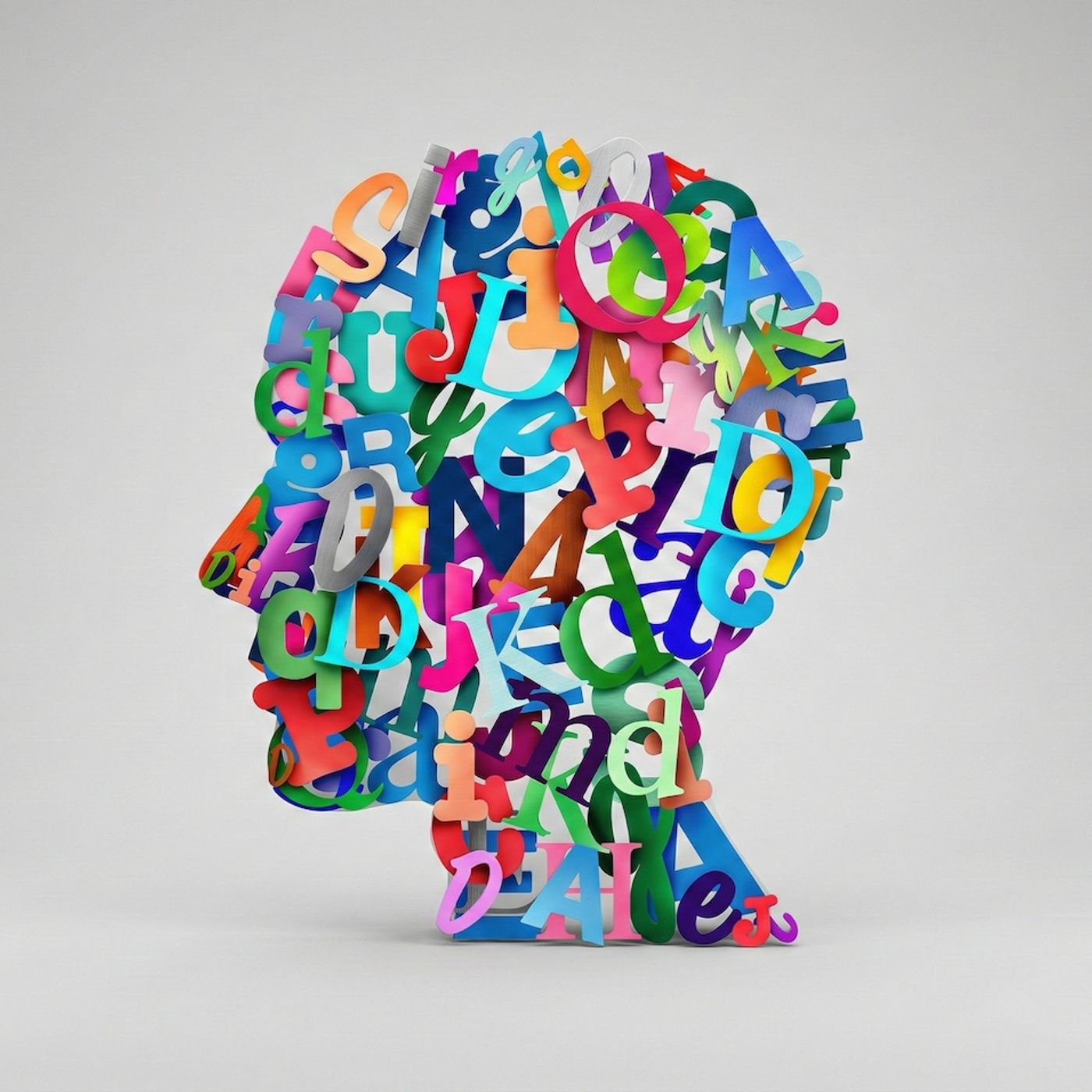
Tracking Cognitive Capital for People and Organisations episode artwork

EPISODE · Apr 23, 2026 · 41 MIN

Tracking Cognitive Capital for People and Organisations

from Evidence → Cognition → Discernment™️ - Your Pathway to AI Leadership · host Greg Twemlow

Greg Twemlow’s four-part framework addresses the profound disruption AI brings to society, organisations, and individuals, arguing that the core challenge of the AI era is not merely job displacement, but the preservation of human judgment, tempo, and accountability. He advocates for building "human sovereignty" to defend against AI's "turbocharged synchrony"—the machine's built-in push for speed and completion that conflicts with the slower, recursive nature of human reflection. Here is a comprehensive summary of his concepts across the societal, individual, practical, and organisational levels:1. The Societal Shift: Breaking the Human Compact AI is actively dismantling the traditional "human compact," the inherited, linear sequence where education reliably launched individuals into stable, lifelong careers. Because society's "industrial age" reliance on synchrony is incompatible with the deep, asynchronous nature of human thought, institutions must urgently redesign their purpose rather than acting as mere bottlenecks. Twemlow highlights education as the prime example, arguing that universities must evolve from one-time credentialing launchpads into lifelong "waypoints" or "transition commons" where people can periodically slow down, reorient, and rebuild their judgment against the overwhelming pace of machines and capital.2. The Individual Defence: Building a Sovereign Moat To survive this civilizational shift, professionals are warned that deep specialisation is a trap, as AI can easily replicate single, repeatable "Point-Solution" skills. Instead, individuals must construct a "Sovereign Moat"—a structural barrier that protects their professional agency and ethics from automation. This is mapped using the Cognition Ignition Matrix™ (CIM), a 3x3 geometric framework detailing nine human-centric cognitive skills. At the core of the CIM is the "Reasoner" or the "Human CPU," which serves as an ultimate firewall to audit the link between evidence and implication. Twemlow recommends building a "5-Cell Moat" to protect the Reasoner, with four satellite skills: the Questioner (inquiry), Analyser (context), Discerner (ethics), and Experimenter (real-world testing).3. The Practical Application: The 7-Step Architect’s Protocol To prevent "machine-drift"—the silent erosion of expertise that occurs when humans lazily outsource their critical thinking to AI—individuals must adopt a formal, daily discipline. Twemlow outlines a 7-Step Architect’s Protocol for sovereign practice:Comprehend & Contemplate: Understand the necessity of human accountability and define your "Red Lines," the cognitive territories you refuse to outsource.Audit & Reflect: Conduct a 30-day "Sovereign Identity Audit" based on tangible evidence of your behaviours, followed by a 9-Question Interrogation to expose subconscious bias and reliance on "machine-momentum".Apply & Fortify: Use the "Context & Critique Rule™" to define constraints AI misses and actively rebuild your "mental muscle" in areas of vulnerability.Proclaim: The final step, also known as the "Hang Your Art" test, requires you to visibly declare your "Ignition Signature"—proving to your organisation exactly how your human judgment uniquely governs and elevates the machine’s output.4. The Organisational Imperative: Protecting Cognitive Capital. At the corporate level, AI threatens an unmeasured but vital balance sheet asset: Cognitive Capital. This is the accumulated judgment, institutional wisdom, and ethical discernment of an organisation's management layer. When managers confidently use AI but fail to govern its outputs, they succumb to "Algorithmic Drift," silently hollowing out the organisation's decision-making DNA. Twemlow argues that the most critical question for leadership is not whether their company is "AI-Ready" (which merely measures tool adoption), but whether it is "Cognition-Ready". A Cognition-Ready organisation leverages AI for superior outcomes while actively measuring, protecting, and growing the sovereign human judgment that governs the technology.About the Author - Greg Twemlow writes and teaches at the intersection of technology, education, and human judgment. He works with educators and businesses to make AI explainable and assessable in classrooms and boardrooms — to ensure AI users show their process and own their decisions. His cognition protocol, the Context & Critique Rule™, is built on a three-step process: Evidence → Cognition → Discernment — a bridge from what’s scattered to what’s chosen. Context & Critique → Accountable AI™. © 2025 Greg Twemlow. “Context & Critique → Accountable AI” and “Context & Critique Rule” are unregistered trademarks (™).

Greg Twemlow’s four-part framework addresses the profound disruption AI brings to society, organisations, and individuals, arguing that the core challenge of the AI era is not merely job displacement, but the preservation of human judgment, tempo, and accountability. He advocates for building "human sovereignty" to defend against AI's "turbocharged synchrony"—the machine's built-in push for speed and completion that conflicts with the slower, recursive nature of human reflection. Here is a comprehensive summary of his concepts across the societal, individual, practical, and organisational levels:1. The Societal Shift: Breaking the Human Compact AI is actively dismantling the traditional "human compact," the inherited, linear sequence where education reliably launched individuals into stable, lifelong careers. Because society's "industrial age" reliance on synchrony is incompatible with the deep, asynchronous nature of human thought, institutions must urgently redesign their purpose rather than acting as mere bottlenecks. Twemlow highlights education as the prime example, arguing that universities must evolve from one-time credentialing launchpads into lifelong "waypoints" or "transition commons" where people can periodically slow down, reorient, and rebuild their judgment against the overwhelming pace of machines and capital.2. The Individual Defence: Building a Sovereign Moat To survive this civilizational shift, professionals are warned that deep specialisation is a trap, as AI can easily replicate single, repeatable "Point-Solution" skills. Instead, individuals must construct a "Sovereign Moat"—a structural barrier that protects their professional agency and ethics from automation. This is mapped using the Cognition Ignition Matrix™ (CIM), a 3x3 geometric framework detailing nine human-centric cognitive skills. At the core of the CIM is the "Reasoner" or the "Human CPU," which serves as an ultimate firewall to audit the link between evidence and implication. Twemlow recommends building a "5-Cell Moat" to protect the Reasoner, with four satellite skills: the Questioner (inquiry), Analyser (context), Discerner (ethics), and Experimenter (real-world testing).3. The Practical Application: The 7-Step Architect’s Protocol To prevent "machine-drift"—the silent erosion of expertise that occurs when humans lazily outsource their critical thinking to AI—individuals must adopt a formal, daily discipline. Twemlow outlines a 7-Step Architect’s Protocol for sovereign practice:Comprehend & Contemplate: Understand the necessity of human accountability and define your "Red Lines," the cognitive territories you refuse to outsource.Audit & Reflect: Conduct a 30-day "Sovereign Identity Audit" based on tangible evidence of your behaviours, followed by a 9-Question Interrogation to expose subconscious bias and reliance on "machine-momentum".Apply & Fortify: Use the "Context & Critique Rule™" to define constraints AI misses and actively rebuild your "mental muscle" in areas of vulnerability.Proclaim: The final step, also known as the "Hang Your Art" test, requires you to visibly declare your "Ignition Signature"—proving to your organisation exactly how your human judgment uniquely governs and elevates the machine’s output.4. The Organisational Imperative: Protecting Cognitive Capital. At the corporate level, AI threatens an unmeasured but vital balance sheet asset: Cognitive Capital. This is the accumulated judgment, institutional wisdom, and ethical discernment of an organisation's management layer. When managers confidently use AI but fail to govern its outputs, they succumb to "Algorithmic Drift," silently hollowing out the organisation's decision-making DNA. Twemlow argues that the most critical question for leadership is not whether their company is "AI-Ready" (which...

NOW PLAYING

Tracking Cognitive Capital for People and Organisations

0:00 41:27

No transcript for this episode yet

We transcribe on demand. Request one and we'll notify you when it's ready — usually under 10 minutes.

MG Show MG Show The MG Show, hosted by Jeffrey Pedersen and Shannon Townsend, is a leading alternative media platform dedicated to uncovering the truth behind today’s most pressing political issues. Launched in 2019, the show has grown exponentially, offering unfiltered insights, comprehensive research, and real-time analysis. With a commitment to independent journalism and factual integrity, the MG Show empowers its audience with knowledge and encourages active participation in the political discourse. Breaking News Show | eTurboNews Juergen Thomas Steinmetz News is relevant to the global travel and tourism industry, human rights and global issues.Breaking news when it happens and only from the source. Eat to Live Jenna Fuhrman, Dr. Fuhrman Our health is our most precious gift and smart nutrition can change your life. Each month, join Dr. Fuhrman and his daughter, Jenna Fuhrman as they discuss important topics in the world of nutrition. Eat to Live will change the way you eat and think about food. French Your Way Jessica: Native French teacher founder of French Your Way Boost your French listening skills and test your comprehension with this one of a kind series of podcasts. Get the chance to listen to a real conversation between native speakers talking at normal speed AND customise your learning experience through carefully designed sets of questions (2 levels of difficulty) available for download at www.frenchvoicespodcast.com. All interviews also come with the transcript. French teacher Jessica interviews native speakers of French from around the world who share a bit of their life and passion. Where else would you meet in one same place a French yoga teacher based in Melbourne, a soap manufacturer from Provence, or a couple cycling around the world?

Frequently Asked Questions

How long is this episode of Evidence → Cognition → Discernment™️ - Your Pathway to AI Leadership?

This episode is 41 minutes long.

When was this Evidence → Cognition → Discernment™️ - Your Pathway to AI Leadership episode published?

This episode was published on April 23, 2026.

What is this episode about?

Greg Twemlow’s four-part framework addresses the profound disruption AI brings to society, organisations, and individuals, arguing that the core challenge of the AI era is not merely job displacement, but the preservation of human judgment, tempo,...

Can I download this Evidence → Cognition → Discernment™️ - Your Pathway to AI Leadership episode?

Yes, you can download this episode by clicking the download button on the episode player, or subscribe to the podcast in your preferred podcast app for automatic downloads.
URL copied to clipboard!