
PODCAST · education
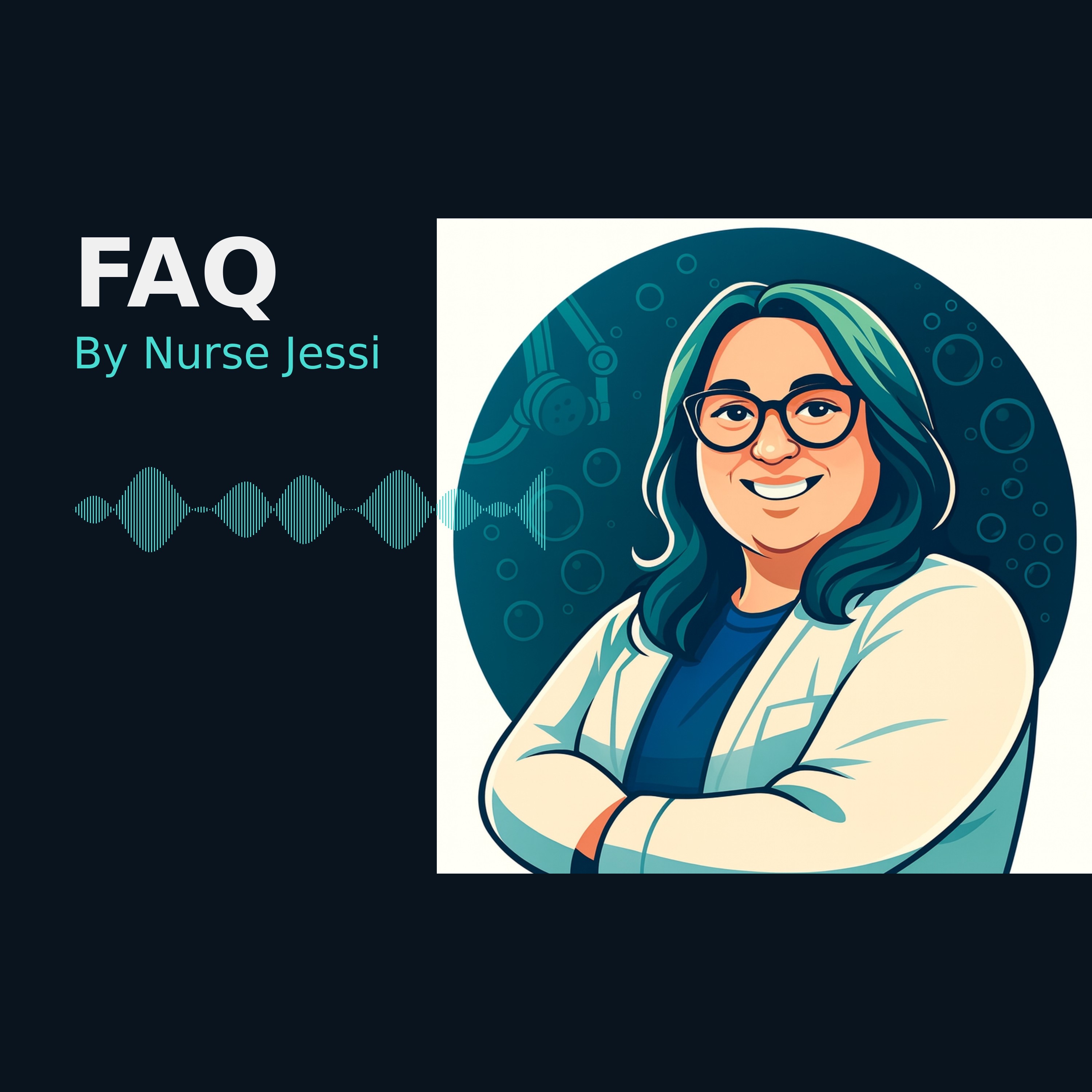
FAQ By Nurse Jessi Podcast
by Jessica Tonia, MSN, APRN, FNP-BC, FNE-CSA
Have questions about healthcare that no one seems to answer clearly?FAQ By Nurse Jessi is a podcast where a real nurse practitioner breaks down the questions patients and families ask every day.Hosted by Jessica Tonia, MSN, APRN, FNP-BC, the show explores topics like vaccines, infectious diseases, patient advocacy, medical malpractice, and how the healthcare system really works.With honest conversations and easy-to-understand explanations, Nurse Jessi helps listeners separate medical facts from internet myths.If you want trustworthy healthcare information from someone working on the front lines of medicine, this podcast is for you.
-
78
Before You Sign: A Nurse's Guide to Medical Consent and Shared Decision-Making
Many patients sign consent forms without really knowing what they mean or what choices they have. In this episode Nurse Jessi explains informed consent in plain language: the legal basics, the ethical purpose, and the everyday steps you can take to participate in decisions about your care. You'll get a short checklist of must-ask questions, ready-to-use micro-scripts for common situations, and clear guidance on special cases like emergencies, minors, language barriers, and diminished capacity. This episode is practical, nurse-forward, and focused on empowering listeners to advocate for clarity, safety, and respect in clinical conversations. Whether you're facing surgery, a new medication, or a diagnostic procedure, you'll leave with actionable skills to turn confusing paperwork into informed choices.
-
77
How to Read Your Lab Results: A Nurse's Plain-Language Guide
Many patients receive lab reports without clear guidance on what the numbers mean. In this episode Nurse Jessi translates common lab tests — CBC, basic metabolic panel, liver enzymes, lipid panel, and HbA1c — into plain language. She explains why each test is ordered, typical normal ranges (why they vary), what 'out of range' means clinically, and when to worry. Listeners get a simple three-question script to use with their clinician, a short checklist for reading lab results, and two brief case examples showing how trends, not single values, change decisions. The episode gives practical patient advocacy tips for asking for copies, accessing portals, and requesting explanations that stick. Designed as a clear, nurse-led primer, this monologue arms patients and caregivers with the confidence to understand lab reports and have better conversations with their healthcare team.
-
76
Medication Labels 101: A Nurse's Guide to Safe, Confident Use
Understanding medication labels and instructions is a critical but often confusing part of patient care. In this 20-minute episode Nurse Jessi walks listeners through how to decode prescription labels, over-the-counter directions, and medication inserts so you can take medicines safely and confidently. You'll learn practical rules for dosing, how to spot and avoid dangerous drug interactions, simple checks for generics versus brand-name differences, what "as needed" actually means, when to call your clinician, and safe disposal. Jessica also provides short scripts to use with pharmacists and providers, plus a quick checklist to keep in your medicine cabinet. This episode puts front-line clinical experience into plain language: no jargon, just actionable steps you can use today to reduce errors and improve outcomes for yourself and your family. Perfect for patients, caregivers, and anyone who feels overwhelmed by pills, inhalers, creams, or supplements.
-
75
Nurse Triage for the Digital Age: Safely Using Symptom Checkers
Symptom checkers are everywhere, but how would a nurse triage the same inputs? In this 20-minute solo episode Nurse Jessi translates clinical triage into practical rules listeners can apply to online tools. She opens with an anonymized clinic story that changed how her team weighs digital outputs, then explains how algorithms interpret symptoms and a simple 4-criteria rubric (privacy, transparency, clinical input, triage clarity) to judge credibility. The episode includes an interactive 90-second exercise where listeners silently categorize red-flag vs non-urgent complaints, a micro-script of what clinicians want to hear (phrasing to improve accuracy), and Jessi reading a downloadable one-page checklist aloud so listeners can use it immediately. Real-world examples show when tools help and when they delay care. The episode closes with three actionable takeaways, directions to the checklist and sample phrasing in show notes, and an invitation to submit anonymized symptom-checker outputs for future review.
-
74
The Allergy Label Problem: When “Penicillin Allergy” Changes Your Care
Have you ever been told you are allergic to penicillin, only to wonder what actually happened and whether the label is still accurate? In this episode, Nurse Jessi explains why medication allergy histories matter, why side effects are not always true allergies, and how an uncertain label can influence antibiotic choices, treatment risks, costs, and hospital care. She breaks down the difference between a mild rash, stomach upset, intolerance, and symptoms that may signal a dangerous immune reaction—without asking listeners to diagnose themselves. You will learn what details clinicians need, why childhood memories and family assumptions can be incomplete, and how supervised evaluation or testing may help some patients clarify their records. The episode also covers what never to do, including restarting a medication on your own. By the end, listeners will have a practical script for discussing allergy labels with a qualified clinician. Subscribe for more clear, safety-focused healthcare explanations.
-
73
The Blood Pressure Snapshot Trap: How to Measure What Your Numbers Really Mean
Blood pressure numbers appear everywhere: at a pharmacy kiosk, during a stressful appointment, or on a home monitor. But what does one reading actually tell you? In this practical monologue, Nurse Jessi explains why blood pressure is a measurement, not a complete diagnosis, and how movement, caffeine, pain, anxiety, posture, talking, and cuff size can change the result. She walks listeners through a reliable home-check routine, explains the difference between an isolated high reading and a concerning pattern, and clarifies when to contact a clinician or seek urgent help. The episode also covers common monitor mistakes, how to record readings without becoming overwhelmed, and which questions to bring to an appointment. Listeners will leave with a simple way to collect better information and avoid both internet panic and false reassurance—without trying to manage a medical condition on their own.
-
72
The Hidden Medication List: Why Every Pill, Vitamin, and Supplement Matters
Many people bring a medication list to an appointment, but it may leave out the products that matter most: occasional pain relievers, sleep aids, antacids, vitamins, herbal supplements, borrowed medications, and prescriptions from another clinician. In this practical monologue, Nurse Jessi explains why an incomplete list can lead to duplicate therapy, unexpected interactions, confusing symptoms, or an inaccurate treatment plan. Listeners will learn the difference between a medication list and a medication reconciliation, how to record dose, timing, route, and purpose, and why “as needed” medicines deserve special attention. The episode also covers safer ways to discuss supplements, what to do when a medication is stopped, and how to prepare for a new clinician, urgent visit, or hospital admission. Rather than asking listeners to memorize pharmacology, this episode gives them a simple updating routine and a set of questions that make medication conversations clearer and safer.
-
71
The Care Handoff Decoder: Keeping Your Story From Getting Lost Between Clinicians
{"title":"The Care Handoff Decoder: Keeping Your Story From Getting Lost Between Clinicians","one_liner":"You told your story at the last appointment, but what happens when your care moves to a specialist, urgent care, hospital, or new primary care office?","description":"Patients often assume their entire medical story travels with them, yet important details can disappear during referrals, transfers, discharge, and changes in clinicians. In this practical monologue, Nurse Jessi explains what a healthcare handoff is, why communication gaps happen, and how patients and families can help create a safer bridge between care teams. Listeners will learn which information matters most, including current medications, allergies, diagnoses, recent changes, pending tests, and their own priorities. Jessica will also demonstrate a simple handoff summary, explain how to confirm who is responsible for follow-up, and offer questions to ask before leaving an appointment or facility. The episode focuses on advocacy without blame: patients are not expected to manage the healthcare system alone, but a clear, portable summary can reduce confusion and prevent delays. It concludes with three memorable takeaways and a practical invitation to subscribe for more plain-language healthcare guidance.","why_now":"Care frequently moves across offices, specialties, pharmacies, urgent care centers, and hospitals. Understanding handoffs is a timeless skill that helps patients participate more safely whenever care changes hands.","target_audience":"Patients and family caregivers who navigate multiple clinicians or healthcare settings and want practical, plain-language tools for preventing communication gaps.","episode_type":"monologue","estimated_runtime_s":1200,"outline":["00:00-01:30 — Hook: Open with a familiar story about repeating medical information at every new appointment and reveal what can be lost between care settings.","01:30-03:00 — The promise: Explain how the episode will decode care handoffs and provide a simple patient-friendly method for keeping essential information connected.","03:00-06:30 — What a handoff includes: Define transitions of care and cover the difference between a referral, consultation, transfer, discharge, and routine follow-up.","06:30-10:00 — Why information gets lost: Discuss incomplete records, unclear ownership, medication changes, pending results, time pressure, and assumptions between clinicians without assigning blame.","10:00-13:30 — Build your portable care summary: Teach listeners to organize diagnoses, medications and doses, allergies and reactions, recent changes, procedures, pending tests, specialists, and personal care priorities.","13:30-16:30 — Questions that close the loop: Demonstrate concise questions such as who is responsible for the next step, when results should arrive, what symptoms require action, and where the updated plan will be documented.","16:30-18:00 — Three takeaways: Recap that every transition needs a clear summary, a named follow-up owner, and a written next step with timing.","18:00-20:00 — CTA and outro: Encourage listeners to subscribe to FAQ By Nurse Jessi, invite them to share the episode with a caregiver, and reinforce that good advocacy supports—not replaces—professional care."],"tags":["care coordination","patient advocacy","healthcare communication"],"duplication_check":{"nearest_match_title":"The Safe Patient Script: How to Speak Up Without Feeling Difficult","similarity_score":0.34,"decision":"distinct"},"risks":["Listeners may interpret the handoff checklist as a substitute for complete medical records or professional coordination.","The advice may feel overwhelming for people managing complex illness, language barriers, memory challenges, or limited caregiver support.","Listeners could become anxious when they learn that responsibility for follow-up is sometimes unclear.],"mitigations":["Clearly state that the checklist supplements, rather than replaces, official records, clinician communication, and emergency services when needed.","Offer a short essential version first, encourage trusted caregivers or interpreters when appropriate, and present the process in manageable steps.","Frame questions as collaborative safety checks, explain that requesting a named follow-up owner is reasonable, and advise contacting the relevant office when a promised result or next step does not arrive."]}
-
70
The Test Result Trap: What Positive, Negative, and Incidental Findings Really Mean
A lab report, imaging scan, or screening result can feel like a final answer, but many results are only pieces of a larger clinical puzzle. In this clear, practical monologue, Nurse Jessi explains the difference between screening and diagnostic tests, positive and negative results, false positives, false negatives, sensitivity, specificity, and incidental findings. Listeners will learn why a normal result does not always rule out illness and why an abnormal result does not automatically confirm it. The episode also covers how pretest likelihood, symptoms, timing, medications, and sample quality can affect interpretation. Jessica provides a simple question framework for follow-up conversations: What was this test designed to detect? How reliable is the result? What happens next? With relatable examples and plain-language explanations, this episode helps patients avoid panic, false reassurance, and internet-driven self-diagnosis while becoming more confident participants in their care.
-
69
Your Patient Portal Is Not an Emergency Room: How Healthcare Messages Really Get Triage
Patient portals can make healthcare feel more accessible, but they can also create dangerous misunderstandings about response times, urgency, and what belongs in a message. In this practical monologue, Nurse Jessi explains how portal messages are commonly routed, reviewed, prioritized, and answered without assuming every clinic uses the same system. Listeners will learn what information helps a care team respond efficiently, how to write a concise subject line and symptom summary, which requests may require an appointment, and why medication changes or rapidly worsening symptoms should not wait for an inbox reply. The episode also separates common myths—such as “read” meaning “reviewed by a clinician”—from safer expectations. With scripts and examples, Jessica shows how to use messaging as a communication tool while recognizing its limits. The goal is not to discourage portal use, but to help patients choose the right channel for the right concern and avoid preventable delays.
-
68
The Second Opinion Decision: When and How to Seek One Without Delaying Care
Should you get a second opinion, or could it delay important care? Nurse practitioner Jessica Tonia explains how to make that decision without panic, shame, or unnecessary appointments. This episode distinguishes situations where another perspective may be especially helpful—such as an uncommon diagnosis, major procedure, long-term treatment, conflicting recommendations, or a decision that does not feel clear—from situations requiring immediate action. Listeners will learn how to ask their current clinician for records, identify the right type of specialist, prepare focused questions, compare recommendations without treating medicine like a popularity contest, and recognize red flags in paid or unqualified advice. Jessica also explains how to communicate respectfully, protect continuity of care, and understand that differing opinions do not always mean someone made a mistake. The goal is not to collect opinions indefinitely; it is to reach a well-informed plan that fits the patient’s condition, values, and timeline.
-
67
The Symptom Timeline: Turn “I Just Feel Off” Into Better Healthcare
Many healthcare visits begin with a frustrating phrase: “I just don’t feel right.” Nurse practitioner Jessica Tonia explains how to turn vague symptoms into organized, clinically useful information without trying to diagnose yourself. Listeners will learn what details matter most, including onset, location, severity, timing, triggers, related symptoms, medications, recent illnesses, and changes in daily function. The episode introduces a simple symptom timeline method, shows how to track patterns without becoming overwhelmed, and explains which observations should prompt urgent attention rather than a routine appointment. Jessica also addresses common myths, such as believing that more detail is always better or that a symptom journal must be perfect. By the end, listeners will have a practical one-page framework for preparing for visits, communicating clearly, and helping clinicians make safer decisions. The focus is not on self-diagnosis; it is on improving the quality of the conversation between patient and healthcare professional.
-
66
The Safe Patient Script: How to Speak Up Without Feeling Difficult
Patients are often told to ask questions, but few are shown exactly what to say when a medical conversation feels rushed, confusing, or intimidating. In this practical monologue, Nurse Jessi teaches a simple communication framework for safer healthcare conversations. Listeners will learn how to confirm their identity and care plan, use plain-language “teach-back” to check understanding, clarify medications and allergies, describe symptoms with useful detail, and respectfully pause a process when something does not seem right. The episode also explains how to raise concerns without accusing clinicians, how to document key instructions, and when a situation requires urgent escalation rather than more questions. Through realistic family medicine and hospital examples, Jessica separates productive self-advocacy from internet-fueled suspicion. The goal is not to make patients responsible for preventing every error; it is to give them practical language that supports teamwork, clarity, and informed participation in their care.
-
65
Reading the Bill: A Nurse's Guide to Understanding Medical Charges and Your Rights
Medical bills are confusing, stressful, and often full of jargon — and that keeps people from asking for fair treatment. In this episode Nurse Jessi walks listeners step-by-step through how medical billing actually works, how to read an Explanation of Benefits and an itemized bill, what common codes and line items mean, and where mistakes commonly hide. You’ll learn how insurer payments translate to your balance, when to push back, and exact language you can use when calling billing offices or financial counselors. This episode is made for patients, caregivers, and anyone tired of surprise charges: practical, nurse-tested advice that reduces anxiety and helps you keep more control over healthcare costs.
-
64
Where to Go When It Hurts: ED, Urgent Care, or Your PCP?
Many people wrestle with the same question: should I go to the emergency department, urgent care, or call my primary care provider? In this episode Nurse Jessi breaks down how triage decisions are made, what symptoms truly require emergency care versus urgent or primary care visits, and how to assess severity calmly at home. Listeners will get concrete, nurse-tested rules of thumb for chest pain, breathing trouble, severe bleeding, head injury, abdominal pain, high fever in children, and more. The episode emphasizes simple pre-arrival preparation, what information clinicians need, and how to reduce unnecessary ED visits without risking safety. Practical, empathetic, and evidence-informed, this monologue equips patients and families to make faster, safer decisions and improve their interactions with clinicians when minutes matter.
-
63
Informed Consent: What You're Really Agreeing To
Many patients sign forms before a procedure without fully understanding what they agreed to. In this episode Nurse Jessi explains informed consent in clear, practical terms: the legal and clinical meaning, the four essential components (disclosure, understanding, voluntariness, capacity), common gaps where consent becomes meaningless, and how to protect your rights. You'll get exact scripts to use with clinicians, examples of red flags (rushed consent, vague risks, one-size-fits-all forms), and steps to take when consent is absent or questionable — from asking for clarification to documenting concerns and escalating safely. The episode balances legal concepts with bedside realities, using nurse-frontline experience to make the topic actionable for patients and family caregivers. By episode end listeners will feel equipped to recognize good consent, ask better questions, and avoid surprises during care transitions.
-
62
How to Read Medical Risk: Absolute vs Relative, NNT, and What Headlines Don't Tell You
Numbers in health stories sound impressive, but without context they can mislead. In this episode Nurse Jessi breaks down the most common ways medical risk is presented — absolute vs relative risk, number needed to treat (NNT) and number needed to harm (NNH) — using everyday examples patients actually face. You’ll learn how to convert a headline into a usable fact, what to ask your clinician when a study is cited, and three practical rules to avoid being swayed by dramatic-sounding percentages. The episode is designed for non‑experts: no math-heavy jargon, just clear comparisons, quick mental checks you can use at the clinic or when reading the news, and real-world examples that show when a statistic matters and when it’s noise. By the end you’ll feel confident translating statistics into decisions you can discuss with your healthcare team.
-
61
When Less Is More: A Nurse's Guide to Safe Deprescribing
Many patients accumulate prescriptions over years without a clear plan for stopping them. In this episode Nurse Jessi explains deprescribing: what it means, why stopping medicines can be safe and beneficial when handled properly, and how to avoid common pitfalls. Drawing on frontline family-medicine experience, she walks through how clinicians assess medication necessity, prioritization (which classes to consider first), building a monitoring and taper plan, and scripting the conversation so patients and caregivers can advocate effectively. Jessica covers practical examples—sleep aids, long-term acid blockers, some diabetes and blood pressure medicines—signs that indicate safe trial discontinuation, and red flags requiring urgent review. Listeners will leave with a patient-tested checklist, exact phrases to use during visits, and a clear follow-up plan. The monologue is focused on empowering patients to reduce medication burden, minimize side effects, and partner with clinicians for safer care.
-
60
Do You Need Antibiotics? A Nurse's Guide to When They Help — and When They Hurt
Antibiotics are one of medicine's most powerful tools—and one of the most misunderstood. In this 20-minute monologue Nurse Jessi explains, in plain language, how antibiotics work, when they actually help, and when they don't. You'll learn how clinicians decide whether an infection is likely bacterial, common conditions where antibiotics are unnecessary, the immediate risks of misuse (including side effects and C. difficile), and the broader public-health harm of antibiotic resistance. Jessi offers practical scripts to use with your clinician, safe at-home care steps while you wait, and clear criteria for when to return for reassessment. This episode translates clinical decision-making into actionable, confidence-building steps so listeners can avoid unnecessary antibiotics while getting the care they need. Evidence-based, patient-centered, and focused on real-world clarity, it helps listeners separate medical facts from internet myths and act on them safely.
-
59
How to Read Your Lab Results: A Nurse's Guide to Blood Tests You Can Understand
Lab results can feel like secret codes, and that confusion fuels anxiety and misinformation. In this 20-minute monologue Nurse Jessi walks listeners through the most commonly ordered blood tests—CBC, basic metabolic panel, lipid panel, thyroid studies, and inflammatory markers—explaining what each measure actually reflects, normal vs. clinically significant changes, and the difference between a single abnormal value and a meaningful trend. Using real-world clinical perspective (without patient identifiers), she highlights common pitfalls—age and sex-specific ranges, medication effects, fasting vs. non-fasting samples—and gives clear, actionable next steps: what questions to ask your clinician, which results require urgent attention, and when watchful waiting or repeat testing is appropriate. The goal is to give listeners confidence to read their own reports, advocate effectively in appointments, and avoid overreacting to isolated numbers.
-
58
When Your Doctor Says 'Watch and Wait': A Nurse's Guide to Safe Conservative Management
Patients often leave appointments puzzled when a clinician recommends "watch and wait." Is it safe? Is it stalling? In this episode Nurse Jessi explains, in clear, practical terms, why conservative management is sometimes the best medicine, the clinical reasoning behind it, and how patients can turn passive waiting into active, safer care. Listeners will get nurse-tested question scripts to use with clinicians, a simple home-monitoring checklist, documentation tips for medical records, clear red flags that require immediate escalation, and a step-by-step plan for seeking a timely second opinion. This episode arms listeners with realistic, actionable steps so they feel informed and empowered — not anxious — when conservative approaches are recommended.
-
57
Make the Most of Your Telehealth Visit: A Nurse's Practical Playbook
Telehealth is a powerful tool — when used well. In this episode Nurse Jessi breaks down a practical, clinician-tested playbook to help patients and caregivers get the most from virtual visits, avoid wasted time, and recognize when in-person care is necessary. You’ll get a clear pre-visit checklist (what records, photos, and vitals to gather), tech and privacy checks to run five minutes before your appointment, language and symptom-scripting that helps clinicians act, and an explanation of what telehealth can and can’t accomplish clinically. Real-world examples from family medicine and emergency care illustrate red flags that require escalation and how prescriptions, referrals, and documentation typically happen after a virtual visit. Listeners leave with a simple, reproducible checklist and three concrete takeaways to use in their next telehealth appointment — practical steps to make virtual care faster, safer, and more effective.
-
56
How to File a Medical Complaint: A Nurse's Step-by-Step Guide to Escalating Concerns Safely
When care feels wrong, many patients freeze or shout into the void — and nothing changes. In this 20-minute monologue Nurse Jessi walks listeners through a clear, step-by-step approach to escalating concerns: how to decide when a formal complaint is appropriate, what evidence matters, where to file (from hospital patient relations to state agencies and accreditation bodies), realistic timelines, and what outcomes to expect. You’ll get nurse-tested documentation templates, exactly-phrased scripts to use when talking to clinicians or patient relations, and practical tips for protecting your care while you advocate. This episode balances empathy and process: it helps listeners avoid common pitfalls that stall investigations and shows how to turn a single event into systemic improvement. By the end you’ll have three concrete takeaways you can use the next time you or a loved one needs to raise a concern.
-
55
Read the Bill: A Nurse's Guide to Understanding Medical Bills and Insurance EOBs
Medical bills are confusing, scary, and often wrong — but patients don’t have to navigate them alone. In this episode Jessica Tonia, a practicing nurse practitioner, breaks down the difference between a hospital bill and an insurance Explanation of Benefits, decodes common billing codes and line items, and gives listener-ready scripts to call billing offices and insurers. You will learn what terms like "facility charge," "allowed amount," and "balance billing" really mean, how to spot duplicate or unbundled charges, and the exact documents and timelines you need to dispute an error. With practical examples, safe next steps, and when-to-escalate guidance, this episode turns confusing paperwork into actionable steps so listeners can reduce stress, avoid surprise debt, and confidently advocate for accurate charges.
-
54
When Tests Are Normal but You Still Hurt: A Nurse's Guide to Unexplained Symptoms
You’ve had bloodwork, imaging, and a full exam — everything reads ‘normal’ — yet your pain, fatigue, brain fog, or other symptoms continue. In this 20-minute monologue Nurse Jessi walks listeners through why normal tests aren’t the same as ‘nothing is wrong,’ common gaps in standard workups, and a practical, stepwise approach to getting closer to answers safely. Jessica explains physiological and non-physiological reasons symptoms persist, red flags that require urgent care, how to prioritize tests without chasing every specialty, and exactly what to say to providers to improve diagnostic follow-up. The episode balances medical facts with empathetic patient advocacy, giving listeners tools to reduce anxiety, avoid unnecessary testing, and collaborate effectively with clinicians. Expect clear scripts, realistic timelines for follow-up, and three concrete takeaways you can use after the episode.
-
53
Who Decides When You Can't? A Nurse's Guide to Advance Care Planning
Too often families scramble at crisis because wishes weren't written down or shared. In this practical, 20-minute monologue Nurse Jessi explains what advance care planning (ACP) really is, the difference between advance directives, durable power of attorney for healthcare, and POLST/MOLST, and why a plain-language conversation matters more than legalese. You’ll get nurse-tested scripts to start the conversation with loved ones and clinicians, a checklist of the exact documents clinicians will accept, storage and sharing best practices, and three concrete next steps listeners can complete this week. This episode focuses on clarity and action: demystifying terminology, preventing common pitfalls, and giving listeners the confidence to make their wishes heard before an emergency occurs.
-
52
Reading Between the Lines: What Nursing Notes and Handoffs Reveal About Your Care
Medical records can feel like a foreign language — and nursing notes and shift handoffs are some of the most practical, day-to-day parts of your chart. In this episode Nurse Jessi explains who writes nursing notes, what common sections and shorthand actually mean, and how handoffs transfer critical information between providers. You’ll get concrete examples of phrases you might see, what they imply about clinical priorities, and safe ways to ask for clarification without creating friction. The episode is designed to give patients and families actionable skills: how to access notes, what to highlight before an appointment, when a phrase signals urgency, and how to request corrections. By the end you’ll feel more confident navigating your chart, advocating calmly, and using documentation to improve safety and communication.
-
51
What Really Happens in the ER: A Nurse's Guide to Getting Safe, Fast Care
Emergency rooms are chaotic and patients often leave confused about decisions made under time pressure. In this 20-minute episode Nurse Jessi walks listeners step-by-step through what actually happens when you walk into an ER: how triage works, why certain tests and imaging are ordered, how to communicate symptoms and priorities so clinicians take them seriously, and when to ask for admission, transfer, or a specialist. Using real-world examples from her clinical practice, Jessi explains patient rights, consent, pain management, and safe next steps if you’re sent home. The goal: give listeners practical scripts, a compact checklist, and clear red flags so they can get safer, faster care in emergencies and avoid miscommunication that leads to poor outcomes. Perfect for patients and caregivers who want confidence in high-stakes moments, this episode ends with three tangible takeaways you can use immediately.
-
50
Medication Labels Demystified: How to Read Prescriptions and Use Meds Safely at Home
Many medication errors start at home because someone misread a label, doubled a dose, or mixed prescription drugs with over-the-counter meds. In this 20-minute episode Nurse Jessi walks listeners through everything a patient or caregiver needs to confidently interpret prescription and over-the-counter medication labels, understand dosage language (PRN, BID, taper), recognize common interaction flags and storage instructions, and create a simple medication list to share with clinicians and pharmacists. Using real-world examples and nurse-tested scripts to ask your pharmacy or clinician the right questions, this episode focuses on practical, safety-first steps you can take immediately—no medical degree required. By the end you’ll have three concrete takeaways and a ready checklist to reduce risk and improve everyday medication safety at home.
-
49
How and When to Ask for a Medical Second Opinion: A Nurse's Practical Playbook
You’re told a serious diagnosis, a recommended surgery, or a complex treatment plan — and your head is spinning. In this episode Nurse Jessi walks listeners through an actionable, step-by-step playbook for seeking a medical second opinion. I’ll explain the real reasons to seek another view (not just doubt), practical places to find qualified reviewers, exactly which records and test images to gather, and nurse-tested scripts to request a consult without burning bridges. You’ll also learn how to compare differing opinions, spot red flags, navigate insurance and referrals, and make a confident plan that centers safety and clarity. By the end you’ll have a one-page checklist and three concrete takeaways you can use the next time a big medical decision lands in your lap.
-
48
Reading Your Imaging Report: A Nurse's Plain-Language Guide to X-rays, CTs, and MRIs
Every day patients receive imaging reports filled with jargon that can trigger worry or confusion. In this episode Nurse Jessi walks listeners through how radiology reports are structured, what common phrases usually mean, and how to separate urgent findings from incidental ones. I break down the four report sections—exam, comparison, findings, impression—explain why the impression matters most, and translate phrases like 'no acute cardiopulmonary disease,' 'nonspecific,' 'degenerative change,' and 'recommend correlation clinically.' You'll get nurse-tested scripts for calling your clinic, clear steps for when to request images or a specialist review, and simple actions to correct chart errors. By the end you'll feel less anxious, better prepared for appointments, and ready to advocate for safer follow-up care.
-
47
Virtual Visit Triage: How to Get Safe, Effective Care Over Telehealth
Telehealth can be lifesaving — if you know how to use it. In this 20-minute monologue, Nurse Jessi walks listeners through when virtual visits are appropriate, how to prepare the right information and environment, scripts to describe symptoms clearly, and exactly how to show clinicians what they need to see. You’ll get nurse-tested checklists for tech, medication lists, photos and measurements to collect at home, step-by-step language to escalate care when a condition needs in-person evaluation, and safe visual exam tips anyone can do. The episode closes with three practical takeaways and sample phrases to use in your next virtual visit so you get faster, safer care. This episode is for patients, caregivers, and anyone who wants telehealth to be less stressful and more reliable — especially those overwhelmed by Internet noise and unclear next steps. Host: Jessica Tonia, MSN, APRN, FNP-BC.
-
46
Generated Episode Idea
{"title":"The Anatomy of a Misdiagnosis: How Mistakes Happen and What Patients Can Do","one_liner":"A clear, nurse-led breakdown of why misdiagnoses occur, the common warning signs patients can watch for, and practical actions to reduce your risk of being missed or mistreated.","description":"Misdiagnoses happen more often than anyone admits — and they’re usually the result of predictable human and system factors, not malice. In this 20-minute episode Nurse Jessi walks listeners through real-world mechanisms behind diagnostic errors (cognitive shortcuts, incomplete histories, fragmented care), illustrates five common scenarios where errors sneak in, and gives concrete, nurse-tested steps patients and families can use to reduce risk: what to document, how to ask focused questions, scripts to request reconsideration, and when to escalate for a second opinion or urgent evaluation. The episode is practical, non-alarming, and focused on empowerment: listeners leave with specific language, documentation templates to try at their next visit, and a checklist of red flags that should prompt faster action. This episode is for anyone who wants to be safer, better prepared, and more confident navigating medical uncertainty.","why_now":"Diagnostic errors are a longstanding, system-level issue; this episode focuses on durable skills patients can use across any care setting and era rather than tying to temporary trends.","target_audience":"Patients and family caregivers who want clear, practical tools to reduce diagnostic risk and communicate more effectively with clinicians; also useful for early-career clinicians seeking a patient-centered perspective.","episode_type":"monologue","estimated_runtime_s":1200,"outline":["00:00-01:30 — Hook: A brief, striking real-world example of a missed diagnosis and the listener promise: learn how these happen and what you can do now","01:30-02:30 — Promise & Roadmap: What I’ll cover (causes, warning signs, scripts, escalation steps) and how to use this episode during real visits","02:30-07:00 — Mechanics of Misdiagnosis: Plain-language explanation of cognitive errors (anchoring, availability bias), system causes (fragmented records, rushed visits), and common clinical scenarios where they arise","07:00-10:30 — Five Patient-Facing Warning Signs: Specific symptoms, patterns, and chart clues that often predict a missed diagnosis, with concrete examples you can relate to","10:30-14:00 — Practical Actions to Reduce Risk: Step-by-step guidance Nurse Jessi gives patients: exact questions, short documentation templates, how to summarize symptoms concisely, and what to bring to appointments","14:00-17:00 — Escalation and Second Opinions: How to ask for a re-evaluation, when to push for imaging or referral, safe scripts for requesting second opinions, and how to document that request","17:00-18:30 — Quick Recap & Three Essential Takeaways: The most important prevention steps listeners can implement immediately","18:30-20:00 — Final CTA & Outro: Encourage listeners to subscribe for more actionable episodes, mention downloadable checklist link (or show notes), and closing reassurance","tags":["misdiagnosis","patient-advocacy","diagnostic-safety","patient-scripts","nurse-advice"],"duplication_check":{"nearest_match_title":"When You're Not Heard: A Nurse's Guide to Being Believed by Clinicians","similarity_score":0.58,"decision":"distinct"},"risks":["Listeners may feel alarmed or anxious after hearing about diagnostic errors","Advice could be interpreted as a substitute for individualized medical evaluation or legal counsel","Overlapping content with episodes on escalation or second opinions might feel repetitive to regular listeners"],"mitigations":["Frame examples with balanced tone and emphasize frequency vs. inevitability; provide calming, actionable next steps so listeners have agency","Include clear disclaimers that this is general education, not personalized medical or legal advice; encourage contacting clinicians or legal professionals for specific cases","Differentiate this episode by focusing on mechanisms of error, concrete documentation templates, and scenario-based scripts; reference related episodes and link for deeper dives"],"score_breakdown":{"novelty":0.66,"persona_fit":0.85,"audience_value":0.78,"feasibility":0.71}}
-
45
Bring the Clinic Home: A Nurse's Guide to Gathering Useful Health Data Before Your Appointment
Before you ever step into the clinic, the information you collect at home can change the care you get. In this episode Nurse Jessi walks listeners through an actionable, evidence-based home health toolkit: which vital signs truly matter, how to take accurate readings, what symptom details clinicians need, and simple templates for sharing data during telehealth or office visits. You’ll learn how to choose reliable devices, avoid common measurement mistakes, and spot readings that require urgent care. Designed for patients, caregivers, and anyone tired of being asked "what were your numbers?", this episode gives clear scripts, examples, and at-a-glance checklists you can use today. By the end you'll be able to gather useful, trustworthy health data that speeds diagnosis, reduces unnecessary visits, and helps clinicians make safer decisions.
-
44
Bloodwork Decoded: A Nurse's Guide to Common Lab Tests and What They Mean
Many patients leave clinic visits with a PDF of lab results and more questions than answers. In this 20-minute episode Nurse Jessi demystifies routine bloodwork—CBC, basic metabolic panel, liver enzymes, lipids, A1c, and thyroid tests—using plain language and clinical context. You’ll learn what each panel screens for, common reasons results are abnormal (and which are harmless), how medications, fasting, and timing affect numbers, and exact questions and scripts to bring back to your clinician. This episode emphasizes interpreting results in context—age, sex, symptoms, and trends matter far more than single values—and gives three clear takeaways you can use after listening. Designed for people tired of internet scare articles and clinicians who want patient-friendly explanations, this episode equips listeners to read their labs with confidence and to have safer, more productive conversations with their healthcare team.
-
43
How to Read, Challenge, and Lower a Medical Bill: A Nurse’s Guide to Patient-Friendly Billing
Medical bills and Explanation of Benefits (EOBs) feel like a foreign language and that confusion costs patients time, money, and stress. In this episode Nurse Jessi breaks down billing players (provider, facility, insurer), common documents, and the most important lines to read. You’ll get a step-by-step method for checking for duplicate charges, unbundled services, and wrong patient or date errors; simple explanations of ICD and CPT codes so they stop feeling mysterious; and nurse-tested phone scripts to dispute bills with hospitals and insurers. I’ll also explain timelines, what to document, and where to find charity care or a billing advocate. This is practical, non-judgmental guidance so you can protect your wallet and your care without getting lost in paperwork.
-
42
When You're Not Heard: A Nurse's Guide to Being Believed by Clinicians
Too many patients leave appointments feeling dismissed, unsure if they were heard or whether to push harder. In this episode Jessica Tonia, MSN, APRN, FNP-BC, walks listeners through why clinicians sometimes miss or minimize symptoms, and—more importantly—what you can do about it. You’ll get specific documentation habits that make your concerns clear in charts, exact scripts to use in the exam room and on the phone, and a prioritized escalation ladder (when to ask for a second opinion, patient advocate, or urgent re-evaluation). This monologue balances clinical insight with practical tools: how to structure your story, what objective details clinicians need, simple ways to track symptom patterns, and safety signs that require immediate action. By the end you'll be equipped to communicate with confidence, reduce delays in diagnosis, and protect your health without antagonizing providers.
-
41
Leaving the Hospital Safely: A Nurse's Step-by-Step Discharge Checklist
Leaving the hospital is one of the most vulnerable moments in a patient’s care—missed medications, unclear follow-up, and misunderstandings drive readmissions and anxiety. In this 20-minute monologue Nurse Jessi walks listeners through a practical, nurse-powered hospital discharge checklist you can use the moment your clinician says “you’re being discharged.” She explains what should be in every discharge packet—medication reconciliation, clear follow-up plans, durable medical equipment instructions, home care orders, and red flags—plus exact scripts to ask busy clinicians and how to verify instructions before you leave. The episode includes step-by-step actions for the first 48 hours at home, a short anonymized case that highlights common mistakes, and at least three concrete takeaways listeners can implement immediately. This episode demystifies discharge so families leave confident, safer, and better prepared to prevent complications and unnecessary returns to care.
-
40
Plan Now, Breathe Later: A Nurse's Guide to Advance Care Planning
Advance care planning often sounds heavy, confusing, or only for the elderly. In this episode Nurse Jessi walks listeners through clear, practical steps to make and document healthcare wishes so families and clinicians can honor them. You’ll learn the difference between advance directives, medical power of attorney, POLST/DNR orders, and informal notes; when each is used; and simple scripts to start conversations with loved ones and your care team. I’ll share common legal pitfalls, what nurses actually look for during admissions, and exactly where and how to store forms so they’re available when needed. By the end you’ll have a 3-step action plan you can complete this week and confidence to update these documents over time. This episode is designed for anyone who wants to regain control over future healthcare decisions without legalese or judgment.
-
39
What Your Medical Chart Is Really Saying: A Patient's Guide to Reading Clinical Notes
Medical charts and clinical notes look like a different language to most patients — but they shape diagnoses, treatment plans, and even insurance decisions. In this episode Nurse Jessi decodes the typical structure of inpatient and outpatient notes, explains common shorthand and phrases that cause anxiety, and highlights how entries affect follow-up care and billing. Listeners will learn concrete steps to access their records, read key sections without getting overwhelmed, and safely request corrections. Jessi uses realistic, anonymized examples to show how small wording differences change clinical thinking, then offers scripts you can use to ask clinicians or medical records staff for clarification. This episode equips listeners with clear, practical tools to turn confusing notes into actionable information and stronger advocacy during care transitions.
-
38
How to Ask for a Second Opinion: A Nurse's Guide to Safer Decisions
When a diagnosis, surgery recommendation, or major treatment feels uncertain, a second opinion can protect your health and peace of mind—but many people don't know when or how to ask. In this episode Nurse Jessi walks listeners through clear, practical steps for recognizing when a second opinion is appropriate, how to request one from your care team, scripts to use with clinics and insurers, what medical records and questions to bring, and how to compare differing expert opinions without getting overwhelmed. With real-world examples and an emphasis on respectful, effective patient advocacy, you'll finish the episode knowing exactly how to pursue a second opinion and make a confident, informed choice. The episode closes with at least three concrete takeaways you can use immediately.
-
37
When Your Prescription Changes: A Nurse's Guide to Safe Medication Transitions
Medication changes are one of the most confusing moments patients face: new names, different doses, unfamiliar side effects, and questions about how this fits with the rest of your care. In this episode Nurse Jessi breaks down medication transitions into a clear, usable plan you can follow the moment a prescription changes. You’ll learn why clinicians change medicines, how to decode a prescription label, which side effects are common versus urgent, how to spot interactions with OTCs and supplements, and exact scripts to use when talking to your prescriber or pharmacist. The episode ends with a concise, nurse-approved checklist to use at home and three practical takeaways that make the transition safer and less scary. This one-voice, actionable episode is designed for patients and family caregivers who want confidence and clarity when meds change.
-
36
ER, Urgent Care, or Wait? A Nurse's Decision Flow for When to Seek In-Person Care
Deciding where to seek care when someone is sick or injured is confusing and stressful. In this episode Nurse Jessi breaks down a simple, clinically informed decision flow you can use the next time you face that choice. You’ll hear how clinicians think about triage, a clear list of red flags that require emergency care, realistic examples of conditions suited to urgent care versus primary care, and concrete phone scripts for calling 911, your clinic triage line, or an urgent care. I’ll also cover practical logistics—what to bring, cost considerations, and how to document the visit—so you get faster, safer care. This episode is focused on actionable guidance you can use immediately, and it closes with at least three takeaways that summarize the safest next steps for common situations.
-
35
Spot the Signal: A Nurse's Checklist for Evaluating Health Advice Online
Information overload makes it hard to tell helpful health advice from harmful noise. In this monologue Nurse Jessi walks listeners through a concise, practical checklist used in clinical practice to evaluate articles, social posts, videos, and forwarded messages. You’ll learn simple credibility signals (who wrote it, funding and conflicts), how to spot weak evidence versus meaningful studies, quick ways to verify claims using trustworthy resources, and exact phrases to use when you bring a questionable claim to your provider. Two short real-world examples demonstrate the checklist in action so you can apply it immediately. The episode closes with at least three clear takeaways you can use today and a short script for having fact-based conversations with clinicians and family. This episode is for anyone tired of internet myths and looking for a reliable, repeatable method to protect their health decisions.
-
34
Understanding Clinical Trials: A Patient's Guide to Participation, Safety, and Rights
Clinical trials can feel like a different language—phases, placebos, informed consent, eligibility—and it's hard to know whether participating is safe or right for you. In this episode Nurse Jessi walks listeners through what clinical trials actually are, how phases work, who qualifies, and what protections are in place to keep participants safe. You'll learn practical steps to evaluate a trial's risks and benefits, simple questions to ask researchers and your clinician, how to read a consent form without being overwhelmed, and when participation may be a sensible option versus when to wait. This monologue is built for patients and family members who want clear, actionable information—no jargon, just a clinician's perspective from the front lines. By the end you'll have at least three concrete takeaways and a checklist you can use the next time you find a trial that might fit you or a loved one.
-
33
How to Read Your Lab Results: A Nurse's Guide to Understanding Blood Work
You get an email: your lab results are ready — and the numbers look like a foreign language. In this episode Nurse Jessi walks listeners step-by-step through how to read common blood tests so results stop feeling mysterious and start helping your care. She explains what reference ranges mean and why they vary, breaks down common panels (CBC, basic metabolic panel, liver tests, lipids, A1C, thyroid, inflammatory markers), and highlights simple patterns that suggest urgent concern versus routine follow-up. Expect concrete, usable scripts for calling your clinic, tips for organizing and tracking results over time, and clear warnings about the pitfalls of internet self-interpretation. This episode arms patients and families with the questions to ask and the context to partner with clinicians confidently — turning raw numbers into safer, clearer healthcare decisions.
-
32
Medical Bills Decoded: A Nurse's Step-by-Step Guide to Reading, Questioning, and Reducing Charges
Many patients leave care confused and financially vulnerable because medical bills are opaque, full of jargon, and often wrong. In this episode Nurse Jessi breaks down a typical hospital or clinic bill in plain language: what each section means, the common line items that drive cost, and the most frequent billing errors. Listeners get a clear documentation checklist, exact phone and email scripts to use with billing offices and insurers, and practical negotiation tactics including how to ask for financial assistance or formal appeals. The episode is a single, actionable monologue that equips patients, families, and caregivers to protect their finances and health by advocating for fair charges. By the end you'll have three ready-to-use takeaways and sample scripts to use today so you can stop feeling powerless when a bill arrives.
-
31
Telehealth Visits: A Nurse's Guide to Getting the Right Care Online
Telehealth is a real way people receive care today — but many patients treat virtual visits like phone calls instead of medical encounters. In this 20-minute monologue Nurse Jessi walks listeners step-by-step through what telehealth actually is, the common visit types, how clinicians evaluate patients remotely, and concrete actions you can take before, during, and after a virtual appointment to protect your health. You’ll get simple tech checks, a checklist of what information and photos to have ready, scripts to make sure your concerns are heard, and clear red flags that require immediate in-person follow-up. This episode focuses on practical, nurse-tested tips that reduce wasted visits, improve accuracy of remote assessments, and help you advocate for appropriate next steps while keeping privacy and billing questions in plain language.
-
30
After the Mistake: What to Do When a Medical Error Affects You or a Loved One
Medical errors are scary, but how you respond in the first hours and days matters for safety, recovery, and any later complaints. In this 20-minute monologue Nurse Jessi breaks down—step by step—how to recognize a potential error, what immediate actions keep you and your family safe, how to document details clinicians might miss, and how to raise concerns in ways that produce answers instead of defensiveness. You’ll get exact phrases to use, a checklist for when to escalate (patient safety officer, state board, legal counsel), and guidance on separating system problems from expected complications. This episode focuses on practical tools: observation checklists, documentation templates, and emotional support strategies so listeners leave with clarity, control, and next steps they can use right away.
-
29
Vaccine Roadmap for Adults: What You Actually Need and How to Get It
Confused about which vaccines adults actually need and when? In this episode Nurse Jessi breaks down adult immunizations into a simple, practical roadmap you can use at your next clinic visit. This episode explains core concepts (how boosters work, live vs inactivated vaccines), walks through the most commonly recommended adult vaccines (influenza, Tdap, shingles, HPV, pneumococcal, and COVID boosters), and shows you how to read your vaccine record and build a personalized plan. You’ll get exact scripts to ask clinicians for missing vaccines, tips for special situations like pregnancy or immune suppression, and a calm, evidence-based approach to common safety concerns. By the end you’ll have at least three concrete takeaways to act on and the confidence to advocate for your preventive care.
We're indexing this podcast's transcripts for the first time — this can take a minute or two. We'll show results as soon as they're ready.
No matches for "" in this podcast's transcripts.
No topics indexed yet for this podcast.
Loading reviews...
ABOUT THIS SHOW
Have questions about healthcare that no one seems to answer clearly?FAQ By Nurse Jessi is a podcast where a real nurse practitioner breaks down the questions patients and families ask every day.Hosted by Jessica Tonia, MSN, APRN, FNP-BC, the show explores topics like vaccines, infectious diseases, patient advocacy, medical malpractice, and how the healthcare system really works.With honest conversations and easy-to-understand explanations, Nurse Jessi helps listeners separate medical facts from internet myths.If you want trustworthy healthcare information from someone working on the front lines of medicine, this podcast is for you.
HOSTED BY
Jessica Tonia, MSN, APRN, FNP-BC, FNE-CSA
CATEGORIES
Loading similar podcasts...
Frequently Asked Questions
How many episodes does FAQ By Nurse Jessi Podcast have?
FAQ By Nurse Jessi Podcast currently has 50 episodes available on PodParley. New episodes are automatically indexed when they're published to the podcast feed.
What is FAQ By Nurse Jessi Podcast about?
Have questions about healthcare that no one seems to answer clearly?FAQ By Nurse Jessi is a podcast where a real nurse practitioner breaks down the questions patients and families ask every day.Hosted by Jessica Tonia, MSN, APRN, FNP-BC, the show explores topics like vaccines, infectious diseases,...
How often does FAQ By Nurse Jessi Podcast release new episodes?
FAQ By Nurse Jessi Podcast has 50 episodes. Check the episode list to see recent publication dates and frequency.
Where can I listen to FAQ By Nurse Jessi Podcast?
You can listen to FAQ By Nurse Jessi Podcast on PodParley by clicking any episode. We provide an embedded audio player for direct listening, and you can also subscribe via your preferred podcast app using the RSS feed.
Who hosts FAQ By Nurse Jessi Podcast?
FAQ By Nurse Jessi Podcast is created and hosted by Jessica Tonia, MSN, APRN, FNP-BC, FNE-CSA.
URL copied to clipboard!