
PODCAST · society
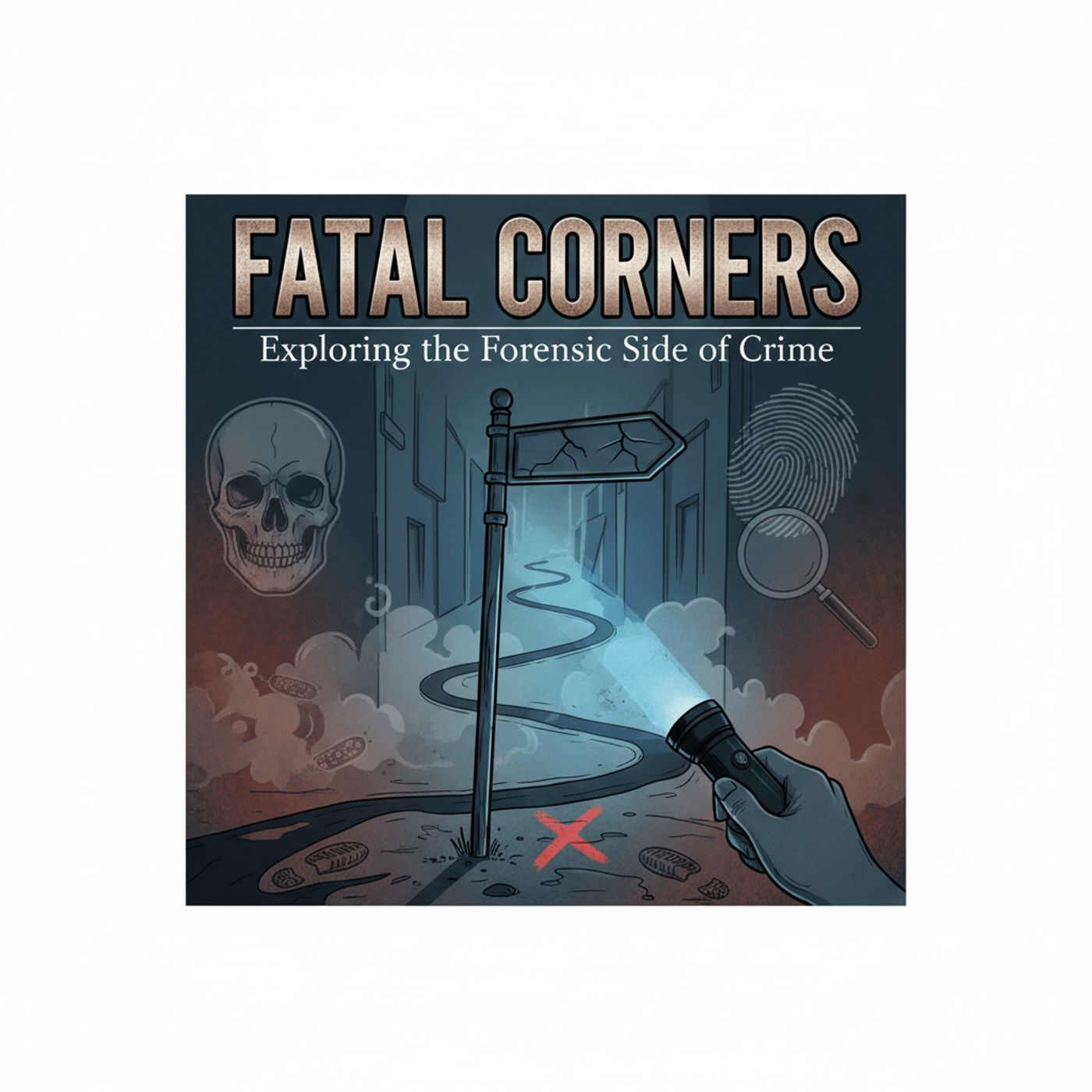
Fatal Corners Exploring the Forensic Side of Crime
by Neon Nights Studio
Venture into the uncharted territory of crime by illuminating lesser-known aspects of forensic science. Expect to delve into witness accounts, criminal psychology, detailed case studies, and more.
-
10
The Role of Forensic Photography in Crime Documentation
Photographs can capture more than just moments; they can document the intricate details of a crime scene that might otherwise go unnoticed. This discussion will focus on the critical role of forensic photography in preserving evidence and providing a visual narrative for investigations. We'll explore the techniques used by forensic photographers, the importance of lighting and angles, and how these images are utilized in courtrooms. Additionally, we will highlight notable cases where forensic photography played a pivotal role in securing convictions, as well as the ethical considerations that come with documenting sensitive scenes. By understanding the artistry and precision behind forensic photography, we can appreciate its significance in the pursuit of justice.
-
9
The Role of Forensic Art in Criminal Investigations
Visual representation can play a crucial role in solving crimes, and forensic art is an essential yet often overlooked tool in the investigative process. This discussion will focus on how forensic artists create composite sketches, age progression images, and facial reconstructions to aid law enforcement in identifying suspects and victims. We'll explore the techniques used by forensic artists, the psychological aspects of witness collaboration, and notable cases where forensic art made a significant impact on investigations. By understanding the intersection of art and criminal justice, we can appreciate how creativity can contribute to the pursuit of truth.
-
8
The Role of Forensic Accounting in Crime Detection
Financial crimes can be as complex as any violent act, and forensic accounting plays a pivotal role in uncovering these hidden offenses. In this discussion, we will explore how forensic accountants investigate financial discrepancies, trace illicit funds, and provide crucial insights into white-collar crimes. We'll delve into notable cases where forensic accounting was instrumental in exposing fraud, embezzlement, and money laundering schemes. By understanding the techniques used in this field, we can appreciate the intricate dance between numbers and criminal intent, revealing how financial records can tell a story of deceit.
-
7
The Role of Forensic Geology in Crime Solving
When we think of crime-solving, we often overlook the earth beneath our feet. This discussion will highlight the fascinating field of forensic geology, which examines soil and mineral evidence to link suspects to crime scenes. We will explore how geologists analyze soil samples, the significance of geological features in investigations, and notable cases where this discipline played a crucial role in solving crimes. By understanding the connection between geology and forensics, we can appreciate another layer of complexity in criminal investigations.
-
6
The Impact of Environmental Factors on Forensic Evidence
Environmental conditions can significantly influence the integrity and interpretation of forensic evidence. This discussion will focus on how factors such as temperature, humidity, and exposure to elements affect the decomposition of bodies, the preservation of evidence, and the reliability of various forensic analyses. We'll examine real-life cases where environmental conditions played a crucial role in investigations, the challenges faced by forensic experts in different climates, and innovative methods being developed to adapt forensic practices to diverse environments. By understanding these influences, we can gain a deeper appreciation for the complexities involved in forensic science.
-
5
The Science Behind Crime Scene Reconstruction Techniques
Crime scene reconstruction is a vital aspect of forensic science that helps investigators piece together the events leading up to a crime. This discussion will focus on the various techniques used in reconstruction, including trajectory analysis, blood spatter interpretation, and the role of technology in creating accurate models of crime scenes. We will highlight notable cases where reconstruction played a crucial role in solving mysteries, as well as the challenges faced by experts in this field. By examining the intersection of science and storytelling, we will reveal how reconstruction can provide clarity in the chaos of crime scenes.
-
4
Exploring the Art of Forensic Odontology
Teeth, much like fingerprints, hold unique information about an individual. This episode explores the intriguing field of forensic odontology, which employs the study of teeth and dental records in criminal investigations. We'll discuss how this discipline aids in identifying unknown remains, estimating age, and even detecting signs of abuse or torture. We'll also highlight the challenges faced by forensic odontologists and the ethical considerations of this discipline, while shedding light on some notable cases solved through dental forensics.
-
3
Hair Tells Tales Forensic Trichology in Action
Hair strands, often overlooked, can be a treasure trove of information for forensic scientists. This episode uncovers the world of forensic trichology, the study of hair in crime scene investigations. We'll explore how hair can provide clues about a person's identity, lifestyle, and even their geographical locations. We'll also delve into the techniques used to analyze hair, the challenges faced by forensic trichologists, and the role of hair analysis in some notable criminal cases.
-
2
Decoding Body Language in Criminal Investigations
Body language is a powerful communication tool, often revealing more than words. In the realm of criminal investigations, the ability to interpret these non-verbal cues can be a game-changer. This episode will explore how investigators use body language to detect deception, establish rapport, and extract crucial information during interrogations. We will also discuss the science behind body language interpretation, its limitations, and the ethical considerations involved.
-
1
Toxicology Tales Unveiling Poison's Role in Crime
Poisons have been a tool of crime throughout history, and the field of forensic toxicology is key to detecting and interpreting their lethal traces. In this exploration, we'll uncover how toxicologists identify different poisons, the challenges they face due to the body's natural processes, and the role of toxicology in high-profile poisoning cases. We'll also discuss the ethical implications and the continuous evolution of this crucial discipline in the face of new synthetic toxins.
-
0
Digital Forensics: Unmasking Cyber Criminals
In this episode, we venture into the virtual world of crime, exploring how digital forensics helps in unmasking cyber criminals. We'll discuss how digital evidence is collected, preserved, and analyzed, and how it plays a crucial role in solving modern-day crimes. Expect to delve into real-life case studies, the challenges faced by digital forensic experts, and the evolving nature of cybercrime.
-
-1
Forensic Anthropology: Uncovering the Secrets of the Skeleton
When a body is discovered, forensic anthropologists are often called upon to piece together the story hidden within the bones. In this final episode, we'll explore the fascinating field of forensic anthropology, from the techniques used to determine the age, sex, and ancestry of a person to the ways in which skeletal evidence can reveal the circumstances of a death. We'll examine landmark cases where forensic anthropology was pivotal, as well as the ethical dilemmas and controversies surrounding this discipline.
-
-2
Forensic Linguistics: Deciphering the Language of Crime
While DNA and fingerprints may be the more well-known forensic tools, the field of forensic linguistics is proving to be a powerful and often overlooked resource for investigators. In this episode, we'll explore how linguistic analysis can be used to identify authors, detect deception, and uncover hidden meanings in everything from ransom notes to online communications. We'll examine landmark cases where forensic linguistics played a pivotal role, as well as the ethical and practical challenges of this emerging discipline.
-
-3
Witness Testimony: The Fallibility of Human Memory
Eyewitness testimony is often considered a crucial piece of evidence in criminal cases, but research has shown that human memory is far more fallible than we assume. In this episode, we'll delve into the science of eyewitness psychology, exploring how factors like stress, bias, and the passage of time can distort and manipulate witness recollections. We'll examine landmark cases where eyewitness testimony was central, as well as the efforts to improve the reliability and admissibility of this evidence in court.
-
-4
The Forensic Psychology of Serial Killers
Serial killers captivate the public's imagination, but their crimes also offer a unique window into the darkest corners of the human psyche. In this episode, we'll explore the forensic psychological profiles of notorious serial killers, delving into their motivations, behavioral patterns, and the investigative techniques used to track them down. We'll also examine the ethical dilemmas and controversies surrounding the study of serial killer psychology.
-
-5
Ballistics: Tracing the Path of a Bullet
Firearms evidence is a cornerstone of many criminal investigations, but the science of ballistics is far more complex than simply matching a bullet to a gun. In this episode, we'll explore the intricate world of ballistics, from the unique markings left on bullets and shell casings to the trajectory analysis that can reveal the shooter's position. We'll examine landmark cases where ballistic evidence was pivotal, as well as controversies around the reliability and interpretation of this forensic discipline.
-
-6
Forensic Entomology: The Insects That Solve Crimes
Insects can provide crucial clues about the time and circumstances of a death, making forensic entomology an invaluable tool for investigators. In this episode, we'll delve into the science of using insects to estimate the postmortem interval, determine the location of a crime, and uncover other pivotal details. We'll explore landmark cases where insect evidence played a pivotal role, as well as the ethical and practical challenges of this unique forensic discipline.
-
-7
Bloodstain Pattern Analysis: Reading the Crimson Clues
Bloodstain pattern analysis is a powerful forensic tool that can reveal the sequence of events at a crime scene. In this episode, we'll explore the science behind interpreting the size, shape, and distribution of blood spatters to reconstruct the actions of a perpetrator. We'll examine landmark cases where bloodstain analysis played a crucial role, as well as controversies around the subjectivity and reliability of this forensic discipline.
-
-8
Unraveling the Mysteries of Fingerprints
Fingerprints are one of the most well-known forensic tools, but their history and application is far more complex than many realize. This episode explores the origins of fingerprint analysis, the science behind it, and how it has evolved to become a cornerstone of modern crime scene investigation. We'll dive into landmark cases that showcased the power of fingerprinting, as well as controversies and limitations that challenge its infallibility.
We're indexing this podcast's transcripts for the first time — this can take a minute or two. We'll show results as soon as they're ready.
No matches for "" in this podcast's transcripts.
No topics indexed yet for this podcast.
Loading reviews...
Loading similar podcasts...
Frequently Asked Questions
How many episodes does Fatal Corners Exploring the Forensic Side of Crime have?
Fatal Corners Exploring the Forensic Side of Crime currently has 19 episodes available on PodParley. New episodes are automatically indexed when they're published to the podcast feed.
What is Fatal Corners Exploring the Forensic Side of Crime about?
Venture into the uncharted territory of crime by illuminating lesser-known aspects of forensic science. Expect to delve into witness accounts, criminal psychology, detailed case studies, and more.
How often does Fatal Corners Exploring the Forensic Side of Crime release new episodes?
Fatal Corners Exploring the Forensic Side of Crime has 19 episodes. Check the episode list to see recent publication dates and frequency.
Where can I listen to Fatal Corners Exploring the Forensic Side of Crime?
You can listen to Fatal Corners Exploring the Forensic Side of Crime on PodParley by clicking any episode. We provide an embedded audio player for direct listening, and you can also subscribe via your preferred podcast app using the RSS feed.
Who hosts Fatal Corners Exploring the Forensic Side of Crime?
Fatal Corners Exploring the Forensic Side of Crime is created and hosted by Neon Nights Studio.
URL copied to clipboard!