
PODCAST · religion
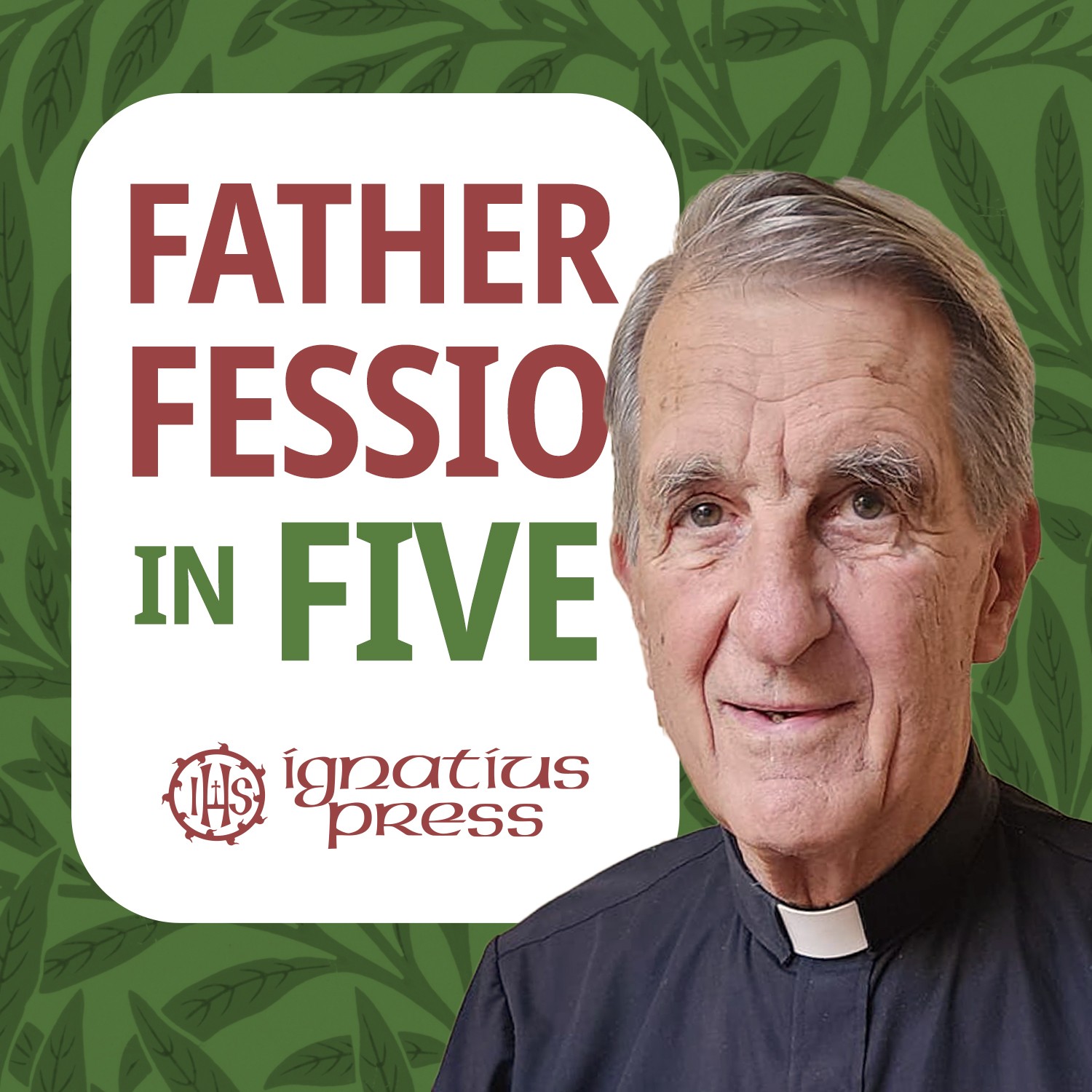
Father Fessio in Five
by Ignatius Press
Five-minute Christian wisdom—or in Latin, “disjecta membra”—from Ignatius Press’ founder, editor, and priest, Father Joseph Fessio, S.J.
-
100
172: Orate Fratres
Fr. Fessio points out that the priest and the congregation offer the same sacrifice to God the Father.
-
99
171: Why the Priest Washes His Hands at Mass
Fr. Fessio explains the ritual and prayer that the priest says when he washes his hands at Mass.
-
98
170: Don’t Overlook This Prayer
Fr. Fessio unpacks a short but powerful prayer that the priest says at every Mass.
-
97
169: A Simple Prayer in the Mass Reveals the Meaning of Suffering
Even the simplest prayer in the Mass can hold incredible meaning, and in this episode Fr. Fessio explains how the commingling prayer reveals the meaning of suffering.
-
96
168: Explaining an Often Overlooked Part of the Mass
Fr. Fessio explains why a priest mixes water and wine at Offertory in Mass.
-
95
167: How Wine Making Reflects the Life of a Christian
Fr. Fessio points out how the process of wine making and yeast fermentation is like the life of a Christian.
-
94
166. The Mysterious Life-Giving Properties of Water
Fr. Fessio points out the often overlook properties of water that make life possible.
-
93
165: Fr. Fessio Prefers the Prayers of the Novus Ordo
While the prayers of the old Latin Rite are beautiful, Fr. Fessio prefers the prayers of the Offertory in the Novus Ordo Rite, and in this episode he explains why.
-
92
164: Pope Benedict on the Purpose of Sacrifice and Worship
Why do we sacrifice things to God, if he does not need it? Does God take please in us destroying things? Using the words of his teacher Pope Benedict, Fr. Fessio explains why we worship God and make sacrifices to Him.
-
91
163: Why Bread and Wine?
Fr. Fessio explains why bread and wine are apt foods to be transubstantiated into Jesus Body and Blood.
-
90
162: The Offertory Used to be More Elaborate
This part of the Mass is easily overlooked, but it is an important part of the Liturgy where we give our gifts to God and His Church.
-
89
Physical Books Are Better Than Ebooks
Due to unforeseen circumstances, Fr. Fessio could not record his normal episode on the Mass. We will continue with the Mass series soon, but for now please enjoy this unreleased clip from one of his recent discussions with Mark. Thanks for your patience!
-
88
161: The Two Halves of the Mass
Beginning the second half of the Mass, Fr. Fessio discusses the transition from the Liturgy of the Word to the Liturgy of the Eucharist.
-
87
160: Vatican II Brought Back the Prayers of the Faithful
Today, Fr. Fessio concludes his reflections on the first half of the Mass by commenting on the prayers of the faithful. In the next episode, Fr. Fessio starts his reflection on the second half of the Mass—the Liturgy of the Eucharist.
-
86
159: Beliefs Worth Dying For
Fr. Fessio goes through the main beliefs articulated in the Nicene Creed.
-
85
158: Fr. Fessio Explains the Origins of the Nicene Creed
We say the Nicene Creed at every Mass, but what is it and how did it come about? Fr. Fessio explains . . .
-
84
157: Explaining the Ancient Origins of the Homily
Fr. Fessio explains the ancient roots of the homily from the Old Testament, to Christ, to the early bishops.
-
83
156: Fr. Fessio Explains the Prayers Around the Gospel
We have reached the highpoint of the first part of the Mass—the proclamation of the Gospel. Fr. Fessio explains the lesser-known prayers surrounding this beautiful part of the liturgy.
-
82
155: Why the Gospel Procession Matters
Fr. Fessio explains the significance of the Alleluia and the movement of the priest to the ambo for the Gospel.
-
81
154: Woman Get Things Done in the Church
Fr. Fessio explains how a single woman was the origin of the Corpus Christi Feast and the famous prayer and hymn Tantum Ergo.
-
80
153: What Happened to the Sequences?
The Easter sequence was recently sung at the Easter liturgies, but what are these “sequences” and what happened to the rest of them? In this episode, Fr. Fessio explains. . . .
-
79
152: The History of the Responsorial Psalm
Fr. Fessio explains the development of the modern-day responsorial psalm from the psalms, gradual, and Schola Cantorum.
-
78
151: “Deo Gratias” Means More Than “Thanks be to God”
One of the common responses in the liturgy is “Deo Gratias.” And in this episode, Fr. Fessio reveals the lesser-known meaning of this phrase.
-
77
150: Vatican II Positively Changed the Readings
Did you know that there is a three-year cycle to the readings and that the first reading is always connected to the Gospel? In this episode, Fr. Fessio explains why.
-
76
149: Why Do Catholics Have an Ambo?
Fr. Fessio provides a detailed explanation of the development of the ambo and the Liturgy of the Word.
-
75
148: The Liturgy of the Word and Jewish Worship
Today, Fr. Fessio begins his discussion of the Liturgy of the Word by outlining the development of the Liturgy of the Word. He explains how this part of the Mass has its roots in Jewish ceremonies and then how it developed over time from the earlier part of the Church until now.
-
74
147: The Conclusion of the Introductory Rites
The collect has not only changed since Vatican II, but it has changed throughout the history of the Church. In this episode, Fr. Fessio explains what the development of the Collect from the very beginning of the Church.
-
73
146: Vatican II Changed the Collect
Fr. Fessio explains the opening "Collect" prayer and how it has changed over the years.
-
72
145: What Are We Singing about in of the “Gloria”?
Fr. Fessio reveals the dynamic movement that takes place in the second half of the Gloria that we sing at Mass.
-
71
144: The Origins of the Gloria
Fr. Fessio explains the historical and Scriptural origin and meaning of the Gloria.
-
70
143: The Only Greek Spoken at Mass
Fr. Fessio explains the only Greek phrase we say at Mass.
-
69
142: Why God Forgives Us at Mass
In this episode, Fr. Fessio discusses the forgiveness we receive at every Mass.
-
68
141: The Divine Office Connects to the Mass
Fr. Fessio explains the lesser known connection between the Mass and the Divine Office or the Liturgy of the Hours, which traditionally lead to the Mass being celebrated at a specific time.
-
67
140: What We Confess at Mass
Fr. Fessio explains the Confiteor at the beginning of the Mass.
-
66
139: What Vatican II Actually Said About Using Latin at Mass
Since Vatican II, the use of Latin in Mass has radically decline. . . . But in this episode, Fr. Fessio reviews what Vatican II said about using Latin at Mass.
-
65
138: Why the Priest Says “The Lord be with you”
In the not-so-distant past, the Church began saying “and with your spirit” instead of “and with you.” In this episode Fr. Fessio explains these opening words of the Mass.
-
64
137: Explaining the Sign of the Cross
Have you ever reflected on why we begin the Mass with the sign of the Cross? Fr. Fessio explains the deep significance behind this often overlooked opening.
-
63
136: Why Does the Priest Kiss the Altar?
Father Fessio begins to unpack the beginning of the Mass by reflecting the priest’s first action in the Mass—he kisses the altar.
-
62
135: The Meaning Behind the Priestly Vestments
Ever wonder what is the significance of the priest’s vestments? In this episode, Fr. Fessio explains what these vestments are and symbolism behind them.
-
61
134: Fr. Fessio Explains Why We Call the Mass, “The Mass”
We all call the Liturgy of the Eucharist, the “Mass” but many of us don’t know why. . . . So Fr. Fessio explains this term and the other terms used to identify this sacrament.
-
60
133: The Mass in the Road to Emmaus
Fr. Fessio explains the third dimension of the Mass—the personal dimension—using the events on the road to Emmaus.
-
59
132. The Cosmic Dimension of the Mass
Fr. Fessio describes the second dimension of the Mass—the cosmic dimension. Fr. Fessio explains how Christ is the center of this dimension.
-
58
131. The Historical Dimension of the Mass
There are three dimensions to the Mass: the historical, the cosmic, and the personal. And in this episode, Fr. Fessio outlines the historical dimension of the Mass by examining the Old Testament and the life of Christ. Get your copy of The Mass of Vatican II: https://ignatius.com/mass-of-vatican-ii-mv2p/?searchid=3424209&search_query=the+mass+of+vatican+II
-
57
130. Explaining the Mass of Vatican II
Fr. Fessio is beginning a series on the Mass, and today he explains the difference between “old” vs the “new” Mass and which he will follow going forward in this series. Get your copy of The Mass of Vatican II: https://ignatius.com/mass-of-vatican-ii-mv2p/?searchid=3424209&search_query=the+mass+of+vatican+II
-
56
129: Fr. Fessio Starts A Series on The Mass
Today’s episode marks the beginning of Fr. Fessio’s series on the Mass. In this episode, he explains how the Mass is central in the sacramental order.
-
55
128: Three Latin Phrases You Should Use
Fr. Fessio explains what “oremus invicem,” “ad majorem dei gloriam,” and “amor meus pondus meum” mean and why you should use the often.
-
54
127: Would You Recognize the Holy Family?
Fr. Fessio points out how many holy people are like the Holy Family both in their life of grace and often in their obscurity.
-
53
126: A Small Lesson in Hebrew
Fr. Fessio examines the original Hebrew for two passages in Scripture. In each case, the original language reveals more than our English translation.
-
52
125: What Does Faith Require?
Fr. Fessio points out that in Hebrew the word “faith” means something a bit different than it does in English.
-
51
124: Why You Should Say "Pax huic domui" When Entering a House
Fr. Fessio explains the Latin phrase Pax huic domui and its response Et omnibus habitantibus in ea.
We're indexing this podcast's transcripts for the first time — this can take a minute or two. We'll show results as soon as they're ready.
No matches for "" in this podcast's transcripts.
No topics indexed yet for this podcast.
Loading reviews...
ABOUT THIS SHOW
Five-minute Christian wisdom—or in Latin, “disjecta membra”—from Ignatius Press’ founder, editor, and priest, Father Joseph Fessio, S.J.
HOSTED BY
Ignatius Press
CATEGORIES
Loading similar podcasts...
Frequently Asked Questions
How many episodes does Father Fessio in Five have?
Father Fessio in Five currently has 50 episodes available on PodParley. New episodes are automatically indexed when they're published to the podcast feed.
What is Father Fessio in Five about?
Five-minute Christian wisdom—or in Latin, “disjecta membra”—from Ignatius Press’ founder, editor, and priest, Father Joseph Fessio, S.J.
How often does Father Fessio in Five release new episodes?
Father Fessio in Five has 50 episodes. Check the episode list to see recent publication dates and frequency.
Where can I listen to Father Fessio in Five?
You can listen to Father Fessio in Five on PodParley by clicking any episode. We provide an embedded audio player for direct listening, and you can also subscribe via your preferred podcast app using the RSS feed.
Who hosts Father Fessio in Five?
Father Fessio in Five is created and hosted by Ignatius Press.
URL copied to clipboard!