Fiduciary Investors Series
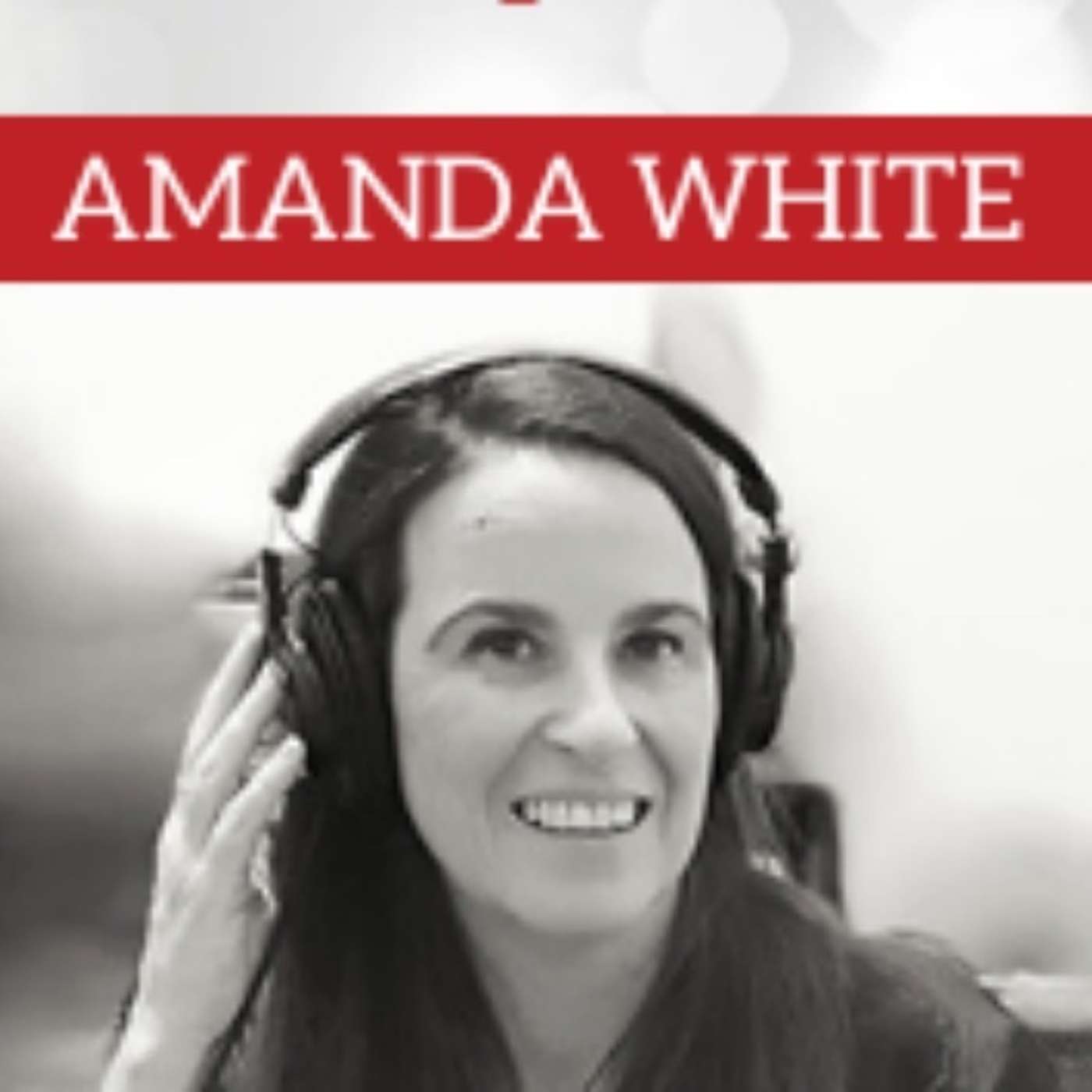
by Amanda White
Through conversations with academics and asset owners, the Fiduciary Investors Podcast Series is a forward looking examination of the changing dynamics in the global economy, what a sustainable recovery looks like and how investors are positioning their portfolios.The much-loved events, the Fiduciary Investors Symposiums, act as an advocate for fiduciary capitalism and the power of asset owners to change the nature of the investment industry, including addressing principal/agent and fee problems, stabilising financial markets, and directing capital for the betterment of society and the environment. Like the event series, the podcast series, tackles the challenges long-term investors face in an environment of disruption, and challenges investors to look differently at how they make decisions and allocate capital.
Episodes
-
Why tokenisation is about more than putting traditional assets on blockchain
Tokenisation is moving beyond the experimental fringes of cryptocurrency, with greater regulatory clarity, institutional infrastructure and the rapid adoption of stablecoins bringing blockchain technology closer to mainstream finance. But the biggest opportunity for institutional investors may…
more -
How CalSTRS is navigating a 'new investment paradigm'
As the $420 billion CalSTRS begins its 2027 asset allocation process, chief investment officer Scott Chan sat down with Top1000funds.com’s Amanda White to discuss the five structural forces he thinks are driving a new investment regime and why the “one fund approach” positions it to take…
more -
Public and private equity: The case for consistent manager evaluation periods
Institutional investors pride themselves on taking a long-term approach, yet when it comes to public and private equity, they often apply very different standards. While private equity managers are afforded a decade or more to deliver returns, public equity managers can find themselves under...
-
Andrew Hall on AI’s growing influence, and the challenge of preserving democracy
Artificial intelligence has the potential to transform how people work, access information and participate in democracy, but its rapid advancement is raising urgent questions about governance, political influence and human control. Andrew Hall, Davies Family Professor of Political Economy at...
-
Myron Scholes on the real promise of the total portfolio approach
The real promise of the total portfolio approach is not simply greater flexibility in choosing investments, but the ability to dynamically manage risk as market conditions change. Nobel Prize-winning economist Myron Scholes, the Frank E. Buck Professor of Finance, Emeritus, at Stanford Graduate...
-
Inside Anthropic: Jack Clark on AI, Power, and the Pentagon
Artificial intelligence is entering a new era, moving beyond systems that simply answer questions to agents capable of carrying out complex tasks and taking actions over extended periods. Jack Clark, co-founder and head of public benefit at Anthropic, said the shift from chat to agents brings...
-
Ross Levine on the quiet accumulation of risk in the US financial system
The risks building in the US financial system may not come from a single dramatic policy decision, but from the quiet accumulation of individually defensible changes that together encourage excessive risk-taking. That was the warning from Stanford University economist Ross Levine, who said a…
more -
Michael Pettis on China's overinvestment paradox, and the Japan-style reckoning still to come
China's advanced infrastructure and ballooning debt are two sides of the same story, says Carnegie Endowment nonresident senior fellow Michael Pettis, who compares China's coming consumption-led rebalancing to Japan's in the 1980s. In conversation with Top1000funds.com Asia Pacific correspondent...
-
Why Asian equities' growth will outlast the AI-driven semiconductor cycle
In the latest episode of the Fiduciary Investors Series, Liao spoke with Top1000funds.com Asia Pacific correspondent Darcy Song on why the convergence of innovation, demographics and improving shareholder returns makes Asian equities an increasingly compelling diversification trade for asset…
more -
APAC equities move from tactical to structural buys
APAC equities’ 2025 rally has renewed interest, but Franklin Templeton’s Christy Tan says the case is now structural, driven by trade diversification and domestic growth. Geopolitics and energy volatility will create divergence, so investors should favour targeted country allocations over broad...
-
IMCO World View: Active strategies, diversification and liquidity focus
Pension funds are navigating a more complex environment shaped by higher rates, inflation and shifting currency dynamics. In its latest World View paper, Canada’s IMCO warns of rising bond yields, concentration risks in passive investing, and the need to prepare for a weaker US dollar, with...
-
Why active managers are mimicking the flaw of passive benchmarks
In a conversation with Top1000funds.com editor Amanda White, Hamzaogullari unpacks the tenets of good genuine active management including a long-term structural approach and truly differentiated insights, which focuses on the quality of ideas not the quantity. For example, he says there will only...
-
Stephen Kotkin on regional conflicts, and the one war investors can't price
The Trump administration’s strikes on Iran stems from a deep conflict between the two nations which has existed for the past 47 years, according to Professor Stephen Kotkin, senior fellow at the Hoover Institution at Stanford University.
-
Blue Owl's James Clarke on navigating private credit's first real cycle
In this conversation, Top1000funds.com editor Amanda White spoke to James Clarke, global head of institutional capital at Blue Owl Capital, about the credit cycle, the evolution of private credit, data centre financing, and what institutional investors should expect from their managers.
-
Oregon’s private equity future
In this conversation Top1000funds.com editor Amanda White speaks to Oregon State Treasurer, Elizabeth Steiner, about the future role and expectations of private equity, how a maturing of the asset class puts pressure on returns, and the private/ public asset mix in the fund’s four-yearly asset...
-
CalPERS’ Stephen Gilmore on the total portfolio approach
The board of CalPERS has approved a momentous structural change that gives the $556 billion fund a single reference portfolio for judging performance, delegated authority to investment staff to construct the portfolio, and a simplified measure of success. The fund’s chief investment officer,...
-
The world in flux and Trump’s role in a new equilibrium
In this live recording from the Fiduciary Investors Symposium, hosted by Top1000funds.com in Singapore in March 2025, Professor Kotkin unpacks what’s next for the US and the world
-
Why Asia is the future
In the midst of the great power rivalry between the US and China, “we need all the help we can get to carve out a future that works well for all of us” says Danny Quah, Dean and Li Ka Shing Professor in Economics at Lee Kuan Yew School of Public Policy at the National University of Singapore, in…
more -
Reversal of investment themes demands investors change their assumptions
Investors are currently facing the end of uncertainty around assumptions they have made for decades, and need to shore up their portfolios with greater inflation protection, more active management, and by fostering innovation, according to chief strategist at the Investment Management Corporation...
-
Mandates need innovating to encompass sustainable investing
As carbon emissions continue to rise investors need to innovate on the nature of investment mandates says Colin le Duc, a founding partner of Generation Investment Management. He says real world impact is going in the wrong direction, even though sustainable investing is booming, and the...
-
Energy markets post-COVID, amid a conflict and in a decarbonising world
Tom Nelson, head of thematic equity at Ninety One, talks to Conexus Financial managing editor Julia Newbould about the extent of the shock to energy markets through the Ukraine War and how it will impact the transition to clean energy and how portfolio managers can invest in renewables and…
more -
Valuation and risk as the rhetoric-action gap on climate mitigation closes
About Professor Julian Allwood Julian Allwood is Professor of Engineering and the Environment at the University of Cambridge. From 2009-13 he held an EPSRC Leadership Fellowship, to explore Material Efficiency as a climate mitigation strategy – delivering material services with less new material....
-
Special guest speaker: Professor Sir David King
About Professor Sir David King Professor Sir David King is Emeritus Professor of Chemistry, University of Cambridge; Founder and Chair of the Centre for ClimateRepairin the University; Chair of the Climate Crisis advisory Group; an Affiliate Partner of SYSTEMIQ Limited; Senior Strategy Adviser to...
-
Climate policy key to balancing incoming economic shocks: Warwick McKibbin
About Warwick McKibbin Professor Warwick McKibbin, AO, FASSA is Professor of Public Policy and Director of the Centre for Applied Macroeconomic Analysis (CAMA) in the Crawford School of Public Policy at the Australian National University (ANU). He is also Director of Policy Engagement, and ANU…
more -
Sustainability: From inception to mainstream
What is the Fiduciary Investors series? The COVID-19 global health and economic crisis has highlighted the need for leadership and capital to be urgently targeted towards the vulnerabilities in the global economy. Through conversations with academics and asset owners, the Fiduciary Investors...
-
Is China's growing influence a threat or opportunity?
About Stephen Kotkin Stephen Kotkin is the John P Birkelund Professor in History and International Affairs at Princeton University. He is the co-director of the program in history and the practice of diplomacy and the director of the Princeton Institute for International and Regional Studies. He...
-
A post-COVID economy
About Joseph Stiglitz Joseph E. Stiglitz is an American economist and a professor at Columbia University. He is also the co-chair of the High-Level Expert Group on the Measurement of Economic Performance and Social Progress at the OECD, and the chief economist of the Roosevelt Institute. A...
-
The year ahead at CalPERS: Marcie Frost on the ALM study and hiring a new CIO
About Marcie Frost Marcie Frost joined CalPERS as chief executive officer (CEO) in October 2016. She is the ninth CEO and second woman to head America's largest pension fund. As CEO, Marcie oversees an annual budget of $1.8 billion, an experienced team of 2,800 professionals, and three lines of...
-
The spirit of green: how corporates can reduce externalities at no cost to shareholders
About William Nordhaus William Nordhaus was born in Albuquerque, New Mexico (which is part of the United States). He completed his undergraduate work at Yale University in 1963 and received his Ph.D. in Economics in 1967 from the Massachusetts Institute of Technology, Cambridge, USA. He has been…
more -
The labour market is broken: why investors should care
About Sharan Burrow Sharan Burrow was elected General Secretary of the ITUC at its Second World Congress in Vancouver, June 2010. Prior to this, she held the position of ITUC President since its Founding Congress in Vienna (November 2006) and the position of ICFTU President since its 18th World...
-
Climate change impacts already here: investors need to act now
About Philip Duffy Dr. Philip Duffy is a physicist who has devoted nearly 30 years to using science to address to the societal challenge of climate change. As a former Senior Advisor in the Obama White House, he has helped shape domestic and international climate policy, US global change…
more -
Steinem calls for urgent action on diversity
About Gloria Steinem Gloria Steinem is a writer, political activist, and feminist organizer. She was a founder of New York and Ms. magazines, and is the author of The Truth Will Set You Free, But First It Will Piss You Off, My Life on the Road, Moving Beyond Words, Revolution from Within, and...
-
USS on a sustainable sustainability program
About Simon Pilcher Simon Pilcher was appointed the chief executive of USS Investment Management in May 2019. He started his career in asset management in 1987 at Morgan Grenfell before moving to Prudential in 1998, a year before it acquired M&G Investments. At M&G Prudential, he led the fixed...
-
What it would take to actually make America great again
About Stephen Kotkin Stephen Kotkin is the John P Birkelund Professor in History and International Affairs at Princeton University. He is the co-director of the program in history and the practice of diplomacy and the director of the Princeton Institute for International and Regional Studies. He...
-
Liability driven investing 2.0: How HOOPP is evolving its investment strategy
About Jeff Wendling Jeff Wendling became president and chief executive officer (CEO) of HOOPP on April 1, 2020. He has 30 years of investment management experience and has been with HOOPP since 1998. Prior to his appointment as CEO, he had served as HOOPP’s executive vice president and chief...
-
Andrew Parry on staying relevant in a changing world
About Andrew Parry Parry is head of sustainable investment at Newton Investment Management. He was previously head of sustainable investing at Hermes Investment Management, developing the firm’s impact investing capabilities, and aligning its funds to the UN Sustainable Development Goals. He...
-
Railpen’s new investment chief on transformation, governance and culture
About Michelle Ostermann Michelle Ostermann is responsible for the overall management and continuing development of the Railway Pension Scheme’s investment management capability. Her primary focus is to ensure it attracts and retains the best possible talent to achieve the long-term investment...
-
Florida's Ash Williams on opportunities in a crisis
About Ash Williams Ash Williams has earned a reputation for being able to head into the stormiest of investment markets and still show positive returns that outperform benchmarks and impress colleagues. As executive director and chief investment officer for the Florida State Board of...
-
Improving alternative investment industry practices: John Claisse
About John Claisse John Claisse joined Albourne in July 1996, relocated from London to San Francisco in July 2013 and became Albourne Group CEO in August 2015. He is an equity partner and member of Albourne’s executive committee and also chairs the firm’s corporate planning council, which…
more -
Ben Meng on leverage, liquidity and inflation at CalPERS
About Ben Meng Yu (Ben) Meng rejoined CalPERS in January 2019 as chief investment officer (CIO). He oversees an investment office of nearly 400 employees and manages investment portfolios of roughly $400 billion, including the Public Employees’ Retirement Fund and affiliate funds. Yu, a U.S....
-
One investor's COVID journey: CPP Investments on market disruption and LT opportunities
About Geoffrey Rubin Geoff Rubin is responsible for overall fund-level investment strategy and heads the total portfolio management (TPM) department – the operational arm of CPP Investments’ investment planning committee, with overall management accountability for the oversight and management of...
-
Alleviating global poverty: the role of the investor
About Esther Duflo Esther Duflo is the Abdul Latif Jameel Professor of Poverty Alleviation and Development Economics in the Department of Economics at the Massachusetts Institute of Technology and a co-founder and co-director of the Abdul Latif Jameel Poverty Action Lab (J-PAL). In her research,...
-
COVID-19 and the role of sustainability leadership
In this Fiduciary Investors series podcast Amanda White talks to Joel Prohin who is director of the portfolio management division at Caisse des Depots in France. Prohin heads the portfolio management team and is responsible for €140 billion across fixed income, equities, real estate and private...
-
Is Europe in trouble? Breaking down barriers
In this Fiduciary Investors series podcast Amanda White talks to Iain Begg, Professsorial Research Fellow at the European Institute, London School of Economics and Political Science, about the economic and social turmoil of COVID-19 and the robustness of the EU to deal with this economically.…
more -
The future of the corporation
In this Fiduciary Investors Series podcast Amanda White talks to Henry Richards, who is the project lead on the Future of the Corporation at the British Academy. The discussion is part of our exploration of purposeful companies and the premise that we need to redefine business in the 21stcentury…
more -
Responsible capitalism: the data challenge
In this Fiduciary Investors Series podcast Amanda White talks to chief executive of the Sustainability Accounting Standards Board, Janine Guillot, about stakeholder capitalism and the role investors can play in shifting the dial. We discuss the value SASB can play as a tool for decision making…
more -
The end of risk management: What finance can learn from climate science
In this Fiduciary Investors Series podcast Amanda White talks to Professor Cameron Hepburn, Professor of Environmental Economics and the director of the economics sustainability programme at the University of Oxford. About Cameron Hepburn Cameron Hepburn is the Director of the Economics of...
-
Coronavirus: Is this the end of globalisation?
In this Fiduciary Investors series podcast Amanda White talks to Princeton University’s Professor Stephen Kotkin about the fragility of the global political economy and the potential end of globalisation. The podcast discusses the limitations of risk management systems used by many investors and...
About this show
Through conversations with academics and asset owners, the Fiduciary Investors Podcast Series is a forward looking examination of the changing dynamics in the global economy, what a sustainable recovery looks like and how investors are positioning their portfolios.The much-loved events, the Fiduciary Investors Symposiums, act as an advocate for fiduciary capitalism and the power of asset owners to change the nature of the investment industry, including addressing principal/agent and fee problems, stabilising financial markets, and directing capital for the betterment of society and the environment. Like the event series, the podcast series, tackles the challenges long-term investors face in an environment of disruption, and challenges investors to look differently at how they make decisions and allocate capital.
Hosted by
Amanda White