
PODCAST · business
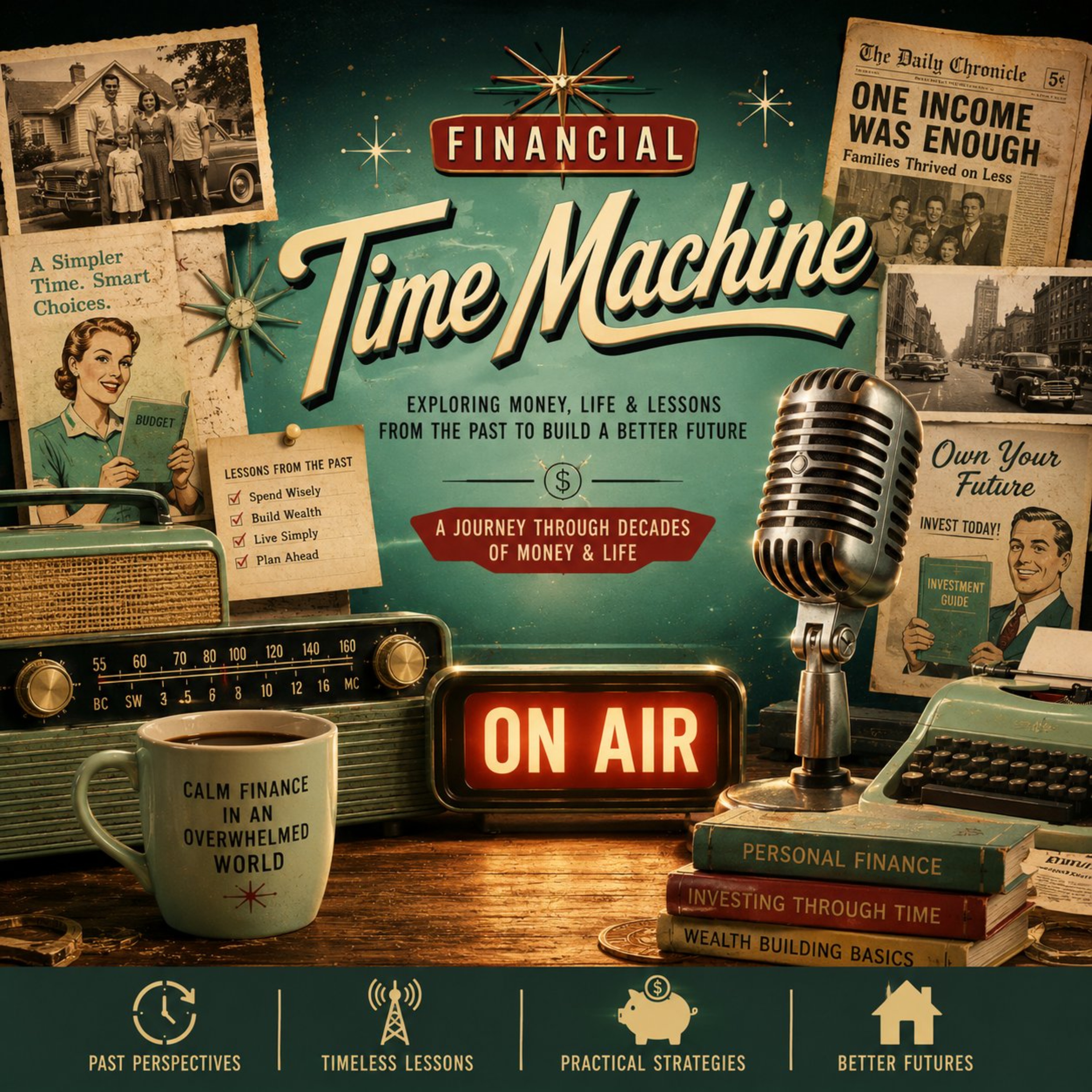
Financial Time Machine
by Megan Thomas
Financial Time Machine is a nostalgic journey through the money, life, and lessons of the past. Each episode explores how previous generations built homes, raised families, handled money, and found happiness in simpler times — without the overwhelm of modern life.From vintage budgeting habits and forgotten financial wisdom to old advertisements, cultural shifts, and everyday life across the decades, this podcast blends storytelling, nostalgia, and practical perspective for today’s world.Whether you miss the charm of mid-century America, love retro culture, or just want calmer, more intentional conversations about money and life, Financial Time Machine takes you back to move forward.
-
17
The Balancing Act: Checkbooks, Passbooks, and the Ritual of Money Before Screens
There was a time when paying the electric bill involved a fountain pen, a carbon copy, and an evening at the kitchen table. In this episode Megan Thomas traces the everyday choreography of pre-digital money: the checkbook register, bank passbook updates, waiting for the mail, and the nightly ritual of reconciling balances. Through textured storytelling we explore how those small practices shaped spending discipline, trust in institutions, and family conversations about money. You’ll hear the social habits wrapped around these rituals—the etiquette of writing a check, how couples negotiated who held the ledger, and the comforting cadence of monthly statements. This episode illuminates what we lost and what we might thoughtfully reclaim: slower financial attention, clearer household accounting, and the calming confidence that comes from knowing where your money is. It’s nostalgic, practical, and quietly corrective for modern money stress.
-
16
Mortgage-Burning Nights: Why Paying Off the House Was a Celebration
In this episode Megan Thomas traces the intimate, often celebratory world of mortgage payoff rituals from the 1940s through the 1970s. We’ll step into living rooms where neighbors gathered for a mortgage-burning party, listen for the subtle financial practices that made early payoff possible, and unpack the policies and habits — GI Bill loans, fixed-rate mortgages, dual incomes, thrifty household economies — that shaped homeownership as identity. The story examines both the emotional meaning of owning a house outright and the practical tradeoffs families accepted to reach that milestone. By the end, listeners will understand why paying off a home felt like more than money: it was security, status, and a promise to future generations — and which elements might be thoughtfully reclaimed today to build calmer, more intentional financial lives.
-
15
Rationed Abundance: How Wartime Ration Books Taught Families to Stretch a Dollar and Find Joy
When inked stamps and numbered coupons decided what you ate, wore, or drove, American households learned an economy of creativity. This episode travels into middle‑century kitchens and wartime grocery lines to tell the story of ration books, neighborhood swap networks, coupon clipping, and the rituals families used to stretch scarce goods into everyday comfort. Through vivid scenes—mammas arranging ration coupons by priority, kids trading sugar stamps for treats, community kitchens pooling resources—we explore the cultural norms that turned constraint into craft. Listeners will learn practical habits that mattered then (prioritizing needs, shared resources, planning ahead) and how those quiet practices offer calmer, more intentional alternatives to today's subscription-heavy, impulse-driven consumption. Megan gently balances nostalgia with context, honoring resilience without romanticizing scarcity, and leaves you with a small, actionable practice to try this week.
-
14
Allowance Lessons: Pocket Money, Paper Routes, and Childhood Finance in Mid‑Century America
In this 10‑minute episode Megan Thomas guides listeners through the quiet classroom of childhood finance: pocket change, chore-based allowances, paper routes at dawn, lemonade stands on hot sidewalks, and the small jars and stamp books that turned coins into lessons. We’ll explore how families used structured allowances to teach thrift, responsibility, and delayed gratification; how community norms and gender roles shaped who worked and why; and the emotional currency of early money—pride, shame, and independence. Through gentle historical storytelling, the episode highlights everyday practices (saving envelopes, the first trip to a bank, trading baseball cards) and contrasts them with modern conveniences and pitfalls. The goal is reflective and practical: uncover simple parenting rituals and small rituals anyone can borrow today to help younger generations learn value without pressure. It’s intimate, nostalgic, and quietly useful—perfect for a late‑night listen.
-
13
Full Tank, Full Life: How Mid‑Century Gas Stations Fueled Family Budgets and Roadside Culture
Gas stations were more than pumps and oil cans—they were tiny community hubs, roadside markets, and the engines of mid‑century family life. In this episode Megan Thomas takes us to the neon-lit corners of small towns and highway exits to explore how filling the tank shaped budgets, travel rituals, weekend freedoms, and social habits from the 1940s through the 1970s. We’ll listen to the rhythm of attendants’ calls, the value of pay-at-the-pump barters, and the economics of a Sunday drive when gasoline, tires, and tune-ups were household line items. Through historical context, cultural scenes, and practical comparisons to today’s mobility costs, the episode offers nostalgia and quiet lessons about intentional spending, community exchange, and why a tank of gas once meant so much more than motion.
-
12
Hand-Me-Down Economy: Thrift, Mending, and Secondhand Life Before Fast Fashion
Before landfill aisles and seasonal fast fashion, American households kept wardrobes alive through mending, swapping, church rummage sales, and a culture that prized usefulness over novelty. In this 10-minute monologue Megan Thomas walks listeners through the tactile practices that stretched budgets and knitted communities together: the ritual of patching a knee, the neighborhood swap meet after a harvest festival, the seamstress who altered uniforms, and the modest pride of passing garments down the line. This episode blends historical context, everyday anecdotes, and emotional texture to show not only how families saved money, but how secondhand rhythms shaped identity, generosity, and belonging. Listeners will leave with quiet, practical takeaways—small habits to borrow from the past—and a gentler sense of how thrift can be both economical and humane.
-
11
Christmas Clubs & Rotating Savings: How Mid‑Century America Saved Together
In this episode Megan Thomas guides listeners into the quiet world of mid‑century savings rituals: Christmas club accounts at local banks, neighborhood 'savings circles,' and rotating credit arrangements that forced discipline, built trust, and created little seasonal windfalls for families. Through evocative scenes—a bank teller stamping a passbook, women dropping coins into a church jar, neighbors trading turns for pooled funds—we examine how these low‑tech systems shaped spending rhythms, holiday expectations, and social bonds. Listeners will hear cultural context, everyday anecdotes, and practical reflections connecting those habits to modern money stress. The episode offers calming perspective: saving can be communal, ritualized, and low drama. It’s part financial history, part social anthropology, and part gentle how‑to for anyone longing to slow their money life and restore intention.
-
10
When the Lights Came On: How Evening Rituals Shaped Family Budgets
Evenings were once the elastic edge of family life: the hour when pay envelopes were opened, supper was served, radio dramas and later prime-time TV set the pace for shopping and conversation, and local shops timed sales to catch commuters. In this 10-minute episode Megan Thomas guides listeners through the unseen economy of the after-work hour—how nightly rhythms shaped consumption, influenced household budgets, and created predictable moments for connection and commerce. Through vivid scenes, cultural context, and practical comparisons to today’s 24/7 consumption, the episode reveals forgotten rituals that quietly taught restraint, community buying, and intention. Listeners will leave with a calm, story-driven view of how small temporal habits once steadied family finances—and a few intentional rituals to borrow for quieter, more deliberate evenings now.
-
9
The Price of Play: How Childhood Entertainment Shaped Family Budgets
Children’s play has always been part of the family balance sheet. In this episode Megan Thomas tells a gentle, story‑led history of childhood entertainment from the 1940s through the 1980s — when backyard forts, hand-me-downs, simple store-bought toys, and neighborhood leagues delivered joy without high costs. We’ll paint everyday scenes: a parent repairing a wooden sled, a Saturday toy trade on the front porch, homemade dolls stitched from scrap fabric, and how radio programs or a single comic book could enchant a week. Along the way we explore why these low-cost rituals mattered to family budgets, what they taught about resourcefulness and community, and how those practices shaped values around consumption and childhood independence. The episode closes with gentle reflections on what modern families might reclaim — not to recreate the past, but to borrow small habits that calm modern spending and deepen play.
-
8
Home Repair Days: The Do-It-Yourself Economy That Kept Families Afloat
In this episode Megan Thomas steps into the cluttered garage light of decades past to explore the quiet economy of home repair. For generations, a broken toaster or a leaky roof was an invitation to learn, tinker, and save—turning basements into classrooms and neighbors into spare-parts librarians. We trace the rise of repair manuals, mail-order replacement parts, traveling repairmen, and the ritual of Sunday fix-it sessions; meet the cultural values behind mending over replacing; and listen to the rhythms of patience, pride, and thrift that accompanied every tightened screw. Beyond technique, this is a story about dignity, self-reliance, and community—how shared tools and knowledge reduced household costs and fostered identity. The episode closes by reflecting on what the repair ethic might teach us today about consumption, resilience, and slowing down to care for the things we already own.
-
7
The Community Table: How Potlucks, Church Suppers, and Shared Meals Kept Family Budgets Humble
In this episode Megan Thomas guides listeners to the long wooden tables of mid‑century America to explore a quietly powerful household economy: the community meal. From church basements and PTA covered‑dish nights to neighborhood block parties and workplace luncheons, shared meals reduced grocery bills, redistributed labor, and created social capital that people could call on in hard times. We’ll hear how recipes doubled as currency, how women’s networks organized invisible safety nets, and how the act of bringing a casserole was both practical budget‑making and an emotional lifeline. Through historical context, everyday vignettes, and gentle comparisons to today’s solo dining and gig‑economy convenience, the episode surfaces what was gained and lost when communal food softened the cost of living. Listeners will leave with calming nostalgia and practical questions about reclaiming small, shared rituals for modern life.
-
6
Town Credit: IOUs, Mom-and-Pop Accounts, and the Gentle Economy of Small‑Town America
In this episode Megan Thomas walks listeners into the corner grocery of a 1950s small town to trace a quieter credit system: the handwritten charge book, the trusted ledger, and the ritual of settling an account at month’s end. Through vivid, documentary-style storytelling we meet the storekeeper who knew every family’s name, the envelope of IOUs tucked in kitchen drawers, and the gentle rules that governed borrowing and repayment. The episode unpacks how social trust, reputation, and small-scale bookkeeping shaped spending, softened economic shocks, and reinforced community bonds—while also revealing limits and inequities of an informal credit economy. Listeners will walk away with practical reflections on how modern life might borrow the values of accountability and neighborly care—without romanticizing hardship—and a clearer sense of how Americans once balanced money and mutual obligation.
-
5
Paying in Pieces: The Gentle History of Layaway, Rent-to-Own, and Deferred Ownership
In this episode Megan Thomas steps behind the layaway counter to tell the story of how generations purchased big-ticket items without credit cards: record players, new couches, Christmas toys and washing machines. We trace layaway’s roots in small-town stores, the rise of rent‑to‑own parlors, and the social rituals around saving a weekly payment until an item truly belonged to a family. Through historical context, vintage ad language, and tender everyday vignettes, the episode explores how deferred purchases shaped household rhythms, expectations, and family pride. Listeners will hear why these systems felt more communal and deliberate than modern instant‑buy alternatives, what they taught about patience and priority, and which lessons—about budgeting, commitment, and dignity—are worth preserving today.
-
4
Generated Episode Idea
{"title":"The Repair Circle: How Neighborhood Fix‑It Traditions Saved Money and Built Community","one_liner":"A warm, monologue-led look at the neighborly repair rituals—tool sharing, barter fixes, weekend repair bees—that stretched household budgets and kept communities close in mid‑century America.","description":"Imagine a Saturday morning where an old washing machine was fixed on a front porch, a neighbor lent a wrench, and a childhood bike got a new patch from Mrs. Alvarez down the street. This episode explores the Repair Circle: the informal networks of skill-sharing, barter repairs, and do‑it‑yourself pride that helped families maintain homes and save money before planned obsolescence and disposable culture took hold. I trace the history of neighborhood repair traditions, the economics behind keeping things running, and the quiet social rituals—lending tools, trade-for-labor, repair parties—that made thrift feel communal rather than lonely. Along the way I share vivid, small-town vignettes, compare those practices to today’s throwaway habits, and surface practical takeaways listeners can use now: how repairing once created both financial resilience and deeper neighbor ties. It’s a gentle, reflective episode about practical thrift, shared expertise, and the emotional value of things that last.","why_now":"This is a timeless look at practical thrift and community resilience; it reframes everyday repair traditions as cultural wisdom rather than a reaction to a specific trend.","target_audience":"Listeners who love mid‑century Americana, slow living, vintage money habits, and thoughtful stories about how families and neighborhoods stretched budgets and built connection before modern convenience.","episode_type":"monologue","estimated_runtime_s":600,"outline":["00:00-00:30 — Cold Open: A vivid scene of a Saturday porch repair—tape hiss, tools clinking, a neighbor’s laugh to instantly transport listeners to a past neighborhood ritual.","00:30-01:00 — Intro Sequence: Warm intro music and Megan’s brief show ID, promise of an intimate story about repair, thrift, and community.","01:00-05:00 — Main — Historical Context: Origins of household repair culture from wartime thrift to postwar appliance ownership; why families repaired rather than replaced and the economics behind longevity.","05:00-08:00 — Main — Cultural Habits & Social Mechanics: Tool‑sharing, barter, repair bees, and gendered skills; how knowledge passed between neighbors and across generations shaped spending choices.","08:00-09:00 — Main — Everyday Vignettes & Emotional Texture: Concrete scenes—bike patches, mending clothes, radio tune‑ups—illustrating how repair anchored social bonds and reduced household costs.","09:00-09:45 — Reflection Segment: What older repair rituals teach us today about resilience, intentional consumption, and community—and what we’ve lost and gained since.","09:45-10:00 — Closing Thoughts & Outro: A slow, memorable reflection, subscribe CTA, and soft outro music leading to signature line.","tags":["neighborhood","DIY","vintage-economics","community","thrift"],"duplication_check":{"nearest_match_title":"The Saving Ritual: How Mid‑Century Families Turned Spare Change into Security","similarity_score":0.62,"decision":"distinct"},"risks":["Romanticizing hardship or implying all past conditions were preferable to modern conveniences."],"mitigations":["Frame anecdotes with balanced context—acknowledge hardships, note tradeoffs between convenience and resilience, and offer practical, accessible takeaways for today’s listeners."]}
-
3
The Pocket Ledger: How Daily Planners, Pay Envelopes, and Paper Rituals Shaped Everyday Spending
In this episode Megan Thomas opens a small, worn paper wallet and listens for the soft rustle of a different money rhythm. We trace a line from leather pocket planners and Sunday pay envelopes to the checkbook registers and penciled budgets that guided weekly choices. Through vivid anecdotes and cultural context, the episode explores how physical rituals — turning calendar pages, crossing off bills, saving stamps in an envelope — enforced patience, limited impulse spending, and made money feel manageable. Megan examines how these paper habits shaped family time, paydays, and the pace of life, and contrasts that steady cadence with today’s instant transactions. Listeners leave with gentle, practical ideas for reclaiming analog habits — whether a simple weekly ledger or a paper ‘pause’ before purchases — and an invitation to try one small practice this week. Subscribe for more calm journeys through the simpler financial habits of the past.
-
2
Roadside Riches: How Full-Service Gas Stations, Diners, and Car Culture Shaped Family Budgets
Megan guides listeners on a gentle, 10-minute journey through mid‑century America’s road economy—those full‑service gas stations with attendants in crisp uniforms, neon diners where change paid for pie, and the ritual of loading the car for a summer drive. This episode blends historical context with small, sensory details: the smell of oil and coffee, the sound of a service bell, the price of a tank of gas beside a family grocery list. Along the way Megan explores how car culture created new everyday expenses, normalized small-credit purchases, and shaped routines that balanced convenience with community. Listeners leave with comforting nostalgia, one concrete budgeting takeaway inspired by past habits, and a reflective question about what conveniences we might slow down to reclaim. Perfect for anyone who misses the hush of analog life or wants a calmer perspective on money and memory.
-
1
The Catalog That Built Main Street: Sears, Roebuck & Mail‑Order America
Megan Thomas narrates a calm, immersive episode tracing the Sears, Roebuck catalog from basement book to household bible. We explore how one thick book brought appliances, furniture, and fashions to small towns, altered expectations about choice and price, and quietly rewired household budgets and aspirations. Through vivid scenes — a mother circling pages by lamplight, delivery men unloading crates, and ads promising modern living — the episode reveals the catalog’s cultural power: credit offers, installment plans, and the rise of national consumer taste. Listeners will hear historical context, everyday experiences of shopping by mail, and gentle comparisons to today’s one‑click convenience. The episode balances nostalgia with practical perspective: what did catalog culture teach about patience, value, and community? By the end, you’ll feel transported, calmer about consumption, and curious about forgotten routines that once made households feel secure.
-
0
The Saving Ritual: How Mid‑Century Families Turned Spare Change into Security
Megan Thomas guides listeners through a warm, intimate portrait of household saving rituals from the 1940s–1970s: coin jars on kitchen counters, envelope systems kept in dressers, Saturday ledger updates by lamplight. This episode unpacks the practical mechanics (how families tracked spending), the social rituals (weekly check‑ins between spouses, children learning money through chores), and the emotional payoff (a sense of security and agency). Blending historical context, cultural detail, and small archival moments—like a Sears savings pamphlet or a 1950s radio budget spot—Megan reveals what these practices taught about delayed gratification, community trust, and slow financial rhythms. Listeners gain concrete, attainable takeaways to try today and a reflective look at what we’ve traded for convenience. Gentle, documentary storytelling keeps the episode comforting and actionable, perfect for late‑night listening and quiet reflection.
-
-1
Home Economics: The Class That Taught a Nation to Budget, Mend, and Make Do
In this episode Megan Thomas steps into a sunlit classroom of the past to tell the story of Home Economics—those roomy domestic-science labs where budgeting met baking, sewing met savings, and everyday life became a curriculum. We trace the subject’s origins, its role in shaping household economies and gender expectations, and the tactile lessons that made money feel manageable: meal planning that stretched a grocery dollar, mending that kept garments out of landfills, and ledgers that translated recipes into budgets. Through evocative scenes—starch-smell aprons, a teacher demonstrating a grocery list, a student balancing costs—we consider what practical skills were taught, what cultural limits were enforced, and which habits we might thoughtfully reclaim. By the end, listeners will hear not a call to return wholesale to the past, but an invitation to borrow its sensible tools for calmer, more intentional modern living.
We're indexing this podcast's transcripts for the first time — this can take a minute or two. We'll show results as soon as they're ready.
No matches for "" in this podcast's transcripts.
No topics indexed yet for this podcast.
Loading reviews...
ABOUT THIS SHOW
Financial Time Machine is a nostalgic journey through the money, life, and lessons of the past. Each episode explores how previous generations built homes, raised families, handled money, and found happiness in simpler times — without the overwhelm of modern life.From vintage budgeting habits and forgotten financial wisdom to old advertisements, cultural shifts, and everyday life across the decades, this podcast blends storytelling, nostalgia, and practical perspective for today’s world.Whether you miss the charm of mid-century America, love retro culture, or just want calmer, more intentional conversations about money and life, Financial Time Machine takes you back to move forward.
HOSTED BY
Megan Thomas
CATEGORIES
Loading similar podcasts...
Frequently Asked Questions
How many episodes does Financial Time Machine have?
Financial Time Machine currently has 19 episodes available on PodParley. New episodes are automatically indexed when they're published to the podcast feed.
What is Financial Time Machine about?
Financial Time Machine is a nostalgic journey through the money, life, and lessons of the past. Each episode explores how previous generations built homes, raised families, handled money, and found happiness in simpler times — without the overwhelm of modern life.From vintage budgeting habits and...
How often does Financial Time Machine release new episodes?
Financial Time Machine has 19 episodes. Check the episode list to see recent publication dates and frequency.
Where can I listen to Financial Time Machine?
You can listen to Financial Time Machine on PodParley by clicking any episode. We provide an embedded audio player for direct listening, and you can also subscribe via your preferred podcast app using the RSS feed.
Who hosts Financial Time Machine?
Financial Time Machine is created and hosted by Megan Thomas.
URL copied to clipboard!