
PODCAST · education
Finite Element Analysis - for iPad/Mac/PC
by The Open University
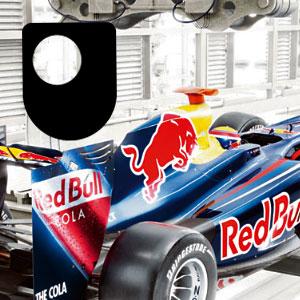
Formula 1 is the ultimate motor sport. It demands the highest level of skill from both drivers and the engineers behind the cars. So what are the secrets of good car design? How are Formula One cars engineered for maximum performance? This album takes a behind the scenes look at Red Bull Racing, a front-runner on the F1 grid. Using thrilling archive and expert testimony, the tracks explore how the techniques of Finite Element Analysis are used to optimize the performance of different elements of a Formula One racing car. The album is presented by Lara Mynors and features extensive contributions from Lewis Butler, Red Bull's senior structural analyst and Dr Ray Martin of the OU. The material is forms part of The Open University course T884 An introduction to Finite Element Analysis.
Episodes
-
Finite element analysis in Formula 1
A short introduction to this album.
-
This is Formula 1!
How final element analysis is used to get maximum performance out of Formula 1 cars, focussing on two components: the wheel hub and the 'tub'.
-
Component function
The first step in final element analysis is to understand precisely what a component does and how it interacts with other elements. Lewis Butler from Red Bull Racing reveals the role of the hub in F1 car design.
-
Analysing stresses and strains
The second step is to analyse the stresses and strains that the component will be subject to. Lewis Butler from Red Bull and Ray Martin from the OU explain how the hub has to be able to cope with massive external loads.
-
Boundary conditions
The third step is to consider the wheel hub's boundary conditions and how these interact with the external stresses on the wheel hub.
-
Creating a solid model
Step 4 is to create a solid CAD model of the hub. This is a complex process which involves a series of assumptions and simplifications which need to be taken into account to get a true picture of the hub's behaviour.
-
Creating a mesh model
Step 5 is to create a mesh model of the hub, with 72 000 elements. The mesh density is at its greatest in areas of particular interest.
-
Solving a mesh model
Step 6 is to input the various stresses and loads that the hub will have to cope with, and use a computer programme to solve the model. Today this can be done quickly and reliably though it still needs a lot of interpretation by the engineers and designers.
-
The benefits of FEA
The final step is to put the lessons learned through FEA and use them to manufacture new improved components which increase your chance of success.
-
Improving the chassis
The same FEA process that was used to redesign a car's hub can also be used to improve its 'tub', otherwise known as its chassis.
-
Functions of the 'tub'
The tub, or chassis, is the largest component of a car. It cocoons the driver and all the major components, from the engine to the car's suspension, are mounted in the tub.
-
Stiffer means faster
The stiffer the tub, the more responsive and better performing the car. A torsion test can be used to assess and then improve the tub's characteristics.
-
Boundary conditions for the tub
The engine and the other components attached to the tub set relatively straightforward boundary conditions.
-
Modelling the tub
Lewis Butler from Red Bull Racing explains how the design and the construction of the tub makes for a very complicated computer model.
-
Solving the mesh model
Lewis Butler explains why and how he builds a model of half of the tub. Because of its complexity, much time and computing power is needed to solve the model.
-
Analysing the results
Lewis Butler analyses the data generated by solving the model. Having to have a hole for the driver to sit in has a big impact on the how stiff the tub can be.
-
Testing CAD against reality
In order to be confident about the results of computer simulations, Red Bull compares them with practical investigations. They are disappointed if the results are more than 5% apart from computer predictions.
-
Take a sceptical view
The results of CAD should be treated sceptically and require a lot of interpretation and real world comparison. Ultimately the engineer's experience and judgement are more important than information generated via computer models.
We're indexing this podcast's transcripts for the first time — this can take a minute or two. We'll show results as soon as they're ready.
No matches for "" in this podcast's transcripts.
No topics indexed yet for this podcast.
Loading reviews...
ABOUT THIS SHOW
Formula 1 is the ultimate motor sport. It demands the highest level of skill from both drivers and the engineers behind the cars. So what are the secrets of good car design? How are Formula One cars engineered for maximum performance? This album takes a behind the scenes look at Red Bull Racing, a front-runner on the F1 grid. Using thrilling archive and expert testimony, the tracks explore how the techniques of Finite Element Analysis are used to optimize the performance of different elements of a Formula One racing car. The album is presented by Lara Mynors and features extensive contributions from Lewis Butler, Red Bull's senior structural analyst and Dr Ray Martin of the OU. The material is forms part of The Open University course T884 An introduction to Finite Element Analysis.
HOSTED BY
The Open University
CATEGORIES
Loading similar podcasts...
Frequently Asked Questions
How many episodes does Finite Element Analysis - for iPad/Mac/PC have?
Finite Element Analysis - for iPad/Mac/PC currently has 36 episodes available on PodParley. New episodes are automatically indexed when they're published to the podcast feed.
What is Finite Element Analysis - for iPad/Mac/PC about?
Formula 1 is the ultimate motor sport. It demands the highest level of skill from both drivers and the engineers behind the cars. So what are the secrets of good car design? How are Formula One cars engineered for maximum performance? This album takes a behind the scenes look at Red Bull Racing, a...
How often does Finite Element Analysis - for iPad/Mac/PC release new episodes?
Finite Element Analysis - for iPad/Mac/PC has 36 episodes. Check the episode list to see recent publication dates and frequency.
Where can I listen to Finite Element Analysis - for iPad/Mac/PC?
You can listen to Finite Element Analysis - for iPad/Mac/PC on PodParley by clicking any episode. We provide an embedded audio player for direct listening, and you can also subscribe via your preferred podcast app using the RSS feed.
Who hosts Finite Element Analysis - for iPad/Mac/PC?
Finite Element Analysis - for iPad/Mac/PC is created and hosted by The Open University.
URL copied to clipboard!