
PODCAST · health
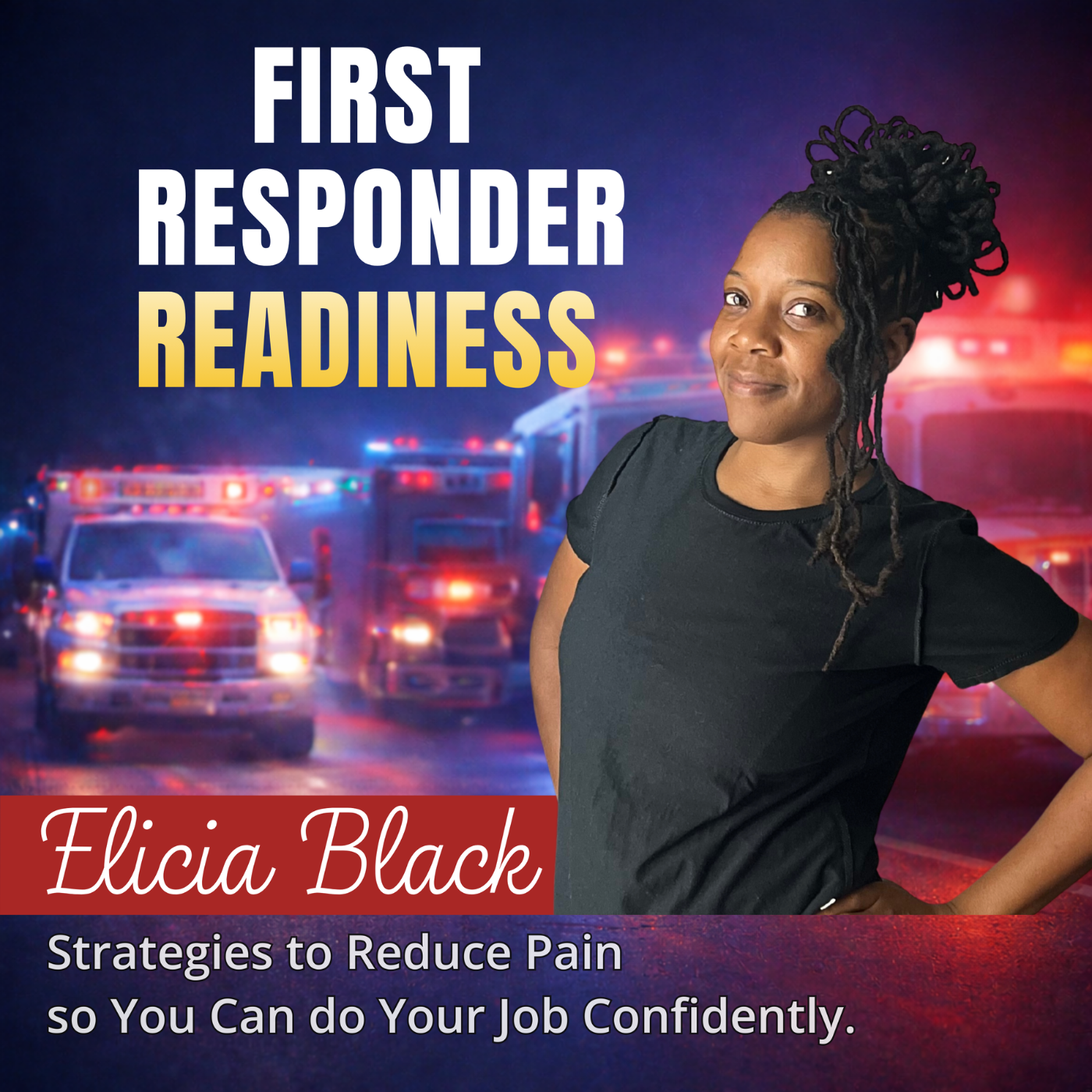
First Responder Readiness | EMT, Back Pain, Recovery, Sleep Deprivation, Functional Strength Workout
by Elicia Black | Athletic Trainer, Strength and Conditioning Specialist
Do you wish your low back pain from lifting patients and long shifts would actually go away? Are you tired of feeling exhausted, under-recovered, and unsure whether your body can keep up with the job? Do you want a safer, smarter way to lift, move, and perform—without the exhaustion spilling into your days off?If so, you’re in the right place.This podcast is here to help you move better through the demands of the job, recover faster between shifts, and feel stronger and more confident when lifting patients, carrying gear, and responding to unpredictable situations. We’ll talk job-specific training, recovery strategies that actually work, and how to build strength and endurance that transfers to real-l
-
27
E26 | EMS Lifting vs Carrying | What First Responders Actually Need to Train
This episode breaks down EMS lifting vs carrying, including why first responders need to train for more than just the lift itself. Most people think the hardest part is getting the patient off the ground. But in reality? The lift is often just the beginning. Because once the patient is up, you still have to: hold the load walk with it adjust your grip stabilize under fatigue navigate stairs, hallways, obstacles, and awkward environments In this episode of First Responder Readiness, we break down the difference between lifting and carrying in EMS, why they place different demands on your body, and what first responders actually need to train to hold up on shift. Because producing force and sustaining force are not the same thing. What You’ll Learn The difference between lifting and carrying from a performance standpoint Why carrying often becomes more physically demanding than the initial lift How grip endurance, core stability, posture, and single-leg control affect performance Why traditional gym training may miss what the job actually requires How to start training for real-world EMS demands Key Takeaways Lifting and carrying are different physical demands Carrying requires sustained force, not just force production Grip, posture, and core endurance play a major role in performance Fatigue makes carrying breakdown happen faster Training should reflect the full task—not just the first movement 🎧 Continue Listening To better understand how this connects to fatigue, lifting mechanics, and job-specific performance, check out: Episode 12: EMS Lifting Mechanics | Why Patient Lifts Break Down Under Fatigue Episode 14: First Responder Fatigue | How Exhaustion Is Affecting Your Performance Homework This week, add one carry variation to your training. Pay attention to: when your grip starts to fatigue whether posture changes under load if one side feels weaker or less stable how long you can maintain control Awareness is where better training starts. Fit for the Call Insider If you’re trying to build strength that actually holds up through the entire job—not just the first part of the movement—I created something for you. Fit for the Call Insider is where I share practical strategies to help you: train smarter reduce injury risk improve durability stay ready for the job Coaching Call If you’re realizing there’s a gap between how you train and what your job actually demands— 👉 Book a 1-hour coaching session We’ll break down your movement, training approach, and what adjustments will better match your real-world demands. Share & Support If this episode changed how you think about training for the job: Follow the podcast Leave a review Share it with your crew or partner
-
26
E25 | Patient Lifting In EMS | Why It Feels Harder Late in Shift
This episode breaks down patient lifting in EMS, including why lifts feel harder late in shift and how fatigue changes movement, coordination, and performance. You’ve done this lift before. Same type of patient. Same equipment. Same general movement. But this time? It feels heavier. Harder to control. More awkward than it should. So what changed? In this episode of First Responder Readiness, we break down why patient lifting in EMS feels different late in shift and what fatigue is actually doing to your movement, coordination, and force production. Because it’s not that you suddenly forgot how to lift. Your body state changed. What You’ll Learn Why patient lifts feel harder later in your shift How fatigue changes strength, coordination, and movement quality Why technique alone isn’t the full answer The connection between fatigue, injury risk, and performance What you can do to improve how your body handles these demands Key Takeaways Fatigue changes how your body produces and controls force Patient lifting becomes harder when stability and coordination decrease Technique matters—but body state matters too Training should prepare you for lifting under realistic conditions 🎧 Continue Listening To better understand how fatigue affects movement and lifting, check out: Episode 12: EMS Lifting Mechanics | Why Patient Lifts Break Down Under Fatigue Episode 14: First Responder Fatigue | How Exhaustion Is Affecting Your Performance Episode 6: Pain After Long Shifts | How Accumulated Load Causes Back, Knee, and Hip Pain Homework During your next shift, pay attention to: When lifts start feeling harder How many calls you’ve already run Whether your posture or control changes late in shift Start noticing the relationship between fatigue and movement. Fit for the Call Insider If you’re trying to build a body that actually holds up under the demands of the job, I created something for you. Fit for the Call Insider is where I share practical strategies to help you: build strength that transfers reduce injury risk improve recovery stay ready for the job Coaching Call If you’re dealing with lifts that feel harder than they should—or recurring pain that shows up after physically demanding shifts— 👉 Book a 1-hour coaching session We’ll break down your movement, training, and what may be contributing to the issue. Share & Support If this episode resonated with you: Follow the podcast Leave a review Share it with your partner or crew
-
25
E24| Lower Back Injuries in First Responders | Why They Keep Happening in Departments
This episode breaks down lower body injuries in first responders, including why recurring knee pain, hip pain, and low back issues keep showing up across departments. Knee injuries. Hip pain. Low back issues. You see it across the department. Different people. Different shifts. Same problems. So the question is—is this just part of the job… or are there patterns driving these injuries? In this episode of First Responder Readiness, we break down why lower body injuries in first responders keep happening and what’s actually contributing to these recurring issues across departments. Because injuries are rarely random. They’re usually the result of repeated movement patterns, accumulated stress, fatigue, and training that doesn’t fully match the job. What You’ll Learn Why lower body injuries are often patterns—not isolated incidents How repetitive asymmetrical movement contributes to pain and injury The role fatigue plays in movement breakdown Why general fitness doesn’t always translate to injury prevention What both responders and department leadership should be paying attention to Key Takeaways Most injuries develop over time—not in one moment Repeated asymmetrical movement creates long-term stress Fatigue changes movement quality and increases injury risk Training needs to reflect the actual demands of the job Looking at trends—not incidents—is how departments reduce injury patterns 🎧 Continue Listening To better understand the movement patterns behind these injuries, check out: Episode 11: Knee Pain in Police Officers | Why Patrol Cars Are Causing Chronic Knee Pain Episode 21: Hip Pain in First Responders | The Hidden Cause of Knee and Back Pain Episode 23: Getting In and Out of Patrol Cars | Why This Movement Causes Pain Over Time Homework Start looking for patterns. Ask yourself: What injuries show up most often in your department? When do they tend to happen? What movements are repeated every shift? Awareness is the first step toward changing the system. Fit for the Call Insider If you’ve been dealing with recurring pain—or trying to understand why it keeps coming back—I created something for you. Fit for the Call Insider is where I share practical strategies to help you: reduce pain move better recover smarter stay ready for the job Coaching Call If you’re dealing with recurring pain—or you’re in leadership seeing the same injury patterns over and over— 👉 Book a 1-hour coaching session We’ll break down what’s actually driving those issues and what needs to change. Share & Support If this episode made you think differently about injuries in your department: Follow the podcast Leave a review Share it with your crew, training officer, or leadership team
-
24
E23 | Getting In and Out of Patrol Cars | Why This Movement Causes Pain Over Time
It’s one of the most repeated movements in your job. Getting in. Getting out. Twisting. Stepping. It doesn’t feel like much in the moment. But over time… it adds up. In this episode of First Responder Readiness, we break down why getting in and out of vehicles may be contributing to knee pain, hip pain, and low back pain—and how repetition, positioning, and fatigue combine to create wear and tear over time. Because it’s not always the big movements that cause problems. Sometimes it’s the ones you do every shift. What You’ll Learn Why repeated vehicle entry and exit impacts your body over time How asymmetrical movement patterns contribute to pain The role of hip rotation, single-leg loading, and trunk position Why small, repeated movements can lead to bigger issues How to start improving the way your body handles these demands Key Takeaways Repetition matters more than intensity over time Most job movements are asymmetrical—not evenly distributed Fatigue changes how your body handles repeated stress Small movement patterns can create long-term wear and tear 🎧 Continue Listening To better understand how this connects to pain and performance, check out: Episode 11: Knee Pain in Police Officers | Why Patrol Cars Are Wrecking Your Knees Episode 21: Hip Pain in First Responders | The Hidden Driver of Knee and Back Pain Episode 6: Pain After Long Shifts | What Accumulated Load Is Doing to Your Body Homework This week, start paying attention to your movement patterns: Do you always lead with the same leg? Do you twist the same way each time? Does one side feel more stiff or uncomfortable? Awareness is the first step toward reducing long-term stress on your body. Fit for the Call Insider If you’ve been dealing with pain that seems to build over time and you’re not sure why, I created something for you. Fit for the Call Insider is where I share simple, practical strategies to help you: move better reduce pain train for the job Coaching Call If you want help identifying the movement patterns that may be contributing to your pain—and how to fix them— 👉 Book a 1-hour coaching session Share & Support If this episode made you think differently about something you do every shift: Follow the podcast Leave a review Share it with someone on your crew
-
23
E22 | Single-Leg Strength for First Responders | Why It Matters on Shift
Most of your job isn’t done evenly. You’re stepping, reaching, carrying, and shifting your weight—often with one leg doing more work than the other. But most training? It’s done evenly. Squats. Deadlifts. Presses. All important—but all symmetrical. In this episode of First Responder Readiness, we break down why single-leg strength is essential for first responders, where traditional training falls short, and how to start building strength that actually transfers to the job. Because real-world strength isn’t just about how much you can lift… It’s about how well you can control your body under real conditions. What You’ll Learn Why most job movements are single-leg dominant The gap between gym strength and real-world strength How asymmetry contributes to injury risk Why balance and control matter as much as strength How to start building single-leg strength that transfers to the job Key Takeaways Your job is not symmetrical—your training shouldn’t be either Single-leg strength improves stability, balance, and control Asymmetries can lead to compensation and increased joint stress Strength that transfers requires control, not just load 🎧 Continue Listening To better understand how this connects to pain and movement, check out: Episode 11: Knee Pain in Police Officers | Why Patrol Cars Are Wrecking Your Knees Episode 21: Hip Pain in First Responders | The Hidden Driver of Knee and Back Pain Homework This week: Add one single-leg exercise to your routine. Then notice: Which side feels weaker? Which side feels less stable? Does one side fatigue faster? Awareness is where improvement starts. Fit for the Call Insider If you’ve been trying to figure out how to train in a way that actually matches what you do on shift, I created something for you. Fit for the Call Insider is where I share simple, practical strategies to help you: move better build strength that transfers stay ready for the job 👉 Join Fit For The Call Insider Coaching Call If you’re realizing there’s a gap between how you train and what your job actually demands—and you want help closing that gap— 👉 Book a 1-hour coaching session Share & Support If this episode helped you think differently about your training: Follow the podcast Leave a quick review Share it with someone on your crew
-
22
E21 | Hip Pain in First Responders | The Hidden Driver for Knee and Back Pain
Hip pain in first responders is often overlooked—but it plays a major role in both knee pain and low back pain. Most people focus on where the pain shows up. The knee. The back. But what if the real issue… isn’t where the pain is? In this episode of First Responder Readiness, we break down why the hips are often the hidden driver behind common pain patterns and how movement breakdown in one area can affect the entire body. What You’ll Learn Why pain isn’t always coming from where you feel it The role the hips play in movement and force transfer How hip dysfunction contributes to knee and back pain What happens when movement patterns break down Simple ways to start improving hip function Key Takeaways The body works as a chain—not isolated parts The hips are a central driver of movement When hips don’t function well, other areas compensate Fixing the source reduces stress on the knee and back 🎧 Continue Listening To better understand how this connects to other pain patterns, check out: Episode 11: Knee Pain in Police Officers | Why Patrol Cars Are Wrecking Your Knees Episode 19: Back Pain in EMS | The Real Cause of Chronic Pain on Shift Episode 6: Pain After Long Shifts | What Accumulated Load Is Doing to Your Body Homework This week, start paying attention to patterns: Where does pain show up? What movement happened before it? Does it follow a pattern over time? Awareness is the first step toward fixing it. Fit for the Call Insider If you’ve been dealing with recurring pain and trying to figure out what’s actually causing it, I created something for you. Fit for the Call Insider is where I share practical strategies to help you: move better reduce pain stay ready for the job 👉 Join Here!! Coaching Call If you’re dealing with pain that keeps coming back and want help figuring out what’s actually driving it— 👉 Book a 1-hour coaching session Share & Support If this episode resonated with you: Follow the podcast Leave a review Share it with someone on your crew
-
21
E20 | Fit for Duty Testing | What First Responders Actually Need to Stay Ready
Fit for duty testing is often treated as the standard for readiness in first responders. You pass the test. You meet the standard. You check the box. But then you get on a call… and something doesn’t feel the same. In this episode of First Responder Readiness, we break down what fit for duty testing actually measures, what it misses, and what first responders truly need to stay ready for the demands of the job. Because passing a test isn’t the same as being ready for real-world performance. What You’ll Learn Why passing a test doesn’t always translate to job performance The limitations of traditional fit for duty testing How fatigue, movement quality, and recovery impact readiness The difference between being “fit” and being fit for duty What actually matters for long-term durability and performance Key Takeaways Testing is a snapshot—not a reflection of real-world demands Fatigue and load are often missing from performance standards Movement quality matters just as much as strength Readiness is built daily—not proven once 🎧 Continue Listening To better understand the pieces that testing often misses, check out: Episode 14: First Responder Fatigue | Why Exhaustion Is Affecting Your Performance Episode 17: Sleep Deprivation in First Responders | Why You’re Always Tired Episode 18: Functional Training for First Responders | What Actually Builds Strength for the Job Homework Ask yourself: “Would I perform the same way at hour 18 of a shift?” Start thinking about readiness beyond a single test. Fit for the Call Insider If you’re trying to figure out how to actually stay ready for the job—not just pass a test—I created something for you. Fit for the Call Insider is where I share simple strategies to help you: recover better reduce injury risk train for the demands of the job 👉 Join Here Coaching Call If you want help figuring out what readiness actually looks like for you—and how to align your training with the job— 👉 Book a 1-hour coaching session Share & Support If this episode gave you a new perspective: Follow the podcast Leave a quick review Share it with your crew or department
-
20
E19 | Back Pain in EMS | The Real Cause of Chronic Pain on Shift
Back pain in EMS is often blamed on one bad lift. But chronic pain is rarely caused by a single moment. In this episode, we break down the real cause of back pain on shift and how fatigue, repetition, and load combine to create long-term issues. What You’ll Learn Why back pain isn’t caused by one lift How fatigue and repetition affect your spine Why pain keeps coming back What you can start doing to reduce it Key Takeaways Back pain is a pattern, not an event Fatigue and load drive injury Recovery and movement must change 🎧 Continue Listening To better understand the full picture of fatigue and recovery, check out: Episode 2 | Back Pain in First Responders | It Doesn’t Have to Come with the Job Coaching Call Need help figuring out what’s causing your pain? 👉 Book a 1-hour coaching session
-
19
E18 | Functional Training for First Responders | What Actually Builds Strength for the Job
Functional training for first responders is often misunderstood. Being strong in the gym doesn’t always translate to being strong on shift. In this episode, we break down what functional training actually means, why traditional workouts fall short, and how to build strength that transfers to real job demands. What You’ll Learn Why gym strength doesn’t always translate to the job What functional training actually means for first responders How fatigue and environment affect strength What types of training improve real-world performance Key Takeaways Strength must transfer to real-world demands Job-specific movement matters more than perfect gym form Training should reflect fatigue and load 🎧 Continue Listening To better understand how fatigue and load affect performance, check out: Episode 4 | Functional Training for First Responders | What Actually Transfers to the Job Episode 7 | Fit for Duty Isn’t a Workout | It’s a System Coaching Call Want help making your training actually match the job? 👉 Book a 1-hour coaching session here
-
18
E17 | Sleep Deprivation in First Responders | Why You're Always Tired
Sleep deprivation in first responders is often treated as something that just comes with the job. But constant fatigue isn’t just about getting less sleep — it’s about how disrupted sleep, stress, and shift work affect your body over time. If you’re waking up still tired, feeling exhausted during your shift, or dealing with recurring pain, there’s usually more going on than just “not enough sleep.” In this episode of First Responder Readiness, we break down why you’re always tired, how sleep deprivation affects your performance, and what you can start doing to improve your recovery and energy. What You’ll Learn Why you feel tired even after sleeping How sleep deprivation affects performance and recovery The role of disrupted sleep cycles and circadian rhythm How fatigue impacts movement, strength, and coordination Simple strategies to improve sleep quality and reduce fatigue Key Takeaways Sleep deprivation is about quality, not just quantity Fatigue accumulates when recovery is incomplete Your performance changes before you fully notice it Small changes can improve sleep and energy Homework This week: Improve ONE part of your sleep environment and observe: sleep quality energy levels recovery 🎧 Continue Listening If you're dealing with fatigue, pain, or feeling exhausted after shift, these episodes build on today’s conversation: Episode 14: First Responder Fatigue | Why Exhaustion Is Affecting Your Performance Episode 6: Pain After Long Shifts | What Accumulated Load Is Doing to Your Body Episode 5: First Responder Fatigue | Why You Move Differently at Hour 18 Fit for the Call Insider If you’re ready to start improving your recovery, reducing fatigue, and building a body that actually holds up on shift, join Fit for the Call Insider. This is where I share simple, practical strategies to help you: Move better Recover faster Train for the job 👉 Fit for the Call Insider Share & Support If this episode resonated with you: Follow the podcast Leave a quick review Share it with your partner or crew
-
17
E16 | Injury Prevention for First Responders | Why Most Programs Fail
Injury prevention for first responders is often approached the wrong way. Most departments already have something in place — fitness programs, wellness initiatives, or return-to-duty protocols. But injuries still happen. Back pain. Shoulder issues. Knee problems. Lost time. Reduced capacity. Early burnout. These aren’t random. They’re patterns. In this episode of First Responder Readiness, we break down why most injury prevention programs fail and what actually needs to change to improve durability and operational readiness in first responders. What You’ll Learn Why traditional injury prevention approaches don’t work The difference between reactive and proactive systems How fatigue, load, and movement patterns drive injury Why general fitness programs often miss the problem What a real injury prevention system should focus on Key Takeaways Injury prevention must be proactive, not reactive Fatigue and accumulated load are major drivers of injury Most programs fail because they don’t match job demands Systems matter more than isolated workouts Homework Start thinking in patterns instead of isolated incidents. Ask yourself: Where does pain show up consistently? When does it tend to happen? What might be contributing to it over time? If you’re in a leadership or training role, consider: What injuries are most common across your department? Are there patterns you’re seeing repeatedly? 🎧 Continue Listening If you're looking at injury prevention from a department or system perspective, these episodes build on what we discussed today: Episode 7: Fit for Duty Isn’t a Workout — It’s a System Episode 8: Injury Prevention for Firefighters and Police | Why Rehab Isn’t Enough Fit for the Call Insider If you’re ready to start building a body — and a system — that actually holds up on shift, join Fit for the Call Insider. This is where I share simple, practical strategies to help you: Move better Recover faster Train for the job 👉Fit for the Cal Insider Share & Support If this episode resonated with you: Follow the podcast Leave a quick review Share it with your crew or department
-
16
E15 | Mobility for Firefighters | Stretching Won't Fix Your Pain
Mobility for firefighters is often misunderstood. If you’re constantly stretching but still dealing with stiffness or pain, the issue may not be flexibility — it may be how your body moves and controls that movement under load. In this episode, we break down what mobility actually is, why stretching alone isn’t enough, and how to improve movement for the demands of the job. What You’ll Learn The difference between mobility and flexibility Why stretching alone doesn’t fix pain How firefighters need mobility for real job demands Simple ways to improve movement quality Key Takeaways Mobility is control, not just flexibility Stretching alone doesn’t build stability Strength + control improves movement under load Resources 👉 Fit for the Call Insider 👉 Facebook Group
-
15
E14 | First Responder Fatigue | Why Exhaustion is Affecting Your Performance
Fatigue is one of the most overlooked factors in first responder performance. It doesn’t just make you feel tired — it changes how your body moves, how you produce force, and how you respond to stress. In this episode, we break down what fatigue actually does to your body and why it plays such a major role in injury and performance. What You’ll Learn How fatigue affects strength and coordination Why movement changes under fatigue How fatigue contributes to injury risk What you can start doing to manage fatigue Key Takeaways Fatigue changes movement before you notice it Performance decreases as fatigue increases Managing fatigue is key to staying injury-free Homework Notice when fatigue shows up and how it affects your: movement strength coordination Resources 👉 Fit for Duty Starter Series 👉 Facebook Group
-
14
E13 | Recovery Between Shifts | How to Reduce Pain and Fatigue Fast
Recovery between shifts is one of the most overlooked aspects of first responder performance. If you’re constantly feeling tired, stiff, or dealing with recurring pain, it may not be because of how hard you’re working — it may be because of how you’re recovering. In this episode, we break down why recovery isn’t just about rest, how fatigue builds across shifts, and what you can start doing to reduce pain and improve performance. What You’ll Learn Why rest alone doesn’t equal recovery How fatigue accumulates across shifts Why you still feel exhausted even after time off Simple recovery strategies you can start immediately Key Takeaways Recovery is not passive — it requires intention Fatigue builds when recovery is incomplete Small recovery strategies can reduce pain and improve performance Homework Try a 5-minute post-shift reset and observe changes in: stiffness energy pain Resources 👉 Fit for the Call Insider 👉 Facebook Group
-
13
E12 | EMS Lifting Mechanics | Why Technique Breaks Down Under Fatigue
EMS providers are taught how to lift properly. So why does lifting still break down during real calls? In this episode of First Responder Readiness, we break down one of the biggest misconceptions in EMS: That injuries happen because of poor technique. In reality, most lifting issues happen because of fatigue, environment, and unpredictable load. If you’ve ever thought: “I know how to lift… why did that feel off?” “We’ve done this a hundred times — why was this one harder?” “That lift shouldn’t have felt that difficult.” This episode is for you. What You’ll Learn Why lifting technique breaks down under fatigue How real-world EMS environments affect movement mechanics The role of uneven and shifting loads Why “lift with your legs” isn’t enough in real scenarios How to improve your ability to handle lifts under real conditions Key Takeaways Fatigue changes how your body stabilizes and produces force EMS lifts are rarely performed in ideal conditions Technique alone isn’t enough — you need strength and endurance that transfers Homework This Week During your next shift, pay attention to your lifts. Ask yourself: When does the lift start to feel harder? Is it later in the shift? After multiple calls? This awareness will help you start identifying patterns. Fit for Duty Starter Series If you want to start building strength and movement patterns that actually transfer to patient lifts, become a Fit for Duty Insider in the show notes. Fit for Call Insider It’s designed to help you: Build job-specific strength Improve movement under load Reduce injury risk over time So you can stay built for the call. Connect & Continue the Conversation Join the Facebook group to continue the conversation and learn alongside other first responders: Built for the Call Share & Support If this episode helped you: Follow the podcast Leave a review Share it with your partner or crew
-
12
E11 | Knee Pain in Police Officers | Why Patrol Cars are Wrecking Your Knees.
Knee pain in police officers is often treated like a random issue — something that just comes with the job. But in reality, it’s usually not one bad movement. It’s the result of repetition, positioning, and accumulated load. In this episode of First Responder Readiness, we break down why knee pain is so common in patrol officers — and how the demands of the job, especially time spent in and out of the patrol car, create stress on the knees over time. If you’ve ever thought: “My knee just started hurting out of nowhere.” “I didn’t injure it… so what’s causing this?” “This must just be part of the job.” This episode will give you a different perspective. What You’ll Learn Why knee pain in police officers is rarely caused by one specific injury How prolonged sitting and repeated vehicle exits affect joint mechanics The role fatigue plays in movement quality Why most training programs don’t address patrol-specific demands How to begin reducing stress on your knees during and after shift Key Takeaways Knee pain isn’t random — it’s often predictable Patrol car movement patterns place repeated stress on the knees Fatigue and positioning change how your body absorbs load Homework This Week Start paying attention to patterns. Notice: When does your knee discomfort show up? Is it after long periods of sitting? After repeated entries and exits from your vehicle? Awareness is the first step toward changing the pattern. Fit for Duty Starter Series If you’re ready to start addressing these patterns and build strength that actually transfers to the job, you can grab my Fit for Duty Starter Series in the show notes. This will walk you through the foundation of how to: Move better Train smarter Recover more effectively Fit for the Call Insider So you can train for the call, not just the gym. Connect & Continue the Conversation If you want to continue learning and connect with other first responders working on the same things, join the Facebook community here: Built for the Call Share & Support If this episode resonated with you: Follow the podcast Leave a quick review Share it with a partner you work patrol with
-
11
E10 | Police Duty Belt Pain | What Hip Load is Doing to Your Low Back
Episode Summary In this episode of First Responder Readiness, we’re taking a closer look at a problem many police officers quietly deal with: low back pain that builds during long patrol shifts. Duty belts create prolonged asymmetrical load on the hips and pelvis, especially when combined with hours of sitting in a patrol car and repeated vehicle exits. In this episode, I break down how that load changes spinal mechanics and why the issue often isn’t just “tight hips.” This episode is for law enforcement officers who want to stay durable through long shifts and reduce the wear-and-tear that builds over years on patrol. In This Episode, We Cover: Why duty belts create asymmetrical load on the hips and spine How prolonged sitting compounds the stress on your lower back Why one-sided tightness is common with patrol officers How repeated vehicle exits affect hip and spinal mechanics Why traditional core training often misses the real issueSimple resets to restore symmetry after long shifts Key Takeaways Takeaway #1 – Duty belt compression changes how your hips and spine carry load during the shift. Takeaway #2 – Low back pain on patrol is often the result of prolonged asymmetrical positioning, not just weak muscles. Takeaway #3 – Restoring symmetry and hip contribution helps reduce stress on the lower back. Your Homework After your next shift, try this quick reset: 5 controlled hip hinges 5 reverse lunges 5 pelvic tilts 60 seconds of slow nasal breathing Then add two strength sessions this week that include: Unilateral RDLs Side plank variations Half-kneeling anti-rotation press The goal isn’t just stretching — it’s restoring symmetry and load tolerance. Want Help Putting This Into Practice? If you’re a law enforcement officer dealing with low back pain from long patrol shifts, join my Fit for Duty Facebook community where we discuss practical injury prevention strategies for first responders. And if you want a structured place to start building durability for the job, download my Fit for Duty Starter Series linked in the show notes. Because staying ready for the call means training for the realities of the job. 👉 Fit for Duty Starter Series
-
10
E9 | Shoulder Pain in Firefighters | The Overhead Reality of the Job
Episode Summary In this episode of First Responder Readiness, we’re breaking down one of the most common complaints firefighters deal with: shoulder pain that seems to show up after shift rather than during it. Firefighters operate in an environment that demands repeated overhead work, heavy gear, awkward angles, and fatigue. In this episode, I explain why those conditions create the perfect storm for shoulder irritation and what you can start doing this week to build durability instead of constantly fighting flare-ups. This episode is for firefighters who want stronger, more resilient shoulders that can handle the real demands of the job — not just the gym. In This Episode, We Cover: Why firefighter shoulder pain is often occupational, not random How repeated overhead work affects scapular mechanics Why fatigue and gear change how your shoulders move The role of the rib cage and trunk in shoulder stability Why traditional gym training doesn’t fully prepare firefighters for overhead job demands Simple movement resets to restore shoulder mechanics after shift Key Takeaways: Takeaway #1 – Your shoulder doesn’t work alone. It relies on the rib cage, scapula, and trunk working together. Takeaway #2 – Overhead fatigue and restricted movement from gear can alter shoulder mechanics over the course of a shift. Takeaway #3 – Building shoulder durability means training endurance and control — not just pressing strength. Your Homework: This week try adding a simple shoulder reset after shift: 5 slow wall slides 5 band pull-aparts or scap squeezes 30 seconds controlled hang (if comfortable) 3 slow nasal breaths focusing on rib expansion Then add two shoulder endurance sessions this week that include: Wall slides Trap raises or prone Y’s Dead hangs or band traction A trunk stability exercise Small resets done consistently build long-term durability. Want Help Putting This Into Practice? If you’re a firefighter looking for practical ways to train for the real demands of the job, join my Fit for Duty Facebook community, where we talk about injury prevention, fatigue management, and job-specific training. And if you want a structured place to start, grab my free Fit for Duty Starter Series linked in the show notes. It walks you through the foundational system I use to help first responders stay strong, resilient, and ready for the call. 👉 Fit for Duty Starter Series
-
9
E8 | Injury Prevention for Firefighters and Police | Why Rehab Isn’t Enough
Episode Summary If you’re a firefighter or police officer, chances are you’ve had something flare up, gone to PT, felt better, gotten cleared… and then months later the pain came back. In this episode, I break down why rehab alone isn’t the same thing as injury prevention. We’re talking about the difference between restoring function and building durability — and why waiting until something hurts puts you behind the curve. This episode is for responders who are tired of the flare-up → rehab → cleared → flare-up cycle and want to build real capacity. In this Episode, We Cover: Why pain often returns even after successful rehab The difference between “cleared” and truly durable Why baseline strength isn’t enough for the fireground or patrol How fatigue and gear load raise the demand threshold Why rehab gets you to zero — but prevention builds beyond zero Key Takeaways: Takeaway #1 – Rehab resorts you to 100% or normal – but the job requires 130% under fatigue Takeaway #2 – Injury prevention builds the capacity to stay at work Your Homework: If you’ve ever been through rehab: Ask yourself: Did I train under fatigue? Did I progressively reintroduce gear load? Did I build endurance beyond baseline? This week, add: 2 trunk endurance sessions 1 loaded carry variation 1 mobility reset focused on job posture Want help putting this into practice? If you’re tired of cycling through flare-ups and want to build durability before pain forces the conversation, grab my free Fit for Duty Starter Series in the show notes. It walks you through the foundational framework I use to help fire and law enforcement professionals increase capacity and reduce recurring breakdown. This isn’t anti-rehab. It’s about building resilience before something breaks. 👉Fit for Duty Starter Series
-
8
E7 | Fit for Duty Isn't a Workout | It’s a System
Episode Summary If you’re a first responder and your plan for staying in shape is just getting good workouts in when you can… this episode might challenge you. Being fit for duty isn’t about one intense session. It’s about building a system that supports fatigue management, recovery, and job-specific capacity. In this episode, I break down why random workouts often fail first responders — and what it actually takes to stay durable through long shifts. This episode is for responders who are consistent in the gym but still dealing with pain, fatigue, or performance drops during shift. In this Episode, We Cover: Why being “gym fit” doesn’t guarantee shift durability The difference between effort and structure Why random workouts fail under real job demands How fatigue management fits into training The mismatch between fitness culture and first responder reality What a true Fit for Duty system actually includes Key Takeaways: Takeaway #1 – You can be gym fit and still not be shift durable. Takeaway #2 – The job demands sustained capacity, not occasional intensity Takeaway #3 – A system manages fatigue, progression, and recovery — not just workouts. Your Homework: This week: Audit your current training and ask: What am I building? What am I neglecting? Does this support my shift schedule? Am I recovering as intentionally as I train? Then add: One trunk endurance block One recovery block One mid-shift reset Small systems shift compounds fast. Want help putting this into practice? If you’re realizing you don’t need another random workout — you need a structured system built around your shift demands — grab my free Fit for Duty Starter Series in the show notes. It walks you through the four-part framework I use to help first responders train smarter, recover better, and stay ready for the call. This isn’t about being gym fit. It’s about being duty durable. 👉Fit for Duty Starter Series
-
7
E6 | Pain After Long Shifts | What Accumulated Load Is Doing To Your Body
Episode Summary In this episode of First Responder Readiness, I break down why pain after a long shift rarely comes from one bad lift. Instead, we’re talking about accumulated load — how repeated stress, fatigue, gear weight, and limited recovery stack up over time. You’ll learn why overuse isn’t about doing “too much once,” how tissue tolerance changes as fatigue builds, and what simple steps you can start using this week to stay ahead of post-shift pain. This episode is for first responders who want to reduce recurring back pain, recover better between shifts, and build capacity that lasts — without assuming pain just “comes with the job.” In this Episode, We Cover: Why pain often shows up after shift instead of during What “accumulated load” actually means in real life How fatigue lowers your tissue tolerance threshold Why sleep debt and shift structure matter more than you think The difference between injury and overload Simple resets to reduce cumulative stress How to build a buffer so small stressors don’t become chronic pain Key Takeaways: Takeaway #1 – Overuse doesn’t mean “used too much once.” It means “used more than your tissues had capacity for.” Takeaway #2 – Pain after long shifts is often a workload mismatch, not a catastrophic movement mistake. Takeaway #3 – Capacity is built through consistent recovery and endurance work — not just strength training. Your Homework: This week: 1️⃣ Track your sleep for 5 days. No judgment — just awareness. 2️⃣ Add one 5-minute movement reset after a long call or before leaving shift: 5 slow bodyweight hinges 5 glute bridges 5 thoracic rotations per side 5 slow nasal breaths 3️⃣ On one off-day, build posterior chain endurance: 2 rounds of: 30–45 sec side plank 8 slow RDLs 8 bird dogs per side Focus on creating capacity — not crushing a workout. Small, consistent adjustments create long-term durability. Want help putting this into practice? If this episode made you realize your pain isn’t random and you’re ready to build real, shift-proof capacity, I’ve put together a free Fit for Duty Starter Series that walks you through the foundational framework I use with first responders. It’s practical. It’s sustainable. And it’s built around the demands of your job. 👉 Fit for Duty Starter Series
-
6
E5 | First Responder Fatigue | Why You Move Differently Late in Your Shift
This episode breaks down first responder fatigue and why movement changes late in your shift. Episode Summary In this episode of First Responder Readiness, I break down why the same lift feels fine at the beginning of shift—but heavier, sloppier, and tighter by hour 18. We’re unpacking what fatigue actually does to your nervous system, coordination, and trunk endurance. You’ll learn why late-shift stiffness isn’t just “getting weak,” how accumulated fatigue changes movement sequencing, and what you can start doing immediately to prevent it from turning into persistent pain. This episode is for first responders who want to stay ready for the call through their entire shift—without accepting back pain as part of the job. In this Episode, We Cover: Why your back doesn’t hurt at hour 2… but does at hour 18 How fatigue changes coordination — not just strength Why trunk endurance matters more than peak power The difference between weakness and neuromuscular fatigue Why “a bad lift” usually isn’t the real cause Simple mid-shift resets to restore control How to build shift-long durability instead of gym-only strength Key Takeaways: Fatigue doesn’t just make you tired. It changes how you move. What feels like weakness late in shift is often exhausted coordination, not lost strength. Responders don’t need maximum strength. They need sustained control under fatigue. Your Homework: This week: 1️⃣ Notice what changes after hour 12. Does your hinge change? Does your posture drift? Does tightness increase? 2️⃣ Add one 3-minute movement reset mid-shift: 5 controlled hip hinges 5 thoracic rotations per side 5 slow nasal breaths 3️⃣ Add trunk endurance work 2x this week: Side plank holds Dead bug variations Bird dog holds Focus on endurance—not max effort. Small resets done consistently build capacity. Want help putting this into practice? If this episode resonated with you and you’re realizing it’s not just “one bad lift,” I’ve put together a free Fit for Duty Starter Series walking you through the foundational framework I use to help first responders build endurance that lasts through the entire shift. This isn’t about surviving your job. It’s about staying ready for the call. 👉 Fit for Duty Starter Series
-
5
E4 | Functional Strength Training for First Responders | What Actually Transfers to the Job
This episode breaks down functional strength for first responders and what actually carries over to real job demands. Episode Summary In this episode of First Responder Readiness, I break down “functional training” and explain how to ensure your training is functional to you. You’ll learn that an elevated heart rate does not equal job specificity, how specified force direction and overloaded symmetrical training plays a role, and how to self-filter if your workouts are functional enough for your job role. This episode is for first responders who want job-specific functional training without questioning if it’s a waste of time or if it will really be beneficial. In this Episode, We Cover: Why functional training doesn’t automatically functional for you How generic workouts and trainings can impact your body more than you think Example of shifting from functional to Fit for Duty 1 simple, actionable steps to building durability Key Takeaways: CrossFit functional isn’t automatically first responder functional Training transfer requires intention, not intensity Sled pushes are great and stair climb eccentric intervals are better Your Homework: This week: Pick one workout and identify which specific job demand it prepares you for If you can’t answer clearly… that’s information Small steps done consistently make the biggest difference. Want help putting this into practice? If this episode resonated with you and you want to see what strategies look like in real life, I’ve put together a short, free video series walking through simple movement resets and job-specific training concepts. 👉Fit for Duty Starter Series 👉Individualized Coaching
-
4
Start Here | First Responder Readiness (Trailer)
Welcome to the Fit for Duty Podcast. This show is for first responders who feel worn down, unsure what’s missing, or ready to move from surviving shifts to prepared for them. Hosted by Elicia, ATC, CSCS, this podcast blends healthcare insight and performance science to help you move from guessing to structured preparation built around real occupational demands. Download the free Fit for Duty Starter Series here: Department leader? Request a consultation here:
-
3
E3 | First Responder Fitness | Why Strength Alone Isn’t Enough for the Job
This episode breaks down first responder fitness and why strength alone doesn't always translate to job performance. In this episode of First Responder Readiness, I break down the difference between being fit and being fit for duty and explain why first responders are leaving holes in their training and possibly leaving themselves susceptible for injuries by not training according to job demands. You’ll learn about job-specific durability, how fit for duty programming plays a role, and what to pay attention to in your own workouts. This episode is for first responders who want to protect their bodies and prevent injuries. In this Episode, We Cover: Why general fitness programming doesn’t automatically prepare your for your job demands How Gear workouts could still be leaving holes in your training Why most injuries show up slowly instead of during one big lift What Fit for Duty training actually includes Key Takeaways Takeaway #1: Decceleration training might actually be more beneficial than squats Takeaway #2: Gear workouts might not be doing all that you think they are Takeaway #3: General strength is great but durability will keep you physically healthy Homework This week: Pay attention to what movements at work feel hardest (stairs, lifting from low positions, step down, twisting, etc) Ask yourself if you train that pattern intentionally Small steps done consistently make the biggest difference. Want help putting this into practice? If this episode resonated with you and you want to see what strategies look like in real life, I’ve put together a free Fit for Duty starter series guide that walks you through foundational movements and principles specific to tactical professionals. 👉Fit for Duty Starter Series 👉Department Inquiry Link
-
2
2 | Back Pain in First Responders | Why It Doesn’t Have to Come with the Job
This episode breaks down back pain in first responders and why it's not something you just have to live with. Back pain doesn't have to "just come with the job." In this episode, I break down one of the biggest misconceptions I see in EMTs and paramedics: the belief that back pain is caused by one bad lift. If you've ever thought: "I didn't even lift anyone wrong." "I stretch and warm up -- why does it still hurt?" "This just comes with EMS life." This episode is for you. We're talking about what's actually driving persistent back pain in first responders and why it's usually load + fatigue + repetition, not a single moment. You'll walk away understanding: Why your back may hurt after shift instead of during How fatigue quietly changes your movement mechanics What early warning signs to start noticing Three simple actins you can begin using immediately Key Takeaways Back pain isn't random Fatigue changes how you move Overuse doesn't mean "used too much in one day." Homework This Week 2 minutes easy walking 1 minute slow nasal breathing 2 minute gentle spinal movement (cat-cow or pelvic tilts) Then simply notice: Do you feel less stiff the next morning? Does pain intensity decrease? Do flare-ups reduce? Want More Practical Support? If you want to see what these strategies look like in real time, I've created a free video resource library with: Simple recovery movements Job-specific strength foundations Practical mobility strategies You can access it here: Exercise Library Subscribe & Share If this episode resonated with you, would you take 30 seconds to: Follow the podcast Leave a quick review Share this episode with a partner who's always stretching between calls
-
1
E1 | Back Pain Relief for EMTs | Why Your Lower Back Still Hurts After Shifts
This episode breaks down lower back pain relief for EMTs and why your back still hurts after long shifts. Today, I break down how back pain rarely occurs after just “one bad lift” and explain how your back pain is not only reversible but preventable. You’ll learn how big of a role fatigue plays physiologically, how overuse isn’t just using a body part too often, and 3 simple activities you can do today to start alleviating your back pain. This episode is for EMTs who want to move better, recover faster, and feel confident without consistently pushing through pain. In this Episode, We Cover: Who back pain is rarely caused by one bad lift How fatigue changes the way your body moves Three simple steps to start relieving back pain This week, try a simple 5-minute post-shift reset once a notice when your back pain shows up – after shift, later that night, or the next day. I’ve created a short, free video series that walks through simple movement resets and job-specific training concepts you can use on your own schedule. 👉 Get access here: Exercise Library
We're indexing this podcast's transcripts for the first time — this can take a minute or two. We'll show results as soon as they're ready.
No matches for "" in this podcast's transcripts.
No topics indexed yet for this podcast.
Loading reviews...
ABOUT THIS SHOW
Do you wish your low back pain from lifting patients and long shifts would actually go away? Are you tired of feeling exhausted, under-recovered, and unsure whether your body can keep up with the job? Do you want a safer, smarter way to lift, move, and perform—without the exhaustion spilling into your days off?If so, you’re in the right place.This podcast is here to help you move better through the demands of the job, recover faster between shifts, and feel stronger and more confident when lifting patients, carrying gear, and responding to unpredictable situations. We’ll talk job-specific training, recovery strategies that actually work, and how to build strength and endurance that transfers to real-l
HOSTED BY
Elicia Black | Athletic Trainer, Strength and Conditioning Specialist
Loading similar podcasts...
Frequently Asked Questions
How many episodes does First Responder Readiness | EMT, Back Pain, Recovery, Sleep Deprivation, Functional Strength Workout have?
First Responder Readiness | EMT, Back Pain, Recovery, Sleep Deprivation, Functional Strength Workout currently has 27 episodes available on PodParley. New episodes are automatically indexed when they're published to the podcast feed.
What is First Responder Readiness | EMT, Back Pain, Recovery, Sleep Deprivation, Functional Strength Workout about?
Do you wish your low back pain from lifting patients and long shifts would actually go away? Are you tired of feeling exhausted, under-recovered, and unsure whether your body can keep up with the job? Do you want a safer, smarter way to lift, move, and perform—without the exhaustion spilling into...
How often does First Responder Readiness | EMT, Back Pain, Recovery, Sleep Deprivation, Functional Strength Workout release new episodes?
First Responder Readiness | EMT, Back Pain, Recovery, Sleep Deprivation, Functional Strength Workout has 27 episodes. Check the episode list to see recent publication dates and frequency.
Where can I listen to First Responder Readiness | EMT, Back Pain, Recovery, Sleep Deprivation, Functional Strength Workout?
You can listen to First Responder Readiness | EMT, Back Pain, Recovery, Sleep Deprivation, Functional Strength Workout on PodParley by clicking any episode. We provide an embedded audio player for direct listening, and you can also subscribe via your preferred podcast app using the RSS feed.
Who hosts First Responder Readiness | EMT, Back Pain, Recovery, Sleep Deprivation, Functional Strength Workout?
First Responder Readiness | EMT, Back Pain, Recovery, Sleep Deprivation, Functional Strength Workout is created and hosted by Elicia Black | Athletic Trainer, Strength and Conditioning Specialist.
URL copied to clipboard!