
PODCAST · science
First Stimulate, Then Listen
by Kolya Syrov
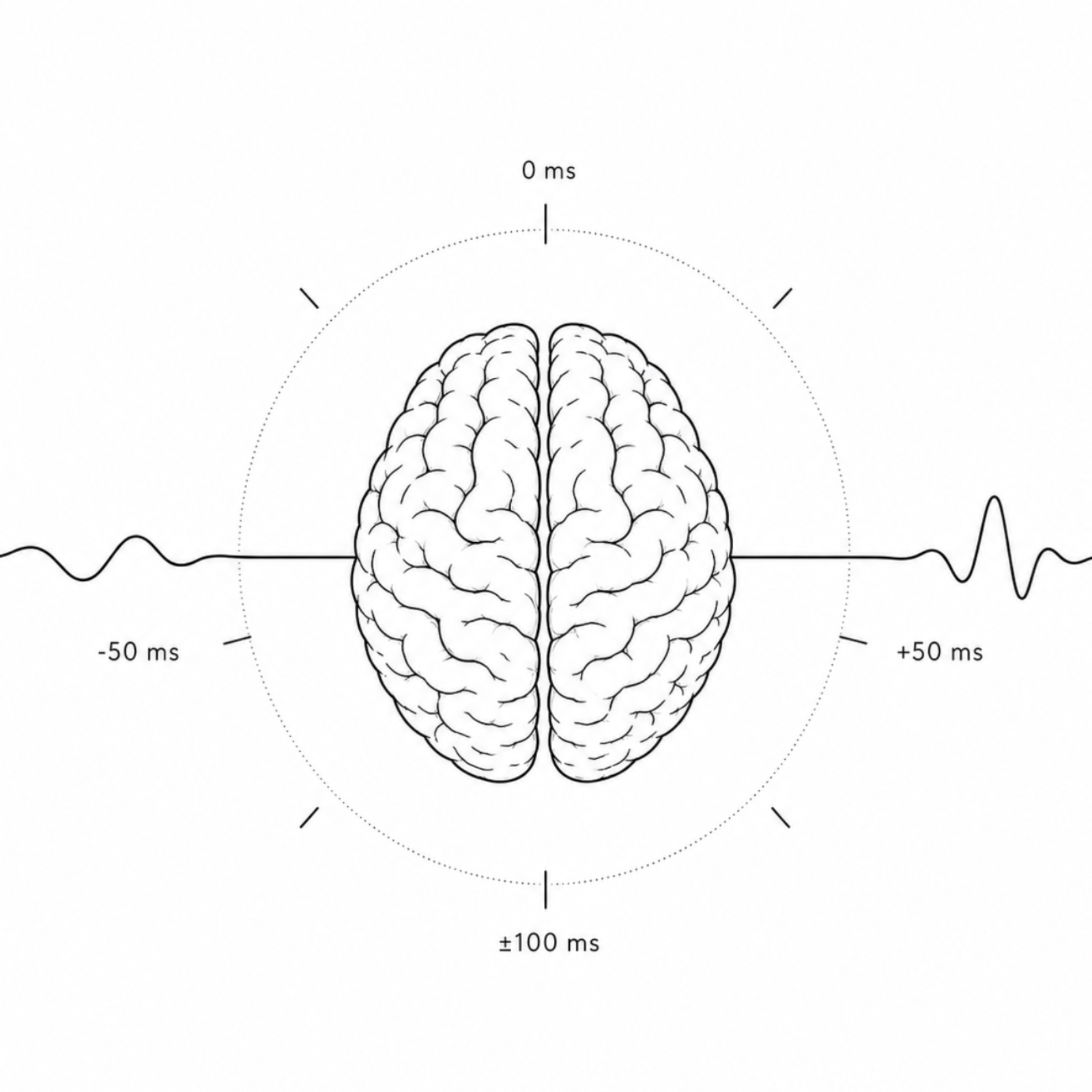
First Stimulate, Then Listen is a neuroscience podcast that explores how modern brain technologies are changing the way we study the human mind. The podcast focuses on EEG, transcranial magnetic stimulation, computational neurology, memory, and mental imagery, connecting experimental methods with big questions about brain function.Each episode is based on specific published articles and preprints, discussing how scientists record, stimulate, model, and interpret brain activity to better understand perception, cognition, memory formation, imagination, and neurological disorders.
-
1
How your heartbeat flushes brain waste
The glymphatic system is a macroscopic waste clearance network that utilizes perivascular channels created by astroglial cells to eliminate neurotoxic metabolites, such as amyloid-β, from the central nervous system. Because the brain lacks traditional lymphatic vessels, it relies on the continuous exchange between cerebrospinal fluid (CSF) and interstitial fluid (ISF) to maintain homeostasis.According to the primary framework, the system operates through three segments: periarterial influx of CSF, parenchymal exchange facilitated by aquaporin-4 (AQP4) water channels on astrocyte endfeet, and perivenous efflux of waste-laden fluid.The mechanical energy for this clearance system is provided by the cardiovascular system, which acts as the engine driving fluid through the brain.The following references were used to create the podcast:Hauglund, N. L., et al. (2025). Norepinephrine-mediated slow vasomotion drives glymphatic clearance during sleep. Cell, 188, 606–622.Astara, K., et al. (2023). A novel conceptual framework for the functionality of the glymphatic system. Journal of Neurophysiology, 129, 1228–1236.Jessen, N. A., et al. (2015). The Glymphatic System – A Beginner's Guide. Neurochemical Research, 40(12), 2583–2599.Rasmussen, M. K., et al. (2022). Fluid transport in the brain. Physiological Reviews, 102, 1025–1151.Soldozy, S., et al. (2022). Interplay between vascular hemodynamics and the glymphatic system in the pathogenesis of idiopathic normal pressure hydrocephalus, exploring novel neuroimaging diagnostics. Neurosurgical Review, 45, 1255–1261.Hladky, S. B., & Barrand, M. A. (2022). The glymphatic hypothesis: the theory and the evidence. Fluids and Barriers of the CNS, 19:9.
-
0
Advanced approaches in the application of TMS-EEG technology for studying brain function
This episode explores advanced methods for recording and analyzing EEG responses evoked by transcranial magnetic stimulation, with a focus on TMS-evoked potentials, or TEPs. Drawing on recent research by Zrenner and Ziemann (2024), Beck et al. (2024), Casarotto et al. (2022), Kabir et al. (2024), and Vasileiadi et al. (2026), the episode examines how scientists are improving the precision, reliability, and physiological interpretation of brain stimulation measurements.The discussion highlights a major shift from traditional open-loop stimulation protocols toward state-dependent and closed-loop approaches, where TMS pulses are timed according to the brain’s ongoing electrophysiological activity. It covers real-time EEG-informed stimulation, immediate TEPs occurring within the first milliseconds after a pulse, real-time artifact monitoring, EEG microstate-dependent variability, and state-dependent network effects during speech production.Together, these studies show that the brain’s response to stimulation depends strongly on its moment-to-moment state. By improving signal-to-noise ratio, temporal resolution, artifact control, and stimulation timing, these approaches help researchers better capture the brain’s earliest physiological responses to non-invasive stimulation. The podcast also considers how these developments may support more precise neuromodulation protocols for neuroscience research and clinical applications, including disorders such as major depressive disorder.ReferencesZrenner, C., & Ziemann, U. (2024). Closed-Loop Brain Stimulation. Biological Psychiatry.Beck, M. M., Christiansen, L., Madsen, M. A. J., et al. (2024). Transcranial magnetic stimulation of primary motor cortex elicits an immediate transcranial evoked potential. Brain Stimulation.Casarotto, S., Fecchio, M., Rosanova, M., et al. (2022). The rt-TEP tool: real-time visualization of TMS-Evoked Potentials to maximize cortical activation and minimize artifacts. Journal of Neuroscience Methods.Kabir, A., Dhami, P., Dussault Gomez, M.-A., et al. (2024). Influence of Large-Scale Brain State Dynamics on the Evoked Response to Brain Stimulation. The Journal of Neuroscience.Vasileiadi, M., Schuler, A.-L., Woletz, M., et al. (2026). Chronometric interleaved TMS-fMRI shows state-dependent network effects underlying speech production. Brain Stimulation.
We're indexing this podcast's transcripts for the first time — this can take a minute or two. We'll show results as soon as they're ready.
No matches for "" in this podcast's transcripts.
No topics indexed yet for this podcast.
Loading reviews...
ABOUT THIS SHOW
First Stimulate, Then Listen is a neuroscience podcast that explores how modern brain technologies are changing the way we study the human mind. The podcast focuses on EEG, transcranial magnetic stimulation, computational neurology, memory, and mental imagery, connecting experimental methods with big questions about brain function.Each episode is based on specific published articles and preprints, discussing how scientists record, stimulate, model, and interpret brain activity to better understand perception, cognition, memory formation, imagination, and neurological disorders.
HOSTED BY
Kolya Syrov
Loading similar podcasts...
Frequently Asked Questions
How many episodes does First Stimulate, Then Listen have?
First Stimulate, Then Listen currently has 2 episodes available on PodParley. New episodes are automatically indexed when they're published to the podcast feed.
What is First Stimulate, Then Listen about?
First Stimulate, Then Listen is a neuroscience podcast that explores how modern brain technologies are changing the way we study the human mind. The podcast focuses on EEG, transcranial magnetic stimulation, computational neurology, memory, and mental imagery, connecting experimental methods with...
How often does First Stimulate, Then Listen release new episodes?
First Stimulate, Then Listen has 2 episodes. Check the episode list to see recent publication dates and frequency.
Where can I listen to First Stimulate, Then Listen?
You can listen to First Stimulate, Then Listen on PodParley by clicking any episode. We provide an embedded audio player for direct listening, and you can also subscribe via your preferred podcast app using the RSS feed.
Who hosts First Stimulate, Then Listen?
First Stimulate, Then Listen is created and hosted by Kolya Syrov.
URL copied to clipboard!