
PODCAST · religion
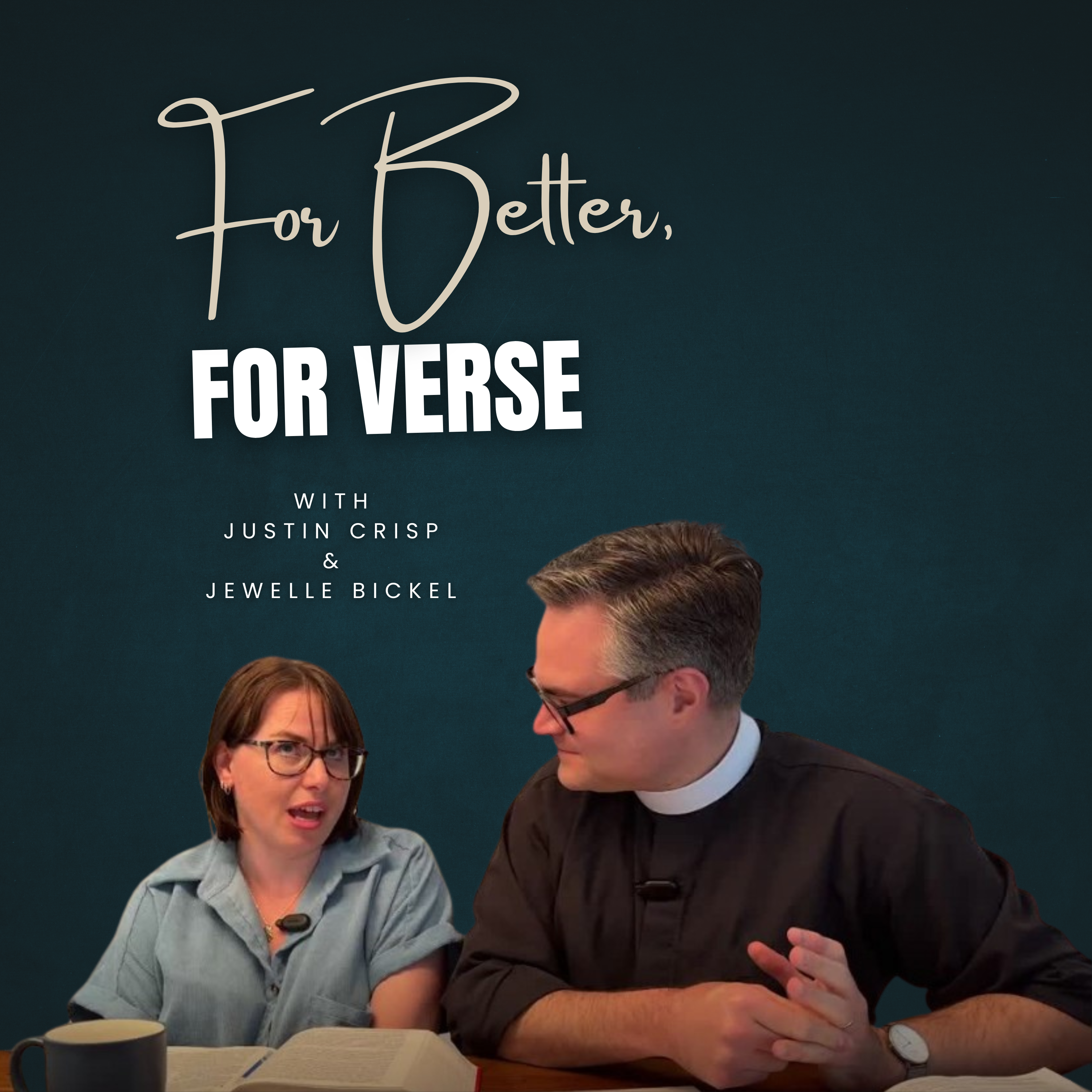
For Better, For Verse
by Justin Crisp
Justin and Jewelle are a theologian and a philosopher, and they're reading the Bible from cover-to-cover together in one year. Oh—and they're married! Each week they discuss the twists and turns of the next chapter of the Biblical story and how it speaks to their lives today. Join them for their personal search for the God of Jesus Christ in the story of this wild and wonderful book.
Episodes
-
Minor League Wrap-Up
Jewelle and Justin wrap up their walk through the Minor Prophets, also known as the Book of the Twelve, with Zephaniah, Zechariah, Haggai, and Malachi. They explore the wild visions and rich themes of these short books, focusing on their messages about the rebuilding of the temple, their…
more -
A Whale of a Tale
Justin and Jewelle continue exploring the narratives and themes of the minor prophets, focusing this episode on Jonah, Micah, Nahum, and Habakkuk. They delve into questions like whether God changes, why God having mercy on our enemies scandalizes us so much, what makes for authentic relationships...
-
God Wants Our Hearts
Justin and Jewelle take up Hosea, Joel, Amos, and Obadiah, beginning with Hosea's images of God as a husband who takes back an unfaithful wife and as a tender parent who taught Ephraim to walk. These prophets show us that sin breaks God's heart. God desires love not sacrifice, rent hearts not...
-
Resurrection of Hope
Justin and Jewelle finish the book of Ezekiel, discussing God's restoration of His people: God's action for the sake of His name, the Valley of the Dry Bones, a new temple, the glory of the Lord returning to the place it had abandoned. Ezekiel ends with a river running out from under the altar,...
-
Fearsome Bizarro Splendor
Justin and Jewelle tackle the strangest book yet in their Biblical trek: Ezekiel — a prophet whose volume knob is stuck at maximum, whose visions are gorgeous and bizarre in equal measure, and whose performance art includes eating a scroll, cooking over dung, and being forbidden to mourn his own...
-
Promises for Exiles, Then and Now
Jewelle and Justin explore the intense, difficult, but rewarding book of the prophet Jeremiah, which treats God's relationship to people and nations in all their complexity. Jeremiah encourages God's people to make peace with exile, encourages them by God's promise of a new covenant, and explores...
-
Two (or Three?) Isaiahs, One Hope
In their latest episode of For Better, For Verse, Justin and Jewelle dive deep into the complexities of Isaiah, exploring its dual narratives of judgment and consolation. From the prophetic words that have shaped our understanding of the Messiah to the rich context of its writing, there’s so much...
-
The Band Plays On
This episode explores the rich narratives of First and Second Kings, highlighting the lives of key figures like David, Solomon, Elijah, and Elisha. It emphasizes that what God wants most with humankind is a relationship, one which at this point in the Biblical story is only ever realized by...
-
God's Heroes?
The books of 1 and 2 Samuel bridge the era of judges and the establishment of the monarchy in Israel. These narratives not only depict the rise and fall of Saul and David but also reflect the struggles of a people seeking identity and stability after years of turmoil. Their significance extends...
-
Power, Projections, and Providence
In this episode on Judges and Ruth, Justin and Jewelle explore how the Biblical writers are gradually becoming aware that God works in the world in many varied and complicated ways. In Judges, we see God rewarding holiness and punishing wrongdoing, but we also see God partnering with flawed…
more -
Did We Hear That Right?
Justin Crisp and Jewelle Bickel explore the depths of Deuteronomy and Joshua, examining biblical history, theology, and moral questions surrounding divine revelation, the conquest of Canaan, and how justly to organize a whole civilization. Together they try to discern what the divine author, the...
-
Moses, We Have a Problem
In this episode, Justin Crisp and Jewelle Bickel explore the rich narratives and theological themes of the Book of Numbers, including its realistic account of human nature, the contradiction between God's love and God's justice, the nature of God, and the surprising ways God reveals Himself…
more -
The One About Leviticus
In this episode, Justin and Jewelle explore the conclusion of Exodus and the whole book of Leviticus, focusing on the Golden Calf episode, God's loving determination to keep his covenant with Israel in spite of their wrongdoing, the nature of idolatry, the significance of sacrifice, and how we…
more -
Rules, Rules, and More Rules
In this episode, Justin and Jewelle explore Exodus 13–31, discussing the exodus of the Israelites from Egypt, the significance of the Ten Plagues, the Passover, the giving of the Law at Mount Sinai, the establishment of the priesthood, and the construction of the Tabernacle. They delve into…
more -
God Is Who God Is
In this episode, Justin Crisp and Jewelle Bickel explore the narratives from Genesis 43 to Exodus 12, focusing on the stories of Joseph and Moses. Whereas the book of Genesis begins with Cain betraying Abel, it ends with Joseph forgiving his brothers, and then launches into the narrative of…
more -
This God Is Not Angry
In this episode, Justin and Jewelle explore Genesis chapters 22 to 42, discussing the themes of sacrifice, deceit, and God's faithfulness. They delve into the story of Abraham's near-sacrifice of Isaac, the prosperity of Isaac and Jacob, and the complex relationships within Jacob's family,...
-
Is the Bible About Us?
Summary In this episode, Justin Crisp and Jewelle Bickel launch their yearlong read through the Bible by exploring the first chapters of Genesis. They focus on the creation stories, the fall of humanity, the story of the flood, and God's covenants with Noah and Abram. They emphasize the way…
more -
The Finale
In this episode, Justin Crisp and Jewelle Bickel explore the final chapters of the Gospel of Luke, discussing the events leading up to Jesus' crucifixion and resurrection. They delve into the significance of the Last Supper, the agony in the garden, the betrayal by Judas, the trials before…
more -
Every End is a Beginning
In this episode, Justin Crisp and Jewelle Bickel explore the significant events surrounding Jesus’ triumphal entry into Jerusalem, the prophetic implications of his actions, and the reactions of the religious and political leaders of his day. They discuss the cleansing of the temple, the parable…
more -
The Hardest Parables
In this episode, Justin Crisp and Jewelle Bickel delve into several parables from the Gospel of Luke, exploring themes of ethics, wealth, and the nature of God's kingdom. They discuss the complexities of the parable of the dishonest manager, the contrasting fates of the rich man and Lazarus, and...
-
God of the One and the Many
In this episode, Justin Crisp and Jewelle Bickel explore Luke chapters 14 and 15, discussing more of Jesus' journey to Jerusalem, the true nature of humility, the potential cost of discipleship, and the parables of grace: the parables of the lost sheep, the lost coin, and the prodigal son. They...
-
The One-Two Punch of Grace
In this episode, Justin and Jewelle explore the teachings of Jesus from Luke 12 and 13, focusing on themes of fearless confession, God's provision, the dangers of greed, the nature of suffering, and the importance of patience. They discuss the parable of the rich fool, the call to not worry about...
-
The Better Part
In this episode, Justin Crisp and Jewelle Bickel explore Luke chapters 10 and 11, focusing on the parable of the Good Samaritan, the story of Mary and Martha, and the teachings of Jesus on prayer, including the Lord's Prayer. They discuss the significance of loving one's neighbor, the importance…
more -
I've Got a Bad Feeling About This
In this episode of For Better, for Verse, Justin Crisp and Jewelle Bickel delve into Luke chapters 9 and 10, exploring the themes of Jesus' teachings, how his disciples act after he gives them power over nature and the spiritual world (poorly!), and the true nature of Jesus' saving power....
-
Divine Identity Crisis
In this episode, Justin Crisp and Jewelle Bickel delve into Luke chapters 7 and 8, exploring the profound miracles of Jesus, the role of women in his ministry, the purpose of his parables, and his expansive view of family. Each of these stories emphasizes how crucial it is to understand who Jesus...
-
Jesus Took Himself Literally
In this episode of For Better, For Verse, Justin Crisp and Jewelle Bickel delve into Luke's account of the Sermon on the Plain, exploring its key themes such as the Blessings and Woes, the call to love one's enemies, and the nature of God's mercy. They discuss the significance of Jesus'…
more -
Matters of the Heart
In this episode, Justin and Jewelle explore Luke 5-6:11, focusing on the calling of the first disciples, Jesus' proclamation of God's forgiveness, and Jesus' tense interactions with the Pharisees. Justin and Jewelle discuss the significance of faith, the social implications of Jesus' actions, and...
-
Jesus' Temptation Era
In this episode, Justin Crisp and Jewelle Bickel explore Luke chapters 3 and 4, discussing the significant themes of John the Baptist's role, Jesus' temptation in the wilderness, the nature of Jesus' ministry, and the concept of the Messianic secret. They delve into the complexities of Jesus'...
-
Theodicy and Theophany
In this episode, Justin and Jewelle explore Luke chapter two, discussing the virgin birth, the significance of Mary's experience, and the theophany of angels announcing Jesus' birth to shepherds. They delve into the themes of treasuring memories, the prophecies of Simeon and Anna, and the...
-
Is God Obsessed?!
Justin and Jewelle introduce their quest to read the whole Bible, and take a deep dive into the first chapter of the gospel of Luke to make a start. Together, they discuss God's miraculous intervention in the lives of Zechariah and Elizabeth, giving them a child in their old age after many years…
more
We're indexing this podcast's transcripts for the first time — this can take a minute or two. We'll show results as soon as they're ready.
No matches for "" in this podcast's transcripts.
No topics indexed yet for this podcast.
Loading reviews...
ABOUT THIS SHOW
Justin and Jewelle are a theologian and a philosopher, and they're reading the Bible from cover-to-cover together in one year. Oh—and they're married! Each week they discuss the twists and turns of the next chapter of the Biblical story and how it speaks to their lives today. Join them for their personal search for the God of Jesus Christ in the story of this wild and wonderful book.
HOSTED BY
Justin Crisp
CATEGORIES
Loading similar podcasts...
Frequently Asked Questions
How many episodes does For Better, For Verse have?
For Better, For Verse currently has 30 episodes available on PodParley. New episodes are automatically indexed when they're published to the podcast feed.
What is For Better, For Verse about?
Justin and Jewelle are a theologian and a philosopher, and they're reading the Bible from cover-to-cover together in one year. Oh—and they're married! Each week they discuss the twists and turns of the next chapter of the Biblical story and how it speaks to their lives today. Join them for their...
How often does For Better, For Verse release new episodes?
For Better, For Verse has 30 episodes. Check the episode list to see recent publication dates and frequency.
Where can I listen to For Better, For Verse?
You can listen to For Better, For Verse on PodParley by clicking any episode. We provide an embedded audio player for direct listening, and you can also subscribe via your preferred podcast app using the RSS feed.
Who hosts For Better, For Verse?
For Better, For Verse is created and hosted by Justin Crisp.
URL copied to clipboard!