
PODCAST · society
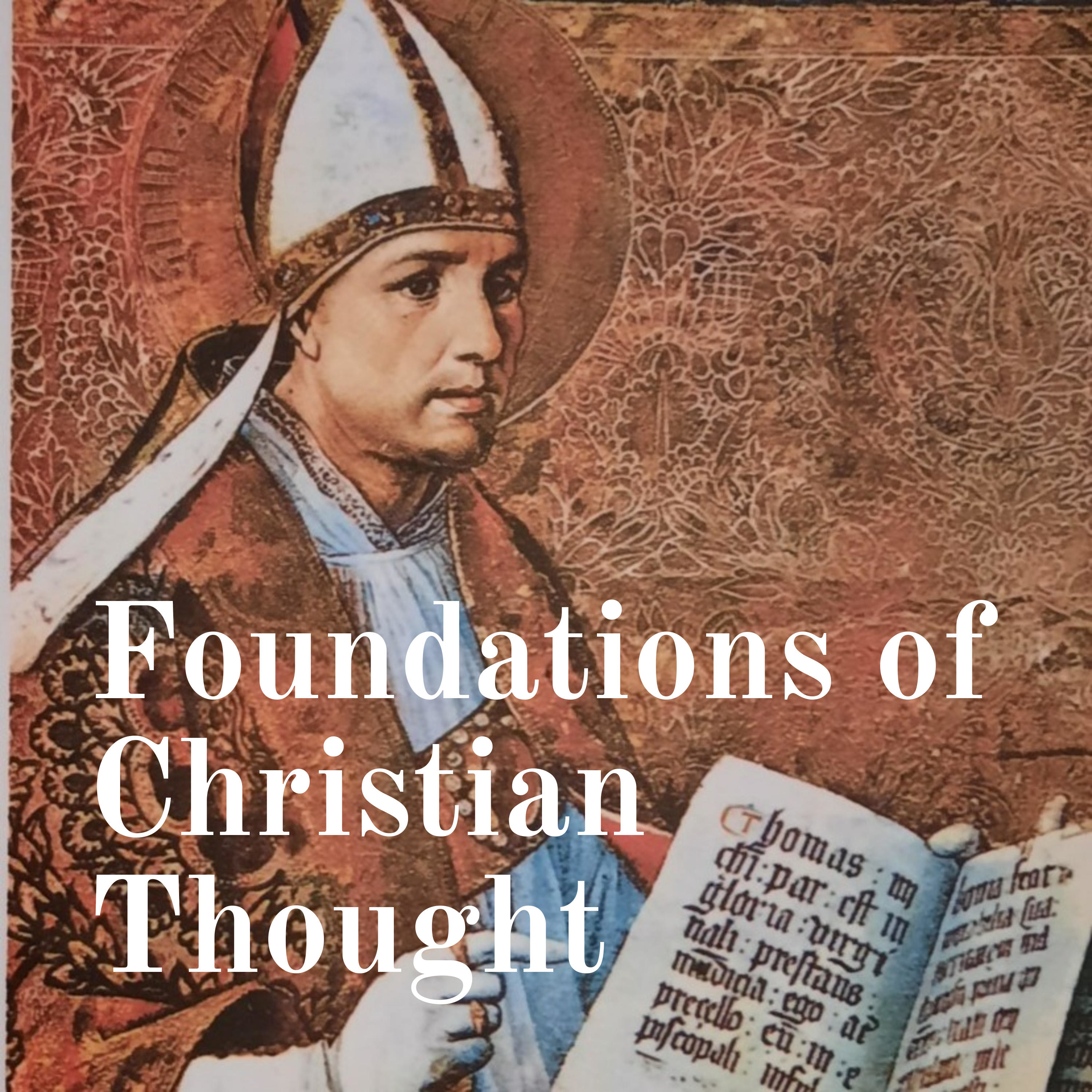
Foundations of Christian Thought
by Josef Freundorfer
With the modern mind confused and unhinged, finding a foundation solid enough to support ones intellect, deep enough to keep it grounded, and flexible enough to bend and mold to its needs, is a rare thing. Traditional Christian thought is the ground out of which western science, thought, literature, music and art grew.The book 'Christian Philosophy' by Joseph M. de Torre covers the basics of this old and often ignored system of thought. For those seeking to understand the tumultuous times and participate within it from firm ground this book provides just that.
-
248
Contemporary Philosophy
This final episode describes the schools of thought that are prevalent during the 20th century and their influence on the times today. Emphasis is placed on the thinking of Hegel as well as the thinking of the schools of materialism and existentialism. Part 7 History of Philosophy Chapter 48 Contemporary Philosophy a. Overall view b. Georg Wilhelm Friedrich Hegel (1770-1831) c. Marxism d. Other kinds of Materialism e. Existentialism
-
247
The History of Modern Philosophy
This episode describes how the modernist philosophic movement began as a sequence of metaphysical errors and divisions which has deviated it from a Christian form of philosophical inquiry. Emphasis is laid on the immanentistic thinking of the humanists and the thinkers Rene Descartes and Immanuel Kant. Part 7 History of Philosophy Chapter 47 The history of modern philosophy a. The modernity movement b. Humanism c. Modern philosophy and the church d. Rene Descartes (1596-1650) e. Immanuel Kant (1724-1804)
-
246
The History of Christian Philosophy
This section describes the history of Christian philosophy and what makes it unique and Christian as a form of philosophical inquiry as well as what it has done for philosophy in the world. Emphasis is placed on the contribution of the great Christian thinkers Augustine and Thomas Aquinas. Part 7 History of Philosophy Chapter 46 This history of Christian philosophy a. There is a Christian philosophy b. The formation of Christian philosophy c. The contents of Christian Philosophy. d. St. Augustine (354-430) e. St. Thomas Aquinas (1225-1274) f. Decadence after St. Thomas
-
245
The History of Ancient Philosophy
This section begins with a discussion of the historical setting for which Christianity started forming from. It emphasizes the schools of thought from Greece, more specifically that of Plato and Aristotle. Part 7 History of Philosophy Chapter 45 The History of Ancient Philosophy a. The historical setting of Christianity b. Plato (427-348 B.C.) c. Aristotle (384-322 B.C.) d. Neo-Platonism
-
244
Introduction to the History of Philosophy
This episode introduces the importance of philosophy on theological questioning and how this relation has changed through time. Part 7 History of Philosophy Chapter 44 Introduction to the history of philosophy a. Philosophy as instrument of theology b. Overview of the history of philosophy
-
243
Rights and Justice
This episode discusses the nature of the enforcement of laws for the sake of the ordering of society and the attainment of the common good. It also discusses the nature of rights and duties for the individual. Part 6 Ethics Chapter 43 Rights and justice a. Nature of the juridical order: the juridical mind b. Rights and duties c. Private property
-
242
Government, Authority and Laws
This episode discusses the achieving of the good of society in terms of authority and obedience. It describes the importance of government in the ordering of society as well as its limitations when it deviates from following the natural ordering of things Part 6 Ethics Chapter 42 Government, authority and laws a. Government and politics b. Authority and obedience c. Positive law
-
241
The Family
This episode describes the nature of family in light of the metaphysical understanding of man. It describes the importance of marriage and the family to society and the properties of marriage. Part 6 Ethics Chapter 41 The Family a. The nature of marriage b. The common good of the family c. Fundamental properties of the family d. Marriage and celibacy
-
240
Society and the Common Good
By making use of the metaphysical understanding of the common good for man this episode discusses the implications of this on society, the man who is a part of it. It talks of the structuring and ordering of society and the balance required for a society to flourish and the failings that arise when disorder or imbalance starts dividing society. Part 6 Ethics Chapter 40 Society and the common good a. Interrelations among men b. Friendship and the love of God c. What is society? d. History and culture e. Ordering of intermediate societies to civil society f. Ordering of the person to the common good of society g. Peace and war
-
239
Moral Acts
This episode discusses mans willfull freedom to act as he wishes and the relation of morality to those actions. Therefore it raises the topic of sin, its effects and also virtue and their attainment. Part 6. Ethics Chapter 39 Moral acts a. Will and Freedom b. Goodness and malice of human acts c. Moral evil or sin d. Types of sins e. Effects of sin f. Virtues g. Types of virtues
-
238
Moral Law and Conscience
This section discusses the relation of moral law and man. It discusses the natural and eternal laws and how they are observed and practiced and where the conscience of man relates to it. Part 6. Ethics Chapter 38. Moral law and conscience a. Eternal law and moral law b. Characteristics of the natural law c. Knowledge of the natural law d. Content of the natural law e. Moral sanction f. Conscience g. Principles guiding conscience
-
237
The Common Good
Using the basis of ethics as laid out in the previous episodes this section begins by differentiating between the proper good and the common good and how they relate to mankind as well as individual persons as well as the obligation of men to look out for each other and the rest of reality. Part 6 Ethics Chapter 37 The common good a. Proper good and common good b. The common good of mankind c. Love and order d. The false philosophies e. Ordination of beings to the common good f. The common good shared in the order of the universe g. Ordination of each single substance to the common good h. Direct ordination of spiritual beings to the common good
-
236
The Last End
This episode describes happiness as a beings attainment and possession of its last end, and the ways of understanding last end, both natural and supernatural. P6 Ethics Chapter 35 The last end a. Existence of a last end b. Identification of the last end c. Natural last end and supernatural last end d. Possession of the last end: happiness
-
235
Good and Evil
This section describes goodness in practical metaphysical terms relating being to its end. It than discusses this good that each being ought to seek and the many aspects of evil which is a willful movement against the good. Part 6 Chapter 35 Good and Evil a. The good b. Participated beings have a good end or purpose c. The final good moves beings d. Evil as privation e. Evil as deordination f. Evil and freedom g. Evil as such can neither move nor motivate h. Physical evil i. It is impossible for God to be the cause of evil
-
234
Introduction to Ethics
This episode discusses the basis of ethics through the metaphysical understanding of man in relation to his end. It also introduces the manner in which ethics will be described as well as good and evil, ethical science vs moral uprightness. Part6 Ethics Chapter 34 Introduction a. Metaphysics b. Free Actions c. Ethics as part of metaphysics d. Ethical science and moral uprightness e. Order of this study
-
233
Man in the World
This episode discusses the implications of the metaphysical nature of man on all aspects of his life and interactions with himself, humanity, nature and God. It is followed by an appendix on Catholic doctrine about man Part 5 Metaphysics of Man Chapter 33 a. The social nature of man b. Natural sciences c. Man and history d. Human work e. The sanctification of work f. Participation in divine action Appendix: Catholic Doctrine About Man
-
232
The Person and Human Nature
This section describes man as an individual person with personality within the universe and the nature of man as universal and their relationship to eachother. Part 5 Metaphysics of man Chapter 32 The person and human nature a. Nature as individuated b. Person and personality c. The place of the person in the universe
-
231
The Human Soul
This section discusses spirituality and the human soul from the foundations of metaphysics and the many implications for man and society. Part 5 Metaphysics of man Chapter 31 The human soul a. Spirituality of the human soul b. The soul as substantial form of the body: no reincarnation c. The spiritual perfection of man d. Origin of the human soul e. Immortality of the human soul
-
230
Freedom
This episode discusses the metaphysical nature of Freedom and the different types of freedom and that which touches itself on man as either good or evil. Part 5 Metaphysics of man Chapter 30 Freedom a. What is Freedom b. Inner freedom and exterior freedom c. Freedom of choice: determinism d. The root of the freedom of man e. Freedom and necessity f. Freedom and the good g. Free volition of evil
-
229
The Will
This section discusses the nature and object of the human will, emotions and goodness. It than relates all of these to human freedom and God as the last ends. Part 5 Metaphysics of Man Chapter 29 The will a. Nature and object of the will. The emotions b. The good of man c. the will and the last end d. Natural inclination of the will as distinct e. Will and intelligence f. Causality of the act of the will g. The will and human behavior
-
228
Judgement
This episode discusses how the human intelligence judges the information which the senses provide it. This naturally follows into how things such as truth and certainty are related to this as well as nature of knowledge in relation to man. Part 5 Metaphysics of man Chapter 28 Judgement a. The operation of judging b. Judgement and truth c. Certainty and belief d. Discursive process of reasoning e. Self-knowledge, consciousness and reflection f. Conclusion: knowledge as enrichment of being
-
227
Simple Apprehension
This section begins with a discussion of how the mind and intelligence interacts with reality through the senses and the relation and implications that arise. It than discusses the means by which reality is transferred to the intelligence and its different uses. Part 5 Metaphysics of Man Chapter 27 Simple Apprehension a. Understanding begins in the senses b. Abstraction: from the sensible to the intellect c. Impression of the intelligible form on the intellect d. The act of understanding e. Characteristics of human concepts f. Knowledge of the singular
-
226
Intelligence
This episode discusses the nature of the intelligence in man as well as its object and a brief summary of its function. Part 5 Metaphysics of Man Chapter 26 Intelligence a. Overview b. Nature and object of the intelligence c. Process of understanding
-
225
Introduction to the Metaphysics of Man
This episode introduces the metaphysics of man by discussing the nature of man through the lens of metaphysics on both an individual and a social level and the many different implications. It summarizes the methods with which this will be broken down and analyzed over the next episodes in order to better understand man. Part 5 Metaphysics of man Chapter 25 Introduction a. Recapitulation: Metaphysics as comprehensive knowledge b. Object of the metaphysics of man c. Spirit and matter: social sciences and physical sciences d. Order and method of study e. Man as spiritual and corporeal creature f. Human acivity
-
224
Divine Operation
This episode discusses the implication of the metaphysical understanding of God on the Christian and how we can relate and are related to Him on a metaphysical and therefore relational level. Part 4 Natural Theology Chapter 24 Divine operation a. God is personal b. Divine is knowledge c. Divine will: God is love e. God as creator f. God's presence everywhere g. Divine freedom and providence.
-
223
God is Ipsum Esse Subsistens
This episode elaborates upon the metaphysical definition of God and the many attributes that we can therefore know of him from such a strictly natural understanding of him. Part 4 Natural Theology Chapter 23 God is Ipsum Esse Subsistens a. The essence of God b. The simplicity of God c. The transcendence of God d. The supreme goodness of God e. How God should be loved f. Immensity, immutability, eternity
-
222
Ways of Demonstrating the Existence of God
This episode discusses the many classical intellectual proofs of the existence of a God. These obviously do not prove the personhood, mercy or love of a God in the Christian sense, but the existence of a God through the use of metaphysics, and many corollaries associated with that metaphysical knowledge of God. Part 4 Natural Theology Chapter 22 Ways of demonstrating the existence of God a. Elucidation of terms b. The first way: motion c. The second way: activity d. The third way: generation and corruption e. The fourth way: perfection (a summary of metaphysics) f. The fifth way: order and intelligency
-
221
God Is
This episode discusses a variety of the implications that come from the study of metaphysics and God including discussions of the criticisms therewith. Part 4 Natural Theology Chapter 21 God Is a. Man can know God: natural and supernatural knowledge b. Natural theology as highest achievement of metaphysics c. Philosophy cannot ignore God d. Reason is led to God e. Reason is not the only factor in our knowledge of God f. Agnosticism is unreasonable g. Importance of the rational demonstration of God's existence h. Limits of the human knowledge of God i. The problem of atheism j. The principle of immanence
-
220
Concluding Review of Metaphysics
This episode discusses the importance of the study of metaphysics for the good and proper study of theology and understanding of God. Part 3 Metaphysics Chapter 20 Concluding Review of Metaphysics a. The analogy of being and our knowledge of God b. Natural and supernatural wisdom
-
219
Transcendental Properties of Being
This chapter discusses the transcendental properties of being and the implications of them both to the particular individual and on a social level as a byproduct of the metaphysical analysis of God, man and reality. Beauty is the harmonious summation of these properties made visible. Part 3 Metaphysics Chapter 19 Transcendental properties of being a. Predicamental classification of essences and transcendental vision of being b. Metaphysical discover of the transcendentals c. The unity of being d. The truth of being e. The goodness of being f. The common good: law and justice g. Evil as the absence of good h. The beauty of being
-
218
Being and causality
This chapter discusses what cause is, and elaborates on the different types of cause in the context of metaphysics, touching upon God and reality. Part 3 Metaphysics Chapter 18 Being and Causality a. Elucidation of terms b. Origin of the concept of cause: the four causes c. Material cause and formal cause: Theological relevance d. The efficient cause: creation and causality e. The instrumental cause f. The final cause: cause of all causes g. Direction to end; freedom and love: the order of the universe h. Importance of the principle of causality
-
217
The Activity of Created Being
This section discusses the implications of being a human person in relation to reality and God, which underly the Christian way of life and religion. Part 3 Metaphysics Chapter 17 The activity of created being a. Esse and nature as principles of activity b. Application to value of human life c. Beings act according to their nature d. Activity as the perfection of being: idleness and work e. Transient and immanent actions
-
216
The Act of Being and the Essence
This episode, making use of the understanding built up from the previous chapters, discusses being and its relation to people and God through time. Part 3 Metaphysics Chapter 16 The act of being and the essence a. Ultimate structure of the finite subsistent b. Predicamental and transcendental c. The participation of being as basis of the analogy of being d. Subsistent subject and person: activity follows being e. Individual and person
-
215
The Essence
This episode introduces and differentiates the terms essence, nature, concept and form and describes them in terms of reality and metaphysics. Part 3 Metaphysics Chapter 15 The Essence a. Elucidation of terms: essence, nature, concept, definition b. Essence and form c. The principles of individuation
-
214
Potency and Act
This episode discusses potency and act and how they interrelate in a perfect and imperfect way reflecting the growth of substance and accidents in the metaphysical reality. Part 3 Metaphysics Chapter 14 Potency and Act a. Simplicity of these concepts, gathered from experience of change b. Motion as passage from potency to act c. Other metaphysical insights of potency and act
-
213
Substance and Accidents
This episode discusses in detail the technical metaphysical definitions of substance and accidents and the many implications that arise. Part 3 Metaphysics Chapter 13 Substance and Accidents a. The evidence of change and the truth about being b. The notion of being applies primarily to substance c. Accident: secondary manners of being d. Substance and accidents related in three ways e. The "inesse" of the accidents f. Particular importance of relation
-
212
The Starting Point of the Metaphysical Road
This episode starts concisely defining the terms used in metaphysics as well as conveying their relevance to observing and understanding reality Part 3 Metaphysics Chapter 12 The starting point of the metaphysical road a. Being, to be, essence, existence b. The starting point of metaphysics c. Metaphysical progress
-
211
General Introduction to Metaphysics
This episode discusses Metaphysics and its most basic insights and how they relate to understanding reality and how a denial of them leads to confusion. Part 3 Metaphysics Chapter 11 General introduction to metaphysics a. Metaphysics: the science of being as being b. The object of Metaphysics c. Being is analogical d. The principle of non-contradiction e. importance of metaphysics for theology
-
210
The History of Philosophy
This section discusses what is meant by 'history of philosophy' through the relation of time and truth. Part 2 Introduction to Philosophy Chapter 10 The History of Philosophy a. Metaphysics and Truth b. Cultural Relativism
-
209
The Method of Metaphysics
This episode discusses how metaphysics leads underpins ones ability to know reality. It briefly summarizes the processes with which somebody makes use of it and how these lead one to know reality in its varying ways of being know. Part 2 Introduction to Christian Philosophy Chapter 9 The Method of metaphysics a. Philosophy begins with wonder b. Science as the search for the universal and necessary c. Intelligence and the senses d. Intellectual and sensible certainty e. Intelligence and imagination
-
208
Other Aspects of Christian Philosophy and their Theological Relevance
This episode discusses how a proper understanding of metaphysics puts all other areas of learning in their right position and orientation towards God. That a corrupting of metaphysical understanding skews how to both teach and learn all other subjects. Part 2 Introduction to Christian Philosophy Chapter 8 Other aspects of Christian Philosophy and their theological relevance a. Metaphysics of man and sciences of man b. Particular sciences are in need of metaphysics c. Theological relevance of the metaphysics of nature d. Metaphysics and logic
-
207
Metaphysics of First Philosophy
This chapter introduces the most fundamental terms and concepts of metaphysics as well as how they relate to ones understanding of God and man within the context of reality. Part 2 Introduction to Christian Philosophy Chapter 7 Metaphysics of first philosophy a. The science of being as being b. Substance and accidents, potentiality and actuality c. Matter and form d. God as the universal cause of being: essence and the act of being e The properties of being f. Metaphysics and theology
-
206
The Nature of Philosophy
This chapter begins with a lengthy discussion of what is philosophy and its many implications. It further elaborates on the general areas of study within philosophy and their distinctions. Part 2 Introduction to Christian Philosophy Chapter 6 The Nature of Philosophy a. History and etymology of the term b. Wisdom as knowledge of the ultimate causes c. A wise man order everything in relation to God d. Wisdom as science e. Philosophy and the other sciences
-
205
Disposition of the Christian toward Philosophy
This chapter discusses some differences in how different cultures view philosophy and important distinctions between them, and how the Christian form of Philosophy is a common foundation for western culture, thought, art and society. It ends with a brief introduction to the relation between faith and reason. Part 2 Introduction to Christian Philosophy Chapter 5 Disposition of the Christian toward philosophy a. God and the natural truths of religion b. Philosophy and the truths of the natural order c. Christian Philosophy as a common cultural heritage d. The help of faith not against the use of the intelligence
-
204
Development of Philosophy in Christianity
This chapter discusses the historical nature of the development and augmentation of a uniquely Christian form of Philosophy, including many areas of error or common deviance that tend to occur. Part 2 Introduction to Christian Philosophy Chapter 4 Development of philosophy in Christianity a. Beginning of theology in Christianity b. The original synthesis of St. Thomas Aquinas c. Continuity of Christian Philosophy
-
203
The Philosophical Exercise of Reason as Instrument of Theology
This chapter discusses the different ways of knowing and how they relate to the natural and supernatural reality, including a brief summary of the history of philosophy entering the modern world. Part 1 An Introduction to Theology Chapter 3 The philosophical exercise of reason as instrument of theology a. Spontaneous knowledge and philosophical knowledge b. Continuity of all knowledge c. Historical origin of theology: Christian philosophy
-
202
Theology as a Science
This episode describes the purpose of theology as well as our ability to understand it. It discusses the relationship of man's use of reason and divine and natural revelation within this context. Part 1 An Introduction to Theology Chapter 2 Theology as a Science a. The object of Theology b. Source of theological knowledge: divine revelation c. The believer uses reason in theology
-
201
Theological Training
This episode summarizes the motivations and reasons for this work as well as a brief summary of the organization and ordering of the book. Part 1 An Introduction to Theology Chapter 1. Theological Training a. The need for doctrinal formation: a consequence of our divine vocation b. Reasons for this study c. A special reason d. Content of Theological Study
-
200
Preface
Preface to the third Edition of the book Christian Philosophy as written by the author in Manilla in 1994 on the memorial of St Thomas Aquinas, 28th of January. Written by Joseph M. De Torre and read by Josef Freundorfer with permission from Sinag Tala Publishers
-
199
P7Ch48e Existentialism
Part 7 History of Philosophy Chapter 48 Contemporary Philosophy Section e. Existentialism This section looks at the breadth of existentialist thinkers and their immanent subjectivism.
We're indexing this podcast's transcripts for the first time — this can take a minute or two. We'll show results as soon as they're ready.
No matches for "" in this podcast's transcripts.
No topics indexed yet for this podcast.
Loading reviews...
ABOUT THIS SHOW
With the modern mind confused and unhinged, finding a foundation solid enough to support ones intellect, deep enough to keep it grounded, and flexible enough to bend and mold to its needs, is a rare thing. Traditional Christian thought is the ground out of which western science, thought, literature, music and art grew.The book 'Christian Philosophy' by Joseph M. de Torre covers the basics of this old and often ignored system of thought. For those seeking to understand the tumultuous times and participate within it from firm ground this book provides just that.
HOSTED BY
Josef Freundorfer
Loading similar podcasts...
Frequently Asked Questions
How many episodes does Foundations of Christian Thought have?
Foundations of Christian Thought currently has 50 episodes available on PodParley. New episodes are automatically indexed when they're published to the podcast feed.
What is Foundations of Christian Thought about?
With the modern mind confused and unhinged, finding a foundation solid enough to support ones intellect, deep enough to keep it grounded, and flexible enough to bend and mold to its needs, is a rare thing. Traditional Christian thought is the ground out of which western science, thought,...
How often does Foundations of Christian Thought release new episodes?
Foundations of Christian Thought has 50 episodes. Check the episode list to see recent publication dates and frequency.
Where can I listen to Foundations of Christian Thought?
You can listen to Foundations of Christian Thought on PodParley by clicking any episode. We provide an embedded audio player for direct listening, and you can also subscribe via your preferred podcast app using the RSS feed.
Who hosts Foundations of Christian Thought?
Foundations of Christian Thought is created and hosted by Josef Freundorfer.
URL copied to clipboard!