
PODCAST · business
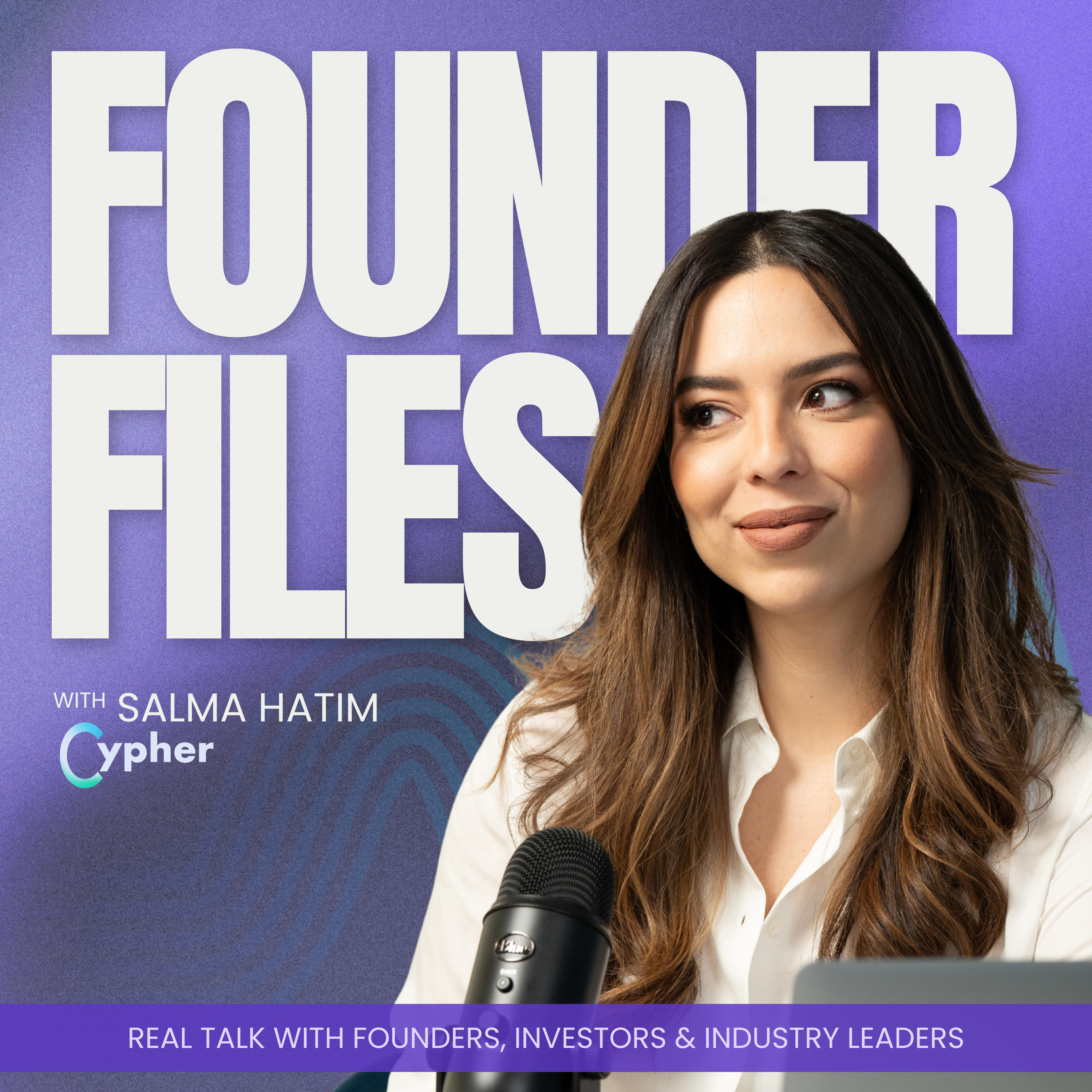
Founder Files
by Cypher
Founder Files is a podcast about the real decisions behind scaling a business. Hosted by Salma Hatim, Founder and CEO of Cypher, the show features candid conversations with founders, operators, and industry leaders building and supporting high-growth companies. We unpack what actually happens behind the scenes as companies scale, from financial systems and forecasting to revenue, funding decisions, and the tradeoffs leaders make along the way.
-
37
36. Accounts Receivable, Collections, and Bad Debt: Fix Your Cash Flow Problems
Accounts receivable is one of the most common sources of cash flow pressure in growth-stage companies.Revenue can look strong on paper, but when collections don’t keep up, cash becomes constrained.In this video, I break down how AR and collections actually work, where they start to break down, and how to fix them. I also cover how to think about bad debt strategically and what it means for your financials.(00:00) Introduction(00:54) The real problem behind cash flow issues(01:46) Early warning signs of AR problems(03:44) Collections escalation and use of agencies(04:51) Systems between sales, billing, and accounting(06:02) Core metrics that matter (DSO, aging, AR vs revenue)(08:14) Thinking about bad debt strategically(10:36) How to improve your collections process
-
36
35. CEO Answers the Top 8 Questions on When You Need a Fractional CFO
What does a fractional CFO actually do, and when does a company need one?Here are the most common questions founders and CEOs ask as their business grows beyond basic accounting. From cash flow management and capital allocation to forecasting, reporting, and decision-making, the role of a CFO is about turning financial data into direction.If your numbers exist but aren’t helping you plan, allocate resources, or make decisions, this is where the finance function needs to evolve.(00:00) Introduction(00:56) If my books are clean and taxes are filed, what’s the gap a CFO actually fills that I won’t see on a P&L or tax return?(03:40) What are the first symptoms that feel like ops or sales problems, but are actually CFO problems?(05:22) What’s the simplest way to audit if I have bookkeeping, or if I actually have a finance function?(06:27) When are you too big for just a bookkeeper plus CPA setup?(08:53) What are the specific triggers where you needed a fractional CFO six months ago?(09:45) What are the red flags that founders and CEOs are doing the CFO’s job themselves?(11:00) What does a good fractional CFO setup look like versus hiring a full-time CFO?(12:13) What’s the difference between a CFO and a controller?
-
35
34. Financial Dashboards: How CEOs Turn Metrics Into Decisions
Rows of numbers and clean reporting might make it look like the dashboard is doing its job. But the real question to ask is: “Can leadership look at it and know what to do next?”In this conversation, I sit with Nick Jain to explain what makes a financial dashboard useful, how companies should think about dashboards from day one, and why visual, dynamic, decision-oriented dashboards matter as the business grows.(00:00) Introduction(01:10) What real-time financial visibility actually means(03:05) How to know when a company has outgrown static reports(04:13) Building dashboards: choosing a platform or hiring(05:19) Messy data: build the dashboard first or clean the data firstUseful dashboards follow three core principles:→ Dynamic: the metrics should evolve as the business evolves.→ Visual: leadership should understand what is happening in seconds.→ Actionable: metrics should help answer what to do next.A dashboard is not just a place to display KPIs. It is a tool that helps leadership understand performance quickly, spot issues earlier, and make better operating decisions. Dashboards should exist from day one, and they do not need perfect data to start being useful.Metrics are a means to an end. The end is better decision-making.
-
34
33. What Is Strategic Finance: How It Helps CEOs Make Decisions
Clean books and polished dashboards might make it look like the finance function is working. But the real question to ask is: Would leadership make different decisions this week with or without those numbers?In this conversation, I sit with Nick Jain to explain the difference between transactional finance and strategic finance, with a focus on companies growing in the $1M–$30M range.(00:00) Introduction(01:48) Strategic Finance and Business Decision-Making(02:33) What Strategic Finance Actually Means(04:10) Warning Signs of Transactional Finance(05:29) Dashboards and KPIs: Metrics Are a Means to an End(06:51) What a Practical CFO Actually Does(07:58) Should CFOs Teach CEOs Finance?(09:14) How Much to Invest in Accounting and Finance(10:35) CFO Cost Benchmarks and Rules of ThumbFinance has three core pillars: → Accounting: recording what happened → Treasury: managing cash in and out → FP&A: interpreting the numbers and supporting decisionsWhen finance stops at accounting and treasury, it remains transactional. Strategic finance lives in FP&A and CFO-level thinking, where financial data gets translated into decisions about hiring, investments, and growth.Metrics are a means to an end. The end is better decision-making.
-
33
32. When Audits Hit Growth Companies: VC, PE, & Lender Expectations
Stakeholders may request audits when companies are raising capital, bringing on private equity, expanding credit facilities, or entering serious M&A discussions. That is when expectations change.In this conversation with Rawan Sakatan, CPA, Director at Weaver, we discuss why audits appear as companies scale and how investors, lenders, and buyers think about financial reporting.(00:00) Introduction(00:49) Topics covered: audits, diligence, and investor expectations(02:26) Why growth-stage companies begin needing audits(06:00) Are M&A-ready founders also audit-ready?(08:09) What companies actually need in place to pass an audit(09:13) The top three mistakes founders make before their first audit(12:33) What expertise a finance team needs to support audit readinessAn audit is not the same as due diligence. → An audit looks backward and tests whether financial statements are fairly presented under GAAP. → Due diligence is broader. It evaluates risk, quality of earnings, working capital, and whether the business supports the valuation and deal assumptions. → A company can complete due diligence successfully and still not be ready for an audit, and the reverse can also happen.Growth-stage companies often encounter challenges in areas such as accruals, revenue recognition, equity tracking, documentation, and internal controls.Audit readiness is less about “perfection” and more about financial maturity.If you’re scaling past the early stages or planning for capital or an exit, understanding this difference protects credibility and valuation.
-
32
31. Profitable But Broke: The 6-Week Runway Crisis (Part 2)
Carter Looney, Operating Partner at Albatris and M&A advisor with 25+ years of experience, breaks down how a $12M SaaS company with strong margins and over a year of runway nearly ran out of cash.Revenue looked strong. EBITDA was positive. But accounts receivable ballooned, hiring outpaced collections, and timing killed liquidity.Profit doesn’t equal cash, and growth without cash discipline can cost you valuation, leverage, and investor trust.
-
31
30. Budget vs Forecast: Where Founders Get Confused (Part 1)
Carter Looney, Operating Partner at Albatris and M&A advisor with 25+ years of experience, explains the real difference between budgeting and forecasting, and why confusing the two leads founders to hire too early, overestimate revenue, and ignore cash timing.Budget is direction. Forecast is reality.Learn why pipeline isn’t revenue, why hiring to plan is dangerous, and why timing of cash matters more than hitting a target.
-
30
29. SaaS Revenue Recognition Explained: Bookings, Billing, Metrics
It’s essential to understand how bookings, billing, and revenue recognition translate into real financial performance in a subscription-based business, particularly SaaS and AI models. I spoke with Suezann Holmes, Founder & CEO of ScaleXP, to break down how SaaS revenue is actually earned over time, why invoicing is one of the most critical data sources in a subscription model, and how core SaaS metrics are built from that data. The conversation focuses on the realities founders face as they scale, including revenue timing, common invoicing and reporting mistakes, and what it takes to maintain financial credibility with investors and boards.If you’re leading a SaaS or subscription-based company and preparing for fundraising or board-level reporting, this episode is especially relevant. You’ll learn how revenue recognition under ASC 606 or IFRS 15 impacts ARR, MRR, retention, and growth metrics, and why getting this wrong early creates compounding risk as the business grows.(00:00) Introduction(01:55) A founder’s $5M “revenue” mistake: bookings vs real revenue(02:22) Why revenue matters: profitability, cash burn, and usage(03:27) Revenue vs contract value: what you’ve earned vs what’s promised(05:06) Bookings and contract value as leading indicators(06:19) Why invoicing is not just a back-office task(07:17) How to avoid invoicing and revenue recognition mistakes(09:23) CRM data requirements for clean billing and integrations(10:00) Internal controls for invoicing, revenue, and AR(11:32) Investor expectations: metrics founders must know by Series A and B(13:19) How ScaleXP pulls data from Xero and QuickBooks(13:42) Automating SaaS metrics with a calculation engine(15:12) ASC 606 and IFRS 15 explained for SaaS founders(17:41) Credibility as the most important KPI for foundersIf you’re a SaaS or subscription business looking to get revenue recognition right, learn more at cypherfin.com.
-
29
28. Investor-Ready Financial Model for Startups: Forecasting, Revenue, and Assumptions
An investor-ready financial model shows how a startup turns strategy into numbers. It connects the business model, revenue drivers, costs, assumptions, and cash implications into a clear picture founders and investors can rely on.The CEO owns the story. This includes the vision for growth, strategic priorities, pricing approach, and hiring plan. The financial model exists to test and support that strategy, not to create it.The finance team’s role is to bring the strategy to life through numbers. This means turning the vision into assumptions, building forecasts, running scenarios, and showing whether the strategy is financially viable.There are two primary forecasting approaches. Top-down forecasting starts from market size and market share to define long-term potential. Bottom-up forecasting starts from internal drivers like pricing, conversion rates, sales capacity, and hiring to model near-term execution. Strong models use both.Assumptions are the foundation of the model. They define how revenue grows, how costs scale, how hiring progresses, and how cash moves. Credible assumptions are grounded in historical data, benchmarks, market research, and operating realities.For SaaS and AI companies, revenue modeling requires separating bookings, billings, recognized revenue, and cash. These do not occur at the same time. Subscription revenue builds over time through an ARR snowball as new bookings stack on top of existing recurring revenue.Costs and hiring plans are major drivers of margins and cash usage. Modeling COGS, operating expenses, and headcount timing shows how growth decisions impact profitability and runway.Once revenue and costs are built, the model produces outputs investors care about. These include financial statements, operational cash flow forecasts, and KPIs that show performance, liquidity, and efficiency.Scenario planning pressure-tests the model. Base, downside, and upside cases help founders understand risk, identify pressure points, and make informed growth decisions before committing capital.At Cypher, we help SaaS, AI, and e-commerce companies build investor-ready financial models that turn strategy into clear, defensible numbers.
-
28
#27 - Fundraising in 2026: 5 Things Founders Must Get Right
Fundraising in 2026 is more selective.Here are the 5 things founders need to get right in 2026:(00:00) - Introduction(01:09) - 1️⃣ Be clear about your fundraising strategy and your capital choicesHow much do you actually need, and why? Raising too much implies a high valuation. A higher valuation puts you in a tougher competitive set. The real question is whether you can back it up with traction, data, or momentum. Agile fundraising is often the smarter move. You don’t need the full amount on day one. (05:07) - 2️⃣ Get investor-ready before you fundraiseYour story and your financial model must align. Assumptions should be defensible and grounded in data. Serious conversations should never start without a clean data room, including your deck, financials, forecasts, cap table, legal docs, team, and operating plans.(07:07) - 3️⃣ Governance matters more than founders thinkBefore you raise, model dilution and understand how ownership evolves. Use proper cap table tools like Carta, Pulley, Capbase, or Cake. Review ASC 718 or IFRS 2 early. Equity compensation issues surface fast during diligence. Plan for QSBS eligibility from day one. Governance mistakes destroy leverage.(08:29) - 4️⃣ AI changed the gameBuilding software is cheaper and faster than ever. The product alone is no longer the differentiator. Simply “using AI” is not a strategy. Investors care about real usage, real demand, distribution, and the strength of the team executing.(09:18) - 5️⃣ Don’t stop networkingFundraising doesn’t start when you need money. Strong networks are built ahead of time. Access still flows through trust, timing, and warm introductions.
-
27
#26 - Sales Tax for SaaS Explained: Nexus, Taxability, and Scaling Risk
Sales tax is often overlooked by SaaS, AI, and e-commerce companies until it becomes urgent, expensive, and unavoidable.In this episode of the Founder Files podcast, Salma Hatim sits down with Monika Miles, President of Miles Consulting Group, to break down how sales tax actually works today for modern SaaS businesses.They cover what nexus really means, the difference between physical and economic nexus, why SaaS is often taxable even when teams assume it is exempt, how contract language can change tax outcomes, and where sales tax software helps and falls short.The conversation also explains why sales tax issues tend to surface during fundraising, audits, loans, and M&A, and what leadership teams can do to address risk before it becomes a blocker.(00:00) Introduction(02:08) What Nexus Really Means Today(06:58) Are Your Products or Services Taxable(09:47) Why Automation Alone Isn’t Enough for Sales Tax(15:28) How to Start the Sales Tax Conversation as a Company(19:51) Sales Tax Considerations Before a Fundraise or VC Round(23:02) Knowing When Sales Tax Is and Isn’t a Priority Yet(26:10) What an Initial Call with Miles Consulting Group Looks Like(30:48) Why Sales Tax Should Be a Leadership Priority Before Diligence💡 New episodes drop every Tuesday at 7 AM EST.Talk to CypherLearn more about Cypher.Tech-Enabled Accounting & Finance. Built for Growth.
-
26
#25 - How Startups Succeed and Break Through the $1M to $10M Stage (Andrew Ackerman)
Meet Andrew Ackerman, 2x founder, VC investor with 70+ early-stage investments, accelerator operator, and author of The Entrepreneur’s Odyssey.We sit down with Andrew to unpack what actually drives startup success, from early traction to scaling past the first million in revenue. Drawing on decades of operating, investing, and mentoring founders, Andrew shares a clear-eyed view of what works, what fails, and why.Topics covered:How investors define growth and traction at each stageWhy most startups fail and what failure really meansBusiness vs. venture-scale startup thinkingWhy founders get stuck around $1M in revenueWhat scalable go-to-market really looks likeFundraising in tough markets and how to approach itWhen financials need to be cleaned up and why it mattersEarly hires and fractional roles founders should not delayWe also dive into Andrew’s book, The Entrepreneur’s Odyssey: A Novel Approach to Startup Success, a story-driven guide that pulls together real startup lessons into one practical, readable framework for founders.More about Andrew:Buy The Entrepreneur’s Odyssey on AmazonVisit Andrew’s personal siteConnect with Andrew on LinkedIn
-
25
#24 - Cash vs Accrual: When Growing Companies Need GAAP
Cash accounting shows what’s in the bank. That works early, when transactions are simple, and the main concern is liquidity.As companies grow, revenue becomes recurring, hiring accelerates, and financials start driving real decisions. Accrual accounting changes how revenue and expenses are recognized and gives a clearer view of performance. It introduces deferred revenue, prepaid expenses, and proper expense matching. But accrual alone does not mean GAAP-compliant.(00:00) Introduction(03:39) The Difference Between Cash and Accrual Accounting(07:11) When Cash Accounting Still Works (Sole Proprietors and Simple Businesses)(07:40) Pros and Cons of Accrual Accounting(10:55) How Accrual Changes Revenue Recognition(13:09) Top 3 ASC Guidelines AI Companies Should Know for US GAAP Compliance(17:11) The Biggest GAAP Challenge for SaaS and AI Companies: Revenue Recognition(24:00) US GAAP Resources for Founders (Guidance + Compliance Checklist)(25:15) Why Inaccurate Reporting Breaks SaaS Metrics and Decision-Making(28:12) Why Accrual Alone Is Not Enough and When US GAAP Becomes Critical(32:14) Final Takeaways and Closing ThoughtsCash stops working once growth adds complexity. Accrual fixes performance visibility, but without GAAP discipline, gaps still surface. Confusion between bookings, invoices, cash received, and recognized revenue is one of the most common issues during fundraising, audits, lending, and M&A. SaaS and AI-specific GAAP topics like revenue recognition, software cost capitalization, and diligence questions from investors come up repeatedly.If your company is growing toward fundraising, an exit, institutional lending, or audits, this helps clarify whether your financials support those goals.Want a copy of our US GAAP resources?We have two practical guides we reference often:• US GAAP compliance checklist for growing companies• ASC guidance applicable to SaaS and AI businessesEmail [email protected] and I’ll share them with you.💡 New episodes drop every Tuesday at 7 AM EST.Talk to CypherLearn more about Cypher.Tech-Enabled Accounting & Finance. Built for Growth.
-
24
#23 - Why Founders Outgrow Their Tax Advisor | Fractional CFOs, Projections & Year-Close (Part 2)
Tax issues can come from filing mistakes, but they also come from missing financial context.In Part 2 of this conversation, I continue my discussion with Bayaan Oluyadi, CPA and founder of KTB Services, focusing on what happens AFTER compliance, and why growing companies often need more than a tax advisor alone as they scale.We talk through how founders and CEOs should think about fractional finance teams, projections, clean books, and the collaboration required to avoid surprises and missed opportunities when closing out the year.We cover:• Why clean, up to date books matter more than most founders realize• How CPAs, CFOs, and bookkeepers work together effectively• When a fractional CFO makes sense for growing companies• Why projections change tax and planning conversations• Common write-off misconceptions and audit risk• What real year-close readiness looks like for scaling companies(01:24) Entity structure as the first lever to avoid overpaying(03:56) Why clean books drive better tax outcomes(04:30) Write off myths, audit risk, and the dog story(06:34) The role of a tax advisor and why collaboration matters(06:59) Why fractional finance teams exist(09:13) When a fractional CFO becomes necessary(12:24) Education, scope clarity, and finance roles(16:11) Year-close planning tipsWant a copy of our Year-End Financial Checklists?Email [email protected] and we’ll share it with you.💡 New episodes drop every Tuesday at 7 AM EST.Talk to CypherLearn more about Cypher.Tech-Enabled Accounting & Finance. Built for Growth.
-
23
#22 - Tax Problems Start Before Tax Season | Entity Structure, Planning & Year-End Mistakes (Part 1)
Tax season doesn’t create problems, but it reveals them.In Part 1 of this conversation, I sit down with Bayaan Oluyadi, CPA and founder of KTB Services, to talk through the questions founders and CEOs ask every year right before tax season and usually too late.We cover:• How to think about entity structure and why “I’m an LLC” isn’t an answer• The tax mistakes that happen when finance is reactive instead of planned• R&D credits and Section 174 and where companies get tripped up• Sales tax, nexus, and why this becomes a problem during diligence• What year-end planning should actually look like for growth-stage companiesPart 2 goes deeper into the role of the CFO, fractional finance teams, and how to build the right finance function as you scale.Want a copy of the Year-End Financial Checklist?Email [email protected] and we’ll share it with you.(02:13) Entity structure confusion(03:17) Why a CPA alone isn’t enough(05:18) QSBS and planning from day one(06:52) R&D and Section 174 pitfalls(09:38) Why sales tax breaks deals(11:58) When an LLC should consider S-Corp status(17:17) What year-end planning should look likeWe’re the outsourced finance function for SaaS, tech, AI, and e-commerce companies that want clarity, scalability, and an embedded partner, not just bookkeeping.If you’re ready to move from chaos to clean books, visit cypherfin.com or book a call.💡 New episodes drop every Tuesday at 7 AM EST.Talk to CypherLearn more about Cypher.Tech-Enabled Accounting & Finance. Built for Growth.
-
22
#21 – Year-End Financial Cleanup: How to Fix Chaos, Rebuild Your Books & Start 2026 with Clarity
If you’re a founder or CEO carrying a lot of year-end stress, you’re not alone… messy numbers, pressure from investors, and the feeling that your financials aren’t telling the full story.In our first solo episode of Founder Files, Cypher Founder & CEO Salma Hatim breaks down the real reason so many companies struggle with their financials, and the exact steps to go from chaos to clarity.(03:18) Clean Up the Historical Financials(07:46) Streamline Processes(08:10) Accounts Payable (AP)(11:00) Accounts Receivable (AR)(12:59) Payroll(13:35) Internal Controls(14:32) Implement Monthly Closes(17:30) Tax Advisor ≠ Finance TeamWe cover: - Why messy historical books block fundraising & investor trust - The non-negotiable first step: cleaning up prior-year financials - How to rebuild your Chart of Accounts for SaaS, e-commerce & tech- Revenue recognition (ASC 606), COGS, and margin accuracy - Streamlining AP, AR, payroll & monthly close - Why your CPA ≠ your finance department - What founders risk when they mix personal & business spending - The difference between cash basis vs. US GAAP - How clean books unlock confident decisions, faster collections & real cash flow visibilityIf you're heading into 2026 with blurry numbers, late reporting, or pressure from investors, this episode will show you exactly where to start.To keep this practical, we’re happy to share the same templates we reference in this episode.If you’d like a copy of these resources, email [email protected] or connect with Salma on LinkedIn and send a quick message.1. SaaS Chart of Accounts + FS Templates2. Pre-Approved Vendor List Template3. Customer Master Data TemplateCypher delivers Tech-Enabled Accounting & Finance. Built for Growth.We’re the outsourced finance function for SaaS, tech, AI, and e-commerce companies that want clarity, scalability, and an embedded partner, not just bookkeeping.If you’re ready to move from chaos to clean books, visit cypherfin.com or book a call.💡 New episodes drop every Tuesday at 7 AM EST.Talk to Cypher
-
21
#20 – Reinventing E-commerce Pricing with AI: Jared Yaman (Spresso.AI)
Jared Yaman, Co-founder of Spresso.AI, joins Founder Files to shares his journey from corporate lawyer to gaming entrepreneur, to scaling Boxed.com through IPO, and now to building AI SaaS. Along the way, Jared dives into capital efficiency, fundraising strategy, and why curiosity and continuous learning matter most as a founder.Topics include:— Turning static prices into dynamic ranges with reinforcement learning— Fundraising advice: when to start, how to prep, and learning from “no”— Lessons from scaling Boxed.com and competing with Amazon— The shift from growth-at-all-costs to capital-efficient startups💡 New episodes drop every Tuesday at 7 AM EST.Talk to Cypher
-
20
#19 - Cracking Healthcare SaaS: Sarah Worthy (DoorSpace)
What does it take to build and scale SaaS in one of the toughest industries to break into — healthcare?Sarah Worthy, CEO & Founder of DoorSpace, shares her journey from enterprise tech into healthcare HR, where she saw a massive opportunity to modernize licensing, credentialing, and continuing education for clinicians.Topics include:– Why inspiration alone isn’t enough — market opportunity is everything– The biggest mistakes founders make trying to scale too early– How to measure what matters (and what not to obsess over)– The truth about AI hype and why data ops matter more– How to sell SaaS into slow-moving, regulated industries like healthcare💡 New episodes drop every Tuesday at 7 AM EST.Talk to Cypher
-
19
#18 – From $200M in Solar Sales to Startup Founder: Jess Reagan (Paiv)
Jess Reagan, Co-Founder & CRO at Paiv, went from leading $200M in solar sales to building a sales enablement platform for the trades. He opens up about moving from corporate to startup life, why founder-led sales matters, and how fractional CFOs shaped Paiv’s fundraising story.Hosted by Salma Hatim, Founder & CEO of Cypher.Topics include:— Founder-led sales vs. hiring early— Why grit and soft skills beat résumés— Using fractional CFOs to raise capital— Building for underserved industries like roofing and pest control— Balancing family life with the founder journey💡 New episodes drop every Tuesday at 7 AM EST.Talk to Cypher
-
18
#17 – Textizing Business Communication: Sergey Sundukovskiy (Salesmsg)
Sergey Sundukovskiy, Ph.D., Co-founder, CTO & CPO of Salesmsg, shares how a mid-market texting platform scaled from a handful of employees to 75 across 12 countries — while pioneering AI in customer communication.From generative AI that drafts messages to voice cloning and sentiment analysis, Salesmsg “textizes” entire businesses.Lessons on building remote-first teams, balancing product vs. tech as a founder, and defining success in SaaS.Hosted by Salma Hatim, Founder & CEO of Cypher.Topics include— Using AI for generative messaging, sentiment, and voice cloning— Building remote-first teams across time zones and cultures— Scaling from 2 to 75 employees in five years— Why mid-market businesses are the sweet spot for SaaS growth— The future of SMS vs. RCS in business communication💡 New episodes drop every Tuesday at 7 AM EST.Talk to Cypher
-
17
#16 – Winning Enterprise SaaS with Inbound & AI: Ned Chenu (Boundless Digital)
Noel-Edouard Chenu, Founder & CEO of Boundless Digital, joins Founder Files to share how a lean, bootstrapped team is scaling in the enterprise world by simplifying Cisco’s complexity.From why outbound sales fell flat to how inbound content and Cisco partnerships drive growth, Ned explains the GTM strategy that actually works for enterprise buyers. He also dives into Boundless’ approach to AI—using it to supercharge sales and development, not replace people—and the financial metrics he tracks to keep the business sustainable.Hosted by Salma Hatim, Founder & CEO of Cypher.Topics include:— Why enterprise buyers ignore outbound, and what attracts them instead— Building on Cisco’s APIs to simplify global network operations— Using AI for sales call analysis and dev productivity (without layoffs)— Staying bootstrapped and why it speeds decision-making— The 3 financial metrics Ned tracks most closely: cash flow, product margins, and deal size growth💡 New episodes drop every Tuesday at 7 AM EST.Talk to Cypher
-
16
#15 – Surviving a Decade in Last-Mile Delivery: Ben Nowlan (Sherpa)
Ben Nowlan, CEO of Sherpa, joins Founder Files to share what a decade building one of Australia’s largest last-mile delivery networks has taught him about focus, financial discipline, and competing with giants like Uber.From avoiding the “early adopter trap” to tripling lifetime value in just four months, Ben reveals how Sherpa scaled without losing its core value proposition — and why founders should obsess over the right metrics from day one.Hosted by Salma Hatim, Founder & CEO of Cypher.Topics include— How to survive the early adopter plateau and find new growth segments— Why sticking to your core value prop beats chasing competitors— The financial metrics that actually matter for sustainability— Turning a business around through automation and AI— Competing against global players with a local edge💡 New episodes drop every Tuesday at 7 AM EST.Talk to Cypher
-
15
#14 – Building Autonomous AI for E-commerce: Jon Ricketts (EKOM)
Jon Ricketts, Founder & CEO of EKOM AI, joins us to explore how AI is reshaping the e-commerce stack.From SEO shifts to the rise of autonomous software, Jon shares how EKOM AI helps brands optimize discoverability and reduce manual work.Hosted by Salma Hatim, Founder & CEO of Cypher.Topics include:– Algorithm updates, AI search, and why product data matters– Why paid marketing is broken and how to win with organic SEO– Jon’s founder lessons on growth, churn, and go-to-market💡 New episodes drop every Tuesday at 7 AM EST.Talk to Cypher
-
14
#13 - Modern Lending from Europe to Everywhere: Svitlanka Sergiichuk (Neofin)
Svitlanka Sergiichuk, Co-founder & CEO at Neofin, joins Founder Files to share how they built a global lending platform without venture capital. Instead of raising early, Neofin scaled with revenue, partnerships, and process.Hear how Neofin uses LLMs to streamline underwriting, localizes in 3 days, and sells to multi-country lending groups, all while staying lean. Hosted by Salma Hatim, Founder & CEO of Cypher.Topics include– Choosing revenue over VC– Partnering with MasterCard, AWS, and Equifax– Going global from Eastern Europe💡 New episodes drop every Tuesday at 7 AM EST.Talk to Cypher
-
13
#12 - Scaling Finance with Confidence: Omri Mor (Routable)
Omri Mor, CEO of Routable, joins Founder Files to share how building smarter financial systems can reduce risk, increase speed, and scale your ops without breaking your backend.Routable helps mid-market and enterprise companies streamline vendor payments, sync cleanly with ERPs like NetSuite, and prevent fraud before it starts — all while keeping auditors happy.Hosted by Salma Hatim, Founder & CEO of Cypher.Topics include:– Why 77% of enterprises struggle with real-time ERP data– How Routable built a 99.8% sync rate with NetSuite– The role of AI in vendor fraud detection and payment confidence💡 New episodes drop every Tuesday at 7 AM EST.Talk to Cypher
-
12
#11 - Build Systems, Scale with AI: Weston Baker (Morphic)
Weston Baker, Founder & CEO of Morphic, joins Founder Files to share how his team turned a creative agency into an AI-powered website platform by doing one thing differently: building systems first.Hosted by Salma Hatim, Founder & CEO of Cypher.Topics include:– Turning creative agency roles into modular AI agents– Bootstrapping without slowing growth– Why early funding can shrink your outcome– What founders should automate and when💡 New episodes drop every Tuesday at 7 AM EST.Talk to Cypher
-
11
#10 – Pest Control Meets SaaS: Justin Clements (Pest Share)
Justin Clements, Co-founder of Pest Share, joins Founder Files to share how his team turned their legacy pest control experience into a subscription-based SaaS platform powering on-demand services for the rental market.You’ll learn how Pest Share became the “Uber for pest control,” reduced service costs by 70%, and scaled impact with AI — all without technical founders at the helm. Hosted by Salma Hatim, Founder & CEO of Cypher.Topics include:– Turning domain experience into software– Building tech as a non-technical founding team– How to structure lease-based subscriptions– When to raise VC and how to vet your investors– Using AI to boost LTV and reduce headcount💡 New episodes drop every Tuesday at 7 AM EST.Talk to Cypher
-
10
#9 – Scaling with Precision: Mark Fershteyn (Recapped.io)
Mark Fershteyn, CEO of Recapped.io, breaks down how to scale sales with structure, speed, and visibility.You’ll hear how his team uses AI daily, why every hire must be A+, and what happens when process replaces guesswork.Hosted by Salma Hatim, Founder & CEO of Cypher.Topics include:– Sales systems that scale– Hiring reps who move fast– AI as a leadership tool💡 New episodes drop every Tuesday at 7 AM EST.Talk to Cypher
-
9
#8 – Building AI Before It Had a Name: Kate Bradley Chernis (LatelyAI)
Kate raised $6 million without VC, built proprietary generative AI before the market named it, and leads in a space still dominated by bias.LatelyAI Co-founder & CEO Kate Bradley Chernis joins Founder Files to talk about what it takes to build a real company while being underestimated every step of the way.Hosted by Salma Hatim, Founder & CEO of Cypher.Topics include:– Inventing generative AI before it was a category– Fundraising bias female founders still face– Early grants from IBM, Microsoft, and Anheuser-Busch💡 New episodes drop every Tuesday at 7 AM EST.Talk to Cypher
-
8
#7 – Stop Calling it Revenue: Daren Lauda (Outset)
Daren Lauda, CEO of Outset, joins Founder Files to break down one of the most common mistakes startups make: confusing bookings with revenue.Outset helps SaaS companies forecast bookings with AI, align finance with sales and marketing, and build models that actually reflect reality.Hosted by Salma Hatim, Founder of Cypher.Topics include:– The difference between bookings, invoices, and recognized revenue– Why sales forecasts often collapse after month 3– How AI can power bottoms-up revenue modeling– Aligning CROs and CFOs around one forecast💡 New episodes drop every Tuesday at 7 AM EST.Talk to Cypher
-
7
#6 – Growth Metrics That Matter: Zach Barney (Mobly)
Zach Barney, CEO of Mobly, joins Founder Files to share how tracking the right metrics helped Mobly raise $4.3M.There's a difference between reporting numbers and actually using them. You'll learn how to reduce CAC payback, and why early-stage profitability can hold you back. Hosted by Salma Hatim, Founder of Cypher.Topics include:– Burn, growth rate, CAC payback: the 3 metrics that matter– Why most startups can’t calculate CAC payback– The fundraising trap first-time founders fall into– When profitability matters — and when it doesn’t– Building systems to scale with lean teams💡 New episodes drop every Tuesday at 7 AM EST.Talk to Cypher
-
6
#5 - Scaling Nonprofit SaaS: Pierce Johnson (Galaxy Digital)
Pierce Johnson, CFO of Galaxy Digital, joins Founder Files to share how his team scaled operations, improved retention, and stayed lean — all while serving mission-driven organizations.We talk about the strategic use of outsourcing, the shift away from growth at all costs, and how Galaxy transformed scattered data into real SaaS metrics.Hosted by Cypher.Topics include: - Using outsourcing to scale finance, marketing, and product - Moving from data overload to actionable SaaS metrics - How nonprofit SaaS demands discipline, not just growth - Metrics that matter: CAC, LTV, retention, health scores🎧 New episodes drop every Tuesday at 7 AM EST.
-
5
#4 - Raising the Right Capital: Lew Schulman (iBUILD Global)
Lew Schulman, CEO & Chairman of iBUILD Global, joins Founder Files to talk about what founders get wrong about fundraising — and what it really means to raise capital that fits.We dig into what it takes to scale in overlooked markets, how to build trust with mission-critical partners, and why raising reactively can cost more than just equity. Hosted by Salma Hatim, Founder of Cypher.Topics include:– The role of public-private partnerships in global expansion– Why culture (not product) is the barrier to tech adoption in emerging markets– What founders should consider before taking outside capital 🎧 New episodes drop every Tuesday at 7 AM EST.
-
4
#3 - Fix Your Finance Stack: Cyrus Kazi (Quantibly)
Cyrus Kazi, CEO of Quantibly (Nonprofit SaaS), joins Founder Files to talk about the hidden cost of disconnected systems — and why founders need more than just dashboards to drive growth.We discuss why most financial and CRM tools were built for compliance, and how that creates blind spots for decision-makers. Cyrus shares lessons from building tech for nonprofits that actually thinks, and why high-growth startups should be thinking the same way. Hosted by Salma Hatim, Founder of Cypher.Topics include:– Why disconnected tools kill your visibility– How data without context leads to bad decisions– Lessons from building AI for finance + fundraising– Why founders should demand smarter systems– The shift from dashboards to decision-making🎧 New episodes drop every Tuesday at 7 AM EST.
-
3
#2 - Sales for Startups: Chetan Saiya (Zoomifier)
Chetan Saiya, CEO of Zoomifier (sales enablement for B2B teams), joins Founder Files to discuss where sales strategies often falter and how to build smarter, scalable systems in 2025. We delve into common startup pitfalls like over-relying on a single major client, the importance of follow-up, and how personalized content can help sales teams close more deals. Hosted by Salma Hatim, Founder of Cypher.Topics include:– The traction trap: why one big customer isn’t enough– Building a repeatable sales strategy– Finance’s role in scaling revenue– The importance of follow-up over the initial pitch– Leveraging content and video to drive results🎧 New episodes drop every Tuesday at 7 AM EST.
-
2
#1 - Profitability First: Arnaud de La Taille (Springly)
Arnaud de La Taille, CEO of Springly by AssoConnect (B2B SaaS for the nonprofit industry), joins Founder Files to talk about balancing growth and profitability.We discuss how Springly scaled to serve 40,000+ nonprofits, the strategic decisions behind staying lean, and what founders need to understand about burn, margins, and growth discipline. Hosted by Salma Hatim, Founder of Cypher.Topics include: – The evolving pressure to prove profitability– Building a SaaS product for nonprofit operations– Using AI to improve efficiency🎧 New episodes drop every Tuesday at 7 AM EST.
We're indexing this podcast's transcripts for the first time — this can take a minute or two. We'll show results as soon as they're ready.
No matches for "" in this podcast's transcripts.
No topics indexed yet for this podcast.
Loading reviews...
ABOUT THIS SHOW
Founder Files is a podcast about the real decisions behind scaling a business. Hosted by Salma Hatim, Founder and CEO of Cypher, the show features candid conversations with founders, operators, and industry leaders building and supporting high-growth companies. We unpack what actually happens behind the scenes as companies scale, from financial systems and forecasting to revenue, funding decisions, and the tradeoffs leaders make along the way.
HOSTED BY
Cypher
CATEGORIES
Loading similar podcasts...
URL copied to clipboard!