
PODCAST · business
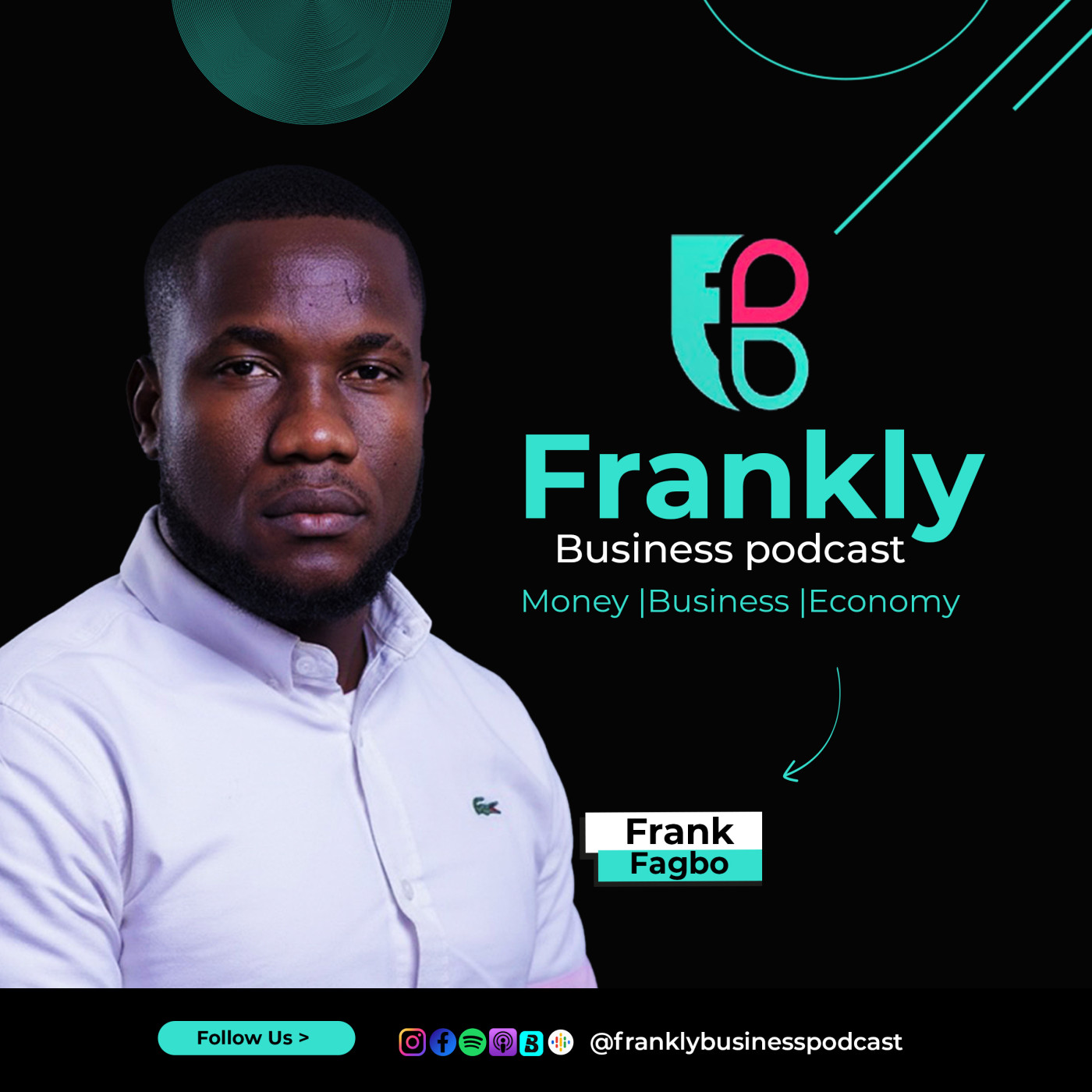
Frankly Business Podcast
by Frank Fagbo
The Frankly Business Podcast is a platform for clear, intelligent conversations on business, finance, and the economy across Nigeria and Africa. Hosted by Frank Fagbo, a business media professional with deep experience in markets and economic reporting, the show features founders, CEOs, policymakers, and industry leaders shaping Africa's digital and economic landscape.We break down fintech, macroeconomic trends, regulation, digital payments, startup funding, capital markets, and the strategies behind Africa's fastest-growing companies. Our goal is simple: to make complex ideas accessible and give you insight into how top operators think and execute.This channel serves founders, investors, professionals, and anyone interested in African business, financial markets, entrepreneurship, and technology.
-
16
The Truth About Business, Power & Survival “Nigeria Should Structure Corruption” | Keji Giwa
What if corruption in Nigeria isn’t disappearing anytime soon… but simply becoming more organized? On this explosive episode of Frankly Business, Keji Giwa — founder of Shortlet.ng and Giwa Gardens — shares one of the most controversial business takes we’ve ever heard on the podcast: “Nigeria should structure corruption.” But that’s only the beginning. In this conversation, Keji breaks down: - Why the shortlet market is dying - Why Nigeria doesn’t truly have 200 million customers - How greed is damaging the real estate industry - Losing over ₦400 million to theft - The systems he built to stop internal fraud - Diaspora money and investment opportunities - Building West Africa’s largest water park - The future of tourism and leisure in Africa - The harsh realities of building businesses in Nigeria This episode is raw, honest, uncomfortable, insightful — and necessary. Whether you’re an entrepreneur, investor, founder, creative, or young African trying to understand how business really works in Nigeria… this conversation will challenge your thinking. TIMESTAMPS 00:00 Intro 03:04 Why The Shortlet Market is Dead 03:20 Why People Are Getting out of the Shortlet Market 03:56 Demand and Supply for Shortlet Market 04:15 Housing Deficit in Nigeria 04:30 Affordable Housing is a Myth 05:28 How I Built Shortlet.ng 05:55 How I Became The Godfather of Shortlet 06:00 Watch This Before Starting Shortlets or AirBnB in Nigeria or Africa 07:10 How Shortlet Started 11:25 I made $3k to $4k from 1 Shortlet Apartment in a Month 11:50 Get 20 Days Occupancy in Your Shortlet 12:00 Shortlet Started in Osapa London 12:30 Overpricing Killed The Shortlet Industry in Nigeria 12: 50 Hotels vs AirBnB and Shortlet 13:04 N800k per night Apartment in Lagos is too Expensive 15:42 Correction Phase of Real Estate in Nigeria - Real Estate Bubble Burst 17:45 Affordable Housing is the Job of The Govt 19:00 Affordable Housing is Impossible in Lagos 21:00 How To Build Affordable Homes 21:35 Housing Bubble in Nigeria 24:30 Nigeria has two Economies (Corruption Economy vs Market Economy) 25:30 Watch This Before Starting a Leisure Business 26:09 Know This Before Starting A Luxury Business in Nigeria 30:00 There is no Real Estate Bubble in Nigeria 31:25 Understanding The Economy of Corruption 32:25 How Politicians Launder Money with Real Estate 32:48 Why We need to Legalize Corruption in Nigeria 33:38 How My Staff Stole N400m from My Business 34:42 How I caught Staff Theft and The System That Works 37:00 How I Built Giwa Gardens 37:20 Doing Business in Nigeria 38:40 How To Stop Staff From Stealing From You 40:00 Systems for Staff Theft 44:30 Nigeria Doesn't have 200m Market we only have 200m people 45:30 Why They Need To Stop Giving VISAs to the Best of Nigerians 47:00 Is Ikoyi a slum 49:23 Why Corruption Should Be Legal in Nigeria 54:00 Dealing with Scarcity Mentality 56:30 $500 Diaspora Tax in Nigeria 58:32 Integrity is the Only Currency That Doesn't Depreciate 59:00 How To Get Money From Investors For Your Real Estate Project 1:01:40 Avoid Impatient Capital For Your Real Estate Project 1:02:00 Dealing With Press Crisis For Your Business 1:07:40 Detty/Dirty December Economy 1:09:45 How Three Crowns Milk Started 1:12:00 I Built Giwa Gardens For $30m Subscribe to Frankly Business for powerful conversations with Africa’s most ambitious founders, operators and business leaders. #FranklyBusiness #KejiGiwa #NigeriaBusiness
-
15
I Missed a 10,000x Startup… After Investing Early in Paystack | Abasiama Idaresit
In this episode of Frankly Business, I sit down with Abasiama Idaresit — one of Africa’s pioneering digital entrepreneurs, early-stage investor, and CEO of Wild Fusion Holdings. From launching one of Nigeria’s first digital marketing agencies in 2010 to investing early in companies like Paystack, Big Cabal Media, and Casava, Abasiama has been at the forefront of Africa’s tech and media evolution. But not every decision went right. He shares the story of a painful investment mistake — pulling out early from a startup that went on to deliver over 10,000x returns. We break down: * The early days of digital marketing in Africa * Building and scaling Wild Fusion across Nigeria, Ghana & Kenya * His transition from operator to investor * The biggest mistakes founders and investors make * How to identify real opportunities in Africa’s tech ecosystem * Lessons from backing companies like Paystack and Big Cabal This is a masterclass in business, investing, timing, and long-term thinking. If you’re building, investing, or thinking about Africa’s future — this episode is for you. ⸻ Subscribe for more conversations on business, finance & opportunity Follow Frankly Business Podcast for insights that actually matter
-
14
From Walmart to Wakanow: How Bayo Adedeji Is Fixing Africa’s Travel Problem | $50M Raised
From Walmart to Wakanow. In this episode, Bayo Adedeji, CEO of Wakanow, shares how he transitioned from working at Walmart to building one of Africa’s leading travel tech companies — raising over $50 million along the way. We also unpack why flights are expensive in Africa and what must change Why are flights so expensive in Africa — especially during Christmas and peak travel season? In this explosive conversation, Bayo Adedeji (CEO of Wakanow) breaks down the real economics behind African flight prices… and the journey that took Wakanow from near-collapse to a $50M global travel empire operating in 30+ countries. From Walmart to Wakanow, from selling shoes and fries, to leaving a $300,000 Amazon job, Bayo shares the brutal truth about: ✈️ Why African flights cost a premium How travel companies survive in tough markets ️ What it REALLY means to build in Africa Why “projecting poverty” kills investment deals Entrepreneurship vs intrapreneurship (and why both matter) How Wakanow rebuilt trust and scaled globally This episode is packed with hard-earned lessons on business, travel, money, customer behaviour, and the reality of surviving in Africa’s toughest industries. This… is Frankly Business. Where Africa’s biggest minds come to talk money, business, and the future. WATCH TILL THE END — every minute is pure gold. Chapters below Drop your thoughts in the comments — we read everything. ⸻ ⏱️ TIMESTAMPS (Clear, Searchable, SEO-Friendly) (If you want, I can refine these after seeing the exact runtime.) 00:00 — Intro: Africa’s Flight Crisis 01:42 — Why are African flights so expensive? 05:10 — The hidden economics of airlines in Africa 08:25 — Christmas & festive season: why prices skyrocket 11:02 — Wakanow’s early struggles and near-collapse 14:50 — Why Bayo left a $300K Amazon job 18:33 — From Walmart to Wakanow: the untold journey 21:40 — Selling shoes, fries & beach houses: the hustle story 25:55 — How Wakanow raised $50M and expanded to 30+ countries 30:11 — Entrepreneurship vs Intrapreneurship 33:08 — “Stop projecting poverty” — his viral investment philosophy 37:42 — Why African founders must think differently 41:15 — Customer behaviour: the truth nobody talks about 45:59 — Speed, execution, and decision-making 50:22 — Travel, tourism & the African opportunity 54:40 — Advice for young entrepreneurs and employees 59:10 — Final message: Build. Don’t beg.
-
13
She Raised $600k in 24 Hours — Here’s What Most Founders Get Wrong About Funding
Most founders think funding is about pitch decks. They’re wrong. In this episode, we sat down with Ife Durosinmi-Etti, Founder and CEO of Herconomy, to unpack how she raised $600,000 in 24 hours, attracted over $5 million in commitments, and what most founders misunderstand about funding. We talk about crowdfunding on Instagram, visibility and credibility, the real cost of running tech companies, and why only 4% of women globally have raised over $1 million. This conversation goes beyond motivation — it breaks down how community, problem-solving, and alignment with global challenges (SDGs) can unlock grants, capital, and long-term growth. Whether you’re a founder, entrepreneur, or building in Africa, this episode will change how you think about money, access, and opportunity. women entrepreneurship, startup funding, how founders raise money, women in business, venture capital, fundraising for startups, crowdfunding instagram, african startups, women founders, herconomy, ife durosinmi etti, franky business podcast, grants for startups, tech startups africa, gender funding gap, women led startups, how to raise capital, startup grants, community led startups, funding for women #StartupFunding #WomenInBusiness #Entrepreneurship #AfricanStartups #FranklyBusiness
-
12
How Venture Capital Works in Africa: Funding, LPs & Startup Success Samson Esemuede
In this capsule of the Frankly Business Podcast, Samson Esemuede — founder of Zrosk Investment Ltd and one of Africa’s most exciting young investors — breaks down the truth behind venture capital, fundraising, and how investors actually make money. From how VCs raise capital, to who funds them, to why emerging markets need a new investment model, Samson Esemuede shares rare insights every founder and investor needs to hear. You’ll learn: • What venture capital really means • Where VC firms get their money • How they pick startups and manage risk • Why Nigeria needs a bespoke funding model • The lifecycle of a VC fund — from fundraising to exit • Lessons from Samson’s own investing journey: Lafarge, Nord Motors, LemFi, Max.ng & more This is the conversation every African builder, founder and dreamer needs to watch. Watch till the end — it might change how you think about money, risk and opportunity. ⸻ ✨ ABOUT FRANKLY BUSINESS PODCAST Frankly Business is Africa’s fastest-growing business and investment storytelling platform, bringing honest conversations from leaders shaping the future.
-
11
The Truth About Why Investors Are Pouring Billions Into Africa—From the CFA Betting $Millions+ On It
Samson Esemuede, CFA, is one of Africa’s most respected investment minds. He began his career at CitiBank and Deutsche Bank, rising to the position of Vice President, before becoming a founding partner at Zrosk Investment Management, a firm now managing north of $100+ million AUM. In this exclusive 130-minute conversation, Samson and Frank dive into: Topics Covered • The real state of the Nigerian economy • Why investors are betting billions on African startups • China’s economic slowdown and its implications • The secrets behind successful venture capital • The psychology of wealth and the habits of elite investors • What determines “luck” — and how to increase your opportunity surface area • A deep breakdown of equities, capital markets, and investment cycles Samson’s investments include: LemFi, MAX.ng, Nord Motors, Lafarge, and several of Africa’s fastest-growing ventures. This episode is a masterclass for founders, investors, analysts, and entrepreneurs who want to understand Africa’s economic future. * Africa economy * Nigerian investment * Samson Esemuede * Zrosk investment * venture capital Africa * startup funding 2024 * Nigerian stock market * China slowdown Africa * Frankly Business Podcast * Frontier Business Podcast
-
10
Why Great Companies Fail Even When They Do Everything Right | Niyi Adesanya
Some companies do everything right — and still fail. Why? In this episode of the Frankly Business Podcast, Africa’s foremost leadership strategist Niyi Adesanya explains why vision, talent, and execution are not enough without strong systems, culture, and leadership design. Drawing from real-world examples like Nokia and Kodak, Niyi breaks down the hidden factors that cause organizations — and even nations — to collapse despite having smart people and big ideas. In this conversation, we explore: • Why “doing everything right” can still lead to failure • How systems defeat vision without structure • Culture vs strategy: what truly drives performance • The ambidextrous organization: how to explore and exploit effectively • Why fixing infrastructure without fixing mindset doesn’t work • How AI is reshaping consulting, leadership, and the knowledge industry This is not a motivational conversation. It’s a thinking conversation for founders, CEOs, executives, consultants, and leaders building for long-term relevance. 00:00 – Intro: Why Great Companies Still Fail 02:18 – Who Is Niyi Adesanya? 08:06 – How Sam Adeyemi Mentored Me (Mentorship, Relationships & Early Formation) 09:15 – How I Organize The Largest Leadership BootCamp in Nigeria 13:10 – Why Vision Without Systems Always Breaks 16:05 – Culture vs Infrastructure: What Really Drives Performance 20:48 – The Nigeria Case Study: Leadership, Governance & Mindset 26:14 – Maintenance Culture & Why Systems Collapse Over Time 33:00 – The Ambidextrous Strategy in Organization: Explore vs Exploit 34:10 – Nokia & Kodak: Doing Everything Right — and Still Failing 38:25 – AI, Consulting & the Death of Motivation Without Results 46:45 – The Business of Speaking & Consulting 50:15 - The Highest Paid Speaker in Nigeria 52:02 – Motivational Speaking is Dead 53:40 – Final Thoughts: Question for Femi Otedola 55:00 – Closing & Outro Credits: Music: No Limits by ArcticFoxMusic Link to Video: https://youtu.be/ypGySPBoOIg?si=s9RZ377Btl4rWPkF ️ This is the Frankly Business Podcast — where Africa’s sharpest minds break it down.
-
9
🔥 “Inside Africa’s $4.6bn Fintech Boom — Dr. Stanley Jacob Reveals the Real Playbook”
In a continent where innovation meets necessity, one leader sits at the center of Africa’s fintech revolution. Dr. Stanley Jacob — President of the Fintech Association of Nigeria and CEO of Zest Payment (Stanbic IBTC subsidiary) — joins Frankly Business for a deep dive into the truth behind Africa’s $4.6bn fintech boom. From the North of Nigeria to the top of Africa’s payment infrastructure, Dr. Stanley breaks down: How Opay and Moniepoint built lightning-fast transaction engines Why Zest is building the rails powering the next era of digital payments The ₦100 million licensing hurdle nobody talks about The orchestration model shaping the future of fintech Why investors are betting big on Africa despite macro uncertainty The battle between speed, compliance and sustainability This episode is bold, raw, and visionary — a masterclass for founders, operators, regulators, bankers and anyone serious about Africa’s digital economy. This is Frankly Business. Where Africa’s biggest minds come to talk money, innovation, and the future. #FintechAfrica #AfricanBusiness #StartupFunding #NigeriaTech #Opay #Moniepoint #StanbicIBTC #ZestPayments #FinancePodcast #AfricaRising #TechInAfrica #FinancialInclusion #DigitalPayments #FranklyBusiness #LeadershipInAfrica
-
8
Get ₦3 Million in Funding — Learn How! - Babatunde Akin Moses (CEO &Co-Founder of Sycamore)
What if we told you that ₦3 million could be within your reach — legally and smartly? In this episode of Frankly Business, we break down practical, proven ways to access business funding in Nigeria. From grants and accelerator programs to pitching tips and hidden opportunities most entrepreneurs miss — this is your roadmap to getting funded. Our guest shares insider tips, real success stories, and the common mistakes that make founders lose out on free money. If you’re serious about growing your business, this episode could change your story.
-
7
From A Village to Raising Billions for a Fintech Startup - Sam Eze (CEO, OurPass)
How does someone go from a small village background to building a billion-naira fintech company? In this inspiring episode of Frankly Business, we sit down with a visionary founder who turned humble beginnings into a global success story. From early struggles to groundbreaking innovation, he shares the mindset, mistakes, and miracles behind his journey to raising billions in funding and transforming Africa’s digital finance space. Proof that where you start doesn’t define how far you can go — this one’s pure motivation and masterclass combined.
-
6
Proven Business Strategies to Make Millions - Coach Nancy Nnadi
Tired of motivational talk with no real results? In this power-packed episode of Frankly Business, we reveal tested and proven business strategies that actually make money — not just in theory, but in the real Nigerian market. From pricing hacks and customer retention secrets to digital marketing moves that drive serious profit, our guest breaks down what it really takes to scale from thousands to millions. Whether you’re an entrepreneur, side hustler, or SME owner, this episode gives you the playbook for lasting success — no fluff, just facts.
-
5
Why Some Founders Need to Go to Jail - Omoruyi Edoigiawere
Let’s be honest — not every startup failure is innocent. In this no-holds-barred episode of Frankly Business Speaking, we dive into the dark side of entrepreneurship: fraud, exploitation, and the toxic “fake it till you make it” culture that’s ruining trust in the startup ecosystem. From misused investor funds to unpaid staff and deceptive marketing, we ask the hard question — should some founders actually face jail time? It’s bold, it’s controversial, and it’s the conversation the business world has been avoiding for too long.
-
4
Make Millions with These Skills in 14 Days - Nduka Ukpabi (CEO OF PLURALCODE)
What if you could learn a skill today and start earning big in just two weeks? In this episode of Frankly Speaking, we uncover high-demand, fast-monetising skills that Nigerians are using to make millions — even with little or no capital. From digital services to creative freelancing and AI-powered tools, our guest reveals the exact skills, platforms, and strategies that can turn your hustle into real income — fast. This isn’t a get-rich-quick gimmick — it’s a roadmap for smart, skill-based success.
-
3
How Big Businesses Crush Small Businesses - Demola Aderibigbe
Why do small businesses struggle to survive while big brands keep getting bigger? In this explosive episode of Frankly Speaking, we expose the strategies — and sometimes the silent wars — that big corporations use to dominate markets, edge out competitors, and control consumer choices. From pricing power and marketing muscle to government influence and supply chain control, we unpack the harsh realities behind Nigeria’s business landscape. Whether you’re a small business owner or a curious observer, this episode will open your eyes to the real rules of the game.
-
2
I Won 11 Business Grants Worth Millions - Stella Adebayo Matthew
Getting business funding in Nigeria isn’t easy — but what if you could learn directly from someone who’s cracked the code 11 times? In this episode of Frankly Speaking, we break down the real steps, strategies, and mindset that helped our guest secure 11 business grants worth millions of naira. From crafting irresistible proposals to standing out in competitive applications, this episode gives you the blueprint to win — no connections required. Whether you’re a startup founder, SME owner, or aspiring entrepreneur, this is your ultimate grant-winning guide.
-
1
Nigeria’s Hidden Real Estate Sales Secret - Folajimi Ibrahim
Behind every booming estate and luxury apartment in Nigeria lies a secret few people talk about — the unconventional strategies, silent partnerships, and local dynamics that truly drive property sales. In this episode, we uncover how agents, developers, and even influencers are reshaping the real estate game. From off-market deals to the psychology behind buyer decisions, we break down what really sells homes in Nigeria — and why it’s not always what you think. Whether you’re an aspiring investor, a curious homeowner, or simply fascinated by the business side of real estate, this episode reveals the untold truths of Nigeria’s property market. Listen now to discover the strategies that separate ordinary agents from industry insiders.
We're indexing this podcast's transcripts for the first time — this can take a minute or two. We'll show results as soon as they're ready.
No matches for "" in this podcast's transcripts.
No topics indexed yet for this podcast.
Loading reviews...
ABOUT THIS SHOW
The Frankly Business Podcast is a platform for clear, intelligent conversations on business, finance, and the economy across Nigeria and Africa. Hosted by Frank Fagbo, a business media professional with deep experience in markets and economic reporting, the show features founders, CEOs, policymakers, and industry leaders shaping Africa's digital and economic landscape.We break down fintech, macroeconomic trends, regulation, digital payments, startup funding, capital markets, and the strategies behind Africa's fastest-growing companies. Our goal is simple: to make complex ideas accessible and give you insight into how top operators think and execute.This channel serves founders, investors, professionals, and anyone interested in African business, financial markets, entrepreneurship, and technology.
HOSTED BY
Frank Fagbo
CATEGORIES
Loading similar podcasts...
Frequently Asked Questions
How many episodes does Frankly Business Podcast have?
Frankly Business Podcast currently has 16 episodes available on PodParley. New episodes are automatically indexed when they're published to the podcast feed.
What is Frankly Business Podcast about?
The Frankly Business Podcast is a platform for clear, intelligent conversations on business, finance, and the economy across Nigeria and Africa. Hosted by Frank Fagbo, a business media professional with deep experience in markets and economic reporting, the show features...
How often does Frankly Business Podcast release new episodes?
Frankly Business Podcast has 16 episodes. Check the episode list to see recent publication dates and frequency.
Where can I listen to Frankly Business Podcast?
You can listen to Frankly Business Podcast on PodParley by clicking any episode. We provide an embedded audio player for direct listening, and you can also subscribe via your preferred podcast app using the RSS feed.
Who hosts Frankly Business Podcast?
Frankly Business Podcast is created and hosted by Frank Fagbo.
URL copied to clipboard!