
PODCAST · education
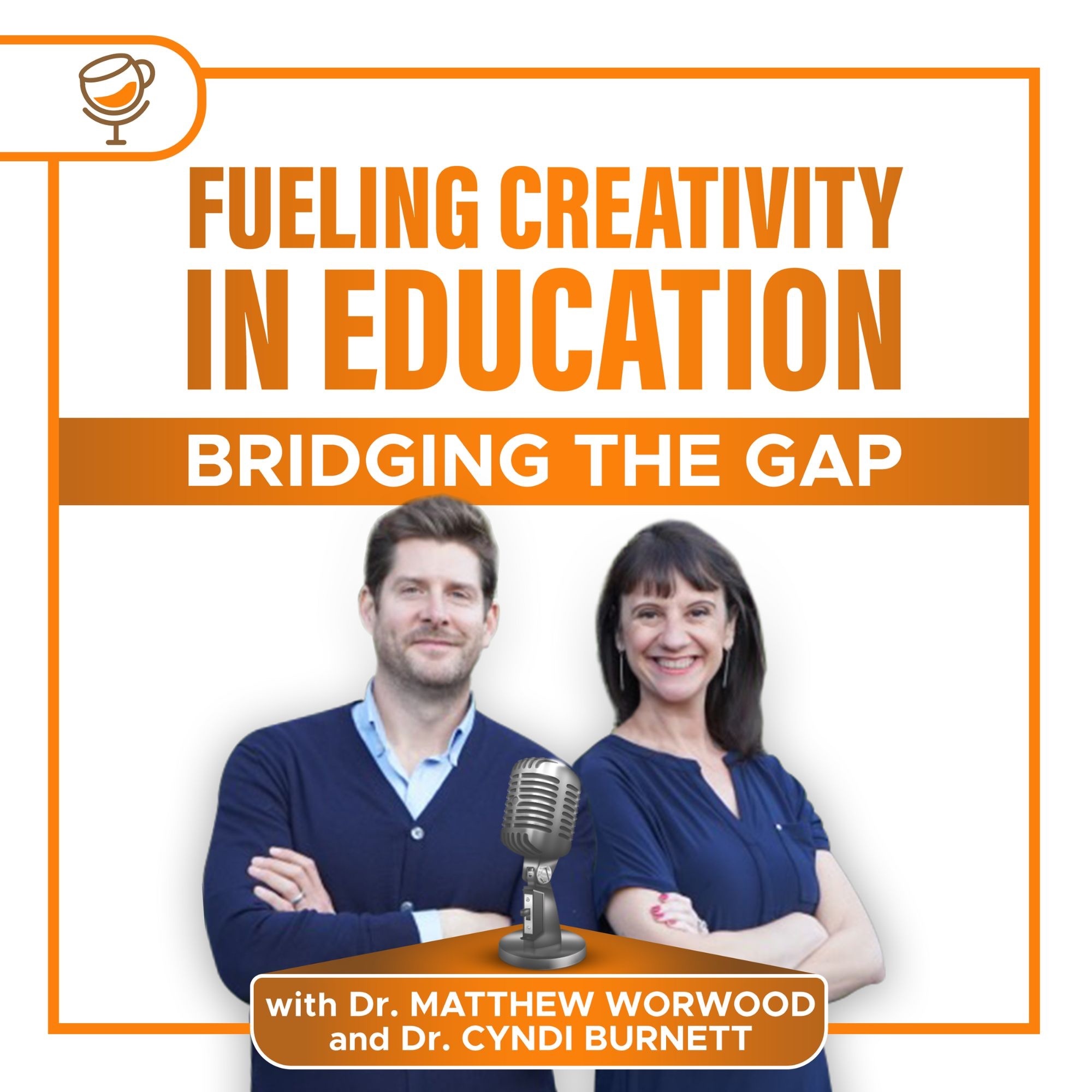
Fueling Creativity in Education
by Dr. Matthew J. Worwood and Dr. Cyndi Burnett
The Fueling Creativity Podcast captures the conversational coffee break room dialogue between cutting-edge educators, practitioners, and researchers in the field of education and creativity. Like the traditional coffee break, these 20-minute sessions are quick and energizing. Hosted by Dr. Cynthia Burnett and Dr. Matthew Worwood, these rich and informed discussions will initiate deeper thinking on what creativity means for educators across the grades. Each caffeinated cup of classroom conversation is guaranteed to empower and inspire you during your school day and, hopefully, make you smile!
-
250
Trust Your Gut: The Power of Intuition in Education with Leonie Baldacchino
When should we trust our gut? And how can intuition support creativity and decision-making in education? In this episode, Professor Leonie Baldacchino from the Edward de Bono Institute for Creative Thinking and Innovation discusses the connections between creativity, STEM, enjoyment, and wellbeing. She also shares insights from her research with secondary school students and the role of divergent thinking. The conversation then explores intuition and how it can develop through experience and expertise. While teachers can benefit from trusting their instincts, Leonie explains why a gut feeling should also be followed by questions, reflection, and careful decision-making. The episode closes with a personal story about Leonie's journey into education and creativity and how a mentor helped her recognize potential she had not yet seen in herself. Key Takeaways Creativity and STEM learning can support each other. Enjoyment and wellbeing can create space for creativity. Intuition becomes stronger through experience and knowledge. Gut feelings can be useful, but they should be checked with evidence and reflection. Teachers develop stronger intuition as they gain classroom experience. About the Guest Professor Leonie Baldacchino is an academic at the Edward de Bono Institute for Creative Thinking and Innovation at the University of Malta. Her research focuses on creativity, entrepreneurship, intuition, innovation, and decision-making. Be sure to subscribe to your favorite platform and sign up for our Extra Fuel newsletter for more resources and inspiration. Visit FuelingCreativityPodcast.com for more information or email us at [email protected].
-
249
The Neuroscience of Creativity with Dr. Adam Green
What can neuroscience teach us about creativity? And as artificial intelligence changes how we create, do we need to rethink what we mean by creativity? In this episode of the Fueling Creativity in Education Podcast, Dr. Matthew Worwood and Dr. Cyndi Burnett welcome Dr. Adam Green, professor at Georgetown University and director of the Laboratory for Relational Cognition, for a conversation about neuroscience, creativity, the ECHO Project, and AI. The conversation explores how researchers can study what happens in the brain during creative thinking and how this work might eventually help inform the development of better learning experiences. Adam also explains why neuroscience should add to what educators already know from observing and assessing students, rather than replace those approaches. The discussion then turns to the ECHO Project, a global collaboration involving nearly 200 creativity scholars. The project found significant agreement among researchers about the language used to describe creativity and related concepts such as imagination, problem-solving, and innovation. Developing a shared understanding can help educators be more precise about what they want students to develop. The episode also explores the growing role of AI in creative work. While AI can produce polished results, research discussed in the episode suggests that it may also make people's ideas more similar to one another. This raises an important question for educators: Are we using AI to support the creative process, or simply to produce a better final product? The conversation closes with a story about creativity, adaptation, and joy from Adam's experience at a camp for children with chronic illnesses. His story highlights how creativity can help us find new ways to create meaningful experiences for people with different needs. Key Takeaways Neuroscience can offer another way to understand what happens when people engage in creative thinking. The ECHO Project found significant agreement among creativity researchers about how creativity and related concepts can be understood. Distinguishing creativity from imagination, problem-solving, and innovation can help educators think more clearly about what they want students to develop. AI may make creative work look more polished while also making ideas more similar, raising important questions about the creative process. Creativity is not only about producing something new. The process itself can provide opportunities for learning, challenge, ownership, and joy. About Dr. Adam Green Dr. Adam Green is a professor at Georgetown University and director of the Laboratory for Relational Cognition. His research focuses on human creative intelligence and the neuroprocesses involved in creative relational reasoning. He also led the ECHO Project, bringing together creativity scholars from around the world to develop a shared understanding of creativity. Be sure to subscribe to your favorite platform and sign up for our Extra Fuel newsletter for more resources and inspiration. Visit FuelingCreativityPodcast.com for more information or email us at [email protected].
-
248
Where Curiosity Begins: Kicking Off Season 13
What happens when you combine a new season, a new academic year, and a recording location that has been on your bucket list for years? Season 13 of the Fueling Creativity in Education Podcast begins with a special introduction recorded from Mount Etna in Sicily, a place that has fascinated Dr. Matthew Worwood since childhood. The episode offers a behind-the-scenes look at the challenges of recording from the side of an active volcano, including poor signal, a rapidly draining battery, and the uncertainty of whether the episode would actually make it onto the podcast. But those challenges become part of the conversation. A simple question about whether there should be snow on Mount Etna leads to an unexpected discovery about snow trapped beneath volcanic ash. The experience becomes a reminder of how curiosity can turn an ordinary observation into a series of new questions and discoveries. The conversation also connects the experience on Mount Etna to several of the ideas explored in The Future Creative, including Ask Questions, Model Creative Behavior, Face the Feelings, and Enjoy the Ride. Rather than simply talking about these ideas, the episode offers a real-life example of what they can look like when something doesn't go according to plan. It is a fitting way to begin a new season and a new academic year. Be sure to subscribe to your favorite platform and sign up for our Extra Fuel newsletter for more resources and inspiration. Visit FuelingCreativityPodcast.com for more information or email us at [email protected].
-
247
10 Actions for Fueling Creativity: Enjoy the Ride
📘 Purchase Your Copy of The Future Creative: 10 Actions for Fueling Creativity in Education What happens when we get so focused on getting through the day that we forget to enjoy it? In this final episode of the Summer 2026 Listen and Learn Series, Dr. Matthew Worwood and Dr. Cyndi Burnett explore the tenth and final action from The Future Creative: Enjoy the Ride. Teaching can sometimes feel like driving on autopilot. You get through the lesson, answer the questions, cover the material, and move on to the next thing. But when we are constantly focused on what comes next, we can miss the small moments that make teaching meaningful. This episode explores the importance of noticing joy in everyday classroom experiences. A student's breakthrough, a surprising question, a moment of laughter, or a small sign of growth can remind us why we chose this work in the first place. The episode also challenges the idea that fun is separate from serious learning. When students experience joy, they can become more willing to participate, take risks, and remember what they learn. But enjoyment matters for educators too. Finding moments of fun and connection can help us stay engaged and bring more energy into our work. Dr. Matthew shares a personal story about a stressful period when he was writing about joy while feeling anything but joyful. A silly idea from his family about dressing up as their dog, Riggy, for a holiday card became an unexpected reminder to pause, laugh, and enjoy the moment. The goal isn't to make every lesson bigger, louder, or more entertaining. Sometimes it is simply about noticing what is already enjoyable and giving ourselves permission to experience it. Be sure to subscribe to your favorite platform and sign up for our Extra Fuel newsletter for more resources and inspiration. Visit FuelingCreativityPodcast.com for more information or email us at [email protected].
-
246
10 Actions for Fueling Creativity: Face the Feelings
📘 Purchase Your Copy of The Future Creative: 10 Actions for Fueling Creativity in Education What happens after a creative idea doesn't work? In this ninth episode of the Summer 2026 Listen and Learn Series, Dr. Matthew Worwood and Dr. Cyndi Burnett explore Action #9 from The Future Creative: Face the Feelings. Creativity always involves some level of uncertainty. When we try something new, there is always a chance that it will not work as planned. We often talk about failure as an important part of learning, but we don't always talk about what failure actually feels like. In this episode, Matthew shares a personal story about a creative project that fell short of what he and others had hoped to achieve. While he was able to take responsibility for what went wrong, the emotional impact lasted much longer. Feelings of embarrassment, frustration, and disappointment influenced how he thought about taking on similar projects in the future. That experience highlights an important part of creative learning: failure doesn't just affect what we think. It can affect what we are willing to try next. The episode explores how students, educators, and professionals can become more cautious after experiencing failure, particularly when the experience is public or emotionally difficult. The goal is not to ignore these feelings or simply tell ourselves that failure is part of the process. Instead, we can learn to recognize and face the emotions that come with trying something new. Matthew also encourages educators to share some of their own experiences with failure. Rather than offering students a polished message about how "failure is part of learning," educators can share the real story, including the disappointment, embarrassment, or uncertainty they experienced. Doing so can help students understand that difficult feelings are a natural part of creative work. Be sure to subscribe to your favorite platform and sign up for our Extra Fuel newsletter for more resources and inspiration. Visit FuelingCreativityPodcast.com for more information or email us at [email protected].
-
245
10 Actions for Creativity: Maximize the Environment
📘 Purchase Your Copy of The Future Creative: 10 Actions for Fueling Creativity in Education What if the most valuable creative resource in your classroom is something you already have? In this eighth episode of the Summer 2026 Listen and Learn Series, Dr. Matthew Worwood and Dr. Cyndi Burnett explore Action #8 from The Future Creative: Maximize the Environment. The episode begins with a simple comparison. Two classrooms have the same stack of cardboard boxes. In one classroom, the boxes serve as storage. In the other, they become rocket ships, stages, reading nooks, and creative workspaces. The difference is not the resources themselves. It is how they are viewed and used. Matthew explores the idea that creativity is often less about having more and more about seeing more. Instead of focusing on limited budgets or waiting for new technology, educators are encouraged to rethink the possibilities hidden within the materials, tools, and spaces they already have. The episode also looks at how our assumptions shape the way we use everyday resources. An interactive whiteboard can become much more than a digital chalkboard. A shared document can become a space for collaboration, feedback, and creative learning. When we begin asking, "What else could this do?" familiar tools can open up entirely new learning experiences. Ultimately, maximizing the environment is about developing the habit of seeing possibilities where others see ordinary objects. It is a mindset that helps both educators and students discover creativity in the resources already around them. Be sure to subscribe to your favorite platform and sign up for our Extra Fuel newsletter for more resources and inspiration. Visit FuelingCreativityPodcast.com for more information or email us at [email protected].
-
244
10 Actions for Fueling Creativity: Spot Creative Potential
📘 Purchase Your Copy of The Future Creative: 10 Actions for Fueling Creativity in Education What if the student who challenges you the most is also the one with the greatest creative potential? In this seventh episode of the Summer 2026 Listen and Learn Series, Dr. Matthew Worwood and Dr. Cyndi Burnett explore Action #7 from The Future Creative: Spot Creative Potential. Creative potential is often easy to miss because it doesn't always look the way we expect. It may not be the student with the highest grades or the one who always follows the rules. Instead, it might be the student who asks unexpected questions, challenges assumptions, experiments with new ideas, or approaches problems differently from everyone else. Drawing on insights from creativity researchers Mark Runco and Todd Lubart, this episode explores why educators should look beyond finished work and begin noticing the early signs of creativity. Matthew introduces the image of an acorn, reminding us that every student has hidden potential waiting for the right conditions to grow. The role of an educator is not to create that potential, but to recognize it and help it develop. The episode also encourages teachers to broaden the opportunities they provide for students to demonstrate creativity. Open-ended challenges and student choice often reveal strengths that traditional assignments and single-answer assessments can overlook. When every student has the chance to approach a task in their own way, creativity becomes easier to recognize. Most importantly, this episode reminds us that one conversation, one opportunity, or one teacher who chooses to look a little closer can make all the difference in helping a student discover their creative potential. Be sure to subscribe to your favorite platform and sign up for our Extra Fuel newsletter for more resources and inspiration. Visit FuelingCreativityPodcast.com for more information or email us at [email protected].
-
243
10 Actions for Fueling Creativity: Model Creative Behavior
📘 Purchase Your Copy of The Future Creative: 10 Actions for Fueling Creativity in Education What do your students learn when things don't go according to plan? In this sixth episode of the Summer 2026 Listen and Learn Series, Dr. Matthew Worwood and Dr. Cyndi Burnett explore Action #6 from The Future Creative: Model Creative Behavior. The episode begins with a personal story about a classroom technology problem that turned out to have a surprisingly simple solution. What could have remained an embarrassing moment instead became an opportunity to model something far more valuable than a perfectly delivered lesson. Matthew reflects on how our first reactions to mistakes can shape the learning experiences of those around us. Rather than hiding errors or pretending everything went smoothly, educators can use these moments to demonstrate reflection, persistence, and problem solving. By thinking out loud, acknowledging assumptions, and showing how they work through challenges, teachers give students a real example of what creativity looks like in practice. The episode also explores why modeling matters. Students pay close attention not only to what educators say, but also to how they respond when things go wrong. Every unexpected setback becomes an opportunity to demonstrate resilience, curiosity, and a willingness to learn. Rather than striving for perfection, this episode encourages educators to embrace the everyday moments that reveal the creative process in action. Be sure to subscribe to your favorite platform and sign up for our Extra Fuel newsletter for more resources and inspiration. Visit FuelingCreativityPodcast.com for more information or email us at [email protected].
-
242
10 Actions for Fueling Creativity: Initiate Discussions
📘 Purchase Your Copy of The Future Creative: 10 Actions for Fueling Creativity in Education How many people in your school would describe themselves as creative? For many people, the answer is "not really." They picture artists, musicians, or famous inventors, while overlooking the creativity they use every day to solve problems, adapt to challenges, and connect ideas. In this fifth episode of the Summer 2026 Listen and Learn Series, Dr. Matthew Worwood and Dr. Cyndi Burnett explore Action #5 from The Future Creative: Initiate Discussions. This episode looks at why conversations about creativity matter. The way we define creativity influences what we notice, what we encourage, and who feels confident enough to see themselves as creative. When those conversations never happen, outdated ideas often remain unchallenged. Matthew explores two common myths that continue to shape education. The first is that creativity belongs only in the arts. The second is that only a small number of people are naturally creative. Drawing on insights from creativity researchers including Dr. Anna Abraham and Dr. James Kaufman, he explains why these beliefs can prevent both educators and students from recognizing their own creative strengths. The episode also highlights the importance of creating opportunities for honest conversations about creativity. Rather than telling people what creativity is, educators can ask thoughtful questions, listen carefully, and invite different perspectives. Those discussions can help build a shared understanding of creativity across classrooms, schools, and communities. If we want creativity to become part of everyday learning, the conversation has to begin somewhere. This episode offers a simple place to start. Be sure to subscribe to your favorite platform and sign up for our Extra Fuel newsletter for more resources and inspiration. Visit FuelingCreativityPodcast.com for more information or email us at [email protected].
-
241
10 Actions for Fueling Creativity: Ask Questions
📘 Purchase Your Copy of The Future Creative: 10 Actions for Fueling Creativity in Education What if the most powerful tool for creativity isn't having the right answers, but asking better questions? In this third episode of the Summer 2026 Listen and Learn Series, Dr. Matthew Worwood and Dr. Cyndi Burnett explore Action #3 from The Future Creative: Ask Questions. The episode begins with a simple challenge: take an ordinary pencil and spend five minutes asking as many questions about it as possible. What starts as an ordinary classroom object quickly becomes an invitation to wonder, revealing how easily familiarity can prevent us from noticing the world around us. Matthew explores the difference between questions that simply check for understanding and questions that spark curiosity, imagination, and creative thinking. While many classroom questions have a single correct answer, authentic questions encourage exploration, invite multiple possibilities, and create opportunities for deeper learning. Drawing from interviews with leading creativity researchers, educators, and practitioners, this episode highlights why asking questions emerged as one of the most common themes across The Future Creative. As creativity practitioner Anne Jacoby reminds us, curiosity is the gateway to creativity. The conversation also examines why questioning has become even more important in the age of artificial intelligence. As information becomes increasingly accessible, the ability to ask thoughtful, meaningful questions is becoming one of the most valuable creative skills educators can help students develop. Most importantly, this episode encourages educators to create classrooms where curiosity feels safe, where students are encouraged to wonder, and where questions are celebrated as the beginning of creative thinking rather than interruptions to learning. Be sure to subscribe to your favorite platform and sign up for our Extra Fuel newsletter for more resources and inspiration. Visit FuelingCreativityPodcast.com for more information or email us at [email protected].
-
240
10 Actions for Fueling Creativity: Build Relationships
📘 Purchase Your Copy of The Future Creative: 10 Actions for Fueling Creativity in Education What makes someone feel safe enough to share a new idea? In this fourth episode of the Summer 2026 Listen and Learn Series, Dr. Cyndi Burnett and Dr. Matthew Worwood explore one of the most important actions for nurturing creativity in education: Build Relationships. Whether you're a first-year teacher looking for feedback, an experienced educator proposing a new initiative, or a school leader hoping to inspire innovation across your staff, creativity rarely happens in isolation. It grows in environments where people feel trusted, respected, and supported enough to take risks. This episode examines why strong relationships are the foundation of creative learning communities. Matthew and Cyndi discuss how psychological safety encourages educators and students to share unfinished ideas, experiment with new approaches, and learn from failure without fear of judgment. Listeners will also discover simple but meaningful ways to strengthen relationships in the classroom, including celebrating important moments in students' lives, showing genuine curiosity about their experiences, and creating opportunities for authentic connection. Beyond the classroom, the conversation highlights how supportive relationships among teachers and school leaders can foster a culture where creativity extends throughout an entire school. The episode concludes with a reflective activity that invites educators to consider the relationships that encourage their creativity and those that unintentionally discourage it, offering a practical first step toward building stronger, more creative communities. Be sure to subscribe to your favorite platform and sign up for our Extra Fuel newsletter for more resources and inspiration. Visit FuelingCreativityPodcast.com for more information or email us at [email protected].
-
239
10 Actions for Fueling Creativity: Be Deliberate
📘 Purchase Your Copy of The Future Creative: 10 Actions for Fueling Creativity in Education If we say creativity matters, are we teaching it with the same intention we bring to literacy, mathematics, and other core subjects? Or are we assuming it will simply emerge on its own? In this episode of the Fueling Creativity in Education Podcast Listen and Learn Summer Series, Dr. Matthew Worwood introduces the first action from The Future Creative: 10 Actions for Fueling Creativity in Education: Be Deliberate. Drawing on an early experience designing a digital media and moviemaking program, Matthew reflects on a surprising challenge that revealed an important lesson about creativity. Despite being given an open-ended assignment, students across multiple schools produced remarkably similar ideas. The experience led him to question a common assumption in education: that open-ended tasks automatically produce original thinking. In this practical episode, he explores: Why creativity should be taught with the same intentionality as other important skills What happens when educators assume originality will emerge on its own How open-ended assignments can still produce predictable outcomes The difference between offering choice and deliberately targeting creative thinking Why students need support and strategies to generate original ideas How instructional design influences creative outcomes The importance of identifying creativity as a learning goal, not just a byproduct Ways educators can intentionally build creativity into existing lessons and routines Why small changes can have a meaningful impact on creative development How deliberate teaching practices help students develop skills beyond academic standards Matthew also reflects on how educators who successfully foster creativity often do so because they intentionally design learning experiences that target creative thinking, curiosity, and idea generation alongside subject content. If you are an educator looking to strengthen creativity in your classroom, this episode offers an important reminder that creativity grows when we teach it with purpose. Be sure to subscribe to your favorite platform and sign up for our Extra Fuel newsletter for more resources and inspiration. Visit FuelingCreativityPodcast.com for more information or email us at [email protected].
-
238
10 Actions for Fueling Creativity in Education: Keep Open
📘 Purchase Your Copy of The Future Creative: 10 Actions for Fueling Creativity in Education How often do we shut down an idea before it has a chance to develop? And what opportunities might we miss when we judge ideas too quickly? In this episode of the Fueling Creativity in Education Podcast Listen and Learn Summer Series, Dr. Cyndi Burnett introduces the second action from The Future Creative: 10 Actions for Fueling Creativity in Education: Keep Open. Listen in as Cyndi explores why creativity requires us to resist the urge to immediately judge ideas and instead remain open long enough to discover what might be hidden within them. Through a simple classroom example, she demonstrates how even an impractical idea can reveal a valuable insight when we take the time to understand the need behind it. In this practical episode, she explores: – Why our first reaction to new ideas is often judgment – How quickly dismissing ideas can limit creative thinking – The difference between evaluating an idea and staying open to possibility – Why even unrealistic ideas may contain valuable insights – How positive judgments can stop idea development just as quickly as negative ones – The importance of separating idea generation from evaluation – What happens when students feel their ideas are immediately dismissed – How awareness of our own judgment patterns can strengthen creativity – A simple exercise for monitoring judgments throughout the week – Why keeping ideas open creates opportunities for better solutions to emerge Cyndi also shares a classroom assignment she has used for years that helps students recognize just how often they judge ideas without realizing it. If you are an educator, school leader, or anyone interested in fostering creativity, this episode offers a simple but powerful practice for creating more space for curiosity, exploration, and possibility. Be sure to subscribe to your favorite platform and sign up for our Extra Fuel newsletter for more resources and inspiration. Visit FuelingCreativityPodcast.com for more information or email us at [email protected].
-
237
Disconnect to Reconnect: Creativity Beyond the School Year
What happens when we give ourselves permission to slow down? And how might moments of rest, reflection, and play help fuel our creativity for the year ahead? In this special summer episode of the Fueling Creativity in Education Podcast, Dr. Matthew Worwood and Dr. Cyndi Burnett reflect on the end of another school year and share their plans for disconnecting, recharging, and reconnecting with the activities that bring them joy and inspiration. Listen in as they discuss the importance of creating space for mind wandering, creative hobbies, and meaningful experiences beyond work. They also offer a preview of the upcoming summer Listen and Learn series, inspired by their new book, The Future Creative: 10 Actions for Fueling Creativity in Education. In this thoughtful conversation, they explore: – Why creativity often needs periods of rest and recovery – How slowing down can help us think more clearly and creatively – The value of disconnecting from technology and productivity pressures – Why mind wandering can be a powerful creative practice – How hobbies and personal interests can help restore energy and focus – The importance of reconnecting with activities you loved as a child – Why creativity should be nurtured both inside and outside of work – How small daily habits can support wellbeing and creative thinking – The challenge of balancing professional goals with personal renewal – Ways educators can create space for reflection during school breaks – How AI might help reduce routine tasks while preserving meaningful creative work – What listeners can expect from the upcoming Listen and Learn summer series Dr. Matthew shares how golf has become a creative outlet that helps him disconnect from work and focus on learning, growth, and being present in the moment. Dr. Cyndi reflects on returning to dance after many years away and the joy of reconnecting with a lifelong passion that has always been part of her creative identity. If you are an educator preparing for the months ahead, this episode offers encouragement to slow down, make space for yourself, and embrace the experiences that help creativity flourish. Be sure to subscribe to your favorite platform and sign up for our Extra Fuel newsletter for more resources and inspiration. Visit FuelingCreativityPodcast.com for more information or email us at [email protected].
-
236
From AI in the Classroom to Creativity in the Movies: A Conversation with James Kaufman
How is artificial intelligence changing the way we think about creativity and learning? And what can movies teach us about the creative process, healing, and human expression? In this episode of the Fueling Creativity in Education Podcast, Dr. Matthew Worwood and Dr. Cyndi Burnett welcome back Dr. James Kaufman, one of the leading scholars in creativity research, for a wide-ranging conversation about AI, education, creativity, and his latest work exploring creativity through film. Listen in as the conversation reflects on the newly released book Generative Artificial Intelligence and Creativity: Precautions, Perspectives, and Possibilities, co-edited by James Kaufman and Matthew Worwood. Together, they discuss the promises and concerns surrounding AI in education, including its impact on learning, creative thinking, feedback, and assessment. The discussion then shifts to James's newest book, Creativity Through the Movies, where he explores how films can help us better understand creativity, motivation, grief, healing, and the human experience. In this thoughtful conversation, they explore: – The different perspectives creativity researchers hold about AI and its future impact – Why the creative process may matter more than the final product – How AI can support productivity while potentially limiting originality – The risks of relying on AI for thinking, learning, and creative work – Why educators may need to focus more on process rather than product in assessment – The role of AI in providing feedback and supporting creativity research – How AI could help assess creativity at a larger scale – Why meaning, purpose, and creative identity matter in an age of automation – The relationship between creativity, wellbeing, and personal growth – How creative activities can help people process grief and difficult life experiences – What movies reveal about creativity as a human journey rather than a final achievement – Why everyday creativity can be just as meaningful as professional creative accomplishments James also shares examples from films such as Ghostlight, Hamnet, and Sing Sing, highlighting how creative expression can help people navigate loss, build connection, and find meaning during challenging times. If you are an educator, researcher, creative professional, or simply curious about the future of creativity, this episode offers a thoughtful exploration of both the opportunities and challenges emerging in a rapidly changing world. About the Guest Dr. James Kaufman is a Professor of Educational Psychology at the University of Connecticut's Neag School of Education and one of the world's leading creativity researchers. He has written or edited more than 60 books and is widely known for co-developing the Four C Model of Creativity with Dr. Ronald Beghetto. His research spans creativity, meaning, motivation, intelligence, and education, and he has developed several widely used measures of creativity. His recent projects include Generative Artificial Intelligence and Creativity: Precautions, Perspectives, and Possibilities and Creativity Through the Movies. Be sure to subscribe to your favorite platform and sign up for our Extra Fuel newsletter for more resources and inspiration. Visit FuelingCreativityPodcast.com for more information or email us at [email protected].
-
235
Mastery, Feedback, and Communication: A Season 12 Reflection with Jimmy Wilson
What helps students build creative confidence over time? And how do mastery, feedback, and communication shape the way students learn, create, and see themselves in the classroom? In this final reflection episode of Season 12 of the Fueling Creativity in Education Podcast, Dr. Matthew Worwood and Dr. Cyndi Burnett welcome back resident scholar Jimmy Wilson to revisit key themes from the season through the lens of current creativity research. Listen in as the conversation connects ideas from episodes on handwriting, AI, sports, game-based learning, creativity, and neurodiversity. Together, they explore why some traditional learning practices still matter, how mastery-based approaches can support creative confidence, and why feedback continues to play such an important role in student growth. In this thoughtful conversation, they explore: – Why handwriting may support creativity, retention, and deeper thinking – How slowing down the learning process can improve understanding – The connection between mastery and creative self-efficacy – Why repeated practice and experimentation help students build confidence – The challenges and opportunities within mastery-based learning – How games and sports naturally support experimentation and iteration – The role of feedback in helping students refine and strengthen ideas – How AI tools may help teachers provide more frequent and meaningful feedback – Why creative learning should include multiple ways for students to demonstrate understanding – The importance of balancing structure with flexibility in assessment – How creativity research is beginning to focus more on strengths within neurodiversity – Why traits like hyperfocus, curiosity, and experimentation can be creative strengths – The growing research connection between creativity and meaning in life Jimmy also reflects on how creativity research is shifting toward more possibility-centered approaches that recognize different ways of learning, thinking, and engaging in the classroom. If you are an educator interested in creativity, assessment, neurodiversity, or student motivation, this episode offers research-based insights and practical reflections on how learning environments can better support both mastery and creative growth. About the Guest Jimmy Wilson is the resident scholar for the Fueling Creativity in Education Podcast and a doctoral researcher exploring creativity, neurodiversity, and education. His work focuses on topics including ADHD, dyslexia, autism, creative self-efficacy, and how different learners engage with creative processes in educational settings. Throughout Season 12, Jimmy followed the podcast conversations closely and connected emerging themes back to current creativity research. Be sure to subscribe to your favorite platform and sign up for our Extra Fuel newsletter for more resources and inspiration. Visit FuelingCreativityPodcast.com for more information or email us at [email protected].
-
234
Engage, Connect, Create: Social Media, Games, and Music in Learning
What if some of the most powerful tools for engagement are already part of students’ everyday lives? And what happens when educators use games, music, and social media with more intention in the learning process? In this final debrief episode of Season 12 of the Fueling Creativity in Education Podcast, Dr. Matthew Worwood and Dr. Cyndi Burnett revisit three conversations that challenged the way they think about engagement, creativity, and learning. Drawing from recent episodes on tabletop role-playing games, creative styles, and music in education, they reflect on how educators can create more meaningful learning experiences by building on tools and interests students already connect with. In this thoughtful conversation, they explore: – The difference between gamification and true game-based learning – How tabletop games encourage dialogue, collaboration, and perspective-taking – Why play is often missing from middle and high school learning experiences – The connection between games, creativity, and student motivation – How creative styles can help educators better understand themselves and their students – Why creativity looks different from person to person – The role of creative confidence and self-awareness in learning – How music can help students better remember and connect with content – Why creative learning experiences often stay with students longer than lectures – The growing role of social media and teacher influencers in education – How educators can use social platforms more intentionally to extend learning – Why engagement may not require completely new ideas, but better use of tools already around us Matthew and Cyndi also reflect on the power of conversation, storytelling, and shared experiences in the classroom, and why meaningful learning often happens when students are invited to actively participate rather than simply receive information. If you are an educator looking for fresh ways to engage students, this episode offers practical reflections and ideas that connect creativity to the realities of today’s classrooms. Be sure to subscribe to your favorite platform and sign up for our Extra Fuel newsletter for more resources and inspiration. Visit FuelingCreativityPodcast.com for more information or email us at [email protected].
-
233
From Teaching to Content Creation: Social Media in the Science Classroom with Dr. Raven Baxter
What happens when teaching becomes storytelling, performance, and creative expression all at once? And how can educators use social media with purpose instead of simply chasing attention online? In this episode of the Fueling Creativity in Education Podcast, Dr. Matthew Worwood and Dr. Cyndi Burnett welcome Dr. Raven Baxter, also known as Dr. Raven the Science Maven, to explore the intersection of science, creativity, music, and social media in education. Listen in as the conversation explores how Raven uses music, humor, pop culture, and storytelling to make science more engaging and accessible. She also shares why joy, authenticity, and human connection are essential parts of meaningful learning experiences both online and in the classroom. In this thoughtful conversation, they explore: – How creativity and joy can transform science learning – Why music works as a powerful tool for teaching and remembering content – The role of humor, storytelling, and pop culture in science communication – How social media can help educators build trust and connection with learners – Why intention matters when teachers create content online – The difference between creating for engagement and creating for meaningful learning – How educators can use social media to extend conversations beyond the classroom – Why students benefit when learning feels playful, creative, and personal – The importance of creating spaces where students feel safe expressing themselves – How creative projects can reveal talents and understanding traditional assessments may miss – Why adults need more opportunities for whimsy, delight, and creative expression – How small creative shifts can completely change students’ relationship with learning Raven also shares inspiring classroom examples, including students creating songs, paintings, theater performances, and even mechanical models to demonstrate their understanding of science concepts. If you are an educator interested in creativity, science communication, or student engagement, this episode offers practical ideas for making learning more human, memorable, and joyful. About the Guest Dr. Raven Baxter, known as Dr. Raven the Science Maven, is a molecular biologist, science communicator, and learning scientist whose work focuses on the intersection of science, culture, and creative expression. Her research explores how hip hop pedagogy and creative communication can transform science learning and public understanding of science. She is also the founder of The Science Haven, a nonprofit focused on expanding access to science education, and has partnered with organizations including NASA, Netflix, Pfizer, and the White House on STEM initiatives. Be sure to subscribe to your favorite platform and sign up for our Extra Fuel newsletter for more resources and inspiration. Visit FuelingCreativityPodcast.com for more information or email us at [email protected].
-
232
Creative Styles in Action: A New Way to Understand Creativity in the Classroom
Who are the creative students in your classroom? And how might your definition of creativity be shaping who you notice and who you overlook? In this episode of the Fueling Creativity in Education Podcast, Dr. Matthew Worwood and Dr. Cyndi Burnett welcome Dr. Gerard Puccio and Cheri Sterman to explore a new way of understanding creativity through the Crayola Creative Styles Tool. Listen in as the conversation explores how creativity shows up differently in each learner and why recognizing those differences matters. Gerard and Cheri introduce a framework built around three key areas, how we think, how we perceive, and how we engage, and explain how this approach can help educators better understand themselves and their students. In this thoughtful conversation, they explore: – Why many educators struggle with creative confidence and how that impacts teaching – The importance of helping people see themselves as creative in their own way – How creativity goes beyond thinking and includes perception and engagement – The difference between seeing details and seeing connections in the creative process – Why some people prefer to act quickly while others need time to reflect – How understanding your own creative style can improve collaboration with others – The role of self-awareness in building creative confidence and agency – Why creativity should not be reduced to labels or fixed identities – How this tool can help teachers better support different types of learners – The connection between environment, experience, and creative preferences – Why students rarely get the chance to learn about themselves as creative thinkers – How a shared language around creativity can strengthen classroom culture Gerard and Cheri also discuss how this tool can open up important conversations in schools, helping both educators and students better understand how they approach problems, ideas, and learning. If you are an educator or school leader, this episode offers a new lens for recognizing creativity in your classroom and supporting it in more intentional ways. About the Guests Dr. Gerard Puccio is a distinguished professor at Buffalo State University and a leading voice in creativity research. He serves as chair of the Center for Applied Imagination and has published extensively on creative thinking and innovation. His work has received multiple awards, including recognition for research excellence and contributions to the field of creativity. Cheri Sterman is the Director of Education at Crayola, where she works with educators, families, and communities to deepen their understanding of creativity. She leads professional learning programs and helps design global initiatives such as Crayola Creativity Week, which reaches millions of students and teachers worldwide. Be sure to subscribe to your favorite platform and sign up for our Extra Fuel newsletter for more resources and inspiration. Visit FuelingCreativityPodcast.com for more information or email us at [email protected].
-
231
The Power of Game-Based Learning: Why Tabletop Role-Playing Games Matter
Is game-based learning just about making lessons more fun? Or can it actually deepen how students think, learn, and solve problems? And what happens when students are given space to fail, try again, and learn through play? In this episode of the Fueling Creativity in Education Podcast, Dr. Matthew Worwood and Dr. Cyndi Burnett welcome Adam Watson, an educator and author who explores how tabletop role-playing games can transform learning in the classroom. Listen in as the conversation breaks down what game-based learning really means, how it differs from gamification, and why games can be powerful tools for creativity, collaboration, and deeper understanding across subjects. In this thoughtful conversation, they explore: – The difference between gamification and true game-based learning – Why games need to be used with clear purpose, not just for engagement – How tabletop role-playing games can support learning across subjects, including science and math – Why failure in games helps students learn without fear – How games encourage problem solving, collaboration, and communication – The role of imagination and storytelling in building understanding – Why simple changes can turn an existing lesson into a game-based experience – How constraints and rules can actually support creativity – The importance of helping students learn at their own pace – Why play is often misunderstood and undervalued in education – How teachers can start small by rethinking one lesson or unit – The connection between games, creativity, and meaningful learning Adam also shares practical examples of how teachers can bring game-based learning into the classroom, including a science lesson where students design animals and test how they survive in different environments. If you are an educator looking for new ways to engage students and deepen learning, this episode offers simple ideas you can start using right away. About the Guest Adam Watson is an award-winning educator from Kentucky who began his career as a high school English teacher. He has served as a district digital learning coordinator and now works as a regional digital learning consultant supporting multiple school districts. He is also the author of Tabletop Role-Playing Games in the Classroom and works with educators to explore how game-based learning can support student growth across subjects. Be sure to subscribe to your favorite platform and sign up for our Extra Fuel newsletter for more resources and inspiration. Visit FuelingCreativityPodcast.com for more information or email us at [email protected].
-
230
Five Years Celebrating Fueling Creativity in Education: Where have we been and where are we going
🎉 Celebrating 5 Years of Fueling Creativity in Education Special Anniversary Episode | World Creativity and Innovation Day What happens when two educators set out to bridge research and practice in creativity… and simply keep going? In this special anniversary episode of the Fueling Creativity in Education Podcast, Dr. Cyndi Burnett and Dr. Matthew Worwood reflect on five years of conversations, growth, and creative exploration. Released on World Creativity and Innovation Day, this milestone marks not just longevity, but impact: over 130 guests, countless ideas, and a global community committed to bringing creativity into classrooms. From early scripted interviews to authentic, unscripted conversations, this episode pulls back the curtain on how the podcast has evolved and what it has taught both hosts along the way.
-
229
Wonder, Engagement, and Creativity: What’s Helping—and What’s Holding Us Back
What if the challenge in education is not a lack of creativity, but how we choose to prioritize it? In this reflective debrief episode, Dr. Cyndi Burnett and Dr. Matthew Worwood revisit three conversations from Season 12, featuring Susan Riley, Dana Henrickson, and Emma Watson. Together, these discussions raise a deeper question. Is creativity truly missing in schools, or is it already there, just not fully recognized or supported? Rather than pointing to a single barrier, this episode explores a more layered reality. Funding matters, but it is not the full story. Time, priorities, and expectations often shape what actually happens in the classroom. Creativity may exist in small, everyday moments, but without space and intention, it can easily be overlooked. The conversation also dives into the relationship between engagement and creativity. Do students need to be engaged before they can think creatively, or does creativity spark engagement in the first place? The answer is not simple, and that is exactly the point. Teaching is not about choosing one over the other, but understanding how they work together in real classroom conditions. Another key theme is the idea that teachers are already designing creative learning experiences, even if they do not always label them that way. With the right language and awareness, educators can begin to see their own practices differently and build from what is already working. The episode also highlights the concept of Wonder Museums, inspired by Emma Watson’s work. These experiences invite students to explore what they care about, create something meaningful, and share it with others. It is a reminder that creativity does not always require something new. Sometimes it starts by reimagining what is already possible. Finally, this debrief offers a shift in perspective. Instead of calling for a complete overhaul of the education system, it suggests something more realistic. Progress may come from small, intentional changes, a clearer understanding of creativity, and a willingness to rethink what we value in learning. If you have ever questioned whether creativity needs more resources or simply more attention, this episode offers a thoughtful and grounded perspective. Be sure to subscribe to your favorite platform and sign up for our Extra Fuel newsletter for more resources and inspiration. Visit FuelingCreativityPodcast.com for more information or email us at [email protected].
-
228
Designing Wonder: Bringing Museum Experiences to School with Emma Widmer
What happens when learning feels more like exploring a museum than sitting in a classroom? And how can we create spaces where students are driven by curiosity instead of routine? In this episode of the Fueling Creativity in Education Podcast, Dr. Matthew Worwood and Dr. Cyndi Burnett welcome Emma Widmer, an educator who brought the idea of a “Wonder Museum” into her school to create hands-on, curiosity-driven learning experiences for all students. Listen in as the conversation explores how Emma transforms familiar school spaces into immersive environments where students can move freely, follow their interests, and engage with learning in a more meaningful way. In this thoughtful conversation, they explore: – What it looks like to bring a museum-style experience into a school – How the Wonder Museum shifted from structured stations to open exploration – Why giving students choice helps increase curiosity and engagement – The role of collaboration in making big ideas possible – How small changes, like themed learning days, can work in any classroom – Why time and flexibility matter when trying new approaches – How to connect learning to student interests and local culture – The importance of knowing students and building strong relationships – How afterschool clubs can extend learning in a natural way – The opportunities and challenges within gifted education – Why creativity often grows when teachers balance structure and freedom – How immersive experiences can make learning feel natural and enjoyable Emma also shares how her own experience as a student shaped her teaching, including a memorable Titanic simulation that showed her how powerful immersive learning can be. If you are an educator, school leader, or someone thinking about how to make learning more engaging, this episode offers practical ideas you can try in your own setting. About the Guest Emma Widmer is an educator based in Western New York with over a decade of teaching experience. She currently serves as a gifted programming specialist at Dodge Elementary School, where she collaborates with teachers to design school-wide creative learning experiences, including the Wonder Museum. In addition to her work in K–12 education, she also teaches college-level courses and is passionate about fostering curiosity, creativity, and lifelong learning in students. Be sure to subscribe to your favorite platform and sign up for our Extra Fuel newsletter for more resources and inspiration. Visit FuelingCreativityPodcast.com for more information or email us at [email protected].
-
227
Creativity or Engagement: Which Comes First with Dr. Danah Henrikson
Does creativity make learning more engaging? Or does engagement create the conditions for creativity? What might we be overlooking when we assume we can easily tell when students are engaged? In this episode of the Fueling Creativity in Education Podcast, Dr. Matthew Worwood and Dr. Cyndi Burnett welcome Dr. Danah Henriksen to explore what research reveals about the connection between creativity and engagement in the classroom. Listen in as the conversation unpacks how creative learning environments can increase student motivation, curiosity, and participation. Danah shares why engagement is not always visible, and how what looks like attention or compliance may not reflect what students are actually thinking or learning. In this thoughtful conversation, they explore: Why creativity and engagement work in both directions, not just one How psychological safety helps students take risks and try new ideas The difference between true engagement and simple compliance Why students may appear focused but still hold misconceptions How creative teachers model thinking and influence student behavior Why small shifts in teaching can make a big difference in engagement How questioning, discussion, and exploration make learning more visible The tension between engaging students and meeting learning goals How technology can both support and interrupt engagement Why teaching is really a process of design, not just delivery Danah also shares insights from her research with award-winning teachers, highlighting how creativity shows up in everyday classroom practice and how it can be developed over time. If you are an educator, instructional designer, or school leader, this episode offers practical and research-based insights on how to think differently about engagement and create learning experiences that invite deeper participation. About the Guest Dr. Danah Henriksen is an Associate Professor at Arizona State University’s Mary Lou Fulton College for Teaching and Learning Innovation. Her research focuses on creativity, design thinking, and technology in education. She has published widely in the field, serves as Associate Editor for Thinking Skills and Creativity, and is co-author of Explaining Creativity (3rd edition). Be sure to subscribe to your favorite platform and sign up for our Extra Fuel newsletter for more resources and inspiration. Visit FuelingCreativityPodcast.com for more information or email us at [email protected].
-
226
The Creativity Edge in Education: Funding, Priorities, and Training with Susan Riley
What helps educators move creativity from the margins to the center of teaching and learning? And what systems might be quietly shaping what’s possible in our classrooms? In this episode of the Fueling Creativity in Education Podcast, Dr. Matthew Worwood and Dr. Cyndi Burnett speak with Susan Riley, founder of the Institute for Arts Integration and STEAM and author of Creativity’s Edge: Unleashing Humanity’s Greatest Advantage in the Age of AI. Together, they explore why creativity, despite being widely valued, often remains underprioritized in schools—and how factors like funding, time, teacher preparation, and leadership all play a role in shaping what actually happens in classrooms. In this episode, we discuss: Why creativity in education is fundamentally an equity issue tied to funding and access How “money buys time” and why time is one of the biggest barriers to creative teaching The tension between stated values (creativity matters) and actual priorities (testing, curriculum pacing, college admissions) Why even well-funded schools may overlook creativity due to competing goals and systemic pressures How teacher preparation programs often miss foundational skills like lesson design and creative integration The role of leadership and school culture in fostering or constraining creativity Simple, practical ways to embed creativity into everyday classroom routines without overhauling curriculum The importance of habits and small shifts, such as questioning routines and curiosity-driven practices The connection between creativity and curiosity as mutually reinforcing forces in learning The “212-degree” metaphor for creativity as a transformational force that is often invisible but deeply impactful The challenges and possibilities of assessing creativity across skills, thinking, application, and expression Why creativity is both a communal experience and an individual act that extends beyond the classroom About Our Guest Susan Riley is an internationally recognized educator, author, and founder of the Institute for Arts Integration and STEAM, the largest online professional development provider focused on arts-integrated approaches. She has presented at the U.S. Department of Education, National Public Radio, and Americans for the Arts, and her work has been featured in publications worldwide. Her latest book, Creativity’s Edge, explores how creativity can serve as a critical advantage in the age of AI. This episode invites educators and leaders to take a deeper look at the systems, priorities, and daily practices that shape creativity in schools—and to consider how small, intentional shifts can lead to meaningful change over time. Be sure to subscribe to your favorite platform and sign up for our Extra Fuel newsletter for more resources and inspiration. Visit FuelingCreativityPodcast.com for more information or email us at [email protected].
-
225
No Revolution Required: Creativity Is Already Here
What if the problem in education is not a lack of creativity, but how we prioritize it? In this reflective debrief episode, Dr. Matthew Worwood and Dr. Cyndi Burnett revisit three powerful conversations from Season 12, exploring creativity through the lenses of AI, constructive dialogue, and educational research. Rather than calling for a complete overhaul of the system, they challenge a common narrative and suggest something more nuanced: creativity is already present in our classrooms, but it may not always be given the space or attention it deserves. The discussion dives into the difference between productivity and creativity in the age of AI, and how educators can use emerging tools to reclaim time without sacrificing deep thinking. The hosts also unpack the role of constructive dialogue as a foundation for creative problem solving, emphasizing the importance of curiosity, relationships, and shared understanding in the classroom. Finally, they reflect on research around whether schools truly hinder creativity, offering a more balanced perspective. Instead of revolution, they propose evolution, supported by mindset shifts, better use of tools, and a renewed commitment to student creative agency. If you have ever wondered how to navigate creativity, AI, and meaningful learning without burning everything down, this episode offers a thoughtful and practical perspective. Be sure to subscribe to your favorite platform and sign up for our Extra Fuel newsletter for more resources and inspiration. Visit FuelingCreativityPodcast.com for more information or email us at [email protected].
-
224
Growing Creative Agency: What Helps, What Hinders, and What AI Changes with Dr. Maciej Karwowski
What helps students believe they can shape the world with their ideas? And what might quietly discourage them from trying? In this episode of the Fueling Creativity in Education Podcast, Dr. Matthew Worwood and Dr. Cyndi Burnett speak with creativity researcher Dr. Maciej Karwowski, Professor of Psychology at the University of Warsaw and Editor-in-Chief of the Journal of Creative Behavior. Together, they explore creative agency and why students need more than creative ability to turn ideas into action. In this episode, we discuss: What a creative agency is and why it matters for student creativity The four key elements of creative agency: confidence, creative identity, risk-taking, and self-regulation Why many teachers and students underestimate their own creativity How beliefs about creativity influence whether students act on their ideas Whether schools actually suppress creativity or help it develop The role of knowledge in supporting creative thinking and learning How students’ creative confidence can shift as they gain expertise The opportunities and concerns surrounding AI and creativity in education How AI might support creativity through feedback rather than idea generation About Our Guest Dr. Maciej Karwowski is a Professor of Psychology at the University of Warsaw and Editor-in-Chief of the Journal of Creative Behavior. His research focuses on the educational psychology of creativity, particularly creative agency and how classroom environments influence students’ creative development. This episode invites educators to reconsider how creativity develops in schools and how teachers can nurture the confidence, identity, and motivation students need to act on their ideas. Be sure to subscribe to your favorite platform and sign up for our Extra Fuel newsletter for more resources and inspiration. Visit FuelingCreativityPodcast.com for more information or email us at [email protected].
-
223
Emotion, Polarization, and the Skills of Constructive Dialogue with Caroline Mehl
In a time marked by strong emotion and deep polarization, how do we help students stay in conversation rather than shut down or attack? In this episode, Dr. Matthew Worwood and Dr. Cyndi Burnett welcome Caroline Mehl, co founder and executive director of the Constructive Dialogue Institute. Caroline explains that constructive dialogue is not about changing minds or abandoning beliefs. It is about fostering mutual understanding across differences. She shares how mindset and skillset work together, highlighting the importance of curiosity, open mindedness, and intellectual humility. Together, they discuss: – The difference between debate and dialogue – How emotions influence polarized conversations – Why classroom trust and shared norms must come first – Practical strategies such as storytelling, role play, and structured turn taking – How the “illusion of explanatory depth” reveals gaps in our own understanding This episode offers practical guidance for educators who want to create classrooms where difficult conversations are handled with care, clarity, and courage. About the Guest Caroline Mehl is the co founder and executive director of the Constructive Dialogue Institute, a nonpartisan nonprofit that partners with colleges and universities to build cultures of inquiry and dialogue. Since 2017, CDI has worked with more than 150 campuses across the United States. Caroline’s writing has appeared in The Chronicle of Higher Education, Inside Higher Ed, Time, and Harvard Business Review. She serves on advisory boards focused on strengthening civic culture and helping communities disagree better. Be sure to subscribe to your favorite platform and sign up for our Extra Fuel newsletter for more resources and inspiration. Visit FuelingCreativityPodcast.com for more information or email us at [email protected].
-
222
AI on the Front Lines: Creativity, Industry, and the Classroom with James Taylor
How is AI changing creative work right now? And what does that mean for the way we teach and assess students? In this episode, Dr. Matthew Worwood and Dr. Cyndi Burnett talk with James Taylor about what he is seeing on the front lines of business and innovation. James shares his idea of “super creativity,” which is simply the idea that humans and machines can work together to create better ideas than either could alone. He offers real examples from industry and then helps us think through what those changes mean for schools. Together, they discuss: – The difference between using AI to automate work and using it to support thinking – Whether students should use AI in the early stages of idea development – What original work means when AI tools are widely available – Why critical thinking may matter more than ever – The role of persuasion and communication in bringing ideas to life – The ethical questions educators cannot ignore The conversation also explores an important tension. In business, the focus is often on the final product. In education, the focus must remain on the learning process. As AI becomes more common, teachers may need to rethink what they assess and how they assess it. If you are trying to make sense of AI without swinging to either extreme, this episode offers a thoughtful and balanced perspective. About the Guest James Taylor is an award-winning keynote speaker and internationally recognized expert on creativity, innovation, and artificial intelligence. He has interviewed more than 750 leading creative thinkers on his Super Creativity Podcast and works with global organizations to help them unlock innovation through human and machine collaboration. His latest book, Super Creativity: Accelerating Innovation in the Age of AI, explores how individuals and organizations can thrive in a rapidly changing technological landscape. Be sure to subscribe to your favorite platform and sign up for our Extra Fuel newsletter for more resources and inspiration. Visit FuelingCreativityPodcast.com for more information or email us at [email protected].
-
221
Creativity and the Lessons Hidden in Sports and Handwriting
What happens when we lose handwriting as a form of creative expression? What do we miss when we limit creativity to the sports field? And what would change if schools clearly identified their non-negotiables and truly lived by them? In this first debrief of Season 12, Dr. Matthew Worwood and Dr. Cyndi Burnett reflect on insights from recent conversations with Carlos Moreno of Big Picture Learning, handwriting specialist Holly Britton, and sports researcher Dr. Daniel Memmert. Together, they explore: – Why schools should be designed around students, not systems – The importance of identifying a few clear non-negotiables that reflect core values – What may be lost as handwriting disappears from classrooms – How tactical creativity, defined as unexpected and appropriate action, applies beyond sports – Why language matters, especially when we replace “you must” with more open phrasing This reflective episode invites educators to consider what might be unintentionally fading from practice and how we can better protect the conditions that support creativity. Dr. Matthew and Dr. Cyndi also invite listeners to share ideas as the podcast approaches its five-year anniversary and begins planning future professional learning opportunities. Be sure to subscribe to your favorite platform and sign up for our Extra Fuel newsletter for more resources and inspiration. Visit FuelingCreativityPodcast.com for more information or email us at [email protected].
-
220
Coaching for Creativity: What Sport Teaches Us About Thinking with Dr. Memmert
Is creativity only about coming up with lots of ideas? Or does it also involve choosing the right idea in the right moment? What can sport teach us about thinking under pressure? In this episode of the Fueling Creativity in Education Podcast, Dr. Matthew Worwood and Dr. Cyndi Burnett welcome sports psychologist Dr. Daniel Memmert to explore how creativity shows up on the field. Listen in as the conversation explores tactical creativity, which combines generating many possible plays with selecting the most effective one. Daniel explains why creativity in sport is not about being flashy, but about making decisions that are both unexpected and appropriate. In this thoughtful conversation, they explore: – The difference between generating options and choosing the best one – Why young athletes need freedom to experiment – How fear of mistakes can shut down creativity – Why coaches should be mindful of when and how they give feedback – How early training should focus more on exploration than rigid systems Daniel also shares research showing that at elite levels, physical skills often level out. What makes the difference is how players think, notice patterns, and respond in the moment. If you are a coach, educator, or parent involved in youth sports, this episode offers practical insights on nurturing creative thinking while still supporting strong performance. About the Guest Dr. Daniel Memmert is a professor at the German Sport University Cologne. He has published more than 300 research articles and over 40 books on creativity, attention, and performance in sport. He also holds coaching licenses in several sports, bringing both research and real world experience to his work. Be sure to subscribe to your favorite platform and sign up for our Extra Fuel newsletter for more resources and inspiration. Visit FuelingCreativityPodcast.com for more information or email us at [email protected].
-
219
Why Handwriting Still Matters for Creative Thinking
Is handwriting still relevant in a world of screens, tablets, and AI? What role does writing by hand play in creativity, learning, and thinking? In this episode of the Fueling Creativity in Education Podcast, Dr. Matthew Worwood and Dr. Cindy Burnett welcome handwriting instruction specialist Holly Britton, M.Ed to explore why handwriting still matters — especially for developing minds. Holly brings over 26 years of experience in education, from classroom teacher to curriculum director, kindergarten coach, and founder of Squiggle Squad Handwriting. Her work focuses on helping children, teachers, and parents understand handwriting not as “pretty penmanship,” but as a meaningful tool for learning and self-expression. Listen in as the conversation explores how handwriting supports thinking, language development, and creativity — particularly in young learners. Holly shares why writing by hand helps children make sense of letters, sounds, and ideas, and what can happen when students are expected to write without ever being properly taught how. Together, the trio discusses: How handwriting has slowly faded from classrooms Why writing by hand supports learning in ways typing cannot fully replace The connection between movement, memory, and understanding Why handwriting should be seen as a tool, not just a finished product How teachers can support handwriting without adding pressure or stress Holly also offers practical insights for educators who feel overwhelmed by packed curriculums but still want to honor handwriting as part of meaningful learning. If you’ve ever wondered whether handwriting still has a place in today’s digital classrooms — or worried about what students might be losing as screens take over — this episode will give you plenty to think about. About the Guest Holly Britton, M.Ed is a handwriting instruction specialist with more than 26 years of experience in education. She has worked as a classroom teacher, curriculum director, and kindergarten coach, and is the founder of Squiggle Squad Handwriting, a unique approach to teaching letter and number formation for early writers. Holly works with diverse learners who experience a wide range of learning challenges and speaks nationally about handwriting as a kinesthetic connection to language — one that supports creativity, learning, and self-expression. Be sure to subscribe on your favorite platform and sign up for our Extra Fuel newsletter for more resources and inspiration. Visit FuelingCreativityPodcast.com for more information or email us at [email protected].
-
218
Building Schools Around What We Value with Carlos Moreno
As we kick off Season 12 of the Fueling Creativity in Education Podcast, we explore a question that sits at the heart of education reform. What does it actually look like to design a school around preparing young people for the real world? In this episode, we welcome Carlos Moreno, educator, author, and Executive Director of Big Picture Learning. Carlos brings a systems-level perspective shaped by his work as a teacher, principal, district leader, and national education executive. Together, we examine why creativity often gets squeezed out of traditional school models, how fear and compliance shape decision-making, and where untapped creative potential lives in public education. Carlos shares the core design principles behind Big Picture schools, including advisory systems, real-world learning, student exhibitions, and the powerful idea of educating one student at a time. We also discuss leadership, relationships, and the role of love, care, and vulnerability in building creative school cultures, drawing from Carlos’s book Finding Your Leadership Soul. This conversation challenges us to rethink control, trust educators and students, and design schools that help young people discover purpose, agency, and voice. Guest Bio Carlos Moreno is an educator, author, and national education leader who currently serves as Executive Director of Big Picture Learning. He has worked as a teacher, principal, and district leader, and co-founded the Deeper Learning Equity Fellowship. Carlos is the author of Finding Your Leadership Soul and is widely recognized for his work supporting equity-centered, relationship-driven school design. Be sure to subscribe on your favorite platform and sign up for our Extra Fuel newsletter for more resources and inspiration. Visit FuelingCreativityPodcast.com for more information or email us at [email protected].
-
217
Season 12 Preview: Creativity, Dialogue, and the Future of Education
Welcome to Season 12 of the Fueling Creativity in Education podcast! In this special preview episode, co-hosts Dr. Matthew Worwood and Dr. Cyndi Burnett reflect on major milestones—five years of podcasting and 250 published episodes—and offer a glimpse into the conversations ahead. This season dives deep into Teaching Creativity, where it is most challenged: within systems, under pressure, and through the everyday decisions educators and learners make. With a strong foundation now in place, Season 12 focuses on building from within the system—exploring how creativity can be nurtured, sustained, and expanded in real-world educational contexts. What to Expect This Season Drs. Matt and Cyndi preview several early episodes that highlight new and timely dimensions of Creativity in Education, including: Creativity in Sport How do athletes make creative decisions under pressure? A conversation with pioneering researcher Daniel Memmert explores creativity, play, constraints, and risk-taking in high-stakes environments. Pushing the Boundaries of Public Education Kicking off the season is Carlos Moreno, Co-Executive Director of Big Picture Learning, who shares an unconventional yet scalable model of public education rooted in student agency, real-world learning, and creative self-direction. Creative Self-Belief and Identity An upcoming episode with Michał Kowalski examines creative self-efficacy, identity, and motivation—especially for today’s learners—raising important questions about passion, agency, and growth. Constructive Dialogue in the Classroom With Caroline Mehl from the Constructive Dialogue Institute, the hosts explore why meaningful dialogue is essential for creativity, empathy, and learning—and how educators can intentionally cultivate it. Be sure to subscribe on your favorite platform and sign up for our Extra Fuel newsletter for more resources and inspiration. Visit FuelingCreativityPodcast.com for more information or email us at [email protected].
-
216
Practical Approaches to Unlocking Success Through Creativity in 2e Learners
Recorded live at the National Association for Gifted and Talented (NAGC) Conference in Pittsburgh, this final episode of the Winter 2026 Listen & Learn series brings together Dr. Matthew Worwood and Dr. Cyndi Burnett with emerging scholar Jimmy Wilson and researcher Dr. Julie Delgado. Together, they explore how creativity can become a powerful pathway for twice-exceptional (2e) learners—particularly students with autism spectrum disorder—by centering passion, projects, peers, and play. This conversation bridges research and practice, drawing from Project 2EASD and the Lifelong Kindergarten Lab’s Four P’s Framework (Passion, Play, Projects, Peers) to reimagine how schools and universities can support neurodiverse learners. Episode Highlights What twice-exceptional (2e) really means—and why creativity matters How Project 2EASD reshapes professional learning for teachers The Four P’s of creative learning: Passion, Play, Projects, and Peers Why interest-based peers matter more than same-age peers The role of extracurriculars, clubs, and mentorship in student growth Moving beyond deficit-based views of neurodiversity How passion fuels perseverance—and when it’s okay to pivot “Hard fun” as a catalyst for leadership, confidence, and real-world skills From launching clubs to hosting dorm-room tea parties, the stories shared highlight how creative environments empower students to thrive—academically, socially, and personally. About the Guests Jimmy Wilson Jimmy Wilson is an emerging scholar and resident expert in gifted education, specializing in twice-exceptional (2e) learners. His research focuses on supporting neurodiverse students—particularly those on the autism spectrum—through creative learning experiences, mentorship, and interest-based peer connections. Jimmy brings both scholarly insight and practical strategies for implementing programs that help 2e learners thrive academically, socially, and personally. Julie Delgado, Ph.D. Julie Delgado is a tenure-track researcher in gifted education, having recently completed her dissertation on Project 2EASD (Twice-Exceptional Autism Spectrum Disorder). Her work centers on professional development for teachers, integrating creativity into learning, and helping educators cultivate meaningful experiences for neurodiverse students. Julie’s research emphasizes passion-driven projects, mentorship, and leveraging extracurricular activities to promote leadership, collaboration, and real-world skill development. Be sure to subscribe on your favorite platform and sign up for our Extra Fuel newsletter for more resources and inspiration. Visit FuelingCreativityPodcast.com for more information or email us at [email protected].
-
215
Training Educators for Positive Advanced Learning Outcomes: A Systematic Review
In this special on-location recording at the National Association for Gifted Children (NAGC) Conference in Pittsburgh, Pennsylvania, hosts Dr. Matthew Worwood and Dr. Cyndi Burnett sit down with Sarah Caroleo, Ph.D. to explore the powerful role of professional learning in advancing gifted education. Together, they unpack how thoughtfully designed professional learning (PL) can elevate teacher practice, strengthen advanced learning opportunities, and help close long-standing excellence gaps within schools and districts. About the Guest Sarah Caroleo is a Postdoctoral Research Associate at the Annenberg Institute, Brown University. She researches professional learning in gifted education, sharing evidence-based strategies to help teachers support high-potential students and close excellence gaps. Be sure to subscribe on your favorite platform and sign up for our Extra Fuel newsletter for more resources and inspiration. Visit FuelingCreativityPodcast.com for more information or email us at [email protected].
-
214
Developing Talent for Activism: Transformational Giftedness and Animal Justice
In this Winter 2026 episode of the Listen and Learn series, Dr. Jennifer Riedl Cross joins Dr. Matthew Worwood and Dr. Cyndi Burnett to challenge traditional views of giftedness. Moving beyond IQ and high achievement, she introduces Transformational Giftedness—the idea that intelligence and talent are most meaningful when used to tackle societal challenges and create positive change. The conversation explores the “Rage for Justice,” the moral intensity often found in gifted individuals, and how it can be channeled into effective activism. Animal justice emerges as a compelling entry point for young activists, highlighting how concern for animals often sparks broader social awareness and motivates action for the common good. She shares the work she has done in this area conducted in collaboration with Barbara J. King. Dr. Worwood and Dr. Burnett discuss practical strategies for nurturing young changemakers. From persuasive writing and public speaking to strategic thinking, they emphasize how educators and parents can help students transform passion into real-world impact. Creativity is central, with activism framed as an imaginative act—envisioning worlds that do not yet exist and taking steps to bring them to life. If you are interested in this topic, you might also want to check out Barbara J. King's TED talk on grief and love in the animal kingdom! About the Guest: Dr. Jennifer Riedl Cross is a Research Professor at the University of Louisiana at Lafayette. Her research focuses on the social and emotional development of gifted students, particularly those who use their talents for social justice and advocacy. Be sure to subscribe on your favorite platform and sign up for our Extra Fuel newsletter for more resources and inspiration. Visit FuelingCreativityPodcast.com for more information or email us at [email protected].
-
213
Teaching the Person First: Lessons from 2025 & Goals for 2026
In this special end-of-year episode of the Fueling Creativity in Education Podcast, hosts Dr. Cindy Burnett and Dr. Matthew Warwood reflect on their accomplishments throughout 2025, sharing candid insights into the goals they've met and the challenges they've faced. From launching their YouTube channel and refining their website, to penning an almost-complete book titled "The Future Creative: 10 Actions for Fueling Creativity in Education." They discuss the importance of aiming for "B plus work" in a busy world and celebrate the creative experiments with video shorts, newsletter outreach, and organizing over 200 interviews into meaningful collections. The hosts also express heartfelt appreciation for their growing community and the feedback they've received from listeners and past guests. Looking ahead, Dr. Cindy Burnett and Dr. Matthew Warwood invite listeners to shape the future of the podcast by sharing feedback, suggesting topics, and exploring new ways to connect around their forthcoming book. Exciting plans for 2026 include a five-year anniversary celebration—potentially a live or virtual party for VIP listeners who engage with their call to action. The episode concludes with personal reflections on how their mission has evolved: focusing on educating the whole person to foster transformational creativity that makes the world a better place. Tune in for a thoughtful recap, a glimpse into what’s next, and a sincere thank you to the Fueling Creativity community! Be sure to subscribe on your favorite platform and sign up for our Extra Fuel newsletter for more resources and inspiration. Visit FuelingCreativityPodcast.com for more information or email us at [email protected].
-
212
Alternative Schooling in Focus: What Works, What Doesn’t, with Jimmy Wilson
In the season finale of the Fueling Creativity in Education Podcast, hosts Matthew Worwood, and Cyndi Burnett welcome their emerging scholar in residence, Jimmy Wilson, for a dynamic exploration of micro schools and alternative educational models. Drawing from Jimmy's personal experiences and research, the episode dives deep into the benefits and trade-offs of innovative school structures versus traditional public education. Key topics include the autonomy and specialization offered by micro schools, challenges around resources, the impact of test-focused environments, and the essential role of creative teaching and learning in student development. Listeners will hear thoughtful debate about whether high school students should specialize or diversify their studies, and how environments can foster agency, collaboration, and transformational creativity. The episode also highlights research on established alternative models like Montessori and Waldorf, discussing their effects on creativity and student well-being. With references to real case studies and expert research, the hosts encourage educators and parents to consider the "best fit" for every child, emphasizing the importance of meaningful experiences, lifelong learning, and ongoing action research. Tune in for practical insights, personal stories, and a sneak peek at Cyndi Burnett and Matthew Worwood's upcoming book, all focused on fueling creativity for the future of education. Be sure to subscribe on your favorite platform and sign up for our Extra Fuel newsletter for more resources and inspiration. Visit FuelingCreativityPodcast.com for more information or email us at [email protected].
-
211
Personifying AI, Deliberate Creativity, and the Power of Playful Learning
In this debrief episode marking the end of season 11 and 2025, hosts Dr. Matthew Warwood and Dr. Cindy Burnett dive into three pivotal topics they explored with recent guests: AI’s impact on student creativity, the reframing of creativity through “innovation-ish” thinking, and the power of game-based learning for creative and critical thinking in education. Reflecting on discussions with experts like Dr. Florin Vinshon, Tessa Forshaw, Richard Cox Braden, Steven Slota, and Trent Hergenrader, they weigh the nuances of treating AI as a tool versus a collaborator, underscore the importance of mindset over process in creative problem-solving, and unpack how playful learning and world-building foster creativity in the classroom. Throughout the conversation, Dr. Matthew Warwood and Dr. Cindy Burnett connect research, personal insights, and classroom experiences, emphasizing that meaningful connections—central to creativity—cannot be replicated by technology alone. They highlight the evolving role of educators in nurturing creative mindsets, champion playful learning strategies, and advocate for innovative approaches to schooling, including micro schools and systemic “revolutions” in education. The episode wraps with a look forward to the upcoming season and a special research recap, continuing their commitment to fueling creativity in education. Be sure to subscribe on your favorite platform and sign up for our Extra Fuel newsletter for more resources and inspiration. Visit FuelingCreativityPodcast.com for more information or email us at [email protected].
-
210
World Building in Education: Game-Based Learning with Stephen Slota & Trent Hergenrader
What if students saw themselves not just as learners, but as world builders, empowered to design, problem-solve, and imagine new possibilities through playful learning? In this episode of the Fueling Creativity in Education Podcast, hosts Dr. Cindy Burnett and Dr. Matthew Warwood dive into the dynamic potential of game-based learning and world-building with guests Stephen Slota and Trent Hergenrader. Together, they unpack how treating students as designers—rather than passive recipients of information—fosters creativity, critical thinking, and authentic engagement. Drawing from their experiences as educators and co-authors of The World Building Workshop, Stephen Slota and Trent Hergenrader share insights on leveraging narrative, choice, and playful contexts to deepen learning, regardless of technology access or subject area. The conversation explores the difference between true game-based learning and surface-level gamification, emphasizing the power of agency, narrative, and exploring “messy,” real-world problems. Listeners will gain practical insights on aligning classroom activities with learning goals, infusing creativity, and adopting a facilitator mindset. Whether you’re game-curious or an experienced educator, this episode highlights how world building can transform classrooms—and help students make meaningful connections to their own lives. Guest Bios Stephen Slota Stephen Slota is an educational technologist, learning theorist, and interactive storyteller. He has directed major projects for organizations like CVS Health, Pfizer, and Arizona State University, where he explores how game mechanics and narratives can enhance engagement, creativity, and learning. A former high school biology teacher, Stephen Slota draws on years of classroom experience and research at the University of Connecticut to promote playful learning as a transformative tool in education. Trent Hergenrader Trent Hergenrader is an Associate Professor of English and Creative Writing, and Director of the Center for World Building and Storytelling at Rochester Institute of Technology. He’s the co-editor of "Creative Writing in the Digital Age" and "Creative Writing Innovations," and author of "Collaborative World Building for Writers and Gamers." Trent Hergenrader integrates fiction writing, role-playing, and collaborative design to help students view learning as a creative, participatory process. For more resources and to connect with the guests, visit theworldbuildingworkshop.com. Be sure to subscribe on your favorite platform and sign up for our Extra Fuel newsletter for more resources and inspiration. Visit FuelingCreativityPodcast.com for more information or email us at [email protected].
-
209
Teaching Creativity through Innovationish Thinking
In this captivating episode of the Fueling Creativity in Education Podcast, hosts Dr. Cindy Burnett and Dr. Matthew Warwood sit down with Dr. Tessa Forshaw and Richard Cox Braden, co-authors of "Innovation Ish," to unpack what it truly means to think and act like an innovator. The discussion dives deep into the often-blurred lines between creativity and innovation, clarifying how creative problem solving underpins real innovation. Dr. Tessa Forshaw and Richard Braden share insights from their research into over 80 creative problem solving methodologies, revealing the common mindsets that drive successful innovation and challenging the myth that innovation is reserved for billion-dollar companies or those with flashy resources. Listeners will discover practical strategies for fostering creative confidence in the classroom, ways to help students see and solve novel problems, and the critical importance of mindsets like metacognition and awareness of cognitive biases. Whether you’re an educator looking to inspire creativity in your students or a leader striving to integrate innovation into your organization, this episode is packed with actionable advice and fresh perspectives. Don’t miss the hosts’ and guests’ personal stories about their most creative educational experiences—and learn why integrating creativity and innovation is not about following the trendiest processes, but about empowering everyone to notice, empathize, and experiment in everyday life. Be sure to subscribe on your favorite platform and sign up for our Extra Fuel newsletter for more resources and inspiration. Visit FuelingCreativityPodcast.com for more information or email us at [email protected].
-
208
Can AI Truly Support Student Creativity with Dr. Florent Vinchon
If AI can generate endless ideas, does that mean it's actually more creative than humans—or are we losing something uniquely ours in the process? In this thought-provoking episode of the Fueling Creativity in Education Podcast, hosts Dr. Matthew Worwood and Dr. Cyndi Burnett welcome Dr. Florent Vinchon, an occupational psychologist and researcher at Paris Nanterre University, to discuss the intersection of artificial intelligence and human creativity. Florian shares insights from his recent research, including his involvement in an AI and creativity manifesto and a new book collaboration. Together, the trio explores pressing questions around whether AI can truly be creative, what originality means in the age of generative AI, and how the concept of co-creativity between humans and machines is evolving. They trace historical perspectives—from Greek mythology to contemporary science fiction—revealing that our fascination with creative machines is far from new, but is now more relevant than ever in educational settings. The conversation dives deeply into the classroom implications of integrating AI tools, raising important considerations about fostering creativity, critical thinking, and meaningful learning experiences. Florian emphasizes the unique value of human originality and the motivational aspects of creativity that AI cannot replicate. The hosts challenge the notion of using AI purely for ideation, urging educators to encourage students to develop their own ideas before augmenting them with AI-generated inputs. They also engage in a lively discussion on the dangers of anthropomorphizing AI, the importance of seeing these systems as tools rather than collaborators, and strategies for responsibly incorporating AI into student learning. The episode closes with personal reflections on the role of meaning in creativity and an inspiring story about innovative teaching methods. Be sure to subscribe on your favorite platform and sign up for our Extra Fuel newsletter for more resources and inspiration. Visit FuelingCreativityPodcast.com for more information or email us at [email protected].
-
207
Advancing Creativity: Tech Tools, Gifted Ed, and Convergence
Is our education system stifling creativity by sticking to labels and standardized solutions—or can we truly unleash the creative potential of every student and teacher? In this dynamic debrief episode of the Fueling Creativity in Education Podcast, hosts Dr. Matthew Warwood and Dr. Cyndi Burnett reflect on three thought-provoking interviews covering the future of gifted education, repurposing technology for creative teaching, and preparing students for the future of work. They revisit Dr. Catherine Little’s insights around needs-based approaches in gifted education, emphasizing the importance of individualized learning rather than labeling, and discuss how this philosophy could be applied from K-12 through university. The conversation also addresses the challenge of balancing student interests with exposure to diverse domains, questioning when and how schools should encourage specialization versus broad exploration. The hosts then pivot to their discussion with Dr. Punya Mishra about technology’s evolving role in the classroom, highlighting the necessity for teacher creativity and agency when integrating new tools like AI, and noting the potential drawbacks of overly prescriptive tech solutions. Wrapping up with takeaways from Dr. Ronnie Reiter Palman, they delve into the nuances of creative problem solving in an AI-influenced world—exploring how AI often produces “middle of the road” ideas and how educators must coach students to develop and recognize genuinely creative solutions. Don’t miss this lively conversation packed with practical strategies, critical reflections, and insights into creativity, technology, and gifted education’s future. Be sure to subscribe on your favorite platform and sign up for our Extra Fuel newsletter for more resources and inspiration. Visit FuelingCreativityPodcast.com for more information or email us at [email protected].
-
206
Teaching Creativity for the Future of Work with Dr. Roni Reiter-Palmon
Are we unknowingly training a generation of students for a “middle of the road” future, where creativity and critical thinking suffer at the hands of automation and convenience? In this enlightening episode of the Fueling Creativity in Education Podcast, hosts Dr. Matthew Warwood and Dr. Cyndi Burnett sit down with Dr. Roni Reiter-Palmon, a distinguished professor of Industrial Organizational Psychology at the University of Nebraska at Omaha. They dive deep into the world of creativity in education, exploring the essential skills students need for the future workplace, such as problem identification, empathy, and critical thinking. Dr. Roni Reiter-Palmon shares practical examples and research-backed strategies, highlighting the importance of framing problems from multiple perspectives and understanding how creativity and critical thinking are intertwined. The conversation also touches on measuring creativity, the role of AI in assessment and idea generation, and the risks and rewards of integrating technology into creative educational processes. Listeners will also gain insight into current trends shaping the field of creativity research, including team creativity, creativity with constraints, and innovative approaches to fostering creative skills in students. As the current President of the APA Division 10, Dr. Roni Reiter-Palmon offers a unique perspective on emerging topics for 2025 and emphasizes the necessity of expertise and deep domain knowledge for meaningful creative work. Whether you’re an educator, administrator, or creativity enthusiast, this episode provides actionable advice and thought-provoking questions to help fuel your teaching journey in the age of AI and collaborative innovation. Be sure to check out the show notes for conference links and additional resources! Guest Bio Dr. Roni Reiter-Palmon is the John Holland Distinguished Professor of Industrial Organizational Psychology at the University of Nebraska at Omaha. With nearly 40 years in the field, her research zeroes in on creativity and innovation in workplaces, focusing especially on cognitive and social processes, creativity measurement, skill development, and the intersection of creativity with AI and teamwork. With over 200 publications in leading journals and books, Dr. Reiter-Palmon is a central figure in creativity research, currently editing the APA Handbook on the Psychology of Creativity and serving as the president of APA Division 10. In 2024, she was honored with the Arnheim Lifetime Achievement Award for her influential contributions to the study of creativity. Be sure to subscribe on your favorite platform and sign up for our Extra Fuel newsletter for more resources and inspiration. Visit FuelingCreativityPodcast.com for more information or email us at [email protected].
-
205
The Freedom to Design: Repurposing Technology for Creative Teaching with Dr. Punya Mishra
Can teachers truly be creative if they’re told exactly what tools to use—and how to use them? In this thought-provoking episode of the Fueling Creativity in Education Podcast, hosts Dr. Cyndi Burnett and Dr. Matthew Worwood welcome Dr. Punya Mishra, Associate Dean of Scholarship and Innovation at Arizona State University’s Mary Lou Fulton Teachers College. Dr. Mishra delves deep into the concept of “teachers as designers,” drawing on the foundational design theories of Herb Simon and his own background in engineering and design. He explains how teachers, much like designers, operate in complex, ambiguous environments where creativity, improvisation, and reflection in action are essential. Dr. Mishra introduces listeners to the TPACK framework, highlighting the intersections between content, pedagogy, technology, and context, and discusses how educators can transform everyday tools—from textbooks to cell phones—into powerful vehicles for creative learning. The conversation expands into the pressing challenges and opportunities presented by technology, particularly artificial intelligence, in today’s classrooms. Dr. Mishra shares both his excitement and concerns about AI, emphasizing the importance of teacher agency, the risks of top-down, one-size-fits-all edtech solutions, and the need to recognize the implicit learning theories embedded in every technology. He offers examples of AI as a creative partner in both the classroom and his personal creative pursuits, while also warning about issues like bias and over-reliance on technology-generated content. The episode closes with Dr. Mishra’s personal reflections on transformative learning experiences, the vital role of teacher creativity, and a call to retain a critical, questioning stance as technology continues to reshape education. Guest Bio Dr. Punya Mishra is Associate Dean of Scholarship and Innovation at Arizona State University's Mary Lou Fulton Teachers College. He wears many hats—learning engineer, professor, researcher, author, artist, and designer—and his research explores how creativity, design, and technology intersect to transform education. Known for his engaging talks and prolific scholarship, Punya inspires educators to embrace innovation while staying firmly rooted in the art and science of teaching. He believes in empowering teachers as creative professionals and gives voice to the importance of context, flexibility, and genuine care in shaping meaningful learning experiences. Be sure to subscribe on your favorite platform and sign up for our Extra Fuel newsletter for more resources and inspiration. Visit FuelingCreativityPodcast.com for more information or email us at [email protected].
-
204
The Future of Gifted Education: Supporting Exceptional Learners in Today’s Schools with Dr. Catherine Little
In this thought-provoking episode of the Fueling Creativity in Education Podcast, Matthew Worwood and Cyndi Burnett sit down with Dr. Catherine Little, Professor of Educational Psychology at the University of Connecticut and President of the National Association for Gifted Children (NAGC). Catherine reflects on how the field of gifted education has evolved—where meaningful progress has been made and where key challenges still persist, especially in ensuring all students have opportunities to engage in deeper, more creative thinking. Drawing from her extensive research, she shares practical strategies for integrating gifted education into the everyday curriculum, highlighting the power of facilitating student conversations around open-ended questions to promote curiosity, critical thinking, and creativity. This episode offers rich insights for teachers, gifted coordinators, and education leaders seeking new approaches to creative teaching, teaching creativity, and supporting creativity in education through inclusive and inquiry-driven practices. Plus, a special shout-out to the upcoming National Association for Gifted Children (NAGC) Conference in Pittsburgh, Pennsylvania—a must-attend event for anyone passionate about gifted and creative education! About the Guest Dr. Catherine Little is a professor at the University of Connecticut specializing in giftedness, creativity, and talent development. Her research focuses on professional learning, differentiated instruction, and questioning practices for advanced learners. She has led several national initiatives, including Project Spark, Project LIFT, and Project Focus, aimed at recognizing and responding to academic potential, especially in elementary students from underserved populations. Dr. Little currently serves as the president of the Board of Directors for the National Association for Gifted Children (NAGC), supporting educators in developing resources and strategies for nurturing the talents of all students. Be sure to subscribe on your favorite platform and sign up for our Extra Fuel newsletter for more resources and inspiration. Visit FuelingCreativityPodcast.com for more information or email us at [email protected].
-
203
Micro Schools, Measuring Creativity, and Classroom Serendipity
Are serendipitous surprises the secret ingredient to sparking creativity in your classroom? In this lively debrief episode of the Fueling Creativity in Education Podcast, hosts Dr. Cindy Burnett and Dr. Matthew Worwood reflect on the past three episodes by digging into the stories, experiments, and aha moments that emerged around micro schools, creativity assessments, and the value of surprise in the classroom. Matt kicks things off with a humorous and messy retelling of his Marshmallow Challenge without masking tape, sparking a discussion about embracing serendipity and disruption to foster authentic creativity among students. Cyndi and Matt build on this idea by recalling insights from guests like Jason Blair, who advocated for serendipitous moments and playful engagement, and Dr. Wendy Ross, who highlighted the magic of unexpected classroom surprises. The conversation then pivots to the world of micro schools, inspired by David Richards’ episode, where Matt proposes an innovative idea for teacher training programs to establish their own experimental micro schools. Cyndi weighs in on how such flexible environments can inspire both pre-service teachers and lifelong learners. The episode wraps up with a hands-on demo of Dr. Selcuk Acar’s new open-source creativity assessment tool, MOTES, as Matt takes the test on-air and they discuss practical ways educators can use such tools to track and nurture originality in students. The hosts encourage embracing the unexpected, prototyping new approaches to education, and continually creating opportunities for creative growth both in schools and beyond. Be sure to subscribe on your favorite platform and sign up for our Extra Fuel newsletter for more resources and inspiration. Visit FuelingCreativityPodcast.com for more information or email us at [email protected].
-
202
Microschools and Community: Rethinking Education Together with David Richards
What happens when you mix creativity with the freedom and flexibility of micro schools? In this enlightening episode of the Fueling Creativity in Education Podcast, hosts Dr. Matthew Worwood and Dr. Cyndi Burnett dive into the world of micro schools with special guest David Richards, founder and CEO of ChangeMakeredU. David breaks down what micro schools are—intimate learning environments with 5 to 150 students—and explains how their structure harkens back to the one-room schoolhouse model. He discusses the rapid growth of micro schools in response to rising parental demand for flexible, creativity-driven education, highlighting that 60% of micro schools use self-directed learning models. Throughout the episode, David shares real-world examples of micro schools focused on the arts, STEAM, neuroscience, and social-emotional learning, illustrating how these small, community-centered schools empower teachers to build the creative learning experiences they've always dreamed of. Listeners will gain insights into launching a micro school, including the business and operational steps, potential funding models, and the importance of tailoring offerings to the needs and values of local communities. David details how the micro school model creates space for true creativity, collaborative multi-age learning, and active parent involvement—environments that traditional schools often struggle to provide. The hosts express their excitement about the potential of micro schools to usher in a revolution in education, and David shares his most creative educational experience—designing a new school model with students using design thinking principles. If you're an educator, parent, or community leader interested in fostering creativity and reimagining learning, this episode offers a roadmap to getting started and highlights the resources available through ChangeMakeredU. About the Guest David Richards is the founder and CEO of ChangeMakeredU, an innovative national network of affiliate micro schools and an incubator supporting aspiring school founders. With over 25 years of leadership in education reform—as a teacher, principal, executive, and board member—David has opened multiple charter and micro schools across the United States. Known for his expertise in launching educational ventures, David is passionate about transforming learning environments to center creativity, student empowerment, and community-driven values. Through ChangeMakeredU, he aims to catalyze a new paradigm for education, helping teachers and families break free from the constraints of traditional schooling and design learning spaces that truly reflect their visions and needs. Be sure to subscribe on your favorite platform and sign up for our Extra Fuel newsletter for more resources and inspiration. Visit FuelingCreativityPodcast.com for more information or email us at [email protected].
-
201
How Do We Measure Creativity? Rethinking Assessment in Education with Dr. Selcuk Acar
Can we really measure creativity in the classroom—or are we missing the bigger picture? In this engaging episode of the Fueling Creativity in Education Podcast, hosts Dr. Matthew Worwood and Dr. Cyndi Burnett sit down with Dr. Selçuk Acar, Professor of Educational Psychology at the University of North Texas and a leading voice in creativity assessment. Together, they dive deep into the complexities of measuring creativity in educational settings, examining the ongoing debate between domain-general and domain-specific creativity, and discussing the challenges teachers face in recognizing and nurturing creative potential among students. Dr. Acar offers practical advice for educators, emphasizing the importance of open-ended, ill-defined questions to encourage creative thought, and highlights emerging tools and strategies for integrating creativity assessment directly into classroom content. A central focus of the discussion is Dr. Acar’s work on MOTES, a groundbreaking new measure of original thinking that leverages AI technology to objectively and efficiently score creative responses. The conversation explores how AI is revolutionizing creativity assessment, making it more accessible and scalable in educational environments, and the broader implications this holds for teaching and learning. Dr. Acar reflects on his own formative creative experiences as both a student and educator, underscoring the lifelong value of cultivating curiosity and original thinking. Whether you’re a teacher, administrator, or researcher, this episode is packed with actionable insights and inspiring perspectives on the future of creativity in schools. About the Guest Dr. Selcuk Acar is a Professor of Educational Psychology at the University of North Texas. With over 80 peer-reviewed publications, his research focuses on how creativity can be measured, developed, and supported in educational contexts. Dr. Acar is especially interested in divergent thinking and the education of gifted and talented students. He led a significant grant-funded project that resulted in the creation of MOtS, a novel test for measuring originality in student thinking. Throughout his career, Dr. Acar has collaborated closely with educators and fellow scholars, earning numerous awards for his contributions to the field. His passion lies in helping teachers recognize and foster creativity in every learner. Be sure to subscribe on your favorite platform and sign up for our Extra Fuel newsletter for more resources and inspiration. Visit FuelingCreativityPodcast.com for more information or email us at [email protected].
We're indexing this podcast's transcripts for the first time — this can take a minute or two. We'll show results as soon as they're ready.
No matches for "" in this podcast's transcripts.
No topics indexed yet for this podcast.
Loading reviews...
ABOUT THIS SHOW
The Fueling Creativity Podcast captures the conversational coffee break room dialogue between cutting-edge educators, practitioners, and researchers in the field of education and creativity. Like the traditional coffee break, these 20-minute sessions are quick and energizing. Hosted by Dr. Cynthia Burnett and Dr. Matthew Worwood, these rich and informed discussions will initiate deeper thinking on what creativity means for educators across the grades. Each caffeinated cup of classroom conversation is guaranteed to empower and inspire you during your school day and, hopefully, make you smile!
HOSTED BY
Dr. Matthew J. Worwood and Dr. Cyndi Burnett
Loading similar podcasts...
Frequently Asked Questions
How many episodes does Fueling Creativity in Education have?
Fueling Creativity in Education currently has 50 episodes available on PodParley. New episodes are automatically indexed when they're published to the podcast feed.
What is Fueling Creativity in Education about?
The Fueling Creativity Podcast captures the conversational coffee break room dialogue between cutting-edge educators, practitioners, and researchers in the field of education and creativity. Like the traditional coffee break, these 20-minute sessions are quick and energizing. Hosted by Dr. Cynthia...
How often does Fueling Creativity in Education release new episodes?
Fueling Creativity in Education has 50 episodes. Check the episode list to see recent publication dates and frequency.
Where can I listen to Fueling Creativity in Education?
You can listen to Fueling Creativity in Education on PodParley by clicking any episode. We provide an embedded audio player for direct listening, and you can also subscribe via your preferred podcast app using the RSS feed.
Who hosts Fueling Creativity in Education?
Fueling Creativity in Education is created and hosted by Dr. Matthew J. Worwood and Dr. Cyndi Burnett.
URL copied to clipboard!