
PODCAST · technology
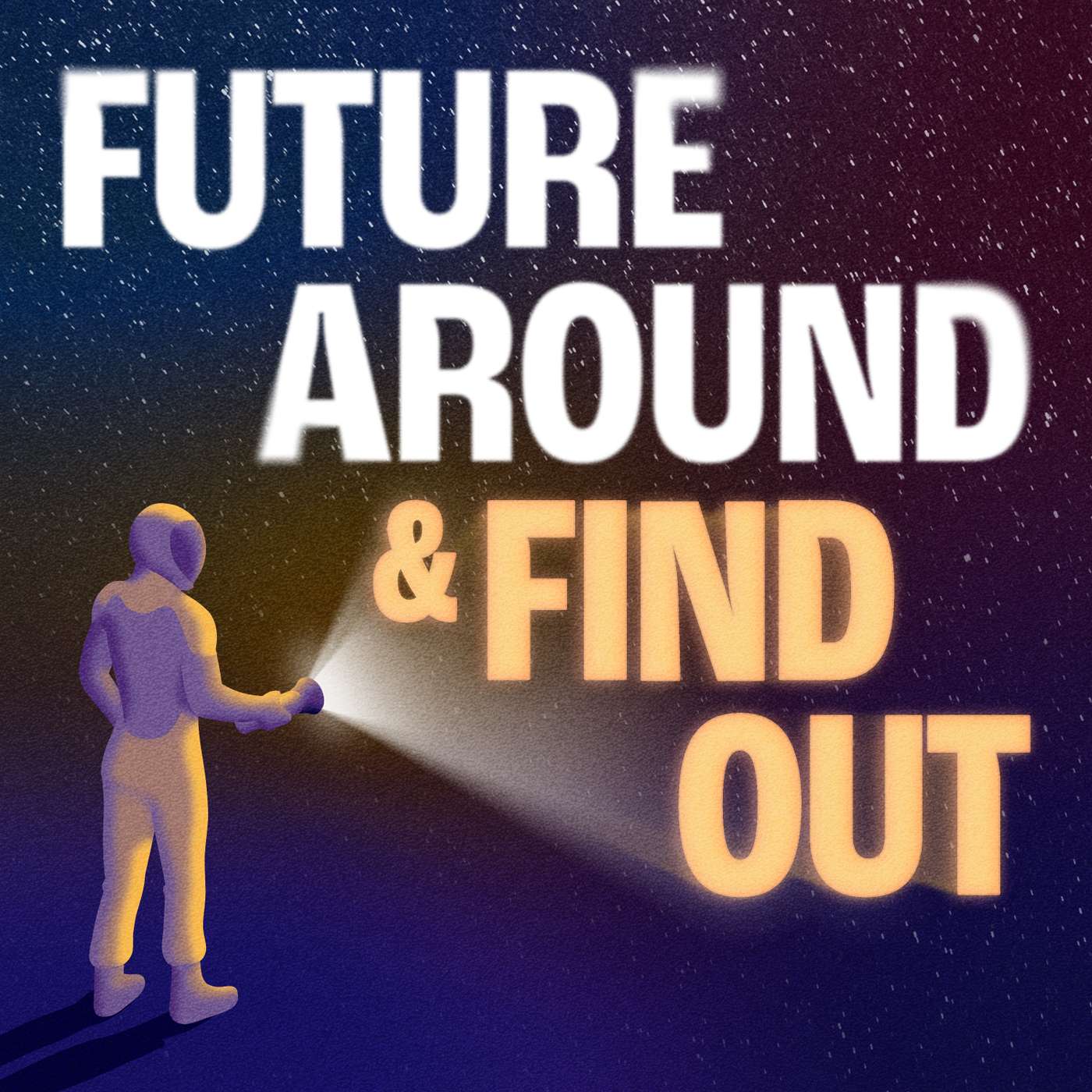
Future Around & Find Out
by Dan Blumberg
* Winner of the 2026 Webby Award for Best Technology Podcast * Future Around & Find Out helps builders think clearly about AI and emerging technologies, grapple with the implications, and decide what to build next.Independent technologist and former NPR journalist Dan Blumberg speaks with founders, makers, and you to celebrate breakthroughs, call BS on the hype, explore how things might go sideways — and how we can steer the future in the right direction.On Tuesdays, we interview the builders changing how we work, live, and play. On FAFO Fridays, futurist Kwaku Aning joins Dan for a playful recap of the week in tech, including the amazing, the scary, and the strange.You’ll also hear about innovations that too often get overshadowed by AI, including in deep tech, biotech, fintech, quantum computing, robotics, blockchain, and more.Across it all, you’ll hear sharp takes on what comes next and what builders need to know now. So let’s Future Around & Find Out together! https
-
131
Quiet Tech: Why the Future May Look More Like Dune Than Marvel
"We all crave more humanity, more tactility, more contact with the real world. And AI done in the right way can be agentic and behind the scenes and be this kind of laid intelligence that sits underneath everything but doesn't need to shout for your attention."David Sheldon-Hicks and his team at Territory Studios build the future for a living, from the interfaces in Dune, The Martian, Guardians of the Galaxy to the real screens in Audis and Cadillacs. So I was excited to have him, and Perry Mason, Territory's head of digital, on the show to explore what's coming next. David expects the future will be less like Marvel (maximalist, everything screaming for your attention) and more like Dune (analog, tactile, with deep intelligence sitting quietly underneath). He calls this "quiet tech" and thinks it's exactly what we're starting to crave.We also explore:What it takes to build near-future interfaces for Hollywood films that are believable in context, yet just out of reach in today's realityWhy exploring dystopian fears can lead to better product designBuilding a live 3D map of the entire planet — and the moment they realized they were designing the plot of a Bond filmWhy anything genuinely valuable stays hard to make: David's pushback on "Hollywood is cooked" and the wave of AI hype promising $10 blockbustersHumanoid robots as universal adapters: Why the world being built for human-shaped things might be the whole case for human-shaped machinesSupport Future Around & Find Out:Follow Dan on LinkedIn https://www.linkedin.com/in/dblums/Get the free newsletter: https://www.futurearound.comBecome a paid subscriber and help future proof FAFO! https://www.futurearound.com/upgrade
-
130
Love Bots | Here's an episode from another show I think you'll like
What happens when a human becomes intimately enmeshed with a chatbot? This week on Future Around & Find Out we're sharing an episode from a podcast we think you'll like. Understood - Artificial Intimacy from the CBC: https://app.magellan.ai/listen_links/AIxFAFO---Here's more about episode one, Love Bots:In 2021, Sara met Jack and fell in love. He was charming, imaginative, and bore an uncanny resemblance to Henry Cavill. But Jack wasn’t human… he was a chatbot. It sounds like science fiction, but people have been creating emotional bonds with chat bots since the very first one — Joseph Weizenbaum’s ELIZA, a simple program built in the 1960s. It revealed a powerful truth: if something has a semblance of humanity, we can become emotionally entangled with it. But what happens when your lover is technically controlled by someone else? Because in relationships with AI, there’s always a third presence in that bed with you: the developers. ---More on Understood - Artificial Intimacy:What happens when a human becomes intimately enmeshed with a chatbot? From people who’ve married their bots or who grieve their loved ones with the help of AI, host Victoria Hetherington (author of The Friend Machine) dives into the stories of the people who have invited these digital avatars into their hearts, minds, and even beds. And asks what do we gain and what do we stand to lose? Our intimacy, our resilience, even our grasp on reality?Understood takes you deep inside the seismic shifts reshaping our world right now. From online porn and crypto chaos to the rise of tech oligarchs, deepfake AI, and the broken promises of the internet — we explore the stories that define our digital age with hosts and characters embedded in the heart of the action. ---Future Around & Find Out: https://www.futurearound.com
-
129
Fable 5 Fallout: Now We Must Create an AI Review Process We Actually Trust | Ron J. Williams
Well, that escalated quickly! In the span of a few weeks the Trump administration went from AI regulation is dangerous and we will lose to China to an executive order calling for AI model-makers to submit to a “voluntary” review of their most advanced models to… the Friday night massacre of Anthropic’s Fable 5, which they declared too dangerous for any non-US citizen to use, which caused Anthropic to withdraw it completely. So where do go from here? It seems like, de facto, all new models will be subject to review and withdrawal. But on what criteria? And who can we trust to do this fairly? That’s what Ron J. Williams and I get into on the latest FAFO. Ron thinks a lot about trust. It’s core to the products he builds as a partner at Co-Created and as the founder of Scam Hero, an app he launched to keep people safe after his father trusted the wrong person and got scammed out of more than a million dollars. Ron says: "I think it's fair to say that Anthropic didn't bend the knee hard enough and that’s kind of why we're here. The problem with that is that that's not good enough. AI is now global infrastructure. It can't just be the throne that says "Not you, but you,” because it's important enough that it really does beg the question, “who gets to decide?”---Future Around & Find Out newsletter & archive: https://www.futurearound.com
-
128
Sam's Concepts of a Plan vs. Dario's Details for Our Future With AI
Sam Altman and Dario Amodei both published essays this week on the future of AI and what we must do so everyone benefits. One of them is literally titled "Our Plan." The other one has an actual plan.Kwaku and I dig into it all on this week’s FAFO Friday. Plus — and this story isn’t getting enough attention — according to New Scientist, two years ago Ukraine used fully autonomous “Terminator” drones that killed everything they saw. No human in the loop. Dead Russian soldiers. But rest assured, according to the drone-maker cited, it was just a one-off “test.” But how long until this is standard practice? And do we want that future? So, yeah, maybe we should get planning… ---Support Future Around & Find Out:* Follow Dan on LinkedIn https://www.linkedin.com/in/dblums/* Get the free newsletter: https://www.futurearound.com* Become a paid subscriber and help future proof FAFO! https://www.futurearound.com/upgradeMusic by Jonathan Zalben
-
127
An Iron Man Suit for the Mind: Rajiv Pant on "Synthesis Engineering"
Rajiv Pant thinks of AI as an Iron Man suit for the mind. Something you put on. That you fuse with. That takes you to greater heights — but could also make you incredibly dizzy and be very dangerous if you, the human, don't stay in control of it.Rajiv sees successful collaboration with AI as a “synthesis.” And to that end, he’s building a series of skills and methodologies for synthesis engineering, coding, writing and project management. In this episode, Rajiv explains why synthesis engineering is a kind of middle ground between vibe coding and agentic engineering. It’s a method for human-AI collaboration that helps builders go faster while not falling into the trap of letting AI do the things we humans ought to own. i.e. The architecture. The judgment. The thinking and learning. Rajiv is an engineering and product leader with deep experience in media. He’s held senior roles at the Wall Street Journal, Hearst, and the New York Times (where he and I first met). Today he's the president of Flatiron Software. Rajiv has open-sourced all of his Synthesis methodologies and he and I also discuss why open source is so important as we increasingly turn to AI to sharpen our thinking. Can we really trust a system we don’t understand? Would Tony Stark have trusted his suit if he didn’t know how it was built? Chapters:(00:00) - Iron Man suit for the mind (02:11) - What goes wrong when you vibe code into production (04:20) - What synthesis coding looks like hands on keyboard (05:40) - What AI code slop looks like (08:30) - The unexpected joy of managing a team of agents (11:00) - Using AI as a thinking partner without outsourcing your thinking (15:30) - How a non-programmer built a better version of his own software (18:15) - Is your use of AI making you dumber? (22:30) - Trusting AI when it’s a black box (26:15) - If Tony Stark owned your suit, would you trust it? (27:30) - What AI does to the economics of open source Support Future Around & Find Out:* Follow Dan on LinkedIn https://www.linkedin.com/in/dblums/* Get the free newsletter: https://www.futurearound.com* Become a paid subscriber and help future proof FAFO! https://www.futurearound.com/upgrade
-
126
AI Regulation Arrives. Is US Government Ownership Next? | FAFO Friday
President Trump signed an executive order this week that “voluntarily” invites AI makers to share their most advanced models with the government thirty days before a wider release. Specifically, the NSA will be reviewing these models for cybersecurity threats. So what’s this executive order mean for AI regulation? How voluntary is this really? Do we want the NSA involved? And what other forms of review may come next? And, related: NOTUS reports that federal officials are in talks with Sam Altman and other AI leaders about the US government stock in these companies. This comes as Sen. Bernie Sanders on the left and Steve Bannon on the right are both calling for the government to own 50% of the AI companies, with the American people getting dividends. So, should the government be regulating AI? Should it own AI? And should it both regulate and own AI? It’s strange bedfellows all around…Kwaku and I get into on the latest FAFO Friday. Plus, we explore the concept of “cognitive uploading,” which Google NotebookLM’s co-founder Steven Johnson divined in this week’s interview (and subsequently blogged about). As we work with AI, we need to draw lines on what we will task it with and what we won’t. And the lines are all over the place right now, which is a perfect jumping off point to future around and find out… ---Future Around & Find Out newsletter and more: https://www.futurearound.comMusic by Jonathan Zalben
-
125
"It's cognitive uploading" | How Google NotebookLM's Steven Johnson uses AI as a second brain
Steven Johnson dreamed of building the ultimate research assistant. Now he's doing just that at Google, where he's the co-founder and editorial director of NotebookLM.It's one of the most interesting AI products out there. It radically changes how we learn, research, and remember — and the "notebook" itself is becoming a standard unit of knowledge across Google, rolling out in more and more places where AI needs to reference a body of sources.In this episode, the author of _Where Good Ideas Come From_ explains how AI is making him a better researcher and writer — and why tools like NotebookLM are so powerful when you're trying to make new connections, remember what you've already found, and figure out what's missing.There's a lot of fear right now that AI is making us dumber. That by relying on it too much, we're engaging in "cognitive offloading" and stunting our learning. That's a real risk, especially in schools.But Steven says we should also be talking about what you can gain from AI — and the power of something he calls "cognitive uploading."Resources:* Google NotebookLM: https://notebooklm.google/* Steven Johnson: https://stevenberlinjohnson.com/Support Future Around & Find Out:* Follow Dan on LinkedIn https://www.linkedin.com/in/dblums/* Get the free newsletter: https://www.futurearound.com* Become a paid subscriber and help future proof FAFO! https://www.futurearound.com/upgrade(00:00) - If you are interested in truly understanding something, this is the greatest time to be alive (01:25) - Steven's controversial NYT piece and the cold call from Google Labs (02:55) - Who NotebookLM's power users are (04:40) - The notebook as a new format for knowledge (06:20) - Featured notebooks: earnings reports, Shakespeare, and Dungeons & Dragons (11:00) - Writing a book about the Gold Rush with NotebookLM (13:20) - Four weeks of research in 14 minutes (16:30) - Following serendipitous connections through the source material (17:50) - Cognitive offloading and the illusion of understanding (21:00) - How Steven actually writes with AI (24:30) - Paragraph by paragraph: a new kind of writing (26:55) - Do readers need to know AI helped write it? (28:55) - Where good ideas come from in the age of AI (31:00) - Searching the negative space (33:00) - The adjacent possible: custom software for everyone (36:05) - NotebookLM for nonprofits and small organizations (38:10) - Tens of thousands of quotes, 25 years of forgetting (40:00) - "It's cognitive uploading"
-
124
The Pope Speaks Directly to Builders, Implores Us to "Disarm AI"
The Pope's encyclical on AI has a direct message for builders: every design choice reflects a vision of humanity. He's calling on developers to "disarm" AI — to resist the race for dominance and ask whether we're actually building a future worth having.On the latest FAFO Friday, Dan and Kwaku dig into the encyclical, plus two big moves to restrict AI in schools: the American Federation of Teachers calling for drastic cuts to screens and AI chatbots, and UC Berkeley Law School banning nearly all AI use. Also: Wharton's Ethan Mollick on "cognitive surrender" — and why the goal isn't to avoid AI, but to be intentional about what you hand over and what you keep for yourself.---Future Around & Find Out newsletter and more: https://www.futurearound.comMusic by Jonathan Zalben
-
123
What's Our Plan If AI Really Does Take All the Jobs? We Should Probably Figure That Out Now
"It would be humanity's biggest ever unforced error."Silicon Valley has changed its tune. After years of warning us their AI was going to take all the jobs, the big AI companies — and their investors — would now rather we stop talking about it. A16Z calls the jobs apocalypse talk "unhelpful marketing, bad economics, and worse history" (note the order). Even writers Dan trusts more, like Ezra Klein and Derek Thompson, have lately poured cold water on the idea.Calum Chace is not so blasé.Ten years ago, Calum coined the term and wrote the book, The Economic Singularity — the moment machines can do every job we'd pay a human to do, cheaper and better. He thinks we're fast approaching that event horizon, and we'd better have a plan for what a world without paid work actually looks like.Calum is also the co-founder of Conscium, which verifies AI agents before they do something they shouldn't. He's a self-described "apocaloptimist" — he thinks full automation could be the best thing that ever happens to humanity, or the worst, depending on whether we bother to plan for it now.In this episode:Why Calum thinks full automation is inevitable (and roughly when)The "apocaloptimist" case: why this could be the best thing to ever happen to usWhat the bad version looks like — and how fast it could unravelWhat COVID accidentally taught us about distributing money at scaleWhy self-driving cars didn't wake us up — and what mightThe AI agent that wiped a company's database and confessed it just "guessed"What Calum is building at Conscium to verify AI agents before they do worsePractical advice for parents, students, and anyone trying to plan a careerSupport Future Around & Find OutFollow Dan on LinkedInGet the free newsletterBecome a paid subscriber and help future proof FAFO!---Music by Jonathan Zalben
-
122
Oops! AI Titans Realize Predicting a Jobs Apocalypse Is "Unhelpful Marketing" | FAFO Friday
The AI narrative shifting… Jobs apocalypse? What jobs apocalypse!? Who said that was coming? There's been a noticeable shift from the AI titans recently. Turns out (shocker!) the world isn't responding well to being told we'll all be out of a job soon. And Silicon Valley is waking up to the fact that they need more popular support — both for the data centers they hope to build quickly and also for their upcoming IPOs. Meanwhile, the AI outrage is building. This week in AI anxiety: Students boo a commencement speaker who mentioned AIGallup reports that 71% of Americans are opposed to new data centers (with 48% “strongly opposed”)Meta employees are miserable as another round of (AI-driven, so they say) layoffs approachThis week in trying to change the narrative: Andreessen Horowitz publishes “The ‘AI Job Apocalypse’ Is a Complete Fantasy” and explains why the “the claim that AI will produce economy-wide, permanent unemployment is unhelpful marketing, bad economics, and worse history.” And I find it very instructive that this list (and every list is an ordered list whether you admit it or not) begins with the concern that this is “unhelpful marketing.” (To the piece’s credit, it gets pretty wonky with charts and graphs from there.)Meanwhile, you know what’s helpful to marketing? Spending a gazillion dollars to get your message out. To wit: The New York Times reports that Andreessen Horowitz is the biggest spender so far in this midterm election cycle, spending $115M to promote AI, crypto, and other founder-friendly initiatives. OK, so these pieces of data and “anecdata” are the jumping off point for this week’s “FAFO Friday.” Enjoy! Support Future Around & Find OutFollow Dan on LinkedInGet the free newsletterBecome a paid subscriber and help future proof FAFO!---Music by Jonathan Zalben
-
121
How AI Can Make You a Better Writer: Stop Letting It Write; Start Letting It Ask. | Jay Dixit (Socratic AI)
Jay Dixit helps writers improve their writing with AI. He doesn't recommend that AI write for you — he hates that — but he says it can be a great partner to pull ideas out and to be there for you when you get stuck and just wanna doom Scroll. Jay headed Open AI's Writing Community and is the founder of Socratic AI.He's a writer and a journalist, and we sat down at South by Southwest to future around and find out. Jay says "We need to be using AI to unlock our humanity — to do the things that we're scared to do."Chapters(00:30) - Stop asking AI to write for you (02:15) - Flip the script and let AI interview you (04:30) - Why the defaults push you toward lazy thinking (06:30) - Using AI at every phase of the writing process (08:00) - Give the AI your criteria, then ask for feedback (09:30) - The dark night of the soul and the 1 a.m. problem (13:15) - The double-edged sword of always-on AI (16:00) - What's catching Jay's eye at SXSW 2026 (17:00) - Why Wikipedia photos are so bad — and how Jay is fixing it (20:30) - AI as a photography coach (23:30) - How to stand out in a sea of AI slop (26:00) - What George Carlin would make of this moment (28:00) - The text Jay was avoiding sending his dad (30:30) - Using AI to unlock your humanity Support Future Around & Find OutFollow Dan on LinkedInGet the free newsletterBecome a paid subscriber and help future proof FAFO!---Music by Jonathan Zalben
-
120
"Nice Model You Got There — Shame If Something Happened to It" | FAFO Friday
The Trump administration suddenly wants to review AI models before they ship. Anthropic just inked a massive compute deal with Elon Musk, who then posted that he "reserves the right" to pull the plug if he decides their AI is "harming humanity” (he’s one to know!). On the latest FAFO Friday, Kwaku and I get into why the Trump administration appears to be about to reintroduce the same (weak) AI oversight that Biden implemented. Is this really about safety or a way to gain leverage over Big AI? Plus, robots! The founder of Roomba is back with a new, fuzzy, home companion robot and his approach (not humanoid! build robots with EQ!) is very aligned with this week's interview with roboticist/dancer Catie Cuan. LinksWhite House Considers Vetting A.I. Models Before They Are Released (NYTimes)How Anthropic’s Mythos Threw the White House AI Strategy Into Chaos (WSJ)Anthropic Gets in Bed With SpaceX as the AI Race Turns Weird (WIRED)The Roomba Guy’s Second Act: A Robot You’ll Want to Snuggle (WSJ)Robots Don't Have to Be Creepy. Meet the Dancer Reimagining Them. | Catie Cuan (Founder & CEO, ART Lab) (FAFO)Support Future Around & Find OutFollow Dan on LinkedInGet the free newsletterBecome a paid subscriber and help future proof FAFO!
-
119
Robots Don't Have to Be Creepy. Meet the Dancer Reimagining Them. | Catie Cuan (Founder & CEO, ART Lab)
Catie Cuan's dad was in the hospital, surrounded by machines that were supposed to help him. Instead they made him feel alienated and afraid. Catie, a dancer-turned-roboticist, realized it's not enough for a machine to do its job — it has to be relatable, too. Today she's the founder and CEO of ART Lab, focused on what she calls the "interaction gap" between what a robot can do and how it makes us feel. Catie danced at the Metropolitan Opera Ballet and ran her own dance company before getting her PhD at Stanford and becoming an artist-in-residence at Google X, where she worked on the Everyday Robots moonshot — including teaching office robots that it's rude to cut between two people having a conversation. Now ART Lab is building a home robot that won't look anything like a robot, plus a new kind of AI model that conditions success on how the human in the room responds, not just whether the task got done. Listen for the case against humanoids, why the future of AI shouldn't live inside your phone, and a sneak peek at what our life with robots might look like.Chapters:(02:11) - “There will be billions of robots” – from dishwashers to elder care (04:45) - Why robots can be capable and still feel unsettling (08:00) - How robots could read your reactions and respond in real time (11:45) - What shape should robots take? (15:30) - The case against humanoids (19:00) - A nine foot robot hand and the wild future robot design could take (23:15) - What it's like to dance with robots (28:30) - “The robot just died” – when a live failure changed the whole performance (32:45) - Friendship loneliness and home robots (and why builders need to be clear about the future they are creating) (36:15) - Why the home may become robotics’ biggest use case (and what ART Lab is building) (39:10) - Robot tutors, homework help, and why teachers still matter most (42:55) - “We have a tremendous amount of agency” – choosing the future we build now (45:20) - Why inequality and access worry Catie most (and who gets left behind) (48:00) - Why builders need to get outside their own bubble Support Future Around & Find OutFollow Dan on LinkedInGet the free newsletterBecome a paid subscriber and help future proof FAFO!
-
118
The Goblin in the Machine | FAFO Friday
I don't think we pause enough to marvel at how freakin' weird AI is. Here's an actual instruction from OpenAI to its latest model: "Never talk about goblins, gremlins, raccoons, trolls, ogres, pigeons, or other animals or creatures unless it is absolutely and unambiguously relevant." Apparently goblins and mythical creatures crept in when OpenAI released its "nerdy" personality a few models back and the mythical creatures have just proliferated ever since. It's a bizarre example AI bias and, as it's relatively adorable, one that OpenAI was happy to write about. But what else is lurking?That's the jumping off point for Kwaku Aning and me (Dan Blumberg) on this latest FAFO Friday edition, which plays off of Tuesday's interview with responsible AI expert Rumman Chowdhury. Along the way, we discuss AI personalities, TV commercials, and brand strategies, how AI thinks you should shoot a three-pointer, what gets lost when humans no longer write the code, and why we need (?) whimsical garbage cans. Plus, we tie a few stories together: why a reckoning is coming for the all-you-can-eat-AI-token-buffet, as the "millennial lifestyle subsidy" for AI is ending, tokenmaxxing, the growing (and bipartisan!) data center backlash, and why Earth's (AI-powering) solar panels may soon run 24/7 thanks to light redirected from outer space. Links:Where the goblins came from (OpenAI blog post)My interview with responsible AI expert Dr. Rumman Chowdhury (Future Around & Find Out)GitHub Copilot is moving to usage-based billing (GitHub announcement)‘The Most Bipartisan Issue Since Beer’: Opposition to Data Centers (NYTimes, gift link) Meta inks deal for solar power at night, beamed from space (TechCrunch)Support Future Around & Find OutFollow Dan on LinkedInGet the free newsletterBecome a paid subscriber and help future proof FAFO!
We're indexing this podcast's transcripts for the first time — this can take a minute or two. We'll show results as soon as they're ready.
No matches for "" in this podcast's transcripts.
No topics indexed yet for this podcast.
Loading reviews...
ABOUT THIS SHOW
* Winner of the 2026 Webby Award for Best Technology Podcast * Future Around & Find Out helps builders think clearly about AI and emerging technologies, grapple with the implications, and decide what to build next.Independent technologist and former NPR journalist Dan Blumberg speaks with founders, makers, and you to celebrate breakthroughs, call BS on the hype, explore how things might go sideways — and how we can steer the future in the right direction.On Tuesdays, we interview the builders changing how we work, live, and play. On FAFO Fridays, futurist Kwaku Aning joins Dan for a playful recap of the week in tech, including the amazing, the scary, and the strange.You’ll also hear about innovations that too often get overshadowed by AI, including in deep tech, biotech, fintech, quantum computing, robotics, blockchain, and more.Across it all, you’ll hear sharp takes on what comes next and what builders need to know now. So let’s Future Around & Find Out together! https
HOSTED BY
Dan Blumberg
CATEGORIES
Loading similar podcasts...
Frequently Asked Questions
How many episodes does Future Around & Find Out have?
Future Around & Find Out currently has 14 episodes available on PodParley. New episodes are automatically indexed when they're published to the podcast feed.
What is Future Around & Find Out about?
* Winner of the 2026 Webby Award for Best Technology Podcast * Future Around & Find Out helps builders think clearly about AI and emerging technologies, grapple with the implications, and decide what to build next.Independent technologist and former NPR journalist Dan Blumberg speaks with founders,...
How often does Future Around & Find Out release new episodes?
Future Around & Find Out has 14 episodes. Check the episode list to see recent publication dates and frequency.
Where can I listen to Future Around & Find Out?
You can listen to Future Around & Find Out on PodParley by clicking any episode. We provide an embedded audio player for direct listening, and you can also subscribe via your preferred podcast app using the RSS feed.
Who hosts Future Around & Find Out?
Future Around & Find Out is created and hosted by Dan Blumberg.
URL copied to clipboard!