
PODCAST · education
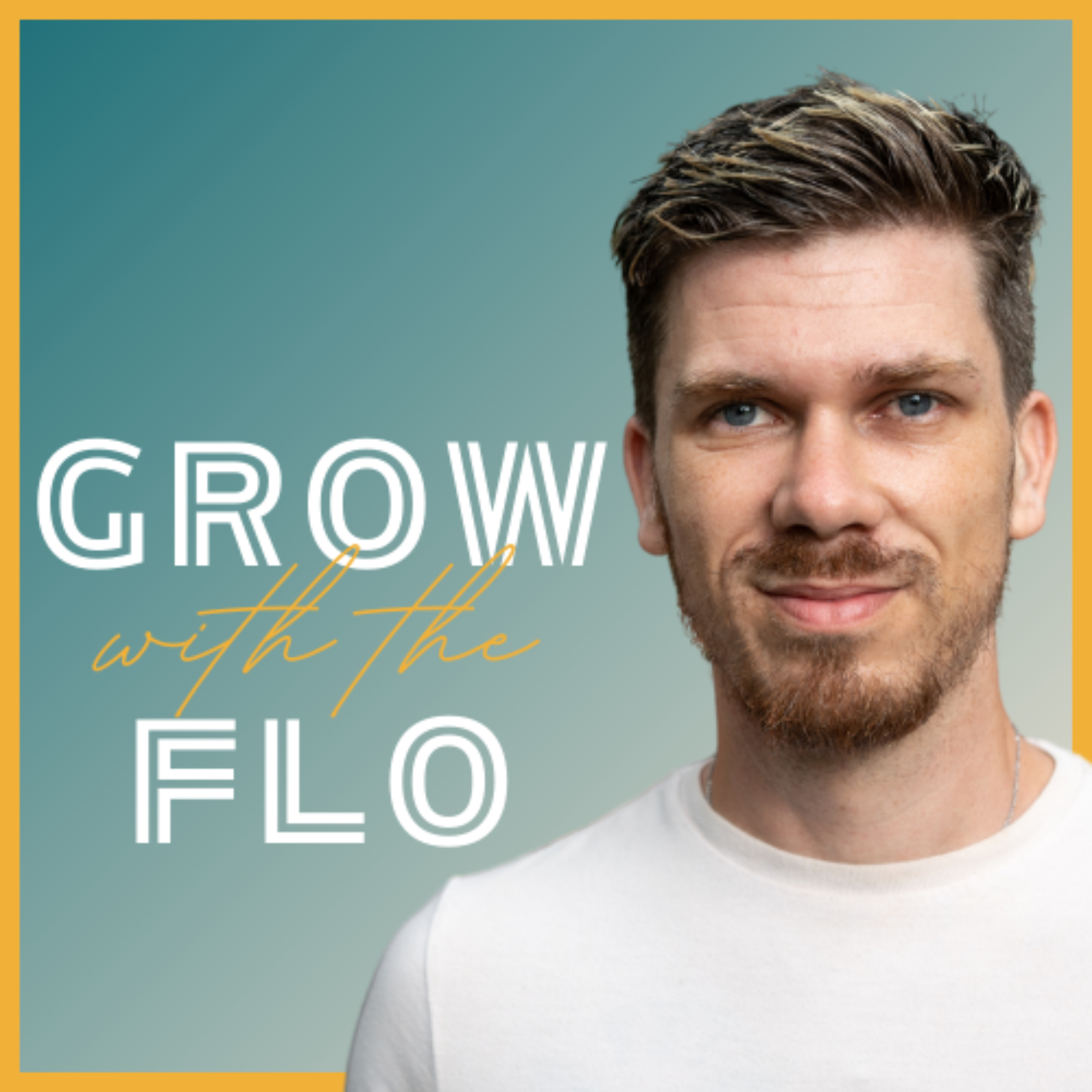
Grow with the Flo
by Flo
Grow with the Flo is your space for open, honest, and real conversations about life. Hosted by Flo, this podcast explores what it truly means to grow, connect, and learn in a world that often prioritizes filters over authenticity.Through solo reflections, insightful interviews and deep dives into themes like personal growth, anxiety, and building meaningful connections, Grow with the Flo invites you to embrace your own truth unapologetically.Whether you're seeking inspiration, a fresh mindset or a moment of connection, this podcast is here to grow with you.
-
61
There Was More Life in Those Five Years | Daniel Wang on Love, Loss & Living Fully
Daniel Wang lost his wife Sherry to breast cancer three years ago. What followed was grief, depression, and addiction. What turned it was a dream.Sherry appeared — calm, happy, surrounded by her friends wearing her clothes. She wasn't there to come back. She was living. And she asked him: "Are you looking after yourself?"This conversation moves through the before — who Daniel and Sherry were together — through the fall, and slowly, toward the return. It's about love, loss, presence, and what it looks like to rebuild when the person who knew you best is gone.Daniel describes his current essence as a "vigilant mouse." Observing. Grounded. Present. Someone who has learned that awareness isn't passive — it's survival.📩 Find Daniel on Instagram: https://www.instagram.com/dandydandub/
-
60
Falling in Love With My Life Again | Reflections from Hoi An
For four months, I’ve been travelling through Asia searching for… something.Sri Lanka showed me what I didn’t want. Bali showed me how connection can sometimes become distraction.And then Hội An slowed me down enough to finally hear myself again.In this episode, I reflect on the routines, rituals, loneliness, insights, and uncomfortable truths that surfaced during this chapter of my life.We talk about:building routines that genuinely support youthe difference between presence and performancewhy even our passions can become pressurecontact improv and the idea of the “third entity”self-love that isn’t performativejealousy, comparison, Instagram spiralslearning to stay with yourself when things feel uncomfortableand the strange distance between digging a hole at the beach feeling completely free… and waking up the next morning scrolling your phone for two hoursThis isn’t a polished transformation story. It’s a reflection on a process that’s still unfolding.And maybe that’s the most honest thing I can share right now.If this episode resonates with you, I’d genuinely love to hear from you. Share it with someone who might need it, leave a review, or send me a message on Instagram.Until next time — Follow your intuition, do everything with love, and just see where it takes you.
-
59
The Person You're Still Becoming | Danny Rahim on Purpose, Growth & Sobriety
Danny Rahim's story begins with adversity.Growing up with a mother facing severe mental health challenges and experiencing profound loss at a young age, Danny was forced to confront difficult realities long before most people do. In this conversation, we explore how those experiences shaped the person he became—and how they eventually led him toward coaching, purpose, and a deeper understanding of himself.We dive into Danny's Sober 365 journey, the social pressure surrounding alcohol, and what happens when you remove a coping mechanism that society has largely normalised. Rather than focusing solely on sobriety, this conversation explores identity, habits, self-awareness, and the stories we tell ourselves.We also discuss Automatic Negative Thoughts (ANTS), the power of self-talk, the impact of ADHD on behaviour and decision-making, and why the people we surround ourselves with have such a profound influence on our lives.Throughout the episode, Danny shares practical insights on creating lasting change, finding joy in everyday life, and navigating both success and struggle with perspective.Topics we explore:• Growing up through adversity and its lasting impact• The link between childhood experiences and adult behaviour• Danny's Sober 365 journey• Why alcohol is so deeply embedded in modern culture• Automatic Negative Thoughts (ANTS)• ADHD, self-awareness, and personal growth• Habits, consistency, and long-term change• The importance of your environment and social circle• How the words we use shape our reality• Finding purpose and meaning in your work• "All of us will die, but not all of us will live"• "This too shall pass"—for both difficult and beautiful momentsConnect with Danny:Instagram: @dannyrahimcoachingWebsite: dannyrahimcoaching.comLearn more about Danny's coaching, the Sober 365 journey, and the Elev8 Human Performance community through the links above.—If this episode resonated with you, please share it with someone who might benefit from the conversation, leave a review, and subscribe to Grow with the Flo for more honest conversations about growth, anxiety, identity, connection, and what it means to live a life that actually feels like yours.
-
58
How I Overcame (Toilet) Anxiety (And Reclaimed My Freedom)
Two years ago, I couldn’t walk twenty minutes from my front door without knowing there was a toilet nearby.Today, I’m travelling through Asia with no fixed plans, no mapped-out exits, and no certainty about what comes next.In this deeply personal solo episode, I open up about my experience with anxiety and toilet anxiety — the shame, the isolation, the avoidance, and the long process of slowly rebuilding trust with my body and nervous system.This isn’t a “5 steps to fix your anxiety” episode. It’s an honest conversation about what actually helped:Understanding the gut-brain connectionExposure and facing fearBreathwork and nervous system regulationAcupuncture, movement, journalling and communityLearning to sit with uncertainty instead of fighting itMost importantly, this episode is about the relationship we build with anxiety over time.Because freedom isn’t the absence of anxiety — it’s learning that fear no longer gets to run your life.If this has been part of your story too, I’d genuinely love to hear from you.Follow your intuition, do everything with love, and just see where it takes you.#Anxiety #MentalHealth #ToiletAnxiety #PersonalGrowth #HealingJourney #Podcast #GrowWithTheFlo #Agoraphobia #MentalHealthAwareness
-
57
Is Stress the Price of Success? | Aline Werner
In this episode, I sit down with Aline Werner, someone who’s been navigating two worlds that don’t naturally seem to fit together.On one side: corporate structure, pressure, performance.On the other: yoga, personal growth, well-being, and spirituality.For a long time, these worlds felt separate — almost incompatible.But Aline is now stepping into what she calls the “Business Hippie”… someone trying to bridge both.We started this conversation with a question that stuck with me:Is stress actually a sign of success?And interestingly… we never really came back to answer it.Maybe because the answer isn’t that simple.We talk about the pressure to perform, the identity behind being “busy,” and the subtle ways stress can become something we hold onto — even when it’s draining us.This isn’t a conversation about eliminating stress.It’s about understanding our relationship to it.About noticing when ambition turns into tension.And questioning whether the life we’re building actually feels good to live.What I appreciated most is how honestly Aline speaks about navigating both worlds — without pretending to have it all figured out.Aline is a lawyer by background and has spent years working in corporate environments, including compliance and internal auditing. Alongside this, she has built a path in fitness, coaching, and personal development.She describes herself as a “Business Hippie” — someone who doesn’t want to choose between ambition and well-being, but instead explores how both can coexist.Her work today includes coaching, speaking, and creating spaces that support both professional and personal growth.About Aline WernerKey TakeawaysStress can become part of our identity — not just a reactionBeing “busy” often feels like progress, even when it isn’tBalancing ambition and well-being isn’t about choosing one over the otherAwareness is the first step to changing your relationship with stressIf you’ve ever felt like slowing down means falling behind, this conversation invites you to question that belief — and maybe redefine what success actually looks like for you.Instagram: https://www.instagram.com/the_businesshippie?igsh=MTN6aG84a3JtZG54cA%3D%3D&utm_source=qrWebsite: https://alinewerner.com/
-
56
I Thought I Wanted Freedom… Now I’m Drowning in It
I thought I was creating freedom by letting go of everything—my job, my relationship, my routine.But instead, I found myself drifting.In this episode, I explore what happens when you lose all your anchors, why too much freedom can feel overwhelming, and what it actually takes to rebuild stability without feeling trapped.
-
55
Your Goals Are Destined to Fail
Most goals don’t fail because of you — they fail because of how they’re set.In this episode, I break down the SMART framework, why even “good” goals don’t work, and the missing piece most people ignore: sustainability.Because a goal that only works on your best days… isn’t a good goal.
-
54
I Didn’t Expect This to Happen During My Fast
This was my first fast and it definitely didn't go as I expected. 110 hours - That's how long I didn't eat. Ironically, when I just started, my flatmate just happened to finish their fast and were already back to indulging in all the foods they missed out on, so ... Challenge accepted!
-
53
Something Has to Die. I’m Killing Half My Projects.
I built too much.Apps. Retreat ideas. Business concepts and websites. New directions every few months. On paper, it looked ambitious. In reality, it felt fragmented.In this episode, I share why I’m deliberately killing half my projects — and what it means to choose depth over distraction.We talk about:Ego and external validation.Fear of mediocrity.Why starting is easier than staying.And why growth sometimes requires subtraction.If everything matters, nothing compounds.Maybe it’s time to prune.
-
52
Will I Ever Be Truly Great at Anything?
I’ve tried a lot of things in my life.Dance. Acroyoga. Business. Apps. Retreats. Podcasting. Fitness. Travel. Ideas on top of ideas.And lately I’ve been wondering if being a “jack of all trades” is a strength… or just a polite way of saying I never stay long enough to master anything.In this episode, I explore:The fear of being average.The tension between curiosity and commitment.Why starting feels easier than staying.And whether greatness requires narrowing down.Maybe the problem isn’t having many interests.Maybe it’s never choosing which one deserves your full depth.
-
51
I Faced My Anxiety on a 5-Hour Bus Ride.
I almost didn’t go to Sigiriya.The plan was simple: take a local bus, travel for hours, explore somewhere new. But my anxiety had other plans.In this episode, I share something different — I recorded myself before the journey and again after arriving. Raw. Unfiltered.We talk about:Toilet anxiety and lack of control.The spiral before committing.The physical sensations of fear.What changed once I arrived.And what anxiety teaches us about avoidance.Sometimes courage isn’t climbing a mountain.Sometimes it’s getting on the bus anyway.
-
50
I Had More Anxiety in 3 Months Than in 3 Years
Since coming to Sri Lanka, I’ve had more anxiety attacks in the last three months than in the previous three years combined.That scared me. I thought I had “grown.” I thought I had moved past that chapter. In this episode, I share:What triggered these recent anxiety waves.How it felt physically and emotionally.Why growth can sometimes feel like regression.The connection between identity shifts and panic.And what this season is teaching me about grounding, self-worth, and control.Maybe anxiety returning doesn’t mean you’re failing.Maybe it means something inside you is shifting.
-
49
Season 3: What If This Podcast Was Just… Company?
This episode marks the beginning of Season 3 — and a quiet return to the roots of Grow with the Flo.Over the last two seasons, this podcast has changed.And so have I. In this episode, I reflect openly on that shift:on the pressure to have answerson the temptation to sound certain,and on how easy it is to slowly move away from honesty while trying to be “useful.”Lately, I’ve felt the need to go back to the roots — not to simplify the topics, but to simplify my position within them.To stop pretending that I know more than I do.To stop performing growth instead of living it.This isn’t an episode about strategy or structure.It’s about presence. About what it means to show up without fixing.To speak without teaching.To walk alongside instead of leading from the front.Season 3 is an invitation to let this podcast become something quieter and more human.Less about answers.More about companionship. If you’re in a phase of not knowing, of questioning your direction or of simply wanting something honest to sit with you for a while — this season is for you.
-
48
The Questions That Changed My Life
Some questions don’t give answers — they change how you live.In this episode of Grow with the Flo, I share a handful of questions that have quietly shaped my decisions, relationships, and sense of direction over time. Not questions meant to optimize your life or fix you — but questions that slow you down, interrupt autopilot, and bring you back into honesty.We explore why certain questions feel uncomfortable, why we often avoid asking them, and how living with better questions can be more powerful than chasing quick answers. This episode is about curiosity, courage, and the willingness to stay present with uncertainty.Rather than offering solutions, this episode invites reflection — and space.In this episode, we explore:Why the right questions matter more than quick answersHow questions can disrupt autopilot and unconscious patternsThe difference between curiosity and self-criticismWhy some questions return again and againHow living with questions can create clarity over timeReflection questions:What question keeps returning in your life right now?Which questions do you tend to avoid — and why?How might your life change if you stopped rushing to answer?What would it mean to live more honestly with uncertainty?Until next time, follow your heart, trust your intuition, and simply grow with the flow.
-
47
When Doing Your Best Isn’t Enough
“Just do your best” sounds supportive — until it becomes exhausting.In this episode of Grow with the Flo, we explore the hidden pressure behind always trying harder, being responsible, and holding yourself to standards that may no longer fit your life. I reflect on how the idea of “doing your best” can quietly turn into self-judgment, over-functioning, and chronic dissatisfaction — especially during periods of transition.Drawing from personal experience and reflection, we question what “doing your best” actually means when your energy, values, or circumstances change. We talk about how effort driven by fear feels very different from effort guided by alignment, and why redefining “best” can be an act of honesty rather than failure.This episode isn’t about lowering standards.It’s about letting go of expectations that disconnect you from yourself.In this episode, we explore:How “doing your best” can become a source of pressure and guiltWhy effort driven by fear feels unsustainableThe difference between discipline and self-abandonmentHow your “best” changes across seasons of lifeWhat it means to choose alignment over performanceReflection questions:How do you personally define “doing your best”?Who or what sets that standard — you, or expectation?Where might you be pushing out of fear rather than alignment?What would your best look like if it were guided by energy instead of obligation?Until next time, follow your heart, trust your intuition, and simply grow with the flow.
-
46
Self-Trust: Choosing with Certainty
We’re often taught that good decisions come from clarity.That once things make sense, feel safe, or look logical enough, choosing will be easy.But real life rarely works that way.In this episode of Grow with the Flo, we explore self-trust as the ability to choose without certainty — to move forward without guarantees, external validation, or a clear picture of how things will unfold. I reflect on moments of indecision, fear of making the “wrong” choice, and the quiet belief that confidence should come before action.We talk about how self-trust isn’t built by perfect outcomes, but by staying in relationship with ourselves after we choose. About the difference between intuition and impulse, and why waiting for certainty often keeps us stuck longer than choosing imperfectly ever could.This episode is for anyone standing at a crossroads, waiting to feel ready — and wondering what it would mean to trust themselves anyway.In this episode, we explore:Why certainty is often an unrealistic requirement for decision-makingHow self-trust is built through experience, not reassuranceThe difference between intuition, fear, and avoidanceWhy “wrong choices” still strengthen self-trust over timeHow to move forward without betraying yourselfReflection questions:Where are you currently waiting for certainty before choosing?What are you afraid would happen if you trusted yourself more fully?How do you usually treat yourself after a decision doesn’t go as planned?What choice feels honest right now — even if it’s uncomfortable?Until next time, follow your heart, trust your intuition, and simply grow with the flow.
-
45
Feeling Stuck on Autopilot?
Life doesn’t always fall apart when something is wrong.Sometimes it just keeps going — smoothly, efficiently, quietly — while you feel increasingly disconnected from it.In this episode of Grow with the Flo, we explore what it means to live on autopilot. Not in a dramatic or broken way, but in the subtle sense of doing what’s expected, repeating familiar patterns, and checking the right boxes — while feeling strangely numb, restless, or unfulfilled underneath.I reflect on how autopilot often develops as a coping mechanism, how it protects us during demanding phases of life, and why it can become limiting once the environment changes. We talk about the difference between discipline and disconnection, routine and avoidance, and how awareness — not drastic action — is usually the first step out.This episode isn’t about blowing your life up.It’s about noticing where you’ve stopped choosing — and gently coming back into contact with yourself.In this episode, we explore:What living on autopilot actually looks like in everyday lifeWhy autopilot often feels safe but slowly drainingHow habits can outlive the phase they once supportedThe early signals that something wants to changeHow awareness can interrupt autopilot without forcing actionReflection questions:Where in your life do you feel most “on autopilot”?When did that pattern start — and what did it protect you from at the time?What sensations or emotions do you tend to avoid by staying busy or distracted?What would it feel like to make one small, conscious choice today?Until next time, follow your heart, trust your intuition, and simply grow with the flow.
-
44
Find Stability When You're Starting Over
Starting over sounds liberating — until you’re actually inside it.When familiar structures fall away, even chosen change can feel disorienting, lonely, and ungrounded. Suddenly, the routines, identities, and reference points that once made life feel stable are gone — and you’re left asking what stability even means anymore.In this episode of Grow with the Flo, we explore what it means to find stability when you’re starting over — not by recreating the old version of your life, but by building something more internal and adaptable. I reflect on transition periods, relocation, uncertainty, and the subtle pressure to “get back on track” as quickly as possible, even when the old track no longer fits.We talk about why starting over often feels harder than staying stuck, how our nervous system reacts to uncertainty, and why trying to force clarity too early can actually delay grounding. Rather than chasing certainty, this episode invites a different kind of stability — one rooted in self-trust, rhythm, and presence rather than control.This episode is for anyone between chapters: emotionally, geographically, professionally, or internally — and learning how to stand steady while the ground is still shifting.In this episode, we explore:Why starting over can feel destabilizing even when it’s intentionalThe difference between external stability and internal groundingWhy rushing to “figure it all out” can increase anxietyHow to build stability through small, repeatable anchorsWhat it means to trust yourself when nothing feels settled yetReflection questions:Where in your life are you starting over — even if you haven’t named it that way?What are you trying to recreate from the past instead of allowing something new to form?What currently helps you feel grounded, even briefly?What would stability mean if it didn’t rely on certainty?Until next time, follow your heart, trust your intuition, and simply grow with the flow.
-
43
Is It Ever Too Late to Say Sorry?
Apologies are simple in theory — and surprisingly hard in practice.Most of us know we should say sorry, yet we delay, soften, justify, or avoid it altogether. Not because we don’t care, but because apologizing asks us to face discomfort, vulnerability, and the possibility of rejection.In this episode of Grow with the Flo, we explore why saying sorry feels so threatening, what actually makes an apology meaningful, and whether there’s ever a point where it’s truly “too late.” Drawing from psychology, real-life examples, and personal reflection, this episode looks at apologies not as a moral obligation, but as a human skill — one we learn by doing imperfectly.We talk about the difference between intention and impact, why defensive apologies often backfire, and how owning mistakes can actually increase trust and respect rather than diminish it. We also explore the harder side of apologies: what to do when forgiveness doesn’t come, when relationships can’t be repaired, and when the apology is more about honesty than reconciliation.This episode is an invitation to reflect on the apologies you’ve avoided, the ones you’ve received, and the kind of person you want to be when things go wrong — because growth isn’t about being perfect, it’s about being accountable.In this episode, we explore:Why apologizing feels emotionally risky and tied to ego and identityHow apologies help repair trust and reduce lingering resentmentThe difference between sincere and defensive or conditional apologiesWhat makes an apology meaningful and respect-buildingWhy saying sorry doesn’t guarantee forgiveness — and why that’s okayWhether it’s ever too late to apologize, even years laterReflection questions:Is there someone you’ve thought about apologizing to more than once?What are you afraid might happen if you do?What happens — internally — if you never do?How might owning a mistake change how you see yourself, regardless of the outcome?Until next time, follow your heart, trust your intuition, and simply grow with the flow.
-
42
Living on Autopilot — and How to Step Out of It
Lately, I’ve been noticing how often my life asks for a pause.Not a dramatic stop — just a quiet check-in.Am I actually choosing this… or am I doing it because it’s expected?In this episode of Grow with the Flo, I explore what intention really means to me right now — stripped of manifestation culture, productivity hacks, and the pressure to “design” a perfect life. For me, intention is simpler than that. It’s about awareness. Knowing what I’m doing while I’m doing it. The difference between drifting… and choosing to drift.I share how much of the guilt and tension I used to carry didn’t come from my behavior, but from invisible rules I’d never consciously agreed to — around food, drinking, busyness, and saying yes. When the intention behind those choices changed, the guilt quietly disappeared, even when the behavior stayed the same.This episode also touches on transitions, boundaries, and grief. On choosing presence while preparing to leave Malta. On letting go without rushing ahead. On how intention can soften boundaries and turn them into acts of care rather than rejection. And on the unexpected truth that every intentional choice carries a little grief — because choosing one thing always means not choosing something else.Ultimately, this is an episode about honesty. About realizing that the opposite of intention isn’t spontaneity — it’s unconsciousness. And that sometimes the most intentional thing you can do is simply say: “This is what’s happening right now… and I’m here for it.”In this episode, we explore:What intention really means (and what it doesn’t)How living on autopilot creates unnecessary guiltIntention vs discipline in food, habits, and lifestyle choicesWhy intention isn’t a contract with your future selfChoosing presence during transitions and farewellsBoundaries rooted in care rather than judgmentThe quiet grief that comes with choosing — and why that’s part of being aliveReflection question:Where in your life are you still acting out of expectation instead of choice — and what would it feel like to choose differently without feeling bad about it?Until next time, follow your heart, trust your intuition, and simply grow with the flow.
-
41
A Millenial Identity Crisis - Between Burnout and Freedom
Lately, many of the choices we make don’t fail because they’re wrong — but because they’re unconscious.We say yes out of habit. We follow rules we never agreed to. We feel guilt without really knowing why.In this episode of Grow with the Flo, I explore what intention really means to me right now — not as manifestation, productivity, or life design, but as simple awareness. Knowing what you’re doing while you’re doing it. The difference between drifting… and choosing to drift.I share how paying attention to intention has quietly shifted my relationship with food, drinking, boundaries, guilt, and change. How many of the tensions I carried weren’t about my behavior, but about invisible rules I’d been living by. And how choosing consciously — even when the choice looks the same from the outside — creates far more peace than discipline ever did.We also talk about intention as something flexible, not contractual. How changing your mind isn’t failure, but responsiveness. How presence can be a choice, especially in moments of transition, farewells, and uncertainty. And why every intentional choice comes with a little bit of grief — because choosing one thing always means not choosing something else.This episode is an invitation to slow down just enough to notice where you’re still acting out of expectation instead of choice — and to explore what it might feel like to live with a little more honesty and a little less self-judgment.In this episode, we explore:What intention really means (and what it doesn’t)The difference between discipline and conscious choiceHow intention can dissolve guilt around food, habits, and behaviorWhy intention isn’t a promise to your future selfPresence, boundaries, and energy as intentional choicesThe quiet grief that comes with choosing — and why that’s okayReflection question:Where in your life are you still acting out of expectation rather than choice — and what would it feel like to choose differently without feeling bad about it?Until next time, follow your heart, trust your intuition, and simply grow with the flow.
-
40
Don’t Set Goals for 2026 – Do This Instead
Every January, we promise ourselves change — and by February, most of it quietly fades.In this episode, we explore why traditional New Year’s resolutions so often fail, and what actually supports lasting change. Instead of pressure, reinvention, and unrealistic goals, we look at softer, more sustainable approaches grounded in psychology and real life.You’ll hear about:Why outcome-based goals rely on motivation that doesn’t lastHow “New Year, New You” culture fuels burnout and self-blameWhy identity and systems matter more than willpowerAlternatives like yearly themes, guiding questions, and focus areasThis episode isn’t about doing more — it’s about doing what’s sustainable. About choosing direction over perfection, and building a year that feels good to live in, not just impressive on paper.Reflection prompt:What do you want more of in your life this year — not just less?
-
39
Not Every Relationship Is Meant to Last Forever
Friendships don’t always end with conflict.Sometimes, they simply change.In this episode, we explore why relationships naturally drift apart over time — and why that doesn’t mean something went wrong. Drawing on psychology and real-life experience, we talk about relational seasons, emotional reciprocity, and the quiet grief that can come with growing apart.You’ll hear why:Social circles naturally shrink as we grow olderLife transitions reshape who walks with usOne-sided friendships carry an emotional costNot every relationship is meant to last forever — and that’s okayWe also explore a gentler reframe: that some relationships don’t end because they failed, but because they fulfilled their purpose. They taught us something, shaped a chapter of our life, and were meaningful exactly as they were.This episode is an invitation to choose relationships with intention — without guilt, resentment, or obligation.Reflection prompt:What relationships in your life feel mutual now — not just meaningful then?
-
38
When Everything Irritates You
When Everything Irritates YouTraffic. Slow walkers. Notifications. Minor delays.Why does everything seem to get under your skin lately?In this episode, we look at irritability through a psychological and nervous-system lens — not as a personality flaw, but as a signal. We unpack how modern life overloads the brain, drains emotional resources, and lowers frustration tolerance without us realizing it.You’ll learn:Why irritability is often a sign of nervous system overloadHow decision fatigue and overstimulation affect emotional regulationThe link between irritability, anxiety, and burnoutWhy “trying to stay calm” often makes things worseThis episode offers a compassionate reframe: irritation isn’t anger — it’s depletion. And instead of fixing yourself, the real work is learning how to restore space, rest, and recovery in a world that rarely slows down.Reflection prompt:Where in your life might you be overloaded rather than “too sensitive”?
-
37
Money Anxiety Isn’t About Money
Why do we fear running out of money even when we’re safe? Why does spending make us anxious? Why does saving everything still not feel like enough? In this episode, we explore the deep psychological layers behind financial fear — from scarcity mindset and survival mode to identity, loss aversion, and past conditioning.I share my own reflections around money as I stepped into the unknown after leaving Malta — and how I realized that financial fear isn’t about numbers. It’s about safety, identity, and the younger parts of us that never felt secure.If money makes you anxious, this episode will help you understand why — and how to create a calmer, healthier relationship with it.Topics:• What financial anxiety really is• How money becomes a proxy for safety, control, and self-worth• Scarcity mindset and survival mode• How fear shapes decisions more than numbers• Evidence-based tools to build financial confidence• A journal prompt for rewriting your money storyKeywords: financial anxiety, scarcity mindset, money trauma, emotional resilience, abundance mindset, personal growth
-
36
The Stuff You Own Is Owning You
Clutter isn’t just physical — it’s emotional and psychological. The more we accumulate, the heavier life feels. In this episode, we explore the science behind why clutter spikes cortisol, drains mental energy, and quietly shapes our mood, identity, and sense of peace.I share what I learned while decluttering my life before leaving Malta — how giving things away created an unexpected sense of freedom, clarity, and emotional lightness. Minimalism isn’t about owning nothing; it’s about owning exactly what supports your life.This is an invitation to simplify your space… and discover how much lighter you can feel.Topics:• The neuroscience of clutter and cognitive load• Why possessions drain decision-making energy• Materialism, identity, and hedonic adaptation• How minimalism increases well-being and life satisfaction• Letting go as emotional release and self-redefinition• A journal prompt for emotional declutteringKeywords: minimalism, decluttering, stress reduction, emotional wellness, simplicity, mental clarity
-
35
Why Transition Periods Feel So Scary
There’s a moment in life when one chapter ends and the next hasn’t started yet — a strange, tender space where you’re no longer who you were, but not yet who you’re becoming. Psychologists call this a liminal space, and it’s one of the most confusing, transformative phases we experience.In this episode, I share what it’s been like to leave Malta, pack up my life, and step into the unknown with no clear plan. And together, we explore how transitions dissolve identity, heighten anxiety, and ultimately open the door for reinvention, resilience, and deep personal growth.If you’re in an in-between season, this one will speak directly to you.Topics:• What liminal space is and why it feels so unsettling• Identity shifts, uncertainty tolerance, and narrative reconstruction• Why transitions trigger self-doubt• How liminal phases reshape who we become• The hidden gifts inside life transitions• A journal prompt to navigate your in-betweenKeywords: liminal space, transitions, identity, moving forward, personal growth, change, resilience
-
34
The Fear That Controls Your Life
We all avoid things — emails, bank statements, test results, difficult conversations. Not because we don’t care, but because looking at the truth feels dangerous. In this episode, we explore why avoidance shows up, what it protects us from, and how it silently shapes our lives.Drawing from neuroscience and psychology, we unpack cognitive dissonance, intolerance of uncertainty, and the anxiety-relief loop that keeps us stuck. And I share a personal story of something I avoided for a long time — and how facing it changed everything.If you’ve been putting something off… this episode is your gentle invitation to breathe, ground, and look.Topics:• Why avoidance feels safer than truth• How uncertainty triggers survival mode• The psychology of information avoidance• Why avoidance reduces short-term anxiety but increases long-term suffering• How to face the things you’ve been avoiding• A journal prompt to bring clarity and courageKeywords: avoidance, anxiety, uncertainty, cognitive dissonance, personal growth, fear, emotional resilience
-
33
The Space Between Us
Episode Summary:Letting go is one of the hardest things we can do — especially when it looks, from the outside, like giving up. But there’s a difference.Giving up comes from exhaustion and despair — a collapse when we lose faith in what’s possible. Surrender, on the other hand, is a conscious act of trust. It’s the moment we release control not because we’ve stopped caring, but because we’ve finally realized that forcing won’t take us where flow will.In this episode, I explore that quiet space between pushing and pausing — and what it means to surrender without losing hope. We’ll look at how control and resistance keep us stuck, how the ego fears release, and how true surrender can reconnect us with life’s natural rhythm.Because surrender isn’t weakness.In This Episode: It’s wisdom — the strength to say, “I don’t need to fight this anymore.”The subtle difference between surrender and giving upHow control, fear, and identity shape our resistanceThe psychology of acceptance and why it restores energySpiritual perspectives on surrender — from Buddhism, Stoicism, and flowHow to find peace in uncertainty and align with life’s currentKey Insight:“Giving up drains energy. Surrender restores it.”Reflection Prompt:Where in your life are you gripping the rope so tightly that your hands are burning? What might happen if, instead of pulling harder, you simply let go?Mentioned Concepts:Acceptance and Commitment Therapy (ACT) — psychological flexibilityEgo and the illusion of controlNon-attachment and Amor Fati (loving one’s fate)Teachings from Eckhart Tolle, Pema Chödrön, and Lao TzuFinal Thoughts:Surrender isn’t about losing the fight — it’s about realizing you were never meant to fight life in the first place. When we let go, we don’t disappear. We return — to flow, to trust, to ourselves.
-
32
Small Habits, Big Life
Episode Summary:We often glorify big breakthroughs, dramatic transformations, and overnight success stories. But real growth rarely looks like that. It’s slower, quieter, and built on actions so small they’re easy to dismiss. Yet these tiny wins — the five-minute start, the single breath before reacting, the one sentence written — are the foundation of every sustainable change we make.In this episode, we explore why small wins matter so much. Through psychology, neuroscience, and timeless philosophy, we uncover how micro-actions build momentum, how celebrating progress rewires the brain, and why consistency grows not from force, but from recognizing the significance of the smallest step.Because when you zoom out, tiny wins don’t feel tiny at all. They’re the compound interest of personal growth.In This Episode:• Why our culture overvalues big milestones and overlooks meaningful moments• The Progress Principle and how small accomplishments spark dopamine and motivation• How micro-goals create immediacy, reduce overwhelm, and build confidence• Dopamine, anticipation, and the science behind reward-driven habits• Habit stacking, BJ Fogg’s Tiny Habits, and the Kaizen philosophy of 1% daily improvement• How small wins reduce decision fatigue and make habits automatic• The role of growth mindset in shifting from perfectionism to progress• How gratitude amplifies confidence and rewires the brain• The compound effect of daily micro-actions across health, healing, and self-trustKey Insight:“Tiny wins may look insignificant, but they build the belief, momentum, and identity that make big transformations possible.”Reflection Prompts:What small wins have you overlooked this week?How would your progress feel if you measured it by effort rather than outcome?Where can you build a ritual of celebrating small steps — even with a simple smile or “well done”?What’s one micro-habit you can start today that’s so small it feels almost laughable?Mentioned Concepts:The Progress PrincipleSelf-efficacy and belief-buildingDopamine and reward anticipationHabit stacking and KaizenBJ Fogg’s Tiny HabitsGrowth mindset and perfectionismGratitude and the neuroscience of optimismThe compound effect and incremental changeFinal Thoughts:Tiny wins won’t always feel impressive, but they’re the moments that shift identity, build trust, and create lasting momentum. When you learn to notice and celebrate them, growth stops feeling overwhelming. You begin to live inside your progress, not outside of it. One small step at a time — that’s where real transformation begins.
-
31
How to Build Discipline Without Burning Out
Episode Summary:Discipline is one of the most misunderstood concepts in personal growth. We often associate it with force, pressure, restriction, and pushing through discomfort at any cost. But this version of discipline doesn’t create growth—it creates burnout.In this episode, we explore a different approach: discipline rooted in alignment rather than control. Instead of forcing ourselves into rigid routines, we look at how psychology, neuroscience, and mindfulness reveal a gentler, more sustainable way to build consistency. One that respects the body, honors the nervous system, and reconnects us to what truly matters.Because real discipline isn’t about pushing harder. It’s about supporting yourself better.In This Episode:• Why traditional discipline fails—and why it often leads to burnout• The cue–routine–reward loop and how habits actually form• The role of dopamine in anticipation, motivation, and consistency• How chronic stress, cortisol, and decision fatigue sabotage willpower• Why sustainable discipline relies on needing less willpower, not more• The importance of aligning habits with intrinsic motivation and your deeper “why”• What mindful discipline looks like in practice• How self-compassion restores energy, resilience, and long-term consistency• Real-life examples from athletes, artists, and high performers• Keystone habits that anchor your day without overwhelm• How to walk the “bridge of discipline” without force or self-criticismKey Insight:“Discipline isn’t about perfection—it’s about presence. When it comes from respect instead of pressure, discipline doesn’t drain your energy. It creates it.”Reflection Prompts:How does your current relationship to discipline make you feel—empowered or restricted?Are your actions driven by alignment with your values, or by fear of falling short?Where could you bring more kindness and compassion into your routines?What would discipline look like if it came from self-respect instead of pressure?What’s one keystone habit that could gently anchor your week?Mentioned Concepts:Cue–routine–reward loopDopamine and motivationCortisol, stress, and decision fatigueIntrinsic vs. extrinsic motivationMindfulness and self-compassion researchBuddhist and Stoic perspectives on disciplineKeystone habits and gentle consistencyFinal Thoughts:Discipline doesn’t need to be harsh to be effective. When you build it through awareness, alignment, and compassion, it becomes a rhythm you can actually sustain—a practice of returning, again and again, to what matters most. This isn’t discipline as punishment. It’s discipline as care.
-
30
Why You Lose Momentum (and How to Get It Back)
Episode Summary:Momentum is one of those things we rarely question when it’s there — and immediately panic about when it disappears. One week you’re in full flow, feeling strong, clear, connected… and then, almost overnight, everything slows. Your energy drops. Your routines dissolve. Your motivation slips through your fingers.It can feel like failure. It can feel like you’re losing yourself.But in reality, momentum doesn’t vanish because we’re weak — it fades because the body and mind are finally asking for rest.In this episode, I explore the quieter truth behind losing momentum, and what actually happens after intense periods of life. We’ll look at why the nervous system often collapses after big highs, how emotional stress drains motivation just as much as physical overload, and how small, gentle actions can slowly rebuild our inner spark again.Because losing momentum isn’t a personal flaw.It’s a biological recalibration.In This Episode:• Why momentum often drops after big events, highs, or periods of intensity• The physical crash: stress hormones, nervous system shifts, and post-event fatigue• The emotional layer: how uncertainty, decisions, and relationships affect motivation• The “dissolving phase” — when habits quietly fall away• The 2am moment that sparked a gentle turning point• The science of rebuilding momentum through small actions• Why self-compassion restores energy faster than discipline• Habit stacking and micro-steps as a realistic path back to flow• Reconnecting to your “why” as a sustainable source of motivationKey Insight:“Momentum doesn’t return through force. It returns through the smallest possible beginning.”Reflection Prompt:Where in your life have you quietly lost momentum?And what is one tiny, almost laughably small action you can take today to begin again?Mentioned Concepts:Dopamine and the “small wins loop”Nervous system regulation and post-stress recoveryHabit stacking and micro-behavioursSelf-compassion and emotional regulationValues-driven motivationThe psychology of overload and restFinal Thoughts:Losing momentum isn’t a sign that something is wrong with you — it’s a sign that your system needed to pause. And rebuilding it has nothing to do with pressure or perfection. It begins in the smallest, most honest ways: with breath, with presence, with one simple step that tells your body, “I’m here again.”
-
29
Surrender vs. Giving Up
Episode Summary:Letting go is one of the hardest things we can do — especially when it looks, from the outside, like giving up.But there’s a difference.Giving up comes from exhaustion and despair — a collapse when we lose faith in what’s possible.Surrender, on the other hand, is a conscious act of trust.It’s the moment we release control not because we’ve stopped caring, but because we’ve finally realized that forcing won’t take us where flow will.In this episode, I explore that quiet space between pushing and pausing — and what it means to surrender without losing hope.We’ll look at how control and resistance keep us stuck, how the ego fears release, and how true surrender can reconnect us with life’s natural rhythm.Because surrender isn’t weakness.It’s wisdom — the strength to say, “I don’t need to fight this anymore.”In this Episode:The subtle difference between surrender and giving upHow control, fear, and identity shape our resistanceThe psychology of acceptance and why it restores energySpiritual perspectives on surrender — from Buddhism, Stoicism, and flowHow to find peace in uncertainty and align with life’s currentKey Insight: “Giving up drains energy. Surrender restores it.”Reflection Prompt:Where in your life are you gripping the rope so tightly that your hands are burning?What might happen if, instead of pulling harder, you simply let go?Mentioned ConceptsAcceptance and Commitment Therapy (ACT) — psychological flexibilityEgo and the illusion of controlNon-attachment and Amor Fati (loving one’s fate)Teachings from Eckhart Tolle, Pema Chödrön, and Lao TzuFinal Thoughts:Surrender isn’t about losing the fight — it’s about realizing you were never meant to fight life in the first place.When we let go, we don’t disappear.We return — to flow, to trust, to ourselves.
-
28
When Your Body Speaks, Listen!
Episode Summary:Letting go is one of the hardest things we can do — especially when it looks, from the outside, like giving up. But there’s a difference.Giving up comes from exhaustion and despair — a collapse when we lose faith in what’s possible. Surrender, on the other hand, is a conscious act of trust. It’s the moment we release control not because we’ve stopped caring, but because we’ve finally realized that forcing won’t take us where flow will.In this episode, I explore that quiet space between pushing and pausing — and what it means to surrender without losing hope. We’ll look at how control and resistance keep us stuck, how the ego fears release, and how true surrender can reconnect us with life’s natural rhythm.Because surrender isn’t weakness.In This Episode: It’s wisdom — the strength to say, “I don’t need to fight this anymore.”The subtle difference between surrender and giving upHow control, fear, and identity shape our resistanceThe psychology of acceptance and why it restores energySpiritual perspectives on surrender — from Buddhism, Stoicism, and flowHow to find peace in uncertainty and align with life’s currentKey Insight:“Giving up drains energy. Surrender restores it.”Reflection Prompt:Where in your life are you gripping the rope so tightly that your hands are burning? What might happen if, instead of pulling harder, you simply let go?Mentioned Concepts:Acceptance and Commitment Therapy (ACT) — psychological flexibilityEgo and the illusion of controlNon-attachment and Amor Fati (loving one’s fate)Teachings from Eckhart Tolle, Pema Chödrön, and Lao TzuFinal Thoughts:Surrender isn’t about losing the fight — it’s about realizing you were never meant to fight life in the first place. When we let go, we don’t disappear. We return — to flow, to trust, to ourselves.
-
27
The Wisdom of Hindsight
Have you noticed how life often only makes sense when you look back?The choices, the mistakes, the moments that felt uncertain—all begin to form a picture in hindsight. Yet when we’re at the starting line, we often wait for clarity before taking action… not realizing that clarity is something we earn through movement, not something we get before we begin.In this episode of Grow with the Flo, Flo explores the idea that action creates clarity. Through psychology, lived experience, and timeless wisdom, he breaks down why over-preparing can keep us stuck, how real learning happens through trial and reflection, and why mistakes are not signs of failure—but proof that we’re actually living.In this episode:The trap of analysis paralysis and how to break it through movementWhy experience teaches faster and deeper than theory ever canHow Kolb’s experiential learning model shows that reflection, not perfection, drives growthThe psychology of hindsight bias and how to turn it into wisdom instead of regretCultural metaphors that remind us: “You learn to swim by swimming”Reflection / Journaling PromptWhere in my life am I waiting for clarity before I act?What small step could I take, trusting that the real lessons will only appear in hindsight?TakeawayClarity doesn’t precede action—it follows it.Mistakes aren’t failures; they’re the tuition we pay for wisdom.If you’re waiting for the fog to clear before you start, remember: the fog only lifts once you walk into it.
-
26
How do you know if you’re on the right path?
It’s one of those questions that never really leaves us. Sometimes it whispers in the quiet moments — “Am I where I’m supposed to be?” Other times it crashes over us when we’re standing at a crossroads, unsure which way to go.In this episode of Grow with the Flo, Flo explores what it truly means to be aligned — and why the signs of the “right path” aren’t external at all. They live inside you: in your energy, your sense of meaning, and those subtle synchronicities that remind you you’re exactly where you need to be.Together, we’ll explore:🌊 The difference between growth fear and misalignment — and how to tell which one you’re feeling.🧭 Why your body, intuition, and energy often know before your mind does.💫 The role of flow, meaning, and synchronicity in guiding your decisions.And how to stop waiting for certainty — and start trusting your internal compass instead.This episode is a reminder that the right path isn’t always the easiest one. It’s the one that expands you, challenges you, and helps you become more you.Reflection / Journaling PromptsWhat in my life right now feels like expansion, and what feels like contraction?Where do I feel most alive — even if it scares me?When have I mistaken comfort for alignment?What does “flow” feel like in my body and daily life?What subtle signs or synchronicities have shown up recently — and what might they be guiding me toward?TakeawayThe right path isn’t about perfection or certainty. It’s about presence, awareness, and the courage to follow what expands you — even when it’s uncertain.Because sometimes, the surest sign you’re on the right path is that it scares you just enough to feel alive.
-
25
Cringe Quotes, Hidden Truths
You know those motivational quotes that make you roll your eyes?“Impossible means I’m possible.”“There’s no I in team.”Ugh. Right?But here’s the twist — maybe the problem isn’t the quote. Maybe it’s our reaction to it.In this episode of Grow with the Flo, we explore how preconceptions — those instant judgments and assumptions we make without noticing — quietly pull us out of presence. Whether it’s a cheesy saying, a conversation, or even how we see ourselves, our minds are constantly skipping ahead to what we think we already know.Flo dives into how this habit shapes our relationships, limits our perspective, and blocks genuine connection — and how presence can help us see things (and people) for what they really are.With a few light-hearted quotes, a touch of humor, and a deeper reflection underneath it all, this episode reminds us that even clichés can become teachers — if we slow down enough to actually listen.Reflection / Journaling PromptsWhat’s a “cheesy” saying that makes you cringe — and could there be truth hiding behind it?When was the last time your assumptions caused a misunderstanding?Where do you tend to “skip ahead” in conversations or situations?How might your experience change if you practiced curiosity instead of prediction?What does presence feel like to you — and how can you return to it more often?TakeawayClichés might make us groan, but they also reveal our resistance to being present. When we pause the eye-roll and meet the moment as it is, we find more than old wisdom — we find ourselves.
-
24
This Should Be the Most Important Person in Your Life!
We’ve all heard it: “Put others first.” “Love means sacrifice.” “Good people give without asking.”But what happens when you always come last on your own list?In this episode of Grow with the Flo, Flo unpacks one of the most misunderstood truths about personal growth and connection — that the most important person in your life isn’t your partner, your parents, or your friends. It’s you.Drawing from personal stories, psychology, and timeless wisdom, this episode explores how self-neglect leads to burnout, resentment, and emotional depletion — and how learning to prioritize yourself can deepen every relationship around you.You’ll learn:💬 Why boundaries are not barriers but bridges that protect your energy.🪞 The simple question that keeps you aligned: “What do I need right now?”⚖️ How small daily choices build the muscle of self-respect.💗 The difference between selfishness and self-prioritization — and why one leads to love, not guilt.This isn’t about ego. It’s about balance — the understanding that you can only pour into others when your own cup is full.Take a quiet moment this week and ask yourself:Where in my life am I putting myself last?What’s one small way I can choose myself today?How do I feel when I say “yes” out of guilt — and how does it feel when I say “no” from love?What boundaries would make my life feel more peaceful and authentic?What does showing up for myself allow me to bring to others?✨ TakeawayChoosing yourself first doesn’t mean loving others less — it means loving them better.Because the most important relationship you’ll ever have… is the one with you.📝 Reflection / Journaling Prompt
-
23
The Art of Letting Go
We often think of growth as adding: more habits, more skills, more books, more routines. But what if real growth isn’t about adding at all?What if it’s about subtraction?In this episode of Grow with the Flo, I explore the power of letting go — not becoming more, but becoming less of what you’re not. Through the metaphor of the river and boulders, I share how clutter, beliefs, and distractions block our natural flow, and how clearing them can bring us back to clarity, peace, and authenticity.We’ll draw inspiration from:Minimalism — less is more.Buddhism — freedom through releasing attachment.Stoicism — letting go of what we can’t control.Modern psychology — research on the “addition bias,” showing why we default to adding when subtracting is often the better answer.You’ll also hear practical tools like decluttering beyond your closet, unlearning old stories, and using the Japanese Kawa model (river model) to map your own obstacles and flow.Because growth isn’t about building a taller tower — it’s about removing the rubble that hides the foundation.Reflection & Journaling PromptsWhat are the “boulders” blocking my flow right now?Which habits, beliefs, or possessions weigh me down instead of lifting me up?What am I holding on to that no longer serves me?Where have I felt lighter after letting go of something in the past?What’s one simple thing I could subtract today to create more space for peace?Takeaway: You don’t need to become more. You just need to become less of what you’re not. Remove the rocks, and the river flows.
-
22
Why Forgiveness Sets You Free
Forgiveness is one of the most misunderstood parts of growth. We often think it’s about excusing someone else, or forgetting what happened. But real forgiveness isn’t about them at all — it’s about freeing yourself.In this episode of Grow with the Flo, I talk about forgiveness as a practice of growth and self-liberation. We’ll explore what psychology, spirituality, and philosophy say about forgiveness, and why both forgiving others and forgiving ourselves are essential for healing and moving forward. I’ll share personal reflections and practical tools you can use to begin your own forgiveness journey.One powerful approach I’ll unpack is the REACH method, developed by psychologist Everett Worthington. It offers a step-by-step process to move toward forgiveness:R — Recall the hurt and acknowledge the impact.E — Empathize with the offender, if possible, by seeing their perspective.A — Altruistic gift: recognize forgiveness as a gift you give yourself and them, not something they must “deserve.”C — Commit to the choice of forgiving.H — Hold on to forgiveness when old feelings resurface.Forgiveness is a process — not a one-time event — and the REACH method can serve as a guide whenever you feel stuck.Journaling Prompts:What anger, resentment, or guilt am I ready to let go of?How has holding onto this pain shaped my life or my relationships?What would forgiveness — for myself or someone else — make possible?What’s one step I could take today to move closer to forgiving?How do my family, culture, or faith shape the way I see forgiveness?
-
21
Stop Waiting Until You’re Ready
We spend so much of our lives waiting — for the perfect moment, the right conditions, the feeling of being “ready.” But here’s the truth: you’re not a pizza. There’s no timer that suddenly goes DING! when you’re perfectly done and ready to be served to the world.In this episode of Grow with the Flo, I dive into the myth of readiness. I share my own story of starting this podcast before I felt prepared, and explore why confidence doesn’t come first — competence does. Drawing from psychology, philosophy, and my own journey, I’ll show you how waiting keeps us stuck, and how action — even messy, imperfect action — is what actually builds confidence and growth.Journaling Prompts:Where am I waiting to feel “fully ready,” and how is that serving me… or stalling me?What is the smallest next step I can take today?When in the past did I grow by acting before I felt ready? What strengths showed up?What am I most afraid might happen if I act too soon — and how could I handle it if it did?
-
20
What's Your Flavour of Anxiety?
If anxiety were an ice cream shop, it wouldn’t just be chocolate and vanilla — it would have hundreds of flavours. Some familiar, some surprising, and some so unusual you almost wouldn’t believe they exist… until you realize someone, somewhere, lives with them every single day.In this episode of Grow with the Flo, I explore the many “flavours” of anxiety — from the well-known ones like social or performance anxiety, to the less-talked-about fears like toilet anxiety, fear of forgetting to breathe, or even fear of swallowing your tongue. I share personal experiences, stories from friends, and insights from psychology and philosophy.You’ll learn why these anxieties — no matter how unusual they seem — are never silly, always valid, and what they all share at their core.Journaling Prompts:What flavour of anxiety shows up most in your life?What story does it tell you? And is that story really true?How does your body react — can you notice the patterns?What would one small act of courage look like against that fear?
-
19
When Anxiety Keeps You Housebound — Lauren Rose on Toilet Fears & Finding Freedom
In this episode, I sit down with Lauren Rose, an author who knows what it’s like when anxiety takes over your life. For two years, Lauren was housebound, navigating agoraphobia and the raw reality of toilet anxiety — the kind of struggle most people don’t dare to talk about.We dive into the shame, the panic, and the coping strategies that helped her slowly reclaim her freedom. Lauren shares openly about blankets over her head on the way to hospital, writing her book, and the weekly meditation sessions that now anchor her healing.This is not a polished conversation — my cat meows, her dog barks — but maybe that’s the point: anxiety isn’t polished. It’s messy, human, and something so many of us secretly carry.I found it so refreshing how openly and freely Lauren speaks about this taboo topic. By putting words to what many people feel but rarely admit, she helps strip away the stigma and shows us that healing begins with honesty.About Lauren RoseLauren is an author and mother of two from Australia. She has written a book about building a compassionate relationship with ourselves through panic and anxiety, and she also runs a podcast and YouTube channel on agoraphobia, panic disorder, and toilet anxiety. Lauren is a big believer in books, cups of tea, and laughter.A common theme in her work is learning to accept anxiety as a part of what makes us whole. What began as an attempt to “overcome” anxiety in her writing evolved into a love-letter to her anxious self — an invitation to feel the fear and everything that comes with it, and to meet it with compassion.Lauren openly shares her personal experiences of agoraphobia, being housebound, re-learning how to travel and explore, returning to work, and finding a gentle appreciation for her body despite the challenges of toilet anxiety.Mentioned in this EpisodeBook: Here You Are, Courageous (Hay House) — available wherever you get your booksCalm Community videos: Lauren’s free weekly meditation practices on YouTubePodcast & YouTube Channel: Exploring agoraphobia, panic disorder, and toilet anxietyKey TakeawaysAnxiety doesn’t have to be something to “get rid of” — it can be accepted as part of your wholeness.Toilet anxiety and agoraphobia are far more common than most people realize, and talking about them helps remove shame.Healing is not always glamorous — it’s messy, nonlinear, and often requires compassion over control.Sharing openly (even about taboo fears) creates connection and makes others feel less alone.✨ If you’ve ever felt trapped by fear or embarrassed by your body, this conversation is a reminder: you’re not alone, and there’s strength in sharing the unshareable.
-
18
Money Anxiety and Redefining Purpose
A few years ago, Flo wrote out his “perfect day.”Waking up somewhere warm. Slow mornings. Meaningful work. Freedom. Connection. Movement.Fast forward to now — much of that vision has come true.But one thing kept casting a shadow over it all: money.In this episode of Grow with the Flo, Flo dives into a form of anxiety that quietly haunts many dreamers, creators, and purpose-driven people — money anxiety — and how it can distort our sense of success.Together, we explore:- Why even a “dream life” can feel heavy without financial stability- The psychology of the hedonic treadmill and why satisfaction always seems to move just out of reach- The cultural myth that equates success with financial wealth- How money anxiety might actually be a sign of alignment and growth, not failureAnd a reflection exercise to help you redefine success on your own termsThis isn’t an episode about budgeting — it’s about meaning. It’s about noticing when fear is just the echo of stepping off the safe path… and realizing that maybe, just maybe, it’s pointing you toward something truer. Reflection / Journaling PromptsWhat does success mean to me — and which part of that definition is truly mine, not inherited?When I feel money anxiety, what deeper fear might be hiding underneath?Where in my life am I already living parts of my “perfect day” — and not giving myself credit for it?Am I chasing alignment, or just approval?What’s one small step I can take this week to move closer to my definition of success?TakeawayMoney anxiety doesn’t always mean you’re failing.Sometimes, it’s the tremor that comes with building something real.Success isn’t what the world tells you it is — it’s what you decide it is.And when you start building from that place, the rest has a way of following.
-
17
Boys Don’t Cry… But Maybe They Should
Everywhere you look, there are women’s circles. Safe spaces for sharing, crying, laughing, healing.But where are the men’s circles?In this episode of Grow with the Flo, Flo opens up about the quiet epidemic of male loneliness and emotional suppression—and why the old belief that “real men don’t cry” is costing lives.Through personal stories, psychological insights, and cultural reflection, Flo explores:💭 The stigma that teaches boys to hide pain instead of express it🧠 How emotional suppression turns into stress, anger, addiction, and depression📊 The heartbreaking truth that men make up 75–80% of suicides worldwide🤝 Why men desperately need spaces for brotherhood, honesty, and vulnerability🌱 And how vulnerability isn’t weakness—it’s courage, and it’s how healing beginsThis is not an episode about blame. It’s an invitation.To create spaces where men can finally say, “I’m not okay.”To rebuild the missing brotherhood—one conversation, one act of honesty at a time.Reflection / Journaling PromptWhat would it look like to create brotherhood in my life right now?Who’s one man I can reach out to—not to fix anything, but to connect honestly?When was the last time I allowed myself to say, “I’m not okay”?What old belief about strength am I ready to release?TakeawayTrue strength isn’t about silence—it’s about honesty.It’s about being brave enough to be seen.Because “boys don’t cry”? Maybe they should.And maybe that’s where real healing begins.
-
16
Confidence vs Competence - Can You Ever be Truly Ready?
How often do you catch yourself saying, “I’ll start when I feel ready”?Maybe it’s a project, a dream, or a conversation you’ve been postponing for months.In this episode of Grow with the Flo, Flo dives into one of the most common growth traps — waiting for confidence before taking action — and reveals why that’s not how confidence actually works.Through stories from his own life — teaching AcroYoga, launching this podcast, and leaving his corporate job — he explores the psychological loop between competence and confidence, how overthinking keeps us stuck, and what it really means to “feel ready.”In this episode, you’ll learn:The truth about the confidence–competence loop — and why confidence follows action, not the other way aroundHow Albert Bandura’s self-efficacy theory explains why mastery builds beliefWhat the Dunning-Kruger Effect teaches us about the “I’m not good enough” feelingHow to reframe failure as feedback and start stacking small winsPractical tools to help you take your next step — even when you don’t feel readyReflection / Journaling PromptsWhat’s something I’ve been waiting to start until I “feel ready”?What’s the smallest step I could take toward it — something so small it feels almost silly?When in my life did I grow by acting before I felt confident?How can I reframe “failure” as feedback this week?What might change if I saw readiness not as a feeling, but as a decision?TakeawayConfidence doesn’t come before the leap — it comes from the leap.Waiting to feel ready keeps you stuck in thought.Starting, however imperfectly, is what builds the foundation you’ve been waiting for.You don’t need to feel ready to begin.You just need to begin — and let readiness catch up.
-
15
Overthinking Is Secretly Protecting You (But From What?)
Overthinking can feel strangely safe. You’re not failing, but you’re not moving either—stuck in a mental waiting room where nothing terrible happens, and nothing meaningful happens, either. In this episode, Flo explores overthinking not as “the enemy,” but as a shield—a protection against feelings we don’t want to face: failure, rejection, uncertainty, change.Through personal stories (money anxiety, delaying this podcast, quitting a job, teaching AcroYoga) and accessible psychology, we unpack how the brain’s planning system (prefrontal cortex) and fear system (amygdala) can lock us into a loop: fear → analysis → inaction → fear not disproven → more analysis. We’ll also look at the “privilege paradox”—how comparing our pain to others’ can invalidate our own experience, block self-compassion, and intensify the loop.What if overthinking isn’t a cage, but a compass? What if each spiral is pointing toward the thing that most needs our attention?In this episode:Overthinking as a defense mechanism (why your brain thinks it’s helping)The fear–analysis loop and how it keeps you stuckThe “privilege paradox” and how comparison silences your needsReframing overthinking from judgment to curiosity: What is this protecting me from?Practical tools to shift from paralysis to presenceTools you can try:Self-compassion: Talk to yourself like you would to a friend; name the protector: “My brain is trying to keep me safe.”Mindfulness in the body: Three slow breaths; notice chest/shoulders; interrupt the loop by returning to sensation.Micro-actions: Reduce the size of the next step until it feels almost silly; take one step today.Body-based practices: Breathwork, stretching, movement to drop out of rumination and into presence.Share openly: Say the fear out loud to a trusted friend (or aloud to yourself); naming it often weakens it.Listener prompt (mini-exercise):Think of a decision you’ve been postponing. Ask: What is my overthinking protecting me from right now—failure, rejection, uncertainty, or change? Notice what shows up in your body. Write it down without judgment.Journaling prompts:When I spiral, what feeling am I avoiding?If I acted without overthinking, what’s the honest worst-case—and how would I handle it?Where am I invalidating my struggle by comparison? What would self-compassion sound like instead?What is one micro-action I can take today?After taking that step, what changed in my body, mood, or thinking?Takeaway:Overthinking might feel safe, but safety isn’t the same as growth. Treat the loop as information, not identity. Get curious, take one step, come back to your body, and let action—not analysis—restore your momentum.
-
14
Episode 12: Loneliness - A Curse or a Teacher?
Dark Forest Mini-Series, Part IVLoneliness is one of the hardest feelings to sit with — but what if it isn’t just emptiness? What if it’s pointing us toward something essential? In this episode, I explore my own experience of feeling lonely in a crowd, the science of why humans need connection, and how loneliness can guide us back to belonging.
-
13
Episode 11: When Life Lines Up - Flow & Synchronicity
Dark Forest Mini-Series, Part IIIHave you ever felt like everything just… lined up? From chance encounters to uncanny timing, moments of flow and synchronicity can feel magical — or simply like coincidence. In this episode, I dive into the science, the mystery, and my own stories of flow, while leaving room for the skeptic in all of us.
-
12
Episode 10: Can Growth be Gentle?
Dark Forest Mini-Series, Part IIWe often think growth has to be hard — discipline, hustle, pushing past our limits. But is that the only way? In this special 10th episode, I ask: can growth also be soft, kind, and gentle? Together, we’ll explore what it means to grow without force, and how to trust the quiet rhythms of change.
We're indexing this podcast's transcripts for the first time — this can take a minute or two. We'll show results as soon as they're ready.
No matches for "" in this podcast's transcripts.
No topics indexed yet for this podcast.
Loading reviews...
ABOUT THIS SHOW
Grow with the Flo is your space for open, honest, and real conversations about life. Hosted by Flo, this podcast explores what it truly means to grow, connect, and learn in a world that often prioritizes filters over authenticity.Through solo reflections, insightful interviews and deep dives into themes like personal growth, anxiety, and building meaningful connections, Grow with the Flo invites you to embrace your own truth unapologetically.Whether you're seeking inspiration, a fresh mindset or a moment of connection, this podcast is here to grow with you.
HOSTED BY
Flo
CATEGORIES
Loading similar podcasts...
Frequently Asked Questions
How many episodes does Grow with the Flo have?
Grow with the Flo currently has 50 episodes available on PodParley. New episodes are automatically indexed when they're published to the podcast feed.
What is Grow with the Flo about?
Grow with the Flo is your space for open, honest, and real conversations about life. Hosted by Flo, this podcast explores what it truly means to grow, connect, and learn in a world that often prioritizes filters over authenticity.Through solo reflections, insightful interviews and deep dives into...
How often does Grow with the Flo release new episodes?
Grow with the Flo has 50 episodes. Check the episode list to see recent publication dates and frequency.
Where can I listen to Grow with the Flo?
You can listen to Grow with the Flo on PodParley by clicking any episode. We provide an embedded audio player for direct listening, and you can also subscribe via your preferred podcast app using the RSS feed.
Who hosts Grow with the Flo?
Grow with the Flo is created and hosted by Flo.
URL copied to clipboard!