
PODCAST · religion
Guiding the Perplexed
by SAUL J WEINREB
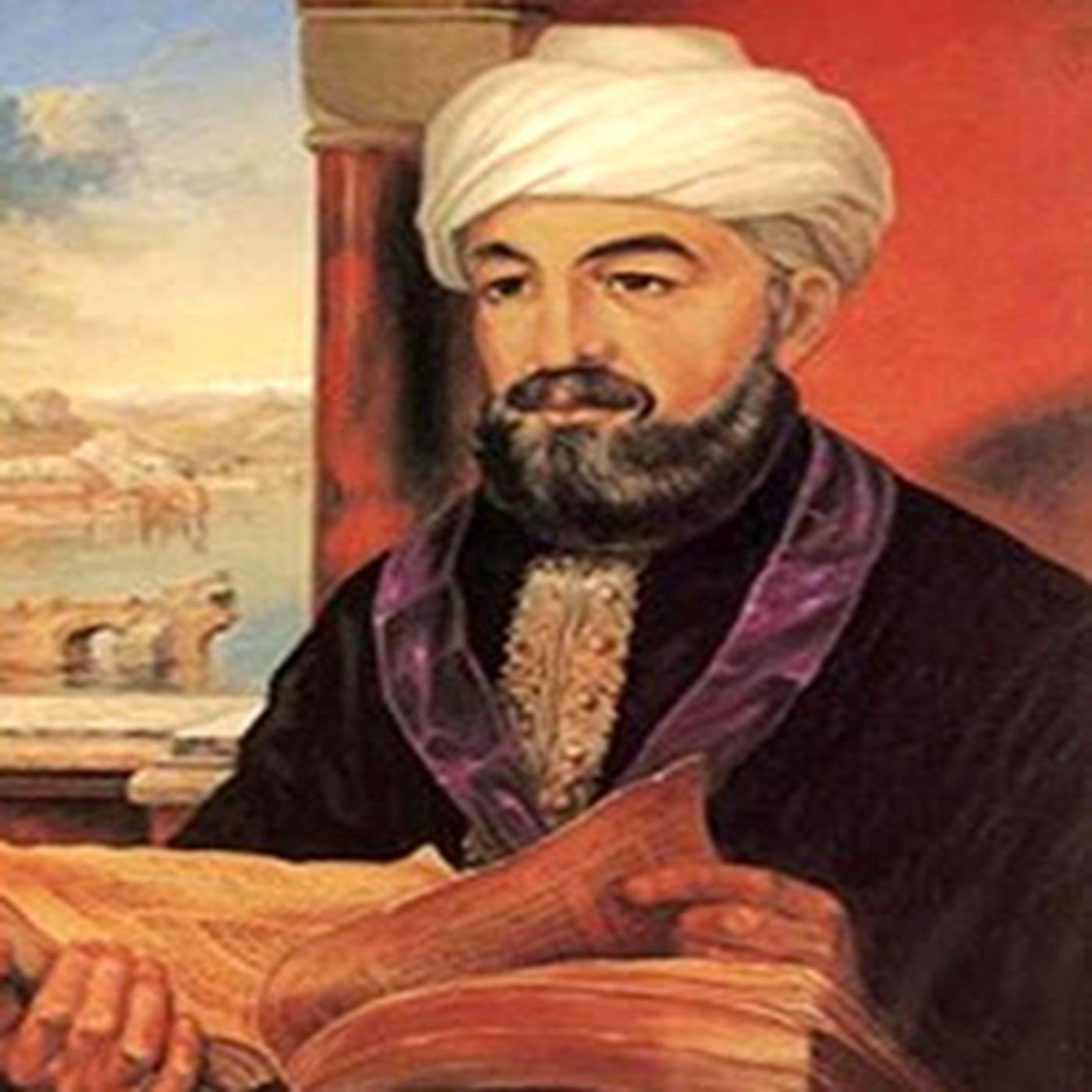
Join us as we study the monumental work of Maimonides, The Guide of the Perplexed. Let Maimonides speak to us in a language that we can understand, about issues that continue to perplex us in the 21st century. Learn how to approach those difficult times when what we believe seems to conflict with what the Holy writings say.
-
104
Guide For the Perplexed - Lecture 106: Part 3 Chapter 22a
Rambam begins his analysis of the Book of Job and the lessons to learn regarding God's providence.
-
103
Guide For the Perplexed - Lecture 105: Part 3 Chapters 20 & 21
Rambam describes in chapter 20 the difference between God's "knowledge" and ours makes it impossible to ask questions about God's knowledge of future events and how that might conflict with free choice. In 21 he further explains this concept with a comparison between the knowledge a craftsman has of his craft and the knowledge of the user of the device he crafted.
-
102
Guide For the Perplexed - Lecture 104: Part 3 Chapters 19 & 20a
In 19, Rambam describes why people conclude that God doesn't know or care what we do; because we have the arrogant idea that when things don't conform to the way we think they should be, we assume that they are not right. In 20, we begin Rambam's discussion of how God's "knowledge" is not the same as our human "knowledge".
-
101
Guide For the Perplexed - Lecture 103: Part 3 Chapters 18 and 19a
Rambam describes in Chapter 18 how God's providence is commensurate with a person's intellect and how one chooses to live. Chapter 19 begins with the reason so many people conclude that God doesn't know or care what happens in this world.
-
100
Guide For the Perplexed - Lecture 102: Part 3 Chapter 17c
Rambam describes his opinion regarding God's providence. Providence is for humans only as it works through our intellect and only humans have intellect.
-
99
Guide For the Perplexed - Lecture 101: Part 3 Chapter 17b
Rambam describes the fourth and fifth possible understandings of how God's providence works, the fifth one being the simple meaning of the Torah. He reviews the flaws of all the possibilities, and leads us toward his own understanding of God's providence, which he will describe next.
-
98
Guide For the Perplexed - Lecture 100: Part 3 Chapter 17a
Rambam describes various opinions regarding God's providence. In this lecture we cover the first three approaches.
-
97
Guide For the Perplexed - Lecture 99: Part 3 Chapter 16
Rambam begins his discussion of the difficult question of theodicy by describing what led many philosophers to conclude that God doesn't know what is happening in His universe.
-
96
Guide For the Perplexed - Lecture 98: Part 3 Chapters 14 & 15
In chapter 14, Rambam describes why it is unreasonable to think that God created the world for the sake of human beings, as we are but a tiny speck within the vast universe. He also explains that the sages were only competent in scientific matters according to their time. In 15 Rambam describes why God cannot do the impossible.
-
95
Guide For the Perplexed - Lecture 97: Part 3 Chapter 13b
Rambam discusses the idea that every creation was created for its' own significance, not for the purpose of serving something else. All of creation, every creature, every being, every moment, is significant for itself. The question of the purpose or end of creation is not a proper question.
-
94
Guide For the Perplexed - Lecture 96: Part 3 Chapters 12b & 13a
In 12b Rambam describes how the quest for unnecessary luxuries is often the cause of our suffering the loss of even necessities. In 13b we learn of the futility in searching for the ultimate purpose of our existence. Rambam emphasizes the special significance of every created being and object, each of which is important, human beings are not the purpose of the universe.
-
93
Guide For the Perplexed - Lecture 95: Part 3 Chapter 12a
Rambam describes how most evil in the world does not come from God but from our own selfishness.
-
92
Guide For the Perplexed - Lecture 94: Part 3 Chapters 10 & 11
Rambam describes how evil is the absence of good, and that everything God does is good.
-
91
Guide For the Perplexed - Lecture 93: Part 3 Chapters 8b & 9
Rambam describes in chapter 8 how the human form is defined by its intelligence and ability to understand and comprehend, while the matter of which we are made brings us base and vulgar physical desires. It is our job to perfect our form and stay away from our physical failings. He also discusses the nature of holiness. In Chapter 9 Rambam teaches us about the cloudy dark veil of matter that divides between us and the divine.
-
90
Guide For the Perplexed - Lecture 92: Part 3 Chapters 6,7 & 8a
In 6 and 7, Rambam continues to explain Ezekiel's vision of the chariot. in 8a, Rambam begins a discussion of form and matter, and how the destructive forces all come from matter.
-
89
Guide For the Perplexed - Lecture 91: Part 3 Chapters 2b - 5
Rambam continues his commentary on Ezekiel's vision of the chariot. Rambam explains the meaning using Aristotelian Physics.
-
88
Guide For the Perplexed - Lecture 90: Part 3 Chapters 1 and 2a
Rambam begins his commentary of Ezekiel's vision of the chariot.
-
87
Guide For the Perplexed - Lecture 89: Part 3 Introduction
Rambam discusses his personal challenge, how to teach the ideas he wants to teach without violating the prohibition against revealing ideas to the masses that they are incapable of understanding. We then read the first chapter of Ezekiel so we can understand how Rambam will explain it in the upcoming chapters.
-
86
Guide For the Perplexed - Lecture 88: Part 2 Chapters 46, 47 & 48
In 46, Rambam describes how the "impossible" notions mentioned by the prophets typically occur in visions, not in reality. In 47, Rambam tells us that many parables by the prophets engage in hyperbole and poetics to make a point. In the final chapter of part 3, chapter 48, Rambam explains what the prophets mean when they tell us that "God does something".
-
85
Guide For the Perplexed - Lecture 87: Part 2 Chapter 45
Rambam describes the eleven levels of prophecy, including the first two that are accessible to all of us.
-
84
Guide For the Perplexed - Lecture 86: Part 2 Chapters 43, 44 and 45a
In 43, Rambam describes how visions of prophecy appear as parables. In 44 he describes how every encounter between a prophet and the divine occurs in a vision only. In 45a we begin the listing of the degrees of prophecy.
-
83
Guide For the Perplexed - Lecture 85: Part 2 Chapters 41b and 42
We finish chapter 41 in which Rambam explains the difference between a vision of prophecy and the dreams of Lavan and Avimelech. In 42 Rambam describes that all the prophecies in Tanach were visions and they did not occur in the physical world.
-
82
Guide For the Perplexed - Lecture 84: Part 2 Chapters 40 and 41a
In 40, Rambam describes how to tell the difference between a true and a false prophet. We begin 41 in which Rambam describes the nature of a prophetic vision.
-
81
Guide For the Perplexed - Lecture 83: Part 2 Chapters 38b and 39
In 38, we complete Rambam's explanation for how prophecy works. In 39 Rambam describes why only Moses could have been the one who transmitted the Torah to us, no one before or after him could or will teach a new Torah.
-
80
Guide For the Perplexed - Lecture 82: Part 2 Chapters 37 & 38a
In Chapter 37, Rambam describes three types of people, scientists, prophets and soothsayers, and describes how a true prophets shares his vision and teachings with others. We begin Chapter 38, in which Rambam describes the courage and faith required of a prophet.
-
79
Guide For the Perplexed - Lecture 81: Part 2 Chapters 35 & 36
In 35, Rambam explains that the prophecy of Moshe is of a completely different nature that that of all other prophets, he tells us that he is only going to describe the nature of all other prophecy. In 36, Rambam begins to escribe how prophecy works, and how one's imaginative faculty is influenced by one's own moral and intellectual development.
-
78
Guide For the Perplexed - Lecture 80: Part 2 Chapters 33 & 34
Rambam describes in 33 the revelation at Sinai. In 34 he describes what God meant when He told Moshe that He was sending an "angel" to lead the people.
-
77
Guide For the Perplexed - Lecture 79: Part 2 Chapters 31 & 32
In Chapter 31, Rambam describes why Shabbat is so important that it is given right after the commandments to believe in One Creator alone and why two reasons are given for this important commandment. in chapter 32 Rambam describes what it takes to become a prophet.
-
76
Guide For the Perplexed - Lecture 78: Part 2 Chapter 30b
Rambam reads Genesis Part 2. This time he focuses mostly on non literal interpretations of some difficult statements of Chazal regarding Genesis.
-
75
Guide For the Perplexed - Lecture 77: Part 2 Chapter 30a
Rambam explains how to read Genesis so that it does not contradict Aristotelean physics.
-
74
Guide For the Perplexed - Lecture 76: Part 2 Chapter 29c
Rambam describes the nature of miracles, and answers why miracles do not conflict with his assertion that the laws of nature do not change. He then describes why it is so important to note that the account of creation as it appears in Genesis is not to be taken literally.
-
73
Guide For the Perplexed - Lecture 75: Part 2 Chapters 29b
Rambam shows how the prophets speak in metaphor and the laws of nature do not change.
-
72
Guide For the Perplexed - Lecture 74: Part 2 Chapters 28 & 29a
Rambam explains the apparent references in Ecclesiastes that seem to indicate that the laws of nature are not forever. In Chapter 29 he begins his analysis of the verses in prophets that seem to discuss that the universe will not always exist.
-
71
Guide For the Perplexed - Lecture 73: Part 2 Chapters 26 & 27
In 26, Rambam explains the opinion expressed by Rabbi Eliezer which seems to suggest that the world was created out of a primordial substance. In 27 Rambam discusses whether or not, according to the Torah, the universe will last forever.
-
70
Guide For the Perplexed - Lecture 72: Part 2 Chapter 25
Rambam explains why the Torah is incompatible with Aristotle's view of the eternity of the universe, and why the Torah cannot be reinterpreted to be consistent with his views.
-
69
Guide For the Perplexed - Lecture 71: Part 2 Chapter 24
Rambam describes the confused state of astronomy in his time, as the Aristotelian model of physics simply cannot explain the motions of the stars and planets. Even Ptolemy's attempt to explain everything is inadequate. Rambam muses that some things humans may never be able to figure out.
-
68
Guide For the Perplexed - Lecture 70: Part 2 Chapters 22 and 23
Rambam describes how Aristotle's science doesn't work to explain the heavens above the sphere of the moon. Rambam emphasizes that neither his assertion that the word was created, or the assertion of Aristotle that the world is eternal could be proven. However, there are more doubts associated with Aristotle's view. Rambam describes how to choose when confronted by two conflicting viewpoints.
-
67
Guide For the Perplexed - Lecture 69: Part 2 Chapters 20b and 21
Rambam explains clearly Aristotle's opinion that everything is the way it is because it has to be, and that it has always been this way. This means that even God had to make the universe the way it is. He also explains that once you say that the world is eternal and not created, no amount of word games can change the fact that an eternal universe means it had to be this way.
-
66
Guide For the Perplexed - Lecture 68: Part 2 Chapters 19b and 20a
Rambam describes why it makes more sense to say that the complex particularization we see in the world is the way it is because a Creator made it this way for a purpose, and not because it has to be this way, as Aristotle argued.
-
65
Guide For the Perplexed - Lecture 67: Part 2 Chapter 19a
Rambam argues that postulating that there is purpose to why the universe is the way it is and a creator is a better argument than claiming, as Aristotle did, that things are this way because that's how they have to be.
-
64
Guide For the Perplexed - Lecture 66: Part 2 Chapter 18 (and small part of 19)
Rambam explains why the Aristotelian proofs using the nature of God for the eternity of the universe are not valid. We also discuss why it makes such a big difference whether the universe was created or if it is eternal.
-
63
Guide For the Perplexed - Lecture 65: Part 2 Chapter 17
Rambam explains why all of Aristotle's observations from the nature of the world that exists today cannot prove anything about the nature of anything prior to creation.
-
62
Guide For the Perplexed - Lecture 64: Part 2 Chapters 15&16
In Chapter 15 Rambam explains how Aristotle never proved that the universe was eternal, so creation ex nihilo is at least possible. In 16 he says that as long as creation is possible, one can believe the prophets.
-
61
Guide For the Perplexed - Lecture 63: Part 2 Chapter 14
Rambam describes the Aristotelian proofs for the eternity of the universe.
-
60
Guide For the Perplexed - Lecture 62: Part 2 Chapter 13
Rambam describes the three ways to understand the creation of the world by the Deity, the Torah way - from nothing, Plato's way - from a primordial substance, and Aristotle's way - it was always there! And of course the fourth view of Epicurus - that there is no Deity at all.
-
59
Guide For the Perplexed - Lecture 61: Part 2 Chapter 12
Rambam describes the concept of "overflow" which explains how an incorporeal God gives life and sustains the entire universe. Of course this is only how we as human beings can describe something we are incapable of actually conceiving.
-
58
Guide For the Perplexed - Lecture 60: Part 2 Chapter 11
Rambam discusses the confusing inadequacies of medieval astronomy, the fact that the entire universe is important for its own purposes and not just for the end result of mankind, and how it is inconceivable that true science and the Torah are in conflict with each other.
-
57
Guide For the Perplexed - Lecture 59: Part 2 Chapters 10b and 11a
Rambam describes the significance of the number four, and how to understand biblical and rabbinic statements in a way that does not conflict with science. In chapter 11, Rambam describes the state of astronomic knowledge and how God rules the world through nature.
-
56
Guide For the Perplexed - Lecture 58: Part 2 Chapters 7,8,9 and 10a
Rambam describes the difference between the "free" choice of angels and human beings, whether or not the heavenly spheres make sounds as they move, and various astronomical problems medieval philosophers argued about. Rambam importantly explains to us that in matters of speculation, one should not hold the Rabbis of the Talmud to account if they were wrong regarding matters of science.
-
55
Guide For the Perplexed - Lecture 57: Part 2 Chapter 6
Rambam describes that "angels" are actually natural forces of nature. We also bring a "Maimonidean" understanding of Akeidat yitzchak (The Binding of Isaac).
We're indexing this podcast's transcripts for the first time — this can take a minute or two. We'll show results as soon as they're ready.
No matches for "" in this podcast's transcripts.
No topics indexed yet for this podcast.
Loading reviews...
ABOUT THIS SHOW
Join us as we study the monumental work of Maimonides, The Guide of the Perplexed. Let Maimonides speak to us in a language that we can understand, about issues that continue to perplex us in the 21st century. Learn how to approach those difficult times when what we believe seems to conflict with what the Holy writings say.
HOSTED BY
SAUL J WEINREB
CATEGORIES
Loading similar podcasts...
Frequently Asked Questions
How many episodes does Guiding the Perplexed have?
Guiding the Perplexed currently has 50 episodes available on PodParley. New episodes are automatically indexed when they're published to the podcast feed.
What is Guiding the Perplexed about?
Join us as we study the monumental work of Maimonides, The Guide of the Perplexed. Let Maimonides speak to us in a language that we can understand, about issues that continue to perplex us in the 21st century. Learn how to approach those difficult times when what we believe seems to conflict with...
How often does Guiding the Perplexed release new episodes?
Guiding the Perplexed has 50 episodes. Check the episode list to see recent publication dates and frequency.
Where can I listen to Guiding the Perplexed?
You can listen to Guiding the Perplexed on PodParley by clicking any episode. We provide an embedded audio player for direct listening, and you can also subscribe via your preferred podcast app using the RSS feed.
Who hosts Guiding the Perplexed?
Guiding the Perplexed is created and hosted by SAUL J WEINREB.
URL copied to clipboard!