
PODCAST · society
Headless Deep Dive Podcast
by HeadlessDeepDive.substack.com
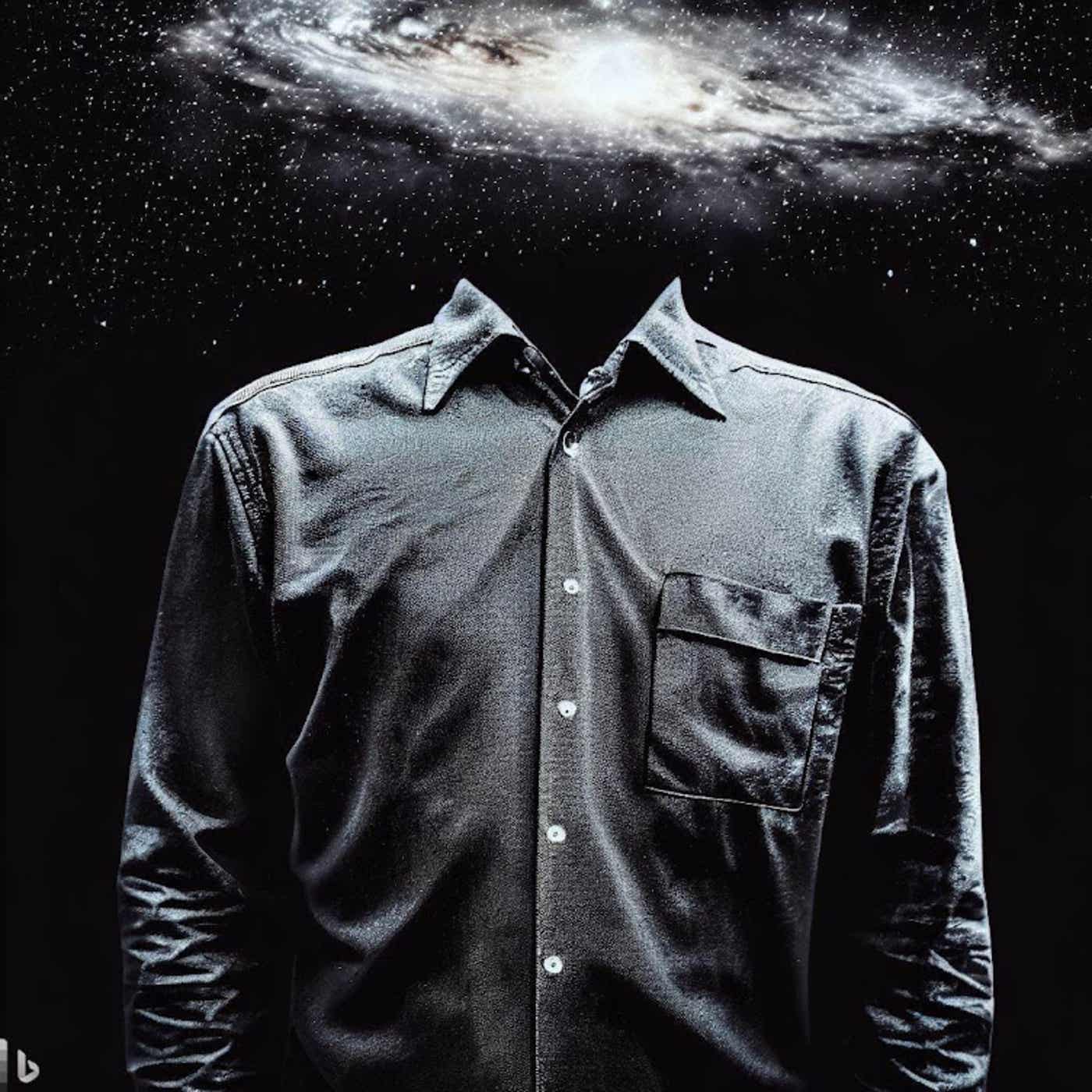
Exploring the intersection of the Headless Way with the worlds of Philosophy, Science, and Religion. I like to use Artificial Intelligence to reflect back to us what humanity looks like from another point of view. This podcast is a feed of the Deep Dive podcast generated by Google's Notebook LM customized with handpicked content just for the Headless Deep dive audience. headlessdeepdive.substack.com
Episodes
-
Leonardo daVinci - a universe in your pupil
In Leonardo da Vinci’s notebooks (translated by Edward McCurdy) we discover a way of seeing the world that was one of the influences on Douglas Harding’s Hierarchy of Heaven and Earth. Harding’s concept of projection and reflection can be seen in da Vinci’s description of how objects project…
more -
Rovelli: There is No Hard Problem of Consciousness
Today we look at Carlo Rovelli’s article, There Is No Hard Problem of Consciousness. Rovelli says that David Chalmer’s “hard problem of consciousness”, is rooted in our resistance to letting go of our ingrained notion of a separate soul and the attempt to describe a first person experience in a...
-
Arnold Zuboff - Finding Myself
Arnold Zuboff is a philosopher and the creator of Universalism, which is the idea that there is only one “I”, only one subject and that subject is the “I” in every conscious experience. Zuboff writes about this at length in his book entitled Finding Myself - Beyond the False Boundaries of…
more -
Henri Bergson - Creative Evolution
When we look back at our lives, we experience a highlight reel of sorts, all the memorable good and bad experiences and this cinematic metaphor extends into thinking of ourselves as a fixed snapshot: I’m angry, I’m happy, etc. Henri Bergson reminds us that we are not a finished product, we are a...
-
Hierarchy of Heaven and Earth - Chapter Two
In today’s episode we continue with Chapter Two of The Hierarchy of Heaven and Earth by Douglas Harding. In this chapter, Harding tackles the paradox of experience. We experience the world via sights, sounds and feelings, and in that way the world is “in us”. On the other hand, science explains…
more -
Hierarchy Of Heaven and Earth - Chapter One
Today, we go back to the roots of the Headless Deep Dive and look at chapter one of Douglas Harding’s book: The Hierarchy of Heaven and Earth. There is a fantastic new-ish website which serves as an archive for much of Douglas’s material, where this chapter can be found among many other things…
more -
Martin Buber - I and Thou
Martin Buber’s I and Thou is the topic of this week’s Headless Deep Dive. In this classic work of philosophy, Buber explains that we have a two-fold existence. First there is the world of “I-Thou” relationship. This is the world of being here now, meeting the world in mutual relation, which makes...
-
Brentyn Ramm - Body, Self and Others
Building on the last episode where we explored the thoughts of Merleau-Ponty, in today’s episode we look at this fabulous article by philosopher and researcher Brentyn Ramm entitled Body, Self and Others: Harding, Sartre and Merleau-Ponty on Intersubjectivity in which Ramm tackles the differing...
-
Merleau-Ponty - The Visible and the Invisible
French philosopher Maurice Merleau-Ponty was working on a book tentatively titled “The Visible and the Invisible” at the time of his death in 1961. Merleau-Ponty points out that even the simple statement “the world is what we see” leads to a “labyrinth of difficulties and contradictions” about…
more -
Seth - The sense of "me"
Douglas Harding says that what I am is two fold. Who I am for others depends on the range of the observer. Who I am for myself is wide open awareness. In today’s episode, we look at a paper by Anil Seth and Manos Tsakiris titled “Being a beast machine: the somatic basis of selfhood” where they...
-
Bertrand Russell - The ABC's of Relativity
In the ABC’s of Relativity, Bertrand Russell explains the strange world of Einstein’s general relativity. One of the most interesting aspects of the theory is not that “everything is relative” in the sense of there being no way to be certain of anything or to discuss anything concretely, it is…
more -
Douglas Harding - My Special Friend
On this Easter eve, we turn to this short story by Douglas Harding: My Special Friend to contemplate the notion of everlasting life that is at the heart of Easter. Who is it who has this everlasting life anyway? In the story, a young boy is told his reflection in the mirror is “You Darling”. As...
-
Schrödinger - Universal Consciousness
In Erwin Schrödinger’s books, What is Life and Mind and Matter, Schrödinger points out what he calls the “Arthimetical Paradox” that we only ever experience a single consciousness, but there seems to be multiple consciousnesses in the beings around us. Ultimately, Schrödinger concludes: “There is...
-
The Touched Self - Ciaunica and Fotopoulou
Today we are diving into research by Anna Ciaunica and Aikaterini Fotopoulou in this book chapter entitled The Touched Self: Psychological and Philosophical Perspectives on Proximal Intersubjectivity and the Self. In an earlier Headless Deep Dive (Second Persons and the Constitution of the First...
-
Daniel Kolak - I Am You
The core argument of philosopher Daniel Kolak's book, I Am You, is that we are all the same person, or, more precisely, that a single subject (consciousness) is "incarnated" in all human beings. This idea, often called "Open Individualism" (OI), is not meant in a mystical sense, but as a logical...
-
John Wheeler's Participatory Universe
Physicist John Archibald Wheeler, who coined such terms as “black hole”, “wormhole”, and “quantum foam” wrote about his concept of the “Participatory Universe” in the inspiration for today’s episode — Wheeler’s paper entitled Beyond the Black Hole. Wheeler describes his “delayed choice…
more -
Whitehead - Adventures in Ideas
Recently I had the thought “I’m not making things happen, the things that are happening are making me”. For me this resonates with what Alfred North Whitehead describes in his process philosophy as laid out in Adventures of Ideas. It is based on the insight that we are not static subjects…
more -
David Hume - A Treatise of Human Nature
18th century philosopher, David Hume’s essay entitled A Treatise Of Human Nature is the topic of today’s deep dive. Hume analyzes the role of memory and ideas in or own perception of the self. For Hume, there is an immediate “impression” we get from our perceptions that are then later recalled…
more -
Daniel Dennett - Where Am I?
This short story entitled Where Am I? by philosopher and cognitive scientist Daniel Dennett really made my head spin. It is the fascinating tale of a fictional character whose brain and body are separated by radio transmitters. So many questions and scenarios are played out and examined by…
more -
Douglas Hofstadter - Analogy as the Core of Cognition
Cognitive and computer scientist Douglas Hofstadter is best known for his Pulitzer Prize winning book Gödel, Escher, Bach, and his later book I Am a Strange Loop but today’s episode is a talk Hofstadter gave at Stanford in 2006 about how analogies are the “interstate freeway system of cognition”...
-
Julian Jaynes - Consciousness and the Voices of the Mind
Princeton psychologist Julian Jaynes outlines his fascinating theory of the bicameral mind in this essay entitled Consciousness and the Voices of the Mind. Jaynes’ theory is that humans were not always conscious in the way we think of being conscious. Jaynes defines consciousness as the “mind...
-
Leibniz - Monadology
Douglas Harding’s description of the Heirarchy of Heaven and Earth was clearly influenced by Leibniz and Leibniz’s Monadology. In the Monadology Leibniz describes the concept of monads, where each monad represents the entire universe from a unique point of view. Harding says “what I am depends on...
-
Bernardo Kastrup - Analytic Idealism
Philosopher Bernardo Kastrup takes the “hard problem of consciousness” and completely turns it inside out. Kastrup’s PhD dissertation titled Analytic Idealism: A consciousness-only ontology, argues that consciousness is fundamental. Everything supposedly “material” (including our bodies and…
more -
Stephen Wolfram - On the Nature of Time
In his article, On the Nature of Time, Stephen Wolfram describes the computational model he has for the universe and how that results in a new way to look at time. Wolfram is a physicist, computer scientist, author, inventor of Mathematica (software used by scientists and engineers) and Wolfram...
-
Michael Graziano - Attention Schema Theory
You know how in cartoons sometimes they show a dotted line from a person’s eyes to show what the person is looking at? It turns out, that we actually do something like that in our own heads to track what another person is looking at. This paying attention to how we and others around us are paying...
-
Carlo Rovelli's Relational Quantum Mechanics
Do things have properties in and of themselves, or is a thing only what it seems to be to its observer and the interactions it has with other things? Is there a universal notion of time, or is time just a local experience that is different for each observer? These are some of the questions being...
-
Ernst Mach - Analysis of Sensations
The physicist and philosopher Ernst Mach (for whom the unit of velocity as compared to the speed of sound was named), brings us today’s episode, based on his book: The Analysis of Sensations. In this book, March argues that our understanding of the world is based on our sensations and that…
more -
Chris Fields - What are our Bodies?
Thanks to the recommendation of a friend at book club, I bring you today’s episode which instead of being based on an article, is based on a YouTube video of a presentation by researcher Chris Fields entitled What Are Our Bodies? Have you been feeling old lately? Well, guess what? You are a lot...
-
George Berkeley - Three Dialogues
The Three Dialogues, written in 1713 by George Berkeley lays out his philosophy of “indeterminism” via a series of dialogues between two characters: Hylas (representing common sense) and Philonous (representing Berkeley as the philosopher). This writing style may have been an inspiration for the...
-
William James - Radical Empiricism
The NotebookLM tool that I use to generate these podcasts just got an upgrade which allows me to provide input to the “hosts” as to how they approach their discussion. This allows me to now indicated that this podcast is called the Headless Deep Dive and is targeted to those interested in the...
-
Second Persons and the Constitution of the First Person
If the sense of being a “me” is an illusion, where does it come from? That’s a topic that Professor Jay Garfield covers in today’s article called: Second Persons and the Constitution of the First Person. In the article, Garfield cites the work of developmental psychologist Vasudevi Reddy, who...
-
How and Why Consciousness Arises
Today’s article is called HOW AND WHY CONSCIOUSNESS ARISES: SOME CONSIDERATIONS FROM PHYSICS AND PHYSIOLOGY by Mark Solms and Karl Friston. What I find fascinating about this paper is the detailed description of the active inference process used by us humans, and other intelligences, to model the...
-
Predicting green: really radical (plant) predictive processing
Today’s article, Predicting green: really radical (plant) predictive processing by Paco Calvo and Karl Friston reveals that plants, like animals, engage in predictive processing - a fundamental aspect of intelligence involving predictions and evidence-gathering to minimize surprise and…
more -
Care As A Driver of Intelligence
Michael Levin is one of my favorite scientists. He and his collaborators are working in the area of biology and cognition with a framework he calls the Technological Approach to Mind Everywhere (TAME), which I find to be very much compatible with eastern philosophy and the Headless Way. One of…
more -
On Having No Head
Our first episode of Headless Deep Dive of course has to be based on the writings of Douglas Harding. Douglas’s book, On Having No Head, is one of his best known and most influential books. It clearly points us to the direct experience of what it is like to be open awareness. I was flabbergasted…
more
We're indexing this podcast's transcripts for the first time — this can take a minute or two. We'll show results as soon as they're ready.
No matches for "" in this podcast's transcripts.
No topics indexed yet for this podcast.
Loading reviews...
ABOUT THIS SHOW
Exploring the intersection of the Headless Way with the worlds of Philosophy, Science, and Religion. I like to use Artificial Intelligence to reflect back to us what humanity looks like from another point of view. This podcast is a feed of the Deep Dive podcast generated by Google's Notebook LM customized with handpicked content just for the Headless Deep dive audience.
headlessdeepdive.substack.com
HOSTED BY
HeadlessDeepDive.substack.com
CATEGORIES
Loading similar podcasts...
Frequently Asked Questions
How many episodes does Headless Deep Dive Podcast have?
Headless Deep Dive Podcast currently has 35 episodes available on PodParley. New episodes are automatically indexed when they're published to the podcast feed.
What is Headless Deep Dive Podcast about?
Exploring the intersection of the Headless Way with the worlds of Philosophy, Science, and Religion. I like to use Artificial Intelligence to reflect back to us what humanity looks like from another point of view. This podcast is a feed of the Deep Dive podcast generated by Google's Notebook LM...
How often does Headless Deep Dive Podcast release new episodes?
Headless Deep Dive Podcast has 35 episodes. Check the episode list to see recent publication dates and frequency.
Where can I listen to Headless Deep Dive Podcast?
You can listen to Headless Deep Dive Podcast on PodParley by clicking any episode. We provide an embedded audio player for direct listening, and you can also subscribe via your preferred podcast app using the RSS feed.
Who hosts Headless Deep Dive Podcast?
Headless Deep Dive Podcast is created and hosted by HeadlessDeepDive.substack.com.
URL copied to clipboard!