
PODCAST · religion
Hill Country Homilies
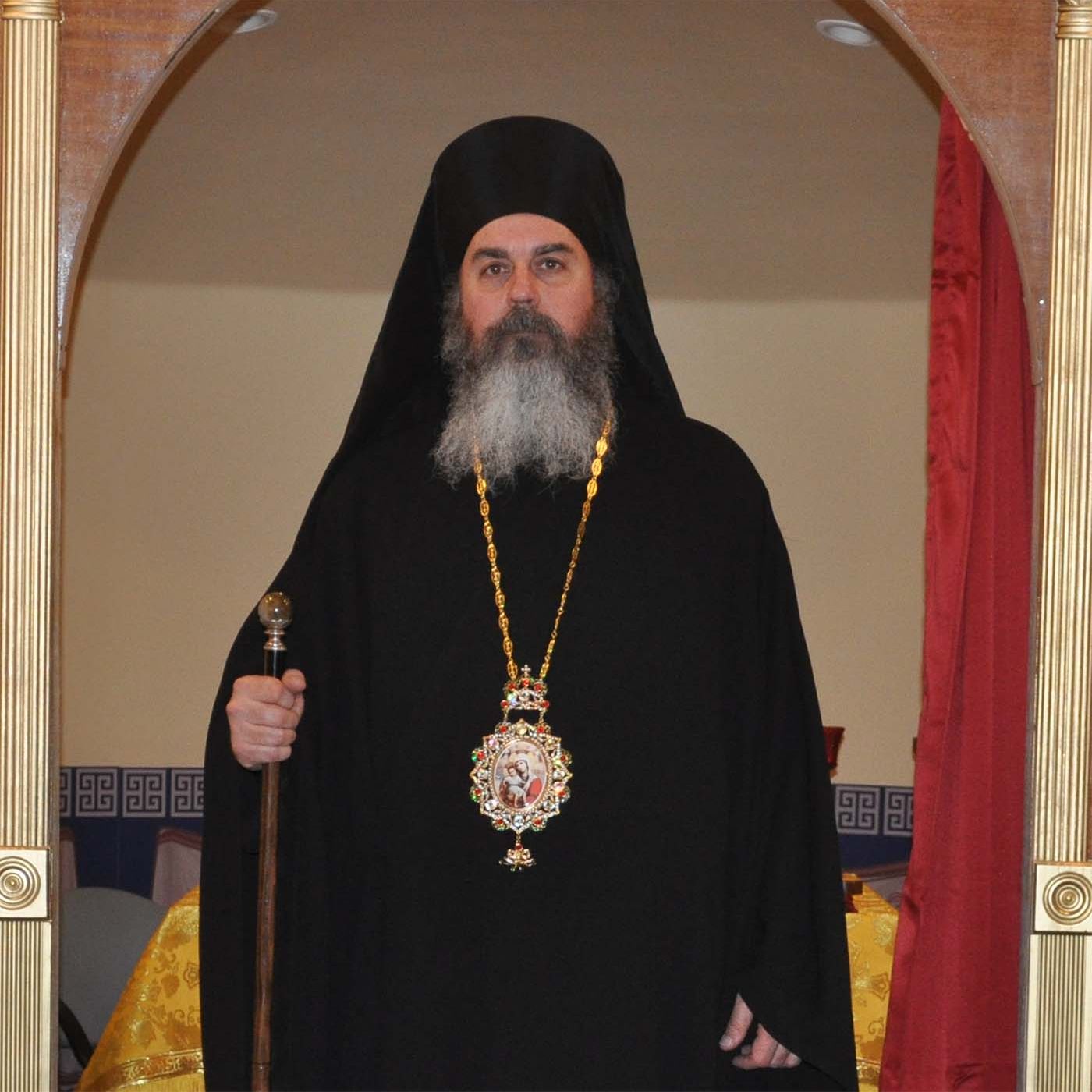
by Abp. Irineos
Holy Annunciation Orthodox Church in Liberty Hill, Texas, located at the edge of the Texas Hill Country, brings you the weekly homilies from our clergy. Suited for Orthodox faithful and inquirers alike, join us for this weekly teaching on the Holy Scriptures and great saints of the Church.
-
315
And Your Neighbor as Yourself
In this homily for the Fifteenth Sunday after Pentecost, Abp. Irineos reflects on Christ’s commandment to love our neighbor as ourselves, teaching that love for God cannot be separated from the way we treat those whom God places before us. Drawing upon the Parable of the Good Samaritan, the example of St. Akakios of Amida, and the words of St. John the Theologian, he explains that our neighbor is not merely a friend, fellow parishioner, or member of our own group, but also the stranger, the outsider, the difficult person, and even the enemy. Christian love is therefore more than affection: it is the recognition of the image of God in every human being and the demonstration of our professed love for God through mercy, patience, forgiveness, sacrifice, and charity.We welcome all visitors to join us at Holy Annunciation Orthodox Church, in the northwestern suburbs of Austin, Texas.Visit our website at www.annunciationtx.com or our Facebook page at www.facebook.com/AnnunciationTX2Paypal: [email protected]
-
314
Fulfilled in Your Ears
On the Ecclesiastical New Year, Abp. Irineos reflects on time, change and the Gospel reading for the day. Having received the gift of time, Abp. Irineos urges the faithful to make this year spiritually profitable.
-
313
Tear Down This Hedge!
In this powerful homily, Archbishop Irineos explores the Parable of the Wicked Vinedressers through a surprising lens: the hedge surrounding the vineyard. What began as God's protection for Israel ultimately became, through misuse and legalism, a barrier separating many from the very Messiah for whom the Law had prepared them. Drawing on the Fathers, the Council of Jerusalem, and the teaching of St. John Chrysostom, Archbishop Irineos shows how Christ fulfilled the Law and calls His people not into a new legal code, but into a life of love, communion, and freedom in Him. The challenge remains as relevant today as ever: are the walls we build protecting our faith, or preventing us from drawing near to God?We welcome all visitors to join us at Holy Annunciation Orthodox Church, in the northwestern suburbs of Austin, Texas. Visit our website at www.annunciationtx.com or our Facebook page at www.facebook.com/AnnunciationTX2Paypal: [email protected]
-
312
From Tabor to the Empty Tomb
Today's Homily: What difference does the Resurrection actually make? In this homily for the Twelfth Sunday after Pentecost, Archbishop Irineos connects Saint Paul's powerful teaching in 1 Corinthians 15 with the recent Feast of the Transfiguration, showing how the glory revealed on Mount Tabor points directly to Christ's victory over death. Far more than a familiar doctrine or annual celebration, the Resurrection is the foundation of the Christian life, the defeat of despair, and the source of our transformation in Christ. Drawing on the wisdom of Saints John Chrysostom, Athanasius, and Cyril of Jerusalem, this message explores why the empty tomb changed the course of history, how the risen Christ transformed a persecutor into an apostle, and why His victory continues to offer hope, repentance, and renewal to every believer today.We welcome all visitors to join us at Holy Annunciation Orthodox Church, in the northwestern suburbs of Austin, Texas. Paypal: [email protected] Version: https://youtu.be/hnfJuiIOZuo
-
311
The Grudge that Owns You
Why is it so difficult to forgive? In this homily on the Parable of the Unforgiving Servant, Archbishop Irineos explores the shocking contrast between the infinite mercy God extends to us and the small measure of mercy we often extend to others. Drawing on the wisdom of the Holy Fathers, he explains why resentment becomes a prison of our own making, why true repentance and forgiveness are inseparable, and why Christ commands us to forgive not merely with our words but from the depths of our hearts.We welcome all visitors to join us at Holy Annunciation Orthodox Church, in the northwestern suburbs of Austin, Texas. We are also the closest Orthodox church to Killeen/Ft. Hood, Texas. Visit our website at www.annunciationtx.com or our Facebook page at www.facebook.com/AnnunciationTX2 If you want to support our ministry, we can receive donations at Paypal: [email protected] or via the link on our website.
-
310
Eyes Off Christ: Peter, the Algorithm, and the Distractions of the Modern World
In this homily for the 9th Sunday of Pentecost, Archbishop Irineos reflects on Saint Peter's walk upon the waters and the timeless danger of distraction. Drawing on the teachings of Saint John Chrysostom, he explores how Peter succeeded while his eyes were fixed on Christ but began to sink when he focused on the wind and waves around him. In an age dominated by algorithms, notifications, entertainment, political outrage, and the constant competition for our attention, Archbishop Irineos shows how the Gospel speaks directly to modern life. The world wants our attention, but Christ wants our heart. Discover how Peter's cry, "Lord, save me," remains the prayer of every Christian struggling to keep his eyes fixed on the Savior amid the noise and distractions of the modern world.
-
309
Bearing One Another’s Burdens: The Christian Duty of Love
On the 7th Sunday after Pentecost, Archbishop Irineos reflects on Romans 15:1-7 and St. Paul’s call for the strong to bear the infirmities of the weak. Challenging the modern spirit of individualism, he explores the Christian obligation to place the spiritual good of our neighbor before our own comfort, following the example of Christ who willingly bore the burdens of the world upon the Cross. Drawing on the teachings of St. John Chrysostom, this homily examines the nature of true Christian love, the unity of the Church as one body with one mind and one mouth glorifying God, and the responsibility of every believer to build up, support, and receive one another as Christ has received us.We welcome all visitors to join us at Holy Annunciation Orthodox Church, in the northwestern suburbs of Austin, Texas. Visit our website at www.annunciationtx.com or our Facebook page at www.facebook.com/AnnunciationTX2 Paypal: [email protected]
-
308
The Faith of Demons? Zeal, Confession, and the Danger of False Religion
In this homily for the Fifth Sunday after Pentecost, Archbishop Irineos reflects on St. Paul’s warning about zeal without true knowledge and Christ’s encounter with the demoniacs of the Gergesenes. Drawing together the Epistle and Gospel readings, he shows how it is possible to be close to holy things and yet remain far from God—whether through self-righteous religion, empty confession, or resistance to divine grace. The demons recognized Christ and confessed His identity, yet remained alienated from Him; the Gergesenes witnessed His power, yet asked Him to leave. True saving faith, Archbishop Irineos explains, is neither religious enthusiasm nor mere correct doctrine, but a living union with Christ that transforms the heart, bears fruit in repentance, and welcomes the Savior into every corner of our lives. A challenging and timely message for Orthodox Christians seeking not simply to know about Christ, but to be healed and changed by Him.
-
307
The Faith That Made Christ Marvel
In this homily on Matthew 8:5–13, Abp. Irineos reflects on the healing of the centurion’s servant and the astonishing fact that Christ marvels at the faith of a Roman pagan. The centurion recognizes Christ’s authority, trusts that His word alone is enough, and approaches Him with profound humility: “Lord, I am not worthy.” Drawing on the Fathers, the homily presents the centurion as a sign of the Gentiles being gathered into the Kingdom, the “first-fruits” of those who would come from east and west to sit with Abraham, Isaac, and Jacob. But the Gospel also becomes a warning to Orthodox Christians: possessing the fullness of the faith must never become triumphalism, contempt, or complacency. If Christ praised the faith of one outside Israel, then we must bear witness to Orthodoxy with humility, gratitude, and repentance—asking not whether we possess holy things outwardly, but whether Christ has truly found room in our hearts.
-
306
From Dust to Glory - St. Basil's Map of Our Salvation
In this homily at Holy Annunciation Orthodox Church, Abp. Irineos invites the faithful—especially those preparing to be received into the Church—to listen closely to the Anaphora of St. Basil the Great as a sweeping proclamation of the entire economy of salvation. Moving from God’s eternal holiness to creation in Paradise, humanity’s fall and exile, and God’s patient preparation through the Law, prophets, saints, and angels, the homily culminates in the Incarnation and the saving work of Christ— the Cross, the descent into Hades, Resurrection, Ascension, and coming judgment. Finally, Abp. Irineos explains how the Divine Liturgy is not mere recollection, but the place where the Holy Spirit gathers us into Christ’s once-for-all offering and forms our faith through prayer: lex orandi, lex credendi!
-
305
The Shape of Your Salvation
In this season of Holy Great Lent, we confront one of Christ's most challenging commands: "Whosoever will come after me, let him deny himself, and take up his cross, and follow me". But what is your cross? This homily explores the deeply personal, yet universally shared, mystery of the cross, reminding us that since each soul's burden is unique, we must follow the instruction of St. Ephraim the Syrian and seek to see our own transgressions, not to judge our brother. In today’s homily, Archbishop Irineos assures us that divine love transforms this difficult path into a bearable and salvific journey, and urges the faithful to heed the solemn warning of the Church Fathers: if we refuse to willingly carry our cross, it will instead carry us toward spiritual peril. May God, by His Grace, enable each of us to to identify our cross, embrace the struggle with joy, and understand why this sacred instrument is nothing less than the very shape of our salvation.
-
304
Beyond Books: Encountering the Living God
Dive into the profound teachings of St. Gregory Palamas as Abp. Irineos explores one of Christianity's most transformative mysteries: how we actually experience God, not just study about Him. This episode unpacks the ancient controversy between intellectual knowledge and experiential encounter with the Divine, revealing why a simple fisherman can know God more deeply than the most educated scholar. God—while utterly unknowable in His essence—reveals Himself through His uncreated energies in ways you encounter daily: in love, in creation, in the Eucharist, and in acts of mercy. Faith is more than theological degrees and book learning. This episode illuminates the radical path of inner transformation that makes us "partakers of the divine nature" as we explore what it truly means to know God.
-
303
No Parable: Works that Judge Us
In this powerful sermon on Matthew 25, Abp. Irineos emphasizes a startling reality: Christ's description of the Last Judgment is not a parable but a direct account of how all nations will be judged. The Archbishop explains that while other teachings required parables to convey difficult truths, Christ spoke plainly about judgment. He outlines the stark criteria by which humanity will be separated into sheep and goats—feeding the hungry, giving drink to the thirsty, welcoming strangers, clothing the naked, and visiting the sick and imprisoned—actions done unto "the least of these" that Christ counts as done unto Himself. Challenging the "faith alone" doctrine, Abp. Irineos argues that while no deed merits salvation on its own, our works inevitably reveal our faith, echoing James's teaching that "faith without works is dead". Perhaps most movingly, he distinguishes between God's eternal intentions: the Kingdom was prepared for humanity "from the foundation of the world," while the fires of judgment were prepared only "for the devil and his angels"—a place where the condemned cast themselves through their own negligence, hard-heartedness and lack of love. The Archbishop's message is both sobering and hopeful: God asks us to see Christ in every person we encounter and to love our neighbor not abstractly, but through concrete acts of mercy.
-
302
While You Were Yet Far Off: The Prodigal's Journey Home
In today's homily, Abp. Irineos explores the Parable of the Prodigal Son, revealing how modern believers enter "the far country" not through physical distance but through spiritual separation from God. The message emphasizes that sin creates a separation "not one of separation of place, but by separation in point of virtue," and that we enter this spiritual exile through digital distractions, consumerism, and neglecting prayer. The homily offers profound hope by highlighting the father's unconditional love—running to meet his son "while he was yet a great way off"—demonstrating that God doesn't wait for perfect repentance but rushes toward us with healing love. Additionally, the teaching addresses the danger of becoming like the older brother, who represents religious pride and serves God while resenting others, reminding Orthodox Christians to celebrate every soul that returns to God rather than judge them. As believers prepare for Great Lent, this message calls them to recognize their own spiritual wandering, trust in God's limitless forgiveness, and embrace both humility in personal struggle and joy in others' repentance.
-
301
Humility Over Pride: The Foundation of Orthodox Life
In this homily, Abp. Irineos conveys that the Parable of the Publican and the Pharisee, read on the First Sunday of the Triodion, establishes the essential foundation for authentic Orthodox Christian living by contrasting pride with humility. The homily teaches that external religious practices—fasting, tithing, and meticulous observance—cannot justify us if they stem from pride, as exemplified by the Pharisee who exalted himself above others. In contrast, the despised tax collector's humble, contrite prayer—"God be merciful to me a sinner"—demonstrates the proper approach to God that leads to justification. As the faithful prepare for Great Lent, the Archbishop warns against allowing ascetical practices to become sources of pride or boasting, emphasizing that humility must ground all spiritual endeavors. The core message is clear: true confession and prayer require humility, contrition, and recognition of our complete dependence on God's mercy, not our own worthiness, for only through such childlike trust can we receive justification as a gift from God.
-
300
Trading Eternity for a Moment
In today's homily, Abp. Irineos reflects on the Parable of the Great Supper from Luke’s Gospel, exploring the excuses given by those who rejected the Master’s invitation and how these mirror the ways people today turn away from God’s call to the Kingdom. He explains how attachments to wealth, worldly concerns, and bodily pleasures can blind us to the mysteries of faith and keep us from embracing life in Christ. Highlighting that God’s invitation extends to all—including the poor, the broken, and even the Gentiles—he urges listeners to examine their own hearts for the excuses that hinder their participation in the divine economy of salvation offered through the Church and the Eucharist. Abp. Irineos calls the faithful to steadfast endurance as “proven and tested soldiers of Christ,” ready to partake in His eternal supper in the Kingdom.
-
299
The Persistence of the Faithful
On this Sunday we hear the Gospel of Luke and the account of the blind beggar who called for Christ as he made his way to Jerusalem. In the homily from December 14 (December 1 OS), Abp. Irineos commends the persistence of the beggar and his immediate transformation from beggar to evangelist as he gives glory to God for his healings. Let us also be guided by both the beggar's insistence to be heard, calling on God even when the crowd that surrounds us and tries to shut us down. And whenever we receive the grace of God, let us always give thanks, becoming evangelists of our own day, as we proclaim all the good things God has done for us!
-
298
St. Stephen the New
Following Wednesday Vespers, Abp. Irineos shared a little of the life of our father among the saints, Stephen the New. In this brief talk, he encourages the faithful to stand with the same firmness of faith and speak with the same clarity as St. Stephen.https://www.spreaker.com/episode/st-stephen-the-new--69049441
-
297
Spiritual Blindness and Idoldatry - The Legacy of the Rich Fool
In today's Gospel reading, we hear the parable of the rich fool. In the homily, Abp. Irineos touches on the Fool's delusional pursuit of self-sufficiency, his soul killing greed, and ultimately what it means for us to be rich toward God. Drawing on the patristic teaching, Abp. Irineos urges the faithul to take stock of their own giving of alms and to do what they can, to the greatest extent that they can.
-
296
The Gadarene Demoniac: Christ's Power and Our Weakness
On the 6th Sunday of St. Luke, Abp. Irineos shares the gospel reading of the Gadarene Demoniac and challenges the faithful to consider both the power of Christ and our own weakness before Him. Beginning with a discussion of the position of the demoniac and the fear of the townspeople, Abp. Irineos compares the Demoniac's transformation by Christ with our own quest for Theosis.
-
295
The Sower and Our Cross
While serving at Holy Annunciation following his ordination, Fr. Pachomios delivered the Sunday homily on the Parable of the Sower. Fr. Pachomios urged the faithful to be attentive daily to their cross, as a means to assure that we stay within the good ground!
-
294
The Art of the Deal
On the second Sunday of St. Luke, Abp. Irineos challenges that faithful to embody Christ's call to us to follow the Golden Rule and love unconditionally with the expectation of personal benefit or recognition. Drawing on free market theory, Abp. Irineos shows that Christ's call to the faithful is to reject the transactional nature of human relationships that our modern, Western culture has engrained in us, and rather to love in the same way that our Father loves us.
-
293
The Weapon of Peace
On the Sunday after the Exaltation of the Cross, Abp. Irineos discusses how the Gospel reading today shifts us from the Feast's veneration where we are called to fall down before the cross in worship to Christ's command that if we are to follow Him we must first deny ourselves and take up our own cross. This forbearance calls us to patiently endure our own afflictions, fight against the passions, forgive those who have wounded us, and to preach the Gospel in a world that may mock or persecute us. The Cross does not belong just to Christ, but to all Christians who seek to follow Him.
-
292
What Is Our Hedge?
On the 13th Sunday of Pentecost, the Church appoints for hearing the parable of the Wicked Vinedressers from the Gospel of Matthew. This parable is full of meaning and the Fathers have expounded on the meaning of it far beyond its obvious prophecy of rejection and murder of Christ. One of the interpretations holds that the "hedge" placed around the vineyard represents the Law and its design to set the bounds for the conduct of its followers. As the Church stands as the new Israel, in today's homily, Abp. Irineos ponders what our hedge is and why we need one.
-
291
At the Appointed Time
On the Feast of Pentecost, Abp. Irineos speaks on the sending of the Holy Spirit as the culminating act in the gradual revelation of the Holy Trinity. Drawing on the Festal Oration of St. Gregory Nanzianzen, Abp. Irineos suggests that the revelation of the Trinity to mankind over time reflects a cautious approach of the Father and of Christ, such that man was burdened only with so much as he could bear.Thus, we see the day of Pentecost as that appointed time in which mankind, having encountered the Father and having seen the Son, is now prepared to receive the Spirit in its Divinity, so that we may be drawn to our loving God, for the salvation of our souls.
-
290
It's Not About the Numbers
On the Sunday of the Holy Fathers of the First Ecumenical Council, Abp. Irineos gives the background on the Arian heresy and, calling on other examples from Church history, reminds the faithful that the truth is never determined by how many adherents or followers are to be counted. Often time, the bishops of the Church have fallen into heresy or error and been corrected by a small handful of faithful confessors. From the Arian heresy to the Soviet catacombs, the true faith is determined by faithfully preserving that which is received, not by gathering the greater number of people who would follow you.
-
289
We Are Saved Like the Blind Man
On the Sunday of the Blind Man, Abp. Irineos shares the patristic understanding of this Gospel account, and explains how the blind man and his healing represent the salvation of the Gentile race. May all of us who have received the light, confess Christ before the world as the blind man did before the Pharisees!
-
288
Can Sin Make Us Sick?
On the Sunday of the Paralytic, Abp. Irineos examines the admonition of Christ, " Behold, thou art made whole: sin no more, lest a worse thing come unto thee." Can sin actually make us sick? This is a statement that today is shocking to many – a connection between our sins and bodily illness or infirmity – seems to run counter to what modern science commands us to believe. But it has been a long held understanding of the apostolic fathers and the Church, that indeed, there is a connection between our sins and our bodily health and integrity.
-
287
Finding Your Spiritual Desert
On the 5th Sunday of Great Lent, Abp. Irineos departs from the Forefeast of the Annunciation to talk about the Life of St. Mary of Egypt, and to examine her ascetic struggle. Drawing on her life in the desert, he urges the faithful to emulate her example, finding their own spiritual desert to war against the passions, and to engage the concept of repentance on a deep and life altering level as St. Mary did. He discusses the church's condescension to repentant sinners, looking at both St. Mary and Abba Moses the Black as examples of soul healing spiritual medicine taking precedence over shallow legalism.
-
286
Climbing the Ladder Together
On the Fourth Sunday of Great Lent, Abp. Irineos discusses the Ladder of Divine Ascent, and how as lay people we may draw from its wisdom. He urges the faithful never to fall to despondency when considering the path of the monastics who are the intended audience of the book, but to take courage and climb together in community.
-
285
Faith, Deeds, and Judgment: From the Mouth of Christ
On the Sunday of the Last Judgment, Abp. Irineos discusses the Gospel account of the Last Judgment and compares it to the conceptions of salvation prevalent in western "Christianity." He reminds the faithful that it is impossible to separate our faith from the works of mercy, love and compassion that bear witness to the flowering of that faith. In the judgment, the scales are not weighing out the quantity of our works to see if we meet some standard to enter heaven. Rather, our deeds are testifying to whether or not we had faith in Christ. The separation of works from any role in salvation is unbiblical, but it is also incredibly dangerous to the salvation of those who understand faith alone to represent a singular or assured moment of salvation.
-
284
Starting the Journey of Repentance
On the Sunday of the Prodigal Son, Abp. Irineos looks at the parable and particularly on the beginning of the journey of repentance when the prodigal "comes to himself." He urges the faithful to see their sins and to turn away from the so that they may run to the father who eagerly awaits their return. Examining true repentance, he assures the faithful that God awaits our repentance and is eager to receive us, rejoicing as he did even for the prodigal son.Note from Abp. Irineos: Forgive my mispronounciation of the word metanoia. After pronouncing it correctly last night, I was questioned about it, and did the worst thing I could: I went to the internet which gave me the wrong pronounciation. Yiayia has thoroughly chastised me for doubting myself and listening to the computer.
-
283
Saving Humility - Sunday of the Publican and the Pharisee
On the Sunday of the Publican and the Pharisee, Abp. Irineos examines the first virtue of the Triodion period - humility - and drawing upon St. Gregory Palamas and St. Basil the Great uses the Parable as a teaching example on how to pray and how an excess of pride can lead to prayer the condemns the one praying. Let us cling to the example of the Publican and in his humility find the prayer that justifies!
-
282
What Kind of God Permits This?
On the Sunday after Nativity, while we bask in the joy of the Nativity, the Church appoints for our hearing the Gospel account of the slaughter of the Holy Innocents. This outrageous act of wrath and anger moves all who hear of it to great sorrow. It also often serves as ammunition for those who doubt God or seek to justify not following him, as they ask how a loving God can permit this kind of suffering to be inflicted on innocent children. And, we too, whether in reading scripture or viewing current events, may struggle with the "fairness" of evil being inflicted on those who fall victim to it. In today's homily, Abp. Irineos explains that this problem has been examined by the fathers many times, and that while the answer may not satisfy the atheist who challenges God's existence, for those of us who believe, we know where God's justice is found.
-
281
Talent on Loan from God
On the Greek Old Calendar Typikon, the Sundays of Luke are interrupted for the Parable of the Talents. Looking at the Gospel reading, Abp. Irineos discusses the fathers' understanding of the situation of each of the three men who received the talents from their lord. He urges the faithful to be diligent in multiplying their talents, to have a will to work for the glory of God, and to raise ourselves above mundane cares.
-
280
The Law as Schoolmaster
On the day we commemorate St. Catherine the Great, Abp. Irineos discusses the epistle appointed for the commemoration of righteous women. Using the language of Paul's corrective to the Galatians, Abp. Irineos looks at the apostle's teaching from three different angles as the Epistle progresses: the law, our baptism into Christ, and fittingly for the time, the incarnation. Given the continuing heresy of Judaizing, Abp. Irineos examines the purpose of the law before Christ and why it must be fulfilled in Christ. Paul rebukes the Galatians who had subjected the fullness of Christ to their own obedience of the law, and he reminds them that it is Christ who has fulfilled the promise, who has made them heirs, who has made all mankind One in God, and who has been made incarnate for us and for our salvation. They that have ears to hear, let them hear!
-
279
Rich Toward God
In today's Gospel reading for the Parable of the Rich Fool, Abp. Irineos focuses on the moral of the parable: "So is he that layeth up treasure for himself and is not rich toward God." While we can all imagine what it means to lay up treasures for ourselves, the much more difficult question is what it means to be rich toward God. Drawing on patristic commentary, Abp. Irineos urges the faithful to struggle against the consumerism and egoism of modernity and use whatever means and power we may have to lay up treasures in heaven.
-
278
Weep Not!
In today's Gospel account, Christ shows compassion upon the grieving widow of Nain and raises her son from his funeral bier. In his homily, Abp. Irineos challenges the faithful to go beyond the literal account of the scripture and consider how the weeping mother stands in the stead of each of us, and how Christ's compassion extends to our tears as well.
-
277
Invited but Not Ready
Today's Gospel Readings included Matthew's version of the parable of the wedding feast. Abp. Irineos draws on the patristic understanding of those who decline the invitation and then urges the faithful to be transformed in love and righteousness, so that their own wedding garment be found fitting when the king calls!
-
276
El Inicio de Nuestra Salvacion
For the Feast of the Nativity of the Theotokos, Abp. Irineos delivers a homily in Spanish and then in English on the reason why we remember the birth of the Theotokos as a great feast of the Church, and how she is truly the beginning of our salvation!
-
275
Homily for the Indiction
In this homily on the day of the Ecclesiastical New Year, Abp. Irineos speaks about the history of the feast and its origins. He discusses the relationship between the Incarnation, our understanding of time, and of salvation. May God bless the crown of the year!
-
274
The Unpayable Debt
The Gospel of Matthew's Parable of the Unmerciful Servant is appointed for today's Gospel. Discussing the parable, Abp. Irineos considers the debt incurred by the unmericful servant, the purpose for which he received forgiveness of the debt, and the immensity of the penalty he suffers on revocation of the gift. Finally, we explore the connection between the debt owed in the parable and the payment of the penalty for our sins on the Cross.
-
273
The Sea and the Wind
The Gospel reading of Christ walking upon the water and bidding Peter to come to him is instructive in many ways for Orthodox Christians. Peter conquered the sea, walking upon the waters as he drew near to Christ fell prey to a far lesser threat - the wind - as his faith turned to fear and he began to sink. Today, we Orthodox have accomplished the more difficult feat - finding Christ in His Church in a world that mocks and belittles faith and piety. Yet, like Peter, we too remain subject to temptations and assaults of far lesser weight, as the evil one works to sink us!
-
272
About that Tower
On the Feast of Pentecost, Abp. Irineos looks back at Genesis and the account of the building of the tower of Babel. In this short homily he considers the Fall and the confusion of tongues together in their contribution to the state of mankind before the Incarnation. Expounding on the Orthodox understanding of Pentecost as the reversal of Babel, he then explains how the Incarnation, Pascha, Ascension and Pentecost work together to join a fallen and divided mankind into the unity of Christ in His Church.
-
271
That They May Be One
On the Sunday of the Holy Fathers of the First Ecumenical Council, Abp. Irineos looks at both the Epistle and Gospel appointed for today. He urges the faithful to heed the warning of Paul and always be on guard for those who would pervert the faith. He then looks at the High Priestly Prayer as both a confirmation of the Creed and a confirmation of the unity and oneness of the Church.
-
270
The Completion of our Faith
On this Great Feast of the Ascension of Christ, Abp. Irineos draws on the homilies of St. Leo the Great to discuss how Christ's parting from His disciples on the day of His Ascension, rather than being a time of sorrow and mourning became instead a source of great joy and strength.
-
269
From Sight to Blindness
On the Sunday of the Blind Man, Abp. Irineos looks to the next verse that follows the Gospel reading, where Christ, having revealed His divinity to the man born blind, declares "For judgment I am come into this world, that they which see not might see; and that they which see might be made blind." Explicating Christ's meaning, Abp. Irineos then contrasts the life of an Orthodox Christian - one who is born blind but comes into the light - with those "spiritual but not religious" modernist who, like the Pharisees of old, are so beholden to their own wisdom, they fall into the darkness of their own spiritual delusion.
-
268
Can You Drink of the Cup
On the 5th Sunday of Great Lent, Abp. Irineos preaches on the Gospel for the Sunday, when James and John entreat Christ to grant them places of honor on his right and left hand. From the Gospel lesson, Abp. Irineos expounds how Christ's words become a later proof of his voluntary passion, how the disciples and those around them failed to understand the nature of the kingdom, and how Christians to this day suffer the same passion for honors and glory that James and John were burdened with. As we approach Holy Week, let us all be mindful of the call to humility and service that Christ exemplifies and calls us to, and journey with him in his sufferings, struggles and ultimate victory over death they we might truly drink of His cup and be baptized of His baptism.
-
267
Leaving the Garden - Entering Great Lent
On the Sunday before Great Lent, we cover a lot of ground. We have the physical Cheesefare, as we prepare for the abstinence of the Fast. We have the beauty of the rite of mutual forgiveness, as we cleanse ourselves or grudges and retained wrongs, while seeking forgiveness for ourselves as well. And on this day, the Church calls to remembrance the expulsion of Adam and Eve from Paradise. In today's homily, Abp. Irineos discusses why the Church puts this image before us and how it is an aid to our own preparation for Great Lent.
-
266
Division and the Last Judgment
On the Sunday of the Last Judgment, Abp. Irineos preaches on the Gospel account of the Last Judgment from Matthew. Commenting on our modern culture with division and outrage seen as de rigueur when we encounter those who differ from us for any number of reasons, Abp. Irineos asks whether we would be able to be judged among the sheep, or would following culture leave us with no defense before the dread judgment seat.
We're indexing this podcast's transcripts for the first time — this can take a minute or two. We'll show results as soon as they're ready.
No matches for "" in this podcast's transcripts.
No topics indexed yet for this podcast.
Loading reviews...
ABOUT THIS SHOW
Holy Annunciation Orthodox Church in Liberty Hill, Texas, located at the edge of the Texas Hill Country, brings you the weekly homilies from our clergy. Suited for Orthodox faithful and inquirers alike, join us for this weekly teaching on the Holy Scriptures and great saints of the Church.
HOSTED BY
Abp. Irineos
CATEGORIES
Loading similar podcasts...
Frequently Asked Questions
How many episodes does Hill Country Homilies have?
Hill Country Homilies currently has 50 episodes available on PodParley. New episodes are automatically indexed when they're published to the podcast feed.
What is Hill Country Homilies about?
Holy Annunciation Orthodox Church in Liberty Hill, Texas, located at the edge of the Texas Hill Country, brings you the weekly homilies from our clergy. Suited for Orthodox faithful and inquirers alike, join us for this weekly teaching on the Holy Scriptures and great saints of the Church.
How often does Hill Country Homilies release new episodes?
Hill Country Homilies has 50 episodes. Check the episode list to see recent publication dates and frequency.
Where can I listen to Hill Country Homilies?
You can listen to Hill Country Homilies on PodParley by clicking any episode. We provide an embedded audio player for direct listening, and you can also subscribe via your preferred podcast app using the RSS feed.
Who hosts Hill Country Homilies?
Hill Country Homilies is created and hosted by Abp. Irineos.
URL copied to clipboard!