
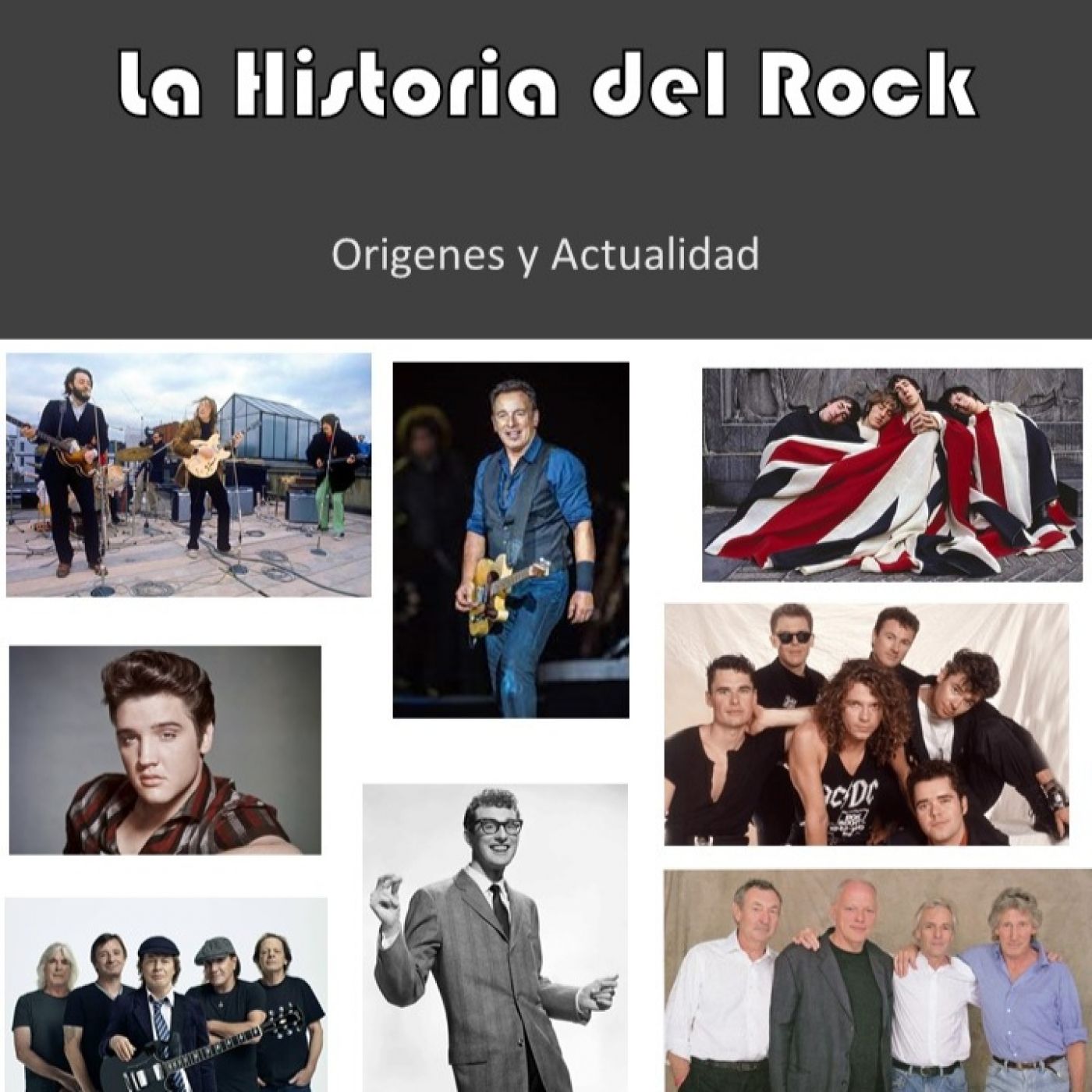
PODCAST · history
Historias Rockeras
by Martin Santillan
La música es el soundtrack personal de cada uno. Una canción, una tonada, nos transportan a un momento específico en nuestras vidas, nos traen recuerdos, buenos o malos, pero siempre la música es la gran compañera de esos recuerdos que compartimos con quienes vivieron a nuestro lado. Es la música el medio por el cual podemos regresar a vivir.
-
246
Programa Rockabilly 83C
Rockabilly is one of the earliest styles of rock and roll music. It dates back to the early 1950s in the United States, especially the South. As a genre, it blends the sound of Western musical styles such as country with that of rhythm and blues leading to what is considered "classic" rock and roll. Some have also described it as a blend of bluegrass with rock and roll. The term "rockabilly" itself is a portmanteau of "rock" (from "rock 'n' roll") and "hillbilly", the latter a reference to the country music (often called "hillbilly music" in the 1940s and 1950s) that contributed strongly to the style. Other important influences on rockabilly include Western swing, boogie-woogie, jump blues, and electric blues. Defining features of the rockabilly sound included strong rhythms, boogie woogie piano riffs, vocal twangs, doo-wop acapella singing, and common use of the tape echo; and eventually came to incorporate different instruments and vocal harmonies Initially popularized by artists such as Carl Perkins, Elvis Presley, Johnny Burnette, Jerry Lee Lewis and others, the rockabilly style waned in the late 1950s; nonetheless, during the late 1970s and early 1980s, rockabilly enjoyed a revival. An interest in the genre endures even in the 21st century, often within musical subcultures. Rockabilly has spawned a variety of sub-styles and has influenced the development of other genres such as punk rock.
-
245
Programa Rockabilly 83B
Rockabilly is one of the earliest styles of rock and roll music. It dates back to the early 1950s in the United States, especially the South. As a genre, it blends the sound of Western musical styles such as country with that of rhythm and blues leading to what is considered "classic" rock and roll. Some have also described it as a blend of bluegrass with rock and roll. The term "rockabilly" itself is a portmanteau of "rock" (from "rock 'n' roll") and "hillbilly", the latter a reference to the country music (often called "hillbilly music" in the 1940s and 1950s) that contributed strongly to the style. Other important influences on rockabilly include Western swing, boogie-woogie, jump blues, and electric blues. Defining features of the rockabilly sound included strong rhythms, boogie woogie piano riffs, vocal twangs, doo-wop acapella singing, and common use of the tape echo; and eventually came to incorporate different instruments and vocal harmonies Initially popularized by artists such as Carl Perkins, Elvis Presley, Johnny Burnette, Jerry Lee Lewis and others, the rockabilly style waned in the late 1950s; nonetheless, during the late 1970s and early 1980s, rockabilly enjoyed a revival. An interest in the genre endures even in the 21st century, often within musical subcultures. Rockabilly has spawned a variety of sub-styles and has influenced the development of other genres such as punk rock.
-
244
Programa Rockabilly 83A
Rockabilly is one of the earliest styles of rock and roll music. It dates back to the early 1950s in the United States, especially the South. As a genre, it blends the sound of Western musical styles such as country with that of rhythm and blues leading to what is considered "classic" rock and roll. Some have also described it as a blend of bluegrass with rock and roll. The term "rockabilly" itself is a portmanteau of "rock" (from "rock 'n' roll") and "hillbilly", the latter a reference to the country music (often called "hillbilly music" in the 1940s and 1950s) that contributed strongly to the style. Other important influences on rockabilly include Western swing, boogie-woogie, jump blues, and electric blues. Defining features of the rockabilly sound included strong rhythms, boogie woogie piano riffs, vocal twangs, doo-wop acapella singing, and common use of the tape echo; and eventually came to incorporate different instruments and vocal harmonies Initially popularized by artists such as Carl Perkins, Elvis Presley, Johnny Burnette, Jerry Lee Lewis and others, the rockabilly style waned in the late 1950s; nonetheless, during the late 1970s and early 1980s, rockabilly enjoyed a revival. An interest in the genre endures even in the 21st century, often within musical subcultures. Rockabilly has spawned a variety of sub-styles and has influenced the development of other genres such as punk rock.
-
243
Programa Rockabilly 82C
Rockabilly is one of the earliest styles of rock and roll music. It dates back to the early 1950s in the United States, especially the South. As a genre, it blends the sound of Western musical styles such as country with that of rhythm and blues leading to what is considered "classic" rock and roll. Some have also described it as a blend of bluegrass with rock and roll. The term "rockabilly" itself is a portmanteau of "rock" (from "rock 'n' roll") and "hillbilly", the latter a reference to the country music (often called "hillbilly music" in the 1940s and 1950s) that contributed strongly to the style. Other important influences on rockabilly include Western swing, boogie-woogie, jump blues, and electric blues. Defining features of the rockabilly sound included strong rhythms, boogie woogie piano riffs, vocal twangs, doo-wop acapella singing, and common use of the tape echo; and eventually came to incorporate different instruments and vocal harmonies Initially popularized by artists such as Carl Perkins, Elvis Presley, Johnny Burnette, Jerry Lee Lewis and others, the rockabilly style waned in the late 1950s; nonetheless, during the late 1970s and early 1980s, rockabilly enjoyed a revival. An interest in the genre endures even in the 21st century, often within musical subcultures. Rockabilly has spawned a variety of sub-styles and has influenced the development of other genres such as punk rock.
-
242
Programa Rockabilly 82B
Rockabilly is one of the earliest styles of rock and roll music. It dates back to the early 1950s in the United States, especially the South. As a genre, it blends the sound of Western musical styles such as country with that of rhythm and blues leading to what is considered "classic" rock and roll. Some have also described it as a blend of bluegrass with rock and roll. The term "rockabilly" itself is a portmanteau of "rock" (from "rock 'n' roll") and "hillbilly", the latter a reference to the country music (often called "hillbilly music" in the 1940s and 1950s) that contributed strongly to the style. Other important influences on rockabilly include Western swing, boogie-woogie, jump blues, and electric blues. Defining features of the rockabilly sound included strong rhythms, boogie woogie piano riffs, vocal twangs, doo-wop acapella singing, and common use of the tape echo; and eventually came to incorporate different instruments and vocal harmonies Initially popularized by artists such as Carl Perkins, Elvis Presley, Johnny Burnette, Jerry Lee Lewis and others, the rockabilly style waned in the late 1950s; nonetheless, during the late 1970s and early 1980s, rockabilly enjoyed a revival. An interest in the genre endures even in the 21st century, often within musical subcultures. Rockabilly has spawned a variety of sub-styles and has influenced the development of other genres such as punk rock.
-
241
Programa Rockabilly 82A
Rockabilly is one of the earliest styles of rock and roll music. It dates back to the early 1950s in the United States, especially the South. As a genre, it blends the sound of Western musical styles such as country with that of rhythm and blues leading to what is considered "classic" rock and roll. Some have also described it as a blend of bluegrass with rock and roll. The term "rockabilly" itself is a portmanteau of "rock" (from "rock 'n' roll") and "hillbilly", the latter a reference to the country music (often called "hillbilly music" in the 1940s and 1950s) that contributed strongly to the style. Other important influences on rockabilly include Western swing, boogie-woogie, jump blues, and electric blues. Defining features of the rockabilly sound included strong rhythms, boogie woogie piano riffs, vocal twangs, doo-wop acapella singing, and common use of the tape echo; and eventually came to incorporate different instruments and vocal harmonies Initially popularized by artists such as Carl Perkins, Elvis Presley, Johnny Burnette, Jerry Lee Lewis and others, the rockabilly style waned in the late 1950s; nonetheless, during the late 1970s and early 1980s, rockabilly enjoyed a revival. An interest in the genre endures even in the 21st century, often within musical subcultures. Rockabilly has spawned a variety of sub-styles and has influenced the development of other genres such as punk rock.
-
240
Programa Rockabilly 81C
Rockabilly is one of the earliest styles of rock and roll music. It dates back to the early 1950s in the United States, especially the South. As a genre, it blends the sound of Western musical styles such as country with that of rhythm and blues leading to what is considered "classic" rock and roll. Some have also described it as a blend of bluegrass with rock and roll. The term "rockabilly" itself is a portmanteau of "rock" (from "rock 'n' roll") and "hillbilly", the latter a reference to the country music (often called "hillbilly music" in the 1940s and 1950s) that contributed strongly to the style. Other important influences on rockabilly include Western swing, boogie-woogie, jump blues, and electric blues. Defining features of the rockabilly sound included strong rhythms, boogie woogie piano riffs, vocal twangs, doo-wop acapella singing, and common use of the tape echo; and eventually came to incorporate different instruments and vocal harmonies Initially popularized by artists such as Carl Perkins, Elvis Presley, Johnny Burnette, Jerry Lee Lewis and others, the rockabilly style waned in the late 1950s; nonetheless, during the late 1970s and early 1980s, rockabilly enjoyed a revival. An interest in the genre endures even in the 21st century, often within musical subcultures. Rockabilly has spawned a variety of sub-styles and has influenced the development of other genres such as punk rock.
-
239
Programa Rockabilly 81B
Rockabilly is one of the earliest styles of rock and roll music. It dates back to the early 1950s in the United States, especially the South. As a genre, it blends the sound of Western musical styles such as country with that of rhythm and blues leading to what is considered "classic" rock and roll. Some have also described it as a blend of bluegrass with rock and roll. The term "rockabilly" itself is a portmanteau of "rock" (from "rock 'n' roll") and "hillbilly", the latter a reference to the country music (often called "hillbilly music" in the 1940s and 1950s) that contributed strongly to the style. Other important influences on rockabilly include Western swing, boogie-woogie, jump blues, and electric blues. Defining features of the rockabilly sound included strong rhythms, boogie woogie piano riffs, vocal twangs, doo-wop acapella singing, and common use of the tape echo; and eventually came to incorporate different instruments and vocal harmonies Initially popularized by artists such as Carl Perkins, Elvis Presley, Johnny Burnette, Jerry Lee Lewis and others, the rockabilly style waned in the late 1950s; nonetheless, during the late 1970s and early 1980s, rockabilly enjoyed a revival. An interest in the genre endures even in the 21st century, often within musical subcultures. Rockabilly has spawned a variety of sub-styles and has influenced the development of other genres such as punk rock.
-
238
Programa Rockabilly 81A
Rockabilly is one of the earliest styles of rock and roll music. It dates back to the early 1950s in the United States, especially the South. As a genre, it blends the sound of Western musical styles such as country with that of rhythm and blues leading to what is considered "classic" rock and roll. Some have also described it as a blend of bluegrass with rock and roll. The term "rockabilly" itself is a portmanteau of "rock" (from "rock 'n' roll") and "hillbilly", the latter a reference to the country music (often called "hillbilly music" in the 1940s and 1950s) that contributed strongly to the style. Other important influences on rockabilly include Western swing, boogie-woogie, jump blues, and electric blues. Defining features of the rockabilly sound included strong rhythms, boogie woogie piano riffs, vocal twangs, doo-wop acapella singing, and common use of the tape echo; and eventually came to incorporate different instruments and vocal harmonies Initially popularized by artists such as Carl Perkins, Elvis Presley, Johnny Burnette, Jerry Lee Lewis and others, the rockabilly style waned in the late 1950s; nonetheless, during the late 1970s and early 1980s, rockabilly enjoyed a revival. An interest in the genre endures even in the 21st century, often within musical subcultures. Rockabilly has spawned a variety of sub-styles and has influenced the development of other genres such as punk rock.
-
237
Programa ROckabilly 80C
Rockabilly is one of the earliest styles of rock and roll music. It dates back to the early 1950s in the United States, especially the South. As a genre, it blends the sound of Western musical styles such as country with that of rhythm and blues leading to what is considered "classic" rock and roll. Some have also described it as a blend of bluegrass with rock and roll. The term "rockabilly" itself is a portmanteau of "rock" (from "rock 'n' roll") and "hillbilly", the latter a reference to the country music (often called "hillbilly music" in the 1940s and 1950s) that contributed strongly to the style. Other important influences on rockabilly include Western swing, boogie-woogie, jump blues, and electric blues. Defining features of the rockabilly sound included strong rhythms, boogie woogie piano riffs, vocal twangs, doo-wop acapella singing, and common use of the tape echo; and eventually came to incorporate different instruments and vocal harmonies Initially popularized by artists such as Carl Perkins, Elvis Presley, Johnny Burnette, Jerry Lee Lewis and others, the rockabilly style waned in the late 1950s; nonetheless, during the late 1970s and early 1980s, rockabilly enjoyed a revival. An interest in the genre endures even in the 21st century, often within musical subcultures. Rockabilly has spawned a variety of sub-styles and has influenced the development of other genres such as punk rock.
-
236
Programa Rockabilly 80A
Rockabilly is one of the earliest styles of rock and roll music. It dates back to the early 1950s in the United States, especially the South. As a genre, it blends the sound of Western musical styles such as country with that of rhythm and blues leading to what is considered "classic" rock and roll. Some have also described it as a blend of bluegrass with rock and roll. The term "rockabilly" itself is a portmanteau of "rock" (from "rock 'n' roll") and "hillbilly", the latter a reference to the country music (often called "hillbilly music" in the 1940s and 1950s) that contributed strongly to the style. Other important influences on rockabilly include Western swing, boogie-woogie, jump blues, and electric blues. Defining features of the rockabilly sound included strong rhythms, boogie woogie piano riffs, vocal twangs, doo-wop acapella singing, and common use of the tape echo; and eventually came to incorporate different instruments and vocal harmonies Initially popularized by artists such as Carl Perkins, Elvis Presley, Johnny Burnette, Jerry Lee Lewis and others, the rockabilly style waned in the late 1950s; nonetheless, during the late 1970s and early 1980s, rockabilly enjoyed a revival. An interest in the genre endures even in the 21st century, often within musical subcultures. Rockabilly has spawned a variety of sub-styles and has influenced the development of other genres such as punk rock.
-
235
Programa Rockabilly 79C
Rockabilly is one of the earliest styles of rock and roll music. It dates back to the early 1950s in the United States, especially the South. As a genre, it blends the sound of Western musical styles such as country with that of rhythm and blues leading to what is considered "classic" rock and roll. Some have also described it as a blend of bluegrass with rock and roll. The term "rockabilly" itself is a portmanteau of "rock" (from "rock 'n' roll") and "hillbilly", the latter a reference to the country music (often called "hillbilly music" in the 1940s and 1950s) that contributed strongly to the style. Other important influences on rockabilly include Western swing, boogie-woogie, jump blues, and electric blues. Defining features of the rockabilly sound included strong rhythms, boogie woogie piano riffs, vocal twangs, doo-wop acapella singing, and common use of the tape echo; and eventually came to incorporate different instruments and vocal harmonies Initially popularized by artists such as Carl Perkins, Elvis Presley, Johnny Burnette, Jerry Lee Lewis and others, the rockabilly style waned in the late 1950s; nonetheless, during the late 1970s and early 1980s, rockabilly enjoyed a revival. An interest in the genre endures even in the 21st century, often within musical subcultures. Rockabilly has spawned a variety of sub-styles and has influenced the development of other genres such as punk rock.
-
234
Programa Rockabilly 79A
Rockabilly is one of the earliest styles of rock and roll music. It dates back to the early 1950s in the United States, especially the South. As a genre, it blends the sound of Western musical styles such as country with that of rhythm and blues leading to what is considered "classic" rock and roll. Some have also described it as a blend of bluegrass with rock and roll. The term "rockabilly" itself is a portmanteau of "rock" (from "rock 'n' roll") and "hillbilly", the latter a reference to the country music (often called "hillbilly music" in the 1940s and 1950s) that contributed strongly to the style. Other important influences on rockabilly include Western swing, boogie-woogie, jump blues, and electric blues. Defining features of the rockabilly sound included strong rhythms, boogie woogie piano riffs, vocal twangs, doo-wop acapella singing, and common use of the tape echo; and eventually came to incorporate different instruments and vocal harmonies Initially popularized by artists such as Carl Perkins, Elvis Presley, Johnny Burnette, Jerry Lee Lewis and others, the rockabilly style waned in the late 1950s; nonetheless, during the late 1970s and early 1980s, rockabilly enjoyed a revival. An interest in the genre endures even in the 21st century, often within musical subcultures. Rockabilly has spawned a variety of sub-styles and has influenced the development of other genres such as punk rock.
-
233
Programa Rockabilly 72C
The 1950s in America were a time of contrast and rebellion, a period when the clean-cut conformity of post-war prosperity met the restless spirit of the youth setting the perfect stage for the birth of Rockabilly. This was an era where teens craved something different, something that echoed their desire for freedom and excitement, away from the cookie-cutter lifestyle of suburban bliss that their parents aspired to. The air was electric with change—cars were getting faster, skirts were getting shorter, and music… well, music was about to get a whole lot louder.
-
232
Programa Rockabilly 17C
Rockabilly is one of the earliest styles of rock and roll music. It dates back to the early 1950s in the United States, especially the South. As a genre, it blends the sound of Western musical styles such as country with that of rhythm and blues, leading to what is considered "classic" rock and roll. Some have also described it as a blend of bluegrass with rock and roll. The term "rockabilly" itself is a portmanteau of "rock" (from "rock 'n' roll") and "hillbilly", the latter a reference to the country music (often called "hillbilly music" in the 1940s and 1950s) that contributed strongly to the style. Other important influences on rockabilly include western swing, boogie-woogie, jump blues, and electric blues. Defining features of the rockabilly sound included strong rhythms, boogie woogie piano riffs, vocal twangs, doo-wop acapella singing, and common use of the tape echo;and eventually came to incorporate different instruments and vocal harmonies. Initially popularized by artists such as Carl Perkins, Elvis Presley, Johnny Burnette, Jerry Lee Lewis and others, the rockabilly style waned in the late 1950s; nonetheless, during the late 1970s and early 1980s, rockabilly enjoyed a revival. An interest in the genre endures even in the 21st century, often within musical subcultures. Rockabilly has spawned a variety of sub-styles and has influenced the development of other genres such as punk rock.
We're indexing this podcast's transcripts for the first time — this can take a minute or two. We'll show results as soon as they're ready.
No matches for "" in this podcast's transcripts.
No topics indexed yet for this podcast.
Loading reviews...
ABOUT THIS SHOW
La música es el soundtrack personal de cada uno. Una canción, una tonada, nos transportan a un momento específico en nuestras vidas, nos traen recuerdos, buenos o malos, pero siempre la música es la gran compañera de esos recuerdos que compartimos con quienes vivieron a nuestro lado. Es la música el medio por el cual podemos regresar a vivir.
HOSTED BY
Martin Santillan
CATEGORIES
Loading similar podcasts...
Frequently Asked Questions
How many episodes does Historias Rockeras have?
Historias Rockeras currently has 15 episodes available on PodParley. New episodes are automatically indexed when they're published to the podcast feed.
What is Historias Rockeras about?
La música es el soundtrack personal de cada uno. Una canción, una tonada, nos transportan a un momento específico en nuestras vidas, nos traen recuerdos, buenos o malos, pero siempre la música es la gran compañera de esos recuerdos que compartimos con quienes vivieron a nuestro lado. Es la música...
How often does Historias Rockeras release new episodes?
Historias Rockeras has 15 episodes. Check the episode list to see recent publication dates and frequency.
Where can I listen to Historias Rockeras?
You can listen to Historias Rockeras on PodParley by clicking any episode. We provide an embedded audio player for direct listening, and you can also subscribe via your preferred podcast app using the RSS feed.
Who hosts Historias Rockeras?
Historias Rockeras is created and hosted by Martin Santillan.
URL copied to clipboard!