
PODCAST · technology
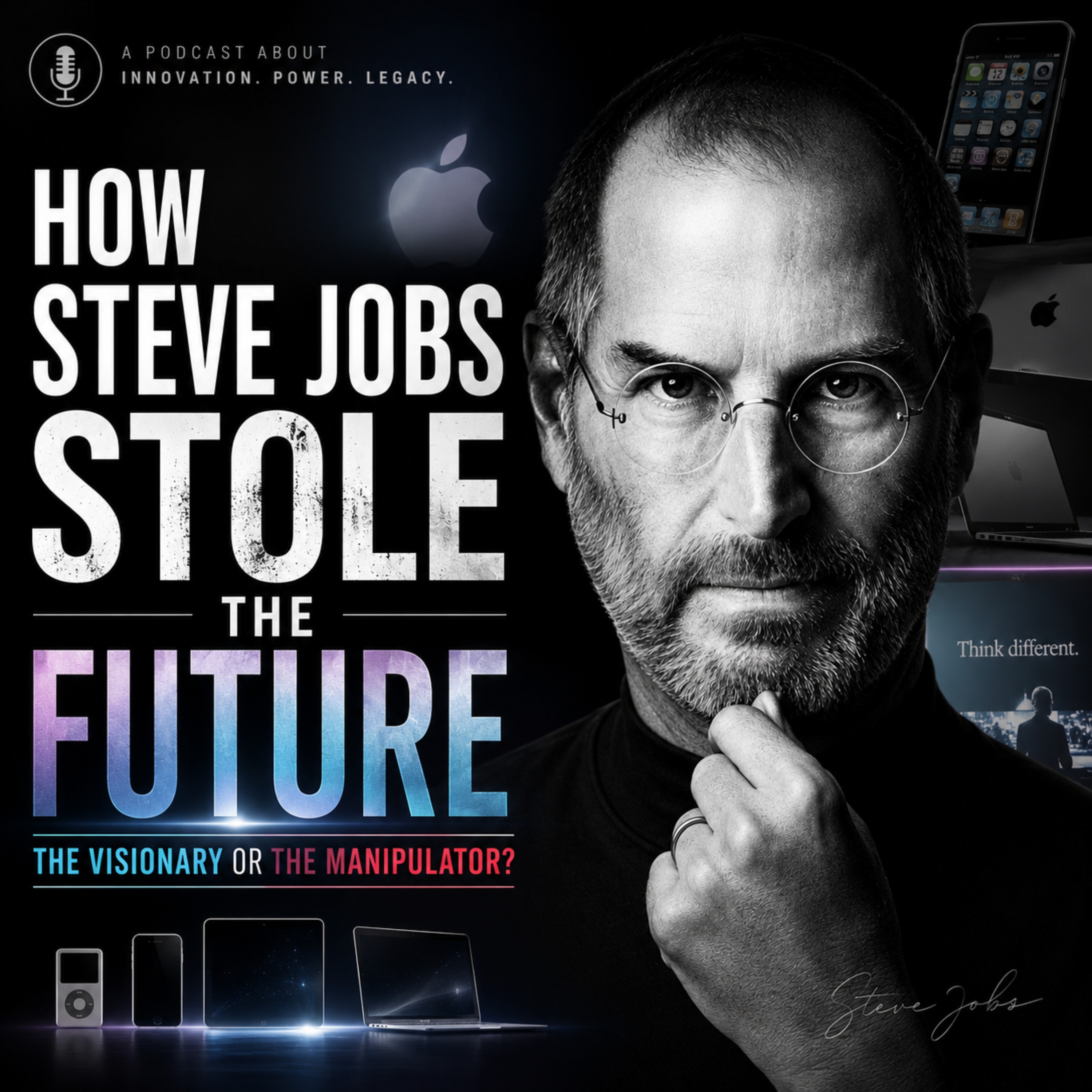
How Steve Jobs Stole the Future: The Visionary or The Manipulator?
by Jimmy Jones
Was Steve Jobs a brilliant visionary, or the greatest manipulator in tech history? 🎙️ Dive into the untold story of how Apple’s iconic founder built a multi-trillion-dollar empire not by inventing from scratch, but by acquiring, repackaging, and taking credit for the groundbreaking ideas of others.Episode Overview: In this deep-dive episode, we strip away the famous "reality distortion field" to uncover the real history behind Apple's biggest breakthroughs. While mainstream media paints Jobs as a tech genius, testimonies from ex-employees and hidden documents reveal a different side: a master of perception who ruthlessly edited the future. Discover how Jobs transformed Apple from the brink of bankruptcy into a global superpower—and the hidden innovators who actually built the technology.🔑 Key Takeaways in This Episode:The Xerox PARC Heist: How Jobs manipulated his way into a tour of Xero
-
1
How Steve Jobs Stole the Future
Episode Notes: How Steve Jobs Stole the FutureOverview Mainstream media often paints Steve Jobs as a tech-savvy visionary who single-handedly invented products like the iPhone and Macintosh. However, hidden documents and testimonies from ex-employees reveal a darker side. Jobs was not a formally educated engineer; he was an "editor" and a master of perception who built a trillion-dollar empire by polishing and taking credit for others' innovations.Segment 1: The Tech Heists & ManipulationThe Xerox PARC Heist: In the 1970s, Xerox developed the Graphical User Interface (GUI) and the mouse. Jobs traded a $1 million Apple investment opportunity for a tour of their secret R&D facility. He integrated this exact tech into the Apple Lisa and Macintosh, later justifying it by quoting Picasso: "Good artists copy, great artists steal".The iPhone's Multi-Touch: Jobs claimed the iPhone's multi-touch screen was Apple's greatest invention. In reality, the technology was pioneered by FingerWorks, a company founded by two University of Delaware PhD students in 1998. Jobs acquired FingerWorks in 2005 and marketed their tech as his own.Betraying Steve Wozniak: Steve Wozniak engineered Apple's early success. In 1973 at Atari, Jobs tasked Wozniak with building the game Breakout. Wozniak worked four sleepless nights to finish it. Jobs received a $5,000 bonus for the efficient design but lied to Wozniak, claiming they only got $700, and handed his co-founder just $350.Stealing Employee Ideas: Jobs had a "reality distortion field" where he would call an employee's idea "stupid," only to return days later pitching the exact same concept as his own. Even legendary designer Jony Ive experienced this.Segment 2: The Fall of AppleJobs hired Pepsi executive John Sculley as CEO. However, Jobs' erratic behavior and insistence on useless, expensive features (like a fan-less cooling system that caused crashes) led to his firing in 1985.Under Sculley, Apple prioritized short-term profits over innovation, ballooning Macintosh prices and creating a bloated, confusing lineup of over 70 product variants.By 1997, Apple was losing $1 billion a year, had massive unsold inventory, and was 90 days from bankruptcy as Microsoft's Windows 95 dominated the market.Segment 3: The Greatest ComebackThe Return: Jobs returned after Apple bought his new company, NeXT, for $429 million. He soon orchestrated the ousting of the CEO and took over.The Microsoft Deal: To shift public perception, Jobs secured a $150 million investment from rival Microsoft and made Internet Explorer the default Mac browser.Product Simplification: Jobs killed 70% of Apple's products, drawing a simple 2x2 grid (Desktop/Laptop, Consumer/Pro) resulting in just four core machines.The Ecosystem: Jobs identified chaotic industries and simplified them, launching the iPod (100 million sold in 5.5 years) and iPhone (2.3 billion sold by 2024), locking users into an inescapable ecosystem.Conclusion While Jobs was manipulative and lacked formal engineering education, his storytelling, marketing brilliance, and instinct for refining raw technologies saved Apple from death, cementing his legacy as the ultimate "architect of perception".
We're indexing this podcast's transcripts for the first time — this can take a minute or two. We'll show results as soon as they're ready.
No matches for "" in this podcast's transcripts.
No topics indexed yet for this podcast.
Loading reviews...
ABOUT THIS SHOW
Was Steve Jobs a brilliant visionary, or the greatest manipulator in tech history? 🎙️ Dive into the untold story of how Apple’s iconic founder built a multi-trillion-dollar empire not by inventing from scratch, but by acquiring, repackaging, and taking credit for the groundbreaking ideas of others.Episode Overview: In this deep-dive episode, we strip away the famous "reality distortion field" to uncover the real history behind Apple's biggest breakthroughs. While mainstream media paints Jobs as a tech genius, testimonies from ex-employees and hidden documents reveal a different side: a master of perception who ruthlessly edited the future. Discover how Jobs transformed Apple from the brink of bankruptcy into a global superpower—and the hidden innovators who actually built the technology.🔑 Key Takeaways in This Episode:The Xerox PARC Heist: How Jobs manipulated his way into a tour of Xero
HOSTED BY
Jimmy Jones
CATEGORIES
Loading similar podcasts...
Frequently Asked Questions
How many episodes does How Steve Jobs Stole the Future: The Visionary or The Manipulator? have?
How Steve Jobs Stole the Future: The Visionary or The Manipulator? currently has 1 episodes available on PodParley. New episodes are automatically indexed when they're published to the podcast feed.
What is How Steve Jobs Stole the Future: The Visionary or The Manipulator? about?
Was Steve Jobs a brilliant visionary, or the greatest manipulator in tech history? 🎙️ Dive into the untold story of how Apple’s iconic founder built a multi-trillion-dollar empire not by inventing from scratch, but by acquiring, repackaging, and taking credit for the groundbreaking ideas of...
How often does How Steve Jobs Stole the Future: The Visionary or The Manipulator? release new episodes?
How Steve Jobs Stole the Future: The Visionary or The Manipulator? has 1 episodes. Check the episode list to see recent publication dates and frequency.
Where can I listen to How Steve Jobs Stole the Future: The Visionary or The Manipulator??
You can listen to How Steve Jobs Stole the Future: The Visionary or The Manipulator? on PodParley by clicking any episode. We provide an embedded audio player for direct listening, and you can also subscribe via your preferred podcast app using the RSS feed.
Who hosts How Steve Jobs Stole the Future: The Visionary or The Manipulator??
How Steve Jobs Stole the Future: The Visionary or The Manipulator? is created and hosted by Jimmy Jones.
URL copied to clipboard!