
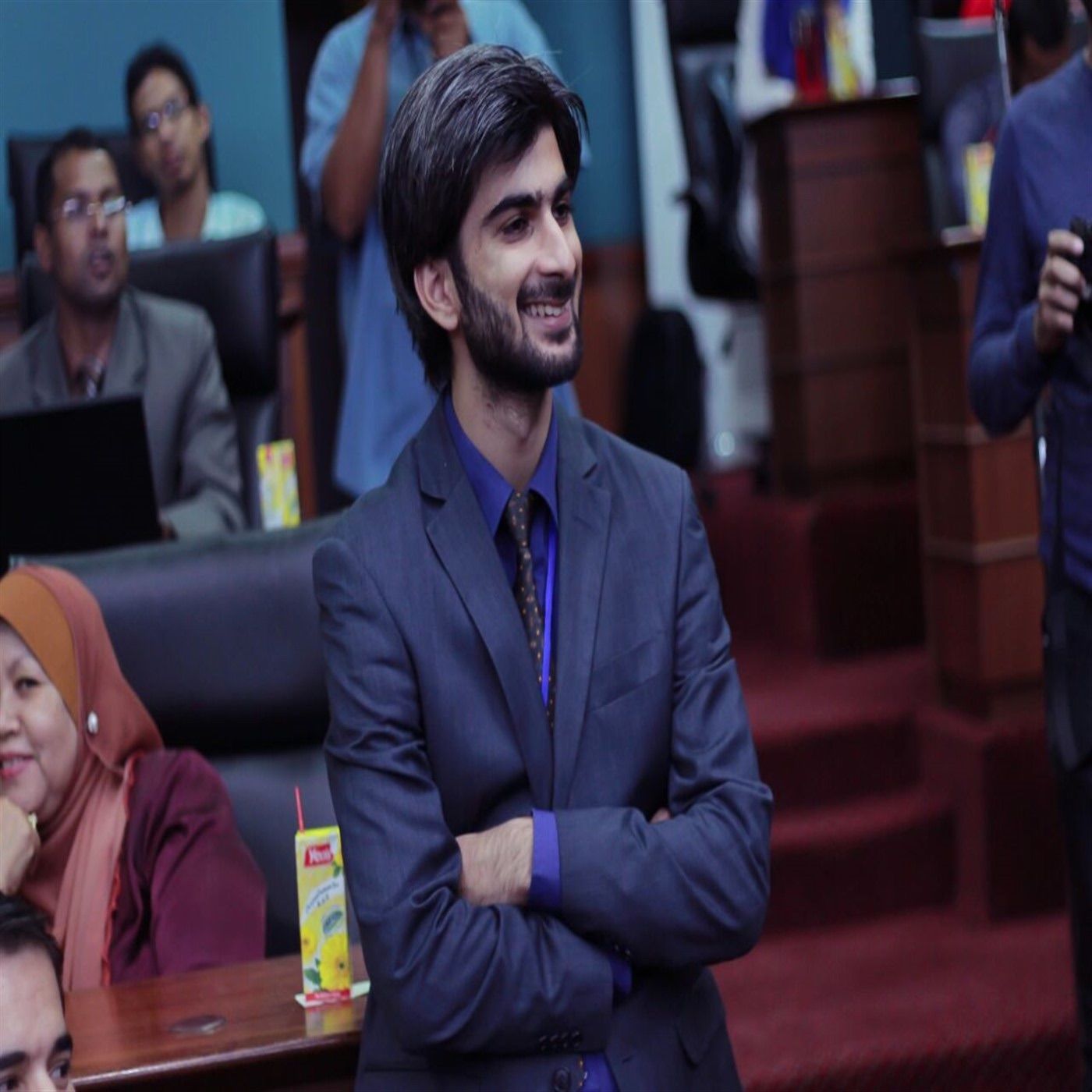
PODCAST · comedy
How to Kashmir: The Internet
by Muhammad Faysal
Muhammad Faysal is a storyteller from Srinagar, Kashmir. To a question about his identity, as by an Indian soldier, he is quoted to have said, "I am as Kashmiri as my nose."
-
13
3. Sultanat: Sufi Saints and Game of Thrones
In this episode, we explore Kashmir’s transformation after the arrival of Mir Syed Ali Hamadani and the spread of Islam. Discover how Sufi masters rose to power, shaping both spiritual and political landscapes as rulers sought legitimacy from religious scholars. We also dive into the turbulent 16th century, marked by the fall of Budshah’s rule, foreign interventions, civil wars, and the fierce power struggle among the Chak rulers—a real-life game of thrones in Kashmir’s history.🎙️ Guest: Dr. Zubair Khalid PhD, Centre for Historical Studies, JNU Expert on the Kashmiri Sultanate, Islam, Sufism, and the region’s material and intellectual history.2:28: How to read medieval history of Kashmir11:30: Frameworks of history around Kashmir's Sultanat period.23:45: The impact of Mir Syed Ali Hamdani and other Muslim scholars28:40: The role of Sayyids and Shaykh Hamza Makhdoom35:03: Shams-ud-din Araki vs Hamza Makhdoom47:00: The arrival of Mirza Haider Dughlat53:59: Chak Game of Thrones1:02:04: Did Sufis invite Mughals into Kashmir?1:12:18: The Mughal Rule brief1:16:35: Sultanat Top 5 Follow us on Instagram
-
12
2. Sultanat: Lal Ded - The Great Mystic (1320–1392)
Lala Ded or Lalleshwari or Lala Arifa, Kashmir's iconic mystic poet. In this episode, we explore her profound connection with Sufi saints, her fearless battle against caste and religious hierarchies, and the enduring impact of her vakhs. We also uncover the politics of translating her work during the Dogra Empire. Discover the true essence of Lal Ded, a figure who transcended religious boundaries and continues to inspire generations. Guests: Shakir Mir Kashmiri Journalist who works on history, law and human rights. Dean Accardi Assistant Professor at the Connecticut College, United States, Dean is a historian of religion and politics in Kashmir. His research highlights how historical and religious narratives constantly reconstruct the past to serve socio-political agendas in the present. Through this research, he aims to reexamine notions of mutually exclusive religions, hybridity, and syncretism as well as how regulation of bodily practices is used to shape ideas of gender, piety, authority, and sovereignty amidst political oppression. You can find more info and a glossary of terms used in the podcast on our Substack
-
11
1. Sultanat: King Zain ul Abidin (Budshah) 1420-1470
Welcome to the Museum of Kashmir podcast with Muhammad Faysal We start our new podcast series, 'Sultanat' which does a deep dive into the medieval era of Kashmir. In our premiere episode, we explore the reign of the illustrious King Zain ul Abidin from the 15th century. We are joined by Sameer Hamdani, a distinguished Kashmiri historian and Design Director at INTACH J&K. His expertise lies in Islamic religious architecture in South Asia. He has authored the insightful books “The Syncretic Traditions of Islamic Religious Architecture of Kashmir (Early 14th ‐ 18th Century)” and “Shi’ism in Kashmir: A History of Sunni‐Shia Rivalry and Reconciliation,” where he explores the rich tapestry of Kashmir’s Shia population and their historical narratives. Shakir Mir is a seasoned journalist hailing from Srinagar, with a keen focus on politics, conflict, and history. His work has been featured in various Indian and international publications, providing critical insights into the socio-political dynamics of the region. Subscribe and share with your friends.
-
10
Avraad-e-Fatiha (Hazratbal)
This prayer has been recited every morning in Kashmir for over 500 years. Yes, every single morning and in almost all mosques of Kashmir. This prayer was constituted by Mir Syed Ali Hamdani, a Persian Muslim preacher who came to Kashmir in the 14th century. As hundreds of thousands of Kashmiris embraced Islam, he devised this prayer which was performed after every dawn prayer in mosques. Many historians suggest that it was to fulfil the spiritual need as well as a means for local Muslims to remember and recite Quranic prayers.
-
9
Architecture, Islam and Kashmir
Islam, architecture and Kashmir are great indicators of the region's history. We take a look at the essential Kashmiri history; from the origins of Islam in Kashmir to the politics of empire and also the history of Shias in Kashmir. Our guest is Sameer Hamdani. He is the Design Director at INTACH Kashmir, whose primary area of research is in the field of Islamic religious architecture in South Asia. He has widely written on the Muslim material culture of Kashmir. The Syncretic Traditions of Islamic Religious Architecture of Kashmir (Early 14th ‐ 18th Century) and Shi’ism in Kashmir: A history of Sunni‐Shia rivalry and reconciliation. The language is in Kashmiri, Urdu and English. 0:00 - Uniqueness of Kashmir 1:42 - The First Muslims of Kashmir 4:45 - Syncretism of Kashmir's Architecture 11:19 - The Story of Jamia Masjid 14:08 - The Case of Pathar Masjid 15:30 - Khanqah - e - Nurbakhsiya 16:28 - Koh -e- Suleyman 18:07 - Koh -e- Maran 20:00 - Evolution of Khanqah 23:48 - Mullah Akhund Mosque 26:50 - The Mughal Invasion 28:20 - Architecture as Power 31:30 - The Shia Kashmir 34:50 - The Kashmiri Shias of Lahore 38:07 - The Persecution of Kashmiri Shias 39:10 - The Shia-Sunni Unity 44:38 - The Aali Masjid
-
8
Chahal-i-Asrar | Mīr Sayyīd Alī Hamādanī
This is a verse attributed to Mīr Sayyīd Alī Hamādanī, the Kubrāwiyyā saint from Hamadān who came to Kashmir during the 14th century. After fighting with the Turco-Mongol emperor Timur, he along with his followers visited the country three times and stayed for certain periods in which they not only spread the message of Islam but also established industries that continue to thrive to this day. These Persian verses are part of the Chahal Asrar (the forty secrets) which are written in the Ghazal form. It is believed that one night Hamādanī visited and recited these Ghazals in the houses of his followers. Later in the morning, his followers collected these Ghazals. Since that time, and until now, Chahal Asrar is recited by Kashmiris during Maulood - the day when the Prophet of Islam was born and in other religious occasions. This audio clip was provided by Mahoor Shaw and one of the people reciting in this clip is Molvi Muhammad Yasin Shah - the Muezzin of Kashmir's Grand Mosque Jamia Masjid for over 60 years.
-
7
Shruk: Sheikh ul Aalam's Salutations
This is one of most beautiful shruks - verses- written by Sheikh Noorudin Noorani (1377-1440). He was a preacher and a poet. His contributions and work towards Kashmir has accorded him a saintly status. He is known as Alamdar - the flag bearer of Kashmiris. I have had this recording in my phone since 2016 during a session at the Mirwaiz Manzil in Srinagar. I don’t know who recited this beautiful kalaam but it’s been in my head ever since. I remembered this shruk since the day I started working on Sheikh ul Aalam’s kalaam. I tried really hard to fix my broken phone which has this recording. Thankfully, I was able to recover it.Hazrat Siddīqas tas durdānasYus awwal hyot sāhiban pānas sạ̄tUmari Khattāb-as pahalwānasYem jang kor shaitānas sạ̄tHazrat Usmānas ibni ‘AffānasYem kath kạr furqānas sạ̄tHazrat Shāhas sher-e yazdānasYem tsọt kheyi mahmānas sạ̄tRasūli khudāyas shāh-e sultānasYus ‘ummat panin heyi pānas sạ̄tNund Ryosh arz kari Shah-e HamdānasTatiy jannatas hẏetam pānas sạ̄t (This verse is not in the recording)
-
6
Red Square: Magarmal Bagh
Magarmal Bagh is a small neighbourhood nestled between the busy city centre of Srinagar - Lal Chowk and Batamaloo. It's hidden behind the recently built flyover and the cacophony of the city centre. It has been a witness to some tumultuous events in Kashmir's history over the century. One of them being the Magarmal Bagh Massacre that occurred on 19th of January, 1991 when Indian forces fired upon civilians in its market. At least 16 people were killed and scores were injured. As part of our Red Square series, we speak to one of the survivors of the massacre. Music: Cello Duet No. 1by Chief Boima is licensed under a Attribution-NonCommercial-NoDerivatives (aka Music Sharing) 3.0 International License. Cocaine Lovin' Orange County Kidsby Die Elektrischen is licensed under a Attribution-Noncommercial-Share Alike 3.0 United States License.
-
5
Storytelling in Kashmir ft. Onaiza Drabu
Why is it important to document oral traditions in Kashmir? In this episode we are going to talk about history and importance of storytelling in the region. It also throws light on how storytelling is tied to our cultural identity. The guest this week is Onaiza Drabu who is an anthropologist, writer and an ethnographer.
-
4
-
3
Made in Kashmir: Redeem yourself India
Made in Kashmir: Redeem yourself India by Muhammad Faysal
-
2
Made in Kashmir: Power
Episode 2: "Neither do the politicians or the electricity poles have power in Kashmir."Artwork: Suhail Naqshbandi (https://www.artzolo.com/painting/aab-rang-kashmir-16)Music: WithKashmir by Chinaar Kashmir (https://www.youtube.com/channel/UCoehI4_fUAhc-3L1_ZZRr8w)
-
1
How to Kashmir: The Kashmiri Internet
Internet, Kashmir, and the what goes on!Language English/Kashmiri/Downtown
We're indexing this podcast's transcripts for the first time — this can take a minute or two. We'll show results as soon as they're ready.
No matches for "" in this podcast's transcripts.
No topics indexed yet for this podcast.
Loading reviews...
ABOUT THIS SHOW
Muhammad Faysal is a storyteller from Srinagar, Kashmir. To a question about his identity, as by an Indian soldier, he is quoted to have said, "I am as Kashmiri as my nose."
HOSTED BY
Muhammad Faysal
CATEGORIES
Loading similar podcasts...
Frequently Asked Questions
How many episodes does How to Kashmir: The Internet have?
How to Kashmir: The Internet currently has 13 episodes available on PodParley. New episodes are automatically indexed when they're published to the podcast feed.
What is How to Kashmir: The Internet about?
Muhammad Faysal is a storyteller from Srinagar, Kashmir. To a question about his identity, as by an Indian soldier, he is quoted to have said, "I am as Kashmiri as my nose."
How often does How to Kashmir: The Internet release new episodes?
How to Kashmir: The Internet has 13 episodes. Check the episode list to see recent publication dates and frequency.
Where can I listen to How to Kashmir: The Internet?
You can listen to How to Kashmir: The Internet on PodParley by clicking any episode. We provide an embedded audio player for direct listening, and you can also subscribe via your preferred podcast app using the RSS feed.
Who hosts How to Kashmir: The Internet?
How to Kashmir: The Internet is created and hosted by Muhammad Faysal.
URL copied to clipboard!