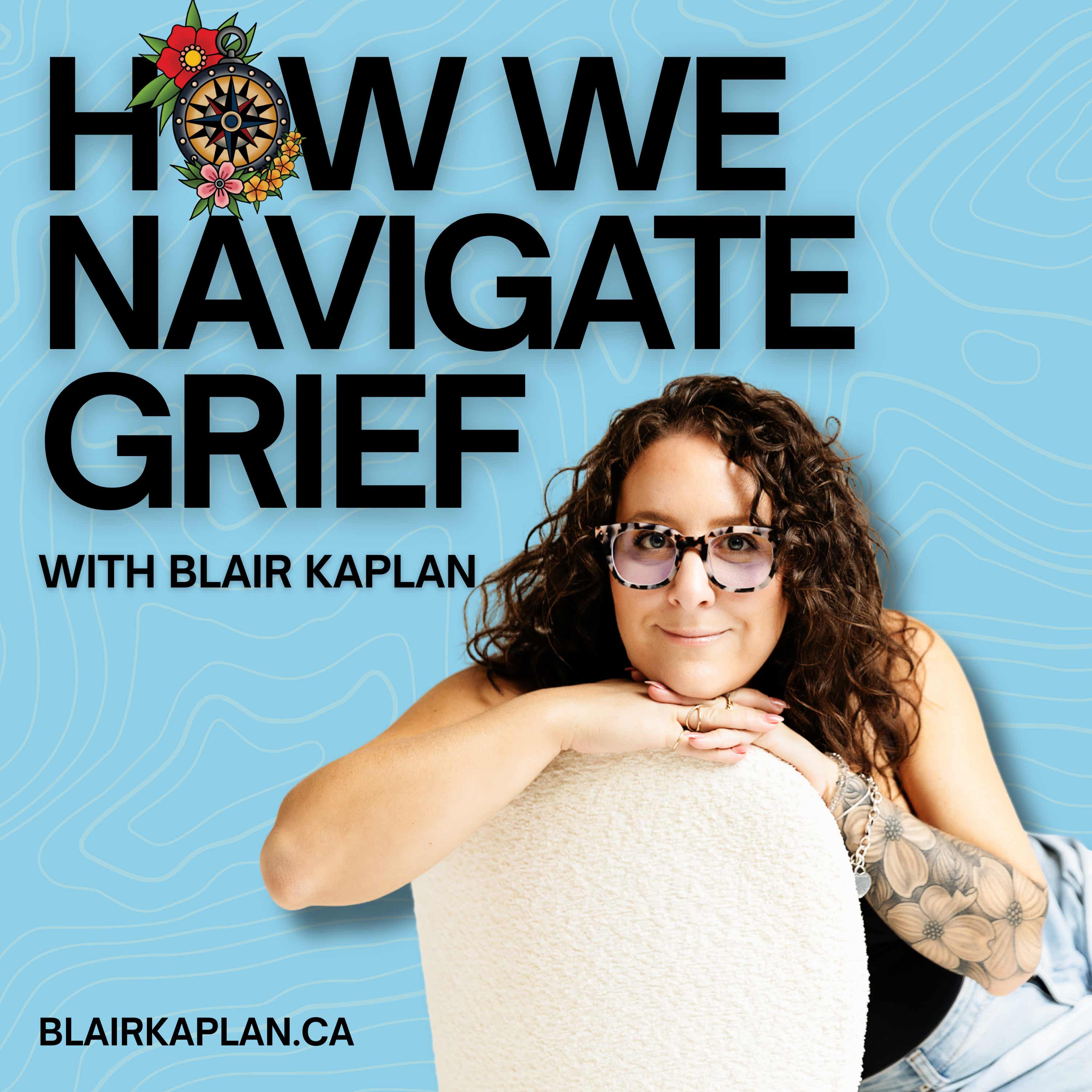
How We Navigate Grief with Blair podcast artwork

PODCAST · society

How We Navigate Grief with Blair

How We Navigate Grief is where we name what’s hard, share what helps, and move forward without erasing the past. howwenavigategrief.substack.com

  1. 19

    I Thought I Was at Peace. I Was Wrong.

    For most of my life, I thought I knew what it meant to rest and feel calm.I wasn’t having panic attacks. I wasn’t falling apart in public. I was functioning. I was showing up. I was getting things done. And in the absence of visible crisis, I told myself that meant I was okay.I was not okay.I just didn’t know what okay actually felt like.This is the part nobody talks about when they talk about grief, trauma, and resilience. It’s not always the dramatic breakdown that signals something is wrong. Sometimes it’s the quiet hum of tension you’ve normalized so completely that you have mistaken it for your personality.The Moment Everything ShiftedI remember sitting in what should have been a genuinely peaceful moment. Nothing was wrong. No fires to put out, no crisis to manage, no one needed me. And I felt... nothing. Or worse, I felt uncomfortable. Restless. Like stillness was a threat.That’s when it hit me.I had spent so many years operating in survival mode, moving from one hard thing to the next, that my nervous system had recalibrated around stress. Stress was familiar. Stress felt like home. And what I had been calling “calm” was really just a lower-grade version of anxious vigilance.My baseline was broken and I hadn’t even noticed.If you’ve experienced significant loss, grief, or prolonged hardship, I want you to sit with that for a second. Because this is more common than you think. When your body has been in fight-or-flight for months or years, your nervous system learns to treat that as the default setting. Rest starts to feel suspicious. Quiet starts to feel dangerous. You become so adapted to bracing for impact that you forget how to simply breathe.What I Did About ItI want to be honest with you here: I didn’t fix this overnight, and I didn’t fix it alone.The first thing I had to do was accept that what I thought was my personality, that edge, that low-level readiness, was actually a dysregulated nervous system doing its job. It had kept me safe through hard times. But it didn’t know the hard times were over. My body needed to be taught that it was allowed to rest.Here is what actually helped:Regulating my nervous system became a daily practice, not a reaction.I stopped treating relaxation as something I did after I earned it. I started treating it as something my body needed the way it needs water. This looked like:Writing. I did not come to writing as a wellness practice. I came to it because I had things inside me that had no other way out. Grief gets stuck in the body when it has nowhere to go, and writing gave mine somewhere to land. Not polished writing, not writing for an audience, but the messy, unfiltered, nobody-will-ever-read-this kind. A journal. Morning pages. Notes in your phone at 2am. Neuroscience actually backs this up: naming what you are feeling engages the rational part of your brain and creates just enough distance from the raw emotion to breathe through it. You do not have to be a writer for this to work. You just have to be willing to be honest on the page. The nervous system does not care about grammar. It just needs a door left open.Getting Outside. There is something that happens to my body the moment I step outside that no supplement or habit stack has ever replicated. Something releases. Nature does not require anything from you. It does not need you to perform okayness or meet expectations, and in a life shaped by loss, that unconditional quality is genuinely therapeutic. Research shows that time in natural environments lowers cortisol, reduces heart rate, and quiets the part of the brain responsible for rumination. What I have learned is that it works best when I leave the podcast at home and resist the urge to make the walk productive. Just outside. Just sky and ground and air and whatever is around you. On the days I least want to go out are usually the days I need it most. I have learned to treat that resistance as information, and then go anyway.Practicing Gratitude. A decade ago, I started setting an alarm on my phone. Not a wake-up alarm, not a reminder to take a vitamin. A gratitude alarm. It goes off every single day at 9:00pm, and when it does, I stop whatever I am doing and I find three things to be grateful for in that exact moment, from the past 24 hours. Not later. Not in a journal at the end of the day when I can curate and reflect. Right now, in the middle of whatever ordinary or hard or chaotic moment I happen to be in. That practice, which I have now been doing for over ten years, changed the way my brain is wired. Grief narrows your vision by design and locks your nervous system into a state of lack and danger. The gratitude alarm was my daily interruption to that pattern. A forced pause. A tiny, non-negotiable moment of noticing. A strengthening of my resilience muscle. Over time, those moments stacked. My brain started scanning for good things in real time, not just when I prompted it. Gratitude did not make my grief smaller. It made my life larger.Consistent sleep and food. This sounds basic because it is, and also because we chronically underestimate how much dysregulation is really just a depleted body screaming for basics.Strengthening my resilience muscle required me to stop treating resilience as a destination.Resilience is not something you arrive at. It is not a reward for surviving enough. It is a practice, a capacity you build through repetition, through choosing to return to yourself again and again even when it feels uncomfortable.For me, that meant:Sitting with discomfort instead of immediately filling it. When stillness felt threatening, I got curious about that instead of reaching for distraction. What was I afraid would happen if I just... stopped?Letting grief be grief. I stopped rebranding my grief as strength. Sometimes I was just sad. Letting myself be sad, without performing okayness, was part of how I healed.Building a life that included genuine restoration. Not just productivity recovery, not “self-care” as a buzzword, but actual moments of joy, connection, and rest that existed for no purpose other than to fill me back up.What Peace Actually Feels LikeReal peace, I have learned, is not the absence of difficulty. It is the presence of capacity. It is knowing that hard things will come and trusting that you will be able to meet them without fracturing.Real calm is not a low-grade hum of readiness. It is a body that can soften. A mind that can wander without panic. A nervous system that knows the difference between a genuine threat and just a hard day.I still have hard days. I still feel grief. I still sometimes catch myself bracing for something that isn’t coming.But now I know what I’m feeling. And I know how to come back.That, more than anything, is what resilience has given me.XX BlairP.S. I offer a complimentary call. If you want to see what it’s like to work with me as a Grief and Resilience Coach, book a time here.Where’s Blair?May 3-5, La Le Jeune, BCJoin me, Stacey and Simone this May at the Regulated Retreat.I’m stoked to be speaking at Regulated, a three-day nervous system reset retreat for people who are done surviving and ready to feel steady again because most of us don’t need more motivation, we need regulation. And that’s what makes this experience different.This retreat blends nervous system science, movement, nature, and honest conversation to help your body downshift and reset.I’m honoured to be part of this experience and would love to share it with you! Early bird rates end March 15th!May 11-14, 2025, Vancouver, BCI’ll be attending Web Summit Vancouver so that I can sharpen my skills and spread our mission.August 23-29, Porto, PortugalI will be co-facilitating the Portugal Grief Trip alongside Rachel from Happy Grieving. There is still room for you. Learn more and book your spot!How We Navigate Grief is a reader-supported publication. To receive new posts and support my work, consider becoming a free or paid subscriber.Thanks for reading How We Navigate Grief! This post is public so feel free to share it. This is a public episode. If you'd like to discuss this with other subscribers or get access to bonus episodes, visit howwenavigategrief.substack.com/subscribe

  2. 18

    Kintsugi Healing: How Grief, Loss, and Love Rebuild a Broken Heart

    Kintsugi Healing: Learning to Feel Again After GriefFive and a half years ago, I made a quiet decision that would change everything.I was going to put my heart back together. Not to return to who I was, but to become someone who could feel again. To crack it open and let love back in.I couldn’t feel it. Not love. Not gratitude. Not joy.I was numb.If you’ve ever experienced deep grief or trauma, you may know this feeling. It is not dramatic or loud. It is quiet. It is the absence of feeling. It is moving through your life like you are watching it happen instead of living it.So I created a visual in my mind.I imagined my heart shattered into pieces. And instead of trying to hide the cracks, I imagined them being filled with gold.This is the philosophy of Kintsugi. The Japanese art of repairing broken pottery with gold. The belief that the break is not something to fix or erase, but something to honour. The history becomes part of the beauty.I decided my heart would be rebuilt this way.Not despite what I had been through, but because of it.Healing, Expansion, and the Moment Everything ChangedWhen I entered my second healing journey, I could feel the difference immediately.I was more grounded. More aware. I had done the integration work. I was not trying to escape my pain this time. I was ready to meet it.And something shifted.On the final day, I experienced a level of emotion I did not know was available to me.I felt like I was standing at the edge of a cliff, heart wide open, arms stretched out, completely surrendered. Below me was a lush jungle, alive and vibrant. And from my heart, something extraordinary happened.Butterflies. Light. Color. Joy.It felt like pure love radiating out of me. Like the most powerful version of a Care Bear stare you could imagine. I was not chasing happiness. I was inside of it.For the first time in a long time, I felt alive.Fully.And in that moment, I understood something important.This is what is possible.Grief and Joy Can Exist at the Same TimeThat night, everything changed.My intuition told me to turn my phone on and call my sister.And that is when I found out my dad was about to die.Within hours of experiencing the highest emotional state of my life, I was on a plane to say goodbye to my father.There was no time to integrate what I had just experienced. No time to process the expansion. My heart was wide open, and life met me there with loss.I held his hand as he took his final breath.There are moments in life that split you open.This was one of them.To feel that level of joy and that depth of grief so close together is something I still do not have words for. It was intense. It was disorienting. It was human.This is the duality of grief.We are capable of holding both.Rebuilding a Heart Through Grief and ResilienceHealing is not about going back to who you were before the loss. It is about becoming someone new.This is the essence of what I teach through the Navigating Grief Framework. A process that supports people in moving through grief while strengthening their resilience muscle.Grief is not linear. Healing is not a checklist.But there are ways to support yourself through it.Grounding yourself in the present moment.Creating rituals that allow your emotions to move.Reflecting on what you have lost and what still matters.Leaning into support instead of isolating.Taking small steps forward, even when it feels impossible.This is how we rebuild.Not all at once. Piece by piece.Feeling Again: Where I Find Love NowOver time, something began to change.I started to feel again.Not all at once. Not in a big, cinematic moment. But in small, quiet ways.At concerts, when the music moves through my body.At festivals, surrounded by energy and connection.With my cats, in the stillness of being present.At our summer home, where time feels softer.On any beach, by any body of water, where I can breathe deeper.On hikes, where nature reminds me that everything continues.These moments became my proof.Proof that love was still accessible to me.Proof that my heart was healing.The Gold Is in the CracksToday, I can feel it.The love. The gratitude. The connection.And I can also feel the grief.Both exist. Both are true.That is the beauty of Kintsugi. The cracks do not disappear. They become part of the story. They are filled with something stronger.I can feel the gold filling the spaces where my heart once broke.And maybe that is the point.Not to be unbroken.But to be beautifully rebuilt.Let’s navigate your grief and first last breath together,XX BlairP.S. I offer a complimentary call. If you want to see what it’s like to work with me as a Grief and Resilience Coach, book a time here.Where’s Blair?May 3-5, La Le Jeune, BCJoin me, Stacey and Simone this May at the Regulated Retreat.I’m stoked to be speaking at Regulated, a three-day nervous system reset retreat for people who are done surviving and ready to feel steady again because most of us don’t need more motivation, we need regulation. And that’s what makes this experience different.This retreat blends nervous system science, movement, nature, and honest conversation to help your body downshift and reset.I’m honoured to be part of this experience and would love to share it with you! Early bird rates end March 15th!May 11-14, 2025, Vancouver, BCI’ll be attending Web Summit Vancouver so that I can sharpen my skills and spread our mission.August 23-29, Porto, PortugalI will be co-facilitating the Portugal Grief Trip alongside Rachel from Happy Grieving. There is still room for you. Learn more and book your spot!How We Navigate Grief is a reader-supported publication. To receive new posts and support my work, consider becoming a free or paid subscriber.Thanks for reading How We Navigate Grief! This post is public so feel free to share it. This is a public episode. If you'd like to discuss this with other subscribers or get access to bonus episodes, visit howwenavigategrief.substack.com/subscribe

  3. 17

    Confessions of a Treasure Hunter: How Collecting Rocks, Shells, and Sticks Became My Way Through Grief

    I’ve always been a treasure hunter.Not the kind with a map and an X marking the spot, but the kind who walks slowly along a shoreline, eyes scanning the ground like something sacred might be waiting to be found. Because it is. Give me a beach, any beach. Ocean, river, lake. Give me a forest floor scattered with stories, and I will find magic.A speckled rock that looks like it was painted by hand. A shell shaped like it was handcrafted. A stick that makes the best walking stick. Coral broken off into a heart shape, like it has been quietly waiting for someone to notice it. I don’t just see these things, I feel them. There is something in me that softens when I’m collecting. Something that exhales. It is like my nervous system finally says, this is what we are doing now. We are safe. We are here.How We Navigate Grief is a reader-supported publication. To receive new posts and support my work, consider becoming a free or paid subscriber.People sometimes laugh and ask what I am going to do with all those rocks and shells. And the answer is always the same. Keep them. Not because I need them, but because something in me recognizes them. Because each one feels like proof that beauty exists without trying. That time, pressure, water, and wind, all the things that can break us, can also shape us into something worth holding.I am not alone in this instinct. The more I pay attention, the more I realize that nature is filled with collectors.Sea otters have their favourite rocks, carefully chosen and carried with them, tucked into little pockets under their arms. They use them to crack open food, yes, but it is hard not to feel like there is something more there. A preference. A familiarity. Maybe even a quiet attachment. Octopuses gather shells and build little fortresses, creating safety out of what they find around them. Decorator crabs turn themselves into walking pieces of art, attaching shells and fragments to their bodies to blend in and protect themselves. Penguins search for the perfect pebble to build their nests, sometimes stealing from one another because even they know that some things are worth fighting for.And then there are crows. Brilliant, curious, wildly intelligent beings that collect shiny objects and little trinkets. Sometimes it is curiosity, sometimes play, and sometimes something deeper. Crows have been known to leave gifts for humans they trust. Buttons, beads, pieces of glass, small treasures offered like tokens of connection. A wild animal choosing you and leaving something behind as if to say, I see you. If that does not feel like magic, I don’t know what does.So maybe what I am doing when I collect rocks and shells is not random. Maybe it is ancient. Maybe it is instinct. Maybe it is a deeply human way of making sense of a world that can feel overwhelming, heavy, and sharp.And now, I also collect for my mom. I will bring pieces of each magical adventure from around the world to her headstone in Winnipeg.Wait, am I a crow? LOL.When you have experienced loss, when grief has moved through your life and changed you, you begin to look for anchors. Small things. Grounding things. Things you can hold in your hands when everything else feels like it is slipping through your fingers.This is something I have come to understand not just personally, but through my work. Grounding does not have to be complicated. It does not have to be a perfect morning routine or a long meditation practice. Sometimes it looks like standing barefoot on a beach, letting the water kiss your ankles, and picking up something that catches your eye. That is it. That is the work.In my world, we call this grounding in the present. It is one of the core ways we begin to move through grief, not around it. It is about coming back into your body, into the moment, into something tangible when your thoughts and emotions feel anything but.When you are collecting treasures from nature, you are not just gathering objects. You are gathering moments. You are collecting proof that you were here. That you paused long enough to notice something beautiful. That even in a world that can break your heart, there are still tiny, perfect things waiting to be found.Each rock, each shell, each piece of driftwood carries a story. Not just of where it came from, but of where you were when you found it. Who you were in that moment. What you were feeling. What you were moving through. They become markers, little breadcrumbs of your life, reminders that you kept going, that you kept looking, that you kept finding.So yes, I will always be a treasure hunter. My pockets will always be a little too full. My suitcase will always be a little too heavy. My home will always have collections of rocks, shells, sticks, and stories tucked into corners and displayed on shelves.Because every piece I collect reminds me of something I never want to forget. We are shaped by the elements. We are softened by time. And even after everything we have been through, even after loss and heartbreak and change, we are still here.And we are still worth finding.Let’s navigate your grief and first last breath together,XX BlairP.S. I offer a complimentary call. If you want to see what it’s like to work with me as a Grief and Resilience Coach, book a time here.Where’s Blair?May 3-5, La Le Jeune, BCJoin me, Stacey and Simone this May at the Regulated Retreat.I’m stoked to be speaking at Regulated, a three-day nervous system reset retreat for people who are done surviving and ready to feel steady again because most of us don’t need more motivation, we need regulation. And that’s what makes this experience different.This retreat blends nervous system science, movement, nature, and honest conversation to help your body downshift and reset.I’m honoured to be part of this experience and would love to share it with you! Early bird rates end March 15th!May 11-14, 2025, Vancouver, BCI’ll be attending Web Summit Vancouver so that I can sharpen my skills and spread our mission.August 23-29, Porto, PortugalI will be co-facilitating the Portugal Grief Trip alongside Rachel from Happy Grieving. There is still room for you. Learn more and book your spot!How We Navigate Grief is a reader-supported publication. To receive new posts and support my work, consider becoming a free or paid subscriber. This is a public episode. If you'd like to discuss this with other subscribers or get access to bonus episodes, visit howwenavigategrief.substack.com/subscribe

  4. 16

    The First Last Breath I Ever Witnessed: What Death Taught Me About Grief

    The first last breath I ever witnessed was hers.Auntie Heather.I was 20 years old, standing in a hospital room that felt too quiet, too still, as if the world had paused without asking permission. No one prepares you for that moment. No one sits you down and says, this is what it looks like when a life ends. And yet, there I was, watching, listening, trying to understand something my body somehow already knew.The sound came first. The death rattle. If you have heard it, you know. It is a sound that bypasses logic and lands straight in your nervous system. It tells you, without words, that the body is shutting down.And then came the stillness.A kind of stillness that feels sacred. Heavy. Final.And then it happened. Her last breath.You do not miss it. Even if you do not know what you are looking for, you feel it. It is like the air shifts. Like something invisible leaves the room. The body is still there, but the person is not.That was the first last breath I ever witnessed.And something inside me changed.At the time, I did not have the language for it. I did not understand grief. No one explained it to me. No one helped me process what I had just experienced. So I did what so many of us do when something is too big to hold.I carried on.I packed it away. I got on a plane to Greece. I distracted myself. I told myself I was fine.But here is what I know now, both from lived experience and from the work I do in grief and resilience.When you witness a last breath, your body remembers.Even if your mind tries to move on. Even if your life gets busy. Even if you become really good at pretending it did not affect you. The body keeps the score of those moments. They do not disappear just because you decide not to look at them.Because that moment is not just about death.It is about love. It is about connection. It is about the undeniable truth that we are here, and then we are not.Auntie Heather’s last breath was my first.But it was not my last.I was there when my mom took her final breath. I was there when my dad took his. I have held space for my pets as they left this world too. Each time, it was different. Each time, it was the same.The room shifts. Time slows down. Everything that matters becomes painfully, beautifully clear.And every single time, I am reminded that being there is a privilege.A heartbreaking, soul-shaking, life-altering privilege.Because not everyone gets that moment. Not everyone gets to witness the exact second a life completes its cycle. Sitting at the edge of life strips everything away. The noise. The distractions. The things we think matter.What is left is love.Pure, undeniable love.But, witnessing death does not mean you have processed it.For years, I did not process Auntie Heather’s death. I watched her take her last breath, but I did not allow myself to feel the weight of what that meant. I did not allow myself to experience her absence in a meaningful way. Grief does not operate on logic or proximity. You can be present for someone’s final moment and still avoid the grief that follows.You can witness death and still not understand loss.It took me years to come back to that first last breath. Years to sit with it. Years to feel what I did not let myself feel at 20.And what I understand now is this.Grief is not in the moment. Grief is in what comes after.It lives in the quiet. In the memories that resurface when you least expect them. In the space you finally allow yourself to give to the person who is no longer here.This is why the work I do exists.Because no one taught me how to navigate those moments. No one showed me how to integrate what I witnessed. No one explained that being there is one thing, but making meaning of it is another.So I built a way through it.A framework that helps people ground themselves in the present moment, create rituals to process their emotions, reflect on what their loss means, connect with support, and continue moving forward without pretending it did not happen.Because if you have ever witnessed a last breath, you carry that moment with you.Not as something to fear. But as something that connects you more deeply to being alive.So if you are reading this and you have been there too, standing in that room, feeling that shift, watching someone you love take their final breath, I want you to hear this clearly.You are not alone in what you felt. You are not broken for how it stayed with you. And you are allowed to grieve it, even if it happened years ago.My first last breath was hers.And in many ways, it was the beginning of everything I now understand about life, love, and resilience.Not because it was easy.But because it cracked me open in a way that nothing else could.Let’s navigate your grief and first last breath together,XX BlairP.S. I offer a complimentary call. If you want to see what it’s like to work with me as a Grief and Resilience Coach, book a time here. Where’s Blair?April 5-11, Bali, IndonesiaI will be co-facilitating the Bali Grief Trip alongside Rachel from Happy Grieving. There are still a few spaces if you want to join us.May 3-5, La Le Jeune, BCJoin me, Stacey and Simone this May at the Regulated Retreat.I’m stoked to be speaking at Regulated, a three-day nervous system reset retreat for people who are done surviving and ready to feel steady again because most of us don’t need more motivation, we need regulation. And that’s what makes this experience different.This retreat blends nervous system science, movement, nature, and honest conversation to help your body downshift and reset.I’m honoured to be part of this experience and would love to share it with you! Early bird rates end March 15th!May 11-14, 2025, Vancouver, BCI’ll be attending Web Summit Vancouver so that I can sharpen my skills and spread our mission.August 23-29, Porto, PortugalI will be co-facilitating the Portugal Grief Trip alongside Rachel from Happy Grieving. There is still room for you. Learn more and book your spot!How We Navigate Grief is a reader-supported publication. To receive new posts and support my work, consider becoming a free or paid subscriber. This is a public episode. If you'd like to discuss this with other subscribers or get access to bonus episodes, visit howwenavigategrief.substack.com/subscribe

  5. 15

    From Broken Pieces to Times Square: How a Resilience Movement Took Over NYC

    On March 7th, something remarkable happened in New York City.Not just a book launch.Not just a billboard in Times Square.It was a celebration of human resilience.At 31 minutes past the hour, every hour for 24 hours, the cover of RESILIENT A.F. Stories of Resilience Volume 3 appeared on a Times Square billboard.That means the message of resilience showed up 24 times in one of the busiest places on Earth, where roughly 78,000 people pass through Times Square every hour on Saturdays in March.Pause and imagine that for a moment.Thousands of strangers walking through the chaos of New York City… looking up… and seeing a message about resilience.Behind that message were not celebrities or actors.Behind that message were real people sharing real stories of healing.What Is RESILIENT A.F. Stories of Resilience?RESILIENT A.F. Stories of Resilience is a global storytelling project that shares real experiences of people who have navigated grief, trauma, illness, loss, and life’s hardest moments.What started as one book has grown into something much bigger:• Five books• More than 200 stories of resilience• Three Times Square billboards• Conversations happening across Ghana, Costa Rica, Mexico, Canada, the United States, Australia, Bali, the Maldives, and online.The project has expanded into:• Podcasts• A clothing line• Global community events• Strategic partnerships• Speaking engagements and workshopsAnd my sister Alana and I are just getting started.There are more creative projects on the way.But the heart of this movement will always be the stories.How One Personal Story Started a Global Resilience MovementThis entire journey started with something most people are afraid to talk about.Mental health.Addiction.Family struggles.Grief.Years ago, I shared something publicly that felt terrifying at the time.My dad was living with addiction and was terminally ill. We had only recently repaired our relationship.Talking about it felt like the unthinkable.But something unexpected happened.People began sharing their stories with me.One story became ten.Ten became hundreds.This phenomenon happens because storytelling builds empathy and connection between people, a process neuroscience calls neural coupling, where listeners’ brains synchronize with the storyteller.Stories don’t just entertain us.They help us understand each other.They help us heal.What Happened at the Times Square Book LaunchFor the launch of Volume 3, 20 authors travelled to New York City from Canada, the United States, and Australia.Many of them had never met before.Yet the moment they stood together under the billboard in Times Square, something powerful happened.People hugged.Some cried.Phones came out to capture the moment.Because for many of these authors, sharing their story meant telling the truth about things like:• grief• illness• trauma• addiction• loss• rebuilding life after everything falls apartStanding there together was proof of something important: Healing does not have to happen alone.Celebrating the Launch at Oscar Wilde NYCAfter the first Times Square meetup, we walked to Oscar Wilde NYC for brunch.If you have never been there, picture ornate ceilings, velvet seating, warm lighting, and an atmosphere that makes you want to stay all afternoon.Which we did.The brunch was not just about celebrating a book.It was about celebrating the humans behind the stories.Conversations flowed about healing journeys, business ideas, life lessons, and the surreal experience of seeing a book you helped create appear on a giant Times Square billboard.Some people had met only hours earlier and already felt like lifelong friends.That is the power of vulnerability.Watching the Billboard Light Up Times SquareThroughout the day, we kept returning to Times Square.Every time the clock hit 31 minutes past the hour, people gathered to watch the billboard again.Phones went up.Cheers broke out.More photos were taken.Watching a project that started from pain turn into a public celebration in the middle of New York City felt surreal.Meanwhile, our Book Launch WhatsApp group and social media feeds were buzzing with messages from around the world.People who could not be in New York were celebrating from different time zones.Because this book belongs to a community.The Book’s Early Success on the ChartsWithin days of launch, RESILIENT A.F. Stories of Resilience Volume 3 reached:#1 Hot New Releases in Biography Reference & Collections in• Australia• Canada• The United StatesPlus many additional rankings across Amazon categories.But honestly?The charts are exciting.The billboard is cool.What matters most are the stories.The Moment in Times Square I Will Never ForgetStanding in Times Square with authors from around the world, watching our message light up the city, I had one overwhelming thought.This all started with one story.One painful truth.One decision to stop hiding what was happening behind closed doors.You never know what sharing your story might create.Sometimes it creates healing.Sometimes it creates community.And sometimes…It ends up on a billboard in Times Square.What Is Next For Us?Waitlist open, special projects, clothing line, speaking, podcast….Let’s navigate your grief together,XX BlairP.S. Please buy the book and leave us a review. It will help us get our message out to the world. Thank you for helping us spread the love!P.P.S. Get on the waitlist for Skin Deep Stories and Stories of Resilience Vol. 4. Where’s Blair?April 5-11, Bali, IndonesiaI will be co-facilitating the Bali Grief Trip alongside Rachel from Happy Grieving. There are still a few spaces if you want to join us.May 3-5, La Le Jeune, BCJoin me, Stacey and Simone this May at the Regulated Retreat.I’m stoked to be speaking at Regulated, a three-day nervous system reset retreat for people who are done surviving and ready to feel steady again because most of us don’t need more motivation, we need regulation. And that’s what makes this experience different.This retreat blends nervous system science, movement, nature, and honest conversation to help your body downshift and reset.I’m honoured to be part of this experience and would love to share it with you! Early bird rates end March 15th!May 11-14, 2025, Vancouver, BCI’ll be attending Web Summit Vancouver so that I can sharpen my skills and spread our mission.August 23-29, Porto, PortugalI will be co-facilitating the Portugal Grief Trip alongside Rachel from Happy Grieving. There is still room for you. Learn more and book your spot!How We Navigate Grief is a reader-supported publication. To receive new posts and support my work, consider becoming a free or paid subscriber. This is a public episode. If you'd like to discuss this with other subscribers or get access to bonus episodes, visit howwenavigategrief.substack.com/subscribe

  6. 14

    Five Books Later: 5 Lessons in Resilience

    Five books.200+ stories of resilience.Three billboards.Conversations across Ghana, Costa Rica, Mexico, Canada, the USA, Australia, Bali, the Maldives, and online rooms filled with humans who simply wanted to feel less alone.A clothing line.Podcasts.Strategic partnerships.Live events.Creative projects, my sister Alana and I are quietly building behind the scenes.And it all started with something that felt unthinkable at the time: Talking about my mental health and talking about what was happening behind closed doors.Talking about my dad, who was terminally ill and living with addiction. We had only recently repaired our relationship when everything shifted. I could have kept it private. I could have stayed silent. I could have protected my image.Instead, I chose honesty.That choice became a ripple.That ripple became a book.That book became a movement.And this weekend, as we launch RESILIENT A.F.: Stories of Resilience Volume 3, I want to share five lessons I’ve learned about resilience, community, grief, and what it truly means to bounce forward.If you’re searching for inspiration during hard times, wondering how to build resilience, or trying to understand how storytelling can transform pain into purpose, this is for you.Before you keep reading, please buy the book and leave us a review. This will help us spread our message far and wide!What Is Resilience, Really?Resilience is not toxic positivity.It is not pretending everything is fine.It is not being unaffected by grief, illness, betrayal, addiction, or loss.Resilience is your nervous system’s natural reflex to survive and adapt. It is the mechanism that helps you keep breathing when your world changes overnight. It is the quiet decision to try again tomorrow.Resilience is bouncing forward from a challenging experience.And here are five things building RESILIENT A.F. has taught me about it.1. You Are Not Meant to Do This AloneCommunity is not a luxury. It is a survival strategy.More than 200 people have shared their stories across our five anthologies. Every single one of them thought, at some point, that they were the only one.They were not.When we speak our truth, we create a bridge. When we listen to someone else’s story, we cross it.The growth of The Global Resilience Project has proven one thing over and over again: healing accelerates in community.If you are struggling right now, your next step is not to be stronger.It is to reach out.2. When Something Needs to Change, Change ItResilience is not passive.It is awareness followed by action.There was a moment when I realized staying silent about my dad’s addiction, my mental health, and our complicated family dynamics was costing me more than speaking ever could.Something needed to change.So I did something about it.Resilience often looks like therapy.Or setting a boundary.Or launching the book you’re afraid to write.Or leaving the job that is crushing your spirit.Or having the hard conversation.Clarity without action keeps you stuck.Clarity with action builds strength.3. Your Story Is Not a Liability. It Is Leverage.For years, I believed that sharing the messy parts of my life would weaken my credibility.The opposite happened.The moment I spoke honestly about grief, addiction, reconciliation, and loss, everything aligned. The right collaborators appeared. The right partnerships formed. The right readers found us.Authenticity is magnetic.When you stop hiding the chapters that shaped you, you give others permission to do the same. That is how movements are built. Not through perfection, but through truth.4. We Are Not Immune to Hard ThingsPublishing five books does not make me immune to grief.Speaking on stages does not protect me from illness or injury.Building a global community does not prevent life from life-ing.Resilience is not a one-time achievement. It is a muscle that requires ongoing training.Grief will revisit you.Illness may interrupt you.Plans will fall apart.The question is not whether hard things will happen. They will.The question is: will you have the tools, the support, and the awareness to respond instead of collapse?That is the work.5. You Were Born ResilientThis might be the most important lesson of all.You do not need to earn resilience.You do not need to unlock it.You do not need to become someone else to access it.You were born with it.It is a natural reflex. A protective mechanism. A biological and emotional system designed to help you adapt.Sometimes it looks like surviving.Sometimes it looks like rebuilding.Sometimes it looks like laughing again when you thought you never would.But it is there.Always.Why RESILIENT A.F.: Stories of Resilience Volume 3 MattersThis third volume is not just another book.It is proof.Proof that people from every background, country, and circumstance can face the unimaginable and still find their way forward.Inside, you will find:• Real stories of overcoming loss and adversity• Reflections that help you navigate grief and mental health challenges• Global voices united by one universal truth: we are stronger togetherIf you are looking for stories of resilience that feel honest, not polished, this book is for you.If you need inspiration during a difficult season, this book is for you.If you want to understand how community transforms pain into purpose, this book is for you.Five books ago, I was simply a daughter trying to make sense of my father’s illness and addiction.Today, we are a global movement.And we are just getting started.If these stories move you, support you, or strengthen your resilience muscle, I invite you to grab a copy of RESILIENT A.F.: Stories of Resilience Volume 3 and leave an honest review. Reviews help these stories reach the people who need them most.Because life does not break us.It shapes us.And sometimes, the bravest thing you can do is tell the truth about what shaped you.Let’s navigate your grief together,XX BlairP.S. Please buy the book and leave us a review. It will help us get our message out to the world. Thank you for helping us spread the love! Where’s Blair?March 5-10, New York City, NYResilient A.F.: Stories of Resilience Volume 3 book launch with a billboard in Times Square on Saturday, March 7th. Want to tune in? We will have a link to the livestream and details COMING SOON.March 10-13, Los Angelas, CAI will be putting on my Public Relations hat and working with Heather Marianna at ‘A Toast to Hollywood’, the premier celebrity gifting lounge of Oscar Awards Week. If you are in LA and want to connect, please reach out to me personally.April 5-11, Bali, IndonesiaI will be co-facilitating the Bali Grief Trip alongside Rachel from Happy Grieving. There are still a few spaces if you want to join us.May 3-5, La Le Jeune, BCJoin me, Stacey and Simone this May at the Regulated Retreat.I’m stoked to be speaking at Regulated, a three-day nervous system reset retreat for people who are done surviving and ready to feel steady again because most of us don’t need more motivation, we need regulation. And that’s what makes this experience different.This retreat blends nervous system science, movement, nature, and honest conversation to help your body downshift and reset.I’m honoured to be part of this experience and would love to share it with you! Early bird rates end March 15th!August 23-29, Porto, PortugalI will be co-facilitating the Portugal Grief Trip alongside Rachel from Happy Grieving. There is still room for you. Learn more and book your spot!How We Navigate Grief is a reader-supported publication. To receive new posts and support my work, consider becoming a free or paid subscriber.How We Navigate Grief is a reader-supported publication. To receive new posts and support my work, consider becoming a free or paid subscriber. This is a public episode. If you'd like to discuss this with other subscribers or get access to bonus episodes, visit howwenavigategrief.substack.com/subscribe

  7. 13

    What Is Aphantasia and is it fixable?

    For most of my life, I thought when people said, “Close your eyes and picture a red apple,” they were being poetic.Apparently… they weren’t.Some people can literally see images in their mind like a movie screen. They can rotate objects, picture faces, and imagine landscapes.I see nothing.Just darkness.This condition is called aphantasia, which simply means the absence of a voluntary “mind’s eye.” Research suggests that roughly 2–4% of people may experience aphantasia, though many don’t realize it until adulthood. Cool, I love being unique.But here’s the twist. Even though I can’t voluntarily visualize things while awake, I have extremely vivid dreams. Like, super realistic and detailed.And sometimes, my mom is there.She died suddenly after being given only two weeks left to live. Three days later, she was gone. Since then, she occasionally visits me in my dreams. When she does, I can see her clearly. Her face. Her smile. The energy she carried.Which means something important.The machinery for imagery exists in my brain.It just isn’t under my conscious control.And that realization made me curious.If my brain can create images while I sleep, can I train it to do that while I’m awake?Because if I could learn to visualize… maybe I could see her again.Even for a moment.How We Navigate Grief is a reader-supported publication. To receive new posts and support my work, consider becoming a free or paid subscriber.Why Training Your Brain to Visualize Might Be PossibleNeuroscience tells us something hopeful. The brain is neuroplastic, meaning it can reorganize itself and build new neural pathways through repetition and training. Studies show that mental imagery activates many of the same brain regions as actually seeing something.In other words, visualization is a skill. And skills can be practiced.Some people with aphantasia report gradual improvements after consistently practicing imagery exercises over time. It doesn’t happen overnight, and it doesn’t happen for everyone.But the fact that I dream vividly is a very good sign. It means the visual cortex can generate images.So my new experiment is simple: Train my brain.Approach it like strengthening my resilience muscle. Because that’s what I believe we’re doing in life anyway.Building invisible muscles that help us carry what we love and what we’ve lost. As I often say in my work with grief and resilience, we all have an invisible resilience muscle that can be strengthened through practice and intention.So now I’m applying that same philosophy to my brain.My Plan to Train My Mind’s EyeHere’s the routine I’m experimenting with.Not perfectly.But consistently.1. Training at the Edge of SleepThe best time to practice visualization is right as you’re falling asleep or waking up.Your brain is already producing images in that half-dream state.So now, when I’m drifting off to sleep, I try to notice the faint shapes, colours, or flashes that appear behind my eyelids.Instead of forcing a full picture, I gently try to hold whatever shows up.Even if it’s just static.This is where dreams begin, so I’m trying to catch them early.2. Describing Images Even If I Can’t See ThemAnother technique is called image streaming.The idea is simple: Close your eyes and try to imagine something basic, like an apple.Even if you see nothing, describe it anyway.Its color.Its weight.Its texture.How would it feel in your hand?By describing sensory details, you activate parts of the brain that may eventually trigger visual imagery.So right now, I’m practicing describing things I love.Our family cat, Zena.Our mom laughing.The way she read the newspaper.Maybe one day those descriptions will turn into pictures.3. Practicing AfterimagesThis one feels like a science experiment.You stare at a bright object or simple shape for about 30 seconds.Then close your eyes and try to hold the afterimage that appears.You know that little ghost image that lingers when you look away from something bright?That’s your visual cortex remembering.So the practice becomes holding that image longer.Then, eventually, trying to change it.Rotate it.Shift the colour.Basically, you’re giving your brain visual data and asking it to play with it.4. Starting Ridiculously SimpleApparently, the biggest mistake people make is trying to visualize complex scenes.So the training starts small.A circle.A triangle.A square.Then maybe a ball.Then maybe a cup.Ten minutes a day.No pressure.Just curiosity.5. Changing the Story I Tell MyselfThe most important shift might be psychological.Instead of saying: “I can’t visualize.”I’m practicing saying: “I’m training my brain to visualize.”Because belief shapes how the brain learns and grief has taught me something powerful…healing doesn’t happen by forcing outcomes.It happens by creating space for possibility.Which is actually very aligned with the Navigating Grief Framework, where one of the key stages is Introspection for Understanding and allowing curiosity about our experience rather than fighting it.So this is my new introspection.My new curiosity.Why This Matters More Than VisualizationYes, part of me hopes that one day I might be able to picture my mom.Maybe not perfectly.Maybe just a flash.But this experiment isn’t only about seeing images.It’s about something deeper.Grief doesn’t end when someone dies.It evolves.Sometimes it looks like tears.Sometimes it looks like building a global movement to help people strengthen their resilience muscles.And sometimes it looks like quietly lying in bed at night, trying to train your brain to see someone you love.If I can visualize her one day, that would be beautiful. But even if I can’t, the practice itself is meaningful.Because the act of trying is a form of connection.And grief, at its core, is simply love that no longer has a physical place to land.So we find new ways to hold it.Even if that means training the brain.One neuron at a time.If this topic resonates with you, I write about grief, resilience, neuroscience, and the strange ways we learn to live with loss.You can subscribe to my Substack How We Navigate Grief, where I share short essays and audio reflections a few times a week.Because none of us are meant to navigate grief alone.Let’s navigate your grief together,XX BlairP.S. Did you know that in a few days, on March 7th, our next book is being published? SAVE THE DATE and get ready to be inspired by real humans who shared their journeys of resilience in RESILIENT A.F.: Stories of Resilience Volume 3.Where’s Blair?March 5-10, New York City, NYResilient A.F.: Stories of Resilience Volume 3 book launch with a billboard in Times Square on Saturday, March 7th. Want to tune in? We will have a link to the livestream and details COMING SOON.March 10-13, Los Angelas, CAI will be putting on my Public Relations hat and working with Heather Marianna at ‘A Toast to Hollywood’, the premier celebrity gifting lounge of Oscar Awards Week. If you are in LA and want to connect, please reach out to me personally.April 5-11, Bali, IndonesiaI will be co-facilitating the Bali Grief Trip alongside Rachel from Happy Grieving. There are still a few spaces if you want to join us.May 3-5, La Le Jeune, BCJoin me, Stacey and Simone this May at the Regulated Retreat.I’m stoked to be speaking at Regulated, a three-day nervous system reset retreat for people who are done surviving and ready to feel steady again because most of us don’t need more motivation, we need regulation. And that’s what makes this experience different.This retreat blends nervous system science, movement, nature, and honest conversation to help your body downshift and reset.I’m honoured to be part of this experience and would love to share it with you! Early bird rates end March 15th!August 23-29, Porto, PortugalI will be co-facilitating the Portugal Grief Trip alongside Rachel from Happy Grieving. There is still room for you. Learn more and book your spot!How We Navigate Grief is a reader-supported publication. To receive new posts and support my work, consider becoming a free or paid subscriber. This is a public episode. If you'd like to discuss this with other subscribers or get access to bonus episodes, visit howwenavigategrief.substack.com/subscribe

  8. 12

    What a Cartel Flare-Up in Puerto Vallarta Taught Me About Fight or Flight

    I went to Puerto Vallarta for Grief Week from February 16 to 24. This week is to honour our mom and dad and their death anniversaries. Dead Dad Day is February 18th, and Dead Mom Day is February 23rd.It was intentional. Sacred. A container for reflection. The kind of trip where you think, This is where I’ll exhale.Instead, the day before Dead Mom Day, there was a cartel flare-up.Shelter in place.Flights cancelled.Group chats and social media lighting up.That familiar buzz in the chest that says, Something is not right.It was not relaxing.And what struck me most was not the external chaos. It was what happened inside my body.Because even when you teach resilience.Even when you understand nervous system regulation.Even when you have the tools.Your body still responds.What Happens to Your Nervous System During a Crisis?When a threat, real or perceived, appears, your autonomic nervous system activates survival mode. This is commonly known as the fight-or-flight response.The amygdala signals danger.Cortisol and adrenaline surge.Your heart rate increases.Your digestion slows.Your thinking narrows.According to the American Psychological Association, acute stress triggers a cascade of hormonal responses designed to protect you in moments of danger. The problem is not activation. The problem is when activation lingers after the threat has passed.And that is what people rarely talk about.The hangover.The Fight or Flight Hangover Is RealWe sheltered in place. We waited. We monitored updates. My flight home was cancelled (and finally rebooked for SEVEN days later - which was unacceptable).On paper, we were fine.But my nervous system did not get the memo.The next morning, I felt wired and exhausted. Snappy and tender. Hyper-aware of every sound. My body was heavy, but my mind would not settle.That is the fight-or-flight hangover.Research published by Harvard Health explains that while the immediate stress response may end, cortisol levels and nervous system activation can remain elevated for hours or days. This is why you can feel shaky, irritable, fatigued, or emotionally raw even after you are technically safe.Your body ran a marathon.It just did not tell you.Grief + Stress = Amplified ResponseLayer in the fact that this happened the day before Dead Mom Day.Five years without my mom.A day that already holds weight.A nervous system already sensitized by loss.Grief lowers our threshold for stress. Studies from Columbia University have shown that bereavement can dysregulate the stress response system, making us more reactive to future stressors. It’s like I had already broken the emotional regulation seal and was now hyper-responsive to threats.So when the flare-up happened, it was not just about the present moment.It was every past moment my body has stored.This is how trauma works. It stacks.The Unexpected Regulator: Human KindnessWhat regulated me was not control.It was people.The hotel staff who reassured us.The strangers who shared updates.The friend who checked and found rescue flights for me.The calm voice on the phone.The Oreo cheesecake.Connection is one of the fastest ways to downshift a dysregulated nervous system.Cues of safety through human connection can move us from sympathetic activation and fight-or-flight into ventral vagal safety and social engagement.In plain language?Kindness helps to calm the body.I did not get home because I powered through.I got home because people showed up.How to Regulate After a CrisisIf you have ever experienced a stressful event and then felt strangely off afterward, here is what your nervous system needs:* Do not judge the crash. The fatigue, irritability, tears, and brain fog. This is biology, not weakness.* Prioritize basic regulation. Hydrate. Eat consistently. Sleep. Gentle movement. These are not luxuries. They are nervous system repair.* Slow your breathing. Lengthen your exhale. Even five minutes of slow breathing can reduce sympathetic activation.* Seek safe connection. Call someone who feels steady. Co-regulation is powerful.* Name what happened. Your nervous system integrates experience through story. Say it out loud. Write it down. Make meaning.Recovery from acute stress is supported by social support, sleep, and gradual re-engagement with normal routines.In other words, softness helps.Once I made it home after many flights, I slept a lot. I focused on the tools above. I put in the work to bring myself into a “rest and digest” state.Resilience Is Not the Absence of ActivationI talk about strengthening your resilience muscle all the time.But resilience does not mean you do not get activated.It means you know how to come back.In Puerto Vallarta, my body did exactly what it was designed to do. It protected me.And when it was time to stand down, it needed care.It needed compassion.It needed community.It needed time.That is nervous system regulation.Not perfection.Not pretending you are fine.Not powering through.It is noticing when your body is still bracing. And gently reminding it, we are safe now (once you are actually safe).If you are in your own fight or flight hangover, I want you to hear this:There is nothing wrong with you.Your nervous system is doing its job.And you are allowed to recover.Especially on the hard anniversaries.Especially when the world feels unpredictable.Especially when you are carrying grief.Resilience is not about never being shaken.It is about learning how to steady yourself, again and again, with support.And sometimes, the most regulating thing in the world is a stranger who helps you get home.Let’s navigate your grief together,XX BlairP.S. Did you know that on March 7th, our next book is being published? SAVE THE DATE and get ready to be inspired by real humans who shared their journeys of resilience in RESILIENT A.F.: Stories of Resilience Volume 3. P.P.S. Looking for grief and resilience support? Book a free 30-minute call with me HERE.Where’s Blair?March 5-10, New York City, NYResilient A.F.: Stories of Resilience Volume 3 book launch with a billboard in Times Square on Saturday, March 7th. Want to tune in? We will have a link to the livestream and details COMING SOON.March 10-13, Los Angelas, CAI will be putting on my Public Relations hat and working with Heather Marianna at 'A Toast to Hollywood, the premier celebrity gifting lounge of Oscar Awards Week. If you are in LA and want to connect, please reach out to me personally.April 5-11, Bali, IndonesiaI will be co-facilitating the Bali Grief Trip alongside Rachel from Happy Grieving. There are still a few spaces if you want to join us. May 3-5, La Le Jeune, BCJoin me, Stacey and Simone this May at the Regulated Retreat.I’m stoked to be speaking at Regulated, a three-day nervous system reset retreat for people who are done surviving and ready to feel steady again because most of us don’t need more motivation, we need regulation. And that’s what makes this experience different.This retreat blends nervous system science, movement, nature, and honest conversation to help your body downshift and reset.I’m honoured to be part of this experience and would love to share it with you!August 23-29, Porto, PortugalI will be co-facilitating the Portugal Grief Trip alongside Rachel from Happy Grieving. There is still room for you. Learn more and book your spot!How We Navigate Grief is a reader-supported publication. To receive new posts and support my work, consider becoming a free or paid subscriber. This is a public episode. If you'd like to discuss this with other subscribers or get access to bonus episodes, visit howwenavigategrief.substack.com/subscribe

  9. 11

    Five Years Without My Mom: Where Does Time Go When You’re Grieving?

    Does time have wings?Because how has it been five years since my mom, Sharon, suddenly died?One moment she was fine.The next, we were told she had two weeks left to live.Three days later, she was gone.Make it make sense.How does a life end that quickly and yet grief stretch on forever?How can five years feel like five minutes and five lifetimes at the same time?Today, February 23, is Dead Mom Day.And today, we honour Sharon.Grief and Time: Why It Feels So Distorted After LossIf you have ever lost someone suddenly, you know this truth: grief bends time.Neuroscience shows us that trauma and intense emotional experiences are encoded differently in the brain. Time stops in moments of shock. Then, somehow, the calendar keeps flipping.You blink and five years have passed.You blink and you are still in that hospital room.Both are true.When my mom died just after turning 62, my nervous system went into survival mode. And when we are in survival mode, we are not tracking time the way we used to. We are tracking safety. We are tracking meaning. We are tracking how to make it through the next hour.That is why anniversaries hit the body before they hit the mind.Your cells remember.Who My Mom WasSharon was pride and work ethic wrapped up in a petite, powerful human.She was the woman who believed in me when my ideas were big and my bank account was small. She was the one who said, “You’ve got this,” even when I absolutely did not got this.She loved us fiercely.She worked hard for decades as a dental hygienist. She showed up. She hustled. She took care of people. She was funny in that dry, subtle way that catches you off guard. She was proud of her daughters. She made sure we knew it.And then, just like that, she was gone.No long goodbye.No years to prepare.Just a three-week whirlwind and a silence that still echoes.Five Years Later: What We Built From the Broken PiecesMom, you would be so proud.From the broken pieces of our life, we built something extraordinary.We built a global movement.We created the Navigating Grief Framework to help people move through loss in a structured but flexible way. Because grief is not linear. It never was.We launched podcasts where people tell the stories they were too scared to tell.We created books and a social enterprise.We built a clothing line that reminds people they are resilient.We have helped millions of people strengthen their resilience muscles.This idea of the resilience muscle, the invisible muscle that runs through every fiber of our being, was born out of my own devastation. I spoke about it on the TEDx stage , but I learned it in hospital rooms and funeral homes.I did not bounce back.I bounced forward.That is the difference.How Time Changes GriefIn year one, grief was loud.It screamed. It hijacked. It suffocated.In year two, it was heavy.It sat beside me at dinner.In year three, it surprised me.It showed up in grocery stores and sunsets.In year four, it softened.It became more love than panic.In year five, it is woven into me.Grief does not disappear. It integrates.Time does not heal all wounds.But time gives us space to carry them differently.Through the Navigating Grief Framework, I teach five pillars:* Grounding in the present* Resilience muscle rituals and routines* Introspection for understanding* Engagement with support systems* Forward movementFive years later, I can see how I have lived each one.Not perfectly.Not gracefully.But honestly.Why Anniversaries MatterAnniversaries are not about reopening wounds.They are about honouring love.Dead Mom Day is not just about how she died.It is about how she lived.It is about the Bank of Sharon.It is about her pride.It is about her stubborn daughters who turned heartbreak into purpose.When we mark anniversaries, we are telling our nervous systems:This mattered.She mattered.I matter.And that is powerful.If You Are Grieving TodayIf you are approaching an anniversary and thinking, How has it been this long?You are not broken.Your brain and body are doing exactly what they are wired to do.Here is what I invite you to do today:* Say their name out loud.* Share one story about them.* List three things you are grateful for from the past 24 hours.* Remind yourself that moving forward does not mean leaving them behind.Time may have wings.But love has roots. Deep roots.Five years later, my mom is not physically here.But she is in the framework.She is in the movement.She is in the resilience muscle of every person who strengthens theirs.Today we honour Sharon.And forever, we keep bouncing forward.Let’s navigate your grief together,XX BlairP.S. If someone you loved died, tell me about them. Say their name. Share it in the comments below and tell me what you loved most about them. P.P.S. Looking for grief and resilience support? Book a free 30-minute call with me HERE.Where’s Blair? Join me, Stacey and Simone this May at the Regulated Retreat.I’m stoked to be speaking at Regulated, a three-day nervous system reset retreat for people who are done surviving and ready to feel steady again because most of us don’t need more motivation, we need regulation. And that’s what makes this experience different.This retreat blends nervous system science, movement, nature, and honest conversation to help your body downshift and reset.I’m honoured to be part of this experience and would love to share it with you!How We Navigate Grief is a reader-supported publication. To receive new posts and support my work, consider becoming a free or paid subscriber. This is a public episode. If you'd like to discuss this with other subscribers or get access to bonus episodes, visit howwenavigategrief.substack.com/subscribe

  10. 10

    Feeling Overwhelmed? Why Being "Unreachable" is the Ultimate Self-Care

    Up above the world so high, like a diamond in the sky…. or something like that.It still gets me every time I think about it. The sheer, staggering privilege of it. I walk onto a metal tube. I sit. I wait. And then… I’m elsewhere. Another continent unfolds beneath the wing. The science of it is a miracle. The access to it is a gift I try never to take for granted.As I type this, I’m suspended between Vancouver and Hong Kong. The world below is a silent sea of cotton-balled clouds. I find myself wondering: Is this the view my parents have now, wherever they are? Just… chilling, on some eternal, sun-drenched ledge? The thought doesn’t bring sadness today. It brings a quiet, expansive closeness.It’s peaceful up here.How We Navigate Grief is a reader-supported publication. To receive new posts and support my work, consider becoming a free or paid subscriber.A brutal, beautiful, temporary pause from the noise. The news cycle, the media spin, the health updates, the low-grade hum of collective anxiety, all of it, left at 35,000 feet. I am, for these fourteen hours, unreachable.My phone is in airplane mode. The world is on mute.And I have to ask: why is that state so desperately, deeply delicious?Did I architect a life that requires my attention to splinter in seven directions at once? Or am I just playing a perpetual game of emotional Frogger, dodging not cars, but bad news and heartbreak for myself and the people I love?Whatever the reason, the escape hatch is this: a pressurized cabin, a window seat, and the enforced solitude of a long-haul flight.There is nothing I can do here but be present.And “presence” is my word for the year: To be where my feet are. To slow the hell down and embrace life as it is, not as I fear it might become. (Spoiler: It’s hard. So hard.)So here’s my in-flight ritual, this time: I binged season one of Shameless (Shameless, fittingly, is my current co-pilot). I meditate. I do word searches (an app, a physical book, I’m committed). I wait for the melatonin to kick in (the natural choice, because NyQuil makes me a confused, groggy mess). I eat the Biscoff cookies because, obviously. I stand up and move my body. Stretch. Make small chat with whoever is around me.And sometimes, I write. Like now.For these hours, I am not a CEO, a strategist, a daughter, a coach or a caregiver. I am a woman in seat 14K, up above the world so high (with a slight melatonin buzz and buttery cookie crumbs on her tray table), practicing what I preach: presence.This is my reminder to you, wherever you are:Your peace is waiting. It might be on the ground, above the clouds, under the water, or deep within the fortress of your own heart. But it’s there.You just have to slow down enough to find it. You have to build, or seize, your own version of being unreachable.The gratitude I feel in this moment is immense. It’s a tidal wave.Gratitude for the life I get to live, in quiet honour of those who cannot.For the small, daily victories over grief and the management of intrusive thoughts.And for you. For this community. For the sacred act of you reading these words, which completes the circuit and brings them to life.Now, tell me: Where do you find your “unreachable” peace? Comment below because your answer may influence someone else’s peace.Let’s navigate your grief together,XX BlairP.S. If this resonated, share it with someone who needs permission to slow down. And if you’re new here, welcome. You can subscribe for more raw, real moments like this, straight to your inbox.How We Navigate Grief is a reader-supported publication. To receive new posts and support my work, consider becoming a free or paid subscriber. This is a public episode. If you'd like to discuss this with other subscribers or get access to bonus episodes, visit howwenavigategrief.substack.com/subscribe

  11. 9

    Why I Take Medication for My Mental Health

    Medication can make the world go round.Medication will keep me here.Medication can be the thin, unglamorous thread holding the fabric of my existence together.I’m not being poetic for effect. I’m being literal.There are pills in my life that help my brain fire properly, my hormones stay somewhat cooperative, my nervous system calm the hell down, and my body do what it needs to do so I can wake up, work, love, create, grieve, and keep choosing tomorrow.And I am deeply, unapologetically grateful for them.I love my meds.I love that we live in a time where I don’t have to raw-dog life with a dysregulated nervous system and a brain that likes to sprint into existential dread before breakfast. I love that science, medicine, and doctors exist. I love that I don’t have to white-knuckle my way through my own chemistry.How We Navigate Grief is a reader-supported publication. To receive new posts and support my work, consider becoming a free or paid subscriber.If you are unmedicated and thriving, I salute you. Truly. If you are unmedicated and suffering, this is your gentle reminder that seeking help is not a sign of weakness. It is resilience. If you are medicated and quietly ashamed, pull up a chair. You’re my people.Here is what currently helps hold me together, prescribed, supported, and supervised by my doctor, because this part matters.* Zoloft, for my brain when it forgets that not every thought is an emergency.* Progesterone, because hormones are powerful little saboteurs, and it helps manage my endometriosis symptoms.* Methylphenidate, morning and midday, because focus is not a moral virtue. My ADHD is a superpower and also an enemy. * A nightly antihistamine, because my immune system is dramatic.* An IUD, because reproductive health is health. And it helps my endometriosis. * A GLP-1, because metabolic support is not a character flaw. My substance addiction was replaced with food addiction, and it was exacerbated during grief. This helps quiet the food noise, sugar binges and addictive tendencies. Then there’s the supporting cast, which is always evolving. Right now it’s:* Fish oil.* Magnesium.* A multivitamin.* Oil of oregano.* Betadine, because my body likes a little backup.This is not a confession. This is a survival inventory.At different points in my life, medication has been the thing that kept me from exiting this planet too early. Not because I wanted to die, but because living felt too heavy without support. Medication didn’t erase my grief. It didn’t solve my trauma. It didn’t magically make life easy.What it did was give me enough stability to stay.Enough space between thought and action.Enough quiet to sleep.Enough regulation to feel, rather than implode.Enough ground under my feet to do the deeper work.And that matters.We talk a lot about resilience as if it were sheer willpower. As if strength means pushing through without help. As if asking for chemical support somehow invalidates your coping skills, your therapy, your growth.That is nonsense.Resilience is not about suffering harder. It is about staying alive and healing. It is about using every tool available to you, including medication, therapy, boundaries, rest, community, and yes, pills.Being on medication does not mean you failed at self-care. It means you took it seriously.It means you listened to your body instead of shaming it. It means you chose evidence over ego. It means you opted out of martyrdom.I know there are people who whisper about meds like they are a dirty secret. Like they are something you eventually grow out of. Like the goal is to be off everything and somehow “pure.”I don’t want purity. I want presence. I wanta function. I want to be here.Some seasons require medication forever. Some require it for now. Some people will never need it. None of these paths is superior.The only wrong choice is letting shame keep you from support.* If medication helps you get out of bed, take it.* If medication helps you not fall into a shame spiral of depression or anything else, take it.* If medication helps you stay alive, take it loudly and without apology.You are not weak for needing help. You are wise for accepting it.And if you are reading this while silently tallying your own pills, supplements, or prescriptions, wondering if you are “too much” or “too broken,” let me say this clearly.You are not broken. You are human. And you deserve to stay.If this resonated, you’re not alone. I talk openly about grief, mental health, resilience, and what it actually takes to keep going on my Substack, podcast, social media and over coffee. No toxic positivity. No pretending. Just real conversations for people who are doing their best to stay on the planet.This is me, held together by science, self-awareness, and a deep commitment to choosing tomorrow.One pill, one breath, one day at a time.Let’s navigate your grief together,XX BlairP.S. I’m not a doctor, and this isn’t meant to be medical advice. This is the honest truth about my life. If this post sparked something in you, make an appointment with a medical professional to discuss your symptoms and how to manage and treat them.How We Navigate Grief is a reader-supported publication. To receive new posts and support my work, consider becoming a free or paid subscriber. This is a public episode. If you'd like to discuss this with other subscribers or get access to bonus episodes, visit howwenavigategrief.substack.com/subscribe

  12. 8

    What Are Grief Trips and Why Do They Help You Heal?

    I have always loved to travel.New people. New places. New conversations. New versions of myself.For most of my life, I thought that made me adventurous.What I did not realize until much later was that I was also very good at not being home.Home was where the hard stuff lived. Abandonment. Anger. Anxiety. The quiet grief of a family that broke apart long before anyone explained why.Before I was old enough to book flights, summer camp was my escape. An island. A long drive and boat ride away from my real life. A place where my nervous system could finally exhale. I did not have language for mental health back then, but my body knew. My body always knew.I learned independence early. I learned fearlessness, too. Sometimes to my own detriment.Travel became my coping strategy long before it became my passion.When escape becomes a habitDuring the pandemic, something unexpected happened. The world stopped moving and so did I.And instead of panicking, I felt something unfamiliar. Peace.Shayne and I had built a home that did not require escaping. A life that felt safe enough to sit still inside. For the first time, I realized that my constant motion had not just been curiosity. It had been avoidance.That realization mattered more than any stamp in my passport. Because once you see a pattern, you cannot unsee it.How We Navigate Grief is a reader-supported publication. To receive new posts and support my work, consider becoming a free or paid subscriber.When grief reactivates the flight responseAfter my parents died, during a global pandemic, borders reopened, and my nervous system went straight back to what it knew best.Run.My parents were gone.My husband almost died.The person I once was died. Grief does not always look like crying on the floor. Sometimes it looks like booking flights and calling it purpose.I traveled. A lot.I went on what I like to call my “Seek. Play. Slay” trip. I helped open a children’s center for at-risk youth in Ghana. I tracked gorillas in Uganda. I attended a business event and travelled through Croatia. Five weeks away. Constant motion. Big meaning. Bigger distraction. A lot of time to think. And then something cracked.Without my routine. Without my familiar environment. Without my usual coping mechanisms, my grief surfaced. Hard. Unfiltered. Relentless.And also, necessary.What held me through that unravelling was not the places themselves. It was the people. The conversations. The moments of shared humanity with strangers who knew nothing about my story and somehow understood it anyway.Travel stopped being how I avoided my grief. It became how I met it.What grief trips actually doA grief trip is not a vacation. It is not about pretending you are fine somewhere prettier.Grief trips work because they interrupt your patterns.They remove you from autopilot.They take you out of the environments that reinforce survival mode.They introduce novelty, which gently forces your nervous system to pay attention.When done intentionally, grief trips support healing in ways that staying put sometimes cannot.They help you ground yourself in the present.They build your resilience muscle through new routines and rituals.They create space for introspection without constant reminders of who you used to be.They foster connection with people who meet you as you are, not as who you were before loss.They allow forward movement without demanding closure.In other words, they naturally support every pillar of how we navigate grief.Why distance can create clarityWhen you leave your daily life behind, grief does not disappear. It gets clearer.You notice what you miss and what you do not. You feel what has been numbed out by routine. You hear yourself think again.There is something deeply healing about being witnessed in your grief by people who have no expectations of your recovery timeline.No history.No pressure.No roles to perform.Just presence.Grief trips are not about running awayThey are about running toward something different.A different perspective.A different pace.A different relationship with your pain.Travel will not heal you by itself. But it can create the conditions where healing becomes possible.It did for me.What once helped me cope eventually helped me heal.And that is why grief trips matter.Not because they fix anything.But because they give you enough space to feel what needs to be felt, and enough distance to imagine who you are becoming next.If you are navigating grief and feel stuck in survival mode, it may not be more productivity or more therapy or more willpower that you need.It might simply be space.Sometimes, leaving is how you learn how to stay.I will be co-facilitating a Maldives Grief Trip in February, a Bali Grief Trip in April and a Portugal Grief Trip in August. Curious? Check out grieftrips.com and join me and Rachel. Let’s navigate your grief together,XX BlairP.S. Journal prompt: Where have you always wanted to travel, and what do you need to do to make that trip happen?How We Navigate Grief is a reader-supported publication. To receive new posts and support my work, consider becoming a free or paid subscriber. This is a public episode. If you'd like to discuss this with other subscribers or get access to bonus episodes, visit howwenavigategrief.substack.com/subscribe

  13. 7

    Can children experience grief when a parent is living with addiction?

    Grief does not always arrive with death. Sometimes it arrives through absence, inconsistency, or a moment that quietly marks an ending you are too young to name.I was seven years old when my parents divorced. At that age, you do not understand adult decisions, addiction, or emotional distance. You understand one thing. Someone you love is suddenly gone.All I wanted was my dad.His addiction took over his life. He sold his business and left our family, with no explanation to me. I concluded that he no longer loved me because I hardly saw him. I would beg him to spend time with him. For him to show up for me. And one day, that happened.How We Navigate Grief is a reader-supported publication. To receive new posts and support my work, consider becoming a free or paid subscriber.Why small moments with an absent parent matter so muchWhen my dad and his new girlfriend, Julie, got a new apartment, it felt monumental. I was finally allowed to sleep over at my dad’s house - something that I didn’t think would ever be possible. This was not just a sleepover. It was proof. Proof that I still mattered. Proof that I still belonged somewhere with him.My dad told me we were going to the all-night skate at the local roller rink.To a child who loved roller skating and was objectively terrible at it, this felt like a dream. Roller skating was joy without skill. Wobbly confidence. Blind optimism. The belief that wanting something badly enough could hold you upright. And the only thing that really mattered was that I was spending time with my dad.What happened at the all-night roller skate?The rink was loud and sticky and alive. Disco lights spun. Wheels clacked. Kids flew past me like they had secret instructions for balance that I never received.Within a few laps, gravity made its point. I fell hard.The pain came a moment after the shock. Sharp. Immediate. Undeniable. I remember skating over to my dad, in pain. I was not okay. Julie brought me cotton candy and ice, which felt like a very adult attempt to fix something that could not be fixed. We went to the emergency room. X-rays confirmed it. A broken arm. A cast. A sling that felt far too big for my small body.Why that night still matters decades laterThat night, I slept on my back, arm propped up, uncomfortable in every possible way.And I was smiling.I had the biggest smile on my face.Because my dad stayed. Because he was there. Because we had gone to the all-night skate. Because I was not waiting by a door that never opened. I was not doing laps around disappointment. For one night, I was chosen.It was the best night.It was also the last time I ever slept at my dad’s place.How grief can begin without deathI did not know it then, but grief had already entered my life.Not loudly. Not dramatically. Quietly.Grief arrived wrapped in cotton candy and hospital bracelets. It arrived in the realization that something precious had already ended, even though no one had died. The dad that I had before the divorce was no longer. The dad I had before addiction took over his life, no longer existed.This is how early grief often shows up in children. As a before and an after. As a moment that feels perfect and fragile at the same time. As love that exists, but does not last.What this story teaches about childhood griefFor years, that night lived in my body as both comfort and loss. Proof that love was real. Proof that it could disappear without warning.Grief taught me early that joy does not guarantee permanence. That being held does not mean you will not be left. Those moments can be beautiful and fleeting at the same time.I did not have language for it then. I only had the memory of falling, breaking, being taken care of, and sleeping peacefully because my dad was nearby.How this memory reshaped my understanding of griefLooking back now, I can name it.That night was grief in its earliest form. Not the grief of death, but the grief of realizing that connection can come and go. The grief of learning how to miss someone who is still alive.And still, I am grateful.Because grief did not only take something from me that night. It also showed me how deeply I could feel. How much love mattered. How one imperfect, painful, beautiful night can carry you for a lifetime.That night still lives in me.Cast. Sling. Smile.And the quiet knowing that love, even when it does not last, still counts.Let’s navigate your grief together,XX BlairP.S. Download the Navigating Grief Framework here, and use it to help you strengthen your resilience muscle.P.P.S. I lead a grief group for Sharewell almost every Tuesday at 5pm PT. Join us and try out ShareWell Pro for FREE.How We Navigate Grief is a reader-supported publication. To receive new posts and support my work, consider becoming a free or paid subscriber. This is a public episode. If you'd like to discuss this with other subscribers or get access to bonus episodes, visit howwenavigategrief.substack.com/subscribe

  14. 6

    The Day I Learned Why I Couldn’t Outwork My Grief

    For most of my life, effort was my coping mechanism.If something hurt, I worked harder.If something scared me, I stayed busy.If something broke my heart, I built something beautiful on top of it and called that healing.And for a long time, that strategy worked. Or at least, it worked well enough to fool me.I built companies. I launched projects. I showed up for everyone. I checked every box that society rewards when it comes to “being strong.” It was productive grief. High functioning grief. The kind that people praise.But grief has a way of pulling the rug out from under even the most disciplined overachiever.The moment I realized I couldn’t outwork my grief wasn’t dramatic. There was no breakdown on the kitchen floor. No single explosive event.How We Navigate Grief is a reader-supported publication. To receive new posts and support my work, consider becoming a free or paid subscriber.It was quieter than that.I was exhausted in a way sleep didn’t fix.I was successful in a way that felt hollow.I was surrounded by people and still felt painfully alone inside my own body.I remember thinking, “Why isn’t this getting easier? I’m doing everything right.”That was the problem.I was treating grief like a to do list.I was approaching loss with the same mindset I used to grow a business. Hustle through it. Optimize it. Power past it. Keep moving.Grief does not respond to productivity.Grief responds to presence.That realization cracked something open in me. And it forced a change.When Hustle Stops WorkingYou cannot override grief with discipline.You cannot silence it with success.You cannot outpace it by staying busy.Grief lives in the nervous system, not the calendar.I see this pattern constantly in my coaching work. Leaders. Entrepreneurs. Caregivers. People who are brilliant at holding everything together while quietly unravelling inside.They tell me things like:* “I don’t have time to fall apart.”* “I’ll deal with it later.”* “Other people have it worse.”Grief hears all of that and waits.It waits until the body says enough.For me, that “enough” showed up as emotional numbness, chronic tension, irritability, and a deep sense of disconnection from myself. I wasn’t falling apart. I was disappearing.That was the moment something had to change.Resilience Is Not Pushing ThroughThis is where the Navigating Grief Framework stopped being a concept and became a lifeline for me.Specifically, the R.R is for Resilience Muscle Rituals and Routines.This is the part of grief work most people skip because it feels too slow, too soft, or too inconvenient for a busy life.But resilience is not built by powering through pain. It is built by tending to it consistently.Resilience rituals are not grand gestures. They are small, repeatable acts that tell your nervous system, “I am safe enough to feel.”For me, that looked like:* Letting emotions exist without immediately trying to fix them.* Creating daily practices that regulated my body, not just my mind.* Allowing grief to take up space instead of treating it like an interruption.This was a radical shift for someone who had built an identity around competence and capability.But here is what surprised me.When I stopped fighting my grief, it softened.Not all at once. Not neatly. But enough that I could breathe again.Enough that I could feel without drowning.Enough that I could move forward without abandoning myself.You Are Not Broken, You Are UnprocessedIf any part of this resonates, I want you to hear this clearly.There is nothing wrong with you because your grief has not resolved itself on a timeline.You are not failing at healing.You are not weak because you are tired.You are not behind.You are human.And grief requires relationship, not resistance.The moment you stop asking, “How do I get rid of this?” and start asking, “How do I be with this?” everything changes.That is the work I do now. And it is why I do it.I do not help people eliminate grief. I help them build the capacity to live alongside it without losing themselves.That is resilience. Not bouncing back. Bouncing forward with honesty, regulation, and self trust.If You Are Ready for Something DifferentIf you are reading this and recognizing yourself, the one who has been holding it all together for far too long, I want you to know you do not have to do this alone.Coaching is where we slow things down enough to listen to what your grief has been trying to say beneath the noise of productivity. It is where we build resilience rituals that actually fit your life instead of adding more pressure to it.You can learn more about working with me here: blairkaplan.ca You do not need to outwork your grief.You need space, support, and the right tools.And you are allowed to choose that now.Let’s navigate your grief together,XX BlairP.S. Download the Navigating Grief Framework here, and use it to help you strengthen your resilience muscle.How We Navigate Grief is a reader-supported publication. To receive new posts and support my work, consider becoming a free or paid subscriber. This is a public episode. If you'd like to discuss this with other subscribers or get access to bonus episodes, visit howwenavigategrief.substack.com/subscribe

  15. 5

    What Resilience Actually Looks Like After Loss (and What It’s Not)

    Resilience after loss does not look like bouncing back.It does not look like “being strong.”It does not look like getting over it, moving on, or tying your pain up in a pretty bow so other people feel more comfortable around you.And if one more person tells you how “well you’re handling it,” you have my full permission to scream internally. Or externally. I’m not here to police your coping.Here’s what resilience actually looks like after loss….It looks slower than you expected.Messier than you planned.And far less Instagrammable than the world led you to believe.Resilience, in real life, is not a personality trait. It’s a practice.That is why I created the Navigating Grief Framework, not as a checklist to complete, but as a way to orient yourself when everything familiar has fallen apart.The framework has five elements:* Grounding.* Resilience muscle rituals and routines.* Introspection for Understanding.* Engagement with Support Systems.* Forward movement.Today, I want to sit with the Resilience muscle rituals and routines, because this is where most people get it wildly wrong.The Lie We’ve Been Sold About ResilienceSomewhere along the way, resilience became synonymous with endurance.White knuckling.Pushing through.Smiling while bleeding internally.We reward people who suffer quietly and penalize those who fall apart loudly. We celebrate productivity over processing. We clap when someone goes back to work two weeks after burying their parent and call it “strength.”That is not resilience.That is survival mode wearing a blazer.Real resilience is not about how fast you recover.It’s about how safely you metabolize what happened.What the “R” Actually Stands ForIn the Navigating Grief Framework, R is about resilience muscle rituals and routines.Not grit.Not hustle.Not forcing optimism.Rituals and routines are how your nervous system learns that it is safe to stay.After loss, your body does not care what your brain understands. You can intellectually know you’re safe and still feel like the ground could drop out from under you at any moment. That’s not weakness. That’s biology.Resilience is built when you repeatedly show your system, “I can feel this and survive it.”That happens through:• Acknowledging what you feel without rushing to fix it• Expressing emotion without censoring it for palatability• Creating predictable anchors in unpredictable daysThis might look like journaling that isn’t pretty or cohesive.Movement that isn’t performative.Crying in your car between meetings.Or simply admitting, “Today is heavier than yesterday.”That counts.What Resilience Is NotLet’s clear this up. Resilience is not:• Being the strong one, so no one worries about you• Turning your grief into a lesson before you’ve felt it• Performing healing so others feel inspired• Using productivity as proof you’re okayIf you are constantly exhausted, snapping at people you love, unable to rest, or secretly wondering why everyone thinks you’re “doing so well” when you feel hollow inside, that’s not resilience.That’s your system asking for support.The Unsexy Truth About Building the MuscleResilience is built in repetition, not breakthroughs.It’s built when you practice naming your feelings even when they don’t change. When you stick to a small routine on days you want to disappear. When you stop shaming yourself for not being where you think you should be by now.The resilience muscle strengthens when you choose regulation over suppression, again and again.Sometimes that choice looks like rest.Sometimes it looks like boundaries.Sometimes it looks like cancelling plans and letting that be enough for the day.Why This Matters More Than EverUnprocessed grief does not vanish. It relocates.It shows up as anxiety, burnout, numbness, chronic over-functioning, and the quiet belief that something is wrong with you. Trust me, I know. I lost hair, gained 40 pounds, and developed weird allergies and rashes, while deep in my grief vortex.Resilience rituals are how we stop passing pain forward.They are how we learn to live with loss without letting it consume us.How we carry love and grief at the same time.How we build lives that can hold both sorrow and meaning.A Gentle Truth to Leave You WithIf your resilience right now looks like getting out of bed and doing one small thing to care for yourself, you are not failing.You are training a muscle most people never consciously touch.And that matters.You are not weak because this changed you.You are human because it did.And resilience, real resilience, is not about who you were before.It’s about how you tend to yourself now.Let’s navigate your grief together,XX BlairP.S. Before being thrust into the world of grief and resilience, I was a full-time marketing expert with 20+ years of social media marketing experience. I’m leading a “Podcasting on Substack” workshop this Thursday, January 22. My reach and impact from Substack have been incredible, and I want to teach you what I know. A replay will be available for those who register. SIGN UP HERE.How We Navigate Grief is a reader-supported publication. To receive new posts and support my work, consider becoming a free or paid subscriber. This is a public episode. If you'd like to discuss this with other subscribers or get access to bonus episodes, visit howwenavigategrief.substack.com/subscribe

  16. 4

    I Didn’t Understand My Nervous System Until It Finally Felt Safe

    When I first learned what a nervous system was, I realized my nervous system was so dysregulated that I couldn’t actually comprehend what the person was explaining. It sounded like gibberish. But I did know that I was not in a good place with my mental health, and something needed to change. Someone was calmly explaining regulation, safety, and the difference between survival and rest, and my body was in full emergency mode. Nodding politely. Retaining nothing.What I did understand was the stripped-down version:A dysregulated nervous system lives in fight, flight, freeze, or fawn.A regulated nervous system lives in the rest-and-digest state. Presence. Capacity. Choice.Let me define this in simple terms.* A regulated nervous system does not mean you are calm all the time. It means your body knows how to come back.* A dysregulated nervous system does not mean you are broken. It means your body learned how to survive.For most of my adult life, survival was the default setting.How We Navigate Grief is a reader-supported publication. To receive new posts and support my work, consider becoming a free or paid subscriber.It wasn’t until I shifted my work schedule to four days a week and put real boundaries around technology and people that I felt rest and digest in my body. Not conceptually. Somatically.And even then, that shift only happened a few years ago.That’s how long it took my body to believe it was safe.How I Know I’m Slipping Into DysregulationRegulation isn’t a finish line. It’s a practice.I know I’m sliding out of regulation when urgency creeps in for no reason, my jaw tightens, my sleep gets lighter, and everything feels slightly louder. I start multitasking rest. I feel behind without knowing why.That’s my nervous system asking for attention.So here is what I do. Not perfectly. Not rigidly. But consistently enough that my body trusts me.11 Ways I Regulate My Nervous System and Come Back Faster* I wake up to a sunrise alarm clock.My body gently transitions into the day instead of being yanked out of sleep by a jarring phone alarm.* I protect my morning with Blair time.At least two hours to move, meditate, journal, sit, and exist before I produce. No rushing into the day.* I removed the email app from my phone.When I check my email, it’s intentional. My nervous system is not on call.* My phone lives on Do Not Disturb.I decide when I’m available. Not my notifications.* I move my body in nature most days.Forty-five minutes outside resets me faster than almost anything else.* I prioritize sleep like medicine.Eight hours is not indulgent. It’s necessary for emotional regulation.* I read for pleasure.Stories with no agenda. Words that don’t require a response.* I spend time creating without an outcome.Writing, art, imagination. Creativity regulates me because it brings me back into my body.* I practice yoga, even if it’s only for fifteen minutes.Gentle movement counts. Presence counts.* I cancel plans when I’m tired.Without overexplaining. Without guilt. Rest is not something I earn.* I have a bath, a long hot shower, a hot tub, or drink tea.Hot water signals to your nervous system that you are safe.What it does mean is that my body trusts me to listen.And when your nervous system trusts you, everything changes.If your body feels loud, exhausted, or constantly on edge, it’s not because you’re failing at life. It’s because your nervous system learned how to keep you alive and safe.You’re allowed to teach it something new.So, if we have plans and I cancel, it’s because my nervous system needs love. Let’s navigate your grief together,XX BlairP.S. I was recently featured alongside Oprah and Tony Robbins in The American Reporter article: Your 2026 Success Starts Here: Follow These 15 Coaches Who Are Changing Lives Around the World. What a massive honour. Check it out.How We Navigate Grief is a reader-supported publication. To receive new posts and support my work, consider becoming a free or paid subscribeThanks for reading How We Navigate Grief! This post is public so feel free to share it. This is a public episode. If you'd like to discuss this with other subscribers or get access to bonus episodes, visit howwenavigategrief.substack.com/subscribe

  17. 3

    Grief Exposed the Myth of Capacity

    For most of my career, I believed leadership meant endurance. Hold more. Carry more. Push harder. Expand capacity at all costs. Work long hours. Make more money. Then grief showed up and took that belief out back for a very humbling conversation.Grief did not arrive quietly. It arrived as loss stacked on loss. It was a shitstorm of pain. With a calendar full of meetings and deadlines, my body wanted the floor. As a business, I had built on momentum, only to suddenly collide with a nervous system in survival mode. I was still leading workshops, signing contracts, and showing up publicly. On paper, everything looked fine….so, I thought.Inside, I was managing an invisible emergency.Here is the leadership lesson grief delivered with zero concern for my comfort: Capacity is not how much you can hold. Capacity is knowing when holding more will break you.How We Navigate Grief is a reader-supported publication. To receive new posts and support my work, consider becoming a free or paid subscriber.I remember a specific week after my mom died. My inbox was full. My calendar was booked. People needed decisions. People needed reassurance. People needed me to be the version of myself they were used to. I stopped responding to some clients. I forgot that I was in the middle of some projects. I dropped a lot of balls.It felt like my brain broke.I sat on my childhood bedroom floor in my dead mom’s home, laptop closed, realizing something had to give. And for the first time in my career, the thing that moved forward was not productivity. It was honesty.I started saying things I had never said before, like:* I do not have the capacity for this right now.* This needs to wait.* I can lead this differently.* I need to slow the pace to sustain the mission.That moment changed how I understand leadership.Grief stripped away my ability to perform strength. What it gave me instead was discernment. I learned that real leaders do not expand endlessly. They recalibrate. They protect the organization’s nervous system by protecting their own.Forward movement, in grief, does not look like acceleration. It looks like adaptation.I stopped measuring my leadership by output and started measuring it by integrity. Was I leading in a way that would help my future self survive? Was I modelling a culture where burnout was not the price of excellence?Grief also taught me this uncomfortable truth: Capacity is seasonal.There are seasons for building, seasons for maintaining, and seasons for barely keeping the lights on. All of them count. None of them means you are failing.As a leader, I had to grieve the version of myself who could do it all. And in that grief, I met a better leader. One who listens more. One who plans with humanity in mind. One who understands that forward does not mean faster. It means truer.The irony is that when I stopped forcing capacity, my impact grew. People trusted me more. Teams became more honest. The work became more sustainable.Grief did not make me weaker as a leader. It made me precise.If you are leading while grieving, here is what I want you to hear. You are not behind. You are recalibrating. Forward movement might look like fewer meetings, softer timelines, clearer boundaries, and deeper intention.That is not stagnation. That is leadership with a longer view.Grief taught me that capacity is not something you conquer. It is something you steward. And the leaders who understand that are the ones who last.Forward movement is not about returning to who you were. It is about leading as who you are now.Let’s navigate your grief together,XX BlairP.S. Are you ready for support? Let’s work together! How We Navigate Grief is a reader-supported publication. To receive new posts and support my work, consider becoming a free or paid subscriber. This is a public episode. If you'd like to discuss this with other subscribers or get access to bonus episodes, visit howwenavigategrief.substack.com/subscribe

  18. 2

    Why Grief Feels Worse When You Finally Have Space to Breathe

    There is a cruel little plot twist in grief that no one prepares you for.You survive the chaos.You get through the crisis.You make it past the logistics, the adrenaline, the survival mode.And then, finally, you have space to breathe.And that is when a new type of grief kicks the door down.People often tell me, “I don’t understand why it feels worse now. Nothing new happened.” But something did happen. You stopped running.You are starting to feel safe enough to feel. When you are in crisis, your nervous system is hard at work. It is scanning, protecting, problem-solving, and holding you upright. Grief gets shoved into the back seat because there is simply no room for it up front. Survival is loud. Grief is patient.Grief waits for quiet.I learned this the hard way during my first intentional four-day medicine journey. No schedule. No performance. No output. Just four days, I gave myself to go inward, to ground, to feel, to stop being in so much pain.I thought I was prepared.I was not.The first day, my body exhaled before my mind did. I went to some really dark places when I turned inwards. I slept more than I expected. My shoulders dropped. My jaw unclenched. I remember thinking, “Oh. This is what safety feels like.”The second day, the emotions arrived without asking for permission. Heavy. Dense. Unignorable. I cried in a way that did not feel dramatic or cathartic. It felt ancient. Like grief that had been waiting for me to stop multitasking.By day three, I understood something I now teach all the time. When you finally create space, grief does not mean you are getting worse. It means you finally feel safe enough to feel. And, you must feel in order to heal.This is where the G in the Navigating Grief Framework comes in. Grounding in the Present is not about calming down. It is about landing in the present moment long enough for your body to realize the emergency is over.Grounding says, “You are here. You are safe. You do not need to hold everything alone anymore.” When the nervous system shifts out of fight-or-flight, stored grief surfaces. Not because you invited it, but because you finally made room.This is why grief often feels heavier after the dust settles.After the funeral.After the paperwork.After everyone stops checking in.Grief does not arrive on your timeline. It arrives when your system has the capacity to hold it.On that medicine journey, I did not uncover new pain. I uncovered unprocessed pain. The kind that gets deferred while you keep showing up, functioning, being strong, being productive.Grounding work is not glamorous. It is subtle. It looks like slowing your breathing. Creating routine. Touching the earth. Naming what is actually happening in your body instead of what you think should be happening.Grounding can make grief feel louder before it feels lighter. That does not mean you are doing it wrong. It means it is working.If you are in a season where things are finally calm and your grief feels suddenly unbearable, I want you to hear this clearly. You are not regressing. You are regulating.Your system is saying, “Now we can do this.”Grounding practices that meet you where you are, not where you think you should be. Tools that help you stay present without flooding yourself. Ways to build safety without bypassing the pain.Grief does not need fixing.It needs containment.And sometimes, the most honest work begins when you finally have space to breathe.The tools that I use every day: sunrise alarm clock, movement in the morning, getting outside for walks, journaling, slow mornings, meditation, intentional breathing, warm tea, yoga and painting. If you are ready for deeper grounding practices and nervous system tools that work in this space. This is where we slow it down, together.Let’s navigate your grief together,XX BlairP.S. Journal prompt: List all the moments in the past 24 hours that you felt grounded and happy. This can be a cute animal you saw, a warm cup of coffee, or hearing a song you like… Now, pay attention to what puts a smile on your face for the next week. How can you add more of those things into your life? How We Navigate Grief is a reader-supported publication. To receive new posts and support my work, consider becoming a free or paid subscriber.Thanks for reading How We Navigate Grief! This post is public so feel free to share it. This is a public episode. If you'd like to discuss this with other subscribers or get access to bonus episodes, visit howwenavigategrief.substack.com/subscribe

  19. 1

    No One Warns You That Grief Erases the Person You Once Were

    No one really prepares you for this part of grief. People warn you about the pain, the waves of sadness, the anniversaries that knock the wind out of you, and the silence that follows a loss. They talk about the heartbreak of missing someone. What they do not warn you about is the quieter grief that arrives later, the one that settles in when you realize you are no longer the person you were before everything changed.This grief does not always look dramatic. It does not always come with tears or obvious markers. Sometimes it shows up as disorientation. A low-grade confusion. A subtle but persistent feeling of, who am I now? Because grief does not just take people from our lives. It takes versions of ourselves with them. The version of you who believed life was predictable. The version who made plans without imagining how quickly everything could fall apart. The version who did not yet know how strong they would be forced to become.How We Navigate Grief is a reader-supported publication. To receive new posts and support my work, consider becoming a free or paid subscriber.There is a moment, often unspoken, when you realize that the old you is not coming back. Not because she failed. Not because she was weak. But because she was built for a life that no longer exists. And that realization can hurt in a way that feels hard to explain, especially when the world expects you to be focused on healing, coping, or “moving forward.”We talk a lot about moving forward after loss, but we rarely talk about the identity grief that comes with it. The mourning of the self who did not survive intact. The self who no longer fits into old rhythms, old expectations, or old definitions of success. The self who now carries awareness that cannot be undone. This kind of grief does not show up in sympathy cards or casseroles. It shows up in your nervous system. In your reactions. In the way your tolerance for nonsense quietly disappears and your capacity for rest becomes non-negotiable.It shows up when people tell you that you seem different and you do not know whether to say thank you or apologize. It shows up when small talk feels exhausting, when depth feels essential, and when your body refuses to participate in the pace you once maintained. It shows up when you realize that some rooms, conversations, and relationships no longer feel safe or aligned, and that leaving them behind brings both relief and sadness.Becoming someone new is not a betrayal of who you were. It is a response to what you survived. Grief rearranges your priorities without asking permission. It teaches your body lessons your mind takes time to understand. It forces you to edit your life, your boundaries, your values, and your capacity, often before you feel ready.There is real grief in that editing process. You may grieve the version of yourself who could tolerate chaos. The version who did not need boundaries explained or defended. The version who moved through joy without flinching, before loss taught caution. You may grieve the ease you once had, even as you respect the wisdom you carry now.Healing does not mean returning to who you were. It means integrating what you have lived through and allowing it to shape you without letting it harden you. It means carrying your losses forward while still making room for meaning, connection, and moments of lightness when they arrive.If you are in this in-between space, no longer who you were but not fully settled into who you are becoming, you are not alone. This grief deserves language. It deserves compassion. It deserves room to breathe without being rushed toward resolution.And if you want more words for the parts of grief no one warned you about, the identity shifts, the quiet losses, the nervous system reckonings, this is the work I do here. Subscribe if you want language that helps you name what you are carrying.Let’s navigate your grief together,XX BlairP.S. Every Monday, a new How We Navigate Grief post (written and audio) drops. Subscribe so you don’t miss out. I write these words for you.How We Navigate Grief is a reader-supported publication. To receive new posts and support my work, consider becoming a free or paid subscriber. This is a public episode. If you'd like to discuss this with other subscribers or get access to bonus episodes, visit howwenavigategrief.substack.com/subscribe

Type above to search every episode's transcript for a word or phrase. Matches are scoped to this podcast.

Searching…

We're indexing this podcast's transcripts for the first time — this can take a minute or two. We'll show results as soon as they're ready.

No matches for "" in this podcast's transcripts.

Showing of matches

No topics indexed yet for this podcast.

Loading reviews...

ABOUT THIS SHOW

How We Navigate Grief is where we name what’s hard, share what helps, and move forward without erasing the past. howwenavigategrief.substack.com

HOSTED BY

Blair | How We Navigate Grief

Frequently Asked Questions

How many episodes does How We Navigate Grief with Blair have?

How We Navigate Grief with Blair currently has 19 episodes available on PodParley. New episodes are automatically indexed when they're published to the podcast feed.

What is How We Navigate Grief with Blair about?

How We Navigate Grief is where we name what’s hard, share what helps, and move forward without erasing the past. howwenavigategrief.substack.com

How often does How We Navigate Grief with Blair release new episodes?

How We Navigate Grief with Blair has 19 episodes. Check the episode list to see recent publication dates and frequency.

Where can I listen to How We Navigate Grief with Blair?

You can listen to How We Navigate Grief with Blair on PodParley by clicking any episode. We provide an embedded audio player for direct listening, and you can also subscribe via your preferred podcast app using the RSS feed.

Who hosts How We Navigate Grief with Blair?

How We Navigate Grief with Blair is created and hosted by Blair | How We Navigate Grief.
URL copied to clipboard!