
PODCAST · health
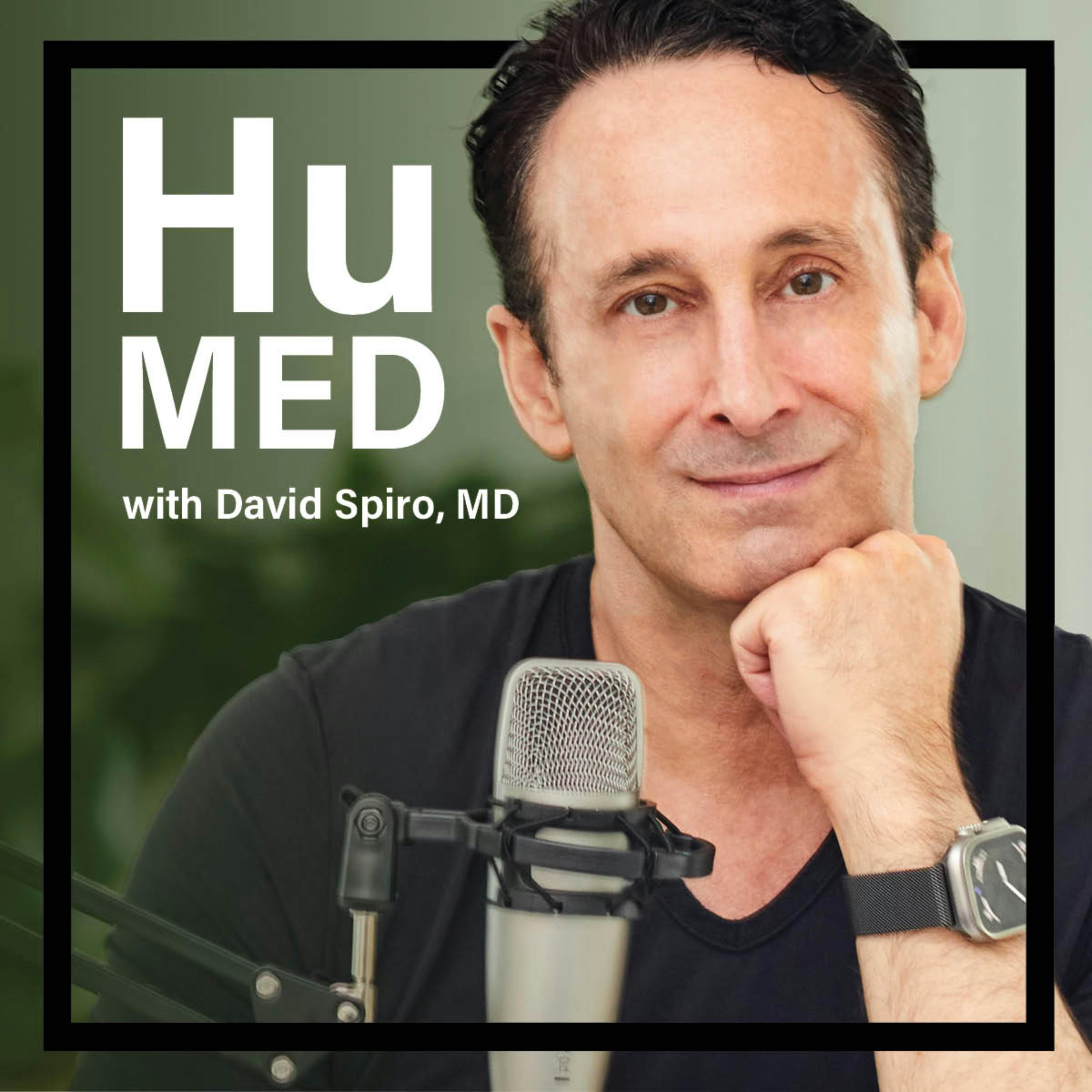
HuMed with David Spiro, MD
by David Spiro
HuMed goes beyond diagnoses and procedures to explore the profound human experiences of medical professionals. Join Dr. Spiro as he engages in deep, candid conversations with fellow doctors, nurses, and other healthcare providers. They share the often-unseen realities of their work in the demanding hospital environment – the challenging cases, the emotional toll, and the ethical dilemmas they navigate daily.
-
58
Navy Anesthesiologist Dr. Zachary Meade: From Childhood Trauma to Becoming a Doctor
Dr. Zachary Meade watched his grandfather shoot his father to save his mother's life. He was a child. He thought it was normal. "Apparently it's not normal."Dr. Meade is a Navy anesthesiologist based in San Diego who took one of the least conventional roads into medicine you will ever hear. Before medical school he was an Army bomb squad technician, a firefighter, an EMT, and an electrical engineer, and he served in the Army, the Air Force, and the Navy. Before any of that he was a kid in Indiana and Florida moving between homes and foster care, failing freshman English, with nobody in his family who had ever done any of this. Today he reaches over 400,000 people online debunking medical misinformation. In this conversation with Dr. David Spiro, he talks about the grandparents who rebuilt his foundation, what the bomb squad taught him about attention to detail ("an 84 essentially meant you died"), the faith that gave him purpose, and the hardest question of the episode: has he forgiven his parents? He shares the phone call that ended contact with his father, the rule that helped his mother get sober, and the "cultural divide" that opens up when you become the first physician in your family. He closes with what he would say to 10-year-old Zach, and Dr. Spiro responds with a story from his own pediatric ER that he says will change how he practices.Chapters:(00:00) Cold Open: "My Dad Was a Very Violent Man"(00:16) Welcome & Meet Dr. Zachary Meade(01:20) "I Never Saw Me Being a Physician"(02:18) Indiana, Florida, and a Childhood That Wasn't Normal(04:55) Foster Care and a Greyhound Bus Through Fort Benning(06:13) Joining the Army at 17: Bomb Squad, Not Chaplain(07:11) The Grandparents Who Rebuilt His Foundation(08:53) Bill Henson: Forgiveness, Hard Work, and the Balance Between(10:05) What the Bomb Squad Taught Him: "An 84 Meant You Died"(11:50) Wounded Veterans and the Pivot to Engineering(12:26) Carle Illinois College of Medicine: Building Physician Innovators(13:18) Landmines in the Woods: The Stateside EOD Mission(15:08) Why He Chose the Navy(16:43) How Childhood Trauma Shaped Him as a Physician(17:44) A Steeper Hill Than His Peers(18:24) How Faith Shaped Him(19:39) What It Means to Serve(21:37) "Have You Forgiven Them?"(22:12) Married at 20 and Realizing What Normal Was(23:22) His Father's Relapse and the Phone Call From the NICU(24:18) "I Can Love Him. I Can Even Forgive Him."(25:39) The Rule That Helped His Mother Get Sober(26:59) The Cultural Divide: "I Concur, Doctor"(28:45) Reaching 400,000 People Online(29:59) Fighting Misinformation That Can Kill(33:12) Tommy Martin and Doing Good on Social Media(34:21) What Would You Tell 10-Year-Old Zach?(36:20) "This Is Just the Intro Scene to Your Life"(36:58) Dr. Spiro's Story: "I'm Here Because No One Loves Me"(39:44) Closing Thoughts and Zach's Question for DavidFollow HuMed so you never miss an episode.
-
57
Internist Dr. Robert Beck: "He Wasn't Worthy of the Care"
Two attending physicians declared medical futility on a man in hislate 40s. He was awake. He was begging for the ICU. He was beggingfor his mother. And the only doctor at his bedside that night wasan intern on his second call shift.Dr. Robert Beck has carried that night for nineteen years.In his second appearance on HuMed, Dr. Beck tells the story of apatient at New Orleans' Charity Hospital in July 2007 — and what ittaught him about paternalism, about abandoning learners, and aboutthe difference between a clinical judgment and a judgment aboutwhose life is worth saving. David asks him directly whether racechanged the outcome, and Dr. Beck's pause before answering is theturning point of the episode.The second half is a practical masterclass: how to deliver badnews, the four questions every patient is actually asking, and howend-of-life care and medical assistance in dying work in theCanadian system where Dr. Beck now practices.ABOUT THE GUESTDr. Robert Beck is an internist. He completed medical school,internal medicine residency, and a chief residency at Tulane, spentten years in private practice in Tennessee, and moved to thePacific Northwest of Canada in 2020. He hosts The Interesting MDpodcast.IN THIS EPISODE00:00 "He wasn't worthy of the care"00:24 Welcome back, Dr. Robert Beck02:03 What counts as a difficult conversation?02:46 July 2007: second call night at Charity Hospital05:13 The patient nobody wanted to touch06:08 Two attendings declare medical futility07:40 "His die is cast"10:02 Alone at the bedside until 4:30am12:28 How it changed the way he supervises residents13:11 "Do you think if he were white it would have been different?"14:04 A pattern of practice15:32 Paternalism vs. shared decision-making19:03 Two white physicians talk about privilege21:10 White flight on his childhood street23:11 "Society was never going to allow him"26:10 How to give bad news: the four questions31:19 Sit down. Eye level. Every time.33:03 Giving bad news in the pediatric ER36:30 Teaching residents to deliver the worst news39:09 When a patient chooses not to treat40:09 Medical assistance in dying in Canada43:14 The four pathways of end-of-life care47:52 How the MAID assessment actually works51:26 How a society treats its most vulnerableA note on content: this episode includes frank clinical descriptionof sepsis, wound infection, and a patient's death.Dr. Beck's podcast, The Interesting MDHuMed is hosted by David Spiro, MD. New episodes weekly. If thisone resonated, the most useful thing you can do is leave a ratingon Apple Podcasts or Spotify — it's how other clinicians find us!
-
56
Pediatric Oncologist Dr. Joana Mack: "I'm Not Bossy, I'm the Boss"
Dr. Joana Mack has been called "bossy" her whole career — in training, at work, even by her own mom. Now, she just says it back differently: "I'm not bossy, I'm the boss."Dr. Mack is a board-certified pediatric hematologist-oncologist, NIH-funded researcher, and mother of five daughters, practicing at Arkansas Children's Hospital and UAMS. In this conversation with Dr. David Spiro, she opens up about the everyday bias she still encounters as a woman in medicine, how artificial intelligence is reshaping (and sometimes eroding) communication between doctors, why she's stopped chasing "work-life balance" in favor of "work-life integration," and the rituals — prayer, permission to cry, a trampoline park at midnight — that get her through the hardest days of treating children with cancer. She also shares a story from Dr. Todd Maxson's Grand Rounds that changed how she trains the next generation of physicians, and reflects on how far childhood leukemia survival has come in her lifetime, from a near-certain death sentence to roughly 90% remission today.(00:00) Cold Open: "I Went to the Trampoline Park"(00:16) Welcome & Meet Dr. Joana Mack(01:51) Called "Bossy" Her Whole Life(02:44) "I'm Not Bossy, I'm the Boss"(03:59) Balancing 4 Jobs and 5 Daughters(07:06) Staying Present as a Working Mom(08:51) The Email That Calls Everyone "Doctor" Except Her(10:47) Naming Unconscious Bias at Work(13:26) Being a Role Model for the Next Generation(16:08) AI in Medicine: Efficiency vs. Connection(19:14) From "Google Parents" to AI-Informed Parents(20:28) Prioritizing Herself and Her Marriage(25:16) Phones, Sleep, and Circadian Disruption(29:19) Why She Pours Into Medical Students(30:42) Dr. Todd Maxson's Grand Rounds Story(36:22) From a Death Sentence to 90% Survival(38:49) How She Copes: Prayer, Tears, and the Trampoline Park(42:08) A Prayer Circle in the ER(47:00) The Village That Makes It Possible(49:54) Closing ThoughtsThis episode is also available on video on YouTube and Apple Podcasts. Follow HuMed so you never miss an episode.
-
55
The Science of Stem Cells, Exosomes, and Healthy Aging with Dr. Mari Mitrani
Can regenerative medicine help us live healthier for longer?Physician-scientist and biotech entrepreneur Dr. Mari Mitrani joins Dr. David Spiro to explain the evolving science of stem cells and exosomes—including how these therapies work, where the evidence stands, and why responsible research and regulation are essential.They also explore the foundations of healthy aging that are available to nearly everyone: nutrition, sleep, movement, strength training, hydration, community, and purpose. Dr. Mitrani shares the life-changing experience that led her to medicine, her journey into biotechnology, and her vision for a more compassionate future in healthcare.This conversation is for educational purposes only and does not constitute medical advice.00:00 Meet Dr. Mari Mitrani 02:03 The night that inspired her 07:21 Entering biotechnology 11:11 How stem cells work 18:25 Healthspan versus lifespan 20:38 Foundations of healthy aging 23:15 Community and longevity 27:15 The future of stem cells 30:00 Why exosomes matter 34:02 Could humans live to 125? 35:30 Strength, bones and women’s health 38:07 Veganism and compassionate innovation
-
54
When the Doctor Becomes the Patient: Dr. Adam Bitterman On His Open-Heart Surgery
What happens when a surgeon suddenly finds himself on the other side of the patient–doctor relationship?Dr. Adam Bitterman—orthopedic surgeon, educator, and chair of orthopedic surgery at Huntington Hospital—joins Dr. David Spiro to discuss being diagnosed with an aortic aneurysm and undergoing urgent open-heart surgery.Dr. Bitterman shares the fear of preparing for a seven-hour operation, the atrial fibrillation that required a second procedure, and the challenge of stepping away from his patients, colleagues, and family responsibilities. He also explains how becoming a patient transformed his approach to clinical care, physician health, work-life boundaries, and after-hours calls from frightened patients.This candid conversation explores physician vulnerability, returning to medicine after serious illness, and why health, family, and a trusted support system must come first.HuMed: Human Medicine reveals the human side of healthcare through honest conversations with physicians, patients, and healthcare leaders.
-
53
It’s Not Always Hemorrhoids: Anal Health with Dr. Talar Tejerian
Not every anal health problem is a hemorrhoid. Board-certified general surgeon Dr. Talar Tejerian joins Dr. David Spiro to explain the differences between hemorrhoids and anal fissures—and why persistent pain, bleeding, or other symptoms should not be dismissed.Dr. Tejerian is the founder of Booty MD, a nonprofit dedicated to making anal health education clear, evidence-based, and free from shame. She discusses why anal health remains stigmatized, how gaps in medical training can contribute to misdiagnosis, and why conditions such as fissures, fistulas, inflammatory bowel disease, and anal cancer may sometimes be mistaken for hemorrhoids.The conversation also explores:• The three-minute toilet rule• How prolonged toilet sitting and straining affect hemorrhoidal tissue• The difference between hemorrhoids and anal fissures• Constipation, diet, and bowel health• HPV vaccination and anal cancer prevention• Why a proper examination matters• The risks associated with rectal foreign bodies• How physicians can discuss sensitive health concerns without judgmentCHAPTERS00:00:00 The three-minute toilet rule00:00:29 Meet Dr. Talar Tejerian00:02:38 Why she founded Booty MD00:08:33 Breaking the stigma around anal health00:12:10 Gaps in medical training and examination00:20:11 Anal cancer, colorectal cancer, and HPV00:24:39 Diet, constipation, and anal health00:25:06 Hemorrhoids versus anal fissures00:31:26 Is scrolling on the toilet harmful?00:33:45 Rectal foreign bodies and emergency care00:42:24 The future of Booty MD00:45:39 Health education through social media00:49:38 Authenticity and trust in medicine00:53:50 Closing thoughts
-
52
Stop the Bleed: The Simple Skills That Could Save a Life | Dr. David Shapiro
What would you do if someone were bleeding severely—and help was miles away?In this episode of HuMED, Dr. David Spiro welcomes back surgeon and critical care physician Dr. David Shapiro for a powerful conversation about the moment that changed how he understood emergency preparedness.Years ago, while mountain biking through remote terrain between Bryce Canyon and Zion National Park, Dr. Shapiro encountered an injured cyclist with a deep leg wound and significant bleeding. With no reliable phone service, limited first-aid supplies, and professional help far away, he had to improvise a pressure dressing and remain with the cyclist until assistance arrived.That experience left him with a lasting question: What if nobody had come along?Today, Dr. Shapiro serves as a leader in the American College of Surgeons’ Stop the Bleed program, a public-health initiative that teaches ordinary people how to recognize and respond to life-threatening bleeding before professional help arrives.The conversation explores:• How to recognize potentially life-threatening bleeding• Direct pressure, wound packing, and tourniquet use• What belongs in a practical bleeding-control kit• Why internal bleeding may be difficult to recognize• How trauma resuscitation has evolved• Good Samaritan protections for people who help during emergencies• Why bleeding-control kits should be available alongside AEDs• How Stop the Bleed applies to accidents, outdoor injuries, and violence• What communities learned from Sandy Hook and other mass-casualty events• The responsibilities and limits of bystander intervention• How to access free Stop the Bleed trainingDrs. Spiro and Shapiro also discuss firearm violence, mental health, social isolation, and the need to address both emergency preparedness and the underlying causes of violence.This episode is ultimately about empowerment. You may never need to use these skills—but learning them could give you the confidence to act during the minutes when action matters most.Free Stop the Bleed education and course information are available at StopTheBleed.org.Content note: This episode includes discussion of traumatic injury, severe bleeding, firearm violence, and mass-casualty events.
-
51
The Night Beirut Exploded: A Doctor’s Story
What happens when a physician suddenly finds himself responding to one of the largest non-nuclear explosions in modern history?In this episode of HuMED, Dr. David Spiro speaks with Dr. Khalil Diab, a pulmonologist, critical care physician, associate professor at the George Washington University School of Medicine, and host of the Lebanese Physicians Podcast.On August 4, 2020, Dr. Diab was having dinner with his family in Beirut when the ground began to shake. Moments later, a massive explosion tore through the city. After receiving an urgent call for all available medical professionals, he rushed to the hospital and entered a mass-casualty environment unlike anything he had experienced before.Patients arrived with devastating injuries caused by shattered glass, collapsing ceilings, and the force of the blast. Physicians from every specialty worked together as the hospital ran short of ventilators, patient identities remained unknown, and medical teams were forced to make rapid life-or-death decisions.Dr. Diab shares what he witnessed that night, what it took to care for so many critically injured patients, and how the experience affected him as a physician, husband, and father.The conversation also explores:• Moving his family from the United States back to Lebanon• Practicing medicine within the Lebanese healthcare system• How financial instability affects medical decisions and patient care• Raising children amid political and economic uncertainty• Why the Beirut explosion ultimately influenced his return to the United States• The medical conditions physicians encounter in Lebanon that are less common in the U.S.• How people adapt to instability, conflict, and crisis• Why he created the Lebanese Physicians Podcast• The power of storytelling to reveal the human side of medicine• How podcasting can amplify valuable voices—and spread misinformation• Why listening to people on the “other side” mattersThis is a deeply personal account of medicine under extraordinary circumstances—and a reflection on resilience, identity, family, conflict, and our shared humanity.ABOUT THE GUESTDr. Khalil Diab is a pulmonologist and critical care physician and an associate professor at the George Washington University School of Medicine. After completing his medical training in the United States, he returned to Lebanon with his family and practiced there during a period marked by political upheaval, economic collapse, COVID-19, and the 2020 Beirut port explosion. He is also the host of the Lebanese Physicians Podcast, where he documents the experiences and stories of physicians connected to Lebanon.ABOUT HuMEDHosted by Dr. David Spiro, HuMED explores the people and experiences behind medicine. Through honest conversations with physicians, healthcare professionals, patients, and other compelling guests, the show reveals the human stories that rarely appear in medical charts or textbooks.#BeirutExplosion #Lebanon #CriticalCare #Medicine #PhysicianStories #MedicalPodcast #Healthcare #HuMED
-
50
Muscle is Medicine
What if one of the most important tools for healthy aging isn’t another pill—but preserving your strength?Dr. David Spiro welcomes back Dr. Heather Hinshelwood, an emergency medicine physician whose work has expanded from treating acute medical crises to helping patients improve their long-term health and independence.Dr. Hinshelwood explains why maintaining muscle becomes increasingly important as we age. Together, they discuss strength training, cardiovascular exercise, Pilates, metabolic health, bone density, type 2 diabetes, and the challenge of creating sustainable lifestyle change without shaming patients.They also explore:• Why muscle supports mobility and independence• The relationship between strength and metabolic health• How resistance training may support healthier aging• Why cardio and flexibility still matter• How older adults can begin exercising safely• The value of knowledgeable coaching• Why it is never too late to improve your healthThis conversation isn’t about becoming an elite athlete. It’s about preserving the ability to carry groceries, rise from the floor, pursue the activities you enjoy, and remain independent for as long as possible.What do you want to remain capable of doing at age 80?HuMed with David Spiro, MD explores the human side of medicine through candid conversations with physicians, patients, and healthcare leaders.This episode is intended for education only and does not replace individualized medical advice. The discussion includes the speakers’ perspectives on exercise, metabolic health, and medications. Consult a qualified healthcare professional before changing medications or beginning a new exercise program.
-
49
When Will You “Grow Up”? Medicine’s Hidden Culture of Labels
Why do we ask physicians in their 30s, “What do you want to be when you grow up?” In this episode of HuMed, Dr. David Spiro sits down with Emma Cooke, MD, an internal medicine physician, Med-Peds graduate, and author of a thought-provoking JAMA essay exploring how a simple question reveals deeper issues within medical culture. Together they discuss: Why medical trainees are often defined by their future specialty rather than who they are today How unconscious bias shapes evaluations, mentorship, and career opportunities The challenges women continue to face in medical training Why physicians should connect with trainees as people—not stereotypes How empathy, curiosity, and human connection create better teachers and better doctors This conversation challenges long-held assumptions about medical education while offering practical ways to build a more compassionate culture for learners, physicians, and patients alike. Whether you’re a physician, trainee, healthcare professional, educator, or simply interested in the human side of medicine, this episode offers an honest look at identity, bias, and what it truly means to grow as a doctor. About HuMed HuMed with David Spiro, MD explores the human side of medicine through conversations with physicians, nurses, patients, and healthcare leaders who remind us that compassion is just as important as clinical expertise. Learn more about your ad choices. Visit megaphone.fm/adchoices
-
48
The Patient I’ll Never Forget | Dr. Tommy Martin
What makes medicine worth the sacrifice? Dr. Tommy Martin—a pediatric hospitalist at Boston Children’s Hospital, physician, endurance athlete, and one of medicine’s most influential voices on social media—shares the patient encounter that changed his life forever. After a long residency shift, Tommy was exhausted and simply wanted to get home to his wife and son. Instead, one final patient reminded him why he became a doctor. The next morning, he returned with one unforgettable meal. That single act of kindness reshaped how he practices medicine—and why he believes every patient deserves our full presence. In this deeply personal conversation, Dr. David Spiro and Dr. Tommy Martin discuss: • The patient who restored Tommy’s passion for medicine • Why medicine isn’t worth it without human connection • Caring for children with complex medical needs • Parenting a child with autism and a rare genetic condition • Finding balance between medicine and family • Authenticity, vulnerability, and physician burnout • Why love, presence, and compassion remain medicine’s greatest tools If you’re a physician, healthcare professional, student, patient, or simply someone who believes kindness still matters, this episode is for you. Subscribe for weekly conversations exploring the human side of medicine. Learn more about your ad choices. Visit megaphone.fm/adchoices
-
47
He Taught Me to Be a Doctor, He was Not a Doctor
In this deeply moving episode of HuMed, Dr. David Spiro speaks with Dr. Julia Bruckner, a pediatric emergency physician, writer, and Director of Faculty Well-Being at the University of Colorado. Dr. Bruckner shares how her father — a minister, humanist, advocate, and witness to suffering — taught her lessons about healing that medicine alone often cannot teach. Together, they explore what it means to give devastating news, sit with suffering, care for families in crisis, support physicians after trauma, and bring humanity back into medicine. This conversation moves through grief, cancer, hospice, physician wellness, pediatric emergency medicine, and the quiet power of presence. At its heart is a simple message from Dr. Bruckner’s father: because the world will die without it, go with love. Topics include: humanizing medicine, physician wellness, giving bad news, hospice, grief, narrative medicine, pediatric emergency care, burnout, compassion, and love as a form of healing. Learn more about your ad choices. Visit megaphone.fm/adchoices
We're indexing this podcast's transcripts for the first time — this can take a minute or two. We'll show results as soon as they're ready.
No matches for "" in this podcast's transcripts.
No topics indexed yet for this podcast.
Loading reviews...
ABOUT THIS SHOW
HuMed goes beyond diagnoses and procedures to explore the profound human experiences of medical professionals. Join Dr. Spiro as he engages in deep, candid conversations with fellow doctors, nurses, and other healthcare providers. They share the often-unseen realities of their work in the demanding hospital environment – the challenging cases, the emotional toll, and the ethical dilemmas they navigate daily.
HOSTED BY
David Spiro
Loading similar podcasts...
Frequently Asked Questions
How many episodes does HuMed with David Spiro, MD have?
HuMed with David Spiro, MD currently has 12 episodes available on PodParley. New episodes are automatically indexed when they're published to the podcast feed.
What is HuMed with David Spiro, MD about?
HuMed goes beyond diagnoses and procedures to explore the profound human experiences of medical professionals. Join Dr. Spiro as he engages in deep, candid conversations with fellow doctors, nurses, and other healthcare providers. They share the often-unseen realities of their work in the demanding...
How often does HuMed with David Spiro, MD release new episodes?
HuMed with David Spiro, MD has 12 episodes. Check the episode list to see recent publication dates and frequency.
Where can I listen to HuMed with David Spiro, MD?
You can listen to HuMed with David Spiro, MD on PodParley by clicking any episode. We provide an embedded audio player for direct listening, and you can also subscribe via your preferred podcast app using the RSS feed.
Who hosts HuMed with David Spiro, MD?
HuMed with David Spiro, MD is created and hosted by David Spiro.
URL copied to clipboard!