
PODCAST · religion
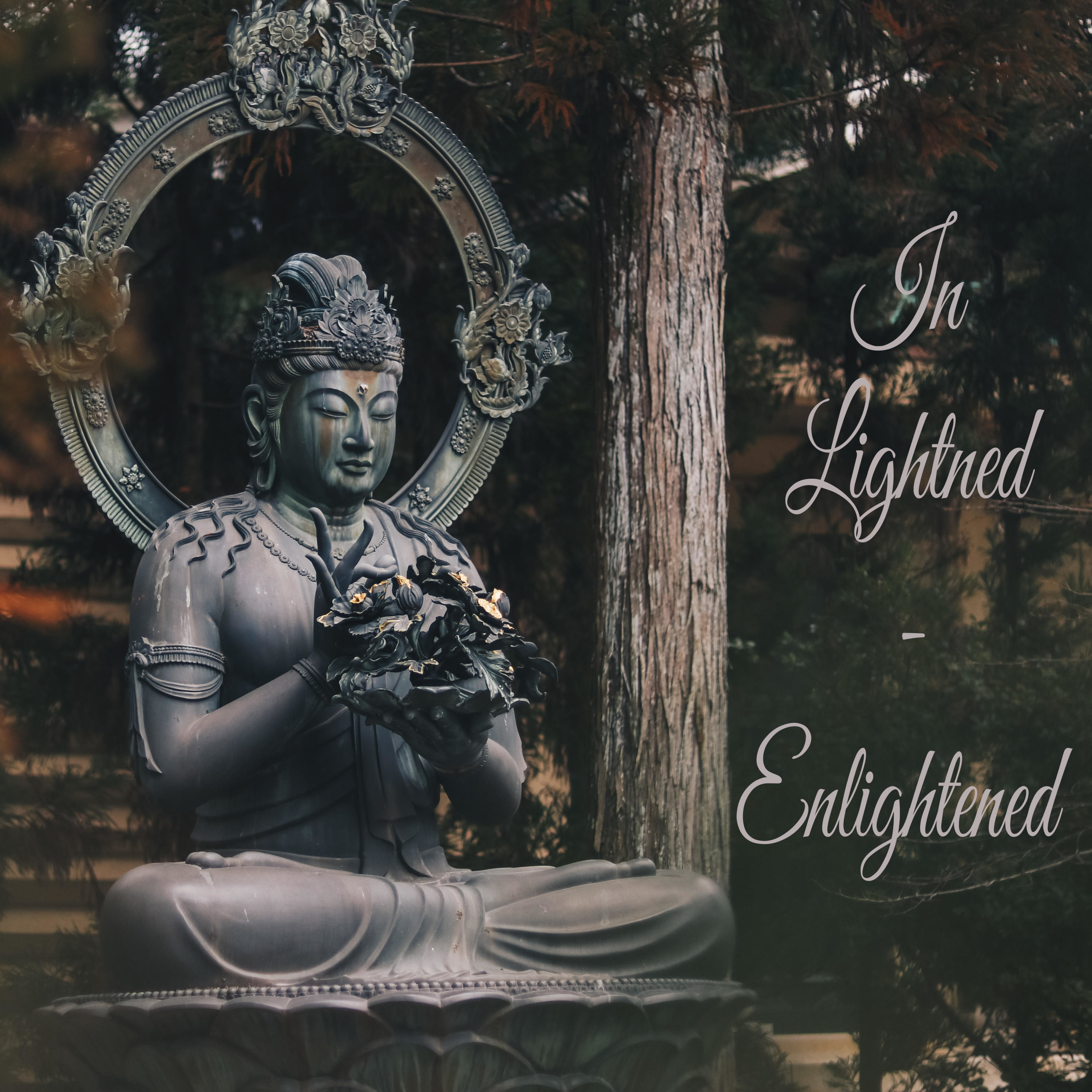
In Lightened Enlightened
by Chandra Buddha
In this Podcast, Acharya Chandra Buddha talks about - Ancient religions, Sacred texts, Enlightened beings, Tantra methods, fundamental questions in everyone's life & Much more. Acharya makes spirituality relevant to the 21st-century mind. Acharya says -"I cannot promise you any rose-gardens. All that I can promise you is that deep inside you will be the richest man possible; deep inside you will be fulfilled; deep inside you will be full of joy and celebration."
-
38
Sober Up
Ep. 11 Beloved acharya, the monk zuigan used to start every day by saying out loud to himself, "master, are you there?" and he would answer, "yes sir, I am." then he would say, "better sober up." and he would reply, "yes sir, i'll do that." then he would say, "look out now, don't let them fool you." and he would answer, "oh no sir, I won't, I won't.". Season 4 Using traditional Zen stories and responding to seekers' questions, Acharya shows how man must first be grounded in himself before he can fly into the sky of consciousness. Acharya takes the reader from subjects as diverse as food, jealousy, businessmen and enlightenment, to how to know if one needs a master, the barriers we create through fear, and gratitude. "Be rooted in the earth so that you can stretch to the sky; be rooted in the visible so that you can reach into the invisible. Don't create duality and don't create any antagonism. If I am against anything, I am against antagonism. I am against being against anything; I am for the whole, the complete circle. The world and God are not divided anywhere. There is no boundary: the world goes on spreading into God and God goes on spreading into the world. Really, to use two words is not good but language creates problems. We say the creator and the created, we divide. Language is dualistic; in reality there is no created and no creator, only creativity, only a process of infinite creativity. Nothing is divided. Everything is one -- undivided."
-
37
The Master of Silence
Ep. 10 Beloved acharya, buddha was to give a special talk one day, and thousands of followers had come from miles around. When buddha appeared, he was holding a flower. Time passed, but buddha said nothing. He just looked at the flower. The crowd grew restless, but mahakashyap, who could restrain himself no longer, laughed. Buddha beckoned him over, handed him the flower, and said to the crowd, "i have the eye of the true teaching. All that can be given with words I have given to you; but with this flower, I give to mahakashyap the key to this teaching." Season 4 Using traditional Zen stories and responding to seekers' questions, Acharya shows how man must first be grounded in himself before he can fly into the sky of consciousness. Acharya takes the reader from subjects as diverse as food, jealousy, businessmen and enlightenment, to how to know if one needs a master, the barriers we create through fear, and gratitude. "Be rooted in the earth so that you can stretch to the sky; be rooted in the visible so that you can reach into the invisible. Don't create duality and don't create any antagonism. If I am against anything, I am against antagonism. I am against being against anything; I am for the whole, the complete circle. The world and God are not divided anywhere. There is no boundary: the world goes on spreading into God and God goes on spreading into the world. Really, to use two words is not good but language creates problems. We say the creator and the created, we divide. Language is dualistic; in reality there is no created and no creator, only creativity, only a process of infinite creativity. Nothing is divided. Everything is one -- undivided."
-
36
Save the Cat
Ep. 9 Beloved acharya, nansen found two groups of monks squabbling over the ownership of a cat. Nansen went to the kitchen and brought back a chopper. He picked up the cat and said to the monks, "if any of you can say a good word, you can save the cat." not a word was said, so nansen cut the cat in two and gave half to each group. When joshu returned that evening, nansen told him what had happened. Joshu said nothing. He just put his sandals on his head and walked out. Nansen said, "if you had been there, you could have saved the cat." Season 4 Using traditional Zen stories and responding to seekers' questions, Acharya shows how man must first be grounded in himself before he can fly into the sky of consciousness. Acharya takes the reader from subjects as diverse as food, jealousy, businessmen and enlightenment, to how to know if one needs a master, the barriers we create through fear, and gratitude. "Be rooted in the earth so that you can stretch to the sky; be rooted in the visible so that you can reach into the invisible. Don't create duality and don't create any antagonism. If I am against anything, I am against antagonism. I am against being against anything; I am for the whole, the complete circle. The world and God are not divided anywhere. There is no boundary: the world goes on spreading into God and God goes on spreading into the world. Really, to use two words is not good but language creates problems. We say the creator and the created, we divide. Language is dualistic; in reality there is no created and no creator, only creativity, only a process of infinite creativity. Nothing is divided. Everything is one -- undivided."
-
35
Zen Without Writing
Ep. 8 Beloved acharya, the zen master mu-nan had only one successor. His name was shoju. After shoju had completed his study of zen, mu-nan called him into his room and said, "i am getting old, and as far as I know you are the only one who will carry on this teaching. Here is a book. It has been passed down from master to master for seven generations, and I have also added many points according to my understanding. This book is very precious, and I am giving it to you to represent your successorship." shoju replied, "please keep the book. I received your zen without writing, and I was very happy with it, thank you." mu-nan replied, "i know that, but this great work has been carried from master to master for seven generations, and it will be a symbol of your learning. Here, take the book." the two were talking in front of a fire, and the instant shoju felt the book in his hands he thrust it into the flames. Mu-nan, who had never in his life been angry before, shouted, "what are you doing?" and shoju shouted back, "and what are you saying?" Season 4 Using traditional Zen stories and responding to seekers' questions, Acharya shows how man must first be grounded in himself before he can fly into the sky of consciousness. Acharya takes the reader from subjects as diverse as food, jealousy, businessmen and enlightenment, to how to know if one needs a master, the barriers we create through fear, and gratitude. "Be rooted in the earth so that you can stretch to the sky; be rooted in the visible so that you can reach into the invisible. Don't create duality and don't create any antagonism. If I am against anything, I am against antagonism. I am against being against anything; I am for the whole, the complete circle. The world and God are not divided anywhere. There is no boundary: the world goes on spreading into God and God goes on spreading into the world. Really, to use two words is not good but language creates problems. We say the creator and the created, we divide. Language is dualistic; in reality there is no created and no creator, only creativity, only a process of infinite creativity. Nothing is divided. Everything is one -- undivided."
-
34
The Severe Teacher
Ep. 7 Beloved acharya, the japanese master ekido was a severe teacher and his pupils feared him. One day, as one of his pupils was striking the time of day on the temple gong, he missed a beat because he was watching a beautiful girl who was passing the gates. Unknown to the pupil, ekido was standing behind him. Ekido struck the pupil with his staff, and the shock stopped the heart of the pupil, and he died. Because the old custom of the pupil signing his life over to the master had sunk to a mere formality, ekido was discredited by the general public. But after this incident, ekido produced ten enlightened successors, an unusually high number. Season 4 Using traditional Zen stories and responding to seekers' questions, Acharya shows how man must first be grounded in himself before he can fly into the sky of consciousness. Acharya takes the reader from subjects as diverse as food, jealousy, businessmen and enlightenment, to how to know if one needs a master, the barriers we create through fear, and gratitude. "Be rooted in the earth so that you can stretch to the sky; be rooted in the visible so that you can reach into the invisible. Don't create duality and don't create any antagonism. If I am against anything, I am against antagonism. I am against being against anything; I am for the whole, the complete circle. The world and God are not divided anywhere. There is no boundary: the world goes on spreading into God and God goes on spreading into the world. Really, to use two words is not good but language creates problems. We say the creator and the created, we divide. Language is dualistic; in reality there is no created and no creator, only creativity, only a process of infinite creativity. Nothing is divided. Everything is one -- undivided."
-
33
The Miracle of Ordinariness
Ep. 6 Beloved acharya, bankei was preaching quietly to his followers one day when his talking was interrupted by a priest from another sect. This sect believed in the power of miracles, and thought that salvation came from repeating holy words. Bankei stopped talking, and asked the priest what he wanted to say. The priest boasted that the founder of his religion could stand on one bank of the river with a brush in his hand and write a holy name on a piece of paper held by an assistant on the opposite bank of the river. The priest asked, "what miracles can you do?" bankei replied,"only one. When I am hungry I eat, and when I am thirsty I drink." Season 4 Using traditional Zen stories and responding to seekers' questions, Acharya shows how man must first be grounded in himself before he can fly into the sky of consciousness. Acharya takes the reader from subjects as diverse as food, jealousy, businessmen and enlightenment, to how to know if one needs a master, the barriers we create through fear, and gratitude. "Be rooted in the earth so that you can stretch to the sky; be rooted in the visible so that you can reach into the invisible. Don't create duality and don't create any antagonism. If I am against anything, I am against antagonism. I am against being against anything; I am for the whole, the complete circle. The world and God are not divided anywhere. There is no boundary: the world goes on spreading into God and God goes on spreading into the world. Really, to use two words is not good but language creates problems. We say the creator and the created, we divide. Language is dualistic; in reality there is no created and no creator, only creativity, only a process of infinite creativity. Nothing is divided. Everything is one -- undivided."
-
32
Master of the New Monastery
Ep. 5 Beloved master, hyakujo called his monks together as he wished to send one of them to open a new monastery. Placing a filled water jar on the ground, he said, "who can say what this is without using its name?" the chief monk, who expected to get the position, said, "no one can call it a wooden shoe." another monk said, "it's not a pond because it can be carried." the cooking monk, who was standing nearby, walked out, kicked the jar over, and then walked away. Hyakujo smiled and said, "the cooking monk becomes the master of the new monastery." Season 4 Using traditional Zen stories and responding to seekers' questions, Acharya shows how man must first be grounded in himself before he can fly into the sky of consciousness. Acharya takes the reader from subjects as diverse as food, jealousy, businessmen and enlightenment, to how to know if one needs a master, the barriers we create through fear, and gratitude. "Be rooted in the earth so that you can stretch to the sky; be rooted in the visible so that you can reach into the invisible. Don't create duality and don't create any antagonism. If I am against anything, I am against antagonism. I am against being against anything; I am for the whole, the complete circle. The world and God are not divided anywhere. There is no boundary: the world goes on spreading into God and God goes on spreading into the world. Really, to use two words is not good but language creates problems. We say the creator and the created, we divide. Language is dualistic; in reality there is no created and no creator, only creativity, only a process of infinite creativity. Nothing is divided. Everything is one -- undivided."
-
31
Have a Cup of Tea
Ep. 4 Beloved acharya, joshu, the zen master, asked a new monk in the monastery, "have I seen you before?" the new monk replied, "no sir." joshu said, "then have a cup of tea." joshu then turned to another monk, "have I seen you here before? The second monk said, "yes sir, of course you have." joshu said, "then have a cup of tea." later the managing monk of the monastery asked joshu, "how is it you make the same offer of tea to any reply?" at this joshu shouted, "manager, are you still here?" the manager replied, "of course, master." joshu said, "then have a cup of tea. Season 4 Using traditional Zen stories and responding to seekers' questions, Acharya shows how man must first be grounded in himself before he can fly into the sky of consciousness. Acharya takes the reader from subjects as diverse as food, jealousy, businessmen and enlightenment, to how to know if one needs a master, the barriers we create through fear, and gratitude. "Be rooted in the earth so that you can stretch to the sky; be rooted in the visible so that you can reach into the invisible. Don't create duality and don't create any antagonism. If I am against anything, I am against antagonism. I am against being against anything; I am for the whole, the complete circle. The world and God are not divided anywhere. There is no boundary: the world goes on spreading into God and God goes on spreading into the world. Really, to use two words is not good but language creates problems. We say the creator and the created, we divide. Language is dualistic; in reality there is no created and no creator, only creativity, only a process of infinite creativity. Nothing is divided. Everything is one -- undivided."
-
30
The Gates of Heaven and Hell
Ep. 3 Beloved acharya, a warrior came to the zen master hakuin and asked "is there such a thing as heaven and hell?" hakuin said "who are you?" the warrior replied "i am chief samurai to the emperor." hakuin said "you, a samurai? With a face like that, you look more like a beggar." at this the warrior became so angry he drew his sword. Standing calmly in front of him, hakuin said "here open the gates of hell." perceiving the master's composure, the soldier sheathed his sword and bowed. Hakuin then said "and here open the gates of heaven." Season 4 Using traditional Zen stories and responding to seekers' questions, Acharya shows how man must first be grounded in himself before he can fly into the sky of consciousness. Acharya takes the reader from subjects as diverse as food, jealousy, businessmen and enlightenment, to how to know if one needs a master, the barriers we create through fear, and gratitude. "Be rooted in the earth so that you can stretch to the sky; be rooted in the visible so that you can reach into the invisible. Don't create duality and don't create any antagonism. If I am against anything, I am against antagonism. I am against being against anything; I am for the whole, the complete circle. The world and God are not divided anywhere. There is no boundary: the world goes on spreading into God and God goes on spreading into the world. Really, to use two words is not good but language creates problems. We say the creator and the created, we divide. Language is dualistic; in reality there is no created and no creator, only creativity, only a process of infinite creativity. Nothing is divided. Everything is one -- undivided."
-
29
No Mind, No Truth
Ep. 2 Beloved acharya, the student doko came to the master and said, "in what state of mind should I seek the truth?", the master replied, " there is no mind, so you cannot put it in any state, and there is no truth, so you cannot seek it." doko said, "if there is no mind and no truth, why do all these students gather before you every day to study?" the master looked around and said, "i don't see anyone." the inquirer asked, "then who are you teaching?" "i have no tongue, so how can I teach?", replied the master. Then doko said sadly, "i cannot follow you; I cannot understand." the master said, "i don't understand myself." Season 4 Using traditional Zen stories and responding to seekers' questions, Acharya shows how man must first be grounded in himself before he can fly into the sky of consciousness. Acharya takes the reader from subjects as diverse as food, jealousy, businessmen and enlightenment, to how to know if one needs a master, the barriers we create through fear, and gratitude. "Be rooted in the earth so that you can stretch to the sky; be rooted in the visible so that you can reach into the invisible. Don't create duality and don't create any antagonism. If I am against anything, I am against antagonism. I am against being against anything; I am for the whole, the complete circle. The world and God are not divided anywhere. There is no boundary: the world goes on spreading into God and God goes on spreading into the world. Really, to use two words is not good but language creates problems. We say the creator and the created, we divide. Language is dualistic; in reality there is no created and no creator, only creativity, only a process of infinite creativity. Nothing is divided. Everything is one -- undivided."
-
28
Empty Your Cup
Ep. 1 Beloved master, the Japanese master nan-in gave audience to a professor of philosophy. Serving tea, nan-in filled his visitor's cup, and kept pouring. The professor watched the overflow until he could restrain himself no longer: stop! The cup is overfull, no more will go in. Nan-in said: like this cup, you are full of your own opinions and speculations. How can I show you zen unless you first empty your cup? Season 4 Using traditional Zen stories and responding to seekers' questions, Acharya shows how man must first be grounded in himself before he can fly into the sky of consciousness. Acharya takes the reader from subjects as diverse as food, jealousy, businessmen and enlightenment, to how to know if one needs a master, the barriers we create through fear, and gratitude. "Be rooted in the earth so that you can stretch to the sky; be rooted in the visible so that you can reach into the invisible. Don't create duality and don't create any antagonism. If I am against anything, I am against antagonism. I am against being against anything; I am for the whole, the complete circle. The world and God are not divided anywhere. There is no boundary: the world goes on spreading into God and God goes on spreading into the world. Really, to use two words is not good but language creates problems. We say the creator and the created, we divide. Language is dualistic; in reality there is no created and no creator, only creativity, only a process of infinite creativity. Nothing is divided. Everything is one -- undivided."
-
27
You Have My Marrow
Ep. 9 After nine years, bodhidharma, the first zen patriarch, who took zen to china from india in the sixth century, decided that he wished to return home. He gathered his disciples around him to test their perception. Dofuku said: 'in my opinion truth is beyond affirmation or negation, for this is the way it moves.' bodhidharma replied: 'you have my skin.' the nun soji said: 'in my view, it is like ananda's insight of the buddha-land -- seen once and forever.' bodhidharma answered: 'you have my flesh.' doiku said: 'the four elements of light, airiness, fluidity, and solidity, are empty, and the five skandhas are no-things. In my opinion no-thing is reality.' bodhidharma commented: 'you have my bones.' finally, eka bowed before the master and remained silent. Bodhidharma said: 'you have my marrow.' Season 3 Of the ultimate realization of Zen, Acharya says, "Suddenly you become aware of a music that has always surrounded you… Your heart throbs in the same rhythm as the heart of the whole." This essential Zen reader also dips into a number of other themes - cowardice, boredom and restlessness, recognition and rejection, maturity, and moving from the non-essential to the essential.
-
26
Three Mysteries
Ep. 8 Q&A Season 3 Of the ultimate realization of Zen, Acharya says, "Suddenly you become aware of a music that has always surrounded you… Your heart throbs in the same rhythm as the heart of the whole." This essential Zen reader also dips into a number of other themes - cowardice, boredom and restlessness, recognition and rejection, maturity, and moving from the non-essential to the essential.
-
25
The Proper State of Mind
Ep. 7 When wolves were discovered in the village near master shoju's temple, shoju entered the graveyard nightly for one week and sat in zazen. This put a stop to the wolves' prowling. Overjoyed, the villagers asked him to describe the secret rites he had performed. 'i didn't have to resort to such things,' he said, 'nor could I have done so. While I was in zazen a number of wolves gathered round me, licking the tip of my nose, and sniffing my windpipe, but because I remained in the right state of mind, I wasn't bitten. As I keep preaching to you, the proper state of mind will make it possible for you to be free in life and death, invulnerable to fire and water. Even wolves are powerless against it. I simply practice what I preach.' Season 3 Of the ultimate realization of Zen, Acharya says, "Suddenly you become aware of a music that has always surrounded you… Your heart throbs in the same rhythm as the heart of the whole." This essential Zen reader also dips into a number of other themes - cowardice, boredom and restlessness, recognition and rejection, maturity, and moving from the non-essential to the essential.
-
24
Madmen and Devotees
Ep. 6 Q&A Season 3 Of the ultimate realization of Zen, Acharya says, "Suddenly you become aware of a music that has always surrounded you… Your heart throbs in the same rhythm as the heart of the whole." This essential Zen reader also dips into a number of other themes - cowardice, boredom and restlessness, recognition and rejection, maturity, and moving from the non-essential to the essential.
-
23
The Ultimate Secrets of Swordsmanship
Ep. 5 Yagyu yajima no kami munenori was a teacher of swordsmanship to the shogun. One of the personal guards of the shogun came to tajima no kami one day asking to be trained in swordplay. 'as I observe, you seem to be a master of the art yourself,' said the teacher. 'please tell me to what school you belong before we enter into the relationship of teacher and pupil.' the guardsman said: 'l do not belong to any school, I have never studied the art.' 'it is no use trying to fool me,' said the teacher. 'my judging eye never fails.' 'i am sorry to defy, your honour,' said the guard, 'but I really know nothing.' 'if you say so then it must be true, but I am sure that you are the master of something, so tell me about yourself.' 'there is one thing,' said the guard. 'when I was a child I thought that a samurai should never be afraid of death, so I grappled with the problem, and now the thought of death has ceased to worry me.' 'that's it!' exclaimed the teacher. 'the ultimate secrets of swordsmanship lie in being released from the thought of death. You need no technical training, you are already a master.' Season 3 Of the ultimate realization of Zen, Acharya says, "Suddenly you become aware of a music that has always surrounded you… Your heart throbs in the same rhythm as the heart of the whole." This essential Zen reader also dips into a number of other themes - cowardice, boredom and restlessness, recognition and rejection, maturity, and moving from the non-essential to the essential.
-
22
Be a light unto yourself
Ep. 4 Q&A Season 3 Of the ultimate realization of Zen, Acharya says, "Suddenly you become aware of a music that has always surrounded you… Your heart throbs in the same rhythm as the heart of the whole." This essential Zen reader also dips into a number of other themes - cowardice, boredom and restlessness, recognition and rejection, maturity, and moving from the non-essential to the essential.
-
21
The Halo of Yakushi-Buddha
Ep. 3 One winter day, a masterless samurai came to eisai's temple and made an appeal: 'i'm poor and sick,' he said, 'and my family is dying of hunger. Please help us, master.' dependent as he was on widows' mites, eisai's life was very austere, and he had nothing to give. He was about to send the samurai off when he remembered the image of yakushi-buddha in the hall. Going up to it he tore off its halo and gave it to the samurai. 'sell this,' said eisai, 'it should tide you over.' the bewildered but desperate samurai took the halo and left. 'master!' cried one of eisai's disciples, 'that's sacrilege! How could you do such a thing?' 'sacrilege? Bah! I have merely put the buddha's mind, which is full of love and mercy, to use, so to speak. Indeed, if he himself had heard that poor samurai he'd have cut off a limb for him.' Season 3 Of the ultimate realization of Zen, Acharya says, "Suddenly you become aware of a music that has always surrounded you… Your heart throbs in the same rhythm as the heart of the whole." This essential Zen reader also dips into a number of other themes - cowardice, boredom and restlessness, recognition and rejection, maturity, and moving from the non-essential to the essential.
-
20
A thousand and one bifurcations
Ep. 2 Q&A Season 3 Of the ultimate realization of Zen, Acharya says, "Suddenly you become aware of a music that has always surrounded you… Your heart throbs in the same rhythm as the heart of the whole." This essential Zen reader also dips into a number of other themes - cowardice, boredom and restlessness, recognition and rejection, maturity, and moving from the non-essential to the essential.
-
19
A Zen Story
Ep. 1 Gosa hoyen used to say: 'when people ask me what zen is like I tell them this story:' noticing that his father was growing old, the son of a burglar asked his father to teach him the trade so that he could carry on the family business after his father had retired. The father agreed, and that night they broke into a house together. Opening a large chest the father told his son to go in _ and pick out the clothing. As soon as the boy was inside, the father locked the chest and then made a lot of noise so that the whole house was aroused. Then he slipped quietly away. Locked inside the chest the boy was angry, terrified, and puzzled as to how he was going to get out. Then an idea flashed to him -- he made a noise like a cat. The family told a maid to take a candle and examine the chest. When the lid was unlocked the boy jumped out, blew out the candle, pushed his way past the astonished maid, and ran out. The people ran after him Noticing a well by the side of the road the boy threw in a large stone, then hid in the darkness. The pursuers gathered around the well trying to see the burglar drowning himself. When the boy got home he was very angry at his father and he tried to tell him the story; but the father said: 'don't bother to tell me the details, you are here -- you have learned the art.' Season 3 Of the ultimate realization of Zen, Acharya says, "Suddenly you become aware of a music that has always surrounded you… Your heart throbs in the same rhythm as the heart of the whole." This essential Zen reader also dips into a number of other themes - cowardice, boredom and restlessness, recognition and rejection, maturity, and moving from the non-essential to the essential.
-
18
Not Knowing is the Most Intimate
Ep. 8 Q&A Season 2 Some of the best known Zen stories are used here to illustrate the nature of enlightenment, meditation, love, knowledge and knowing, man's misplaced identification with his ego, and other issues very relevant today.
-
17
Take No Notice
Ep. 7 The ancients said: "(self-)cultivation takes an unimaginable time (while) enlightenment in an instant is attained." if the training is efficient, enlightenment will be attained in one fingersnap. In days gone by ch'an master hui chueh of lang yeh mountain, had a disciple who called on him for instruction. The master taught her to examine into the sentence: "take no notice." she followed his instruction strictly without backsliding. One day her house caught fire, but she said: "take no notice." another day, her son fell into the water and when a bystander called her, she said: "take no notice." she observed exactly her master's instruction by laying down all casual thoughts. One day, as her husband lit the fire to make fritters of twisted dough, she threw into the pan full of boiling (vegetable) oil a batter which made a noise. Upon hearing the noise, she was instantly enlightened. Then she threw the pan of oil on the ground, clapped her hands and laughed. Thinking she was insane, her husband scolded her and said: "why do you do this? Are you mad?" she replied: "take no notice." then she went to the master hui chueh and asked him to verify her achievement. The master confirmed that she had obtained the holy fruit. Season 2 Some of the best known Zen stories are used here to illustrate the nature of enlightenment, meditation, love, knowledge and knowing, man's misplaced identification with his ego, and other issues very relevant today.
-
16
Try it My Way
Ep. 6 Q&A Season 2 Some of the best known Zen stories are used here to illustrate the nature of enlightenment, meditation, love, knowledge and knowing, man's misplaced identification with his ego, and other issues very relevant today.
-
15
See Right at Once
Ep. 5 Dogo had a disciple called soshin. When soshin was taken in as a novice, it was perhaps natural of him to expect lessons in zen from his teacher the way a schoolboy is taught at school. But dogo gave him no special lessons on the subject, and this bewildered and disappointed soshin. One day he said to the master, "it is some time since I came here, but not a word has been given me regarding the essence of the zen teaching." dogo replied, "since your arrival I have ever been giving you lessons on the matter of zen discipline." "what kind of lesson could it have been?" "when you bring me a cup of tea in the morning, I take it; when you serve me a meal, I accept it; when you bow to me, I return it with a nod. How else do you expect to be taught in the discipline of zen?" soshin hung his head for a while, pondering the puzzling words of the master. The master said, "if you want to see, see right at once. When you begin to think, you miss the point." Season 2 Some of the best known Zen stories are used here to illustrate the nature of enlightenment, meditation, love, knowledge and knowing, man's misplaced identification with his ego, and other issues very relevant today.
-
14
Dying Into the Master
Ep. 4 Q&A Season 2 Some of the best known Zen stories are used here to illustrate the nature of enlightenment, meditation, love, knowledge and knowing, man's misplaced identification with his ego, and other issues very relevant today
-
13
I am Higher
Ep. 3 One day the king of yen visited the master chao chou, who did not even get up when he saw him coming. The king asked, "which is higher, a worldly king, or the 'king of dharma'?" chao chou replied, "among human kings I am higher; among the kings of dharma I am also higher." hearing this surprising answer, the king was very pleased. The next day a general came to visit chao chou, who not only got up from his seat when he saw the general coming, but also showed him more hospitality in every way than he had shown to the king. After the general had left, chao chou's attendant monks asked him, "why did you get up from your seat when a person of lower rank came to see you, yet did not do so for one of the highest rank?" chao chou replied, "you don't understand. When people of the highest quality come to see me, I do not get up from my seat; when they are of middle quality, I do; but when they are of the lowest quality, I go outside of the gate to receive them." Season 2 Some of the best known Zen stories are used here to illustrate the nature of enlightenment, meditation, love, knowledge and knowing, man's misplaced identification with his ego, and other issues very relevant today.
-
12
Neti Neti
Ep. 2 Q&A Season 2 Some of the best known Zen stories are used here to illustrate the nature of enlightenment, meditation, love, knowledge and knowing, man's misplaced identification with his ego, and other issues very relevant today
-
11
The Heart of Knowing is Now
Ep. 1 Ascending to the high seat, dogen zenji said: "zen master hogen studied with keishin zenji. Once keishin zenji asked him, joza, where do you go?' hogen said. 'i am making pilgrimage aimlessly.' keishin said, 'what is the matter of your pilgrimage?' hogen said, 'i don't know.' keishin said, 'not knowing is the most intimate.' hogen suddenly attained great enlightenment." Season 2 Some of the best known Zen stories are used here to illustrate the nature of enlightenment, meditation, love, knowledge and knowing, man's misplaced identification with his ego, and other issues very relevant today
-
10
Towards Nothingness
Ep. 10 Q&A Season 1 Acharya says that laughter is "the very essence of Zen." And though the theme of this series is meditation - watching, remaining alert and aware - as the only way to truth, Acharya encourages us to, "be happy and meditation will follow." There is a wonderful chapter on laughter, Hotei the Laughing Buddha, and enlightenment. As Acharya says, "This is the whole effort of all the masters: to create a sudden clash of thunder so those who are fast asleep can be awakened."
-
9
Laugh Your Way to God
Ep. 9 In the tang dynasty there was a stout fellow who was called the happy chinaman, or the laughing buddha. This hotei had no desire to call himself a zen master, or to gather disciples around him. Instead he walked the streets with a sack on his back full of candy, fruit and doughnuts -- which he gave out to the children who gathered and played around him. Whenever he met a zen devotee he would extend his hand and say: "give me one penny." and if anyone asked him to return to the temple to teach others, again he would reply: "give me one penny." once when he was at his play-work another zen master happened to along and inquired: "what is the significance of zen?" hotei immediately plopped his sack down on the ground in silent answer. "then," asked the other, "what is the actualization of zen?" at once the happy chinaman swung the sack over his shoulder and continued on his way. Season 1 Acharya says that laughter is "the very essence of Zen." And though the theme of this series is meditation - watching, remaining alert and aware - as the only way to truth, Acharya encourages us to, "be happy and meditation will follow." There is a wonderful chapter on laughter, Hotei the Laughing Buddha, and enlightenment. As Acharya says, "This is the whole effort of all the masters: to create a sudden clash of thunder so those who are fast asleep can be awakened."
-
8
Choicelessness is Bliss
Ep. 8 Q&A Season 1 Acharya says that laughter is "the very essence of Zen." And though the theme of this series is meditation - watching, remaining alert and aware - as the only way to truth, Acharya encourages us to, "be happy and meditation will follow." There is a wonderful chapter on laughter, Hotei the Laughing Buddha, and enlightenment. As Acharya says, "This is the whole effort of all the masters: to create a sudden clash of thunder so those who are fast asleep can be awakened."
-
7
Only the Gold
Ep. 7 Once there was a man of ch'i who wanted gold. At dawn he put on his coat and cap and set out for the market. He went to the stall of a dealer in gold, snatched his gold, and made off the police caught him and questioned him. "why did you snatch somebody else's gold, and in front of so many people?" the man replied: "at the time when I took it I did not see the people -- I only saw the gold." Season 1 Acharya says that laughter is "the very essence of Zen." And though the theme of this series is meditation - watching, remaining alert and aware - as the only way to truth, Acharya encourages us to, "be happy and meditation will follow." There is a wonderful chapter on laughter, Hotei the Laughing Buddha, and enlightenment. As Acharya says, "This is the whole effort of all the masters: to create a sudden clash of thunder so those who are fast asleep can be awakened."
-
6
Life Undefined is What God is
Ep. 6 Q&A Season 1 Acharya says that laughter is "the very essence of Zen." And though the theme of this series is meditation - watching, remaining alert and aware - as the only way to truth, Acharya encourages us to, "be happy and meditation will follow." There is a wonderful chapter on laughter, Hotei the Laughing Buddha, and enlightenment. As Acharya says, "This is the whole effort of all the masters: to create a sudden clash of thunder so those who are fast asleep can be awakened."
-
5
Listen to the Waves
Ep. 5 A wrestler named o-nami great waves, was immensely strong and highly skilled in the art of wrestling. In private be defeated even his very teacher, but in public his own young pupils could throw him. In his trouble he went to a zen master who was stopping at a nearby temple by the sea, and asked for counsel. "great waves is your name, " said the master, "so stay in this temple tonight and listen to the waves of the sea. Imagine you are those waves. Forget you are a wrestler, and become those huge waves sweeping everything before them." o-nami remained. He tried to think only of the waves, but be thought of many things. Then gradually he did think only of the waves. They rolled larger and larger as the night wore on. They swept away the flowers in the vases before the buddha; they swept away the vases. Even the bronze buddha was swept away. By dawn the temple was only surging water, and o-nami sat there with a faint smile on his face. That day he entered the public wrestling and won every bout, and from that day no one in japan could ever throw him. Season 1 Acharya says that laughter is "the very essence of Zen." And though the theme of this series is meditation - watching, remaining alert and aware - as the only way to truth, Acharya encourages us to, "be happy and meditation will follow." There is a wonderful chapter on laughter, Hotei the Laughing Buddha, and enlightenment. As Acharya says, "This is the whole effort of all the masters: to create a sudden clash of thunder so those who are fast asleep can be awakened."
-
4
Man is Always an Opening
Ep. 4 Q&A Season 1 Acharya says that laughter is "the very essence of Zen." And though the theme of this series is meditation - watching, remaining alert and aware - as the only way to truth, Acharya encourages us to, "be happy and meditation will follow." There is a wonderful chapter on laughter, Hotei the Laughing Buddha, and enlightenment. As Acharya says, "This is the whole effort of all the masters: to create a sudden clash of thunder so those who are fast asleep can be awakened."
-
3
Why Should I Grieve Over Him?
Ep. 3 There was a man of wei, tung-men wu, who did not grieve when his son died. His wife said to him: "no one in the world loved his son as much as you did, why do you not grieve now he is dead?" he answered: "i had no son, and when I had no son I did not grieve. Now that he is dead it is the same as it was before, when I had no son. Why should I grieve over him?" Season 1 Acharya says that laughter is "the very essence of Zen." And though the theme of this series is meditation - watching, remaining alert and aware - as the only way to truth, Acharya encourages us to, "be happy and meditation will follow." There is a wonderful chapter on laughter, Hotei the Laughing Buddha, and enlightenment. As Acharya says, "This is the whole effort of all the masters: to create a sudden clash of thunder so those who are fast asleep can be awakened."
-
2
When you are Not, God is
Ep. 2 Q&A Season 1 Acharya says that laughter is "the very essence of Zen." And though the theme of this series is meditation - watching, remaining alert and aware - as the only way to truth, Acharya encourages us to, "be happy and meditation will follow." There is a wonderful chapter on laughter, Hotei the Laughing Buddha, and enlightenment. As Acharya says, "This is the whole effort of all the masters: to create a sudden clash of thunder so those who are fast asleep can be awakened."
-
1
A Sudden Clash of Thunder
Ep. 1 Butei, the emperor of ryo, sent for fu-daishi to explain the diamond sutra. On the appointed day fu-daishi came to the palace, mounted the platform, rapped on the table before him, then descended and, still not speaking, left. Butei sat motionless for some minutes, whereupon shiko, who had seen all that had happened, went up to him and said, "may I be so bold, sir, as to ask whether you understood?" the emperor shook his head sadly. "what a pity," said shiko. "fu-daishi has never been more eloquent." Season 1 Acharya says that laughter is "the very essence of Zen." And though the theme of this series is meditation - watching, remaining alert and aware - as the only way to truth, Acharya encourages us to, "be happy and meditation will follow." There is a wonderful chapter on laughter, Hotei the Laughing Buddha, and enlightenment. As Acharya says, "This is the whole effort of all the masters: to create a sudden clash of thunder so those who are fast asleep can be awakened."
We're indexing this podcast's transcripts for the first time — this can take a minute or two. We'll show results as soon as they're ready.
No matches for "" in this podcast's transcripts.
No topics indexed yet for this podcast.
Loading reviews...
ABOUT THIS SHOW
In this Podcast, Acharya Chandra Buddha talks about - Ancient religions, Sacred texts, Enlightened beings, Tantra methods, fundamental questions in everyone's life & Much more. Acharya makes spirituality relevant to the 21st-century mind. Acharya says -"I cannot promise you any rose-gardens. All that I can promise you is that deep inside you will be the richest man possible; deep inside you will be fulfilled; deep inside you will be full of joy and celebration."
HOSTED BY
Chandra Buddha
CATEGORIES
Loading similar podcasts...
Frequently Asked Questions
How many episodes does In Lightened Enlightened have?
In Lightened Enlightened currently has 38 episodes available on PodParley. New episodes are automatically indexed when they're published to the podcast feed.
What is In Lightened Enlightened about?
In this Podcast, Acharya Chandra Buddha talks about - Ancient religions, Sacred texts, Enlightened beings, Tantra methods, fundamental questions in everyone's life & Much more. Acharya makes spirituality relevant to the 21st-century mind. Acharya says -"I cannot promise you any rose-gardens. All...
How often does In Lightened Enlightened release new episodes?
In Lightened Enlightened has 38 episodes. Check the episode list to see recent publication dates and frequency.
Where can I listen to In Lightened Enlightened?
You can listen to In Lightened Enlightened on PodParley by clicking any episode. We provide an embedded audio player for direct listening, and you can also subscribe via your preferred podcast app using the RSS feed.
Who hosts In Lightened Enlightened?
In Lightened Enlightened is created and hosted by Chandra Buddha.
URL copied to clipboard!