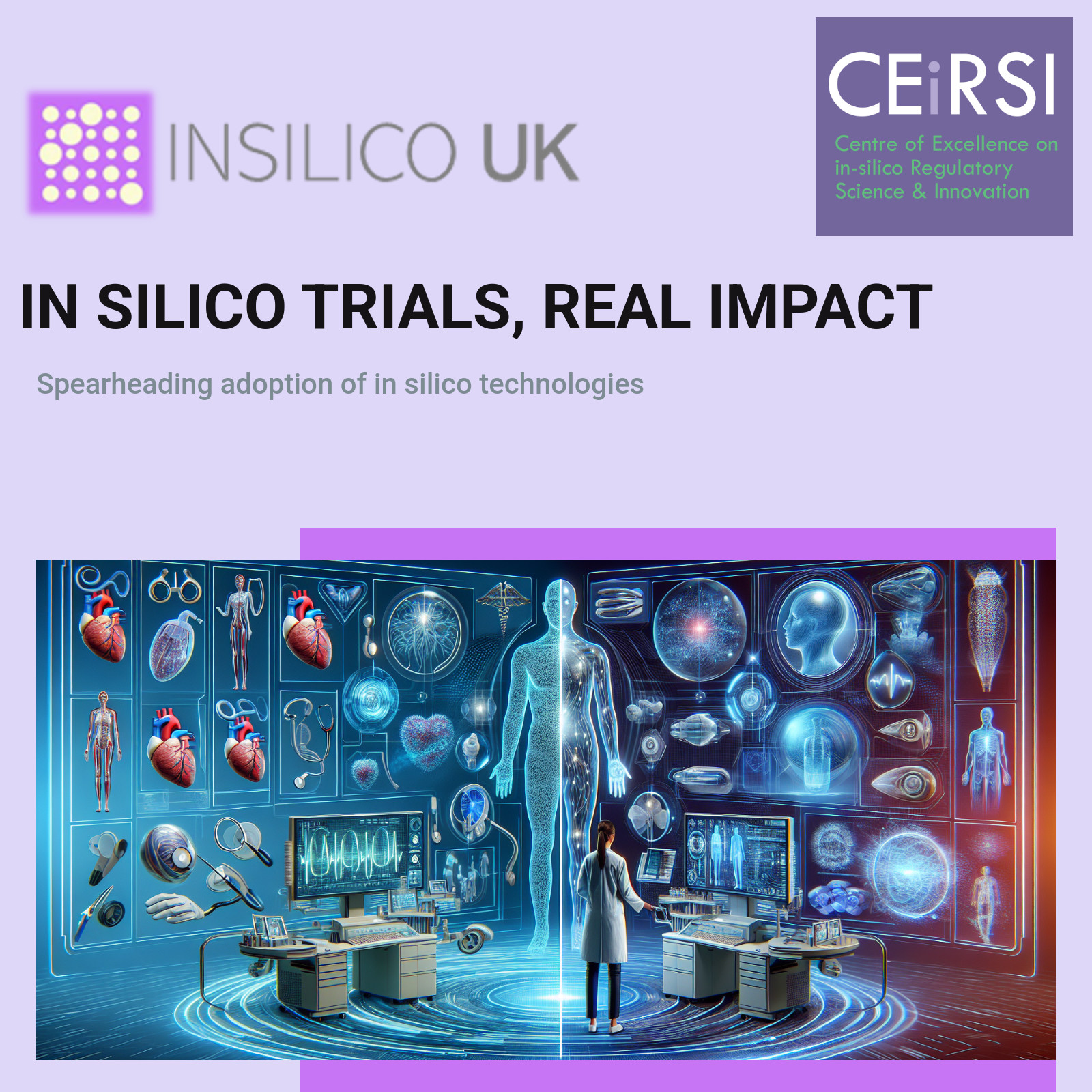
In Silico Trials, Real Impacts! podcast artwork

PODCAST · science

In Silico Trials, Real Impacts!

We’re uniting visionaries to craft a national strategy that fast-tracks virtual clinical trials, propelling the UK to the forefront of healthcare innovation. Join us as we explore how computational modelling is reshaping patient care, boosting the economy, and accelerating medical breakthroughs. Tune in for insights on creating the UK’s optimal ecosystem for in silico evidence in medicine. The future of healthcare is here – be part of the revolution.

  1. 43

    Digital Twins & Virtual Patients: Revolutionising Paediatric Clinical Trials

    Join us for an eye-opening exploration of how virtual patient data is revolutionising paediatric clinical trials. In our upcoming episode, we delve into groundbreaking research that addresses one of healthcare's most pressing challenges: the power crisis plaguing paediatric randomised controlled trials. Discover how digital twins, synthetic patient data, and in silico trials are offering unprecedented solutions to reduce children's exposure to unproven therapies whilst accelerating drug approvals. We'll examine the transformative potential of these technologies in creating personalised treatment options at significantly lower costs, ultimately leading to faster clinical implementation of life-saving interventions. However, innovation comes with responsibility. Our discussion critically evaluates the ethical and regulatory frameworks necessary to ensure safe, sustainable adoption of virtual patient data in paediatric medicine. Join our interactive webinar to engage directly with experts and explore how these digital innovations are shaping the future of children's healthcare. Source: Pammi M, Shah PS, Yang LK, Hagan J, Aghaeepour N, Neu J. Digital twins, synthetic patient data, and in-silico trials: can they empower paediatric clinical trials? Lancet Digit Health. 2025      

  2. 42

    Beyond the Scalpel: How Computer Models Are Rewriting Paediatric Heart Surgery

    This episode explores groundbreaking research from Boston Children's Hospital and Harvard Medical School that demonstrates how multiphysiologic state computational fluid dynamics (CFD) modelling is transforming surgical planning for children with complex congenital heart conditions. We delve into the innovative 3D virtual surgery workflow developed for patients with single ventricle physiology and interrupted inferior vena cava - a particularly challenging combination that historically carries high risks of life-threatening complications. The research team's approach utilises advanced CFD analysis across multiple physiological states to predict and optimise hepatic venous flow distribution, preventing the formation of pulmonary arteriovenous malformations that can prove fatal in these vulnerable young patients. The episode examines how this in silico methodology successfully translates virtual surgical planning into real-world clinical outcomes, validated through post-operative MRI imaging. We discuss the broader implications for personalised paediatric medicine, the potential for reducing surgical revisions, and how computational modelling is enabling surgeons to achieve balanced blood flow patterns that were previously difficult to predict using traditional planning methods. This case study exemplifies the transformative potential of digital health technologies in paediatric care, showcasing how sophisticated computational tools can directly improve surgical outcomes and quality of life for children with complex cardiac conditions. Source: Hoganson DM, Govindarajan V, Schulz NE, Eickhoff ER, Breitbart RE, Marx GR, Del Nido PJ, Hammer PE. Multiphysiologic State Computational Fluid Dynamics Modeling for Planning Fontan With Interrupted Inferior Vena Cava. JACC Adv. 2024 Jun 13;3(7):101057.      

  3. 41

    Future-Proofing the UK Life Sciences Sector

    Are you prepared for the seismic shift transforming UK life sciences careers? This latest "In Silico Trials, Real Impacts!" episode reveals how AI and in silico technologies are creating unprecedented employment opportunities across health tech sectors.  Discover the essential skills driving this revolution, from computational biology to digital therapeutics, and why lifelong learning has become non-negotiable. We examine the geographical spread of emerging roles and explore how international talent maintains Britain's competitive advantage in global markets. What does this transformation mean for traditional biologists, chemists, and clinicians as digital tools reshape their practice? How are government initiatives preparing the next generation for these evolving demands?  Uncover the real-world implications for patient care and economic growth in this data-driven analysis of our industry's future. Sources: Lightcast (2024), The UK Skills Revolution: Building a Data-Driven Skills System in an Era of Disruption https://lightcast.io/resources/research/uk-skills-revolution-25 Lightcast, ABHI, ABPI, and BIA (2025) Life Sciences 2035: Developing the Skills for Future Growth https://www.abpi.org.uk/publications/life-sciences-2035-developing-the-skills-for-future-growth-main-report/      

  4. 40

    Exploring the Limitations and Potentials of RCTs: Beyond the Gold Standard

    Are Randomised Controlled Trials (RCTs) always the definitive 'gold standard' in research? In the latest episode of In Silico Trials, Real Impacts!, we explore the nuanced landscape of RCTs, questioning their universal applicability and examining the complexities they often obscure. While RCTs are celebrated for their rigour, this discussion delves into their limitations, particularly when findings are applied across diverse contexts. Drawing on seminal work by Deaton and Cartwright (2018), this episode highlights the critical role that RCTs play in the medical and social sciences, while underscoring the importance of complementing them with observational studies and theoretical frameworks. Ethical considerations and the need for a more integrated approach to research take centre stage, offering a fresh perspective on evidence generation. Whether you're a researcher, healthcare professional, or simply curious about scientific methodologies, this episode provides thought-provoking insights into the evolving landscape of research. Source: Deaton A, Cartwright N. Understanding and misunderstanding randomized controlled trials. Soc Sci Med. 2018 Aug;210:2-21.      

  5. 39

    Simpler or Complex: Rethinking Occam's Razor in Modelling Science

    Is simplicity always the smartest choice in science? Or could complexity be the key to groundbreaking discoveries? This episode explores the evolving role of simplicity and complexity in scientific modelling, questioning the age-old principle of Occam's razor in light of modern advancements: Plurality should not be posited without necessity.  Discover how digital approaches, from computational modelling to simulated clinical trials, are reshaping medical product development, making healthcare safer, more efficient, and unexpectedly precise. As we journey through recent research and breakthroughs, you'll gain insights into the tension between simple and complex scientific models, and how they impact the healthcare landscape. Whether you're a researcher, regulator, patient representative, or just curious about the future of medicine, this episode unpacks the concept of parsimony and its implications, especially as technology progresses. Learn about the balance between simplicity and complexity and how they complement each other as tools in science.   Source: Dubova M, Chandramouli S, Gigerenzer G, Grünwald P, Holmes W, Lombrozo T, Marelli M, Musslick S, Nicenboim B, Ross LN, Shiffrin R, White M, Wagenmakers EJ, Bürkner PC, Sloman SJ. Is Ockham's razor losing its edge? New perspectives on the principle of model parsimony. Proc Natl Acad Sci U S A. 2025 Feb 4;122(5):e2401230121.            

  6. 38

    Evaluating Continuous Glucose Monitoring Sensors with in Silico Trials: A Real-World Exemplar

    Could computer simulations redefine diabetes care? In this episode, we focus on a real medical product and the role of in silico trials in the transition from the Medtronic Guardian Sensor 3 to the Guardian 4 sensor, central to the Medtronic 780G pump system, which aims to simplify diabetes management by eliminating the need for fingerstick calibrations. Discover how computer simulations, clinical studies, and real-world data converge to evaluate this significant shift, revealing slight shifts in glucose metrics but proving the reliability of in silico methods in predicting real outcomes. Join us to uncover the potential of digital modeling to transform healthcare, making it more precise while retaining safety, and contemplate how these advances might accelerate personalized medicine delivery, bypassing some traditional trial limitations. Source: Grosman B, Parikh N, Roy A, Lintereur L, Vigersky R, Cohen O, Rhinehart A. In Silico Evaluation of the Medtronic 780G System While Using the GS3 and Its Calibration-Free Successor, the G4S Sensor. Ann Biomed Eng. 2023 Jan;51(1):211-224.      

  7. 37

    Unveiling Evidence-Based Medicine Plus and Mechanistic Reasoning

    What is Evidence-Based Medicine Plus? This podcast episode explores the transformative power of computational modelling and simulated clinical trials in medical innovation. Discover the significance of evidence-based medicine (EBM) and evidential pluralism, emphasising the role of mechanistic evidence alongside traditional studies. Join us as we delve into compelling examples like mobile phone radiation and ACE inhibitors, highlighting how these insights enhance the external validity of treatments. Perfect for researchers and regulators alike, or anyone interested in the evolving landscape of medicine. Sources: Russo F, Williamson J. Epistemic causality and evidence-based medicine. Hist Philos Life Sci. 2011;33(4):563-81. Parkkinen, V.-P., Wallmann, C., Wilde, M., Clarke, B., Illari, P., Kelly, M. P., Norell, C., Russo, F., Shaw, B., & Williamson, J. (Eds.). (2023). Evaluating Evidence of Mechanisms in Medicine: Principles and Procedures. Oxford University Press.      

  8. 36

    What Underpins Model Credibility? Three Philosophical Perspectives

    How do philosophers of science think about model evaluation? Dive deep into the crucial process of model evaluation, a fundamental step in digital science that determines the effectiveness and precision of computational models. This episode explores three primary perspectives on model quality: the mirror view, relevant similarity, and fitness for purpose. Learn about the complexities and challenges involved in evaluating models, from data limitations to the intricate balance between accuracy and usability. Whether you're a researcher, regulator, or a curious listener, discover how these cutting-edge methodologies are reshaping healthcare, improving safety, efficiency, and equitability, one simulated trial at a time. Join us as we delve into the philosophy behind model evaluation and unveil the real-world impact of digital innovation. Parker WS. Model Evaluation: An Adequacy-for-Purpose View. Philos Sci. 2020;87(3):457-477. Bokulich A, Parker W. Data models, representation and adequacy-for-purpose. Eur J Philos Sci. 2021;11(31).         

  9. 35

    Exploring Digital Twins: The Philosophy Behind Healthcare's Digital Revolution

    Have you ever wondered what makes a digital twin truly "twin-like" and not just another computer model? This fascinating question lies at the heart of modern healthcare innovation, where virtual copies of real-world systems are revolutionising how we approach medical research and patient care. Our latest episode delves into groundbreaking research that examines the philosophical underpinnings of digital twins, exploring what sets them apart from conventional computational models. We unpack how digital twins are transforming healthcare through their unique ability to capture complex, emergent behaviours in ways traditional models cannot. From enabling safer drug development through in silico trials to advancing personalised medicine, these sophisticated virtual representations are bridging the gap between computational simulation and real-world applications. Our discussion reveals why digital twins represent more than just technological advancement - they embody a fundamental shift in how we understand and interact with healthcare systems, promising more precise, efficient, and safer medical innovations for the future. Reference: Wagg DJ, Burr C, Shepherd J, Xuereb Conti Z, Enzer M, Niederer S. The philosophical foundations of digital twinning. Data-Centric Engineering. 2025;6:e12. doi:10.1017/dce.2025.4      

  10. 34

    Cracking the Code: Unveiling the Trustworthy World of In-Silico Trials

    Are computational models ready to replace traditional clinical trials? This episode delves into the fascinating world of in silico trials and their growing role in regulatory evaluation of biomedical products. We explore a methodological framework based on the ASME VV-40-2018 standard that establishes credibility through verification, validation, and uncertainty quantification. From defining contextual use to conducting thorough risk analysis, we examine how these principles apply across statistical, machine learning, Bayesian, and agent-based models. We compare regulatory approaches between different authorities and make the case for wider adoption of credibility assessment standards to ensure reliable virtual evidence. Join us as we navigate the cutting edge of computational modelling in healthcare regulation.   Viceconti M, Pappalardo F, Rodriguez B, Horner M, Bischoff J, Musuamba Tshinanu F. In silico trials: Verification, validation and uncertainty quantification of predictive models used in the regulatory evaluation of biomedical products. Methods. 2021 Jan;185:120-127. 

  11. 33

    Revolutionising Healthcare: The Power of Synthetic Data

    Is the healthcare sector prepared to harness synthetic data's transformative potential whilst navigating its hidden pitfalls? This thought-provoking episode delves into the murky waters of synthetic data governance in medical research, examining how generative AI is reshaping our approach to patient information. As algorithms increasingly create convincing facsimiles of real clinical data, we explore the tantalising benefits—enhanced privacy protection, expanded research capabilities, and accelerated innovation cycles—alongside the concerning governance vacuum that threatens to undermine these advances. Our discussion unpacks why the absence of standardised creation and evaluation frameworks is stalling widespread adoption, despite synthetic data's promise. We make the case for urgent development of robust data standards, ethical guidelines and cross-disciplinary collaboration to ensure this powerful tool serves healthcare's highest goals. Join us as we navigate the complex terrain where technological innovation meets patient protection, and discover why establishing clear governance frameworks today is essential for tomorrow's medical breakthroughs.   Boraschi D, van der Schaar M, Costa A, Milne R. Governing synthetic data in medical research: the time is now. Lancet Digit Health. 2025 Feb 20:S2589-7500(25)00011-1. 

  12. 32

    How Can We Trust Computational Models in Healthcare? A Framework for In Silico Clinical Trials

    Are you curious about how computer simulations are changing the way we evaluate medical devices? In this episode, we delve into the fascinating world of in silico clinical trials (ISCTs), a cutting-edge approach that uses computational models to assess the safety and effectiveness of medical interventions. We explore a recent paper that highlights the unique challenges of ensuring the credibility of ISCT results. The authors present a comprehensive workflow for assessing this credibility, drawing on various methodologies and frameworks, including those from the FDA. By reviewing a range of ISCT studies, we discuss innovative patient model generation techniques, the integration of clinical outcomes, and how these virtual trials can complement traditional clinical studies. Join us as we unpack the potential of ISCTs to revolutionize medical device evaluation, making it more cost-effective, time-efficient, and ethically sound. Source: Bodner J, Kaul V. A framework for in silico clinical trials for medical devices using concepts from model verification, validation, and uncertainty quantification. J Verif Valid Uncertain Quantif. 2022;7(2):021001.                           

  13. 31

    Probability & Patients: The Stochastic Science Behind In Silico Trial Breakthroughs

    𝗪𝗵𝗮𝘁 𝗶𝗳 𝘁𝗵𝗲 𝗻𝗲𝘅𝘁 𝗰𝗹𝗶𝗻𝗶𝗰𝗮𝗹 𝘁𝗿𝗶𝗮𝗹 𝗯𝗿𝗲𝗮𝗸𝘁𝗵𝗿𝗼𝘂𝗴𝗵 𝗶𝘀 𝗮𝗹𝗿𝗲𝗮𝗱𝘆 𝗶𝗻 𝘆𝗼𝘂𝗿 𝗰𝗼𝗺𝗽𝘂𝘁𝗲𝗿? This episode explores the fascinating world of virtual patient models and stochastic engineering, unveiling how digital simulations are revolutionising healthcare clinical trials. Discover how simulated trials using sophisticated virtual patient models—complete with variations in age, body size, and disease progression—are introducing groundbreaking innovations in patient care. We delve into stochastic engineering models that cleverly integrate uncertainty into device design, offering more precise and realistic predictions of clinical outcomes. Learn about the power prior method—a dynamic approach to combining digital and real-world evidence in clinical trials, enhancing efficiency and accelerating device delivery to patients whilst maintaining rigorous safety and accuracy standards. Join us for an illuminating discussion at the cutting edge of healthcare innovation, where virtual modelling meets real-world patient impact.   Haddad T, Himes A, Thompson L, Irony T, Nair R; MDIC Computer Modeling and Simulation Working Group Participants. Incorporation of stochastic engineering models as prior information in Bayesian medical device trials. J Biopharm Stat. 2017;27(6):1089-1103. 

  14. 30

    How can we properly evaluate the true economic impact of AI in healthcare?

    How are the CHEERS-AI guidelines transforming economic evaluations of healthcare AI? In our latest podcast episode, we delve into how the Consolidated Health Economic Evaluation Reporting Standards for AI (CHEERS-AI) are revolutionizing the economic assessment landscape for artificial intelligence in healthcare. Discover why transparency and consistency are crucial, and how this comprehensive framework helps determine the true financial value of AI innovations in the medical field. This episode navigates the intricate challenges of healthcare AI integration, including uncovering hidden costs and addressing the "black box" problem—where understanding AI's decision-making processes remains difficult yet essential for proper evaluation and implementation. Join our conversation as we explore the broader ethical considerations and societal impacts of healthcare AI, emphasizing the importance of responsible innovation. Whether you're a health economist, researcher, or simply interested in AI's transformative potential in healthcare, this episode offers valuable perspectives on balancing innovation with responsibility to ensure AI advancements benefit both patients and healthcare systems alike. Elvidge J, Hawksworth C, Avşar TS, Zemplenyi A, Chalkidou A, Petrou S, Petykó Z, Srivastava D, Chandra G, Delaye J, Denniston A, Gomes M, Knies S, Nousios P, Siirtola P, Wang J, Dawoud D; CHEERS-AI Steering Group. Consolidated Health Economic Evaluation Reporting Standards for Interventions That Use Artificial Intelligence (CHEERS-AI). Value Health. 2024 Sep;27(9):1196-1205. 

  15. 29

    Revolutionising Healthcare: Inside the UK's MHRA Data Strategy

    Will the MHRA's New Data Strategy Transform Healthcare Through Computational Innovation? In this episode, we explore the MHRA's groundbreaking data strategy for 2024-2027, a visionary plan heralding a fourth industrial revolution in healthcare. From supporting data-driven innovation to harnessing AI and real-world evidence, we dive deep into the strategic themes aimed at revolutionizing medical product development and regulation. Learn how AI is set to change the game, enabling quicker development of treatments tailored to individual needs and monitoring safety like never before. We also address the challenges of data fragmentation, quality issues, and privacy concerns, while highlighting ambitious initiatives like the Centers of Excellence in Regulatory Science and Innovation. Tune in to uncover how this strategy could position the UK as a leader in data-driven healthcare, inspiring global shifts towards personalized and equitable treatment for all. Source: MHRA (2024) MHRA Data Strategy 2024 - 2024. www.gov.uk/government/publications/mhra-data-strategy-2024-2027

  16. 28

    Unleashing the Potential of Health Data: Insights from the Sudlow Review

    What is the roadmap to transform how we use health data in the UK? This episode discusses the Sudlow Review and highlights the immense potential of linking health data, tackling accessibility challenges, and the importance of public trust. We discuss its five critical recommendations to make health data a national infrastructure, streamlining access, and ensuring ethical governance across the UK. Whether you're a researcher, policy maker, or simply curious about the future of medical innovation, tune in to discover how harnessing health data can revolutionize patient care and healthcare research. Source: Sudlow C (2024) Uniting Health Data in the UK Review. Health Data Research UK. https://www.hdruk.ac.uk/helping-with-health-data/the-sudlow-review

  17. 27

    Regulatory Frontiers: UK's Centres of Excellence in Regulatory Science and Innovation

    How is the UK positioning itself at the forefront of regulatory science innovation through strategic investments in centres of excellence? This episode explores the UK Government-funded Centres of Excellence in Regulatory Science and Innovation (CERSI) Initiative and its pivotal role in shaping the future regulatory landscape for AI and in silico technologies in healthcare. We examine two of the seven CERSIs funded by UK Government. Brunel University's critical work on building trust frameworks and ethical governance for AI applications, alongside the University of Manchester's groundbreaking advances in in silico clinical trials that promise to revolutionise drug development timelines and efficiency. This podcast delves into the regulatory science challenges and opportunities presented by these emerging technologies, offering insights into how the UK CERSI strategy is creating new pathways for innovation while ensuring patient safety. From establishing robust validation methods for in silico trials to developing adaptive regulatory frameworks for AI, discover how these centres of excellence are addressing the complex intersection of technology, healthcare, and regulation. Join us for an essential conversation about the transformative potential of these initiatives and their implications for researchers, regulators, and healthcare systems worldwide. Source: Developing regulatory science to advance healthcare (2025) www.ukri.org/news/developing-regulatory-science-to-advance-healthcare

  18. 26

    Can NHS Secure Data Environments Unlock the Future of UK Life Sciences?

    Could NHS Data Environments Revolutionise UK Life Sciences Innovation? This episode focuses on the incredible potential of NHS data in revolutionising medical product development and regulation. The Association of the British Pharmaceutical Industry (ABPI) report, published in February 2025, investigates how to improve the regional Secure Data Environment (SDE) network to better serve the life sciences industry's research needs. The report outlines findings from a consultation with ABPI, ABHI, and BIA members regarding their use of NHS health data. It highlights key industry requirements for the SDE network, including the need for federated data access, streamlined governance, and commercially competitive timeframes. The report also reveals concerns about insufficient industry involvement in the network's design and implementation. Ultimately, it provides recommendations to NHS England and other relevant bodies to align the SDE network's development with the demands of life sciences research, aiming to enhance the UK's attractiveness for R&D investment.   Source: Association of British Pharmaceutical Industries (2025)  The value of industry clinical trials to the UK. www.abpi.org.uk/publications/the-value-of-industry-clinical-trials-to-the-uk-extended-report

  19. 25

    Virtual You vs Cancer: How Digital Twins Are Revolutionizing Treatment

    What if your doctor could test hundreds of cancer treatments on a virtual version of your tumour before giving you a single dose of medication? In this episode, we dive into the fascinating concept of digital twins, particularly their application in oncology. Discover how digital twins, virtual replicas of tumours, are being used to simulate treatment scenarios and predict outcomes, offering unprecedented precision in cancer care. Learn about the intricate process of creating these digital twins, from capturing medical imaging data to developing complex mathematical models. With insights tailored to the individual, digital twins represent the future of personalized medicine, enabling clinicians to experiment with different therapies without any risk to real patients. Explore the real-world impact of this technology, as digital twins assist doctors in treatment planning and help predict patient responses to various drugs. As we stand on the cusp of a revolution in cancer care, join us in unravelling the potential of digital twins to transform how we diagnose, treat, and manage cancer. Tune in for this deep dive into the groundbreaking world of InSilico trials and their real impact on patient care. Wu C, Lorenzo G, Hormuth DA 2nd, Lima EABF, Slavkova KP, DiCarlo JC, Virostko J, Phillips CM, Patt D, Chung C, Yankeelov TE. Integrating mechanism-based modeling with biomedical imaging to build practical digital twins for clinical oncology. Biophys Rev. 2022 Jun;3(2):021304.

  20. 24

    Digital Footprints to Medical Breakthroughs: The Real-World Data Revolution

    What if the future of healthcare innovation lies not in controlled trials, but in the digital footprints we leave every day? Real-world data from health records, wearables, and patient experiences revolutionises medical research. This episode explores the profound impact of real world data (RWD) in healthcare. Discover how everyday data sources like Fitbits, electronic health records (EHRs), and insurance claims are reshaping the medical landscape. Learn about the nuances of real world data, from its messy nature to its invaluable insights for patient care. Dive into the complexities of data standardization, the use of machine learning, and the challenges of privacy and bias. Explore how RWD is paving the way for personalized medicine and disease prevention, offering hope for rare disease research through global data pooling. Join the conversation about the future of healthcare, privacy concerns, and the exciting potential of sharing patient-generated data. Tune in now and be part of the revolution where algorithms, data, and human insight converge to shape a healthier tomorrow.   Liu F, Panagiotakos D. Real-world data: a brief review of the methods, applications, challenges and opportunities. BMC Med Res Methodol. 2022 Nov 5;22(1):287. doi: 10.1186/s12874-022-01768-6. Erratum in: BMC Med Res Methodol. 2023 May 2;23(1):109. doi: 10.1186/s12874-023-01937-1.  

  21. 23

    The Science Behind Making Virtual Trials Trustworthy: Ten Rules

    Would you trust a computer to help decide your medical treatment? Imagine doctors using virtual experiments to test treatments before giving them to real patients - sounds like sci-fi, right? But it's happening now! Just like pilots train in flight simulators before flying real planes, scientists are using powerful computer models to improve healthcare. But here's the million-pound question: How do we know these digital predictions are reliable? In this episode, we'll reveal the 10 golden rules scientists follow to ensure their virtual experiments are trustworthy. From making sure they're using the right data to having independent experts check their work (like having a second opinion from another doctor!), these rules are changing the game in modern medicine.   Erdemir A, Mulugeta L, Ku JP, Drach A, Horner M, Morrison TM, Peng GCY, Vadigepalli R, Lytton WW, Myers JG Jr. Credible practice of modeling and simulation in healthcare: ten rules from a multidisciplinary perspective. J Transl Med. 2020 Sep 29;18(1):369. doi: 10.1186/s12967-020-02540-4.  Manchel A, Erdemir A, Mulugeta L, Ku JP, Rego BV, Horner M, Lytton WW, Myers JG Jr, Vadigepalli R. A rubric for assessing conformance to the Ten Rules for credible practice of modeling and simulation in healthcare. medRxiv [Preprint]. 2024 Nov 2. doi: 10.1101/2024.10.31.24316520.  

  22. 22

    STANDING Together: Equitable AI and In Silico Technologies in Healthcare

    What if In Silico Technologies in healthcare could truly serve everyone? The STANDING Together recommendations are revolutionising how we think about health data diversity and inclusion. From bustling cities to remote villages, discover how this groundbreaking initiative is reshaping healthcare technologies development through the voices of patients, practitioners, and policymakers. Join us as we explore the journey towards equitable healthcare technology that leaves no one behind We'll explore the importance of data diversity and patient involvement in shaping the future of medical technology—be it AI diagnostic systems or in silico technologies predicting drug interactions. Understand how these recommendations propose a shift towards a more responsible and inclusive approach, requiring the commitment of researchers, developers, policymakers, and patients themselves. This episode highlights patient advocacy, urging everyone to become proactive in their healthcare journey and data literacy. As AI becomes increasingly integrated into our lives, ensuring fairness and equity becomes paramount—a responsibility we all share. www.datadiversity.org Alderman JE, Palmer J, Laws E, McCradden MD, Ordish J, Ghassemi M, Pfohl SR, Rostamzadeh N, Cole-Lewis H, Glocker B, Calvert M, Pollard TJ, Gill J, Gath J, Adebajo A, Beng J, Leung CH, Kuku S, Farmer LA, Matin RN, Mateen BA, McKay F, Heller K, Karthikesalingam A, Treanor D, Mackintosh M, Oakden-Rayner L, Pearson R, Manrai AK, Myles P, Kumuthini J, Kapacee Z, Sebire NJ, Nazer LH, Seah J, Akbari A, Berman L, Gichoya JW, Righetto L, Samuel D, Wasswa W, Charalambides M, Arora A, Pujari S, Summers C, Sapey E, Wilkinson S, Thakker V, Denniston A, Liu X. Tackling algorithmic bias and promoting transparency in health datasets: the STANDING Together consensus recommendations. Lancet Digit Health. 2025 Jan;7(1):e64-e88. doi: 10.1016/S2589-7500(24)00224-3.  

  23. 21

    Can Computer Simulations Make Medical Products Safer?

    Ever wondered how we can make shoulder replacements safer without endless clinical trials? Step into the future of medical innovation where virtual patients help test new drugs and devices. Discover how computer simulations could make medicine safer, faster, and more ethical. Learn why experts believe digital trials might be the game-changer healthcare has been waiting for. Viceconti M, Emili L, Afshari P, Courcelles E, Curreli C, Famaey N, Geris L, Horner M, Jori MC, Kulesza A, Loewe A, Neidlin M, Reiterer M, Rousseau CF, Russo G, Sonntag SJ, Voisin EM, Pappalardo F. Possible Contexts of Use for In Silico Trials Methodologies: A Consensus-Based Review. IEEE J Biomed Health Inform. 2021 Oct;25(10):3977-3982. doi: 10.1109/JBHI.2021.3090469.      

  24. 20

    Cutting Costs, Boosting Results: The Tech Revolution in Clinical Trials

    Why are clinical trials becoming so expensive? Dive into the financial maze of skyrocketing costs, from patient recruitment challenges to decentralization hurdles. Discover how patient-centric strategies and digital tools are reshaping the landscape, cutting costs, and boosting efficiency. Join us as we uncover the hidden drivers behind these rising expenses and explore innovative solutions to optimize clinical trials. Don't miss it! DiMasi JA, Grabowski HG, Hansen RW. Innovation in the pharmaceutical industry: New estimates of R&D costs. J Health Econ. 2016 May;47:20-33. Moore TJ, Heyward J, Anderson G, Alexander GC. Variation in the estimated costs of pivotal clinical benefit trials supporting the US approval of new therapeutic agents, 2015-2017: a cross-sectional study. BMJ Open. 2020 Jun 11;10(6):e038863.  MDGroup (2020) The True Cost Of Patient Drop-outs In Clinical Trials. https://mdgroup.com/blog/the-true-cost-of-patient-drop-outs-in-clinical-trials            

  25. 19

    Breaking New Ground: The Virtual Trial Transforming Knee Surgery

    Can 3D-printed, personalized knee surgery implants revolutionize arthritis treatment? Virtual clinical trials show promising results for a custom device that could make corrective knee surgery safer and more accessible. Discover how computer simulations are paving the way for the future of personalized orthopaedics. MacLeod AR, Peckham N, Serrancolí G, Rombach I, Hourigan P, Mandalia VI, Toms AD, Fregly BJ, Gill HS. Personalised high tibial osteotomy has mechanical safety equivalent to generic device in a case-control in silico clinical trial. Commun Med (Lond). 2021 Jun 30;1:6. doi: 10.1038/s43856-021-00001-7.            

  26. 18

    Standards as Innovation Catalysts: The PAGIT Framework

    How can we unlock innovation while ensuring responsible governance? Dive into the evolution of the PAGIT framework, where standards meet strategic oversight. From disruptive technologies to incremental advances, discover how this groundbreaking approach is reshaping the UK's innovation landscape. Join us to explore how smart regulation and standards are building tomorrow's technological future. Tait J (2024) The PAGIT framework: Its role in the governance of UK technologies to drive greater innovation, BSI, https://www.bsigroup.com/en-GB/insights-and-media/insights/whitepapers/update-to-pagit-framework-for-innovation.

  27. 17

    In Silico vs. Real Life: Can Computer Models Outperform Spine Surgery Tests?

    Can computers predict if medical devices are safe? Discover how virtual testing revolutionises surgical implant design, potentially saving millions in development costs and speeding up innovation. Learn how digital twins are helping bring safer bone screws to the operating room, faster than ever before.   Nagaraja S, Loughran G, Baumann AP, Kartikeya K, Horner M. Establishing finite element model credibility of a pedicle screw system under compression-bending: An end-to-end example of the ASME V&V 40 standard. Methods. 2024 May;225:74-88. doi: 10.1016/j.ymeth.2024.03.003.

  28. 16

    Heartware: Programming the Perfect Heartbeat

    This week we ask: Can computers help us revolutionise heart failure treatment? Join us as we explore how computational modelling is transforming cardiac pacing therapy. Discover how virtual trials are accelerating research, optimising treatment strategies, and improving patient outcomes—all before a single device is implanted. Learn how this cutting-edge approach is helping clinicians identify the right treatment for the right patient, potentially changing the future of cardiac care. A fascinating intersection of computer science and cardiology you won't want to miss.   Strocchi M, Wijesuriya N, Mehta V, de Vere F, Rinaldi CA, Niederer SA. Computational Modelling Enabling In Silico Trials for Cardiac Physiologic Pacing. J Cardiovasc Transl Res. 2024 Jun;17(3):685-694. doi: 10.1007/s12265-023-10453-y.  

  29. 15

    Digital Twins Revolutionizing Shoulder Implant Design

    Ever wondered how we can make shoulder replacements safer without endless clinical trials? In today's episode, we dive into groundbreaking research that's revolutionising orthopaedic device testing through virtual simulations. We'll explore how researchers have developed a sophisticated computational model that predicts when shoulder implants might loosen – a critical concern in shoulder replacement surgery. What makes this study fascinating is its dual-validation approach, which combines laboratory tests with real-world clinical data. We'll unpack how the team validated their virtual model using foam block experiments and actual patient outcomes, creating a bridge between controlled testing and clinical reality. But here's the real kicker – this research could transform how we test medical devices, potentially reducing the need for extensive human trials. We'll discuss how this model handles different implant designs and surgical variations and what it means for the future of orthopaedic device development. Join us as we explore the intersection of virtual testing and real-world medicine!   Maquer G, Mueri C, Henderson A, Bischoff J, Favre P. Developing and Validating a Model of Humeral Stem Primary Stability, Intended for In Silico Clinical Trials. Ann Biomed Eng. 2024 May;52(5):1280-1296. doi: 10.1007/s10439-024-03452-w                                      

  30. 14

    Enhancing UK Medicine Regulation

    Can the UK reclaim its crown as a clinical trials powerhouse? As Baroness Merron champions modernised regulations through Parliament, ABPI's candid assessment of MHRA reveals both progress and untapped potential. Join us in this bonus episode to explore how strategic reforms could transform the UK into a global life sciences leader. Association of British Pharmaceutical Society (2024). Enhancing the role of UK medicine regulation. https://www.abpi.org.uk/publications/enhancing-the-role-of-uk-medicine-regulation Baroness Merron (2024) Clinical Trials Regulations. Statement on UK Parliament 12-12-24. https://questions-statements.parliament.uk/written-statements/detail/2024-12-12/hlws306             

  31. 13

    How Regulatory-Ready is Model-Informed Drug Development?

    Can we truly trust mathematical models to shape the future of medicine? In this episode, we explore the fascinating world of Model-Informed Drug Development (MIDD)—a game-changing approach that blends cutting-edge simulations with real-world data to revolutionise how drugs are developed and approved. With the new ICH M15 Guideline, the global pharmaceutical landscape is moving towards a harmonised framework that ensures credibility, consistency, and trust in MIDD evidence. But how do these models hold up under scrutiny? And what does this mean for patient safety, regulatory decision-making, and the future of innovation in healthcare? Join us for an engaging discussion on the science, risks, and rewards of MIDD, and discover how this transformative approach is reshaping the way medicines are brought to life.   Marshall S, Ahamadi M, Chien J, Iwata D, Farkas P, Filipe A, Frey N, Greene E, Kawai N, Li J, Lippert J, Musuamba Tshinanu F, Manolis E, Peterson MC, Sarem S, Shebley M, Tegenge M, Tsai CH, Tu CL, Otsubo Y, Wei J, Zhang L, Zhu H, Karlsson KE. Model-Informed Drug Development: Steps Toward Harmonized Guidance. Clin Pharmacol Ther. 2023 Nov;114(5):954-959. doi: 10.1002/cpt.3006.            

  32. 12

    Shaping In Silico Medicine: The Power of Patient and Public Involvement

    Public and patient involvement (PPI) have a central role in advancing the adoption of in silico technologies. We explore insights from two pivotal documents: a position paper from the Avicenna Alliance advocating for a coordinated international approach to PPI in digital health and feedback from a UK public advisory panel that influenced a groundbreaking UK Centre of Excellence on In Silico Regulatory Science and Innovation initiative led by InSilicoUK. Join us as we uncover the challenges, successes, and actionable strategies driving cultural change and fostering collaboration between researchers, patients, and the public in this rapidly evolving field.   www.insilicouk.org www.avicenna-alliance.com            

  33. 11

    Model-Informed Medicine Revolutionising Pregnancy Prescriptions

    In an era where precision matters most, computational modelling is reshaping how we approach medication during pregnancy. Join us as we explore groundbreaking research revealing how healthcare providers and expectant mothers are embracing mathematical simulations to tackle one of medicine's most complex challenges: safe and effective dosing during pregnancy. Discover why these sophisticated in silico approaches are gaining support in antenatal care, and what this means for the future of maternal-fetal medicine. We'll unpack the science, explore the stakeholder perspectives, and examine how these computational tools could transform pregnancy care from guesswork to precision medicine.   Koldeweij C, Dibbets C, Franklin BD, Scheepers HCJ, de Wildt SN. A User- Driven Framework for Dose Selection in Pregnancy: Proof of Concept for Sertraline. Clin Pharmacol Ther. 2024 Sep 9. doi: 10.1002/cpt.3429.  Koldeweij CJM, Dibbets AC, Ceulemans M, de Vries LC, Franklin BD, Scheepers HCJ, de Wildt SN. Willingness-to-use and preferences for model-informed antenatal doses: a cross-sectional study among European healthcare practitioners and pregnant women. Front Pharmacol. 2024 Aug 15;15:1403747. doi: 10.3389/fphar.2024.1403747. Koldeweij C, Kleuskens M, Litjens C, Franklin BD, Scheepers HCJ, de Wildt SN. Perceived barriers and facilitators for model-informed dosing in pregnancy: a qualitative study across healthcare practitioners and pregnant women. BMC Med. 2024 Jun 18;22(1):248. doi: 10.1186/s12916-024-03450-8.             

  34. 10

    Can Synthetic Data Solve Healthcare's Bias Problems?

    Ever wondered how scientists test new treatments without real patients? Discover how cutting-edge technology creates 'virtual twins' for medical research, ensuring everyone's fairly represented. Learn how this groundbreaking approach revolutionises healthcare testing while keeping it safer and more inclusive for all. Draghi B, Wang Z, Myles P, Tucker A. Identifying and handling data bias within primary healthcare data using synthetic data generators. Heliyon. 2024 Jan 10;10(2):e24164. doi: 10.1016/j.heliyon.2024.e24164.            

  35. 9

    Revolutionising Drug Discovery with Digital Twins

    This week, we explore the ground-breaking potential of digital twins (DTs) to transform drug discovery and clinical trials. Generative AI, capable of creating realistic virtual representations of biological systems, is at the heart of this revolution. From simulating drug responses in individual cells to predicting patient outcomes in clinical trials, DTs promise to accelerate drug development and enhance precision medicine. We examine current applications and discuss challenges, including data scarcity and the need for greater model interpretability. Join us as we look ahead to the future of DTs, with a focus on multimodal and foundation models that offer a holistic understanding of complex biological systems. Bordukova M, Makarov N, Rodriguez-Esteban R, Schmich F, Menden MP. Generative artificial intelligence empowers digital twins in drug discovery and clinical trials. Expert Opin Drug Discov. 2024 Jan-Jun;19(1):33-42.       

  36. 8

    Unlocking the Future of Medicines with PBPK Modelling

    In this episode, we dive into the fascinating field of Physiologically Based Pharmacokinetic (PBPK) modelling, a revolutionary approach to transforming drug development. Discover how digital replicas of the human body are created to predict drug behaviour, offering a safer, more efficient, and more precise method for developing medications. Explore the potential of PBPK to personalize medicine, reduce animal testing, and foresee long-term drug effects. Learn about the challenges and opportunities in this evolving field, and how it promises to reshape the future of healthcare. Whether you're a researcher, regulator, or just curious about the future of medicine, join us as we uncover the real-world impact of computer-simulated trials. Get ready to witness how algorithms and data are saving lives, and the exciting possibilities that lie ahead in the world of PBPK modeling.   Frechen S, Rostami-Hodjegan A. Quality Assurance of PBPK Modeling Platforms and Guidance on Building, Evaluating, Verifying and Applying PBPK Models Prudently under the Umbrella of Qualification: Why, When, What, How and By Whom? Pharm Res. 2022 Aug;39(8):1733-1748.                   

  37. 7

    Can Computer Simulations Provide Trustworthy Regulatory Evidence?

    This episode asks: Can computer simulations provide credible regulatory evidence? Learn about the hierarchical framework that ensures the trustworthiness of virtual trials, using a Lego analogy to break down complex processes into manageable pieces. Understand how virtual devices, patients, and even surgeons are modelled to reflect real-world scenarios. We also discuss the broader implications of this innovative framework and how it could lead to faster, more personalized, and more inclusive medical device development. Tune in to uncover the future of medicine and the role you can play in shaping it.   Aycock KI, Battisti T, Peterson A, Yao J, Kreuzer S, Capelli C, Pant S, Pathmanathan P, Hoganson DM, Levine SM, Craven BA. Toward trustworthy medical device in silico clinical trials: a hierarchical framework for establishing credibility and strategies for overcoming key challenges. Front Med (Lausanne). 2024 Aug 12;11:1433372.             

  38. 6

    The Digital Revolution in Medical Imaging Trials: The VICTRE Trial

    In this episode, we explore the fascinating world of in silico trials—a cutting-edge approach that could revolutionize how new medical technologies are tested and approved. Imagine conducting clinical trials entirely within a computer simulation, bypassing the need for expensive and time-consuming real-world testing. This futuristic-sounding method is already being utilized today, offering a glimpse into the future of healthcare. We delve into a groundbreaking study that leveraged in silico trials to test a new breast cancer screening technology called Digital Breast Tomosynthesis (DBT). Unlike traditional mammograms, DBT provides a detailed 3D image of breast tissue, potentially improving early detection of cancer. By creating virtual patients and using advanced computer models, researchers simulated the effectiveness of DBT, achieving results that aligned with real-world clinical trials. Join us as we discuss the implications of this technology not only for imaging but for drug development and personalized medicine. Could this be the end of traditional clinical trials? While in silico trials show immense potential, challenges remain, and real-world testing will still play a crucial role. Nevertheless, this innovative approach represents a significant step towards a more efficient and safer future in medical research and treatment. Badano A, Graff CG, Badal A, Sharma D, Zeng R, Samuelson FW, Glick SJ, Myers KJ. Evaluation of Digital Breast Tomosynthesis as Replacement of Full-Field Digital Mammography Using an In Silico Imaging Trial. JAMA Netw Open. 2018 Nov 2;1(7):e185474.                   

  39. 5

    Virtual Trials and the Future of Medical Imaging

    In this episode, we embark on a journey into the world of virtual trials, particularly in the realm of medical imaging. Discover how digital twins—virtual replicas of human anatomy—are revolutionizing healthcare by offering safer, faster, and more efficient methods for testing new imaging technologies. Learn about the incredible potential of virtual trials to optimize medical imaging techniques and personalize patient care. We discuss the challenges of accessibility, diversity, and reproducibility in this emerging field, and highlight the importance of collaboration among researchers, regulators, and patients. Tune in to understand how virtual trials are not only advancing medical imaging but also driving a revolution that puts patients at the forefront of innovation. Join us as we uncover the real-world impact of these digital breakthroughs in healthcare.   Abadi E, Barufaldi B, Lago M, Badal A, Mello-Thoms C, Bottenus N, Wangerin KA, Goldburgh M, Tarbox L, Beaucage-Gauvreau E, Frangi AF, Maidment A, Kinahan PE, Bosmans H, Samei E. Toward widespread use of virtual trials in medical imaging innovation and regulatory science. Med Phys. 2024 Oct 6. doi: 10.1002/mp.17442.                                          

  40. 4

    The Brain's Hidden Power: Self-Healing Aneurysms

    Ever wondered if your brain has the ability to heal itself? In this episode, we delve into a medical mystery that feels like science fiction: the phenomenon of spontaneous thrombosis, where brain aneurysms may naturally seal themselves off. Discover how researchers are using advanced computer modelling with virtual patients to explore this incredible process. We explain the basics of aneurysms, likening them to weak spots in a garden hose, and explore how size and shape affect their ability to self-heal. Larger and taller aneurysms are more prone to clotting due to slower blood flow, much like a still pond versus a rushing river. Intriguingly, high blood pressure might actually hinder this self-repair process by creating turbulent blood flow. Through a detailed study of a virtual patient's aneurysm, researchers found that high blood pressure increases the shear rate, making clot formation less likely. Join us as we explore the potential for leveraging the brain's natural healing abilities to treat aneurysms, moving towards a future where treatment is less invasive and more aligned with the body's innate capabilities. This research opens the door to personalized medicine and new hope for medical breakthroughs.   Liu Q, Sarrami-Foroushani A, Wang Y, MacRaild M, Kelly C, Lin F, Xia Y, Song S, Ravikumar N, Patankar T, Taylor ZA, Lassila T, Frangi AF. Hemodynamics of thrombus formation in intracranial aneurysms: An in silico observational study. APL Bioeng. 2023 Jul 7;7(3):036102. doi: 10.1063/5.0144848.                        

  41. 3

    In Silico Trials for Off-Label Use and Equitable Evidence

    Can virtual patients revolutionise medical device testing? Our latest episode dives into groundbreaking in silico trials of the Pipeline Embolization Device for brain aneurysms. We'll explore how anatomical variations impact treatment success, and why this matters for equitable care. Join us to discover how computer simulations are paving the way for safer, more inclusive medical innovations. It's not just code – it's about saving lives fairly. MacRaild M, Sarrami-Foroushani A, Song S, Liu Q, Kelly C, Ravikumar N, Patankar T, Lassila T, Taylor ZA, Frangi AF. Off-label in-silico flow diverter performance assessment in posterior communicating artery aneurysms. J Neurointerv Surg. 2024 Oct 31:jnis-2024-022000. doi: 10.1136/jnis-2024-022000.                                    

  42. 2

    Virtual Patients, Real Breakthroughs: FD-PASS and the Future of Medical Device Trials

    Our latest episode explores FD-PASS, a virtual study that's revolutionising medical device testing. We'll unpack how this innovative approach simulated virtual patients to evaluate flow-diverting stents for intracranial aneurysms. Discover how FD-PASS not only mirrored real-world clinical trial results but also unveiled crucial insights into treatment failures. Could this be the future of medical research? Tune in to learn how virtual trials are reshaping the landscape of healthcare innovation and paving the way for more efficient, insightful studies.   Sarrami-Foroushani A, Lassila T, MacRaild M, Asquith J, Roes KCB, Byrne JV, Frangi AF. In-silico trial of intracranial flow diverters replicates and expands insights from conventional clinical trials. Nat Commun. 2021 Jun 23;12(1):3861. doi: 10.1038/s41467-021-23998-w.                                          

  43. 1

    Revolutionising Medical Device Development with In Silico Clinical Trials

    Welcome to Insilico Trials Real Impact, the podcast that's transforming our understanding of medical innovation. Discover how in silico clinical trials are revolutionising medical device development! Join us as we explore how computer simulations are making healthcare safer, faster, and more accessible. From accelerating innovation to enhancing patient safety, learn how this groundbreaking approach is paving the way for more equitable care worldwide. Tune in to 'In Silico Trials, Real Impact!' – where virtual testing meets real-world breakthroughs!                        

Type above to search every episode's transcript for a word or phrase. Matches are scoped to this podcast.

Searching…

We're indexing this podcast's transcripts for the first time — this can take a minute or two. We'll show results as soon as they're ready.

No matches for "" in this podcast's transcripts.

Showing of matches

No topics indexed yet for this podcast.

Loading reviews...

ABOUT THIS SHOW

We’re uniting visionaries to craft a national strategy that fast-tracks virtual clinical trials, propelling the UK to the forefront of healthcare innovation. Join us as we explore how computational modelling is reshaping patient care, boosting the economy, and accelerating medical breakthroughs. Tune in for insights on creating the UK’s optimal ecosystem for in silico evidence in medicine. The future of healthcare is here – be part of the revolution.

HOSTED BY

UK CEiRSI | InSilicoUK

CATEGORIES

Frequently Asked Questions

How many episodes does In Silico Trials, Real Impacts! have?

In Silico Trials, Real Impacts! currently has 43 episodes available on PodParley. New episodes are automatically indexed when they're published to the podcast feed.

What is In Silico Trials, Real Impacts! about?

We’re uniting visionaries to craft a national strategy that fast-tracks virtual clinical trials, propelling the UK to the forefront of healthcare innovation. Join us as we explore how computational modelling is reshaping patient care, boosting the economy, and accelerating medical breakthroughs....

How often does In Silico Trials, Real Impacts! release new episodes?

In Silico Trials, Real Impacts! has 43 episodes. Check the episode list to see recent publication dates and frequency.

Where can I listen to In Silico Trials, Real Impacts!?

You can listen to In Silico Trials, Real Impacts! on PodParley by clicking any episode. We provide an embedded audio player for direct listening, and you can also subscribe via your preferred podcast app using the RSS feed.

Who hosts In Silico Trials, Real Impacts!?

In Silico Trials, Real Impacts! is created and hosted by UK CEiRSI | InSilicoUK.
URL copied to clipboard!