
PODCAST · government
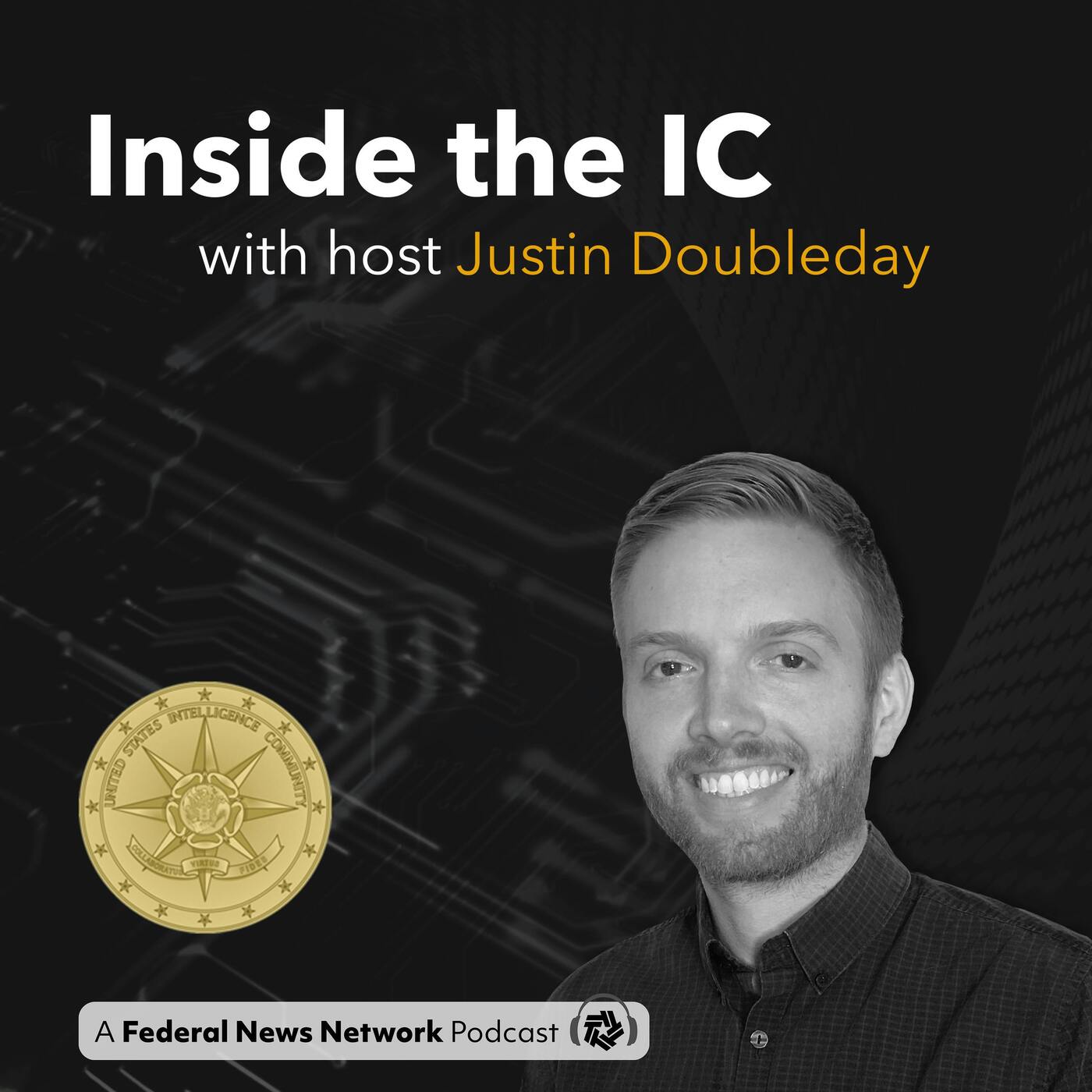
Inside the IC
by Federal News Network | Hubbard Radio
Inside the IC explores how U.S. intelligence agencies are adapting to 21st century challenges. The show features interviews with intelligence community leaders and experts about their most pressing issues involving technology, workforce, and management.
Episodes
-
An interview with NIST's outgoing cyber workforce director
Over his decade of service at the National Institute of Standards and Technology, Rodney Petersen has had a front row seat to the evolving state of the cyber workforce across government, industry and academia. In his role as director of education and workforce at NIST’s Applied Cybersecurity...
-
Grappling with a shortage of cleared workers
Tim Brennan, VP of technology policy and government relations at the Professional Services Council, joins me to discuss the latest legislative proposals to help streamline the gargantuan security clearance process. One of the priorities for PSC's members, which includes many cleared contractors…
more -
Former officials debate OSINT in the IC
Open-source intelligence, or OSINT, has reached an inflection point in the IC. Several agencies in recent years have published strategies aimed at better harnessing OSINT. Now, they're embarking on new initiatives to improve data collection and management, train the workforce, and share best...
-
Espionage operations targeting laid off feds
The widespread layoffs and resignations unfolding across the federal government represent a prime opportunity for foreign spy agencies. In an April bulletin, the National Counterintelligence and Security Center warned that foreign intelligence organizations are targeting current and former U.S....
-
Ethics and intelligence: Tradecraft in the age of AI
Cortney Weinbaum, a senior management scientist at RAND, joins the show to discuss her recent paper, “Intelligence officers have an ethical responsibility to use tradecraft.” Countless professional disciplines have a code of ethics. But such a code does not exist for the intelligence community....
-
‘Still work to be done’ on security clearance reform efforts
The Intelligence and National Security Alliance has a slate of recommendations for the incoming Trump administration. They touch on how the IC could make progress on hiring, personnel vetting (security clearances), AI skills and open source intelligence, among other areas. Inside the IC spoke…
more -
The intelligence community has a big new tech strategy
The intelligence community has laid out new priorities for the cloud, AI, cybersecurity and more in a new "Information Technology Roadmap" released in late May. The IC's Chief Information Officer, Adele Merritt, joined the show to explain the goals of the new strategy. "This roadmap really…
more -
The State Department has a new OSINT strategy
On the heels of a new intelligence community-wide open-source intelligence strategy . . . the State Department now has its own OSINT strategy. The Bureau of Intelligence and Research (INR) uses OSINT to inform U.S. diplomacy, a unique role in the intelligence community. And one of the big goals…
more -
Inside the IC's new open source intelligence strategy
Leaders of top U.S. intelligence agencies have signed onto a plan to centralize and take better advantage of open source intelligence, or OSINT. The new OSINT strategy aims to make open-source an “the INT of first resort.” Those words, in the title of the strategy, are a tacit recognition that…
more -
The women leading at the NSA
Women make up about 40% of the intelligence community's workforce, a percentage that ranks behind both federal workforce and civilian labor benchmarks. That's according to the latest demographics report from the Office of the Director of National Intelligence. And women are even more...
-
Goodbye SF-86? White House approves 'Personnel Vetting Questionnaire'
The Standard Form-86, a long-used questionnaire for government positions requiring security clearance, is set to be phased out after the White House Office of Management and Budget approved a new form replacing the SF-86 and several other legacy forms. I spoke with John Berry, a security…
more -
DIA CIO on cybersecurity, zero trust and AI
The Defense Intelligence Agency runs the federal government's top-secret IT network. DIA is in the middle of a major modernization of that network. And in addition to running new routers and switches, DIA also wants to upgrade to more network automation and help lay the groundwork for the...
-
NGA looks to build on ‘neurodiversity’ hiring effort
More than three years ago, the National Geospatial-Intelligence Agency launched a “neurodiversity” hiring pilot program. The idea was to make it easier to recruit individuals with differences in brain functioning, such as people with autism, who could contribute to the mission, but may have...
-
An interview with the intelligence community's top HR official
Gen Z , or those born between the late 1990’s and the early 2000’s , will likely comprise at least one-quarter of the global workforce by 2025. In order to tap into that younger generation of talent, U.S. intelligence agencies are trying to be more flexible with their hiring and retention...
-
How to improve the 'SCIF life'
The vast majority of employees across the intelligence community work out of Sensitive Compartmented Information Facilities, or "SCIFs." These are essentially highly protected office spaces with restrictive rules, including a ban on cell phones and other devices. The Intelligence and National...
-
The Army's intelligence chief discusses the service's new OSINT strategy
The Army is making a strong push into open source intelligence. Earlier this year, the Army published its first OSINT strategy. The service's goal is to "professionalize" its OSINT workforce and use OSINT as an intelligence discipline "of first resort," Lt. Gen. Laura Potter, the Army's deputy...
-
How the government could consider 'candidate experience' in the screening process
The personnel vetting process is a major drag on the government's hiring ambitions. It can often leave candidates confused and in the dark, even before they start the lengthy background investigation process. So what if the government focused more on the "candidate experience," similar to the…
more -
What do the Discord leaks mean for security clearance holders?
In a June 30 memo, Defense Secretary Lloyd Austin directed Pentagon officials to take a range of actions to tighten access to classified information. The directive stems from a review of security procedures Austin ordered earlier this spring in reaction to the Discord leaks, allegedly by...
-
Intel community’s new data strategy looks to lay foundations of AI future
See Privacy Policy at https://art19.com/privacy and California Privacy Notice at https://art19.com/privacy#do-not-sell-my-info.
-
The over-classification problem in government
For this episode, I speak with Henry Sokolski, executive director of the Nonproliferation Policy Education Center, about NPEC's influential paper, "Over-classification: How Bad Is It, What’s the Fix?" The over-classification of national security information has been a long simmering issue in...
-
IARPA wants to use psychology to thwart cyber hackers
A new Intelligence Advanced Research Projects Agency project is looking to use psychology to thwart would-be hackers. Many cyber attacks these days use basic human psychology to get people to click on a link, for example, as part of a "phishing" exploit. But IARPA thinks it can flip that paradigm...
-
How the Defense Intelligence Agency is embracing the cloud
The Defense Intelligence Agency is in the early stages of making major upgrades to the federal government's top-secret network, the Joint Worldwide Intelligence Communication System (JWICS). DIA's "customers" - other federal agencies and military units -- increasingly want high-bandwidth, low...
-
NGA's 'Tearline' project and the future of open source in the intelligence community
The National Geospatial-Intelligence Agency's "Tearline" project is a unique "open source" endeavor in the intelligence community. And its efforts aren't going unnoticed: Tearline recently won the inaugural "OSINT Unit of the Year" award from the OSINT Foundation. I spoke with Chris Rasmussen…
more -
People with security clearances got a big raise in 2022
Compensation for individuals with security clearances increased by 7% in 2022. More than half of all cleared workers now make six figures, according to ClearanceJobs' annual Security Clearance Compensation Report. I spoke with ClearanceJobs President Evan Lesser and Senior Editor Jill Hamilton...
-
The NSA wants to help defense contractors up their cyber defenses
The National Security Agency's Cybersecurity Collaboration Center opened nearly two years ago to help the defense industrial base and other critical organizations better secure their networks. The organization works with a couple hundred of companies today, and it wants to scale that to…
more -
Modernizing the government's top-secret network
The Defense Intelligence Agency is in charge of maintaining the federal government's top-secret network. That global system is on the cusp of a major overhaul. I spoke with DIA Chief Information Officer Doug Cossa about his agency's plans to modernize the IT network and how the intelligence...
-
How cyber threats, and threat intelligence, are changing
A declassified National Intelligence Council Assessment from April 2020 says "China and other authoritarian governments are using cyber espionage, attacks and influence operations to extend the coercive reach of their ideological enforcement and political control efforts beyond their borders."…
more -
An interview with the IC's chief of diversity, equity, inclusion and accessibility.
The intelligence community has made strides in recent years across a range of diversity, equity, inclusion and accessibility metrics. But the IC's latest demographic report shows that intel agencies still lag behind the broader federal workforce when it comes to the hiring and retention of...
-
Does the IC need classified WeWorks?
Congress is out-of-town for the mid-term elections, but when they come back, the annual intelligence authorization bill could get passed. There are a number of key provisions in this year's bill, including one that would allow more industry employees top receive clearance. Another would conduct a...
-
How remote work has created more opportunities for 'insider threats'
The theme of this September’s National Insider Threat Awareness Month is is "critical thinking in digital spaces" I spoke with Rebecca Morgan, deputy director of the National Insider Threat Task Force, about how new forms of social engineering, misinformation and phishing are increasingly being...
-
Cracking the supply chain security problem
The National Counterintelligence and Security Center is among the many federal offices looking to shore up the security of U.S. supply chains. Jeanette McMillian is the NSCS's assistant director of supply chain and cyber. "Everything from software to semiconductors, pipelines to peanut butter,...
-
The next-generation background investigation system
The National Background Investigations Services program, or NBIS, has been described as the "lynchpin" to the federal personnel vetting reform efforts. The massive software project is aimed at both replacing legacy IT systems with modern functionality, institutionalizing new processes like...
-
The NSA's view on "zero trust" cybersecurity
The zero trust security concept has been around for more than a decade, but it's turned into a major buzzword in recent years. The federal government now has a zero trust strategy. The National Security Agency is also embracing the concept. I spoke with Kevin Bingham, the zero trust lead at the...
-
Elevating the open source community in the IC
Open source intelligence, or OSINT, is often treated as an afterthought in the U.S. intelligence community compared to other forms of intel. Now, a group of former intelligence leaders are trying to change that. They are forming a new OSINT Foundation to help elevate the tradecraft, establish...
-
How the IC can improve recruitment of individuals within foreign ties
This episode features part two of an interview with Larry Hanauer, vice president for policy at the Intelligence and National Security Alliance. Larry discusses INSA's ideas for how the intel community can improve how it recruits and clears people with foreign connections. See Privacy Policy at...
-
Why it can be a challenge to move highly cleared people around
The security clearance process often poses a challenge for both government and industry when they want to move people around and bring new personnel onboard. That's especially true for the highest levels of clearance, where polygraph requirements and other inconsistent policies can bog things…
more -
How the government is reforming the security clearance process
Trusted Workforce 2.0 is the government's wholesale reform of the security clearance process. The idea is to make it easier for employees to move in and around government and industry, while also improving security. For more, I spoke with Heather Green, the assistant director of vetting risk...
-
The State Department's intelligence arm has a new strategic plan
Brett Holmgren is the assistant secretary of state for intelligence and research. The Bureau of Intelligence and Research, or INR, is unique in that it delivers intelligence analysis to advance diplomacy. And that principle has been central to the intelligence community’s efforts to downgrade and...
-
A conversation with the intelligence community's chief data officer
Nancy Morgan spent the last three years as the intelligence community's chief data officer. In that time, the amount of information both collected and produced by intelligence agencies has grown exponentially. The IC is now rewriting its 2017 data strategy to help guide spy agencies in all…
more -
How spy agencies use open source intelligence
On today’s show, we take a look at how intelligence agencies are approaching open source intelligence or OSINT. There’s a rapidly expanding world of social media feeds, commercial satellite imagery, cell phone videos and other Internet-derived information that allow professional and amateur...
-
The intelligence community's science and technology outlook
Emerging technologies like artificial intelligence and synthetic biology are offering new possibilities for how intelligence agencies carry out their missions. But rapid advances in technology, especially in commercial industry, also present challenges to the IC's technology adoption processes.…
more -
The evolving state of cyber threats in the Russia-Ukraine conflict
It’s been four weeks since Russia invaded Ukraine, and despite expert predictions, there has yet to be a significant cyber campaign against the U.S. and its allies. But the White House is now warning it has “evolving intelligence” suggesting the Russian government is preparing cyber attacks on…
more -
A former spy chief's view on privacy and security
In this week's episode, we speak with former National Geospatial Intelligence Agency Director Robert Cardillo about a recent chapter he authored in the CIA's quarterly journal. The chapter, titled "GEOINT and the post-secret world," posits that "we are fast approaching the time in which…
more -
A new buying guide for commercial space capabilities
The National Geospatial-Intelligence Agency is leading a new mandate for the intelligence community to turn to commercial sources of GEOINT first. NGA's new commercial strategy is being led by Dave Gauthier, director of commercial and business operations at the agency. Gauthier spoke with "Inside...
-
Roles for commercial technology in one of the nation's most secretive intel agencies
In the inaugural episode of Inside the IC, we look at how the National Reconnaissance office is trying to take advantage of a fast growing commercial satellite market. Pete Muend, the director of the National Reconnaissance Office's Commercial Systems Program Office, explains why the secretive...
We're indexing this podcast's transcripts for the first time — this can take a minute or two. We'll show results as soon as they're ready.
No matches for "" in this podcast's transcripts.
No topics indexed yet for this podcast.
Loading reviews...
ABOUT THIS SHOW
Inside the IC explores how U.S. intelligence agencies are adapting to 21st century challenges. The show features interviews with intelligence community leaders and experts about their most pressing issues involving technology, workforce, and management.
HOSTED BY
Federal News Network | Hubbard Radio
CATEGORIES
Loading similar podcasts...
Frequently Asked Questions
How many episodes does Inside the IC have?
Inside the IC currently has 45 episodes available on PodParley. New episodes are automatically indexed when they're published to the podcast feed.
What is Inside the IC about?
Inside the IC explores how U.S. intelligence agencies are adapting to 21st century challenges. The show features interviews with intelligence community leaders and experts about their most pressing issues involving technology, workforce, and management.
How often does Inside the IC release new episodes?
Inside the IC has 45 episodes. Check the episode list to see recent publication dates and frequency.
Where can I listen to Inside the IC?
You can listen to Inside the IC on PodParley by clicking any episode. We provide an embedded audio player for direct listening, and you can also subscribe via your preferred podcast app using the RSS feed.
Who hosts Inside the IC?
Inside the IC is created and hosted by Federal News Network | Hubbard Radio.
URL copied to clipboard!